classical
4 tracks
Joseph Barnby began as a chorister at York Minster and ended his career as principal of the Guildhall School of Music, knighted in 1892. In between he conducted the Royal Albert Hall Choral Society, served as precentor at Eton, and wrote music that English congregations and choral societies kept using for generations.
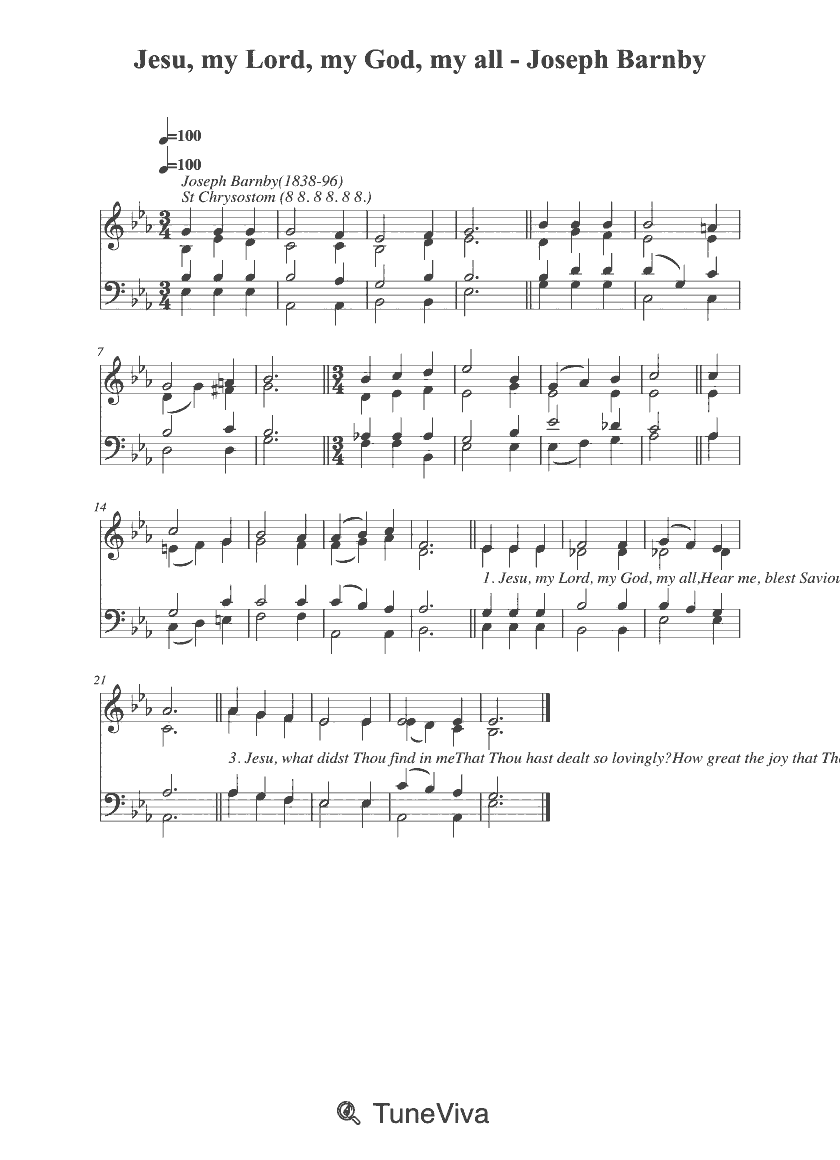
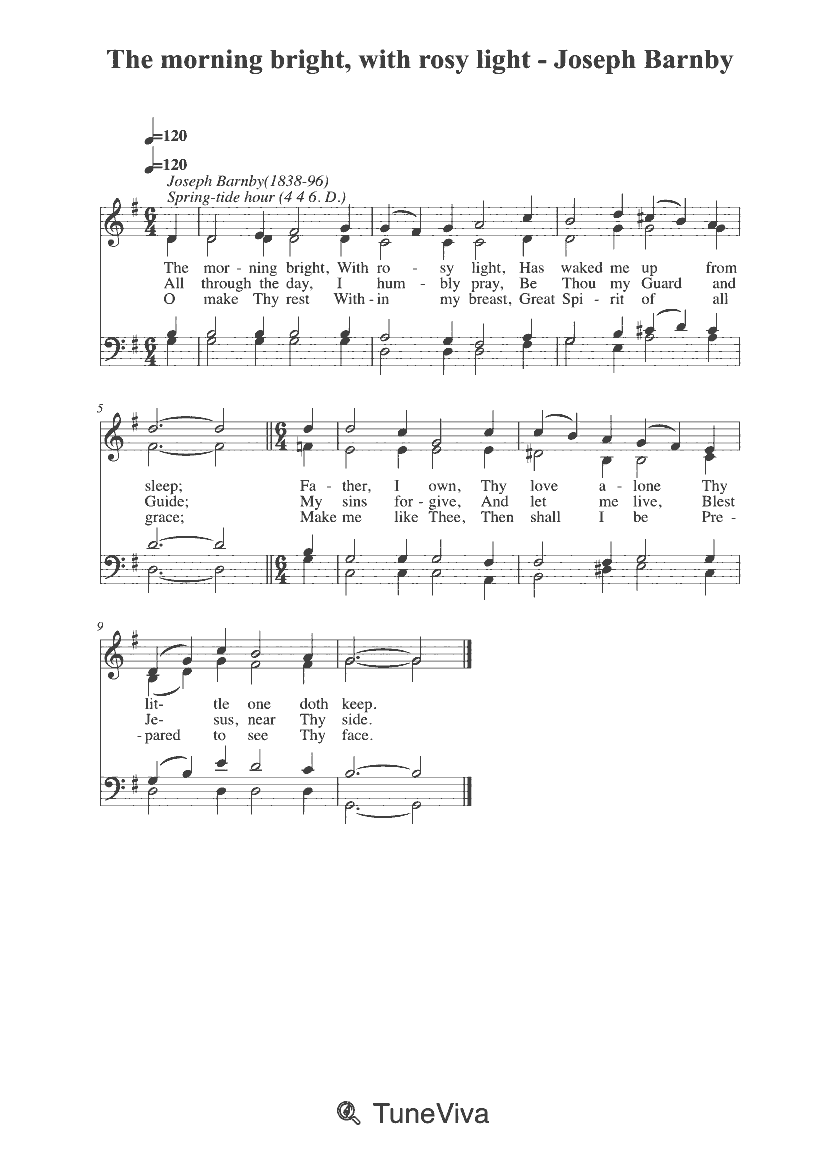
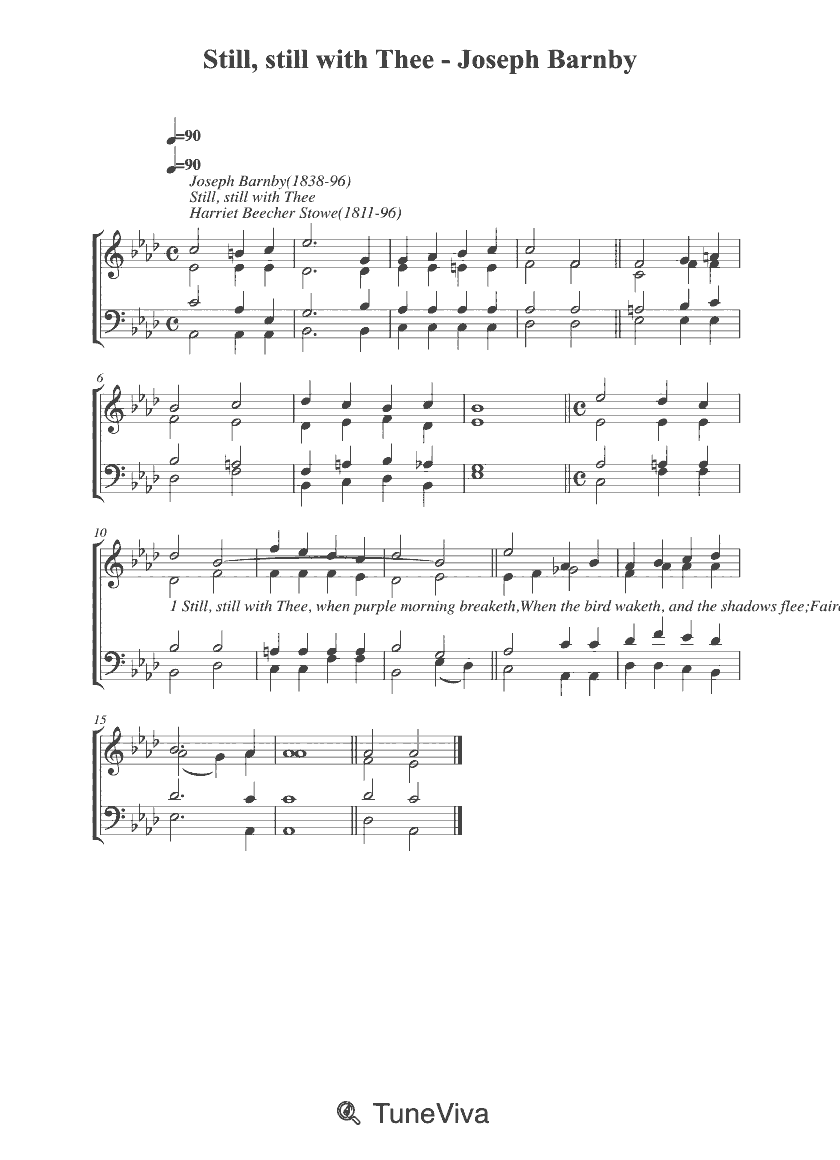
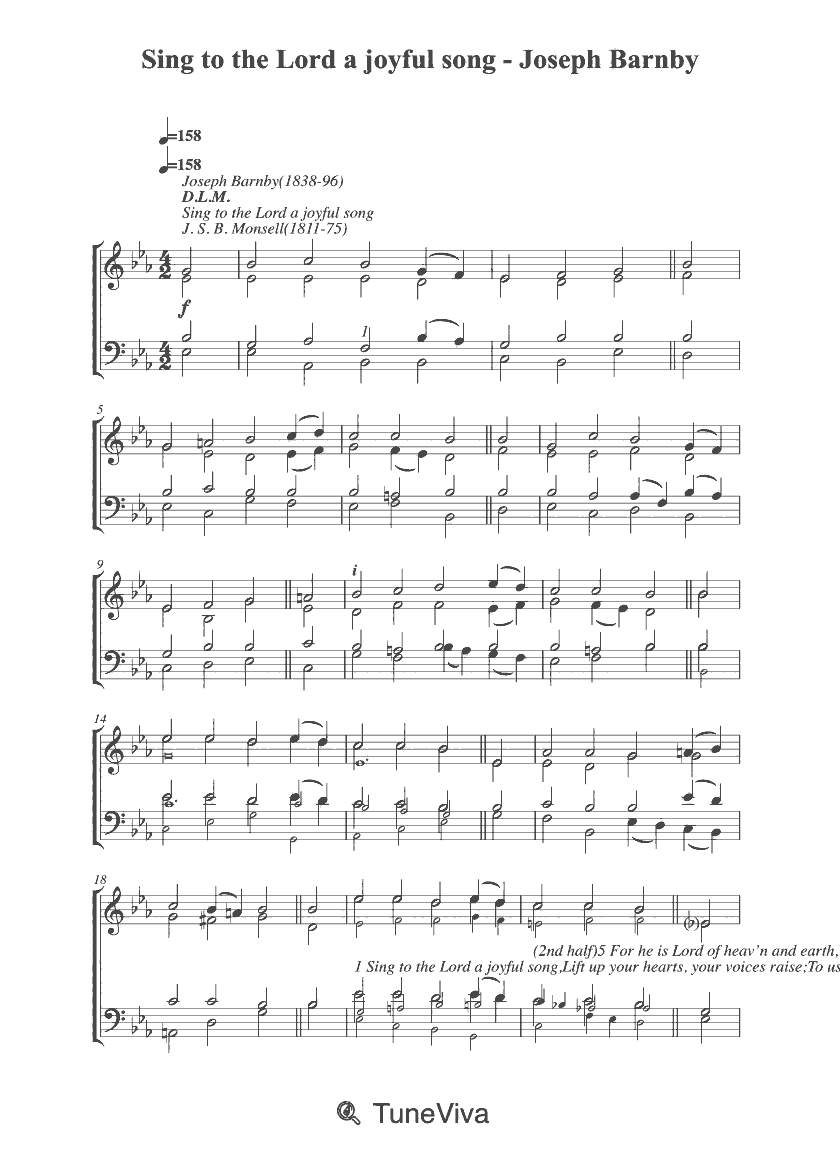
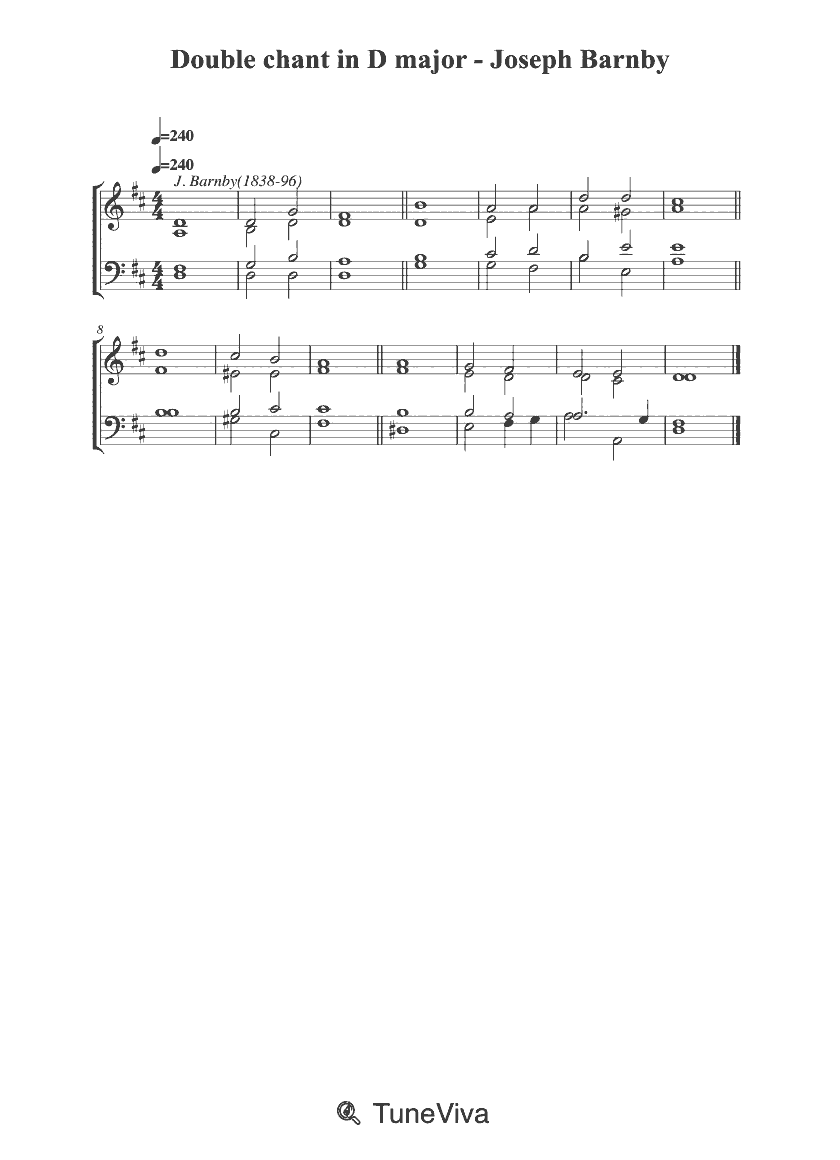
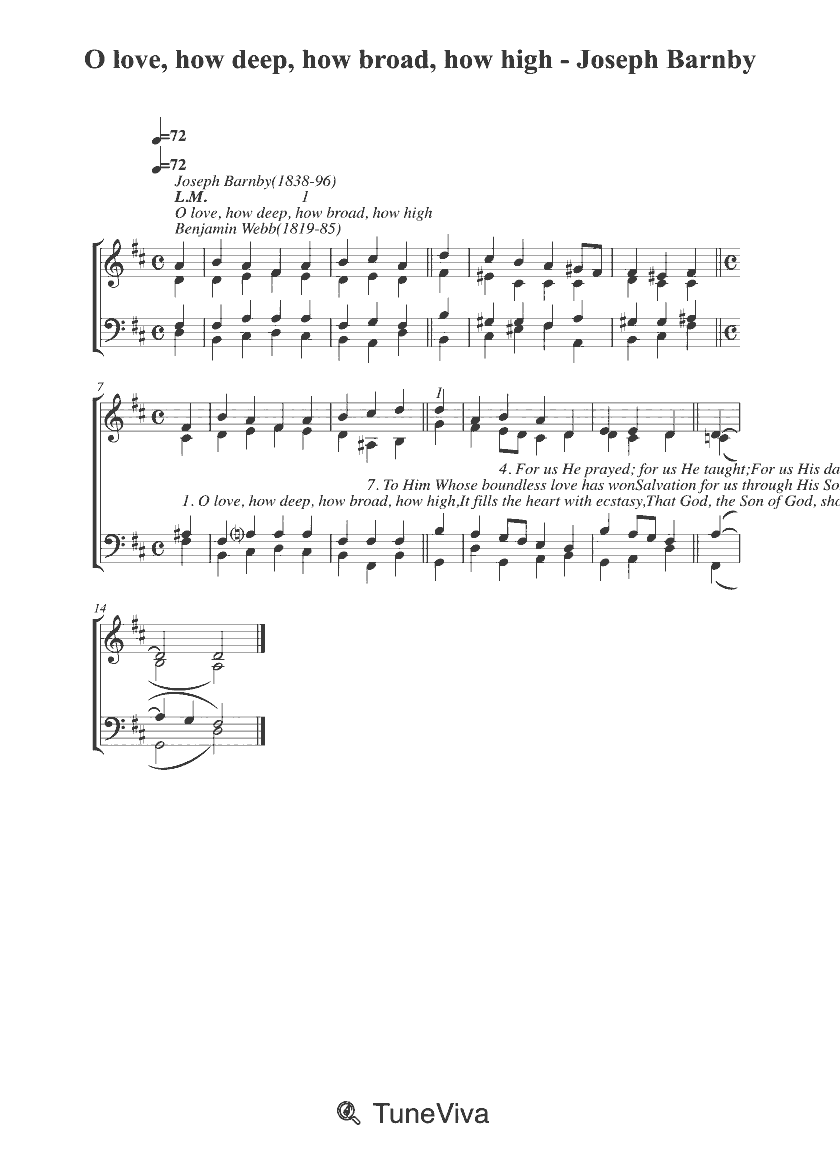
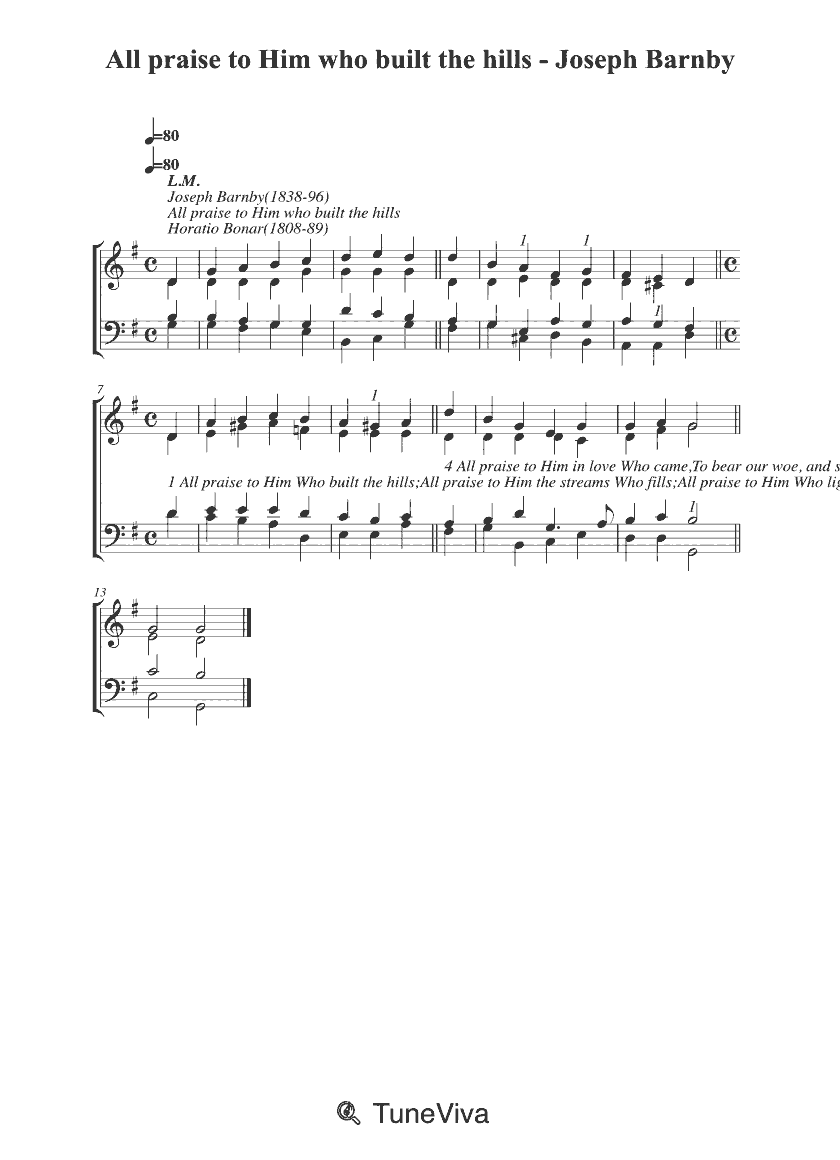
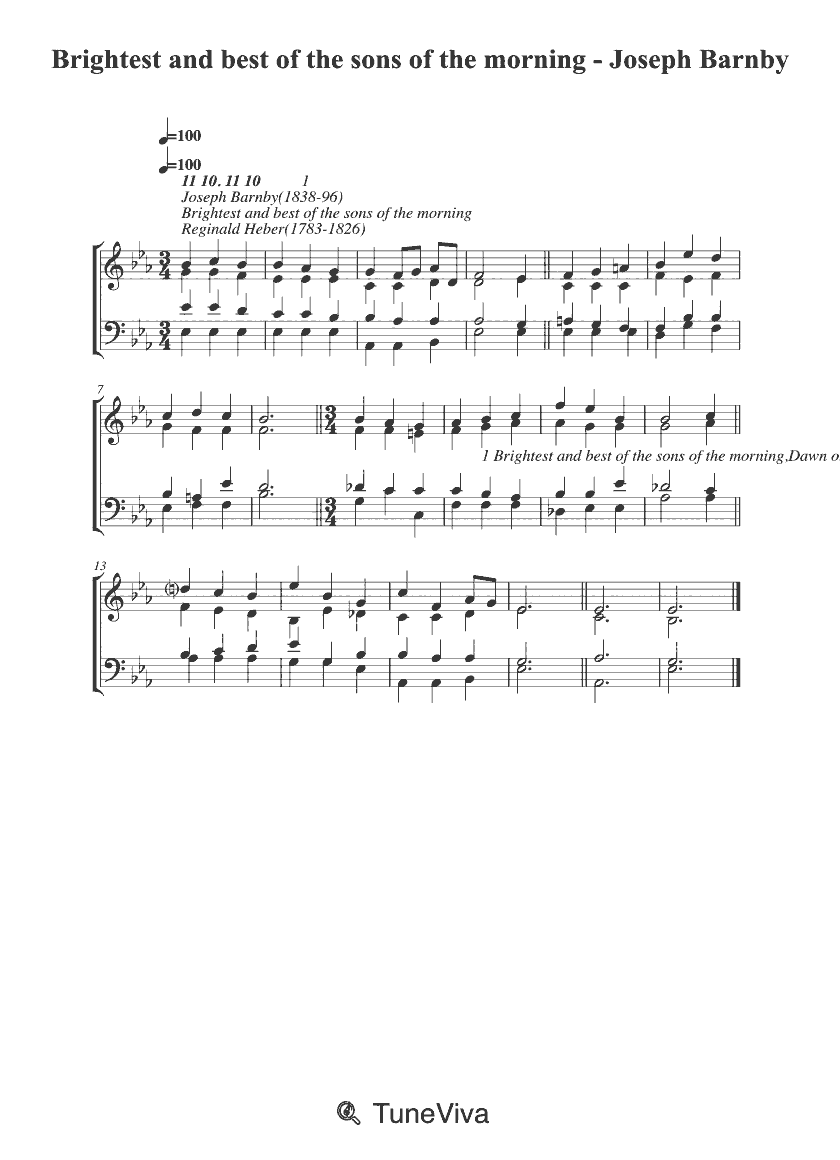
The TuneViva collection holds 118 Barnby scores. Most are short, texted pieces built for singing, from the parlour part-song Sweet and low to hymn settings such as Jesu, my Lord, my God, my all and The day Thou gavest, Lord, is ended. It is practical music, written by someone who spent his life in churches, schools, and large choirs.
Born in York on 12 August 1838, Barnby sang as a boy at York Minster before studying at the Royal Academy of Music. His first major London post came in 1862, as organist of St Andrew's, Wells Street. In 1871 he took charge of the Royal Albert Hall Choral Society, a position he held until his death.
His institutional career was unusually varied. He was precentor and director of music at Eton College from 1875, and in 1892 he became principal of the Guildhall School of Music, receiving a knighthood in the same year. His hymn tunes were reprinted widely in parish and school hymnals. The scale of his hymn output is often given as 246 tunes, gathered in a memorial volume published in 1897, the year after he died.
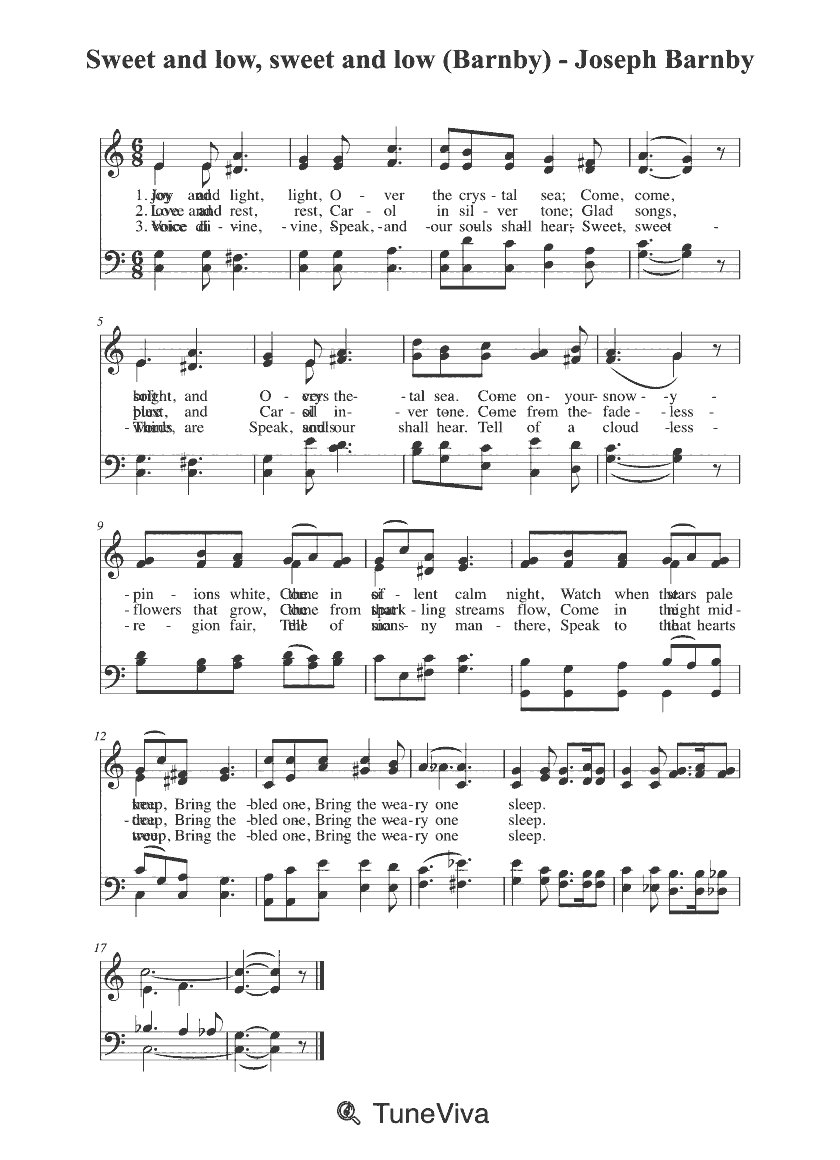
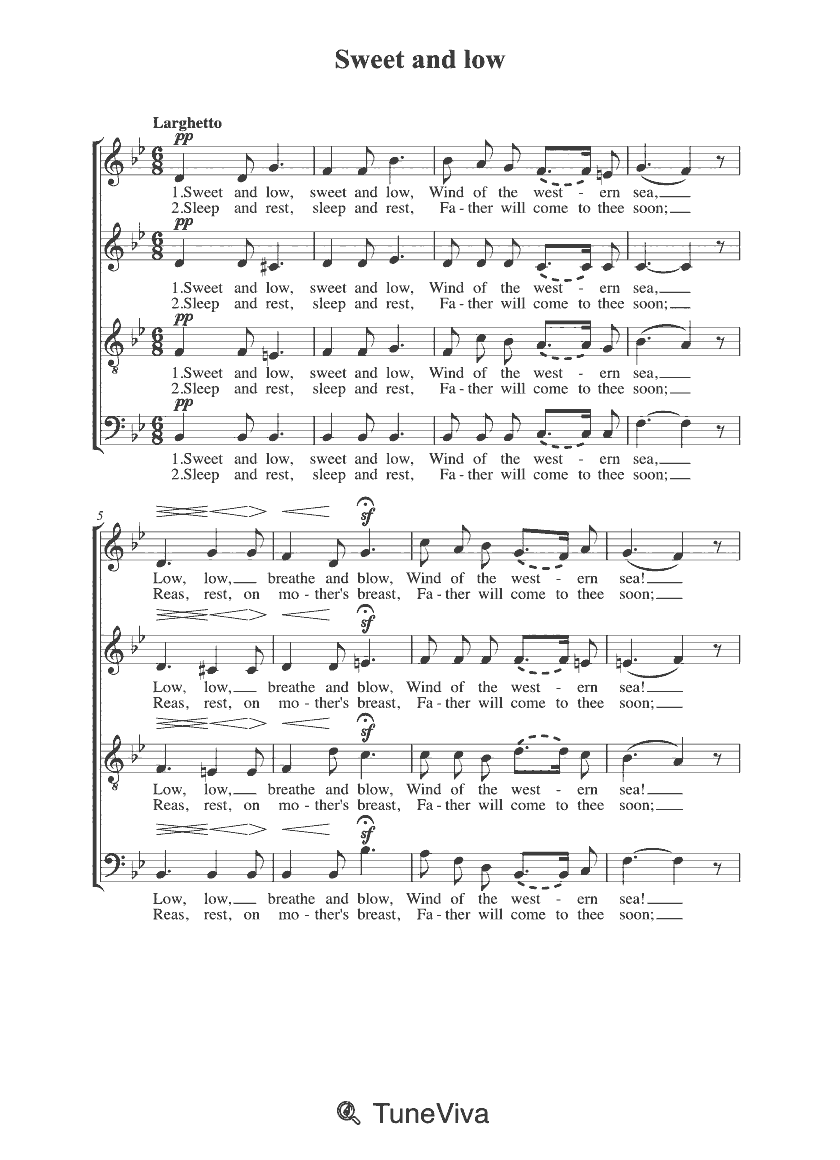
Barnby's catalogue is not limited to hymnody. He composed the oratorio Rebekah, an anthem on Psalm 97, services, anthems, partsongs, songs, and organ pieces. The part-song Sweet and low, a setting of Tennyson's lullaby, became one of the most widely sung Victorian parlour pieces and is the most-viewed Barnby item on this site. His experience conducting large choral forces is audible in the firm, well-spaced part-writing of the anthems. He died on 28 January 1896.
Expect four-square rhythms, clear cadences, and harmonies that support a text rather than decorate it. The hymn tunes sit comfortably under the hand and reward steady, unhurried playing; the part-songs need voices, with the tenor and bass lines doing more than harmonic filling. Sweet and low shows Barnby's lighter, parlor manner, while the anthems ask for organ registration and a choir that can shape a phrase. Nothing here is virtuosic, but the best of it is finely made and easy to overplay.
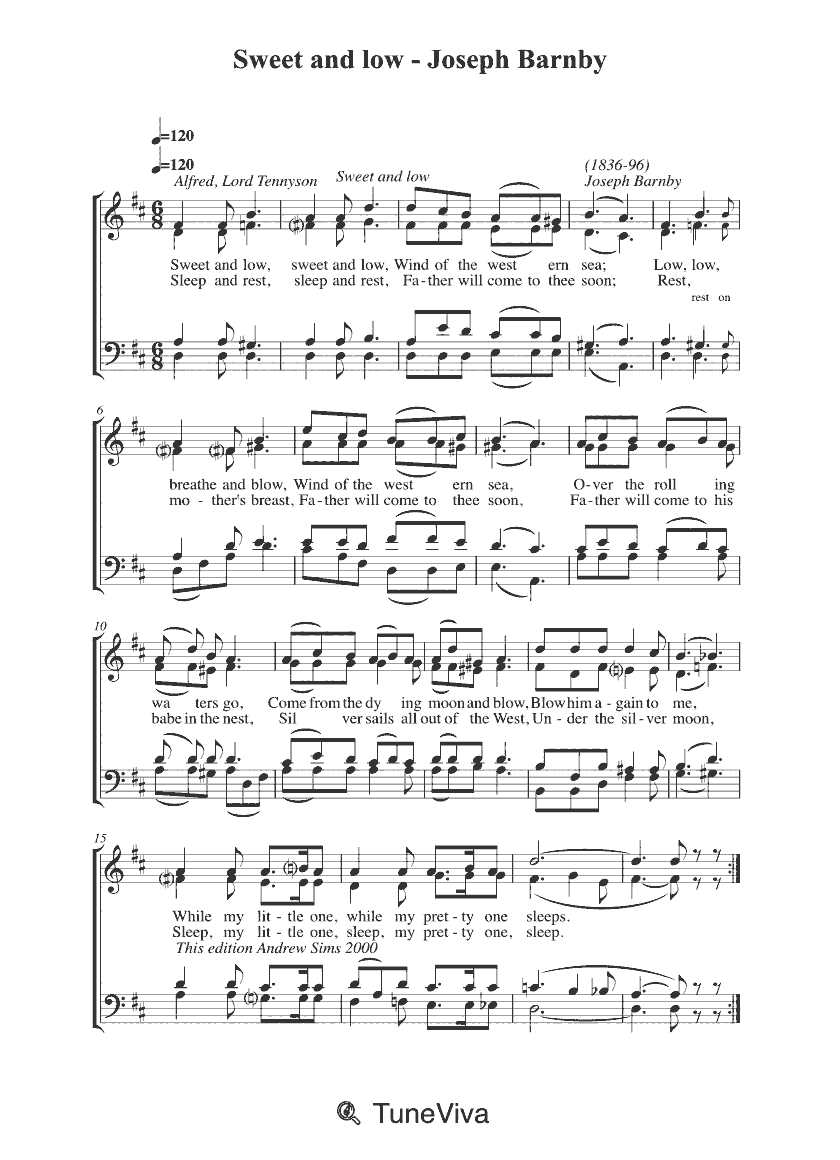
Barnby's setting of Tennyson's lullaby, the most-viewed piece in the collection and a staple of Victorian part-singing.
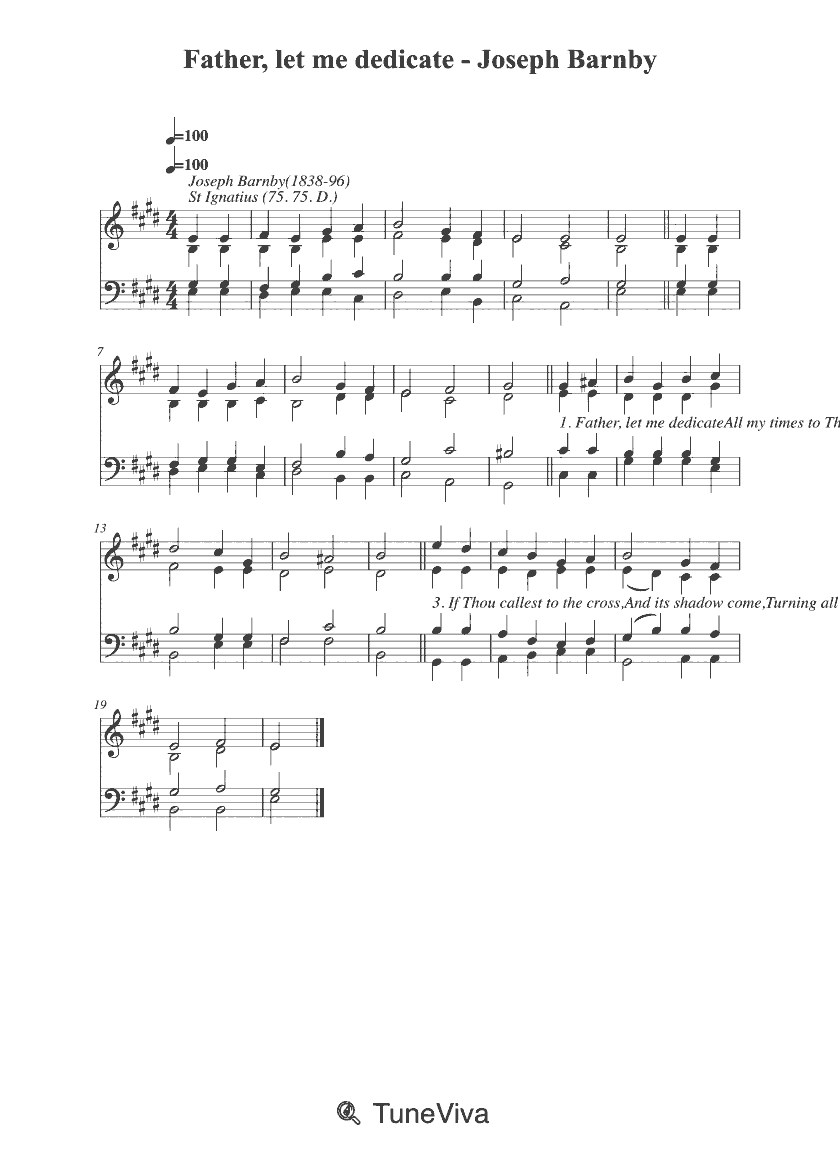
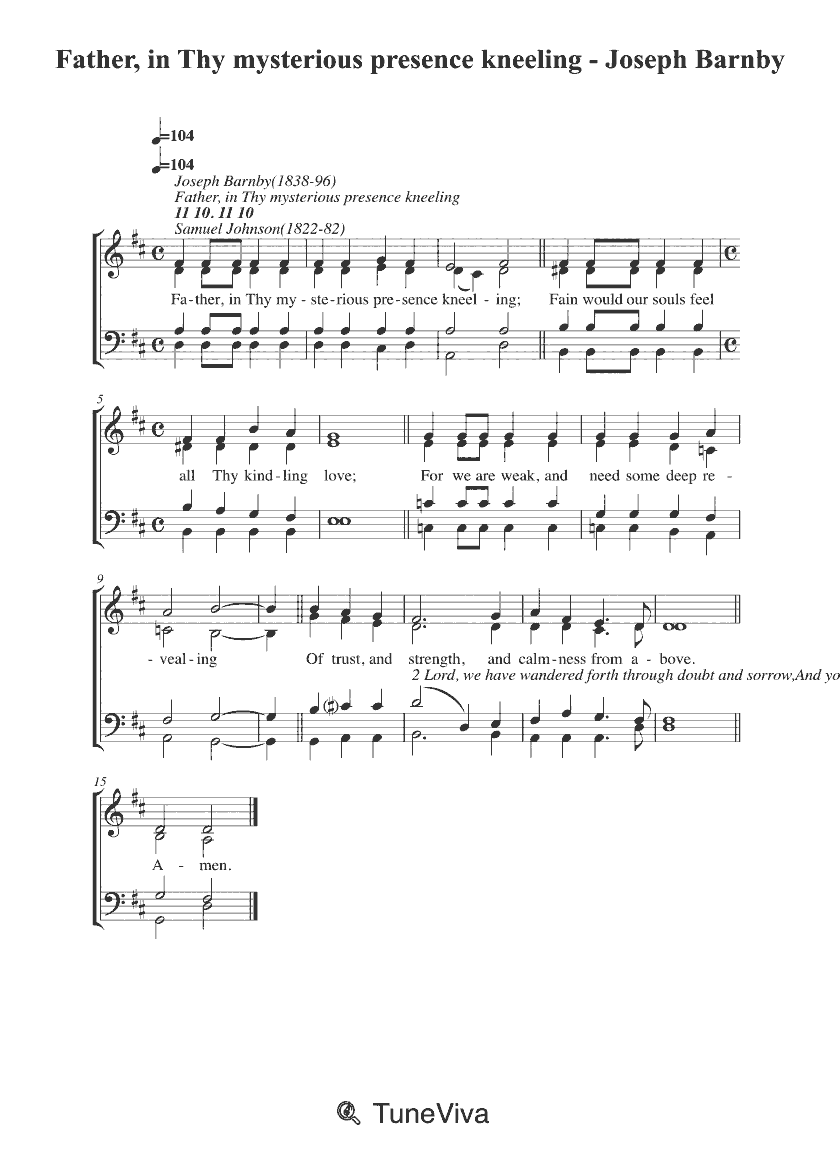
A hymn setting that shows his gift for matching simple, singable harmony to familiar devotional texts.
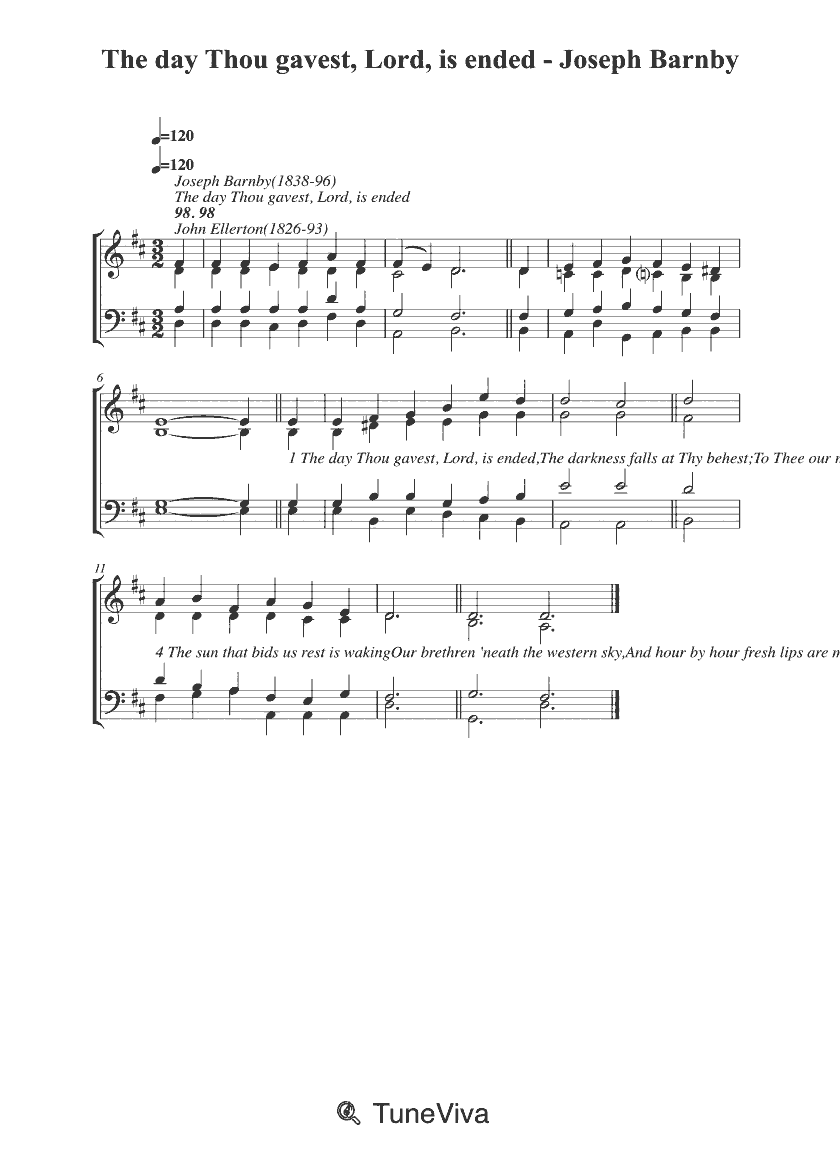
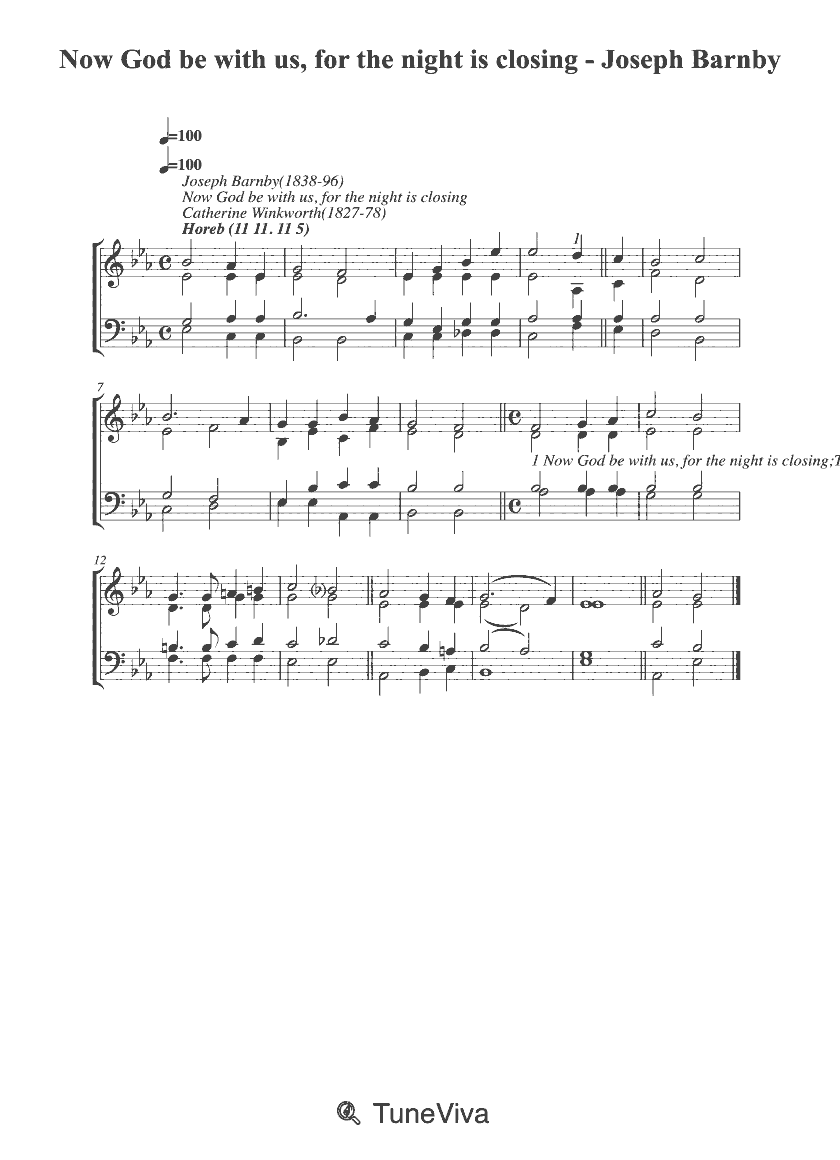
A setting of the evening hymn, in the hymnal tradition Barnby spent his career serving.
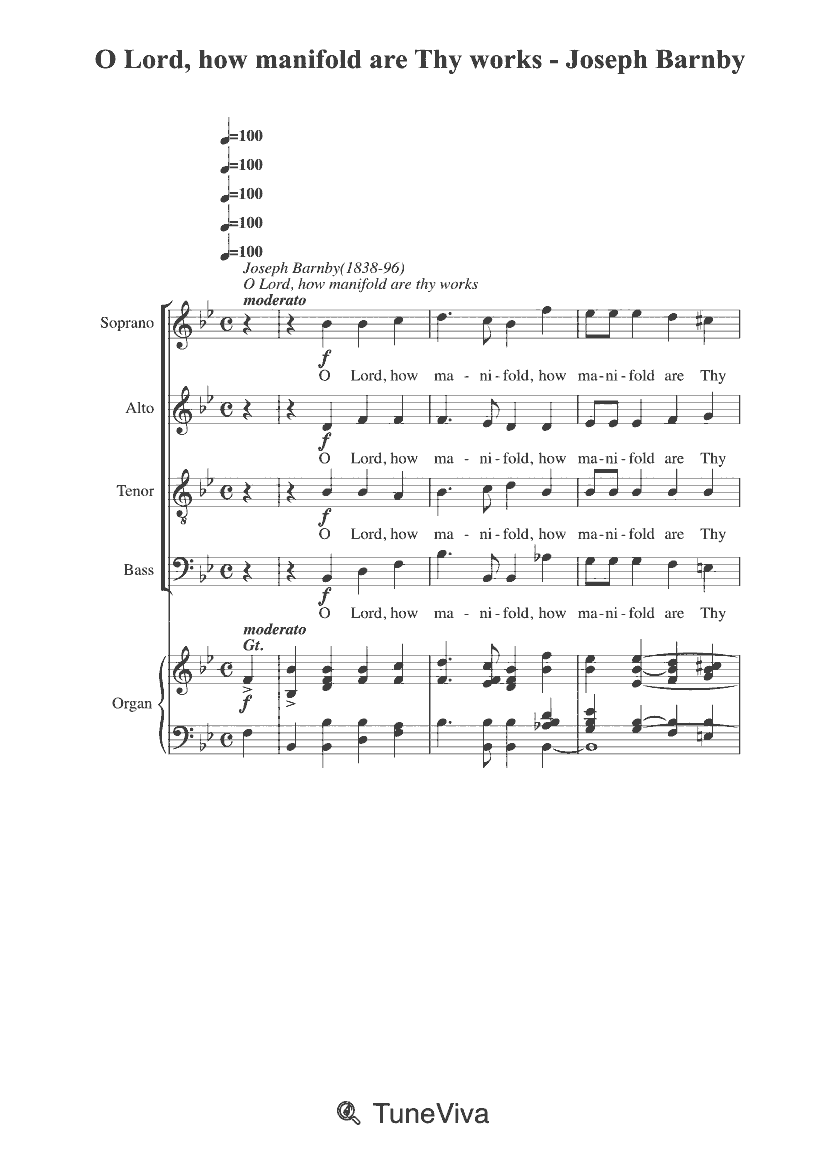
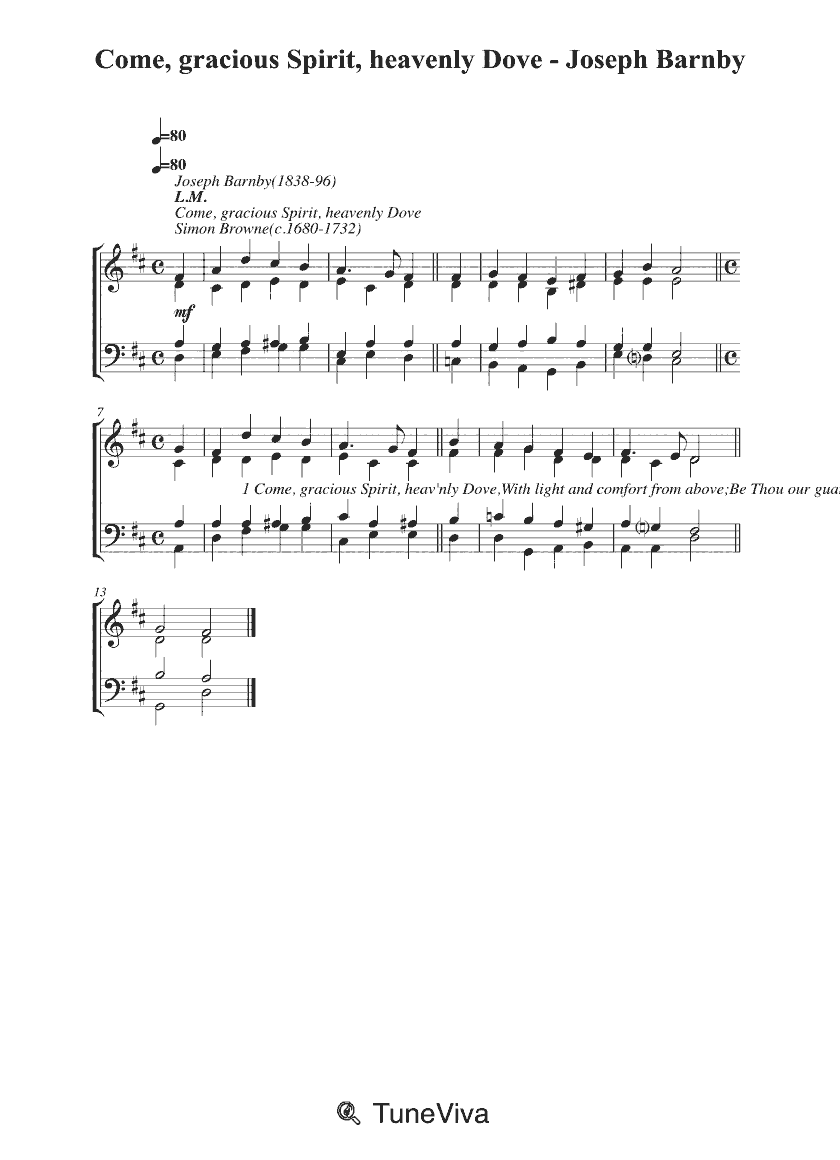
An anthem demonstrating the church choral style he cultivated in London and at Eton.
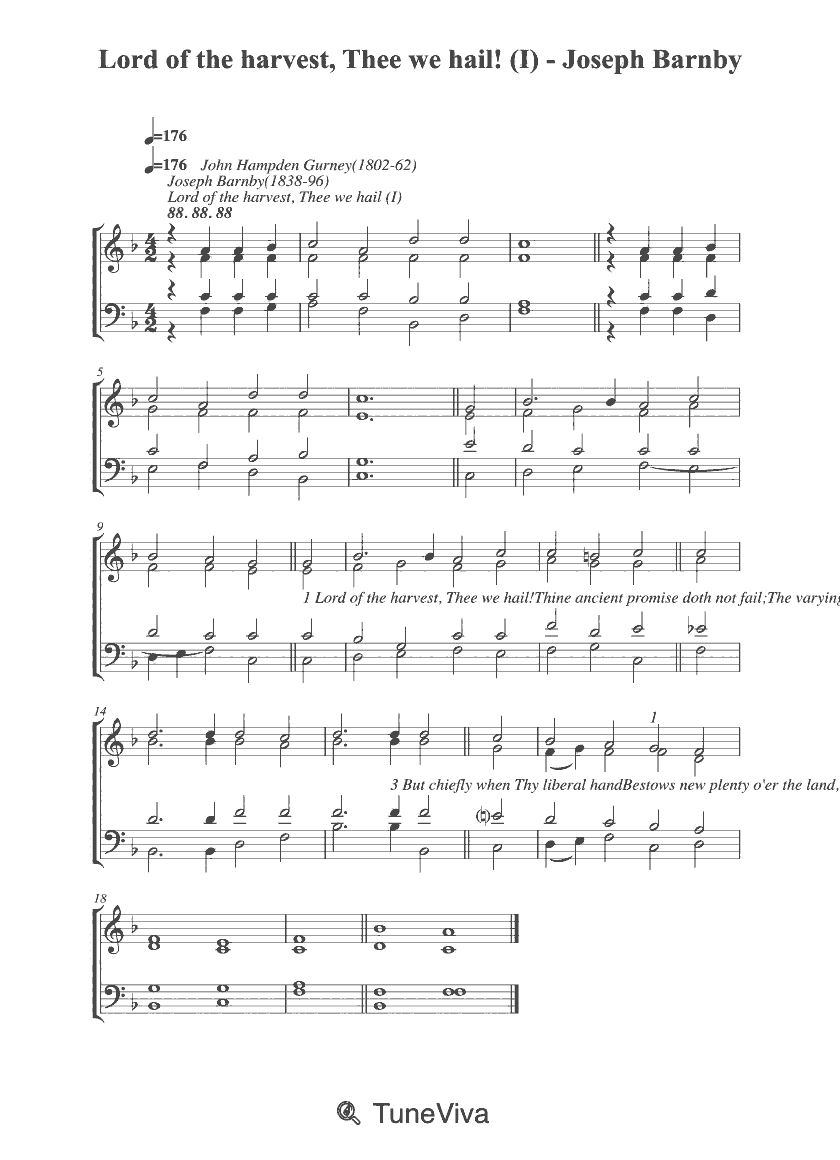
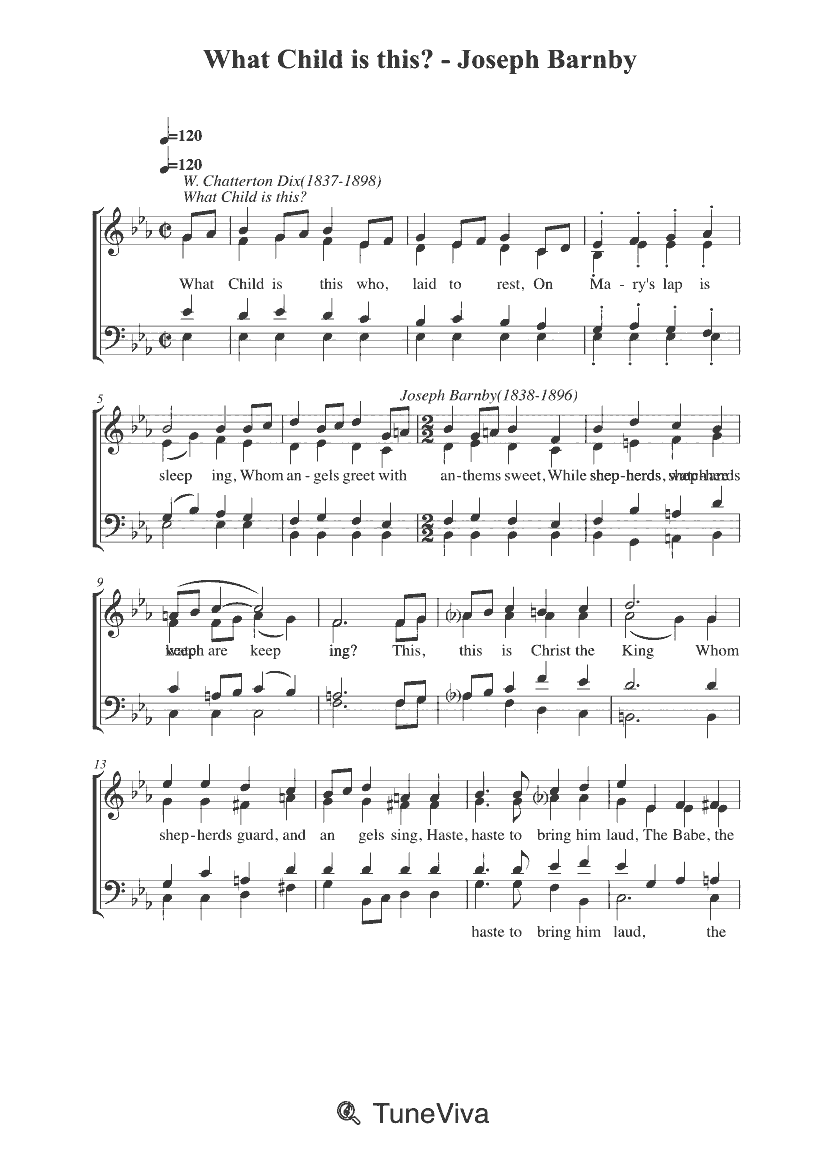
A seasonal hymn setting that shows how readily his tunes fitted the church calendar.
Both. He wrote an oratorio, anthems, services, partsongs, and songs, but he is remembered chiefly for roughly 246 hymn tunes, collected in a memorial volume in 1897.
Sweet and low is the most-viewed score here and the easiest way into his part-song style; for hymn playing, try Jesu, my Lord, my God, my all.
Yes. The scores in this collection are public domain and can be previewed, transposed, and downloaded as PDFs.
Catalog editions and arrangements attributed to Joseph Barnby.