classical
3 tracks
William Henry Havergal spent most of his working life in English parishes, and the music he wrote was shaped by that setting: chants for the daily office, hymn tunes for congregations, and anthems for a parish choir. A carriage accident in 1829 left him with concussion, and he later said that music was what relieved it; whatever the medical truth of that, the composing began in earnest afterwards.
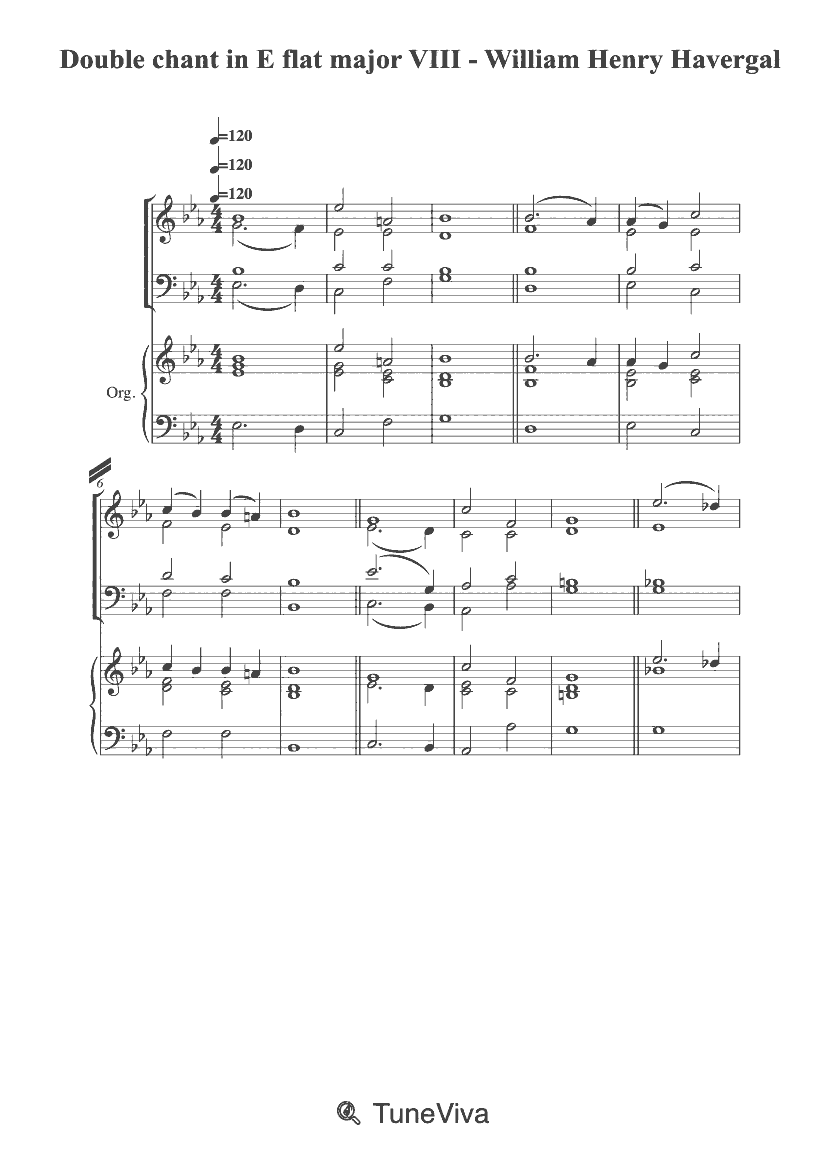
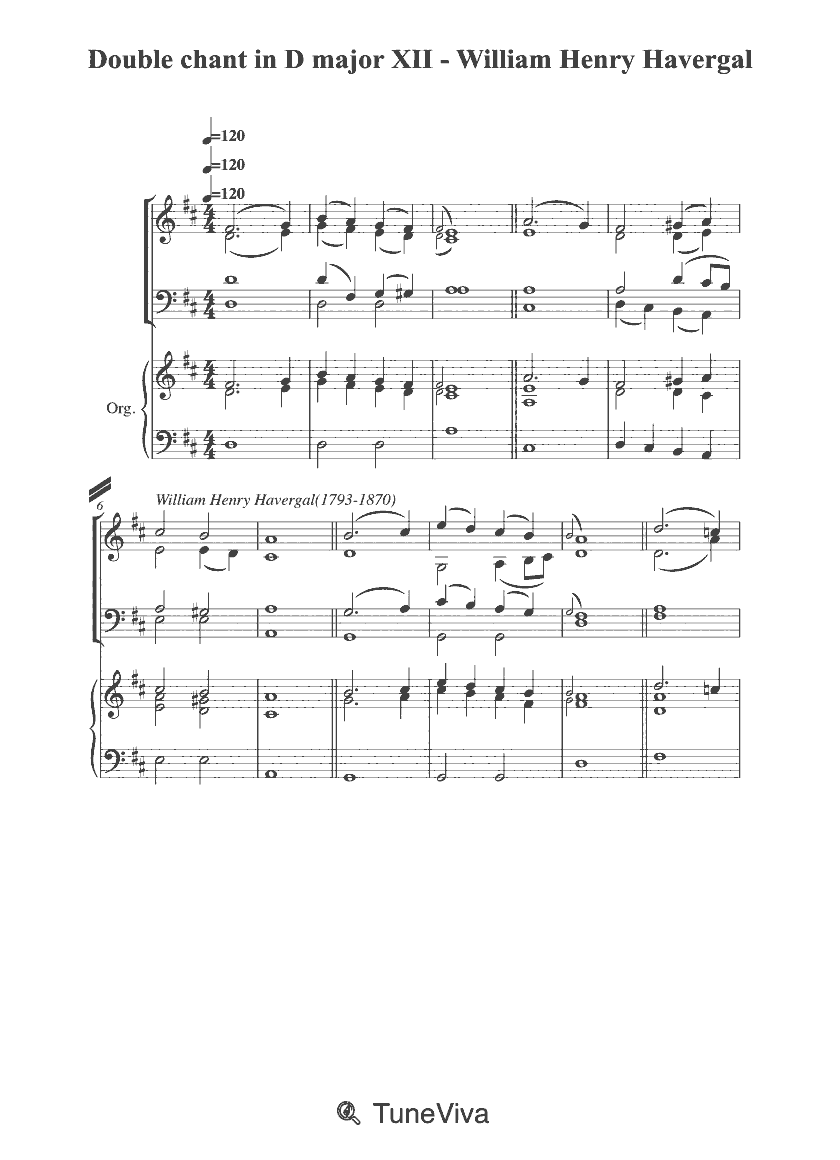
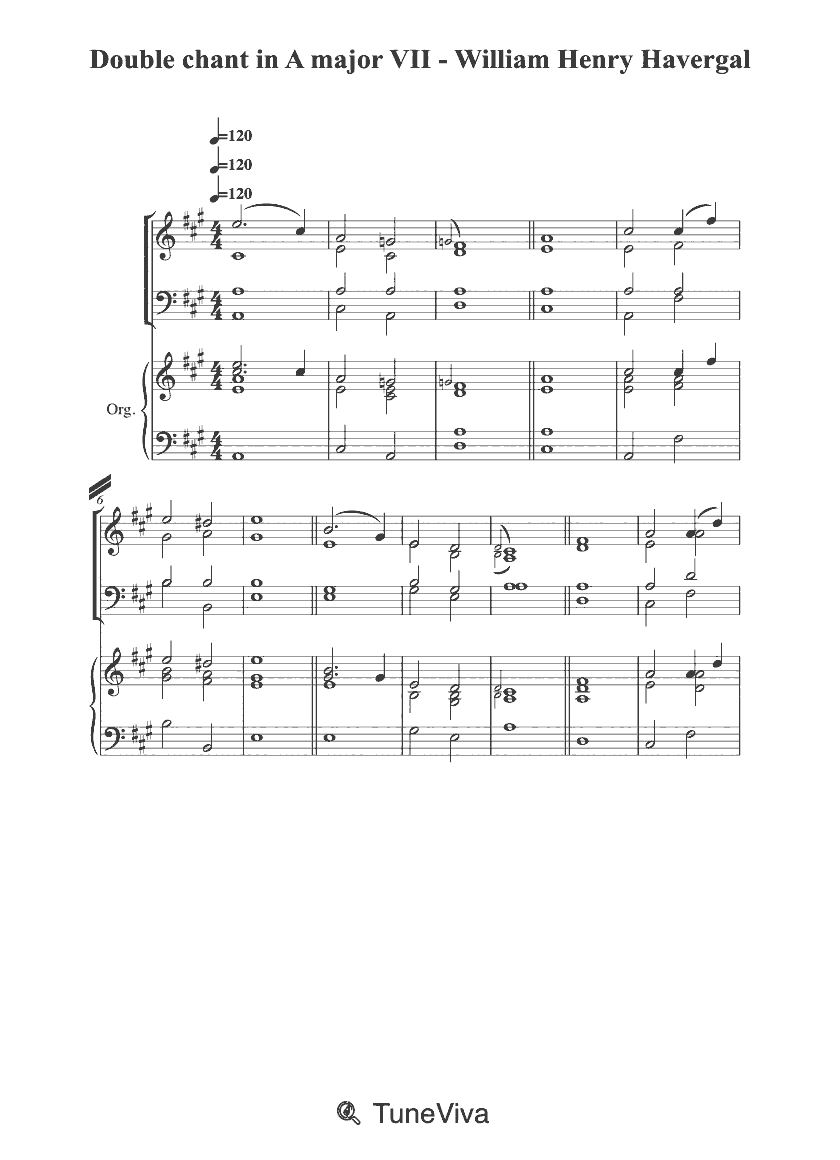
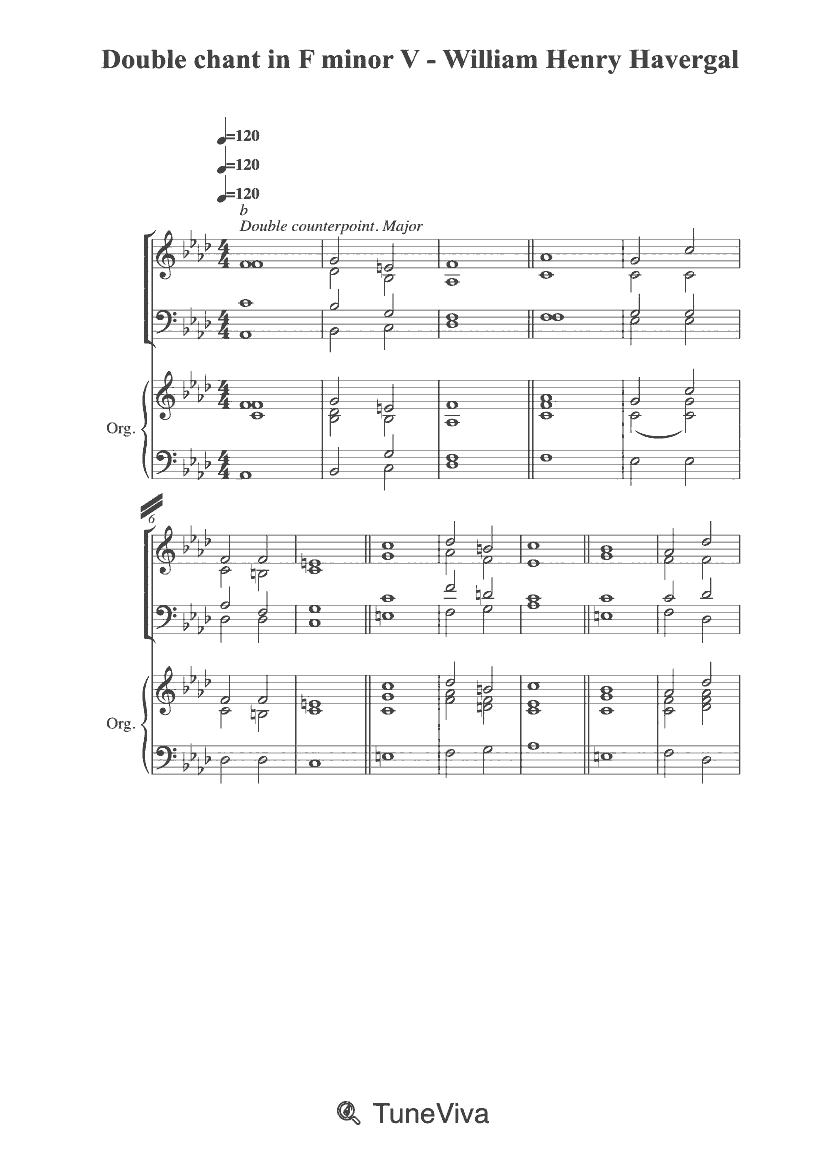
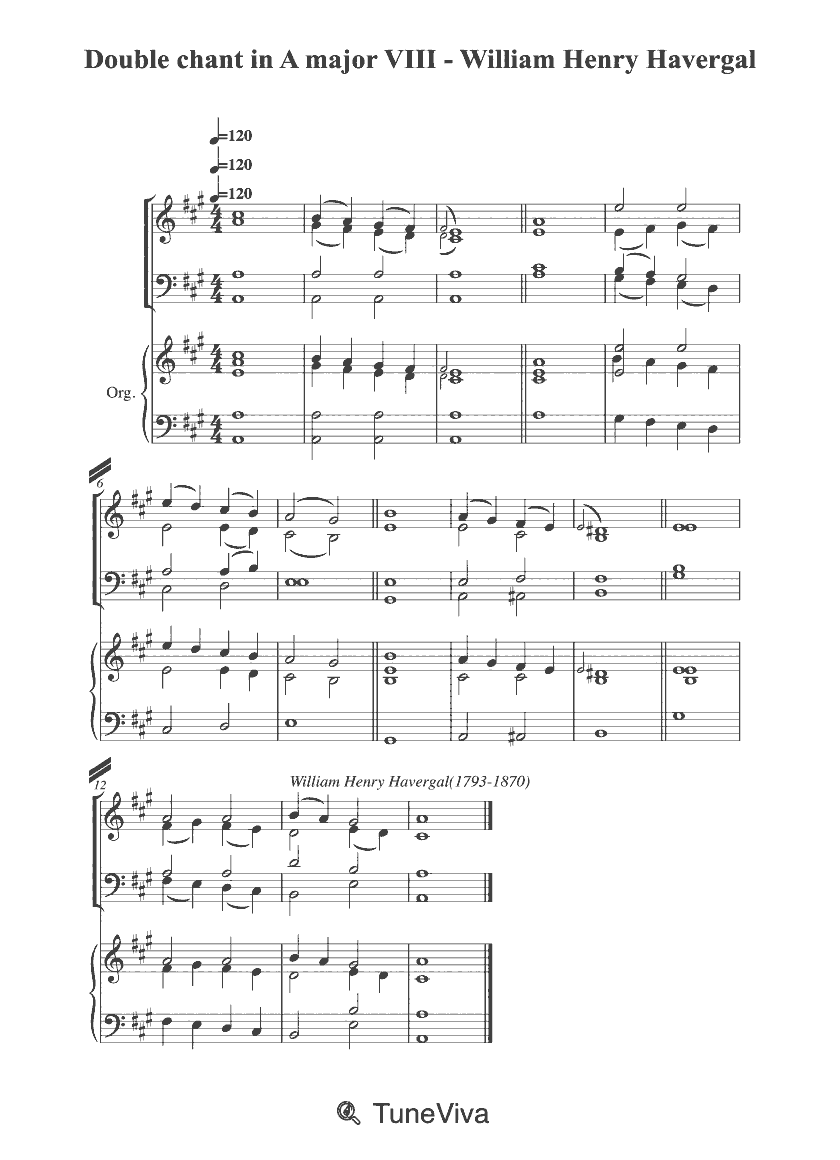
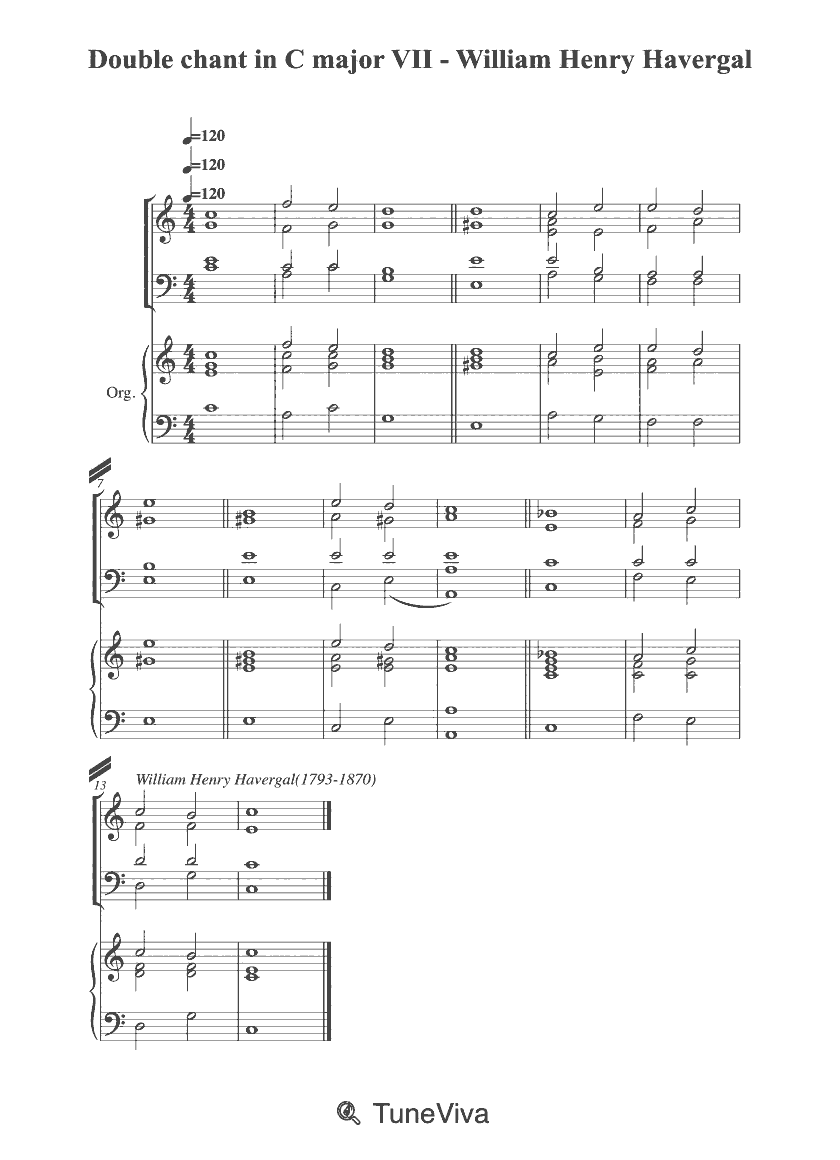
TuneViva holds 102 Havergal scores, the largest group being the double chants — numbered settings in D, G, E flat, A, F minor, and C. Around them sit hymns such as Christ, whose glory fills the skies, Christian! seek not yet repose, and The worcester christmas carol. It is music written for use.
Havergal was born on 18 January 1793 and educated at Merchant Taylors' School and St Edmund Hall, Oxford. He was ordained deacon in 1816 and priest in 1817, served curacies at Coaley and Astley, and became rector of Astley in 1829. In 1842 he moved to St Nicholas, Worcester, where he was later an honorary canon of the cathedral, and in 1860 he became perpetual curate of Shareshill near Wolverhampton. He resigned that post in 1867 and died at Leamington Spa on 19 April 1870.
His music sits within the nineteenth-century attempt to restore English metrical psalmody. He reprinted Ravenscroft's The Whole Booke of Psalmes in 1844, published Old Church Psalmody in 1847, and issued A Hundred Psalm and Hymn Tunes in 1859, a collection entirely of his own. He won the Gresham prize medal in 1836 for an Evening Service in A and again in 1841 for the anthem Give Thanks. His tune Evan and the sacred song Summer Tide is Coming were widely sung, and his Recte et Retro chant in C became known as the Worcester chant.
He lost most of his sight in 1832, which did not stop him writing or publishing. His daughter Frances Ridley Havergal became a well-known hymn writer, and his sons Henry East and Francis Tebbs Havergal were also musicians. The TuneViva list reflects his church work rather than his songs and rounds: the double chants are the core, with a handful of hymns and carols that kept his name in parish use.
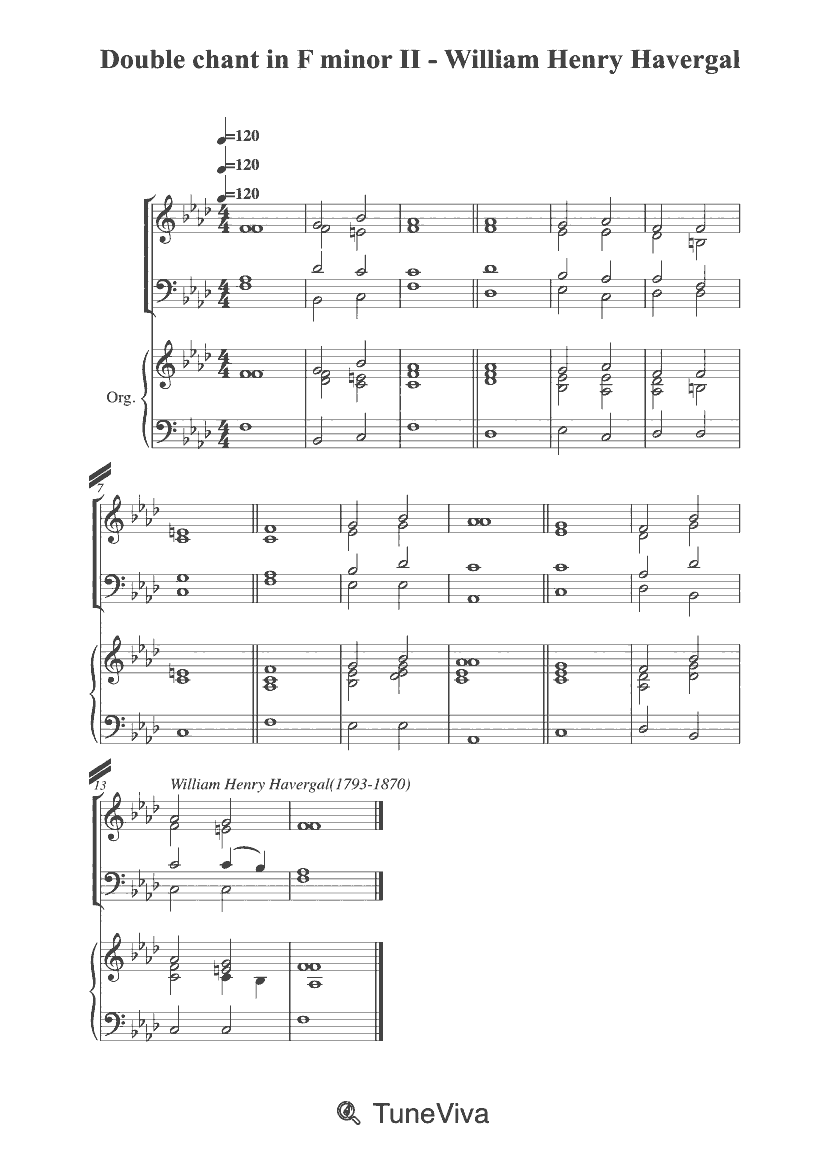
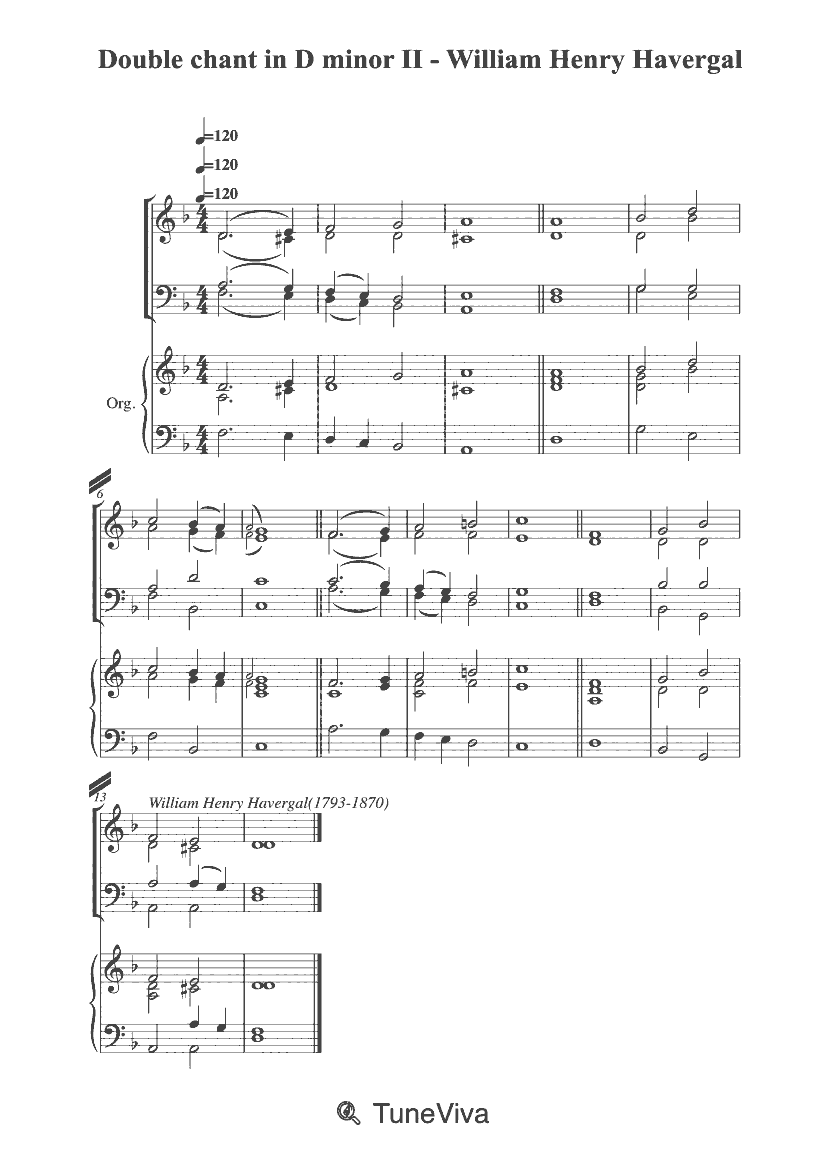
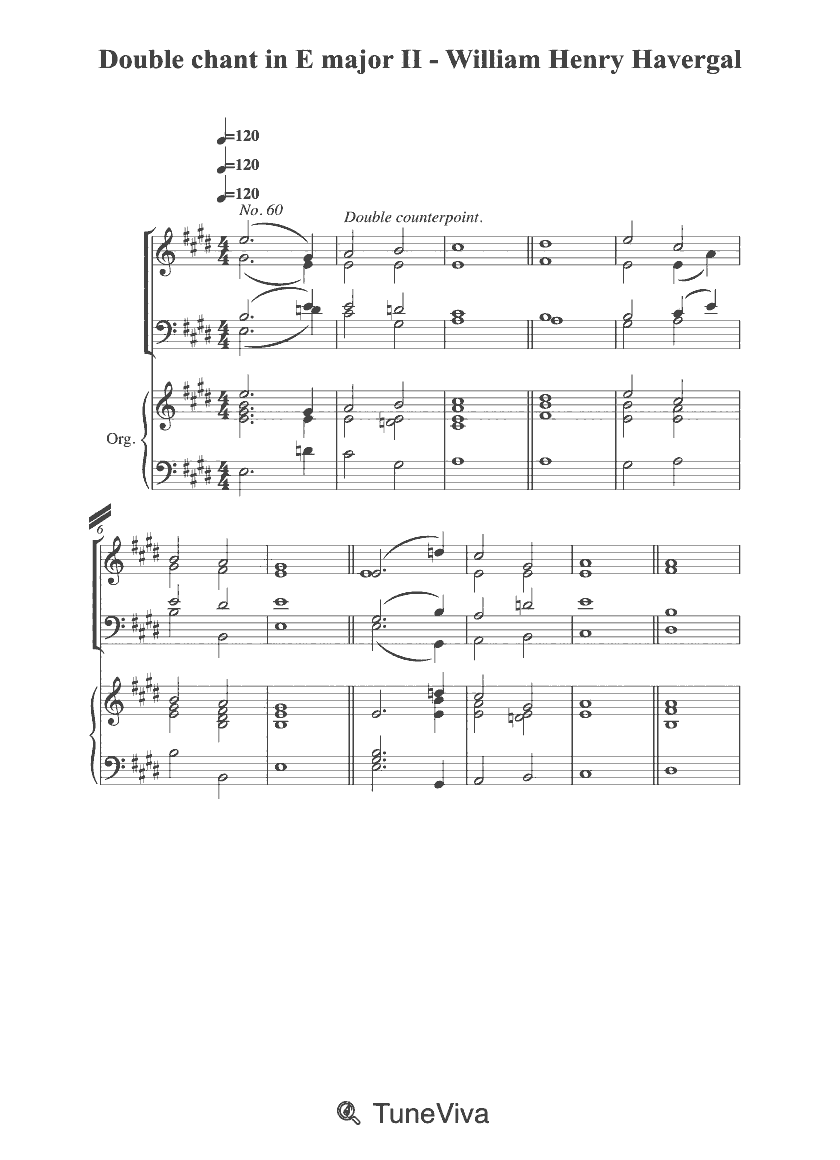
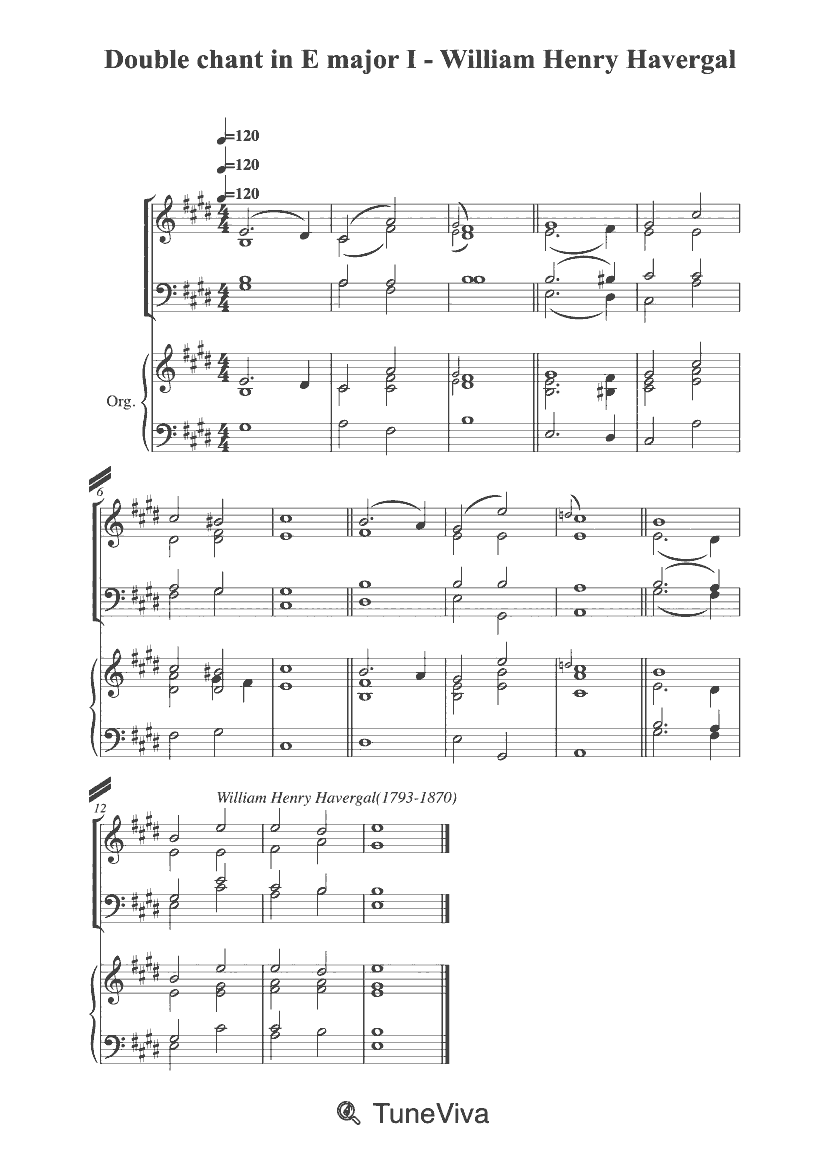
These scores are for church use, and the chants are the place to start. A double chant covers two verses of a psalm: expect a short intonation, a reciting chord, and a cadence that returns the choir to the text. Keep the pace even and let the words set the length of each recitation. The hymn tunes are four-square and easy to harmonize; the carol is lighter. Organists should register modestly and avoid pulling the tempo around, since the choir and congregation need a stable pulse.
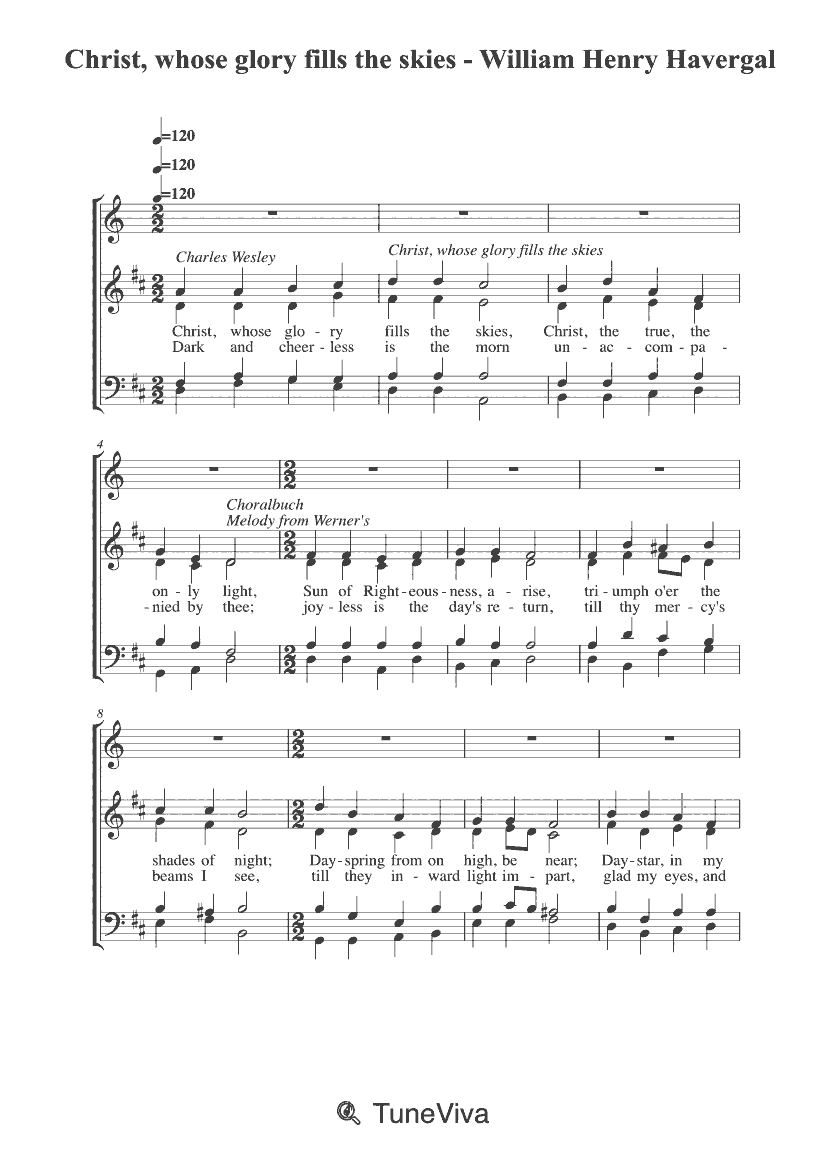
His most-viewed score here, a hymn setting of Charles Wesley's morning text.
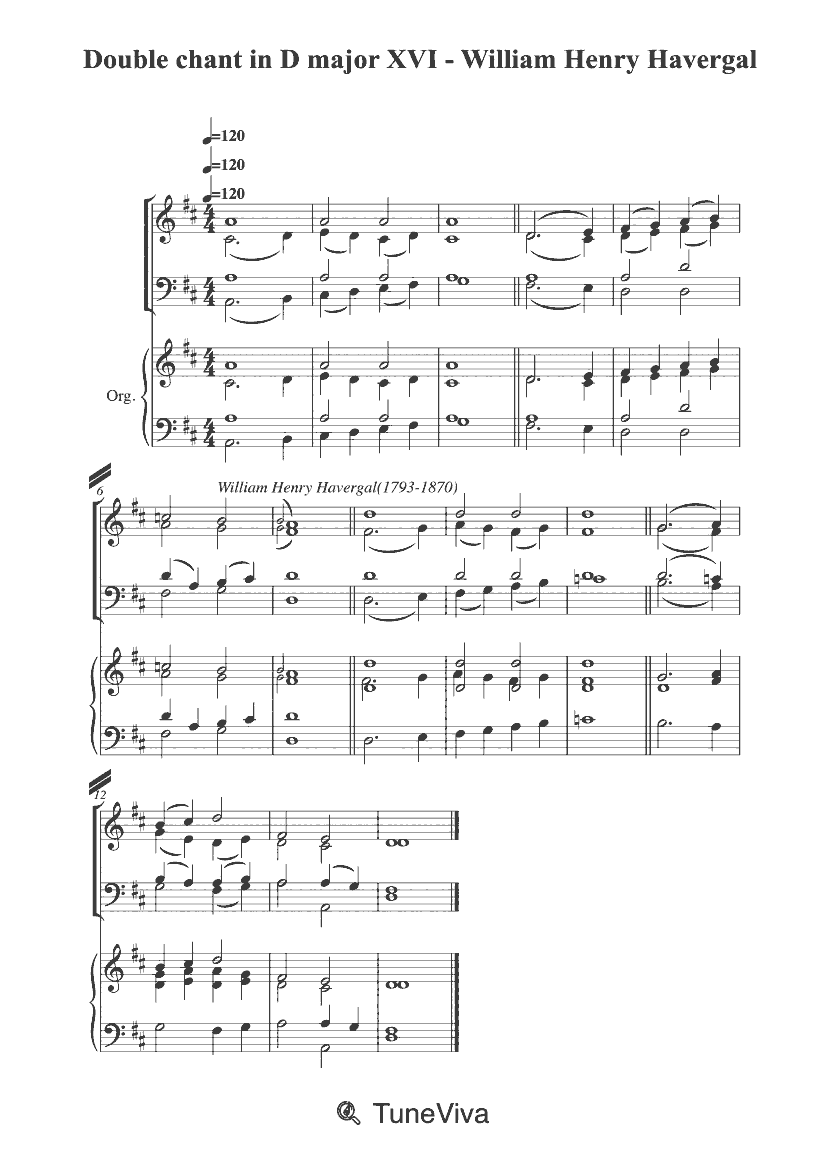
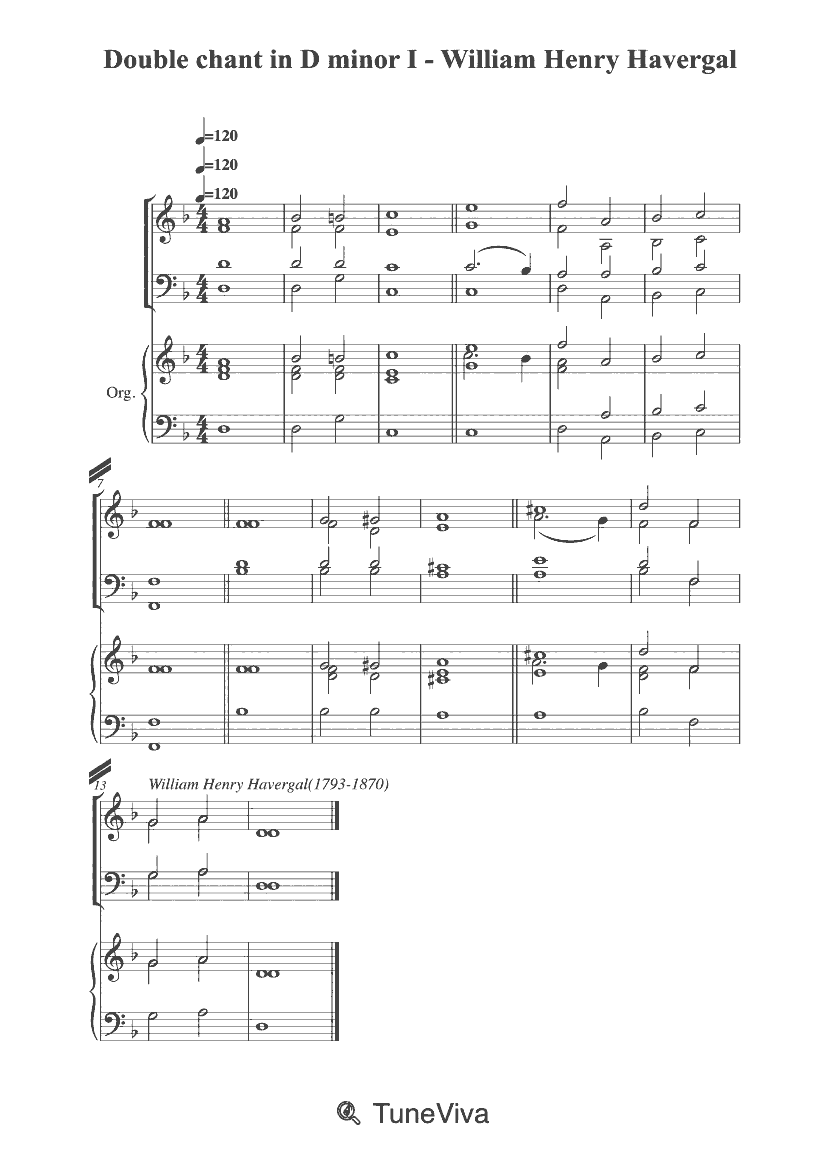
The most-viewed of the numbered double chants, showing the form he used for Anglican psalmody.
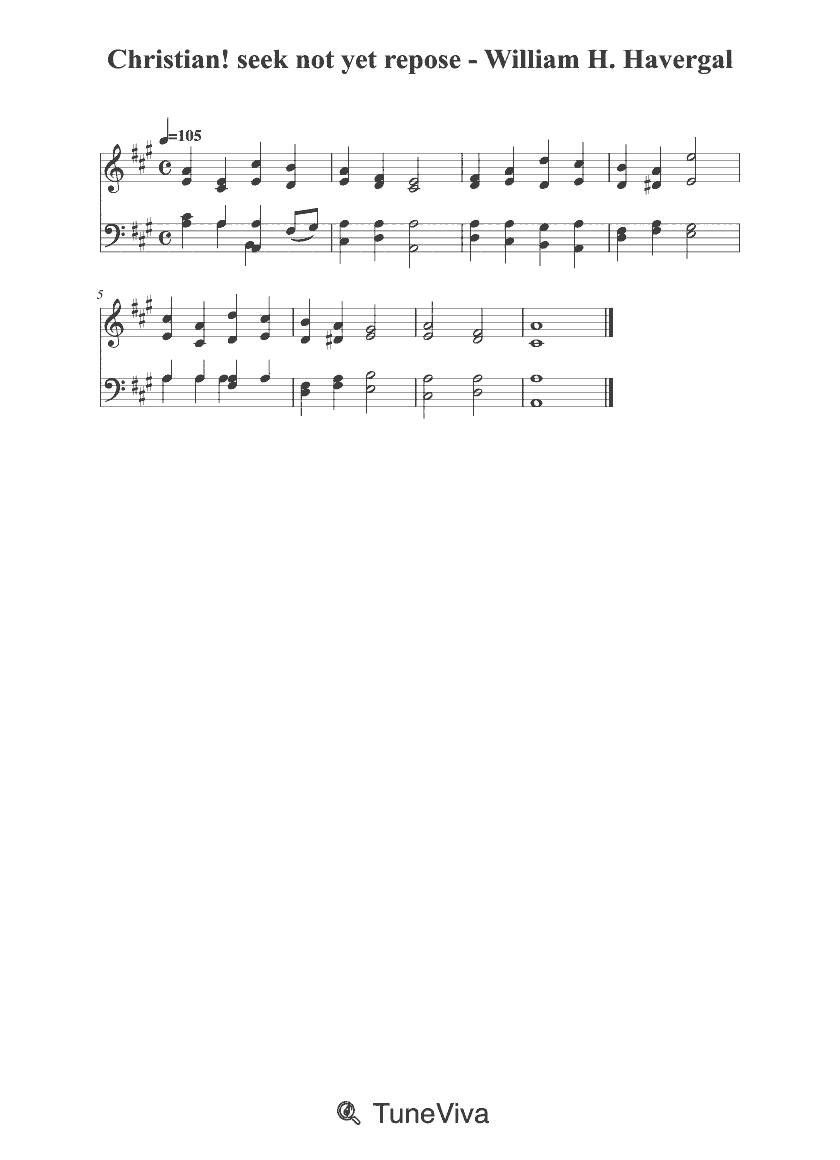
A hymn setting that shows his parish style, with a clear tune and modest harmony.
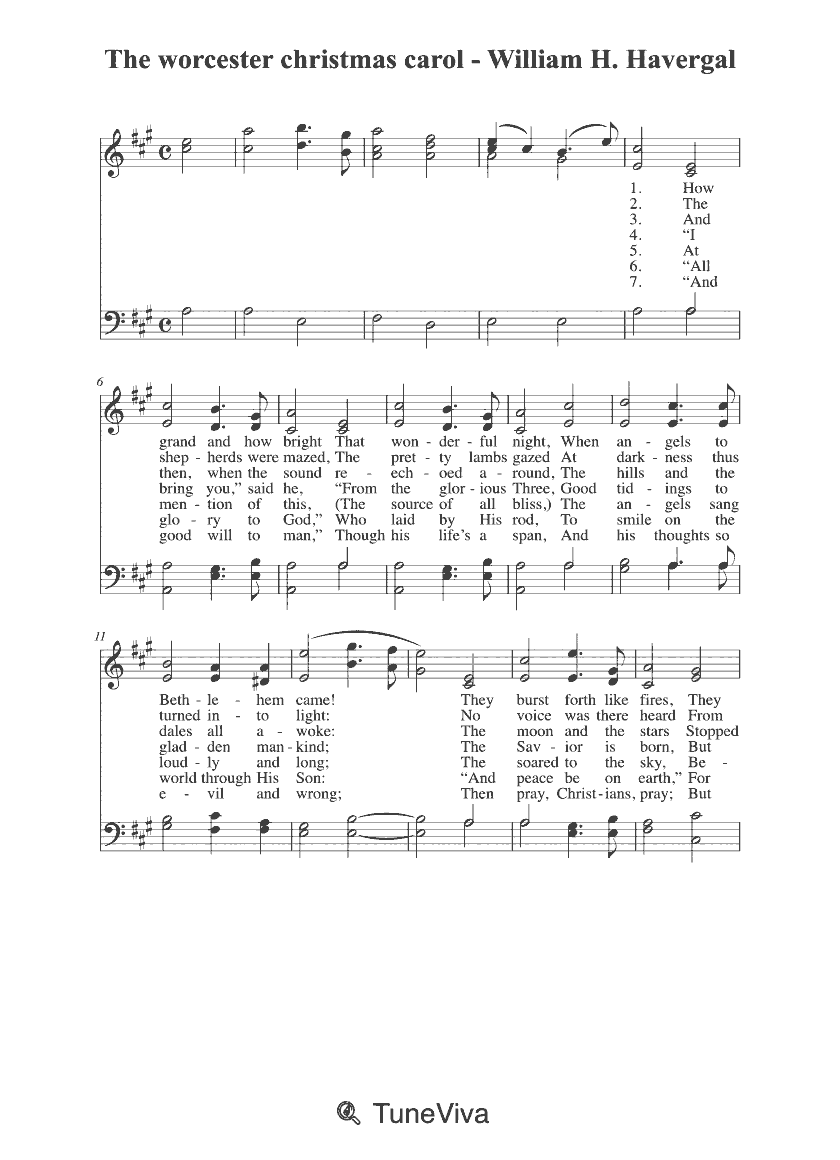
A carol linked to Worcester, where he was rector of St Nicholas from 1842.
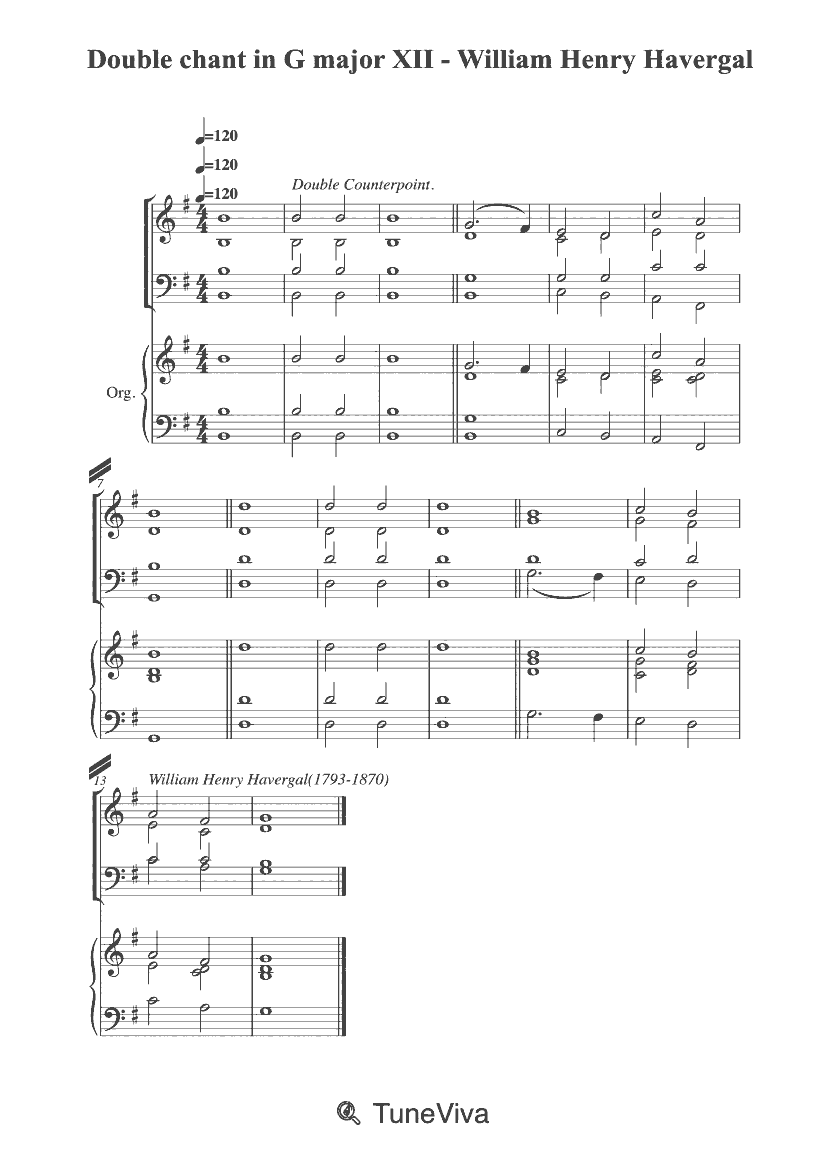
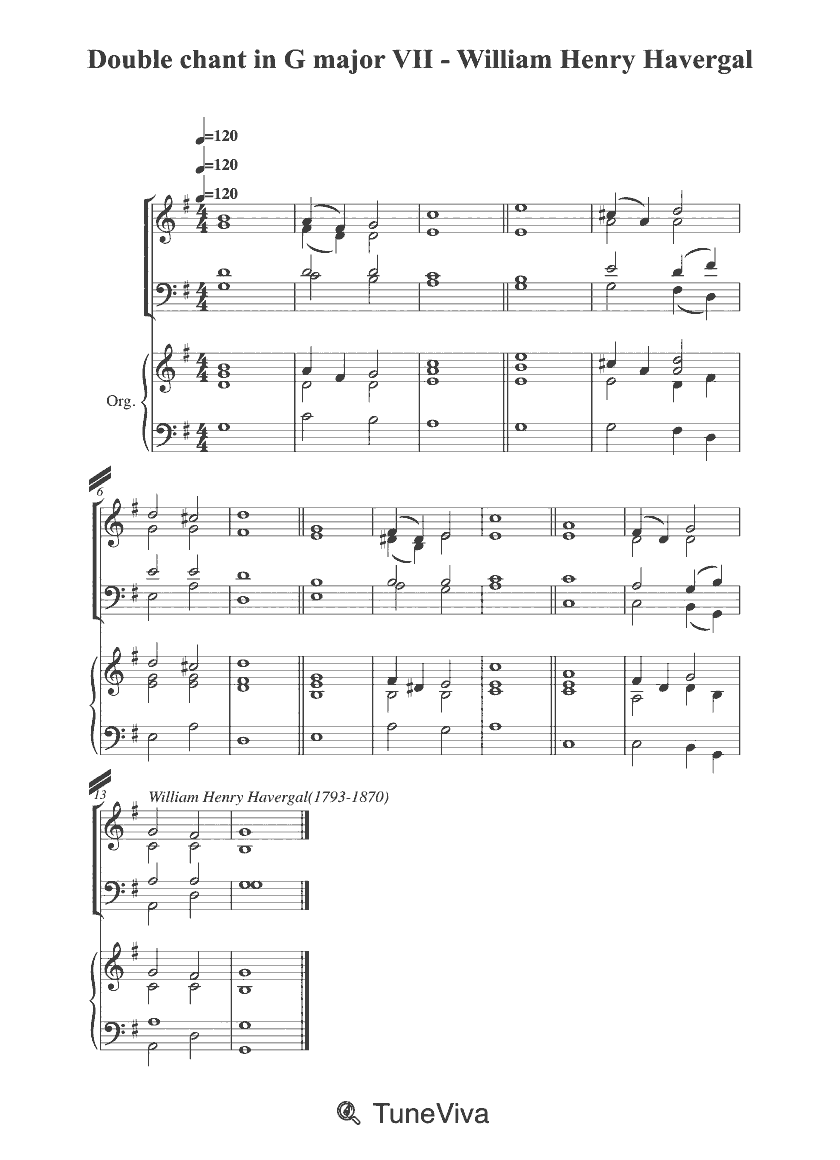
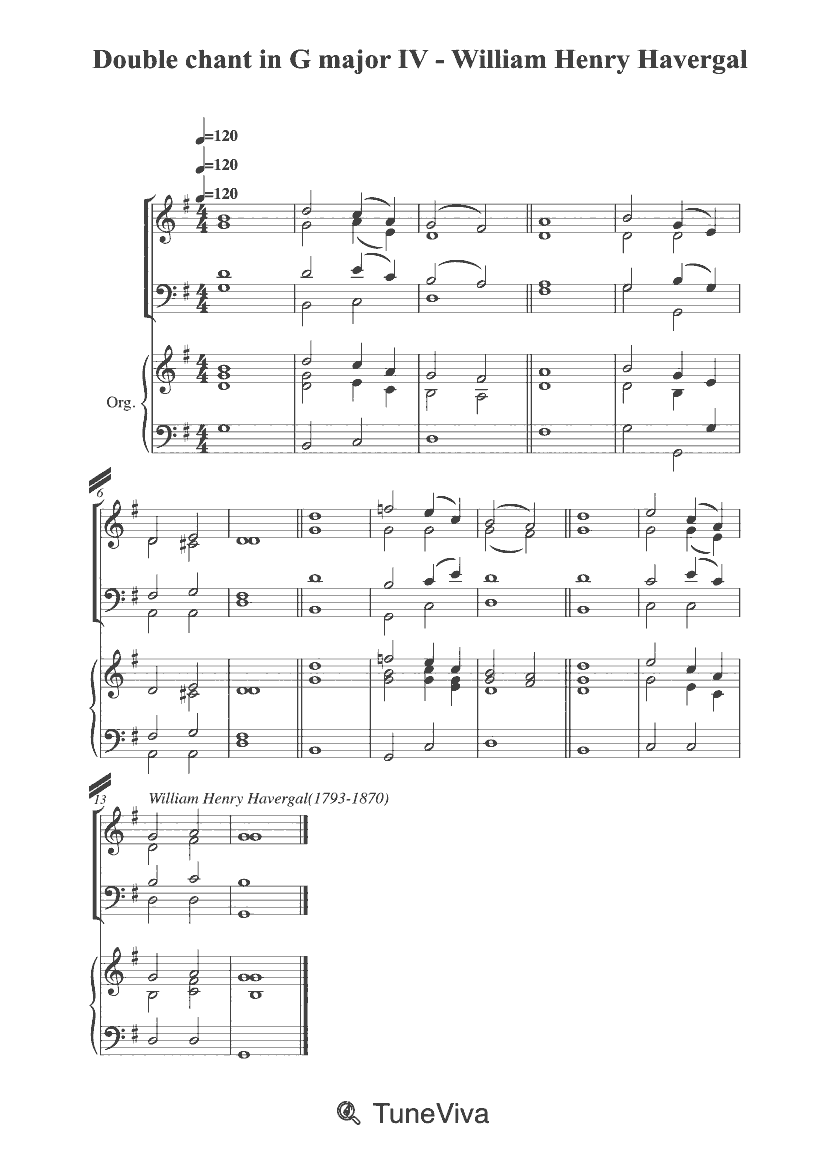
One of several chants in G, useful for comparing how he varies the same key across the set.
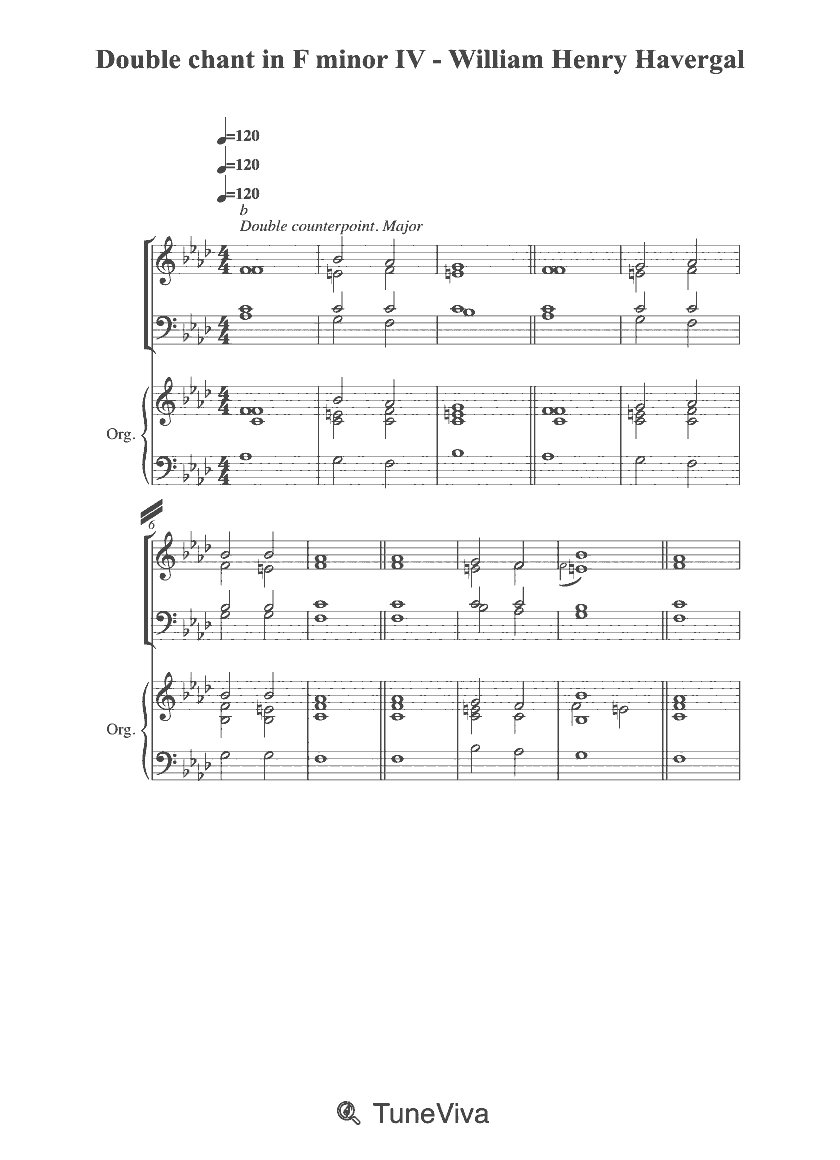
A minor-key chant, rarer in parish use, showing the range of the collection.
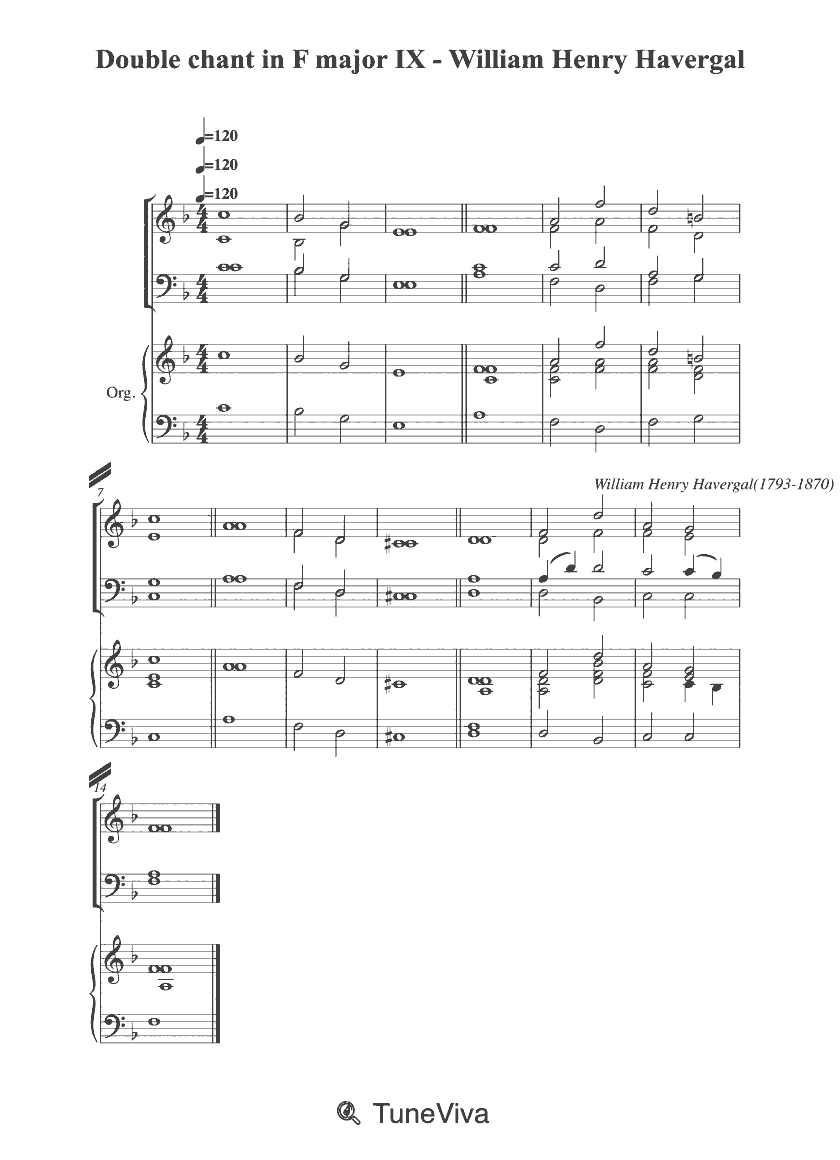
A short Anglican chant setting that covers two verses of a psalm, with a reciting note and cadence for each half-verse; Havergal wrote many of them.
Sometimes. He often supplied both words and music, but many of his hymn tunes set texts by other writers, such as Charles Wesley's Christ, whose glory fills the skies.
He was rector of St Nicholas, Worcester, from 1842 and later an honorary canon of the cathedral; the catalogue's Worcester christmas carol reflects that period.
Catalog editions and arrangements attributed to William Henry Havergal.