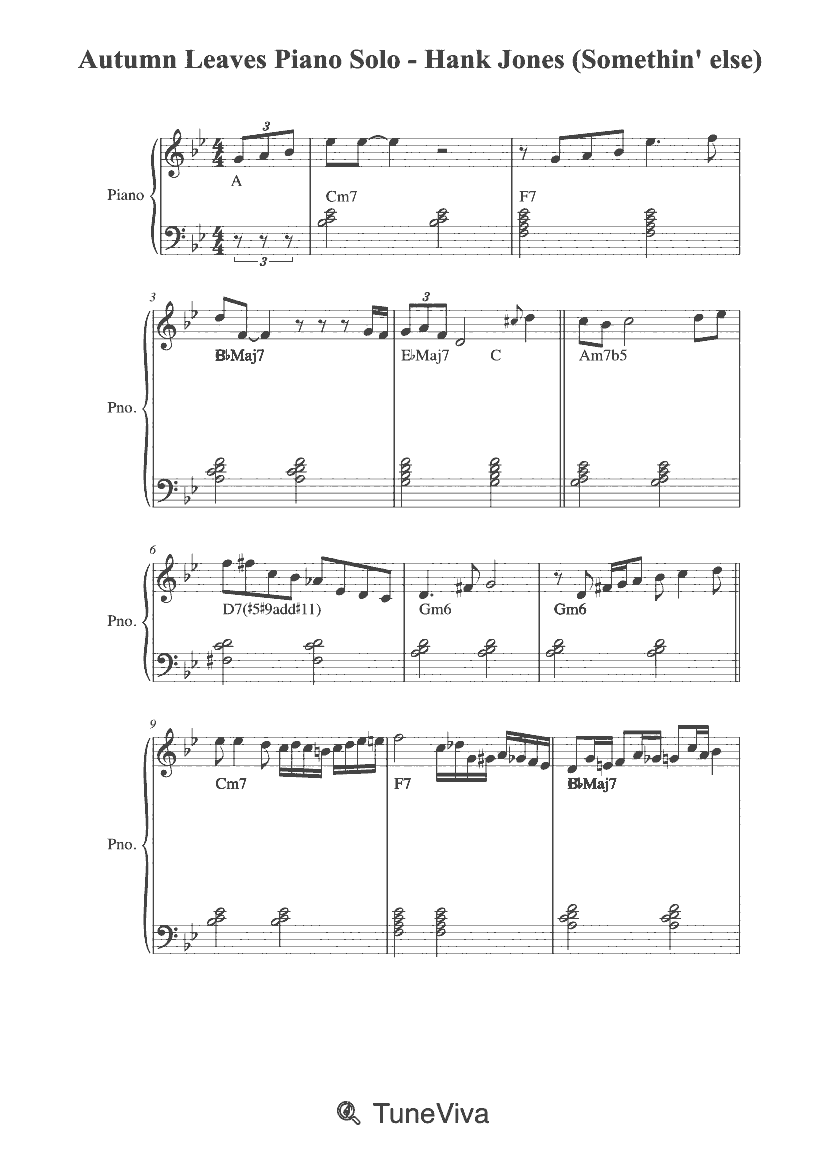
Autumn Leaves Piano Solo - Hank Jones (Somethin' else)
Joseph Kosma
Piano · 46 sec
Open scoreBrowse Joseph Kosma scores, led by multiple Autumn Leaves files. Compare arrangements and distinguish Kosma’s melody from lyrics and later performances.
Piano · 46 sec
This upload names Hank Jones and the album Somethin’ Else: use it as an arrangement/performance reference, not evidence that Kosma performed this solo.
Other editions:
The upload credits Kosma in its title; compare its notation with other files before selecting an edition.
Compare the instrument and arrangement details below, then open a score to check the notation. Different entries may be arrangements or editions of the same work; available playback tools are shown on each score page.
Joseph Kosma
Piano · 46 sec
Open score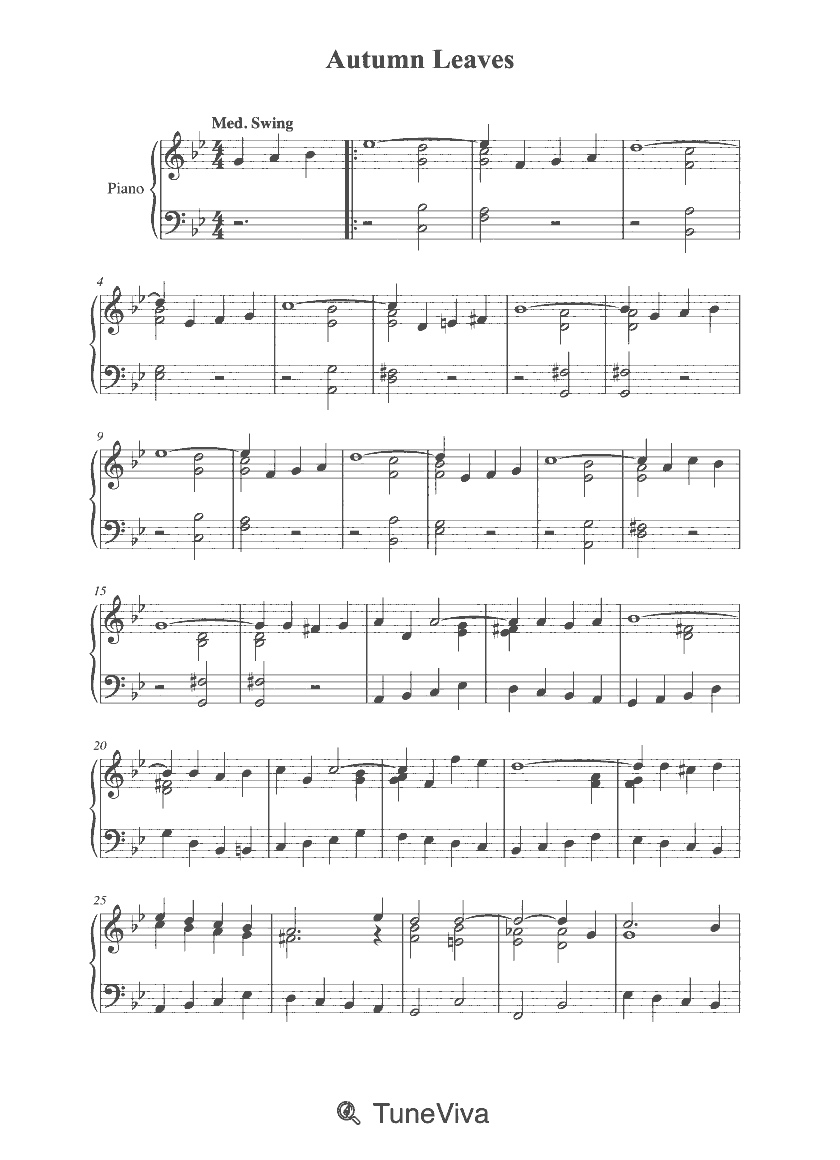
Joseph Kosma
Piano · 6 min 55 sec
Open score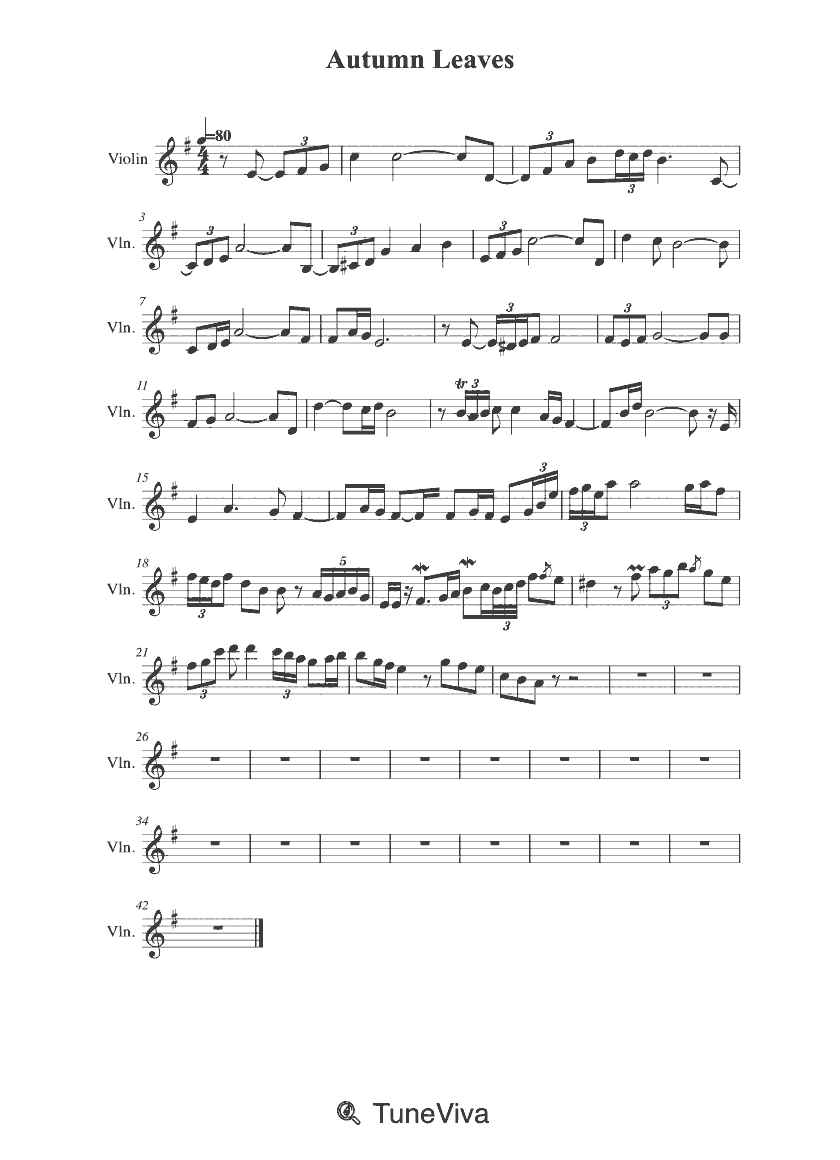
Joseph Kosma
Violin · 1 min 21 sec
Open score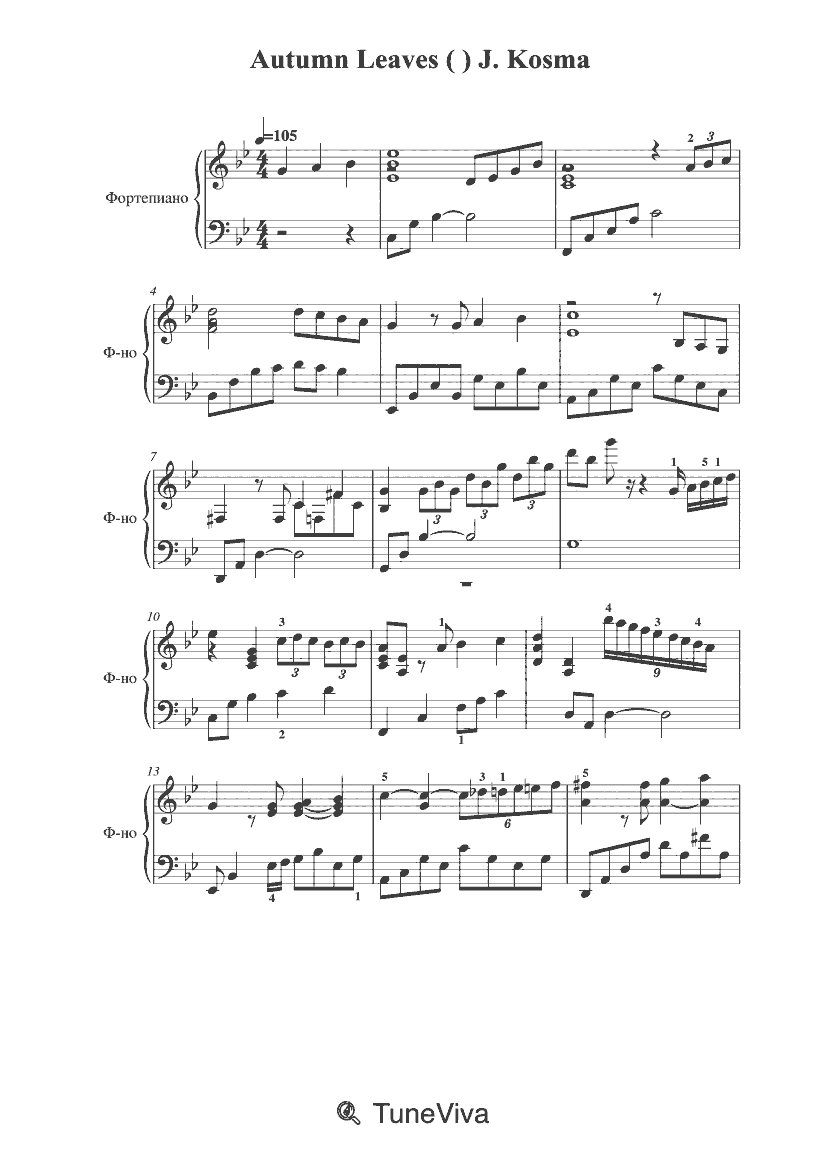
Joseph Kosma
Фортепиано · 2 min 42 sec
Open score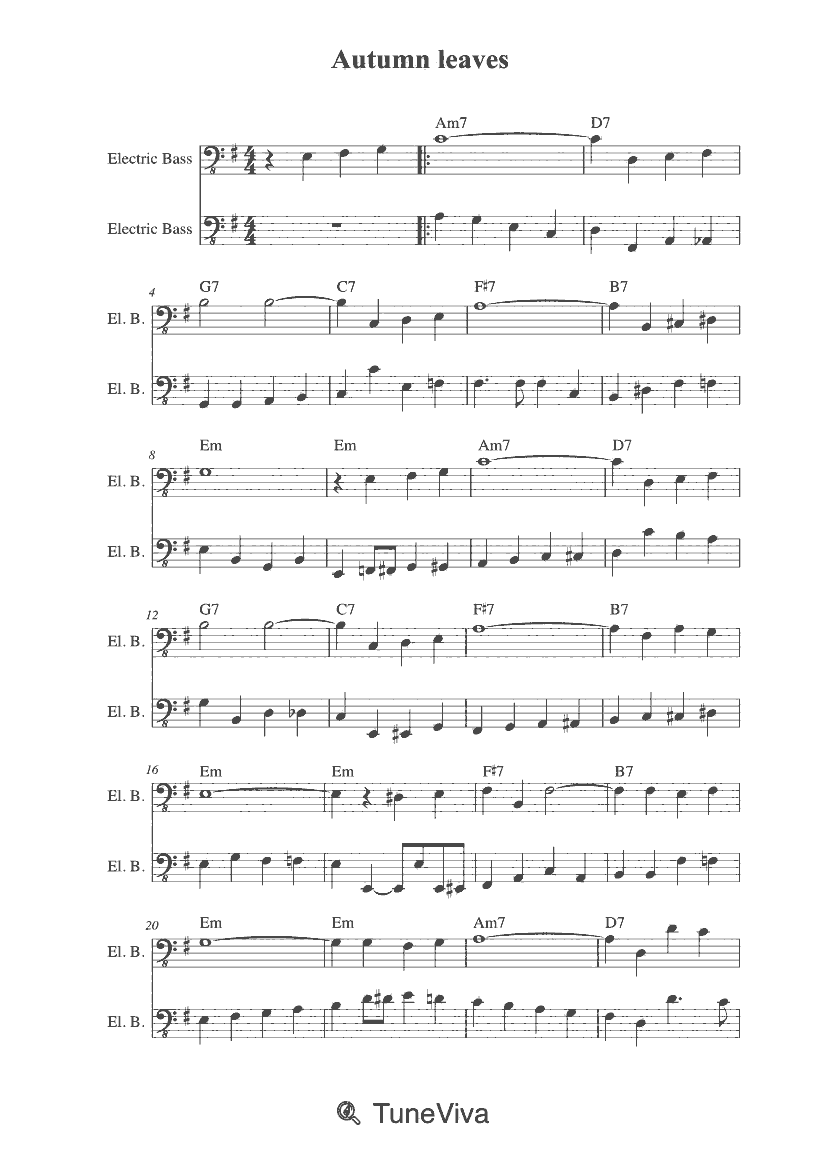
Joseph Kosma
Electric Bass · 2 min 10 sec
Open score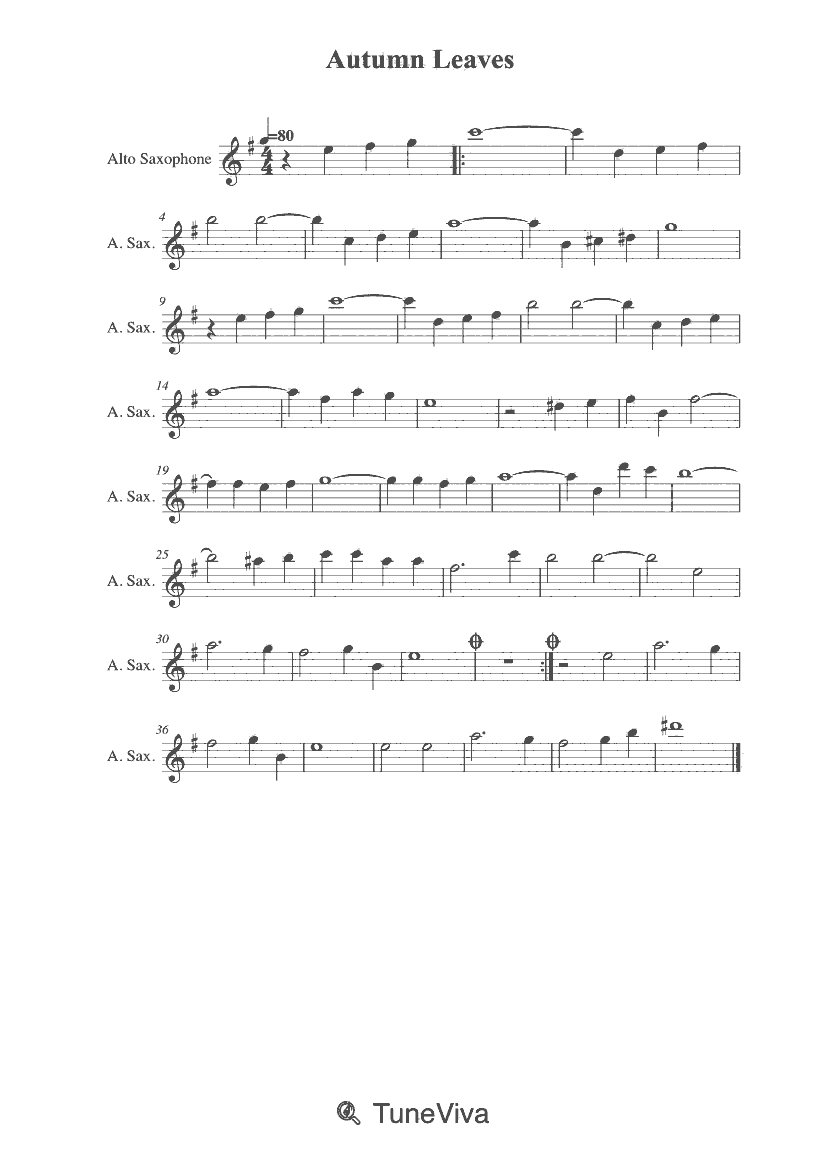
Joseph Kosma
Alto Saxophone · 3 min 39 sec
Open score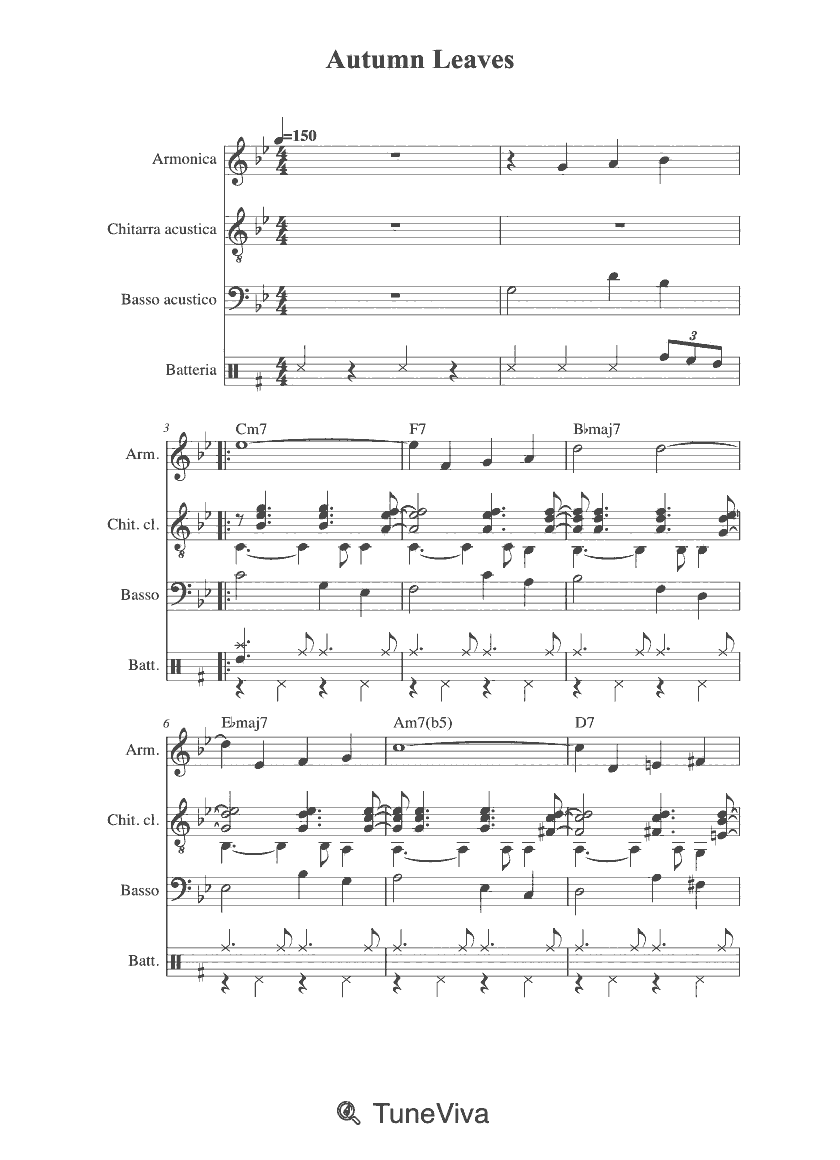
Joseph Kosma
Armonica; Chitarra acustica; Basso acustico +1 parts · 6 min 55 sec
Open score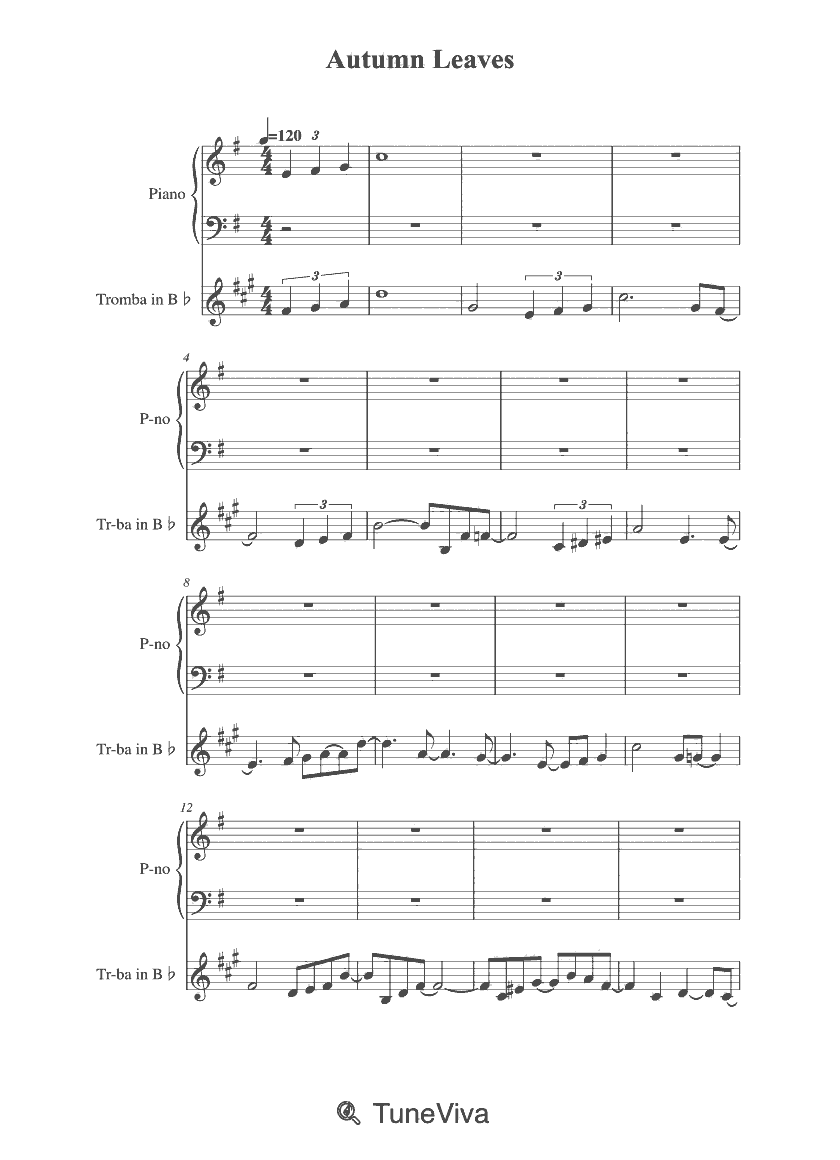
Joseph Kosma
Piano; Tromba in B♭ · 1 min 36 sec
Open score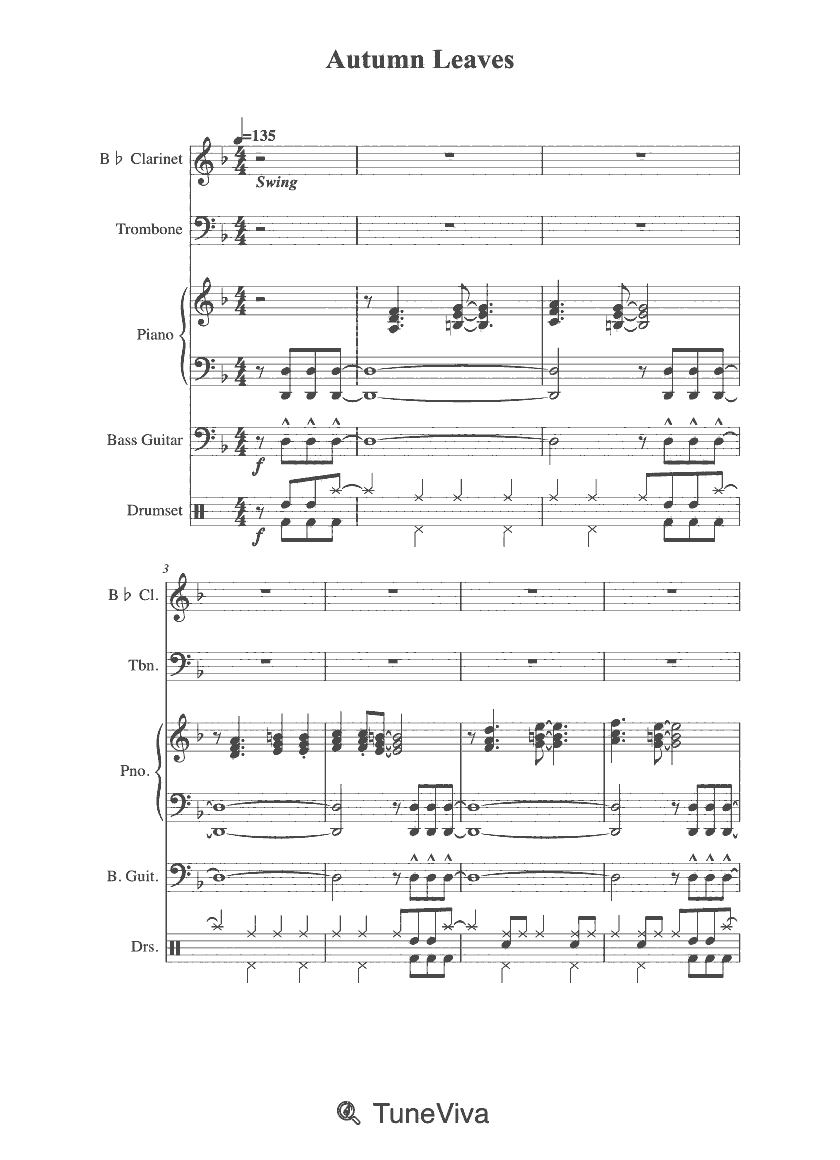
Joseph Kosma
B♭ Clarinet; Trombone; Piano +2 parts · 3 min 32 sec
Open score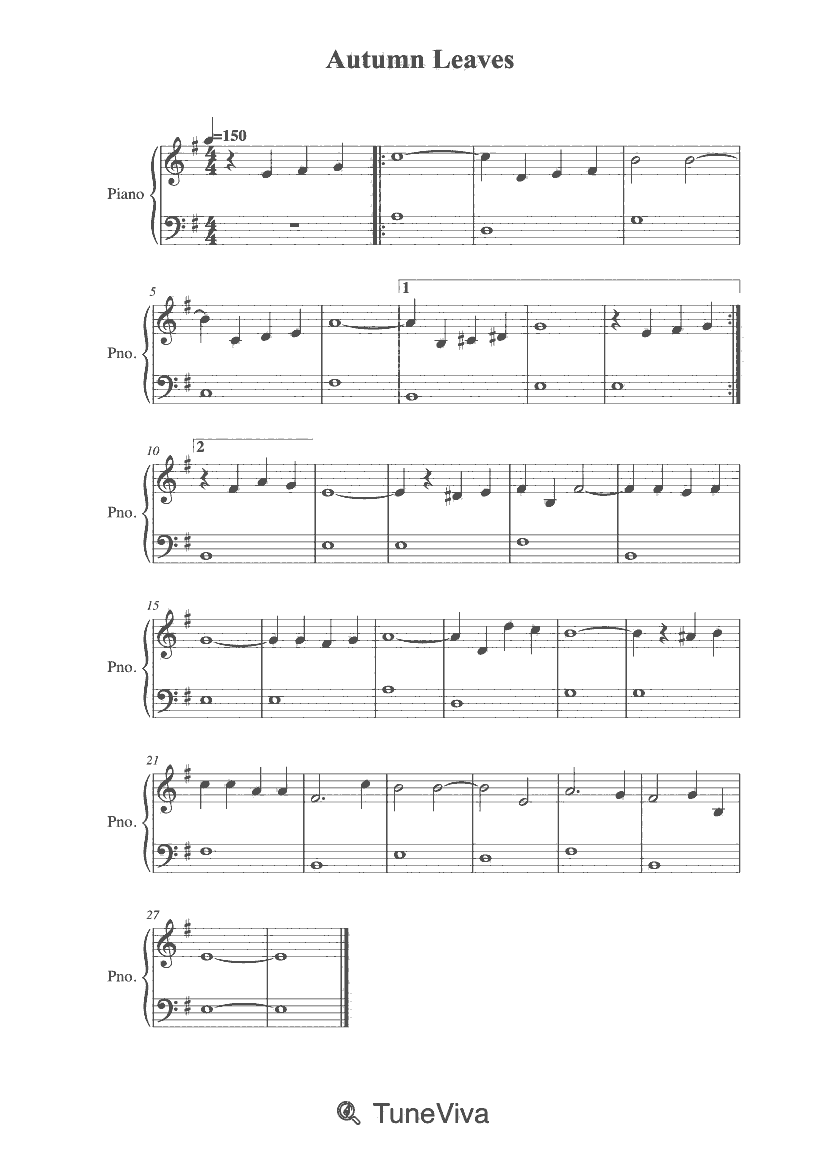
Joseph Kosma
Piano · 53 sec
Open score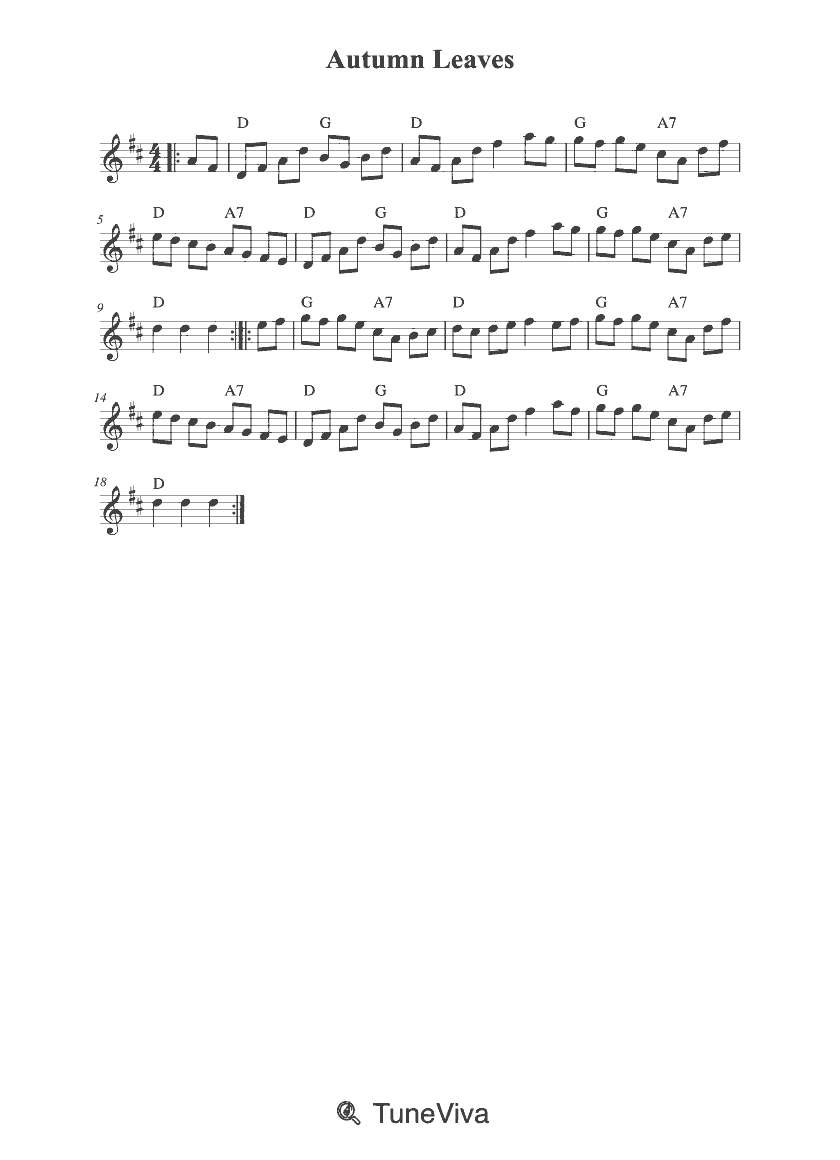
Joseph Kosma
1 min 4 sec · Score #78203
Open score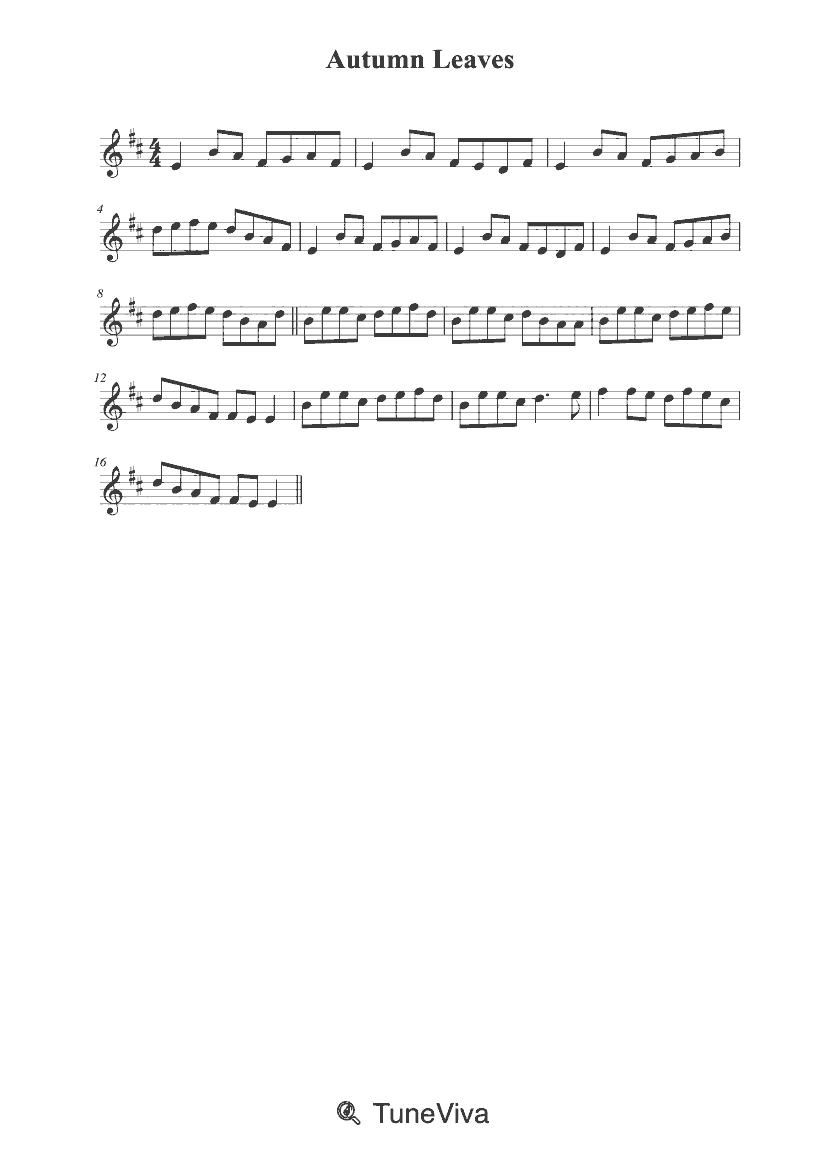
Joseph Kosma
32 sec · Score #76236
Open score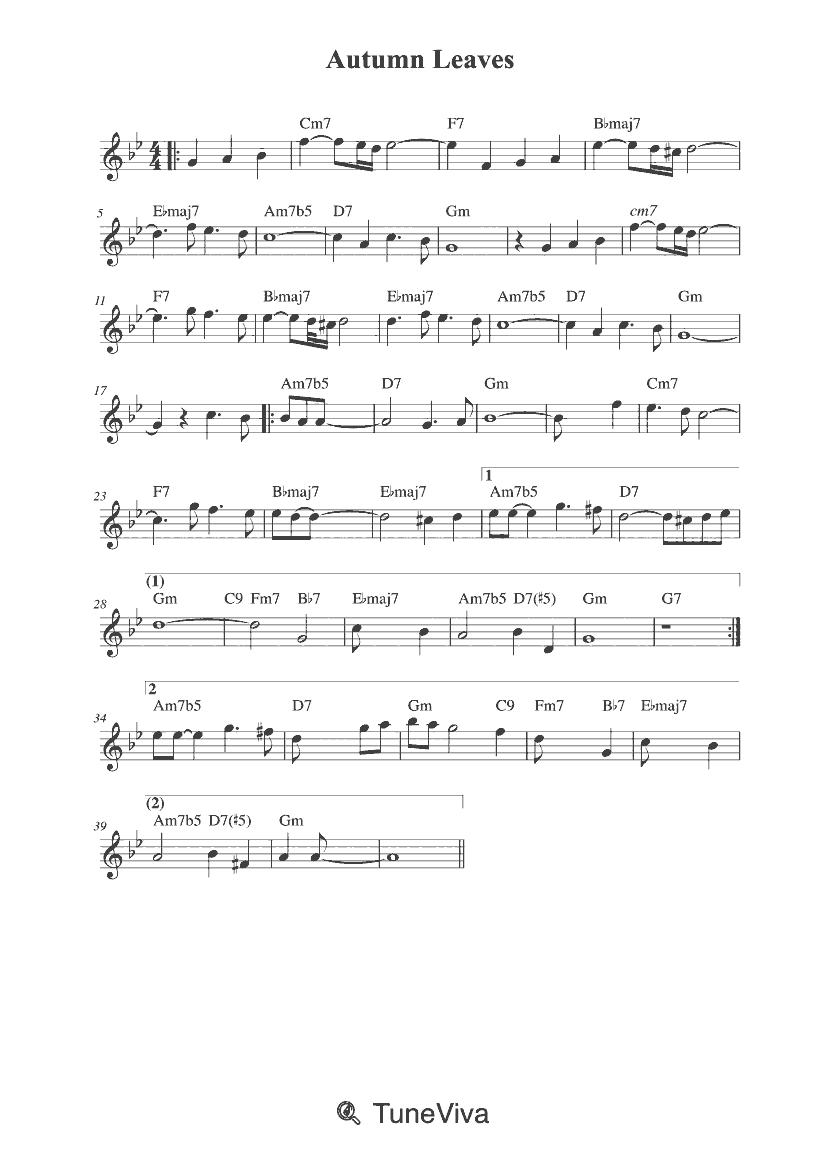
Joseph Kosma
1 min 34 sec
Open score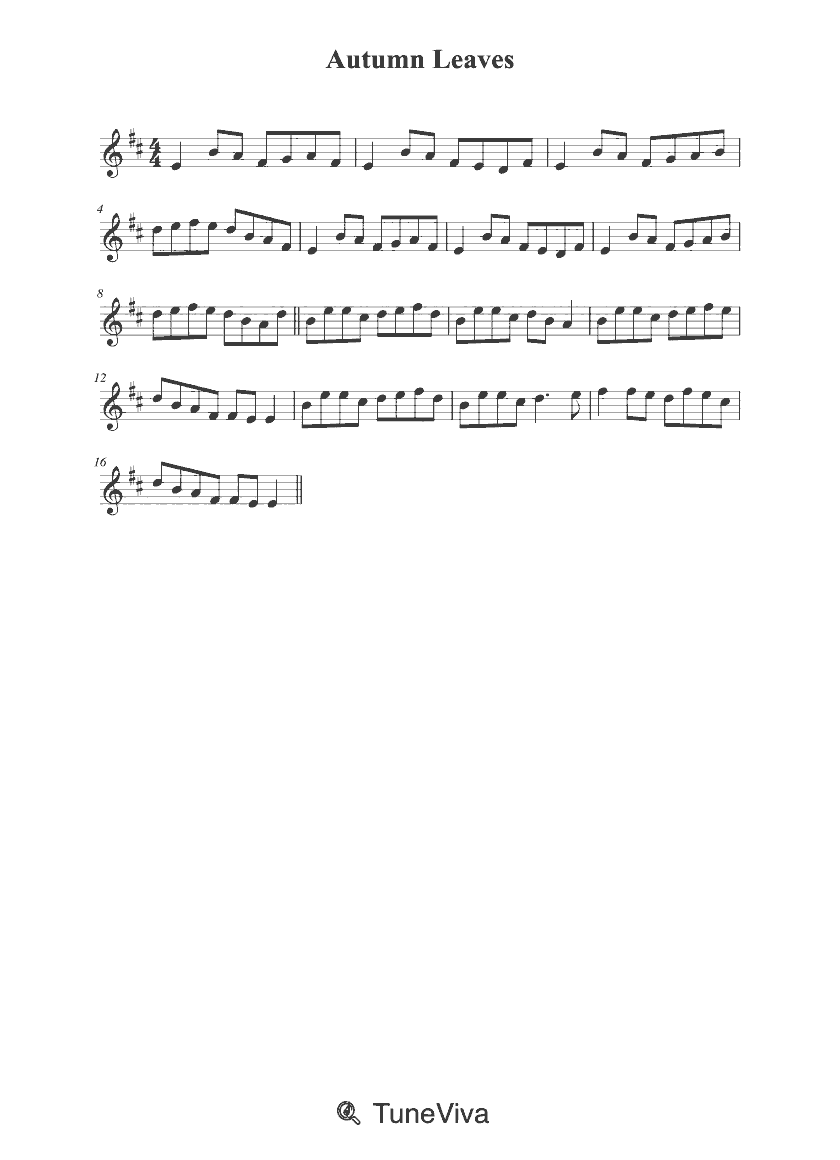
Joseph Kosma
Duilli\'ur an Fh\'omhair
32 sec
Open score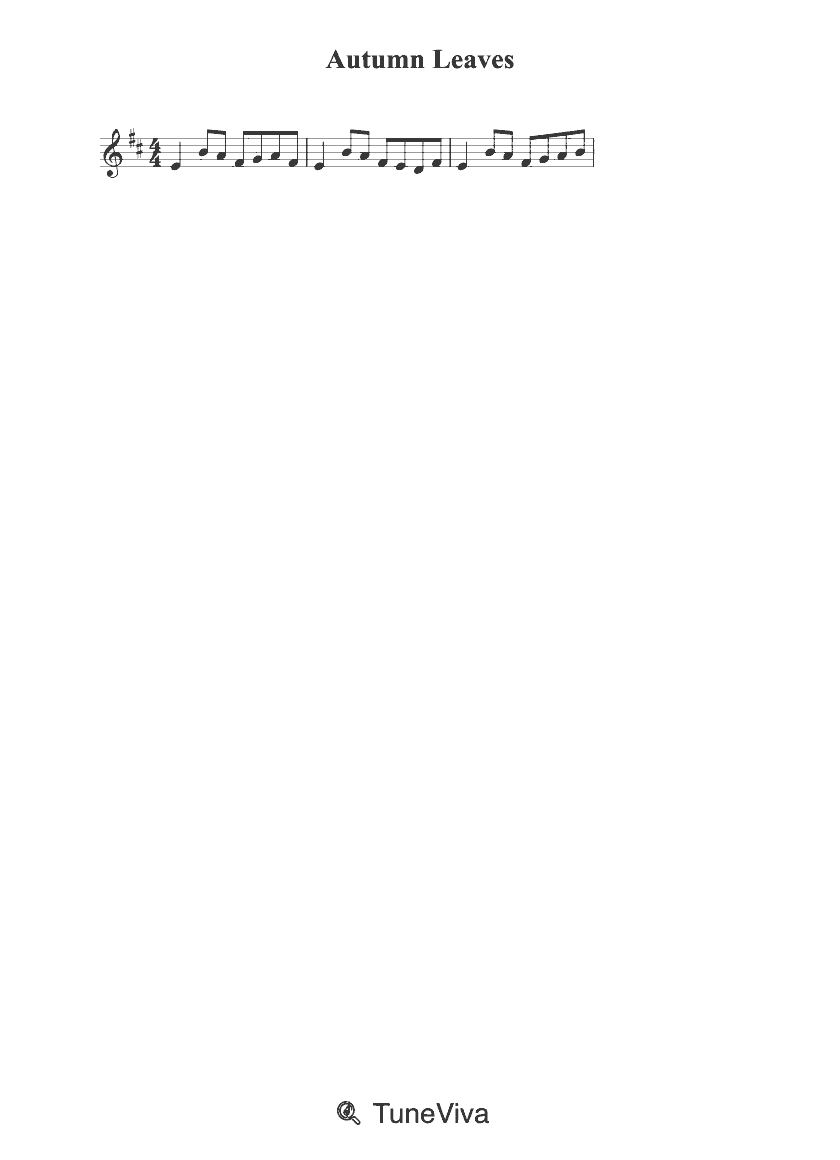
Joseph Kosma
6 sec
Open score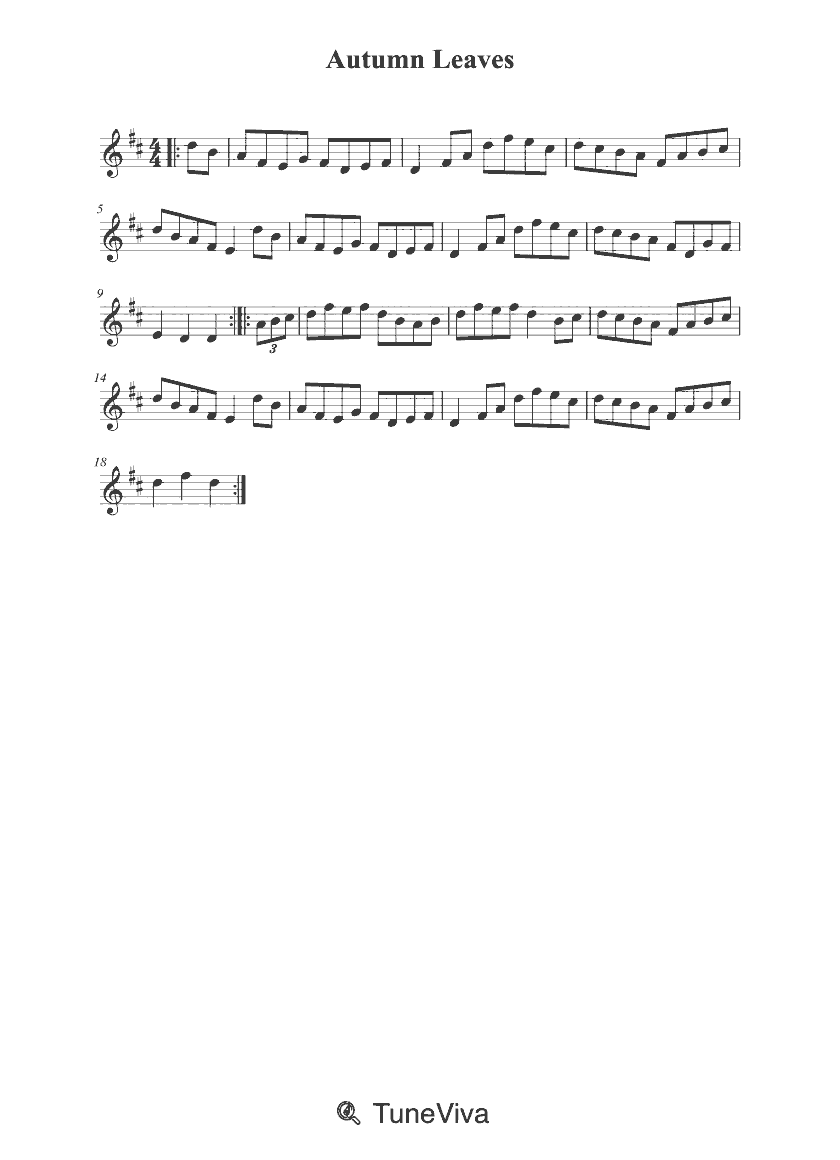
Joseph Kosma
1 min 4 sec · Score #68428
Open score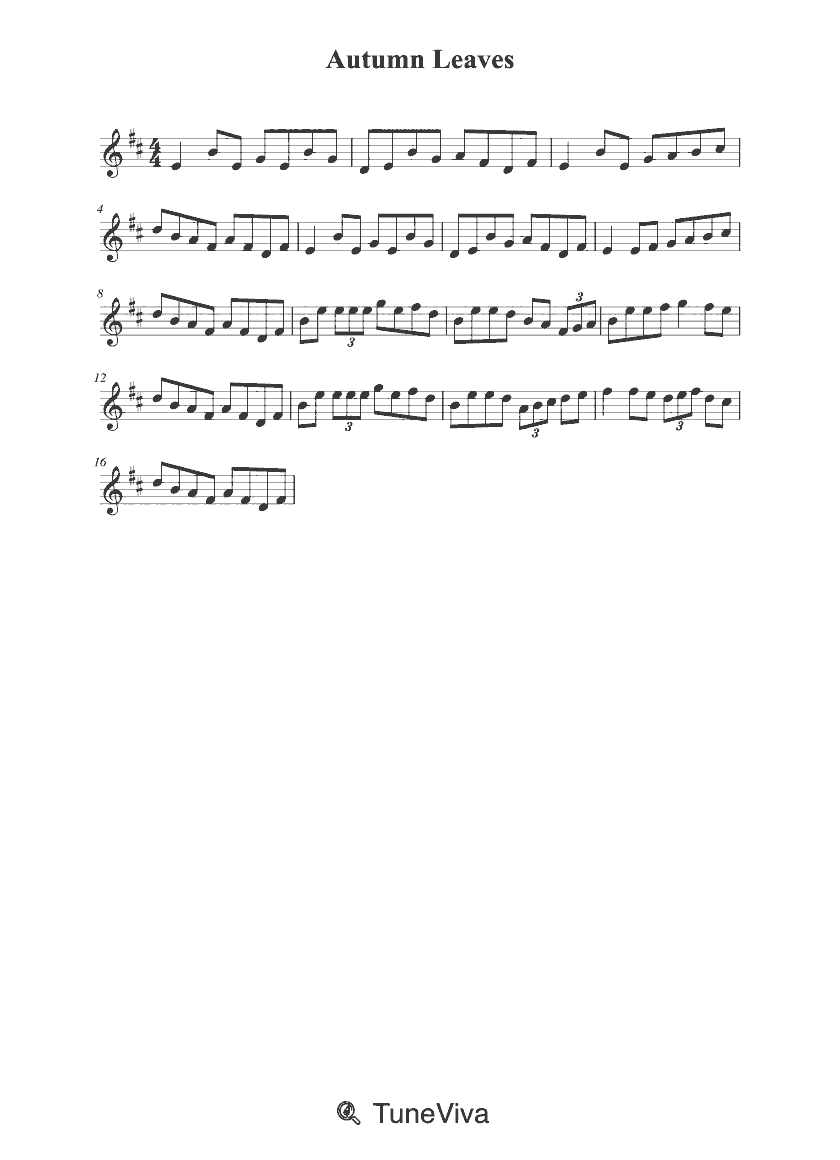
Joseph Kosma
32 sec · Score #39592
Open scoreJoseph Kosma was a Hungarian-born composer who settled in Paris and became known for songs and film scores. The Hungarian National Film Institute traces his move from Budapest to Paris and his collaboration with poet Jacques Prévert; Larousse lists work across French cinema, stage and song. TuneViva’s 17 files are dominated by “Autumn Leaves,” the English-language song built on Kosma’s music for “Les feuilles mortes.” Lyrics have separate authorship: Prévert wrote the French text, and Johnny Mercer supplied the English lyrics. The catalog includes a file title naming pianist Hank Jones, so distinguish the song’s composer from performers and arrangers when comparing these versions. Joseph Kosma sheet music on this page is centered on “Autumn Leaves,” with multiple scores filed under that title. Listings include piano, violin, alto saxophone and electric bass parts, and they open in different keys and tempos. Because several records share the same song title, compare the part assignment, key signature, track layout and any named performer or arranger before choosing a version. Some entries credit Kosma directly; others leave the composer field blank while naming him as artist, so the score’s own title and credits are worth checking.
Kosma’s route from Budapest to Paris brought him into a creative partnership with poet Jacques Prévert and into French film music. The Hungarian National Film Institute describes “Autumn Leaves” (“Les feuilles mortes”) as his best-known composition, while Larousse places him among the major film composers of his period and records his Paris move in 1933. The melody’s later life in jazz and song means that Kosma is only one part of the attribution story: Prévert wrote the French lyric, and Johnny Mercer the English words.
The 17 TuneViva entries are concentrated in several “Autumn Leaves” files. That is a catalogue of versions, not 17 unique songs. The titles reveal a useful distinction: “Autumn Leaves Piano Solo - Hank Jones (Somethin' else)” points toward a particular recorded piano approach, while other records are untitled with respect to arrangement and differ in track structure. The same-name entries may reflect separate keys or voicings, but that needs to be checked in the notation rather than guessed from MIDI program metadata.
Compare the melody-and-chord layout of the lead-like files with the Hank Jones-named piano solo, listening for how a performer reshapes the harmonic space. If the files provide different parts or keys, note those from the score itself. The catalog’s repeated titles are a useful prompt to compare arrangements of one standard; they are not evidence that Kosma performed or edited each version.
What this Kosma collection contains: The collection is not a survey of Kosma’s stage and film works. It is a group of scores all titled “Autumn Leaves,” with score parts listed as piano, violin, alto saxophone and electric bass. Some are single-track entries; one lists two tracks. Treat repeated titles as separate versions to inspect, not as a count of distinct compositions.
Comparing Autumn Leaves versions: Start with the part you need: piano, violin, alto saxophone or electric bass as listed. Then check the opening key signature and tempo. The piano entries open with two flats, while the violin, alto saxophone and electric bass entries open with one sharp. Tempos where given include 72, 80 and 105 BPM. These are opening indications in individual scores, not claims about a required performance tempo.
The Hank Jones piano solo: The title “Autumn Leaves Piano Solo - Hank Jones (Somethin’ else)” identifies a piano-solo entry associated with pianist Hank Jones and the album Somethin’ Else. Use it as a specific arrangement or performance reference; it does not mean Kosma performed or edited the solo. The score record lists Piano and opens in two flats in 4/4, with no tempo value supplied.
Credits and attribution: The catalogue uses “Joseph Kosma” in different fields: some scores name him as composer, while others leave the composer field blank and list him as artist. A title such as “Autumn Leaves ( ) J. Kosma” explicitly credits him. Because the records are inconsistent, check the score’s title and credits alongside the music rather than assuming every field describes the same role.
The 17 files include alternate uploads and arrangements centered on one standard, not 17 unique compositions.
Jacques Prévert wrote the French words for “Les feuilles mortes”; Johnny Mercer wrote the English lyrics associated with “Autumn Leaves.” Kosma composed the music.
It points to a piano-solo recording context. It does not mean Kosma performed the arrangement; check the score file for its own credits.
The scores gathered here are all titled “Autumn Leaves.” They include listings for piano, violin, alto saxophone and electric bass. The collection does not show a broader survey of Kosma’s other songs or film music.
Piano is listed as the part for three “Autumn Leaves” entries: the score titled “Autumn Leaves ( ) J. Kosma,” the Hank Jones piano solo, and one further “Autumn Leaves” file. All three open with two flats in 4/4; tempo indications are 105 BPM, none supplied, and 72 BPM respectively.
A violin entry and an alto saxophone entry are included among the “Autumn Leaves” scores. Both open with one sharp in 4/4 and carry an opening tempo of 80 BPM. Check the notation for the actual range and arrangement.
The opening key signatures differ: the piano entries use two flats, while the violin, alto saxophone and electric bass entries use one sharp. The records do not state why each key was chosen, so compare the notation and your instrument’s range before selecting.
Opening tempo values in these scores range from 72 to 105 BPM where supplied; the Hank Jones piano solo has no tempo value. Those figures are starting points in individual files, not a required tempo for the song. Choose a tempo that suits the arrangement and performer.
Some records name Joseph Kosma as composer, and one title explicitly reads “Autumn Leaves ( ) J. Kosma.” Other records leave the composer field blank while listing Kosma as artist. The score title and credits are the safest guide to how each file attributes the music.