classical
1 tracks
Charles Hutchinson Gabriel Jr. was born in San Francisco in 1892, the son of the gospel-song composer Charles Hutchinson Gabriel, and died in 1934. The catalogue holds 22 scores, about 16 minutes of music and 6,942 notated notes. Eight entries carry lyrics, all 22 are tagged classical, and the difficulty split is 12 at index 1 and ten at index 2.
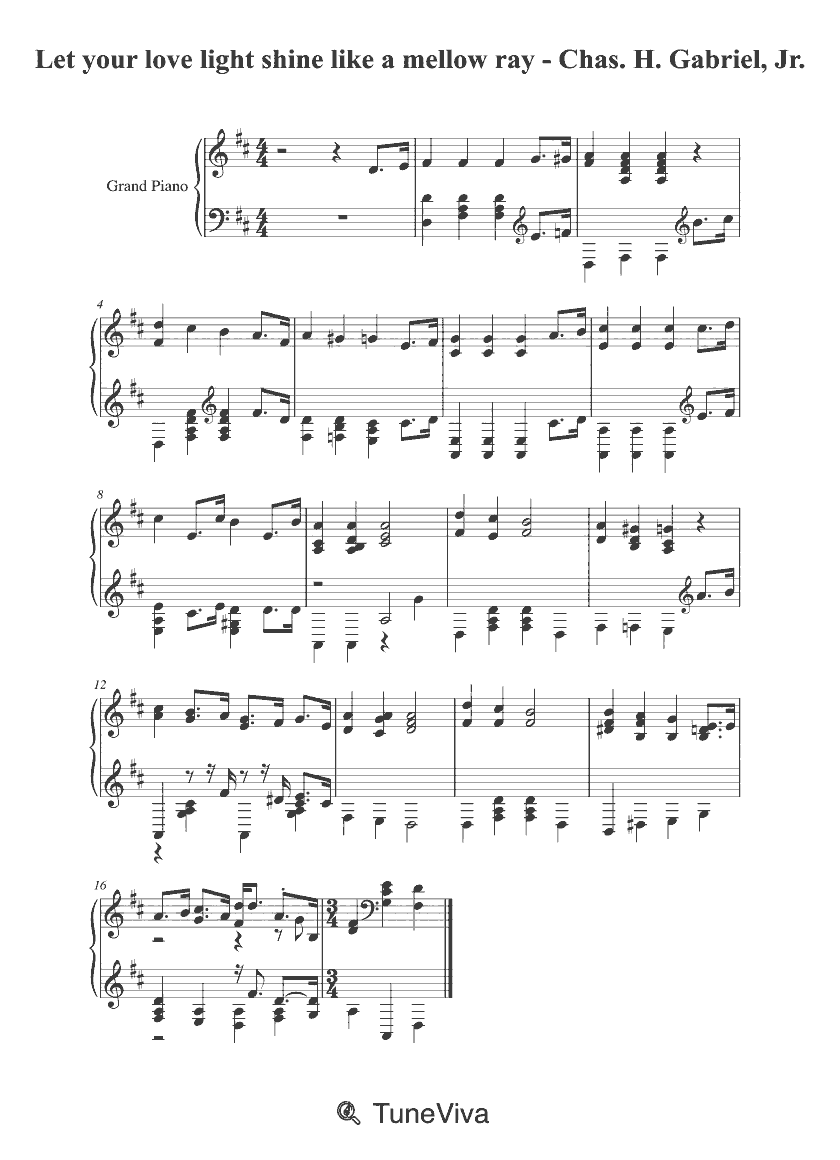
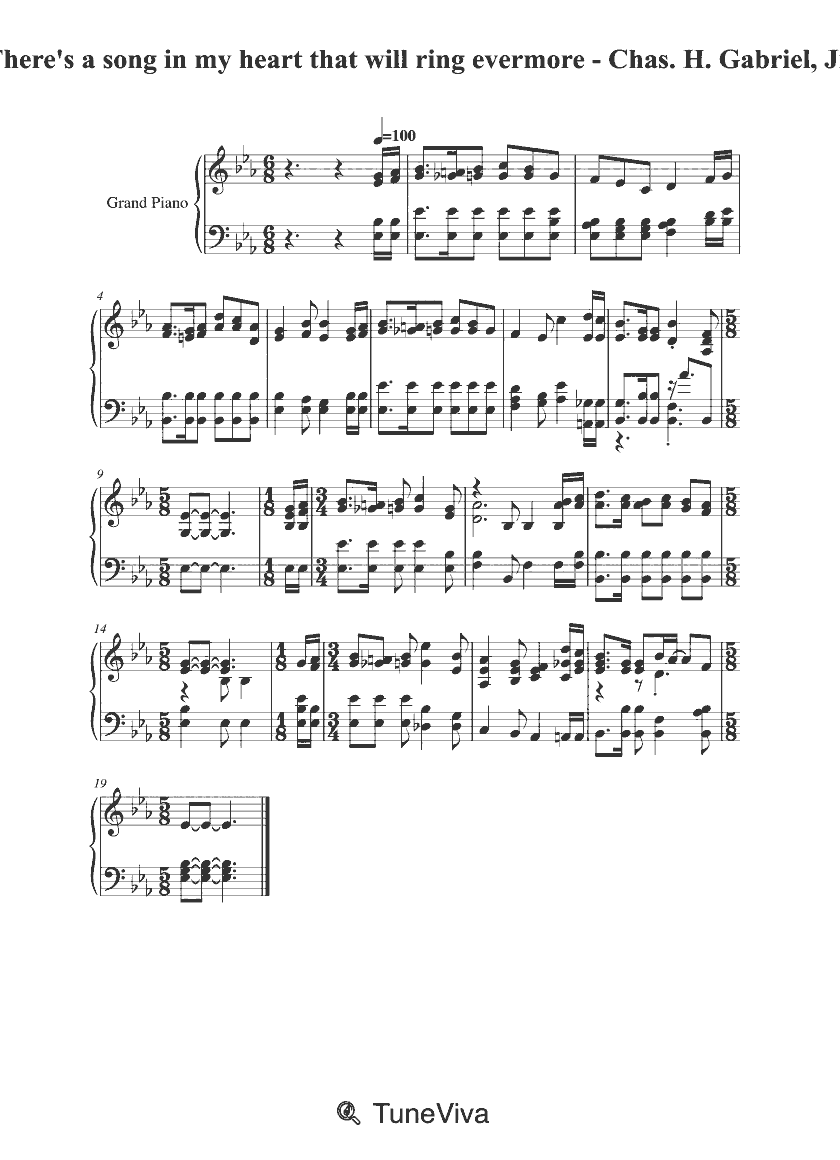
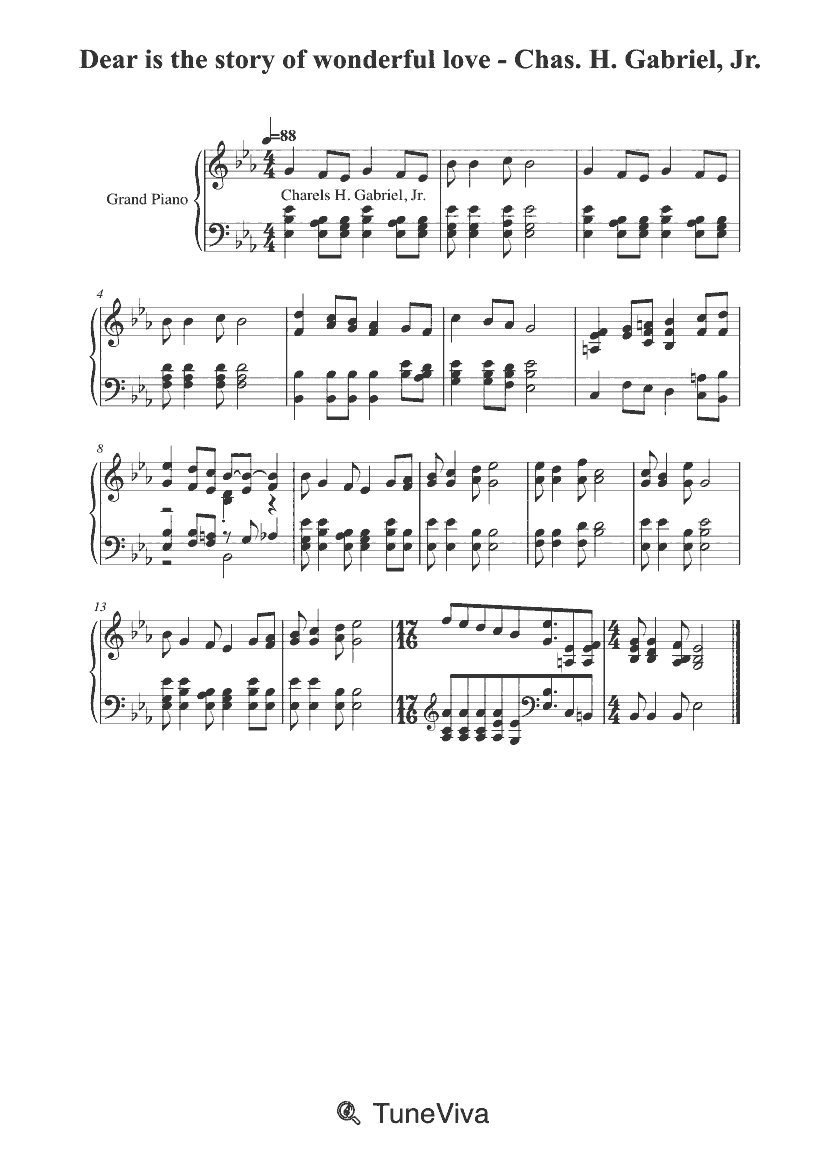
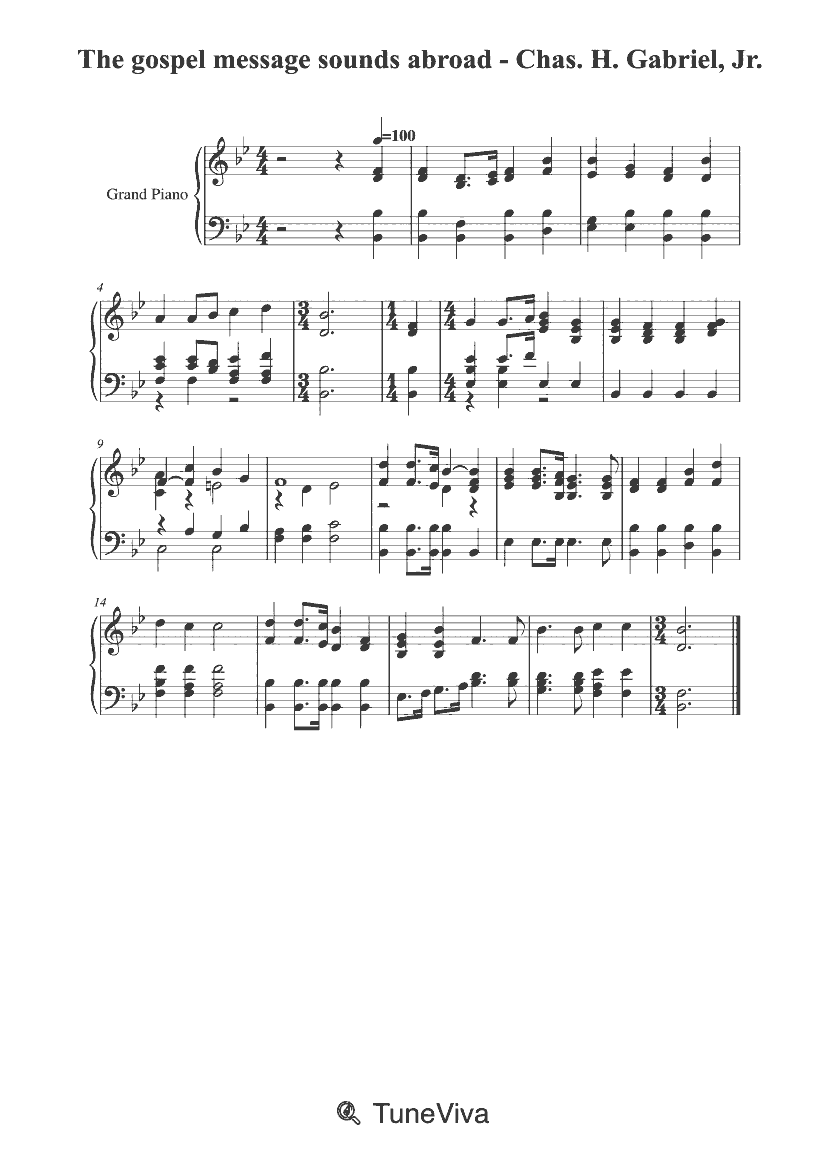
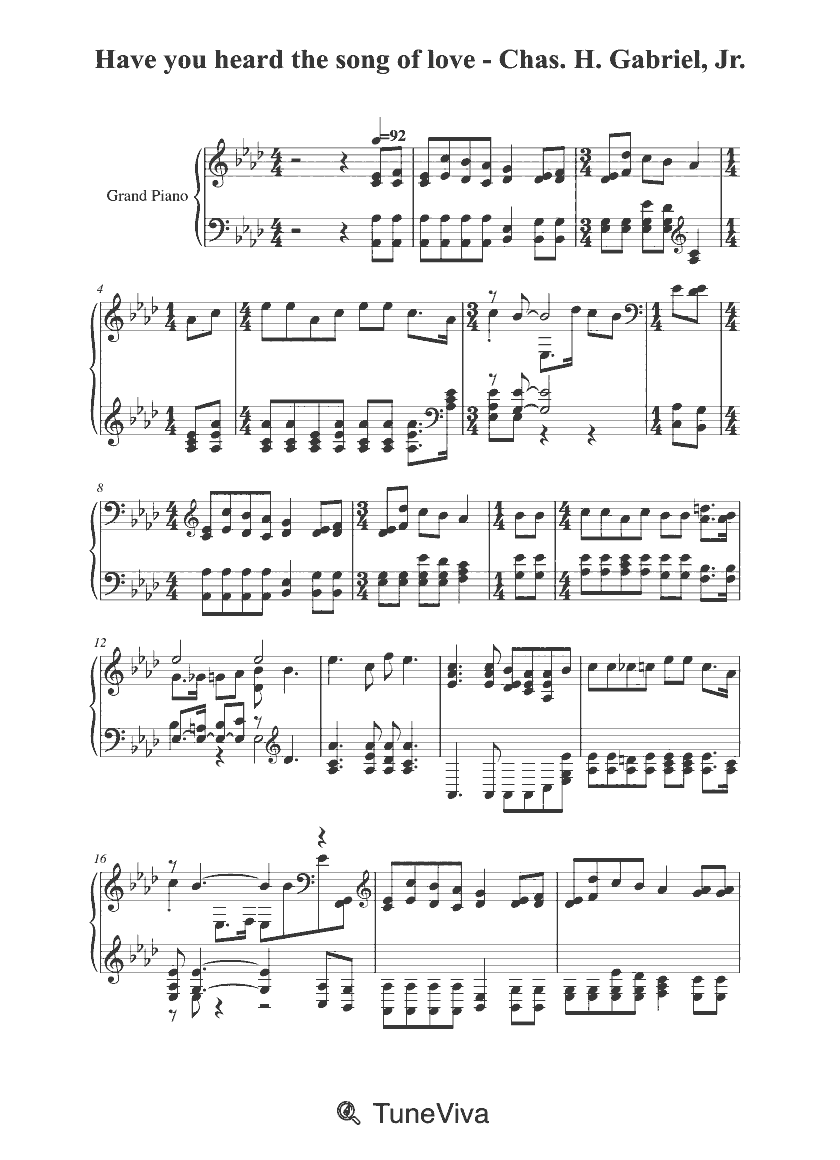
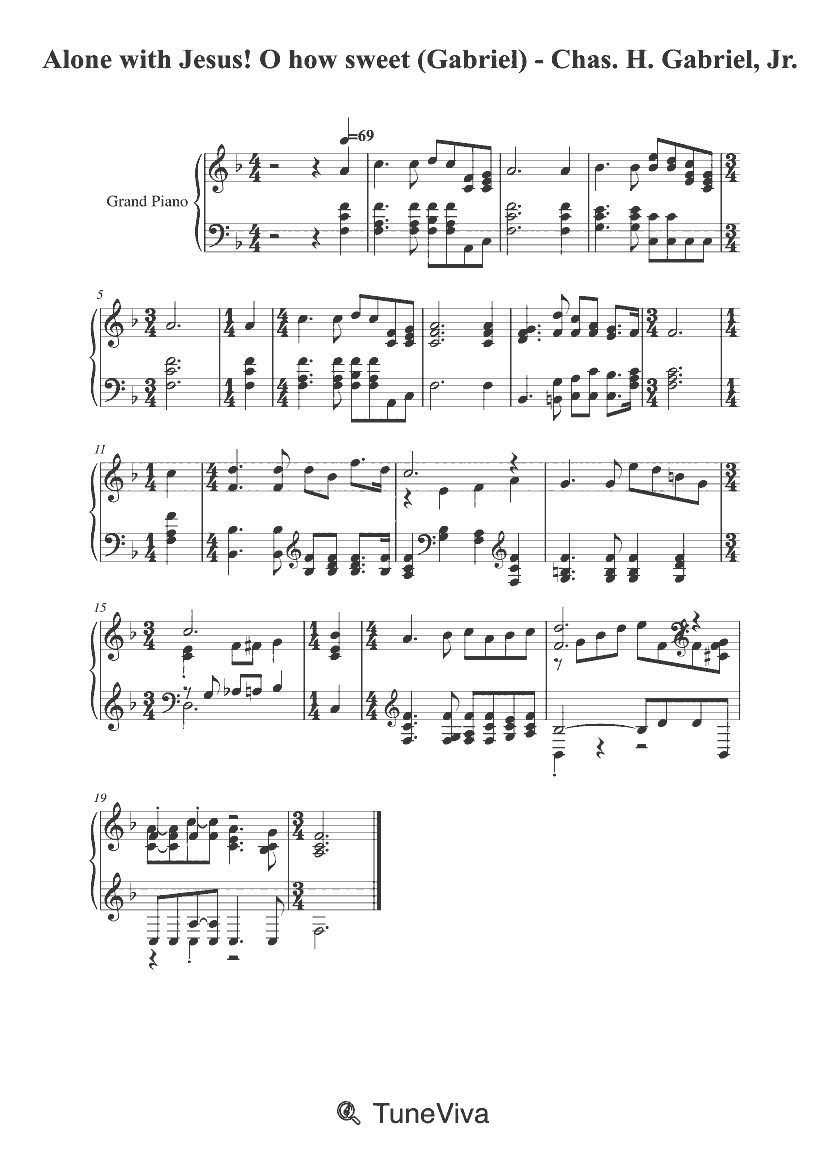
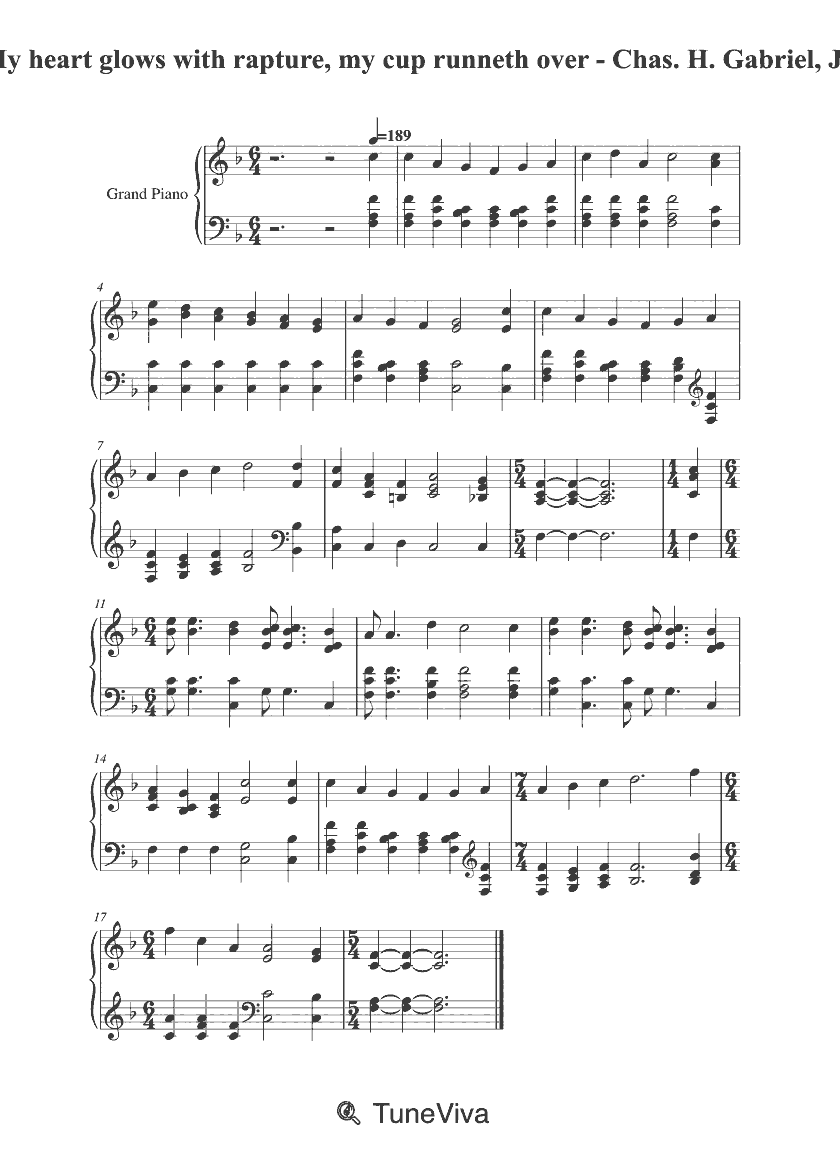
The titles are first lines rather than familiar hymn names: My heart glows with rapture, my cup runneth over; Let your love light shine like a mellow ray; There's a song in my heart that will ring evermore. Most of the top works are short gospel songs, and the catalogue credits them to 'Chas. H. Gabriel, Jr.'
Gabriel was born on 2 March 1892 in San Francisco, California, and grew up in Cook County, Illinois, where the 1910 census places him with his parents. His father was Charles Hutchinson Gabriel (1856-1932), one of the most widely used gospel-song writers of the period, whose tunes circulated widely through the Rodeheaver publishing house. The son worked as a composer and, in 1926, as musical director and announcer for radio station KLX in Oakland, California. He also published under the pseudonym Jean Howard. A biographical note records that some eight hundred of his compositions were printed. He died in 1934.
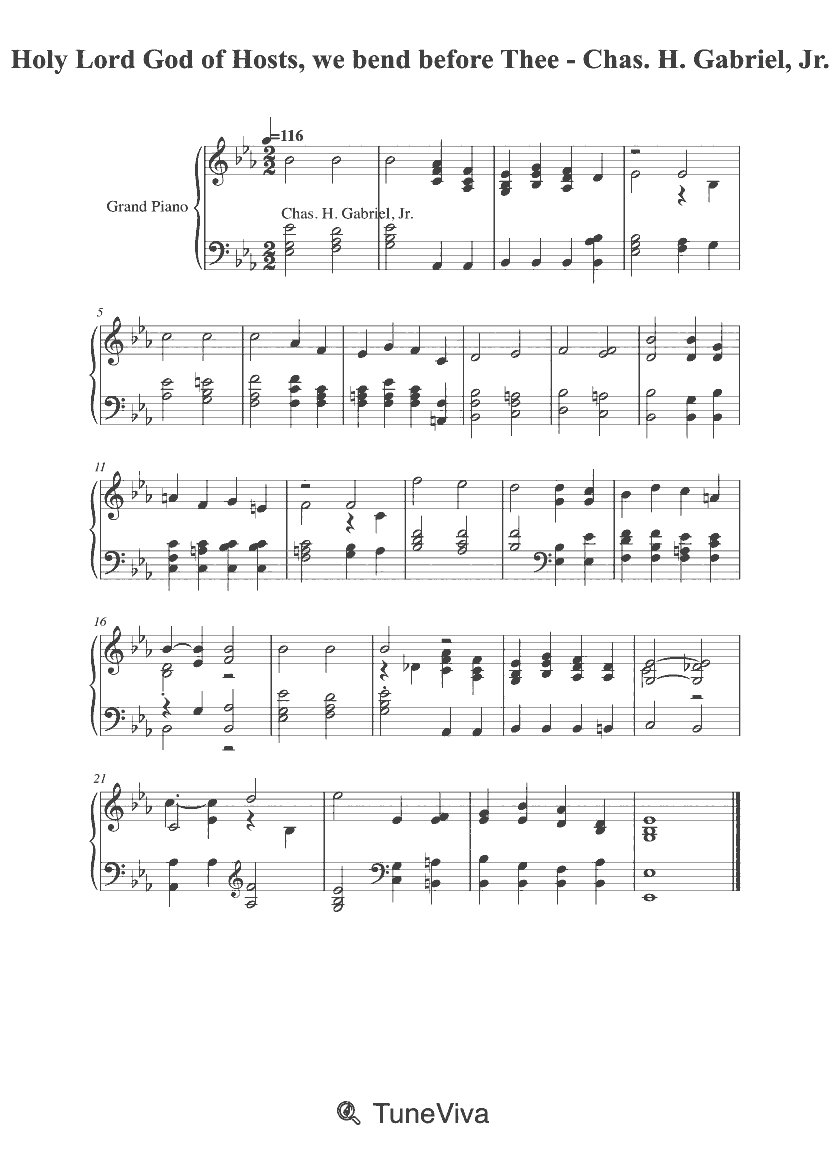
The catalogue's titles come from the gospel-song repertoire rather than from concert music. My heart glows with rapture, my cup runneth over and Let your love light shine like a mellow ray belong to the gospel-song mould: a refrain to remember and a text aimed at a revival or Sunday-school congregation. Holy Lord God of Hosts, we bend before Thee and In Thy name, divine Redeemer turn toward corporate worship, while Visit us, O precious Savior and I have been to Jesus and He saved my soul belong to the conversion and invitation side of the tradition.
The 22 entries run to only about 16 minutes, so most are single short songs rather than extended anthems; 6,942 notated notes over that span suggests simple, syllabic writing. Ten entries sit at complexity index 2 and twelve at index 1, a narrow band. The catalogue tags every score classical, which says more about its filing system than about the music's style.
These hymns are built for a congregation, not a recital. Keep the melody in the soprano or lead voice, articulate the text clearly, and let the harmony parts stay under it; the keyboard can fill sustained notes without doubling every line. In the revival-style pieces, the refrain usually needs a little more weight than the verse, and the final stanza can broaden without slowing to a crawl. Because the scores are short, decide on a comfortable key first: a congregation will sink or lift with the opening pitch.
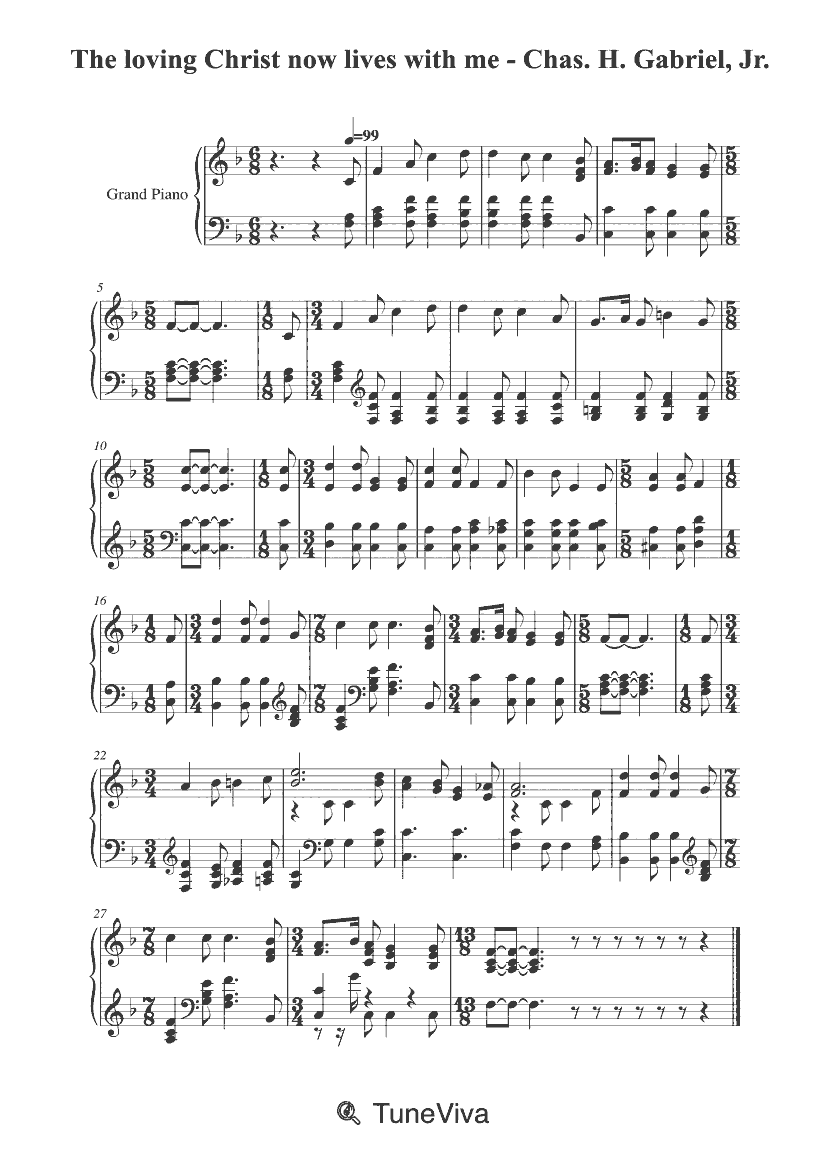
The most-viewed score here, a gospel song built on a refrain of personal assurance.
The second most-viewed score here, with a text that turns the image of light into an invitation to Christian witness.
A short song of praise; the catalogue gives no hymnal source or date.
A hymn of adoration rather than a conversion song, suited to a choral opening.
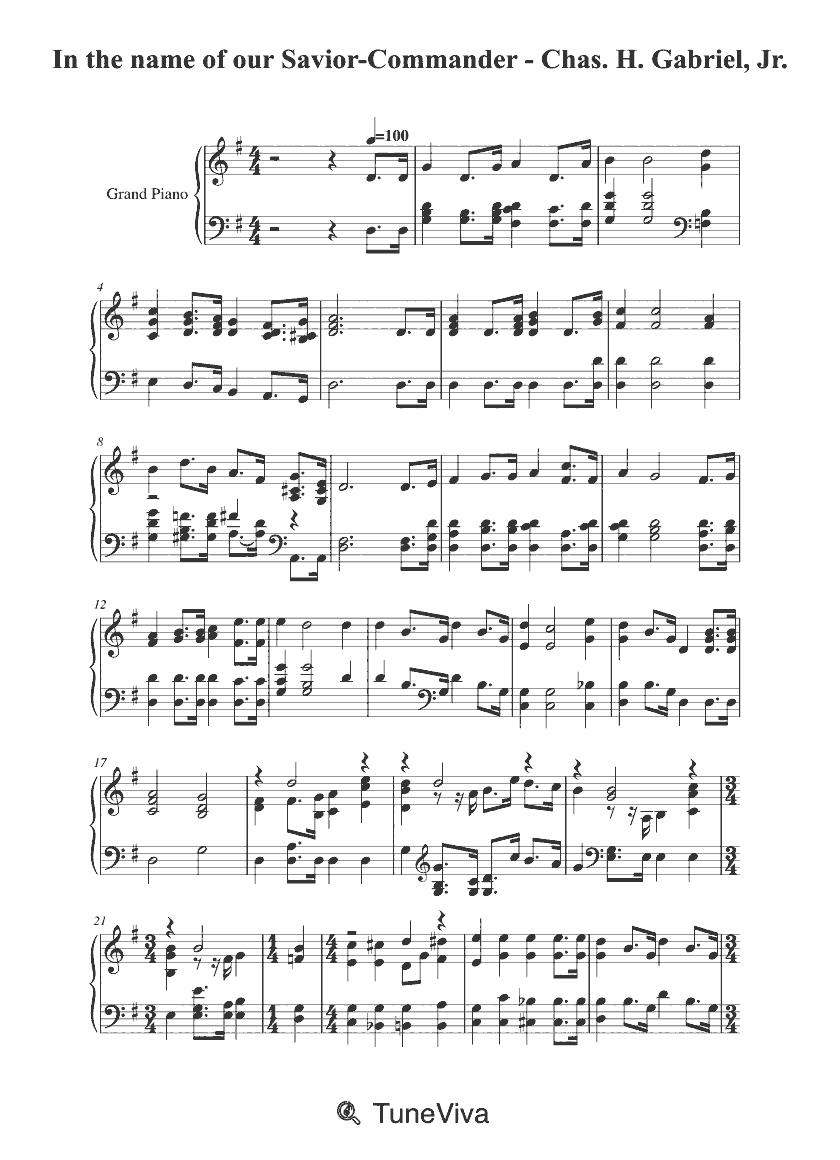
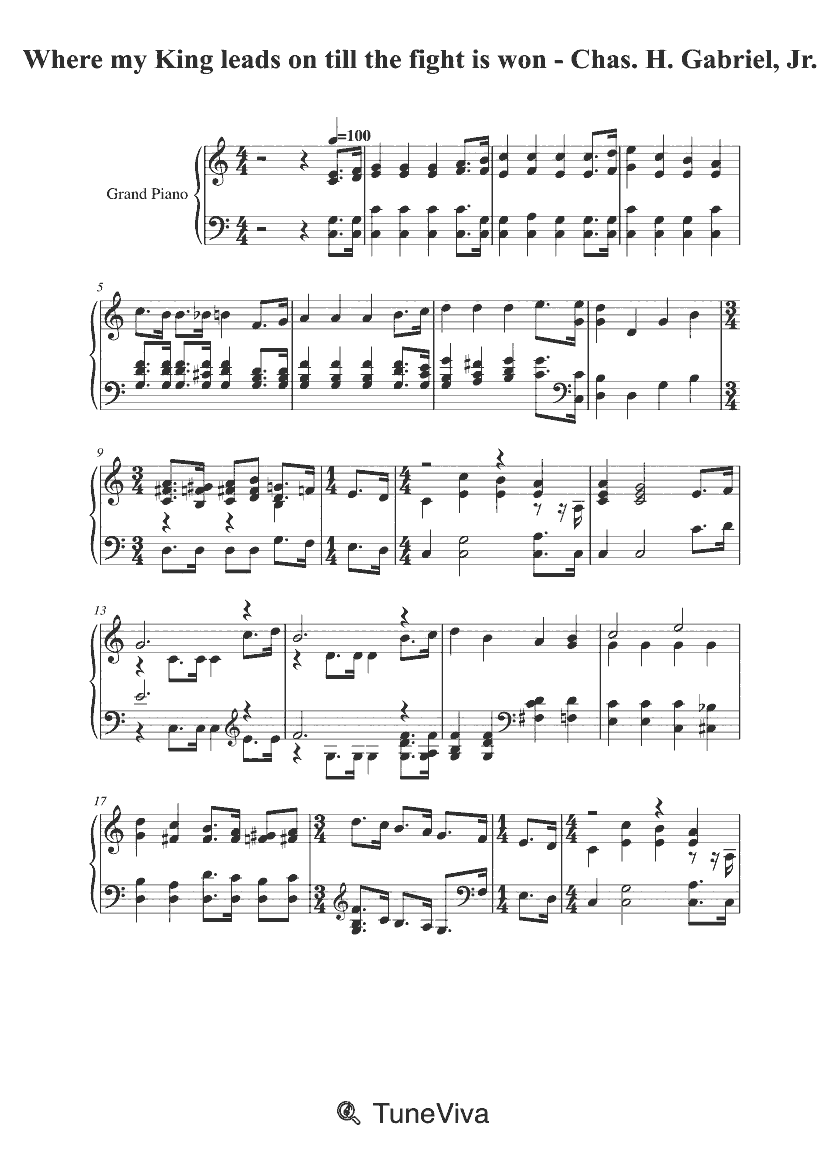
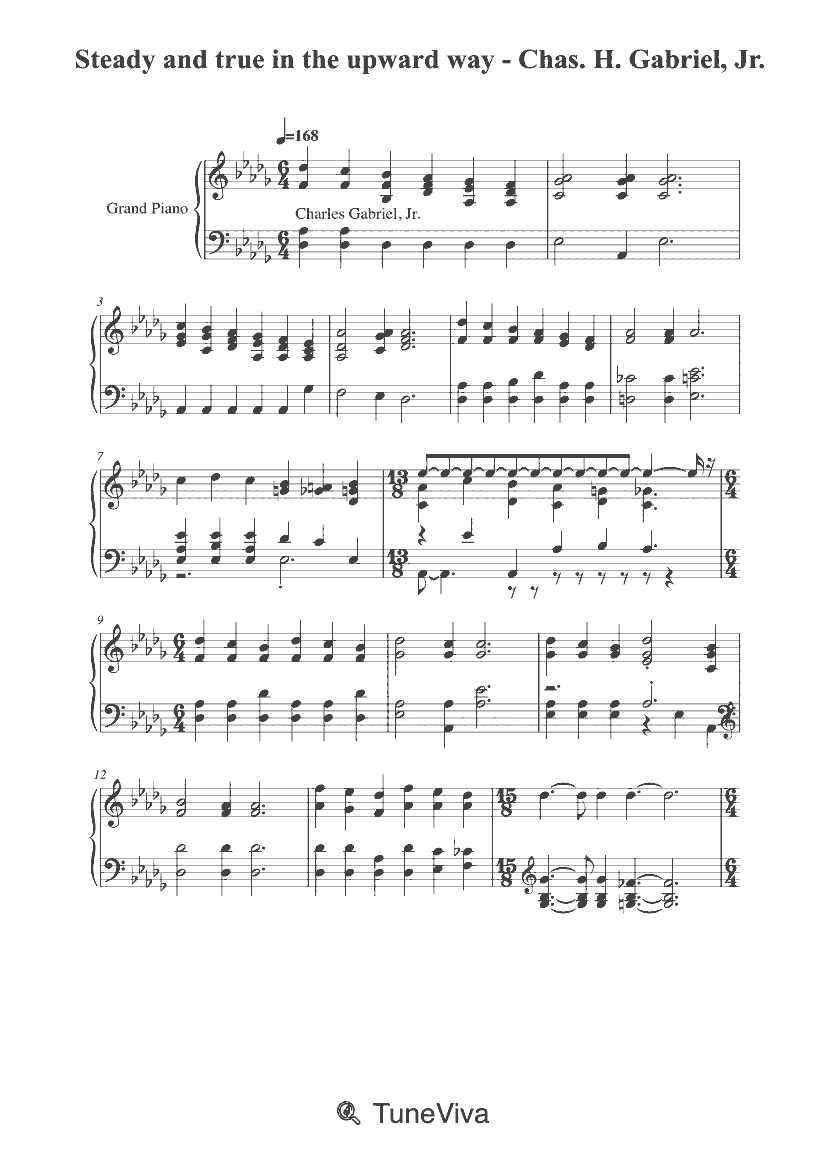
A hymn that frames Christian service under the image of a commander; no source is given.
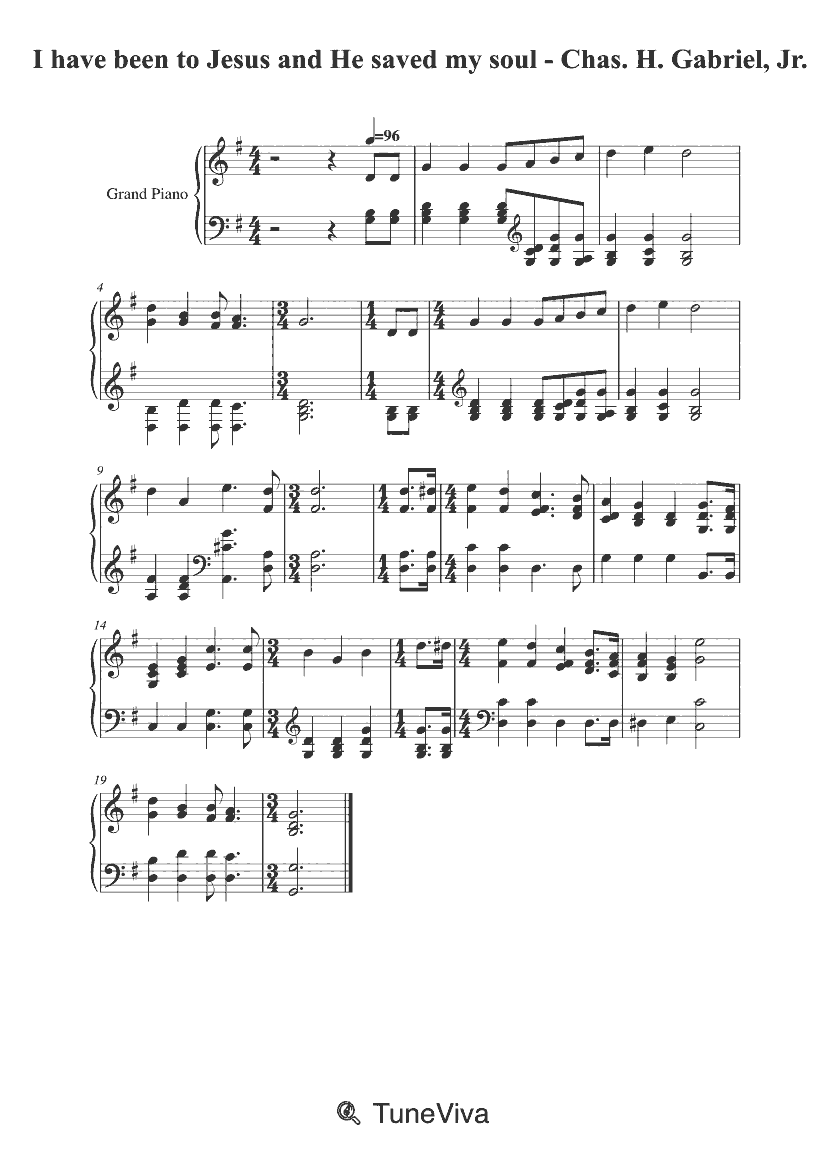
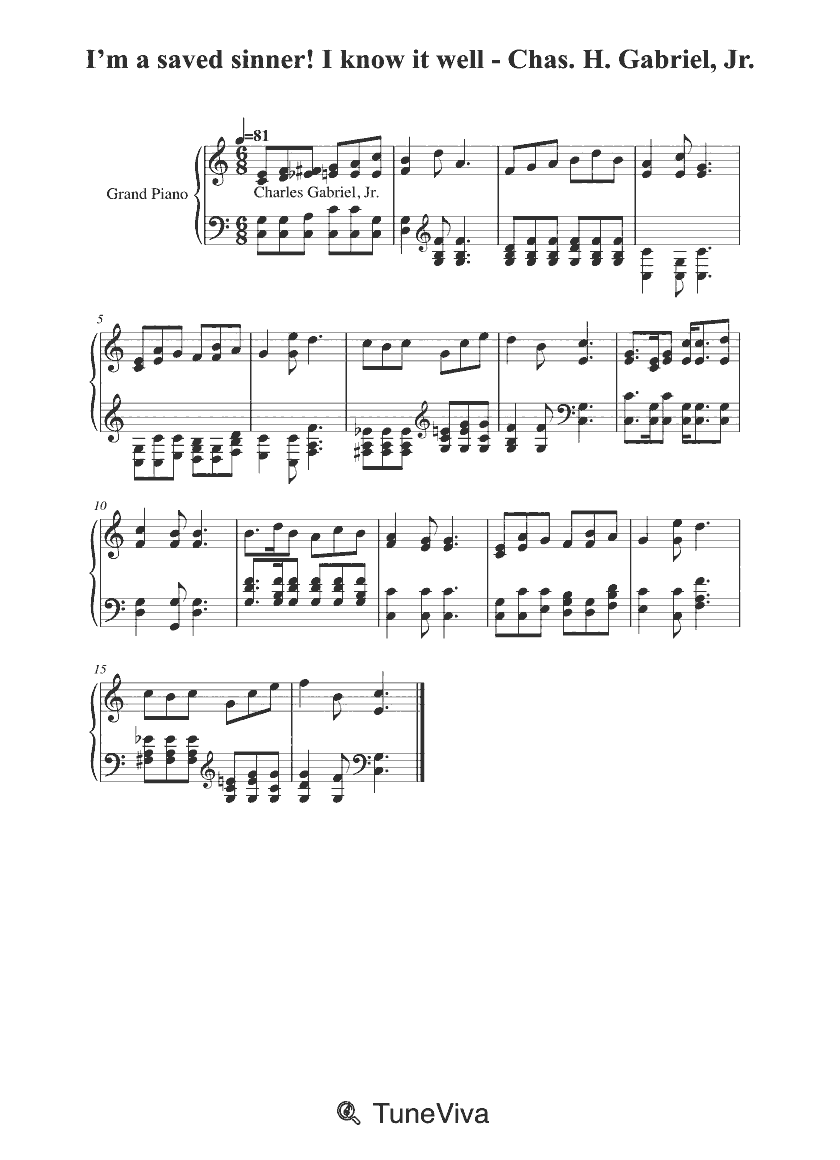
A testimony hymn, the kind of first-person conversion text common in revival songbooks.
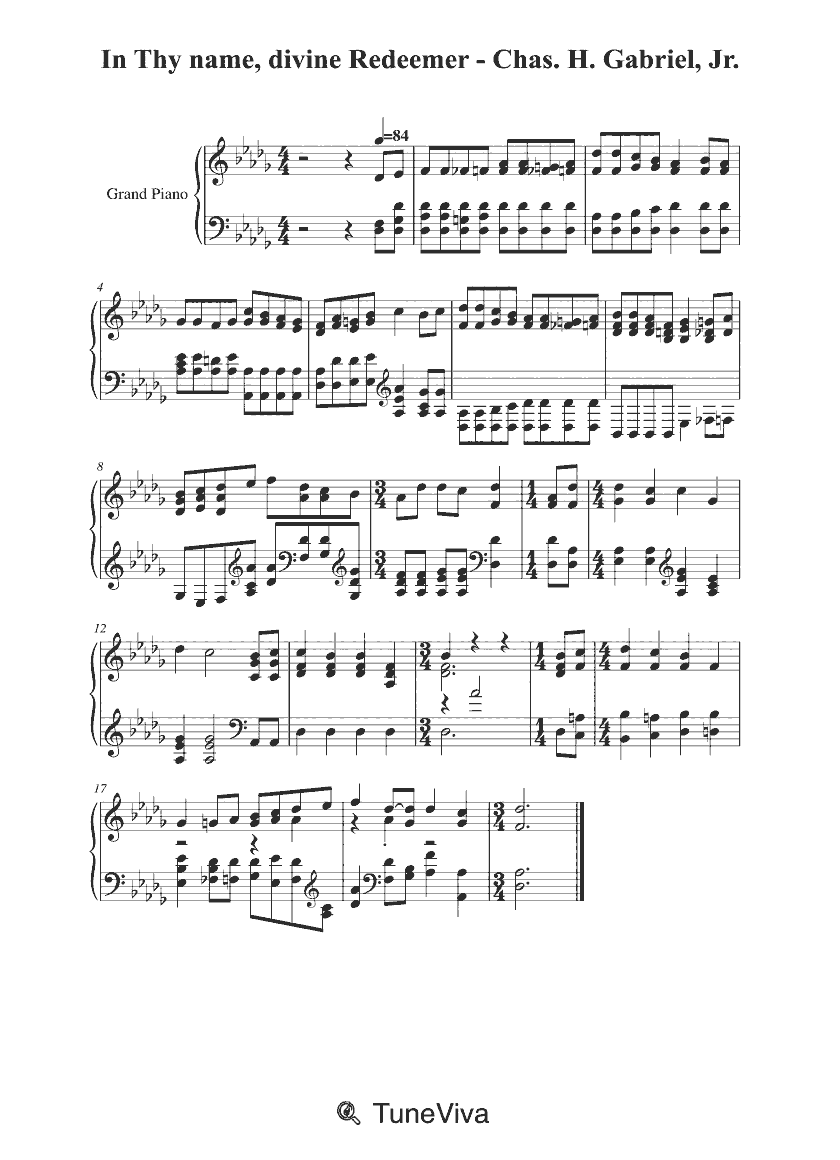
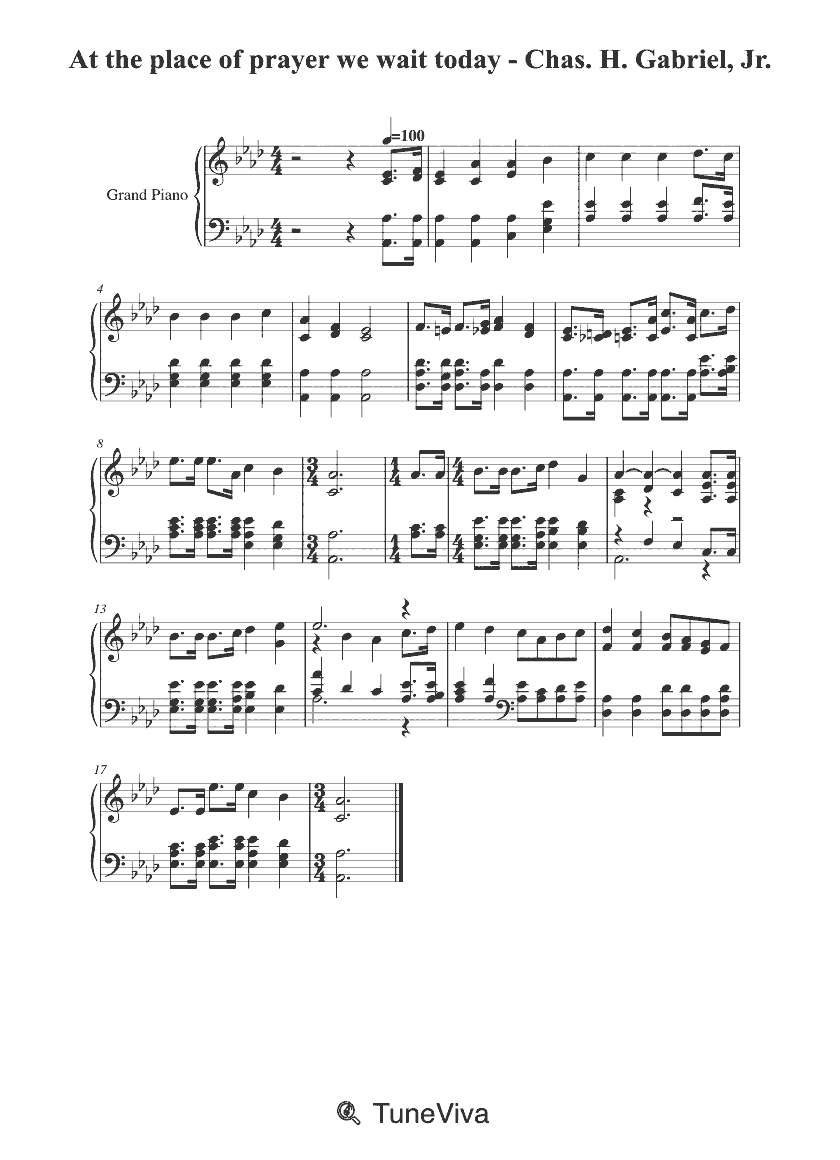
A prayer-hymn in the older second-person address, set for congregational singing.
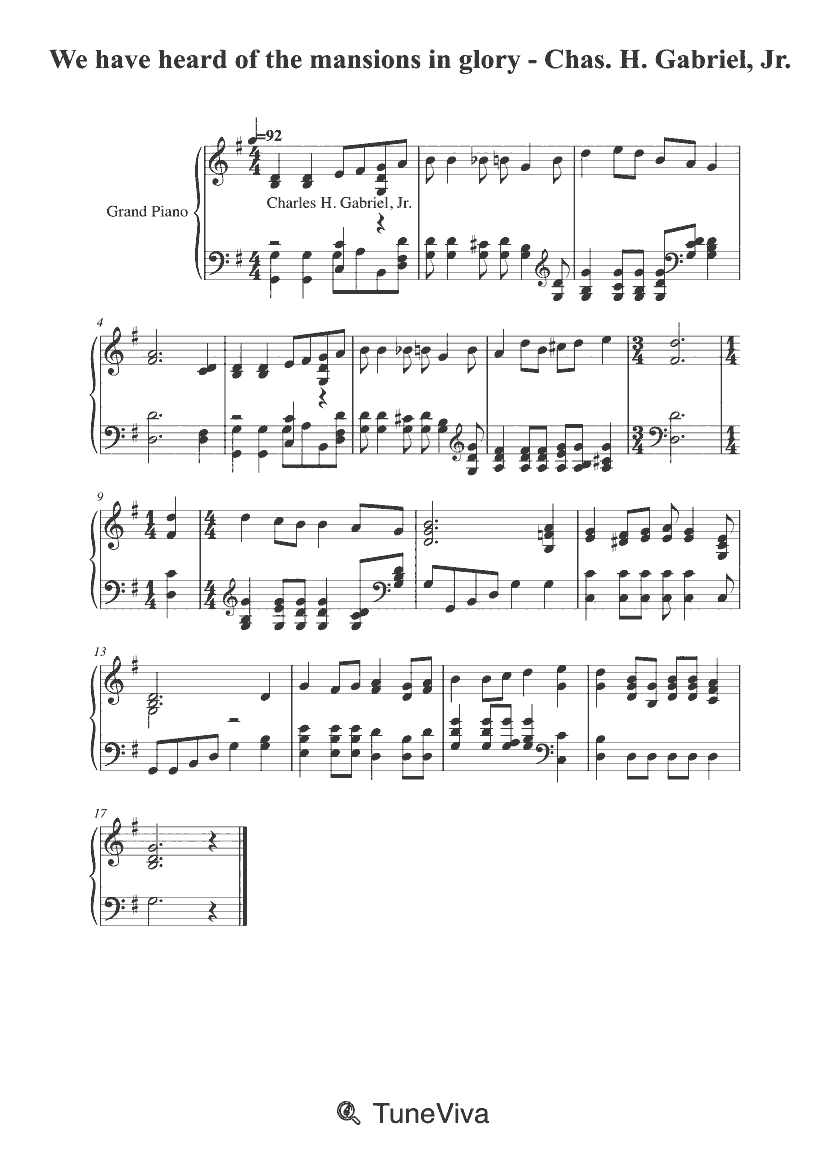
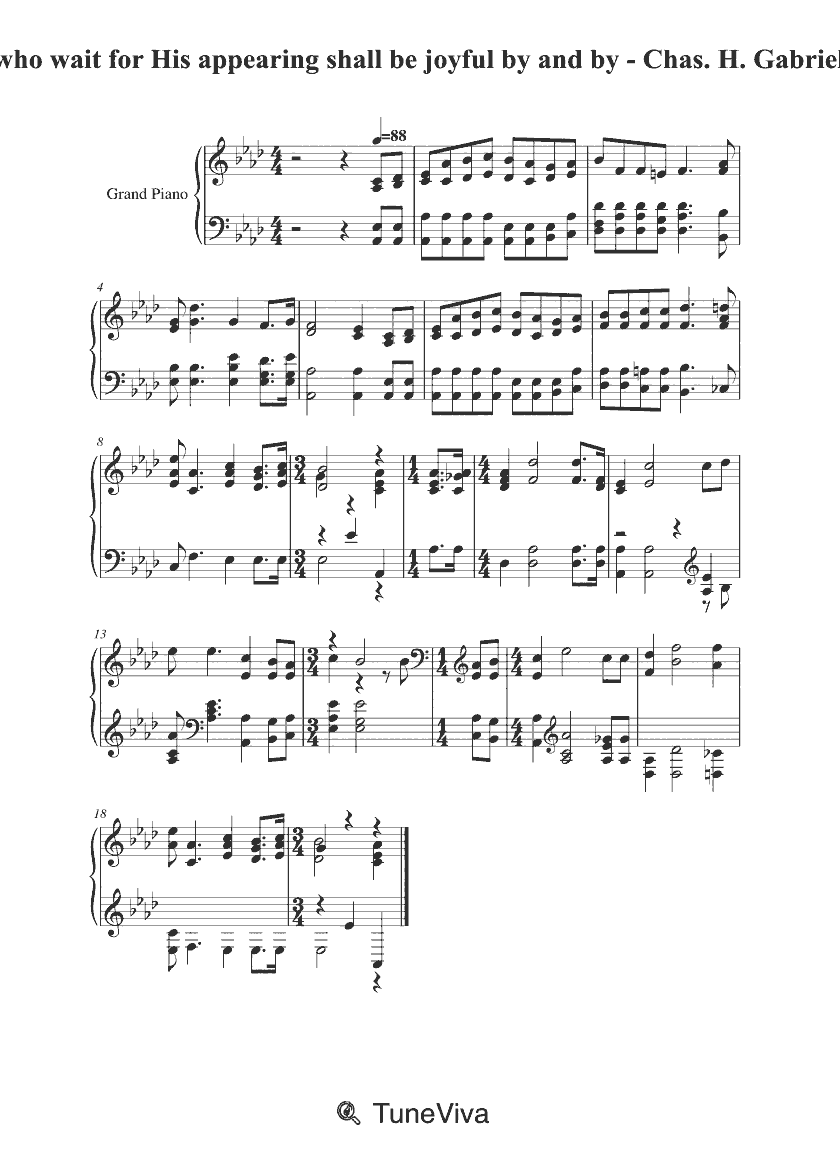
A hymn on the heavenly hope, drawing on the language of John 14.
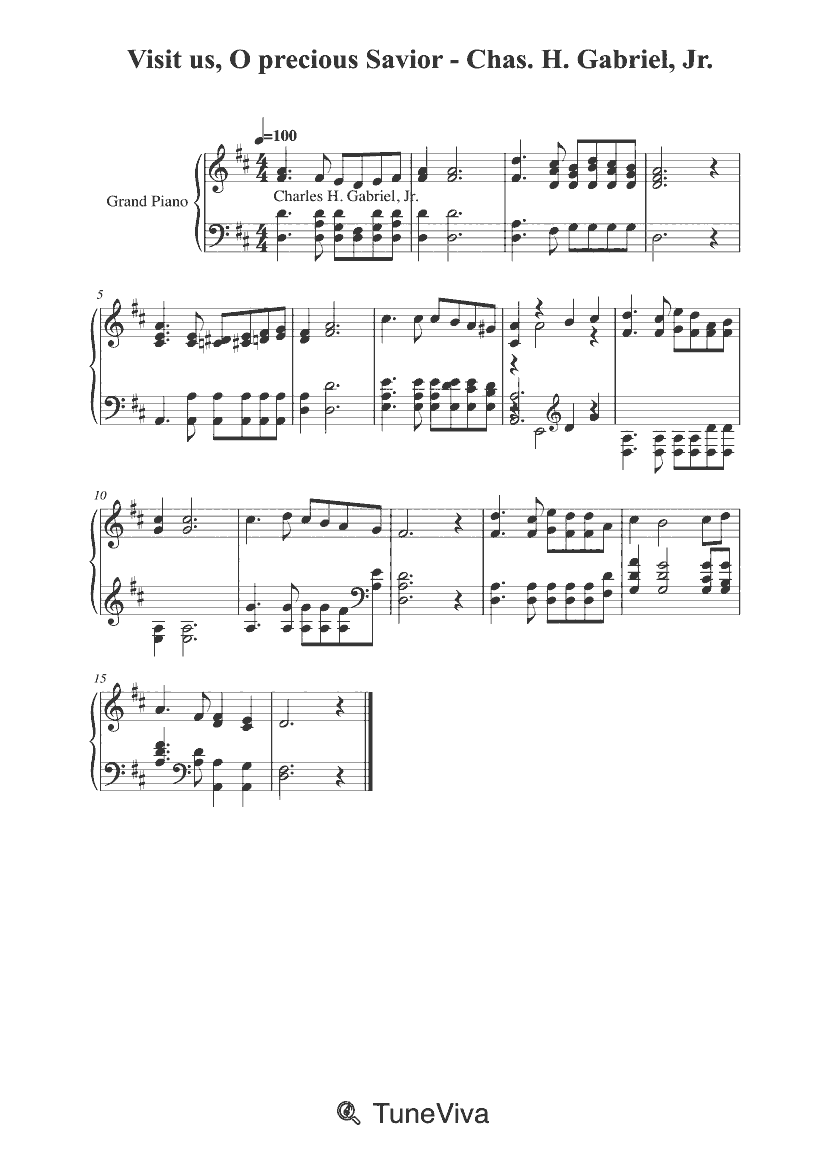
An invitation hymn in the second-person address; the catalogue gives no hymnal source.
There are 22, running to about 16 minutes of music and 6,942 notated notes. Eight entries include lyrics.
No. Charles Hutchinson Gabriel (1856-1932) was the father; Charles Hutchinson Gabriel Jr. (1892-1934) was his son and a composer in his own right.
Gospel songs were usually known by their opening line rather than a separate title, and the catalogue preserves that convention instead of inventing titles.
Yes. Hymnary records the pseudonym Jean Howard alongside his own name.
Catalog editions and arrangements attributed to Charles H. Gabriel Jr..