
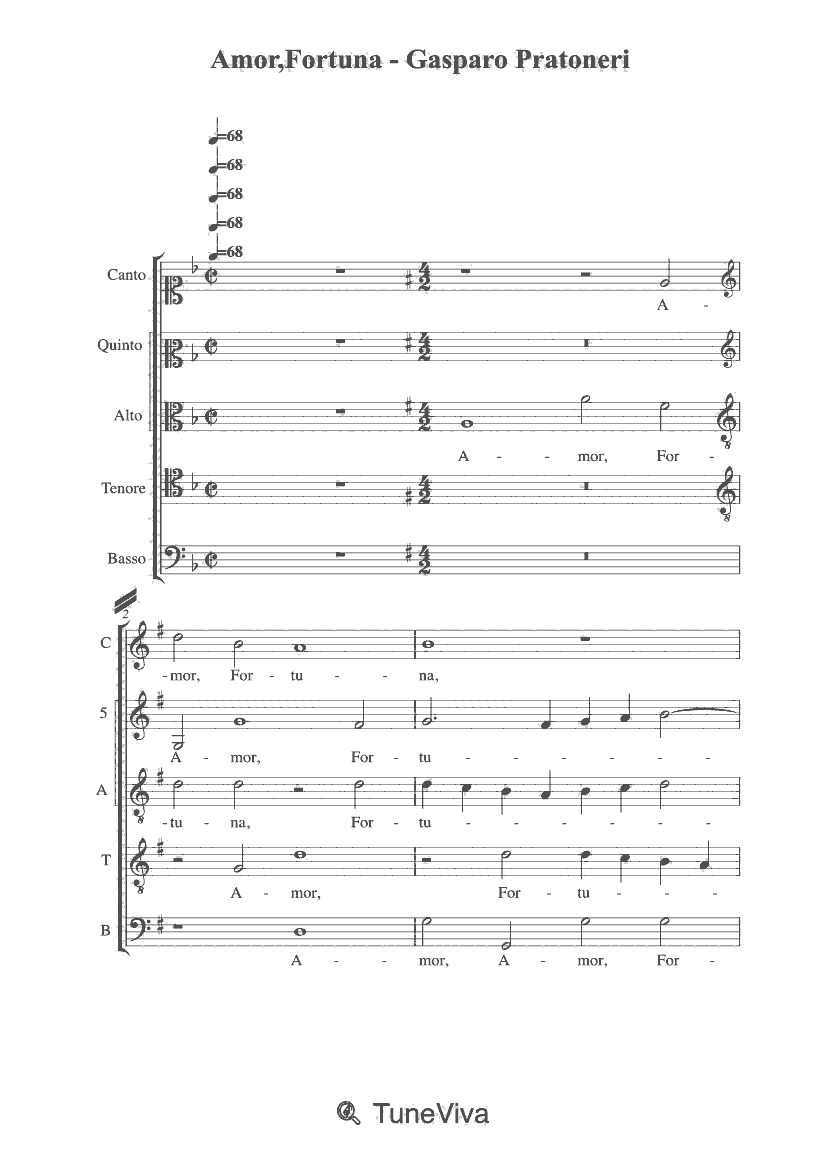
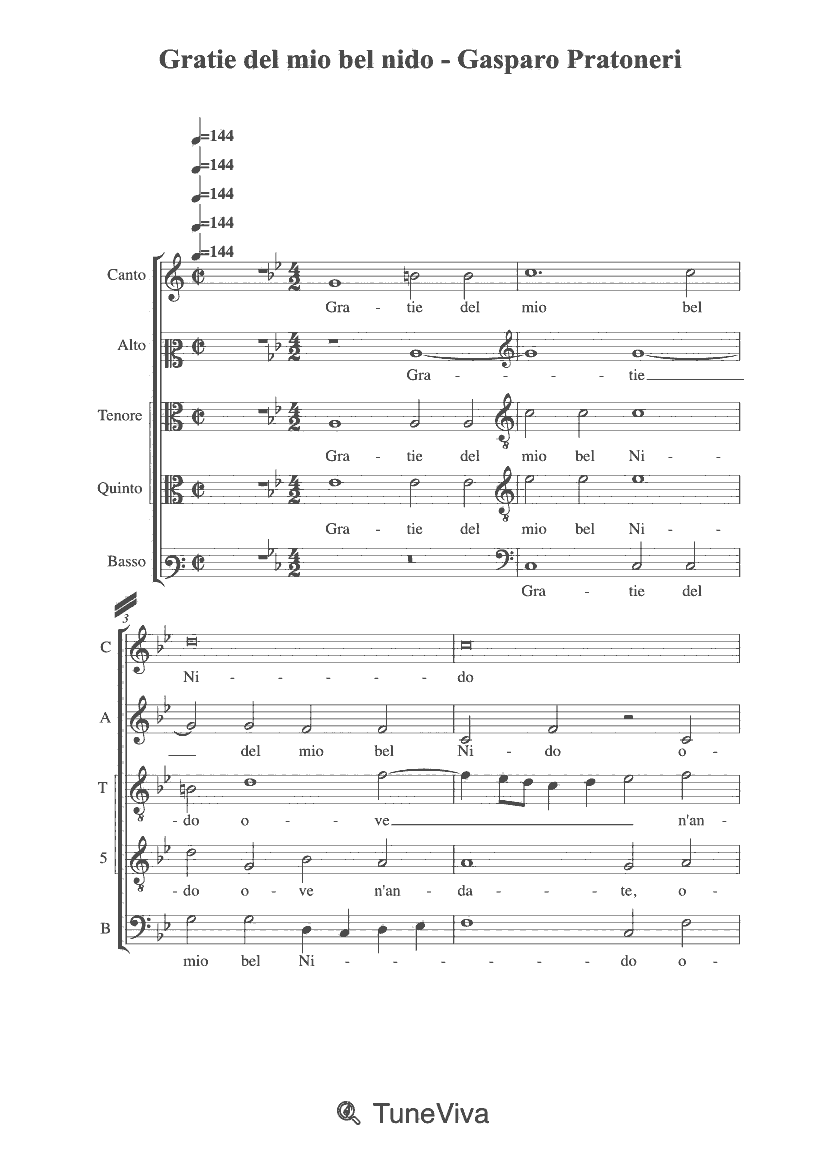
Amor,Fortuna - Gasparo Pratoneri
Prima parte
classical
5 tracks
The catalogue files these 23 scores under Lo Spirito da Reggio, but every file names Gasparo Pratoneri: Spirito was the nickname of a canon of Reggio Emilia who composed madrigals and psalm settings in the second half of the sixteenth century, and the catalogue uses it as the composer name. The set runs to about 130 minutes and 14,594 notated notes, all of it texted and all of it at complexity index 0. The most-viewed piece is Amor, Fortuna, followed by Liete e pensose and the truncated Ne spero i dolci d.
Gasparo Pratoneri was a priest at San Prospero in Reggio Emilia, documented there from May 1555 as maestro di cappella, though by 1566 he had lost the post. He kept a ridotto, or academy, of singers and players in his house, and he taught the young Alfonso Fontanelli, who became one of the most individual madrigalists of the Ferrara court. In 1592 a posthumous book of canzoni by the composer Spada was dedicated to him as Spirito Pratoneri, canonico di Reggio.
His own publications include a book of Salmi a sei voci, first issued in a shorter form in 1569 and reprinted by Giacomo Vincenti, ; a set of Madrigali ariosi for four voices is also recorded. A first book of five-voice madrigals supplied pieces such as Donne che di bellezza, which appears in this collection. IMSLP gives his dates as 1530 to 1595, but the documentary record used here supports only the later decades of the century, and some reference works give a floruit of 1556 to 1559.
Pratoneri is often confused with Hoste da Reggio, the composer Bartolomeo Torresano, whose music sometimes circulated under the name Spirito after his death. The catalogue keeps the nickname in the page title but credits Pratoneri on every file, so the two names point to one composer here.
With no continuo to lean on, the tuning has to come from the singers themselves. Pratoneri's lines are largely stepwise, but the cadences are prepared by suspension, so the moment before a close needs more attention than the busy passagework. Let the text carry the tempo: the declamation is syllabic, and a steady pulse will do more for clarity than expressive lingering. Keep the outer voices forward so the imitation registers in a full room.
The most-viewed piece in the set, and the title pairs Love and Fortune; the catalogue runs the two words together.
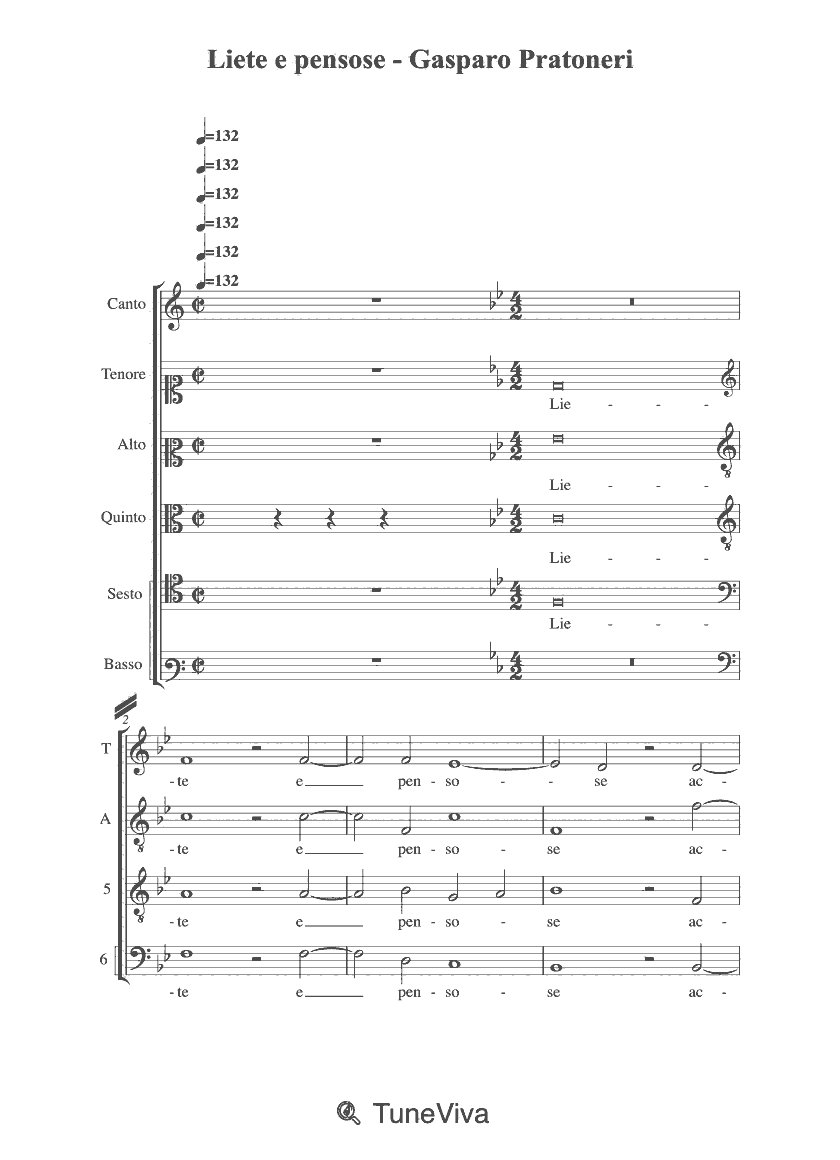
A five-voice madrigal, second by views in this collection; the catalogue gives no source for the text.
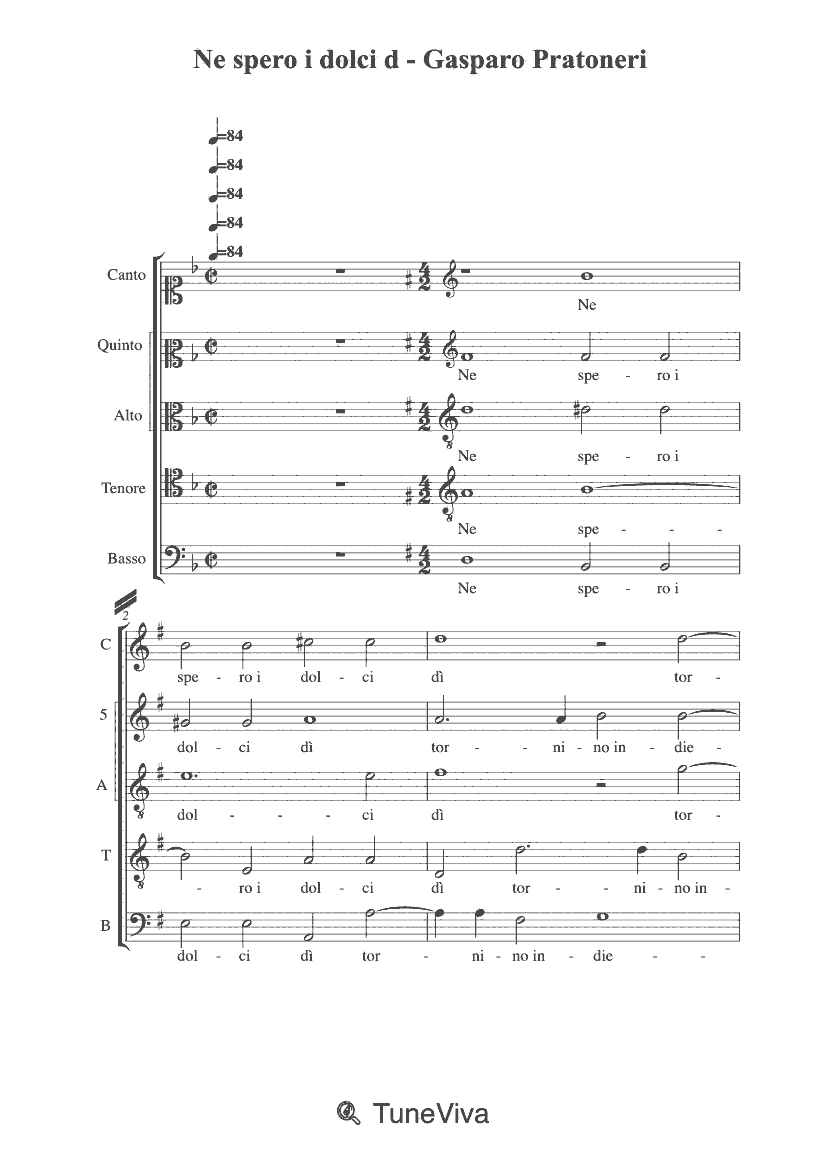
The title is cut off at 'd' in the catalogue, so the text cannot be identified from the file name alone.
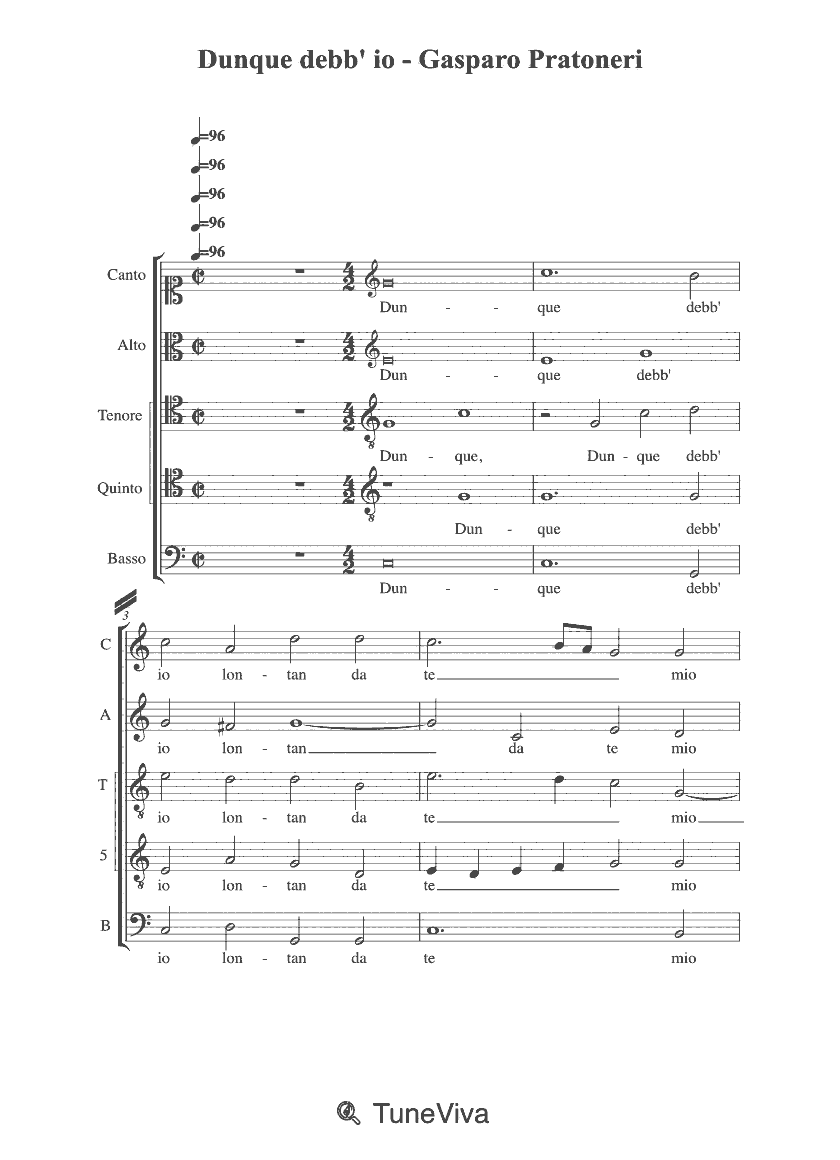
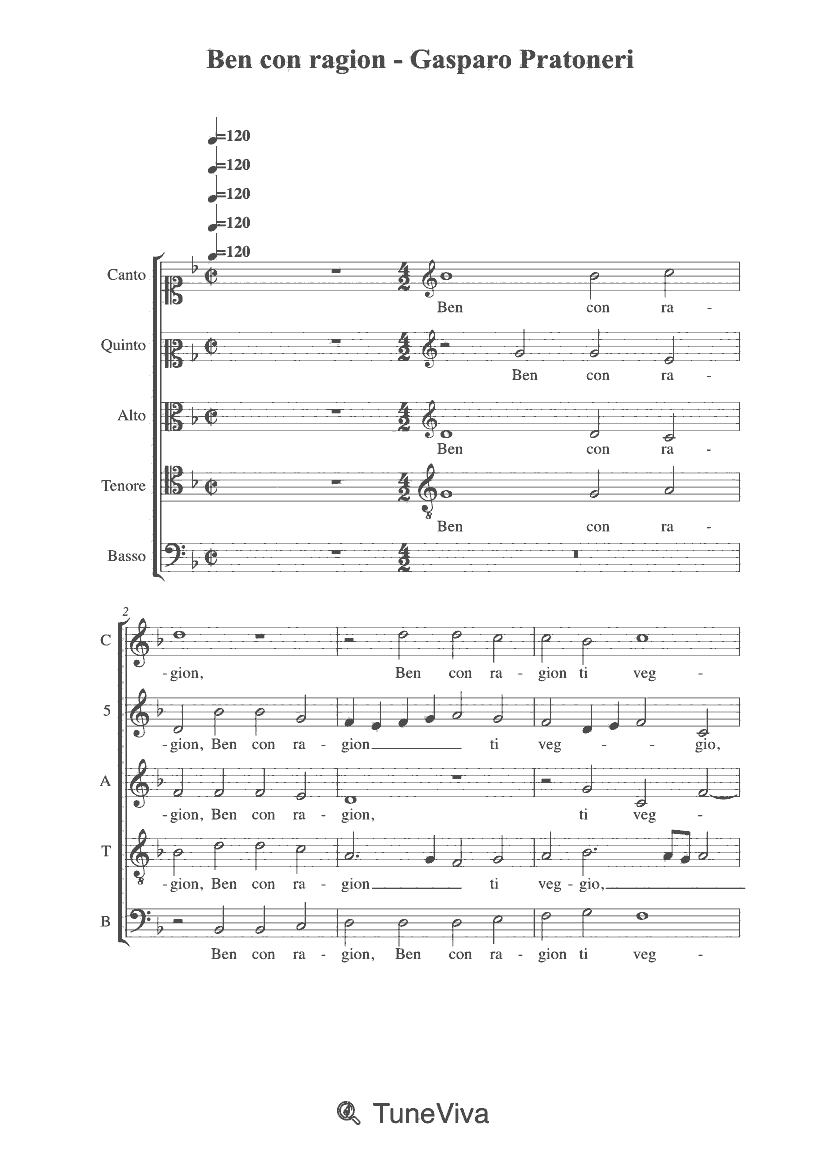
A first-person poetic address; the catalogue gives no source for the text.
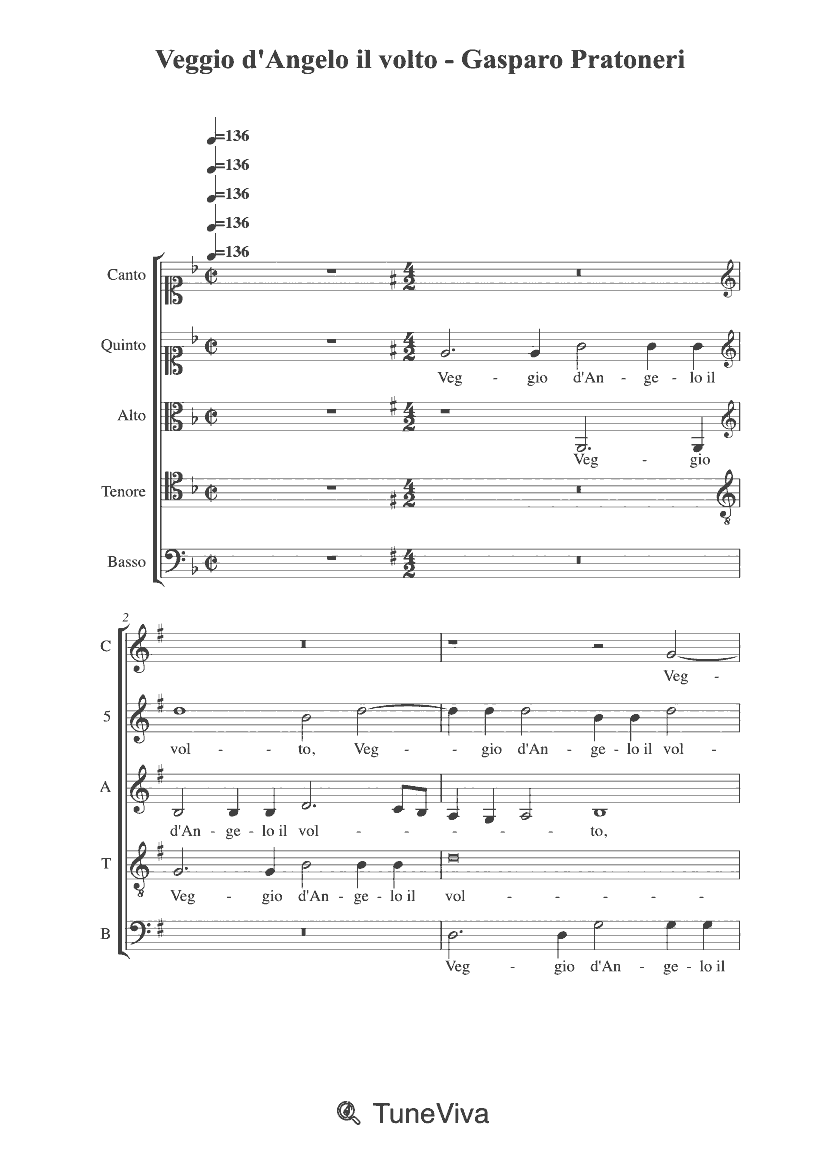
The speaker sees an angelic face in the opening line; one of the most-viewed entries.
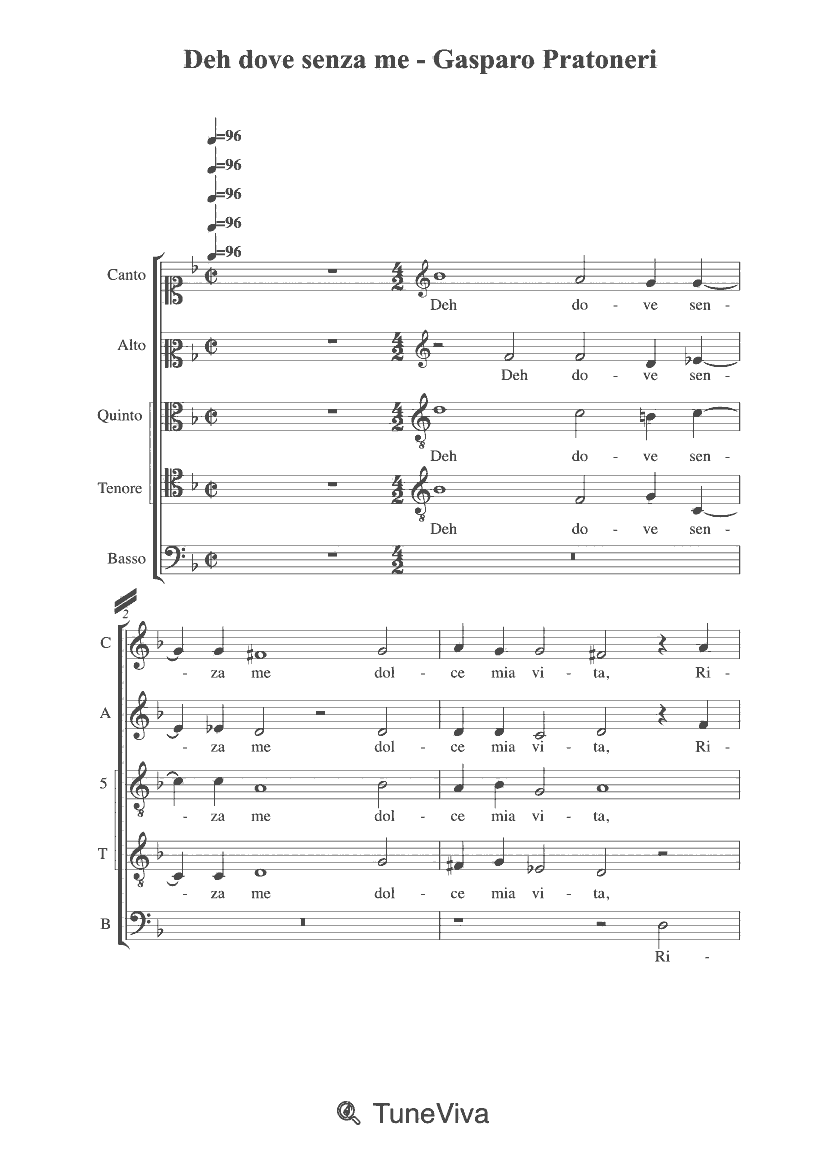
A leave-taking text; the catalogue gives no source.
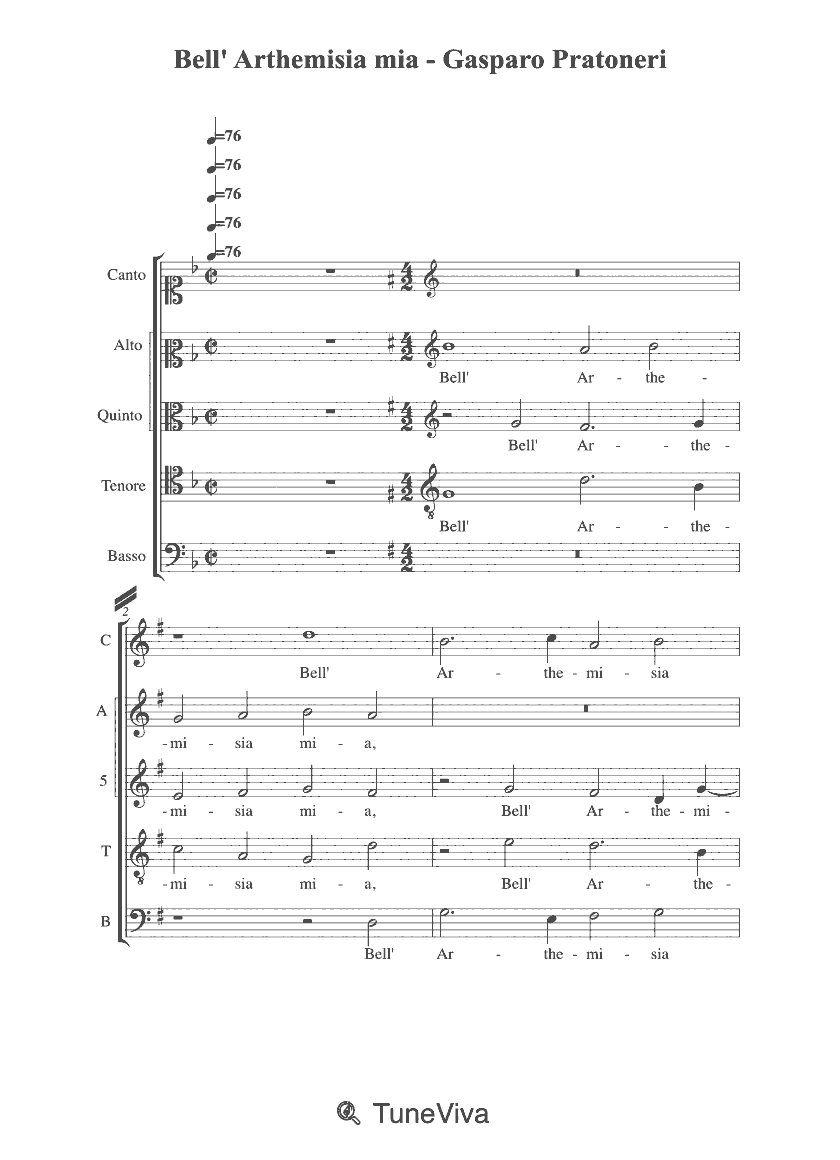
An address to a named lady, Artemesia, in the catalogue's spelling.
A short opening phrase; the catalogue gives no source for the text.
One of the pieces listed among the contents of Pratoneri's first book of five-voice madrigals.
That was Gasparo Pratoneri's nickname, and the catalogue uses it as the composer name. Every file, though, credits Pratoneri.
23, running to about 130 minutes of music and 14,594 notated notes. All of them carry lyrics.
No. Hoste da Reggio was Bartolomeo Torresano, a different composer. The two were confused even in the sixteenth century, and some of Hoste's music later circulated under the name Spirito.
IMSLP gives them, but the documents cited here place him at San Prospero from 1566 and still canon in 1592. Some reference works give only a floruit of 1556 to 1559, so the birth and death years should be treated as provisional.
Catalog editions and arrangements attributed to Lo Spirito da Reggio.
Prima parte
Seconda parte
Prima parte
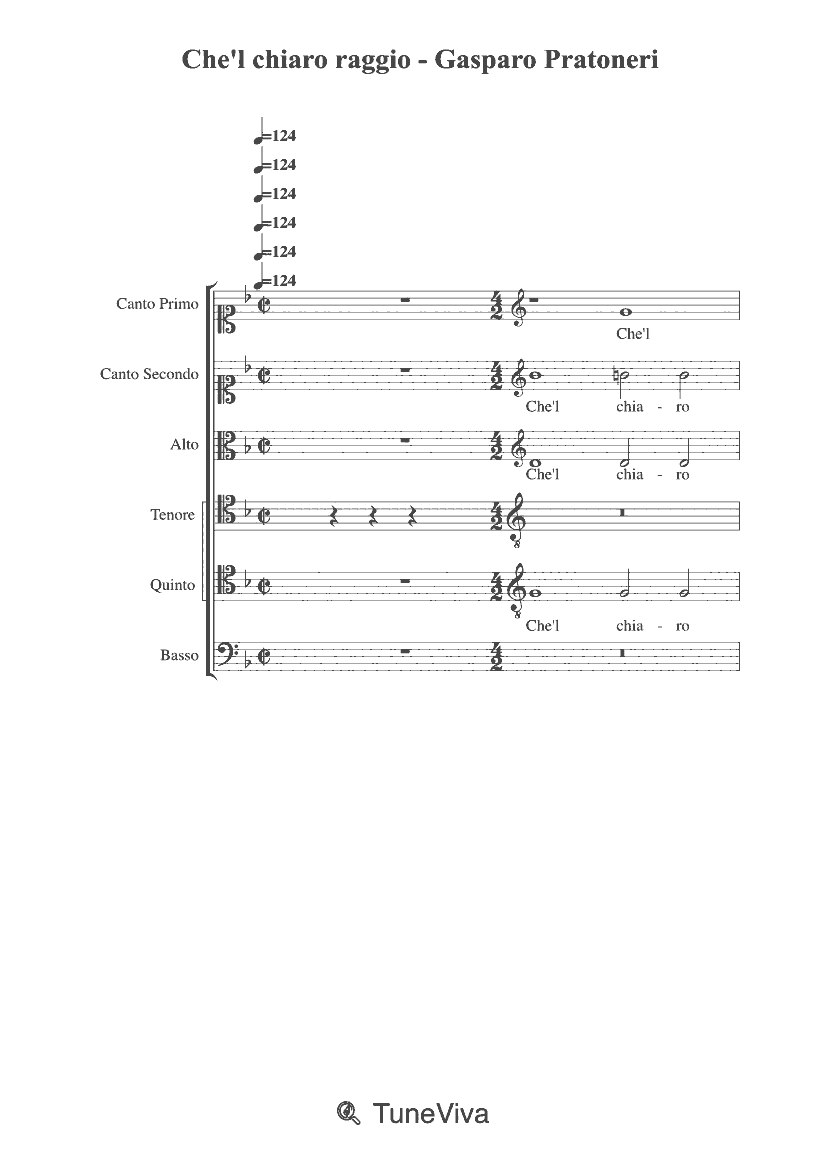
Seconda parte
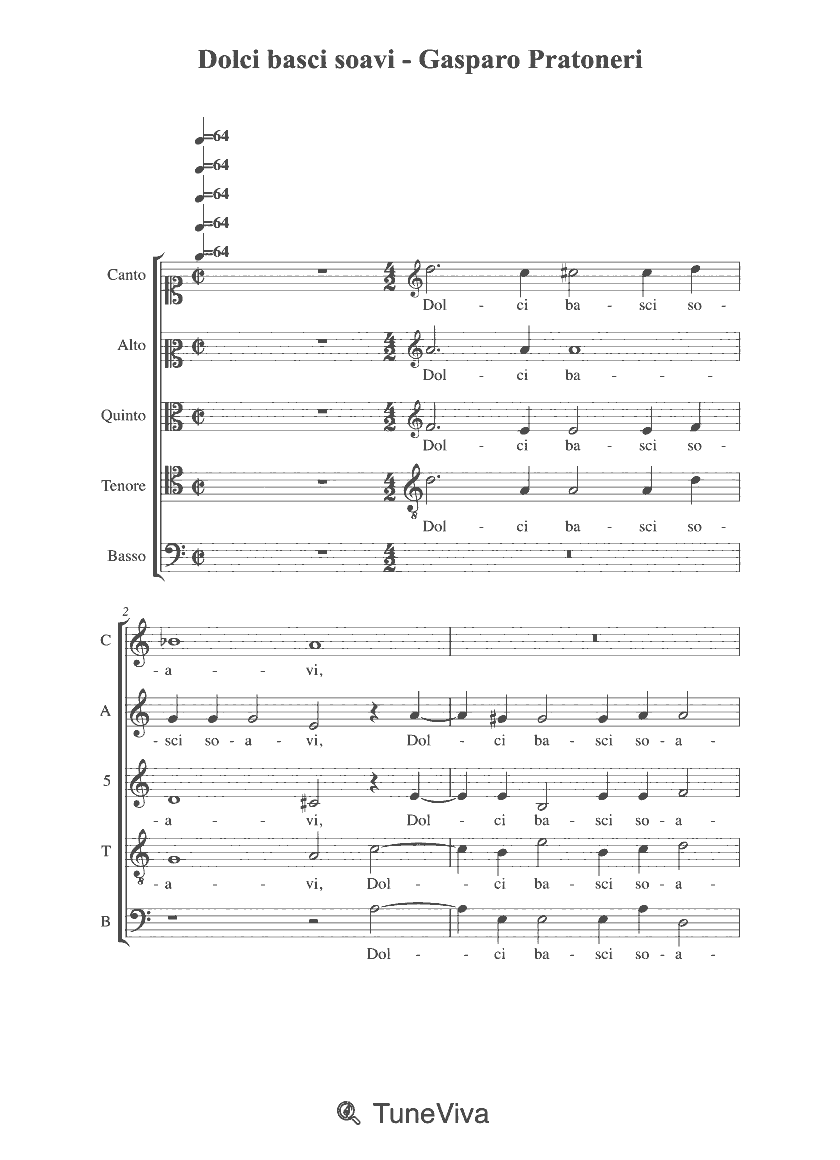
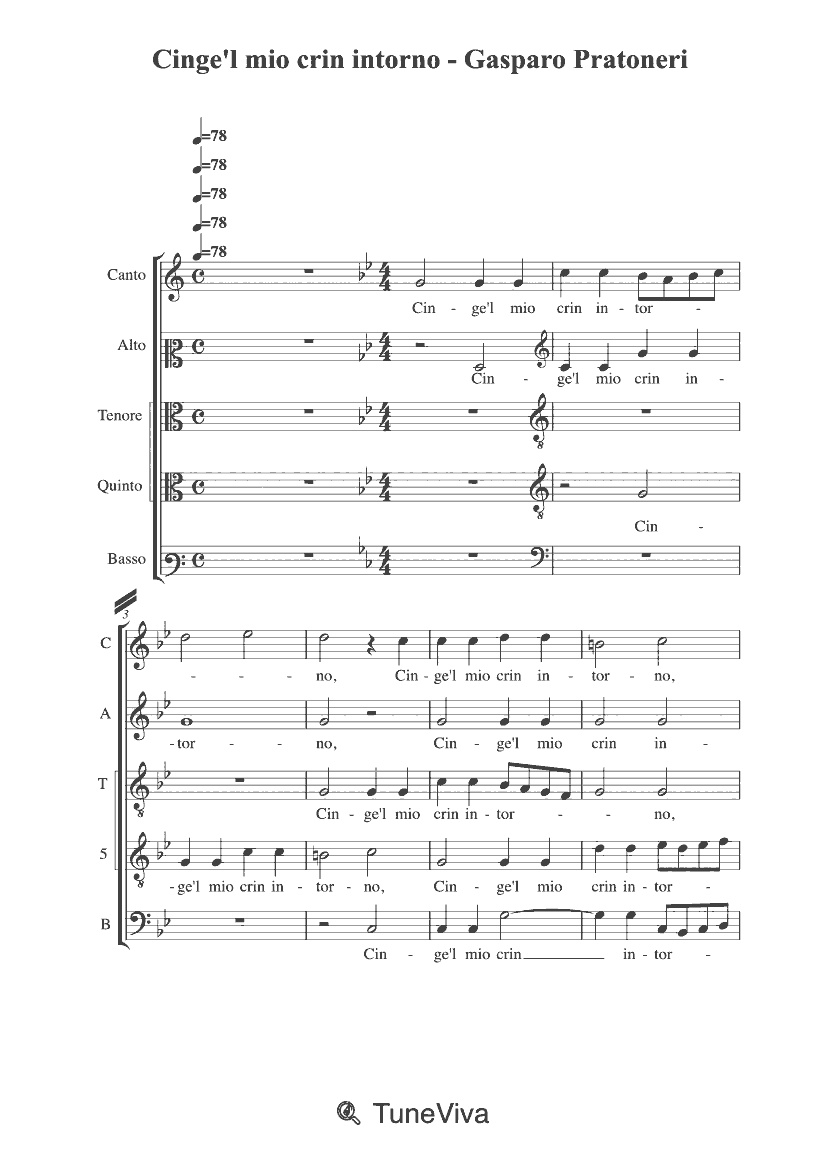
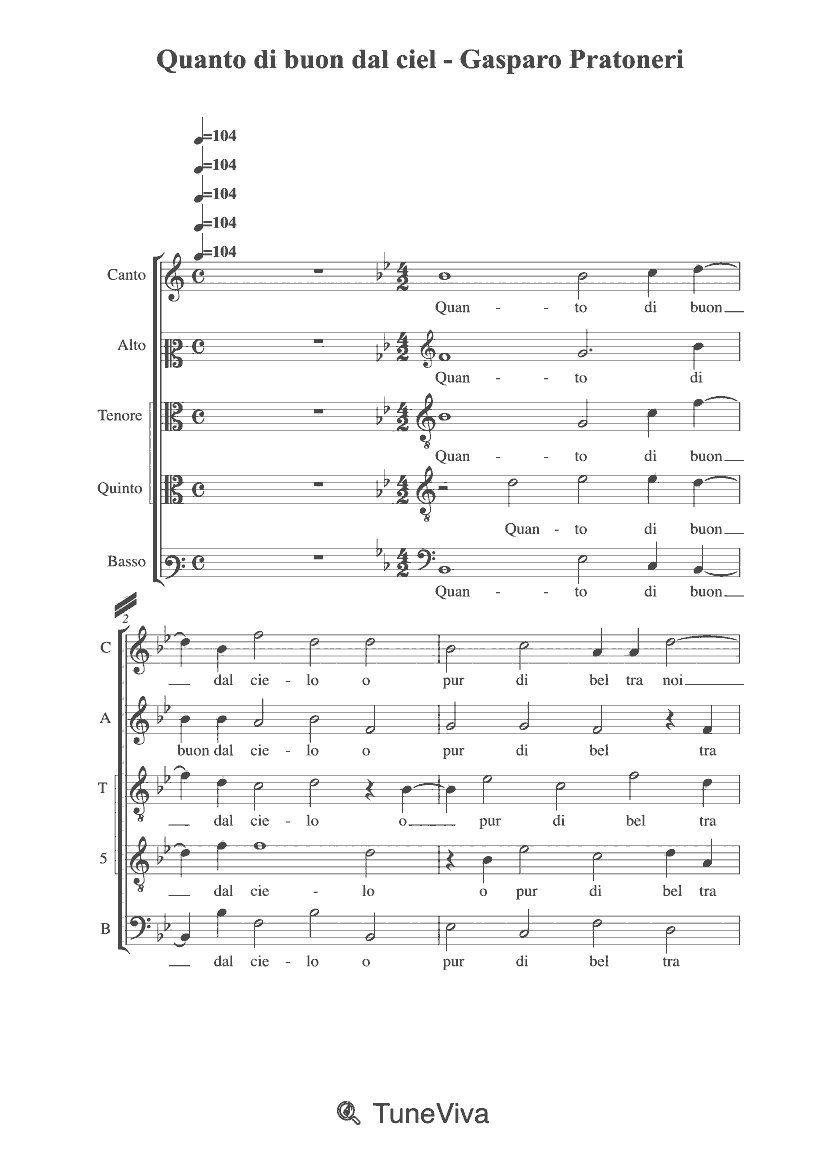
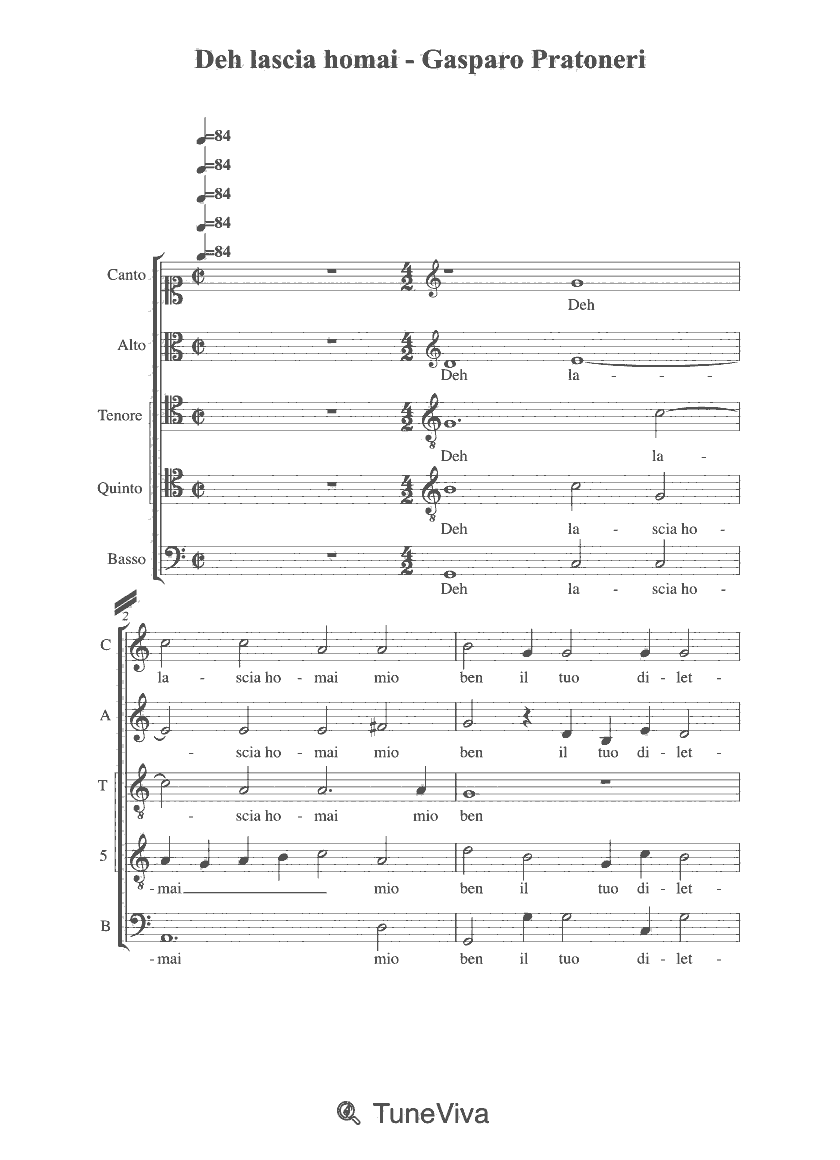
Seconda parte
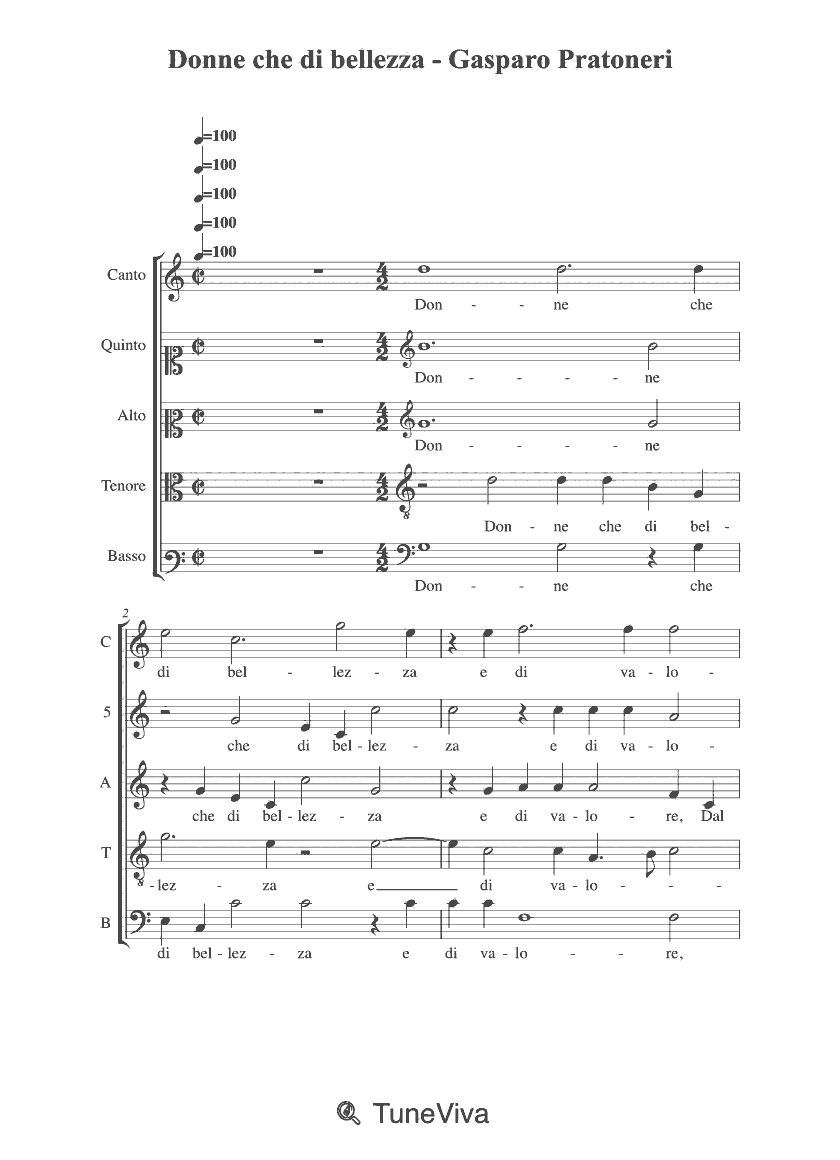
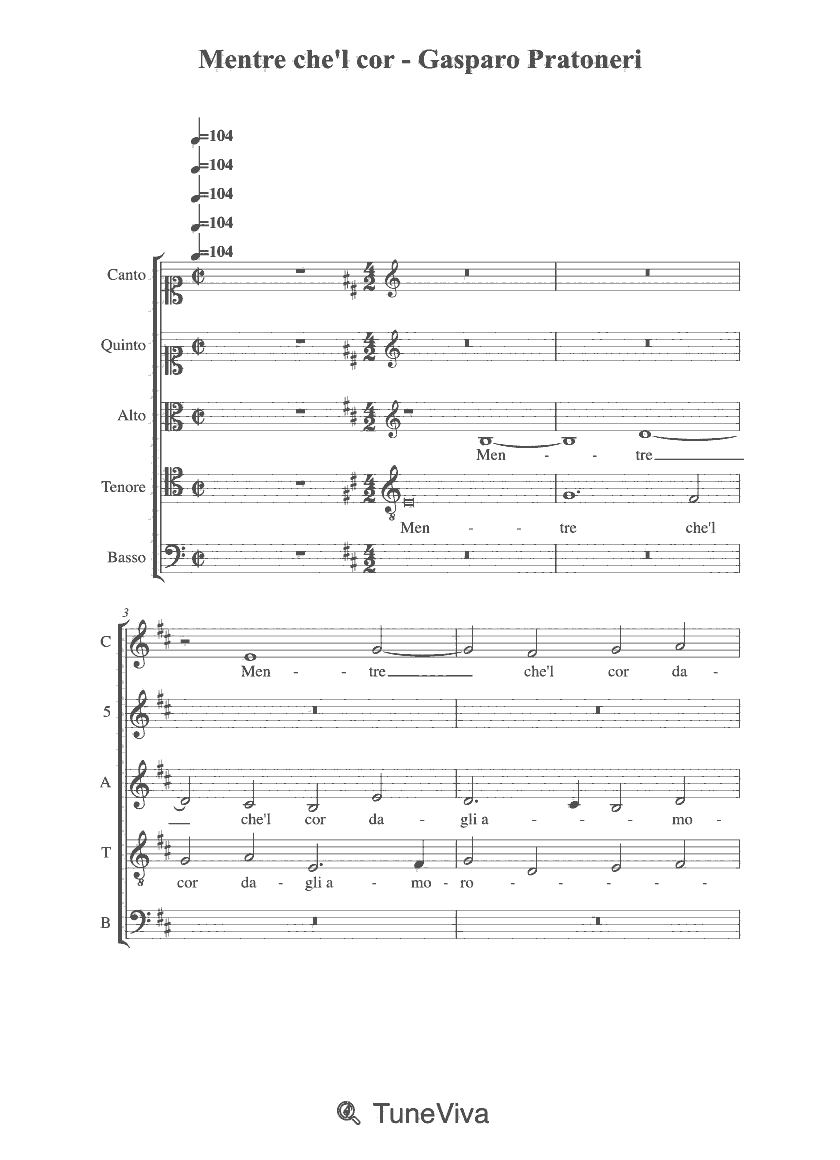
Prima parte
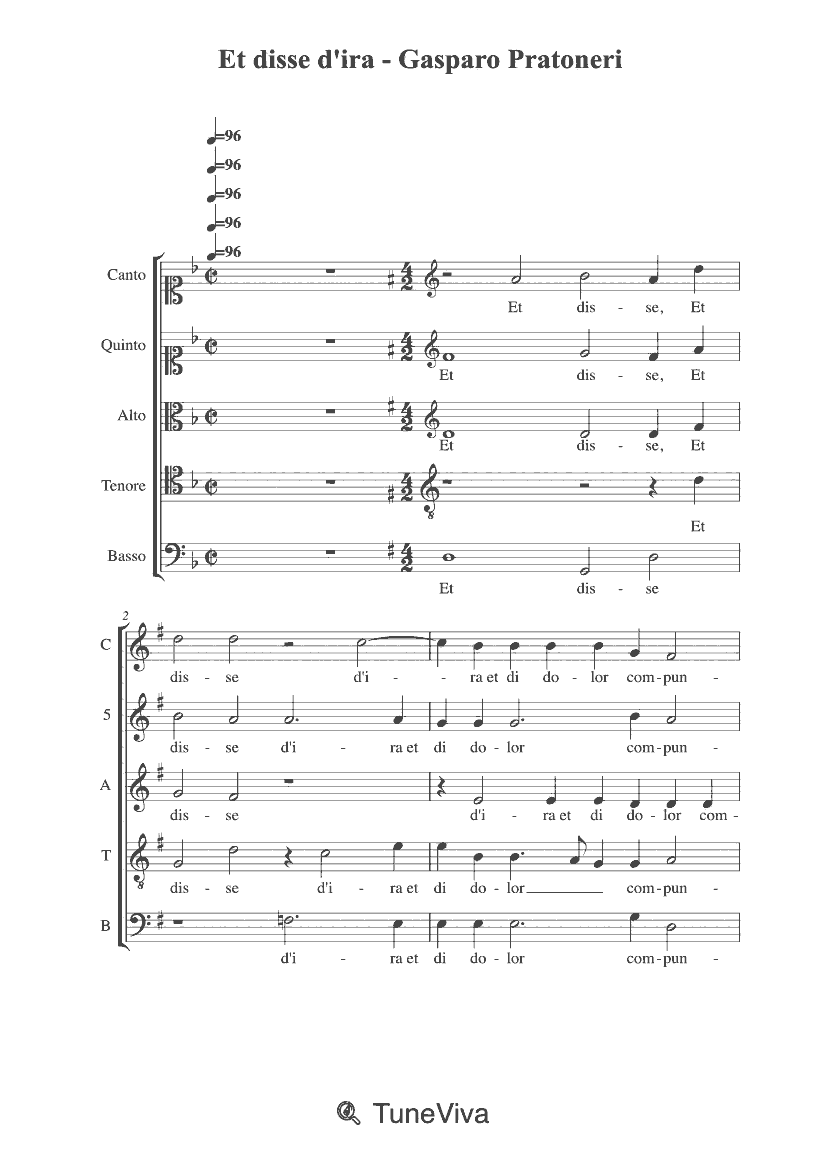
Seconda parte
Prima parte
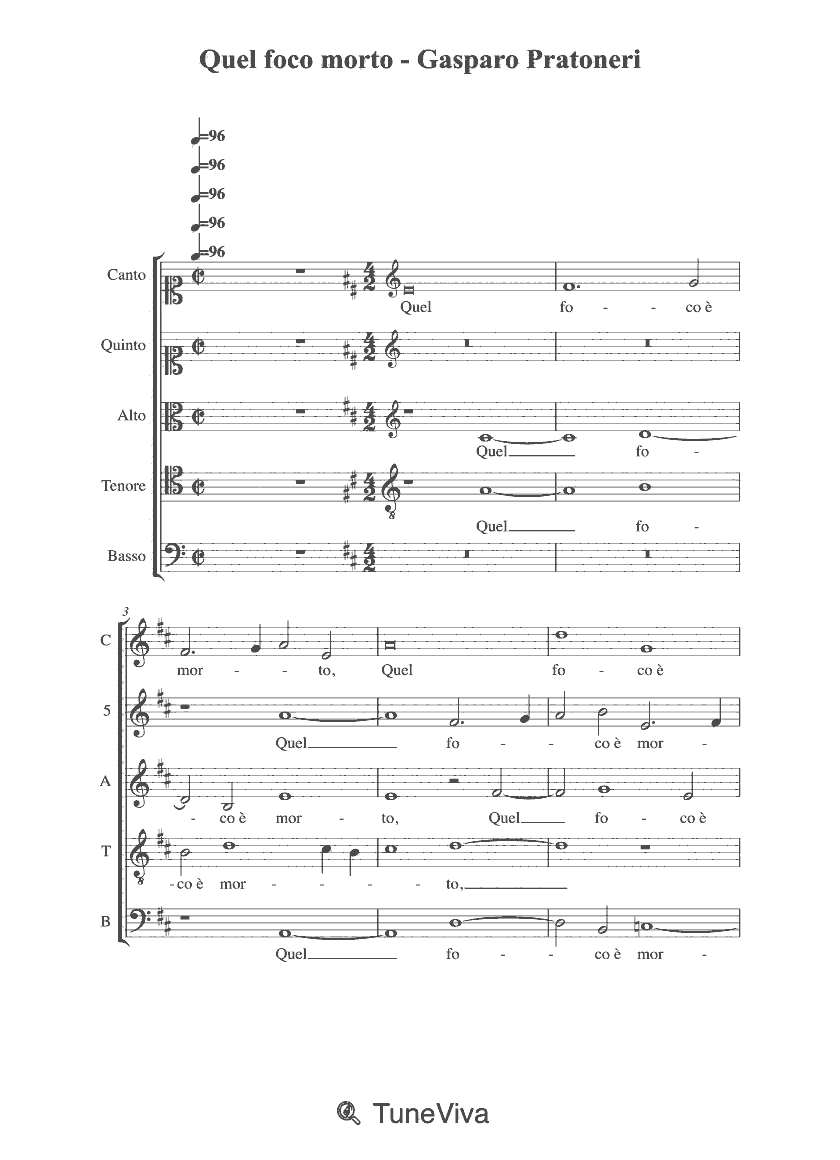
Seconda parte
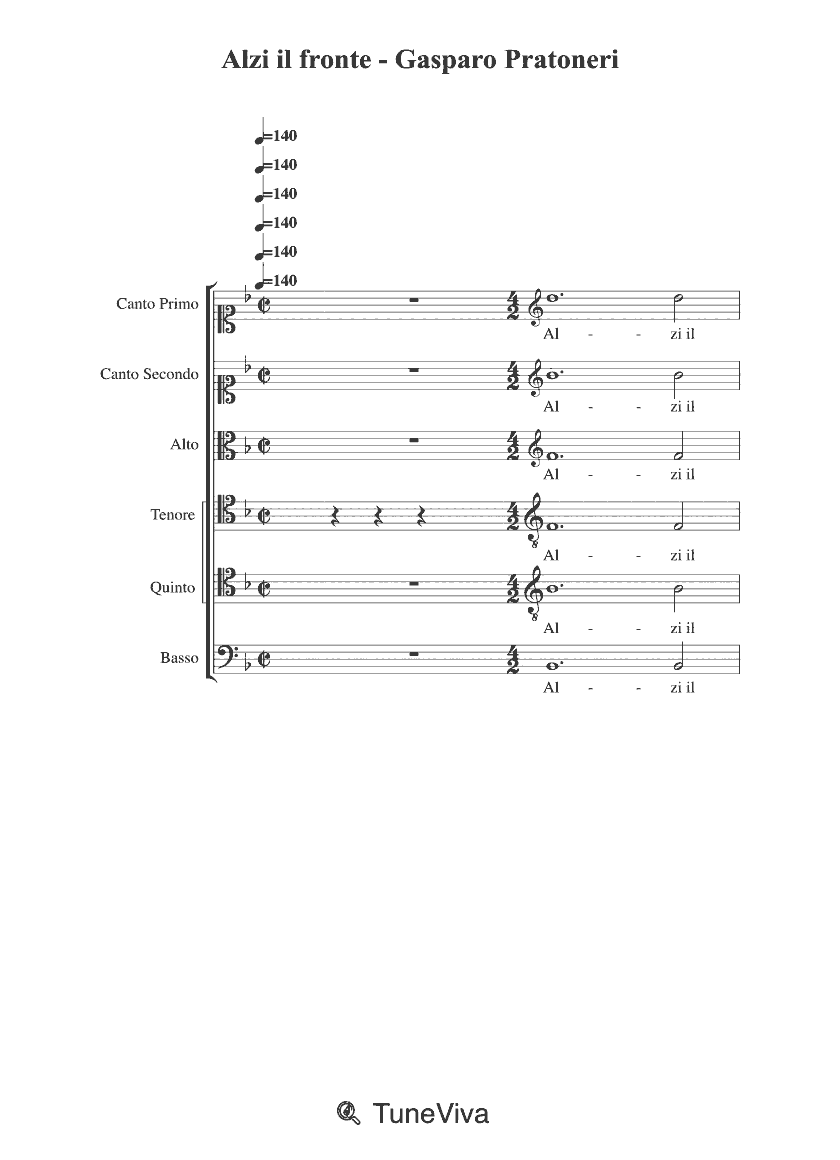
Prima parte
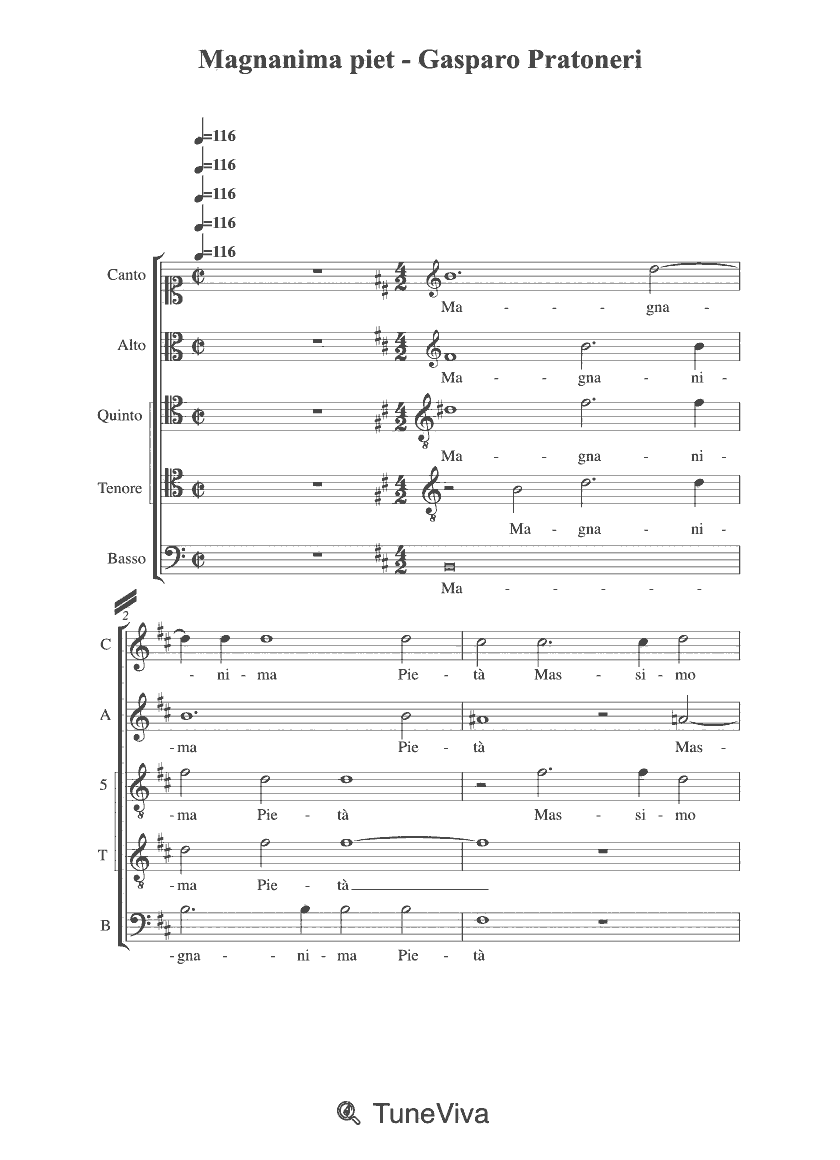
Prima parte