
classical
4 tracks
Lodovico Agostini wrote for the Ferrara court, and the catalogue reflects one slice of that work: 26 scores, about 89 minutes of music and 11,549 notated notes. Every entry carries an Italian text, and every one is logged at complexity index 0.
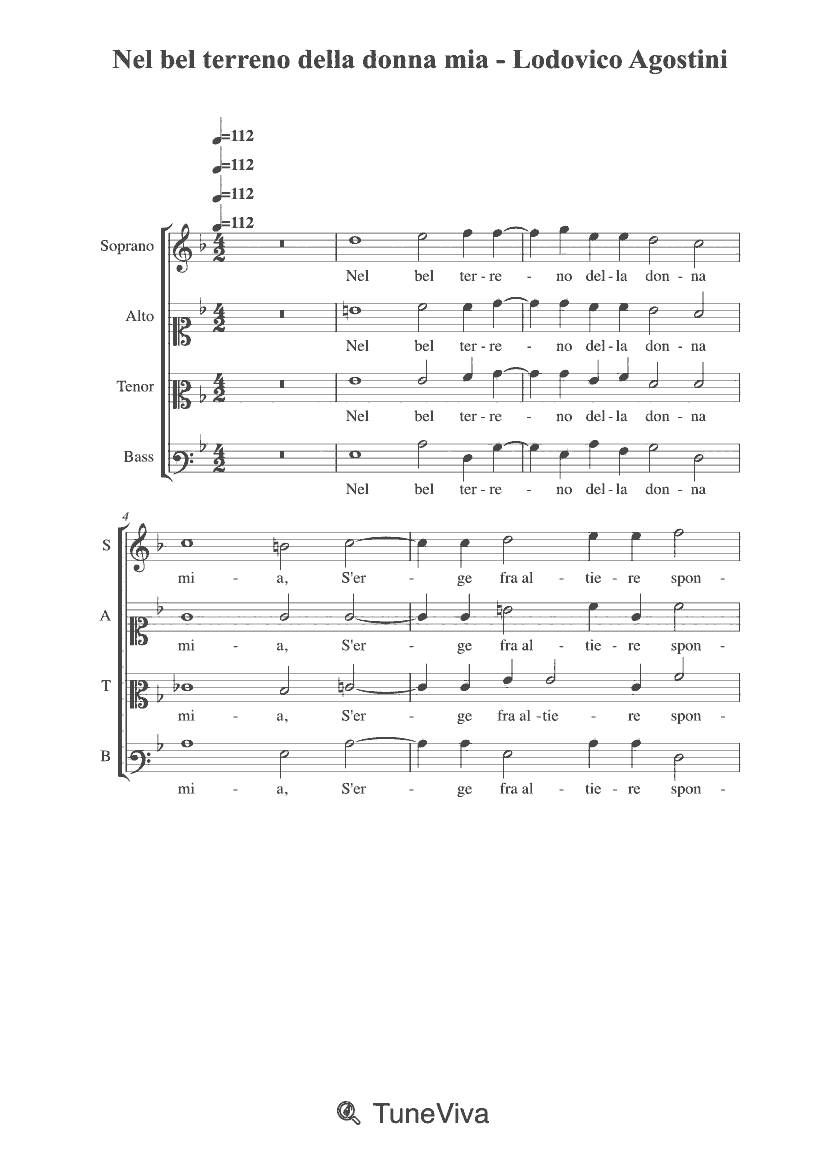
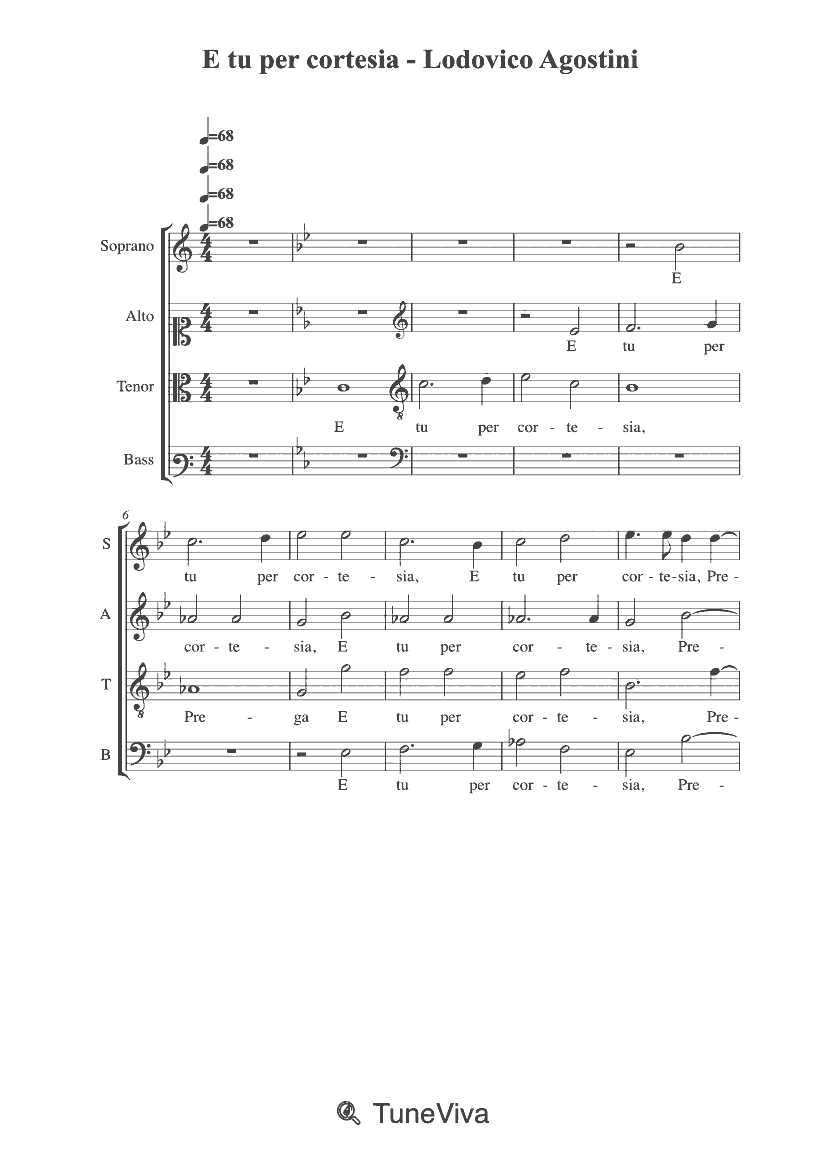
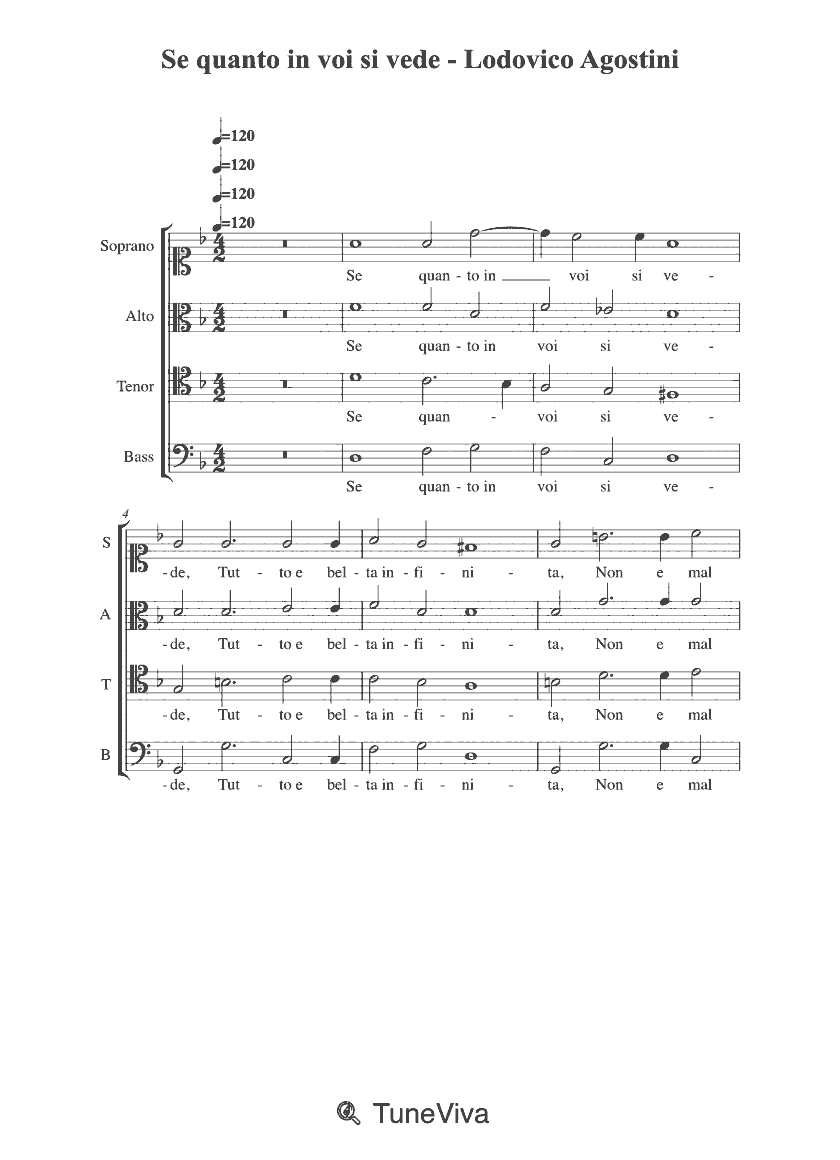
The great majority come from a single print, the Libro secondo de madrigali a quattro voci issued in Venice in 1572. The most-viewed titles — Nel bel terreno della donna mia, E tu per cortesia, Se quanto in voi si vede — are four-voice settings, and the catalogue's spelling differs from the print, which reads 'Se quanto in uoi si vede'.
Agostini was born in Ferrara in 1534 and died there on 20 September 1590. He was the illegitimate son of Agostino Agostini, a Ferrarese singer and priest, and he took orders himself. By 1572 he was singing in the chapel of Ferrara Cathedral, and by 1578 he was on Duke Alfonso II d'Este's payroll; he stayed in the duke's service for the rest of his life. In the 1580s he taught composition to Guglielmo Gonzaga, Duke of Mantua, who became a madrigal composer in his own right. He knew Tasso and Guarini and worked alongside Luzzasco Luzzaschi, and he ended his career as a monsignore and apostolic protonotary.
His publications are unusual for their playfulness. The Enigmi musicali and L'echo, et enigmi musicali are canons to be solved from riddles, full of chromatic turns and instrumental interludes. Several madrigal books were written for the three singers of Ferrara's concerto di donne — Laura Peverara, Anna Guarini and Livia d'Arco — and the third book, for six voices, printed in 1582, appears to be the earliest collection of their actual repertory. A late set, Le lagrime del peccatore, turns Luigi Tansillo's penitential poems into madrigali spirituali. No liturgical music by him survives.
The catalogue holds only the 1572 book: seven canzoni and twenty-one madrigals for four voices, dedicated to Girolamo Roverelli and printed by the sons of Antonio Gardano. Most of the 26 titles correspond to items in that contents list, all with text and all at complexity index 0. That is why the collection reads as a single experiment in four-voice writing rather than a survey, and why the pieces run to about three minutes each.
Four voices, mostly homophonic, with the text declaimed in short syllables: the difficulty is not range but intonation, because the part-writing leaves suspensions exposed. Keep the cantus clear and let the lower voices support rather than compete. The canzoni are longer and more sectional than the madrigals, so mark the changes of metre before rehearsing. Agostini's later music is full of riddles and chromatic puzzles, but this book is comparatively direct; treat it as expressive late madrigal writing, not as a technical exercise.
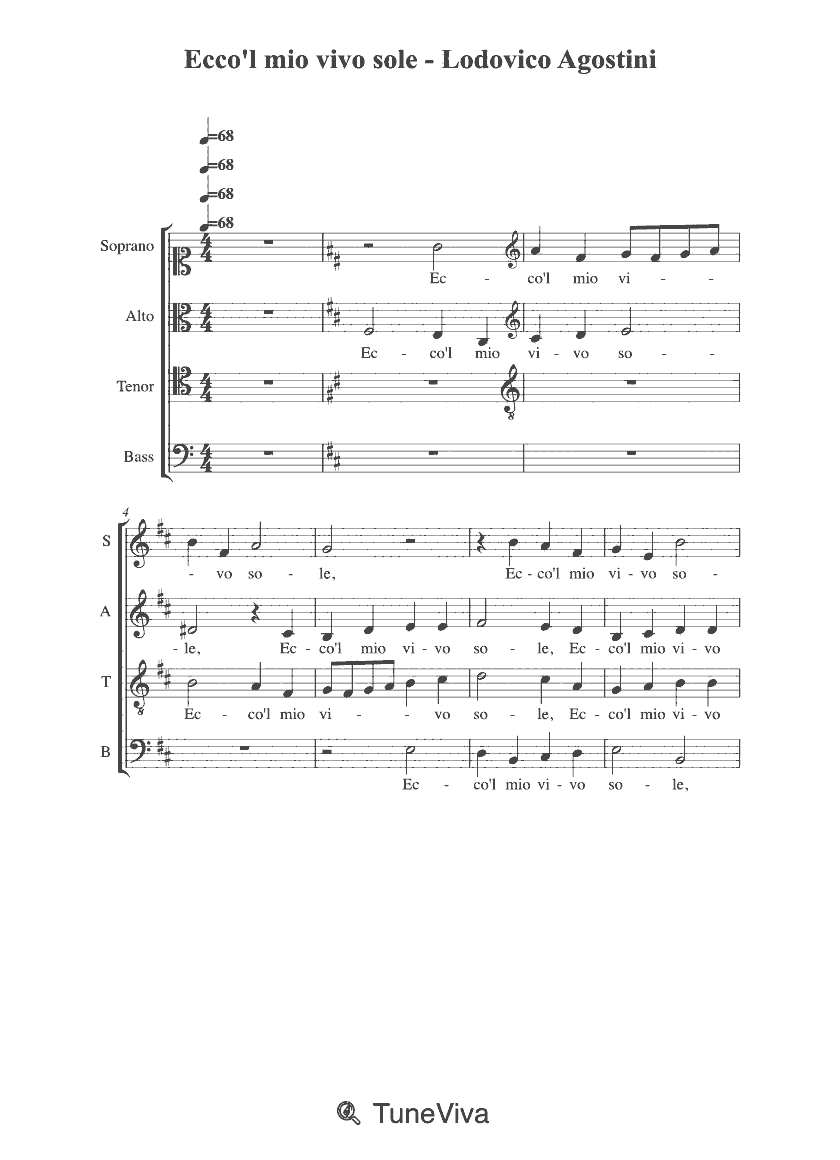
The most-viewed Agostini score, a four-voice madrigal from the 1572 second book.
One of the canzoni rather than the madrigals in the 1572 print, longer-breathed and more sectional than its neighbours.
Printed as 'Se quanto in uoi si vede'; the catalogue modernises the u to v, as it does throughout the book's titles.
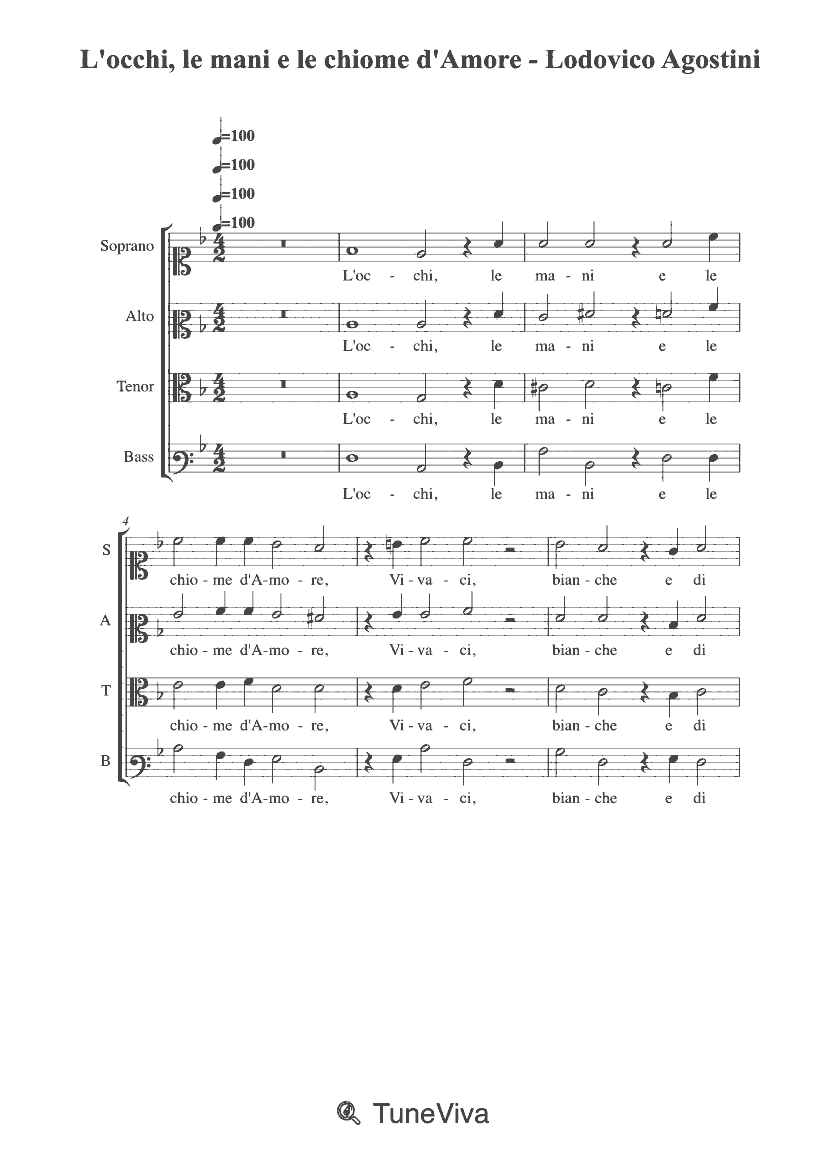
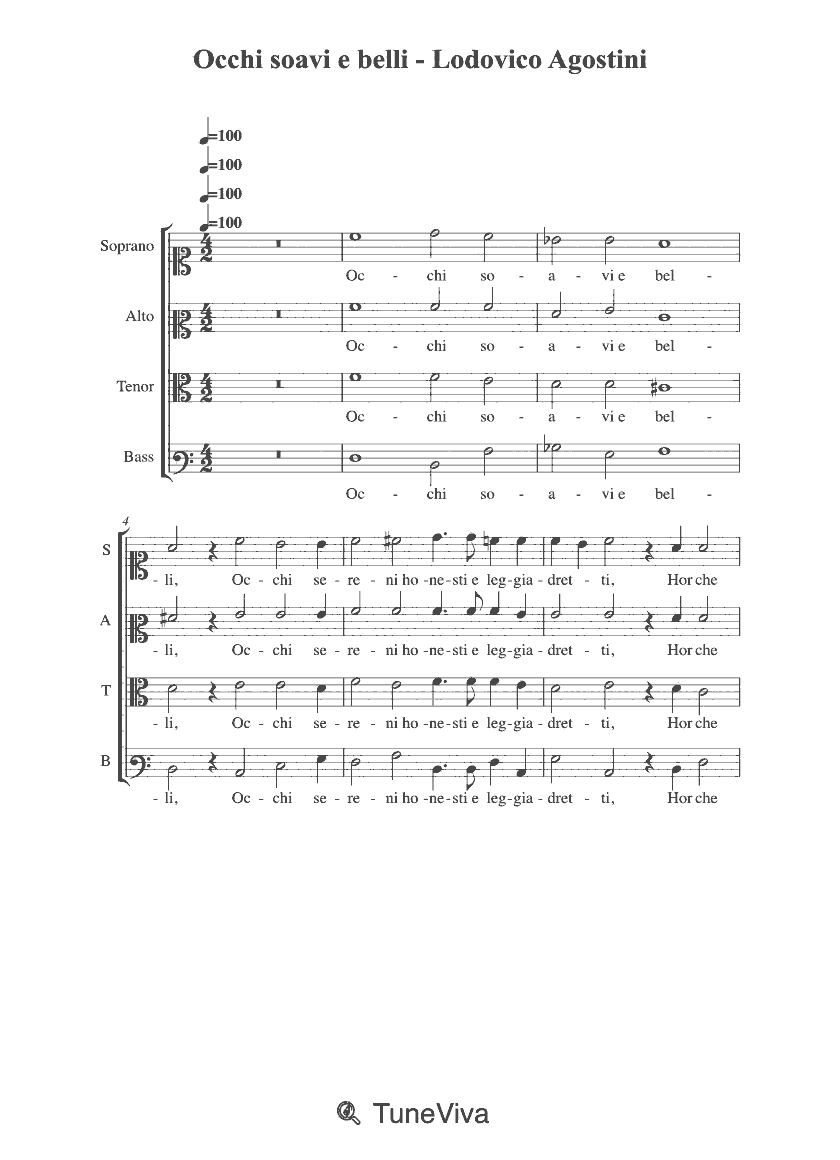
A madrigal cataloguing the beloved's eyes, hands and hair as weapons of Love; the print's incipit is simply 'L'occhi le mani'.
A short four-voice madrigal from the central run of settings in the 1572 book.
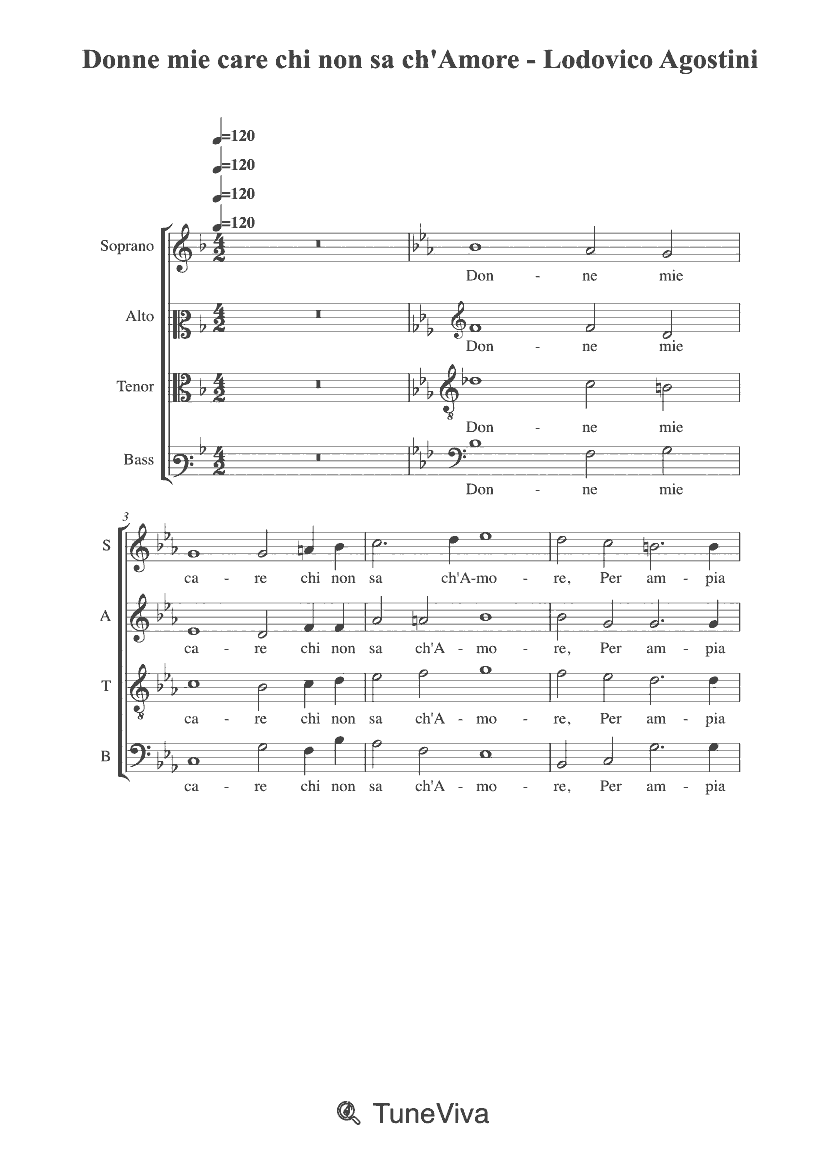
Listed in the print by its first two words, 'Donne mie care'; the catalogue supplies the rest of the line as the title.
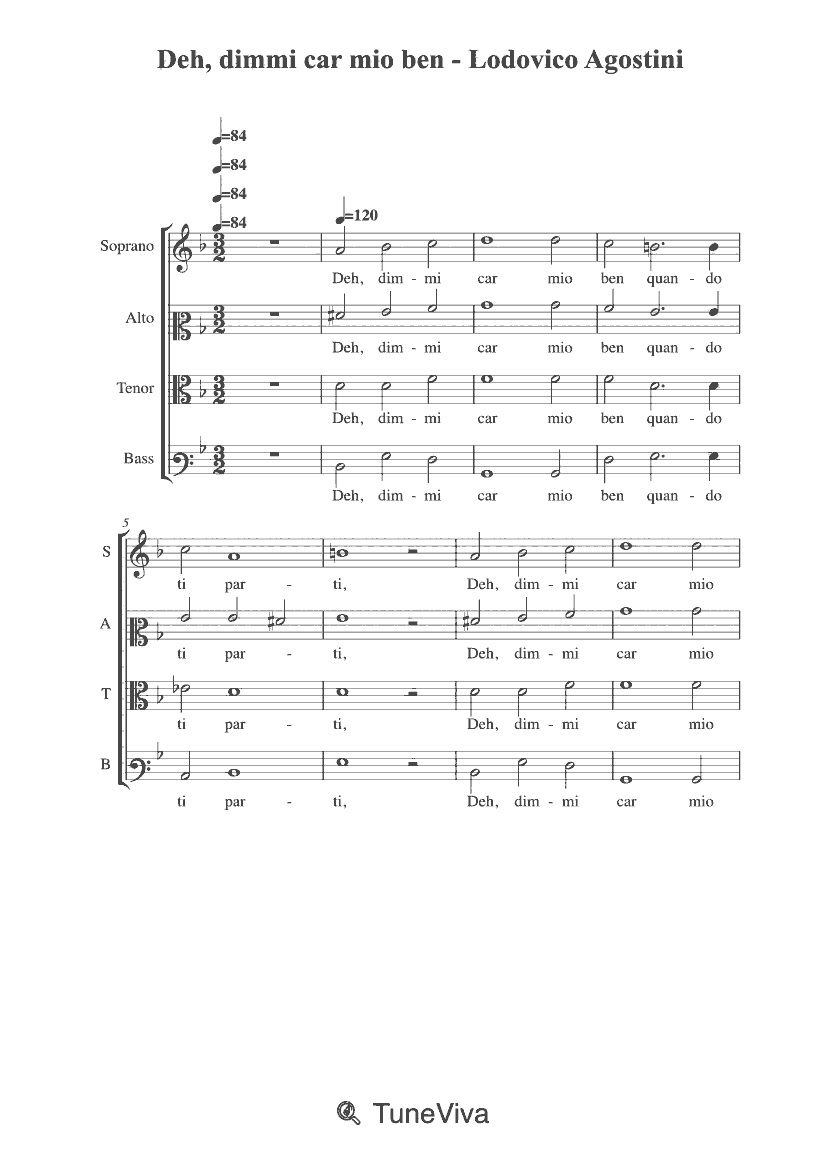
A dialogue-like appeal to a beloved, printed in the shortened form 'Deh dimmi car'.
The first of the twenty-one madrigals in the 1572 book, and the entry that opens the section in the surviving partbooks.
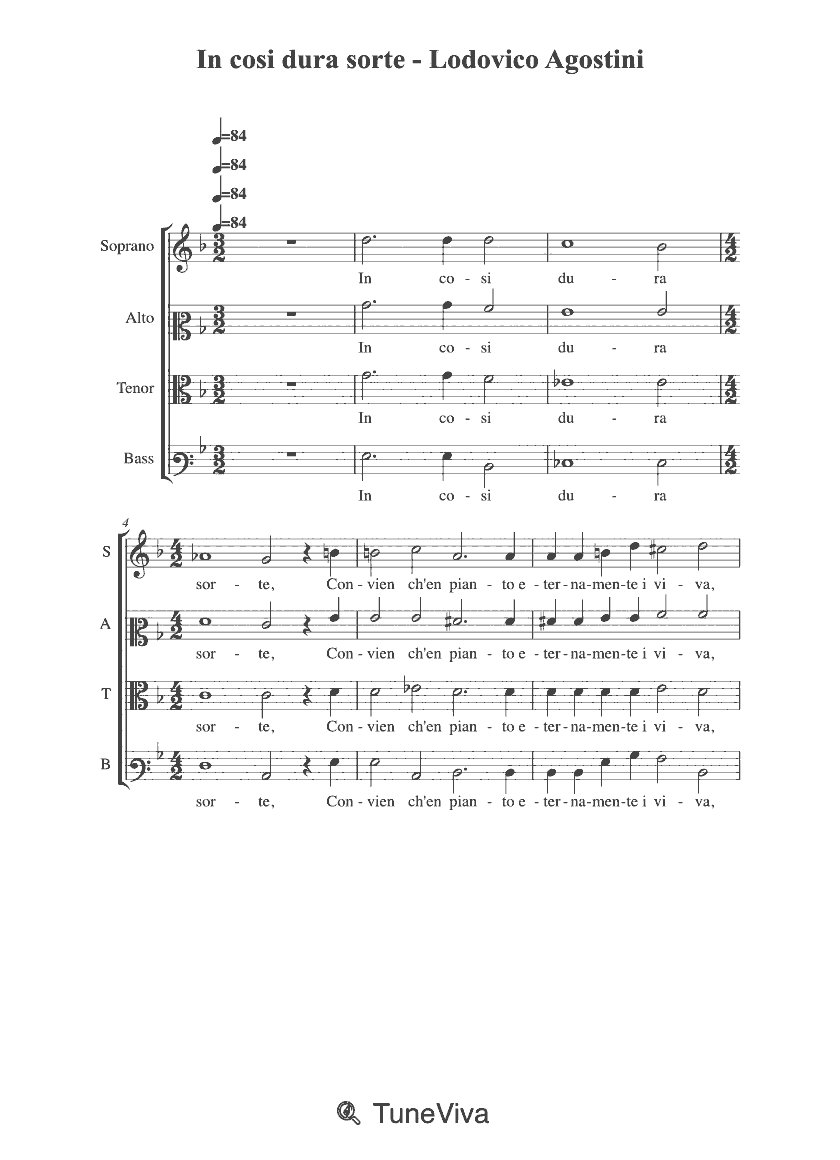
A complaint whose title the print leaves as 'In cosi dura', withholding the noun the poem supplies.
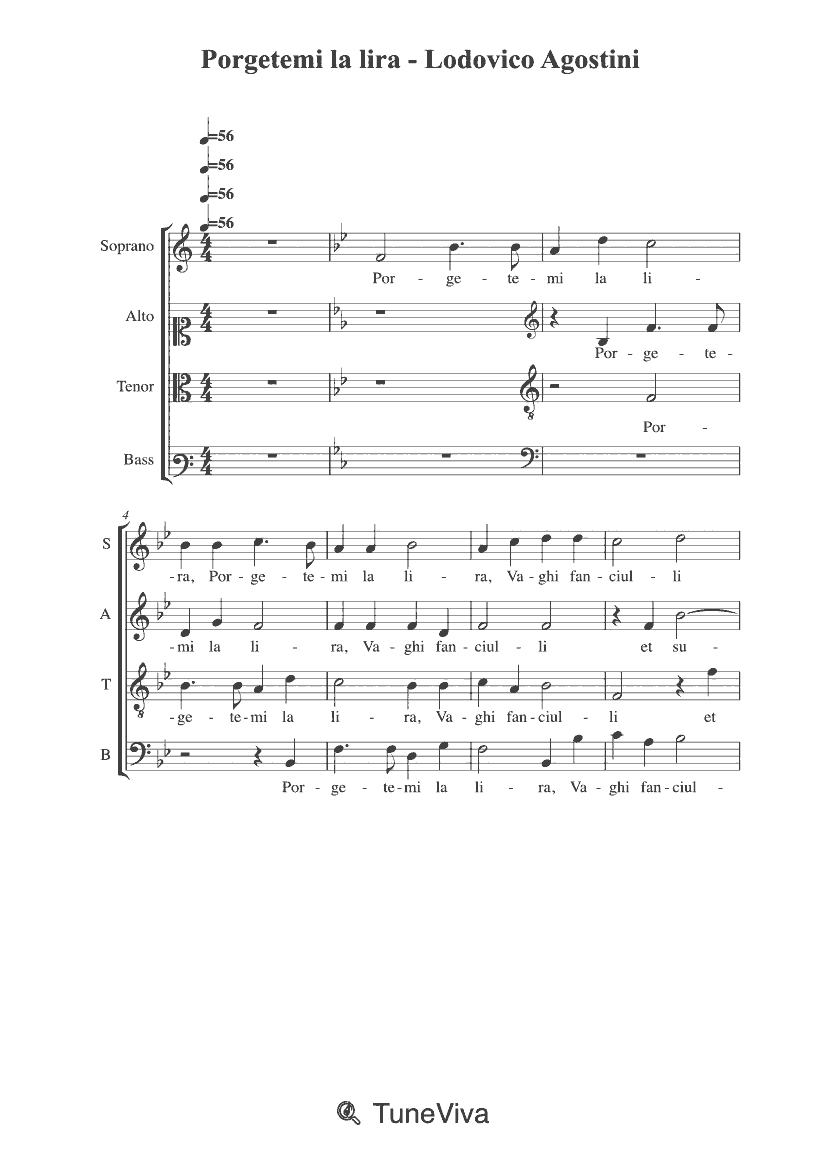
An invitation to take up the lyre, placed among the canzoni that open the book rather than among the madrigals.
There are 26, running to about 89 minutes of music and 11,549 notated notes. Every one of them carries an Italian text.
From the Libro secondo de madrigali a quattro voci, printed in Venice in 1572 by the sons of Antonio Gardano and dedicated to Girolamo Roverelli. The book holds seven canzoni and twenty-one madrigals, and most of the catalogue's titles match its contents.
None is known to survive. His only religious works are the madrigali spirituali of Le lagrime del peccatore, which set Tansillo's penitential poems in the secular idiom of the madrigal.
The print uses u for v, so 'Se quanto in uoi si vede' and 'In cosi dura' appear here with modern spelling. Some catalogue titles also extend the print's two-word incipits, as with 'Donne mie care'.
Catalog editions and arrangements attributed to Lodovico Agostini.
Canzone Settima et ultima parte
Canzone Prima parte

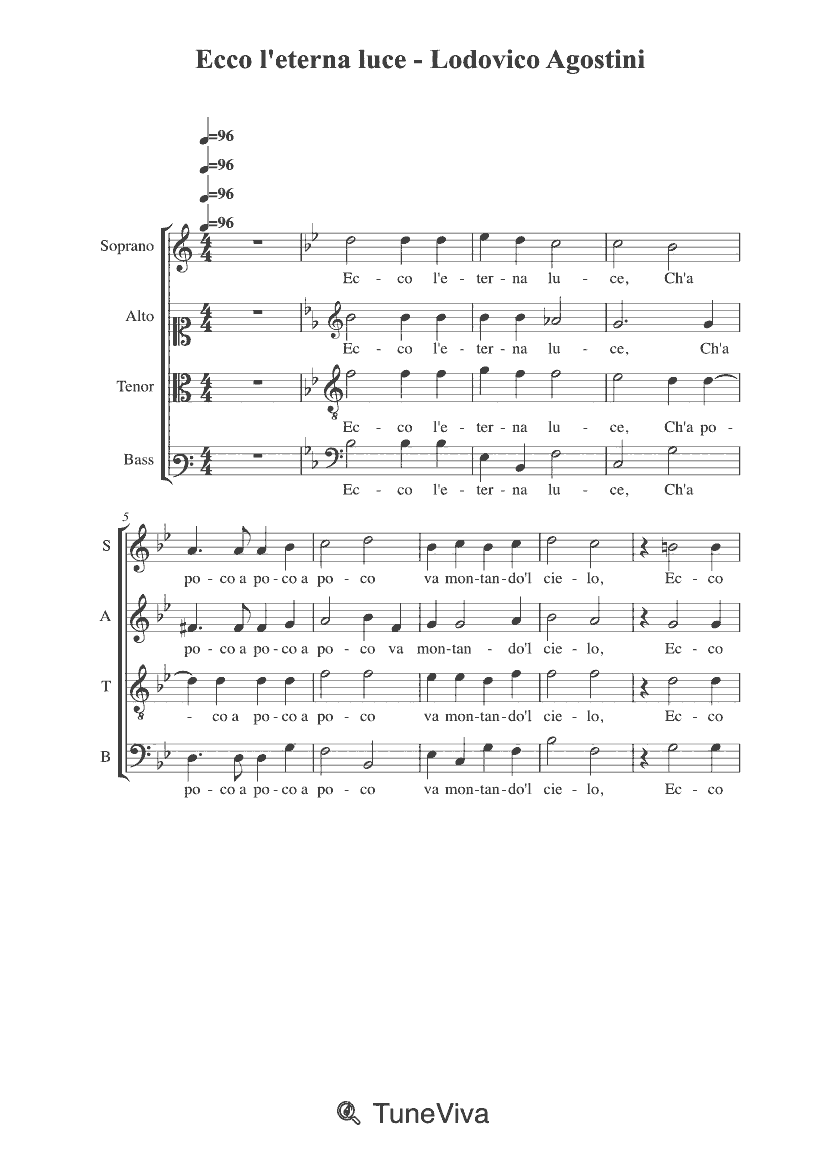
Canzone Terza parte
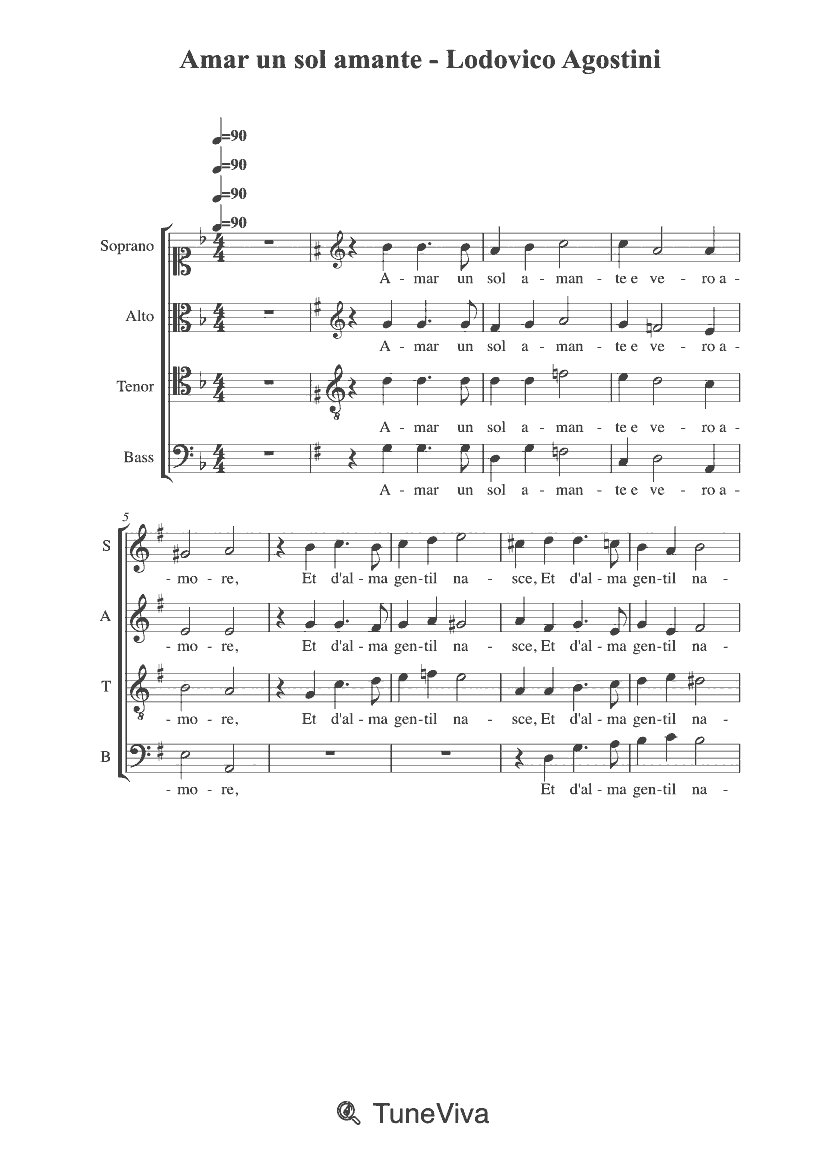
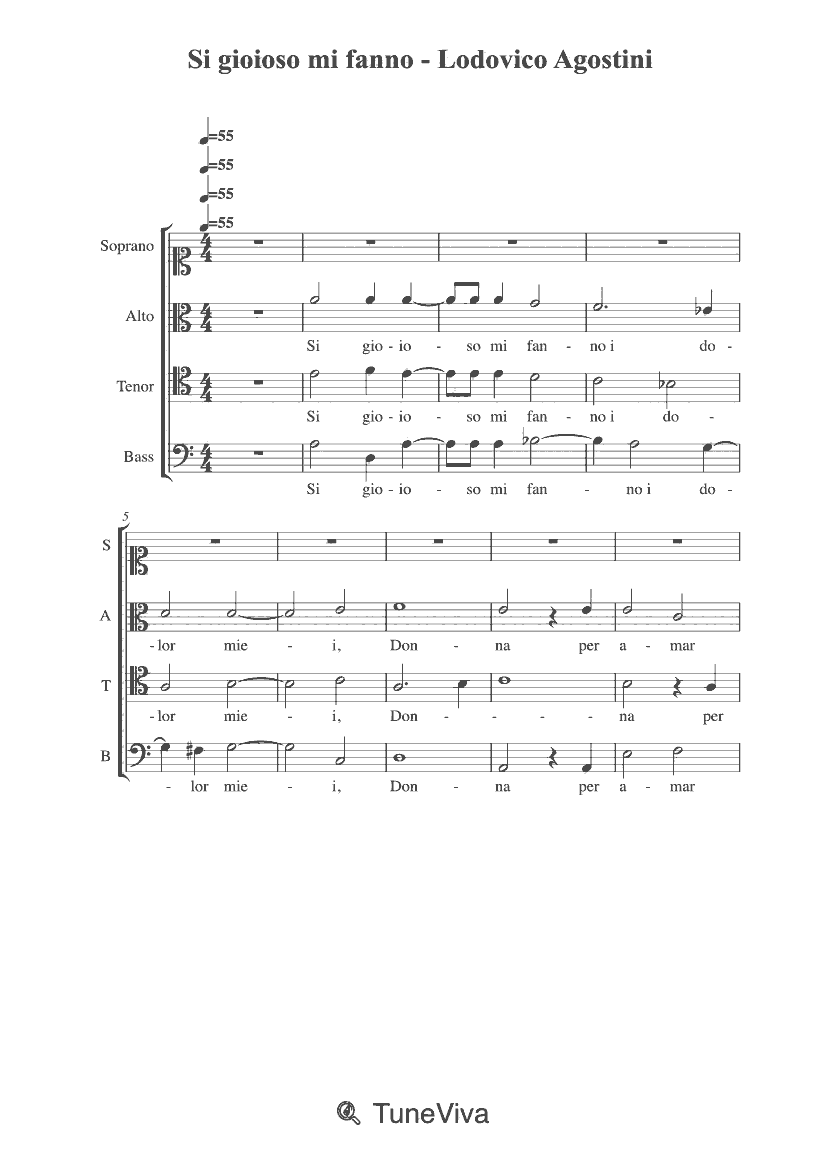
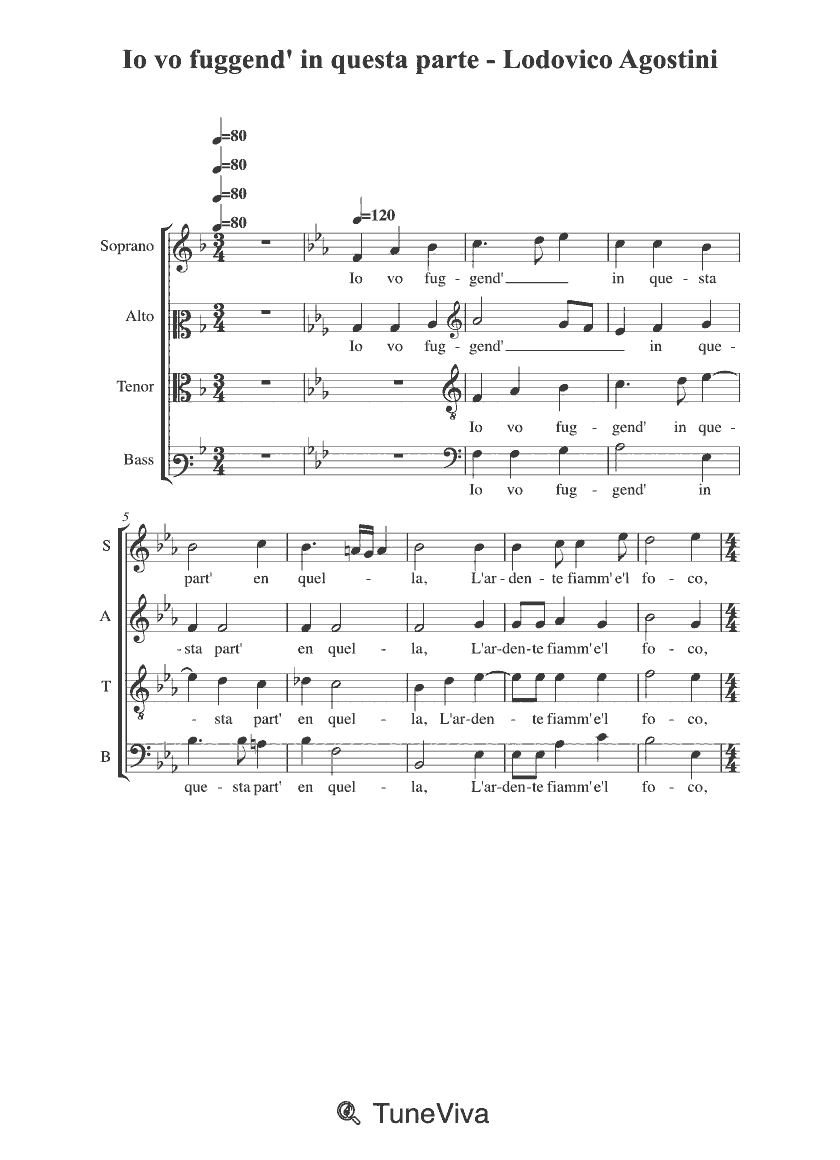
Canzone Sesta parte