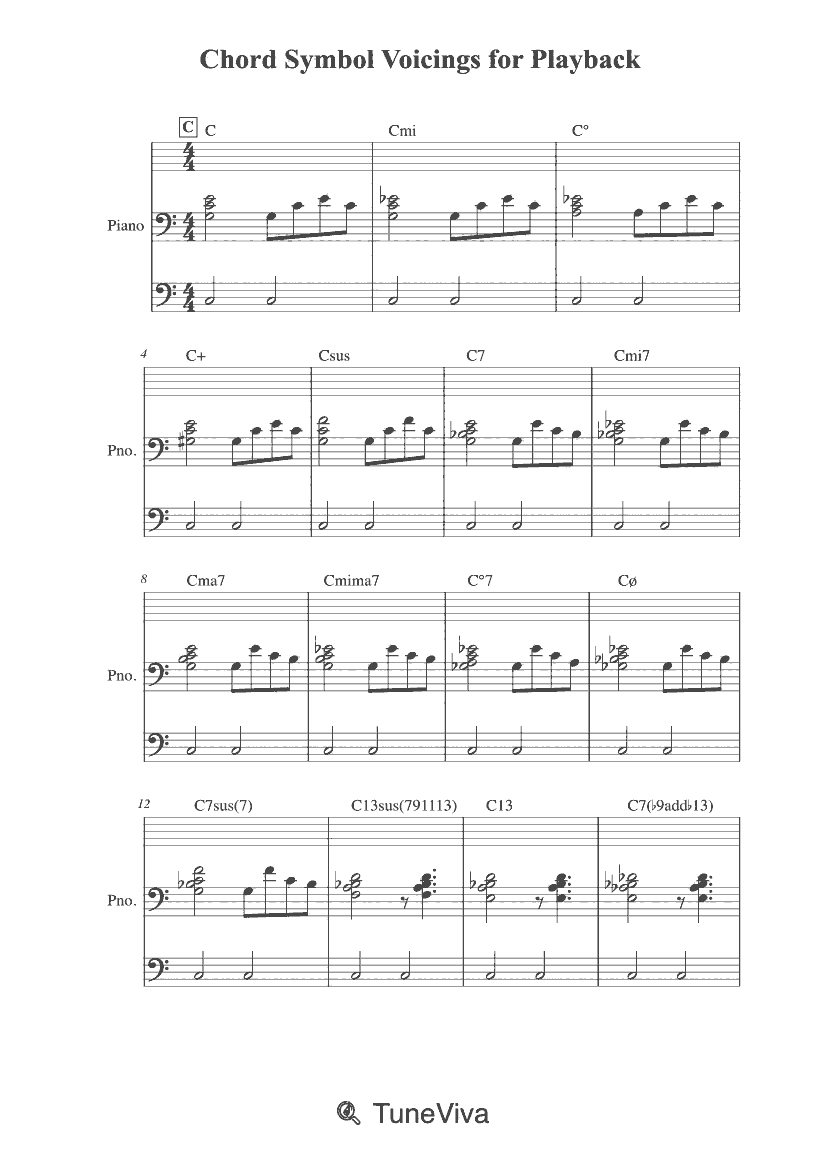
Chord Symbol Voicings for Playback
Marc Sabatella
Piano · 8 min 0 sec
Open score6 Marc Sabatella scores and notation examples, from chord-symbol voicings, guide tone lines and harmony studies to a D major scale and his piece Reunion.
The standout file is a playback demonstration of chord-symbol voicings, not a conventional concert work.
A practical harmony example named for the subject it illustrates.
A dynamics demonstration with multiple playback tracks; track programs describe the MIDI rendering, not a prescribed ensemble.
A concise guide-tone example; the catalog’s lyric metadata should not be read as vocal text.
A scale exercise, useful for examining notation and playback behavior.
One of the small number of titled compositions in this educationally weighted set.
Compare the instrument and arrangement details below, then open a score to check the notation. Different entries may be arrangements or editions of the same work; available playback tools are shown on each score page.
Marc Sabatella
Piano · 8 min 0 sec
Open score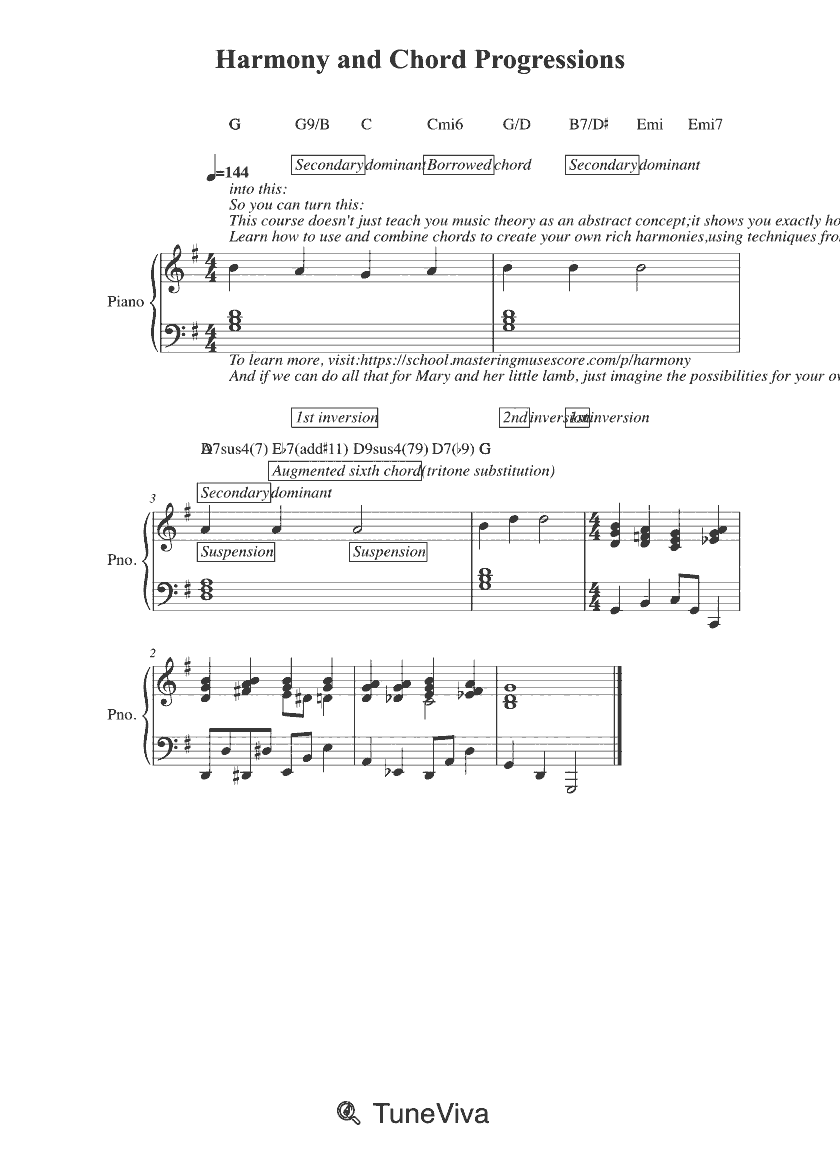
Marc Sabatella
Online Course from the Mastering School
Piano · 13 sec
Open score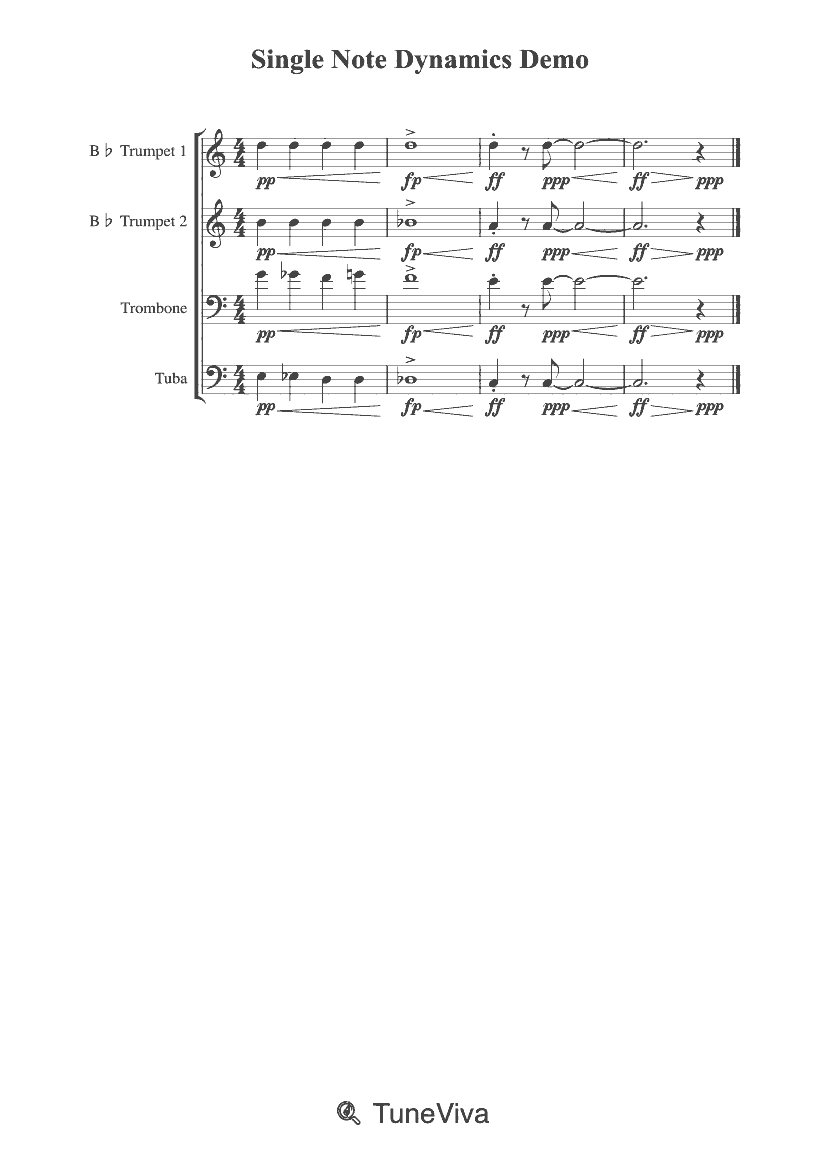
Marc Sabatella
B♭ Trumpet 1; B♭ Trumpet 2; Trombone +1 parts · 7 sec
Open score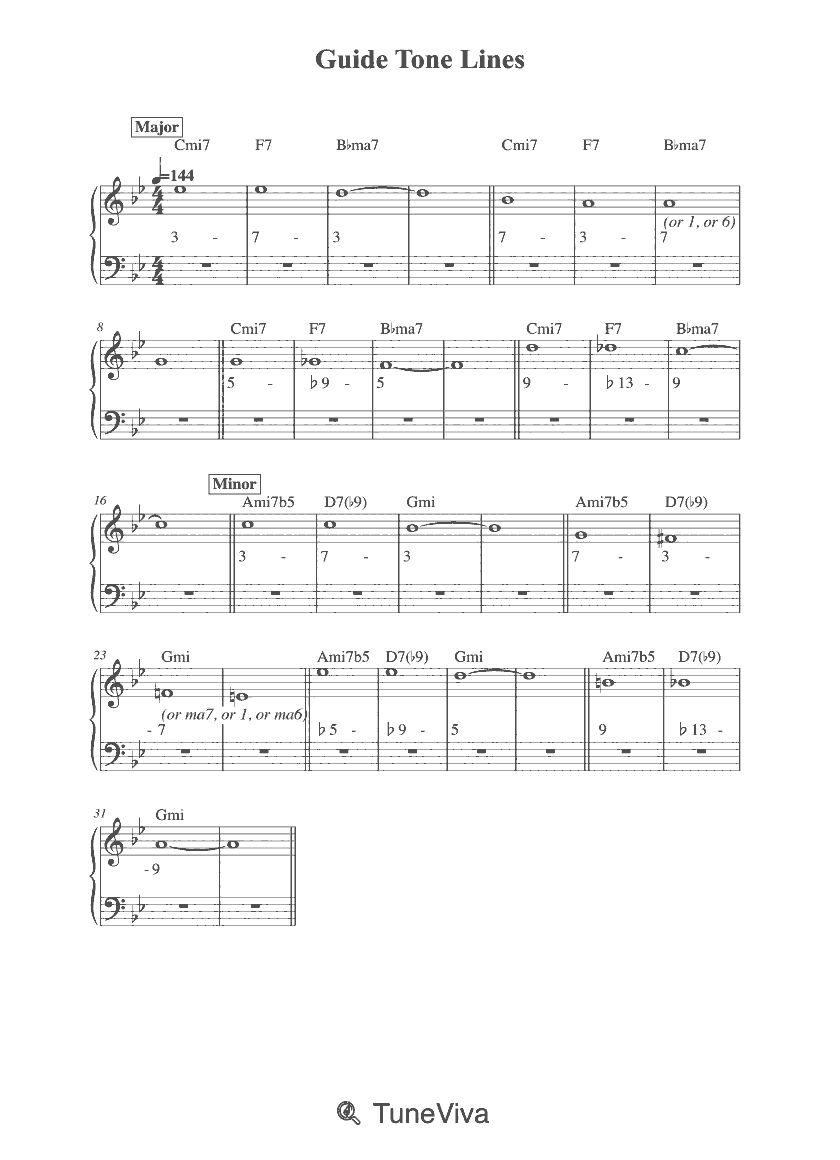
Marc Sabatella
ii-V-I / ii-V-i
Piano · 53 sec
Open score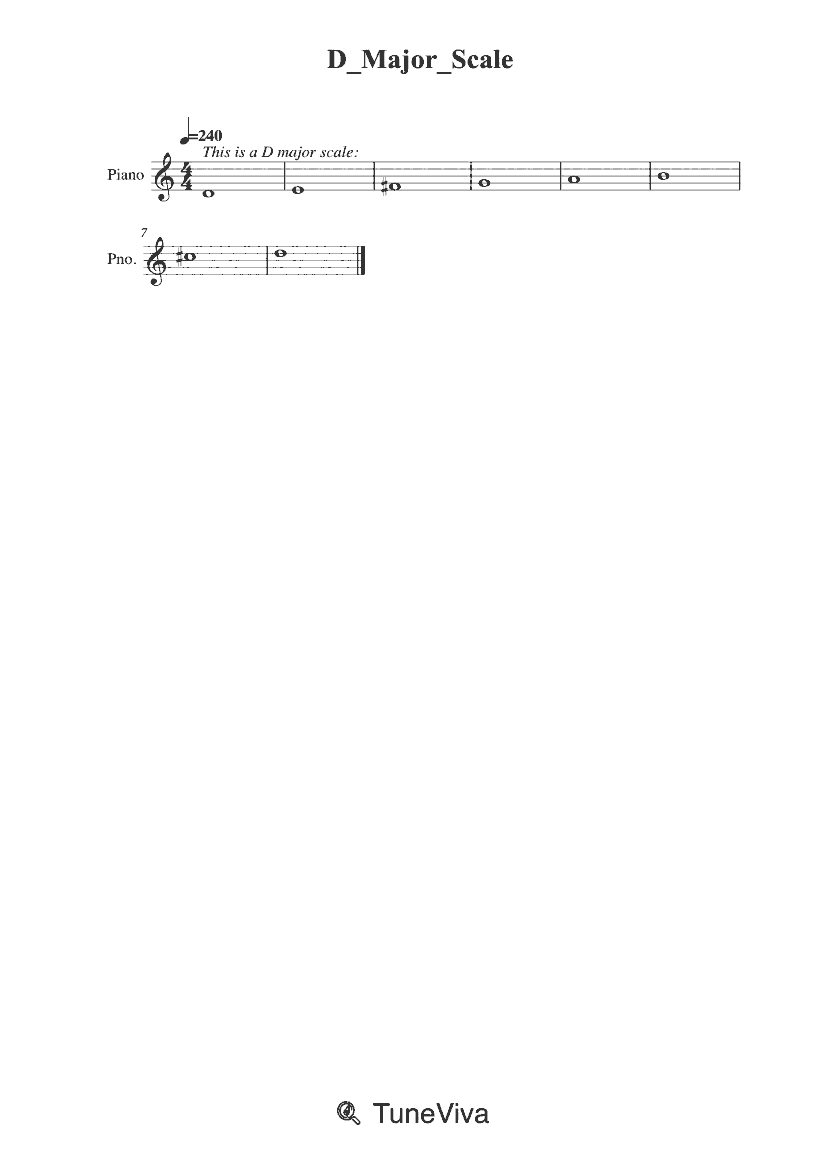
Marc Sabatella
Piano · 8 sec
Open score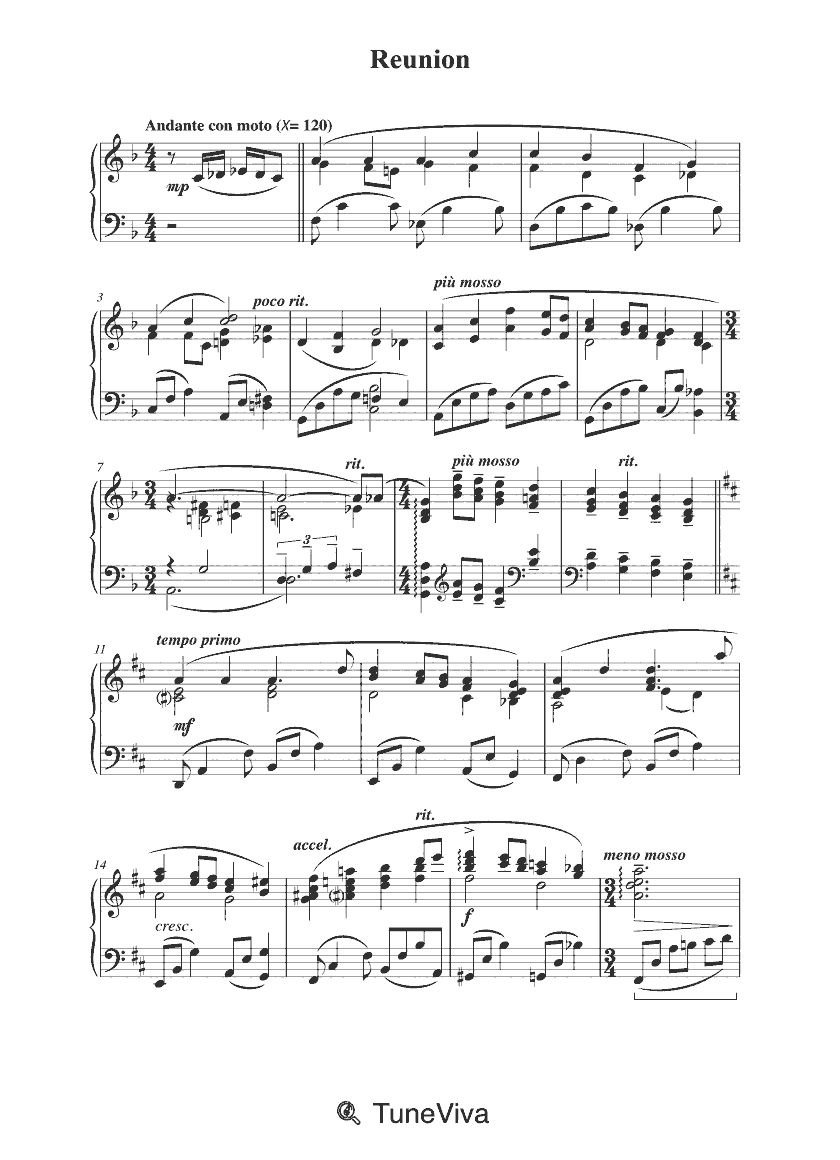
Marc Sabatella
Piano · 1 min 10 sec
Open scoreMarc Sabatella is a jazz pianist, educator and music-notation software developer whose work spans performance, teaching and accessible notation. His own site describes teaching jazz improvisation and theory, developing music-notation software, and composing for jazz and classical settings. TuneViva’s six-file collection is narrower: educational examples and playback demonstrations dominate, with a small number of titled pieces. Start with “Chord Symbol Voicings for Playback” or “Harmony and Chord Progressions” to explore the teaching material, then inspect “Reunion” as a composition entry. These are different kinds of score files, so compare the notation and playback options before choosing one for study or performance. Marc Sabatella sheet music in this selection is weighted toward study and demonstration material rather than a broad concert catalogue. Titles such as “Chord Symbol Voicings for Playback,” “Harmony and Chord Progressions,” “Guide Tone Lines,” “Single Note Dynamics Demo” and “D_Major_Scale” point to harmony, voicing, guide-tone, dynamics and scale work. “Reunion” is the title that most clearly reads as a standalone piece. Most scores are listed for piano; “Single Note Dynamics Demo” is the exception, with parts named for two B♭ trumpets, trombone and tuba. Compare each score’s notation and listed opening details before choosing material for study or performance.
Sabatella’s own account places performance and teaching side by side. He describes years as a working Denver jazz pianist, writing the online A Jazz Improvisation Primer, teaching at university level, and later developing accessible notation tools. His music page also lists original jazz and classical works, including “Reunion,” alongside lead sheets and recordings. The six TuneViva entries therefore represent only a particular corner of his activity.
The collection itself moves between concepts and formats. “Chord Symbol Voicings for Playback” and “Harmony and Chord Progressions” point to harmony study; “Single Note Dynamics Demo” and “Guide Tone Lines” are examples organized around a technique. “D_Major_Scale” is an exercise label, while “Reunion” is the entry that most clearly connects to his published composition list. A useful comparison is to set the harmony examples beside the composition, rather than to treat the six titles as a uniform songbook.
For study, follow the notation in “Chord Symbol Voicings for Playback” against its rendering, then compare the dynamics markings in “Single Note Dynamics Demo.” Sabatella’s music page ranges beyond this teaching-heavy TuneViva slice, listing original works, recordings and lead sheets.
What this selection contains: The available titles divide usefully into demonstration or exercise material and one standalone-sounding piece. “Chord Symbol Voicings for Playback,” “Harmony and Chord Progressions,” “Guide Tone Lines,” “Single Note Dynamics Demo” and “D_Major_Scale” are framed by their titles as examples of a technique or topic. “Reunion” is listed for piano without that kind of instructional framing. The titles alone do not establish whether any item is an original composition, an arrangement, or a classroom demonstration.
Using the harmony and voicing examples: “Chord Symbol Voicings for Playback” is listed as a piano score in 4/4 with no opening sharps or flats. Its title suggests the score is intended to be compared with rendered playback, making it a candidate for studying how chord symbols are realised in notation. “Harmony and Chord Progressions” is also listed for piano, opening in 4/4 with one sharp and a listed tempo of 144 BPM. These details describe the opening of each score, not the whole piece.
Comparing the shorter demonstrations: “Guide Tone Lines” is listed for piano, opening in 4/4 with two flats at 144 BPM. “Single Note Dynamics Demo” is the unusual entry here: its score parts are named B♭ Trumpet 1, B♭ Trumpet 2, Trombone and Tuba, with a 4/4 opening and no sharps or flats. Those part names describe the score’s instrumentation; they do not by themselves prove that the file is a concert work rather than a playback demonstration.
Choosing between study material and “Reunion”: For technique-focused work, start with the title that matches the topic you want to examine: chord voicings, harmony, guide tones, dynamics or scale notation. For a piece with a title rather than a topic, inspect “Reunion,” which is listed for piano in 4/4 with one flat and a 120 BPM opening tempo. The available information does not establish a difficulty level or grade for any of these scores, so judge suitability from the notation itself.
His own music page lists jazz and classical compositions as well as recordings and lead sheets. TuneViva’s six entries lean more toward educational and playback examples.
“Reunion” is listed by Sabatella among his piano compositions. Several other TuneViva titles explicitly describe harmony, voicing or playback demonstrations.
Follow the written example while comparing the rendered playback. That makes the voicing, dynamics or guide-tone material easier to study.
Marc Sabatella sheet music here includes harmony and chord-voicing examples, a guide-tone example, a dynamics demonstration, a D major scale exercise and the title “Reunion.” Most are listed for piano, while “Single Note Dynamics Demo” is listed with brass parts. The titles suggest teaching and demonstration material alongside a small number of standalone-sounding pieces.
“Reunion” is the title that most clearly reads as a standalone piece rather than a topic demonstration. It is listed for piano, opening in 4/4 with one flat and a listed tempo of 120 BPM. The available information does not confirm whether “Reunion” is an original composition or an arrangement.
“Chord Symbol Voicings for Playback” is a piano score whose title frames it as a playback demonstration of chord-symbol voicings. Its opening is listed in 4/4 with no sharps or flats. A musician can use it to compare written voicings with the rendered playback rather than treating it as a conventional concert work.
“Guide Tone Lines” is a piano score listed in 4/4 with two flats and a 144 BPM opening tempo. “D_Major_Scale” is a scale exercise listed for piano in 4/4 at 240 BPM. Its opening key signature is listed with no sharps or flats, which conflicts with the title, so check the notation itself before relying on that detail.
“Single Note Dynamics Demo” lists four score parts: B♭ Trumpet 1, B♭ Trumpet 2, Trombone and Tuba. The opening is in 4/4 with no sharps or flats. These part names describe the score’s listed instrumentation, but they do not establish that the file is a formal concert work rather than a playback demonstration.
“Harmony and Chord Progressions” and “Guide Tone Lines” both list opening tempos of 144 BPM. “Reunion” lists 120 BPM, and “D_Major_Scale” lists 240 BPM. “Chord Symbol Voicings for Playback” and “Single Note Dynamics Demo” do not have opening tempos in the supplied details. These are listed starting tempos, not necessarily the tempo of an entire piece.