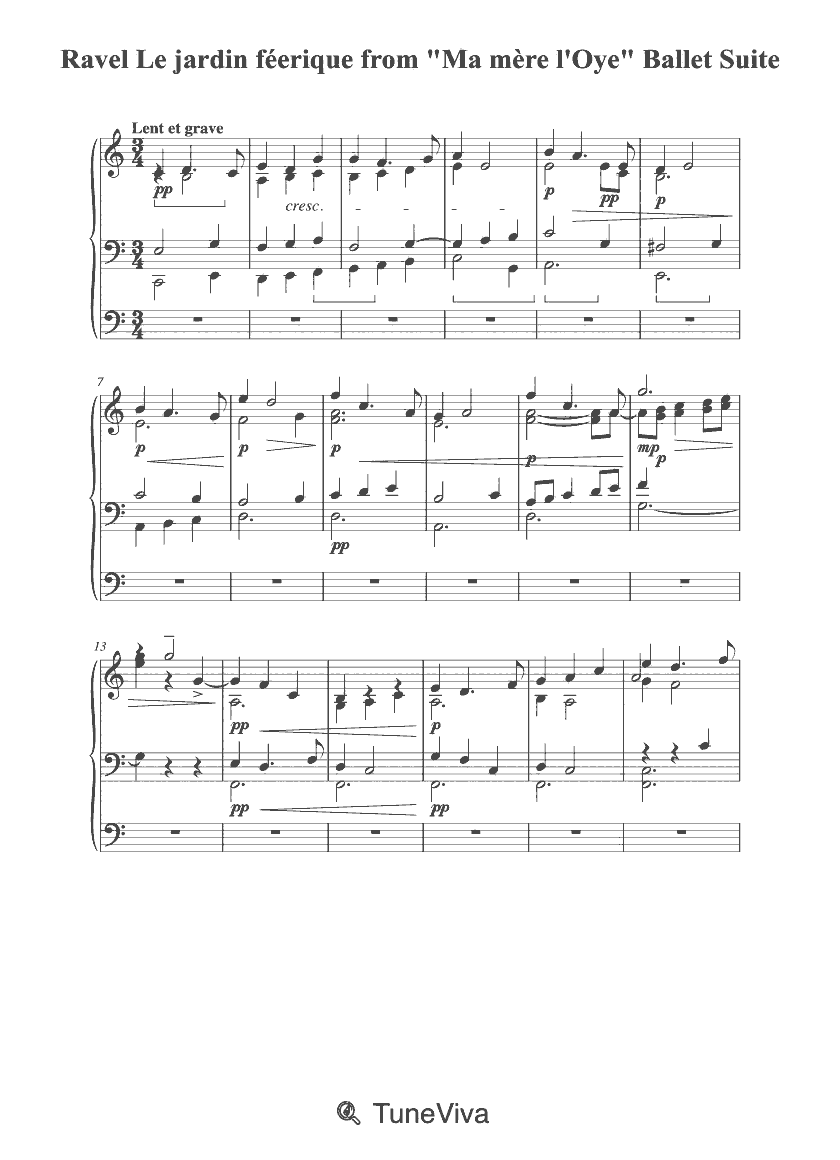
Ravel Le jardin féerique from "Ma mère l'Oye" Ballet Suite
Maurice Ravel
From Ma mère l'Oye Ballet Suite
Piano · 4 min 36 sec
Open score53 Ravel scores to preview and download: Gaspard de la nuit, La Valse, Le Tombeau de Couperin, Ma mère l'Oye, Daphnis et Chloé and Jeux d'eau, for piano.
The final movement of the ballet version, a slow crescendo that brings the fairy garden to life; the most-viewed score here.
Ravel's own solo transcription of the 1919-20 choreographic poem for orchestra, and a harder piece than the orchestral score suggests.
The complete triptych of 1908 after Aloysius Bertrand: Ondine, Le Gibet and Scarbo.
The five-piece suite, from the piano-duet original of 1908-10; the title does not say whether this file is duet, solo or orchestral.
The six-movement keyboard suite of 1914-17, each movement dedicated to a friend lost in the war.
The still centre of Gaspard, built on a repeated B-flat that rings through the whole piece.
The 1899 piano pavane, Ravel's first widely known work; the catalogue does not say whether this is the piano or orchestral text.
Music from the ballet premiered by the Ballets Russes on 8 June 1912; the file is an extract rather than the complete score.
The 1901 water piece that established Ravel's piano idiom, dedicated to Gabriel Fauré.
The Adagio assai of the G major concerto, completed in 1931 and premiered by Marguerite Long in January 1932.
For Ma mère l’Oye, decide whether you need a four-hand score, a solo piano arrangement or a transcription from the orchestral version. Check the parts before asking a second pianist to prepare. For an independent solo, compare the textures of a movement from Le Tombeau de Couperin and Jeux d’eau. A short excerpt still deserves a look at the busiest bars, where the fingering and voicing demands often become clearest.
Compare the instrument and arrangement details below, then open a score to check the notation. Different entries may be arrangements or editions of the same work; available playback tools are shown on each score page.
Maurice Ravel
From Ma mère l'Oye Ballet Suite
Piano · 4 min 36 sec
Open score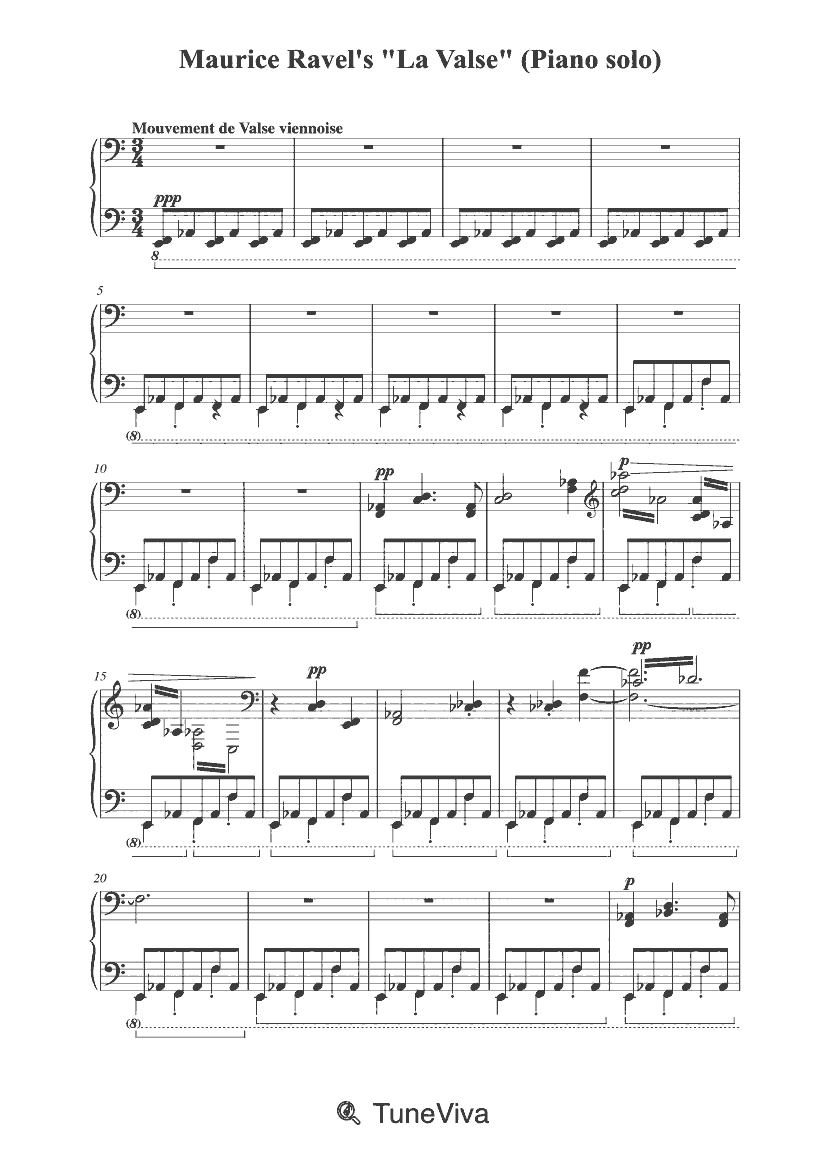
Maurice Ravel
Poème chorégraphique
Piano · 13 min 13 sec
Open score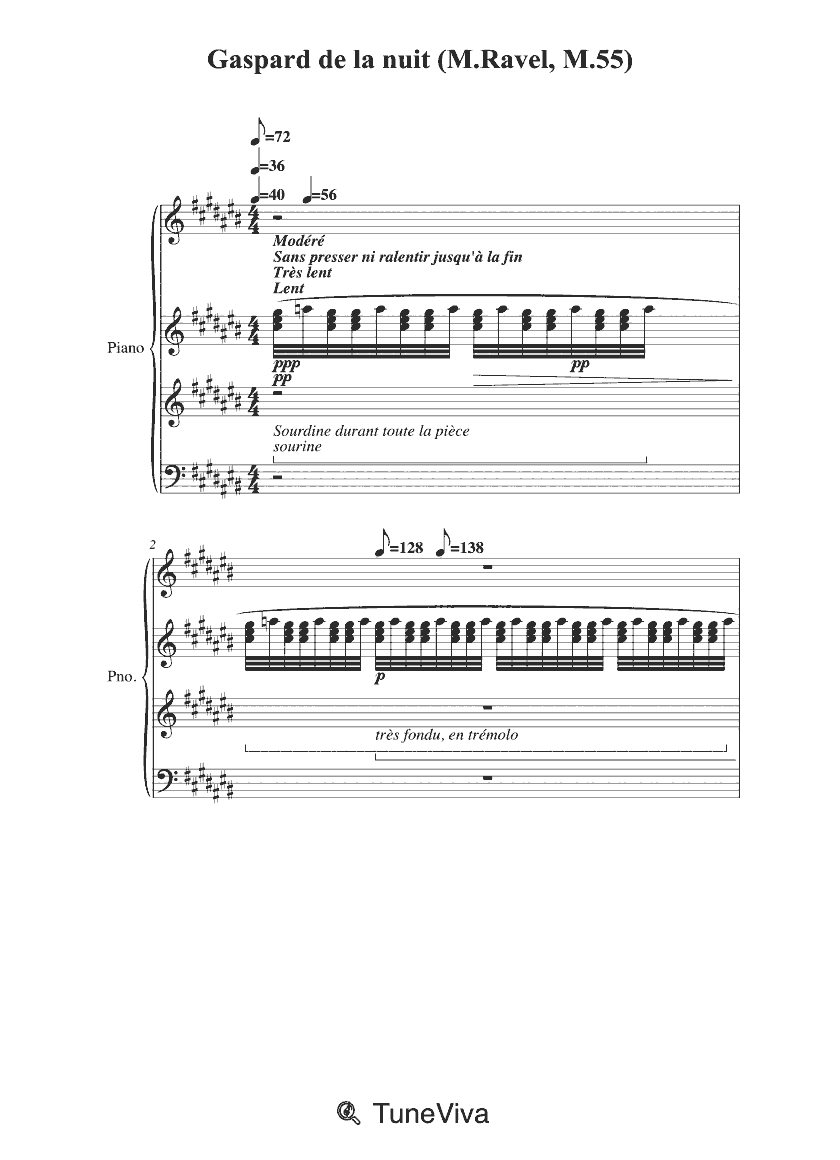
Maurice Ravel
Ⅰ._Ondine
Piano · 16 min 58 sec
Open score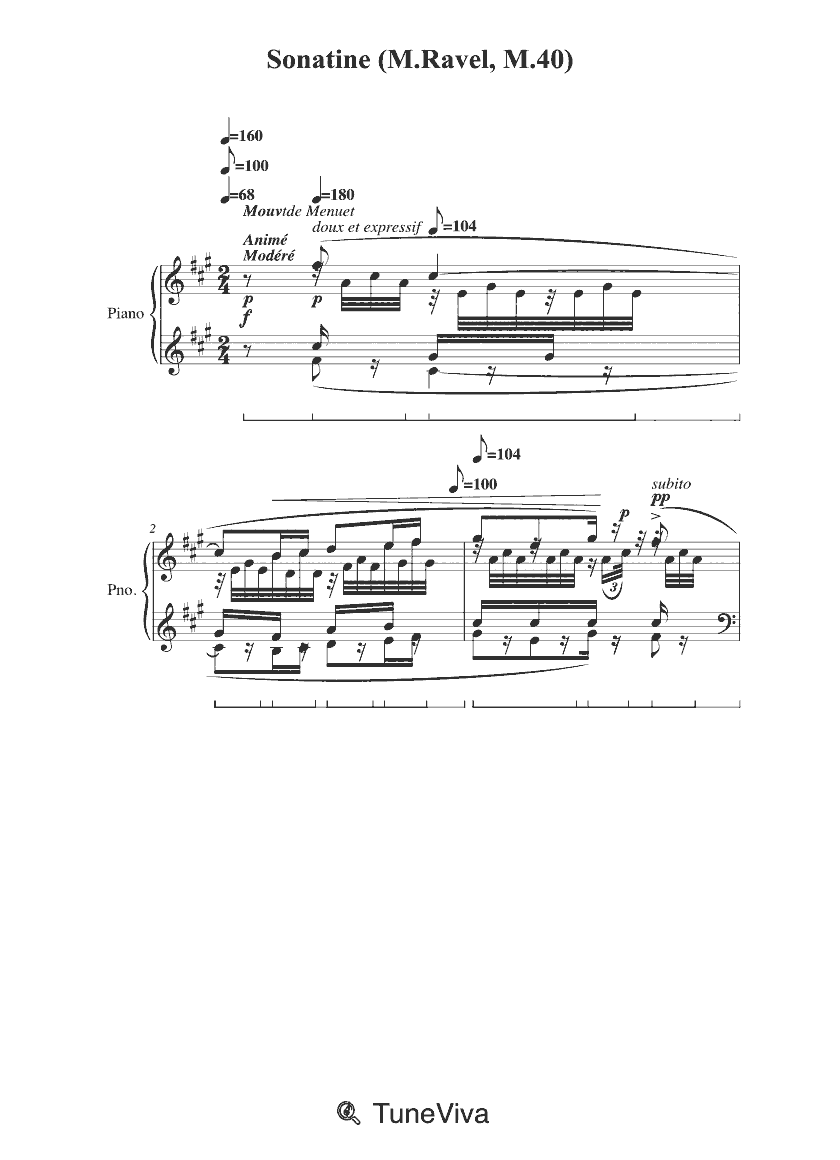
Maurice Ravel
Ⅰ.Modéré
Piano · 13 min 10 sec
Open score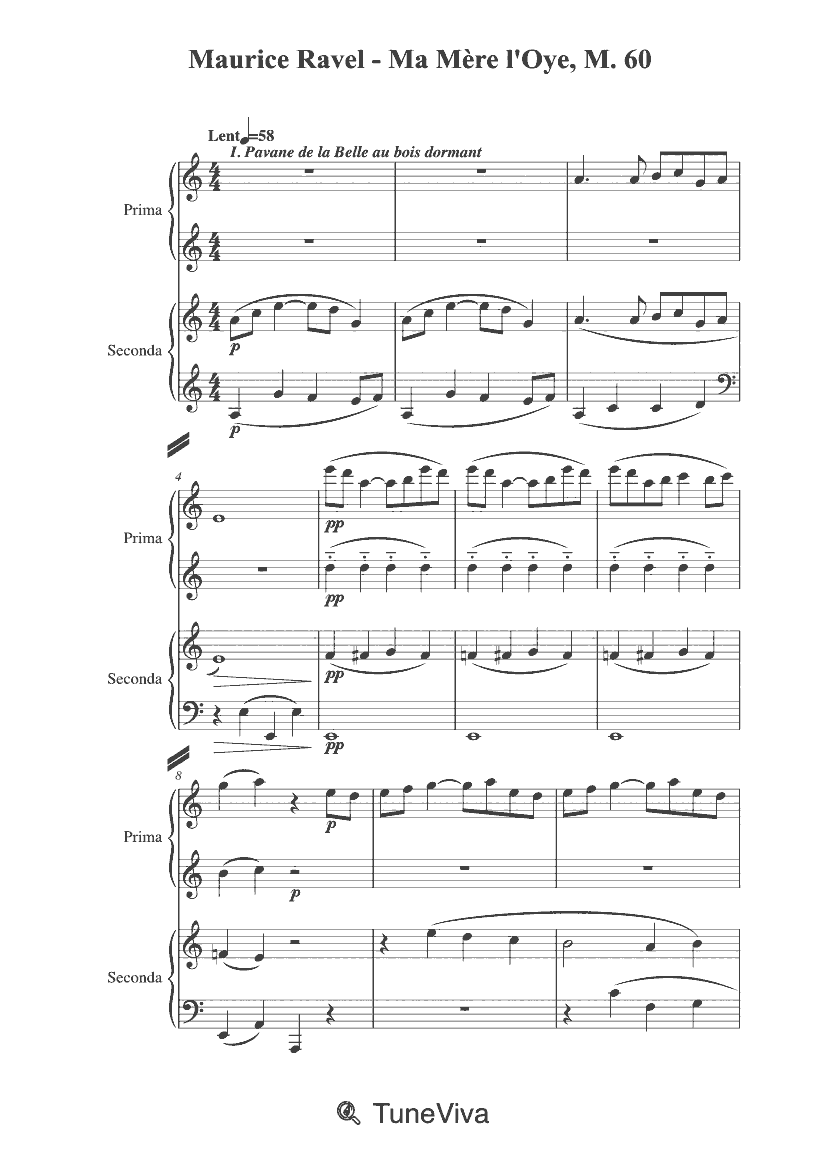
Maurice Ravel
5 pièces enfantines pour piano à quatre mains
Prima; Seconda · 4 min 58 sec
Open score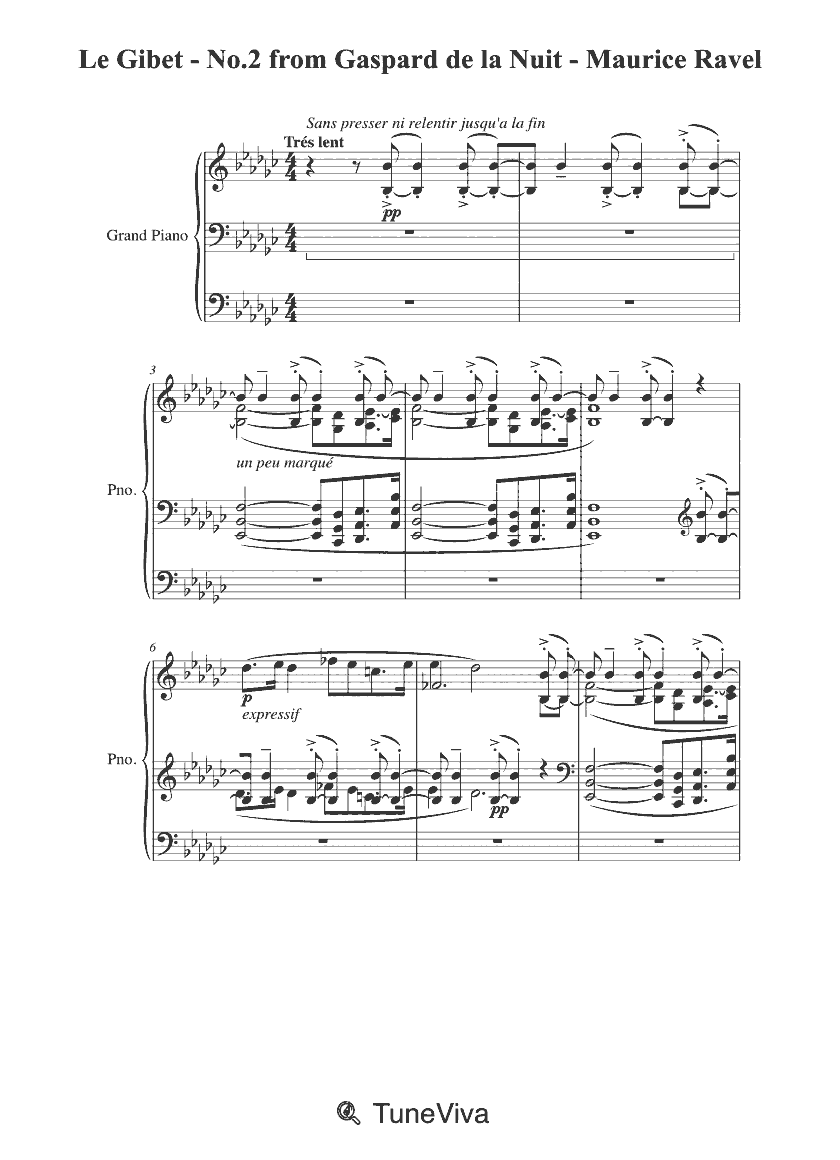
Maurice Ravel
II. le Gibet
Grand Piano · 3 min 59 sec
Open score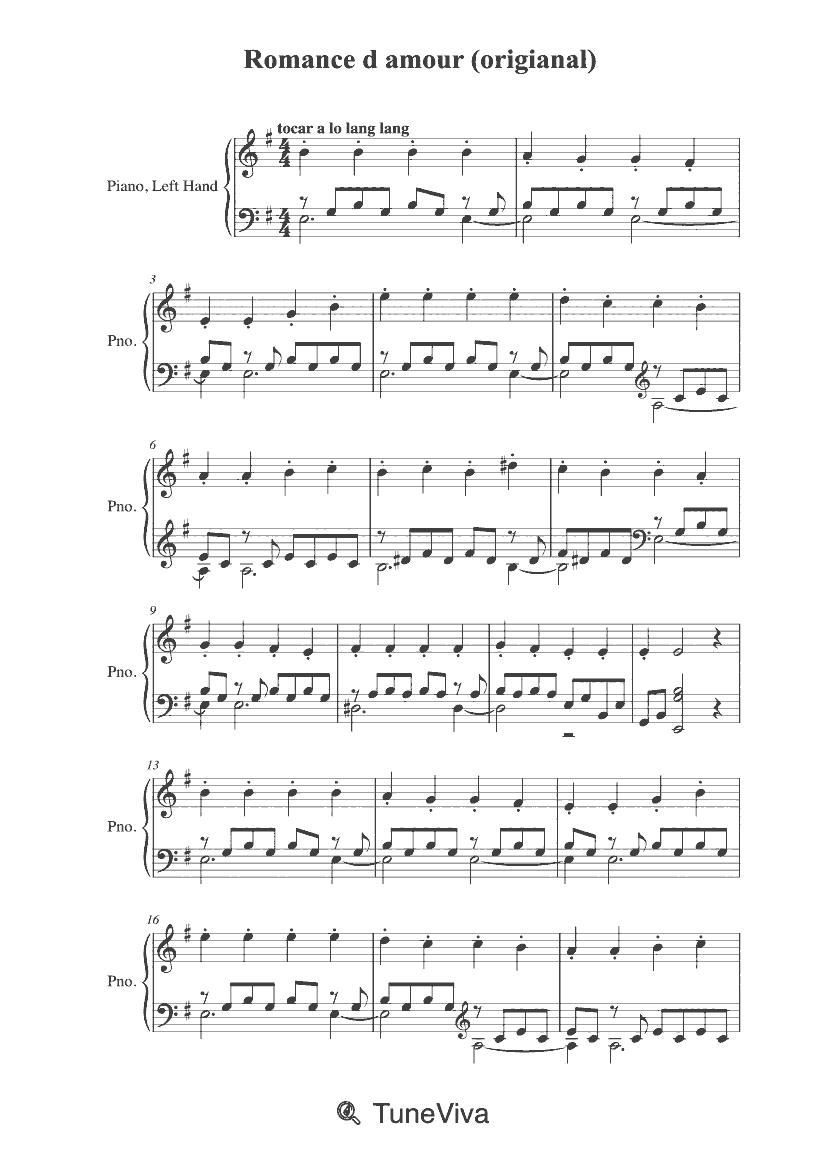
Maurice Ravel
No. 13 Op32
Piano, Left Hand · 2 min 3 sec
Open score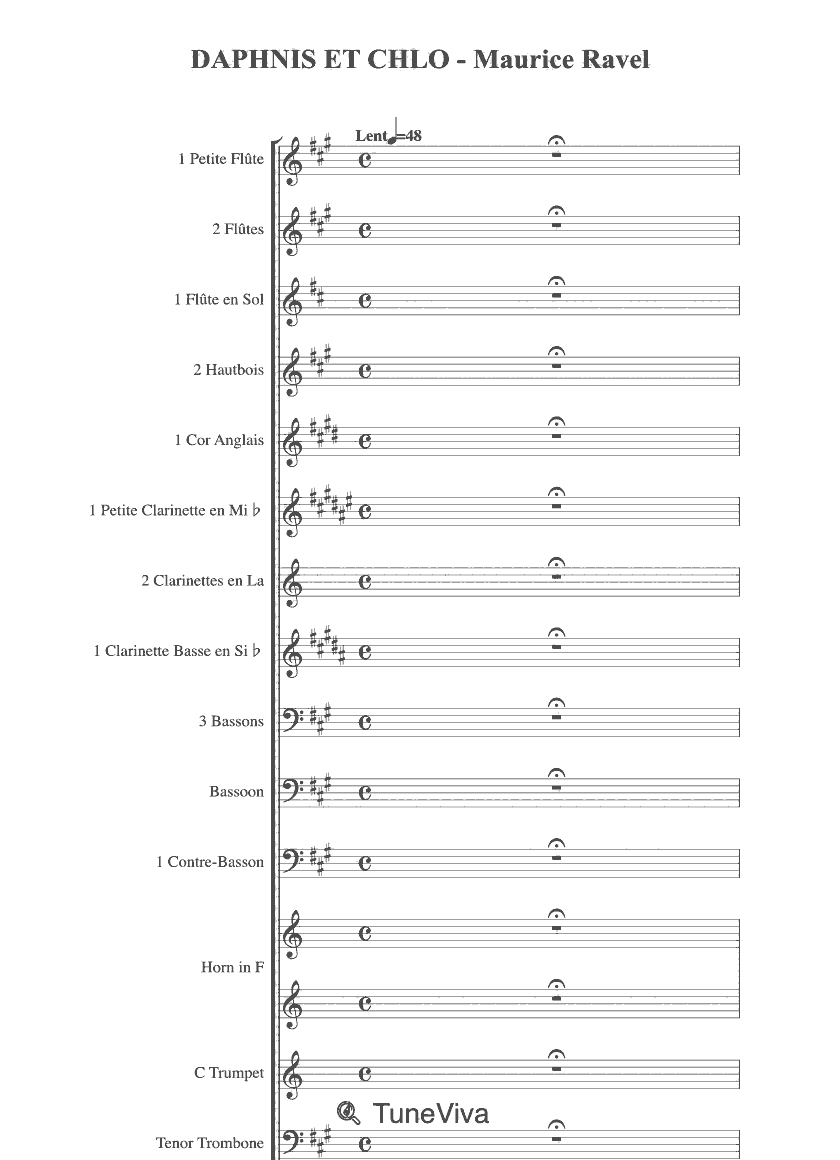
Maurice Ravel
1 Petite Flûte; 2 Flûtes; 1 Flûte en Sol +26 parts · 3 min 19 sec
Open score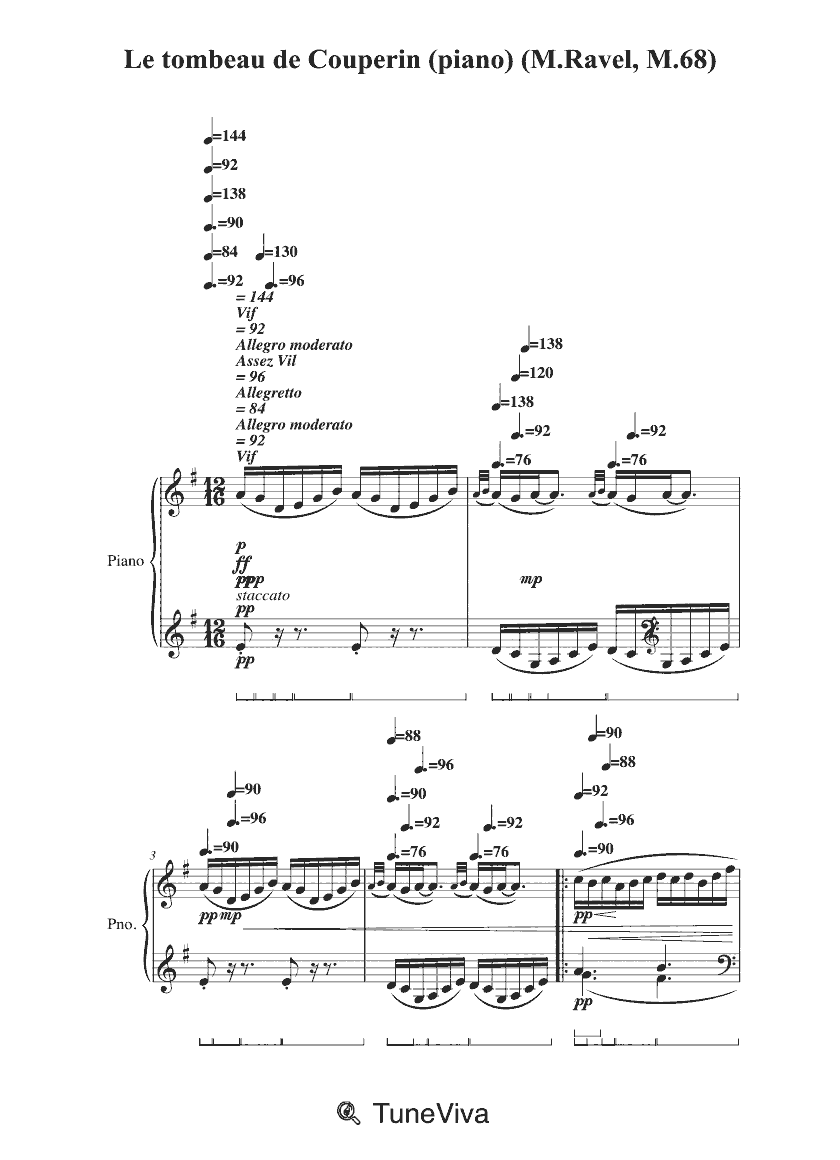
Maurice Ravel
Ⅰ.Prélude
Piano · 22 min 53 sec
Open score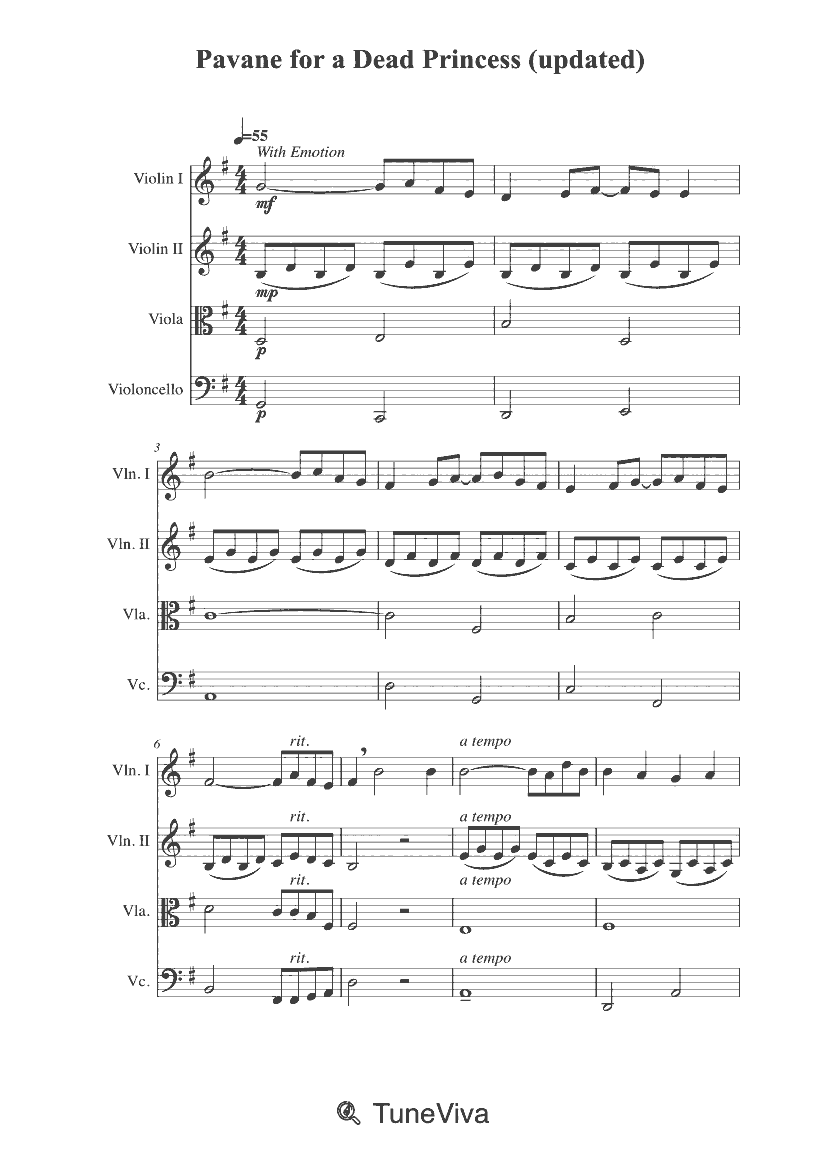
Maurice Ravel
for String Orchestra
Violin I; Violin II; Viola +1 parts · Arr. Emily Pynn · 5 min 3 sec
Open score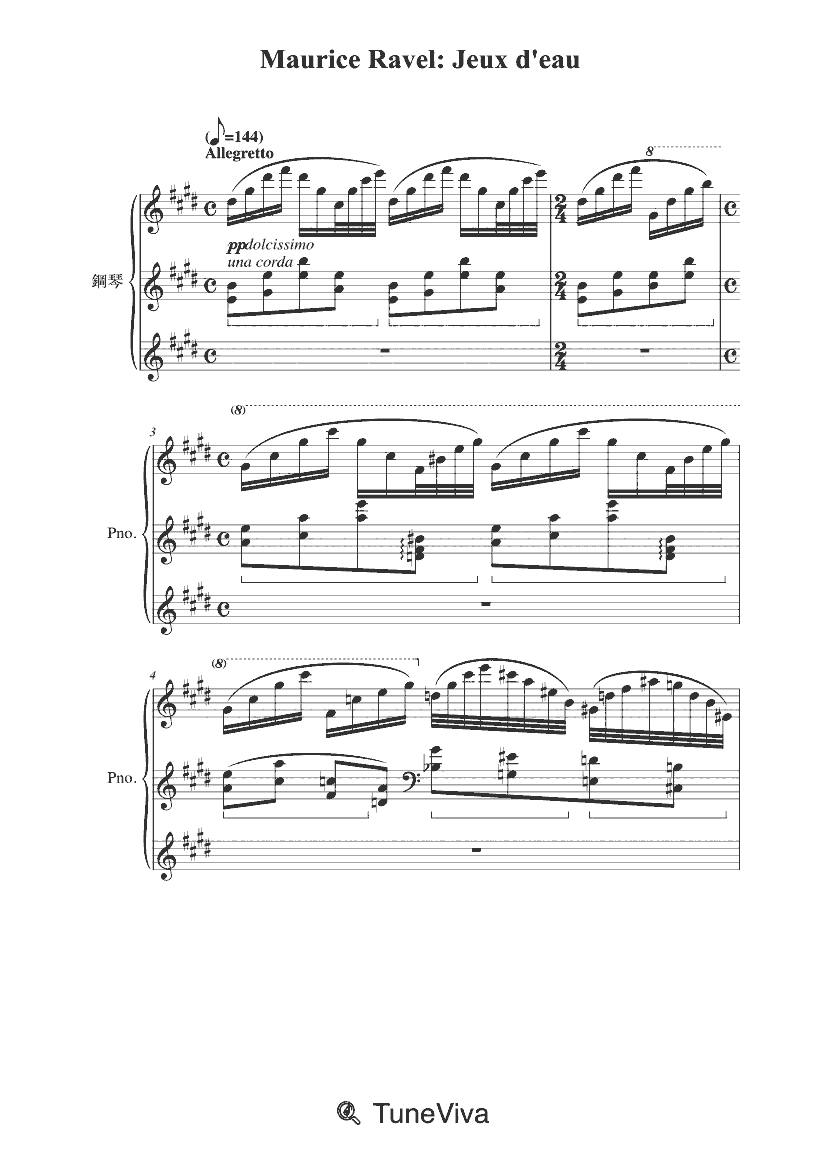
Maurice Ravel
M. 30
鋼琴 · 6 min 19 sec
Open score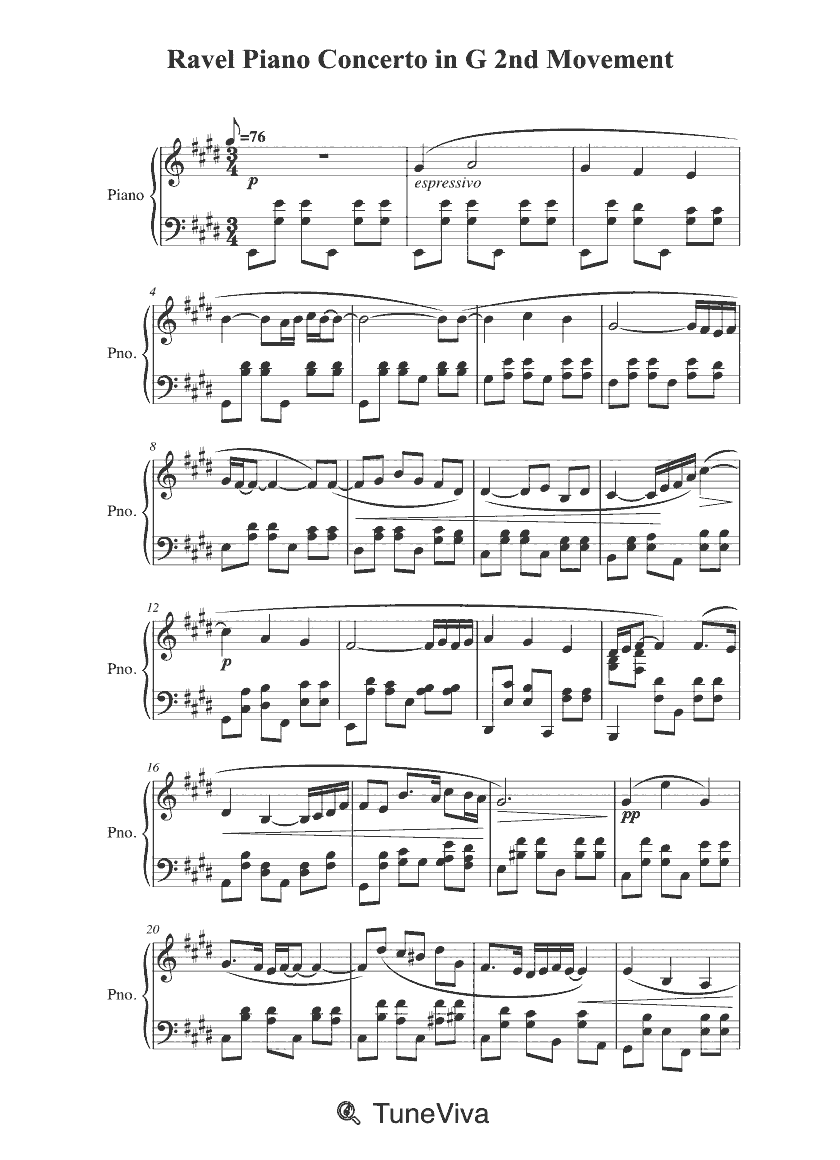
Maurice Ravel
2nd movement
Piano · 7 min 59 sec
Open score
Maurice Ravel
Menuet
Flûte; Hautbois; Clarinette en Si♭ +7 parts · Arr. Guillaume Robert · 2 min 26 sec
Open score
Maurice Ravel
pour instruments à cordesI
Violon I; Violon II; Alto +1 parts · 6 min 14 sec
Open score
Maurice Ravel
Valse
Piano · 2 min 6 sec
Open score
Maurice Ravel
Piano · 1 min 43 sec
Open score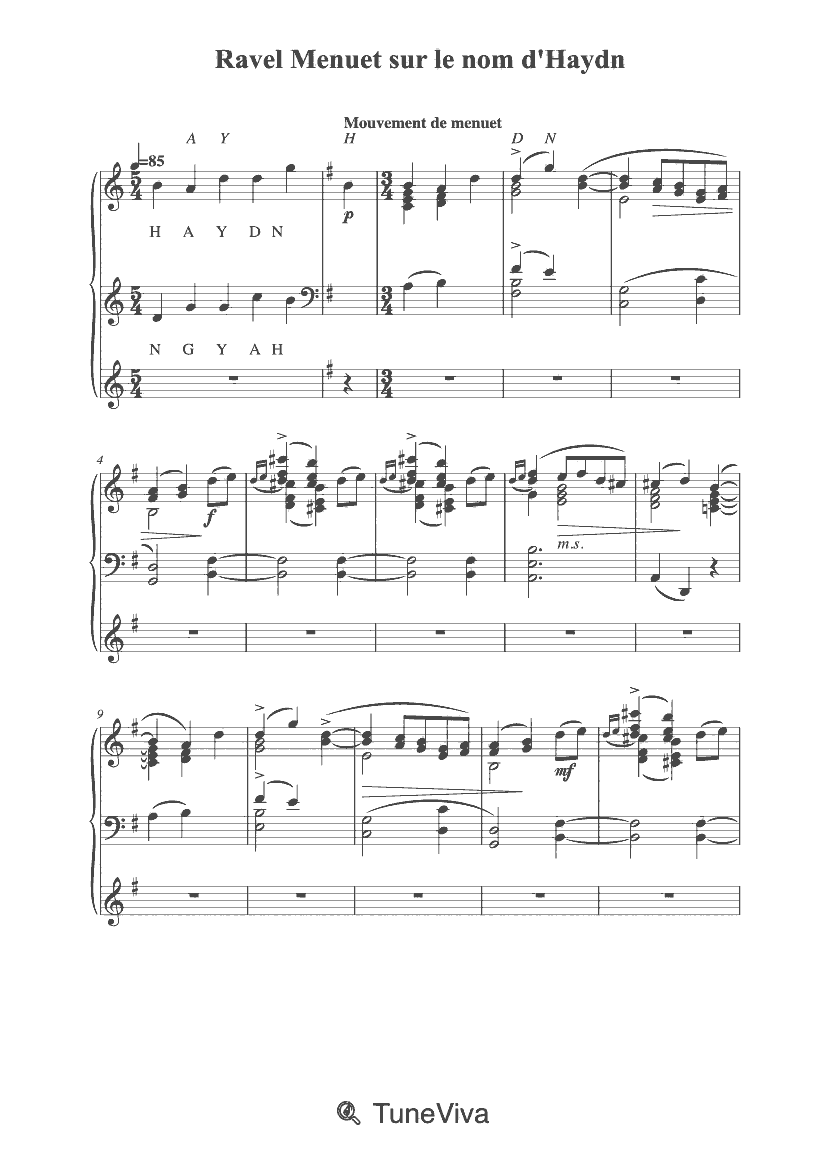
Maurice Ravel
Piano · 2 min 6 sec
Open score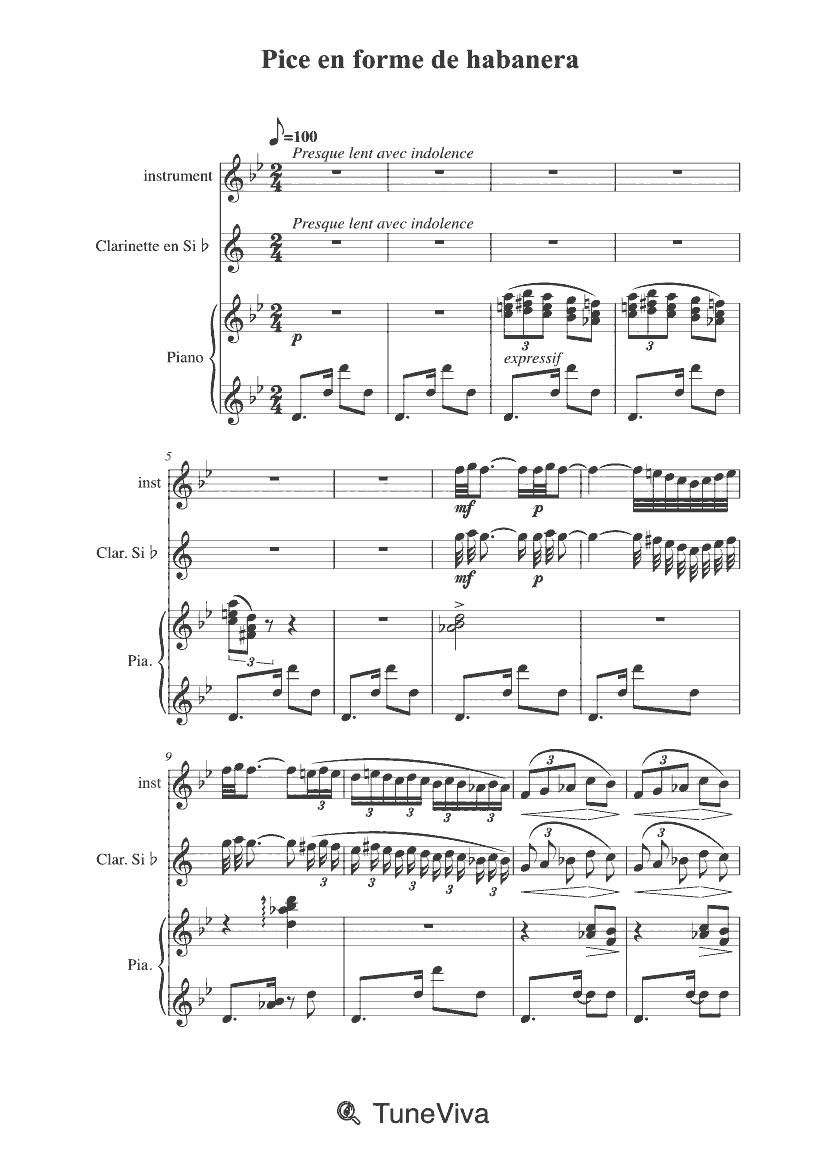
Maurice Ravel
instrument; Clarinette en Si♭; Piano · 2 min 28 sec
Open score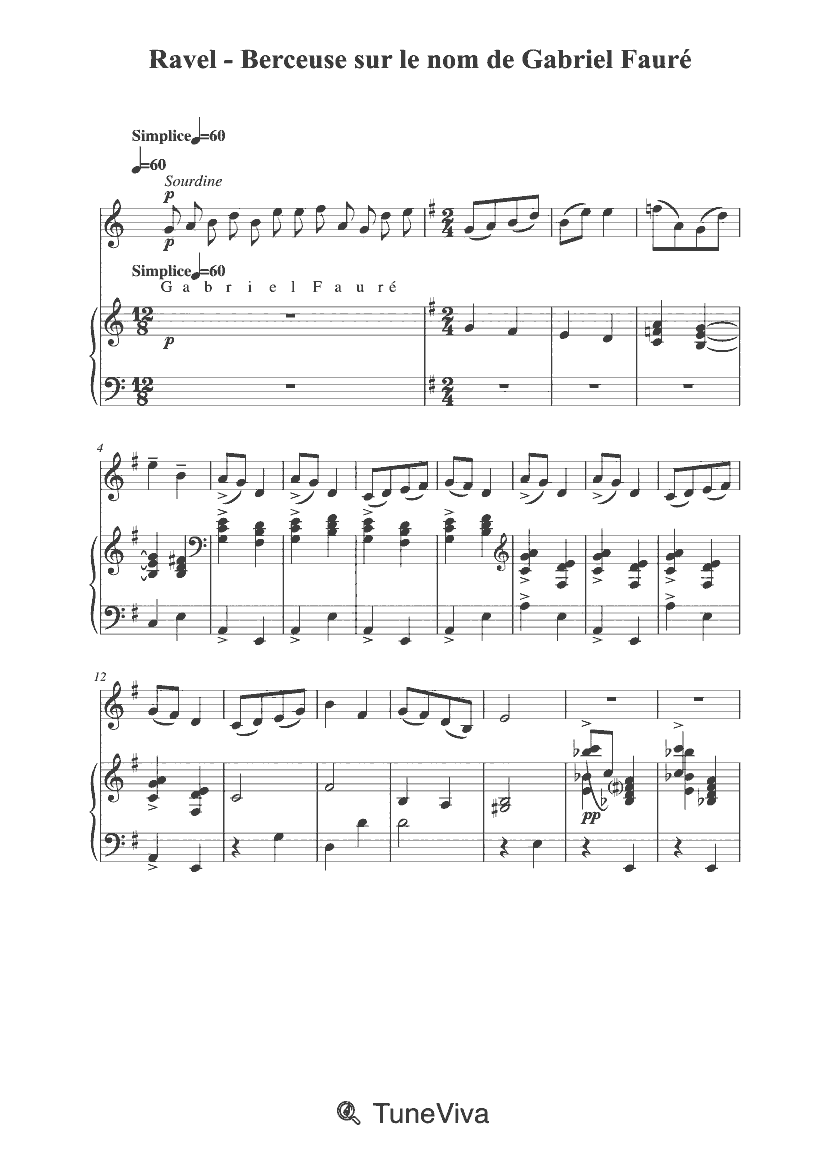
Maurice Ravel
Violin; Piano · 2 min 11 sec
Open score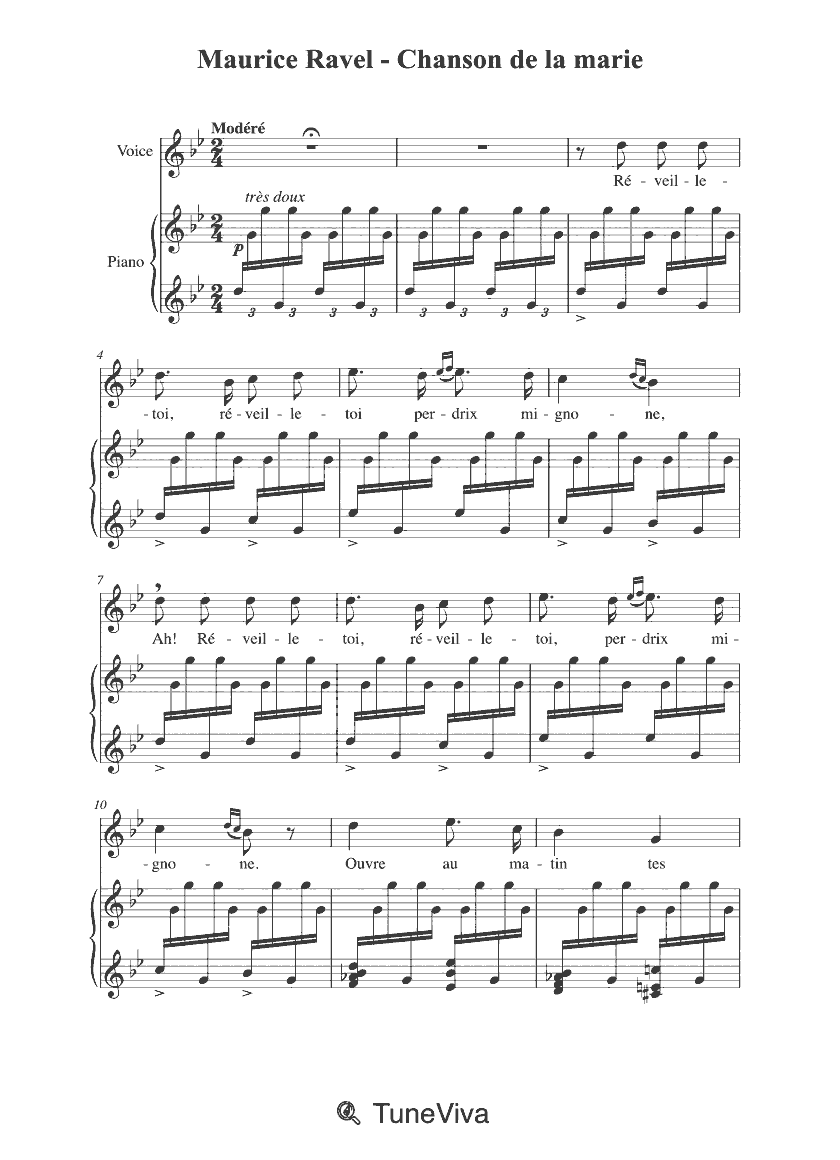
Maurice Ravel
Cinq mélodies populaires grecques
Voice; Piano · 1 min 21 sec
Open scorePage 1 of 3
Ravel's 53 scores run to about 227 minutes and 147,623 notated notes, and 13 entries include lyrics. Thirty-nine are filed as classical, eight unclassified and one as pop-classical. Le jardin féerique from Ma mère l'Oye leads the page, followed by the solo piano version of La Valse and Gaspard de la nuit. The collection is weighted towards the keyboard, though not exclusively so. The difficulty profile is the opposite of Elgar's: 40 entries at index 0 but five at index 3, the highest setting in the scale, which is where the piano writing belongs. Maurice Ravel was a French composer, pianist and conductor, often linked with Impressionism even though he rejected the label. His music ranges across solo piano, chamber, ballet and orchestral writing, and many works exist in more than one form, often beginning as piano music and later orchestrated. This selection reflects that pattern, with solo piano scores such as Gaspard de la nuit, Le Tombeau de Couperin, Jeux d'eau and La Valse, Ma mère l'Oye in piano-duet and piano layouts, music from Daphnis et Chloé, and a Pavane for a Dead Princess score listed for string quartet. Because Ravel's versions can differ in scoring and sometimes in movement count, check the instrumentation and version of each score before choosing.
Ravel was born in Ciboure, in the French Basque country near Biarritz, on 7 March 1875. His father was a Swiss engineer and his mother was Basque, and the family moved to Paris when he was a few months old. He studied at the Conservatoire under Gabriel Fauré, failed five times to win the Prix de Rome, and made his name with the Pavane pour une infante défunte of 1899 and Jeux d'eau of 1901. In March 1915 he joined an artillery regiment as a lorry driver, and his mother's death in January 1917 left him in what biographers describe as despair.
His major works exist in pairs. Ma mère l'Oye began as a piano duet, first played in April 1910, was orchestrated in 1911 and became a ballet in January 1912. Gaspard de la nuit, three pieces after Aloysius Bertrand, was written in 1908 and premiered by Ricardo Viñes on 9 January 1909. Daphnis et Chloé, commissioned by Diaghilev, was first staged on 8 June 1912. Le Tombeau de Couperin, composed between 1914 and 1917, remembers friends killed in the war, and La Valse grew out of a Diaghilev commission that Diaghilev praised but called "not a ballet".
The catalogue reflects that doubling: it holds both the piano and the orchestral Tombeau de Couperin, Ma mère l'Oye as suite and as ballet music, and a solo transcription of La Valse. The 13 lyric entries come from the vocal works rather than from the piano music. Ravel's last years are represented only indirectly; after a taxi accident in 1932 he developed aphasia, and he died in Paris on 28 December 1937 following an operation.
Piano first, orchestra later: Many Ravel works exist in two versions: a piano score first and an orchestration later. Ma mère l'Oye goes further, with a piano-duet original, an orchestral version and a ballet adaptation. Le Tombeau de Couperin also has a solo-piano suite and a 1919 orchestral version that omits two movements. When choosing a score, compare the scoring and movement headings rather than relying on the title alone.
Gaspard de la nuit: poetry and difficulty: Ravel wrote Gaspard de la nuit in 1908 as three piano pieces after poems or fantasies by Aloysius Bertrand, and Ricardo Viñes gave the premiere in Paris on 9 January 1909. The suite is famous for its difficulty: Ravel intended the Scarbo movement to be harder than Balakirev's Islamey. Ondine, written in C-sharp major, evokes a water nymph and has flowing, cascading textures related to Ravel's earlier Jeux d'eau.
Ma mère l'Oye from duet to ballet: Ma mère l'Oye began as a piano four-hands suite for the children of Ravel's friends Ida and Cipa Godebski, with Jeanne Leleu and Geneviève Durony giving the first performance on 20 April 1910. Ravel orchestrated the five-piece suite in 1911 and later expanded it as a ballet in 1912. The tales come from Charles Perrault, Madame Leprince de Beaumont and Madame d'Aulnoy, and the orchestral scoring is notably chamber-like, using a reduced orchestra without trumpets, trombones or tubas.
Le Tombeau de Couperin as memorial and Baroque suite: Le Tombeau de Couperin is a six-movement solo-piano suite composed between 1914 and 1917, with each movement dedicated to a friend who died in the First World War. Its forms follow a Baroque dance suite, and the title's tombeau refers to a memorial piece. Ravel said his aim was to honour the sensibility of the French Baroque keyboard suite rather than to imitate François Couperin directly. The 1919 orchestral version keeps four movements, and the piano version was first performed by Marguerite Long on 11 April 1919.
One is the piano suite and one is the 1919 orchestral version. The orchestral score omits two movements, so the two files are not interchangeable.
They come from the Marnat catalogue of Ravel's works: M. 55 is Gaspard de la nuit, M. 60 is Ma mère l'Oye and M. 68 is Le Tombeau de Couperin.
The title does not say. Ravel wrote the piece for solo piano in 1899 and orchestrated it in 1910, and both versions circulate, so check the scoring on the file.
Gaspard de la nuit is a three-movement piano suite by Maurice Ravel, written in 1908 after poems or fantasies by Aloysius Bertrand. It was premiered in Paris on 9 January 1909 by Ricardo Viñes. The work is known for its technical demands, and Ravel intended the Scarbo movement to be more difficult than Balakirev's Islamey.
Ma mère l'Oye exists in three main versions: the original piano four-hands suite, an orchestral version from 1911 and an expanded ballet adaptation from 1912. The piano-duet original was written for the children of Ravel's friends Ida and Cipa Godebski, and the first performance took place on 20 April 1910.
Le Tombeau de Couperin is a six-movement solo-piano suite composed between 1914 and 1917, with each movement dedicated to a friend who died in the First World War. Ravel modelled its structure on a Baroque dance suite and described the work as a homage to French Baroque keyboard sensibilities rather than a direct portrait of François Couperin. Ravel's 1919 orchestral version omits two of the original movements.
Ravel's output includes many works that first appeared as piano scores and were later orchestrated. Ma mère l'Oye and Le Tombeau de Couperin are documented examples in this selection: Ma mère l'Oye moved from piano duet to orchestra and then to ballet, while Le Tombeau de Couperin exists as a piano suite and as a 1919 orchestral suite with fewer movements.
Daphnis et Chloé is ballet music from 1912, and Ravel's complex orchestral writing in the work requires skilful balance in performance. The score in this selection is listed with a large orchestral and choral scoring, so it is worth checking whether a particular file represents a complete movement, a suite or another excerpt.
Jeux d'eau is a solo piano piece from 1901 whose water imagery and flowing textures anticipate the sound world of Ondine from Gaspard de la nuit. Ravel's later Ondine is described as reminiscent of Jeux d'eau, with falling and flowing water sounds woven into cascades.
Ma mère l'Oye circulates in piano-duet, solo-piano, orchestral and ballet forms, so the title alone may not identify the version. Check the scoring: a piano-duet score is laid out for Prima and Seconda players, while an orchestral score will list woodwind, brass, harp and strings. One Ma mère l'Oye score in this selection is listed with Prima and Seconda parts.