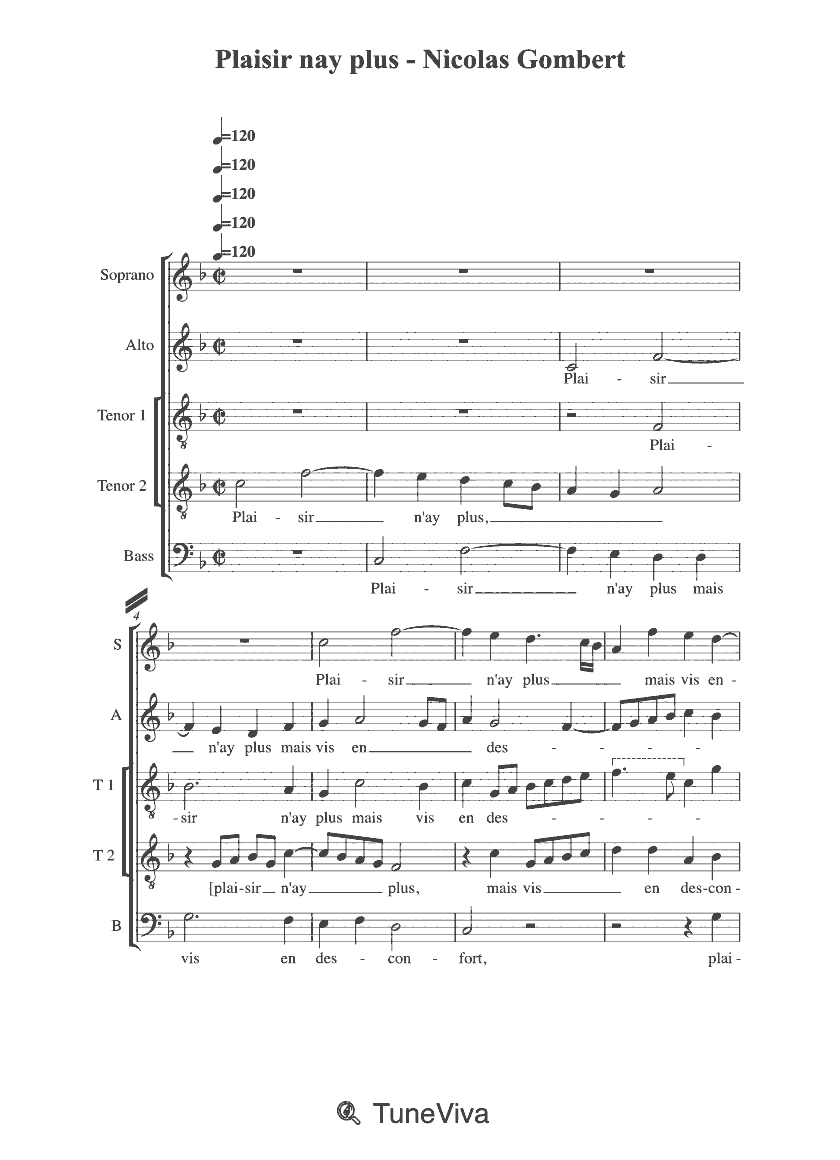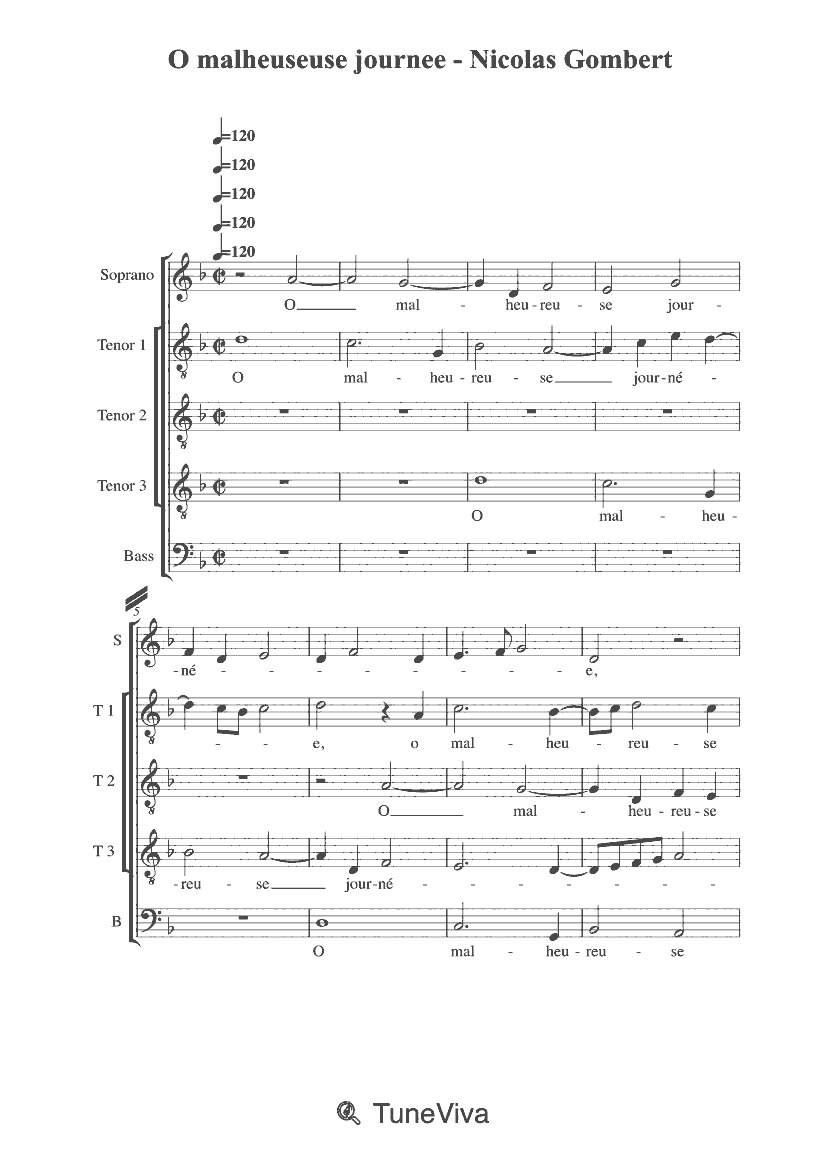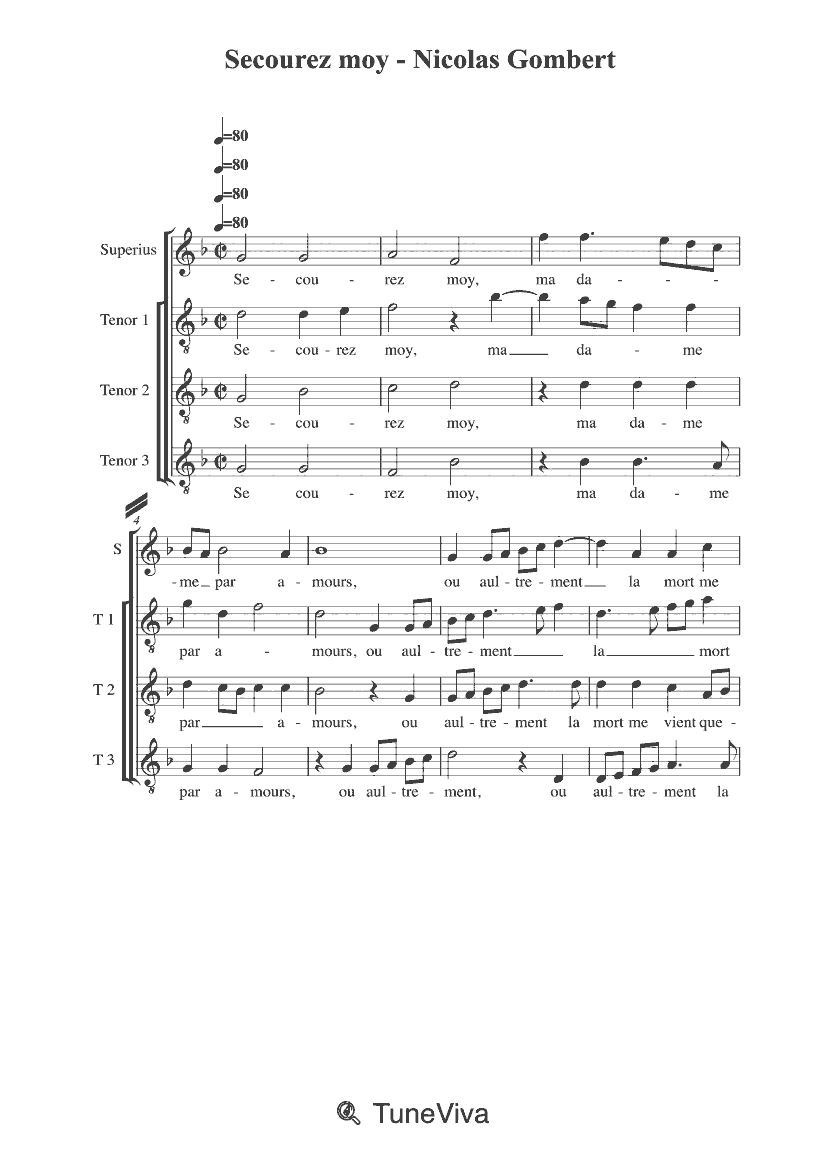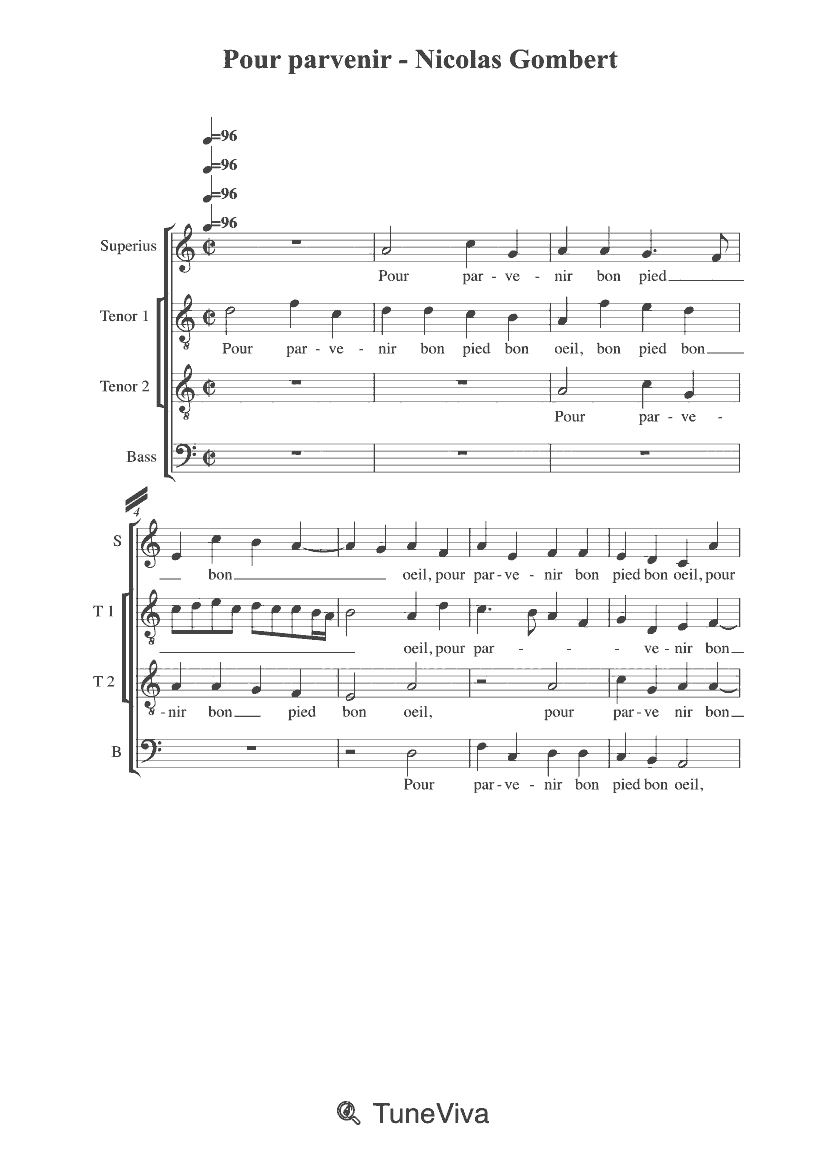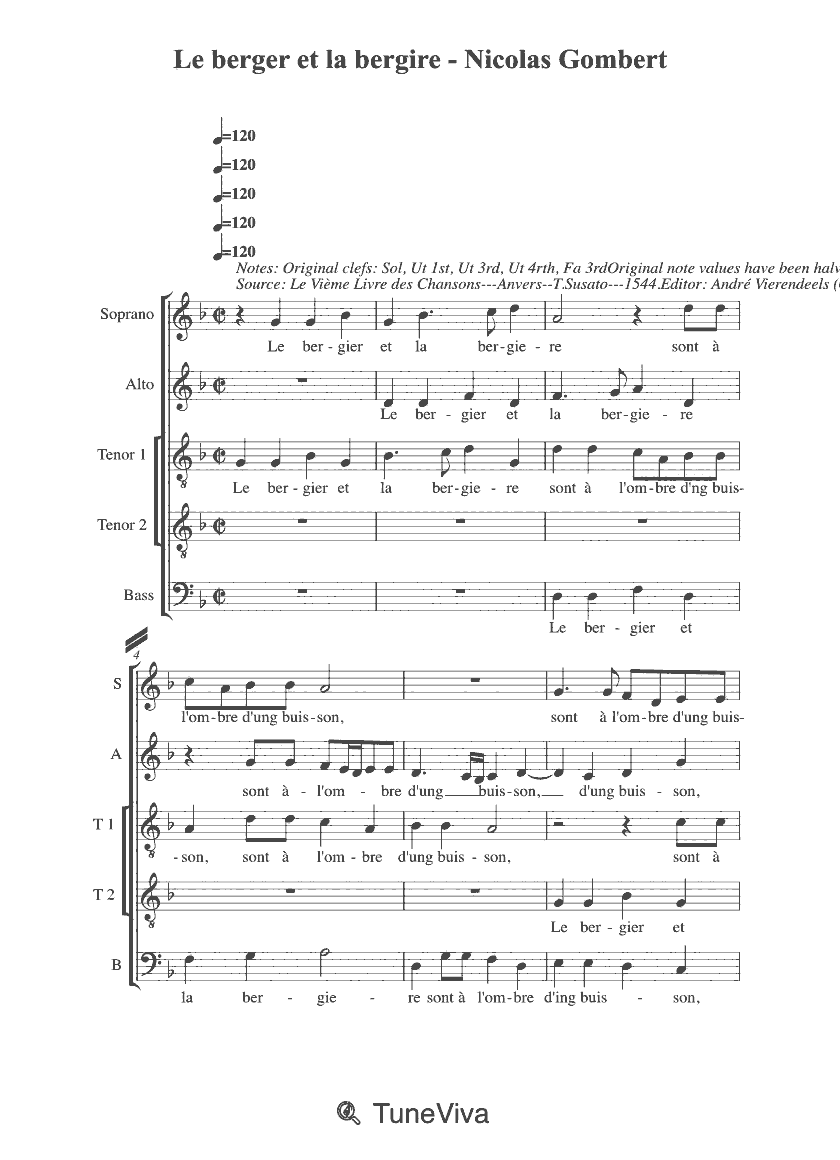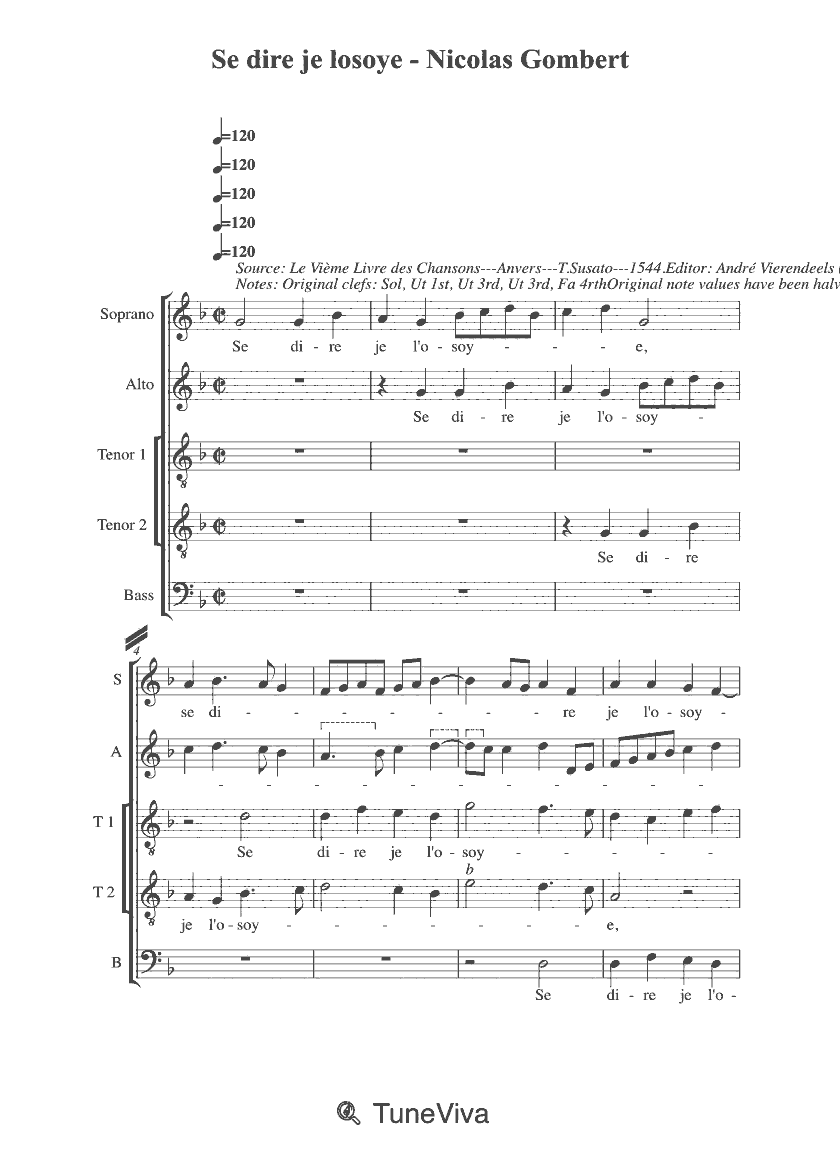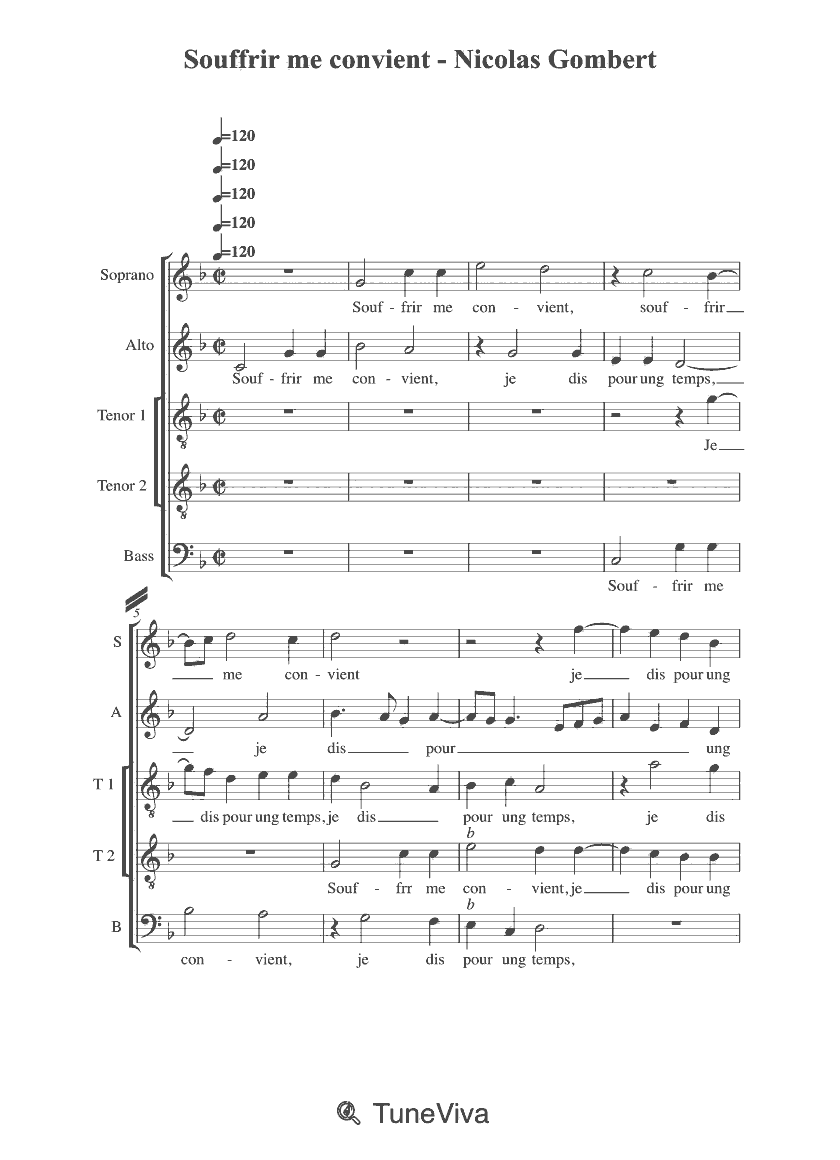
classical
3 tracks
Gombert's catalogue is entirely vocal: 39 scores, about 202 minutes of music and 40,365 notated notes, every one of them carrying lyrics and every one logged at complexity index 0. That uniformity is a feature of the repertory rather than a judgement on difficulty; dense imitative polyphony is hard to sing even when the notation is sparse.
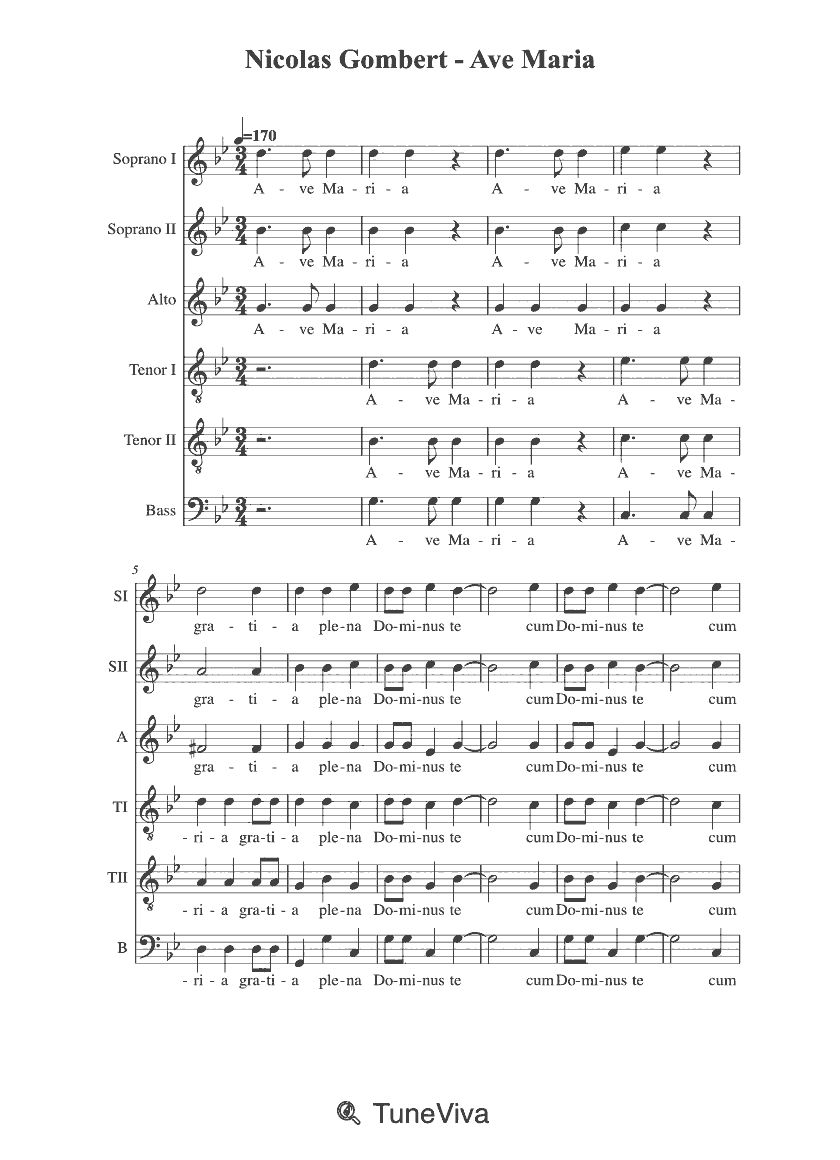
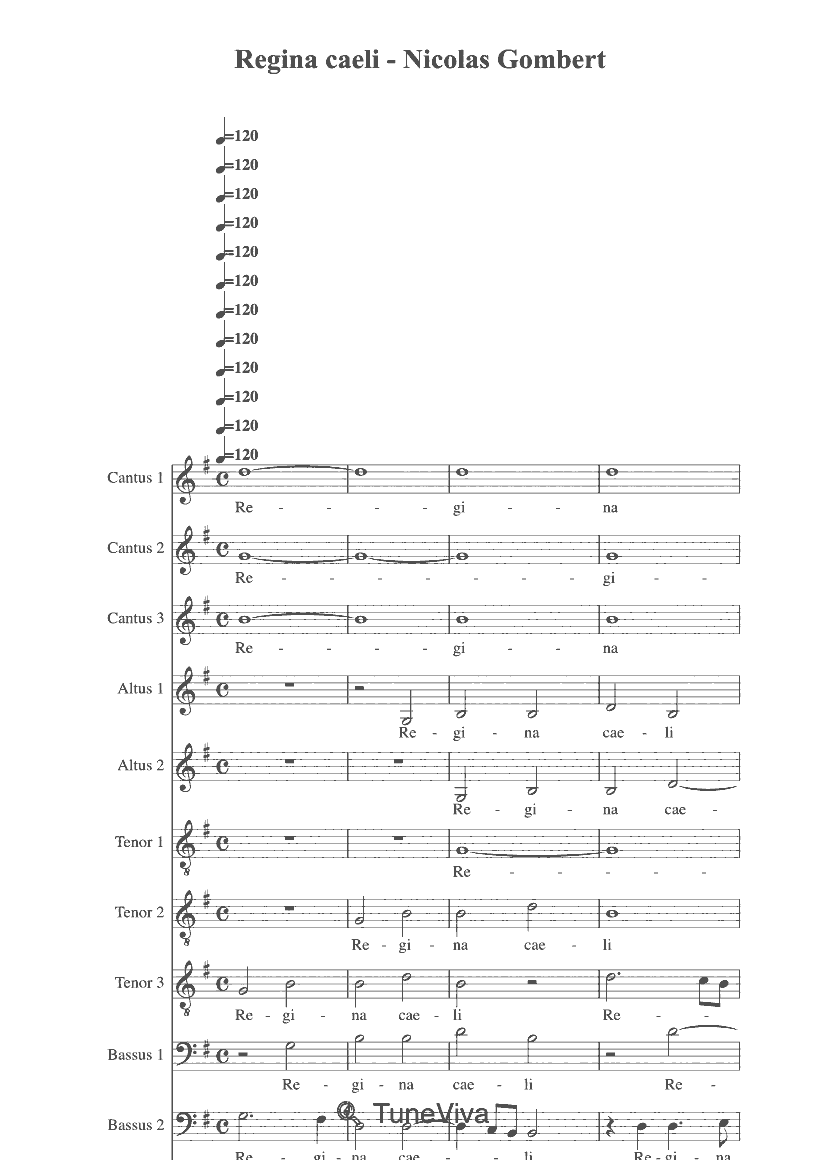
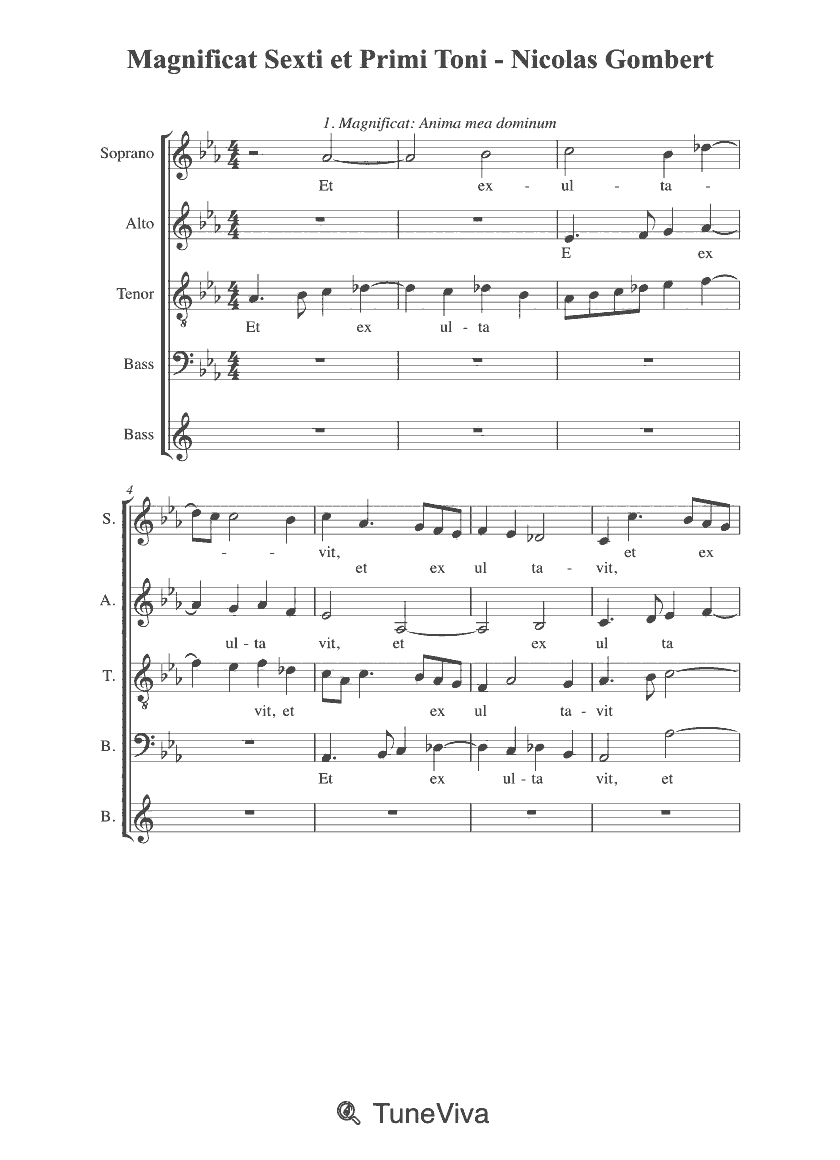
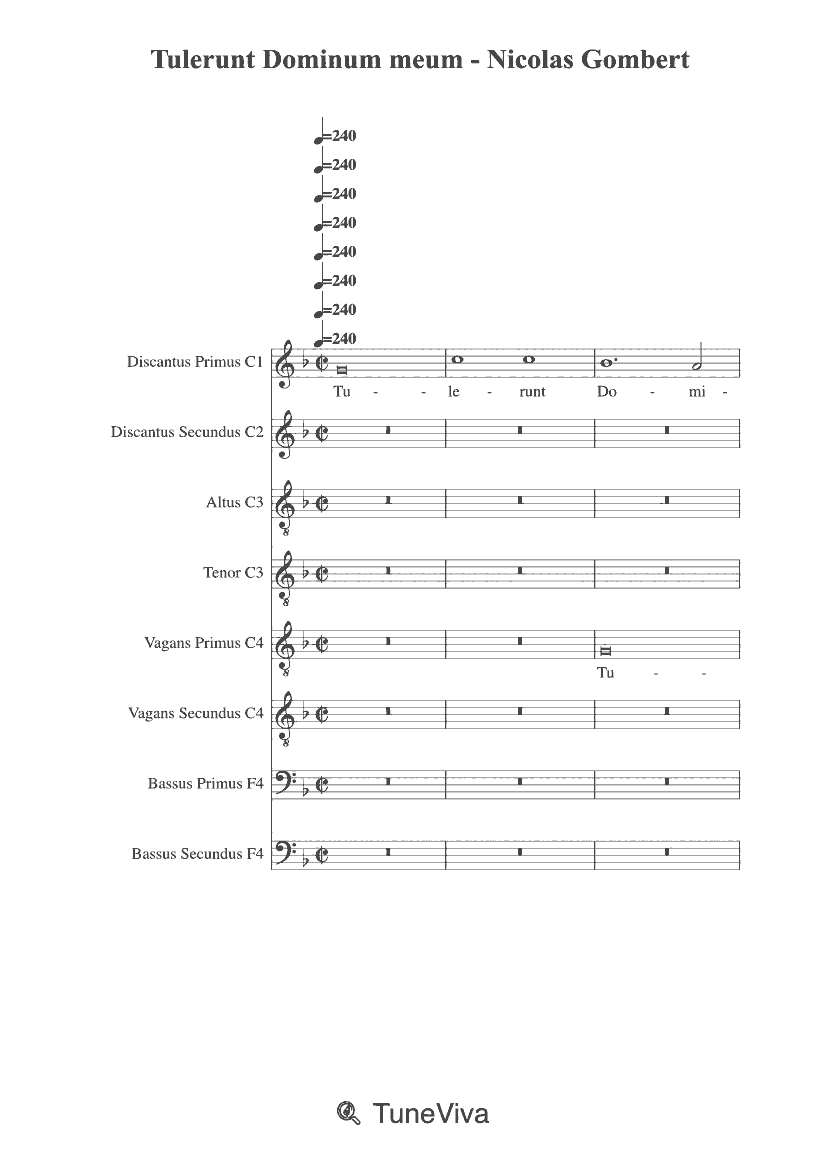
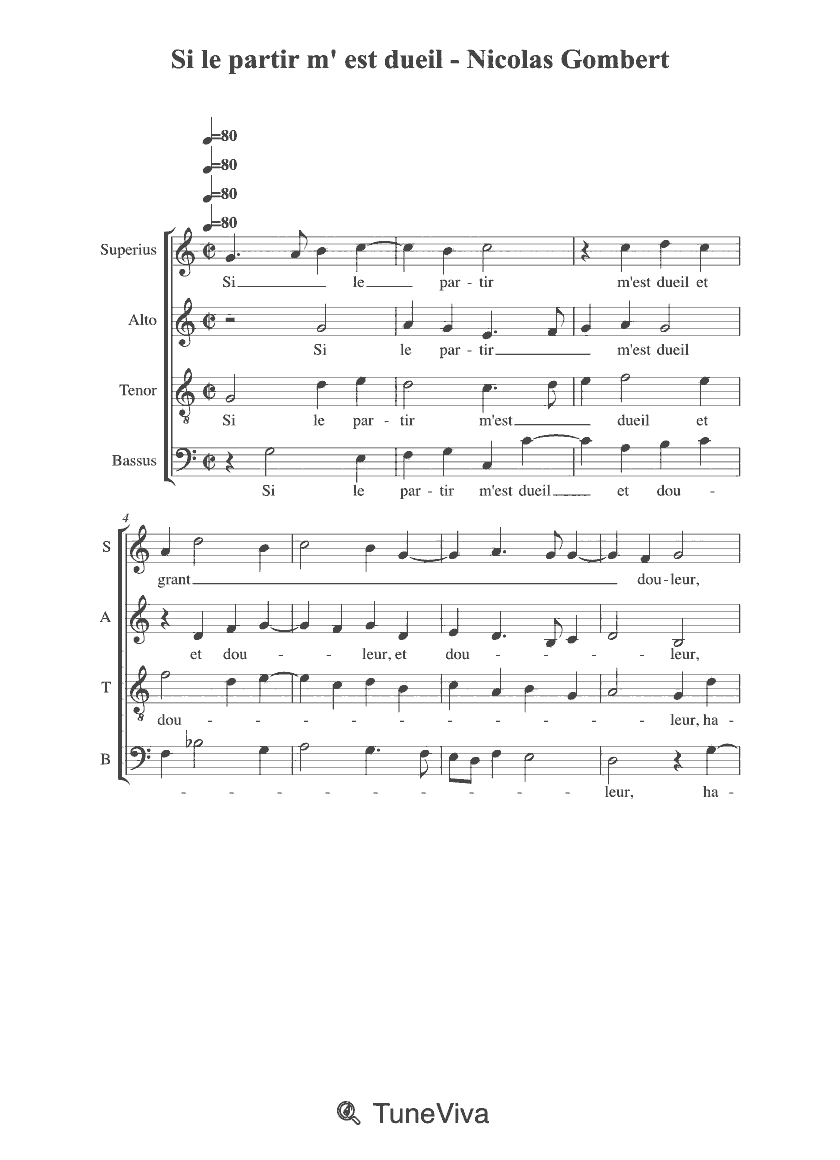
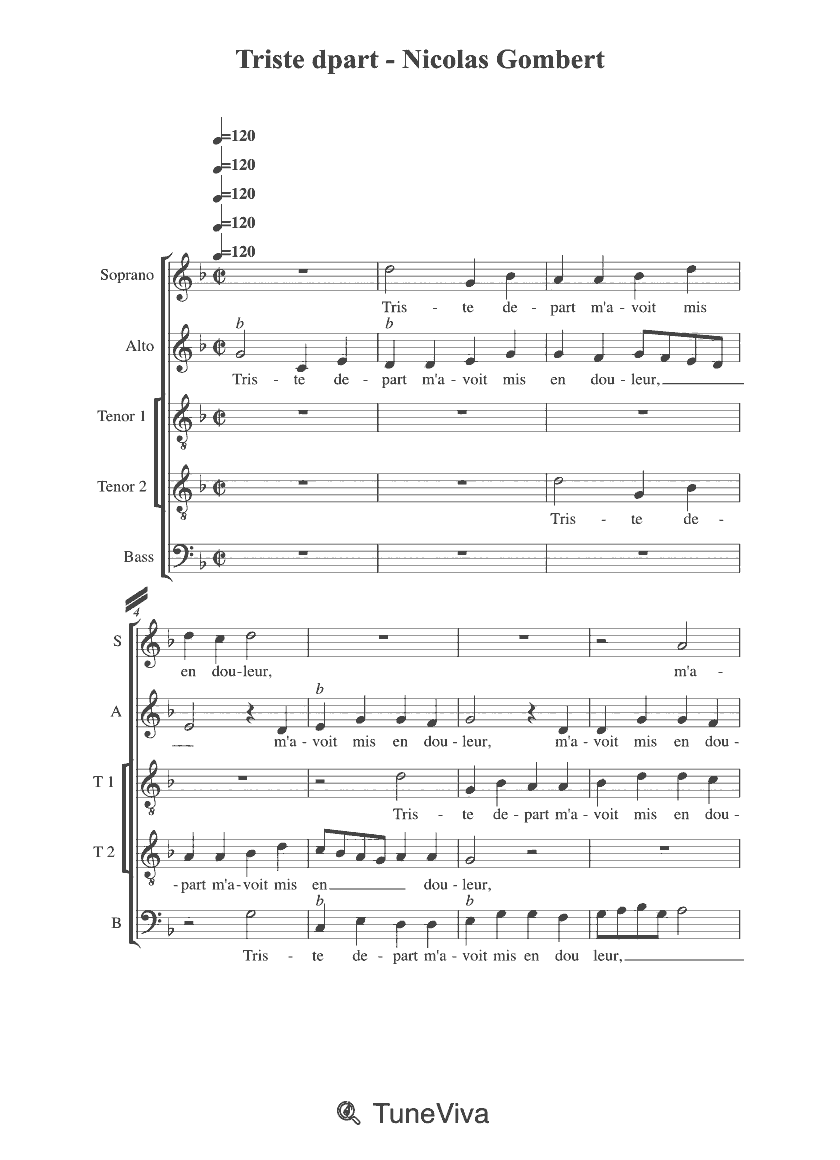
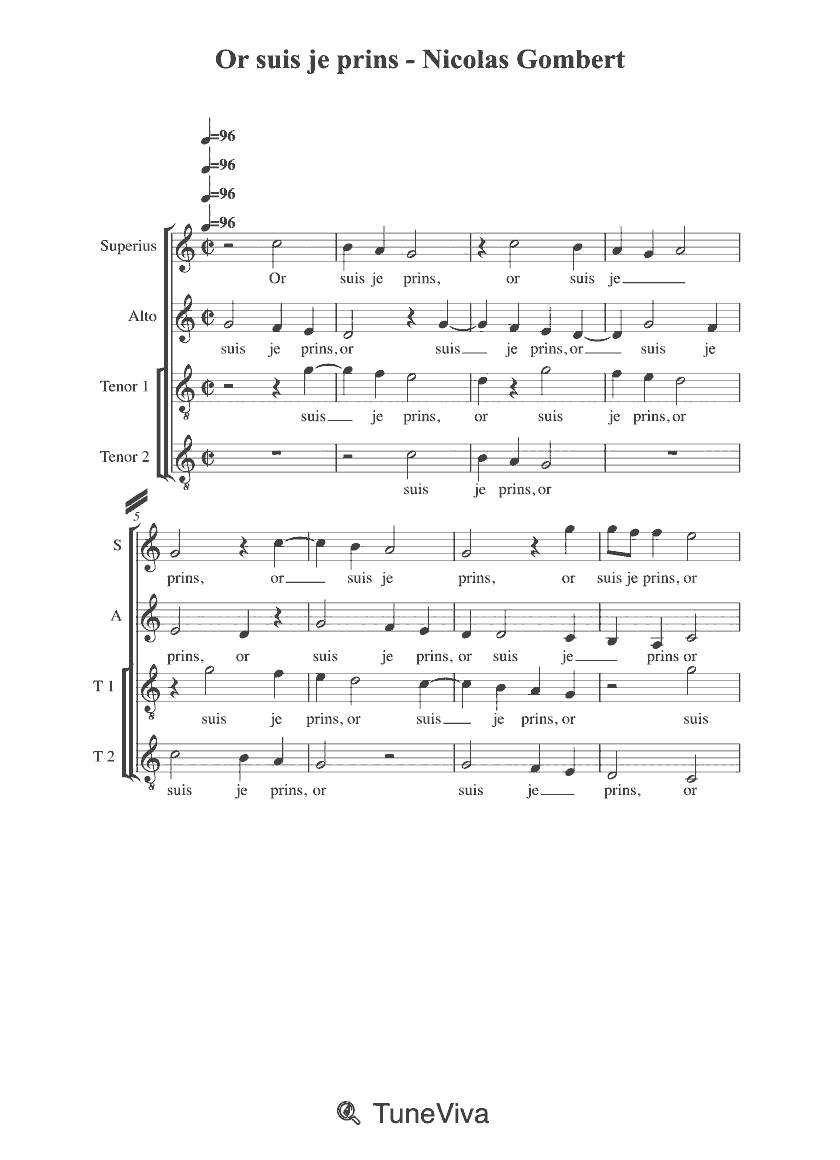
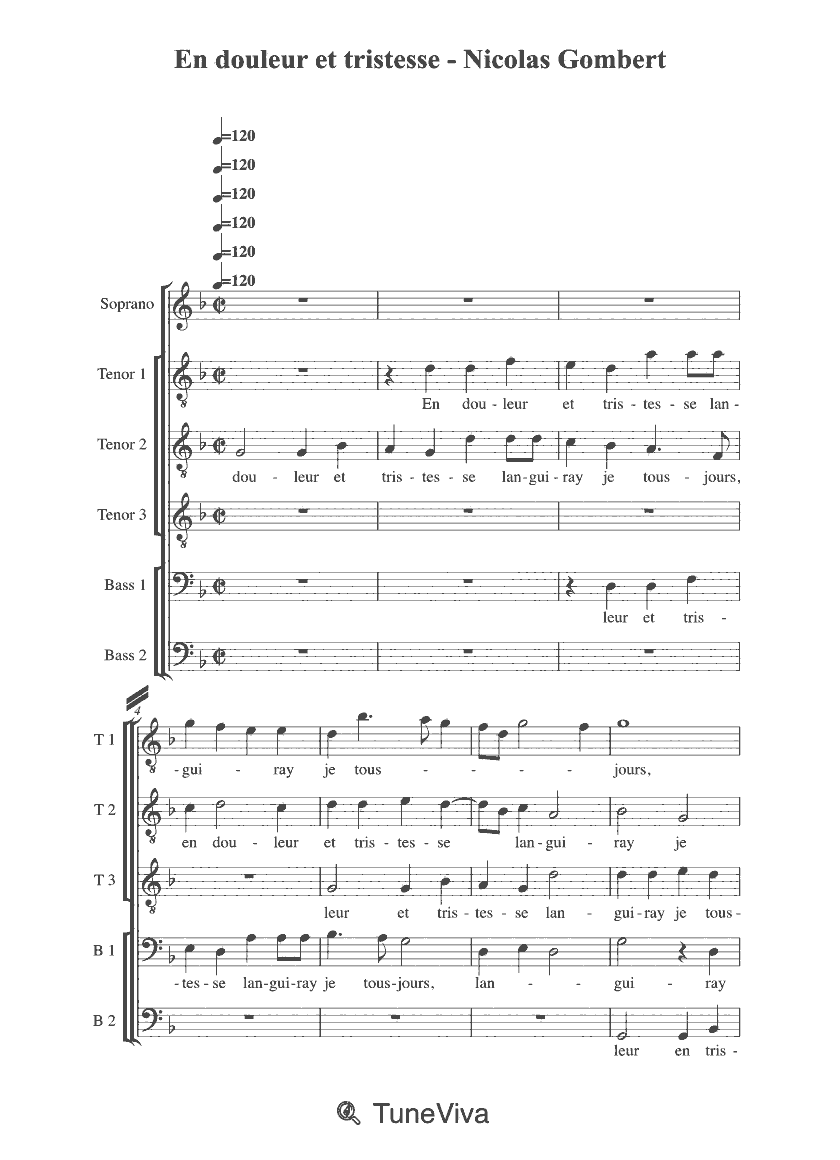
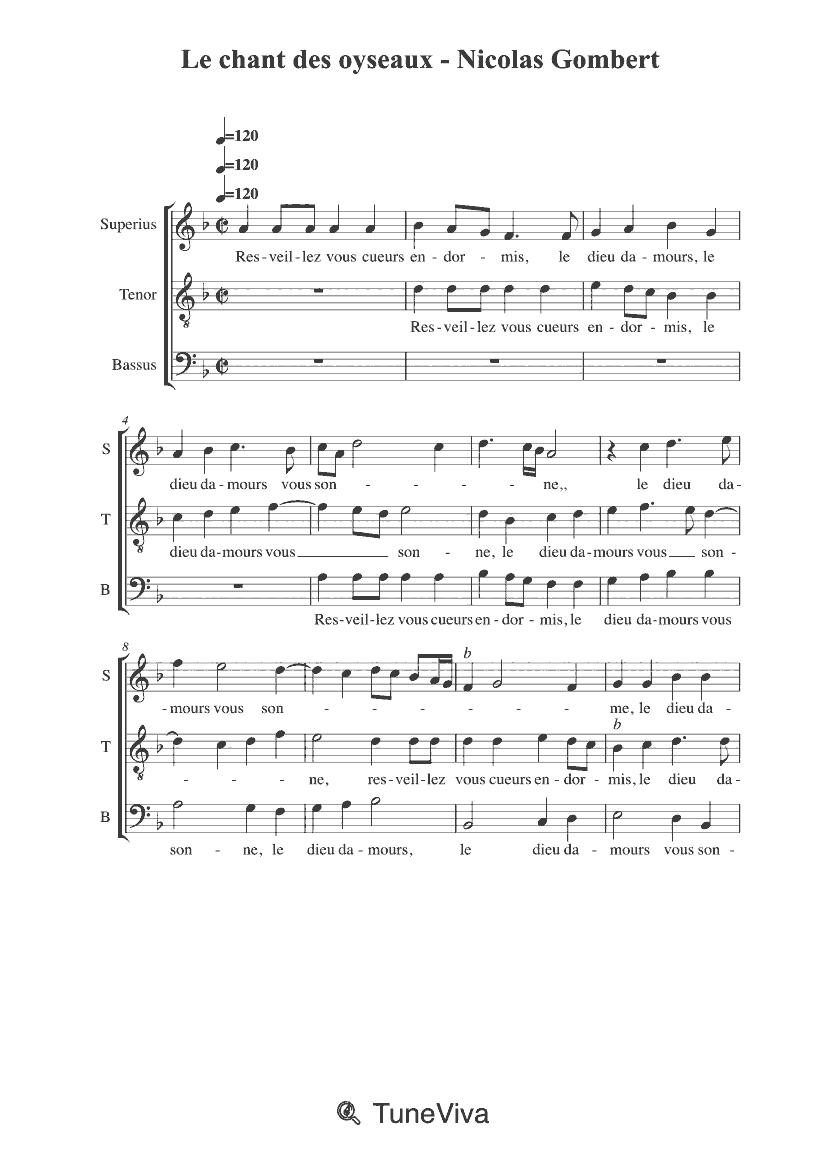
The most-viewed piece is Le chant des oyseaux, a three-voice bird chanson, followed by the Ave Maria and Regina caeli motets, the Magnificat Sexti et Primi Toni and Tulerunt Dominum meum. The rest is mostly French chanson — Triste départ, Or suis je prins, En douleur et tristesse — with the Josquin lament Musae Jovis at the end.
Gombert was born around 1495, probably in southern Flanders between Lille and Saint-Omer, and died around 1560. Hermann Finck, writing in 1556, says he studied with Josquin, which would place him at Condé-sur-l'Escaut around 1515-21. He joined the chapel of the Emperor Charles V as a singer in 1526 and by 1529 was magister puerorum, master of the boys; he travelled with the court through the Low Countries, Spain, Italy and Germany, and held several cathedral benefices. In 1540 he disappears from the chapel records. The physician Jerome Cardan, writing in 1560, says he was condemned to the galleys for sexual assault on a boy in the emperor's service; he had been pardoned by 1547. He may have retired to Tournai as a canon.
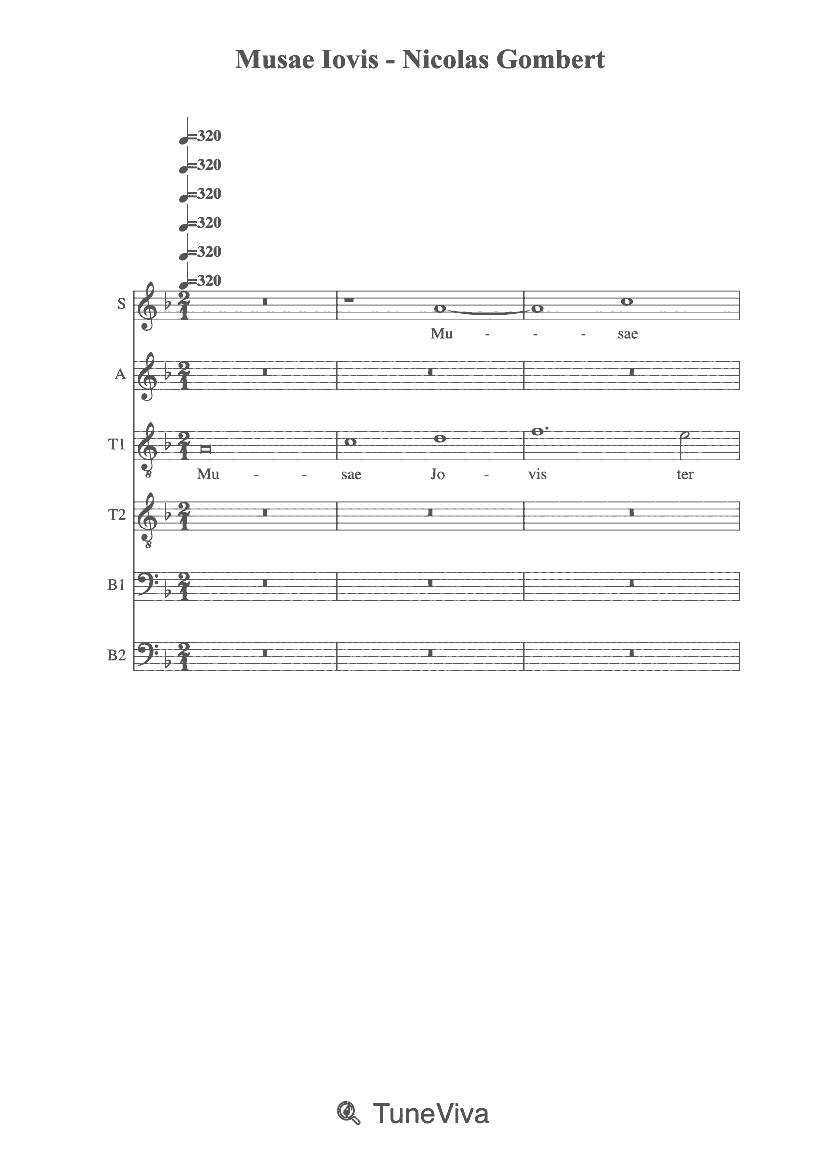
His surviving output is usually counted as ten masses, about 140 motets and some 70 chansons. Gombert's style is dense, continuous imitation, often in five or six parts and favouring lower voices; extended homophony is rare, and the text is sometimes harder to follow than the counterpoint. The Magnificat settings are among his best-known works, and the eight settings, one in each church mode, were said by Cardan to have won his pardon. The catalogue's Le chant des oyseaux is not an original chanson but a three-voice reduction of Janequin's famous bird piece. Tulerunt Dominum meum is now regarded as an anonymous contrafactum of Gombert's Lugebat David Absalon, itself a contrafactum of his chanson Je prens congie de mes amours. Musae Jovis, a six-voice lament on Josquin's death, is one of the few pieces in which Gombert uses archaic devices.
All 39 entries sit at index 0, so the number cannot be used to rank them.
Gombert's lines are long and closely imitative, so the main work is sustaining each phrase without breaking it at every comma. In the Magnificat, keep the chant paraphrase audible in whichever voice carries it. The five- and six-part chansons can sound muddy if the inner voices are too heavy; aim for a light tenor and a clear top line. Musae Iovis uses clashing semitones deliberately, so do not smooth them away. Because every entry has text, settle pronunciation and vowel colour before rehearsal.
A three-voice STB setting of the bird chanson associated with Janequin, whose own Le chant des oiseaux was published by Attaingnant in 1528; this version was printed in Susato's tenth book of chansons in 1545.
A Marian motet in a largely homophonic texture; sources differ on whether it is for five or six voices.
One of Gombert's settings of the Easter antiphon; he also wrote versions for ten and twelve voices, and the catalogue does not give the scoring of this one.
A Magnificat that can be sung in the sixth or first tone, printed in 1552 in the collection Canticum beatae Mariae virginis.
An Easter motet on John 20:13, now thought to be an anonymous contrafactum of Gombert's Lugebat David Absalon.
A four-voice chanson of farewell, printed in Susato's twelfth book of chansons in 1544.
A five-voice chanson of leave-taking, among the most often recorded of Gombert's secular pieces.
A four-voice chanson whose text compares the speaker to a bird caught in a trap.
A six-voice chanson printed in Susato's thirteenth book of chansons in 1550.
Usually spelled Musae Jovis: a six-voice lament on the death of Josquin, in the Phrygian mode and full of deliberately exposed semitone clashes.
There are 39, running to about 202 minutes and 40,365 notated notes. All 39 carry lyrics.
No. The catalogue mixes motets and Magnificats with French chansons; the chansons make up a good part of the 39 entries.
It is a three-voice reduction of Janequin's bird chanson rather than an independent composition. The catalogue files it under Gombert as the arranger.
The index is a rough measure of notation density. Gombert's vocal lines use relatively few notes per second, so every file lands at 0; that says nothing about tuning the imitation.
Catalog editions and arrangements attributed to Nicolas Gombert.