classical
2 tracks
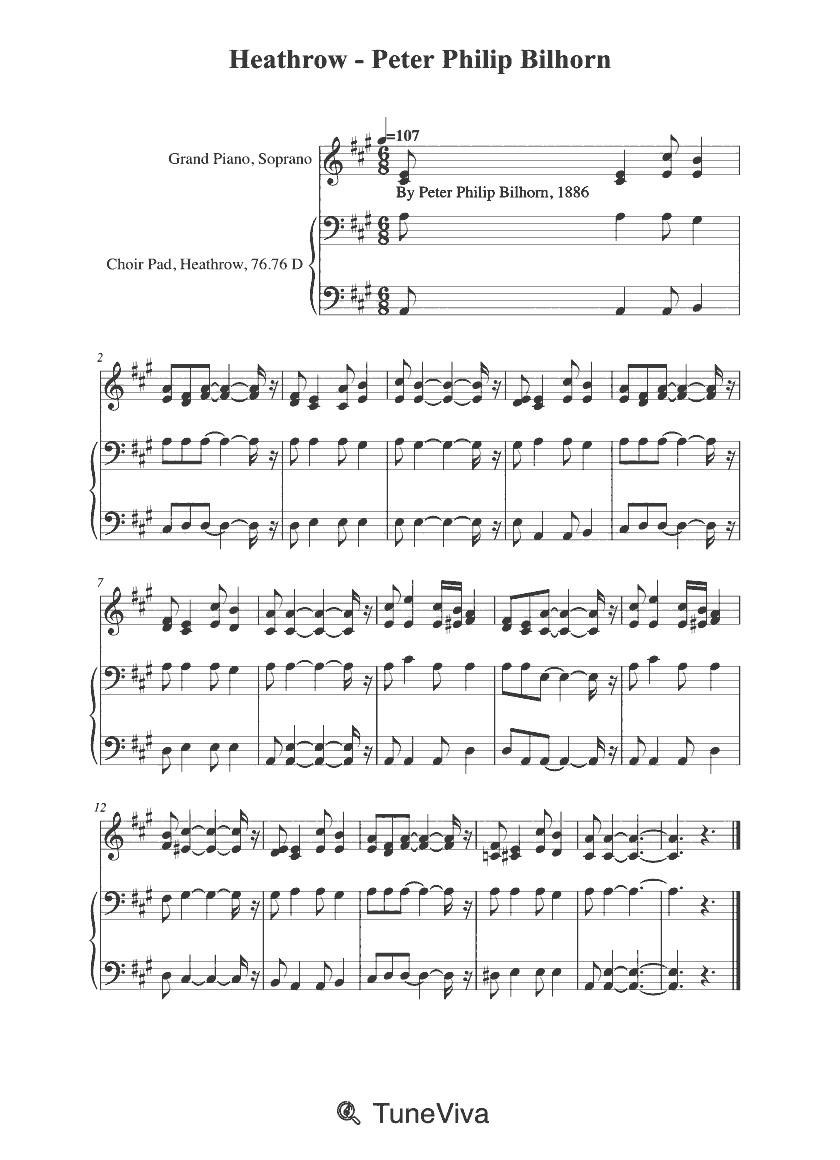
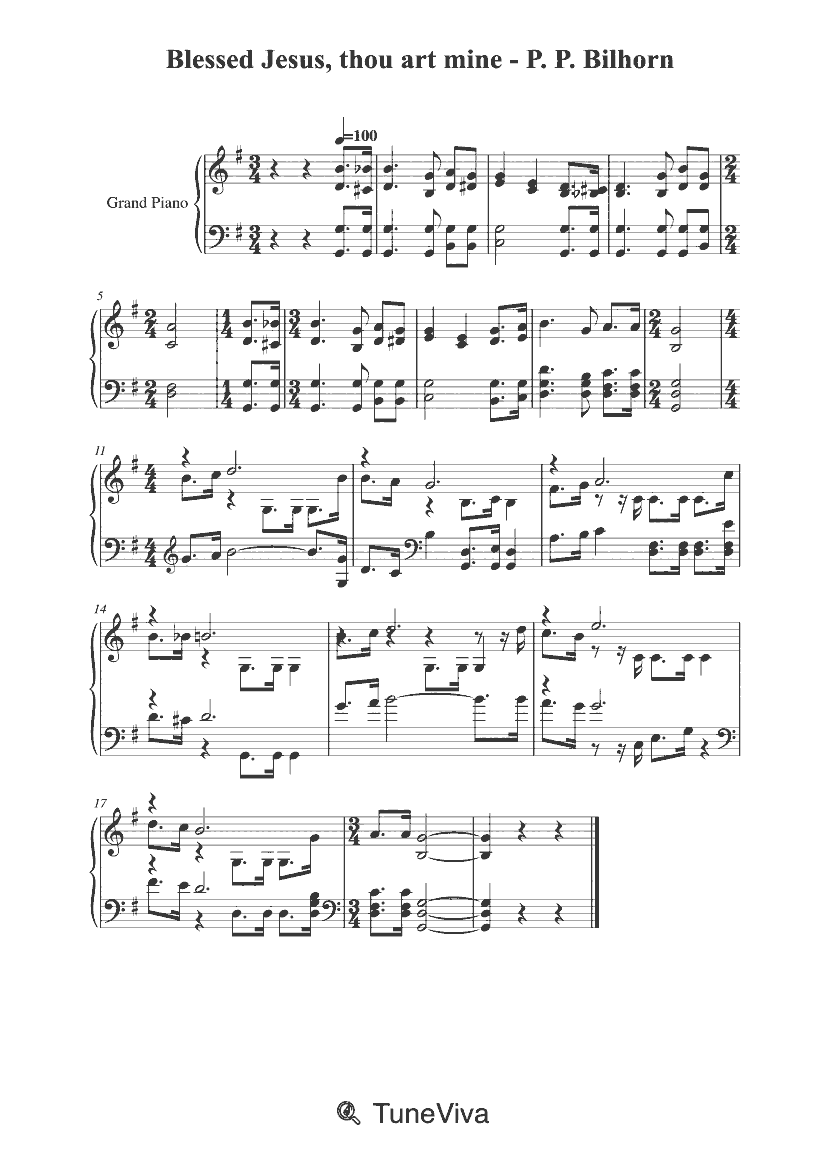
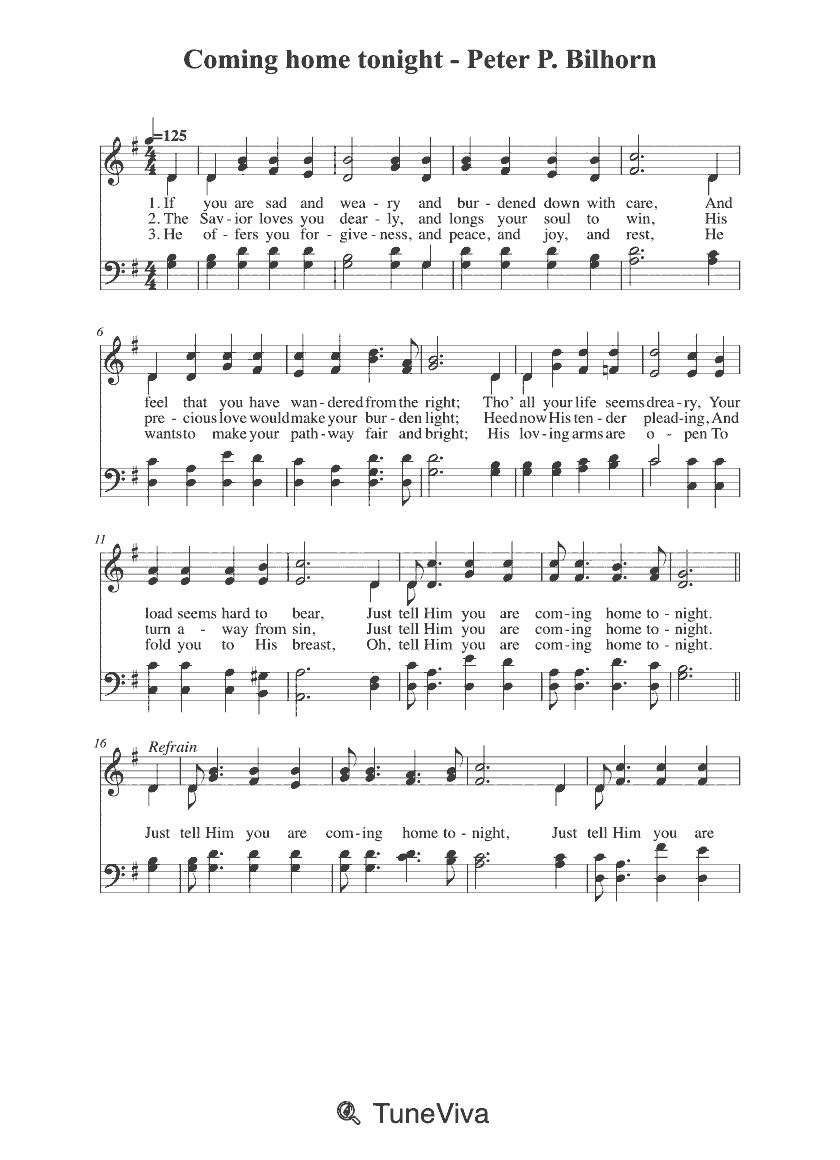
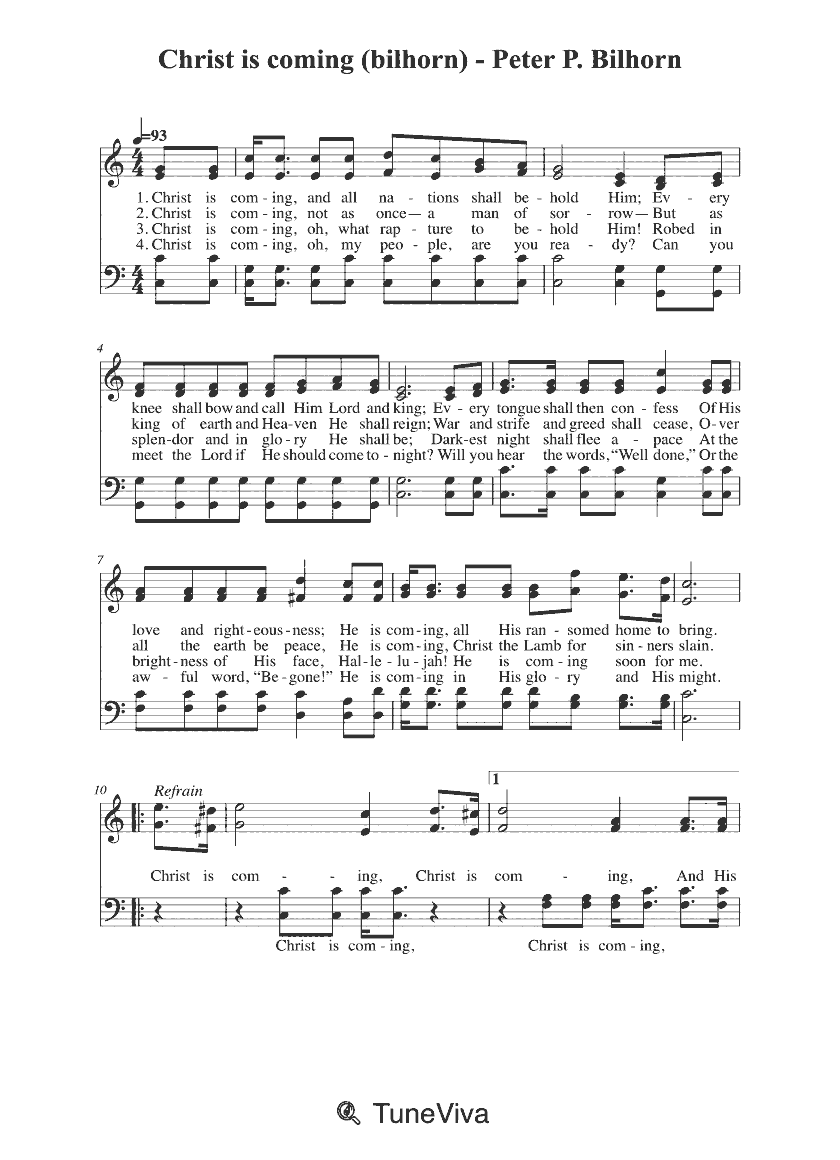
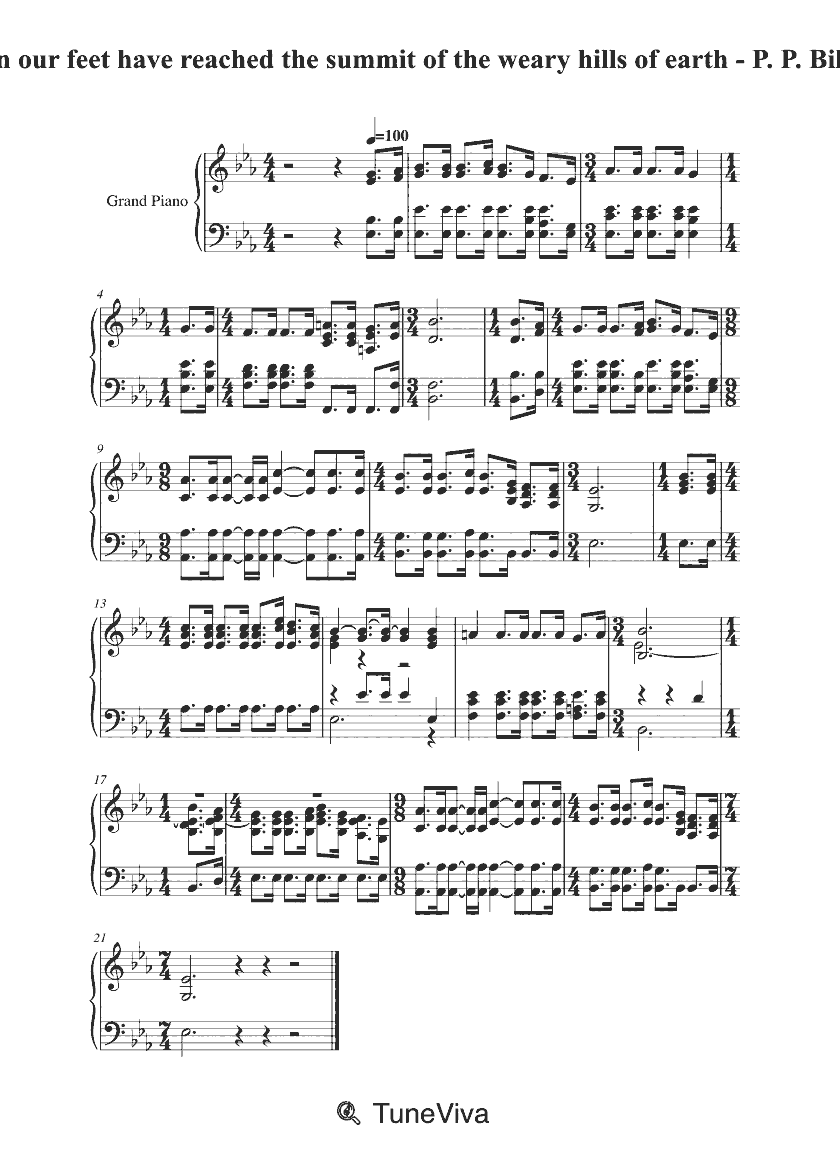
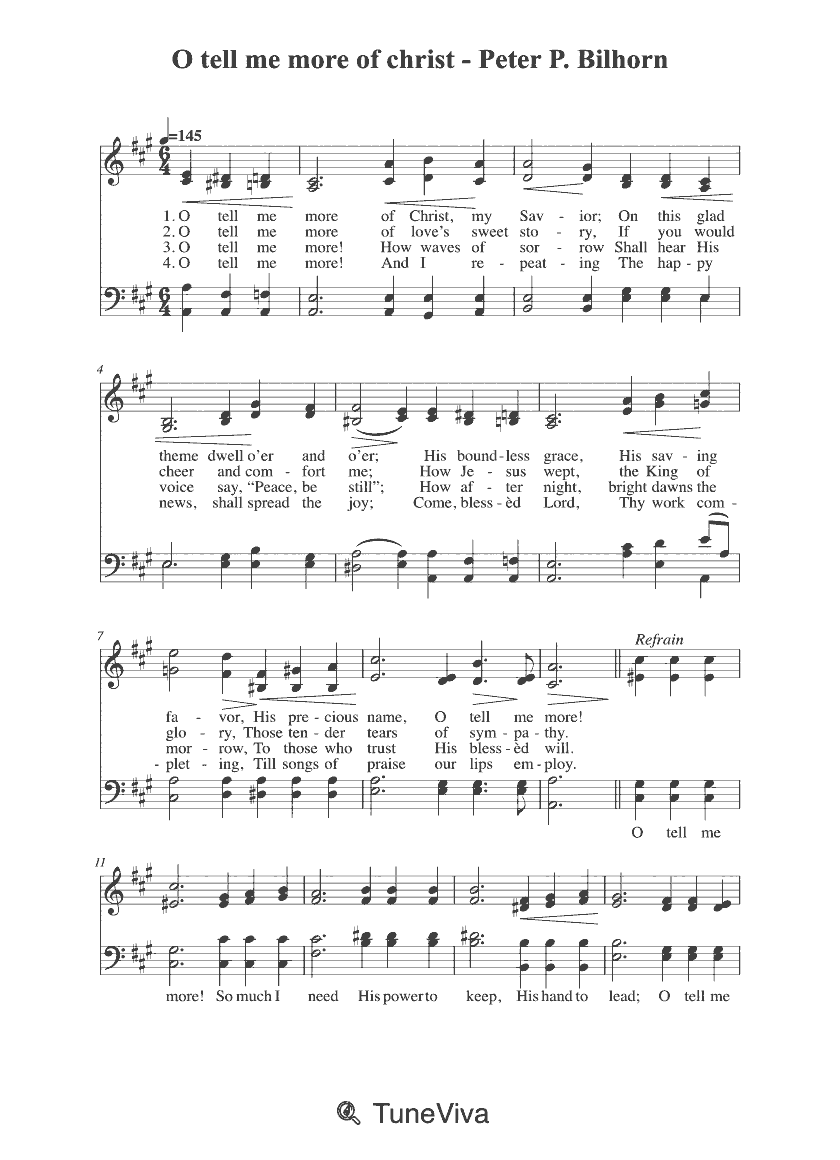
Bilhorn was a singing evangelist before he was a composer, and the catalogue is made of the short choruses he carried into revival meetings: 62 scores, about 32 minutes of music and 18,096 notated notes, with lyrics on 48 of them.
The most-viewed item is We walk by faith, followed by I've cast my heavy burdens down and two settings of The best friend to have is Jesus, one of them a duplicate under a different spelling. Difficulty is spread across the scale, with 41 entries at index 0, ten at index 1 and eleven at index 2.
Peter Philip Bilhorn was born at Mendota, Illinois, on 22 July 1865, three months after his father's death in the Civil War. He grew up in Chicago, sang in German beer gardens as a teenager, and was converted at the Moody Church in the early 1880s under the evangelist George F. Pentecost. He studied with George F. Root and George C. Stebbins, and in 1885 founded, with his brother George, the Bilhorn Brothers Organ Company, which built a folding portable pump organ of about sixteen pounds for open-air campaigns. He wrote or compiled some two thousand gospel songs, issued them through his own Chicago house, and died in Los Angeles on 13 December 1936.
The catalogue is entirely short-form: 32 minutes spread over 62 items, so most pieces run to well under a minute of music and several are probably chorus-only extracts. Sweet Peace, the Gift of God's Love, copyrighted in 1887, is the song most often attached to his name, but it is not among the fourteen most-viewed entries here.
Several titles carry a surname in brackets, as in We walk by faith (wolfe) and Peace, be still! (beede). Those names look like the composer of the tune and the writer of the words; the catalogue does not say, and it files every entry under Bilhorn himself.
Gospel choruses are built to be repeated, so keep the tempo steady and the words forward. The refrain is the point: do not slow into it, and let the last line lift rather than broaden. Four-part harmony should stay light, with the melody clear above the alto, and the accompaniment simple enough that the singers are not waiting for it. Where a verse is printed, sing it plainly and save the ornament for the refrain, which is what a congregation will remember.
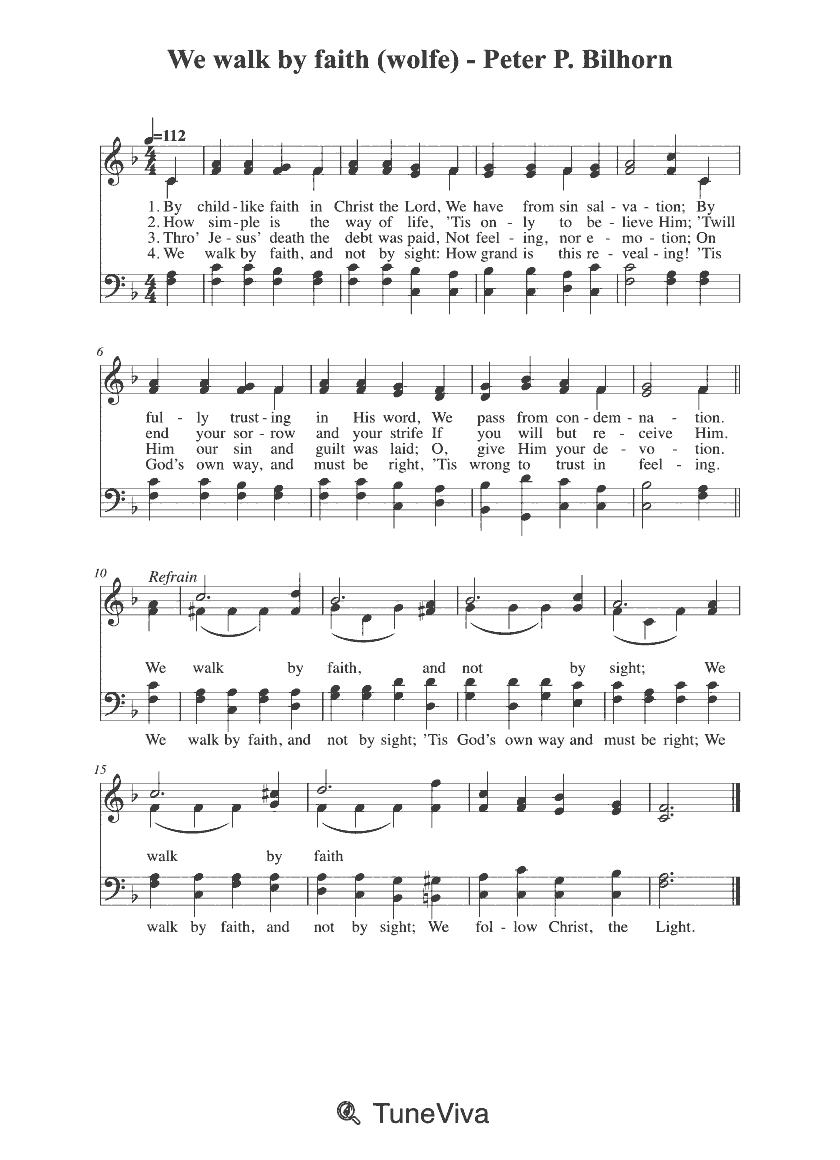
The most-viewed score here; the bracketed name suggests the setting was taken from another hand and reprinted in a Bilhorn collection.
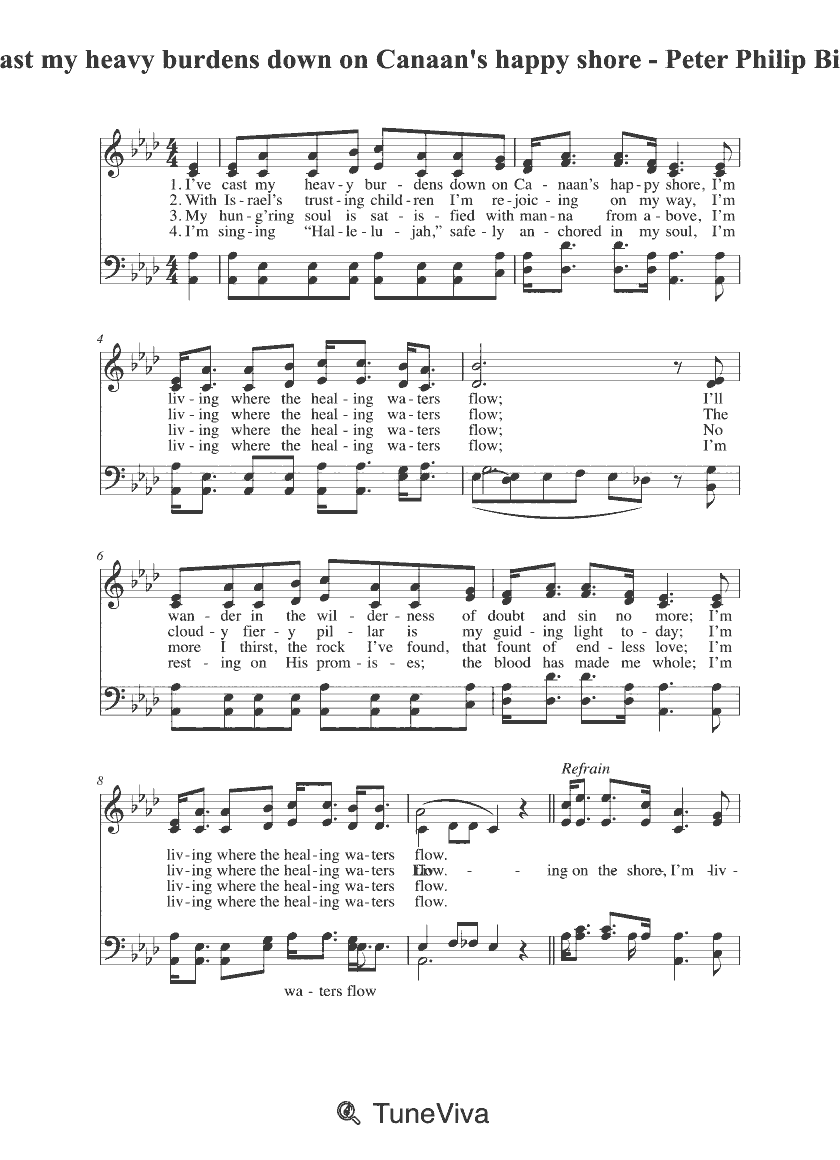
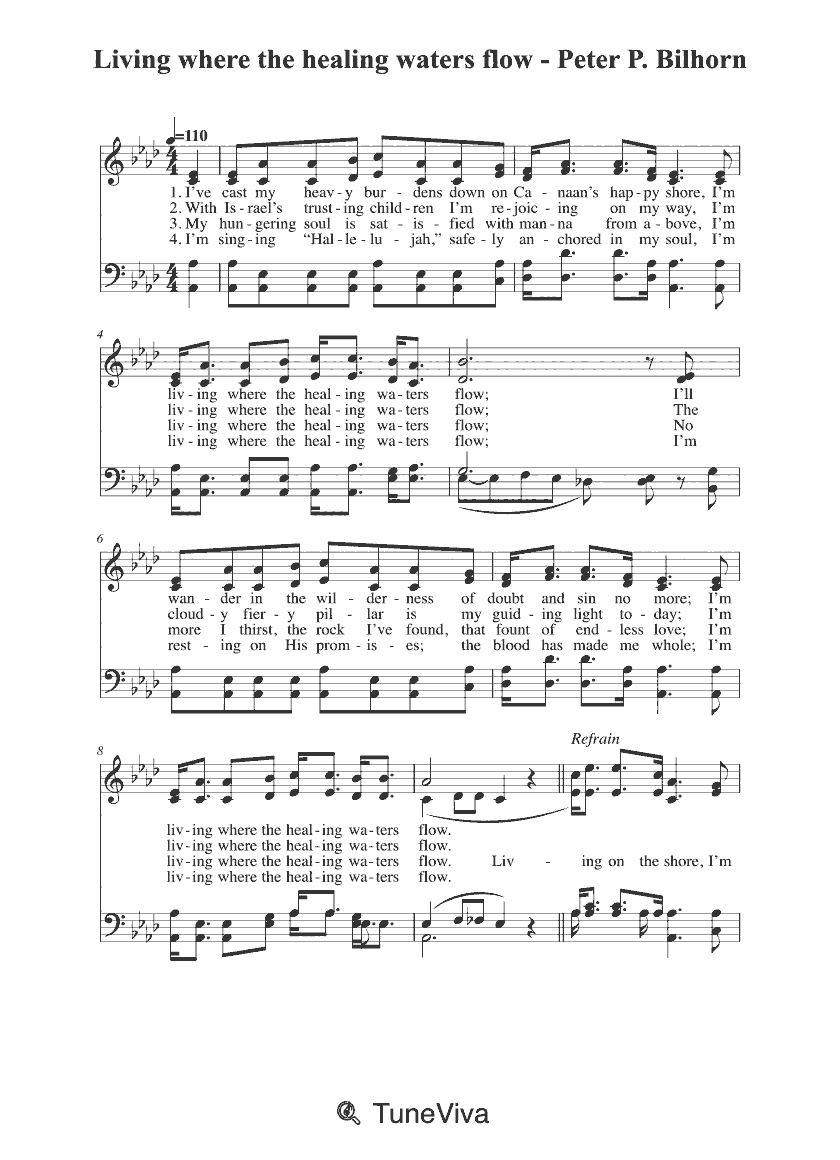
A refrain built on the Canaan image that runs through American gospel verse, and one of the longest titles in the catalogue.
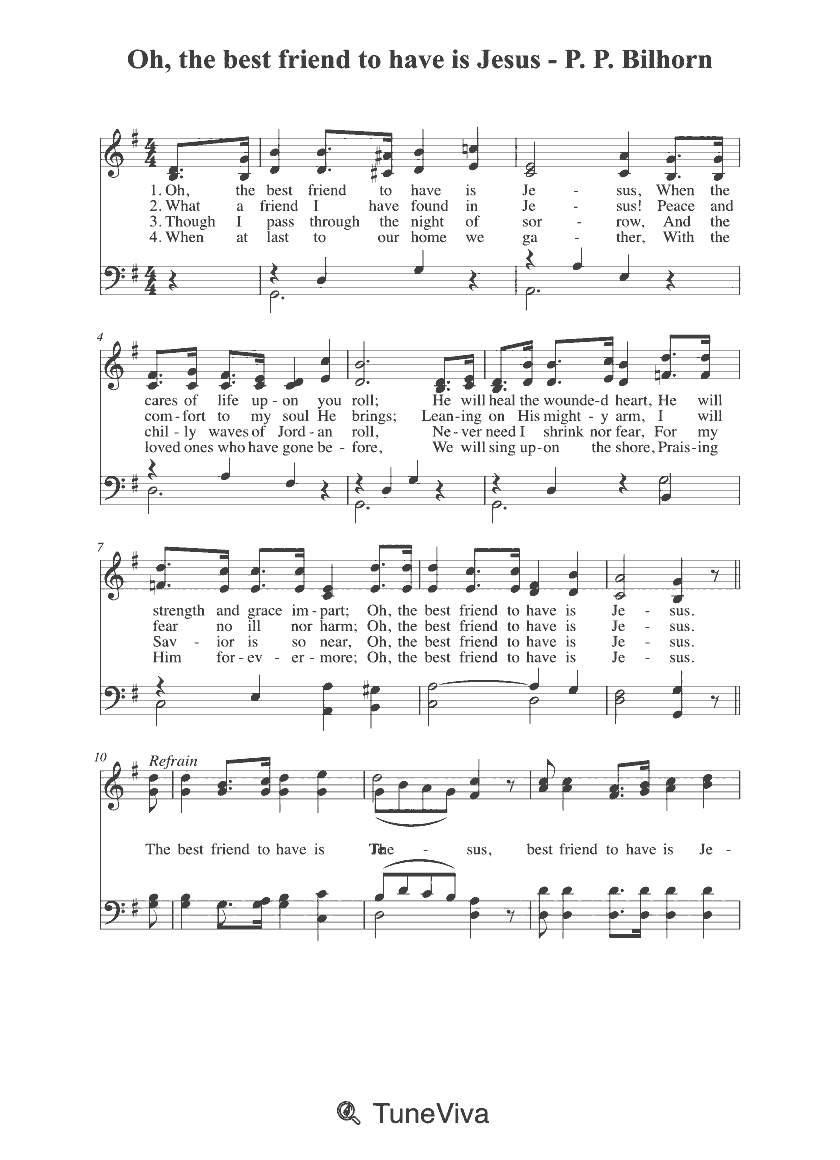
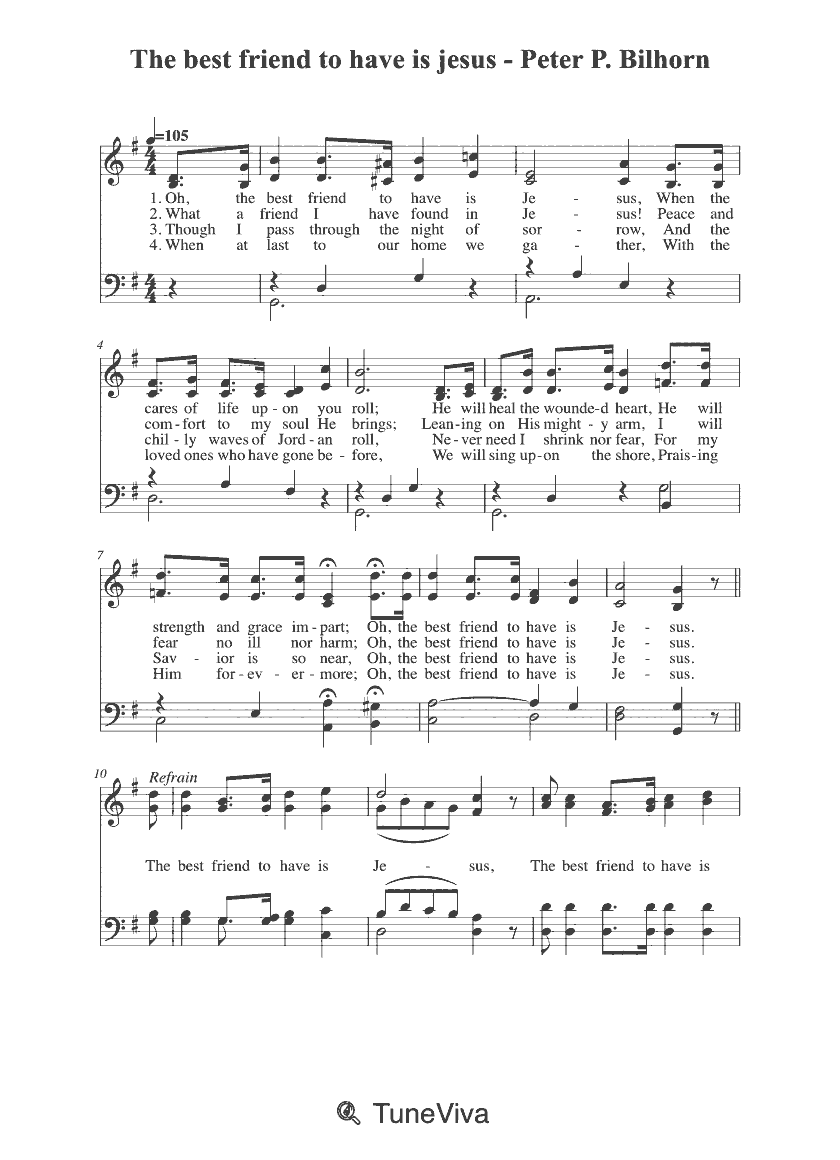
The chorus that hymnals credit to Bilhorn as author; it appears twice here, once under this title and once as The best friend to have is jesus.
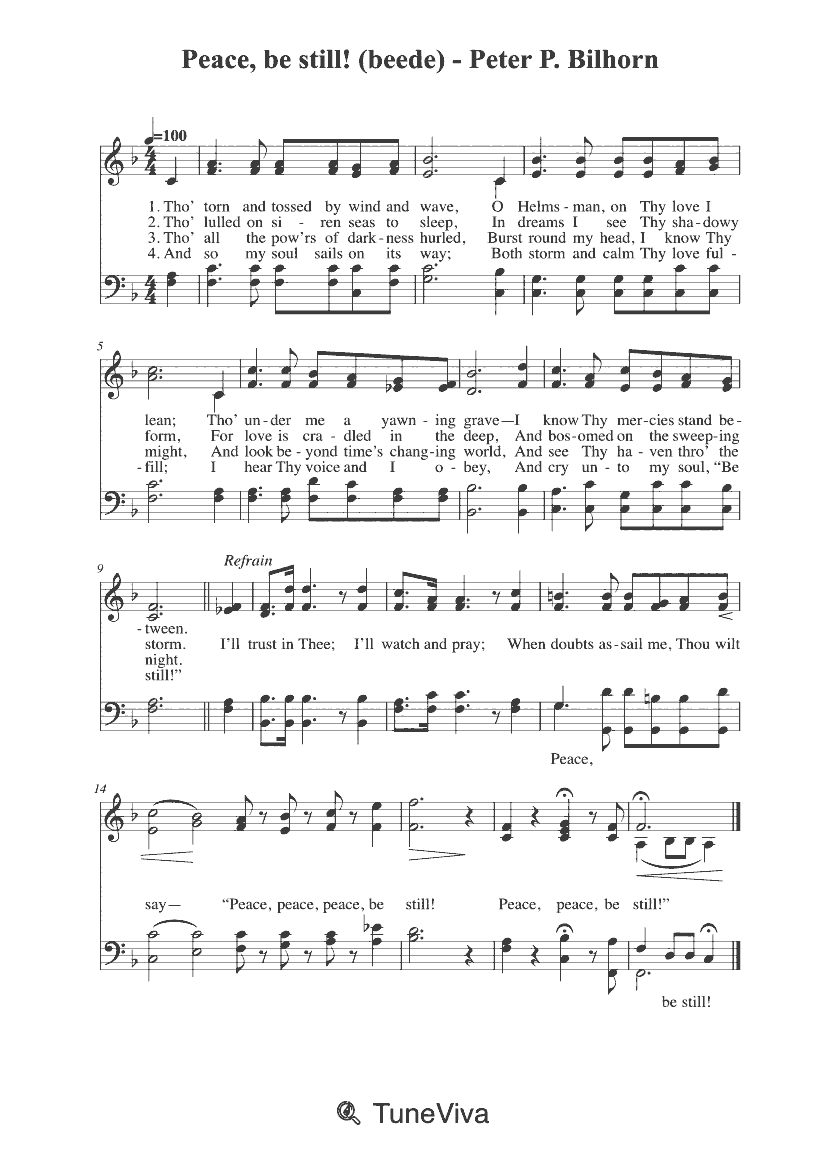
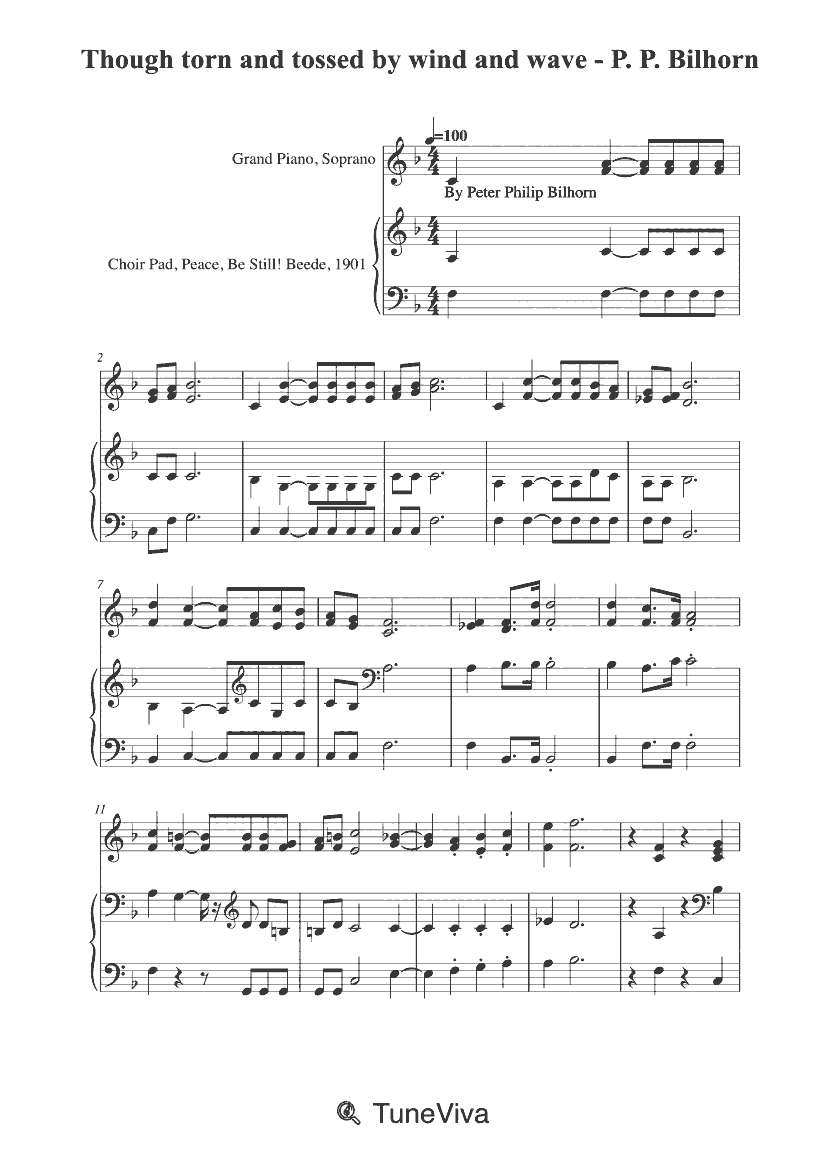
A storm-at-sea chorus; the bracketed name probably identifies the tune's composer rather than Bilhorn.
One of the revival choruses that mix the pool of Bethesda with the language of the campaign hymn.
A testimony chorus, the sort of first-person number that filled the solo spots in a gospel service.
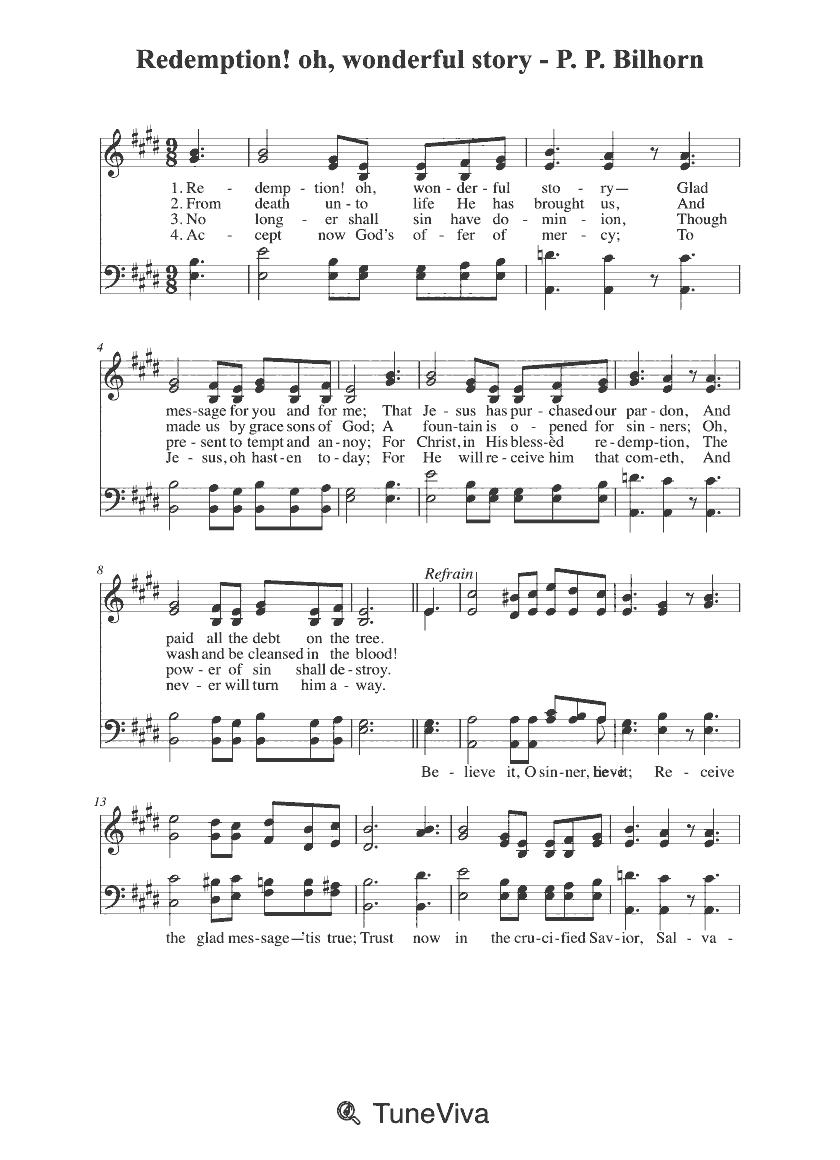
A redemption ballad in the Sankey manner, from the years when Bilhorn's songbooks were competing with Sankey's.
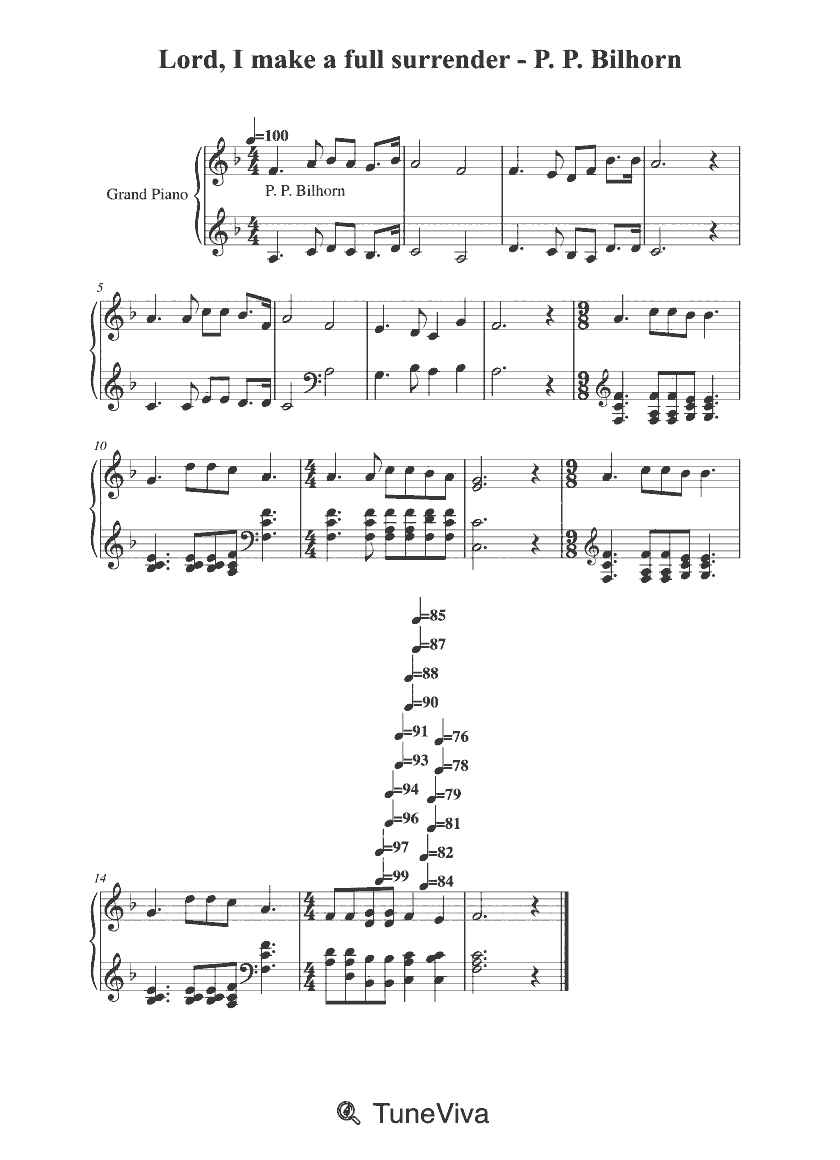
A consecration chorus, the standard invitation piece at the end of a revival meeting.
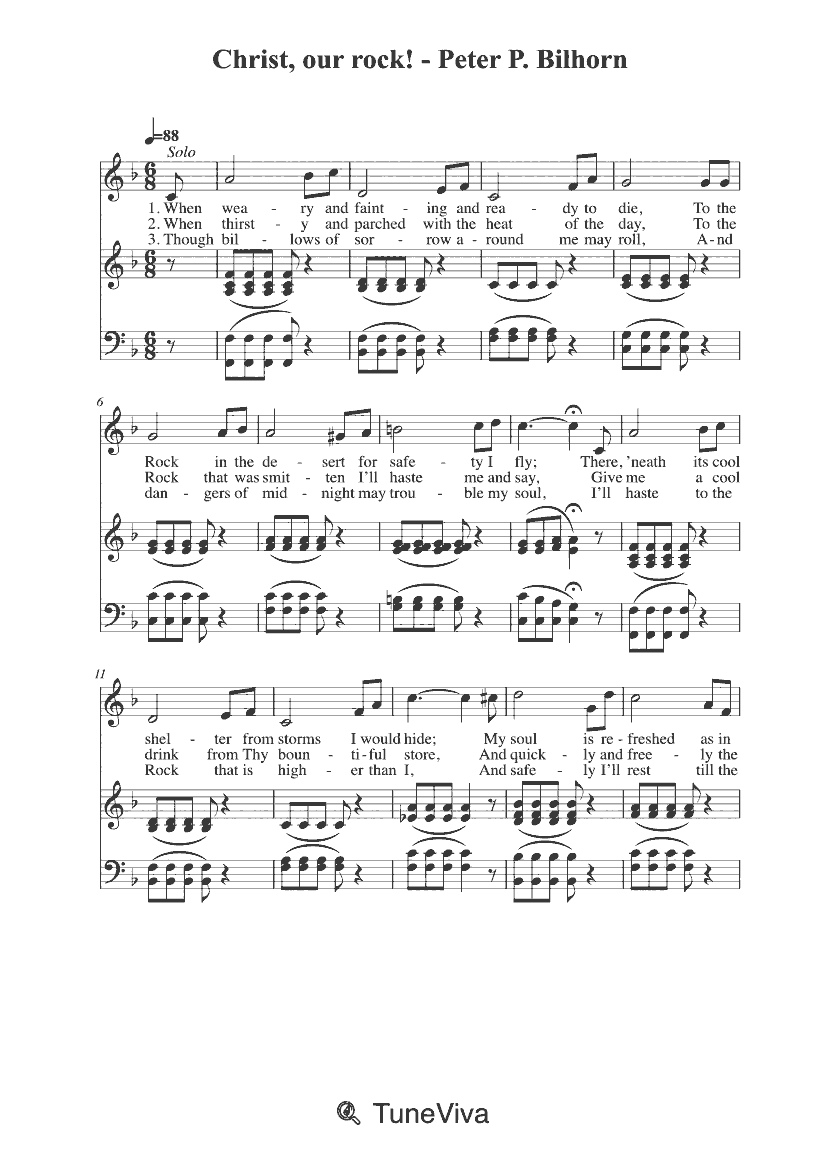
A short chorus on the rock of the Psalms, typical of the two- or three-stanza pieces in the collection.
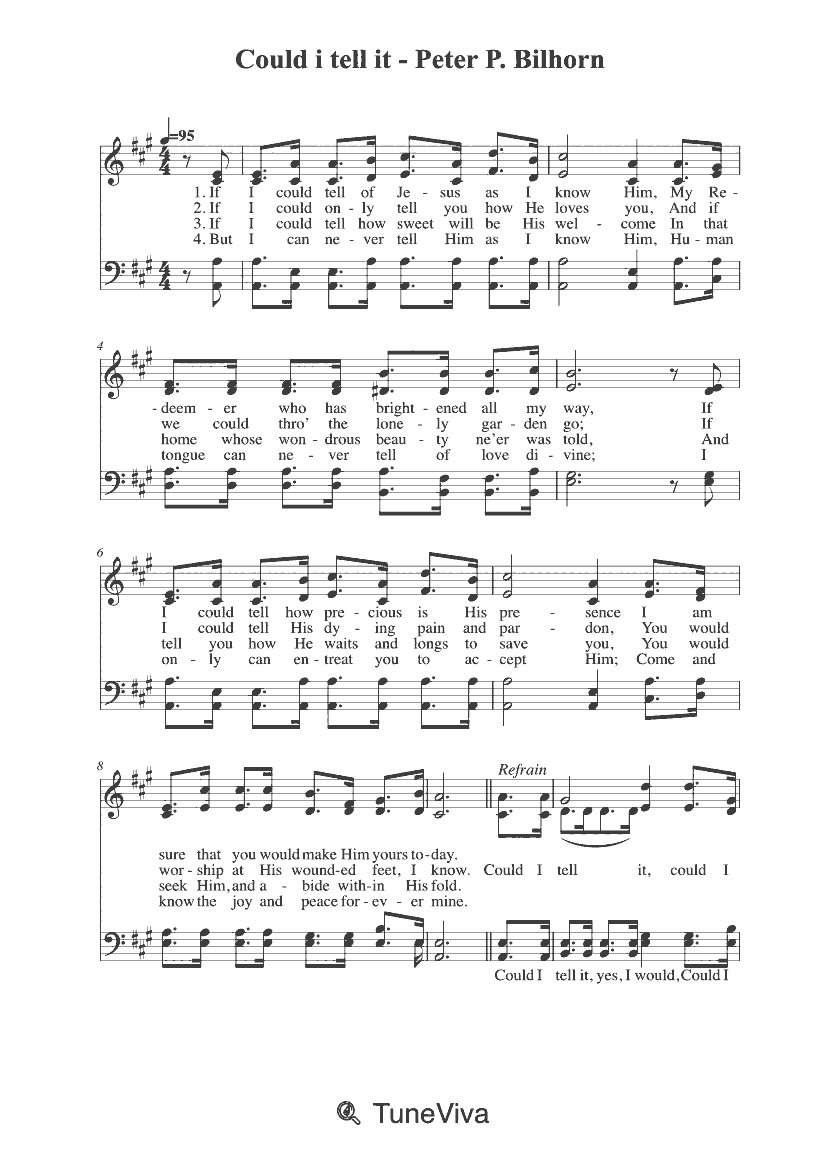
A witness chorus whose title has lost its capital in the catalogue; no source hymnal is recorded for it.
There are 62, about 32 minutes of music and 18,096 notated notes. Forty-eight of them carry lyrics.
The genre field is broad and not reliable here: all 62 entries are marked classical even though they are revival and Sunday-school songs rather than concert works.
Titles such as We walk by faith (wolfe) and Peace, be still! (beede) add a surname that is probably the tune's composer or the text's author. The catalogue does not explain the convention.
A portable pump organ of about sixteen pounds, built by the Bilhorn company in Chicago from 1885 and sold around the world so that evangelists could have accompaniment outdoors.
Catalog editions and arrangements attributed to Peter Philip Bilhorn.