classical
1 tracks
Praetorius published music for the Lutheran church on an industrial scale, and the catalogue keeps to the practical end of it: 64 scores, about 251 minutes of music and 48,482 notated notes. Forty-seven entries carry text, which suits a composer whose fame rests on chorale settings and Latin motets.
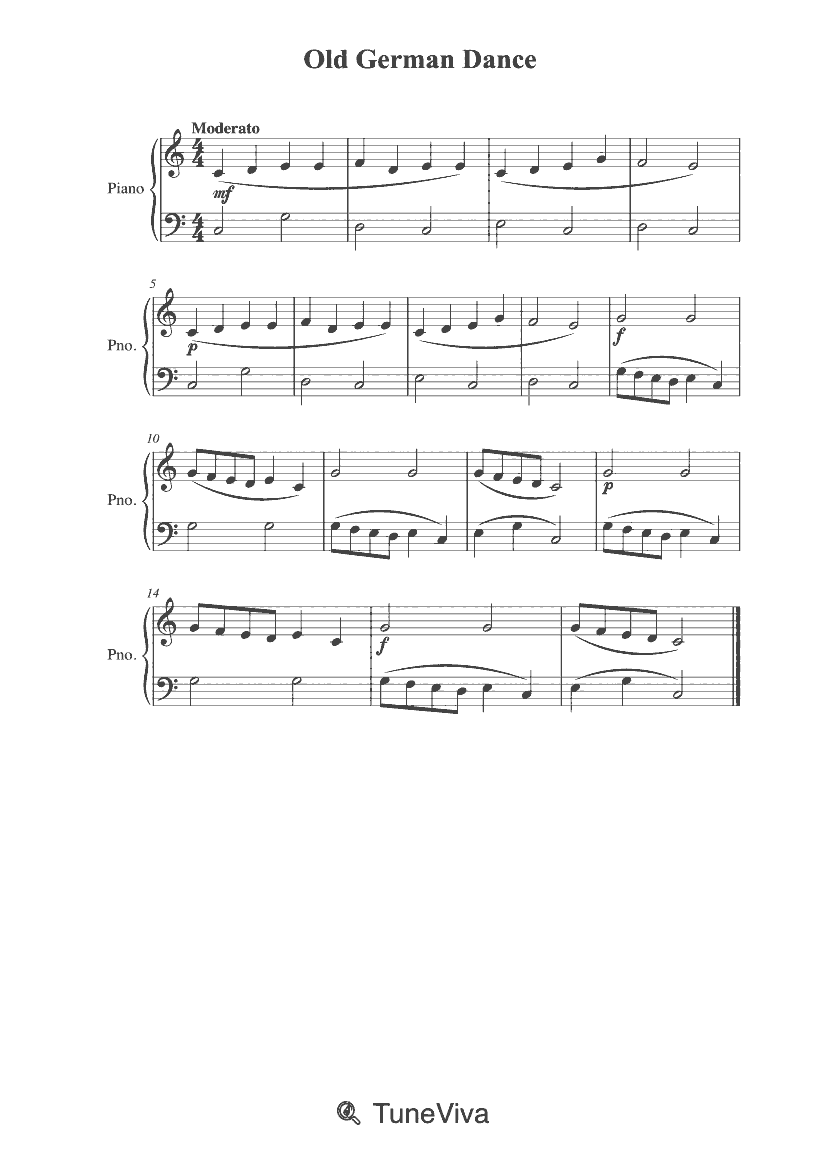
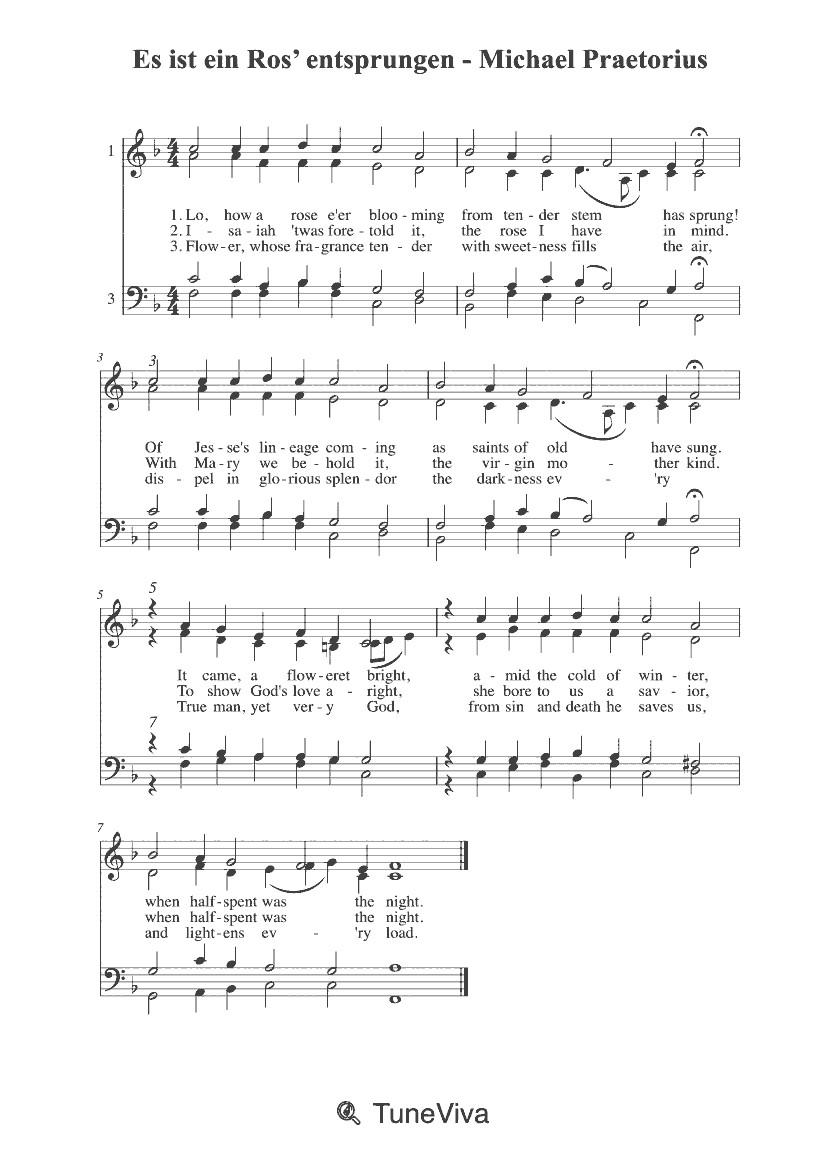
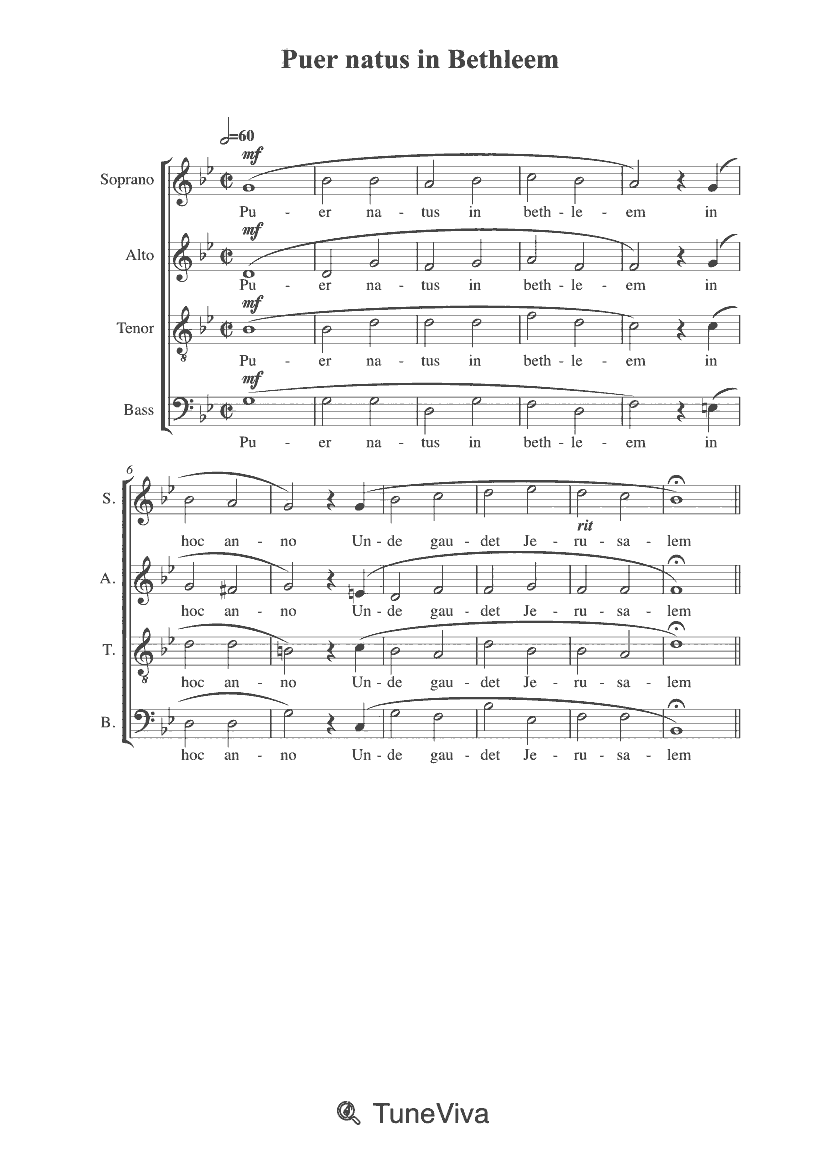
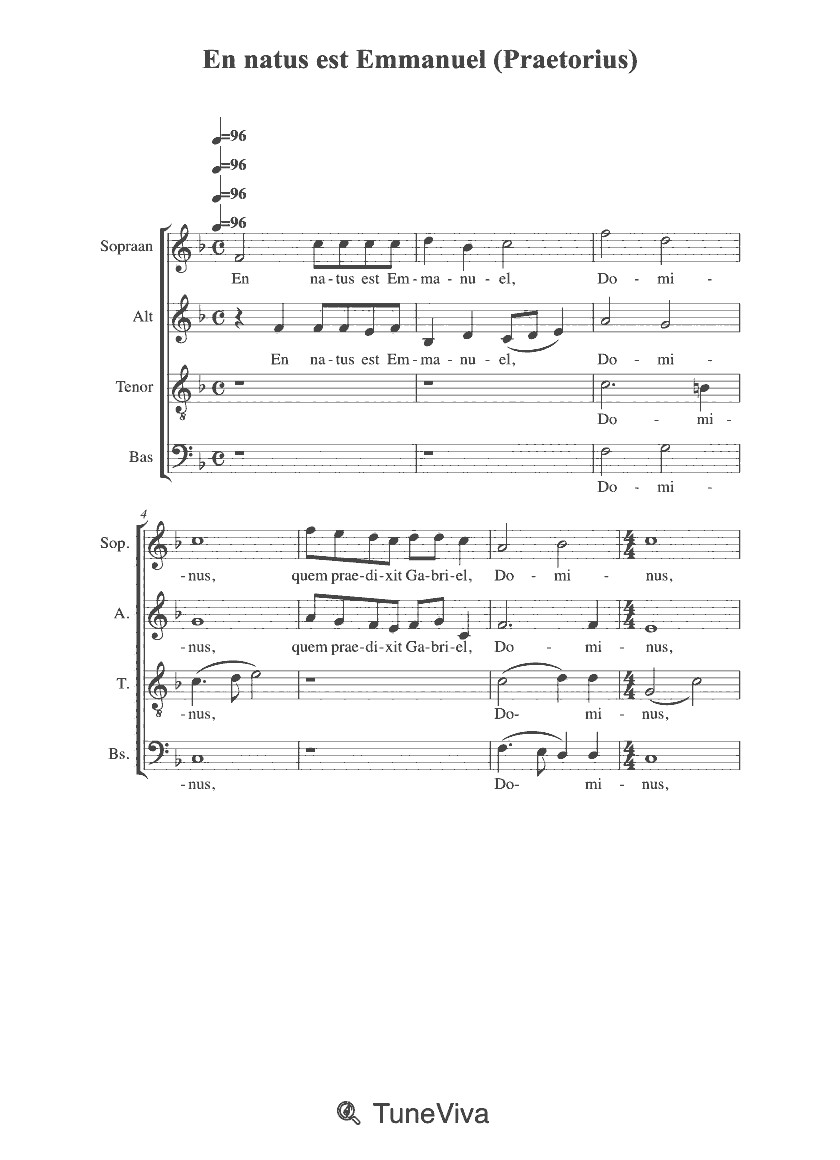
The most-viewed file is a short 'Old German Dance', followed by the familiar four-part Es ist ein Ros' entsprungen. Christmas pieces recur through the rest of the list — Puer natus in Bethlehem, En natus est Emmanuel, Psallite unigenito — with dances from Terpsichore at the edge. Fifty-three entries sit at complexity 0 and eleven at index 1.
Praetorius was born Michael Schultze in Creuzburg, Thuringia, probably on 28 September 1571, the youngest son of a Lutheran pastor. He studied at Frankfurt an der Oder and served as organist at the Marienkirche there from 1587 before entering the Wolfenbüttel court in 1592 or 1593. He became Kapellmeister in 1604 and remained in the duke's service for the rest of his life, while also working for the Elector of Saxony in Dresden from 1615. He died in Wolfenbüttel on 15 February 1621.
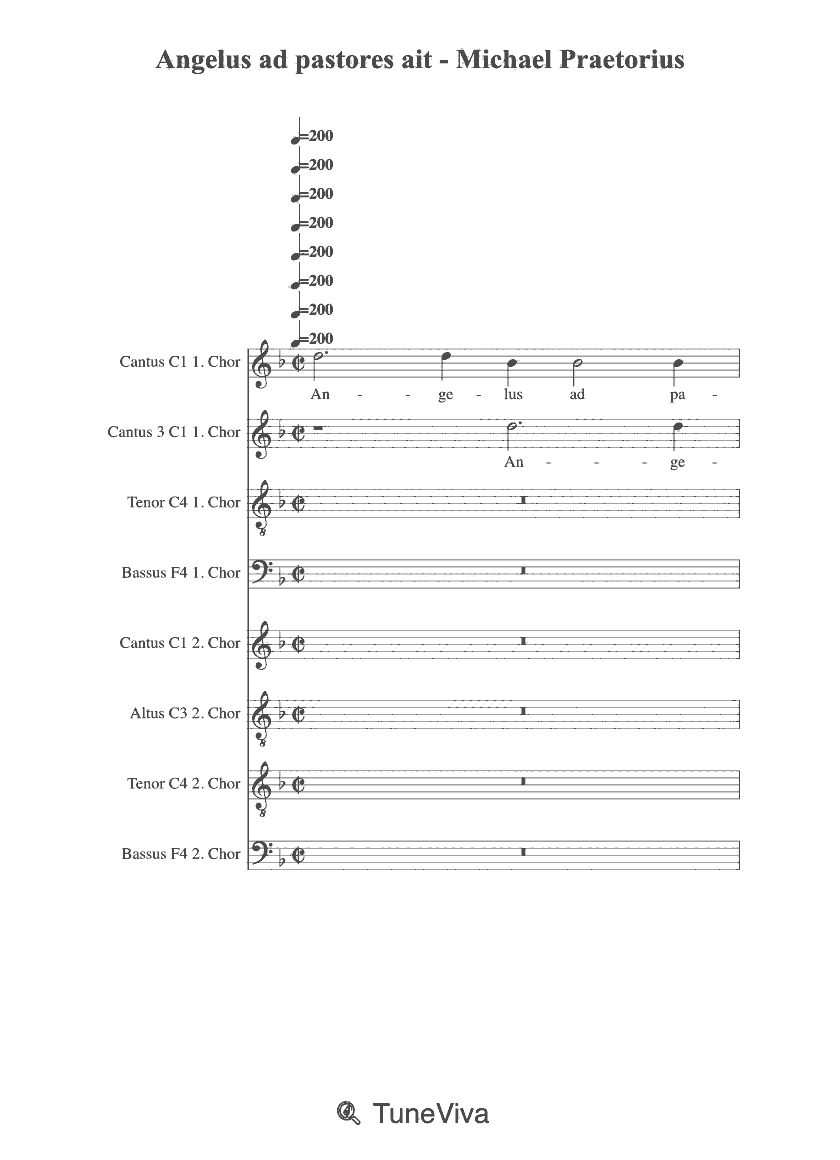
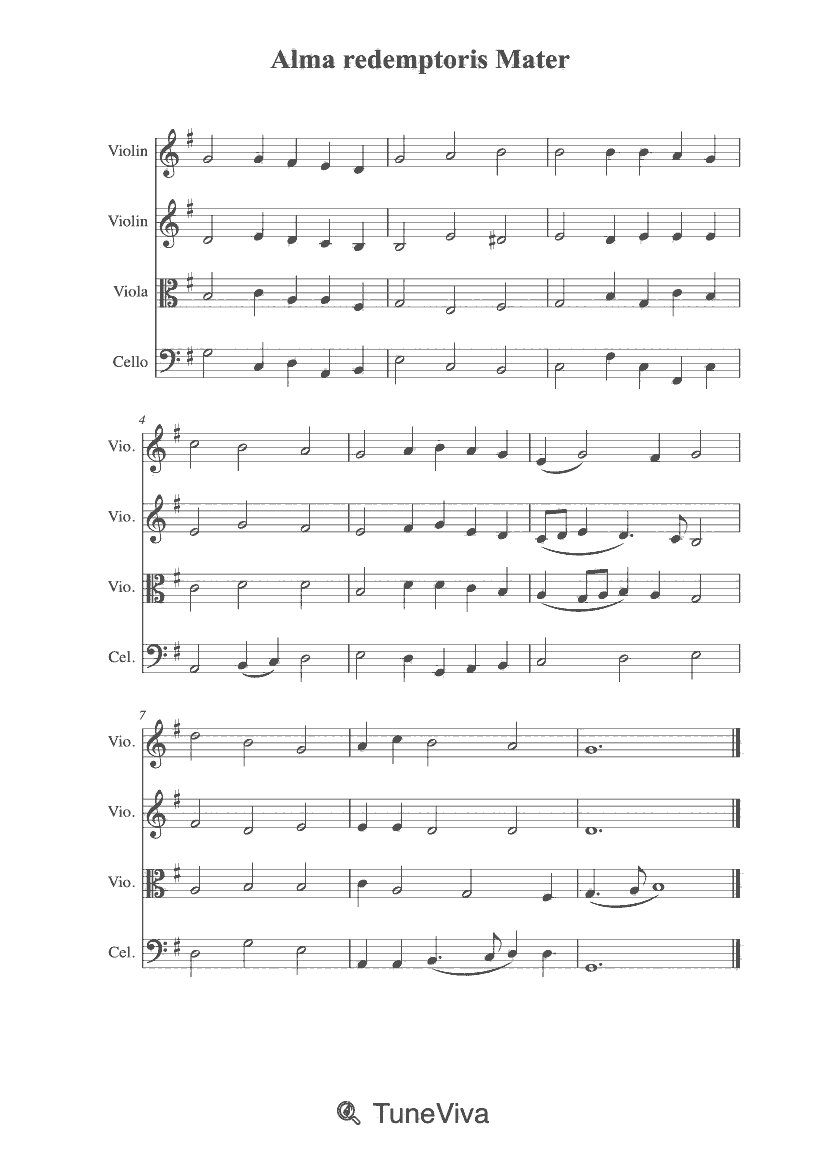
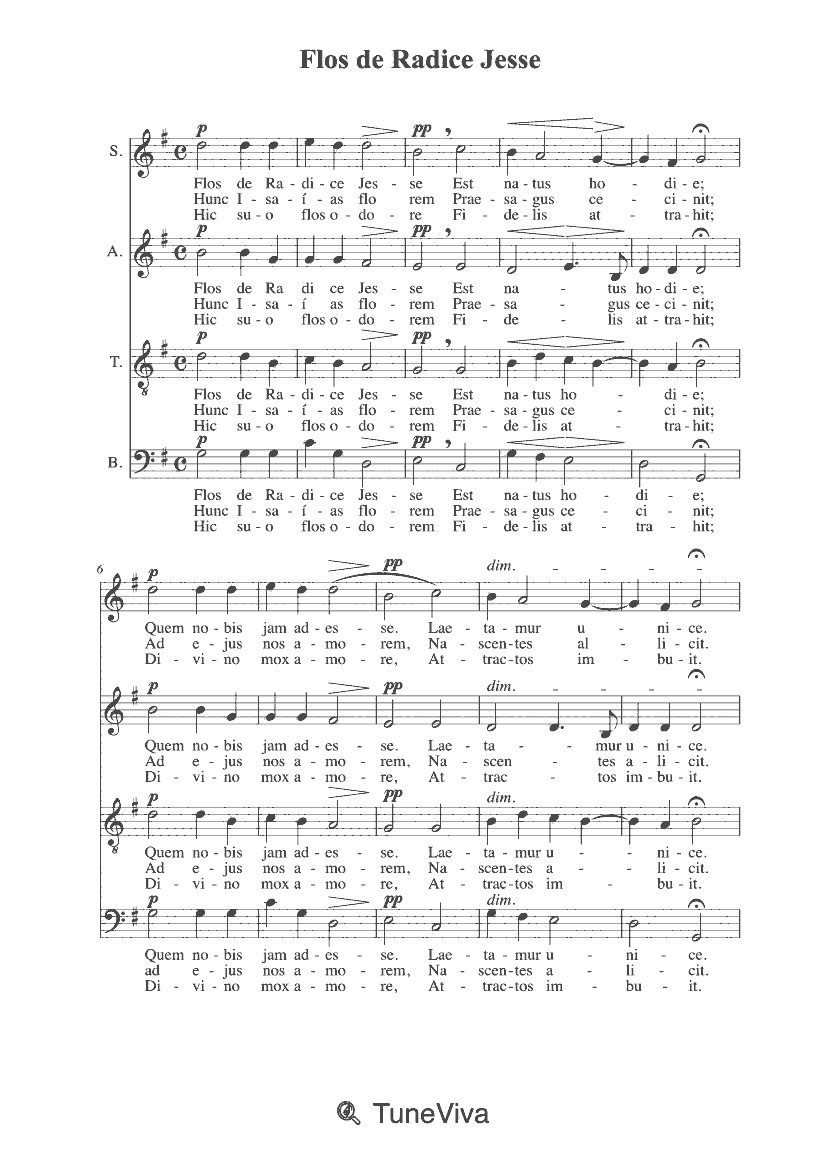
His first compositions appeared around 1602, and his publishing output peaked with the nine volumes of Musae Sioniae (1605–1610), a corpus of German chorales for two to sixteen voices. The catalogue draws on that series: Es ist ein Ros' entsprungen and En natus est Emanuel both appeared in the sixth volume in 1609, and Puer natus in Bethlehem in the fifth in 1607. Around them sit Latin motets such as Alma redemptoris Mater and Flos de radice Jesse, and the Christmas pieces that German choirs still sing in December.
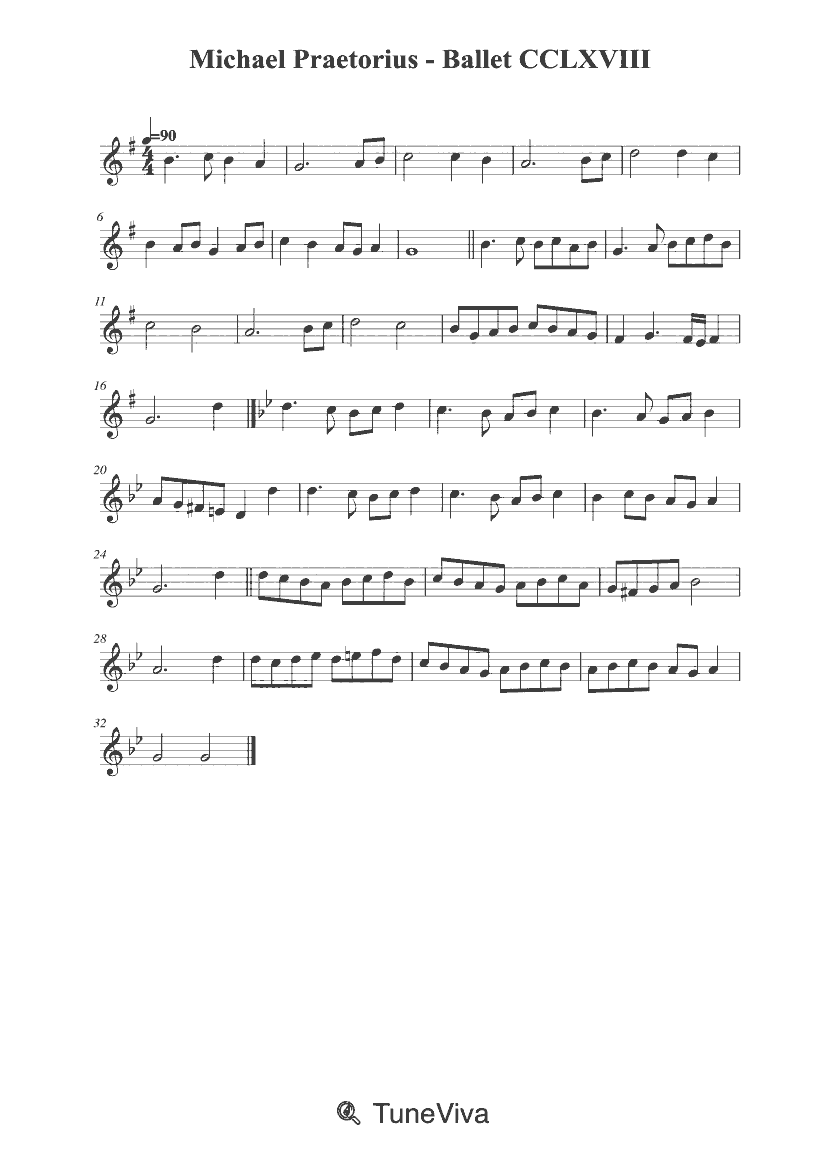
Terpsichore, his 1612 dance collection, supplies the secular side; the Ballet CCLXVIII listed here comes from it. The theoretical works matter too: Syntagma Musicum (1614–1620) describes the instruments and performance practice of his age, and its woodcuts remain a standard reference for early-music builders. The catalogue holds no excerpts from the treatise, but the polychoral motets assume the forces it documents.
Praetorius writes for choirs that rehearse on Sunday mornings: the harmony is clear, the text sits on the beat, and the ranges are modest. In the chorale settings the tune is usually in the soprano or tenor, so balance the inner parts rather than the melody. The polychoral pieces need separation between groups and a steady pulse, not speed. Dances from Terpsichore should be played with a lift on the phrase, and the Christmas motets gain from recorders or cornetts doubling the upper lines.
The most-viewed score on the page, though the title looks like a modern teaching label rather than one of Praetorius's own dance names.
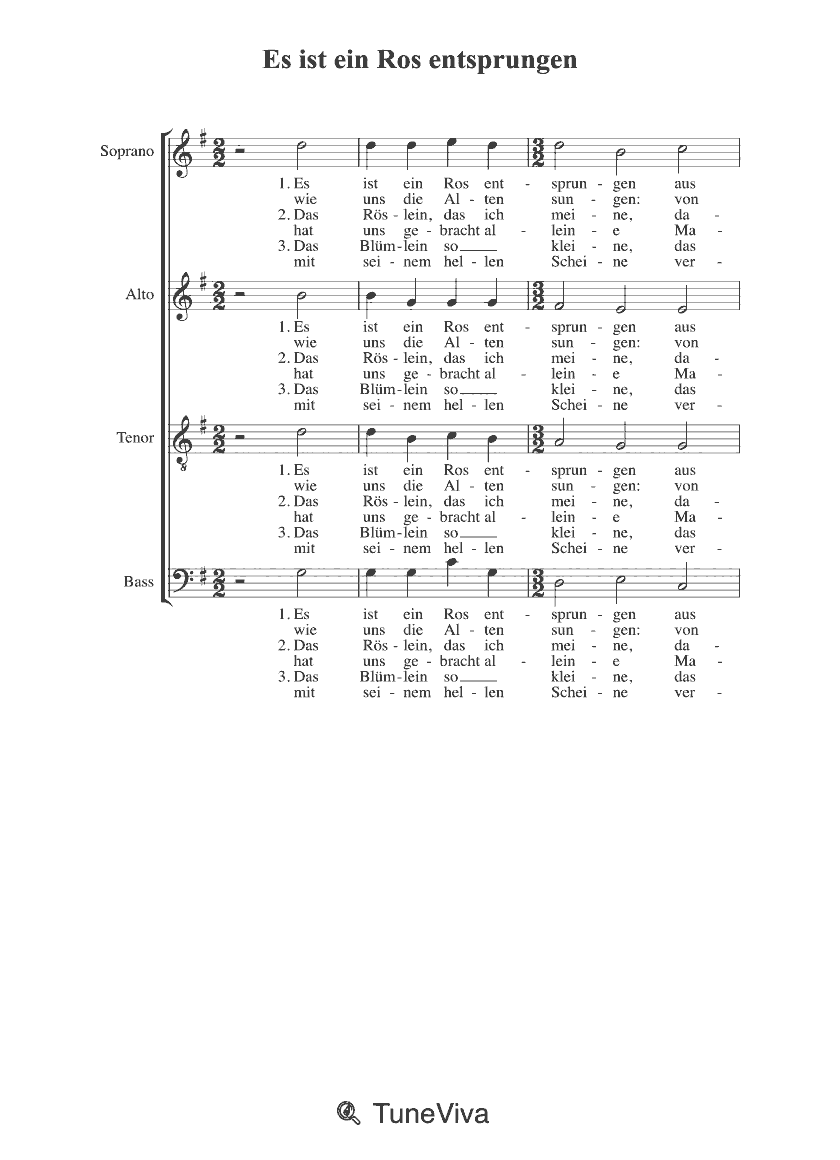
The four-part setting printed in Musae Sioniae VI in 1609, the version that carried the tune into modern carol books.
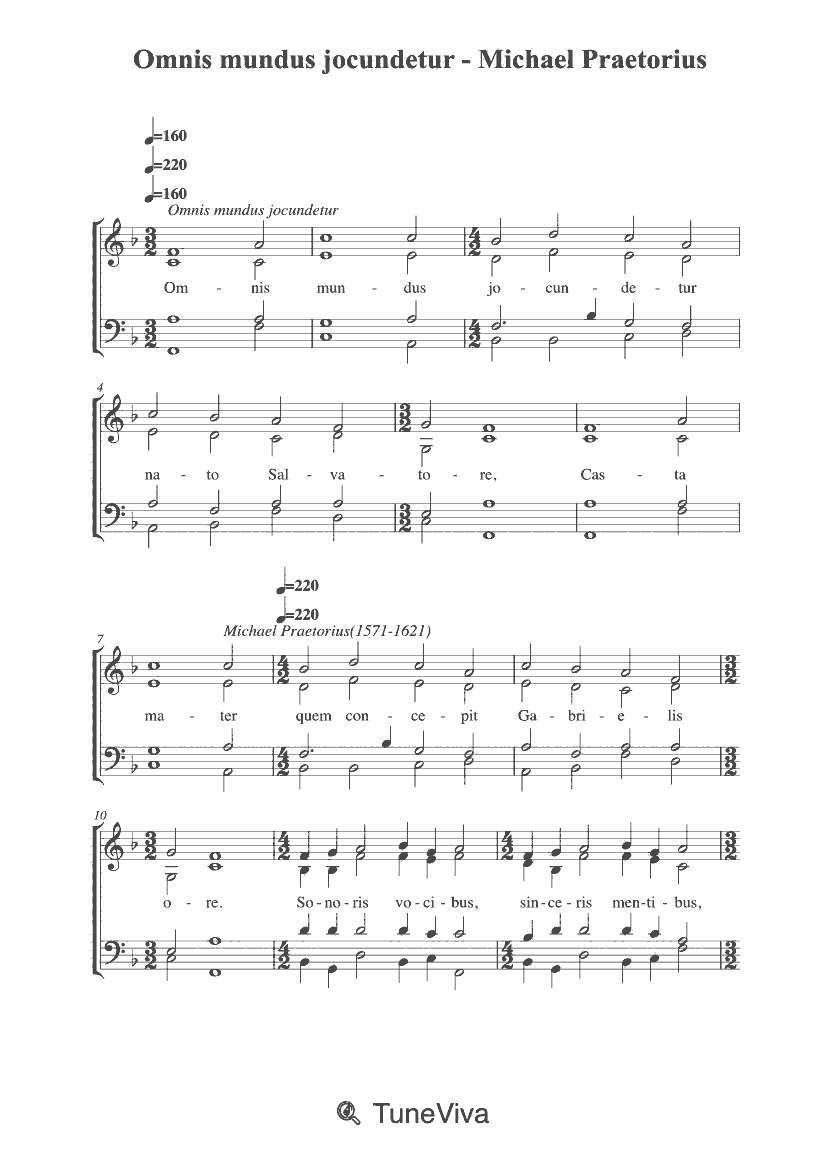
A Marian antiphon setting, one of several Latin pieces in a catalogue dominated by German chorales.
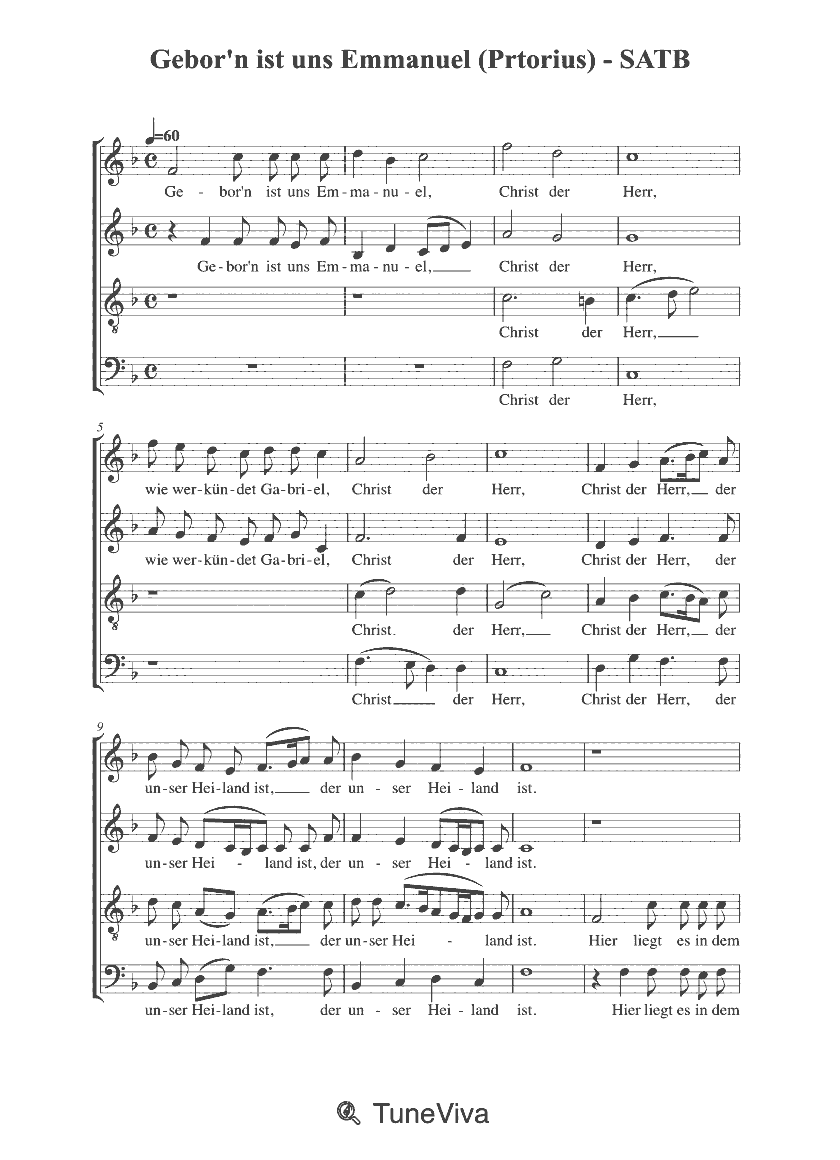
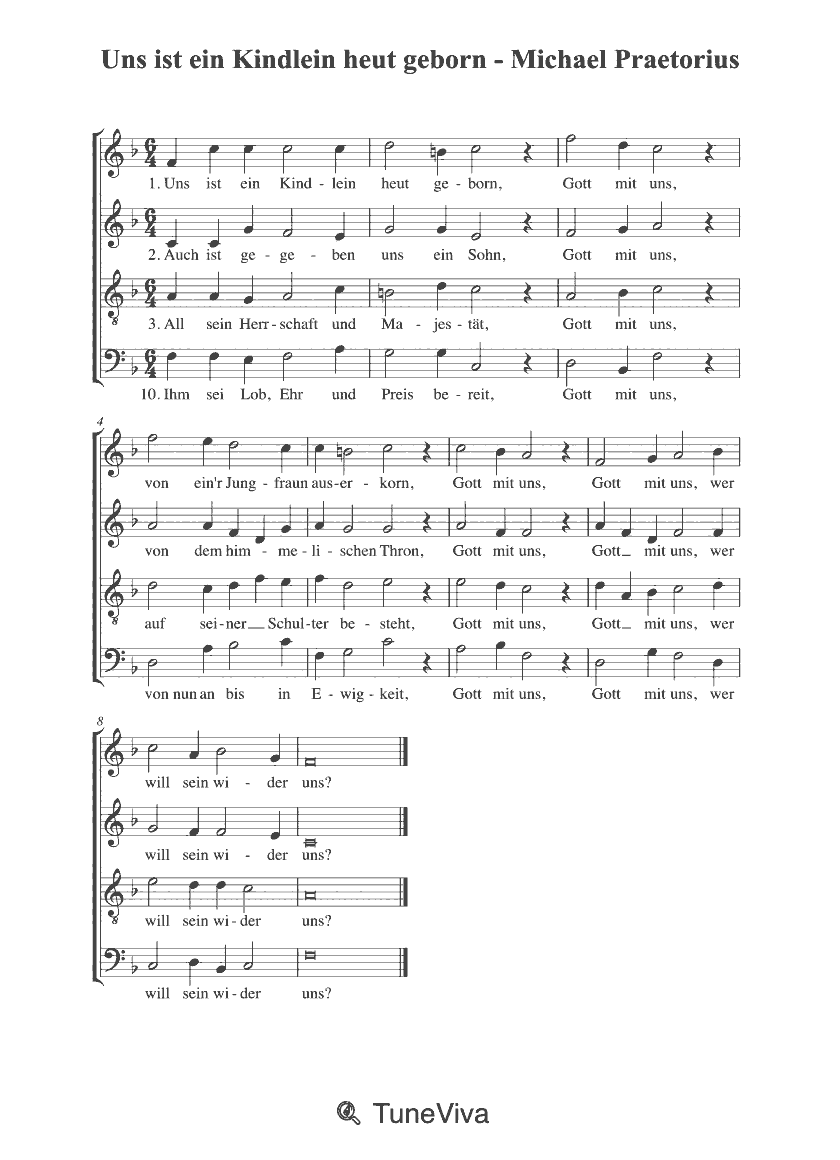
A Christmas hymn setting, printed in the fifth volume of Musae Sioniae in 1607.
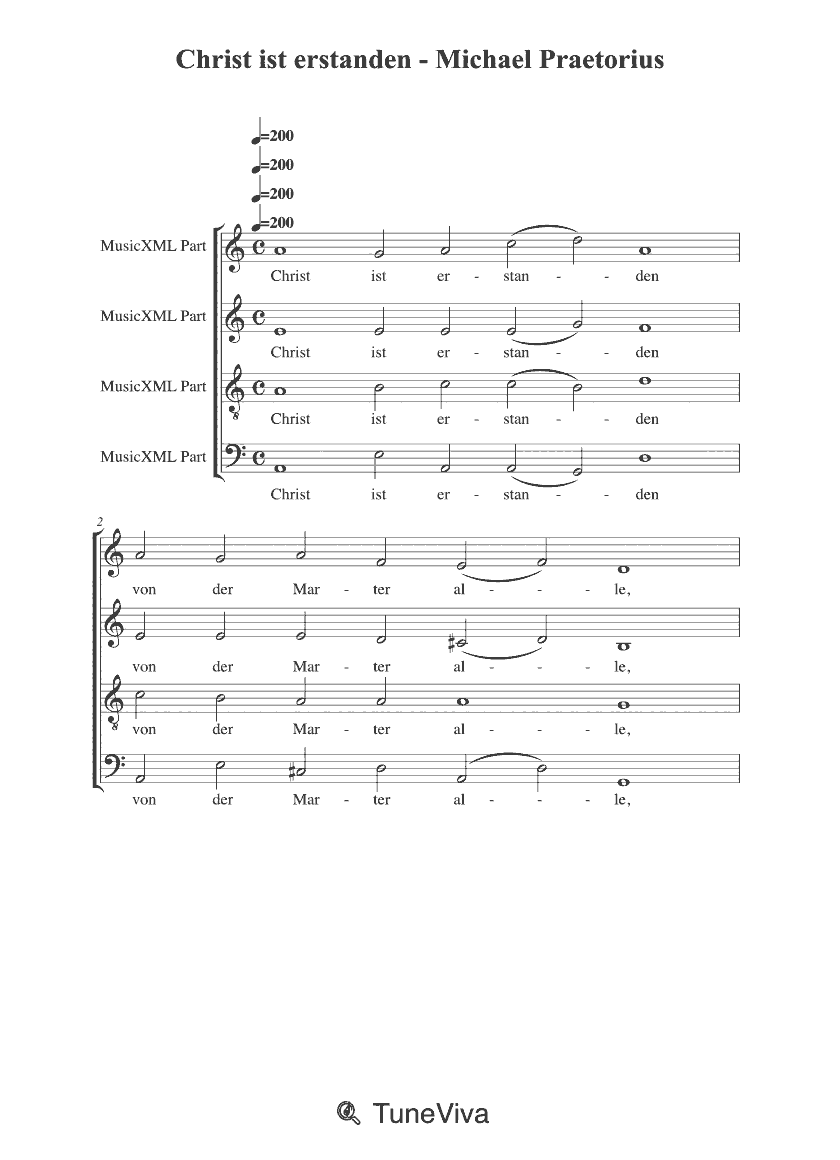
An Easter setting of the old Leise that Luther revised for congregational singing.
A Christmas motet printed in Musae Sioniae VI in 1609.
A motet on the root of Jesse, one of the Latin texts that sit alongside the German chorales.
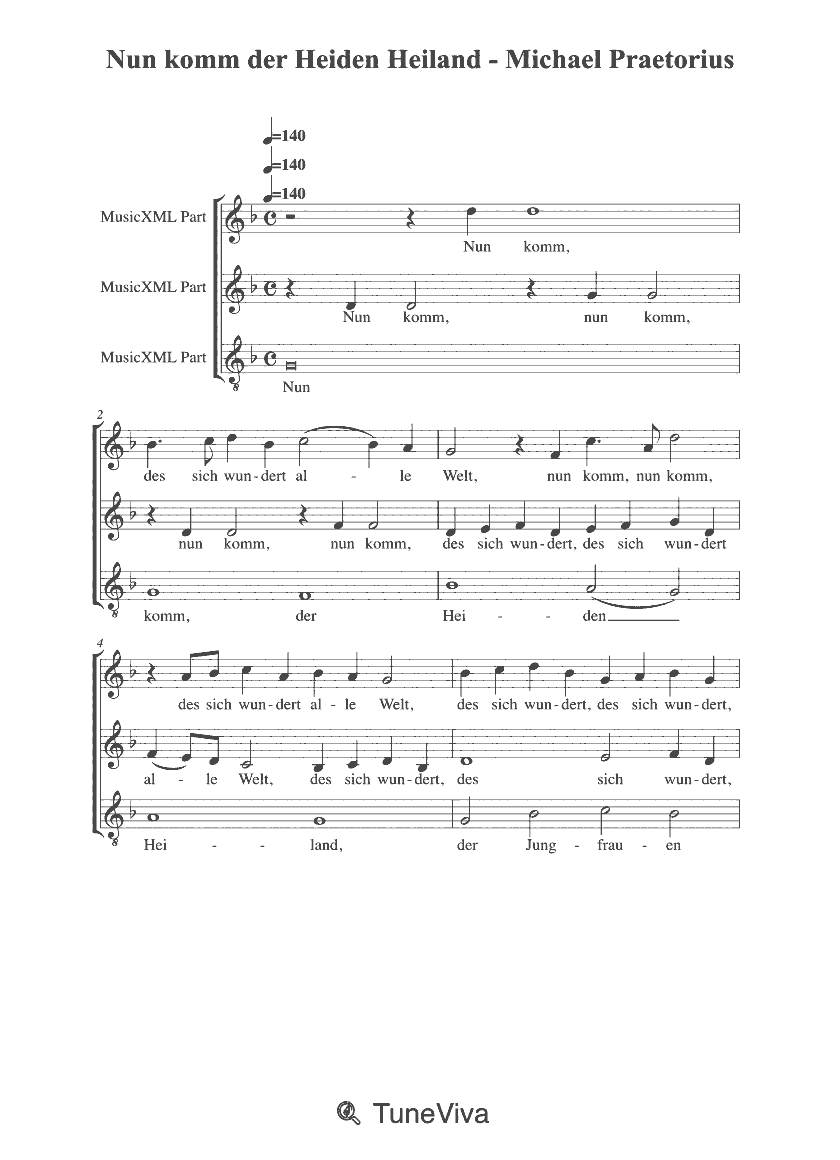
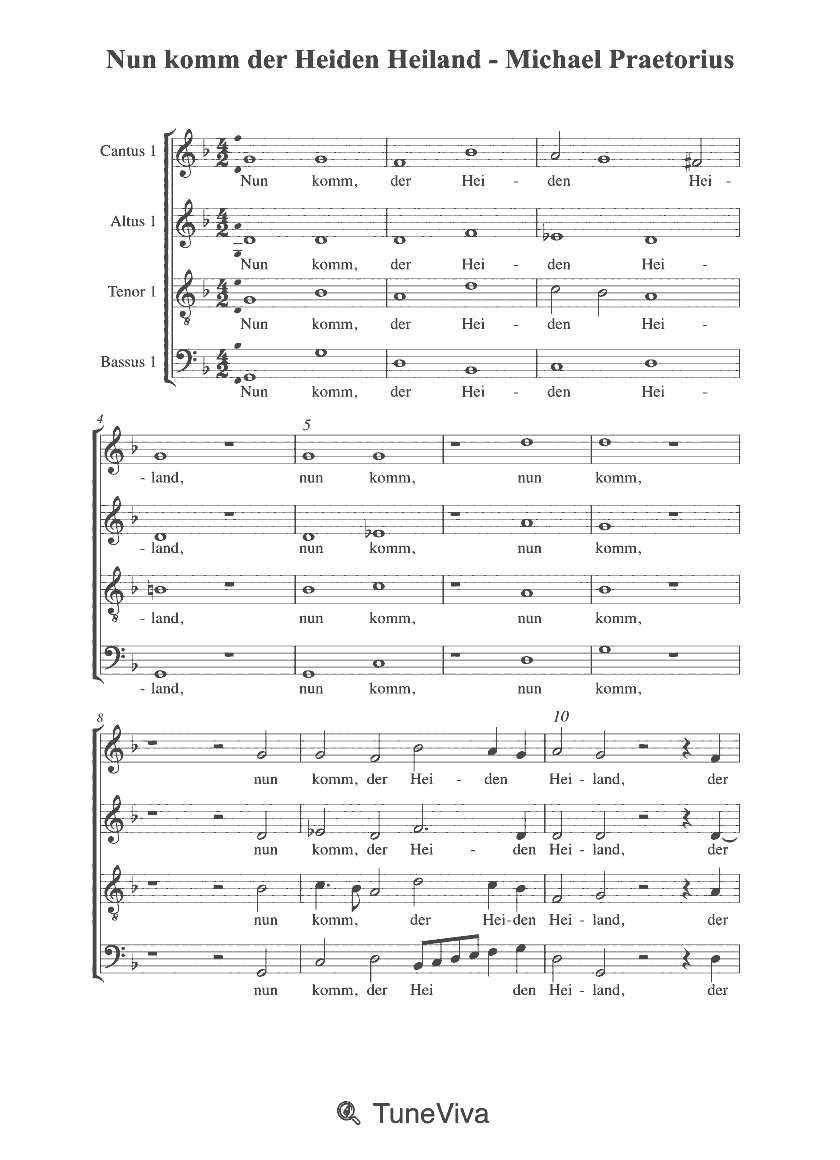
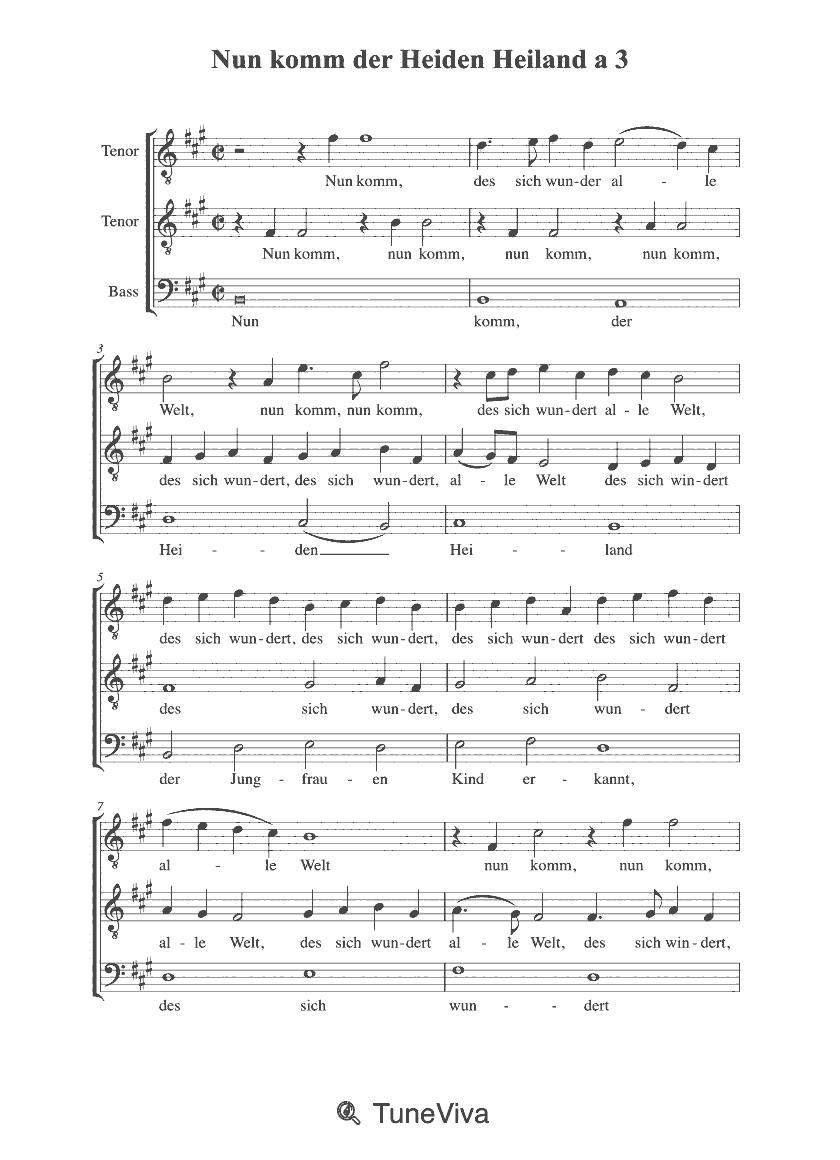
A three-voice setting of the Advent hymn, in the compact texture typical of the Musae Sioniae pieces.
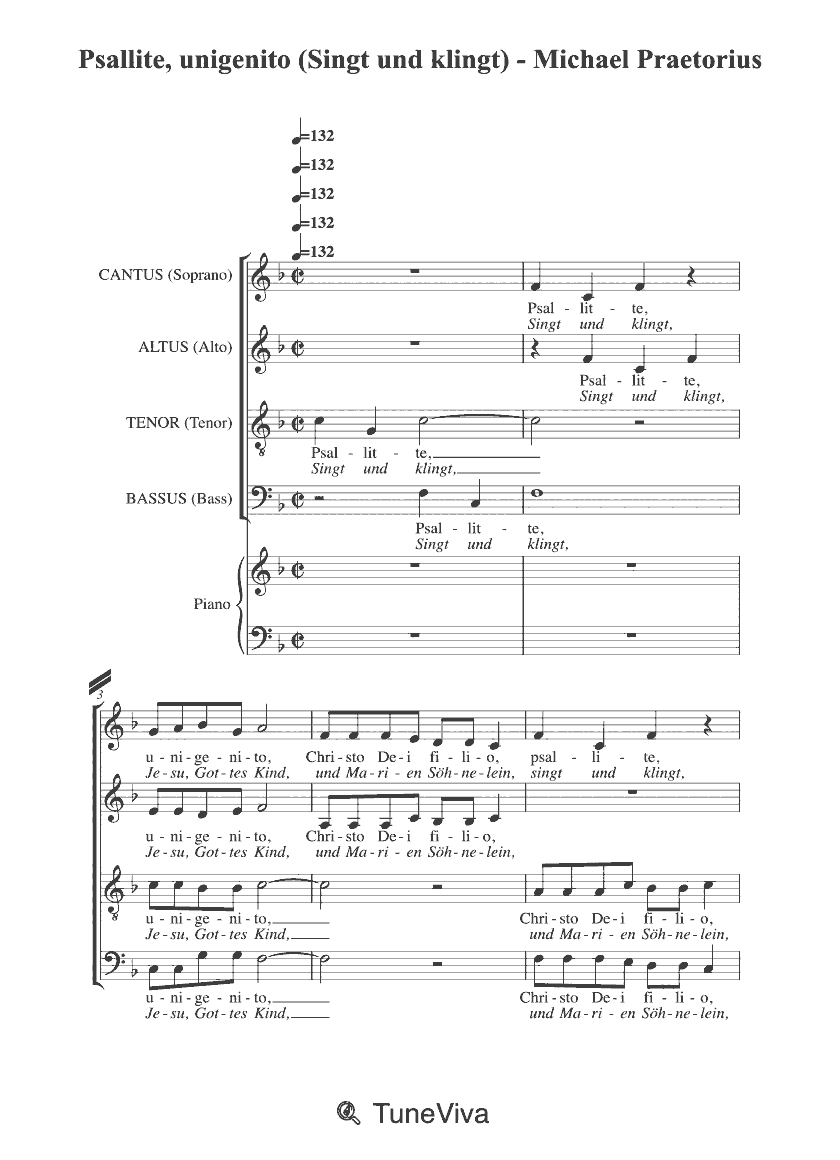
A Christmas motet with a German alternative text, 'Singt und klingt'.
A dance from Terpsichore, numbered 268 in that collection.
There are 64, running to about 251 minutes of music and 48,482 notated notes. Forty-seven of them include lyrics.
No. He wrote the four-part harmonisation printed in 1609; the melody itself had appeared in a Cologne songbook in 1599.
A 1612 collection of more than 300 instrumental dances, mostly French, which Praetorius arranged rather than composed. It is his best-known secular publication.
The title is a modern label used in teaching anthologies. Praetorius's own prints use dance names such as ballet, courante and volta.
Catalog editions and arrangements attributed to Michael Praetorius.
Michael Prætorius (1571-1621)
No. 51 from Musicæ Sionæ Part V (1607)
Nr. 47 aus Musae Sioniae VI