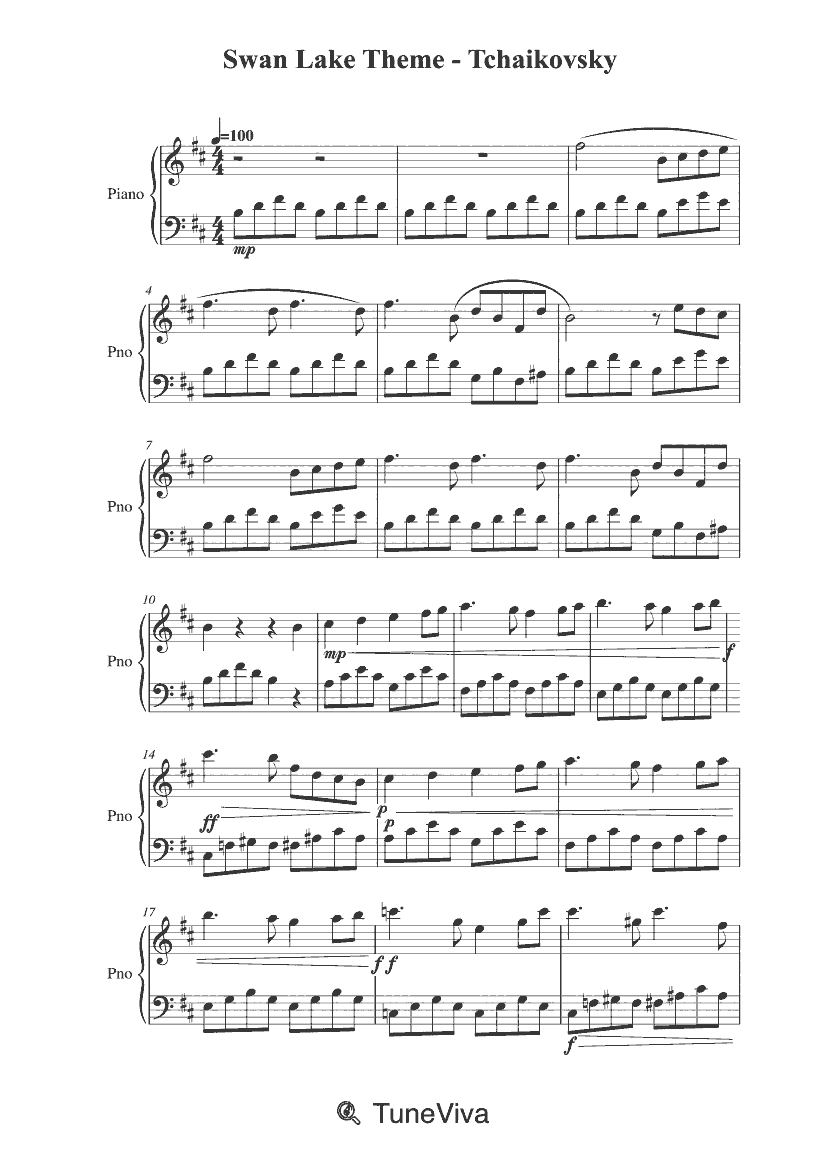
Swan Lake Theme - Tchaikovsky
Pyotr Ilyich Tchaikovsky
Piano · 1 min 16 sec
Open score
83 Tchaikovsky scores to preview and download, including the Swan Lake theme, the Sugar-Plum Fairy, Waltz of the Flowers, the First Piano Concerto and 1812.
The swan theme associated with Odette, heard in the lakeside scene of the 1877 ballet; this entry is a short piano arrangement.
PIANO. · Arr. Stepán Esipoff · 1 min 26 sec
The Sugar-Plum Fairy's variation from the Act II pas de deux, scored with celesta; the instrument had reached Tchaikovsky from Paris in 1891.
Other editions:
Primo; Secondo · 8 min 44 sec
The closing waltz of the Nutcracker's second act, arranged for piano duet.
Other editions:
Tchaikovsky made the two-piano reduction himself in December 1874; the concerto had its premiere in Boston in October 1875.
An excerpt from the 1878 concerto, first performed complete in Vienna in 1881 with Adolf Brodsky as soloist.
Also called the Danse des mirlitons, the fifth of the character dances in the 1892 suite.
Twenty-four short piano pieces written in July 1878 and dedicated to the composer's nephew Vladimir Davydov.
The festival overture of 1880, with cannon and bells; the first performance came in Moscow in 1882, not at the planned 1881 celebrations.
The cygnets' dance from Act II of Swan Lake, a four-dancer number in the 1877 score.
An excerpt from suite music drawn from the ballet, arranged for piano duet; the catalogue does not specify which numbers.
A Nutcracker arrangement can be a single dance or a larger selection. Look for Dance of the Sugar Plum Fairy or Waltz of the Flowers by name and check the instrument lines. If you choose a piano reduction, listen for how it represents the original changes of colour. Choose a version whose melody, rhythmic accompaniment and bass can all be heard clearly at your rehearsal tempo.
Compare the instrument and arrangement details below, then open a score to check the notation. Different entries may be arrangements or editions of the same work; available playback tools are shown on each score page.
Pyotr Ilyich Tchaikovsky
Piano · 1 min 16 sec
Open score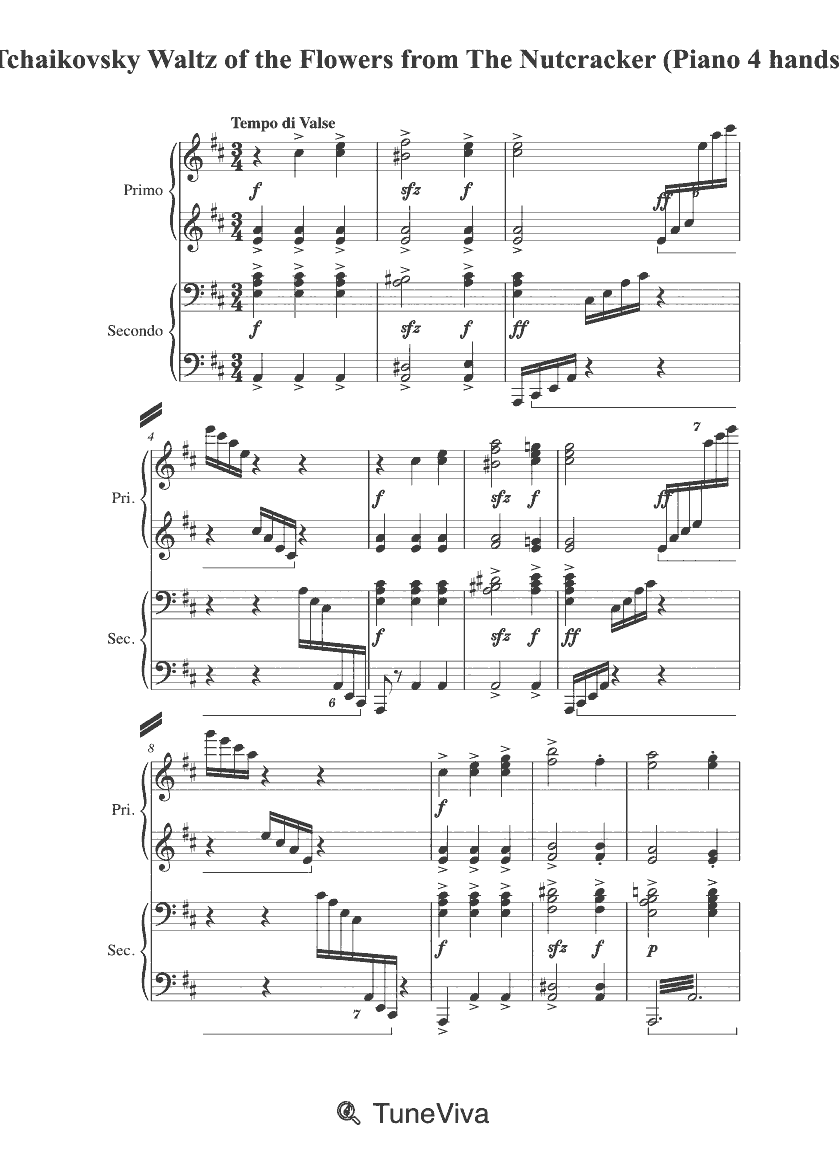
Pyotr Ilyich Tchaikovsky
From the Ballet The Nutcracker
Primo; Secondo · 8 min 44 sec
Open score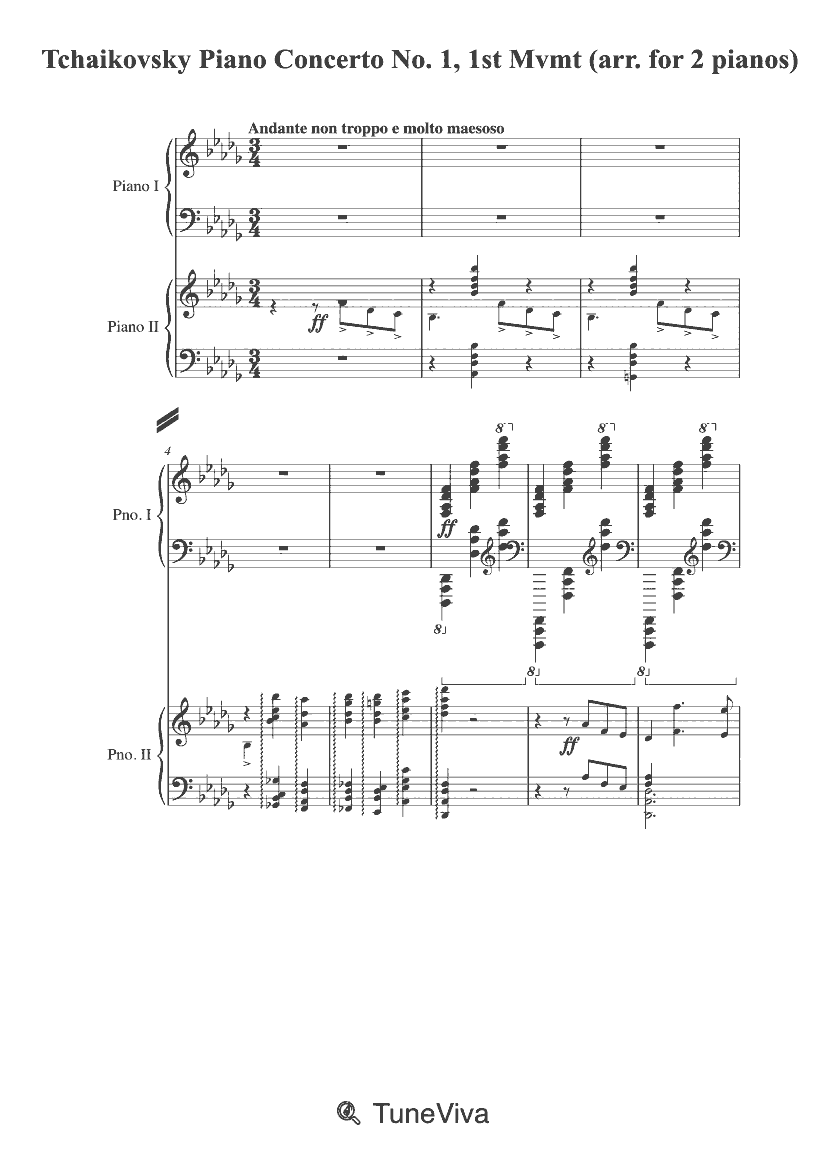
Pyotr Ilyich Tchaikovsky
1st Movement
Piano I; Piano II · 20 min 38 sec
Open score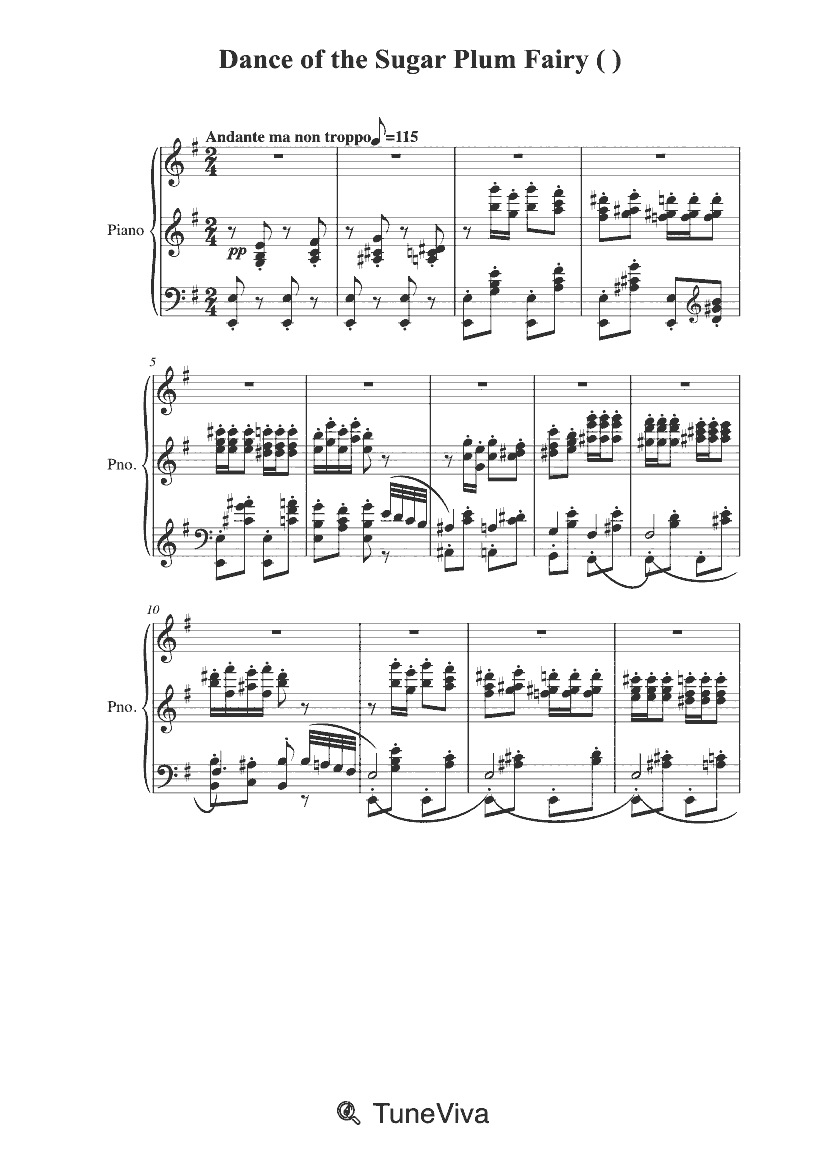
Pyotr Ilyich Tchaikovsky
(ÐеÐкÑнÑÐк)
Piano · Arr. Mikhail Pletnev · 2 min 47 sec
Open score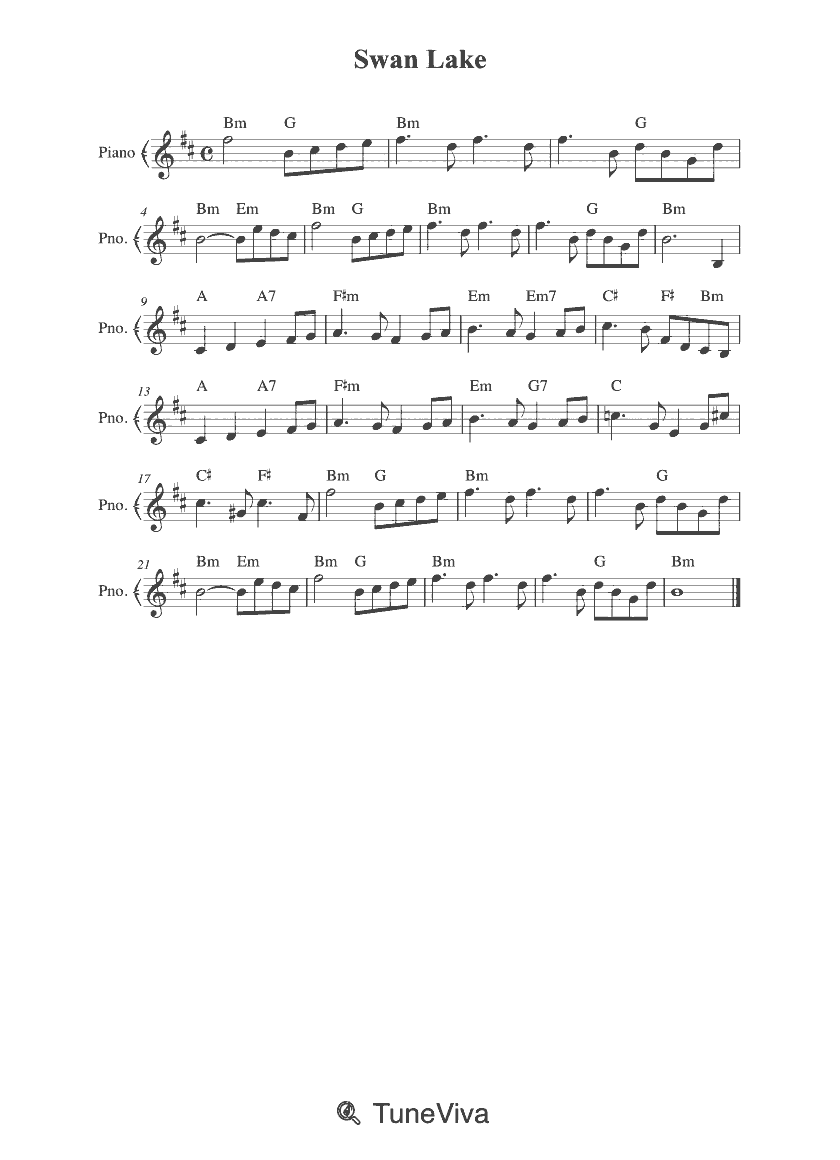
Pyotr Ilyich Tchaikovsky
Scene From Swan Lake
Piano · 50 sec
Open score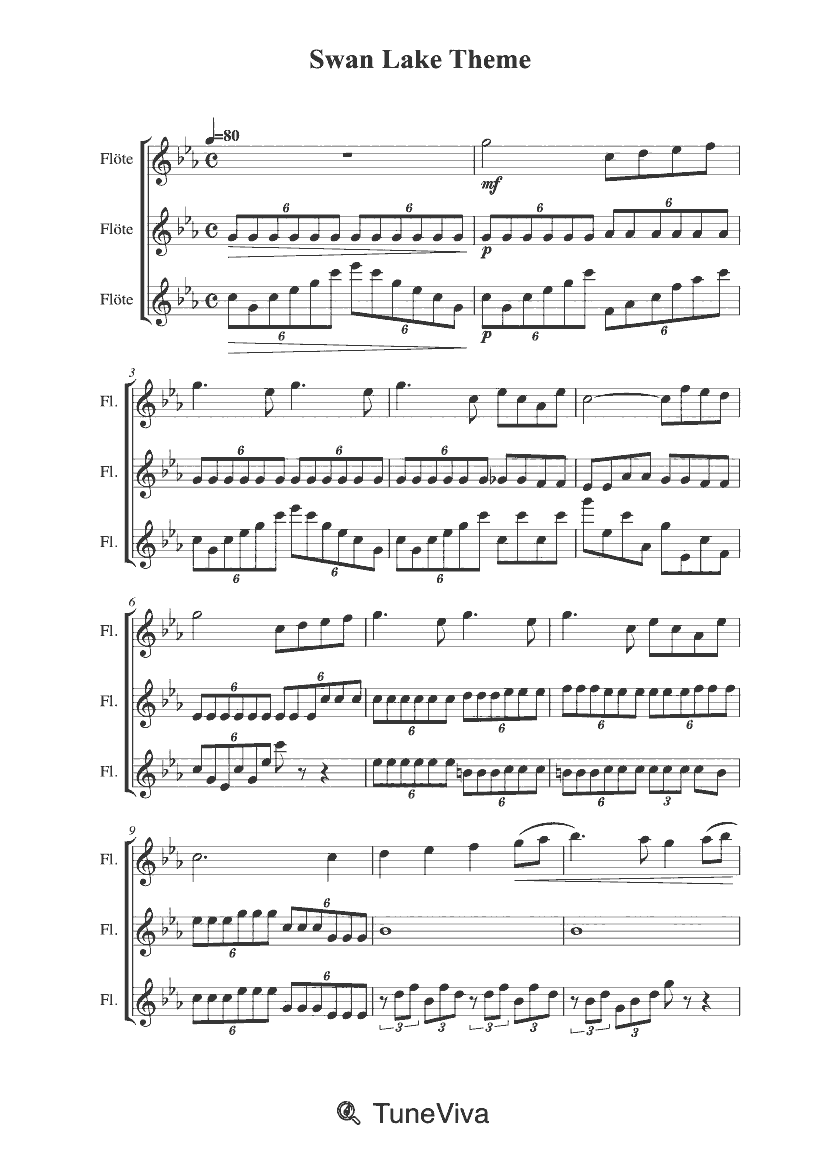
Pyotr Ilyich Tchaikovsky
from Swan Lake
Flöte · 2 min 37 sec
Open score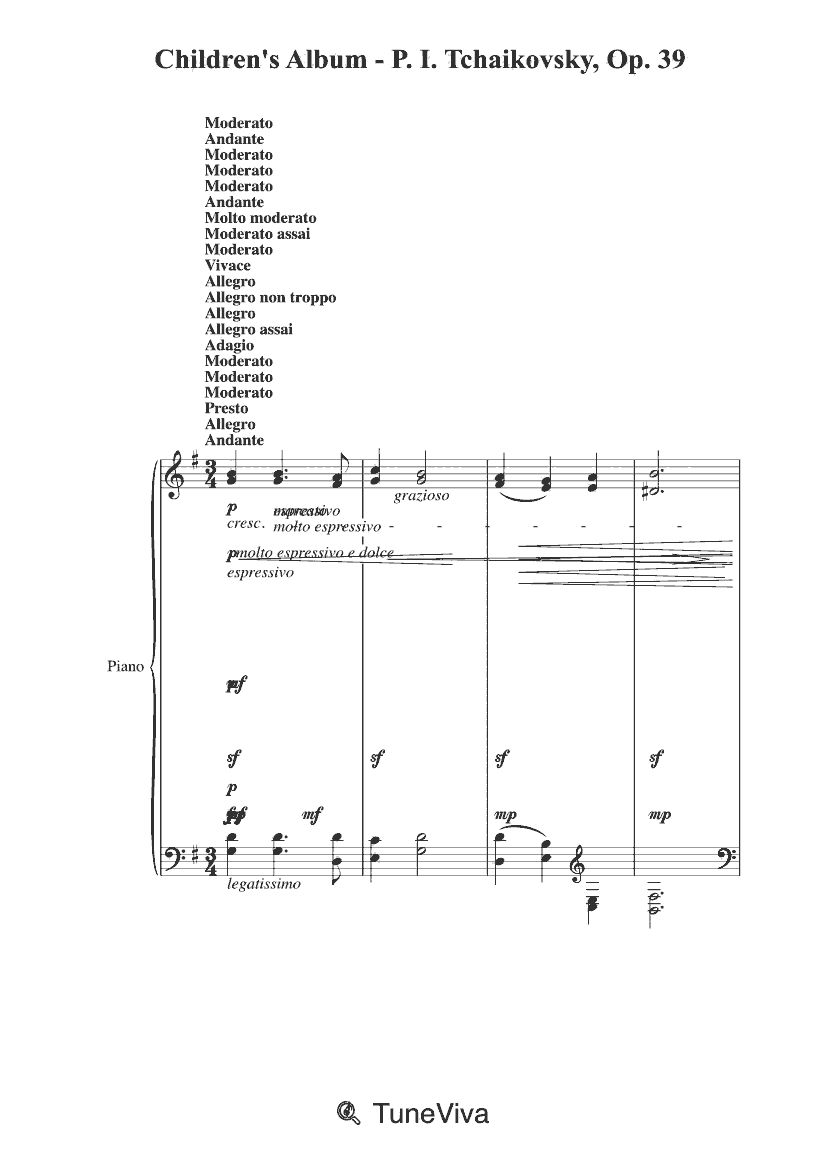
Pyotr Ilyich Tchaikovsky
(Детский Aльбом)
Piano · 1 hr 6 min 48 sec
Open score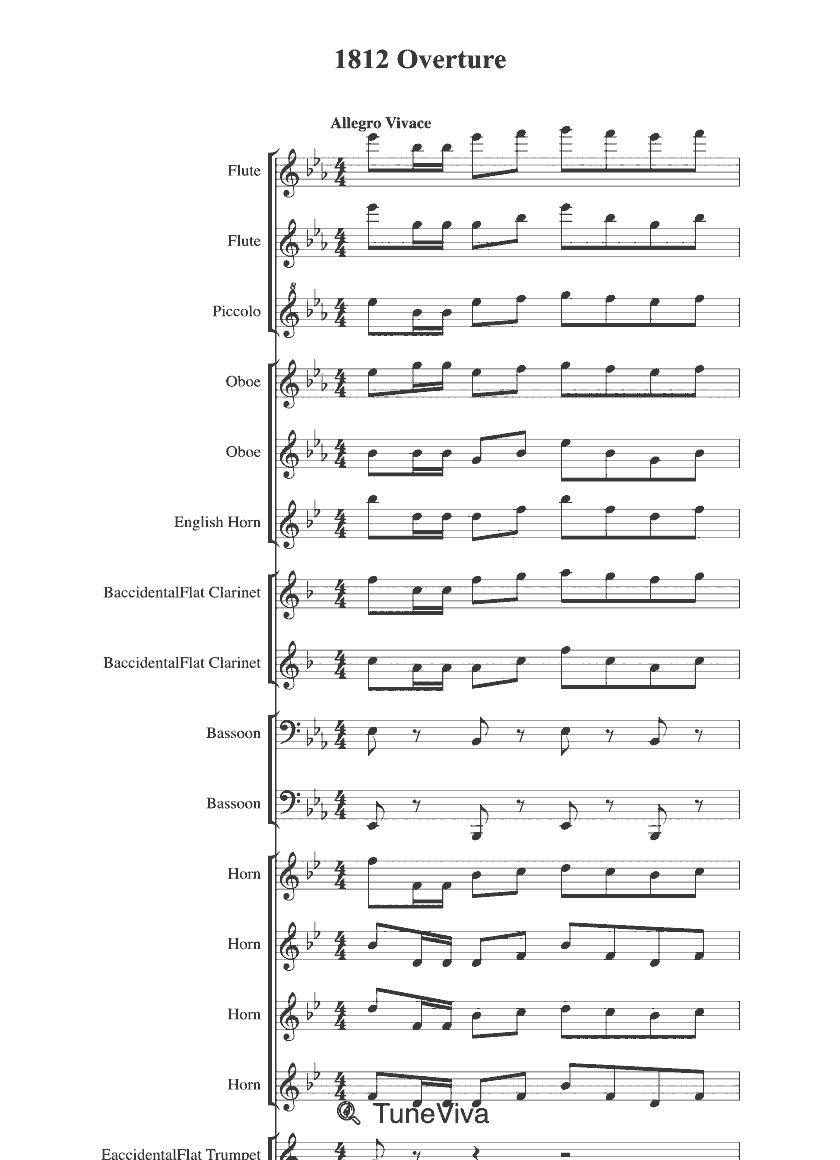
Pyotr Ilyich Tchaikovsky
Finale
Flute; Piccolo; Oboe +18 parts · 55 sec
Open score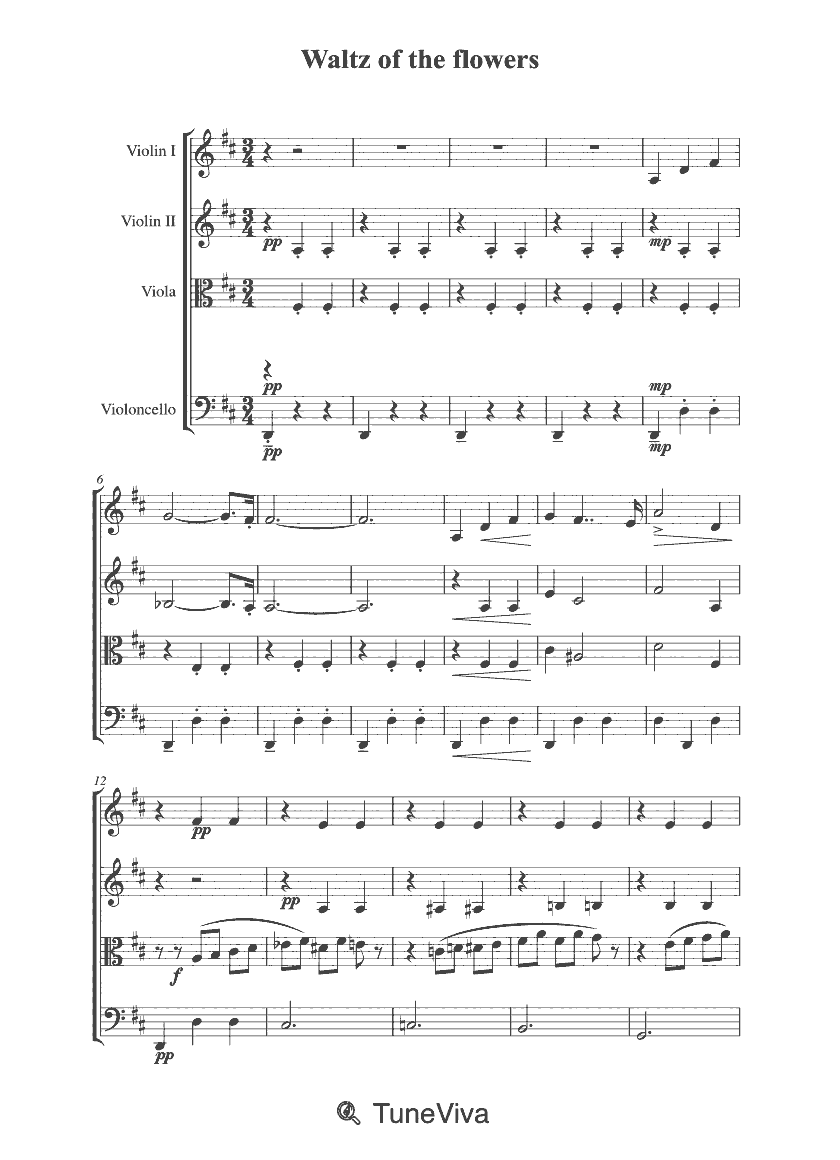
Pyotr Ilyich Tchaikovsky
string quartet
Violin I; Violin II; Viola +1 parts · 1 min 26 sec
Open score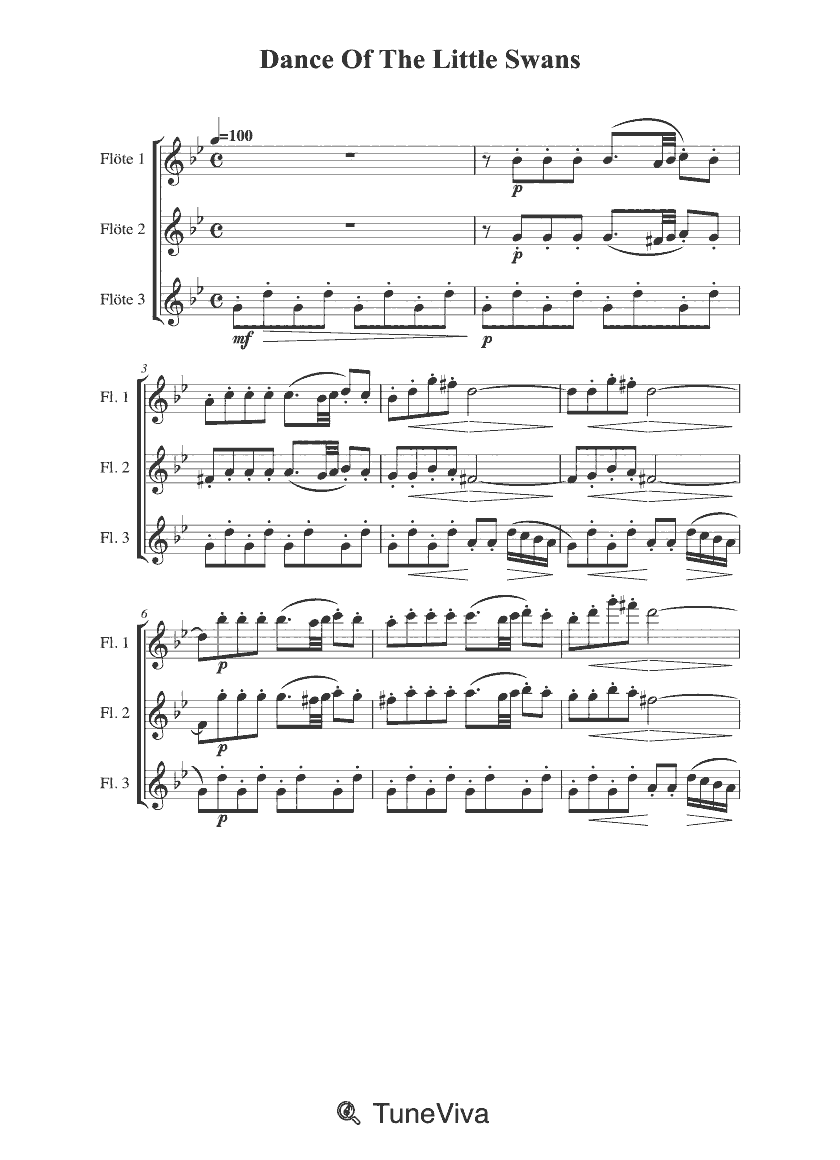
Pyotr Ilyich Tchaikovsky
from Swan Lake
Flöte 1; Flöte 2; Flöte 3 · 1 min 31 sec
Open score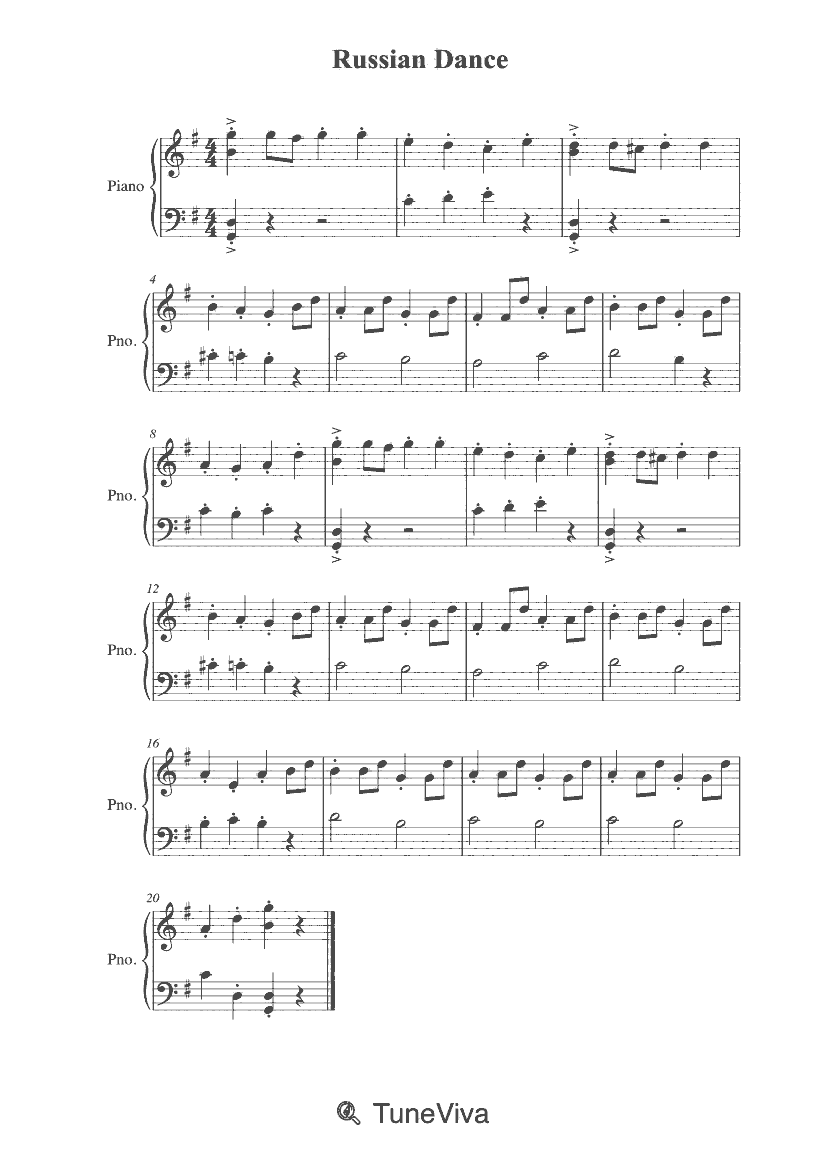
Pyotr Ilyich Tchaikovsky
Piano · 39 sec
Open score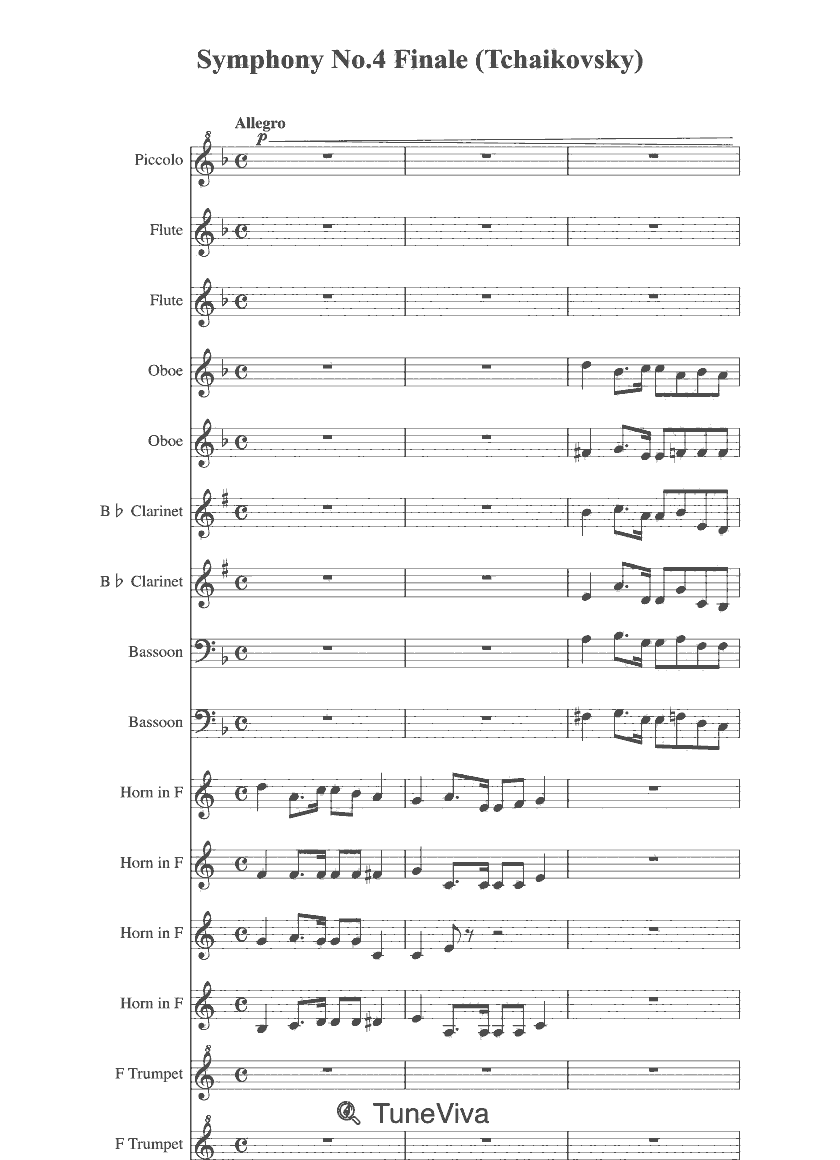
Pyotr Ilyich Tchaikovsky
Finale
Piccolo; Flute; Oboe +15 parts · 1 min 52 sec
Open score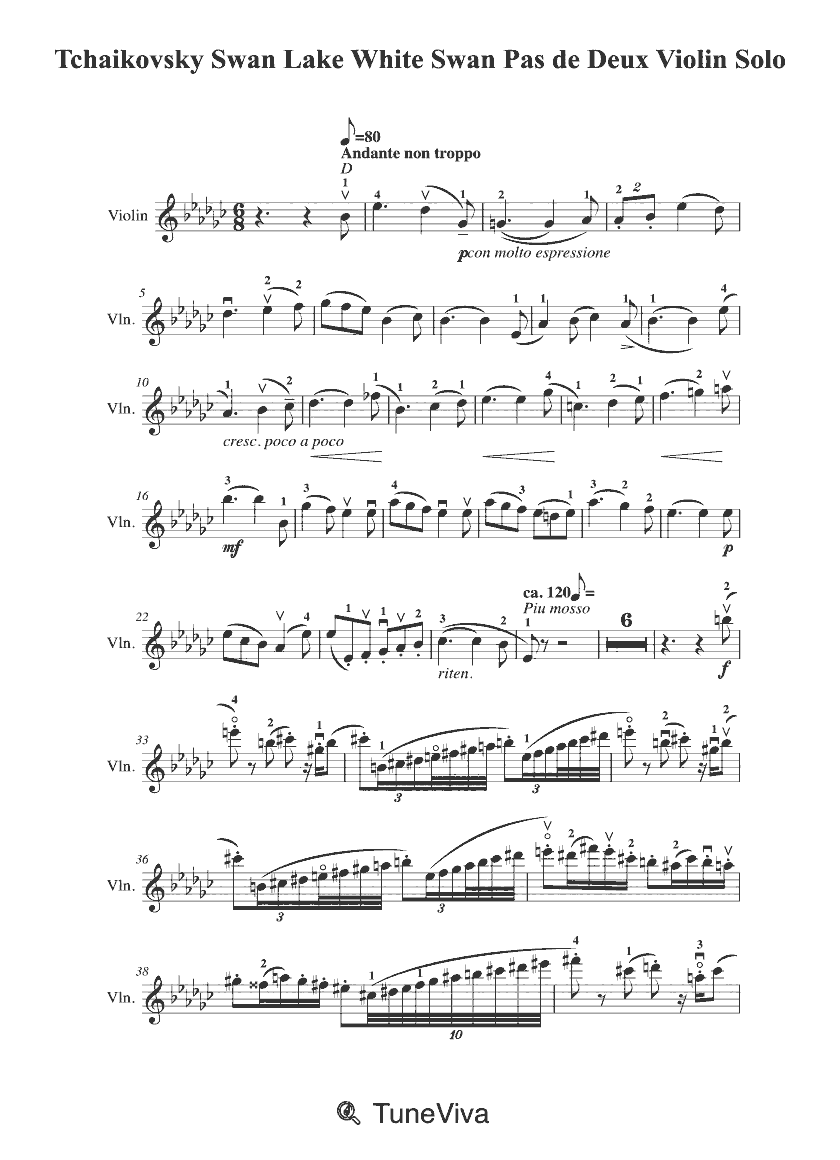
Pyotr Ilyich Tchaikovsky
Act II No. 4 Part 5 White Swan Pas de Deux Violin Solo
Violin · Arr. D. Dur · 2 min 1 sec
Open score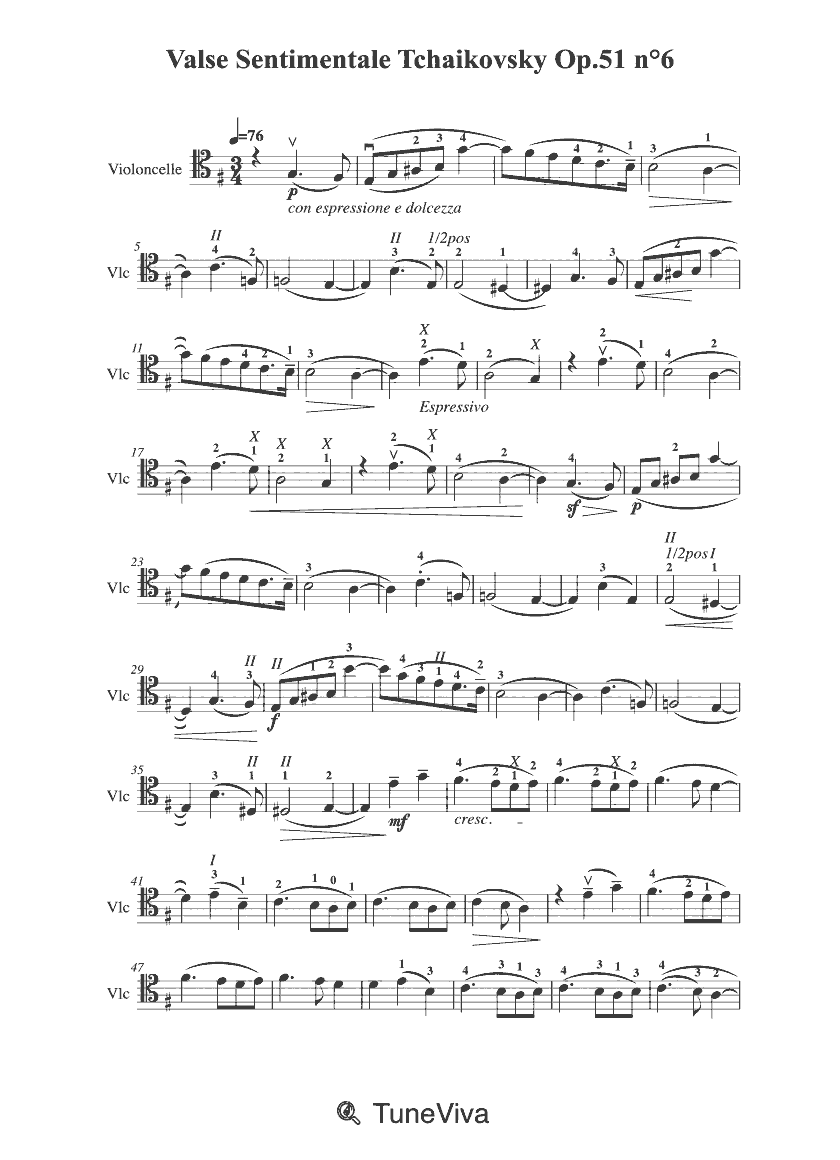
Pyotr Ilyich Tchaikovsky
Violoncelle · 2 min 39 sec
Open score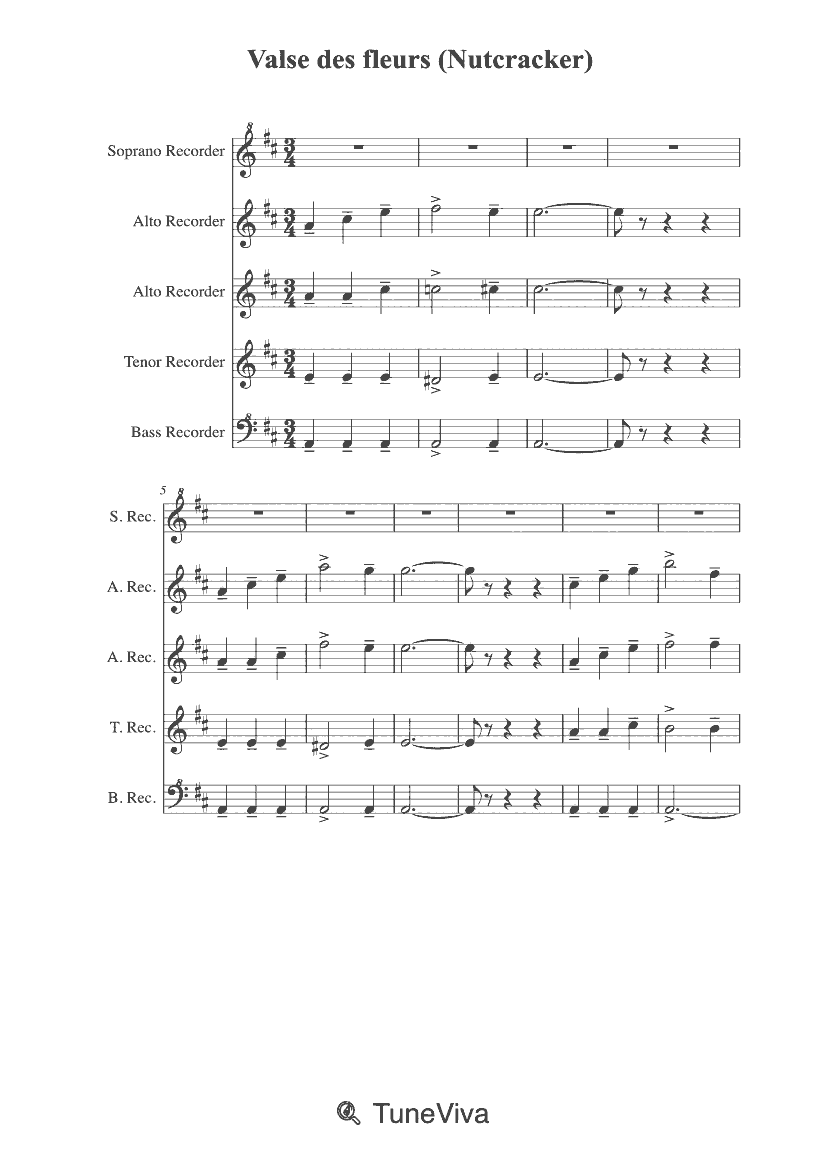
Pyotr Ilyich Tchaikovsky
Soprano Recorder; Alto Recorder; Tenor Recorder +1 parts · 4 min 29 sec
Open score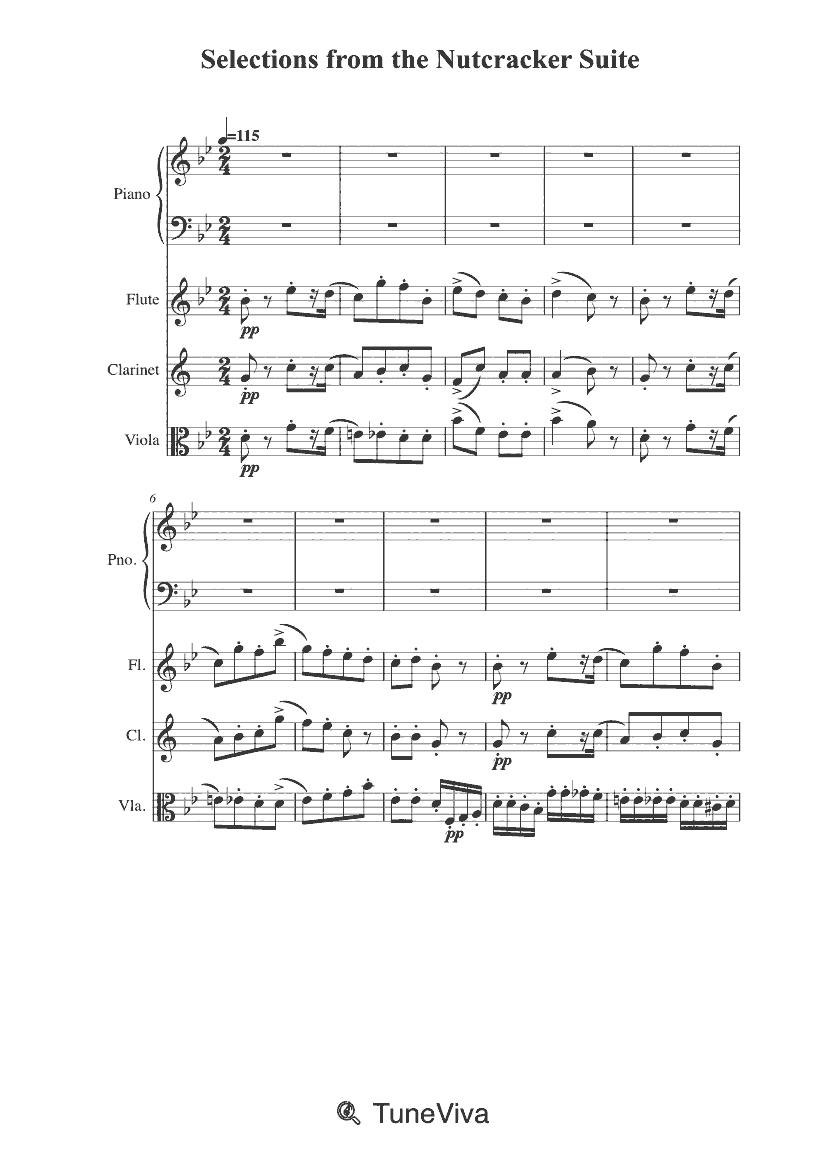
Pyotr Ilyich Tchaikovsky
Piano; Flute; Clarinet +1 parts · 16 min 31 sec
Open score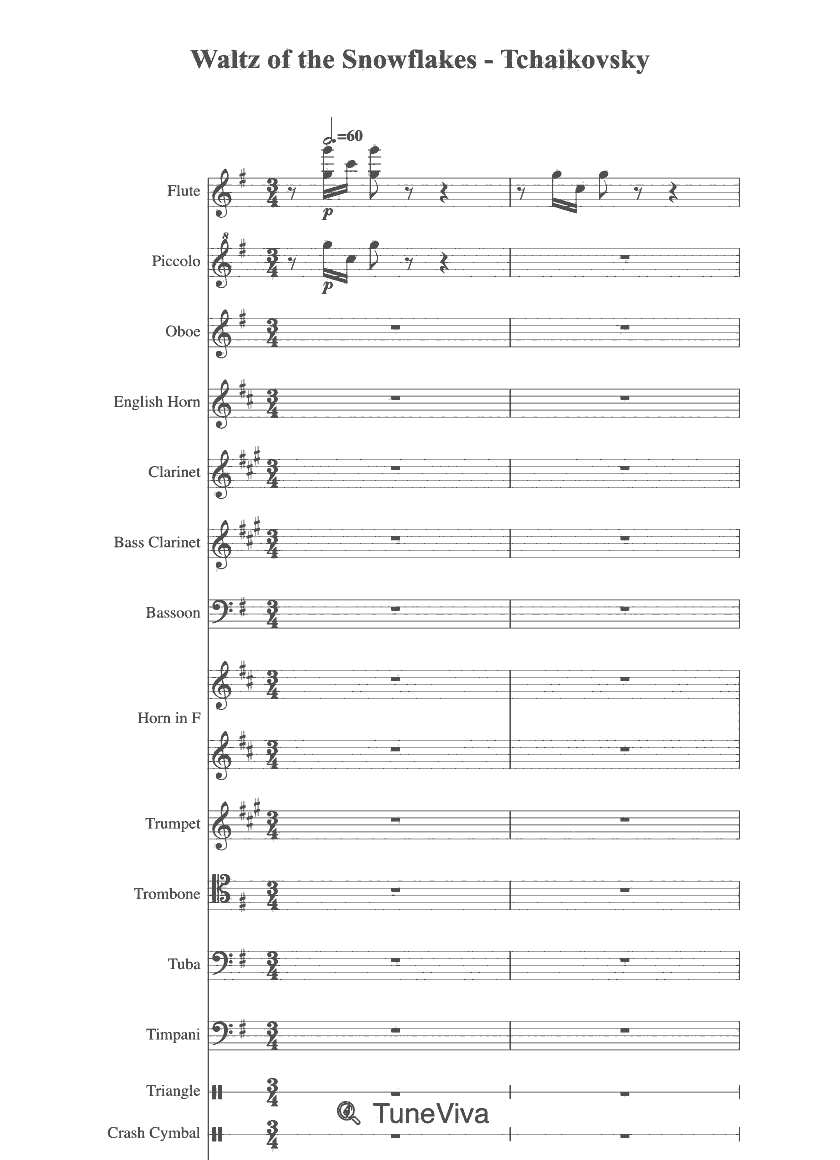
Pyotr Ilyich Tchaikovsky
from The Nutcracker
Flute; Piccolo; Oboe +18 parts · 10 min 23 sec
Open score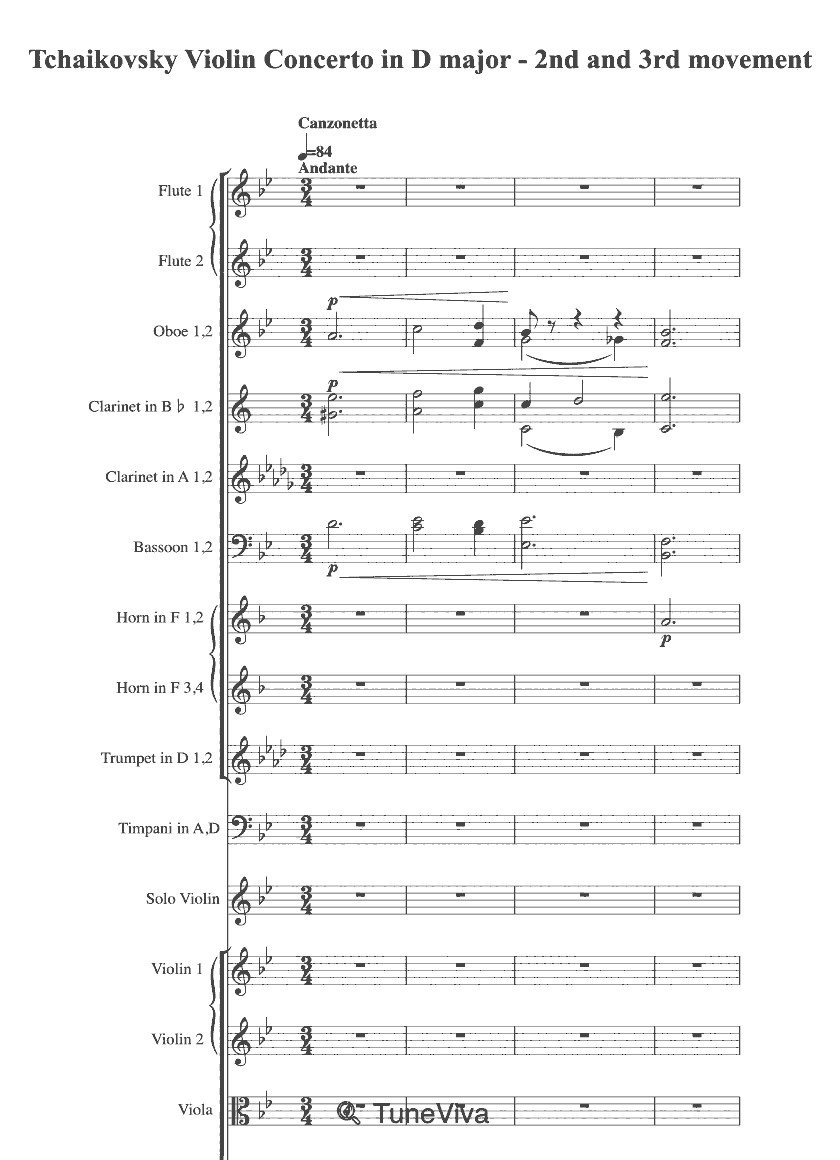
Pyotr Ilyich Tchaikovsky
Op. 35II. Canzonetta - Andante III. Finale - Allegro vivacissimo
Flute 1; Flute 2; Oboe 1,2 +13 parts · 15 min 19 sec
Open score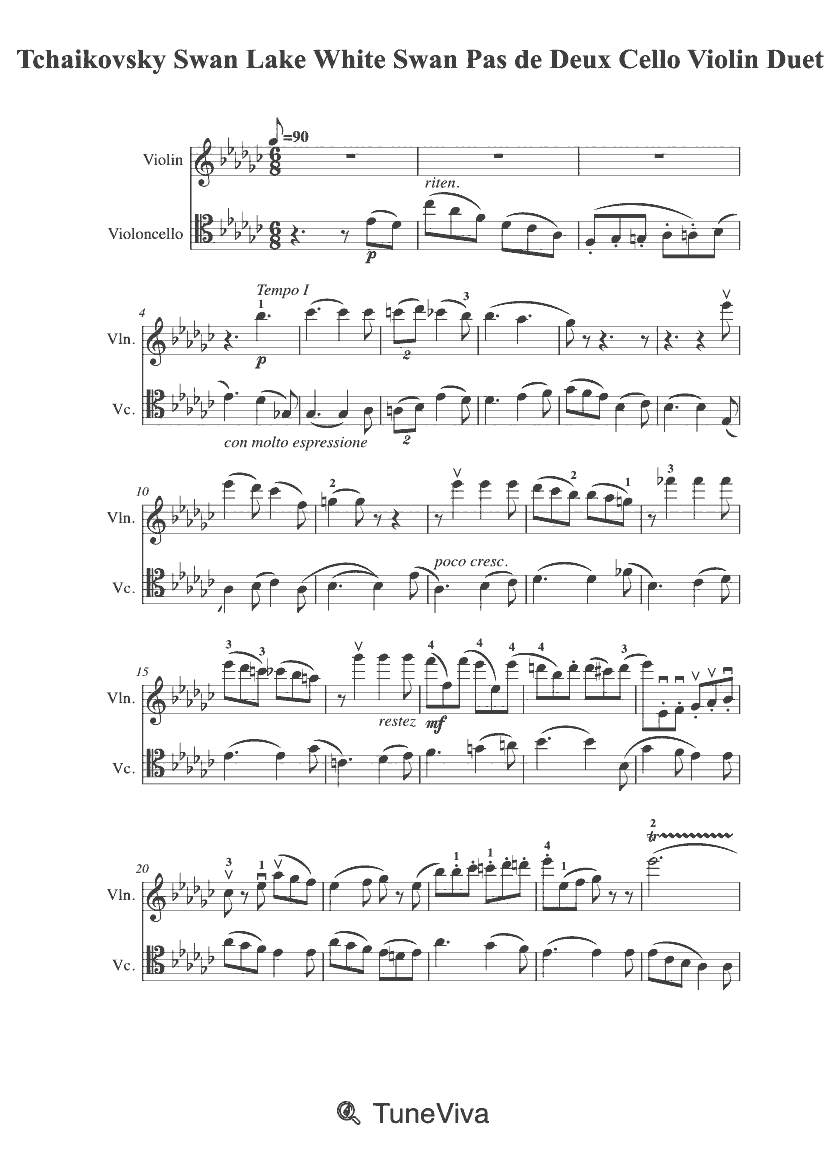
Pyotr Ilyich Tchaikovsky
Act II No. 4 Pt. 5 White Swan Pas de Deux Cello and Violin Duet
Violin; Violoncello · Arr. D. Dur · 1 min 4 sec
Open score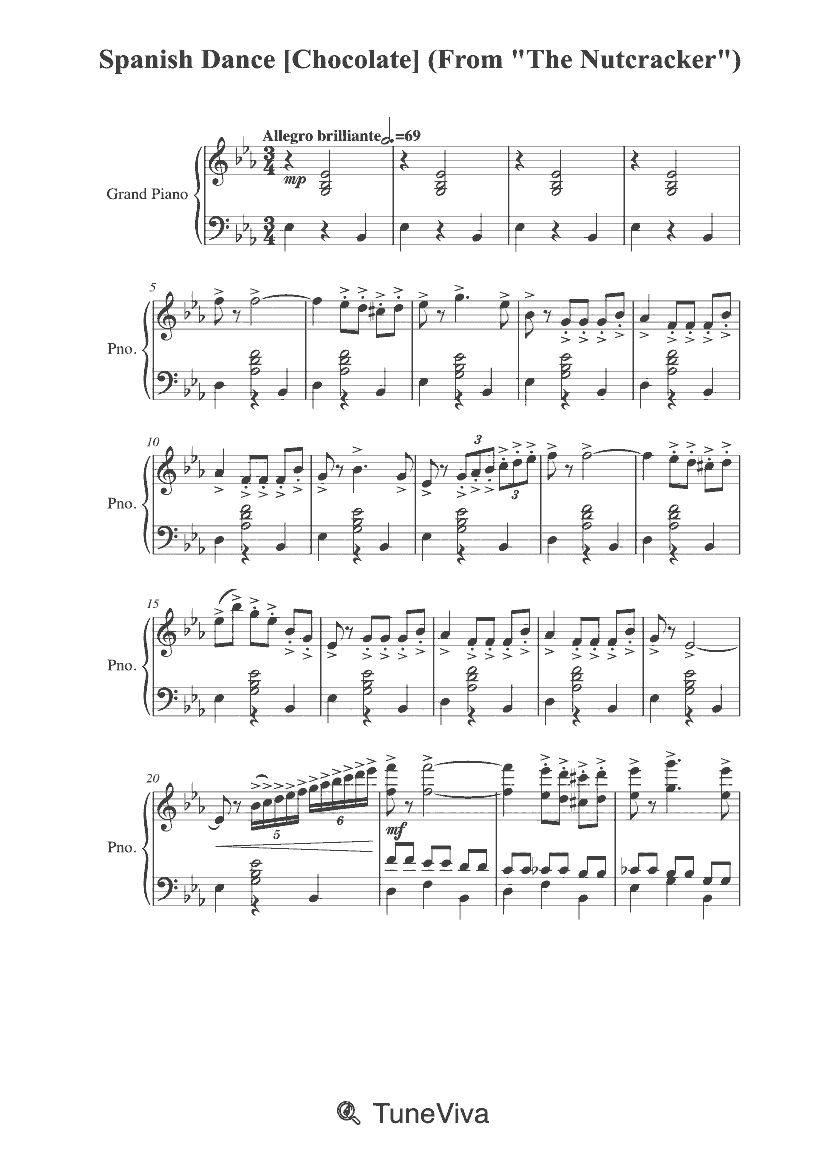
Pyotr Ilyich Tchaikovsky
From The Nutcracker
Grand Piano · 1 min 8 sec
Open scorePage 1 of 5
The catalogue runs to 83 Tchaikovsky scores, about 353 minutes of music and 248,530 notated notes. Only ten entries carry lyrics, a reminder that this is mostly orchestral and piano music rather than song. Difficulty is clustered at the easy end, with 57 scores at index 0 and seven each at 1 and 2, plus two at 3. The three ballets dominate the most-viewed list: the Swan Lake theme, the Sugar-Plum Fairy, the Waltz of the Flowers and the Dance of the Little Swans. Around them sit concerto arrangements — the First Piano Concerto for two pianos, a Violin Concerto excerpt — the Children's Album and the 1812 Overture. Pyotr Ilyich Tchaikovsky (1840–1893) was a Russian composer of the Romantic period and the first Russian composer whose music made a lasting international impression. His concert and theatrical works include the 1812 Overture, the First Piano Concerto, the Violin Concerto, the Romeo and Juliet Overture-Fantasy, several symphonies, the opera Eugene Onegin, and the ballets Swan Lake, The Sleeping Beauty and The Nutcracker. This collection brings together sheet music associated with those works, much of it in piano, duet or reduced arrangements rather than full orchestral scores.
Tchaikovsky was born on 7 May 1840 at Votkinsk, in the Vyatka province of the Russian Empire, and died in Saint Petersburg on 6 November 1893, nine days after conducting the premiere of his Sixth Symphony. He trained for the civil service before entering the Saint Petersburg Conservatory in 1862 and taught theory at the Moscow Conservatory from 1866. His early reputation rested on symphonic and operatic works; the ballets came later, and fame in his last years owed much to his own conducting tours.
Swan Lake was composed in 1875-76 and first staged at the Bolshoi in Moscow on 4 March 1877, with choreography by Julius Reisinger; most companies now use the Petipa-Ivanov revival staged at the Mariinsky on 27 January 1895, for which Riccardo Drigo revised the score. The Nutcracker, Op. 71, was premiered at the Mariinsky on 18 December 1892 with Iolanta, and the eight-number suite, Op. 71a, had been heard in March that year. The First Piano Concerto, Op. 23, was completed in 1875 and premiered in Boston by Hans von Bülow; its two-piano arrangement was made by the composer in 1874 and revised in 1888. The Violin Concerto, Op. 35, dates from 1878 and was first played in Vienna in 1881. The Children's Album, Op. 39, is a set of 24 short piano pieces written in July 1878 for Tchaikovsky's nephew Vladimir Davydov; the 1812 Overture, Op. 49, was finished in 1880 and first performed in Moscow in 1882.
The catalogue's titles are those of the uploaded files, so many are arrangements: the Swan Lake theme for piano, the Waltz of the Flowers for piano four hands, concerto movements reduced for two pianos.
Ballets: Swan Lake and The Nutcracker: Swan Lake was composed in 1875–76 and first staged at the Bolshoi in Moscow on 4 March 1877 with choreography by Julius Reisinger. Most companies now use the 1895 Petipa–Ivanov revival, for which Riccardo Drigo revised the score. The Nutcracker, Op. 71, is a two-act ballet first performed on 18 December 1892 at the Mariinsky in a double bill with Iolanta; its score is noted for its use of the celesta. The shorter Nutcracker Suite had been heard nine months earlier. The scores listed here are individual numbers and arrangements, not complete ballet scores.
The First Piano Concerto and its two-piano version: Tchaikovsky composed the Piano Concerto No. 1 in B-flat minor, Op. 23, between November 1874 and February 1875, revised it in 1879 and 1888, and the 1888 version is usually played. Hans von Bülow gave the first performance in Boston on 25 October 1875. Tchaikovsky made a two-piano arrangement in December 1874 and revised that arrangement in 1888. One difference between the original and final texts is that the piano chords at the opening were originally written as arpeggios. The two-piano score listed here is the first movement only, and its record does not identify which revision it follows.
Piano and duet arrangements: Several titles are reductions rather than original orchestral scores: the Swan Lake Theme for piano, the Waltz of the Flowers for piano four hands, a Swan Lake suite excerpt for piano four hands, and the First Piano Concerto first movement for two pianos. The Waltz of the Flowers and the Swan Lake suite excerpt are credited in the records to Eduard Langer as arranger. These versions are useful for studying or playing the music away from the orchestra, but they will not give you the full ballet or the original instrumentation. Check the scoring before choosing a version.
Reading the score details: The record for Nutcracker Suite, Dance of the Reed Pipes lists a large ensemble—flutes, oboes, English horn, clarinets, bassoons, horns, trumpet, trombones, tuba, timpani, cymbal and strings—which points to an orchestral layout, though imported part lists can contain errors. A piano score may show one part, while four-hands and two-piano scores show Primo/Secondo or Piano I/Piano II. Match the score to the forces you actually have.
No. The catalogue holds individual numbers and arrangements — the Swan Lake theme, the Sugar-Plum Fairy, the Reed Pipes, the Little Swans — not a full ballet score.
No. Tchaikovsky selected eight numbers as Op. 71a and conducted them in March 1892, nine months before the full ballet was staged.
The first movement only, in a two-piano arrangement. The catalogue does not say whether it follows the 1875 original or the revised text.
Pyotr Ilyich Tchaikovsky was a Russian Romantic composer whose best-known works include the 1812 Overture, the First Piano Concerto, the Violin Concerto, the Romeo and Juliet Overture-Fantasy, several symphonies, the opera Eugene Onegin, and the ballets Swan Lake, The Sleeping Beauty and The Nutcracker. He was the first Russian composer whose music made a lasting impression internationally.
Swan Lake was composed in 1875–76 and premiered by the Bolshoi Ballet on 4 March 1877 at the Bolshoi Theatre in Moscow, with choreography by Julius Reisinger. Most modern productions use the 1895 Petipa–Ivanov revival at the Mariinsky, for which Riccardo Drigo revised Tchaikovsky's score.
The Nutcracker, Op. 71, is a two-act ballet first performed on 18 December 1892 at the Mariinsky Theatre in a double bill with Tchaikovsky's opera Iolanta. Its score is noted for its use of the celesta, an instrument Tchaikovsky had already used in The Voyevoda. The complete ballet was initially less successful than the shorter Nutcracker Suite, which had been premiered nine months earlier.
The Nutcracker Suite is not the full ballet. It is a shorter suite of numbers from The Nutcracker that Tchaikovsky premiered nine months before the complete two-act ballet was staged in December 1892.
Tchaikovsky composed the First Piano Concerto in B-flat minor, Op. 23, between November 1874 and February 1875 and revised it in 1879 and 1888. Hans von Bülow premiered the work in Boston on 25 October 1875, and the 1888 revision is usually performed today.
Tchaikovsky arranged the First Piano Concerto for two pianos in December 1874 and revised that arrangement in 1888. The two-piano score listed on this page covers the first movement only, and its record does not state which revision it follows.
The Tchaikovsky scores on this page are individual numbers and arrangements—for example, the Swan Lake theme, the Sugar-Plum Fairy, the Waltz of the Flowers, the Dance of the Little Swans and a Swan Lake suite excerpt—rather than complete ballet scores. Check the title and scoring before choosing one for a full performance.
The Nutcracker Suite, Dance of the Reed Pipes entry lists flutes, oboes, English horn, clarinets, bassoons, horns, trumpet, trombones, tuba, timpani, cymbal and strings, which points to an orchestral layout. Other listed versions are for piano, piano four hands or two pianos. Imported part lists can be inaccurate, so confirm the forces on the score itself.