classical
2 tracks
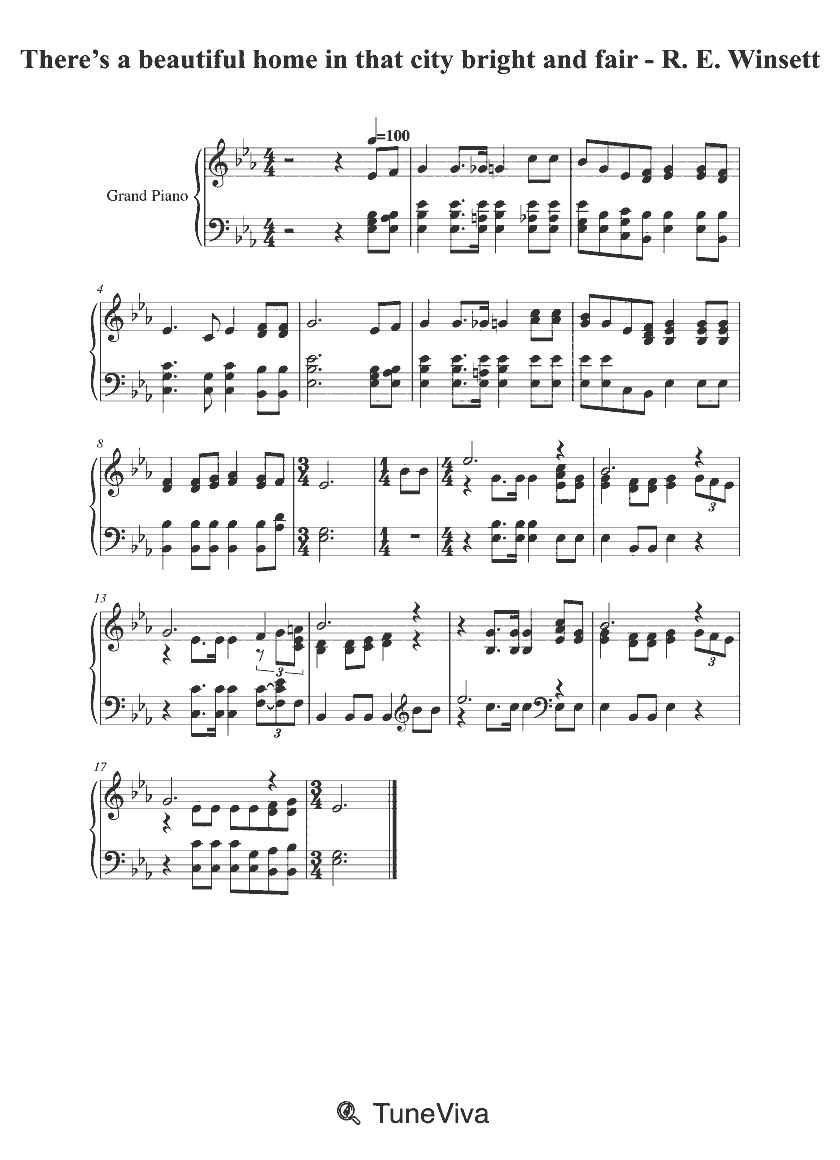
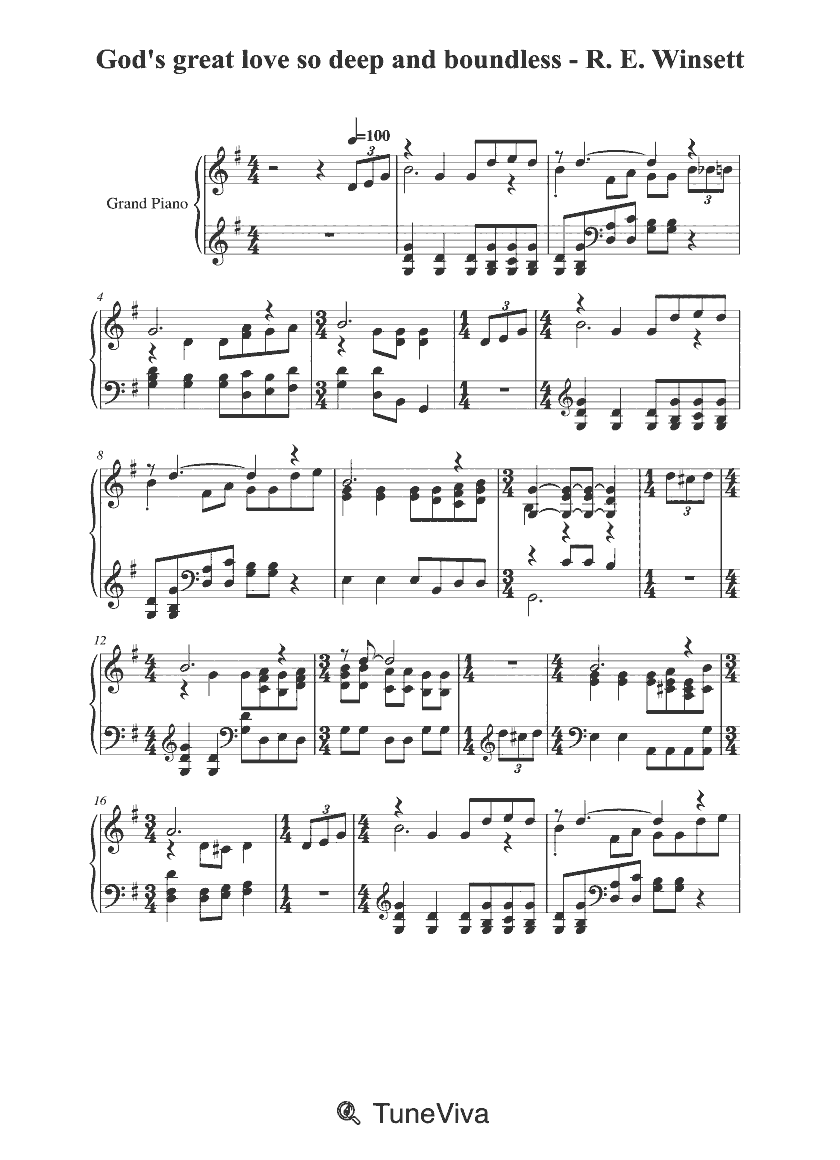
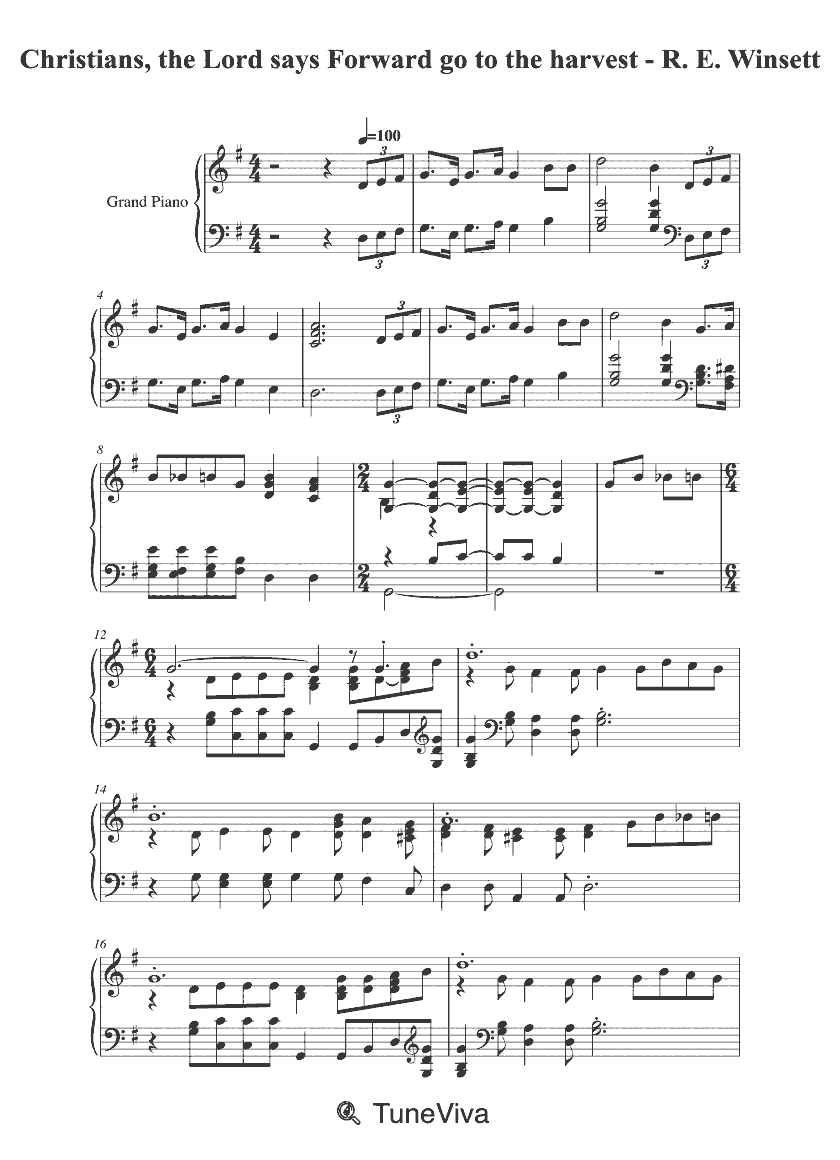
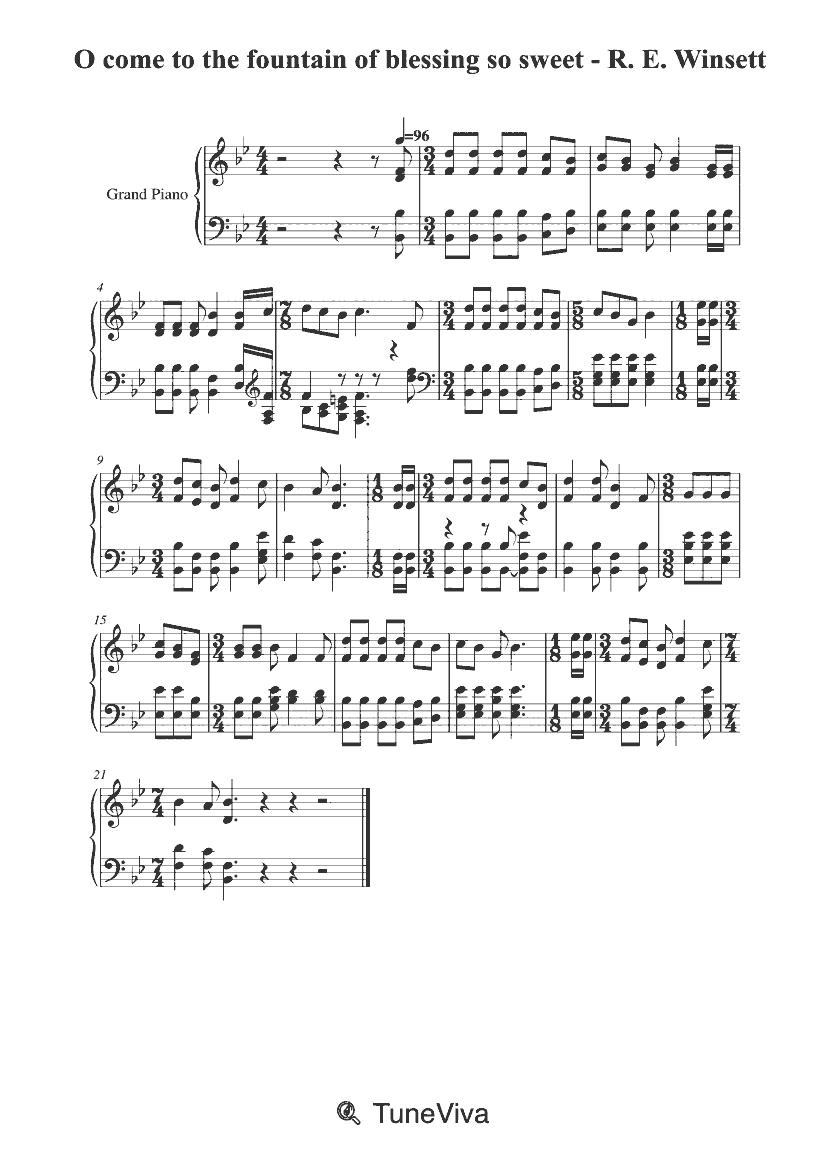
The catalogue holds 42 scores under R. E. Winsett, about 26 minutes of music and 13,970 notated notes. Thirteen of the entries carry lyrics, and all 42 are filed as classical, though the repertory is the shape-note gospel song of the American South.
The most-viewed title is In the Great Triumphant Morning, followed by In a Manger Far Away and Blow Ye the Trumpet, All Ye Zion's Host. Complexity sits higher than on most gospel-song pages here: 9 entries at index 0, 20 at index 1 and 13 at index 2. The texts return again and again to the return of Christ, the resurrection and the roll call of the redeemed.
Robert Emmett Winsett was born on 15 January 1876 on a farm in Bledsoe County, Tennessee, and graduated from the Bowman Normal School of Music in 1899. He founded his own publishing company in 1903, and his first book, Winsett's Favorite Songs, sold well among Baptist and Pentecostal congregations across the South. Pentecostal Power followed in 1907, the year he completed postgraduate work at a conservatory.
He married Birdie Harris in 1908 and settled at Fort Smith, Arkansas, where he kept composing; the songs attributed to him run past a thousand. He was ordained a minister in 1923 and was associated with the Church of God (Seventh Day). After his wife's death in the late 1920s he returned to Tennessee, started a second company in Chattanooga and issued more shape-note books, and in 1930 he married Mary Ruth Edmonton.
His last publication, Best of All (1951), sold more than a million copies, and his books are said to have sold over ten million in total. The song 'Jesus Is Coming Soon', beginning 'Troublesome times are here', won a Dove Award for Gospel Song of the Year in 1969. He died on 26 June 1952 at Dayton, Tennessee, and is buried in the Buttram Cemetery there.
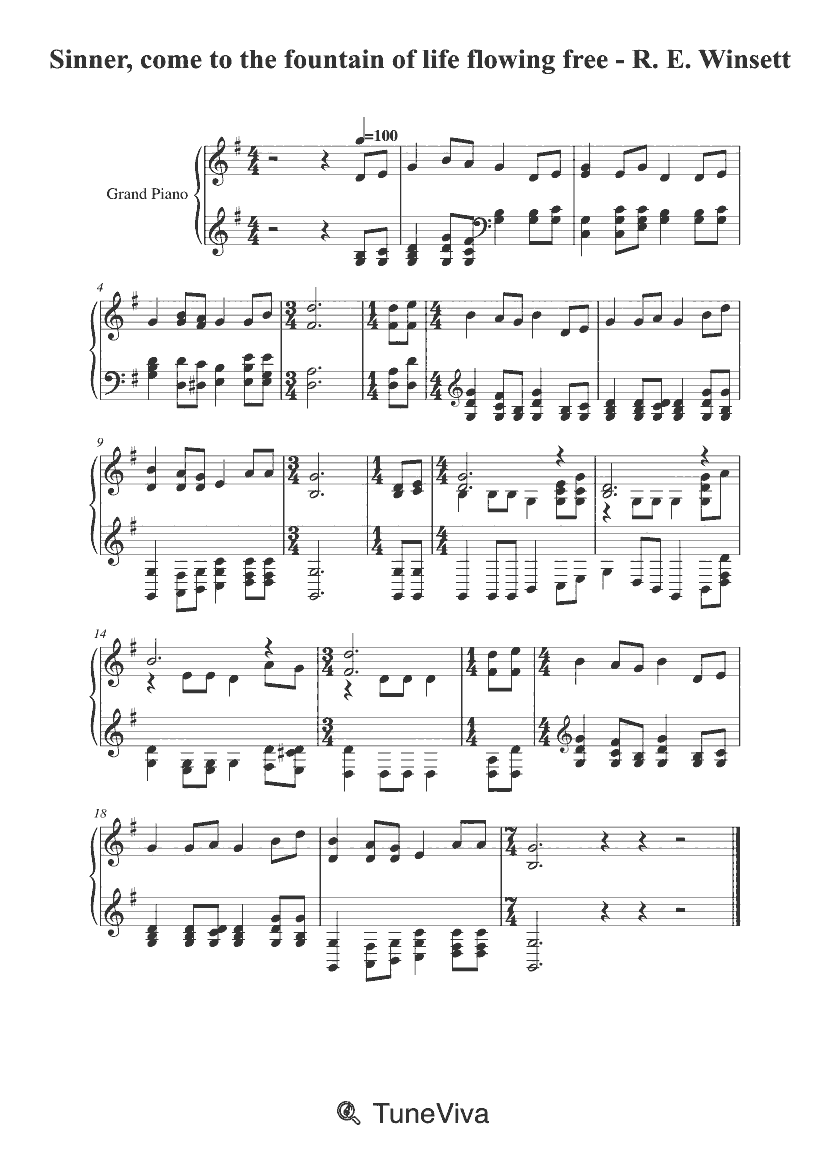
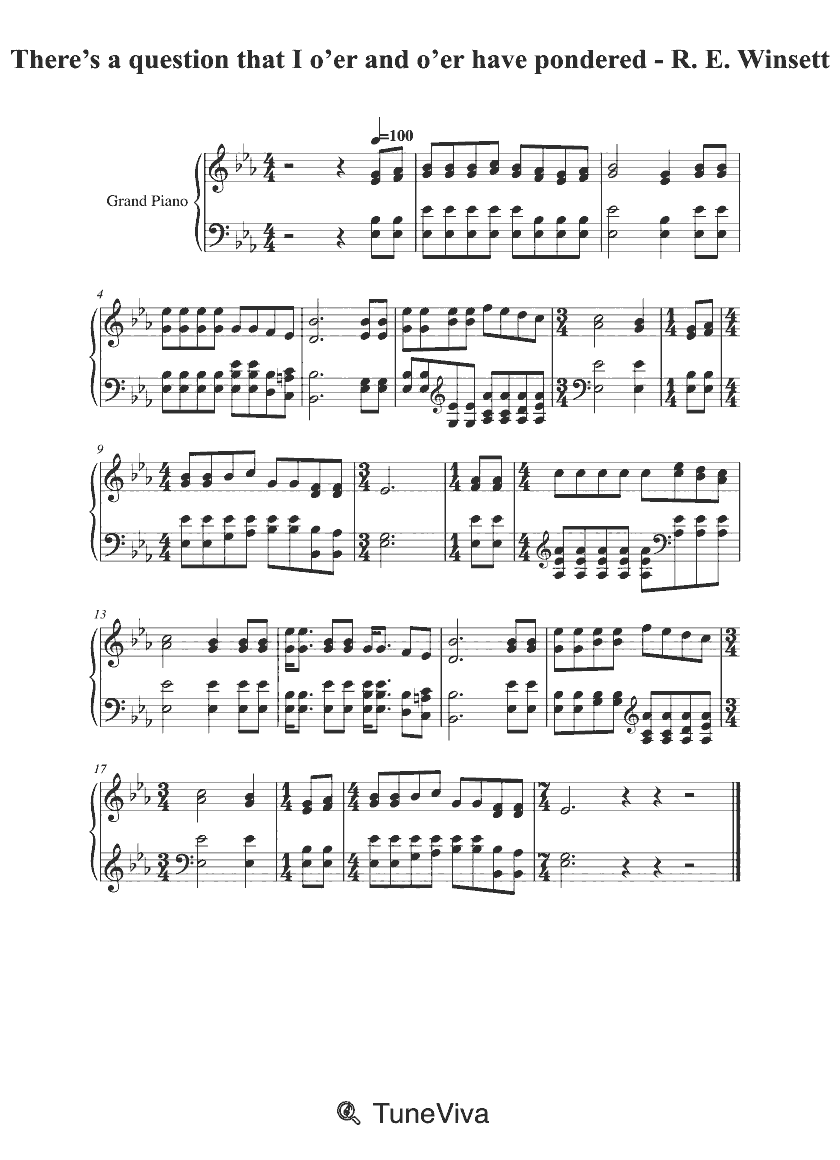
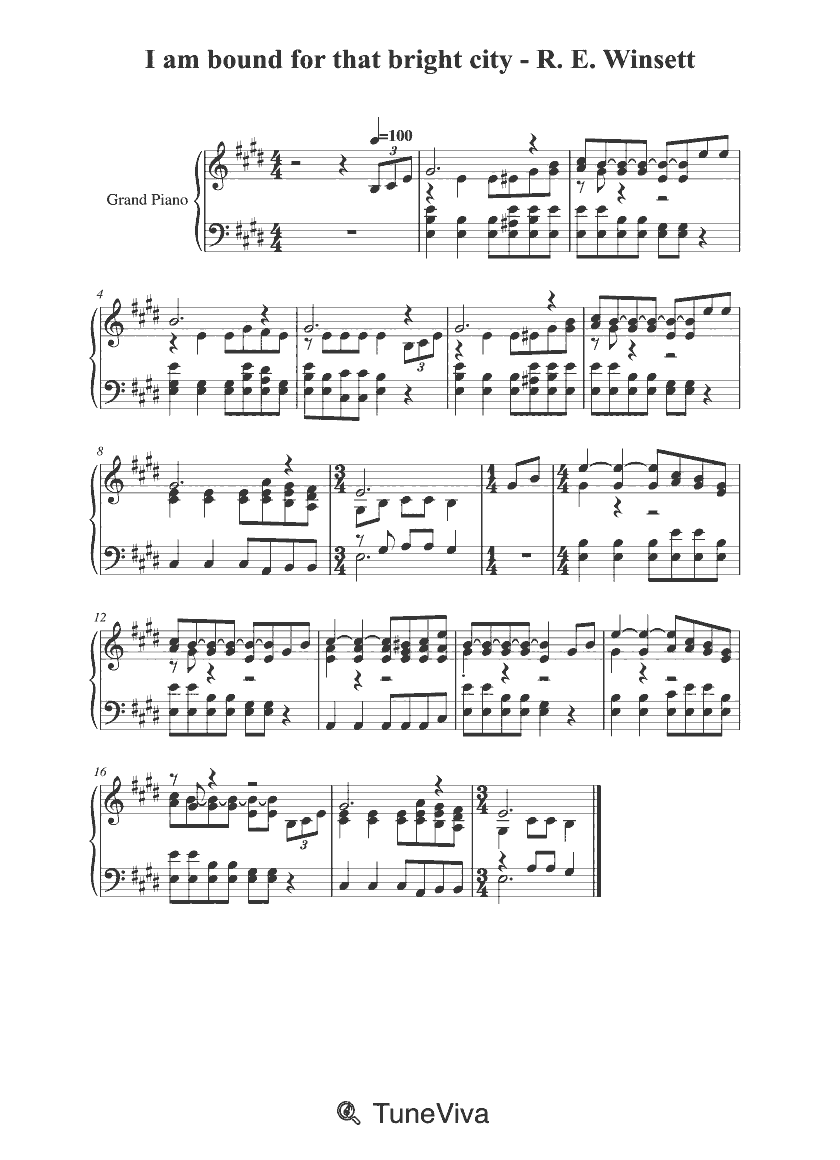
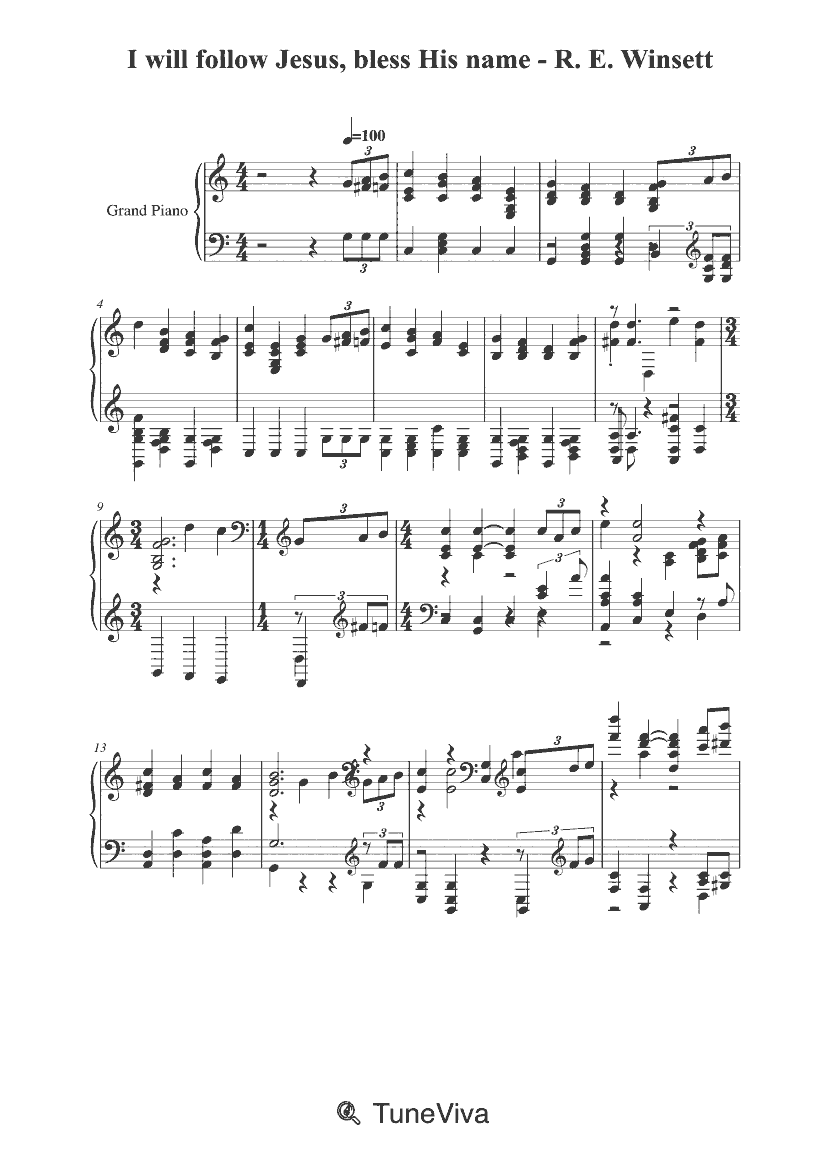
The catalogue's 42 entries are the short pieces such a publisher would have circulated: verse-and-refrain songs with four-part choruses, meant for singing schools and revival tents rather than for choirs with a rehearsal calendar.
Winsett's songs are written for untrained voices in a room with no acoustic, so the melody sits high and the harmony is mostly block chords under it. Take the refrains a shade faster than the verses and let the last line repeat without a ritardando. In the shape-note pieces the tenor often carries the tune, so check which part is the melody before assigning voices. The texts are long; a performance usually needs three verses, not all of them, and the refrain should stay identical each time.
The most-viewed Winsett score: a Second Coming hymn whose refrain turns on the trumpet call of 1 Thessalonians 4.
A Christmas song; the number in the catalogue title is a publisher's plate or book number, not part of the text.
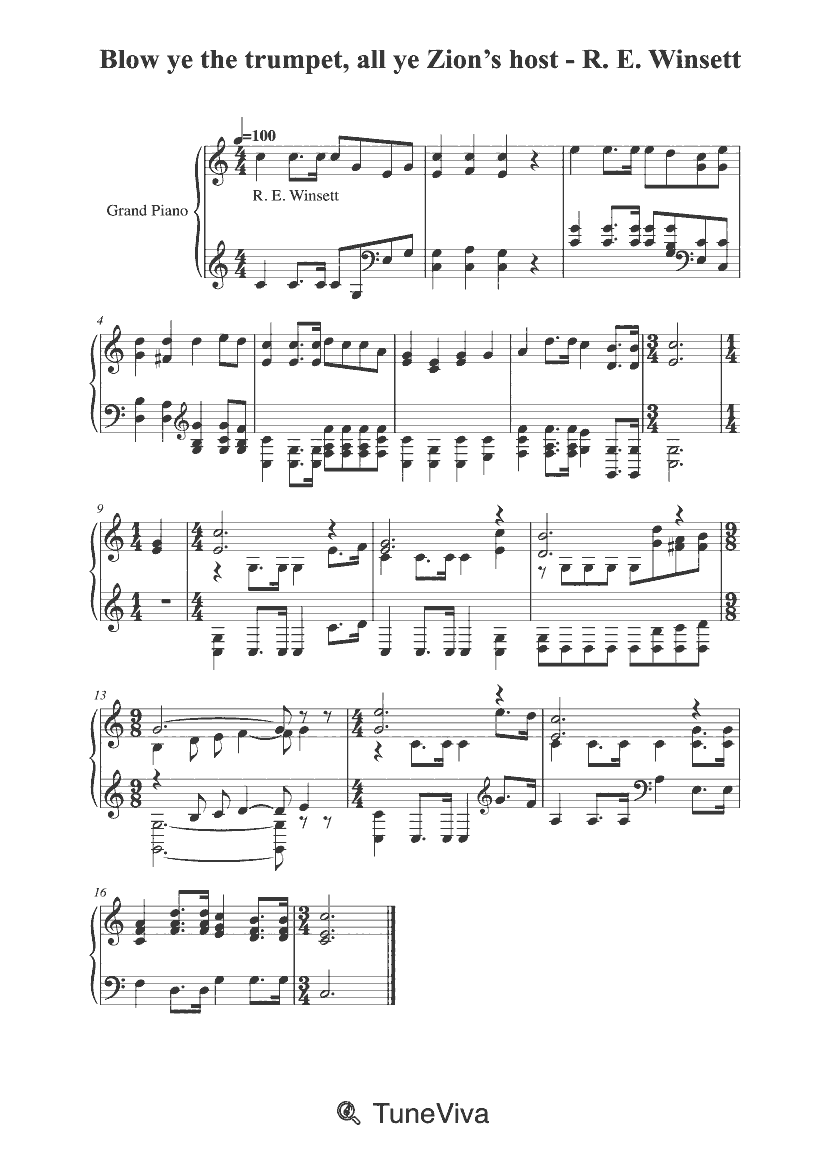
A revival call to Zion's host, and one of the most widely reprinted of his texts, still indexed in nearly twenty hymnals.
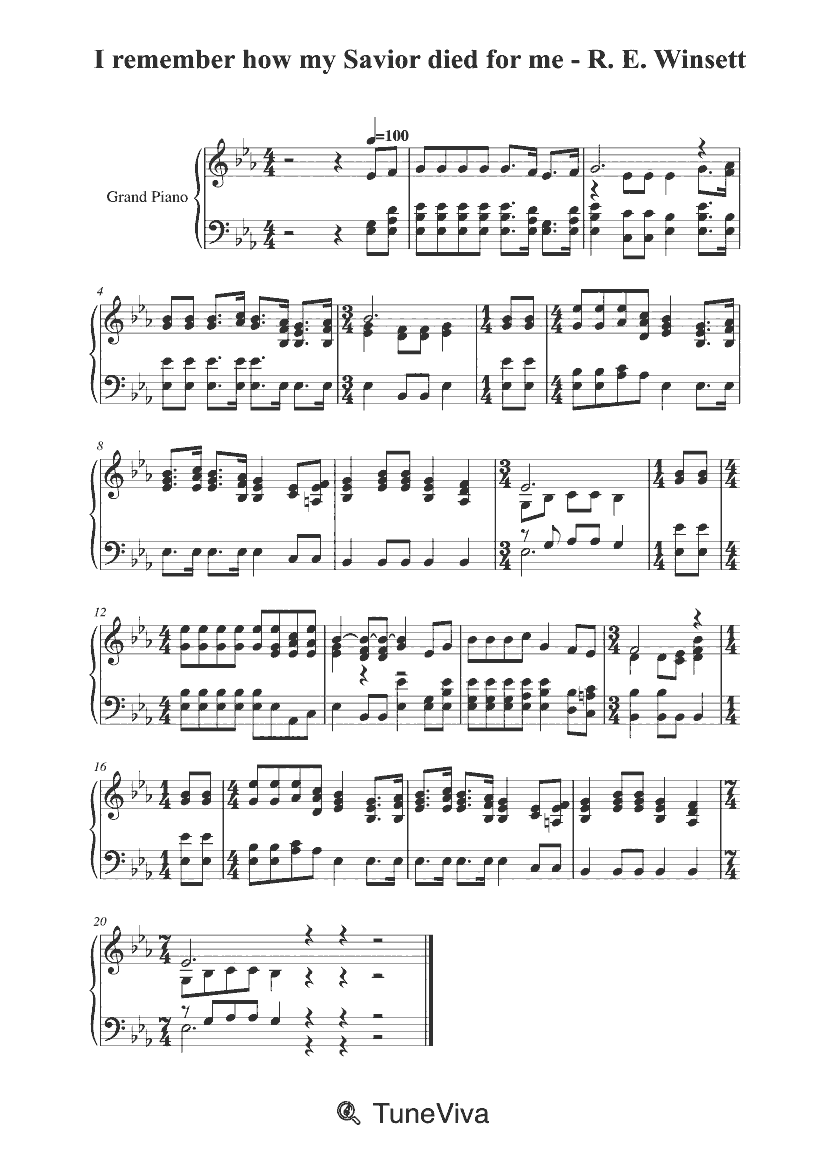
A communion hymn in which the singer recalls the crucifixion; the words are Winsett's own.
A Second Coming hymn; the catalogue prints 'jesus' in lower case, which the display title corrects.
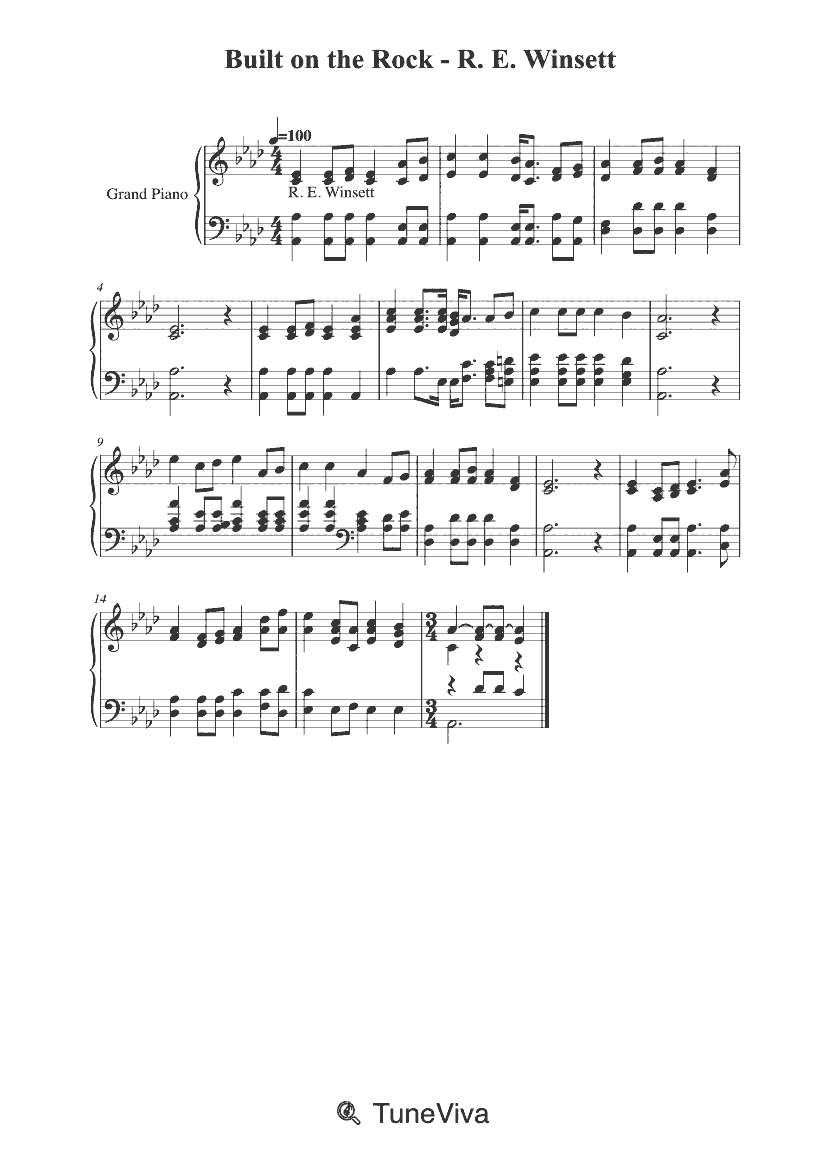
A gospel song on the house built on rock in Matthew 7, distinct from the hymn translations that use the same opening phrase.
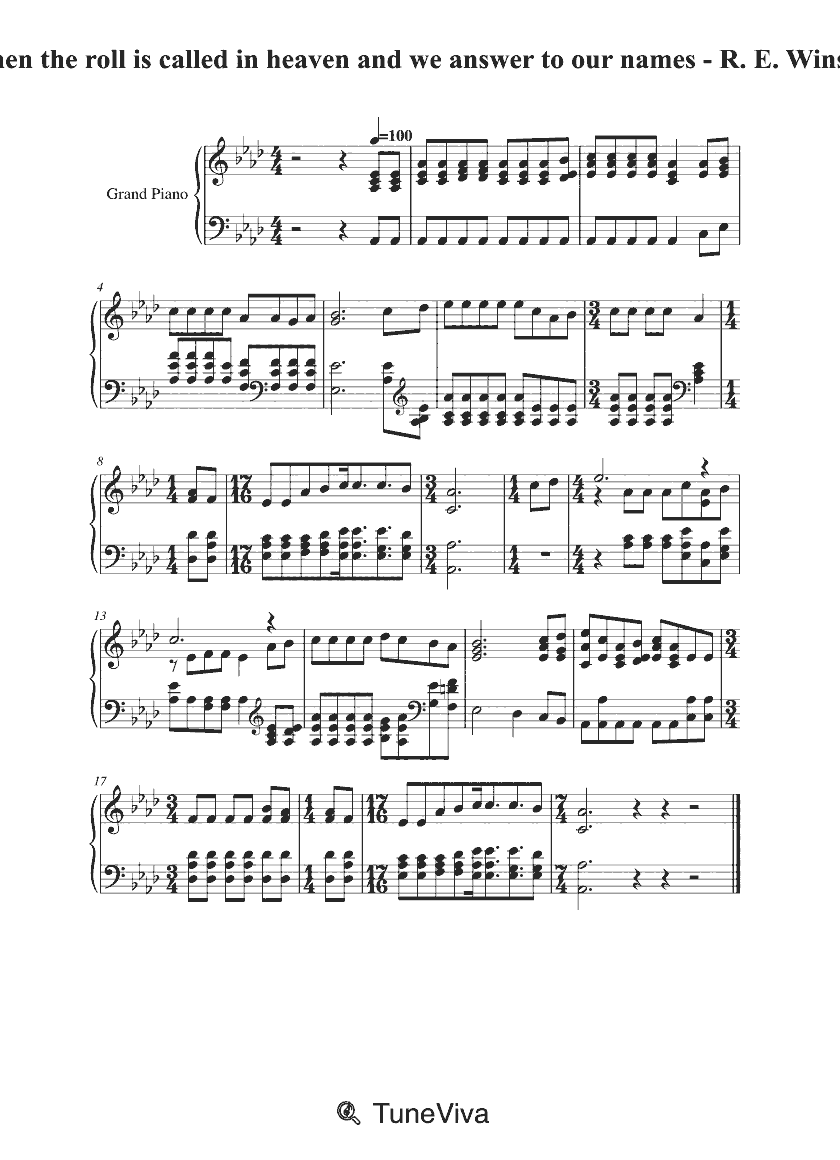
A heaven hymn on the roll call of the redeemed, a theme he returned to more than once; it is not the better-known 'When the Roll Is Called Up Yonder'.
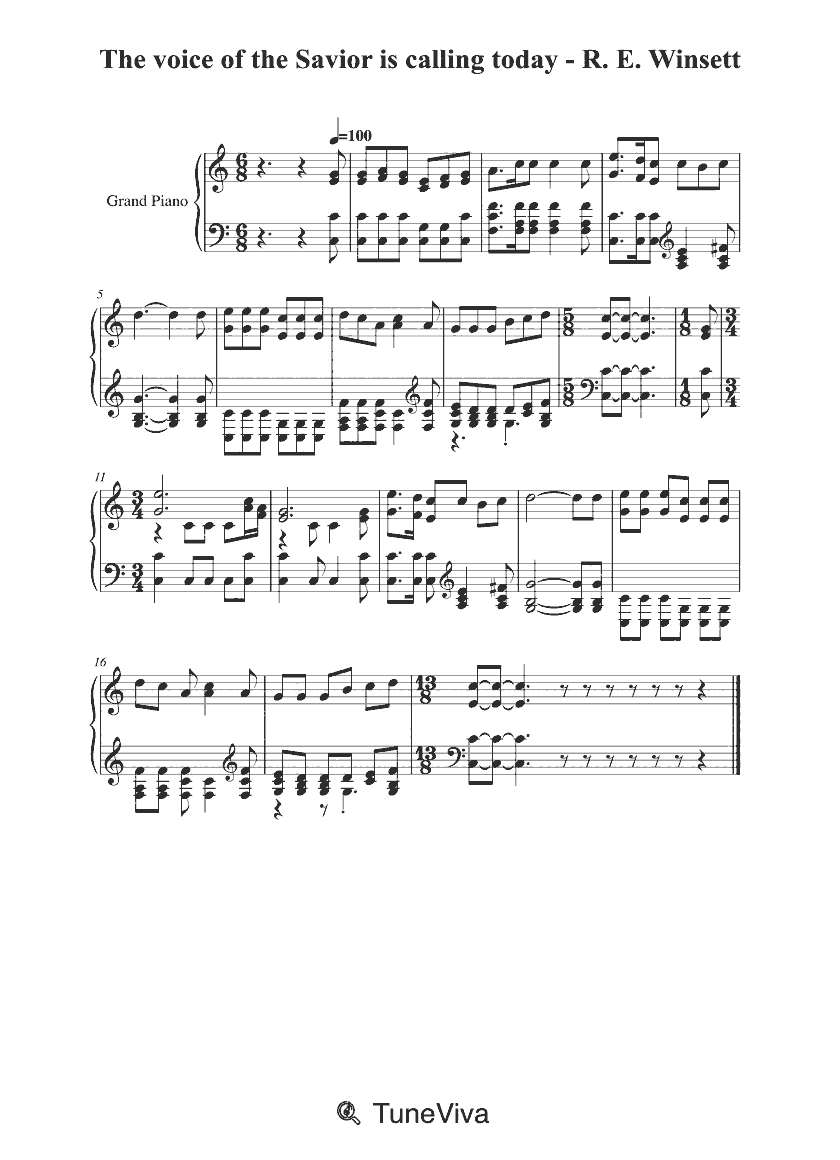
A teaching song about the return of Christ, from the years when his books were printed in shape notes.
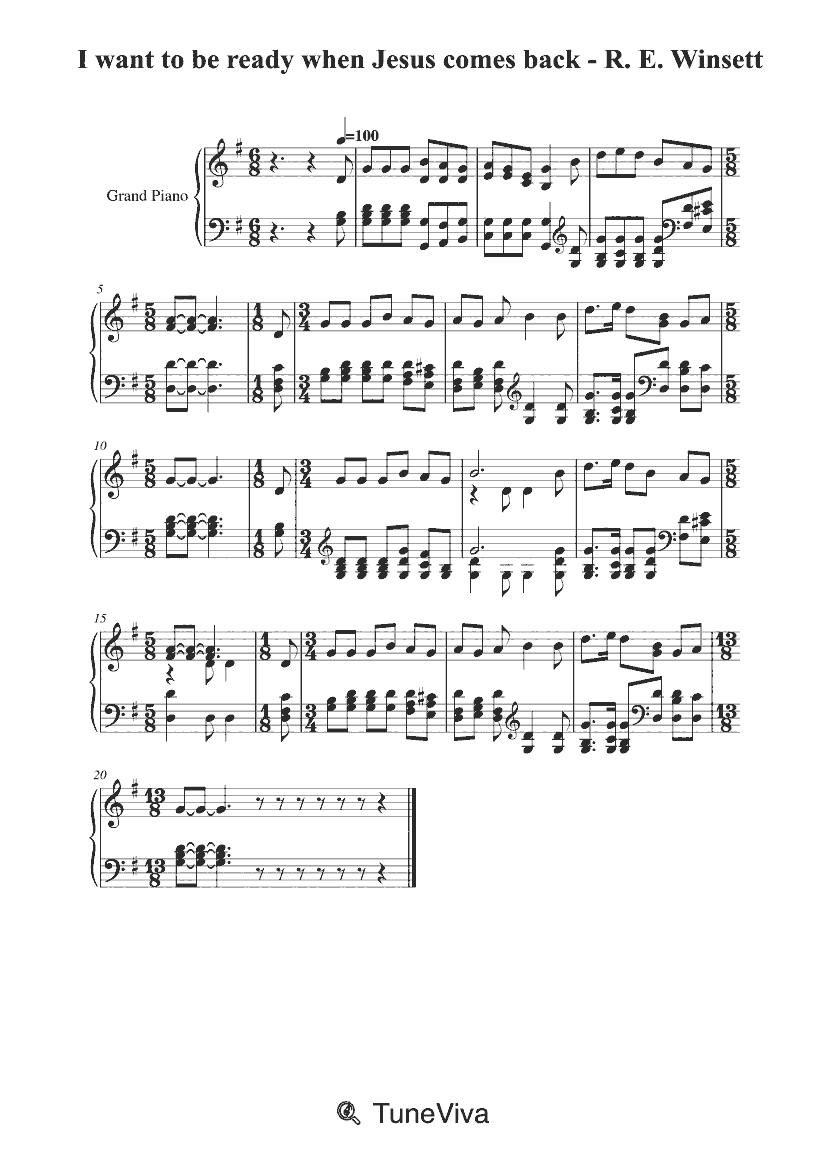
A readiness hymn in the plain, repetitive idiom of the singing-school books; the catalogue gives no date or source book.
Forty-two, about 26 minutes of music and 13,970 notated notes. Thirteen of them include lyrics.
No. That hymn is by James Milton Black. Winsett's roll-call song here is 'When the Roll Is Called in Heaven and We Answer to Our Names', a different text that borrows the same image.
They were written for gospel songbooks and revival services, where a song had to fit between a sermon and a prayer. A verse and a refrain is the normal shape, and the whole page often runs to under a minute of music.
The catalogue prints '(51333)', which looks like a plate or book number from the publisher rather than part of the song's title. No source consulted confirms which book it belongs to.
Catalog editions and arrangements attributed to R. E. Winsett.