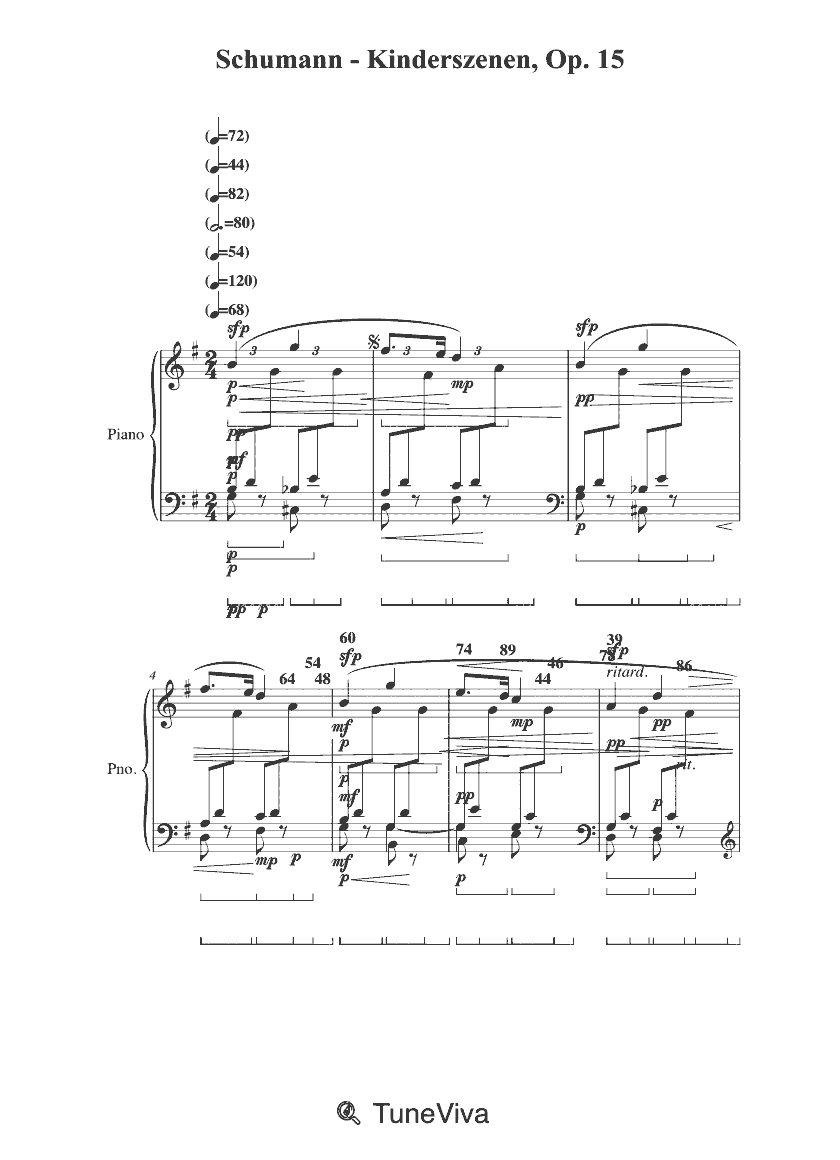
Schumann - Kinderszenen, Op. 15
Robert Schumann
Piano · 26 min 9 sec
Open score
133 Robert Schumann scores to preview and download, from Kinderszenen and Album for the Young to Dichterliebe and the Toccata, with PDFs and transposition.
The most-viewed score in the collection, a set of thirteen short piano pieces including Träumerei.
One of the best-known Album for the Young pieces and a standard first introduction to Schumann.
A catalog title for the Op. 68 teaching piece, among the most-played entries on the site.
The opening song of the Heine cycle, where the piano prelude and voice seem to begin in mid-thought.
An early virtuoso showpiece built on relentless double notes.
The first of the Eichendorff songs, a study in loneliness and distant horn calls.
One of the quietest numbers in Kinderszenen, often played as a contrast to Träumerei.
For a short solo piano piece, compare a character piece from Album for the Young with one from Kinderszenen. Read beyond the opening and decide where the melody needs to stand out from the inner notes. If you came for Dichterliebe, check which song is included, confirm the key against the singer’s range, and choose an edition that gives the pianist the written part through the final bars.
Compare the instrument and arrangement details below, then open a score to check the notation. Different entries may be arrangements or editions of the same work; available playback tools are shown on each score page.
Robert Schumann
Piano · 26 min 9 sec
Open score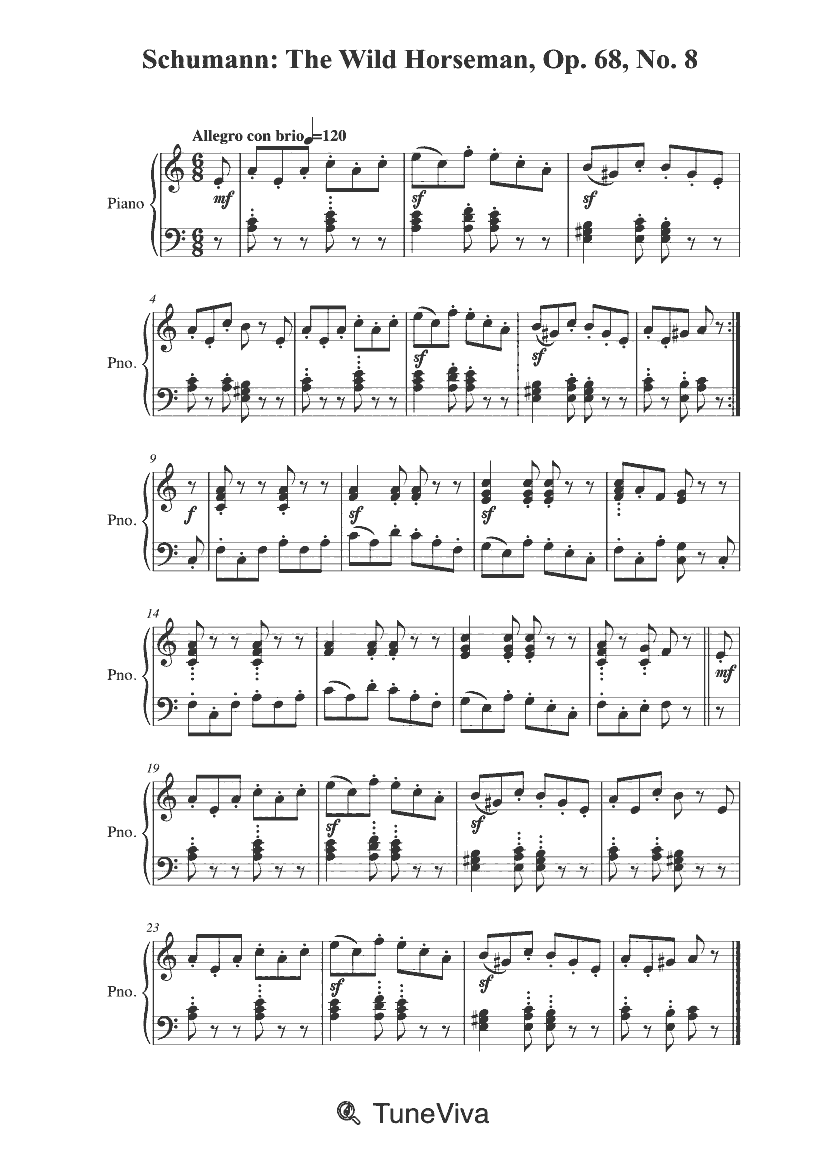
Robert Schumann
No. 8 from Op. 68 Album for the Young
Piano · 24 sec
Open score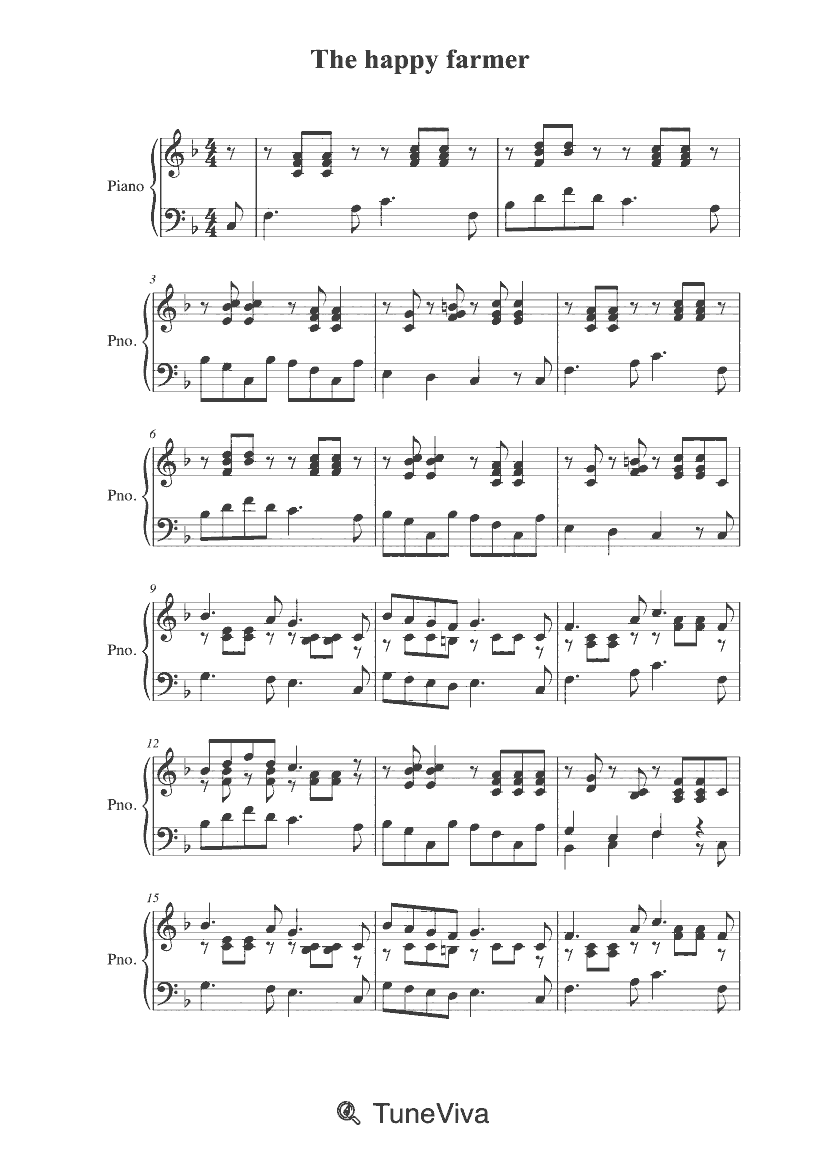
Robert Schumann
Piano · 56 sec
Open score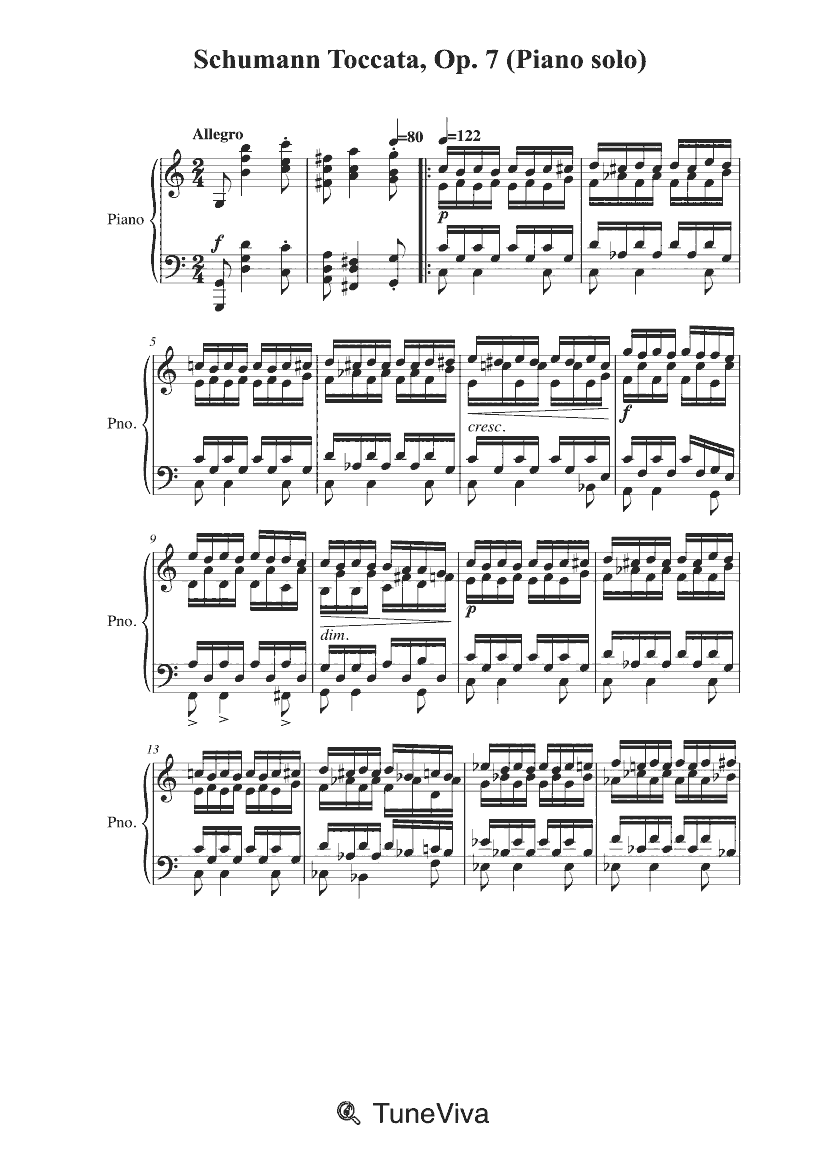
Robert Schumann
Op. 7
Piano · 12 min 26 sec
Open score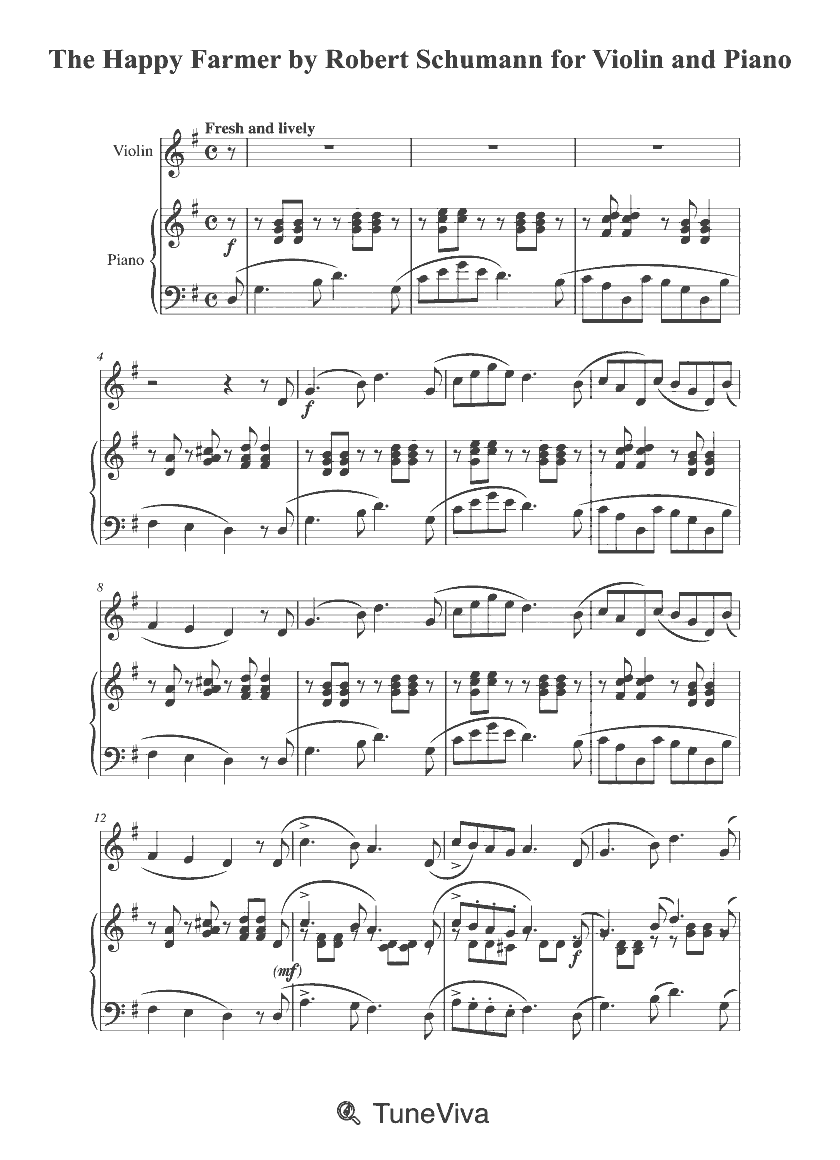
Robert Schumann
Fröhlicher Landmannvon der Arbeit zurückkehrendAlbum für die Jugend Op. 68 No 10
Violin; Piano · 57 sec
Open score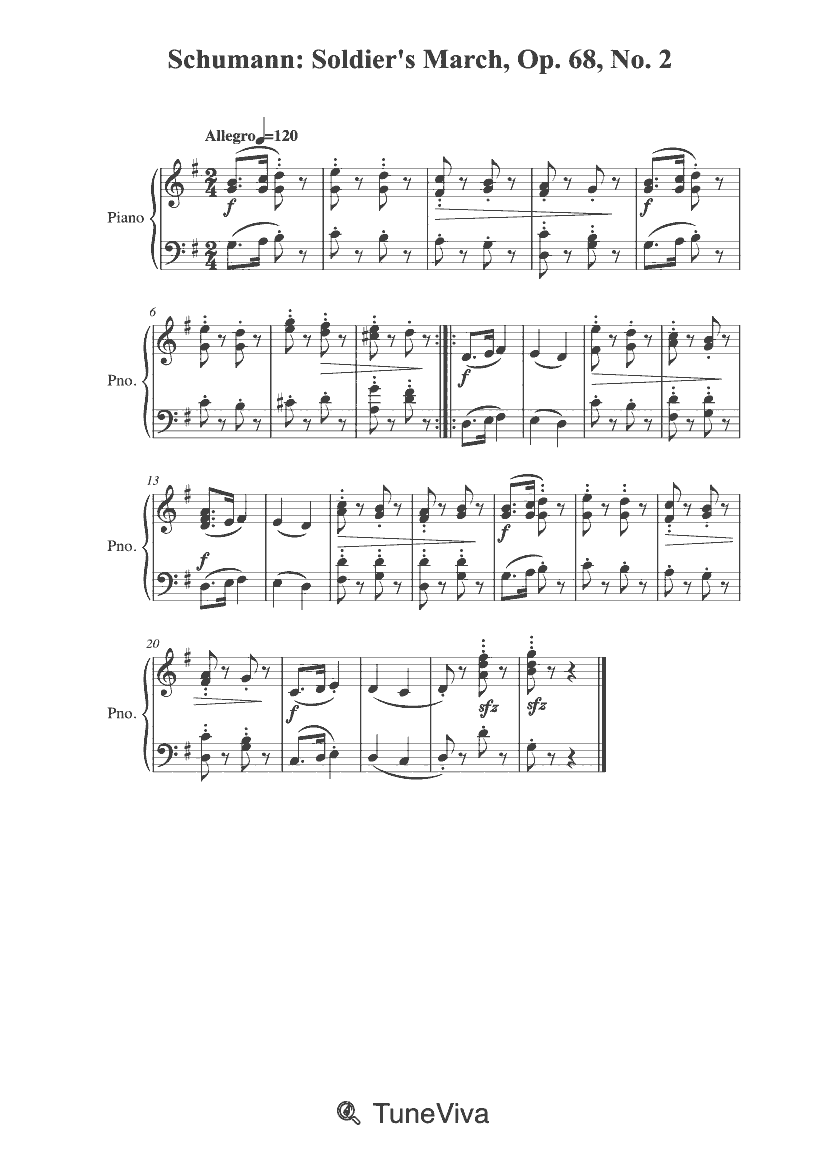
Robert Schumann
Album for the Young Op. 68. No. 2
Piano · 47 sec
Open score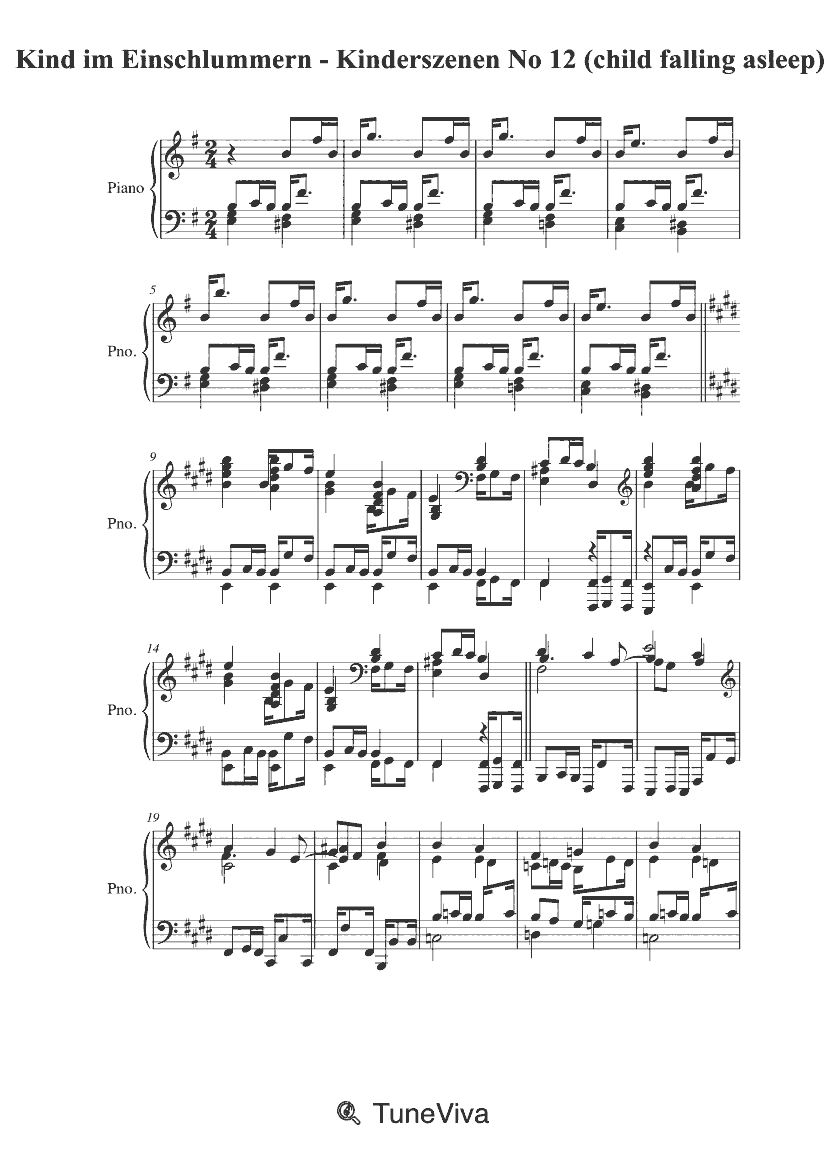
Robert Schumann
Kinderszenen No 12
Piano · 59 sec
Open score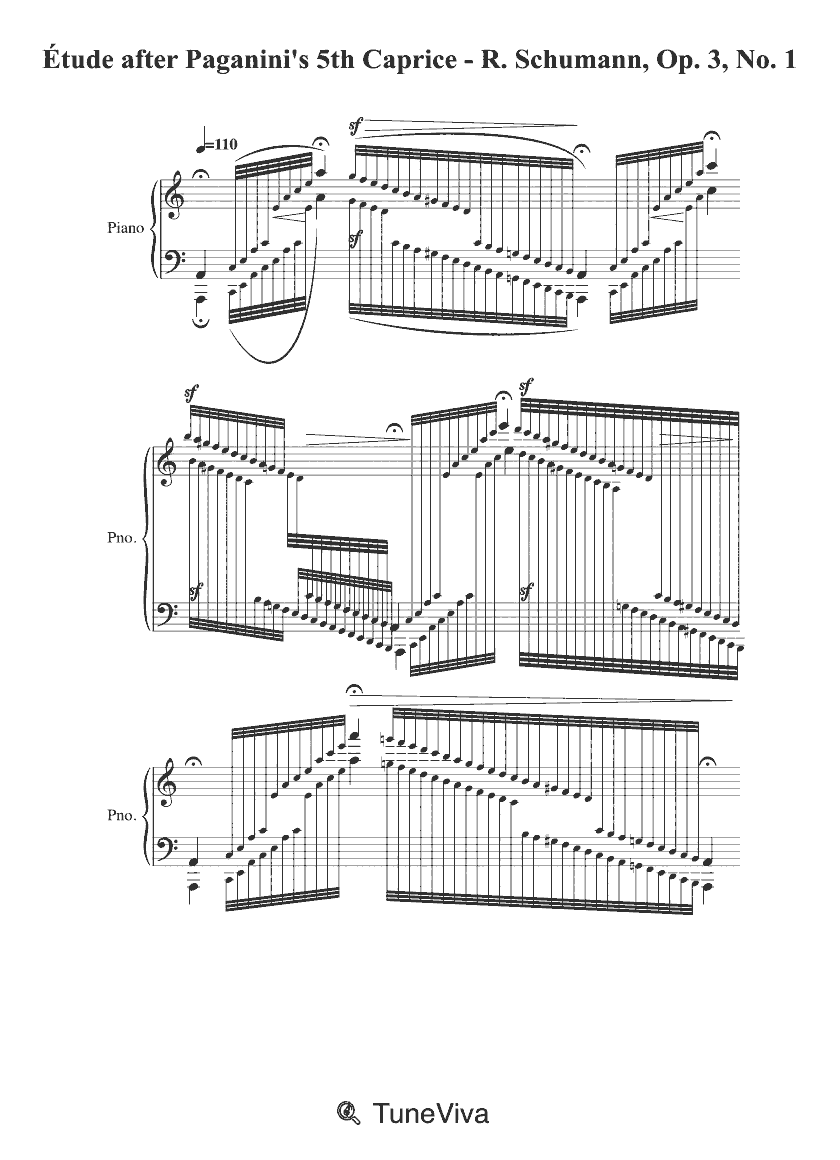
Robert Schumann
Op. 3 No. 1
Piano · 3 min 36 sec
Open score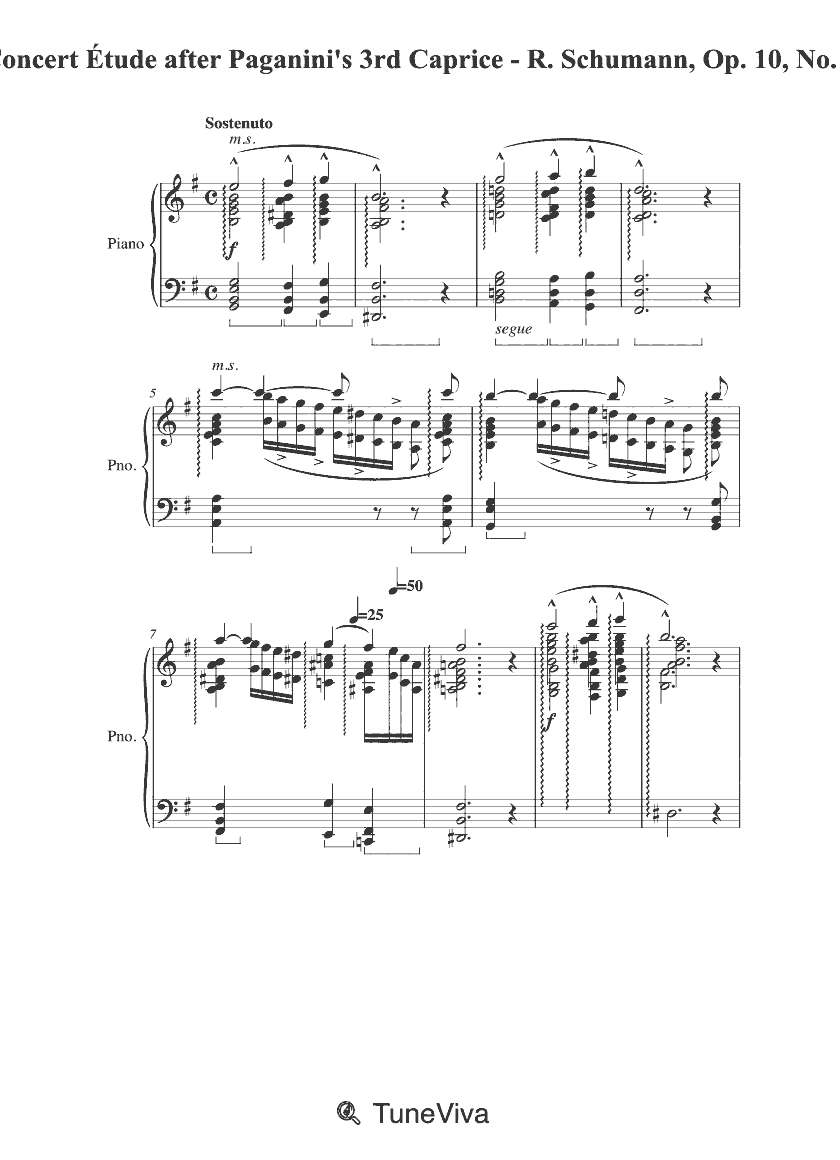
Robert Schumann
Op. 10 No. 6
Piano · 6 min 44 sec
Open score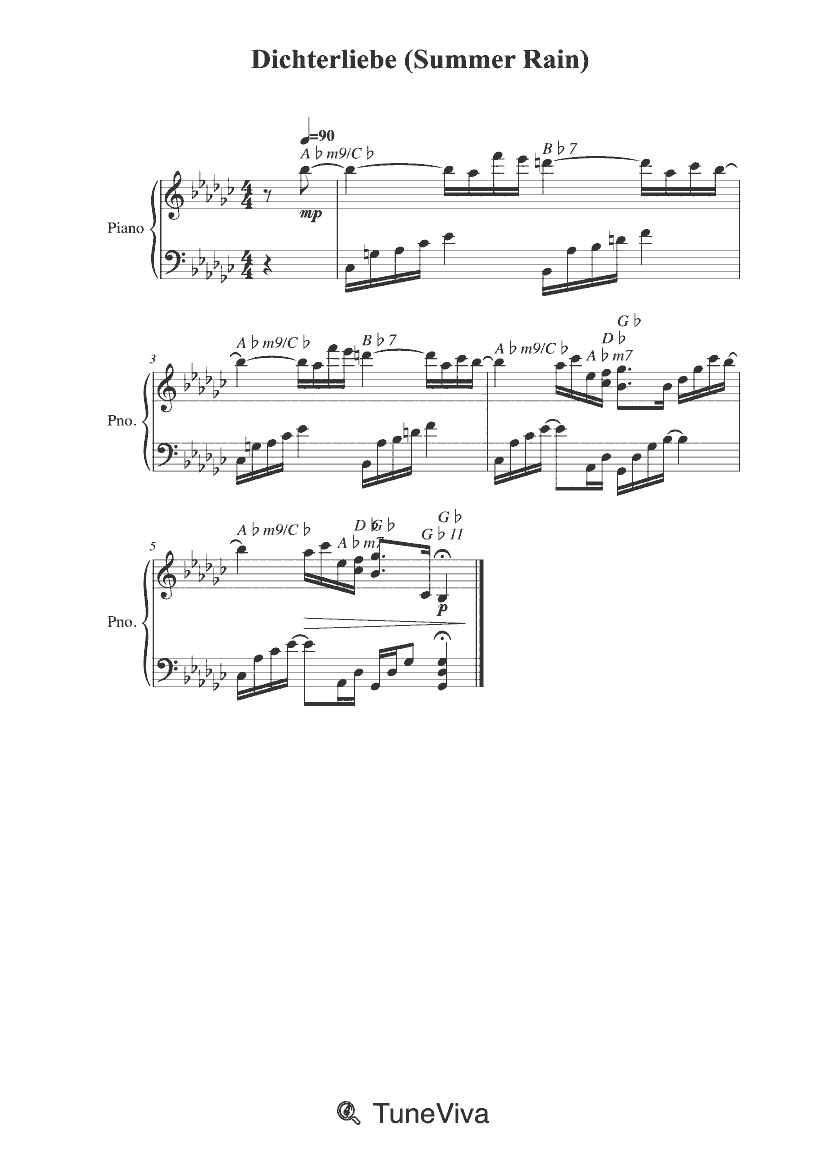
Robert Schumann
(Summer Rain)
Piano · 11 sec
Open score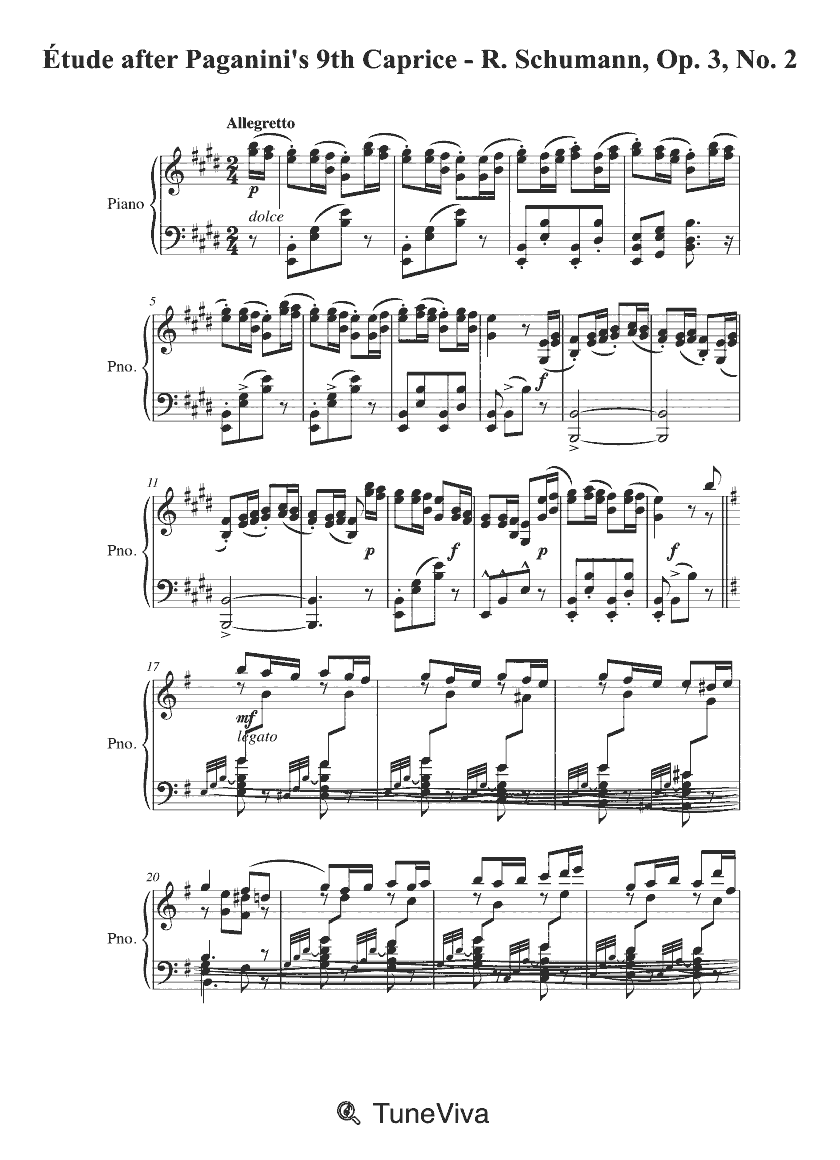
Robert Schumann
Op. 3 No. 2
Piano · 3 min 10 sec
Open score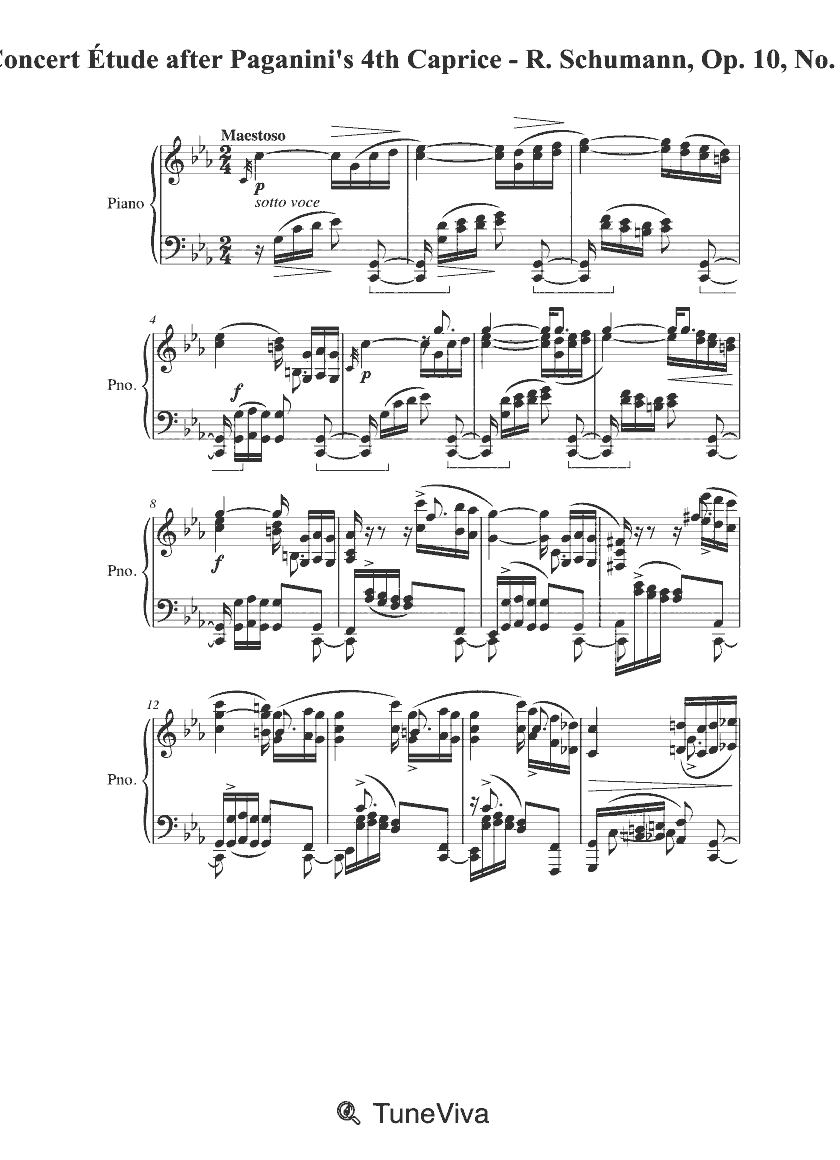
Robert Schumann
Op. 10 No. 4
Piano · 11 min 48 sec
Open score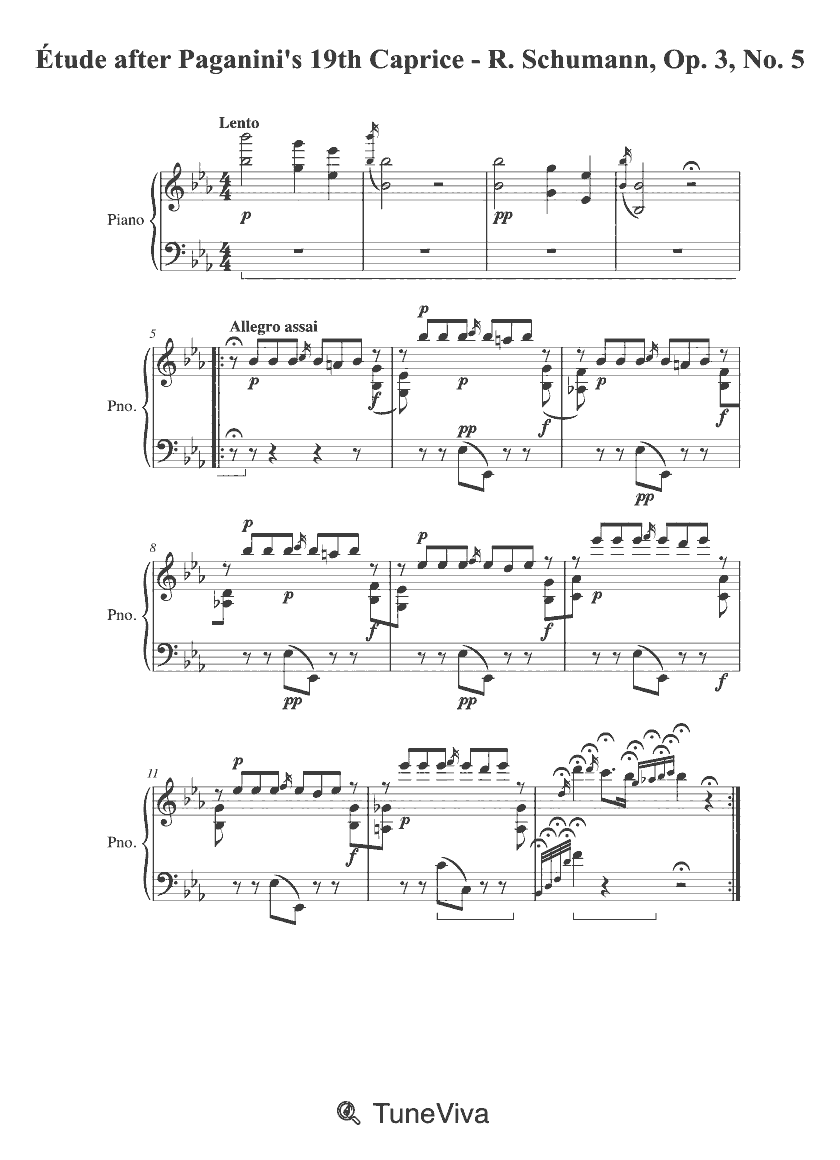
Robert Schumann
Op. 3 No. 5
Piano · 2 min 33 sec
Open score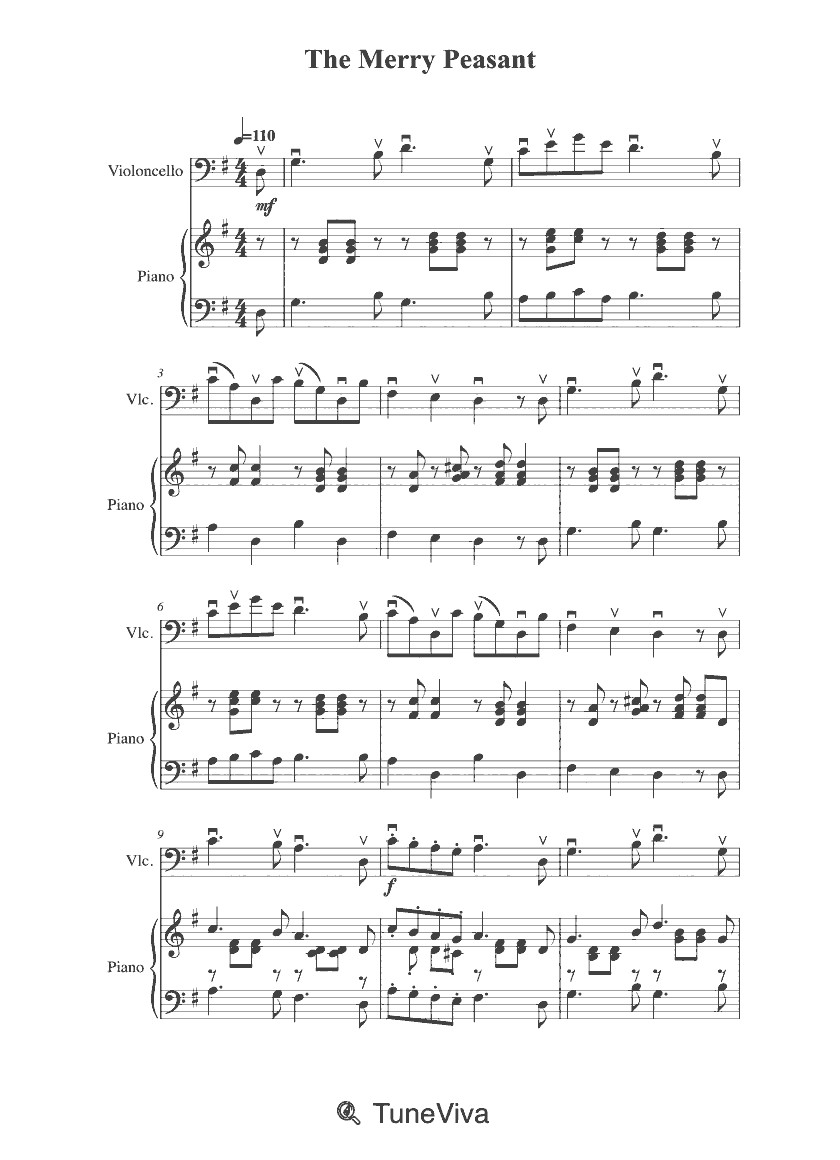
Robert Schumann
For Cello & Piano
Violoncello; Piano · 43 sec
Open score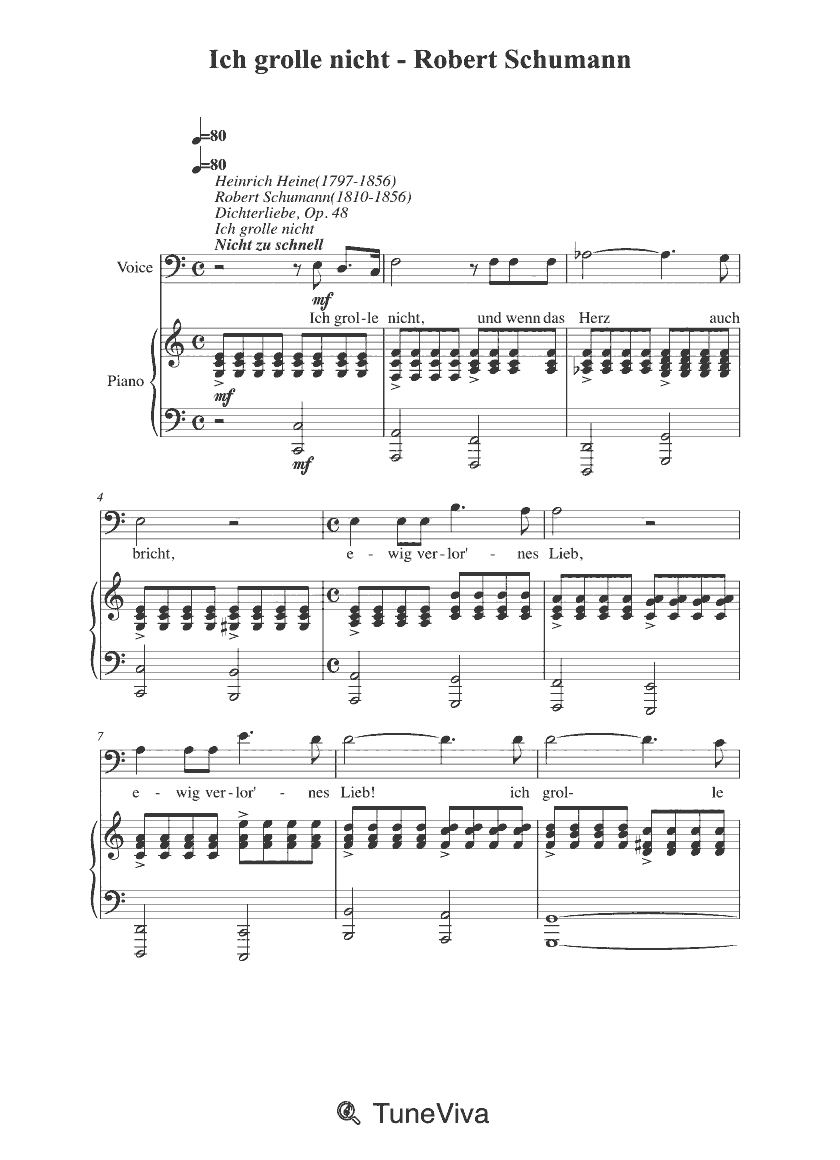
Robert Schumann
Voice; Piano · 1 min 47 sec
Open score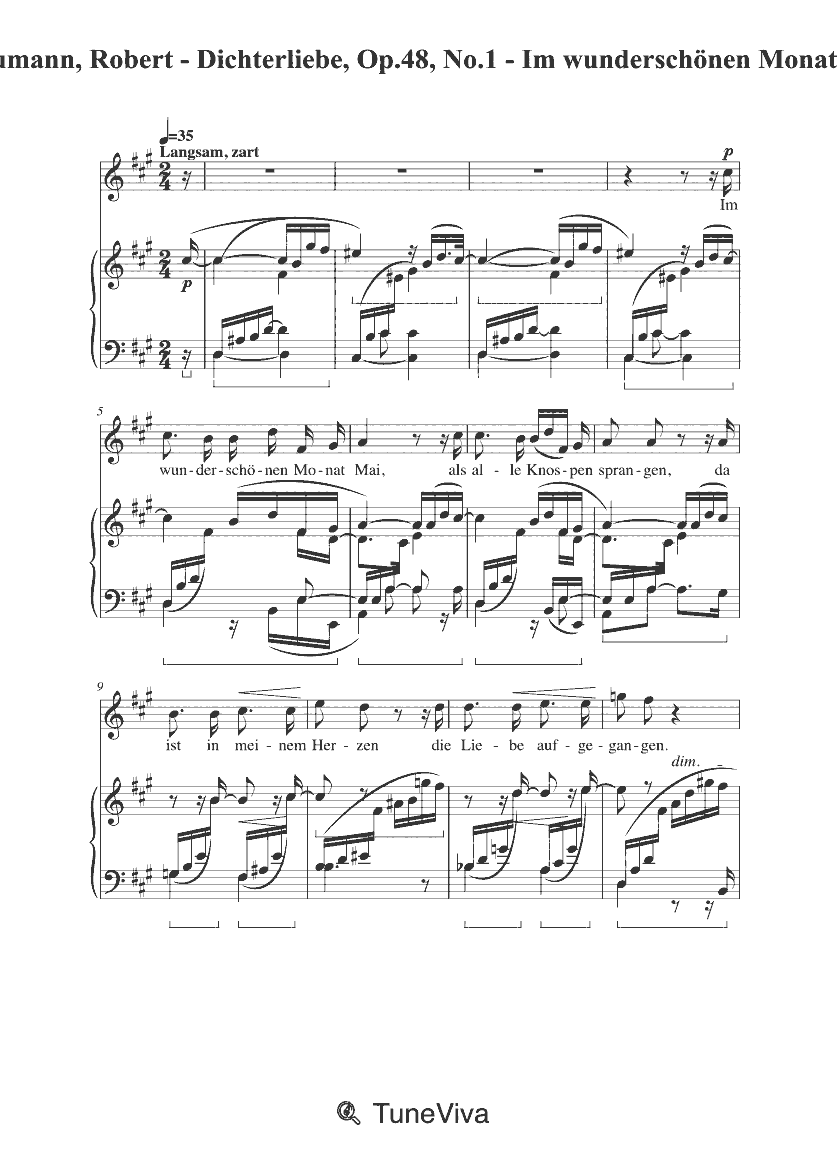
Robert Schumann
Voice; Piano · 2 min 24 sec
Open score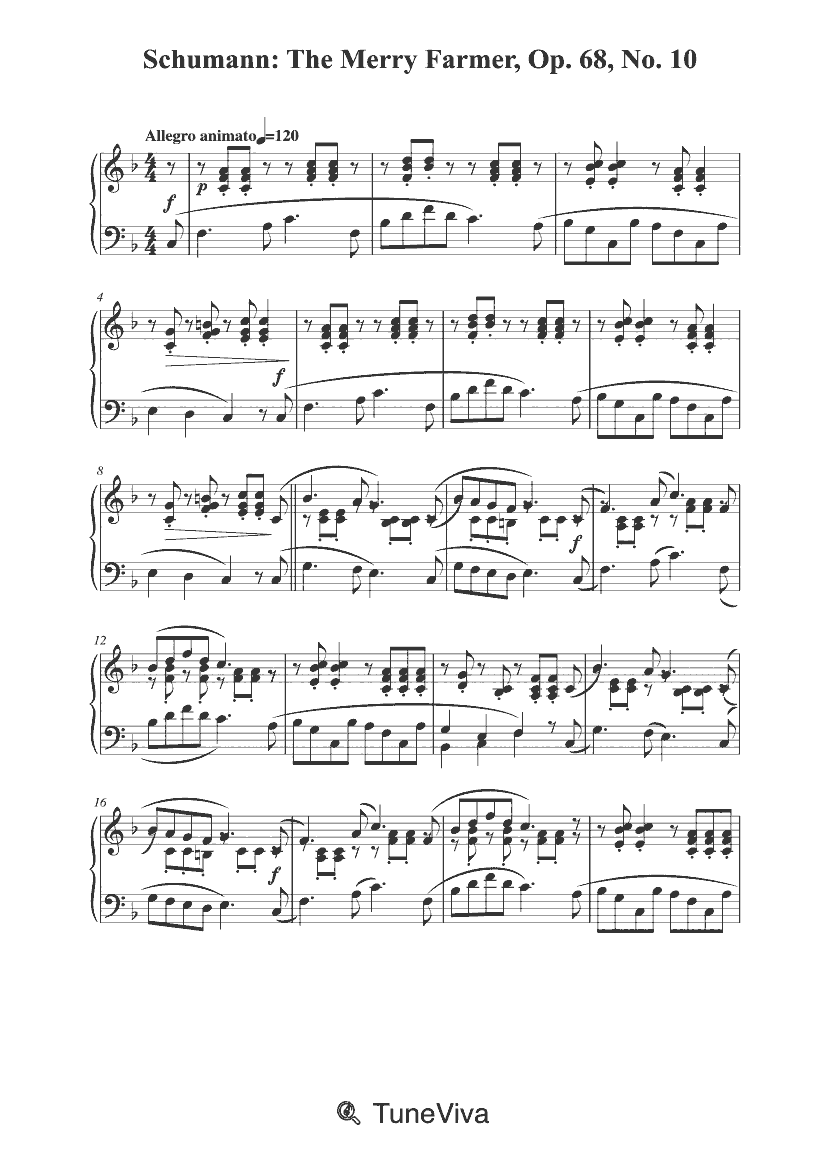
Robert Schumann
Op. 68 No. 10
Piano · 56 sec
Open score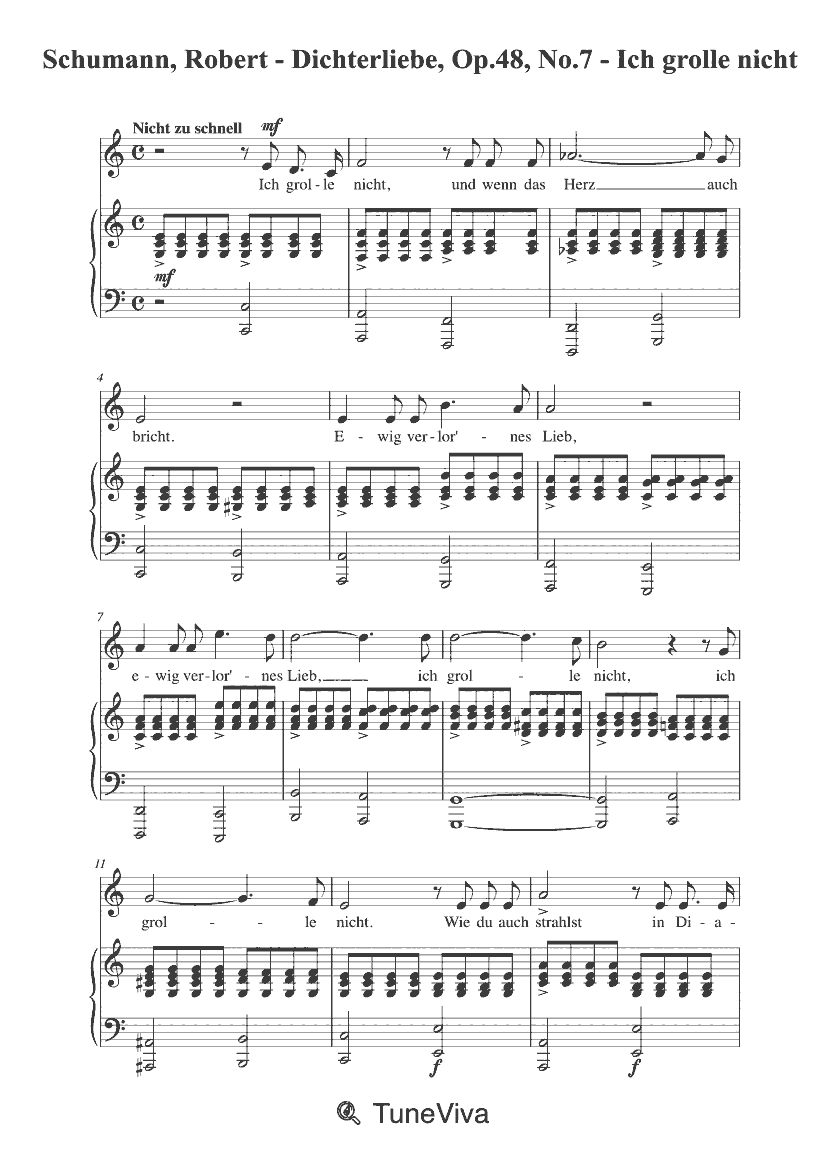
Robert Schumann
Voice; Piano · 2 min 32 sec
Open score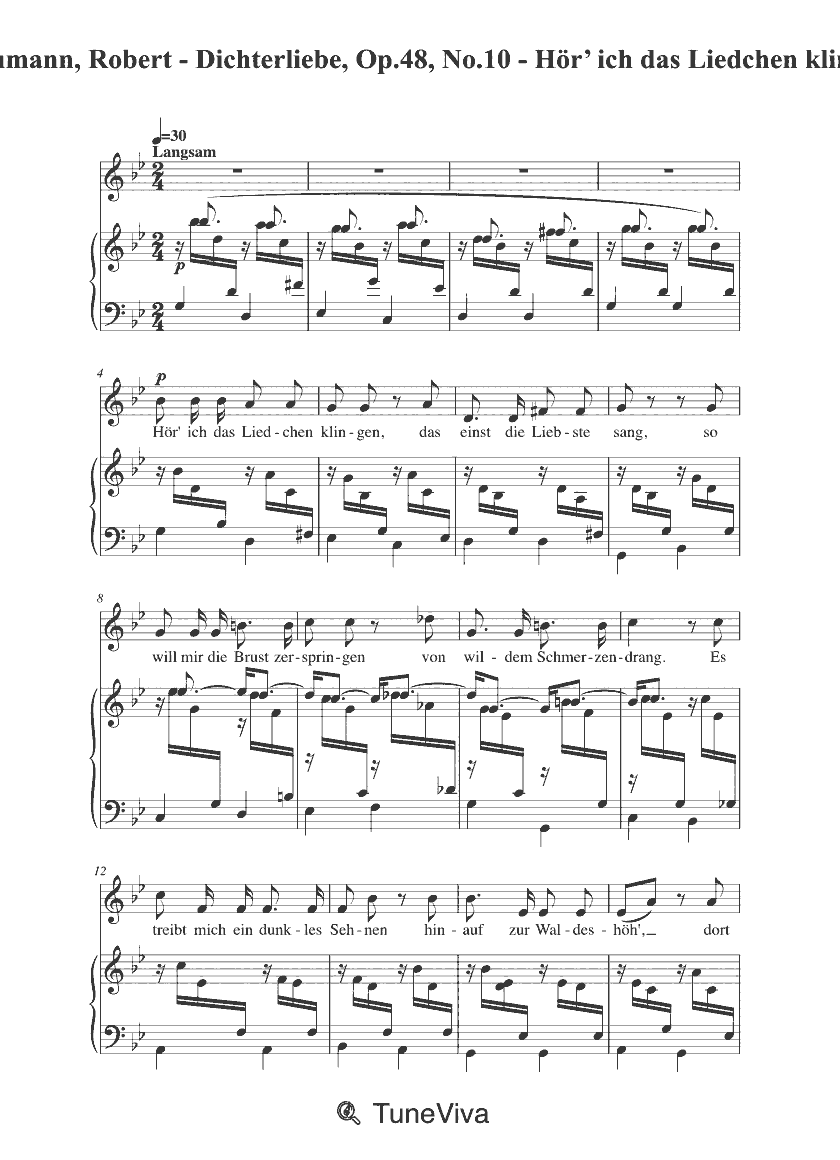
Robert Schumann
Voice; Piano · 3 min 4 sec
Open score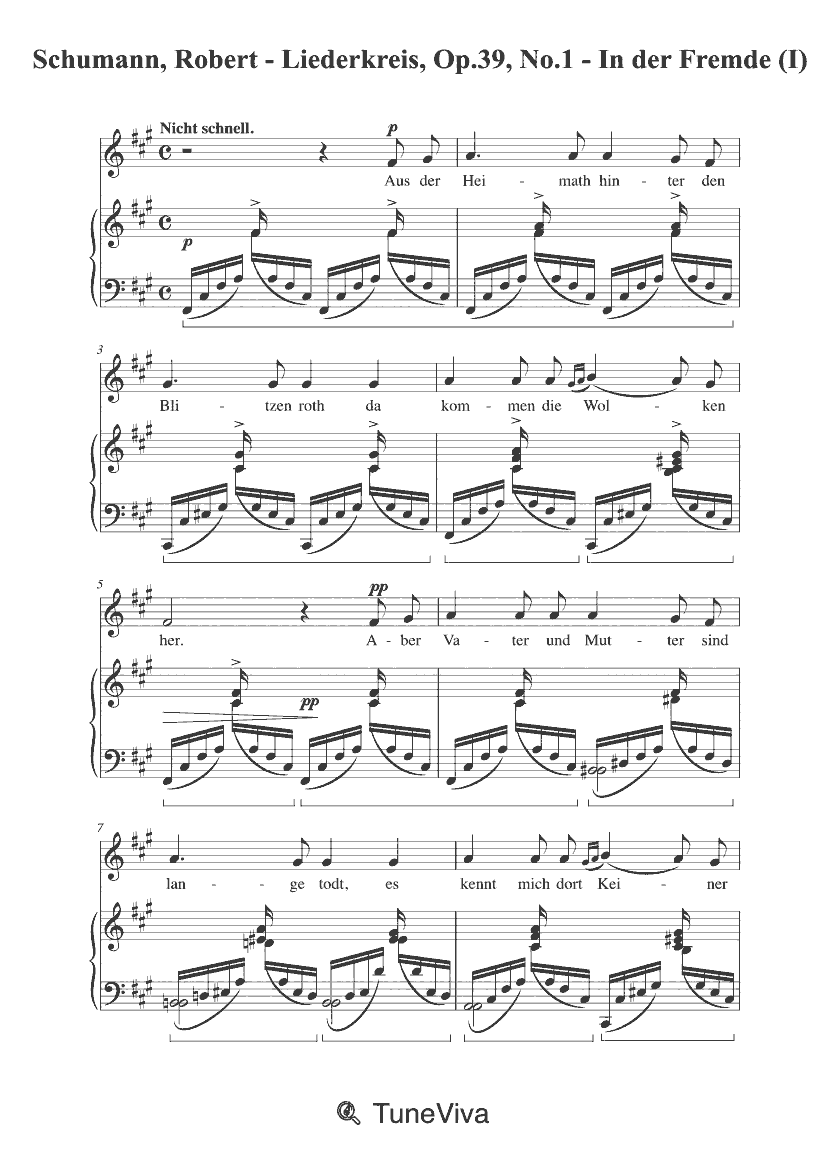
Robert Schumann
Voice; Piano · 2 min 32 sec
Open scorePage 1 of 7
In 1840 Robert Schumann wrote well over a hundred songs, almost all of them while waiting to marry Clara Wieck. The year is still called his Liederjahr, and it produced Dichterliebe and the Eichendorff Liederkreis. TuneViva's 133 Schumann scores follow both sides of that output: the piano cycles of the 1830s, including Kinderszenen, and the songs, along with teaching pieces from Album for the Young. The Wild Horseman and The happy farmer are among the most-viewed entries, evidence that the classroom has kept this music alive. The Toccata, Op. 7, shows the other side of his pianism: hard, fast and unrelenting. Robert Schumann sheet music spans the intimate piano works of the 1830s and the songs that poured out around his marriage to Clara Wieck in 1840. This page brings together piano scores such as Kinderszenen and selections from Album für die Jugend, songs and song cycles including Dichterliebe, and a piano score of the Toccata, Op. 7. Schumann was a German composer, pianist and music critic of the early Romantic era, and his music often reflects the contrasting sides of his personality that he named Florestan and Eusebius. The guidance below suggests ways into the piano music, the songs and the score choices available here.
Schumann was born in Zwickau, Saxony, on 8 June 1810 and died in Bonn on 29 July 1856. He studied law at Leipzig and Heidelberg before committing to music, but a worsening problem with his right hand ended his hopes of a virtuoso career. He turned to composition and criticism, co-founding the Neue Zeitschrift für Musik in 1834 and editing it for a decade. His writing used the alter egos Florestan, impetuous and extrovert, and Eusebius, gentle and poetic, and those characters shape the music as much as the prose.
His piano music of the 1830s includes Carnaval, the Davidsbündlertänze, the Fantasiestücke, Kreisleriana and Kinderszenen. The Toccata, Op. 7, belongs to the same early period and is a study in constant double-note motion. In 1840 he married Clara Wieck after a legal battle with her father Friedrich, his former piano teacher, and the song year followed. Dichterliebe sets sixteen Heine poems; the Liederkreis, Op. 39, sets Eichendorff. Album für die Jugend, Op. 68, appeared in 1848 as a graded collection for young players, and its pieces, including The Wild Horseman and The Merry Farmer, are still standard teaching material.
The catalog's 133 entries run to about 313 minutes and 132,488 notated notes. Both The happy farmer and The Merry Farmer, Op. 68, No. 10, appear as titles, apparently the same piece recorded twice, so expect some duplication when browsing. 95 scores include lyrics, reflecting how large the song repertoire is here.
A route into Schumann's piano music: Schumann's early piano output includes Carnaval, Davidsbündlertänze, Fantasiestücke, Kreisleriana and Kinderszenen, written in the period 1834–1838 according to the supplied biography. Kinderszenen is a distinctive entry point because it consists of thirteen short pieces, and Träumerei is among Schumann's best-known works. The page also lists a piano score of the Toccata, Op. 7, for players looking for a different side of his keyboard writing.
Florestan and Eusebius as interpretive clues: Schumann gave names to two sides of his personality: Florestan, impetuous, and Eusebius, gentle and poetic. The biography notes that he distinguished these contrasting aspects both in his writing for the Neue Zeitschrift für Musik and in his music. When shaping a phrase, that contrast can help: listen for abrupt, energetic gestures alongside softer, more sustained lyrical writing, rather than treating a whole piece as a single mood.
Choosing between piano and song scores: The page includes piano-only scores and voice-and-piano scores. Kinderszenen and the Album für die Jugend selections are listed as piano scores, while Dichterliebe and Liederkreis are listed with voice and piano parts. Check the part listing on an individual score before choosing, and remember that a song score calls for both a singer and a pianist.
Where Schumann's reputation sits: During Schumann's lifetime, listeners recognised his piano music and songs more readily than his other works, and for many years there was a belief that his later music lacked the inspiration of his early output. Modern accounts note that this view has become less prevalent, but his piano works and songs from the 1830s and 1840s remain central to his reputation. That is a practical guide to the core repertoire, not a reason to ignore his chamber, orchestral and choral music.
Kinderszenen, Op. 15, is probably the most familiar, largely because of Träumerei, and it is the most-viewed Schumann score here.
He wrote well over a hundred songs that year, including Dichterliebe and the Eichendorff Liederkreis, after marrying Clara Wieck.
Parts of it are. Op. 68 was written as a graded collection, though the later numbers demand a secure technique.
Robert Schumann was a German composer, pianist and music critic of the early Romantic era. His reputation rests chiefly on piano works and songs from the 1830s and 1840s, including the piano cycles Carnaval, Davidsbündlertänze, Fantasiestücke, Kreisleriana and Kinderszenen, and the song cycle Dichterliebe. Schumann also wrote chamber, orchestral, choral and operatic music, though his other works were less generally admired during his lifetime.
Kinderszenen, Op. 15, is a set of thirteen piano pieces that Robert Schumann wrote in 1838. Schumann originally wrote thirty movements and chose thirteen for the final version; the unused movements were later published in Bunte Blätter, Op. 99, and Albumblätter, Op. 124. Träumerei, No. 7, is one of his best-known pieces, and the set's titles were added after the music was completed as hints for performance and interpretation.
Dichterliebe, Op. 48, is Robert Schumann's best-known song cycle, composed in 1840. Its sixteen songs set poems from Heinrich Heine's Lyrisches Intermezzo, a collection published within Das Buch der Lieder. Schumann originally set twenty Heine poems, but sixteen appeared in the first edition published in 1844. The cycle is for voice and piano.
1840 was the year Robert Schumann married Clara Wieck, after Friedrich Wieck opposed the marriage. In the period immediately after the wedding Schumann composed prolifically in song, producing song cycles including Dichterliebe and Frauenliebe und Leben. This concentration on songwriting followed his earlier focus on piano music.
Florestan and Eusebius were alter egos that Robert Schumann used in his music criticism and music. Florestan represented his impetuous side, while Eusebius represented his gentle, poetic side. Schumann distinguished between these two contrasting aspects of his personality in his writing for the Neue Zeitschrift für Musik and in his compositions.
Robert Schumann wrote one opera, Genoveva, completed in 1850. The work was not a success and has seldom been staged since. Schumann's reputation instead rests mainly on his piano music and songs.
Robert Schumann's hopes of a virtuoso piano career were frustrated by a worsening problem with his right hand. He concentrated on composition instead, and his early works were mainly piano pieces, including Carnaval, Davidsbündlertänze, Fantasiestücke, Kreisleriana and Kinderszenen.
The Neue Zeitschrift für Musik was a music journal that Robert Schumann co-founded in 1834 and edited for ten years. Schumann used his writing there to distinguish between Florestan and Eusebius, the impetuous and gentle sides of his personality. The journal is therefore part of his activity as a critic as well as a composer.