classical
1 tracks
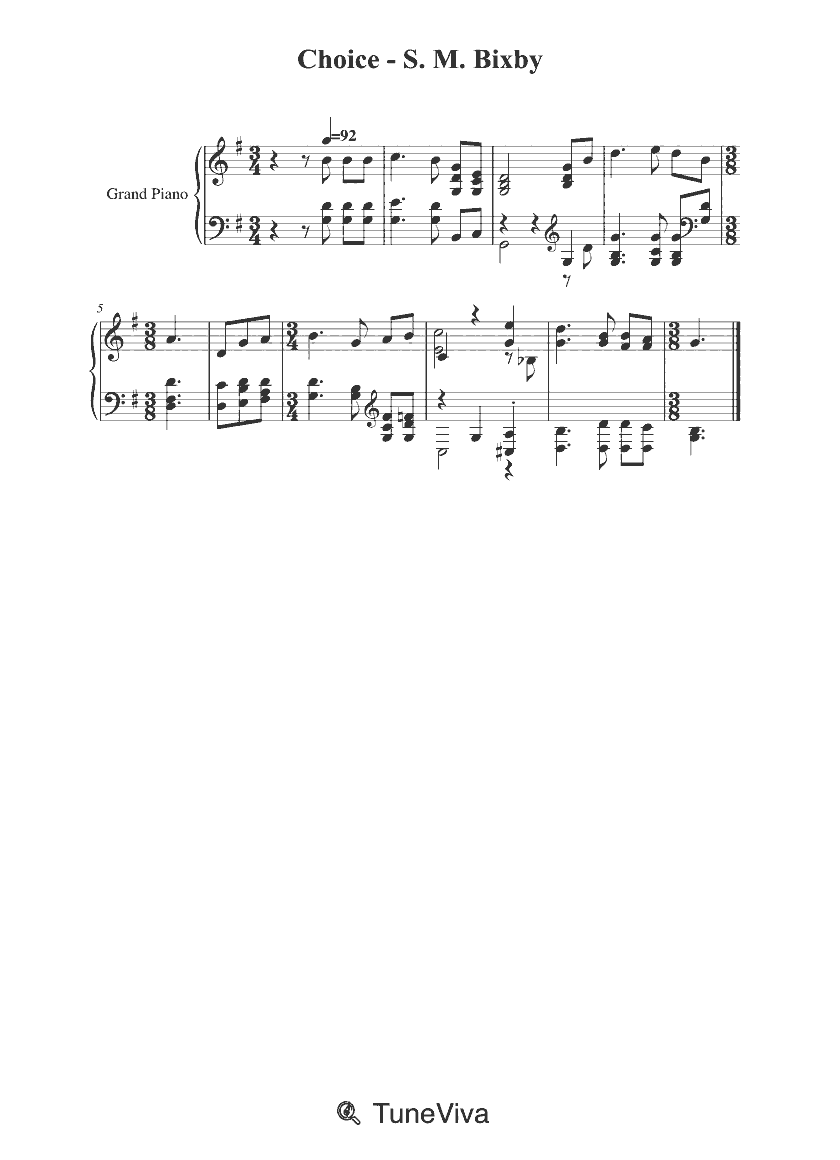
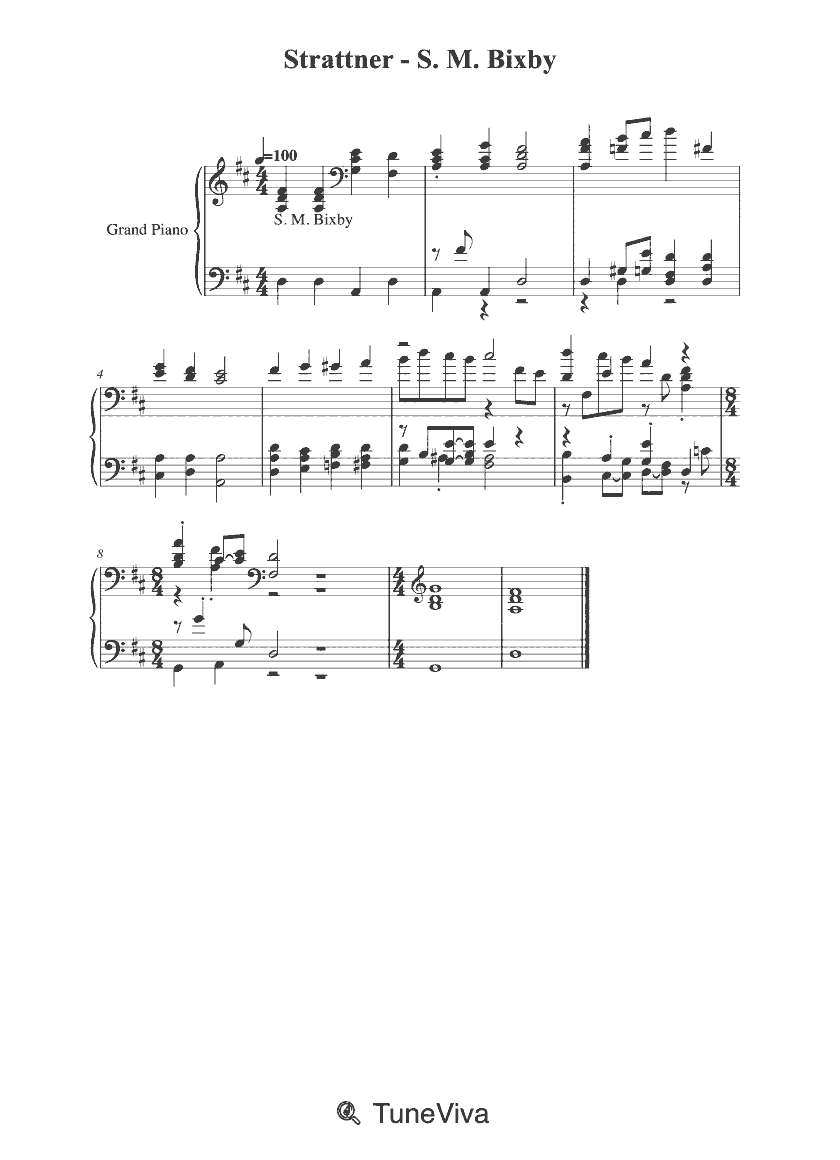
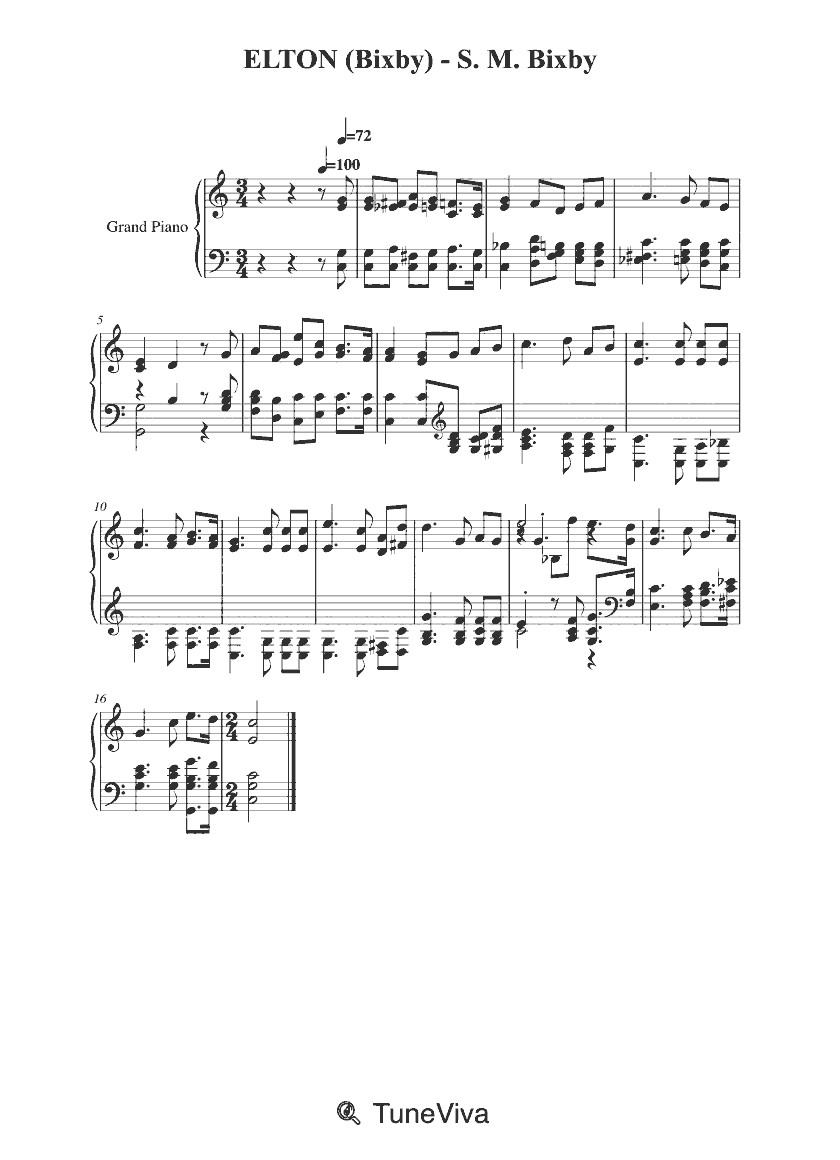
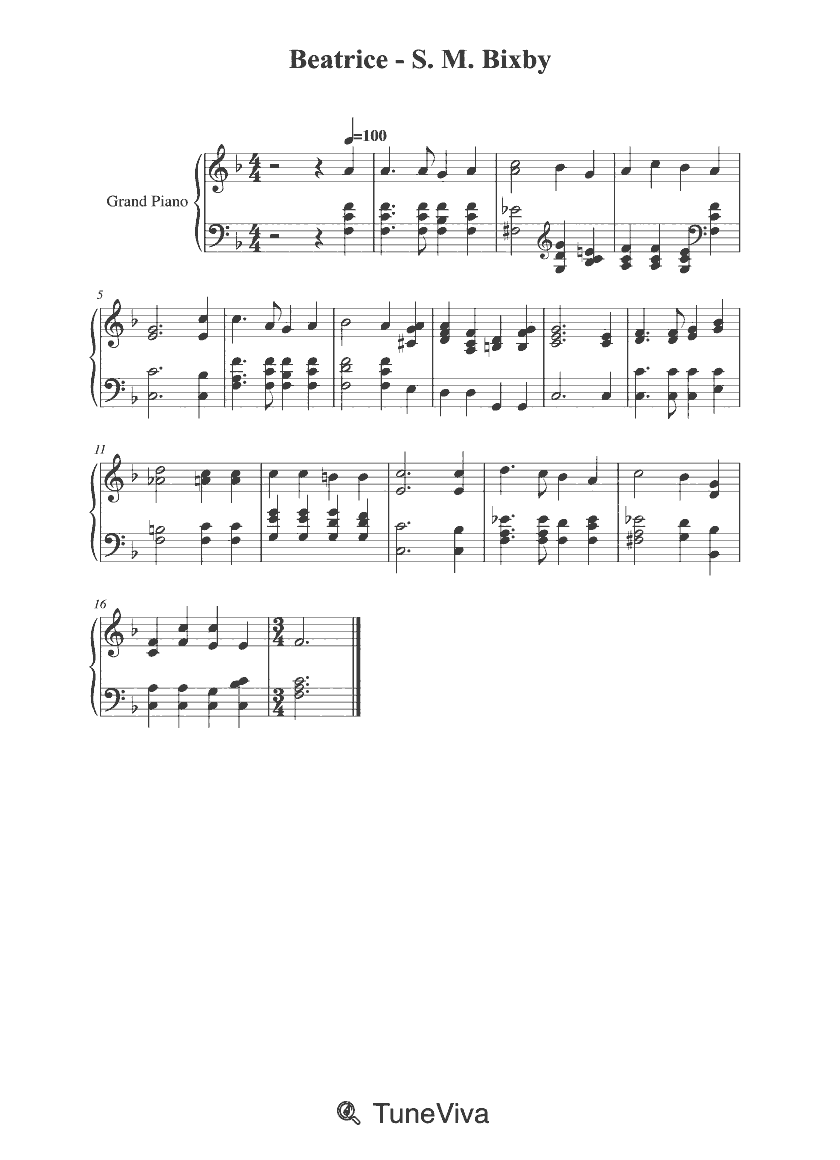
Samuel Merrill Bixby ran a household-goods company in New York and edited hymnals on the side, and the 52 scores under his name come from that second life: hymn tunes, most of them a single stanza long. The catalogue runs to about 33 minutes of music and 10,094 notated notes, and 29 entries carry lyrics. Every score is filed as classical, and the difficulty scale stays low, with 41 entries at index 1 and 11 at index 2.
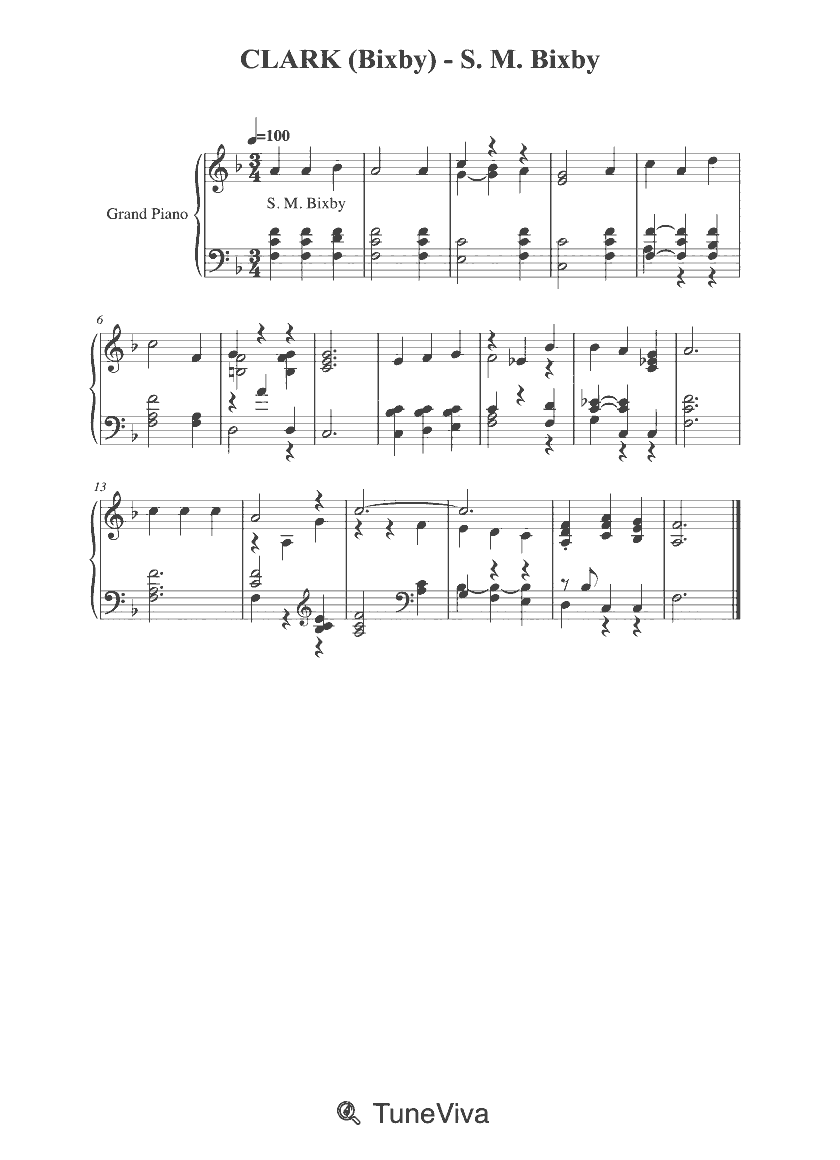
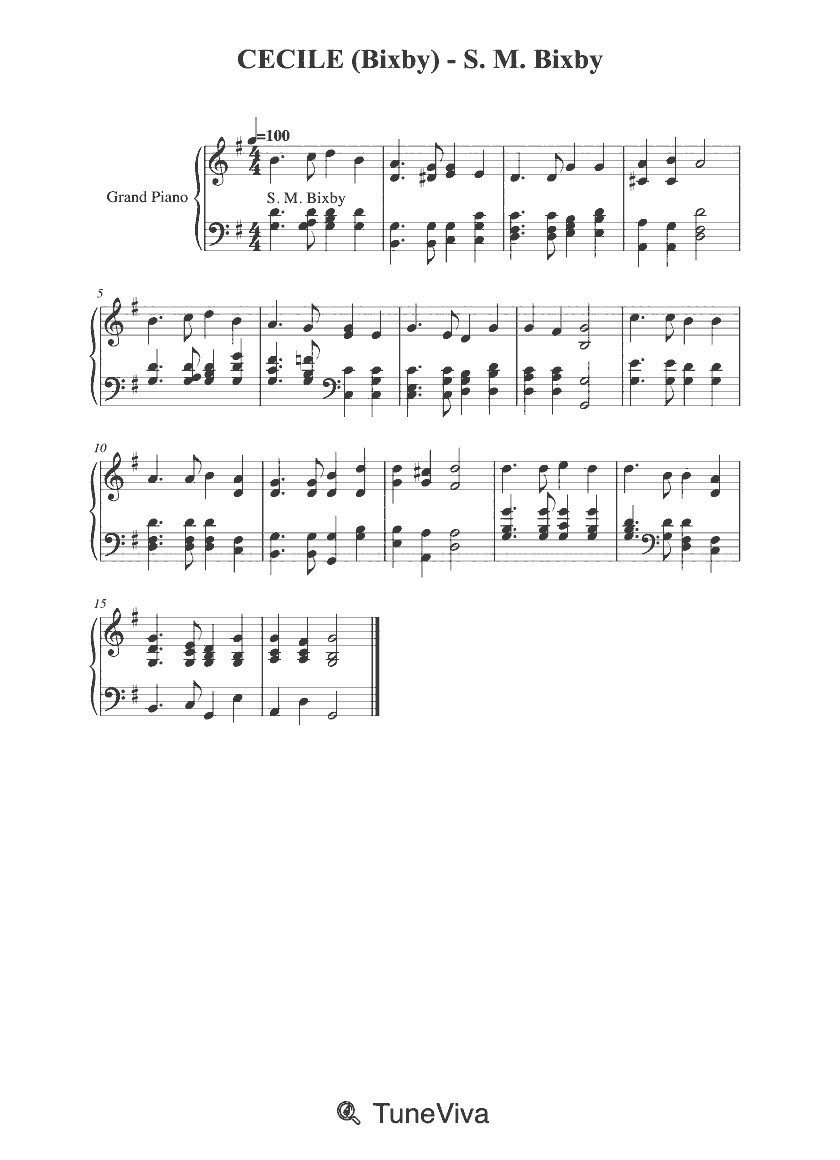
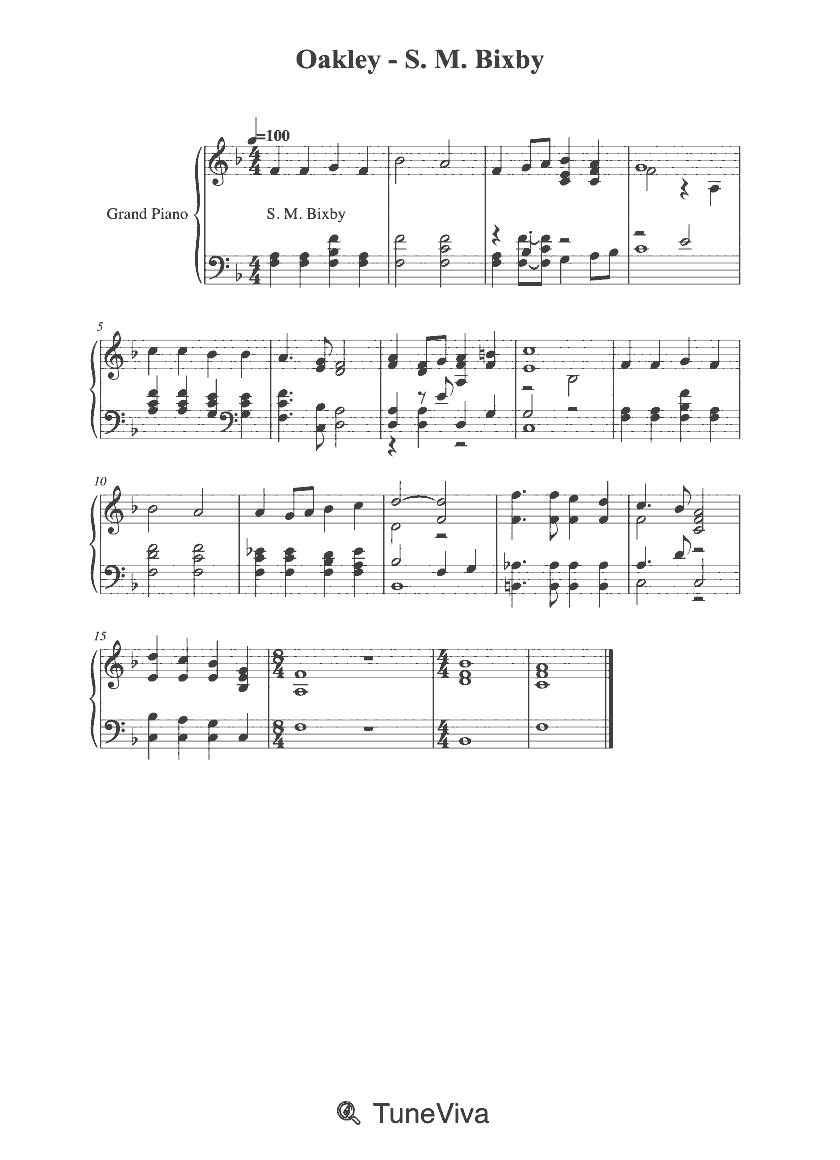
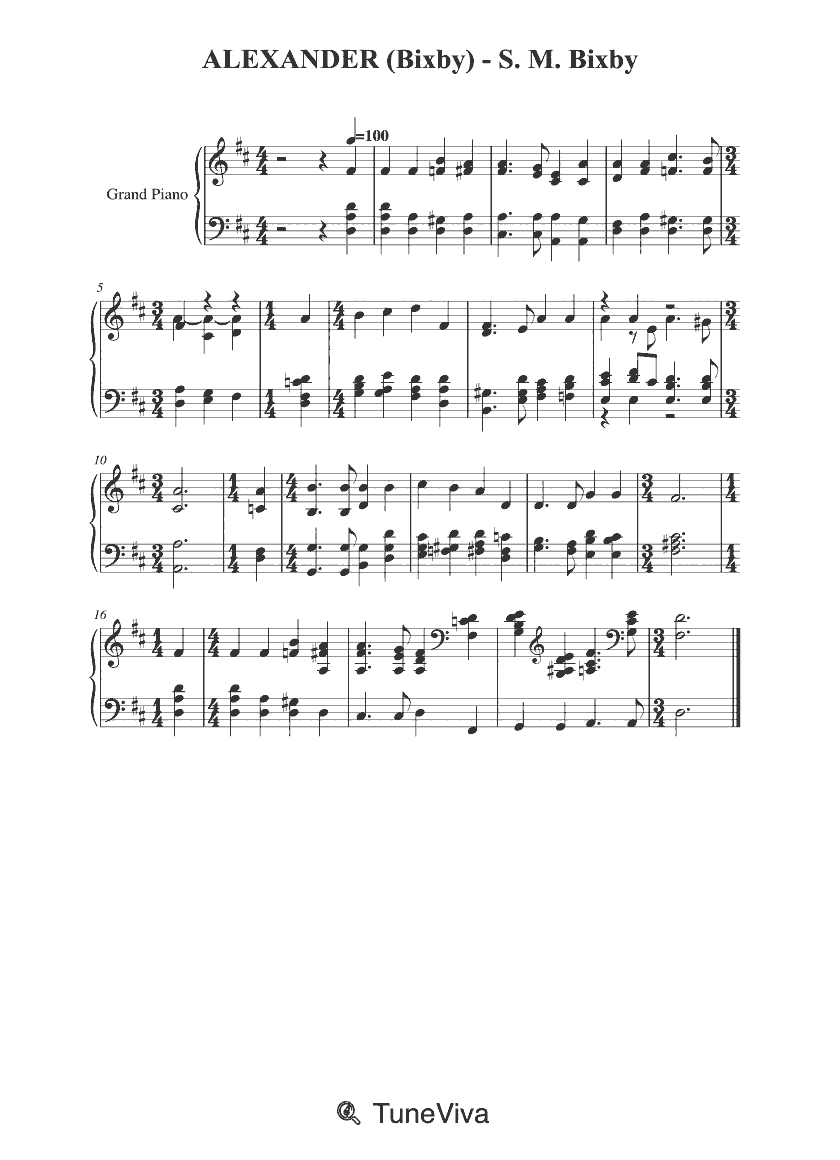
The most-viewed title is ALEXANDER, followed by SERVICE and Mildred. Most titles are tune names rather than hymn first lines, so the text has to be matched from the metre.
Bixby was born on 27 May 1833 in Haverhill, New Hampshire, and made his money outside music. In the late 1800s he founded S. M. Bixby & Co., which manufactured shoe blackings, and he died on 11 March 1912 in Fordham, New York. Music was the other half of his life: he was a Sunday-school superintendent and choir leader, and he compiled The Church and Home Hymnal (1893), Evangel Songs (c. 1894), Gloria Deo (Funk & Wagnalls, 1901) and Bixby's Home Songs.
The catalogue's titles are the tune names from those books. Gloria Deo's metrical index lists Alexander, Alberti, Palmer, Scripture, Service, Morning Prayer, Pardon, Agnew and Choice, and the pages carrying Alexander, Alberti, Palmer, Scripture, Service, Moosilauk, Main and Pardon credit the music to Bixby. The metres travel with the names — Alexander and Alberti are double common metre, Service short metre, Mildred long metre — which is how a choirmaster matches a text to a tune.
The scores are short. About 33 minutes across 52 items averages under forty seconds, so these are single-stanza settings rather than full hymns with several verses. Lyrics are recorded for 29 entries; the rest are tune pages whose text the file does not carry. Eleven sit at complexity index 2 and none higher, so a parish choir that reads four-part harmony will not be stretched.
These are four-part hymn tunes, so the soprano line is the melody and everything else is accompaniment: keep the inner parts quiet and let the tune carry. Because most items last well under a minute, rehearse the first two bars and the final cadence rather than the middle. Match the text to the metre before you sing — Alexander and Alberti take double common metre, Service short metre — and resist a slow tempo, which turns a dance-like hymn into a dirge. On the organ, use light registration and clear articulation.
The most-viewed tune here. Gloria Deo indexes Alexander as a double common-metre tune and the page credits the music to Bixby.
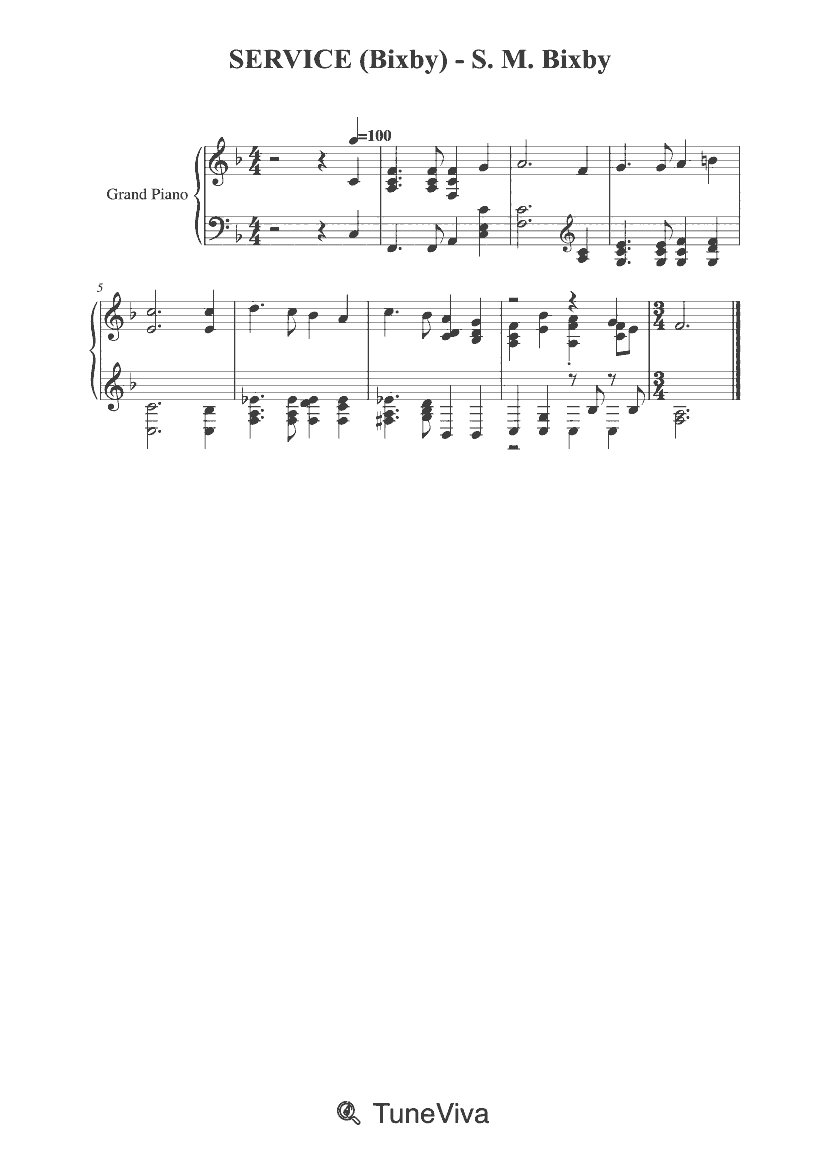
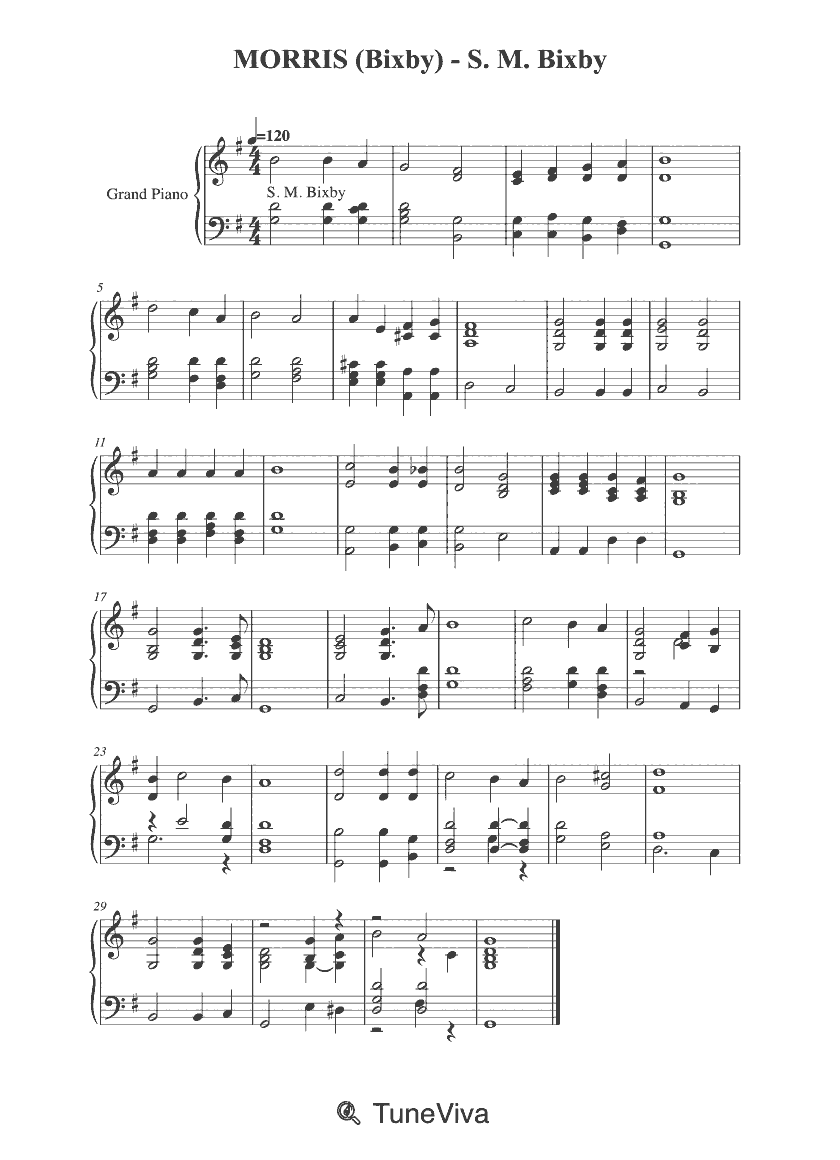
A short-metre setting; in Gloria Deo the tune carries a text by James Montgomery alongside Bixby's name.
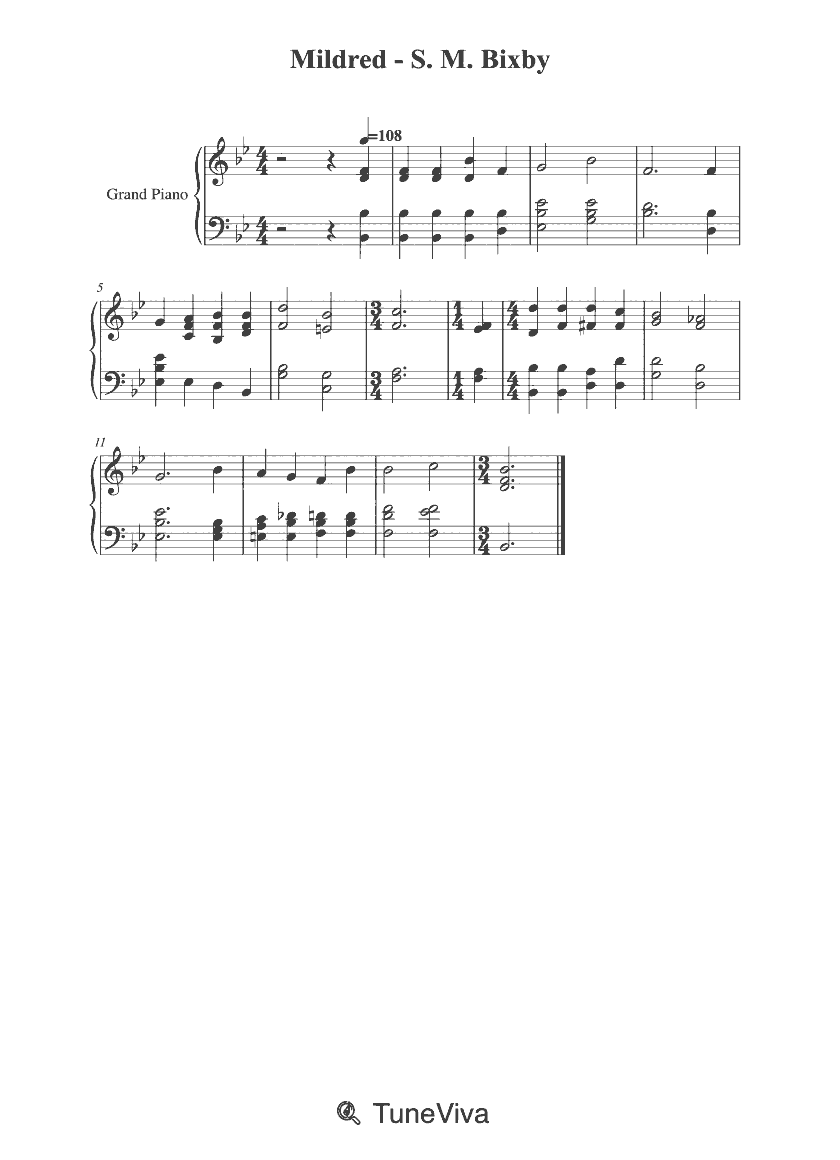
A long-metre tune, indexed at page 156 of Gloria Deo and page 109 of the 1893 Church and Home Hymnal.
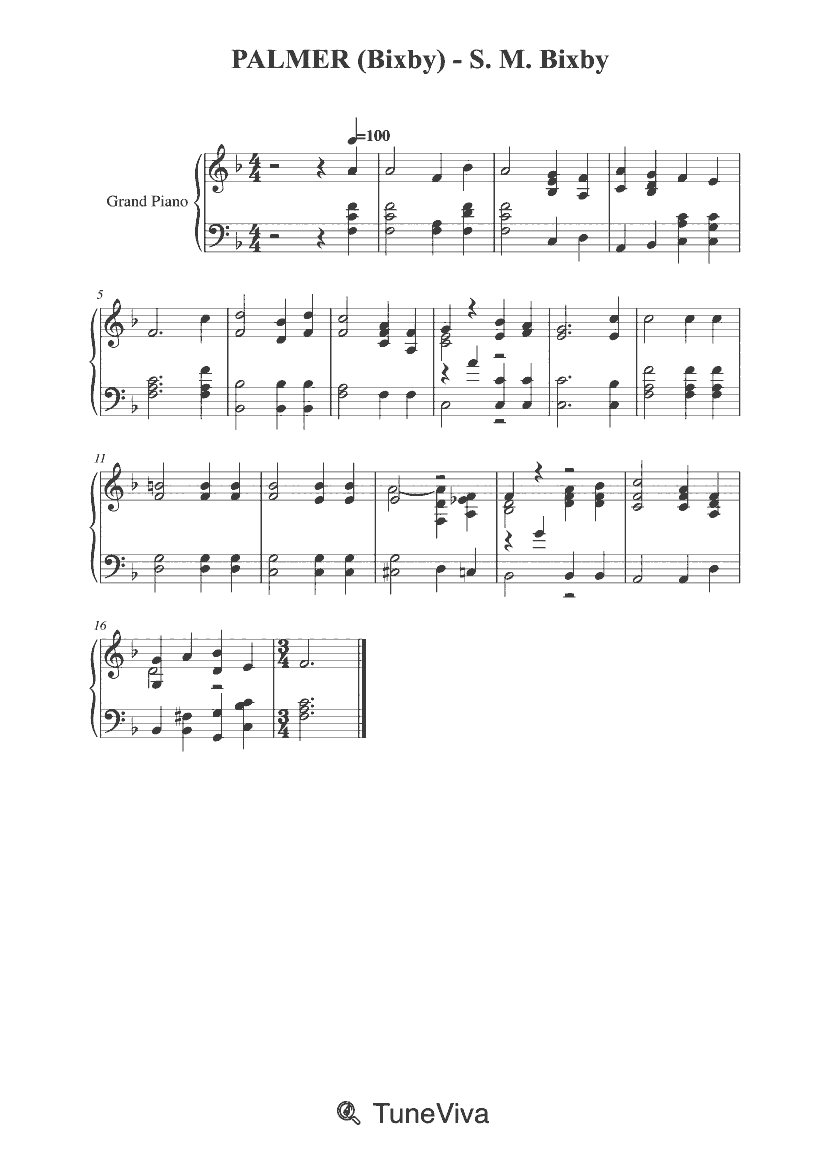
An 11s tune named for Ray Palmer, whose hymn text it sets in Gloria Deo; the page again names Bixby.
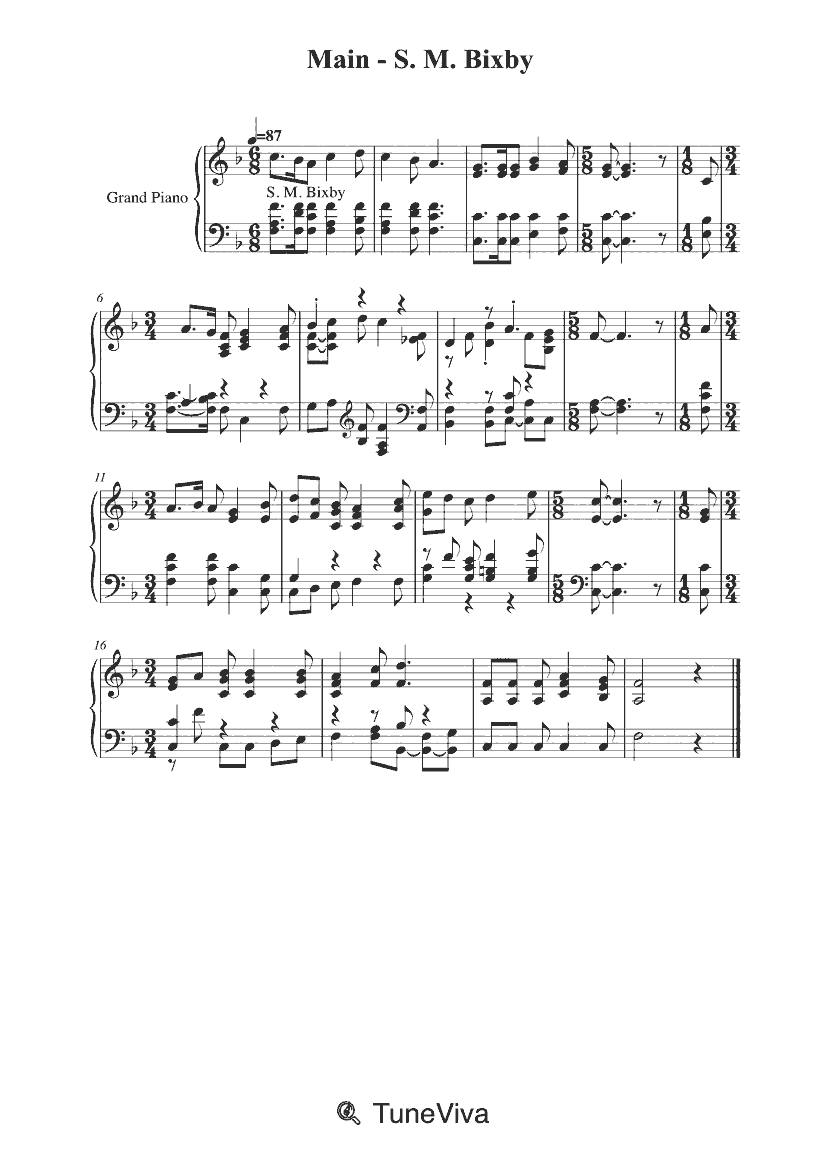
In the 1893 hymnal Main carries a children's hymn, 'Jesus, hear a little child', under Bixby's 1892 copyright.
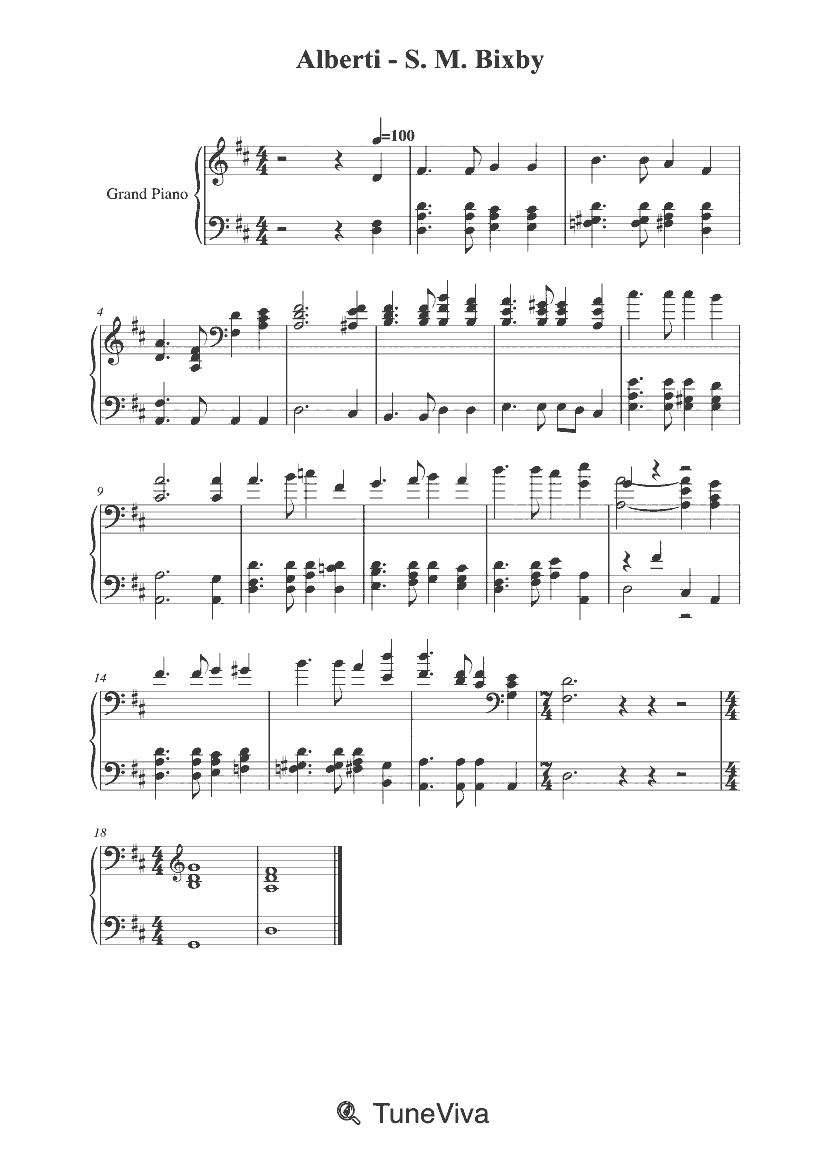
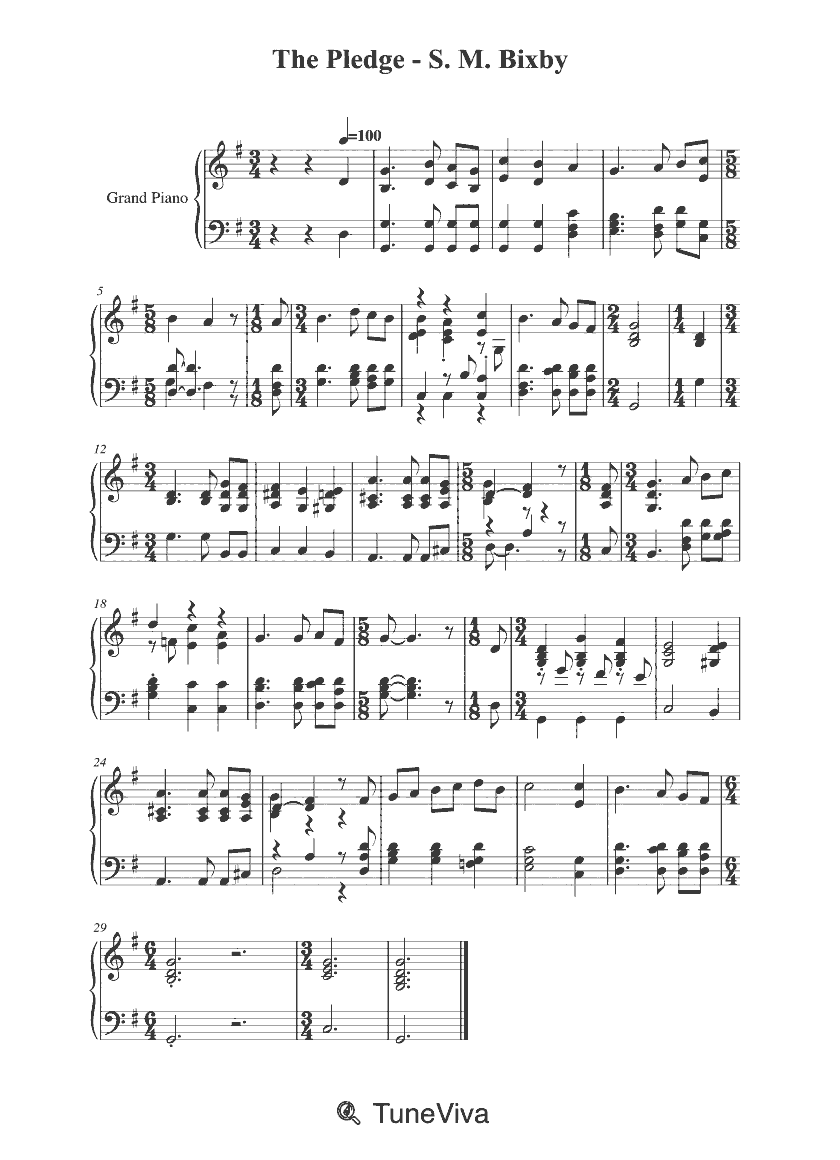
Another double common-metre tune, credited to Bixby in Gloria Deo and one of the longer items at about 38 seconds.
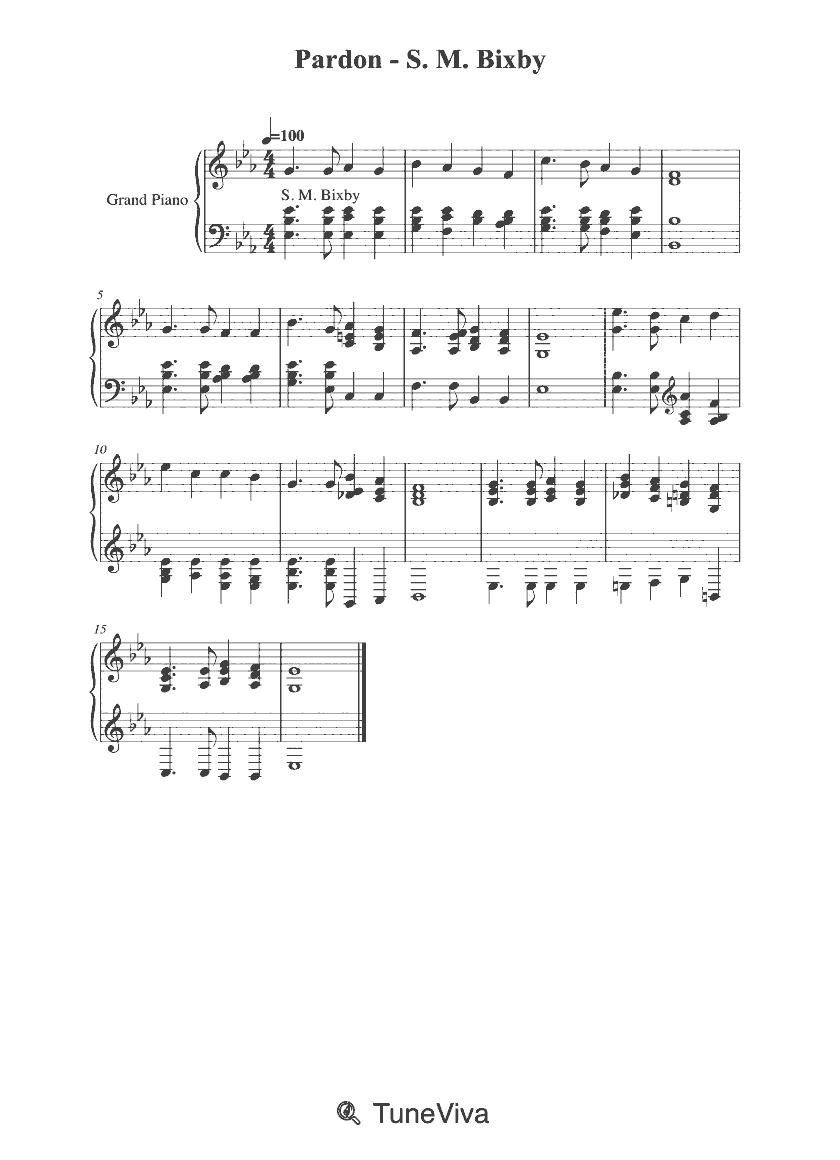
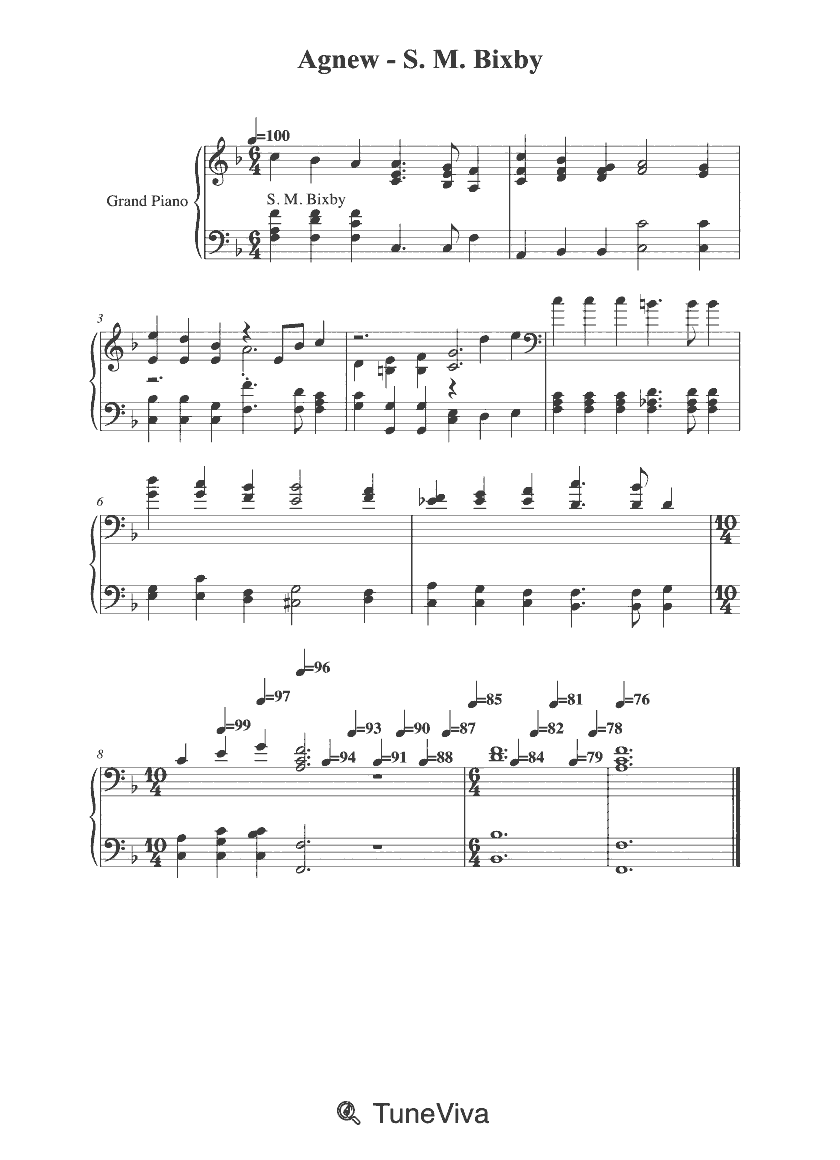
An 8s & 5s tune, a metre rare enough in hymnals that the text has to be chosen to fit it; about 31 seconds.
Common metre. The 1893 hymnal sets 'How shall the young secure their hearts' to this tune.
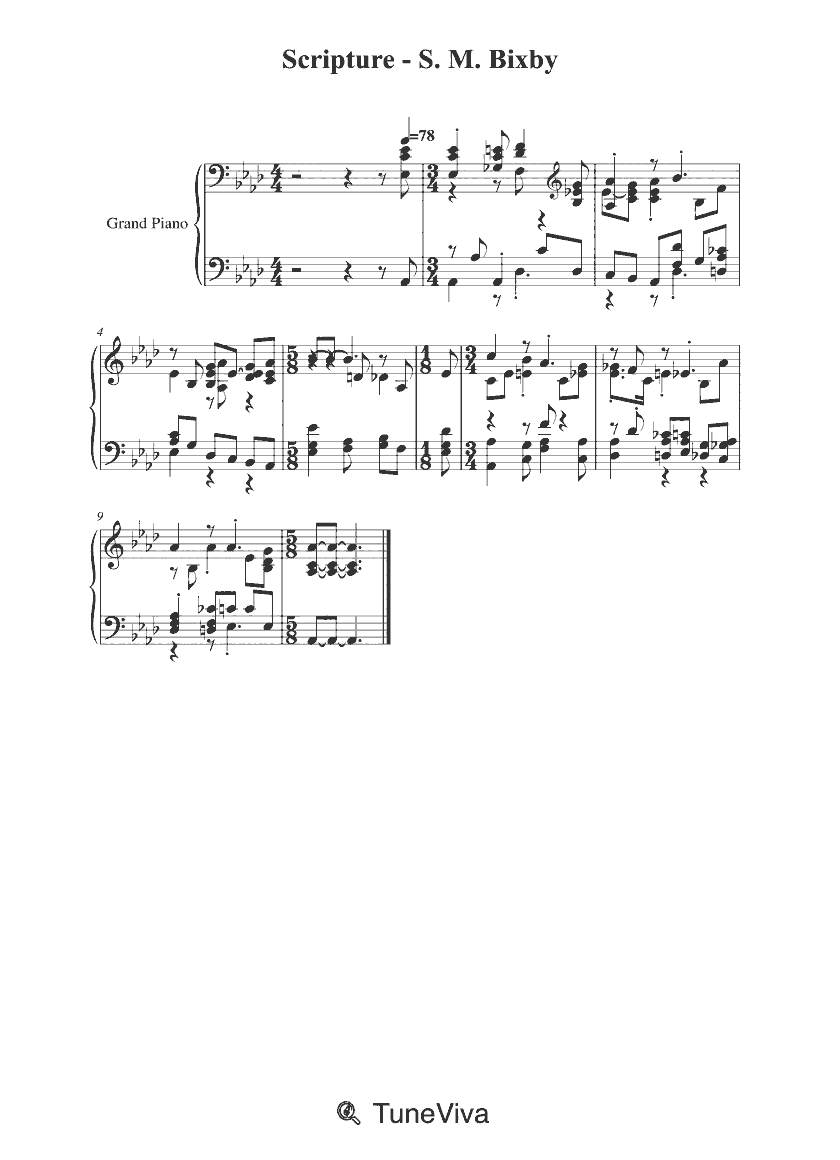
Double short metre, indexed at page 342 of Gloria Deo; about 38 seconds, one of the longest files in the collection.
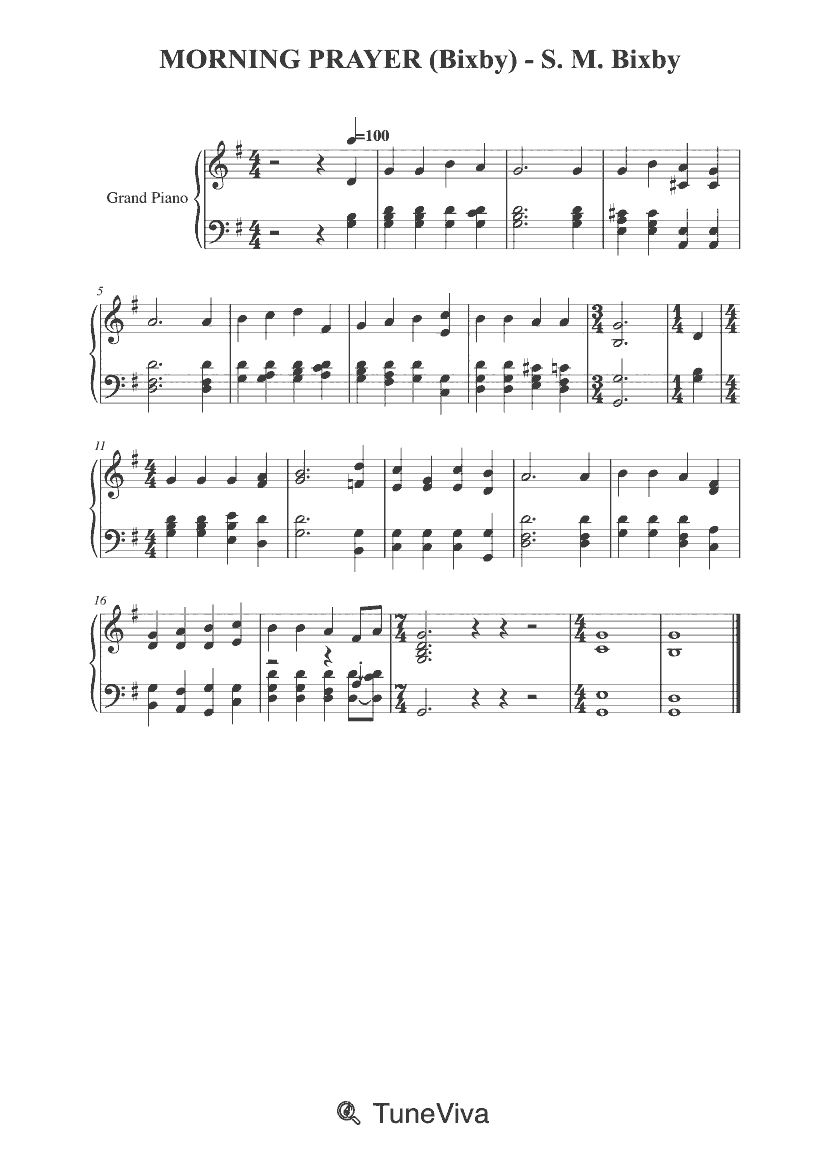
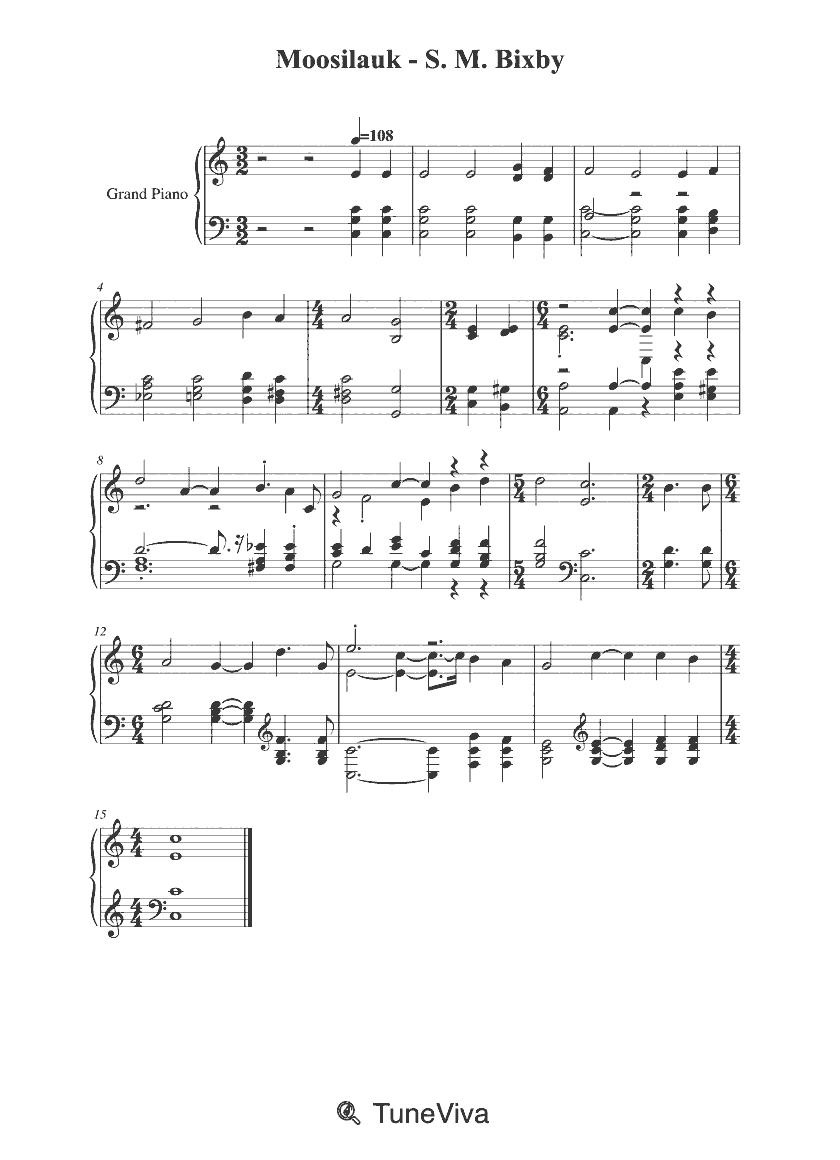
A peculiar-metre tune; the 1893 hymnal sets 'Light of Light, enlighten me' to it. The name is that of the New Hampshire mountain.
52, running to about 33 minutes and 10,094 notated notes. Lyrics are recorded for 29 of them, and every entry is filed as classical.
Samuel Merrill Bixby (1833-1912), a New Hampshire-born businessman whose S. M. Bixby & Co. sold shoe polish and household goods, and who spent his spare time editing hymnals and writing tunes.
Those are tune names, the labels hymnals use to tell one setting from another. The catalogue takes them from the printed books and does not record which hymn text sits under each.
No. Most files hold a single stanza, which is why the average is about forty seconds; a congregation singing four verses would repeat the music four times.
Catalog editions and arrangements attributed to S. M. Bixby.