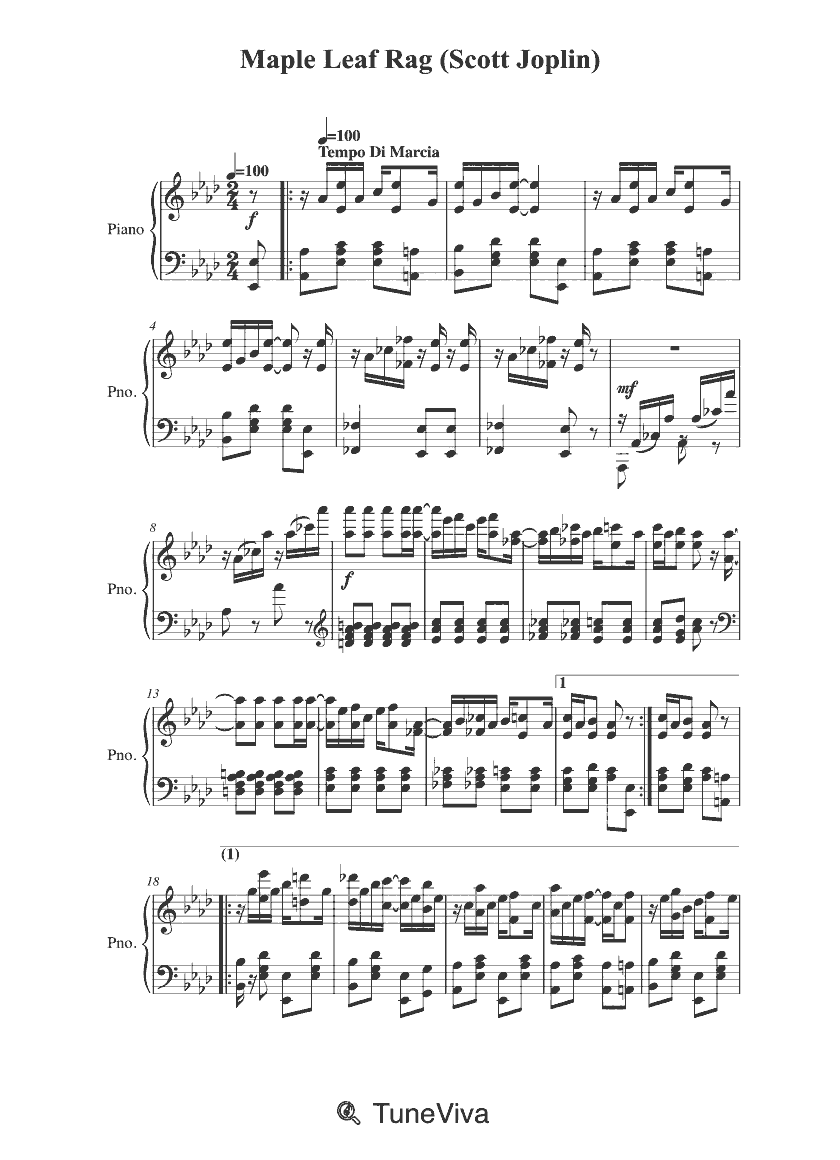
Maple Leaf Rag (Scott Joplin)
Scott Joplin
Piano · 3 min 1 sec
Open score71 Joplin scores to preview and download: Maple Leaf Rag, The Entertainer, Solace, Magnetic Rag, Peacherine Rag and the Treemonisha excerpt A Real Slow Drag.
The 1899 rag published by John Stark in Sedalia, named, most likely, after the Maple Leaf Club, and the model for the classic rag.
A syncopated two-step from 1902 that became Joplin's most familiar tune again after Marvin Hamlisch adapted it for The Sting in 1973.
Published in 1901, the year Joplin moved from Sedalia to St Louis, and one of the rags that carried his reputation into the new city.
A stage dance with words, performed in Sedalia in 1899 and issued as a song in 1902; the file is the 1906 stop-time two-step arrangement.
A 1901 syncopated two-step whose cover already styled Joplin as the King of Ragtime Writers.
A habanera of 1909, far slower than the rags and one of the clearest examples of Joplin's Latin-American lilt.
Self-published in 1914 through the Scott Joplin Music Company, and the last rag he saw into print.
A 1902 rag that later gave its name to Kenneth MacMillan's 1974 ballet of the same title.
A 1908 rag from Joplin's New York years, published as Pine Apple Rag and still one of the most played of the later pieces.
The closing dance of Treemonisha, issued as a revised separate excerpt in 1913, two years after the opera's piano-vocal score.
For a first Joplin rag, compare the left-hand distance between bass notes and chords before choosing Maple Leaf Rag or The Entertainer. Look for the repeat signs, strain boundaries and any key change. An arrangement of a familiar opening is a different project from learning the full rag, so inspect the later strains and keep an even pulse under the right-hand syncopation.
Compare the instrument and arrangement details below, then open a score to check the notation. Different entries may be arrangements or editions of the same work; available playback tools are shown on each score page.
Scott Joplin
Piano · 3 min 1 sec
Open score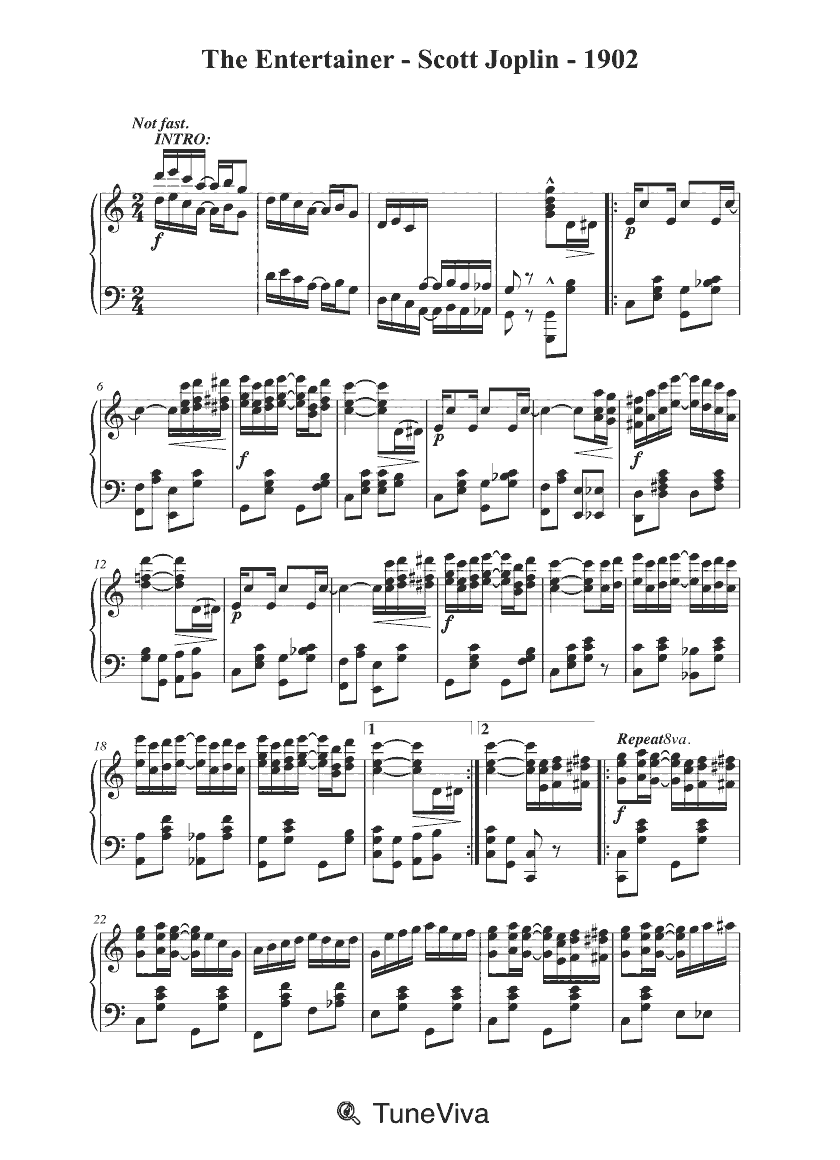
Scott Joplin
A Rag Time Two Step.
Piano · 5 min 29 sec
Open score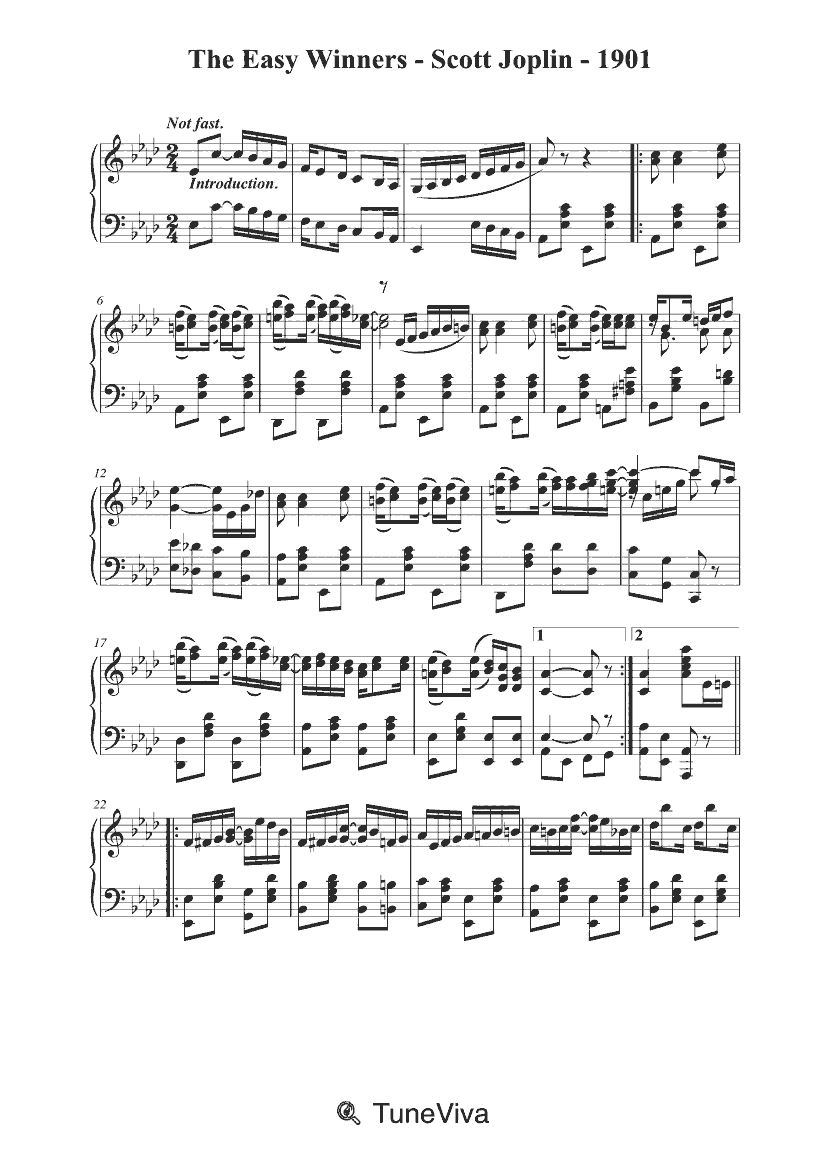
Scott Joplin
A Rag Time Two Step.
Piano · 5 min 6 sec
Open score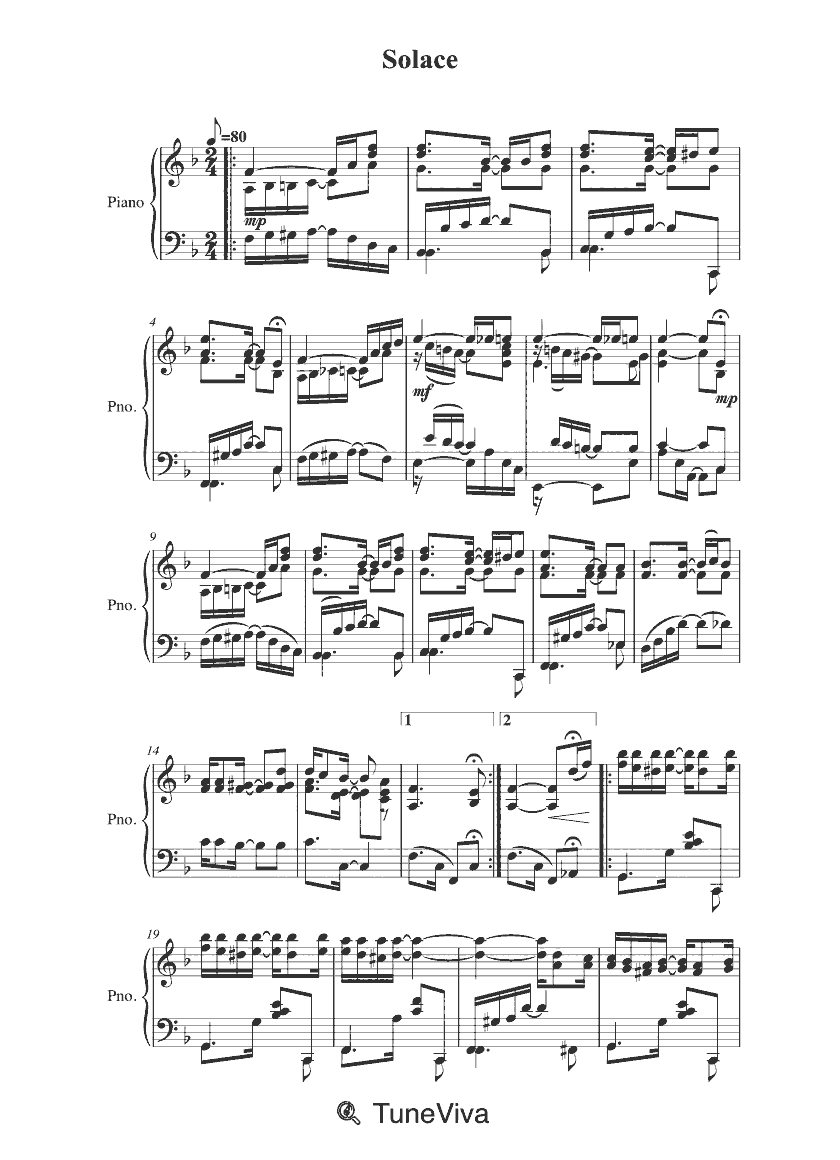
Scott Joplin
(Excerpt from A Mexican Serenade) From The Sting
Piano · 5 min 38 sec
Open score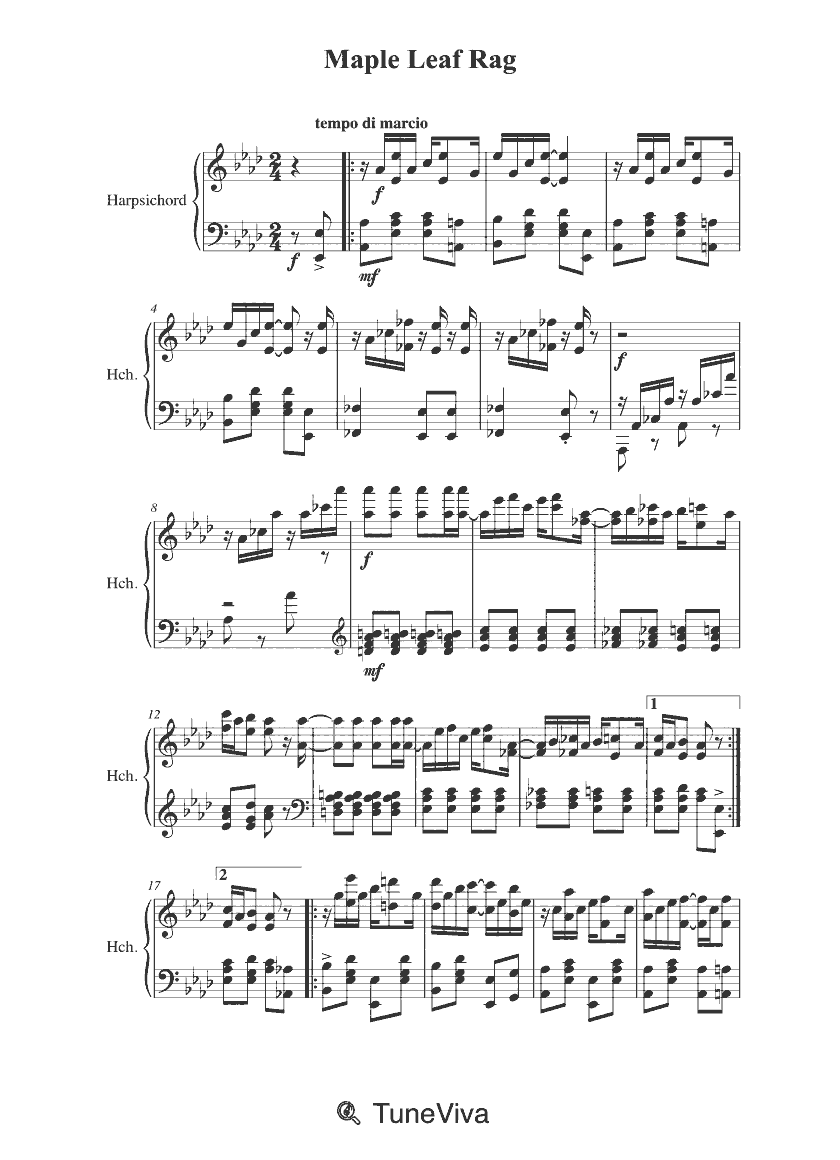
Scott Joplin
Harpsichord · 2 min 58 sec
Open score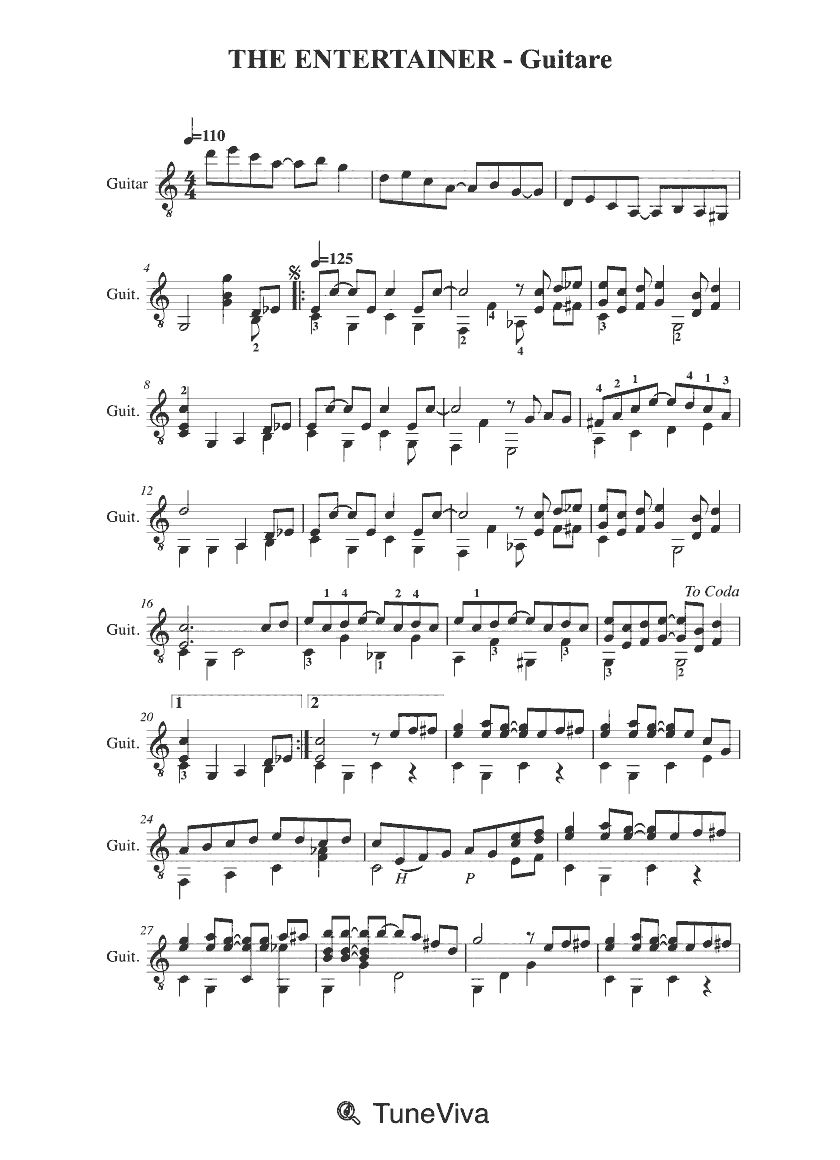
Scott Joplin
Guitar · Arr. Christophe Baste · 1 min 54 sec
Open score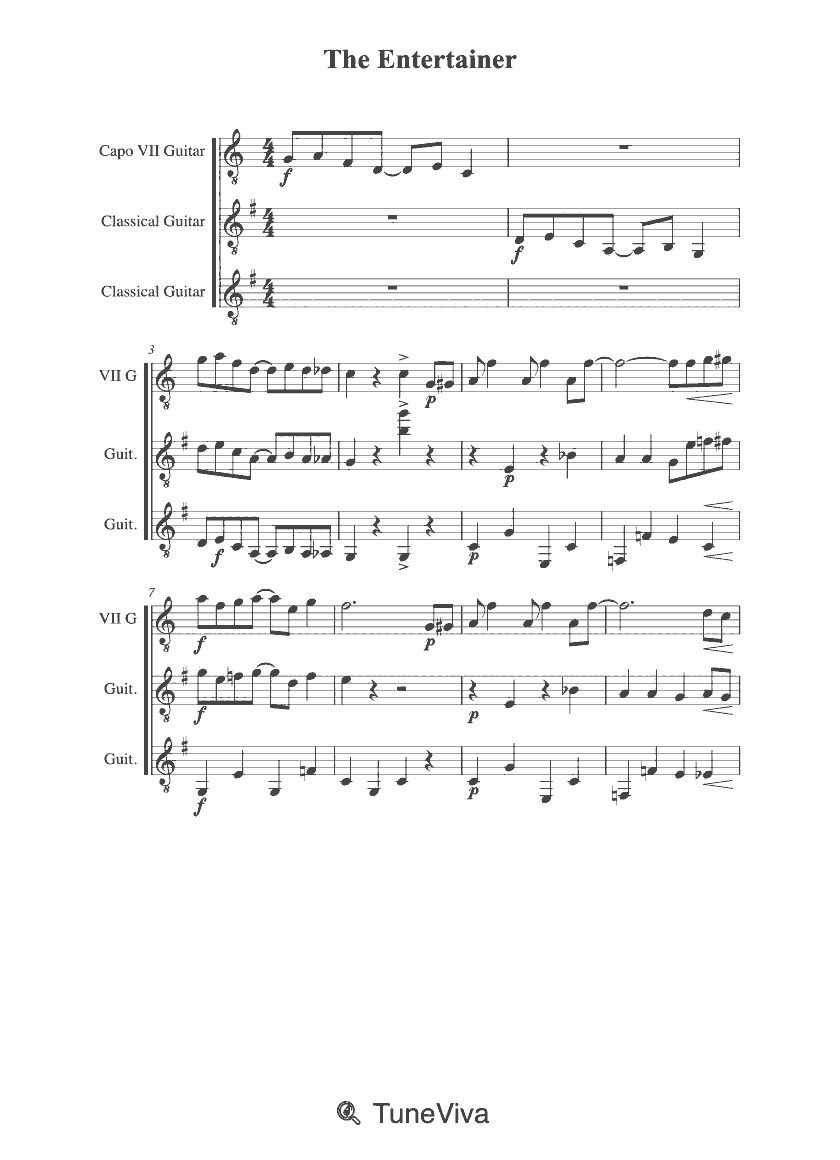
Scott Joplin
Capo VII Guitar; Classical Guitar · 1 min 43 sec
Open score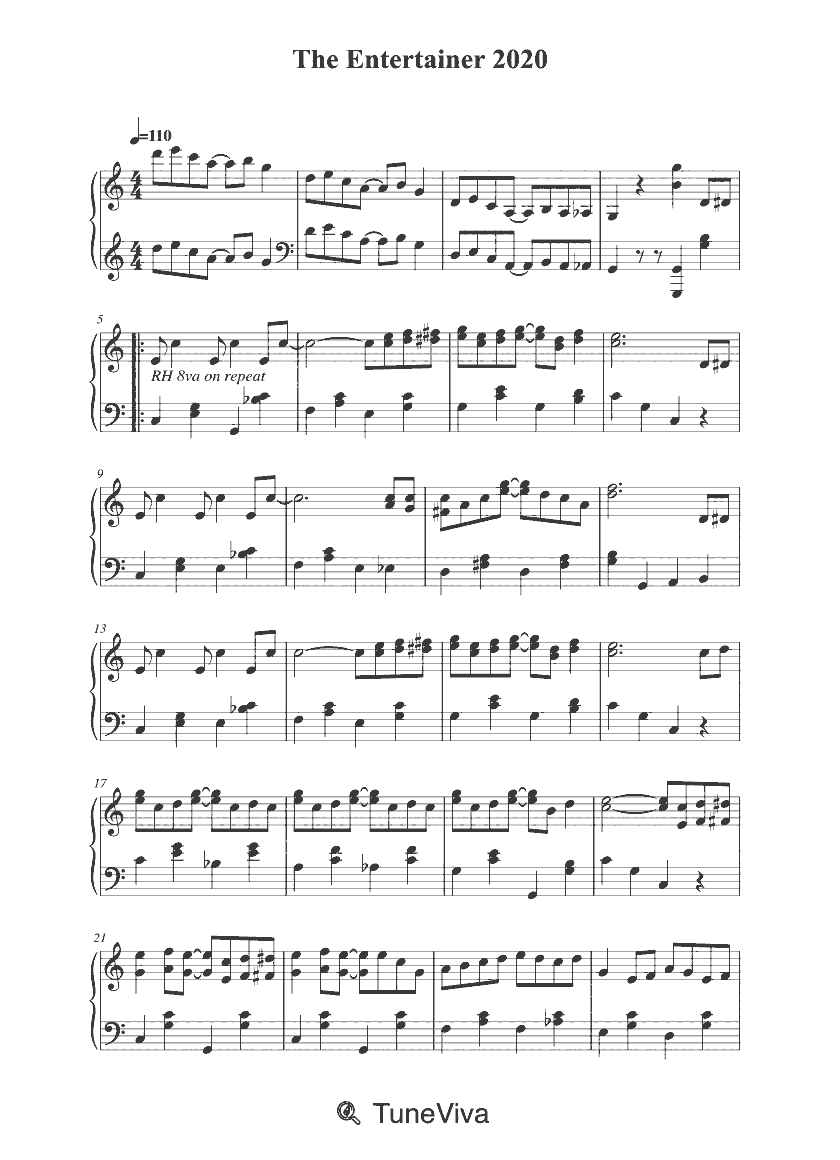
Scott Joplin
(edit)
Piano · 4 min 8 sec
Open score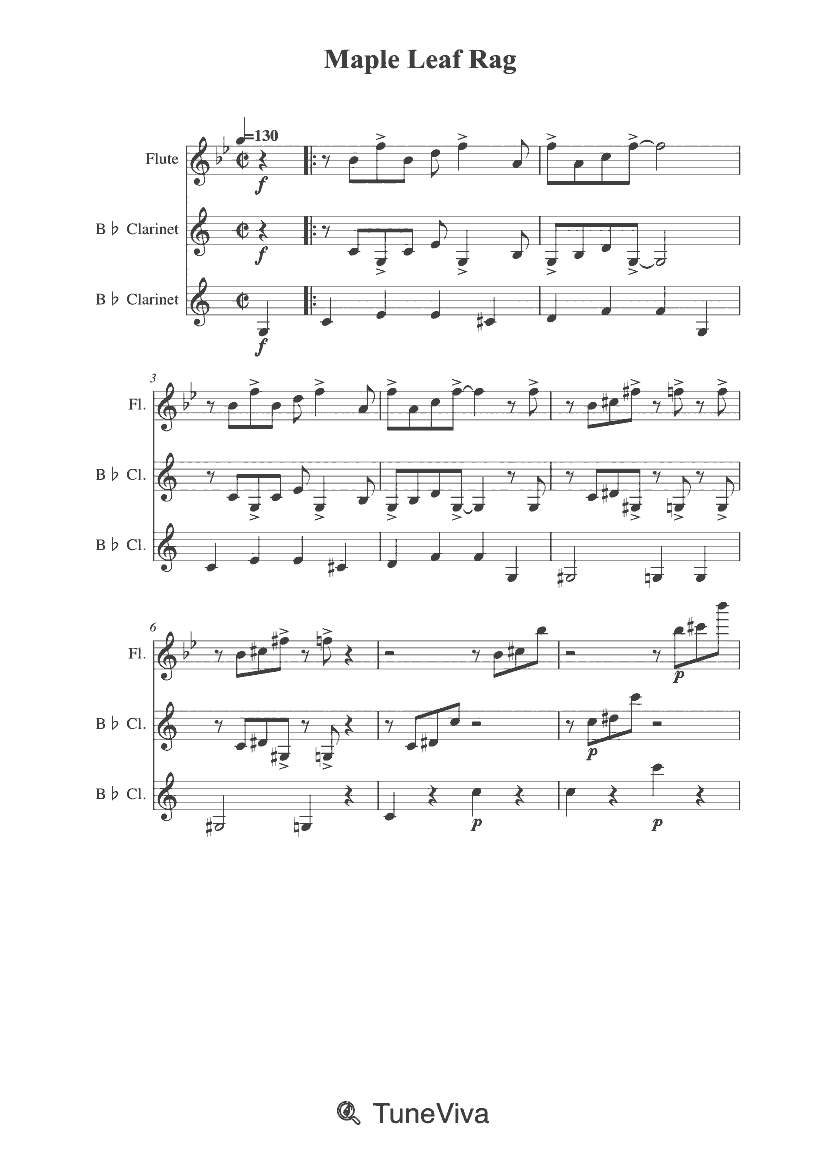
Scott Joplin
Flute; B♭ Clarinet · 9 min 6 sec
Open score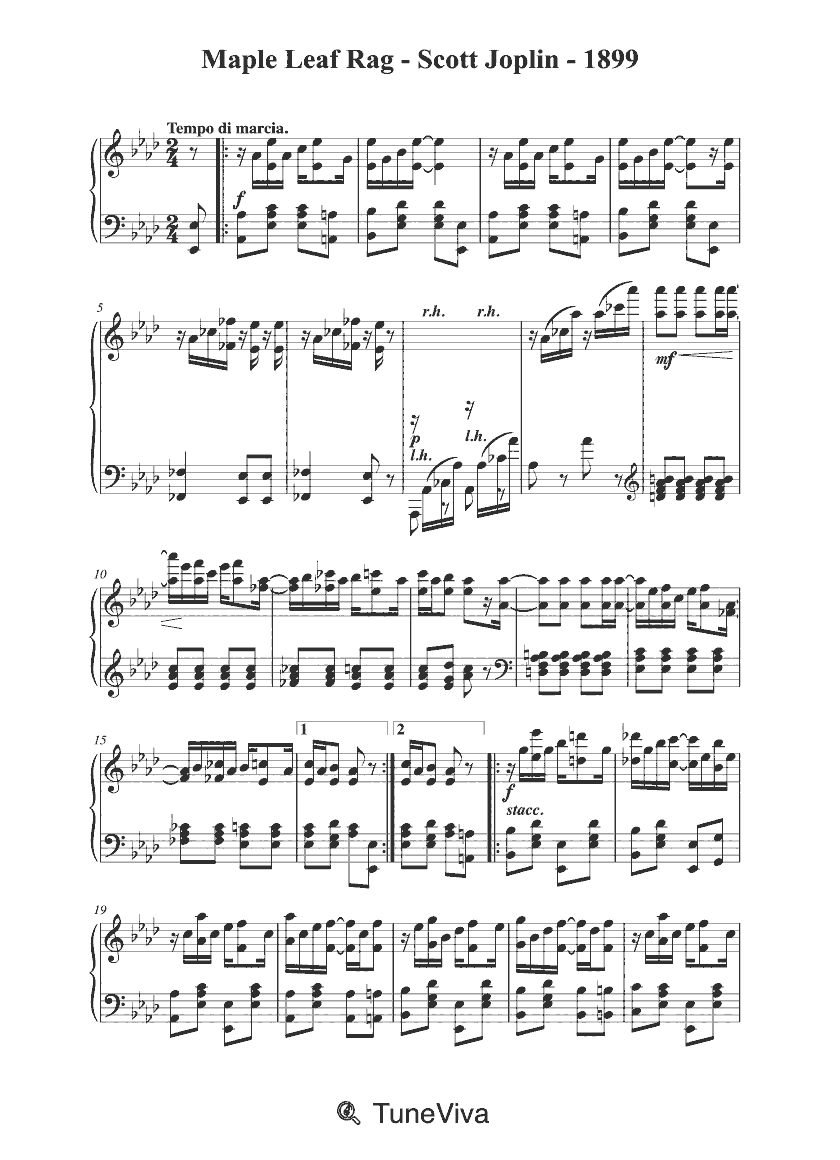
Scott Joplin
Piano · 3 min 42 sec
Open score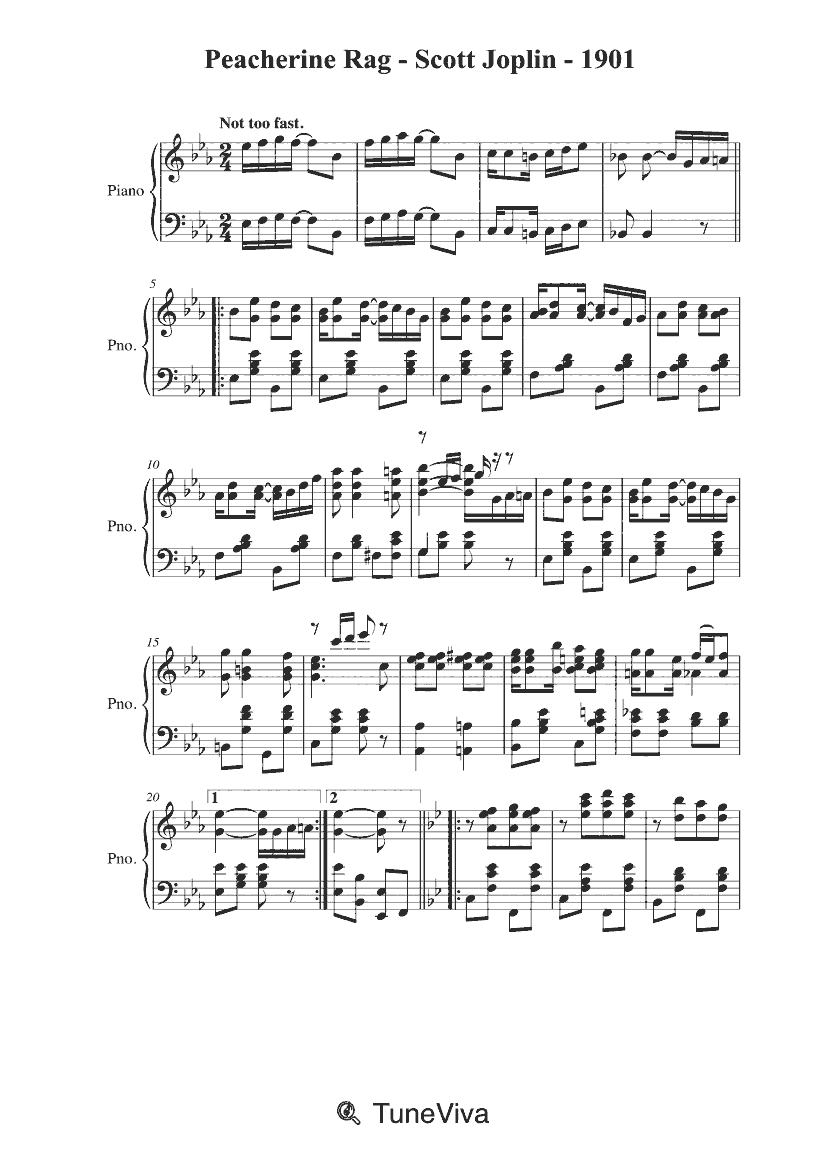
Scott Joplin
Piano · 4 min 53 sec
Open score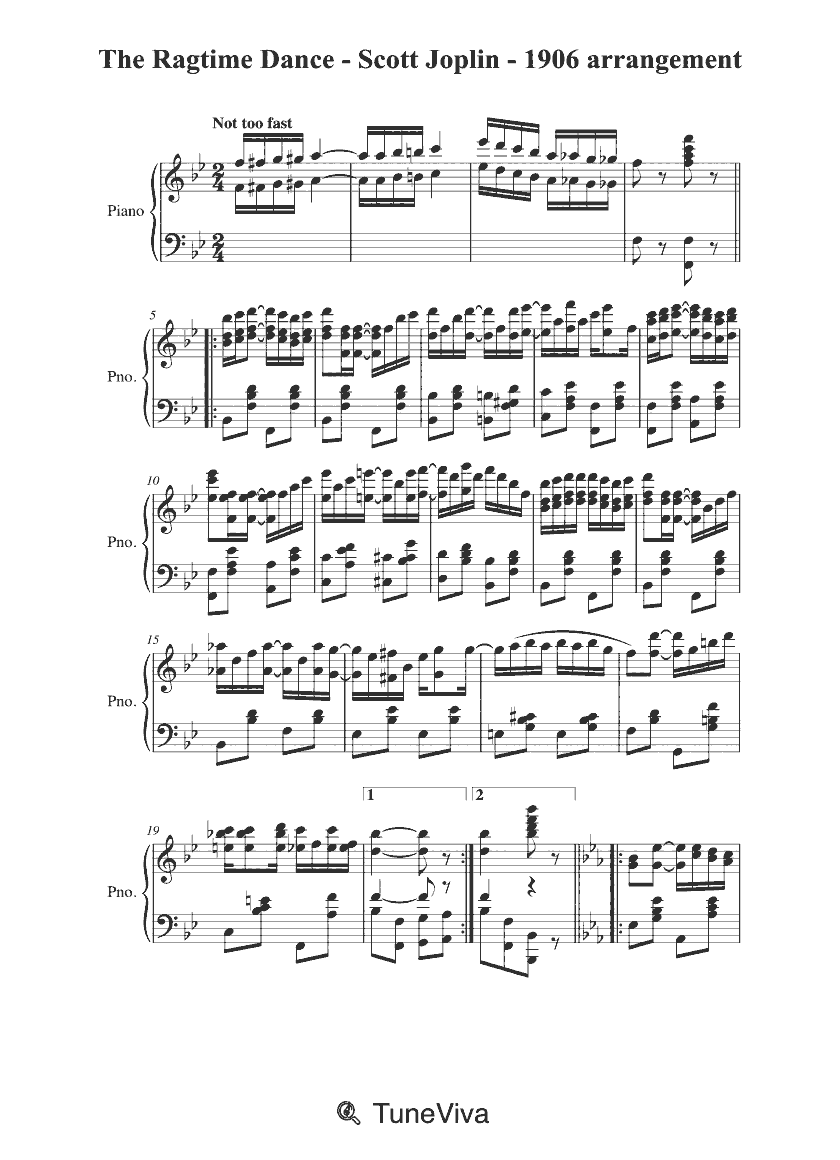
Scott Joplin
A Stop-Time Two Step
Piano · 3 min 58 sec
Open score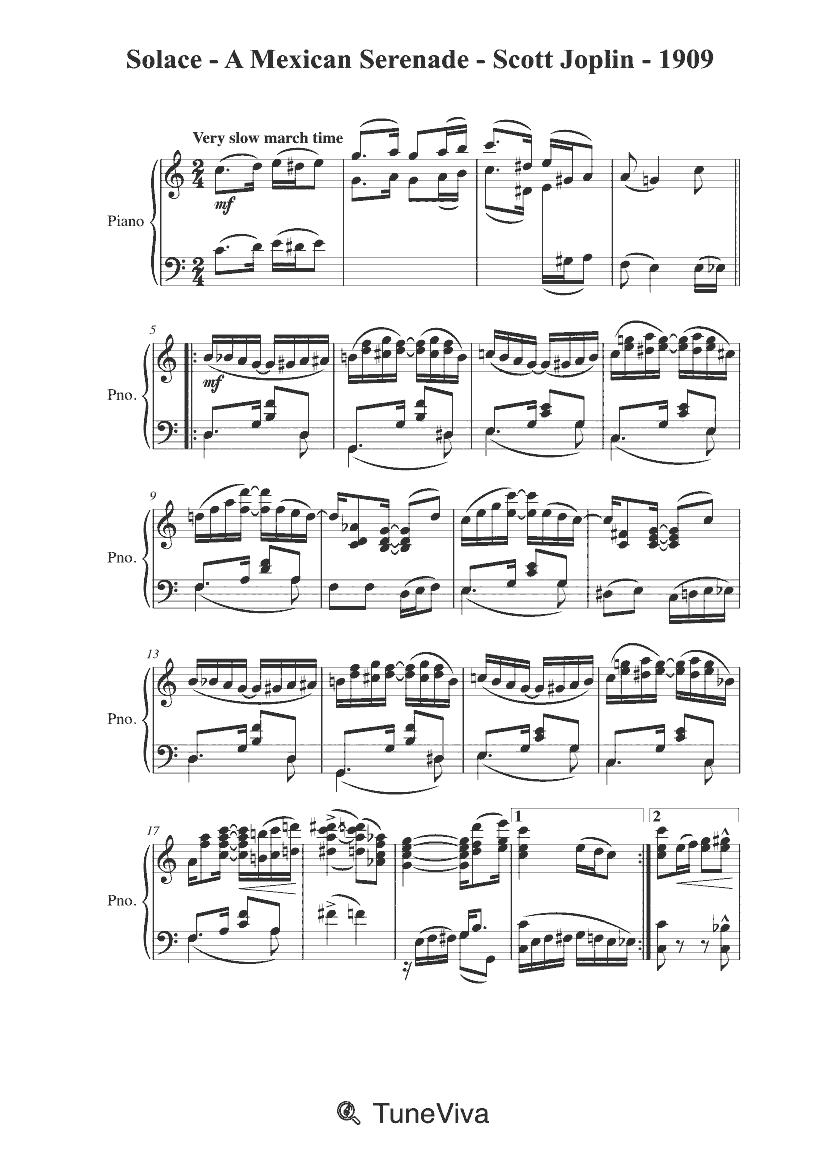
Scott Joplin
A Mexican Serenade.
Piano · 9 min 27 sec
Open score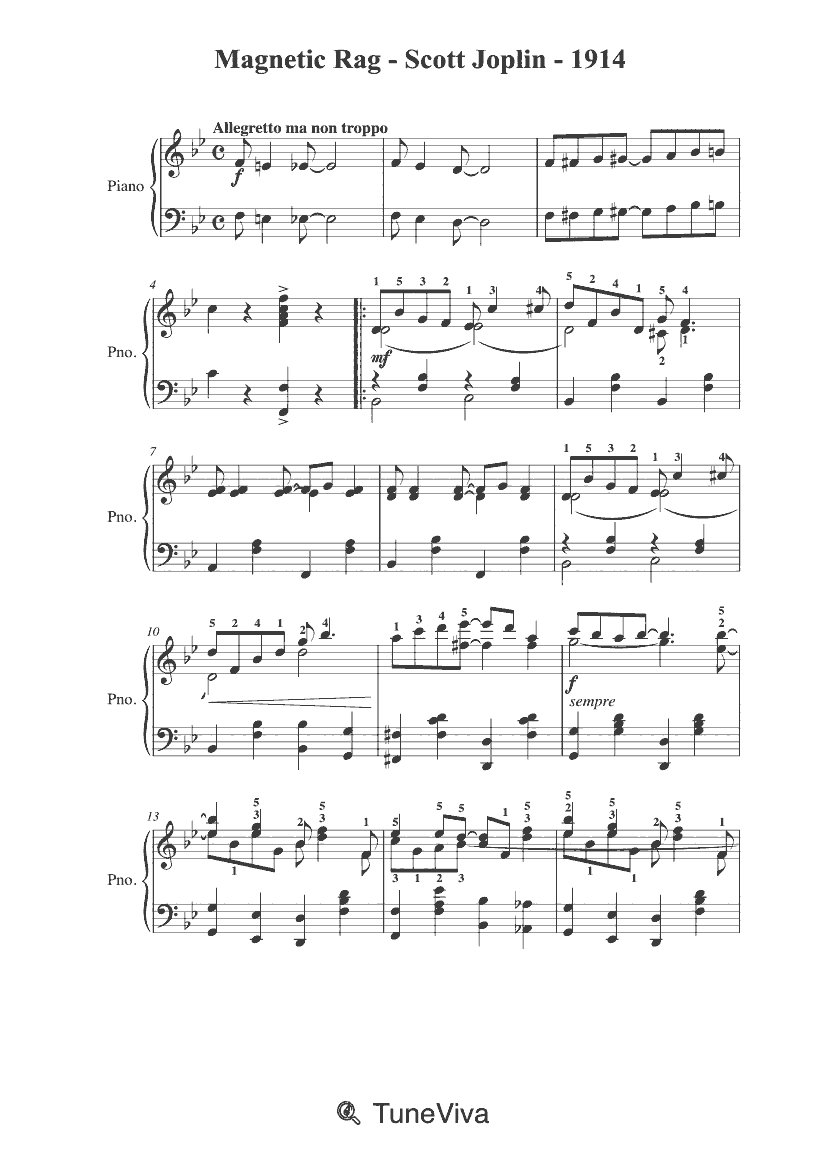
Scott Joplin
Piano · 10 min 34 sec
Open score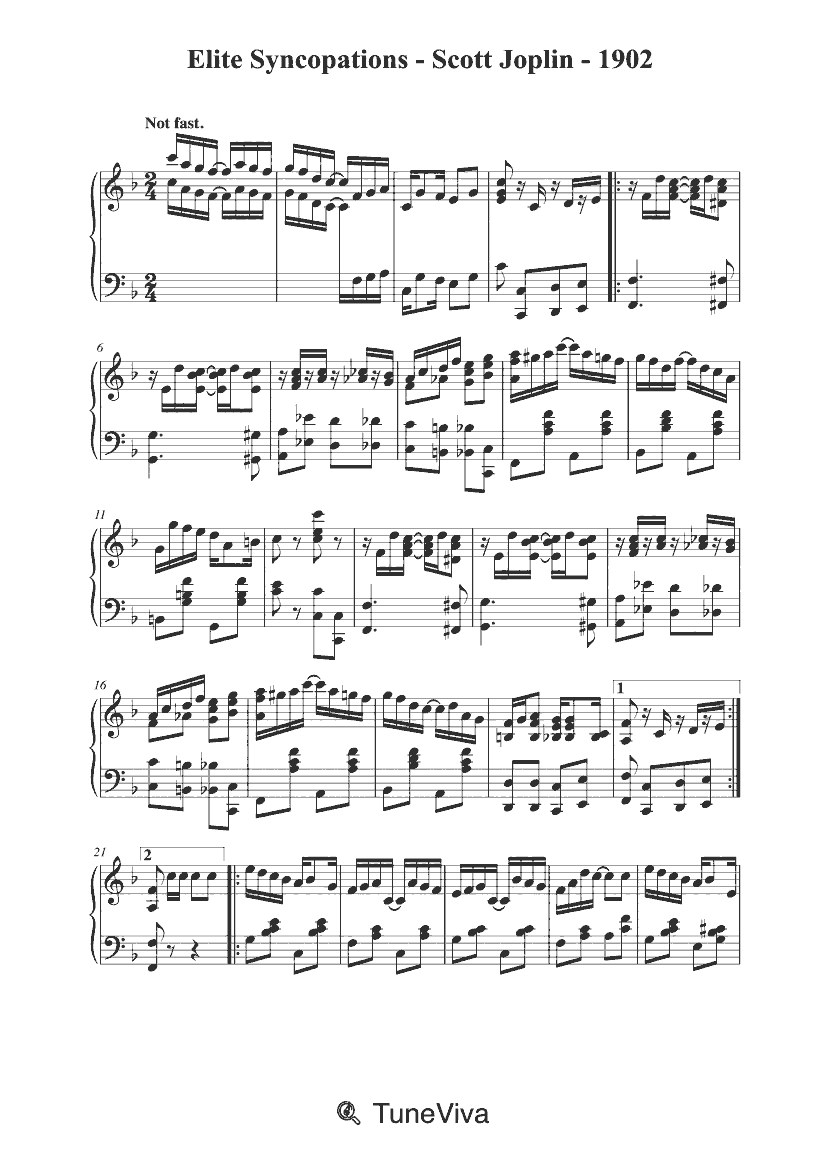
Scott Joplin
Piano · 4 min 22 sec
Open score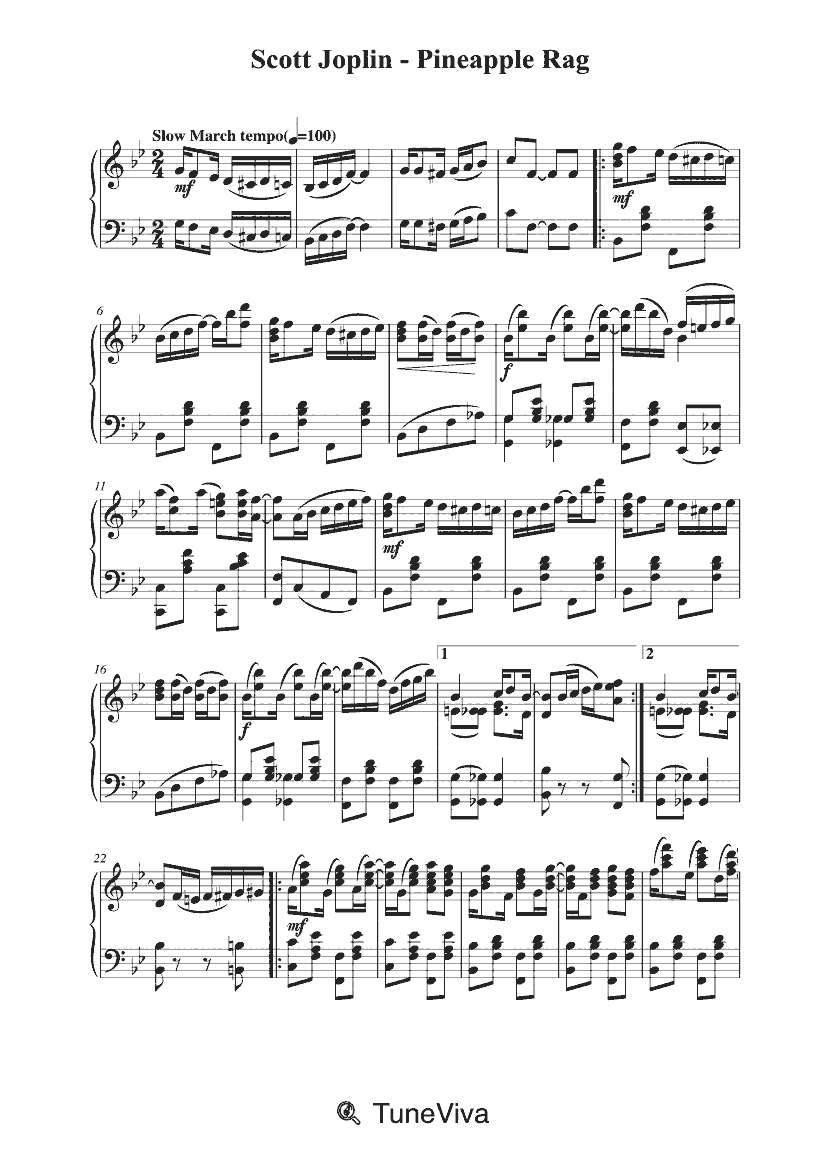
Scott Joplin
Piano · 3 min 28 sec
Open score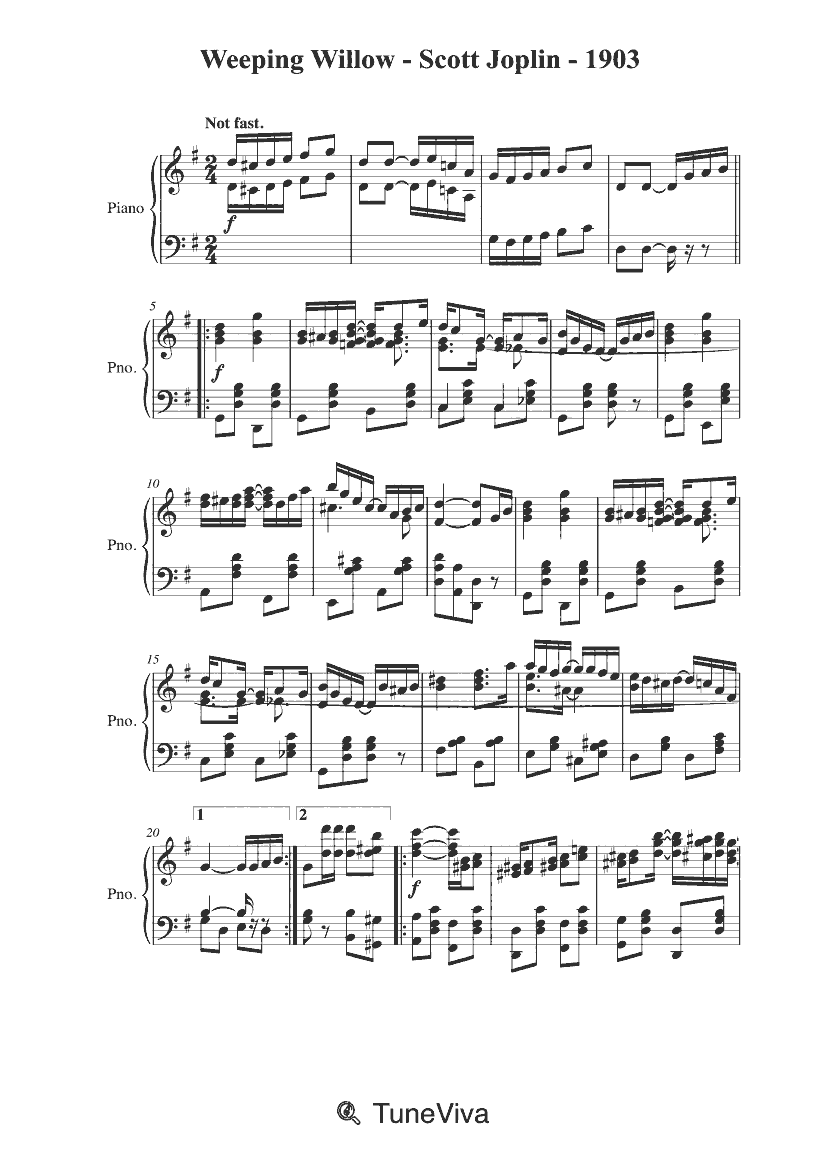
Scott Joplin
A Rag Time Two Step.
Piano · 5 min 38 sec
Open score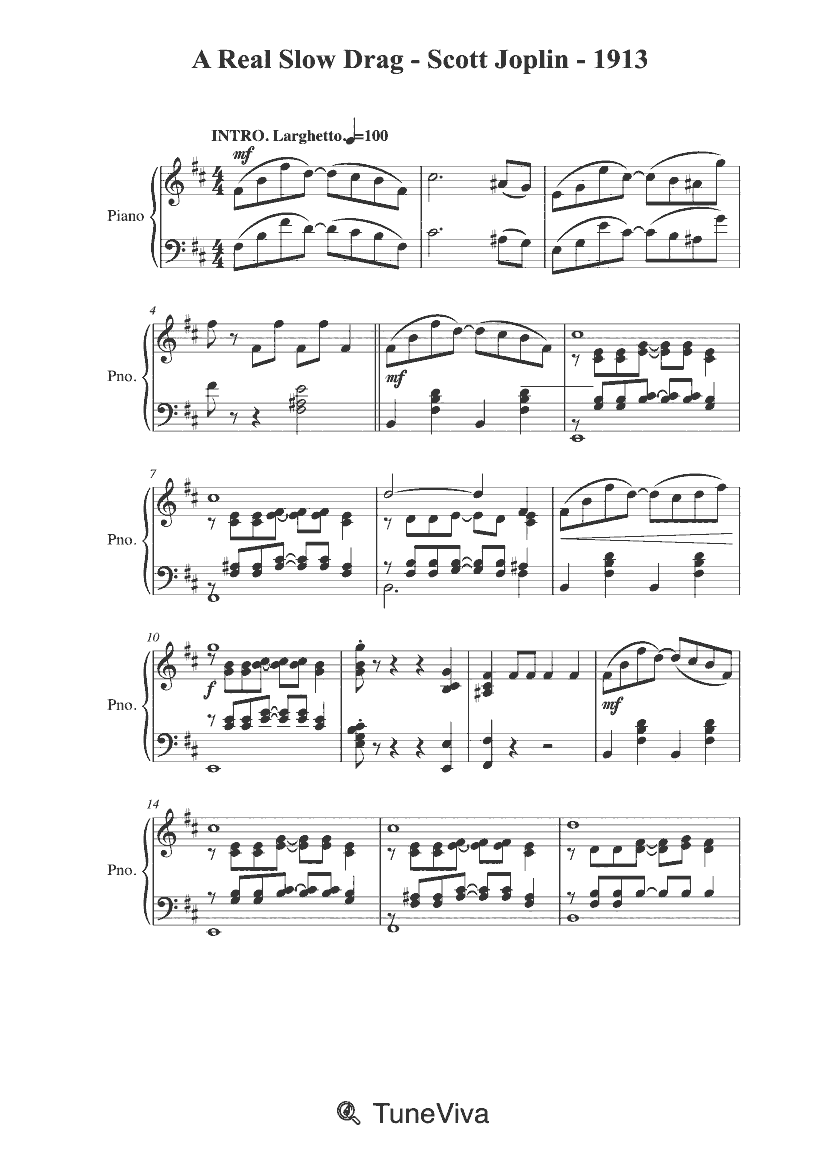
Scott Joplin
Piano · 7 min 18 sec
Open score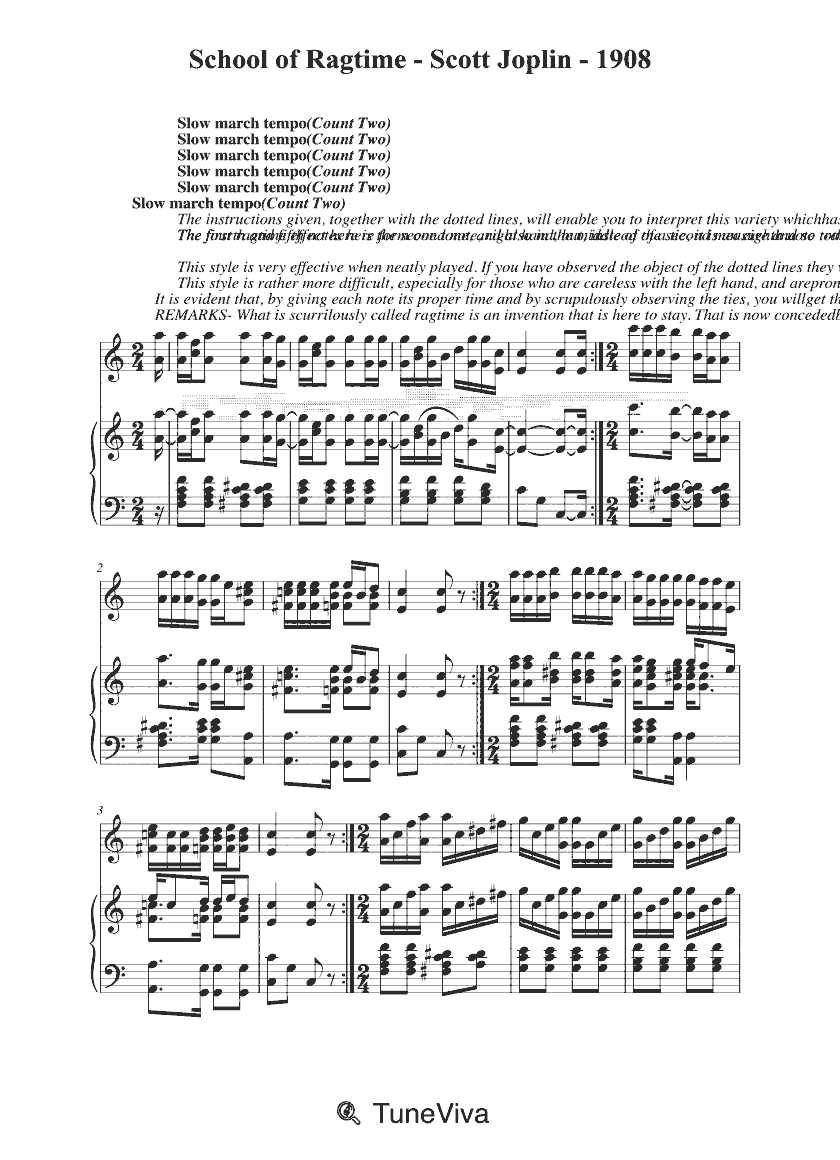
Scott Joplin
Piano · 4 min 42 sec
Open score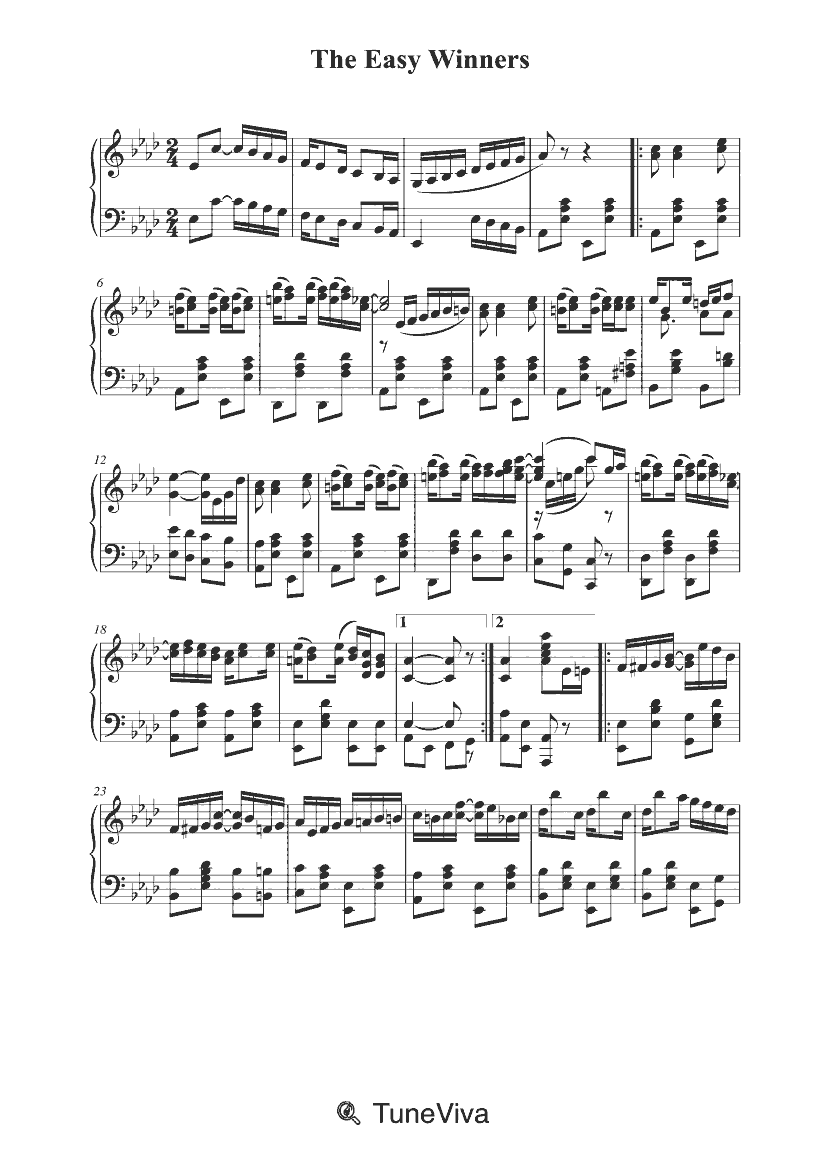
Scott Joplin
A Ragtime Two Step
Piano · 3 min 5 sec
Open scorePage 1 of 4
Scott Joplin was born in Texas in the late 1860s, learned piano in Texarkana and made his name in Sedalia, Missouri, where the Maple Leaf Rag appeared in 1899. Ragtime made him famous, but he spent his last years trying to get an opera staged. TuneViva holds 71 Joplin scores, about 398 minutes of music and 244,890 notated notes. Scott Joplin was an American composer and pianist known as the "King of Ragtime." His Maple Leaf Rag (1899) became the genre's first and most influential hit and is often treated as the archetypal rag, while his later stage work includes the opera Treemonisha, published in piano-vocal score in 1911. The Scott Joplin sheet music in this selection is piano music: it includes rags, a ragtime ballet and stage excerpts, so check each title for whether it is a standalone piece or part of a larger work.
Joplin was born in Texas, traditionally on 24 November 1868, though Edward Berlin's research points to late 1867 or early 1868 and the record does not settle whether the family was in Texarkana or Linden. He grew up in Texarkana, took piano lessons from a German immigrant teacher, Julius Weiss, and left home in the late 1880s to work as a travelling musician. After playing at the Chicago World's Fair in 1893 he settled in Sedalia, Missouri, taught piano, and signed a royalty contract with the publisher John Stark on 10 August 1899.
The Maple Leaf Rag appeared that year and became the model for classic ragtime, though Berlin showed that its early sales were modest rather than the million copies of legend. Joplin moved to St Louis in 1901 and wrote The Entertainer, Elite Syncopations and The Easy Winners within a few years. His first opera, A Guest of Honor, was lost after a troubled tour in 1903. He moved to New York in 1907, published Treemonisha himself in 1911, and died at Manhattan State Hospital on 1 April 1917.
The 71 scores here run to about 398 minutes and 244,890 notated notes. 61 are classed as jazz-classical and ten are unclassified; six carry lyrics, among them the song version of The Ragtime Dance and numbers from Treemonisha. Difficulty is not uniform: 44 entries sit at index 2, 22 at index 0, three at index 1 and two at index 3. Because the catalogue keeps file titles, the same rag can appear more than once, with the composer's name or a publication year appended.
Joplin's classic rag style: Joplin's rags are composed works rather than improvisatory frameworks: the supplied biography says he intended his compositions to be played exactly as written. The classic rag combined African-American syncopation with European harmonic writing and march-like momentum, and Maple Leaf Rag became its influential model. When preparing a rag, keep the pulse steady so the syncopated figures remain clear instead of rushing the tempo.
Choosing among the available scores: The selection includes piano scores titled Maple Leaf Rag, The Entertainer, Peacherine Rag, The Ragtime Dance, The Easy Winners, Solace, Magnetic Rag, Elite Syncopations, Pineapple Rag and A Real Slow Drag. Some titles are standalone rags, while The Ragtime Dance is a ragtime ballet and A Real Slow Drag is a Treemonisha excerpt. Check the title, scoring and length before choosing, and compare duplicate-looking titles rather than assuming they are different works.
Treemonisha and the stage works: Joplin completed Treemonisha in 1910 and paid for a piano-vocal score in 1911. The opera includes an overture, prelude, recitatives, choruses, small ensembles, a ballet and arias, and it draws on black folk songs, dances, spirituals and call-and-response. It was not fully staged in Joplin's lifetime: a concert read-through took place in 1915 at the Lincoln Theater in Harlem, with Joplin at the piano, and the world premiere followed in 1972. Joplin's first opera, A Guest of Honor, was lost after an unsuccessful 1903 tour.
Reading the printed page: Use the notated key, time signature and tempo marking as a starting point, then shape repeats and phrasing so the music does not become mechanical. For stage-derived pieces, distinguish a piano reduction or excerpt from a complete number; the title alone may not tell you which you have. Where a score includes lyrics or a vocal line, treat the words as part of the rhythmic design rather than as an add-on.
No. Several rags were in print before it, including Joplin's own Original Rags, and the story that it sold a million copies in its first year does not hold up. Its importance lies in the model it set and in the income it eventually brought him.
It is the closing dance of Treemonisha, the opera Joplin published himself in 1911. He issued a revised excerpt as a separate piece in 1913, which is the version the catalogue dates.
Because the catalogue preserves uploaded titles, the rag appears under entries with different suffixes and years. They are not different works, so check the scoring and page count before choosing one.
Scott Joplin was an American composer and pianist dubbed the "King of Ragtime." He composed more than 40 ragtime pieces, a ragtime ballet based on The Ragtime Dance, and two operas; Maple Leaf Rag (1899) became the genre's first and most influential hit and is often described as the archetypal rag.
Maple Leaf Rag is significant because it became ragtime's first and most influential hit and was later recognized as the quintessential rag. Its rhythmic patterns, melodic lines and harmony influenced later rag composers.
Scott Joplin intended his ragtime compositions to be played exactly as written, without improvisation. He treated ragtime as a form of classical music for concert performance and disliked the honky-tonk style associated with saloons.
Treemonisha is an opera by Scott Joplin, completed in 1910 and published in piano-vocal score in 1911. Its music includes an overture, prelude, recitatives, choruses, ensembles, a ballet and arias, with black folk-song, dance, spiritual and call-and-response elements. The opera was not fully staged during Joplin's lifetime; its world premiere took place in 1972, and Joplin received a posthumous Pulitzer Prize for it in 1976.
Scott Joplin wrote two operas. A Guest of Honor, his first, was lost after an unsuccessful 1903 tour; Treemonisha was completed in 1910 and published in a piano-vocal score in 1911, though it was not fully staged during his lifetime.
Scott Joplin's birth date and birthplace are not settled. Early biographers accepted 24 November 1868, but Edward A. Berlin argued he was probably born between June 1867 and mid-January 1868; Berlin also noted that the 1870 census places the two-year-old Joplin in Linden, Texas, while Texarkana has often been named. The supplied sources do not resolve the question.
The Ragtime Dance is a ragtime ballet by Scott Joplin, with the original version dated 1899/1902 in the supplied source. A score labelled as a 1906 arrangement also appears in the selection, so check which version you want before choosing.