Superstition - Stevie Wonder
Stevie Wonder
Trumpet 1; Trumpet 2; Alto Sax +2 parts · 46 sec
Open score16 Stevie Wonder scores, including Superstition, Don't You Worry 'bout a Thing, I Just Called to Say I Love You and Isn't She Lovely on guitar, to preview.
Trumpet 1; Trumpet 2; Alto Sax +2 parts · 46 sec
A multi-track arrangement of the song. The listed playback programs identify synthesized playback patches, not original instruments.
Other editions:
A nine-track file. Read its parts and score layout to understand this arrangement rather than infer instrumentation from playback metadata.
A one-track file; check the notation to see what that track represents before assuming vocal format.
A multi-track catalog entry for this song. Compare the score itself with audio if you need the original record’s arrangement.
The uploaded title identifies a guitar-focused version; its artist metadata does not name Wonder, so the catalog attribution should be read with that caveat.
Compare the instrument and arrangement details below, then open a score to check the notation. Different entries may be arrangements or editions of the same work; available playback tools are shown on each score page.
Stevie Wonder
Trumpet 1; Trumpet 2; Alto Sax +2 parts · 46 sec
Open score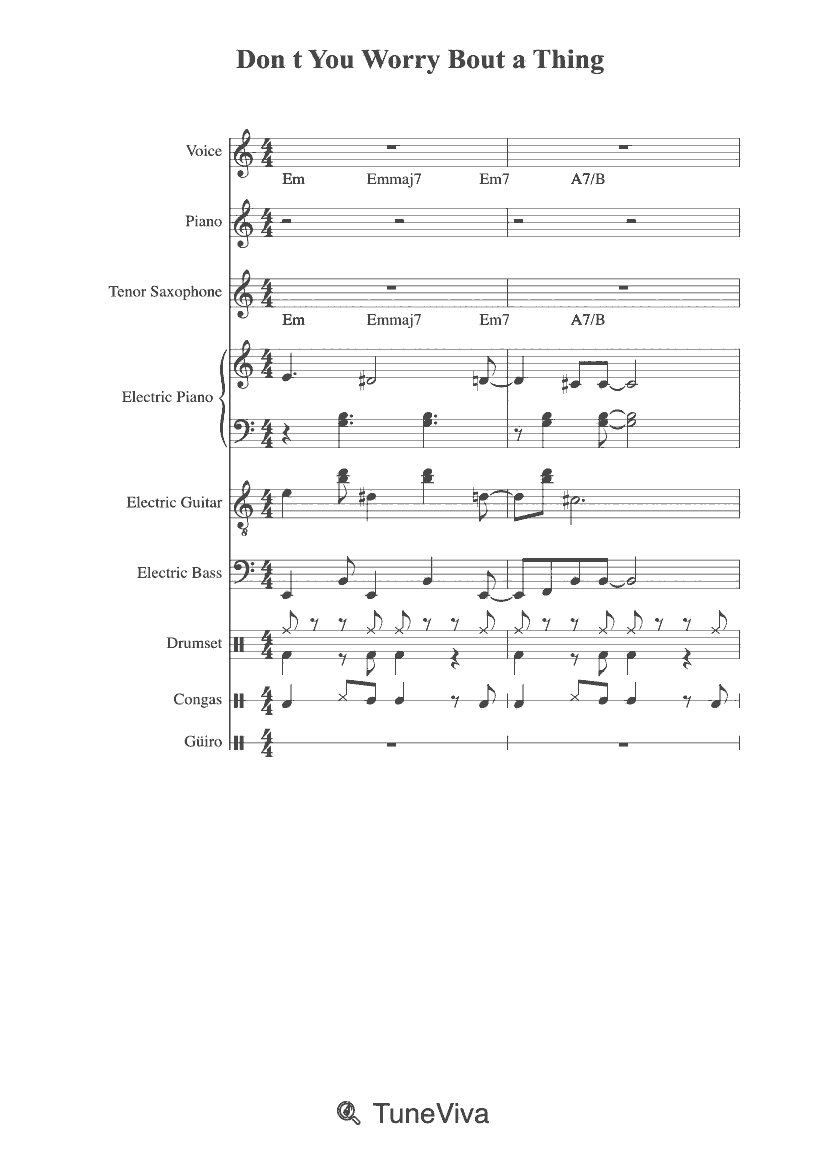
Stevie Wonder
Voice; Piano; Tenor Saxophone +6 parts · 6 min 27 sec
Open score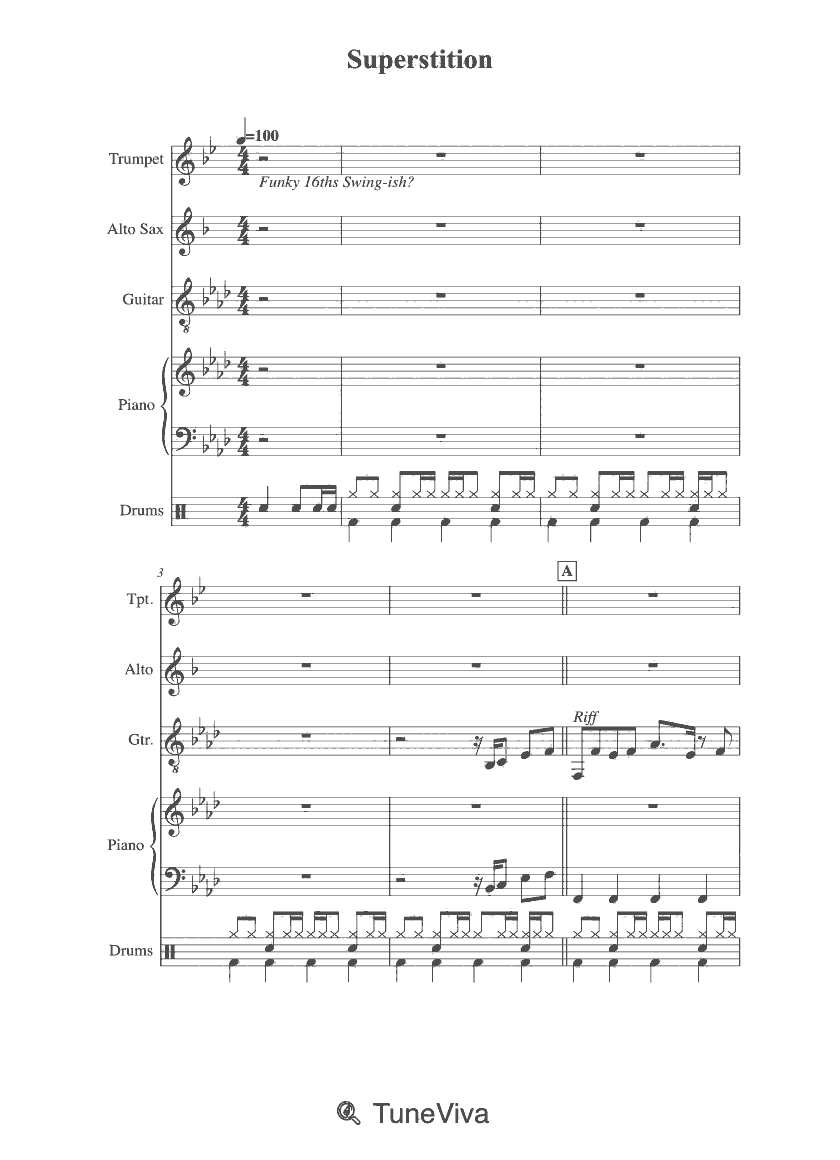
Stevie Wonder
for The Undecided Jazz Combo
Trumpet; Alto Sax; Guitar +2 parts · 10 min 3 sec
Open score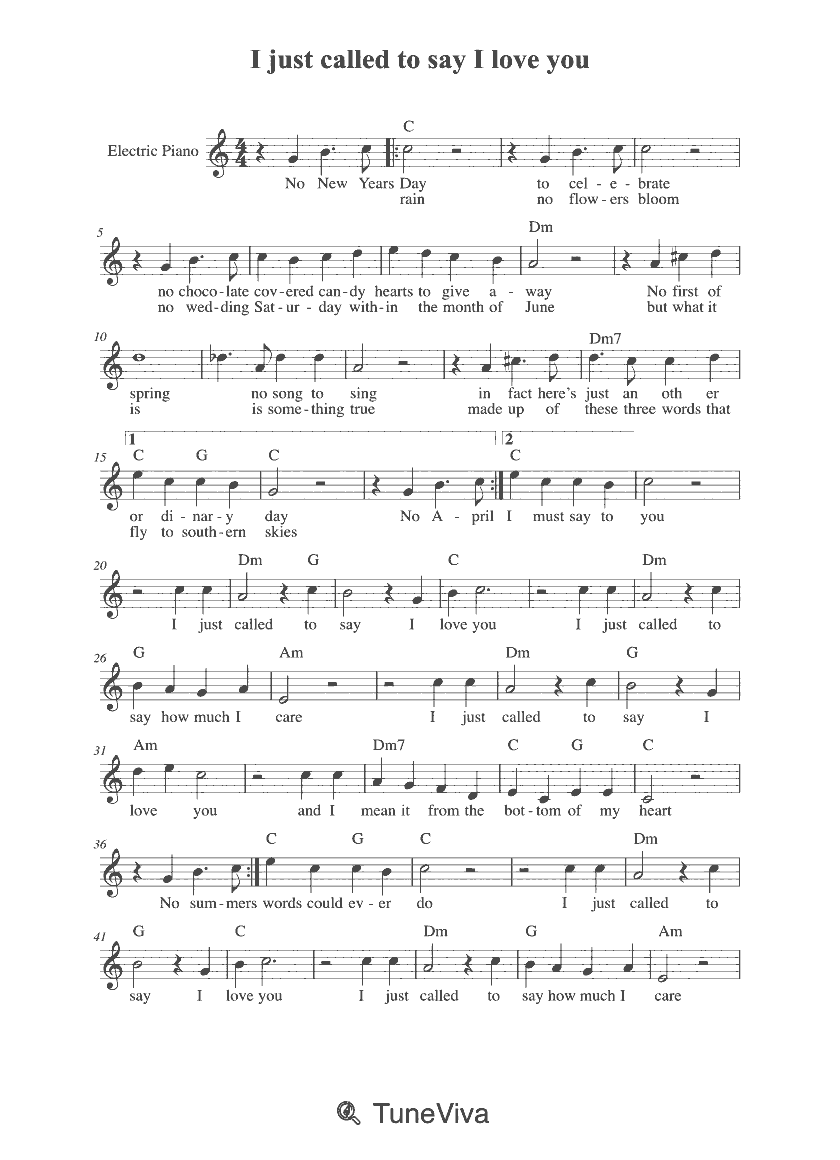
Stevie Wonder
Electric Piano · 4 min 17 sec
Open score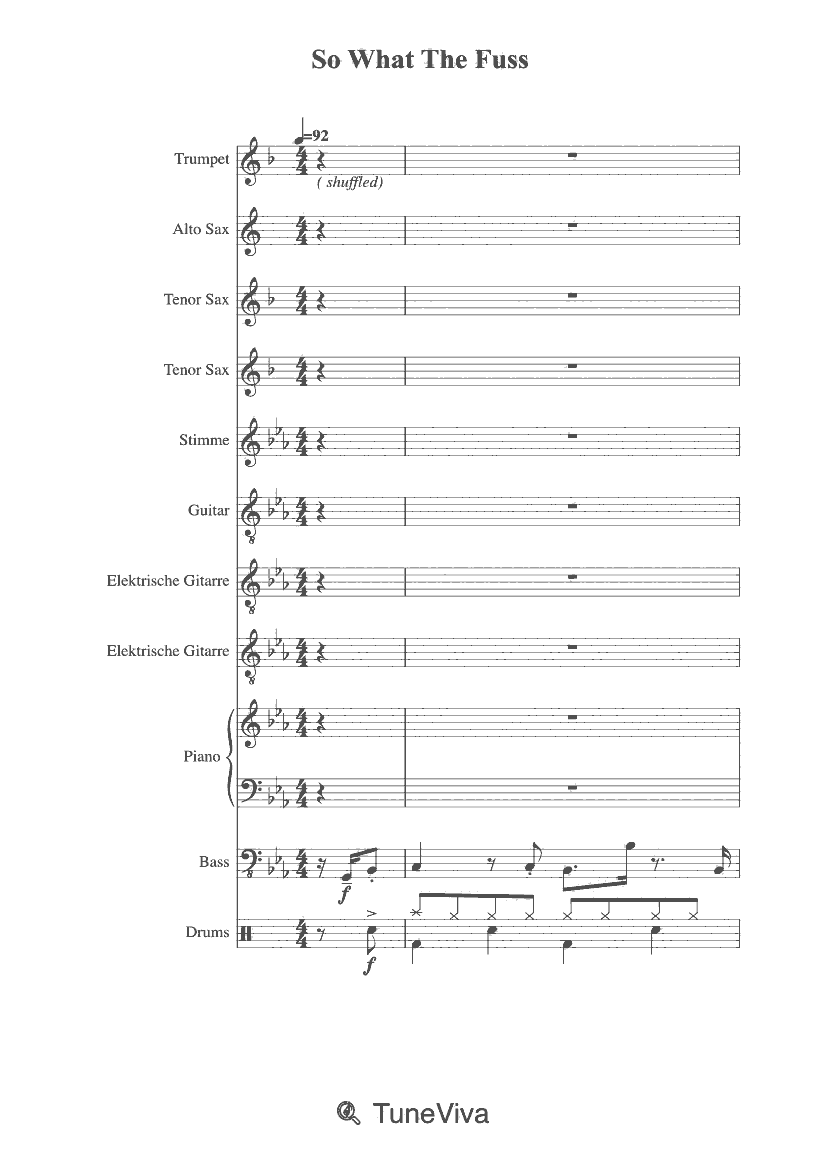
Stevie Wonder
Trumpet; Alto Sax; Tenor Sax +6 parts · 7 min 18 sec
Open score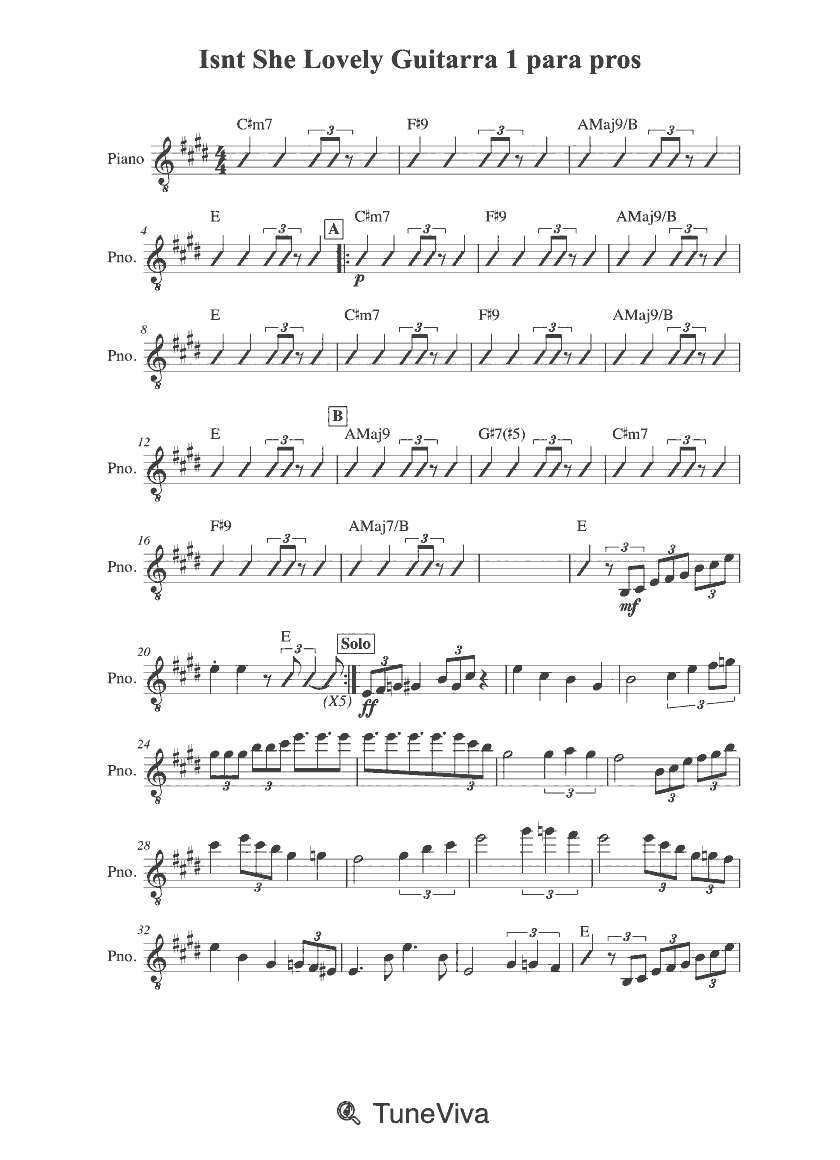
Stevie Wonder
Piano · 1 min 45 sec
Open score
Stevie Wonder
B♭ Trumpet; Alto Saxophone; Tenor Trombone +3 parts · 4 min 19 sec
Open score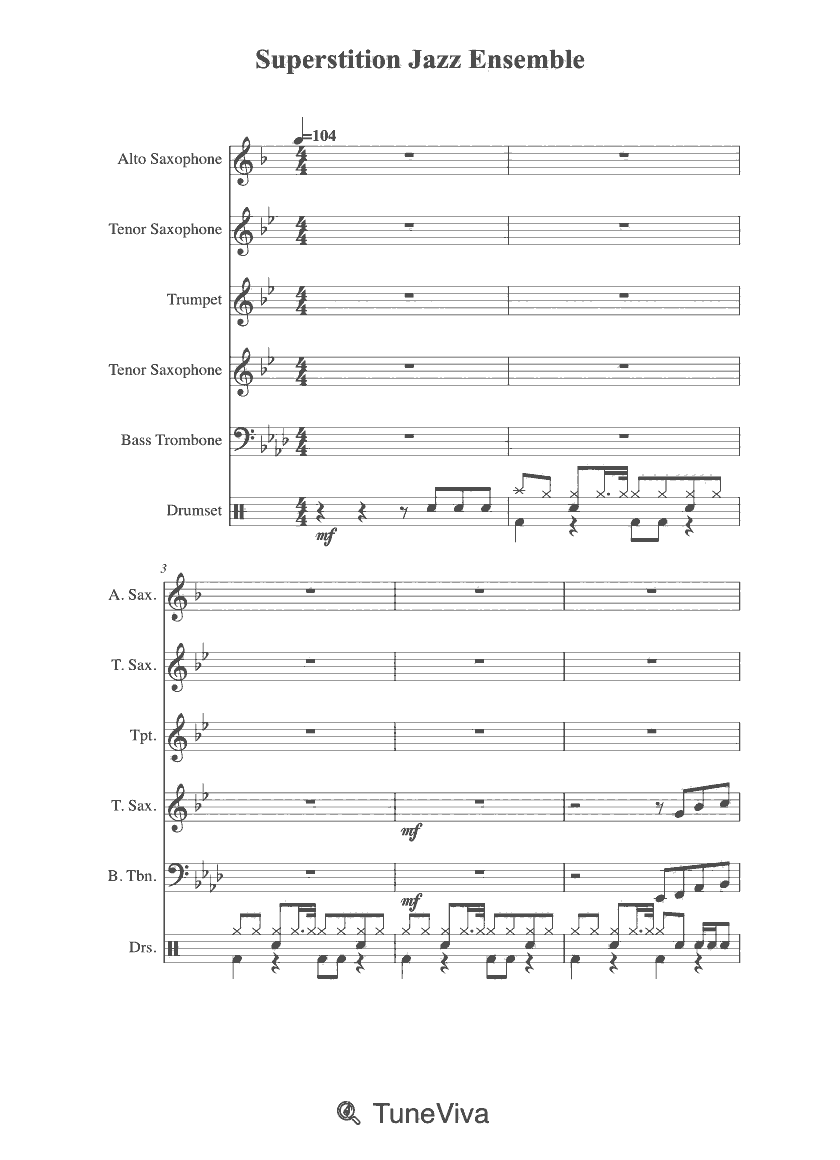
Stevie Wonder
Alto Saxophone; Tenor Saxophone; Trumpet +2 parts · 2 min 2 sec
Open score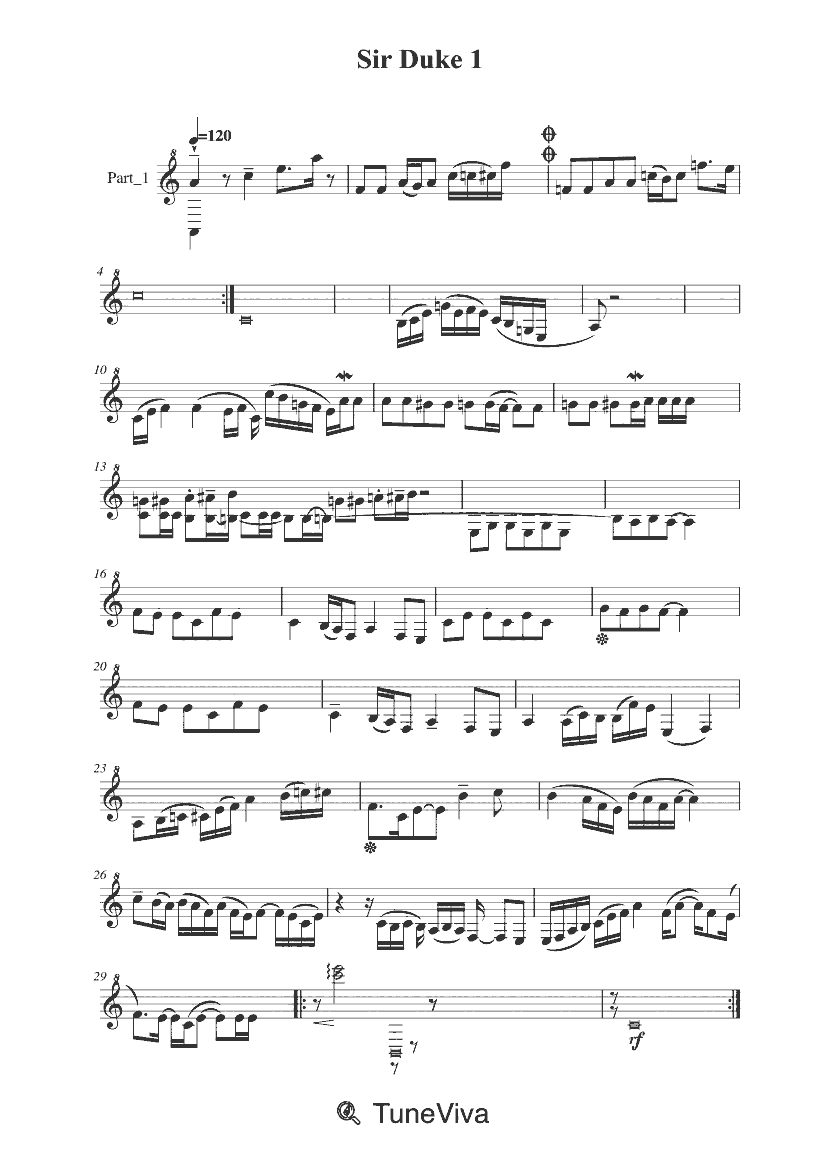
Stevie Wonder
Part_1 · 3 min 9 sec
Open score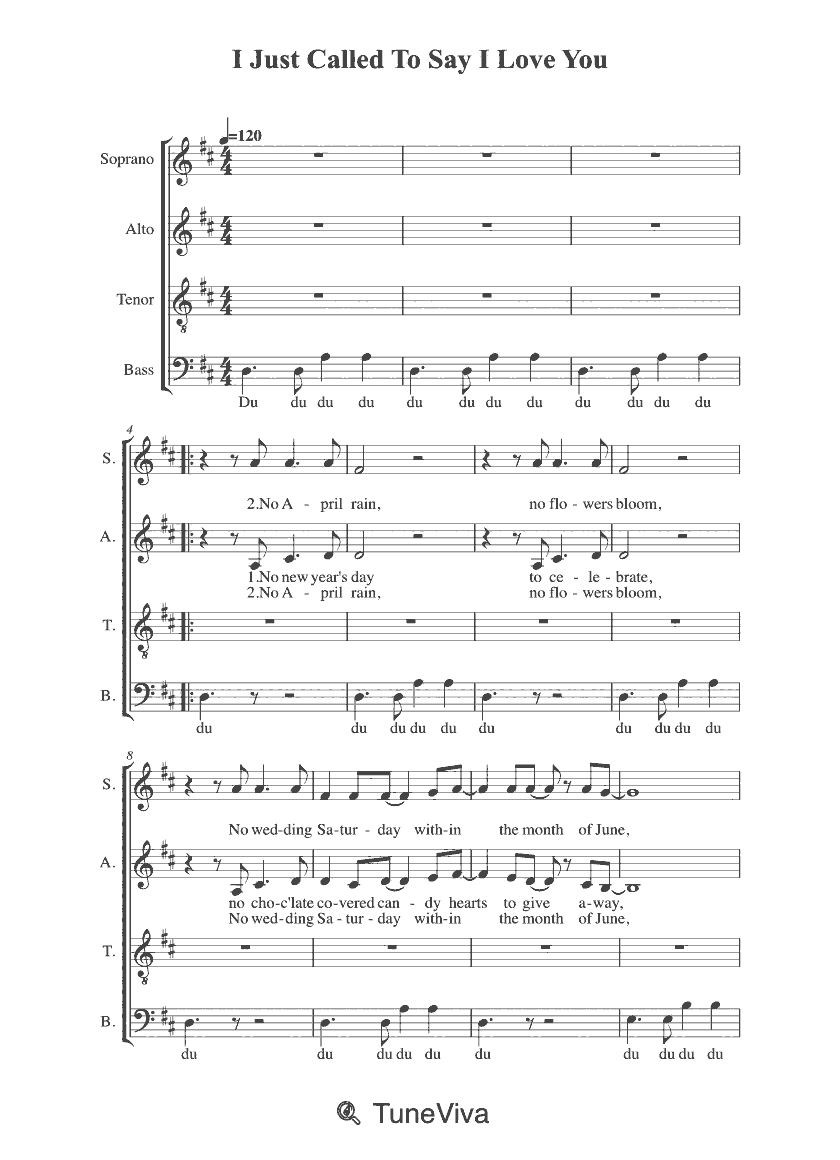
Stevie Wonder
Soprano; Alto; Tenor +1 parts · 3 min 28 sec
Open score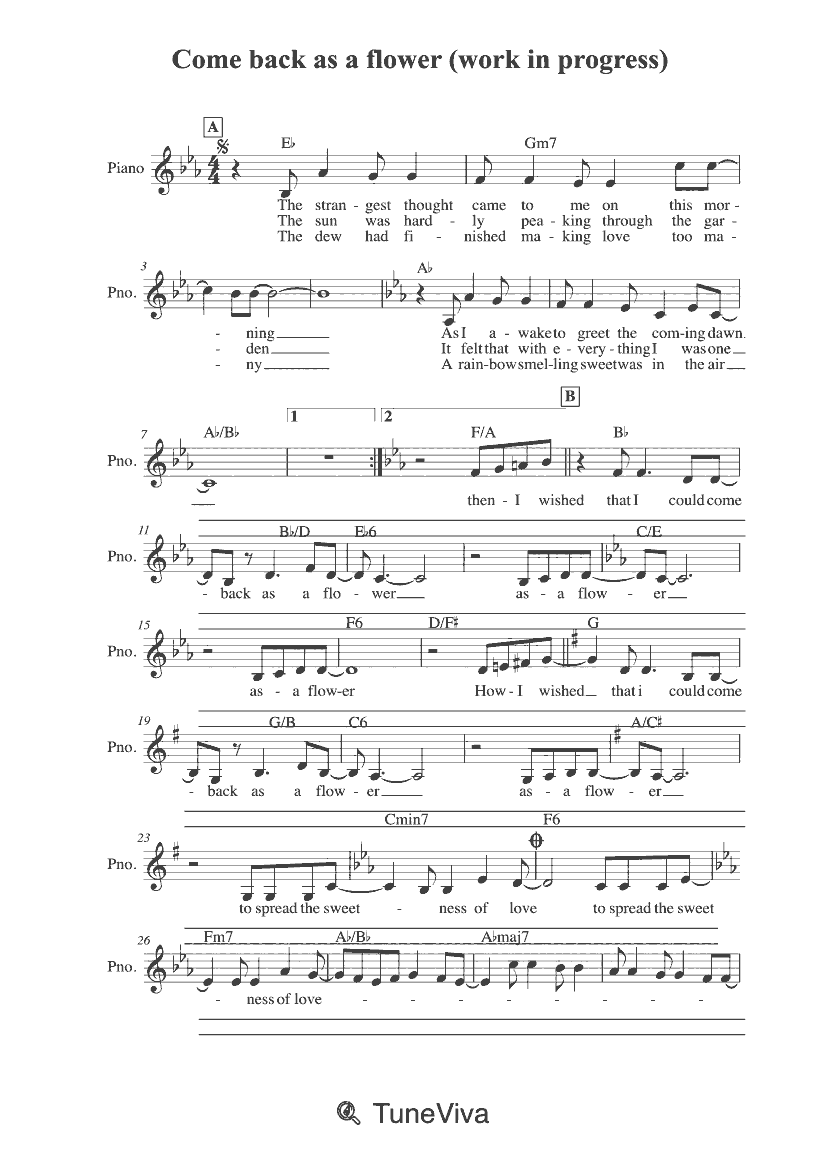
Stevie Wonder
Piano · 3 min 2 sec
Open score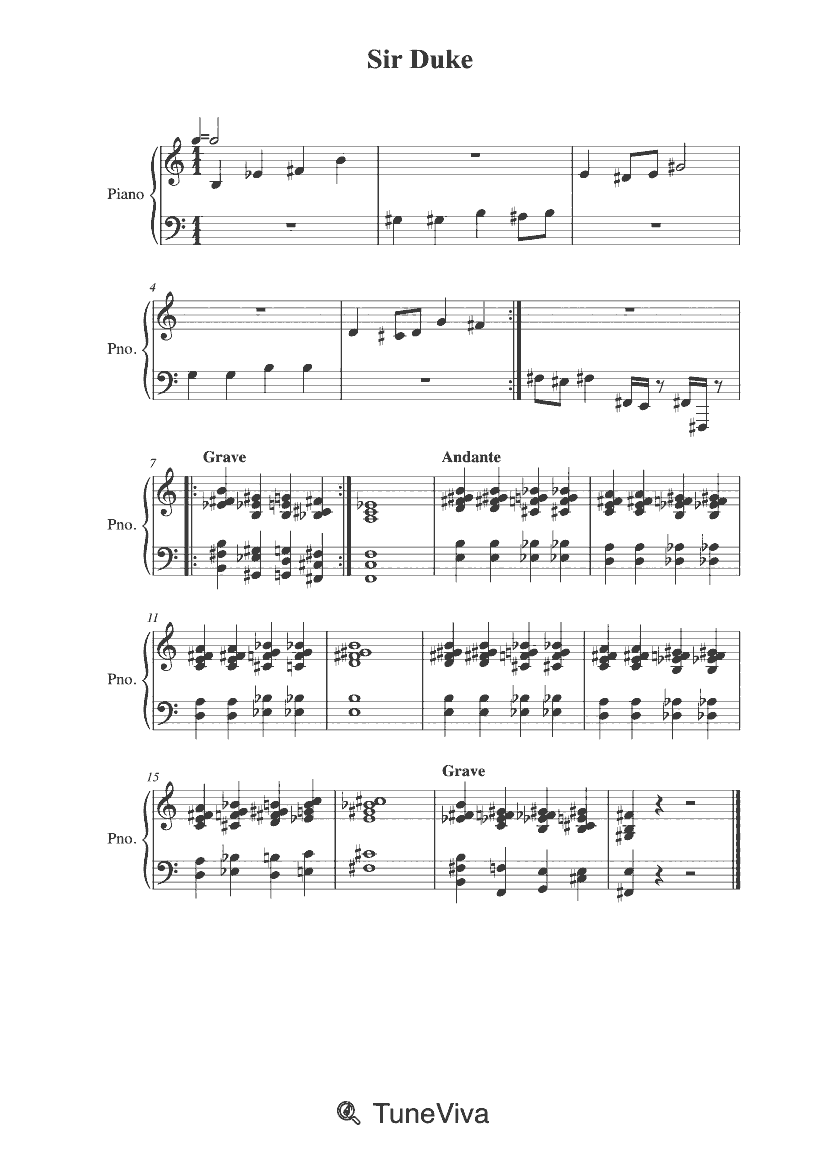
Stevie Wonder
Piano · 7 min 28 sec
Open score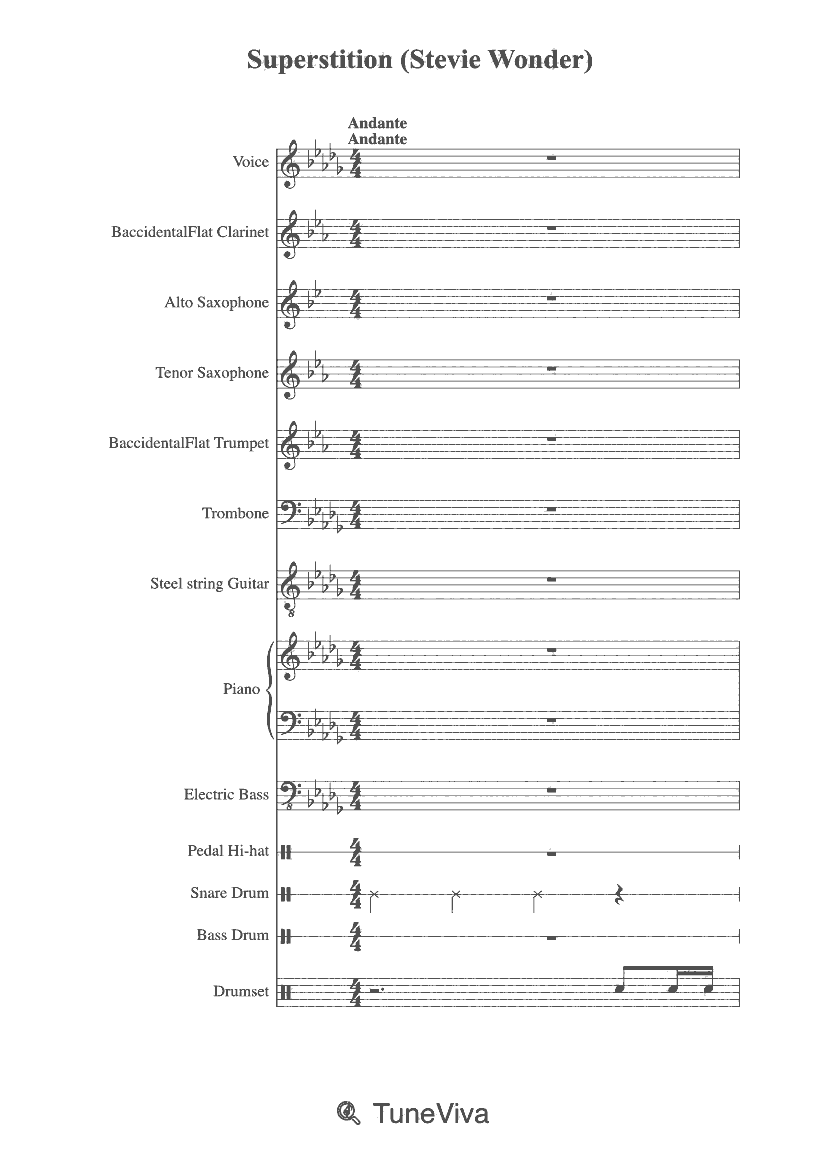
Stevie Wonder
Voice; B♭ Clarinet; Alto Saxophone +10 parts · 6 min 8 sec
Open score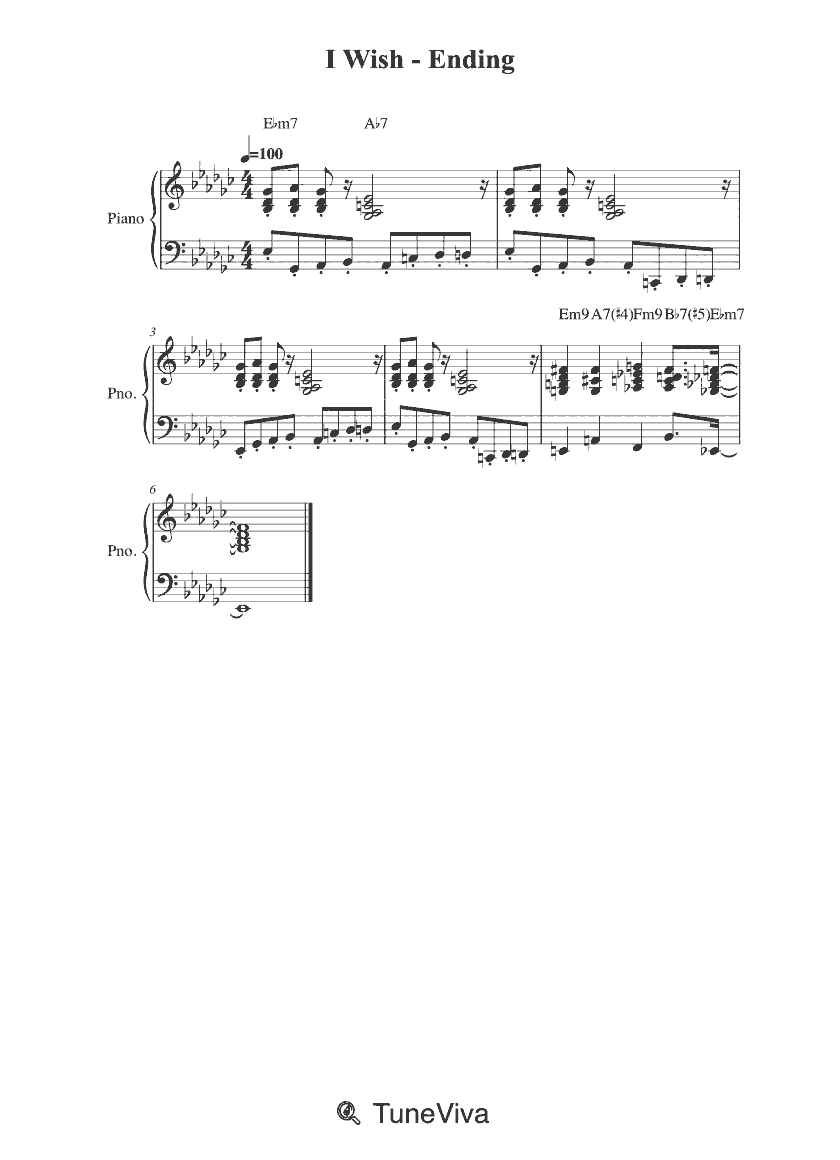
Stevie Wonder
Piano · 14 sec
Open score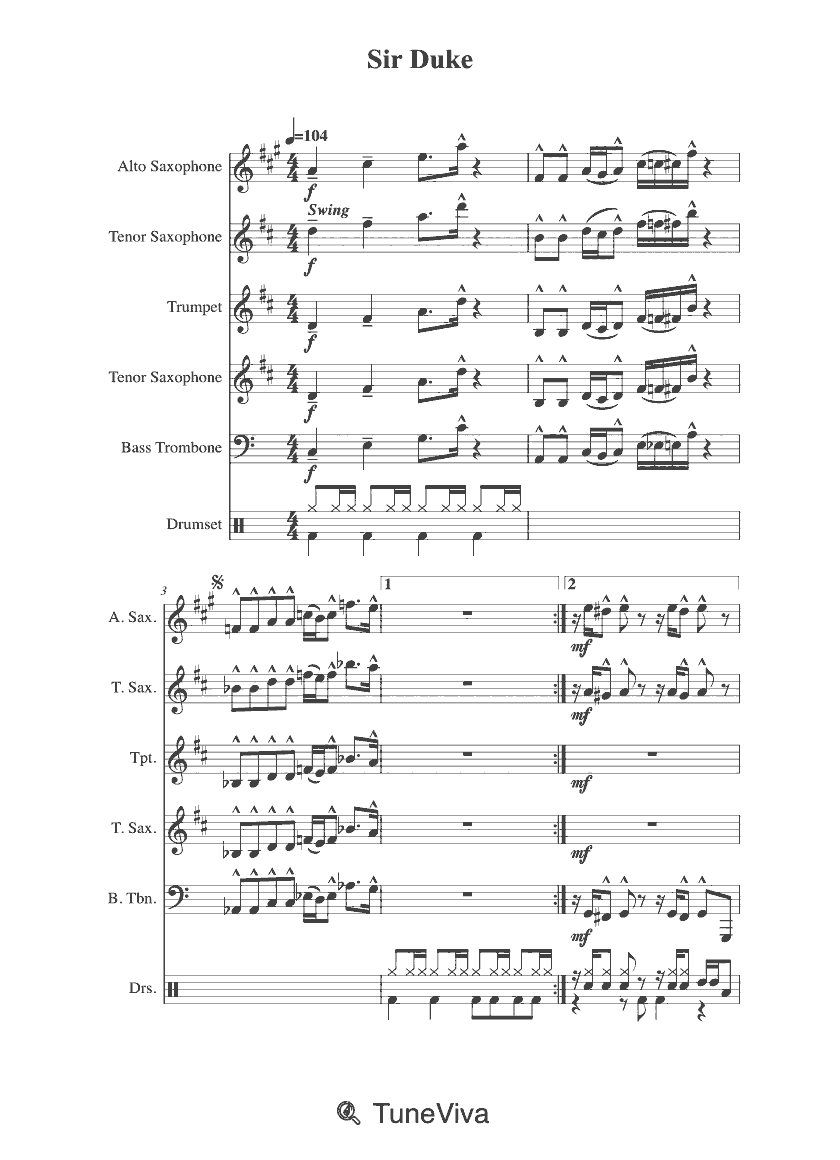
Stevie Wonder
Alto Saxophone; Tenor Saxophone; Trumpet +2 parts · 1 min 59 sec
Open score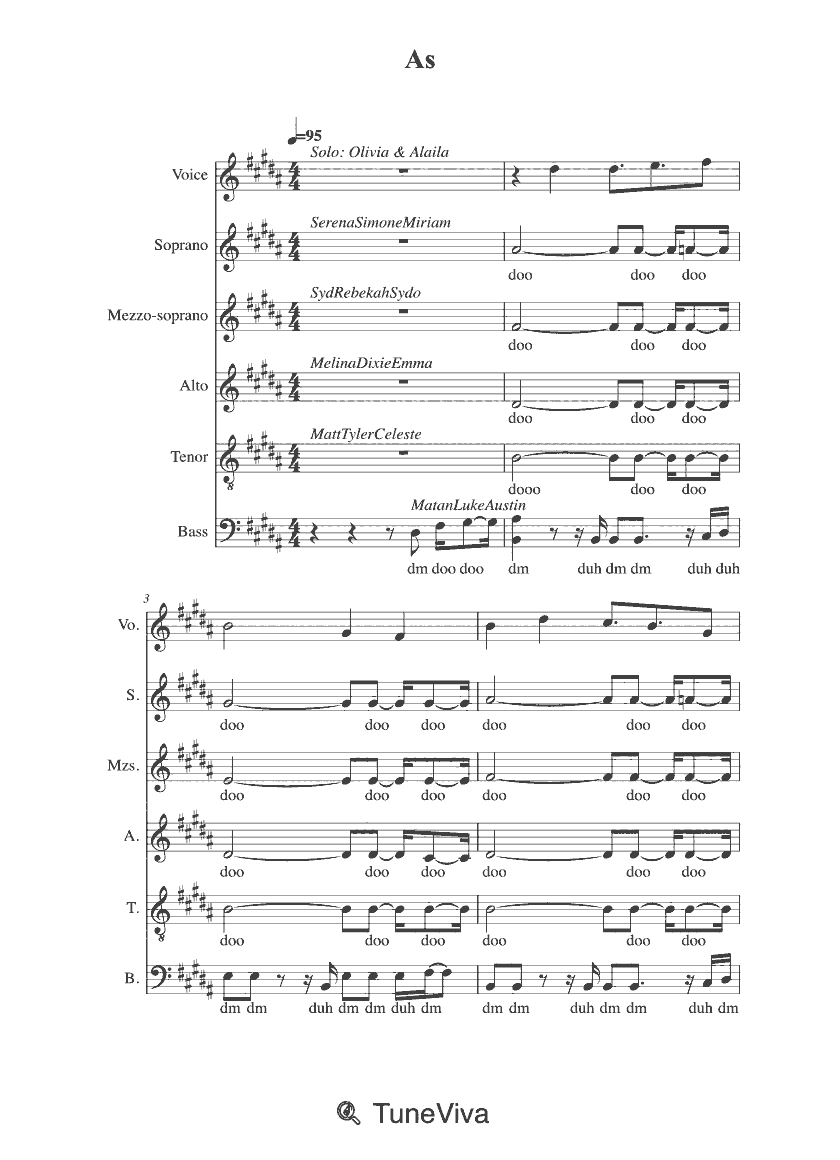
Stevie Wonder
Voice; Soprano; Mezzo-soprano +3 parts · 4 min 13 sec
Open scoreStevie Wonder moved from child star at Motown to a songwriter and instrumentalist with creative control over landmark albums. The Detroit Historical Society traces that shift, and the Library of Congress recognized his lifetime contribution to popular song with its Gershwin Prize. The Recording Academy’s history connects “Superstition” with his 1970s work. TuneViva lists 16 files under Wonder, including two separate “Superstition” entries, a nine-track “Don t You Worry Bout a Thing” file and a guitar-focused “Isnt She Lovely” title. Read these as particular arrangements from a much larger songbook, then compare the notation to recordings when deciding which setting suits your instrument or ensemble. Stevie Wonder sheet music spans a broad songbook, and the scores shown here focus on particular arrangements rather than a single edition. Listed titles include two separate settings of “Superstition,” a nine-part arrangement of “Don’t You Worry ’bout a Thing,” a one-track electric-piano part for “I Just Called to Say I Love You,” and a guitar-titled “Isn’t She Lovely” file whose score details list piano. Comparing written parts, opening key signatures and time signatures is the practical way to choose a version for your instrument or ensemble.
Wonder’s career spans Motown performance, songwriting, instrumental skill and record production. The Detroit Historical Society traces his path from Motown discovery to creative control over albums such as Talking Book, Innervisions and Songs in the Key of Life. The Recording Academy records Wonder’s award-winning work on “Superstition.” That development is relevant to a selection containing songs from across his career, from “Superstition” to “I Just Called to Say I Love You.”
The 16 TuneViva files are not a one-file-per-song list. “Superstition” appears in two separate records, while “I just called to say I love you” has more than one catalog version. “Don t You Worry Bout a Thing” has a nine-track entry, and “Isnt She Lovely Guitarra 1 para pros” signals a guitar-focused arrangement. These titles make the set useful for comparing different routes into Wonder’s songwriting, though the entries themselves vary in attribution detail.
For listening and score study, compare the two “Superstition” files over the same section, then look at the guitar-focused “Isn’t She Lovely” file to see what the written arrangement keeps in focus. Wonder’s recordings provide the reference sound for those comparisons. The Detroit Historical Society names Talking Book, Innervisions and Songs in the Key of Life as albums from the period when he gained creative control.
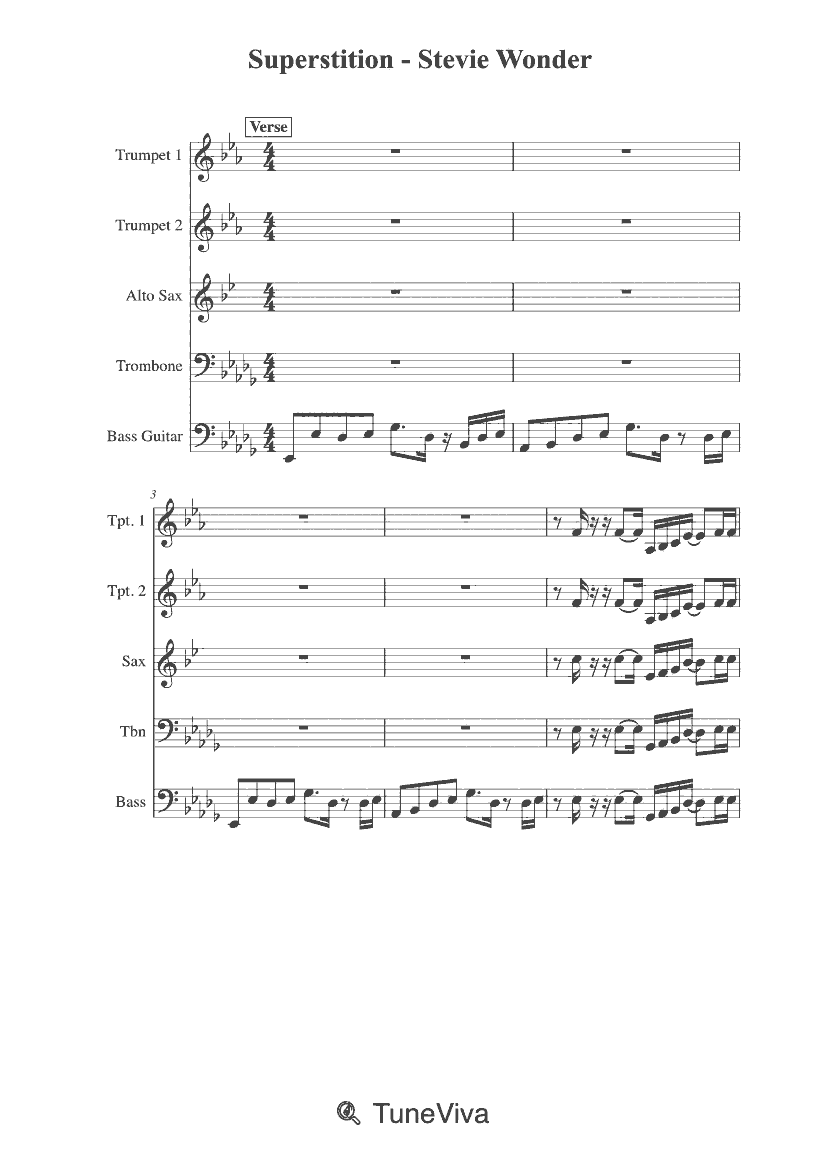
Comparing the two Superstition arrangements: The two “Superstition” scores are not identical settings. One lists Trumpet 1, Trumpet 2, Alto Sax, Trombone and Bass Guitar, with opening key signatures of three flats, two flats and five flats in 4/4 time. The other lists Trumpet, Alto Sax, Guitar, Piano and Drums, with opening key signatures of two flats, one flat, four flats and no sharps or flats, also in 4/4, plus a 100 BPM opening tempo. Use these details to decide whether you need a horn-and-bass focus or a guitar, piano and drums focus, then check the notation itself.
Full-band and focused arrangements: “Don’t You Worry ’bout a Thing” is laid out for Voice, Piano, Tenor Saxophone, Electric Piano, Electric Guitar, Electric Bass, Drumset, Congas and Güiro. “So What the Fuss” lists Trumpet, Alto Sax, Tenor Sax, voice (“Stimme”), Guitar, Elektrische Gitarre, Piano, Bass and Drums. By contrast, “I Just Called to Say I Love You” is a one-track file whose score part is Electric Piano, and the “Isn’t She Lovely” file is also one track but lists Piano as its part despite the guitar wording in the title. These differences matter more than the number of tracks alone.
What score details can and cannot tell you: Part lists, opening key signatures, time signatures and tempos describe the individual score in front of you. They do not prove the original recording’s instrumentation, nor do they establish difficulty or a particular published edition. When several key signatures appear for one title, they may relate to different parts or transposing instruments, so do not read them automatically as one concert key. Open the notation to confirm melody, lyrics, transpositions and whether all expected parts are present.
Choosing a version for your instrument: Start with the part list: a horn player can look for Trumpet, Alto Sax or Tenor Sax entries; a rhythm-section player can compare the Guitar, Piano, Bass and Drums groupings. For a guitar-titled file, verify the notation rather than assuming a guitar part is included, especially where the score details name Piano. If you need a complete band arrangement, check that the listed parts cover your role; if you need a single part or reduction, confirm that the one-track score is what you expect.
They are separate catalog files for the same song, so compare their scores as alternate arrangements rather than as separate works.
It identifies a guitar-focused upload. Check the score to see whether it is a solo part or includes accompaniment.
Its biography describes his Motown start, musical studies and increasing role in writing his own material.
The scores shown include “Superstition” in two separate arrangements, “Don’t You Worry ’bout a Thing,” “Isn’t She Lovely” under a guitar-oriented title, “I Just Called to Say I Love You” and “So What the Fuss.” These titles indicate the songs represented by the displayed scores, not a complete list of Wonder’s compositions.
One “Superstition” score lists Trumpet 1, Trumpet 2, Alto Sax, Trombone and Bass Guitar, with opening key signatures of three flats, two flats and five flats in 4/4. The other lists Trumpet, Alto Sax, Guitar, Piano and Drums, with opening key signatures of two flats, one flat, four flats and no sharps or flats in 4/4, plus a 100 BPM opening tempo.
The “Don’t You Worry ’bout a Thing” score lists Voice, Piano, Tenor Saxophone, Electric Piano, Electric Guitar, Electric Bass, Drumset, Congas and Güiro. Its opening key signature shows no sharps or flats, and its opening time signature is 4/4.
The title says “Guitarra 1 para pros,” but the score details list Piano as the part and describe a single track. A player should open the notation to confirm whether guitar music is present rather than relying on the title alone.
Both “Superstition” arrangements list an Alto Sax part, “Don’t You Worry ’bout a Thing” lists Tenor Saxophone, and “So What the Fuss” lists both Alto Sax and Tenor Sax. These part names describe the written scores, not necessarily the instrumentation of Wonder’s original recordings.
The score details for “I Just Called to Say I Love You” list Electric Piano as the part, with no sharps or flats in the opening key signature and 4/4 time. The single track should be checked in the notation to see whether it is a complete accompaniment, a melody line or a reduction.
The “So What the Fuss” score lists Trumpet, Alto Sax, Tenor Sax, voice (“Stimme”), Guitar, Elektrische Gitarre, Piano, Bass and Drums. Its opening time signature is 4/4 and its opening tempo is 92 BPM.