Thomas Tallis - Canon (All praise to Thee, My God)
Thomas Tallis
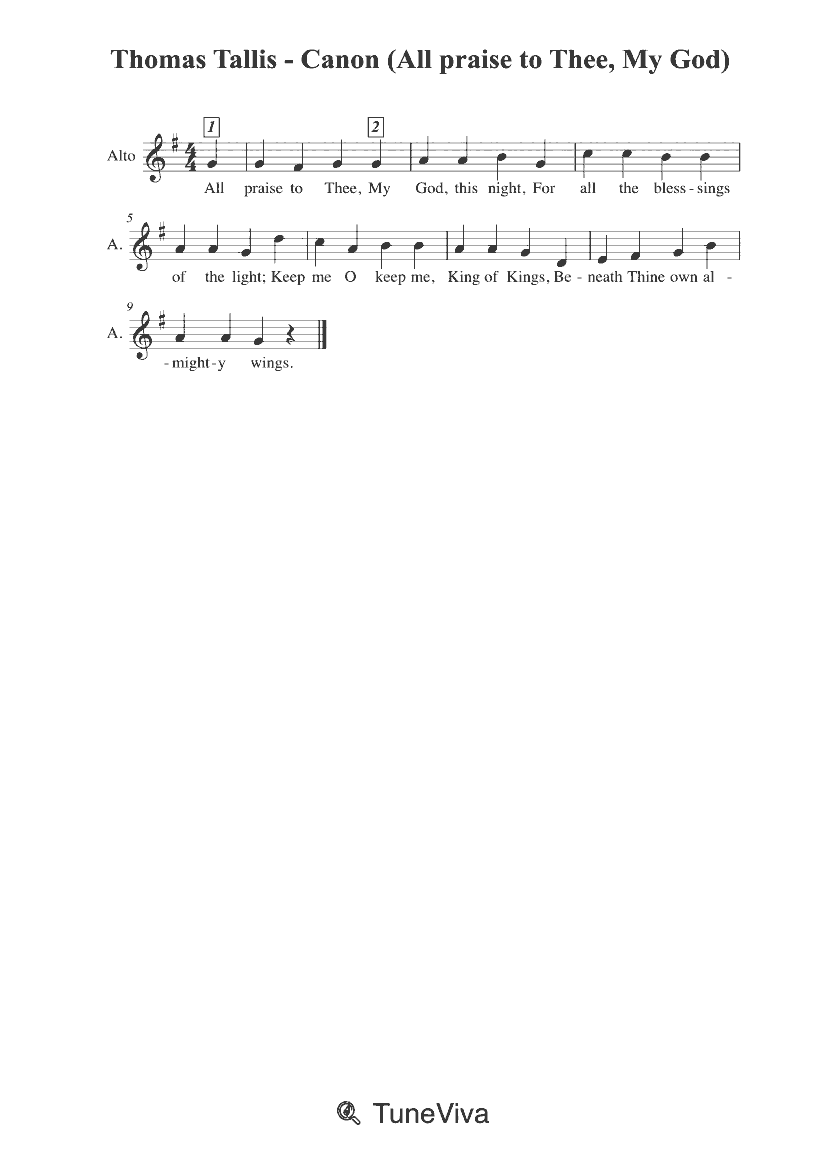
All praise to Thee my God
Alto · 16 sec
Open score56 Thomas Tallis scores: Spem in alium for forty voices, If ye love me, O nata lux, the Lamentations of Jeremiah and the psalm tune behind Tallis's Canon.
The Psalm 67 tune from Parker's Psalter of 1567, here under Thomas Ken's evening hymn text. The most-viewed score on the page.
The forty-voice motet for eight choirs of five, on a Sarum responsory from the Book of Judith; at 9,713 notes the densest file here.
The English anthem on John 14, written in Edward VI's reign; the Wanley partbook of 1549-52 is its earliest source.
A short setting of the same 1567 tune, without the composer's name in the title; 65 notes to the Canon entry's 32.
One of the two sets for Maundy Thursday, written in the later 1560s and left in manuscript; the longest choral score in the catalogue.
No. 8 of the 1575 Cantiones sacrae, a hymn for Lauds on the Feast of the Transfiguration.
A seven-voice respond for Pentecost Vespers, one of the pieces Tallis wrote with the visiting Spanish chapel singers in mind.
The metrical Psalm 67 text printed with the 1567 tune, before Ken's hymn was fitted to it.
The ninth of the 1567 tunes, a setting of the Veni Creator ('Come Holy Ghost, eternal God'), named 'Ordinal' from its use in the Ordination Service.
An early votive antiphon to the Virgin, from the period before the Edwardian reforms, with a long treble line.
Compare the instrument and arrangement details below, then open a score to check the notation. Different entries may be arrangements or editions of the same work; available playback tools are shown on each score page.
Thomas Tallis
All praise to Thee my God
Alto · 16 sec
Open score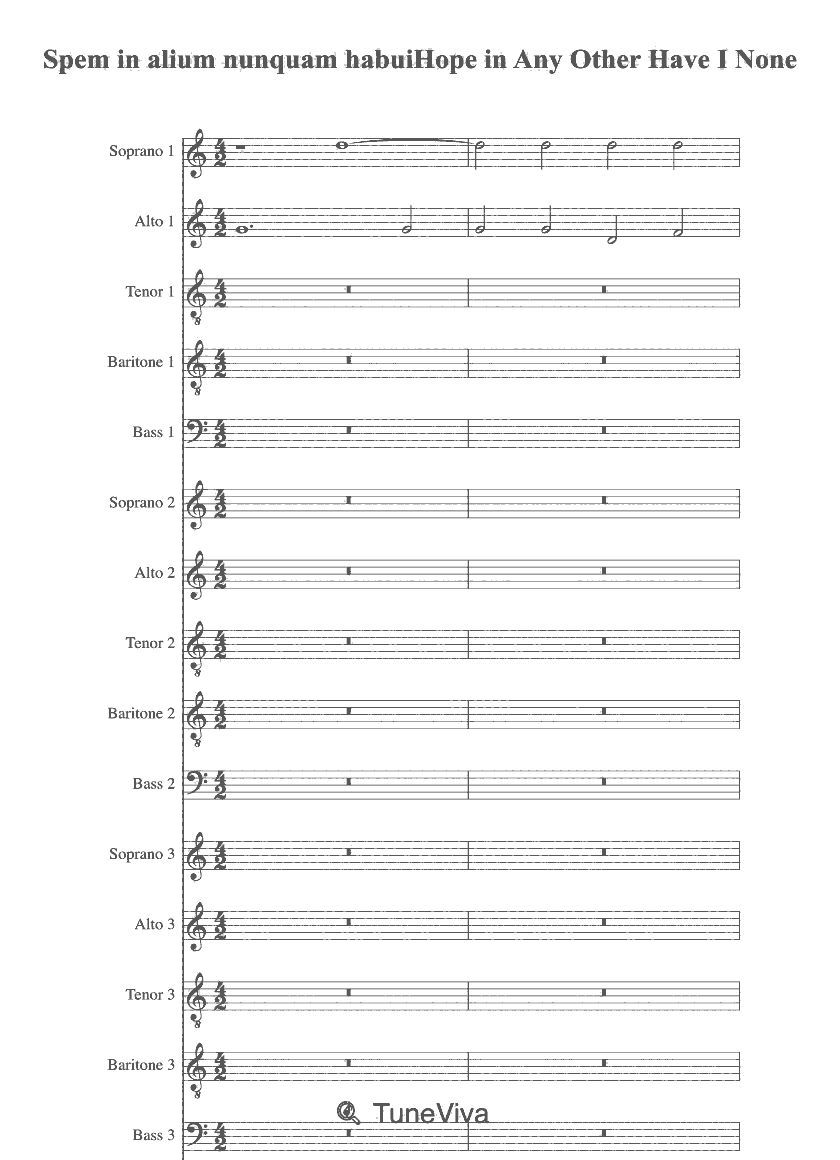
Thomas Tallis
Soprano 1; Alto 1; Tenor 1 +37 parts · 14 min 59 sec
Open score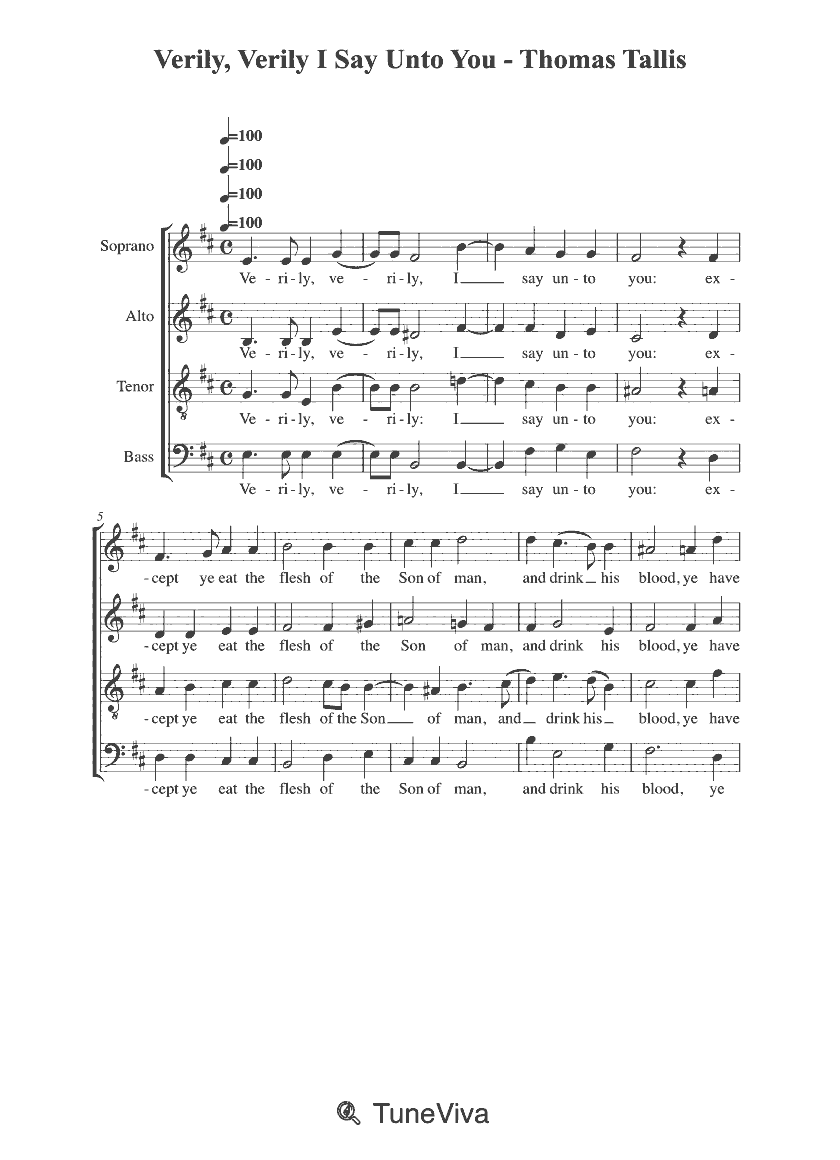
Thomas Tallis
Soprano; Alto; Tenor +1 parts · 1 min 24 sec
Open score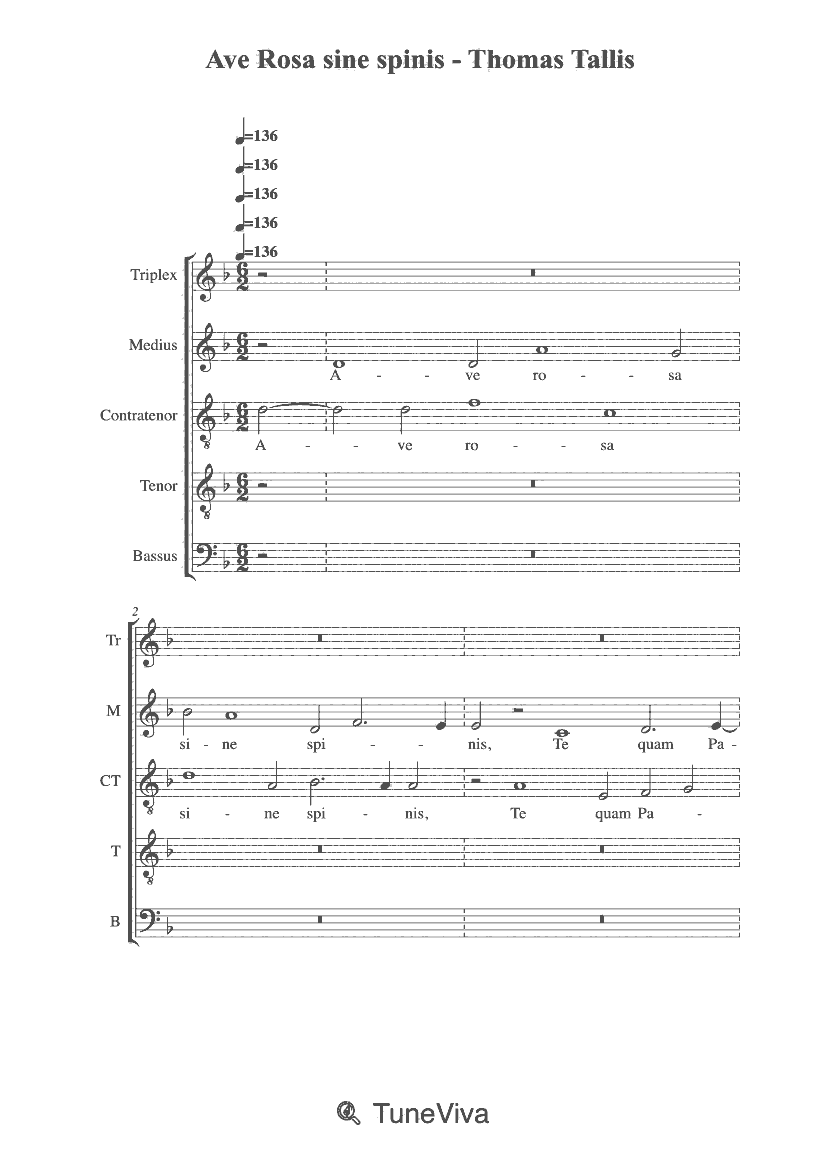
Thomas Tallis
Triplex; Medius; Contratenor +2 parts · 18 min 5 sec
Open score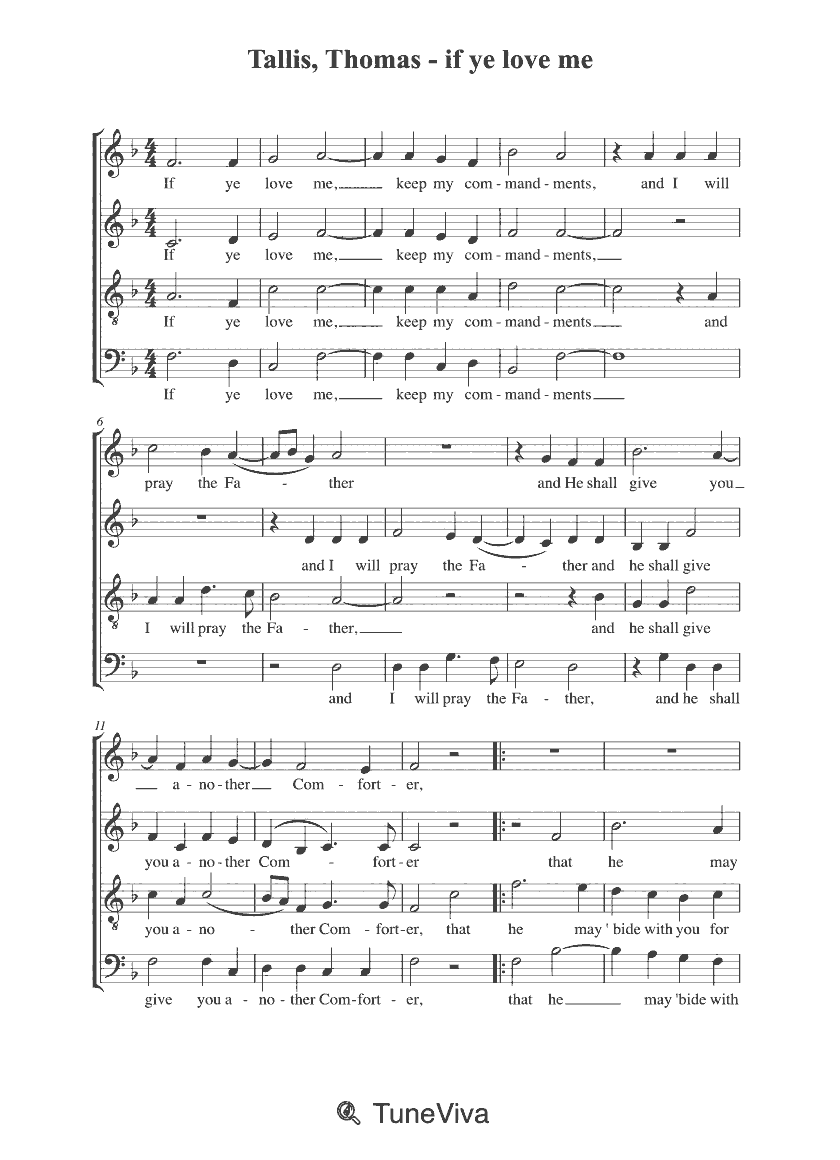
Thomas Tallis
Soprano; Alto; Tenore +1 parts · 1 min 20 sec
Open score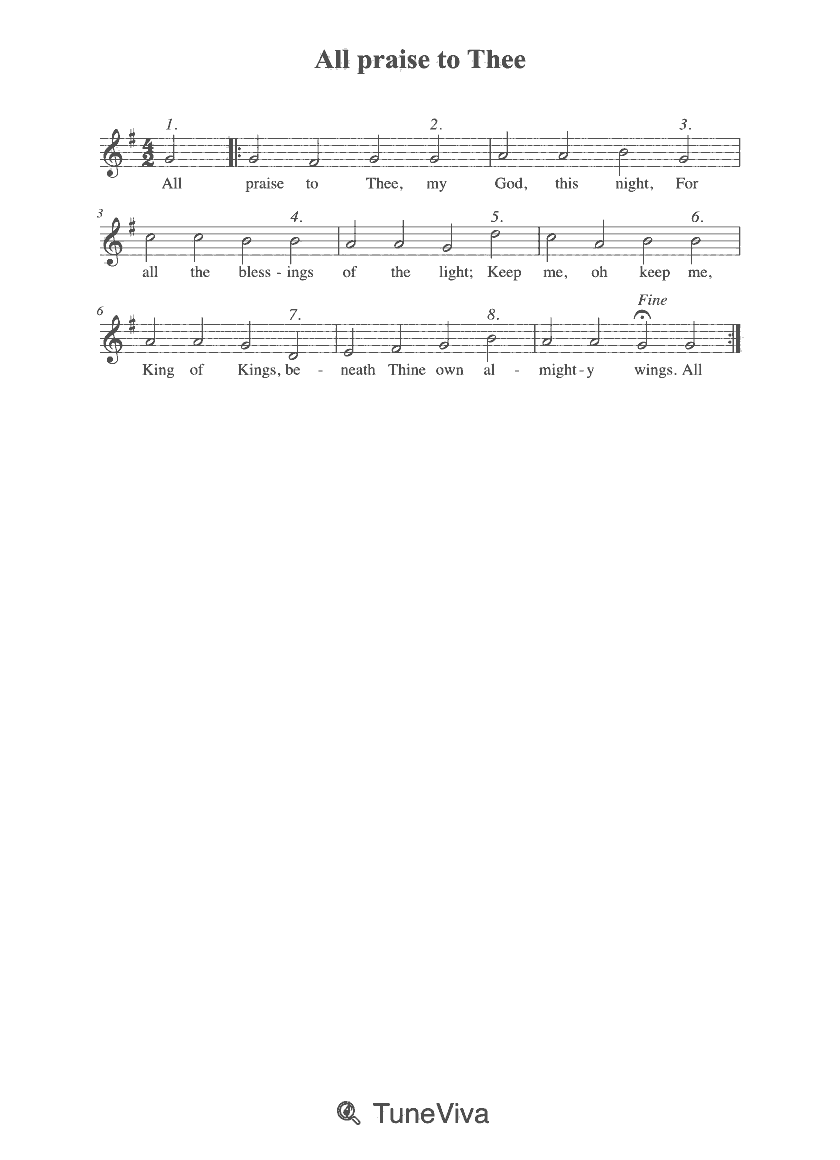
Thomas Tallis
Voice · 2 min 10 sec
Open score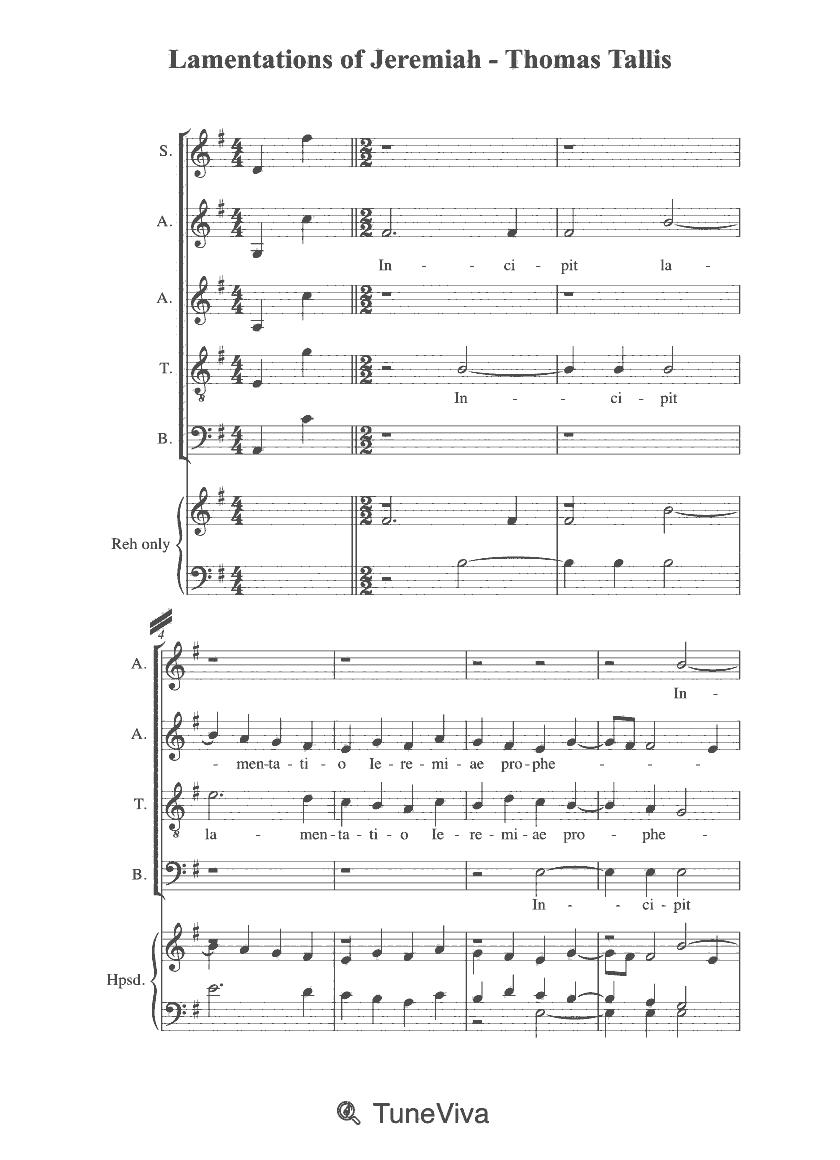
Thomas Tallis
The Lamentations of Jeremiah
S.; A.; T. +2 parts · 9 min 33 sec
Open score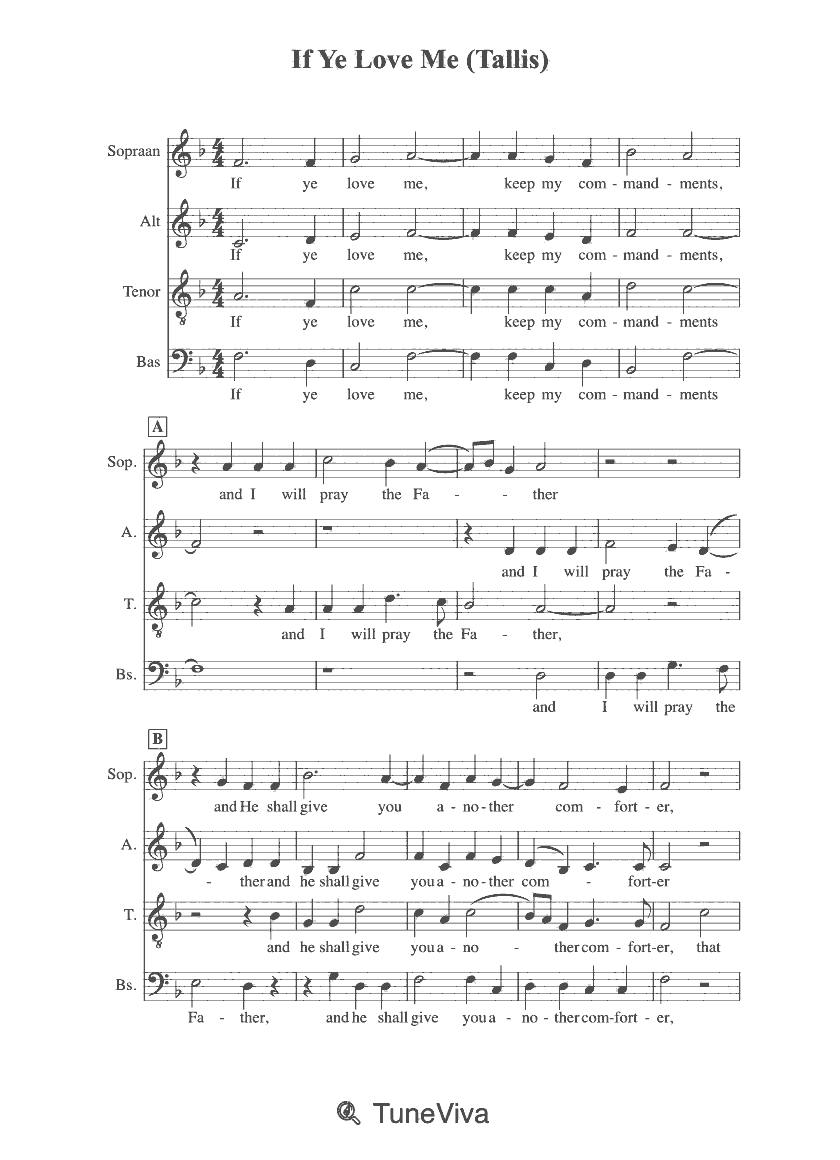
Thomas Tallis
Sopraan; Alt; Tenor +1 parts · 1 min 20 sec
Open score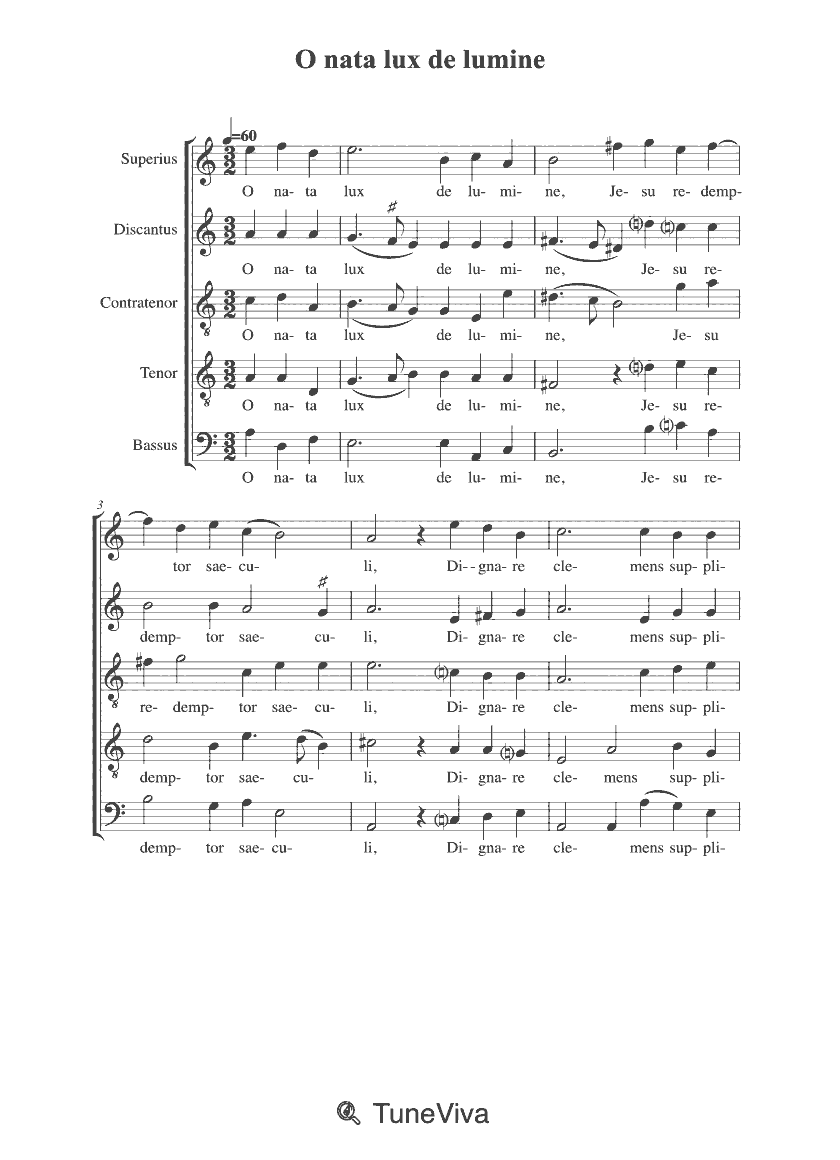
Thomas Tallis
Superius; Discantus; Contratenor +2 parts · 4 min 2 sec
Open score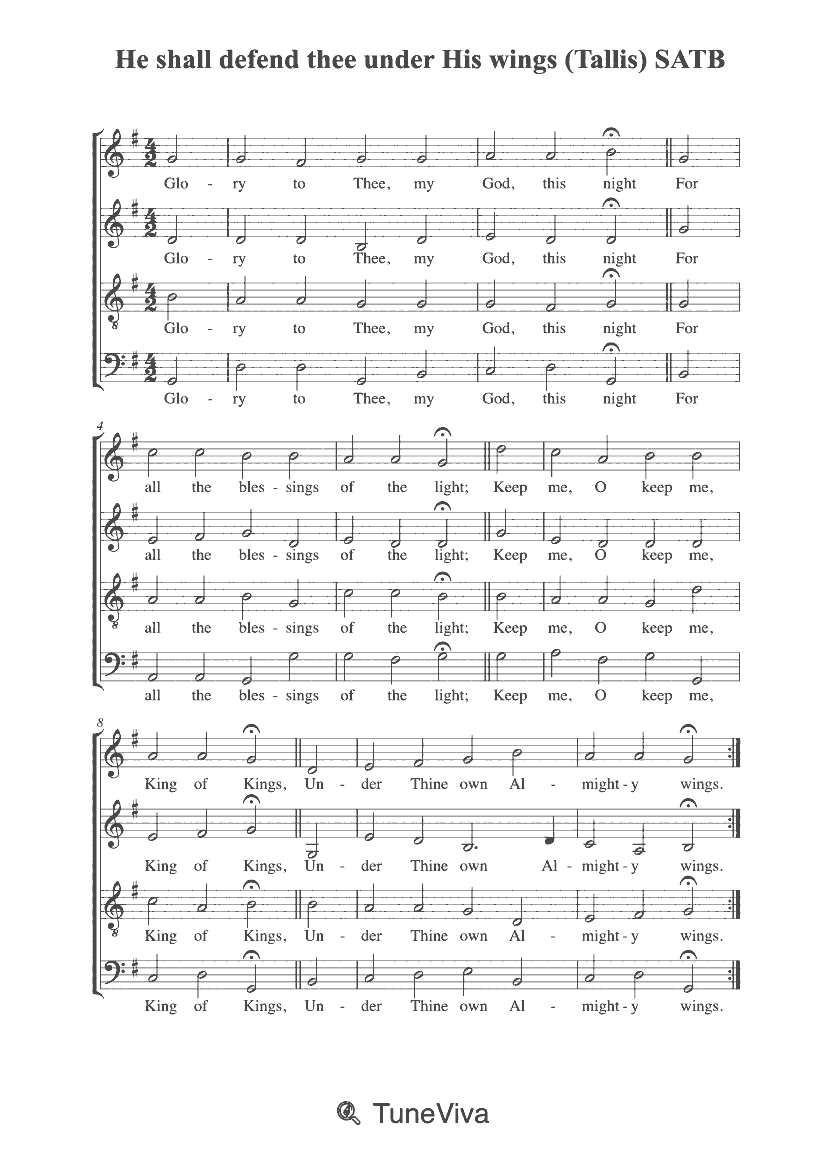
Thomas Tallis
10 fra Hymns Ancient and Modern
Soprano; Alto; Tenor +1 parts · 2 min 16 sec
Open score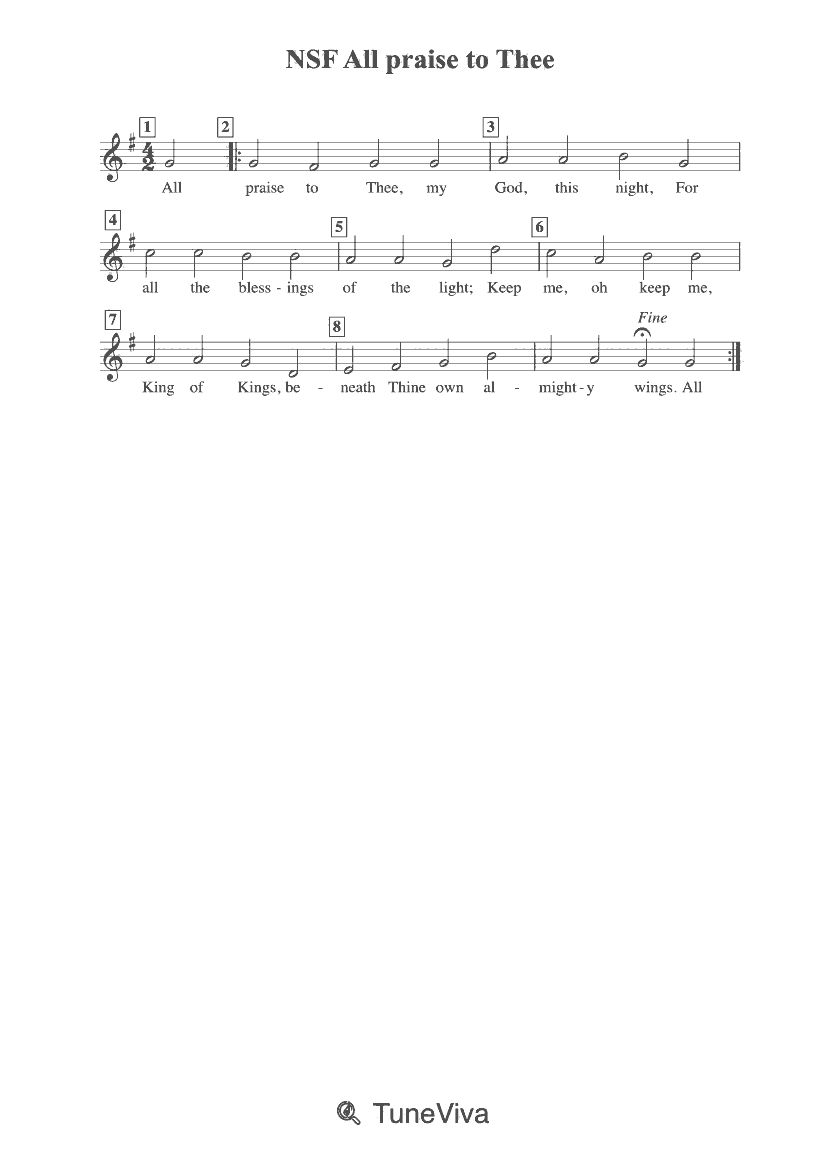
Thomas Tallis
Voice · 2 min 10 sec
Open score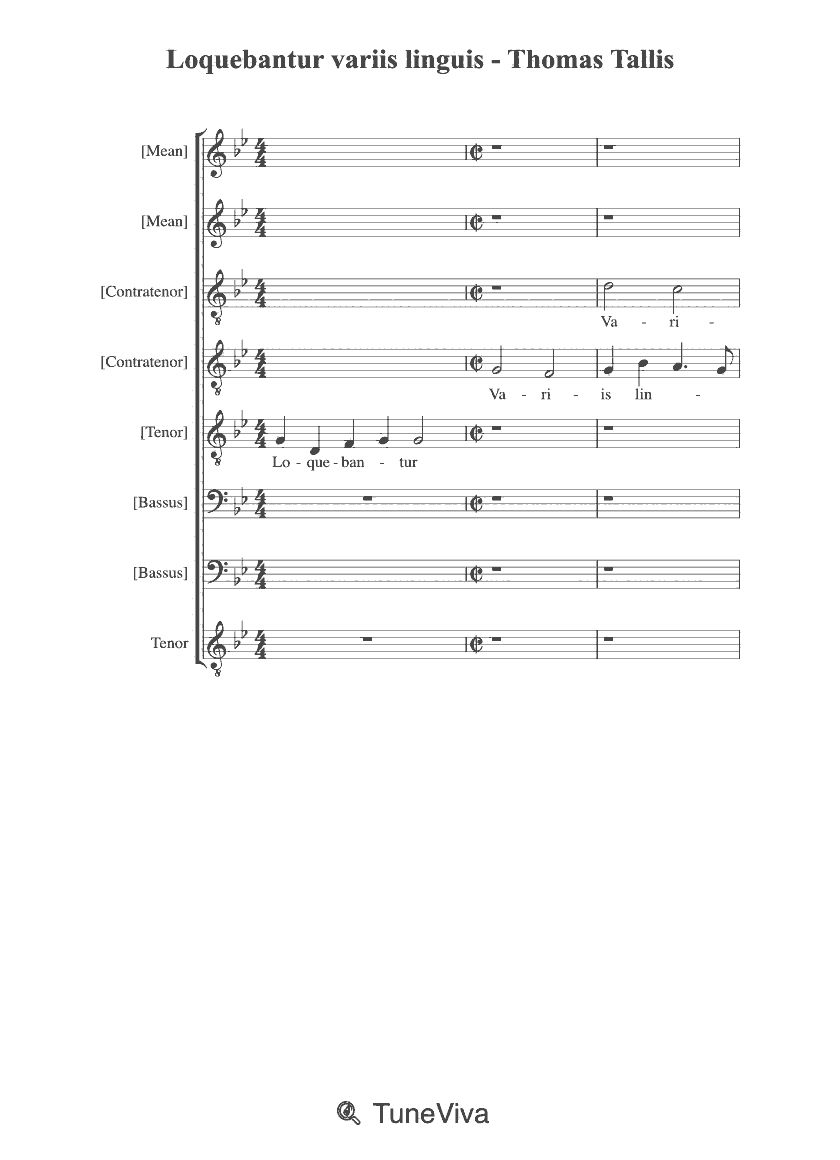
Thomas Tallis
[Mean]; [Contratenor]; [Tenor] +2 parts · 4 min 43 sec
Open score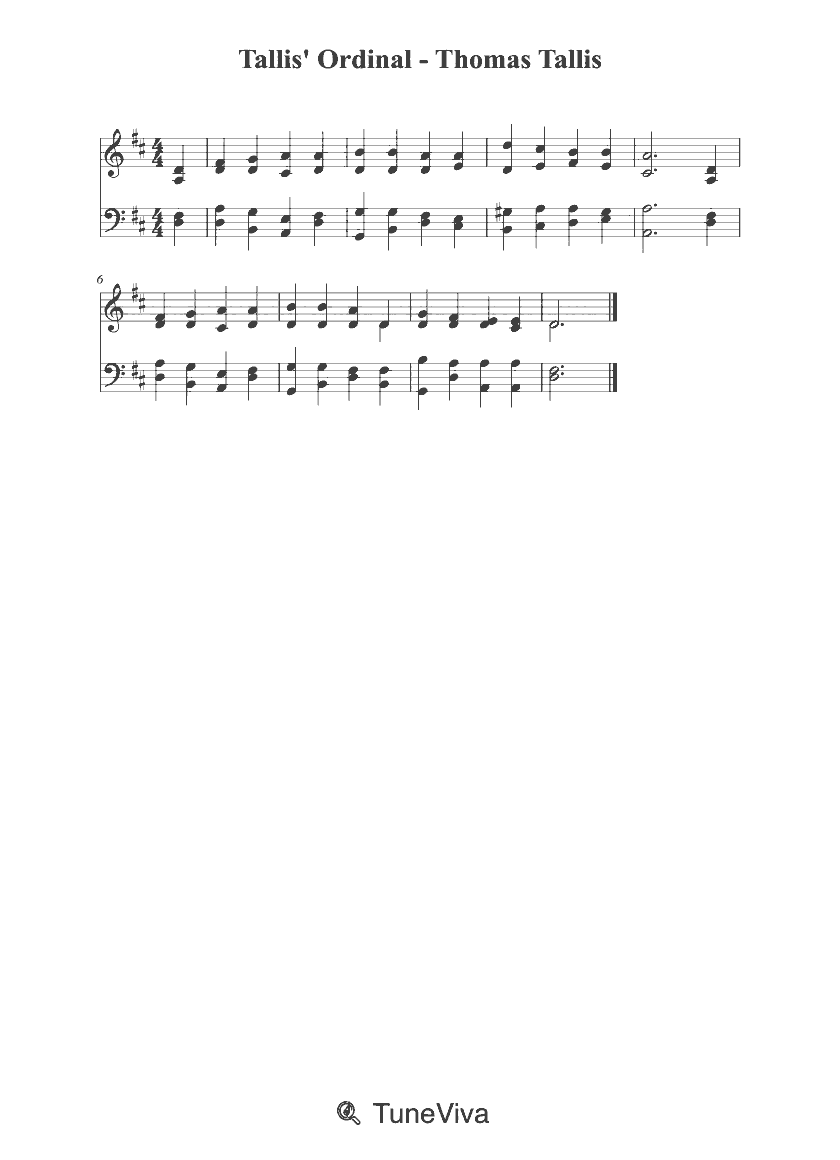
Thomas Tallis
16 sec
Open score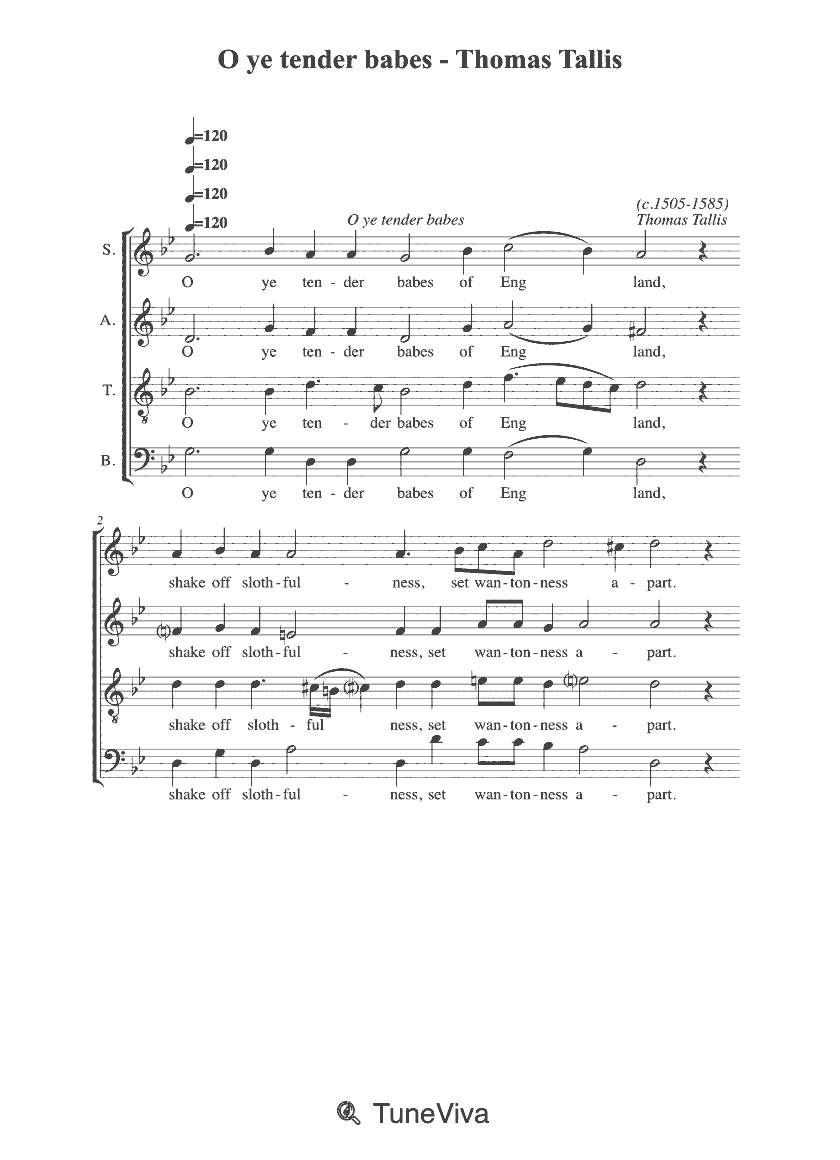
Thomas Tallis
S.; A.; T. +1 parts · 1 min 5 sec
Open score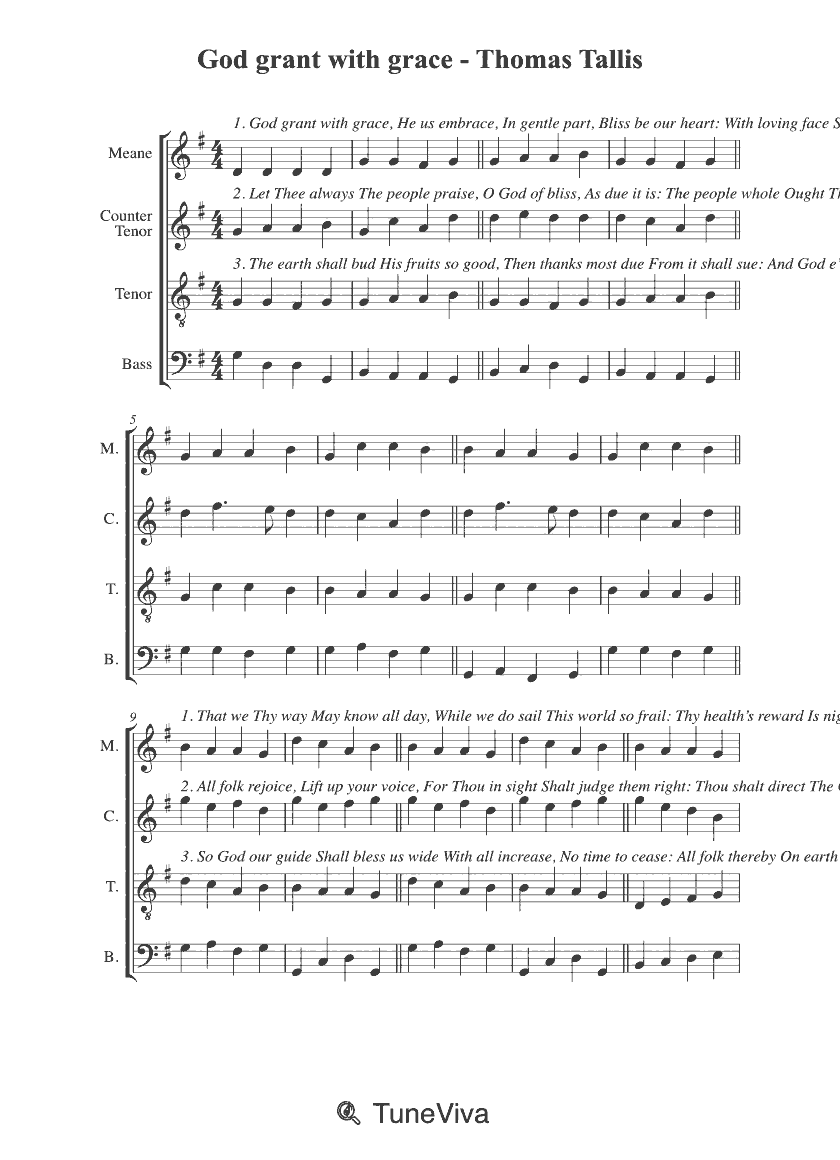
Thomas Tallis
Meane; Counter Tenor; Tenor +1 parts · 35 sec
Open score
Thomas Tallis
Soprano; Alto; Tenor +1 parts · 27 min 19 sec
Open score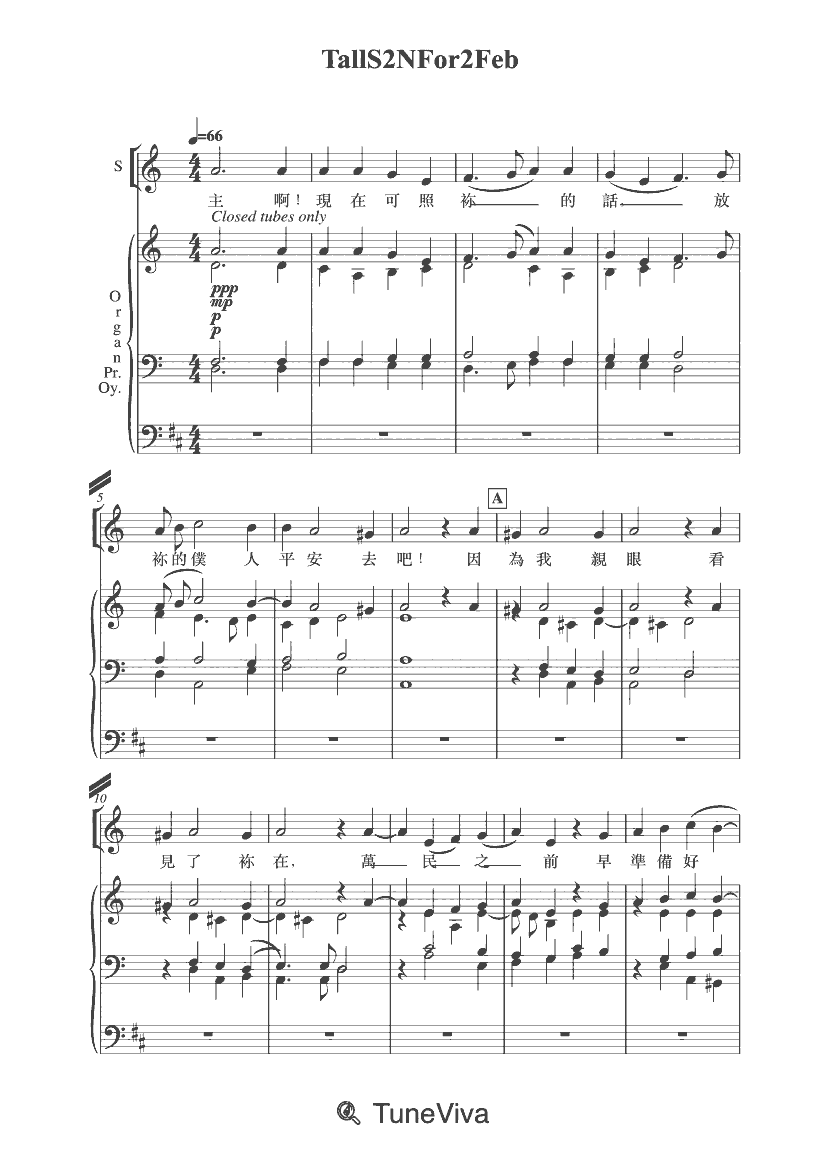
Thomas Tallis
S; O r g a n Pr. Oy. · 4 min 13 sec
Open score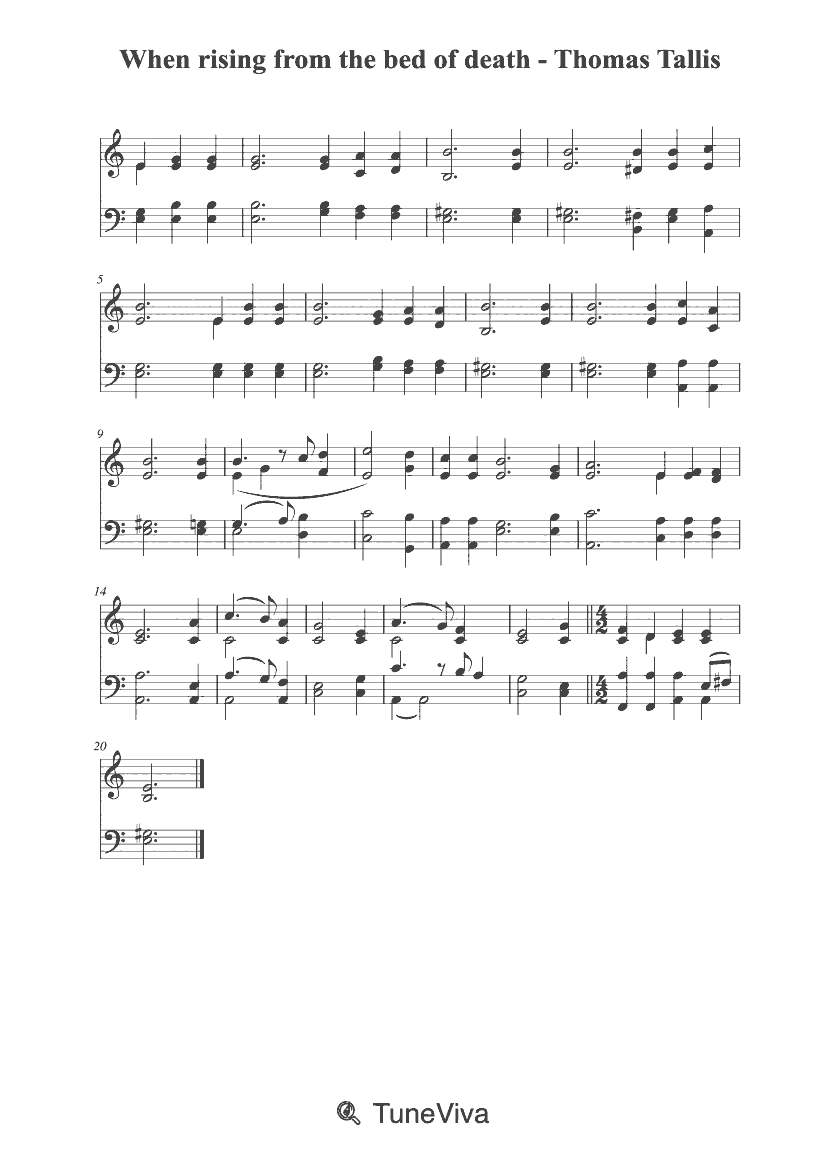
Thomas Tallis
49 sec
Open score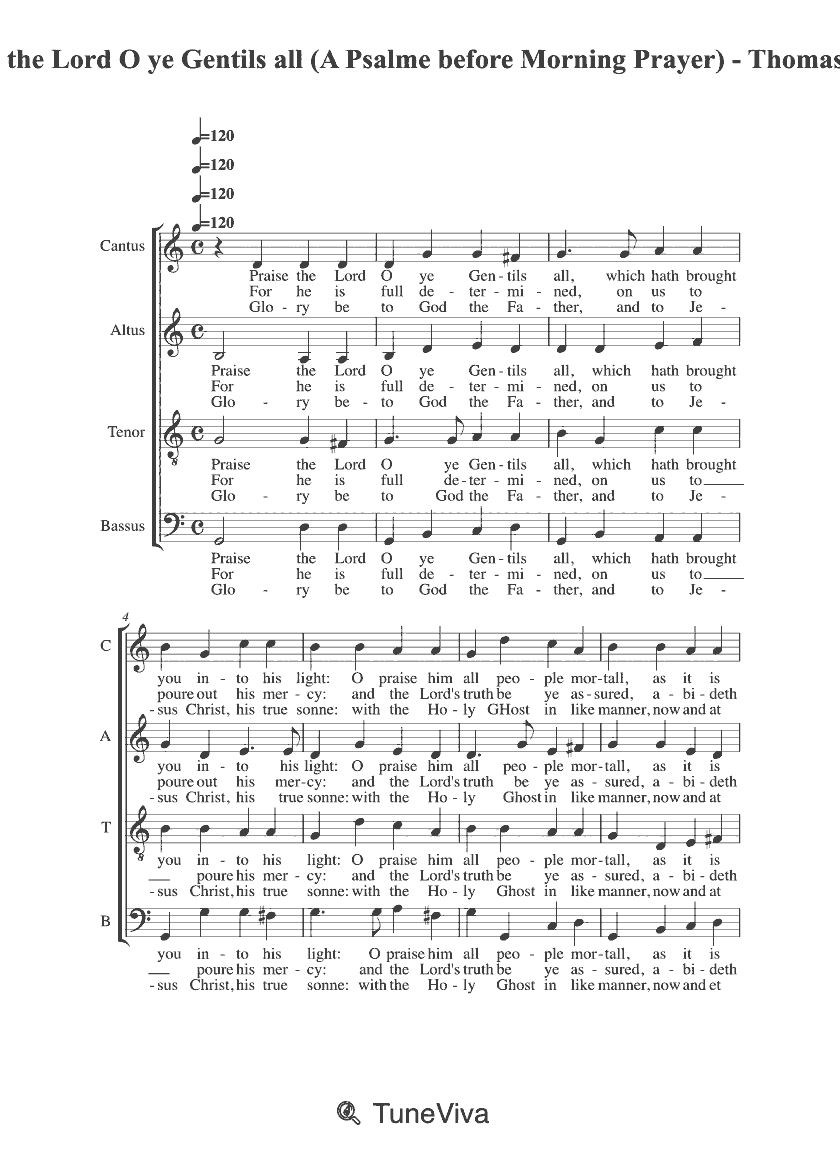
Thomas Tallis
Cantus; Altus; Tenor +1 parts · 18 sec
Open score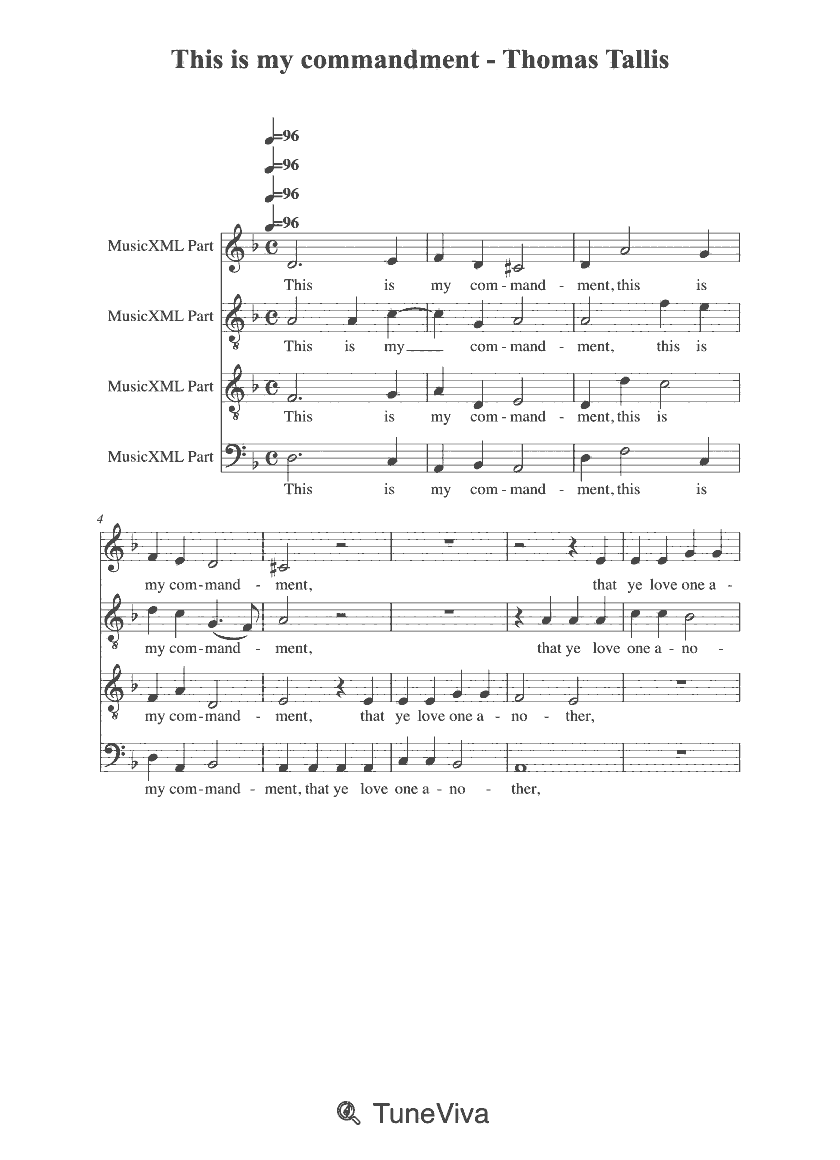
Thomas Tallis
MusicXML Part · 2 min 10 sec
Open scorePage 1 of 3
The catalogue holds 56 Tallis scores, about 216 minutes of music and 46,557 notated notes. Twenty-one entries carry lyrics, a low figure for a composer who wrote almost nothing but vocal music; the rest are arrangements or files logged without text. The most-viewed item is Tallis's Canon, the psalm tune of 1567 that later carried 'All praise to Thee, My God'. Behind it sit Spem in alium for forty voices, If ye love me and the Lamentations of Jeremiah, the largest choral file on the page at 3,526 notes. Thomas Tallis (c. 1505–1585) was an English composer of High Renaissance music whose compositions are primarily vocal. Thomas Tallis sheet music on this page ranges from the forty-part motet Spem in alium to the four-part If ye love me, the Lamentations of Jeremiah and the five-part O nata lux. The scores come from different editions and arrangements, so check the voice layout and title before choosing a version; the details below describe individual scores rather than Tallis's original performing forces.
Tallis was born around 1505, probably in Kent, and no record of his birth, family or schooling survives. He is first documented in 1531 as organist at Dover Priory, and moved through St Mary-at-Hill in London, Waltham Abbey, which was dissolved in 1540, and Canterbury Cathedral before joining the Chapel Royal around 1543. He served Henry VIII, Edward VI, Mary I and Elizabeth I, changing his style to suit each reign. In 1575 Elizabeth granted him and William Byrd a 21-year monopoly on printing polyphonic music; their Cantiones sacrae sold poorly. He died at Greenwich on 23 November 1585 and was buried in St Alfege.
The catalogue follows the whole career. Nine tunes for Archbishop Parker's Psalter of 1567 include the Psalm 67 setting known as Tallis's Canon, later sung to Thomas Ken's evening hymn, and the Third Mode Melody that Vaughan Williams used in 1910. If ye love me, an English anthem on John 14, survives in the Wanley partbook of 1549-52. Spem in alium, for eight choirs of five voices, sets a Sarum responsory drawn from the Book of Judith and probably dates from about 1570. O nata lux appeared as No. 8 in the 1575 Cantiones sacrae, and Loquebantur variis linguis is a seven-voice Pentecost respond. The two sets of Lamentations, from the later 1560s, set the Maundy Thursday lessons.
Of the 54 entries, 42 are filed as classical, seven as folk and five left unclassified; the folk label catches psalm and hymn tunes that circulated outside church use. Only 21 files carry lyrics. Three entries set All praise to Thee and two set If ye love me, so 54 files do not mean 54 distinct works.
Match the score to your singers: Tallis's music is primarily vocal, and the versions here vary widely in layout. Spem in alium is set out for forty voices in eight five-part choirs, while If ye love me is listed for soprano, alto, tenor and bass, and O nata lux for five parts. Check the part names on each score—some entries are single-line extracts such as the alto-only Canon—before planning a rehearsal.
Spem in alium needs eight choirs, not just forty singers: Spem in alium is a 40-part motet for eight choirs of five voices each. Planning it as eight separate five-part groups is more practical than treating all forty lines as one choir. A 1596 Nonsuch Palace catalogue lists 'a song of fortie partes, made by Mr. Tallys', and the earliest surviving manuscripts were prepared in 1610 for Henry Frederick's investiture as Prince of Wales.
Read the title and text carefully: Some titles combine Latin and English. One Spem in alium title runs the Latin incipit and an English rendering together without a separator, so identify the work by its voice layout and text as well as the first words. The catalogue also contains separate scores titled All praise to Thee and Canon (All praise to Thee), which should be checked individually rather than assumed to be identical.
Use score layout, not labels, to judge difficulty: The records supply parts, opening key and time signatures, and note counts for individual scores; these are useful for comparing versions but do not establish a formal grade. Spem in alium, for example, is listed with forty parts and an opening 4/2 time signature, while If ye love me is listed in 4/4 with one flat. Judge difficulty from the music in front of you and the forces available.
No. It circulated in manuscript. A catalogue of Nonsuch Palace from 1596 lists 'a song of fortie partes, made by Mr. Tallys', and the earliest surviving copies were prepared in 1610 for the investiture of Henry Frederick, Prince of Wales, with an English text.
Both use the Psalm 67 tune from Parker's Psalter of 1567. 'God grant with grace' is the metrical psalm printed with it; 'All praise to Thee, My God, this night' is Thomas Ken's hymn, and a version of the tune printed by Thomas Ravenscroft is the one later used for it.
Spem in alium, id 224496, logged under a title that runs the Latin incipit and an English rendering together without a separator. The English is not a translation of the whole text.
Spem in alium is a 40-part Renaissance motet by Thomas Tallis, composed around 1570 for eight choirs of five voices each. The text is a response from the Sarum rite Matins order, and a 1596 catalogue of Nonsuch Palace calls it 'a song of fortie partes, made by Mr. Tallys'.
Spem in alium is known from a 1596 catalogue of Nonsuch Palace, and the earliest surviving manuscripts were prepared in 1610 for Henry Frederick's investiture as Prince of Wales; no lifetime print is recorded in those sources.
The score is laid out for 40 voices in eight choirs of five parts: soprano, alto, tenor, baritone and bass for each choir. The catalogue entry lists all eight choirs separately, from Soprano 1 to Bass 8.
The score titled 'Tallis, Thomas - if ye love me' is set for soprano, alto, tenore and basso, with an opening key signature of one flat and 4/4 time. Those details describe this particular score rather than every possible edition of the piece.
The Lamentations of Jeremiah score is laid out for soprano, alto, tenor and bass, with a separate rehearsal part, and its text is identified as Lamentations 1, verses 1 and 2. The record gives an opening key signature of one sharp and 4/4 time.
O nata lux de lumine is scored for five voice parts in this version: Superius, Discantus, Contratenor, Tenor and Bassus. The record gives no sharps or flats in the opening key signature and a 3/2 opening time signature.
Check the voice parts, opening key and time signature, and whether the title gives a Latin incipit, an English text or both. The scores here include single-line extracts and different arrangements, so a title alone may not identify the complete work or the forces needed.