Thomas Tallis - Canon (All praise to Thee, My God)
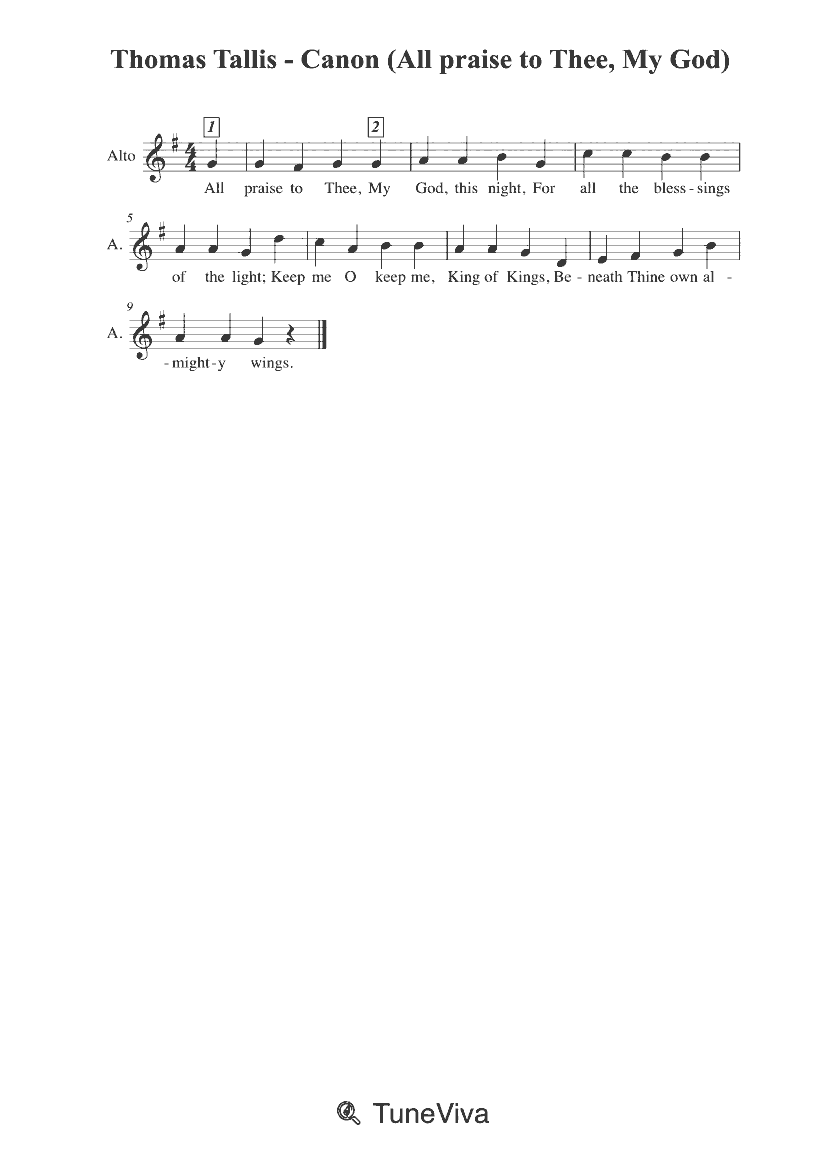
All praise to Thee my God
classical
1 tracks
The catalogue holds 54 Tallis scores, about 216 minutes of music and 46,557 notated notes. Twenty-one entries carry lyrics, a low figure for a composer who wrote almost nothing but vocal music; the rest are arrangements or files logged without text. The most-viewed item is Tallis's Canon, the psalm tune of 1567 that later carried 'All praise to Thee, My God'. Behind it sit Spem in alium for forty voices, If ye love me and the Lamentations of Jeremiah, the largest choral file on the page at 3,526 notes. Fifty-three entries are logged at complexity index 0.
Tallis was born around 1505, probably in Kent, and no record of his birth, family or schooling survives. He is first documented in 1531 as organist at Dover Priory, and moved through St Mary-at-Hill in London, Waltham Abbey, which was dissolved in 1540, and Canterbury Cathedral before joining the Chapel Royal around 1543. He served Henry VIII, Edward VI, Mary I and Elizabeth I, changing his style to suit each reign. In 1575 Elizabeth granted him and William Byrd a 21-year monopoly on printing polyphonic music; their Cantiones sacrae sold poorly. He died at Greenwich on 23 November 1585 and was buried in St Alfege.
The catalogue follows the whole career. Nine tunes for Archbishop Parker's Psalter of 1567 include the Psalm 67 setting known as Tallis's Canon, later sung to Thomas Ken's evening hymn, and the Third Mode Melody that Vaughan Williams used in 1910. If ye love me, an English anthem on John 14, survives in the Wanley partbook of 1549-52. Spem in alium, for eight choirs of five voices, sets a Sarum responsory drawn from the Book of Judith and probably dates from about 1570. O nata lux appeared as No. 8 in the 1575 Cantiones sacrae, and Loquebantur variis linguis is a seven-voice Pentecost respond. The two sets of Lamentations, from the later 1560s, set the Maundy Thursday lessons.
Of the 54 entries, 42 are filed as classical, seven as folk and five left unclassified; the folk label catches psalm and hymn tunes that circulated outside church use. Only 21 files carry lyrics. Three entries set All praise to Thee and two set If ye love me, so 54 files do not mean 54 distinct works.
Tallis writes for voices that can hold a line without accompaniment. In Spem in alium the eight choirs should be spaced so the imitation travels audibly from one to the next; where all forty voices enter together, the passage needs even tuning rather than extra weight. If ye love me is syllabic and short, so the words must stay forward and the consonants together. In the Lamentations, the Hebrew letters that head each verse are sung as part of the text; keep them plain and unsentimental. The psalm tunes are the simplest music here: unhurried, in tune, without Romantic expression.
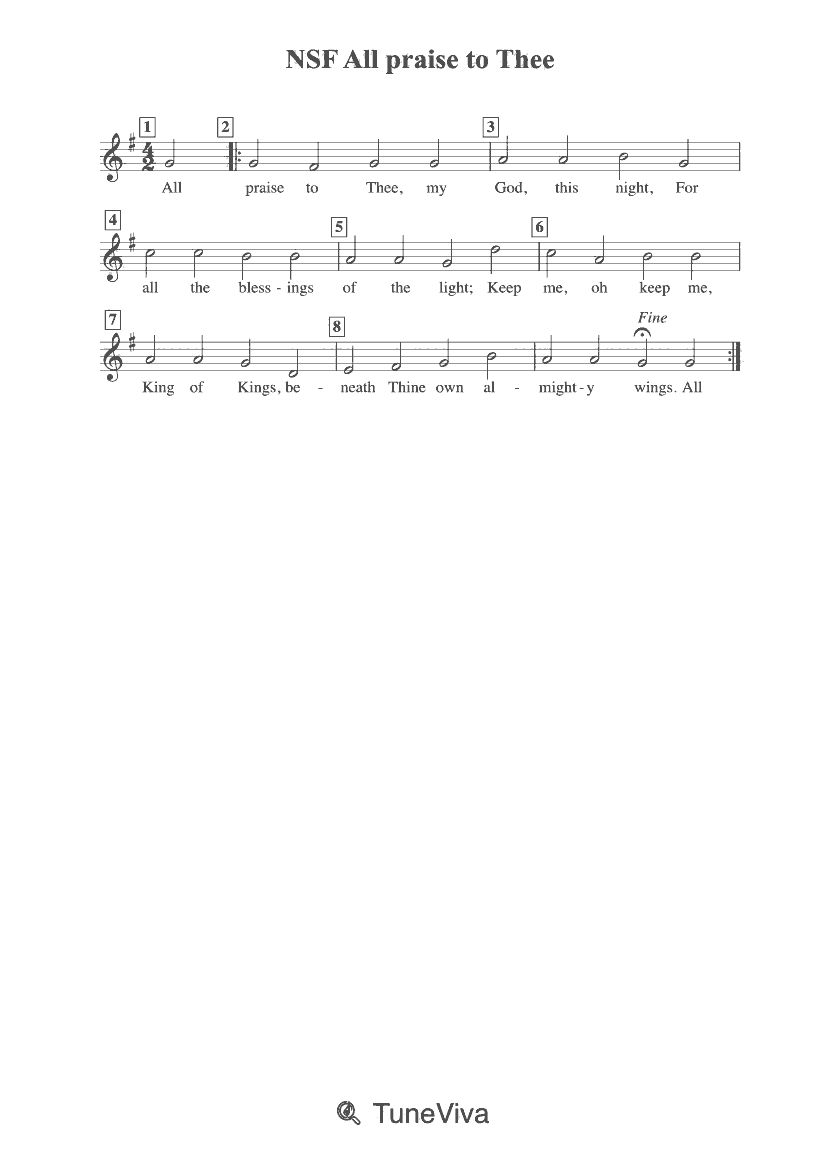
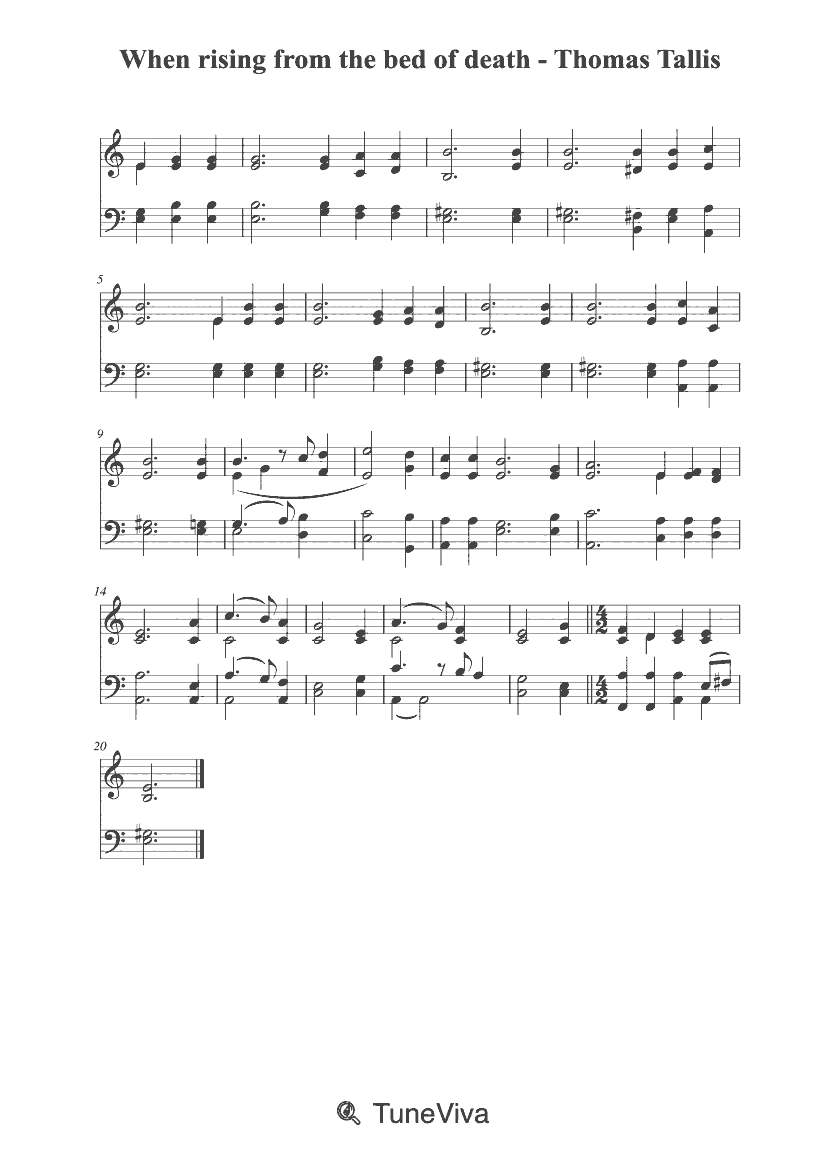
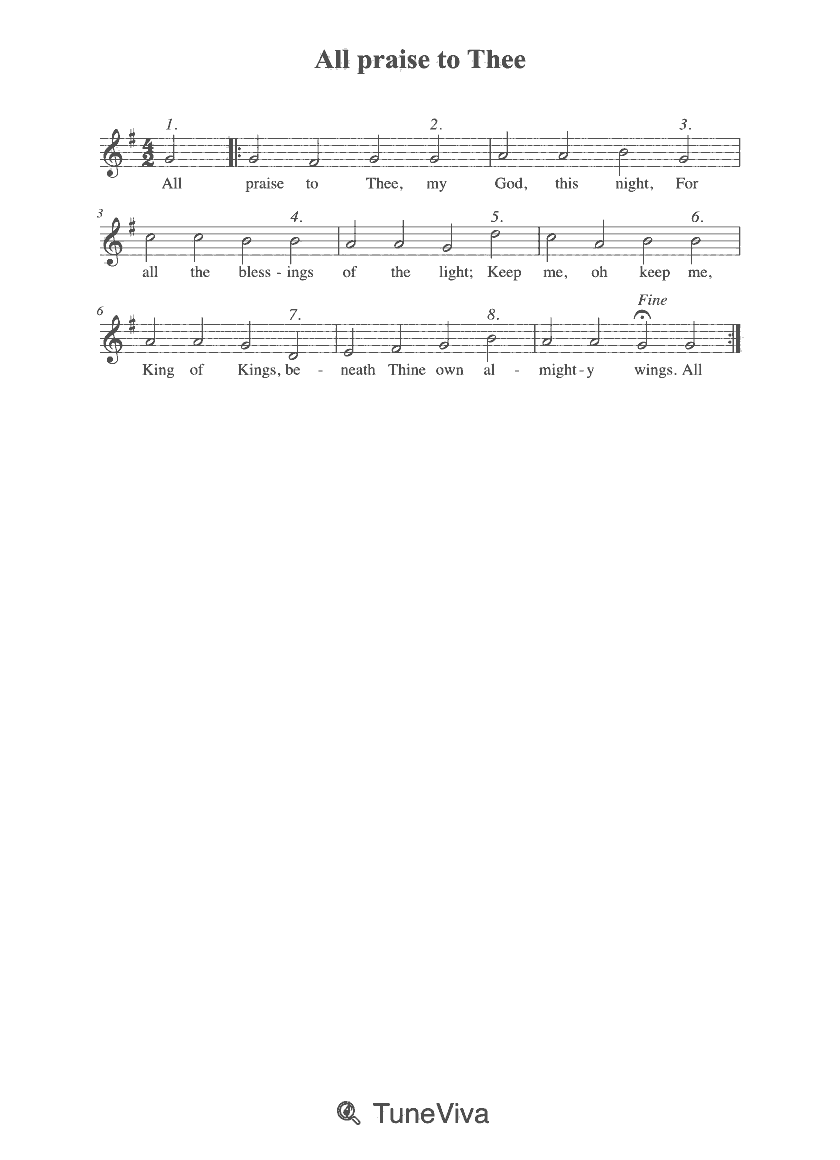
The Psalm 67 tune from Parker's Psalter of 1567, here under Thomas Ken's evening hymn text. The most-viewed score on the page.
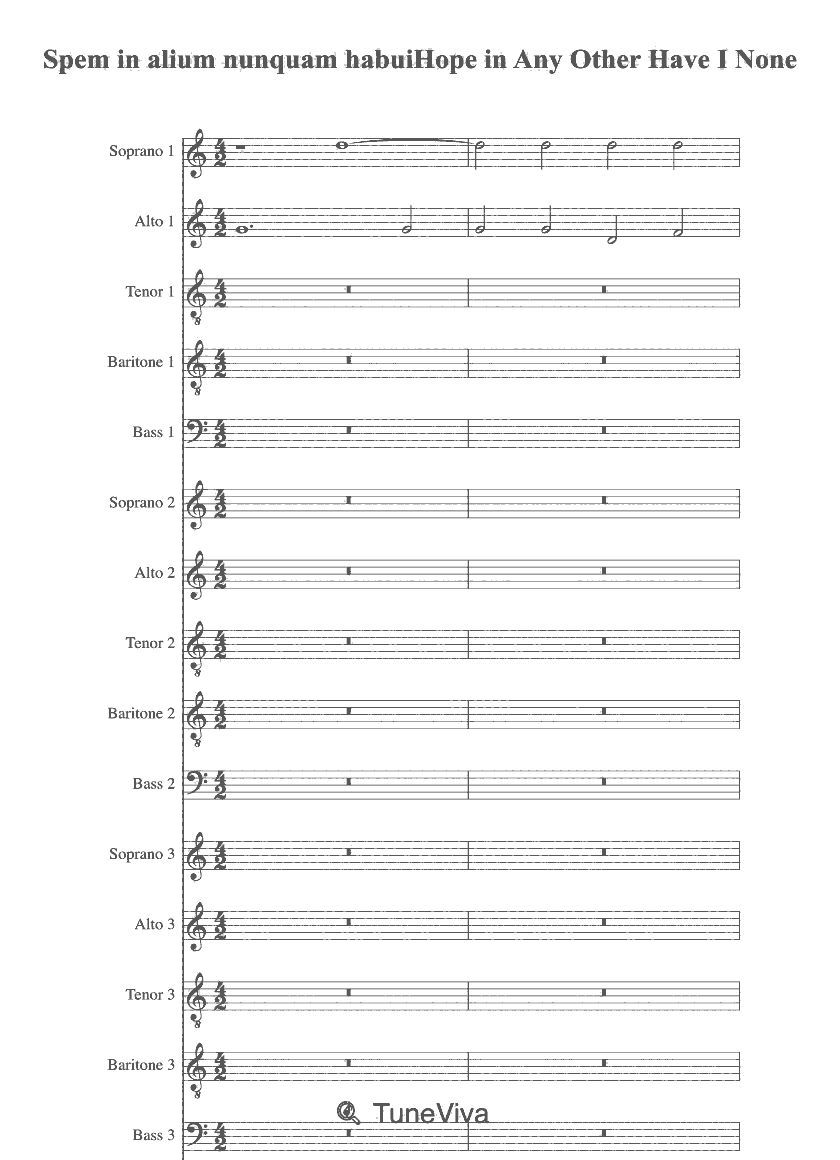
The forty-voice motet for eight choirs of five, on a Sarum responsory from the Book of Judith; at 9,713 notes the densest file here.
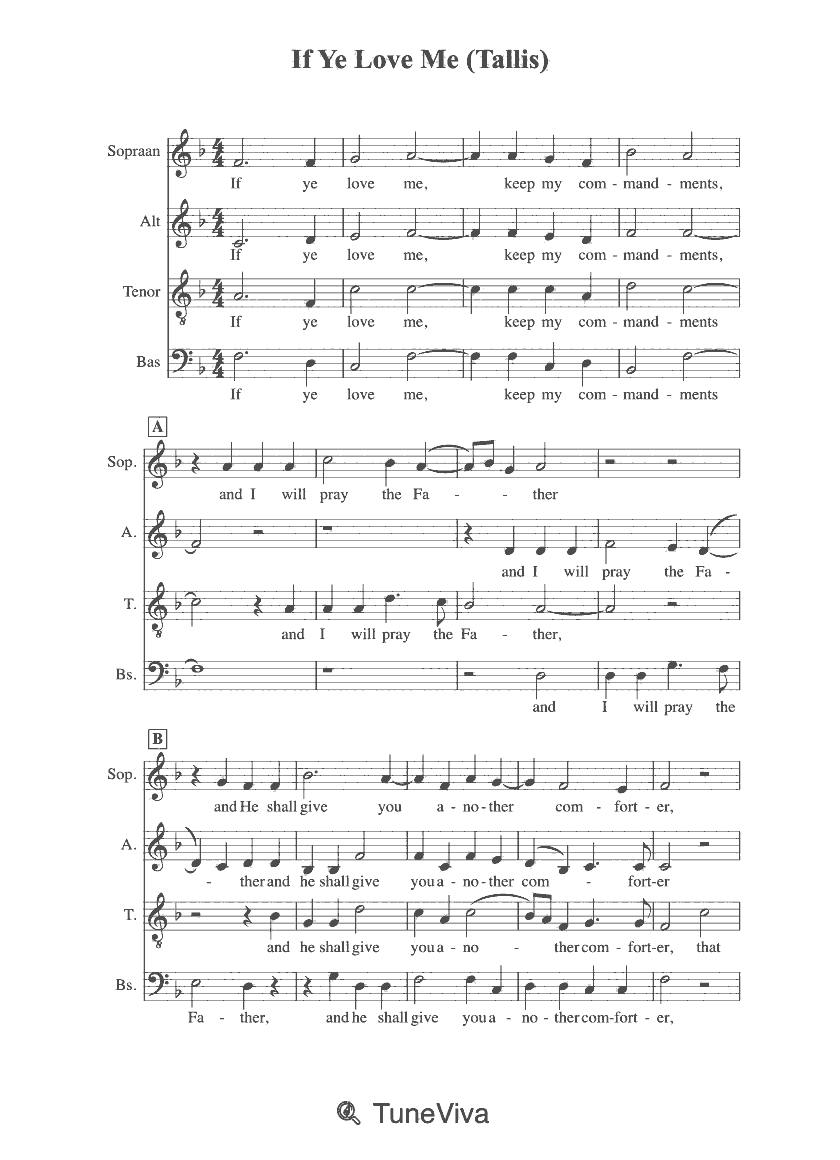
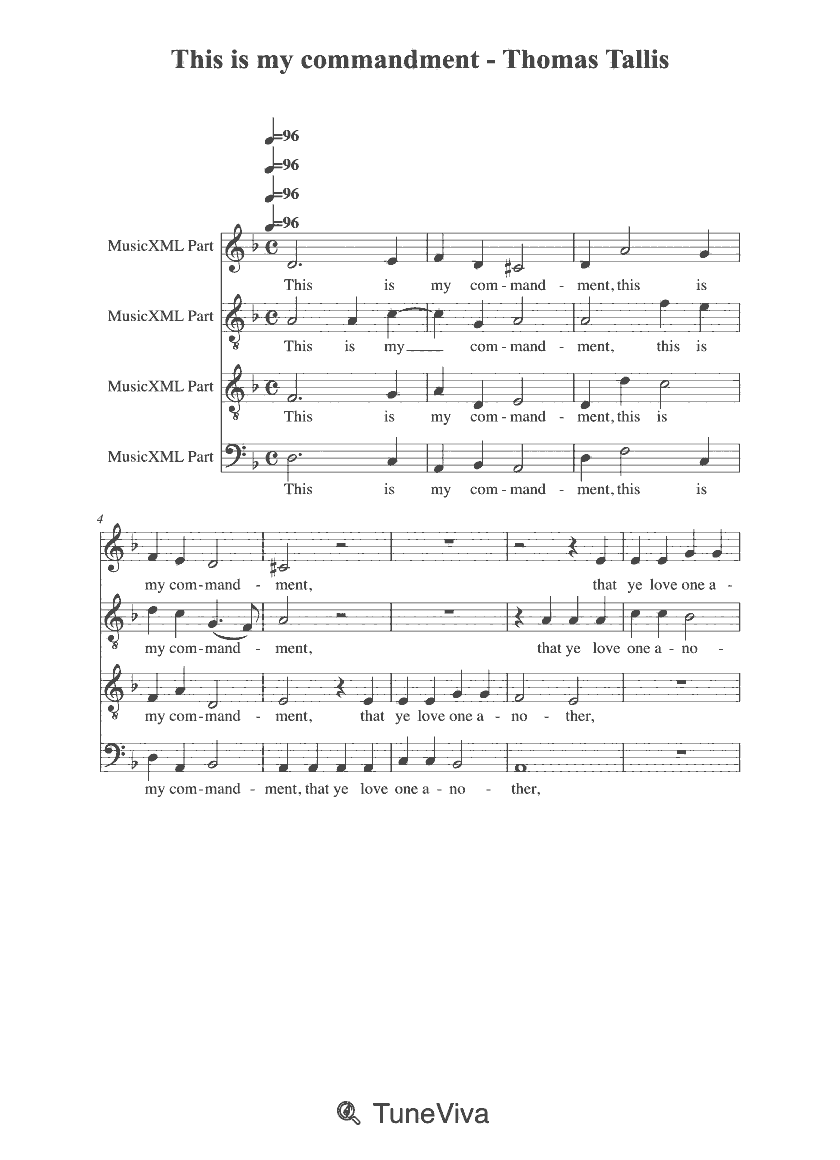
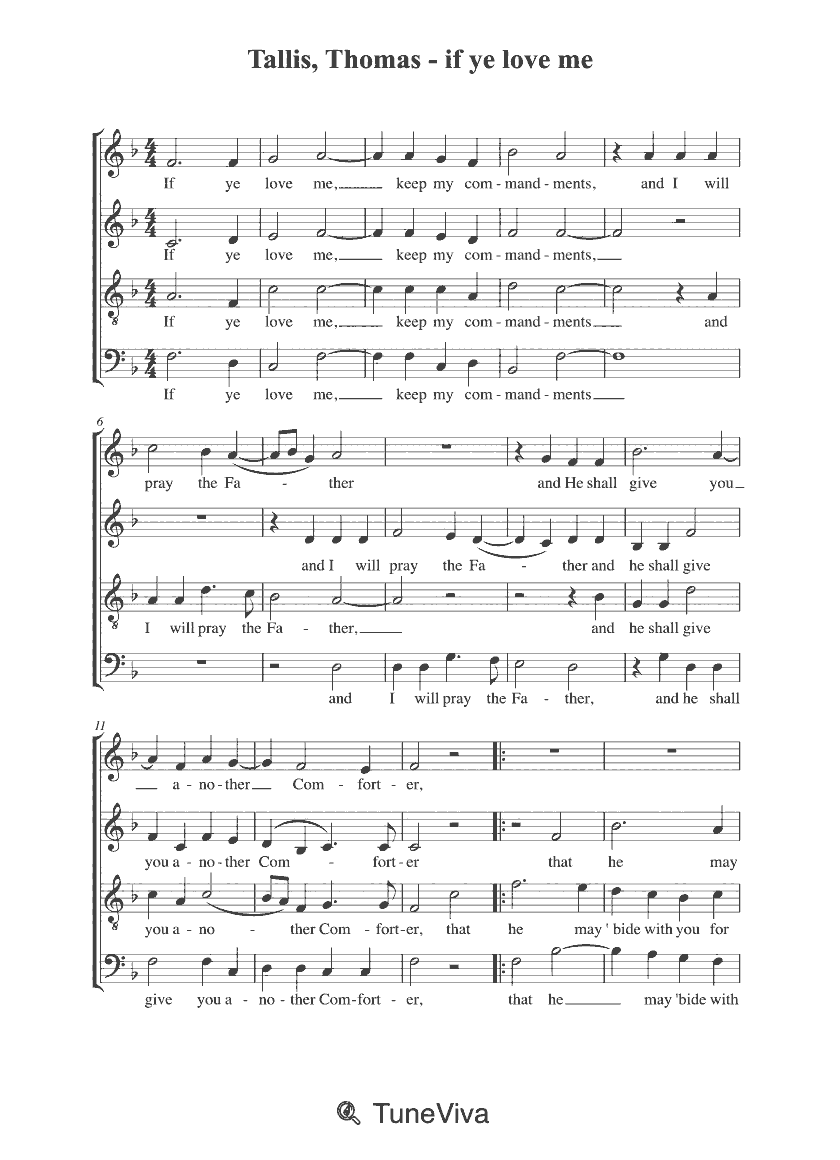
The English anthem on John 14, written in Edward VI's reign; the Wanley partbook of 1549-52 is its earliest source.
A short setting of the same 1567 tune, without the composer's name in the title; 65 notes to the Canon entry's 32.
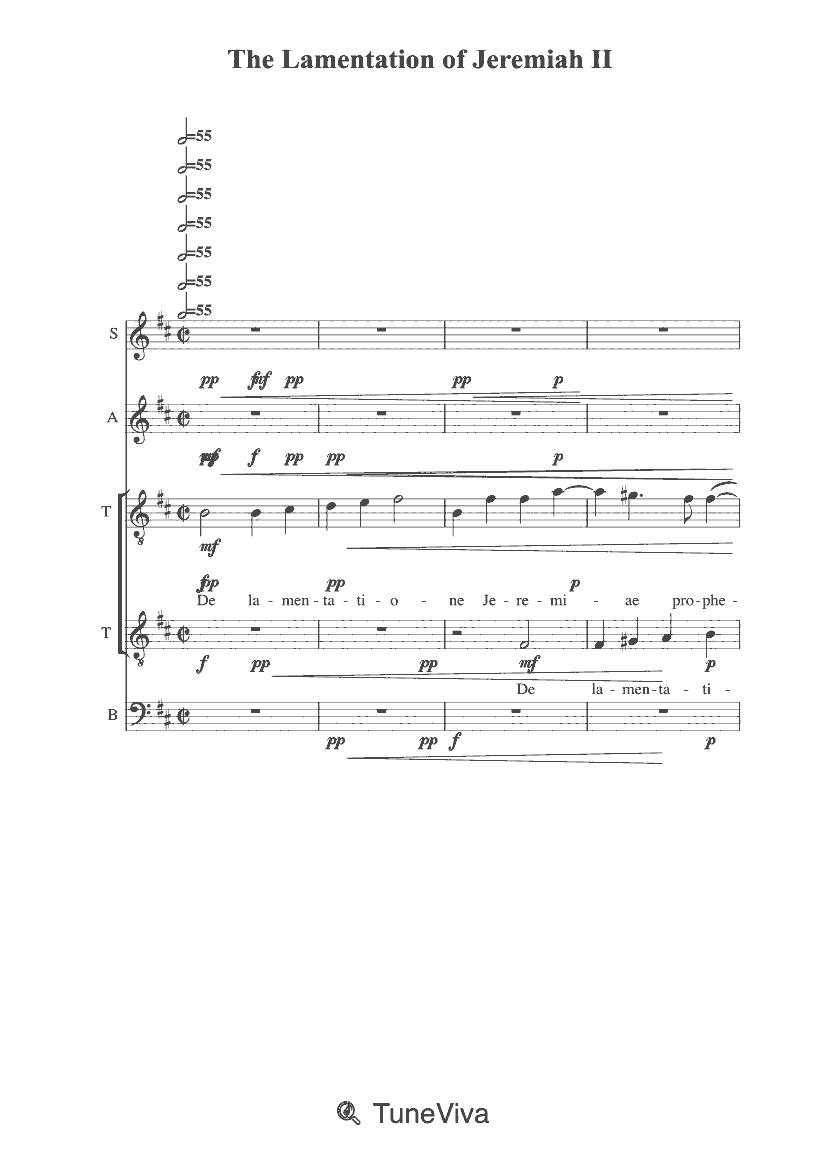
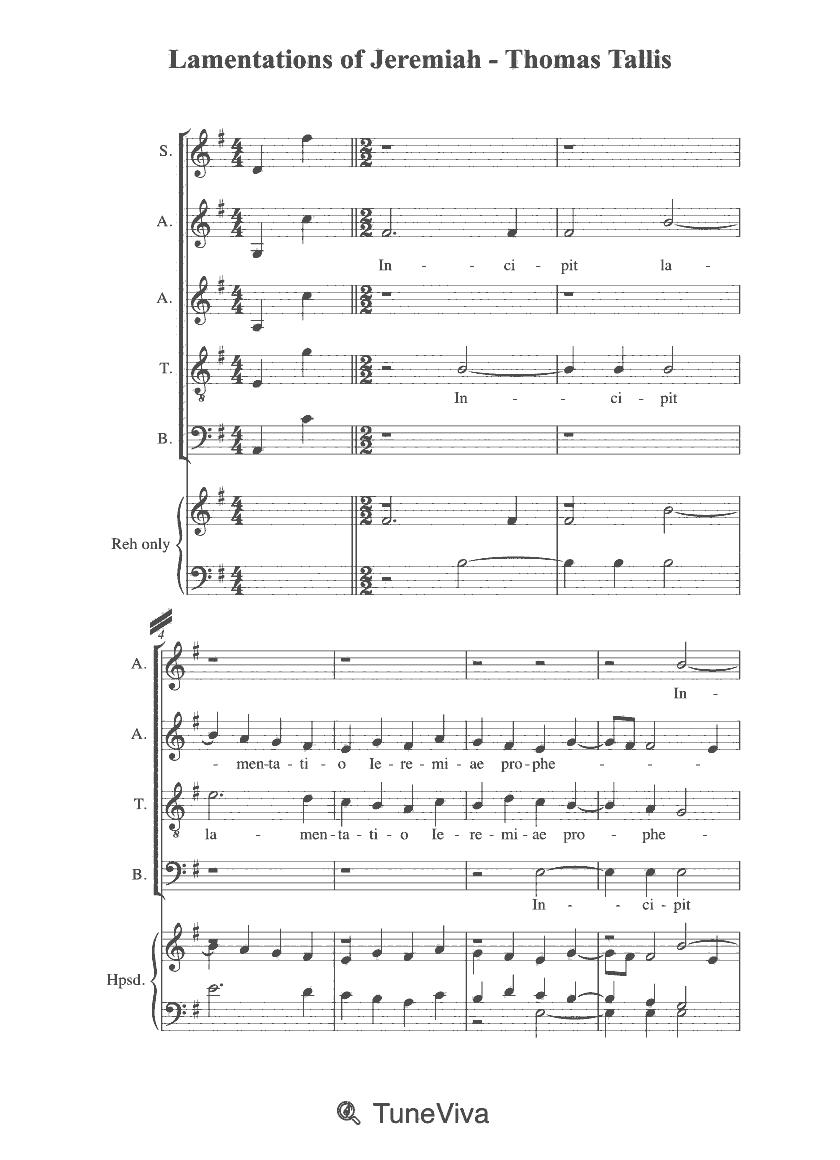
One of the two sets for Maundy Thursday, written in the later 1560s and left in manuscript; the longest choral score in the catalogue.
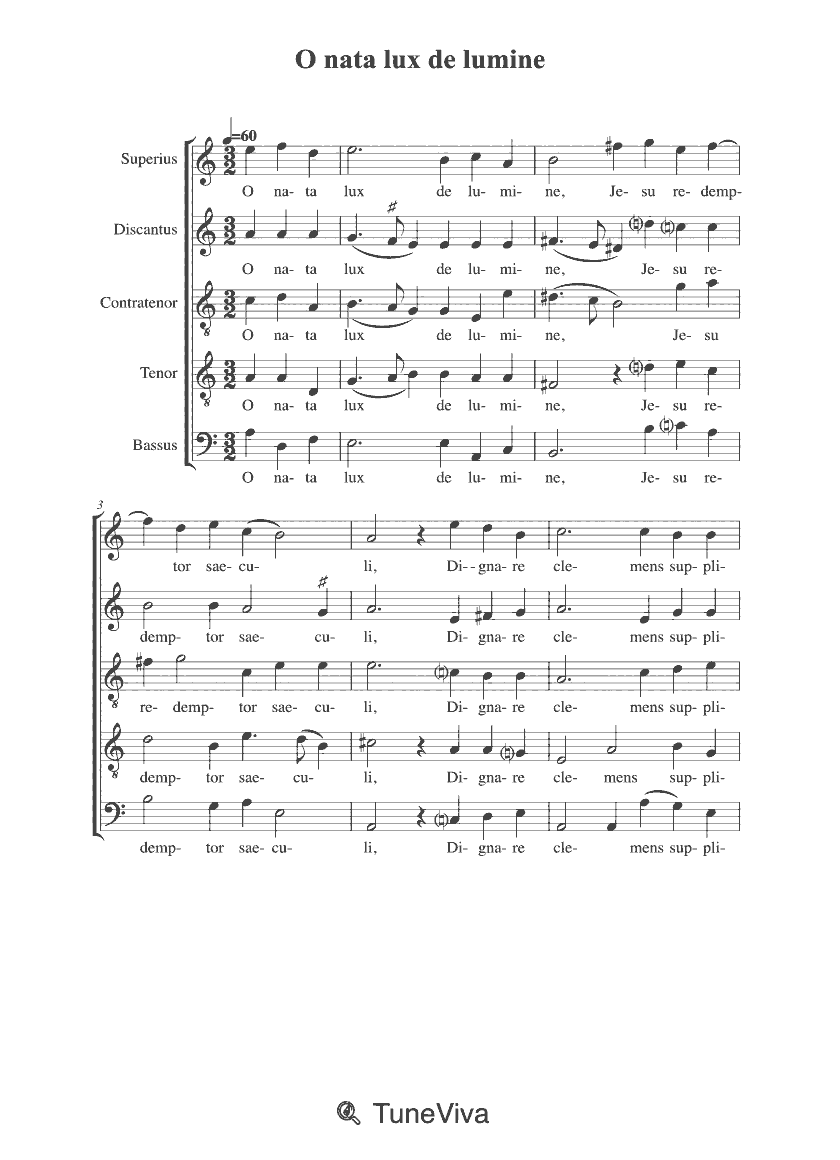
No. 8 of the 1575 Cantiones sacrae, a hymn for Lauds on the Feast of the Transfiguration.
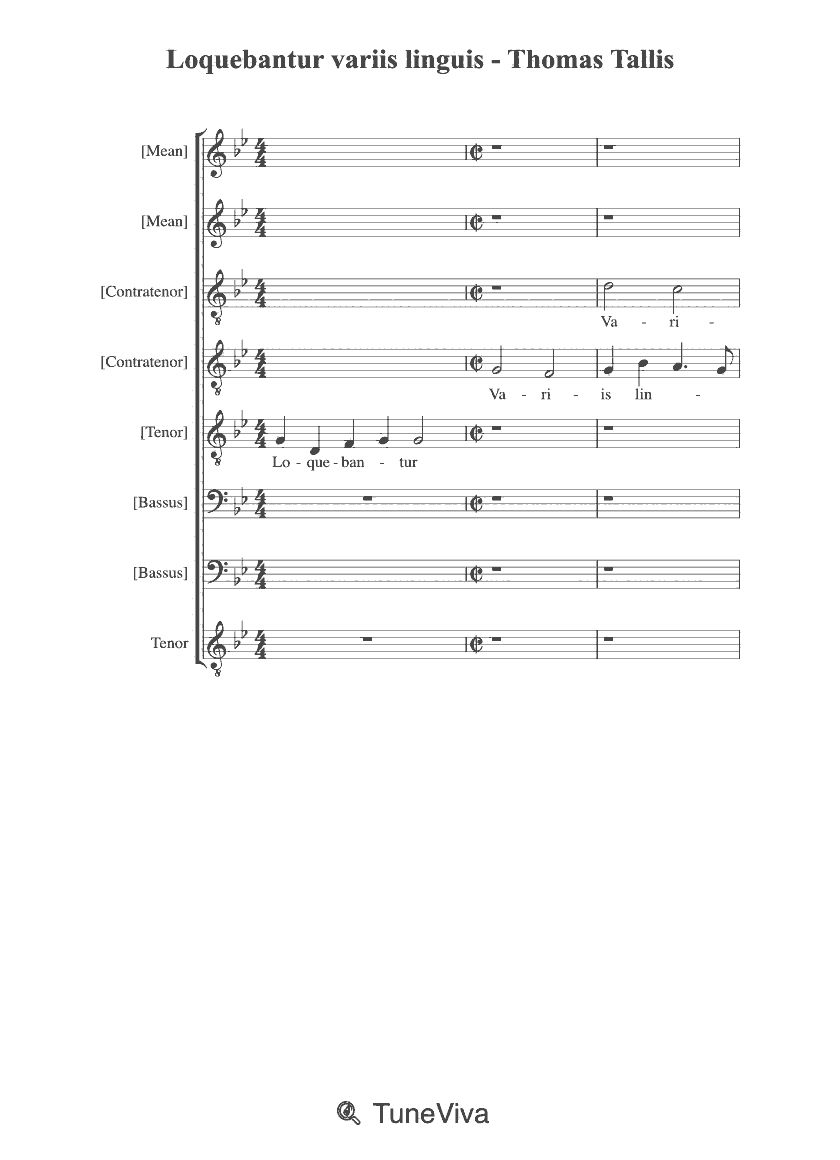
A seven-voice respond for Pentecost Vespers, one of the pieces Tallis wrote with the visiting Spanish chapel singers in mind.
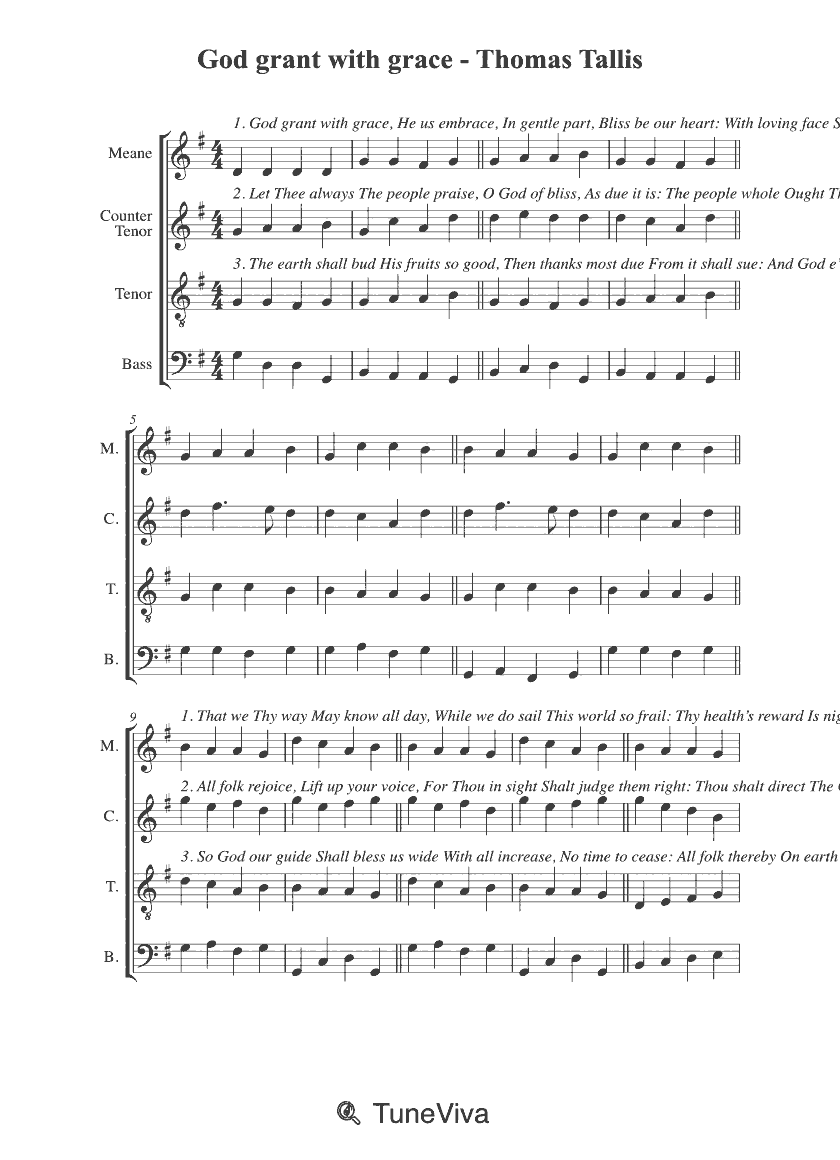
The metrical Psalm 67 text printed with the 1567 tune, before Ken's hymn was fitted to it.
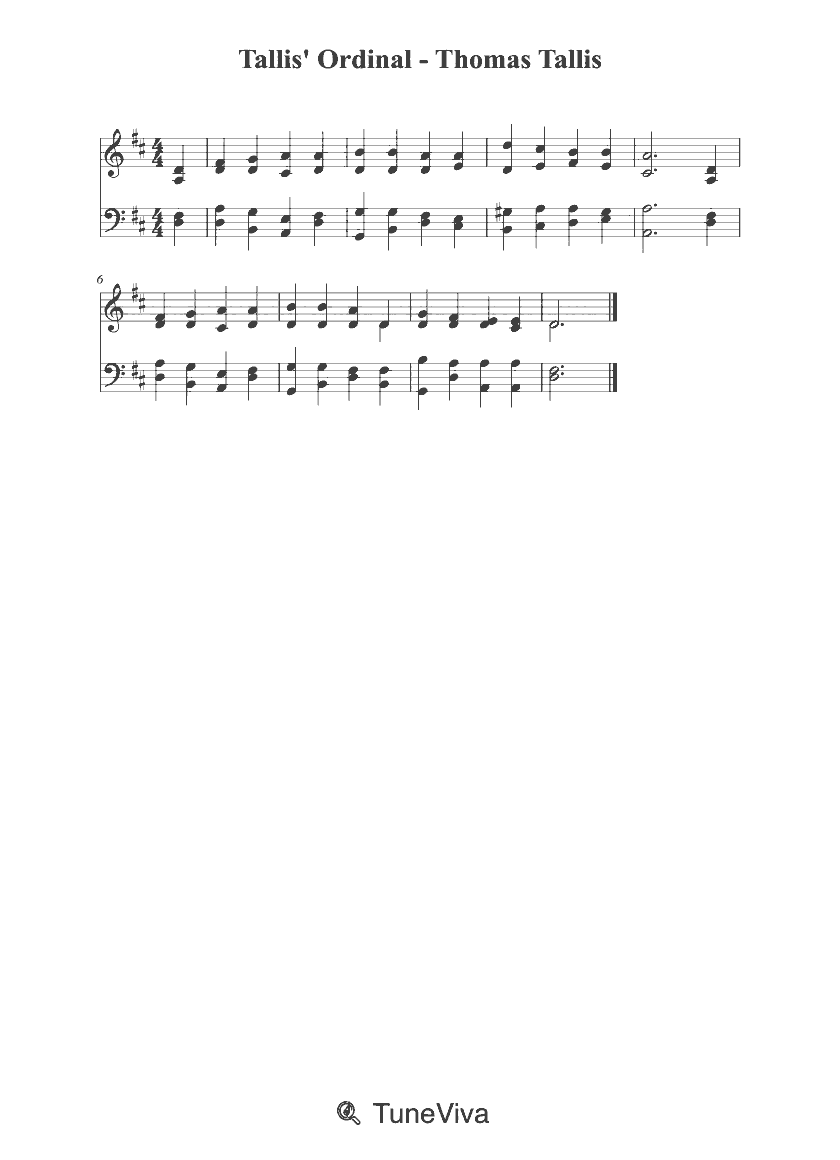
The ninth of the 1567 tunes, a setting of the Veni Creator ('Come Holy Ghost, eternal God'), named 'Ordinal' from its use in the Ordination Service.
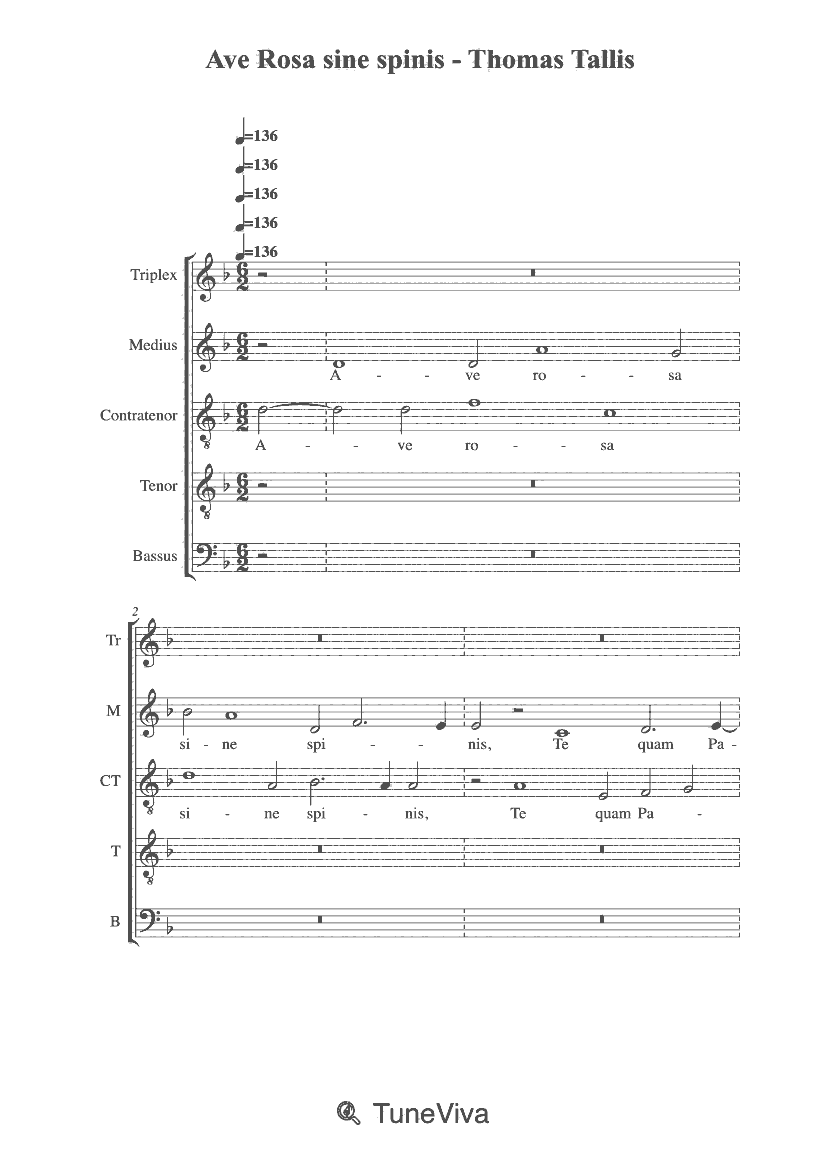
An early votive antiphon to the Virgin, from the period before the Edwardian reforms, with a long treble line.
There are 54, running to about 216 minutes of music and 46,557 notated notes. Twenty-one of the files include lyrics.
No. It circulated in manuscript. A catalogue of Nonsuch Palace from 1596 lists 'a song of fortie partes, made by Mr. Tallys', and the earliest surviving copies were prepared in 1610 for the investiture of Henry Frederick, Prince of Wales, with an English text.
Both use the Psalm 67 tune from Parker's Psalter of 1567. 'God grant with grace' is the metrical psalm printed with it; 'All praise to Thee, My God, this night' is Thomas Ken's hymn, and a version of the tune printed by Thomas Ravenscroft is the one later used for it.
Spem in alium, id 224496, logged under a title that runs the Latin incipit and an English rendering together without a separator. The English is not a translation of the whole text.
Catalog editions and arrangements attributed to Thomas Tallis.
All praise to Thee my God
The Lamentations of Jeremiah