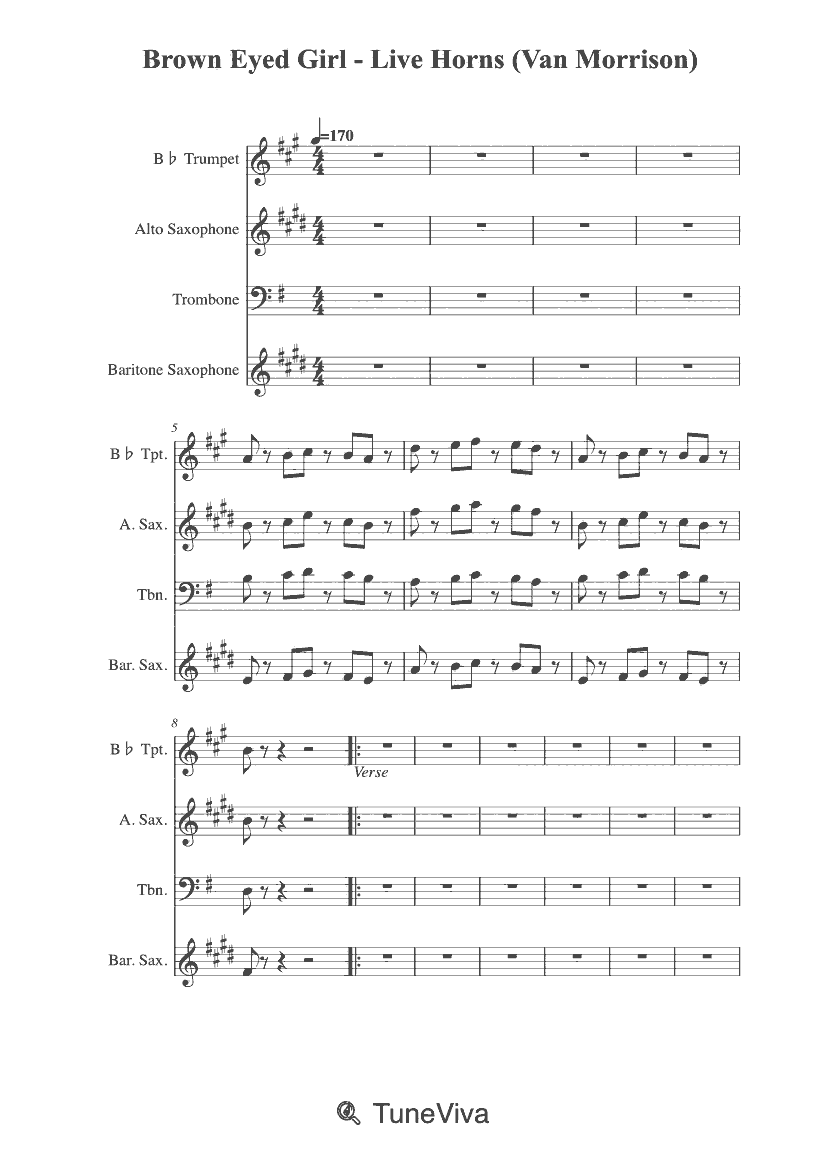
Brown Eyed Girl - Live Horns (Van Morrison)
Van Morrison
B♭ Trumpet; Alto Saxophone; Trombone +1 parts · 2 min 23 sec
Open score42 Van Morrison scores to preview and download, from Brown Eyed Girl and Bright Side of the Road to Have I Told You Lately and The Healing Game, from Belfast.
The 1967 single, written by Morrison and recorded in two days for Bang Records, here in a live arrangement with a horn section.
From Avalon Sunset (1989); the catalogue mangles the title, adding an extra 'I' and 'That I Love You'.
A gospel-inflected track from Poetic Champions Compose (1987), one of the first albums of his late-1980s spiritual turn.
The single from Enlightenment (1990); an earlier alternative rendition, originally written for Common One, appeared on the outtakes collection The Philosopher's Stone (1998).
The opening track of Into the Music (1979), an upbeat soul number that became a live fixture.
From The Healing Game (1997), with Georgie Fame and Brian Kennedy on backing vocals.
A ballad from Back on Top (1999), also issued as a one-sided promotional single.
The closing instrumental of Keep Me Singing (2016), with Morrison on piano and saxophone.
The title track of the 1997 album, a long, loosely built soul groove.
The catalogue files this under the name of the 1998 two-disc collection of outtakes from 1969 to 1988.
Compare the instrument and arrangement details below, then open a score to check the notation. Different entries may be arrangements or editions of the same work; available playback tools are shown on each score page.
Van Morrison
B♭ Trumpet; Alto Saxophone; Trombone +1 parts · 2 min 23 sec
Open score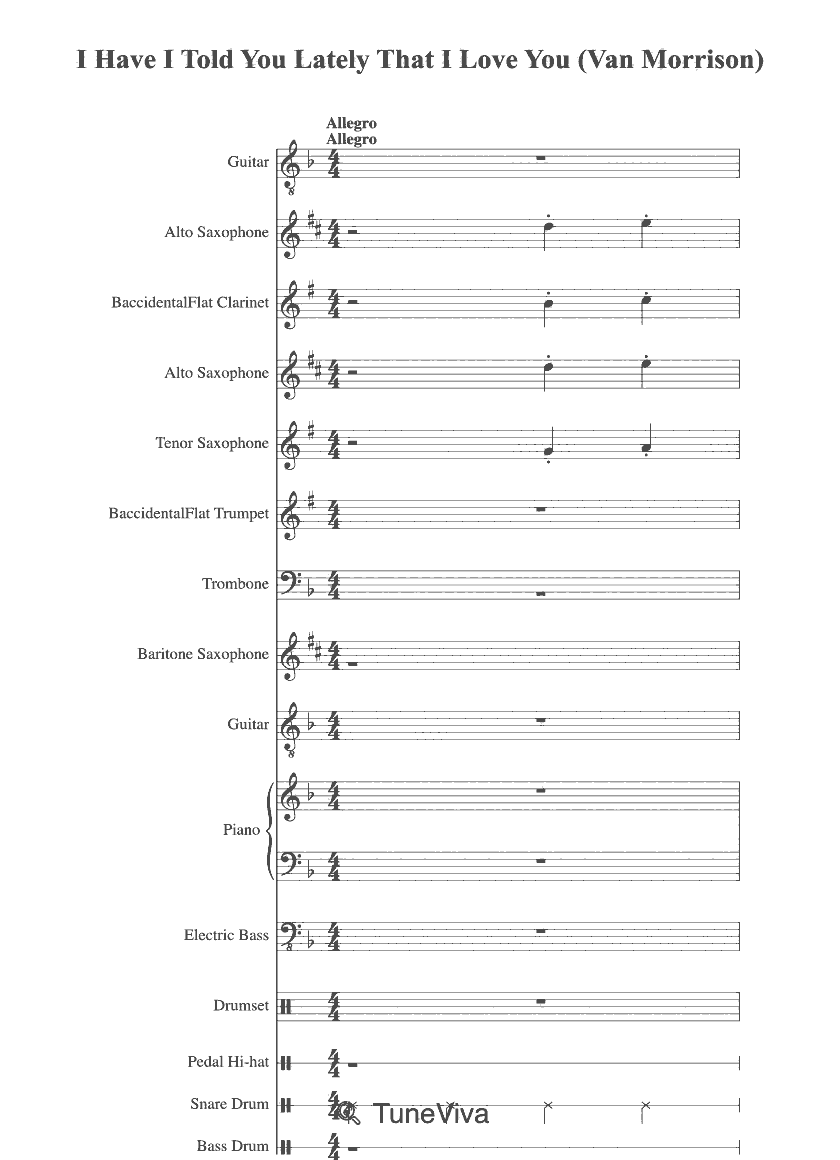
Van Morrison
Guitar; Alto Saxophone; B♭ Clarinet +10 parts · 10 min 59 sec
Open score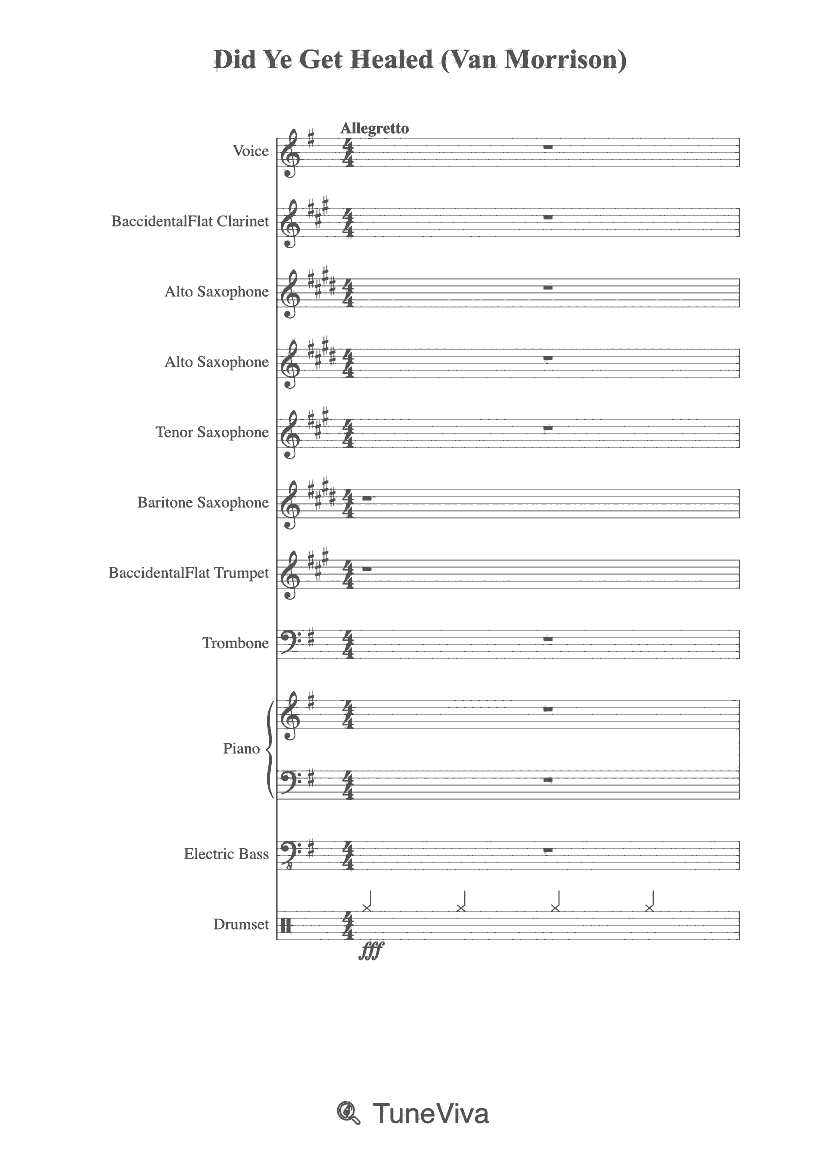
Van Morrison
Voice; B♭ Clarinet; Alto Saxophone +7 parts · 15 min 48 sec
Open score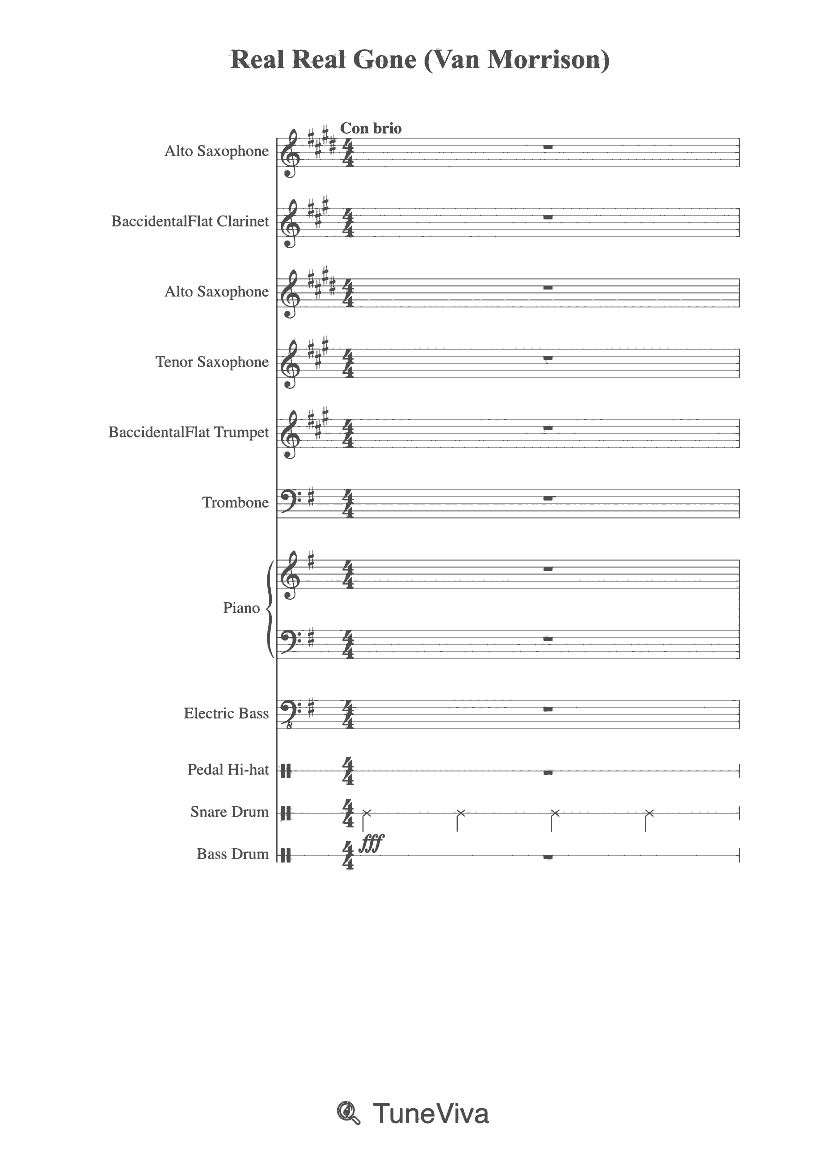
Van Morrison
Alto Saxophone; B♭ Clarinet; Tenor Saxophone +7 parts · 9 min 4 sec
Open score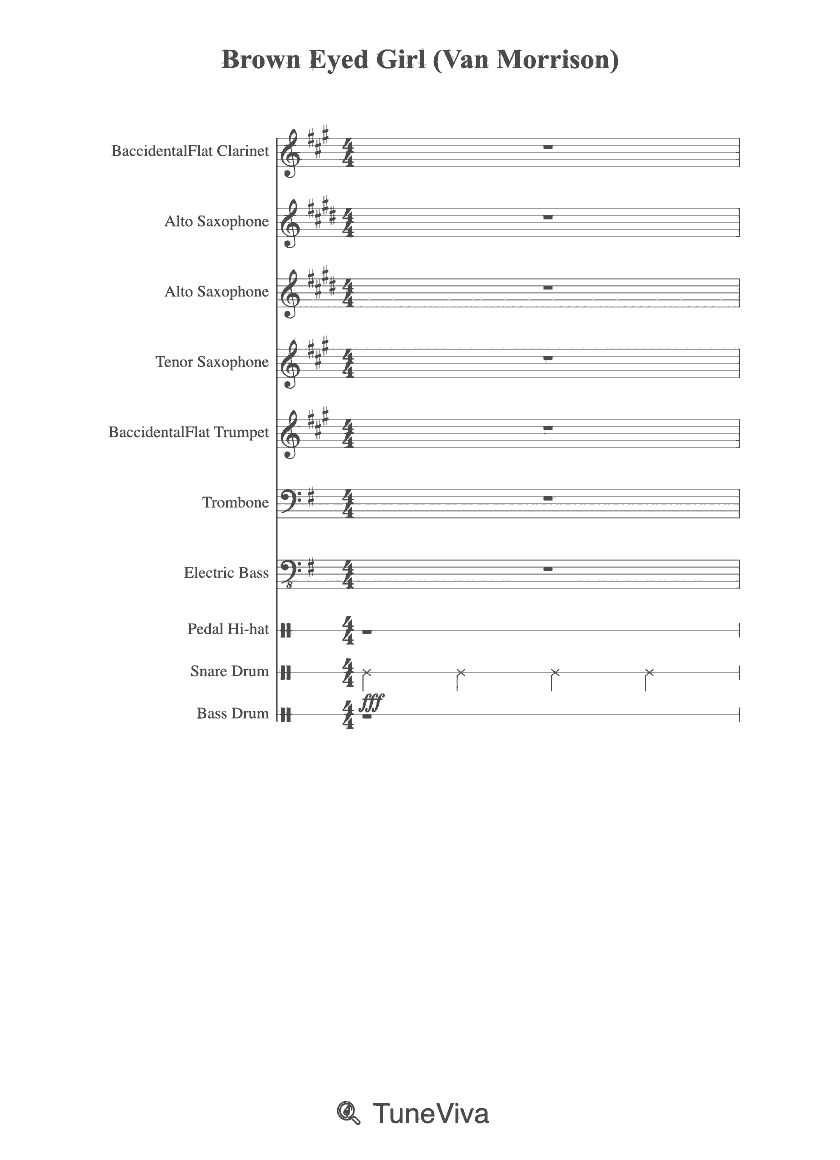
Van Morrison
B♭ Clarinet; Alto Saxophone; Tenor Saxophone +6 parts · 8 min 20 sec
Open score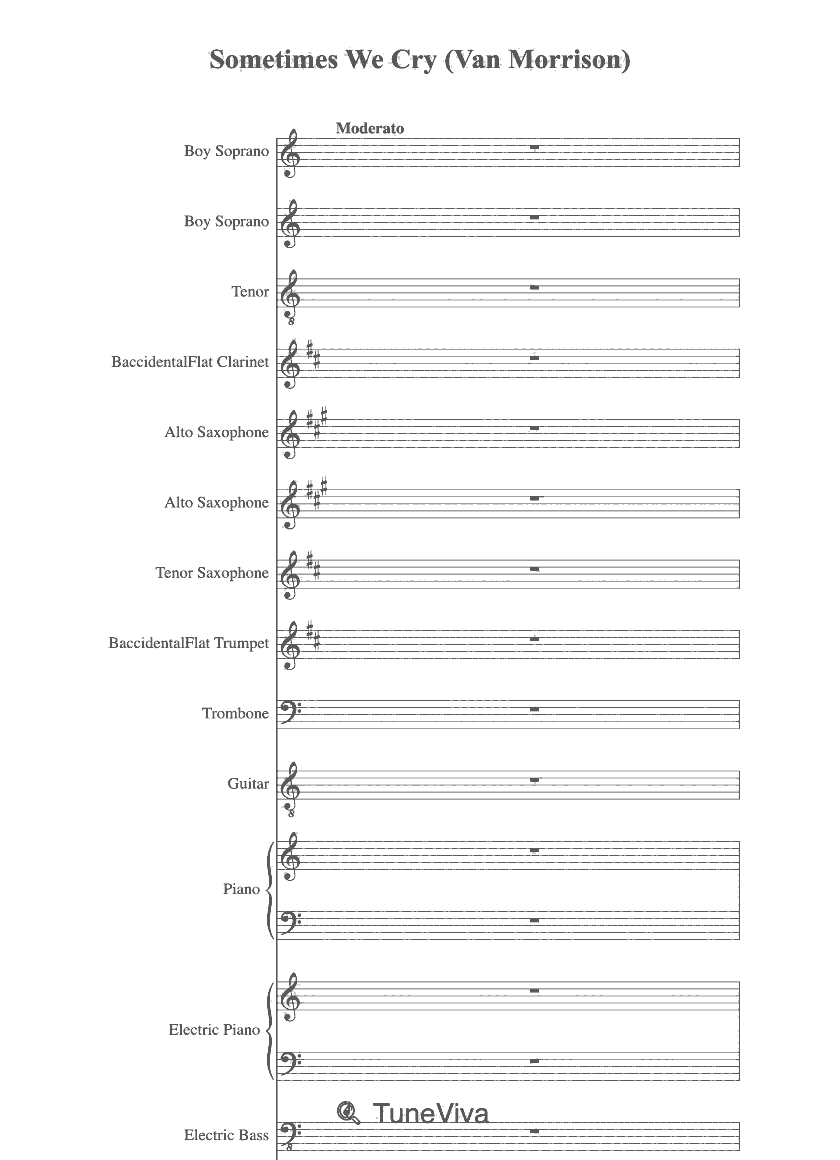
Van Morrison
Boy Soprano; Tenor; B♭ Clarinet +9 parts · 13 min 57 sec
Open score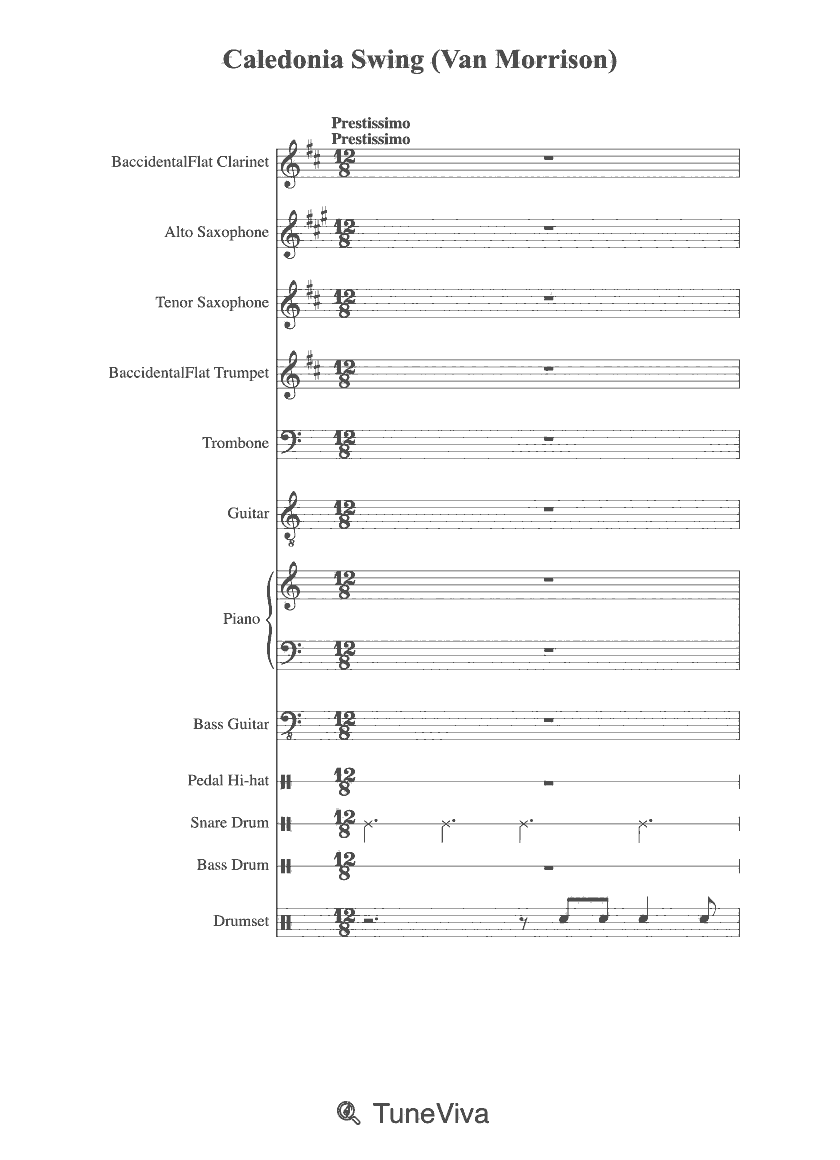
Van Morrison
B♭ Clarinet; Alto Saxophone; Tenor Saxophone +9 parts · 1 min 29 sec
Open score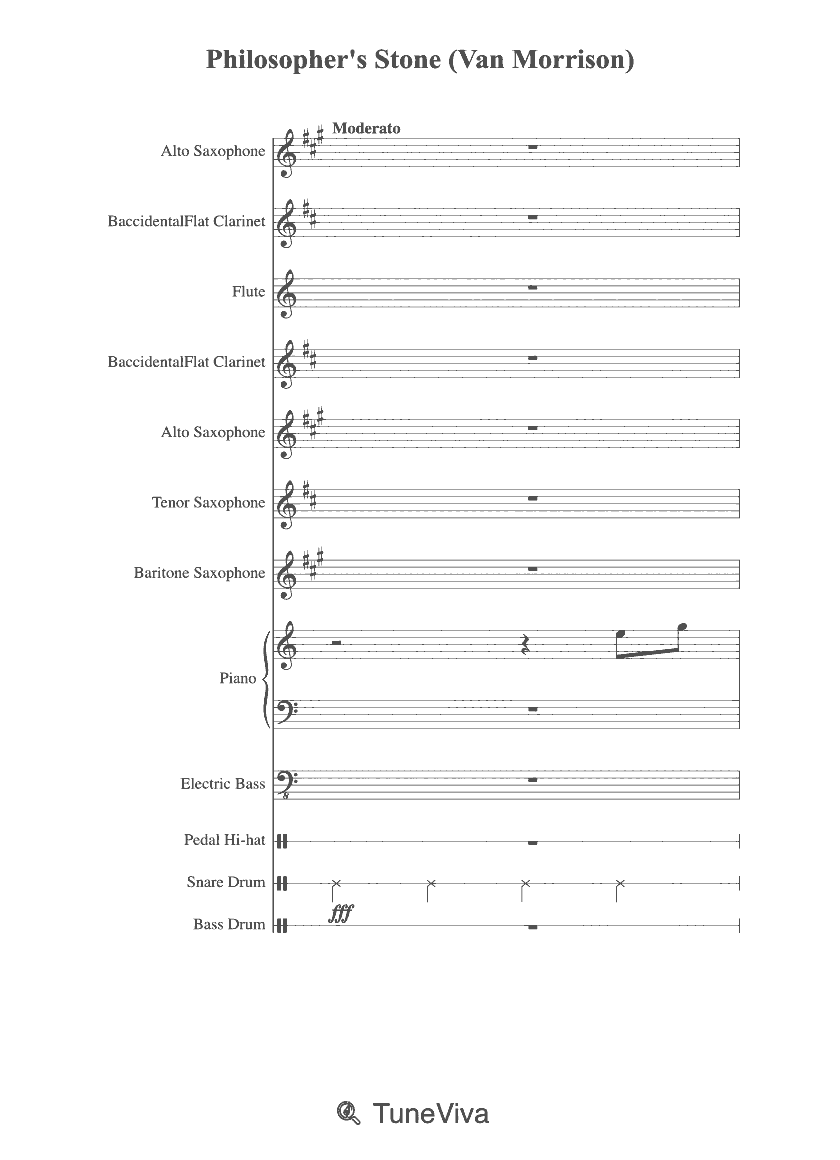
Van Morrison
Alto Saxophone; B♭ Clarinet; Flute +7 parts · 9 min 35 sec
Open score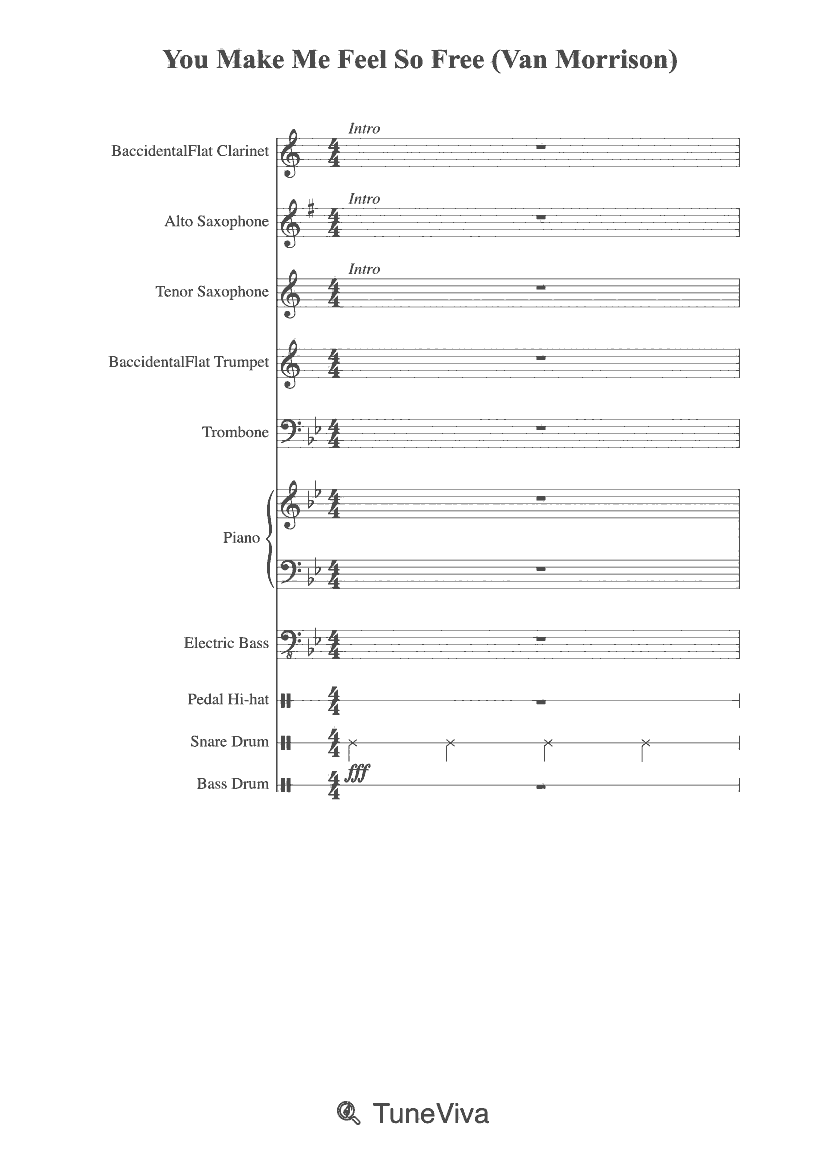
Van Morrison
B♭ Clarinet; Alto Saxophone; Tenor Saxophone +7 parts · 6 min 24 sec
Open score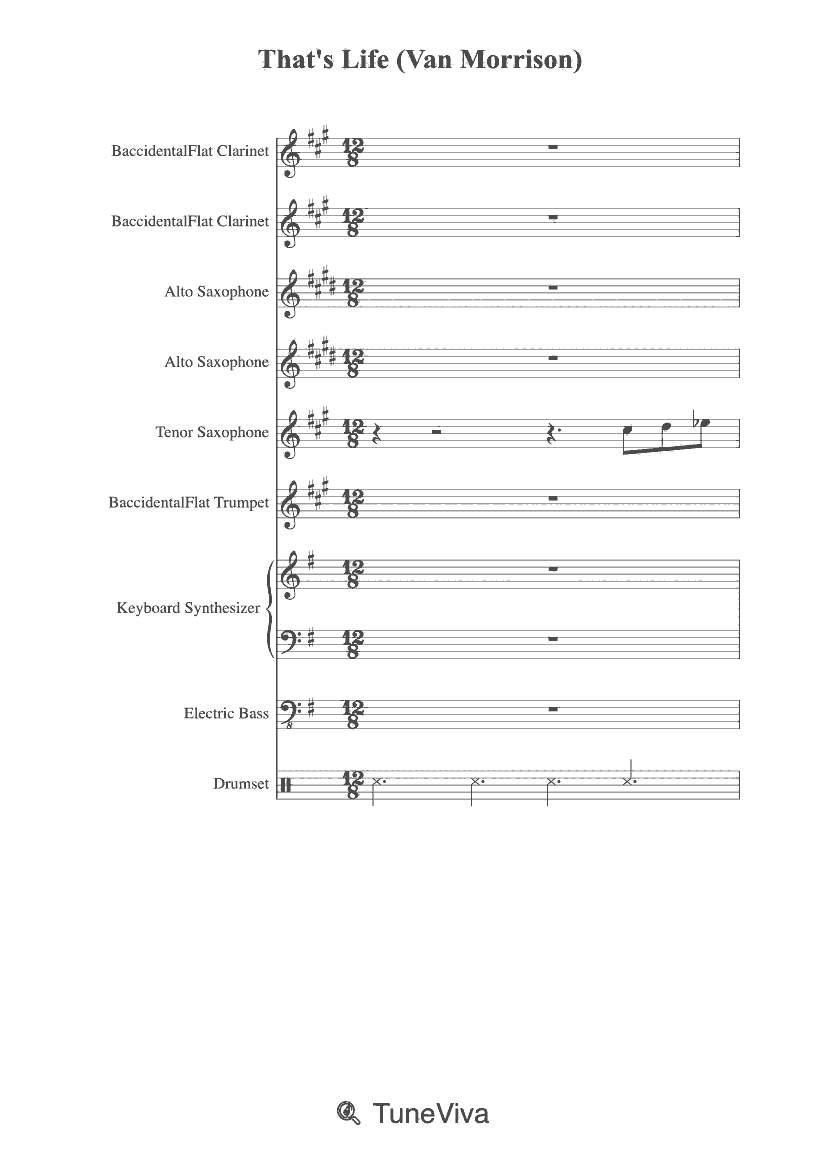
Van Morrison
B♭ Clarinet; Alto Saxophone; Tenor Saxophone +4 parts · 5 min 7 sec
Open score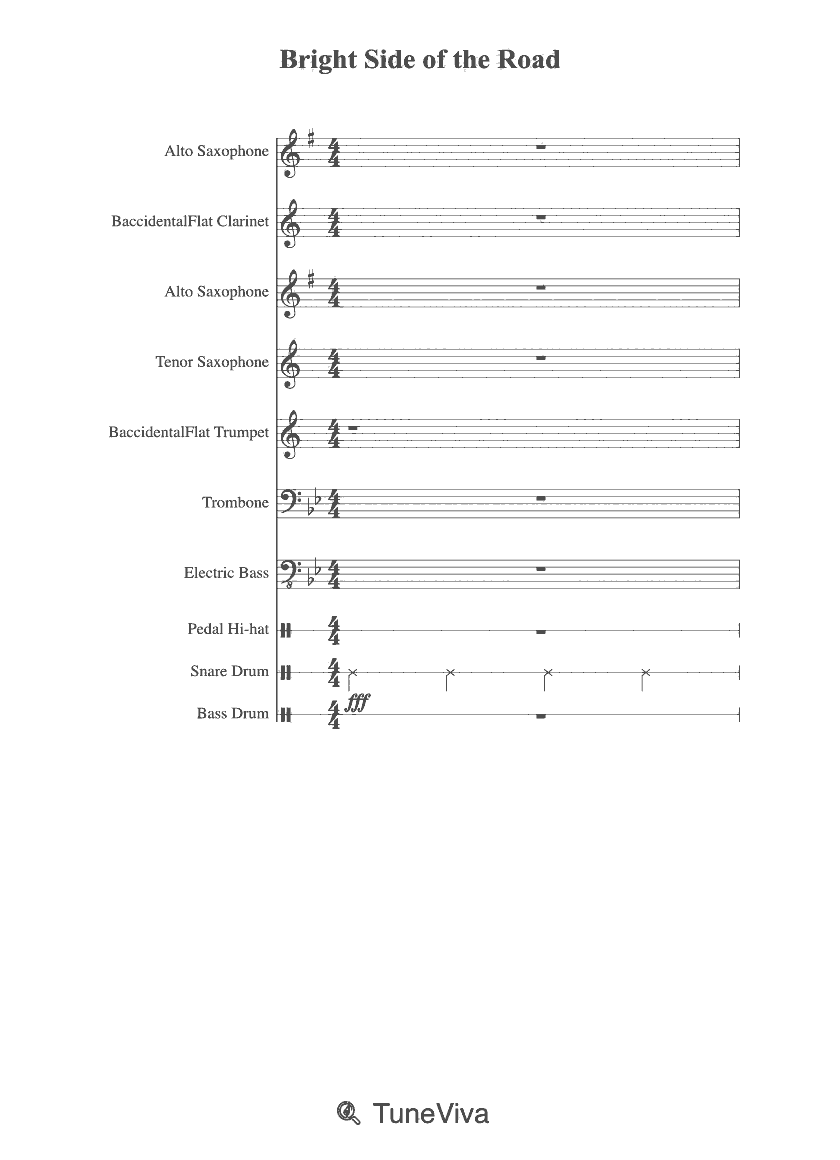
Van Morrison
Alto Saxophone; B♭ Clarinet; Tenor Saxophone +6 parts · 10 min 10 sec
Open score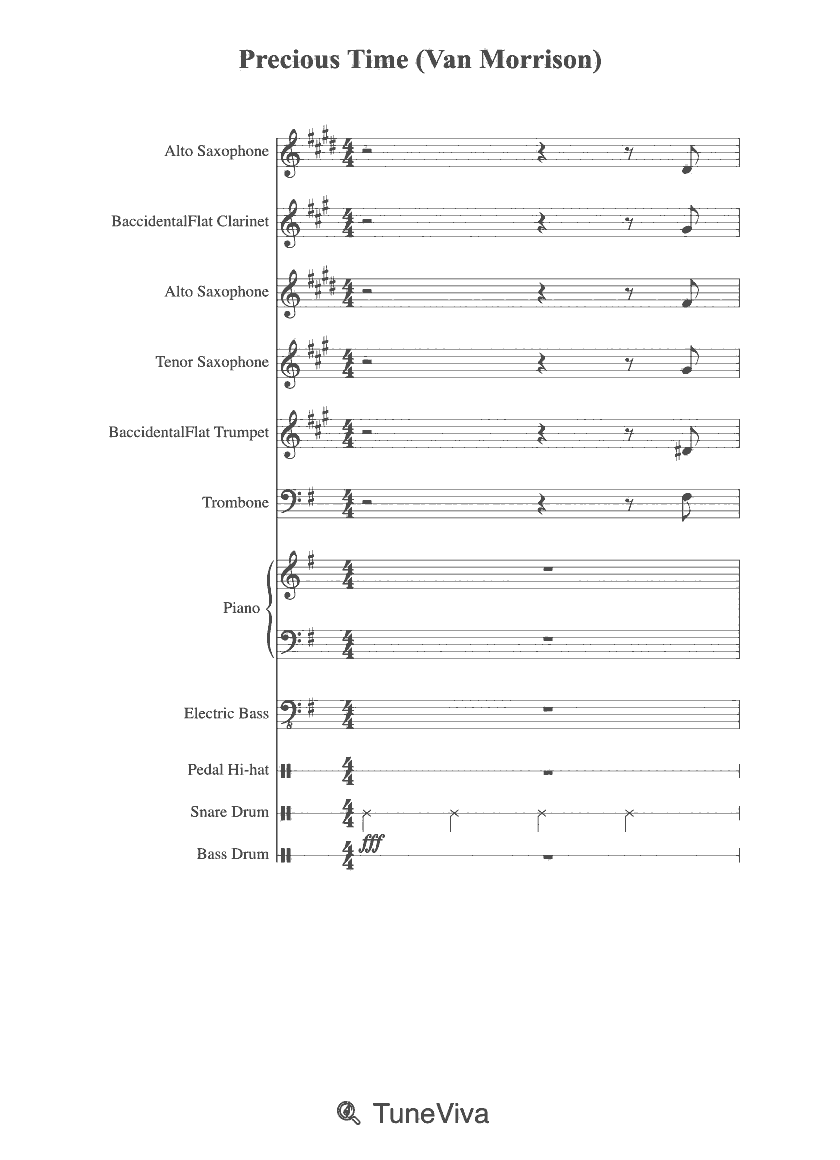
Van Morrison
Alto Saxophone; B♭ Clarinet; Tenor Saxophone +7 parts · 7 min 30 sec
Open score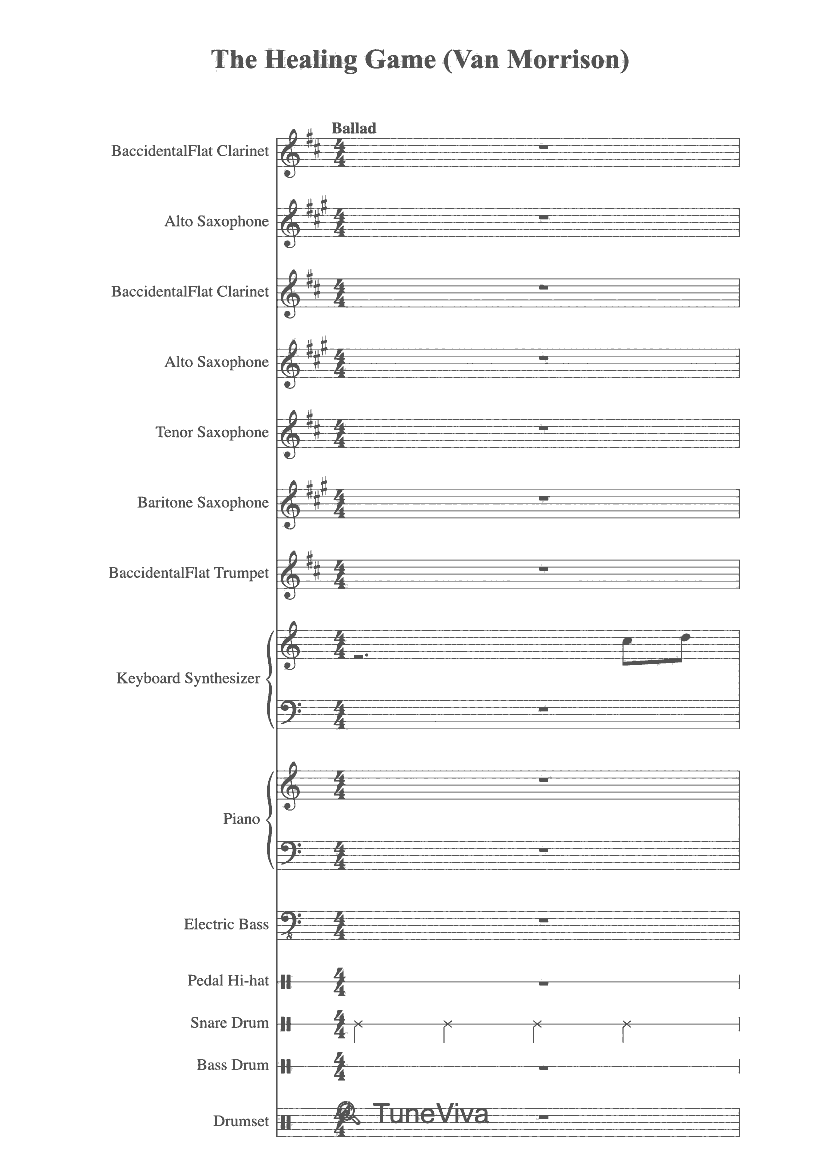
Van Morrison
B♭ Clarinet; Alto Saxophone; Tenor Saxophone +9 parts · 13 min 17 sec
Open score
Van Morrison
B♭ Clarinet; Alto Saxophone; Tenor Saxophone +8 parts · 7 min 7 sec
Open score
Van Morrison
B♭ Clarinet; Alto Saxophone; Tenor Saxophone +9 parts · 16 min 35 sec
Open score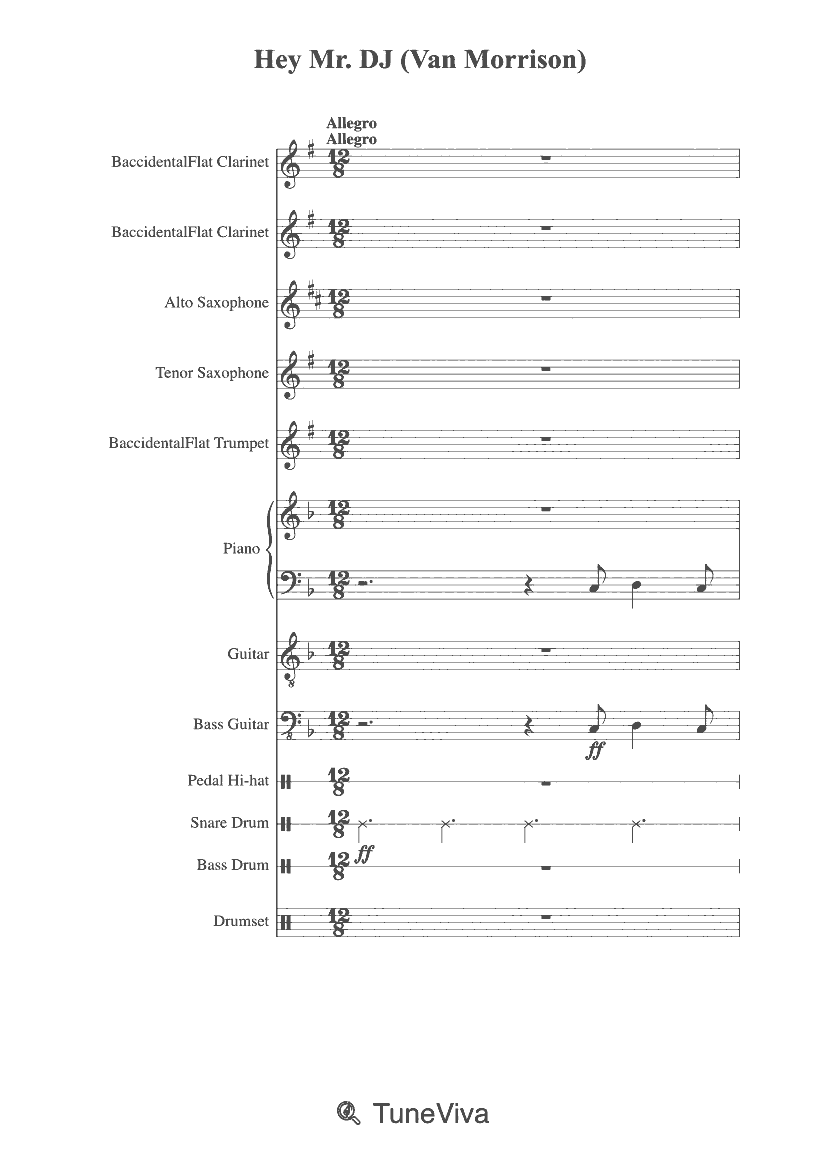
Van Morrison
B♭ Clarinet; Alto Saxophone; Tenor Saxophone +8 parts · 3 min 13 sec
Open score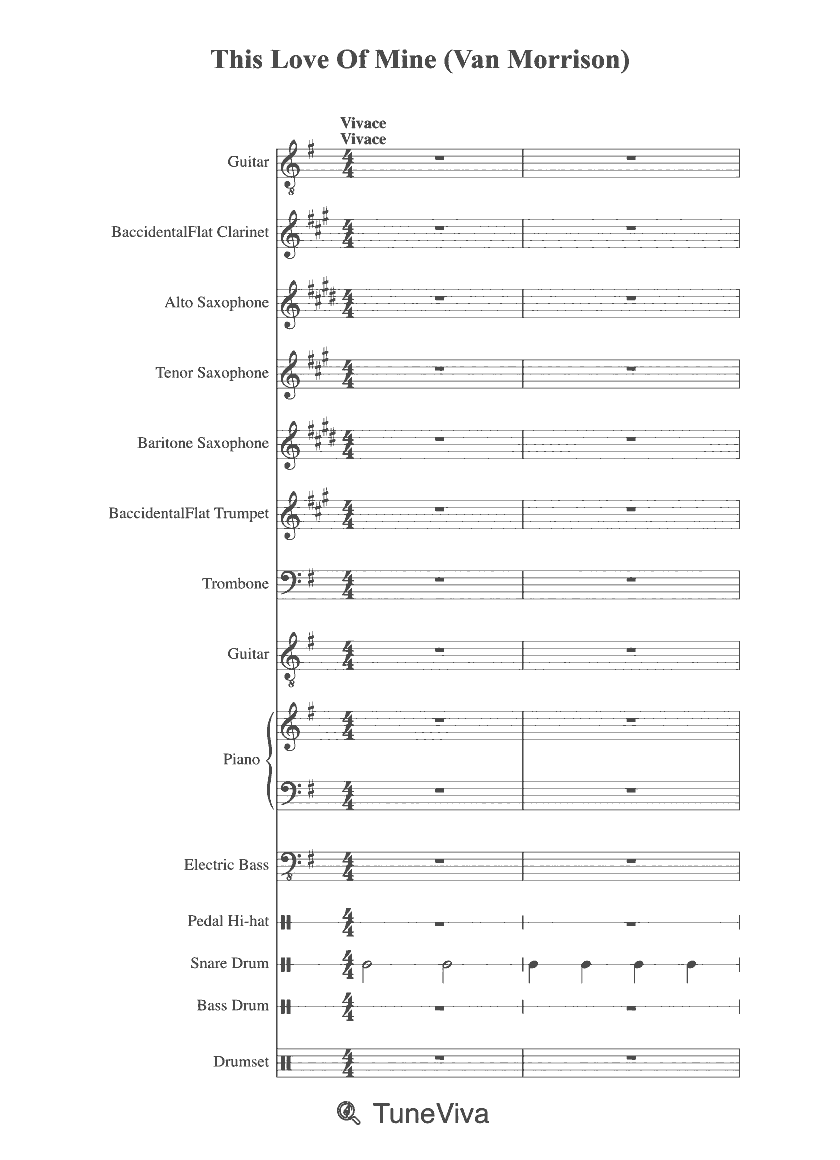
Van Morrison
Guitar; B♭ Clarinet; Alto Saxophone +10 parts · 10 min 19 sec
Open score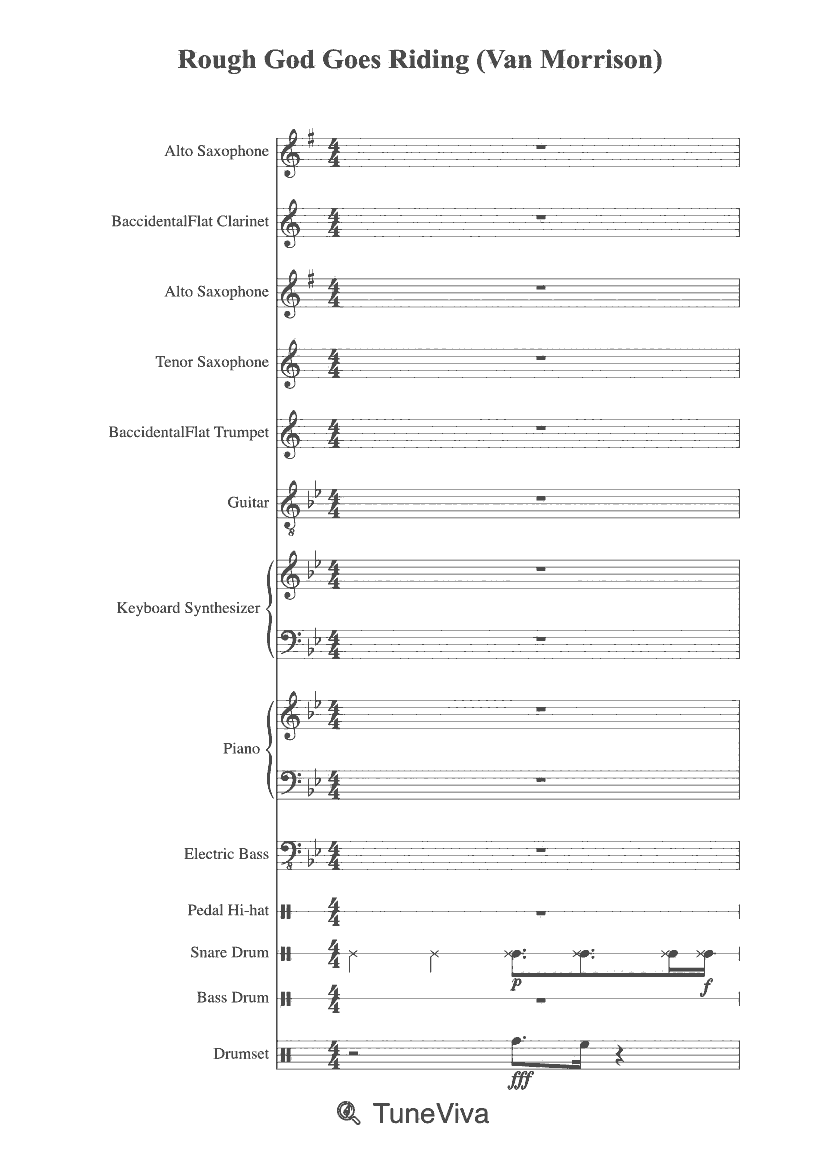
Van Morrison
Alto Saxophone; B♭ Clarinet; Tenor Saxophone +9 parts · 15 min 46 sec
Open score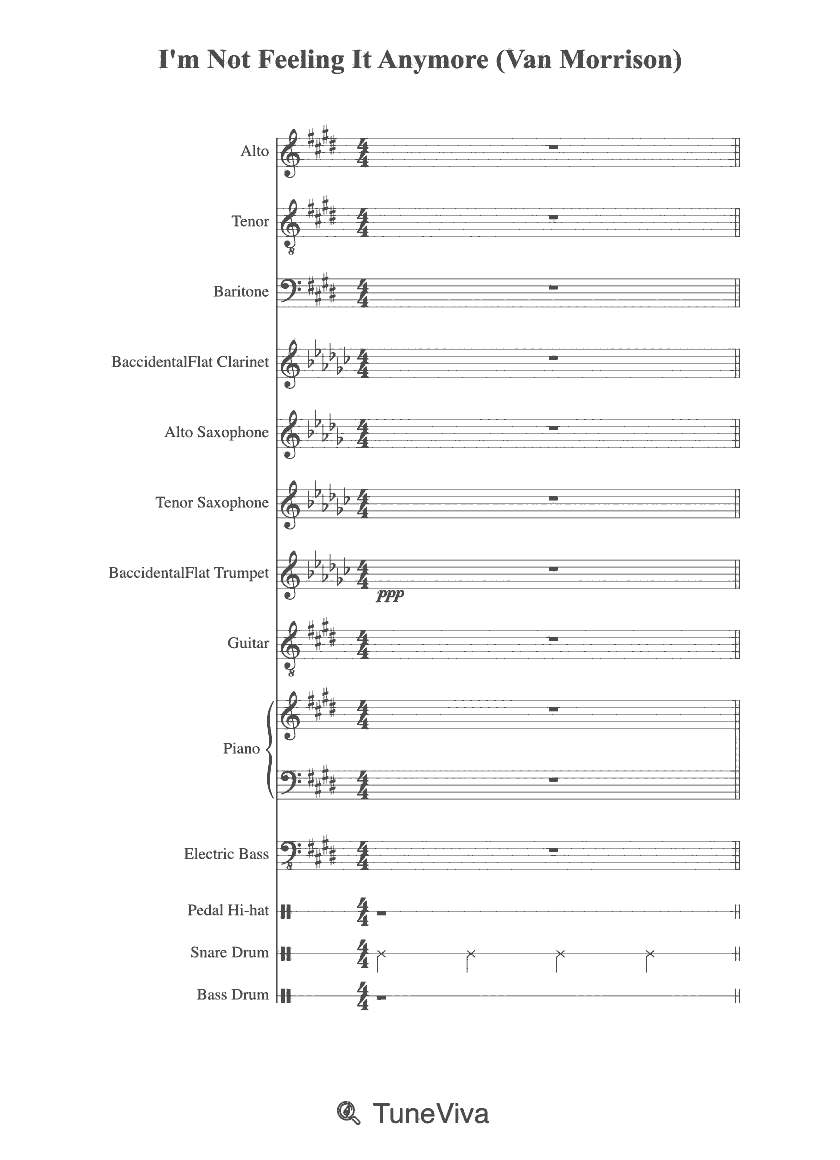
Van Morrison
Alto; Tenor; Baritone +10 parts · 22 min 32 sec
Open score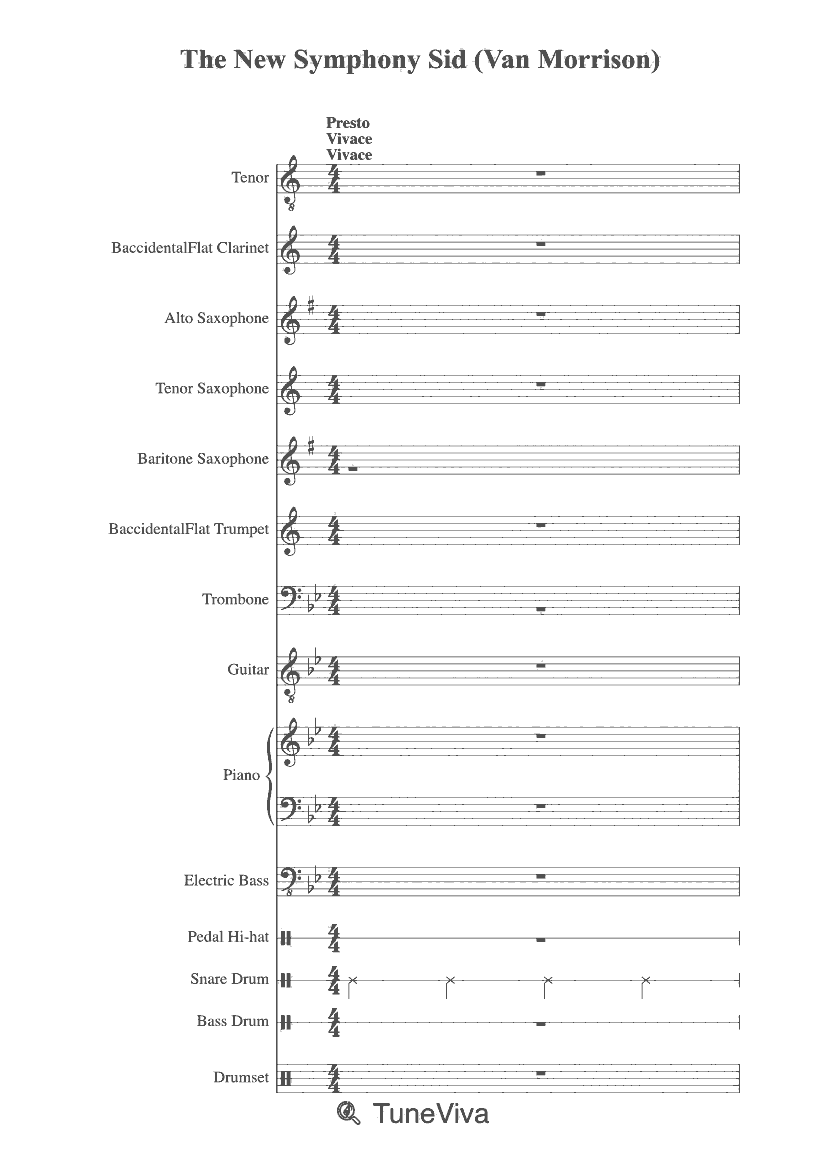
Van Morrison
Tenor; B♭ Clarinet; Alto Saxophone +11 parts · 12 min 31 sec
Open scorePage 1 of 3
Van Morrison's catalogue page is small and unusually long-playing: 42 scores, about 375 minutes of music and 221,707 notated notes. Around them sit album tracks from the 1970s to the 2010s, two of them standards recorded with Georgie Fame's band. At roughly nine minutes per entry, these are full band charts rather than lead sheets. Van Morrison is a Northern Irish singer-songwriter whose career began in the 1960s, first with the Belfast rhythm-and-blues band Them and then as a solo artist behind the 1967 single 'Brown Eyed Girl'. His music often moves between soul and early R&B conventions and longer, spiritually charged pieces shaped by Celtic tradition, jazz and stream-of-consciousness writing. This collection of Van Morrison sheet music reflects that range: it includes a four-horn chart of Brown Eyed Girl, fuller band arrangements of Bright Side of the Road and Have I Told You Lately, and the 12/8 swing of Caledonia Swing. Use the instrumentation, opening tempo and metre for each score to judge whether it suits your ensemble.
George Ivan Morrison was born on 31 August 1945 at 125 Hyndford Street in the Bloomfield district of Belfast, the only child of a shipyard electrician and a former singer and tap dancer. He formed a skiffle group at twelve, took saxophone lessons from the jazz musician George Cassidy, and left school in 1960 without qualifications. Them, the Belfast rhythm-and-blues band he fronted from 1964, gave him Gloria; the solo career began in 1967, when Bert Berns recorded him in New York and released Brown Eyed Girl.
The albums behind this catalogue are spread across five decades. Astral Weeks (1968) and Moondance (1970) established the two poles, the long improvised song cycle and the formally composed soul number. Into the Music (1979) supplied Bright Side of the Road and You Make Me Feel So Free; Avalon Sunset (1989) gave him Have I Told You Lately; Enlightenment (1990) Real Real Gone; The Healing Game (1997) Sometimes We Cry; Back on Top (1999) Precious Time. Twenty-seven are filed as rock-folk, and the total running time of about 375 minutes works out at nearly nine minutes per entry.
Choosing by song and version: Start with the song you need rather than the album title. Some titles are ambiguous: the score titled Philosopher's Stone also carries the song name Precious Time in its supplied details, and Have I Told You Lately appears under the extended title 'I Have I Told You Lately That I Love You'. Check the listed parts and opening markings before selecting.
Horn-led versus full-band scores: The selected scores differ sharply in scope. Brown Eyed Girl - Live Horns is a four-part horn chart for B-flat trumpet, alto saxophone, trombone and baritone saxophone, with no rhythm section listed. Bright Side of the Road adds clarinet and tenor saxophone to a five-horn front line plus electric bass and drums, while Caledonia Swing adds guitar and piano to a similar brass-and-reed group. Match the part list to the players you actually have.
Tempo, metre and key checks: Opening tempos in the supplied scores range from 66 BPM for The Healing Game to 200 BPM for Caledonia Swing. Caledonia Swing opens in 12/8, while Brown Eyed Girl - Live Horns, Have I Told You Lately, Bright Side of the Road and several others open in 4/4. Key signatures also vary between scores, so confirm the transpositions and written keys before rehearsing.
Context for programme notes: Astral Weeks (1968) is described as a blend of folk, blues, jazz and classical styles and a departure from Morrison's earlier pop hits; Avalon Sunset (1989) produced Have I Told You Lately; and Into the Music (1979) included Bright Side of the Road, which reached No. 63 on the UK Singles Chart. These details can help frame a performance, but the scores themselves should be checked for whether they follow a studio, live or reduced arrangement.
Every entry is an instrumental arrangement: a band chart, a horn score or a piano reduction. The songs have words, but the files were prepared for players rather than singers.
One is a live arrangement with horns; the other is a second upload of the same song. The catalogue does not record which performance either is based on.
The scores follow the album arrangements, several of which run to six or seven minutes, and at least one is a live version. The average comes out at nearly nine minutes per entry.
Van Morrison is a Northern Irish singer-songwriter whose career began in the 1960s. He rose to prominence with the Belfast rhythm-and-blues band Them, co-writing 'Gloria', and his solo career took off with the 1967 single 'Brown Eyed Girl'. His music often combines soul and early rhythm and blues with lengthy, spiritually inspired pieces shaped by Celtic tradition, jazz and stream-of-consciousness writing.
Astral Weeks is Van Morrison's second studio album, recorded in New York in 1968 and released that November. Its music blends folk, blues, jazz and classical styles, a departure from the pop hits that preceded it, and the record has been described as a song cycle or concept album with impressionistic, hypnotic lyrics.
Horn sections appear in several scores gathered here. The score titled Brown Eyed Girl - Live Horns lists B-flat trumpet, alto saxophone, trombone and baritone saxophone only; Bright Side of the Road adds clarinet and tenor saxophone to a five-horn front line with bass and drums; Caledonia Swing lists clarinet, alto and tenor saxophones, trumpet, trombone, guitar, piano, bass and drums.
Opening tempos in the supplied scores range from 66 BPM for The Healing Game to 200 BPM for Caledonia Swing. Caledonia Swing opens in 12/8; Brown Eyed Girl - Live Horns and Have I Told You Lately open in 4/4, at 170 BPM and 122 BPM respectively. Check these markings before choosing a score for your group.
Have I Told You Lately is a religious ballad from Van Morrison's 1989 album Avalon Sunset. It became a hit single for Morrison and a bigger hit for Rod Stewart in 1993. The score on this page appears under the extended title 'I Have I Told You Lately That I Love You' and lists guitar, piano, bass, drums and a horn section including alto, tenor and baritone saxophones, clarinet and trumpet.
The score titled Caledonia Swing opens in 12/8 at 200 BPM and lists clarinet, alto and tenor saxophones, trumpet, trombone, guitar, piano, bass guitar and drums. Its fast compound metre and full horn-and-rhythm instrumentation contrast with the slower 4/4 ballad scores on the page.
The score listed as Did Ye Get Healed includes a Voice part alongside clarinet, alto, tenor and baritone saxophones, trumpet, trombone, piano, electric bass and drumset. Most other selected scores list instrumental parts only.