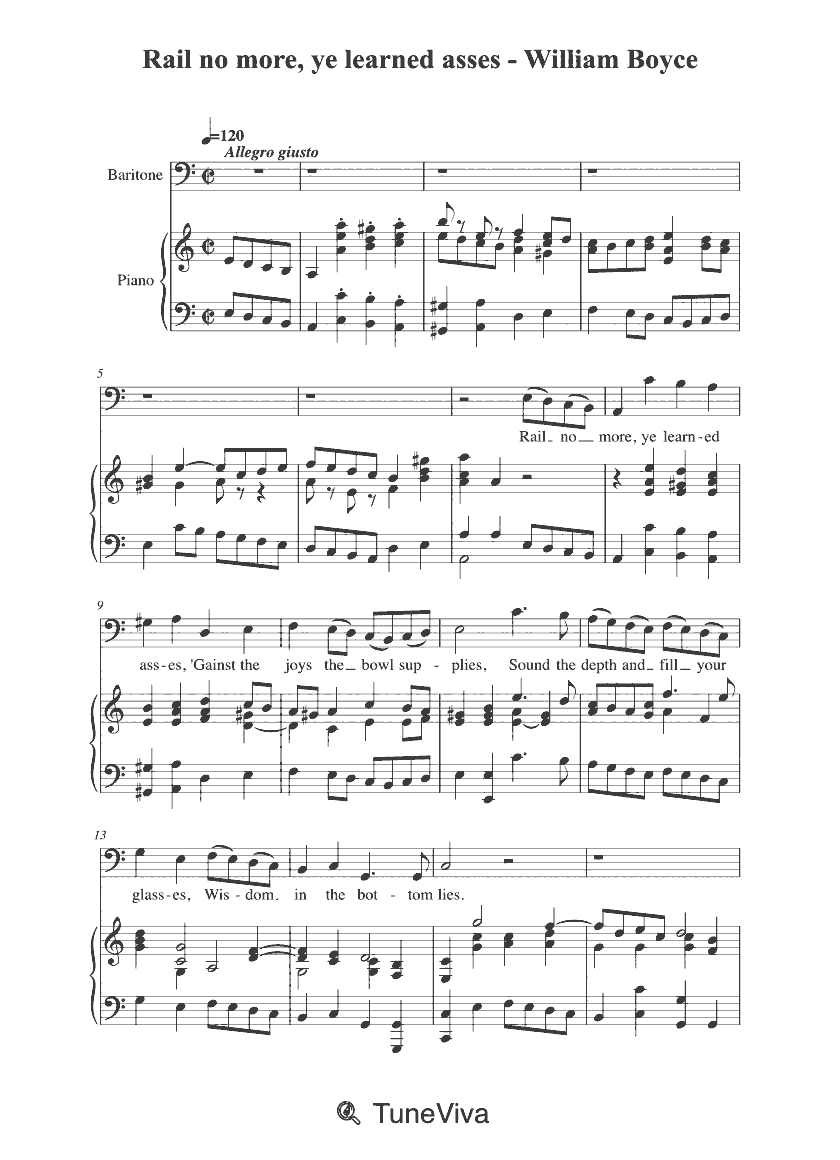
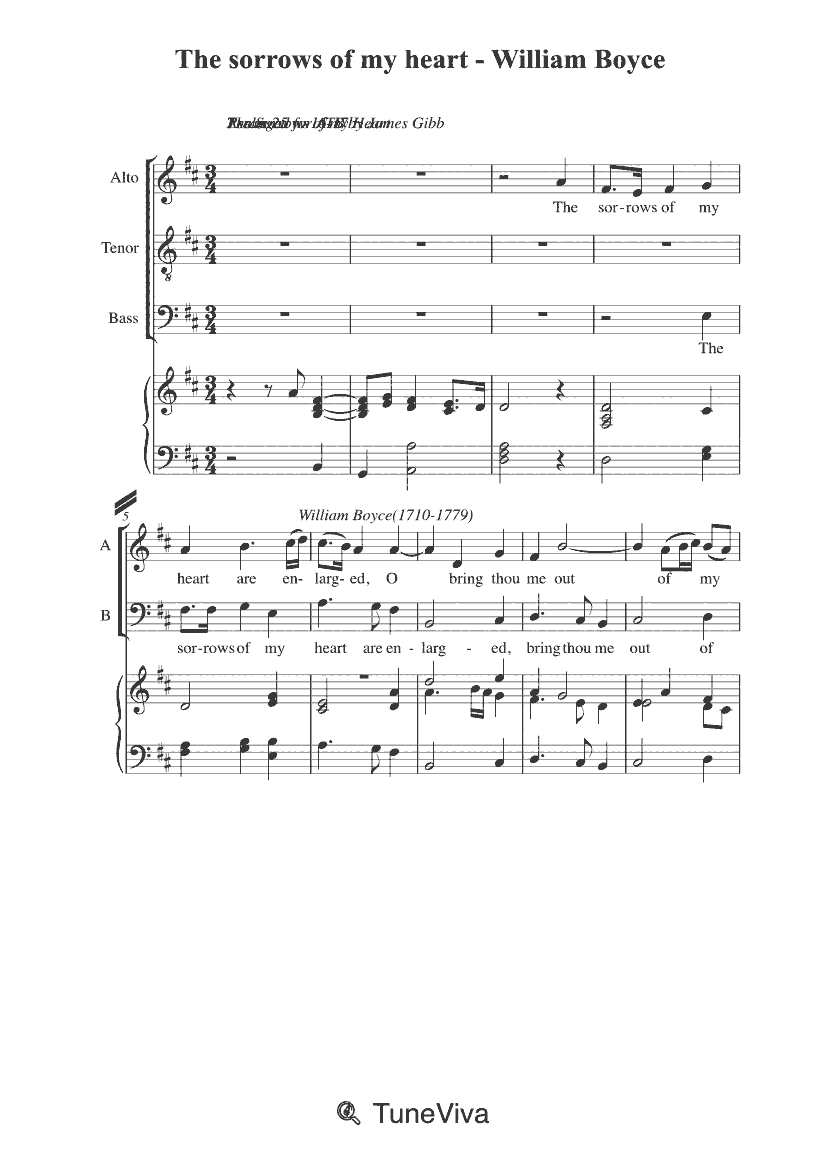
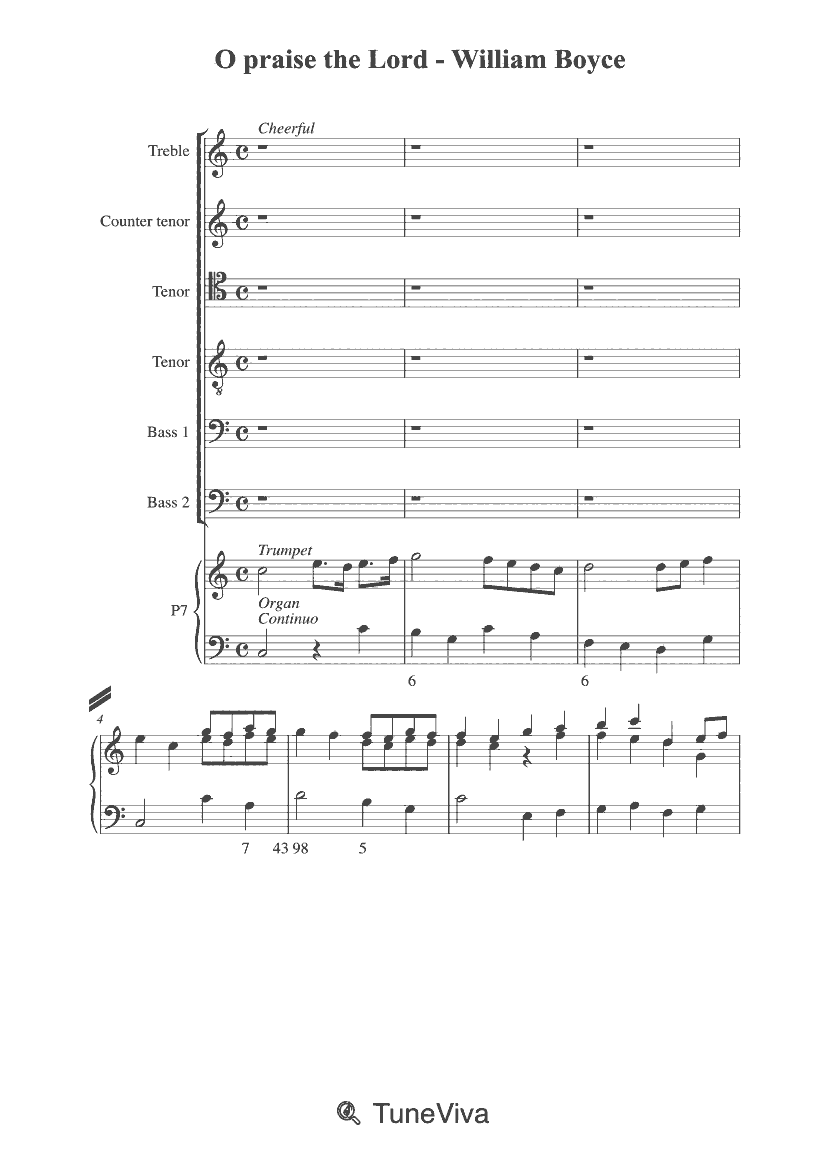
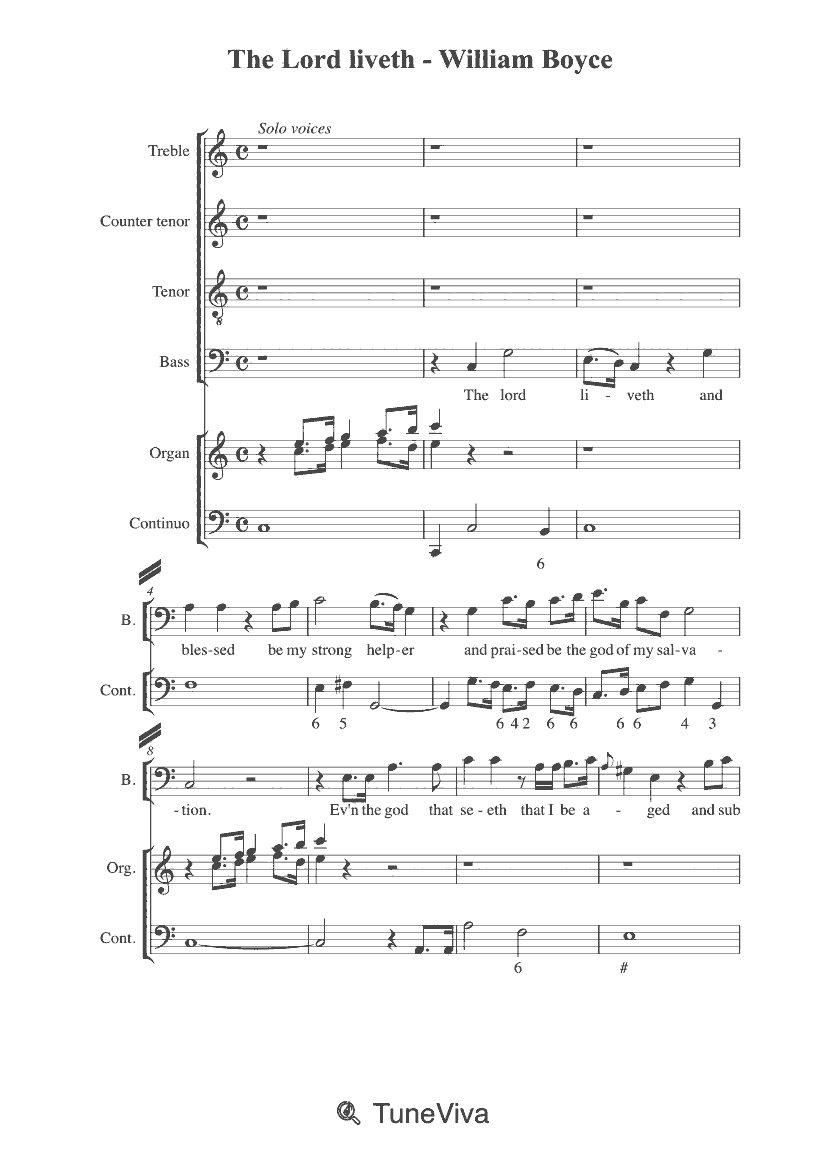
About William Boyce
Boyce was baptised on 11 September 1711 at St James Garlickhythe in the City of London, the son of a joiner who was beadle of the Joiners' Company; he entered the choir of St Paul's Cathedral in 1719 and, after his voice broke in 1727, studied with the organist Maurice Greene. He was organist of the Oxford Chapel from 1734, wrote songs for Vauxhall Gardens, and in 1736 became composer to the Chapel Royal, the year his oratorio David's Lamentation over Saul and Jonathan appeared.
His secular career ran alongside the church one. The Twelve Sonatas of 1747 were widely played, he supplied songs and theatre music to David Garrick at Drury Lane, and his musical entertainments The Chaplet (1749) and The Shepherd's Lottery (1751) date from around 1750. In 1757 he became Master of the King's Musick, and in 1761 he wrote eight anthems for the coronation of George III, declining to set Zadok the Priest because he thought Handel's version unsurpassable.
Deafness forced him from his organ posts by 1758, and he retired to Kensington to finish Cathedral Music, the collection Greene had left incomplete. Its three volumes, issued between 1760 and 1773, printed English church music from Byrd and Tallis onwards and kept much of it in use. He died of gout on 7 February 1779 and was buried under the dome of St Paul's.