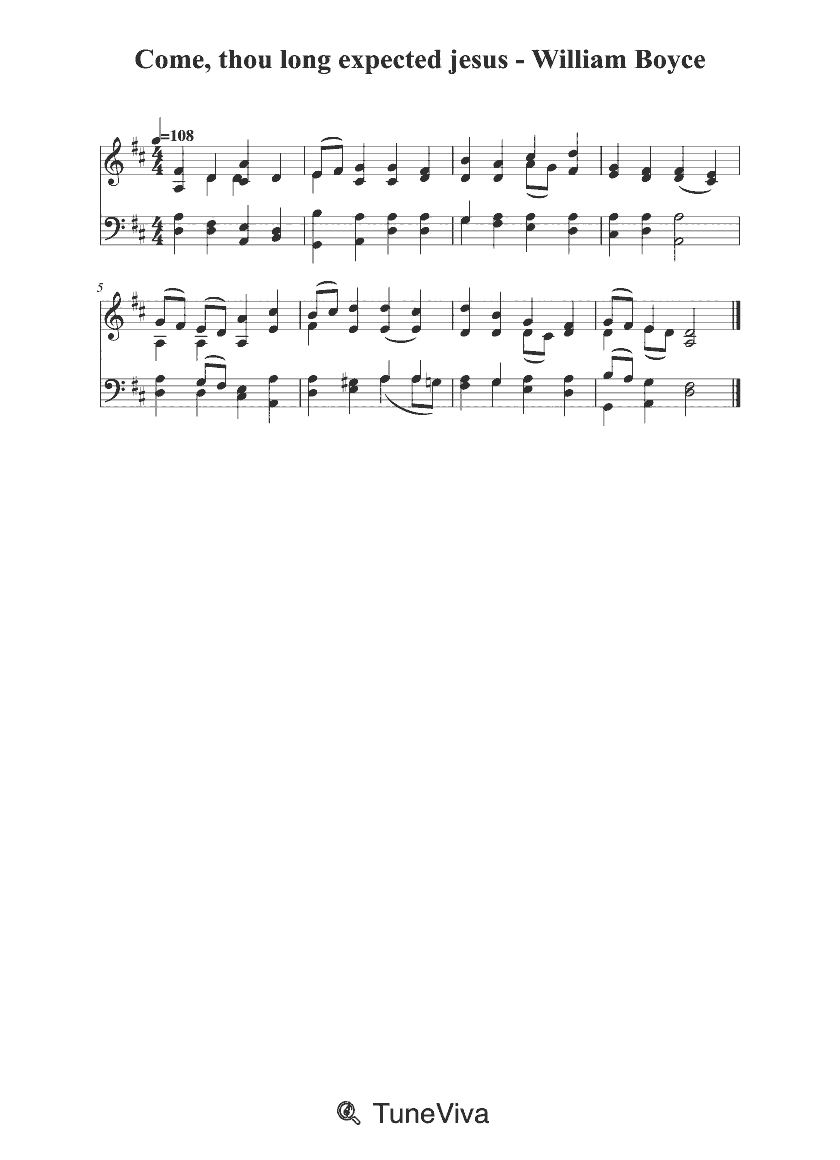
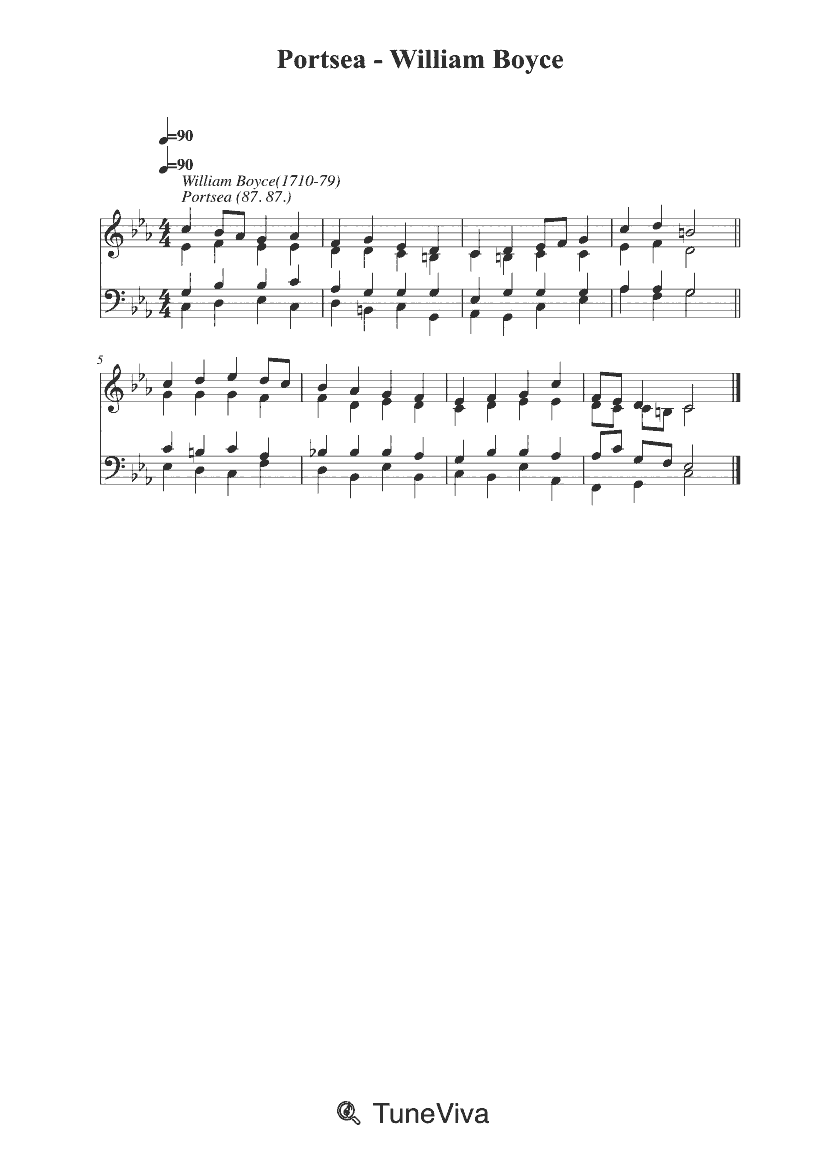
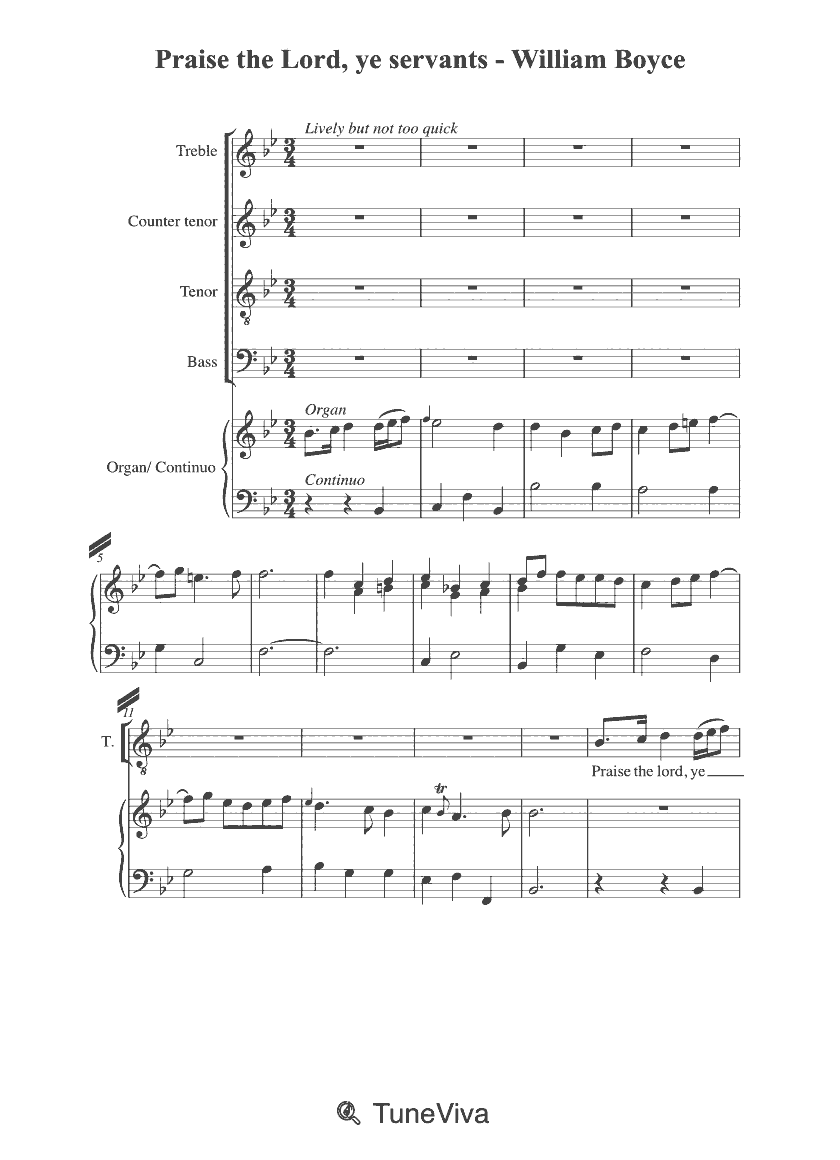
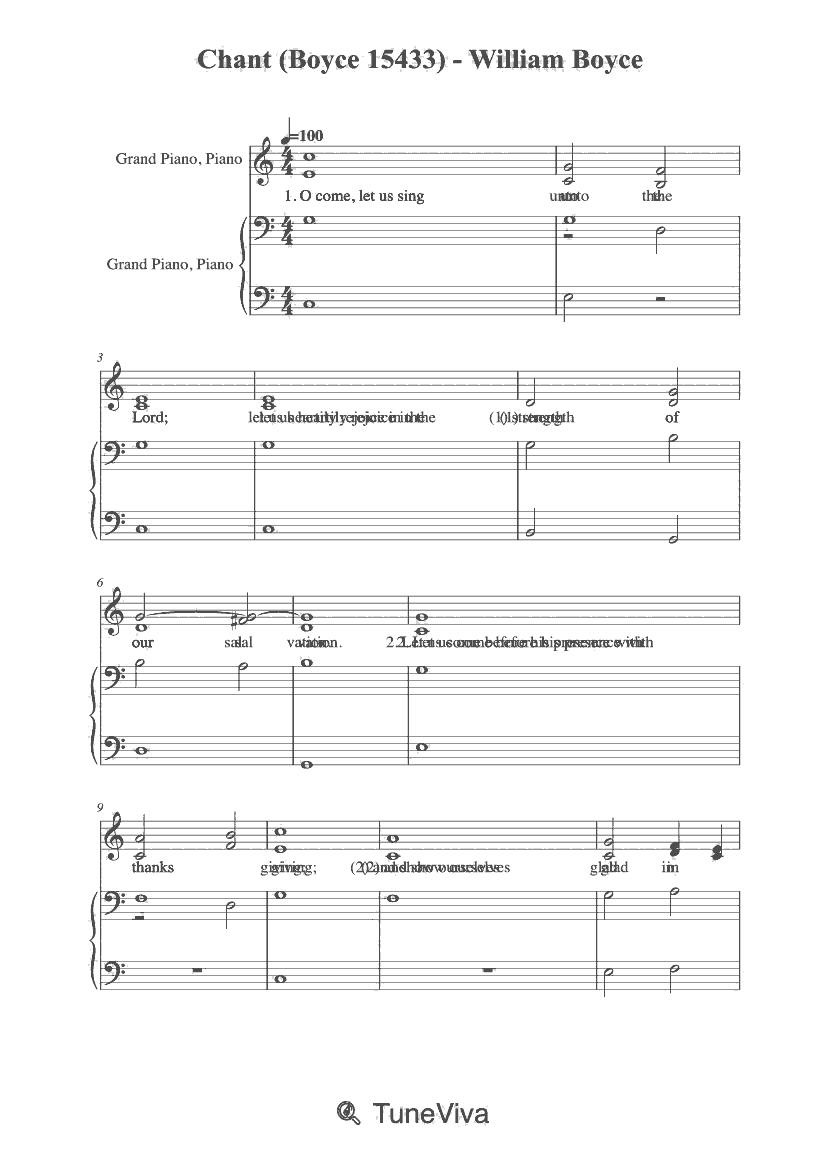
William Boyce: anthems, services and a drinking song

William Boyce was the last major English church composer before the Victorian revival, and the catalogue's 32 scores are mostly anthems: about 145 minutes of music and 34,208 notated notes, with 15 entries carrying lyrics. Thirty-one of the scores sit at complexity index 0 and one at index 1.

The most-viewed item is not a sacred piece at all. "Rail no more, ye learned asses", a convivial song, leads the page, followed by "The sorrows of my heart" and a run of anthems. The Te Deum and Jubilate in A major is the longest single entry, and 145 minutes across 32 scores is far longer per score than the hymn-tune collections here, which points to complete services rather than short tunes.

About William Boyce

Boyce was baptised on 11 September 1711 at St James Garlickhythe in the City of London, the son of a joiner who was beadle of the Joiners' Company; he entered the choir of St Paul's Cathedral in 1719 and, after his voice broke in 1727, studied with the organist Maurice Greene. He was organist of the Oxford Chapel from 1734, wrote songs for Vauxhall Gardens, and in 1736 became composer to the Chapel Royal, the year his oratorio David's Lamentation over Saul and Jonathan appeared.

His secular career ran alongside the church one. The Twelve Sonatas of 1747 were widely played, he supplied songs and theatre music to David Garrick at Drury Lane, and his musical entertainments The Chaplet (1749) and The Shepherd's Lottery (1751) date from around 1750. In 1757 he became Master of the King's Musick, and in 1761 he wrote eight anthems for the coronation of George III, declining to set Zadok the Priest because he thought Handel's version unsurpassable.

Deafness forced him from his organ posts by 1758, and he retired to Kensington to finish Cathedral Music, the collection Greene had left incomplete. Its three volumes, issued between 1760 and 1773, printed English church music from Byrd and Tallis onwards and kept much of it in use. He died of gout on 7 February 1779 and was buried under the dome of St Paul's.

Listening and playing notes

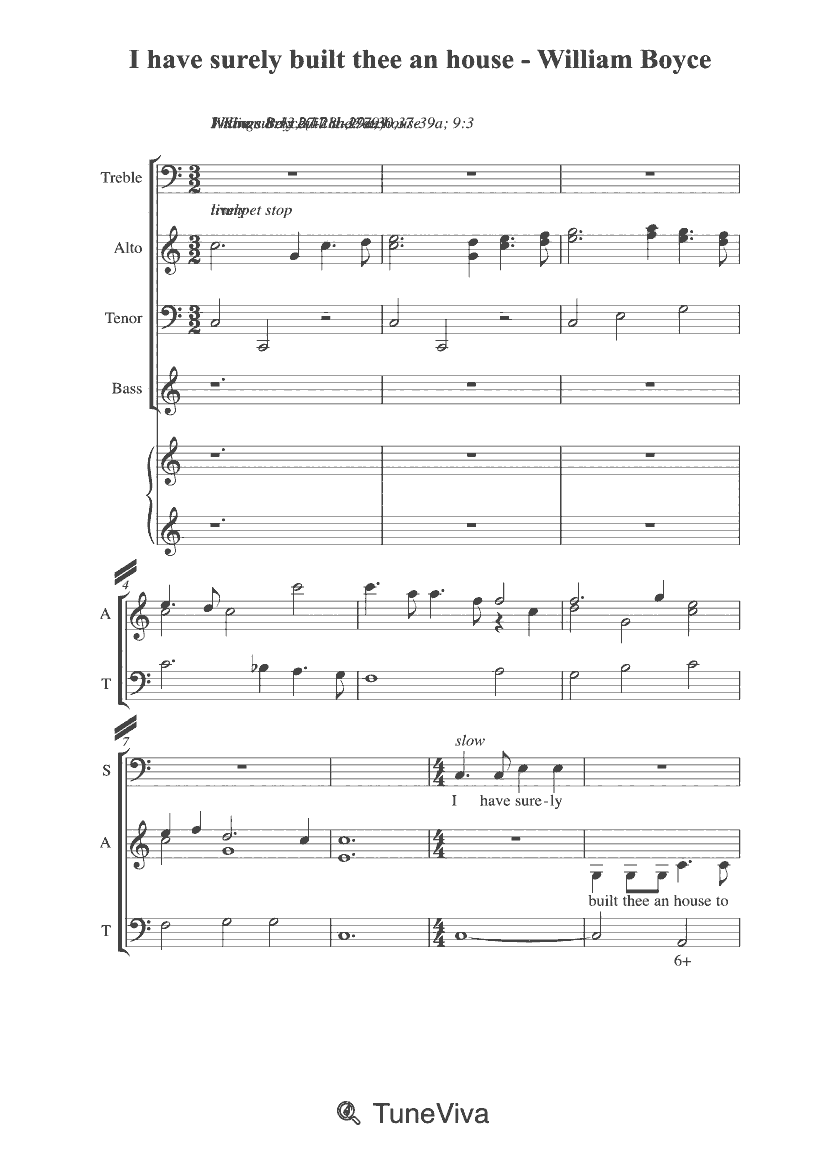
Boyce writes for voices in clear, short phrases, so the ensemble problems are ones of blend and tuning rather than of range. In the verse anthems, the soloists carry the argument and the full choir should enter as a change of colour, not as a louder continuation. Keep the continuo light and let the inner parts speak. The Te Deum needs a firm pulse at the openings and room to expand at the doxology. The convivial song is a different matter: take it at a relaxed tempo and let the words be heard.

Selected scores

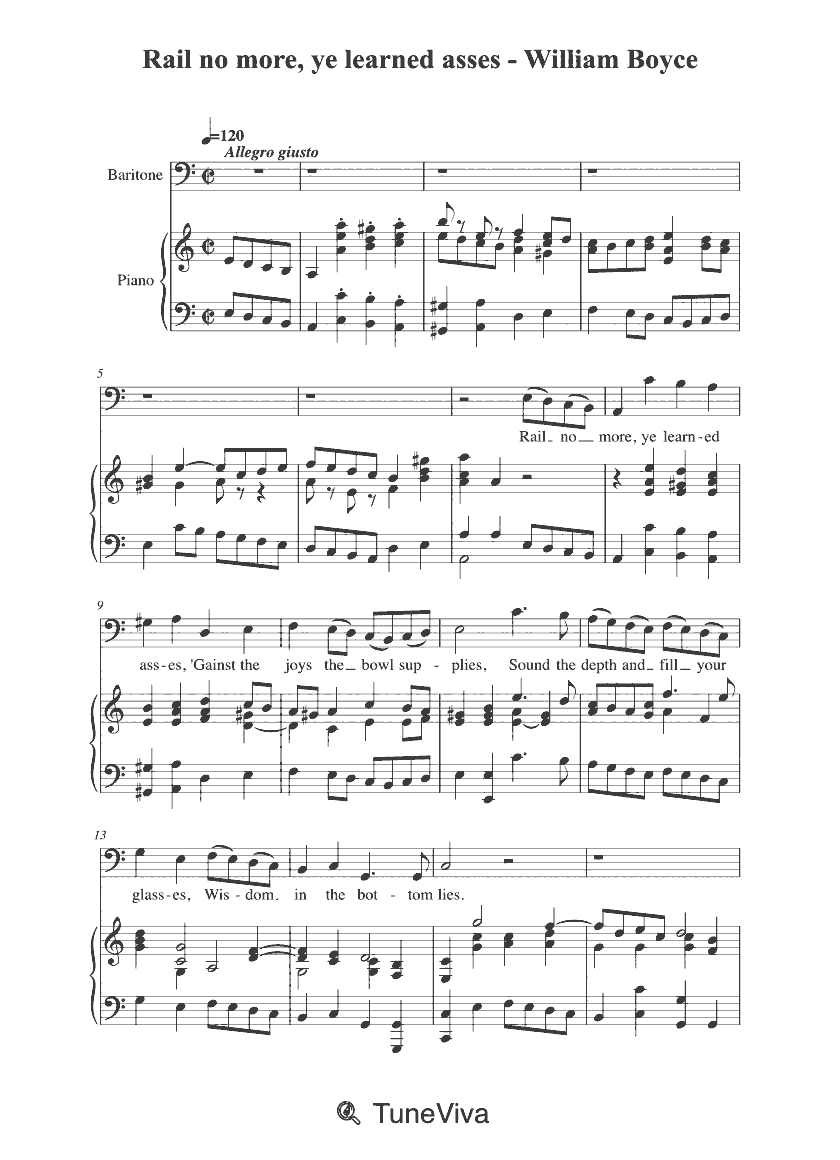
  1. Rail No More, Ye Learned Asses

    A convivial song in praise of the bowl, printed in eighteenth-century songsters as "set by Mr Boyce", and the most-viewed score here.

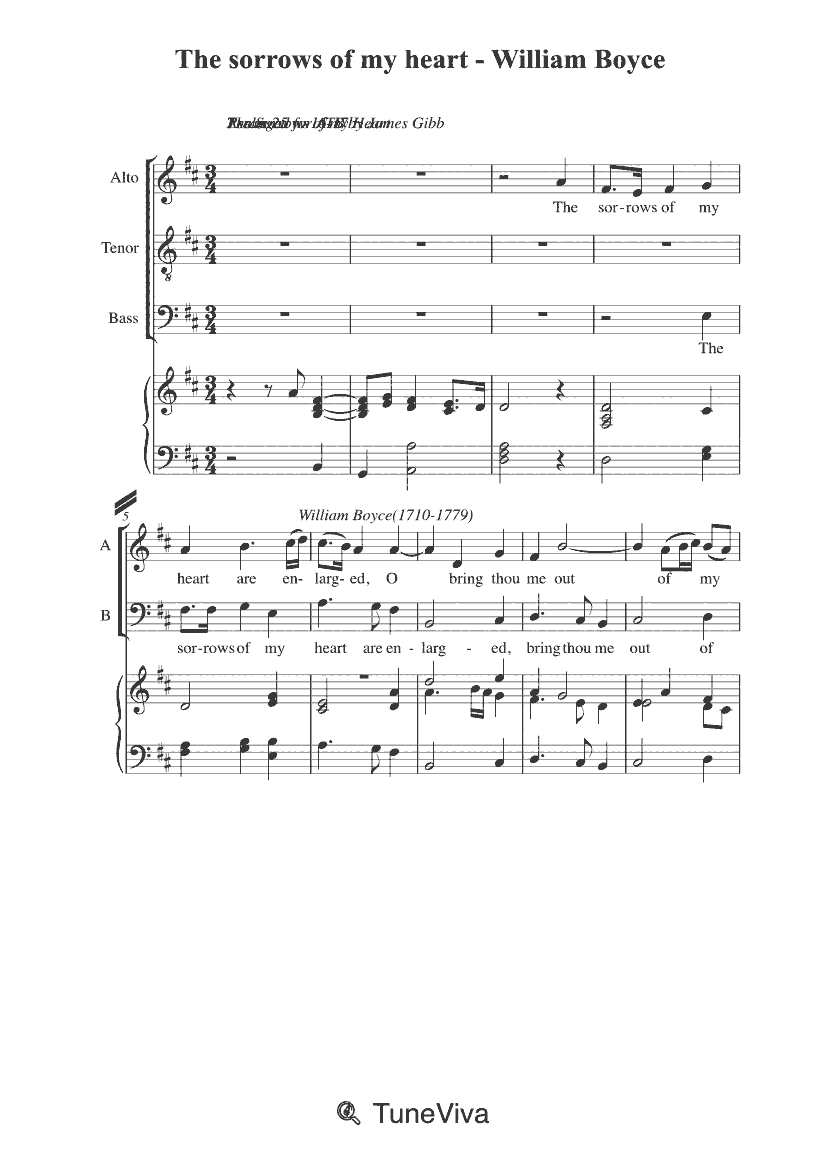
  2. The Sorrows of My Heart

    The middle section of the anthem Turn Thee unto Me, on Psalm 25, printed in Fifteen Anthems by Dr Boyce in 1780 and written in two parts rather than three.

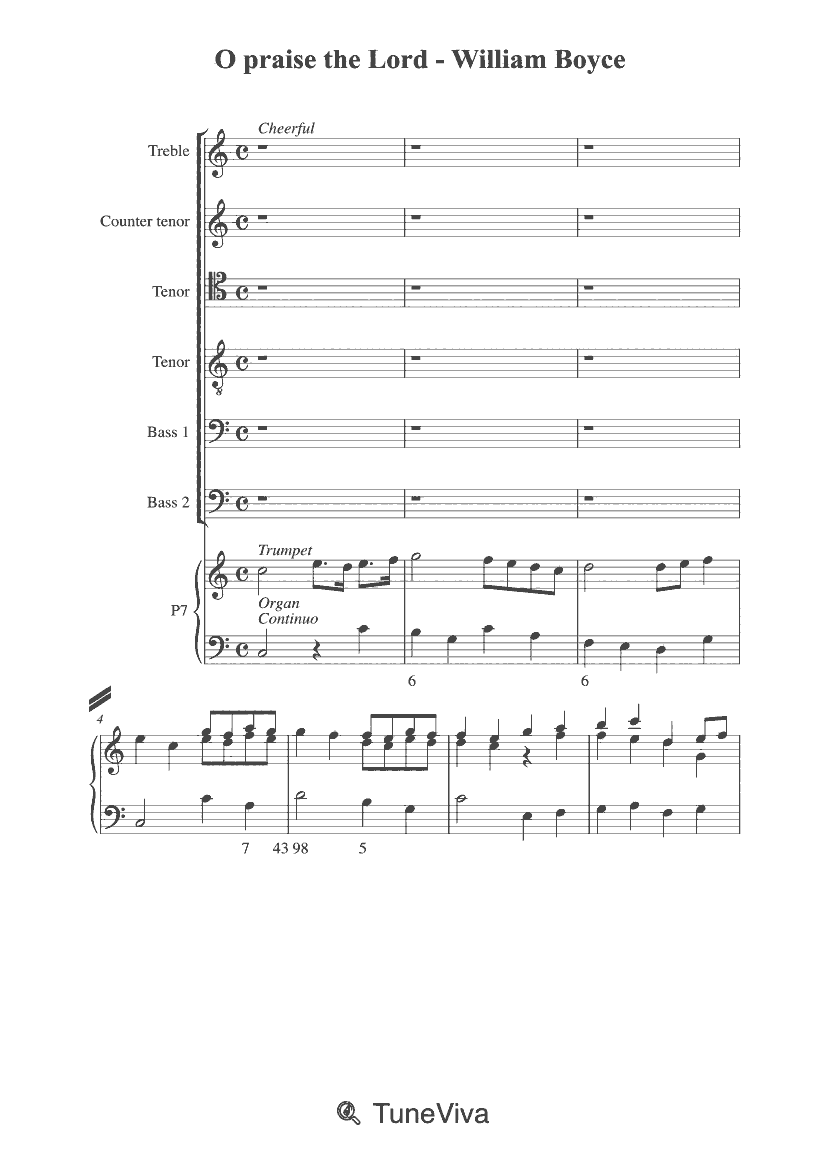
  3. O Praise the Lord

    A full anthem of the kind Boyce wrote for the Chapel Royal, in short homophonic phrases.

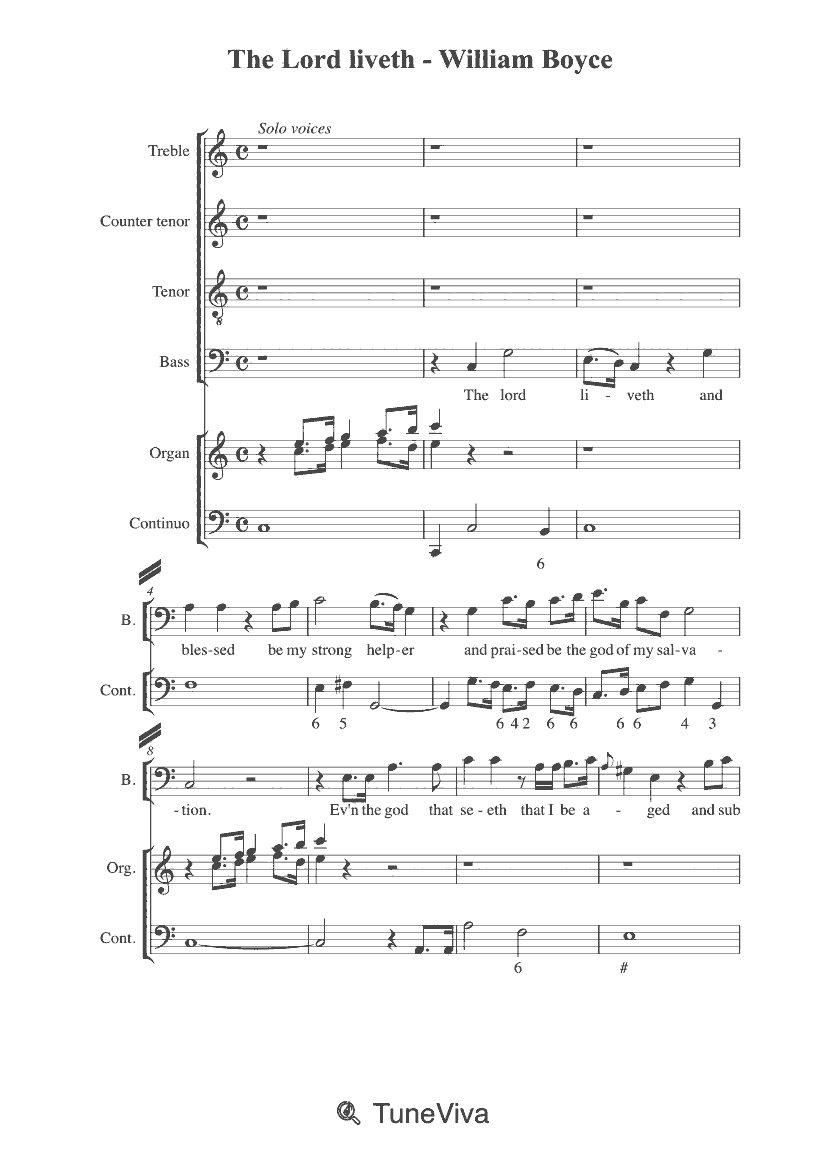
  4. The Lord Liveth

    A verse anthem listed among Boyce's church music; the file gives no date or source collection.

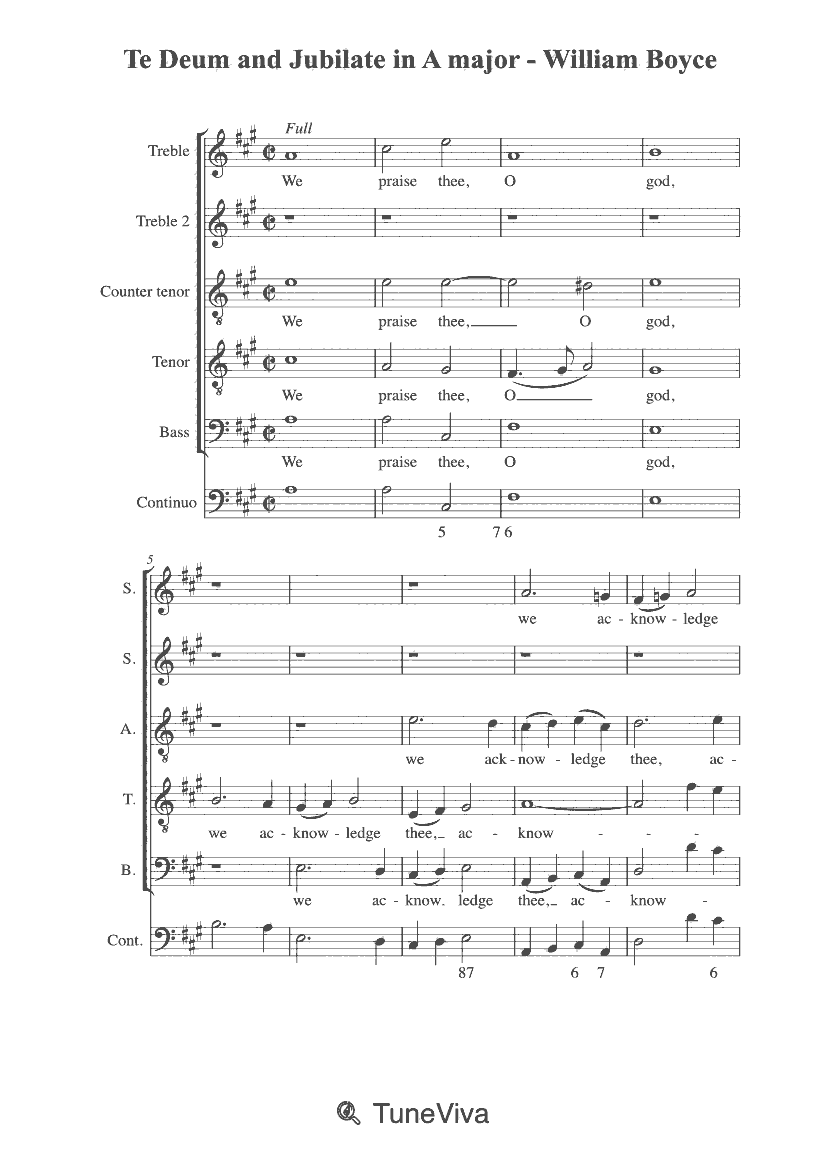
  5. Te Deum and Jubilate in A Major

    The morning service in A, dated around 1740 in some sources and around 1750 in others; it survives in an organ book copied at Wimborne Minster.

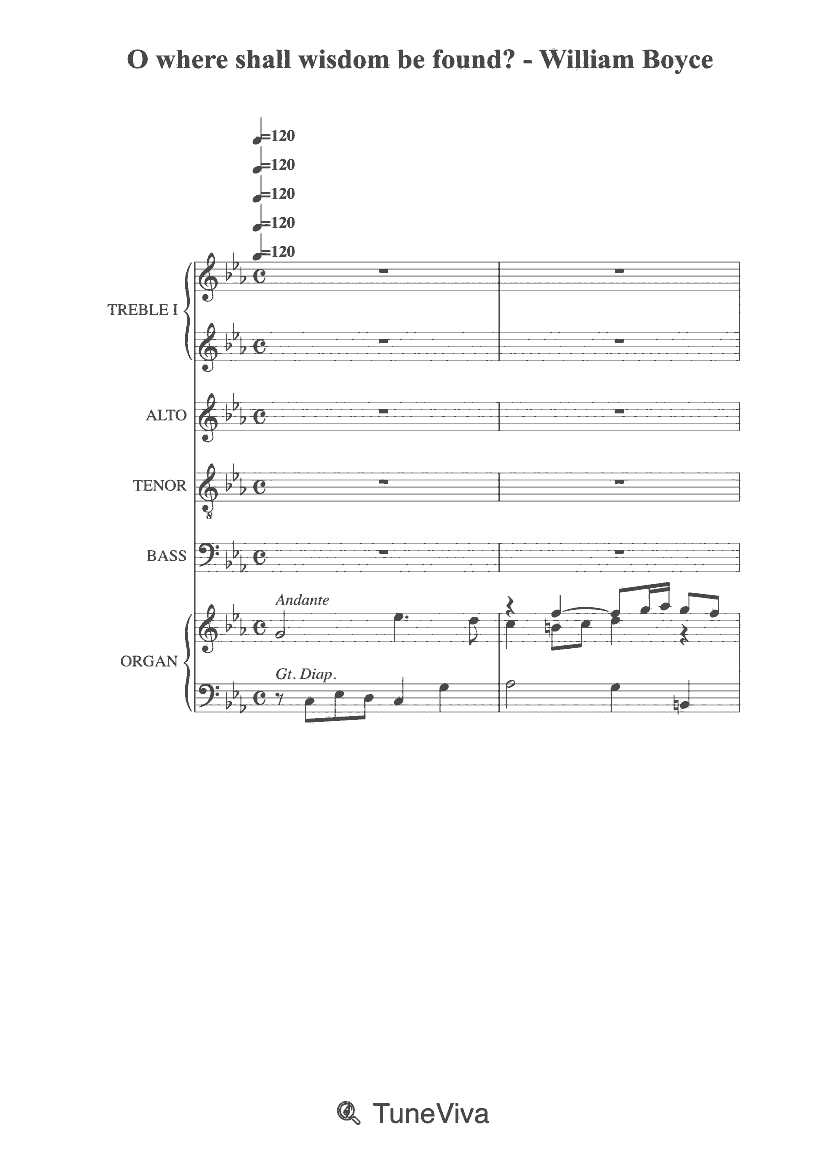
  6. O Where Shall Wisdom Be Found?

    An anthem on the wisdom passage in Job 28, among the pieces printed in the 1780 collection of fifteen anthems.

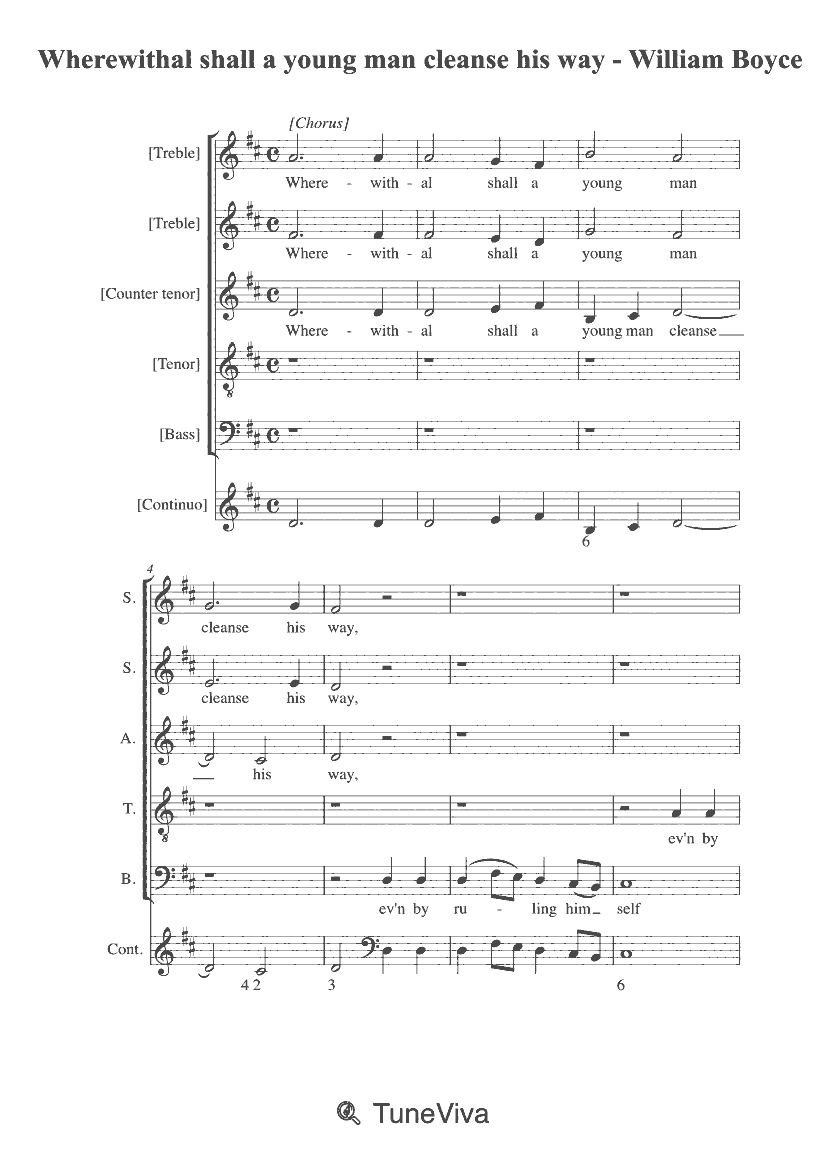
  7. Wherewithal Shall a Young Man Cleanse His Way

    A setting of Psalm 119, still sung in cathedral choirs and recorded by the choir of New College, Oxford.

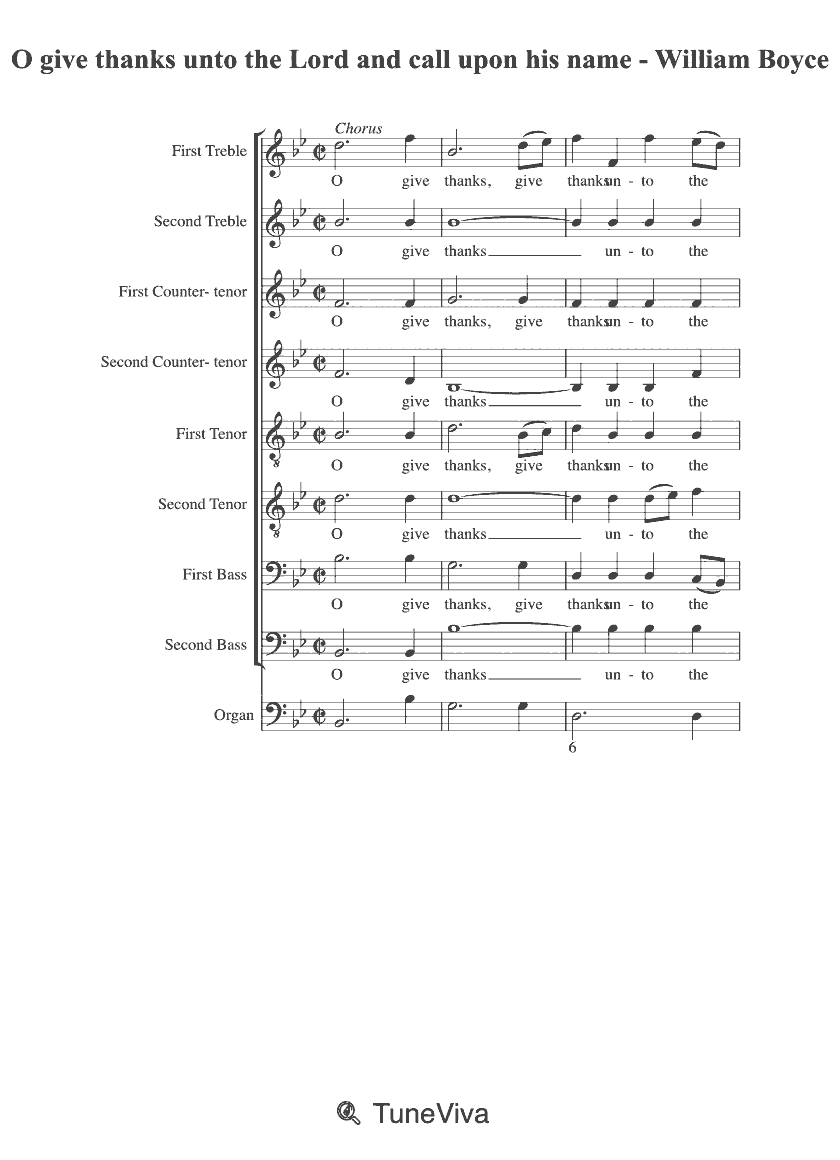
  8. O Give Thanks unto the Lord

    A thanksgiving anthem on the opening of Psalm 105, one of several psalm settings in the collection.

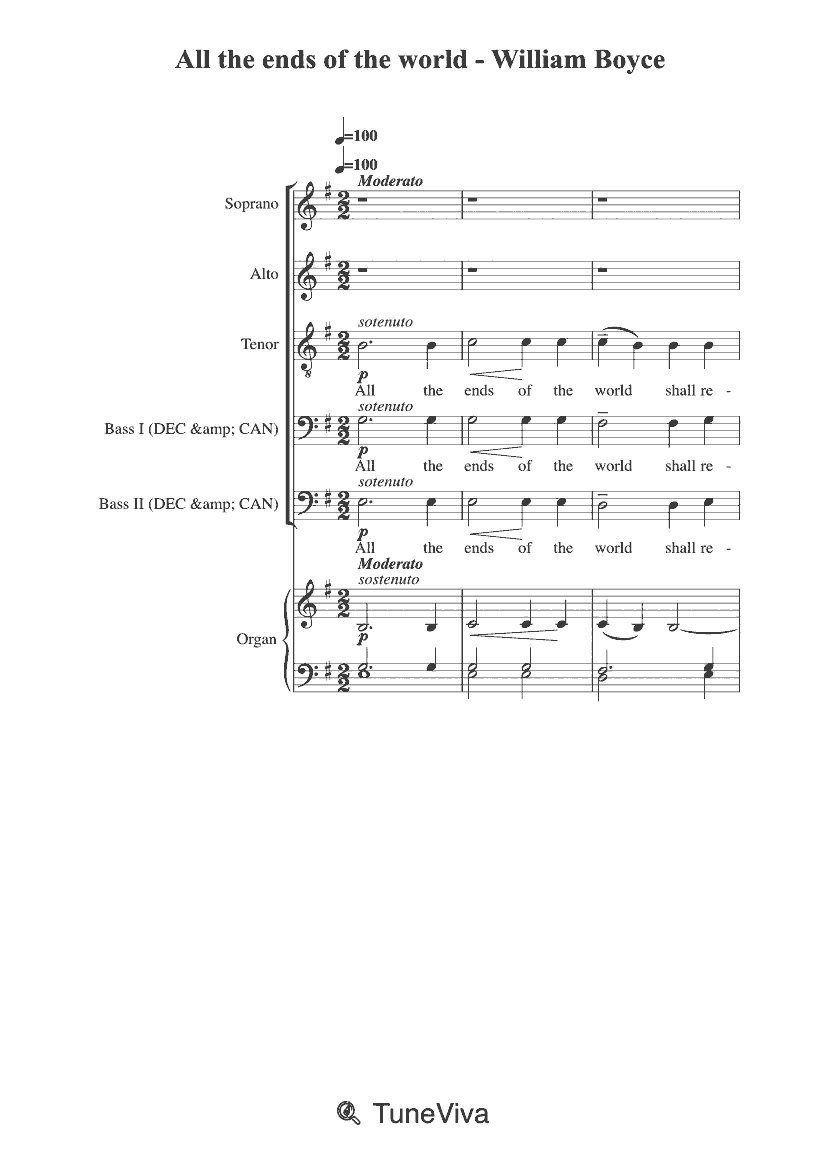
  9. All the Ends of the World

    A short anthem on Psalm 98, the verse sung at Christmas in the Book of Common Prayer.

Questions about William Boyce

How many William Boyce scores are in the catalogue?

There are 32, running to about 145 minutes of music and 34,208 notated notes. Fifteen of them include lyrics.

Why is a drinking song the most-viewed Boyce piece?

Because it is short, tuneful and easy to sing. "Rail no more, ye learned asses" was printed in eighteenth-century songsters as a song set by Boyce, and its refrain in praise of the bowl kept it in circulation.

What is "The sorrows of my heart" taken from?

It is the middle section of the anthem Turn Thee unto Me, setting Psalm 25 verses 16 and 17. The piece was printed in Fifteen Anthems by Dr Boyce in 1780, after his death.

Did Boyce compile Cathedral Music?

He completed the collection his teacher Maurice Greene had left unfinished. It appeared in three volumes between 1760 and 1773 and printed English church music from Byrd onwards.

Browse all 32 scores

Catalog editions and arrangements attributed to William Boyce.

Related composer collections

Sources