classical
2 tracks
William Henry Monk spent his working life in London churches and in the editorial office of Hymns Ancient and Modern, and the catalogue reflects both halves of that career: 106 scores, about 49 minutes of music and 19,939 notated notes. Ten entries carry lyrics.
Almost everything is short. One hundred and four scores sit at complexity index 0 and only two at index 1, so the collection is built from hymn tunes and chant rather than from extended anthems. "Abide with me" leads by a wide margin, followed by "All things bright and beautiful", and the rest of the page is a working hymnbook: communion hymns, Easter hymns, evening hymns, and a second setting of Lyte's text.
Monk was born in Brompton, London, on 16 March 1823, the son of a tallow chandler, and baptised at St George's, Hanover Square. He was organist at Eaton Chapel in Pimlico from 1841, then at St George's, Albemarle Street and St Paul's, Portman Square, before moving to King's College London in 1847 as choirmaster; he took the organ there in 1849. At King's he took up William Dyce's interest in plainchant and wrote the first articles on the subject for The Parish Choir. In 1852 he became organist and choirmaster of the newly opened St Matthias, Stoke Newington.
His reputation rests on a different job. In 1857 he was appointed musical editor of Hymns Ancient and Modern, published in 1861 with 273 hymns; a second edition followed in 1875, with further supplements in 1889 and after, and the book became one of the best-selling hymn collections ever printed. He supplied EVENTIDE for "Abide with me", GETHSEMANE, ALL THINGS BRIGHT in 1887, and the Alleluia added to the Palestrina adaptation known as VICTORY. From 1874 he taught singing at King's, adding posts at the National Training School of Music in 1876 and Bedford College in 1878; Durham awarded him an honorary Mus.Doc. in 1882. He died on 1 March 1889 and is buried in Highgate Cemetery.
These are congregational tunes, so the first decision is tempo: EVENTIDE will sag if the opening phrase is taken too slowly, and the last verse needs somewhere left to go. Keep the harmony plain and let the words shape each line. In the part-writing, watch the inner voices at cadences, where Monk often moves the alto and tenor by step beneath a sustained soprano. The chant and the short anthems reward a steady pulse and clear diction more than expressive rubato; the organ should support the singing rather than lead it.
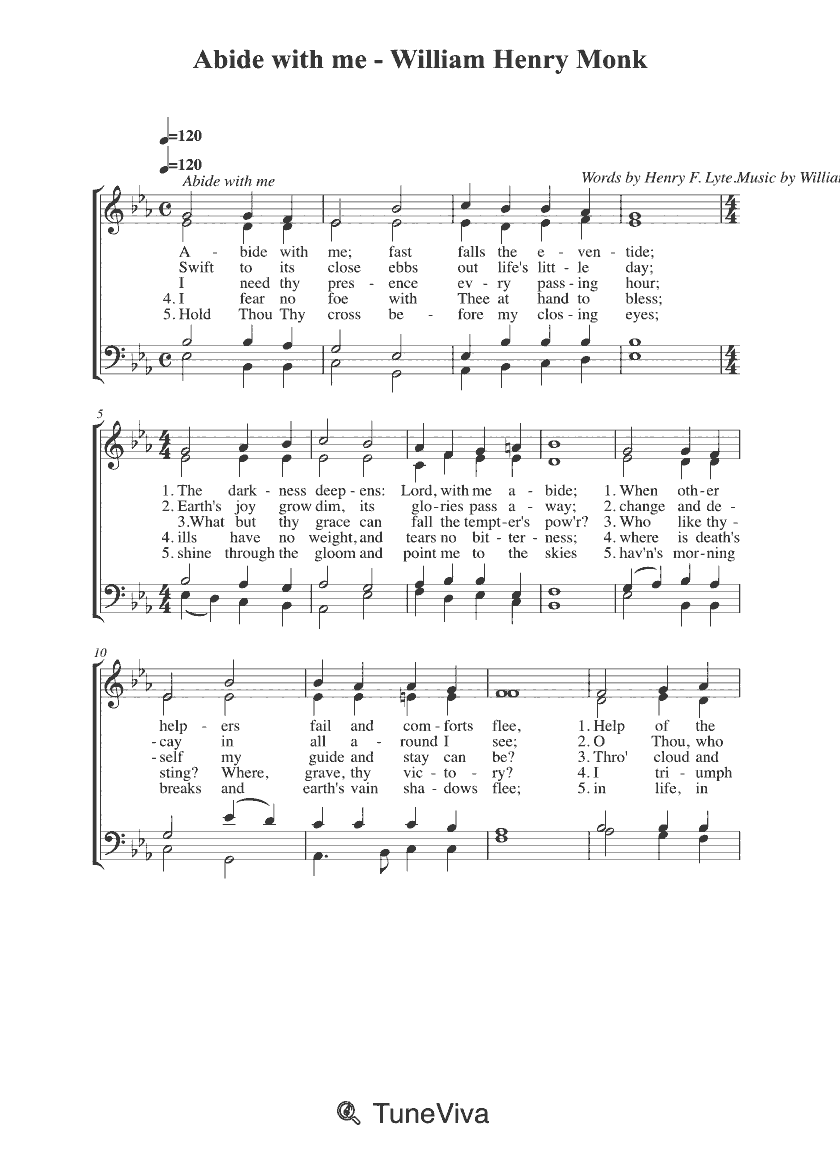
The tune EVENTIDE, written for the 1861 Hymns Ancient and Modern and the most-viewed score here; Monk's wife later linked it to the death of their daughter Florence in 1852.
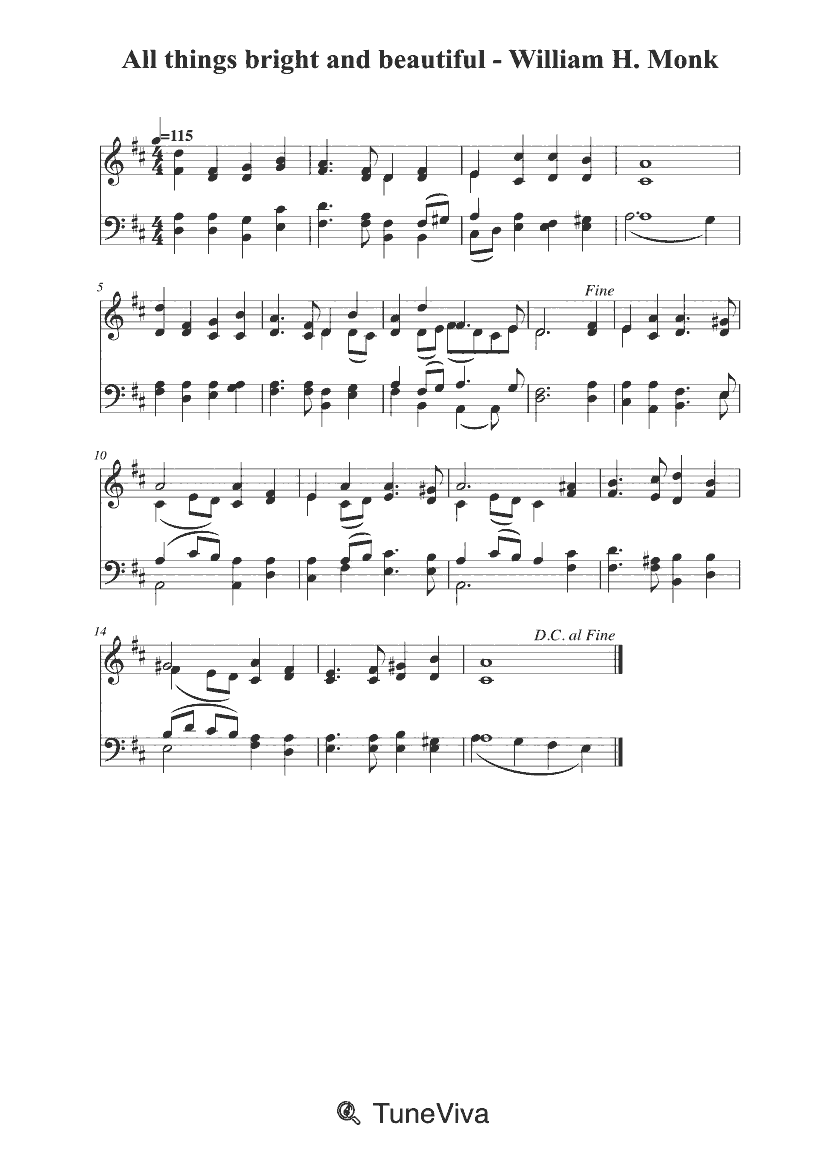
Monk's tune ALL THINGS BRIGHT, dated 1887 in the hymnals, for Cecil Frances Alexander's 1848 text about the created world.
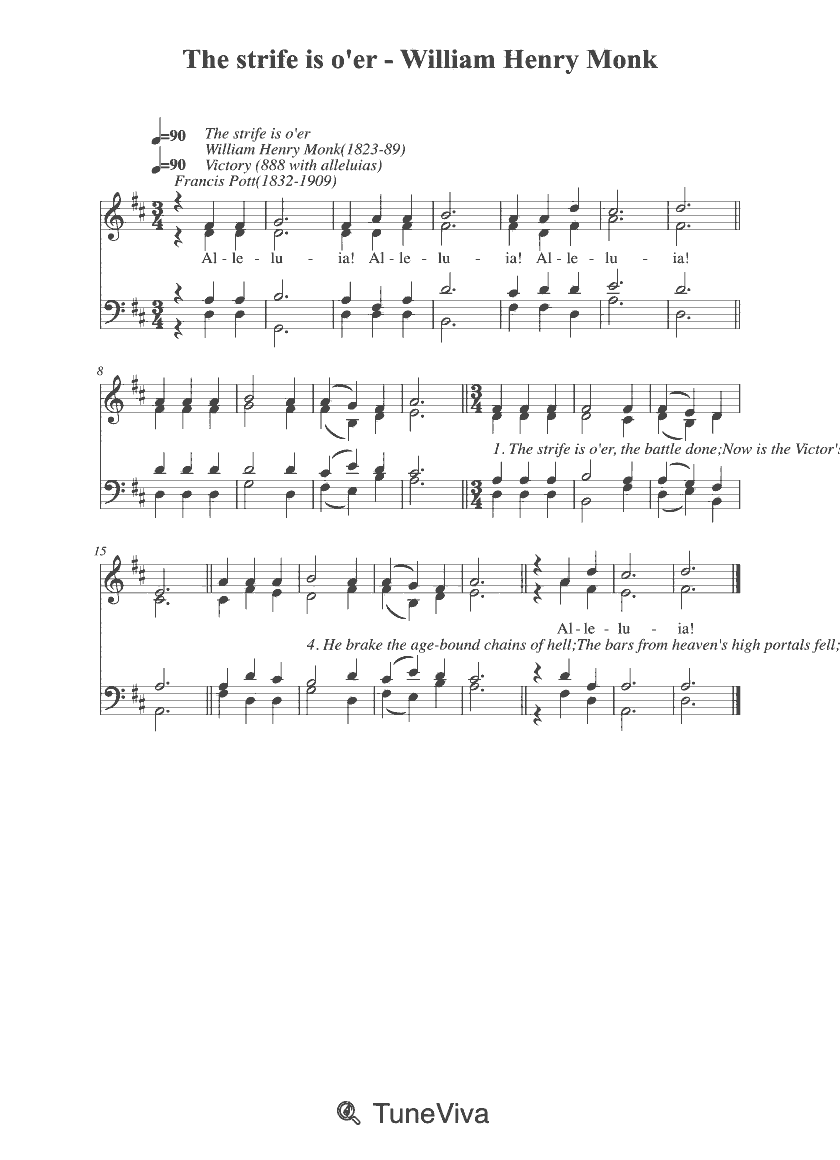
The Easter hymn sung to VICTORY: Palestrina's Gloria Patri adaptation, with the Alleluia refrain that Monk added for Hymns Ancient and Modern.
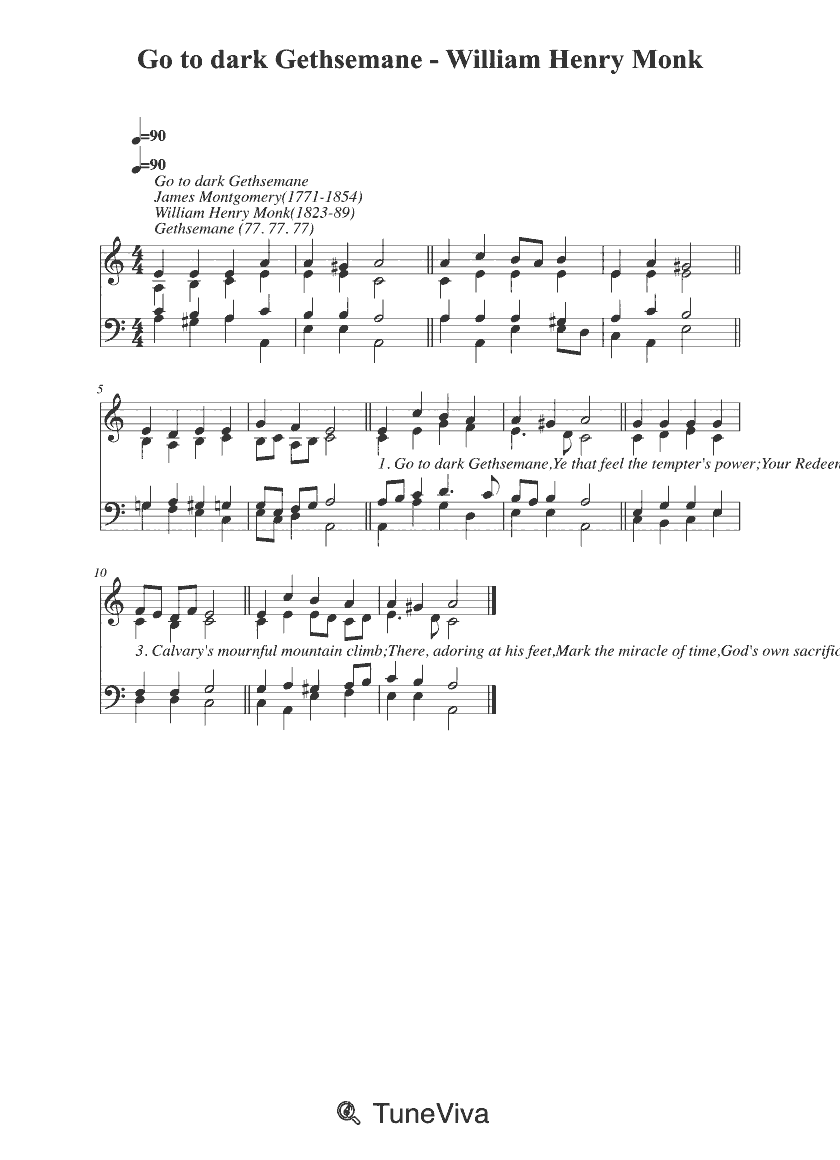
The tune GETHSEMANE, printed in 1861 and adapted, according to the hymnals, from Christopher Tye's Acts of the Apostles of 1553.
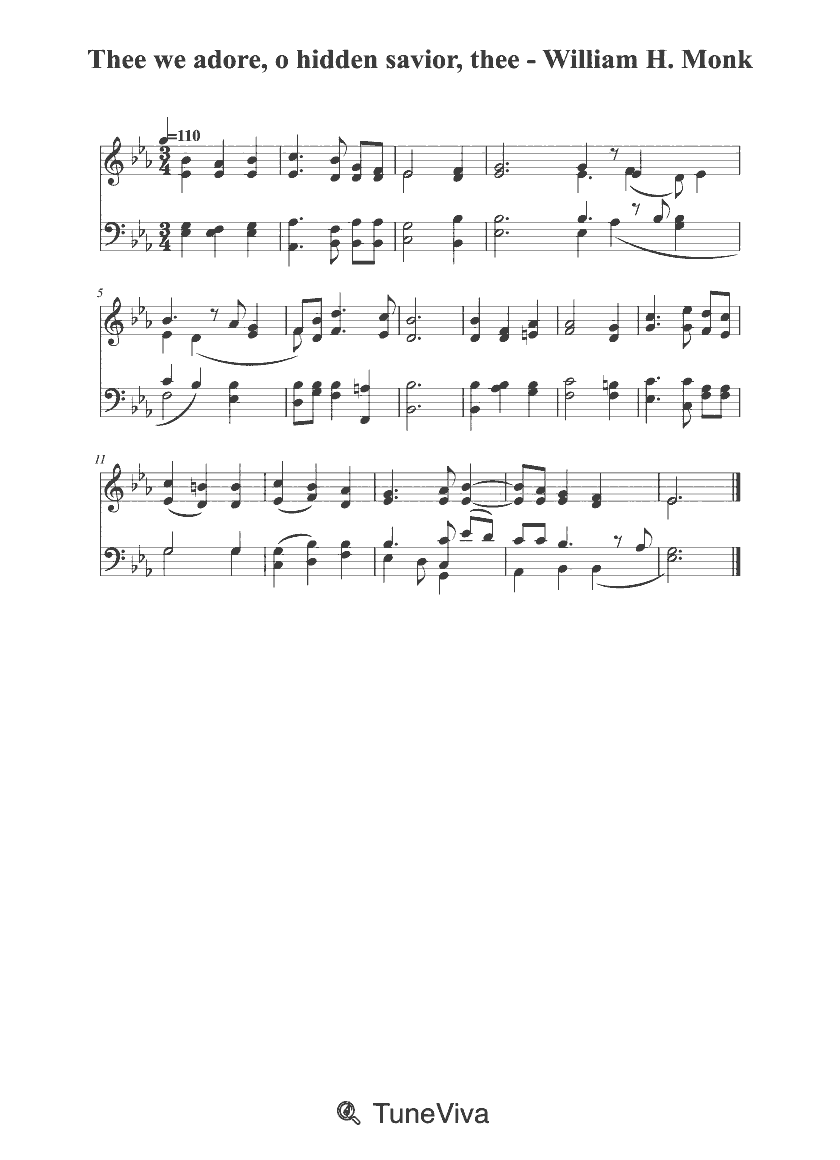
A communion hymn on Thomas Aquinas's Adoro te devote, in the English translation that begins with this line.
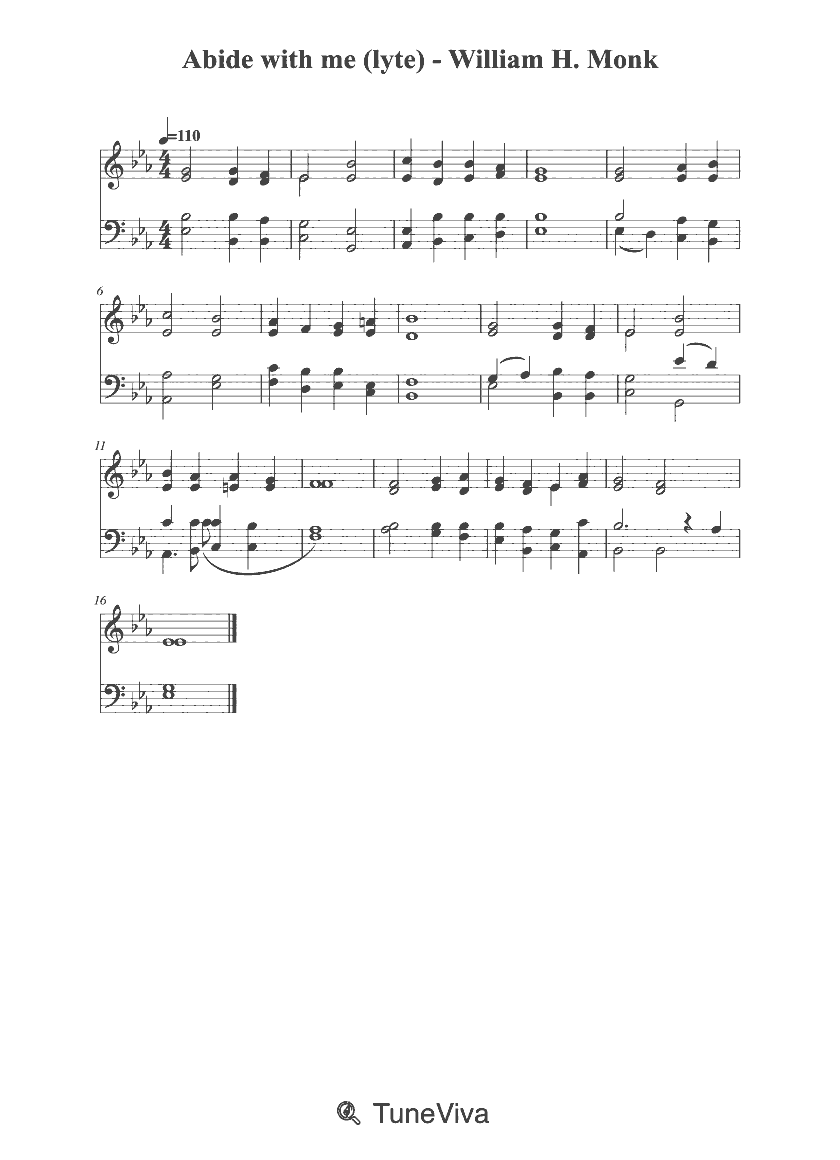
A second setting of Henry Francis Lyte's text, distinct from EVENTIDE; the catalogue does not name the tune.
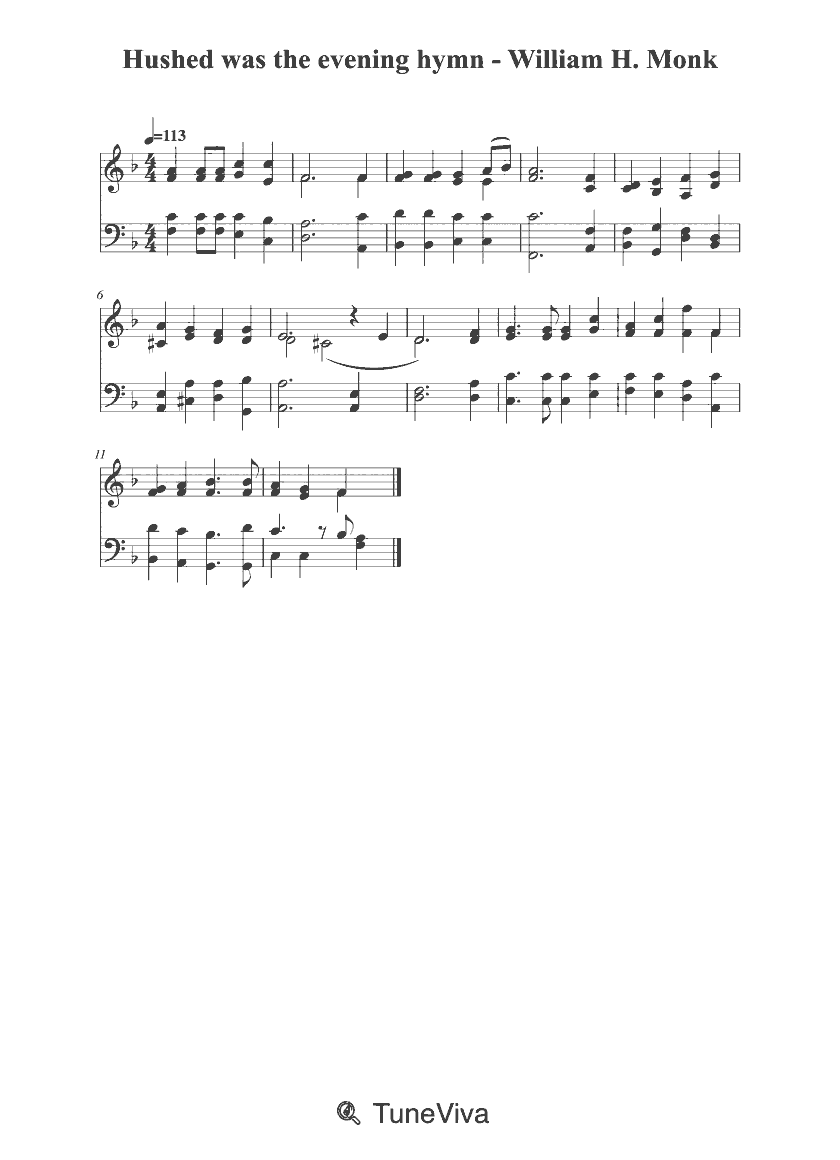
An evening hymn on the boy Samuel in the temple, listed under Monk's name without a tune name in the catalogue.
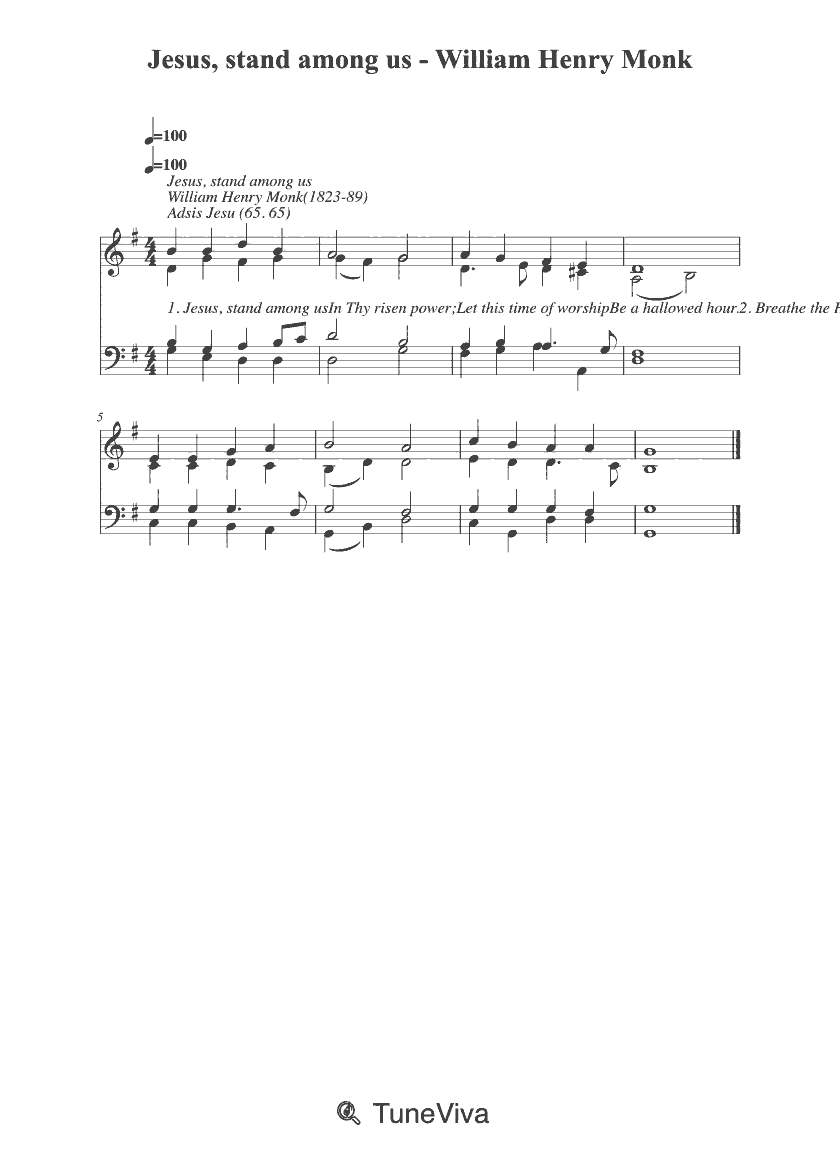
A short hymn for the opening of worship, one of the few entries here that is not tied to a major festival.
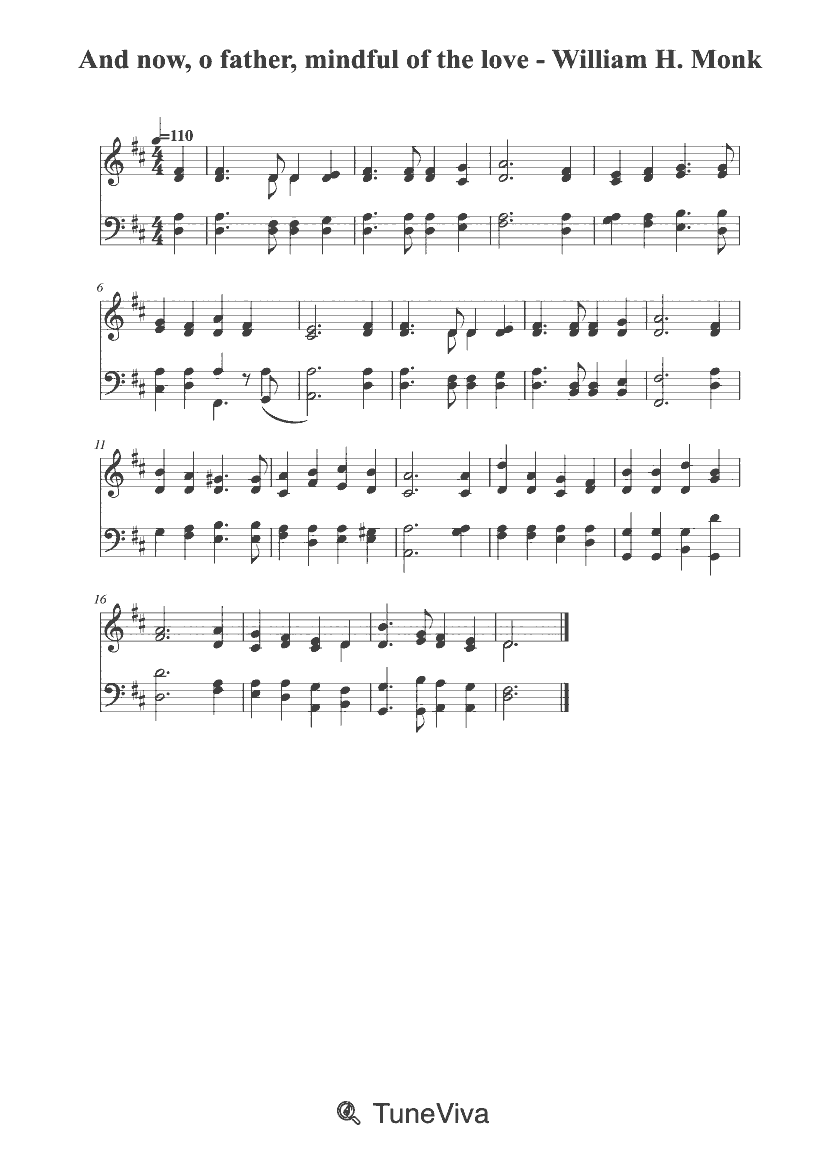
A communion hymn whose text reflects on the atonement; the file gives no tune name or date.
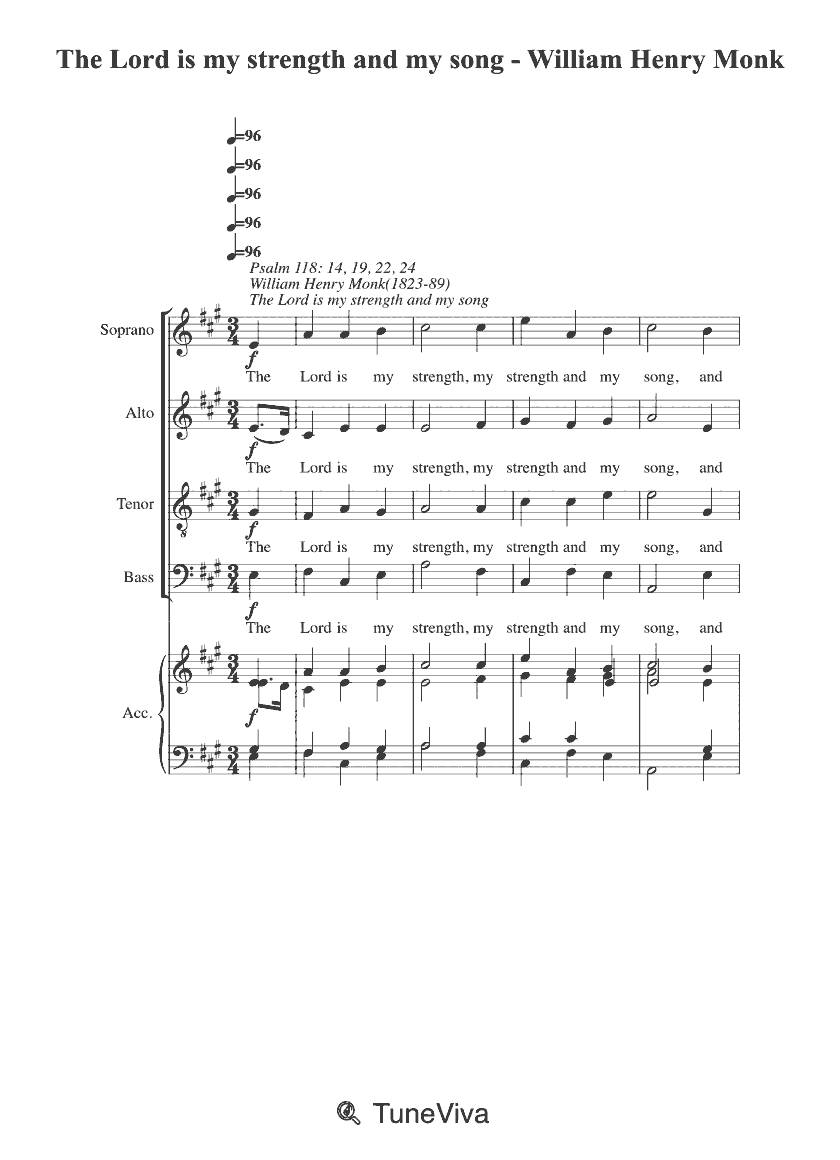
A setting of the song of Moses from Exodus 15, one of the longer texts in the collection.
There are 106, running to about 49 minutes of music and 19,939 notated notes. Ten of them include lyrics.
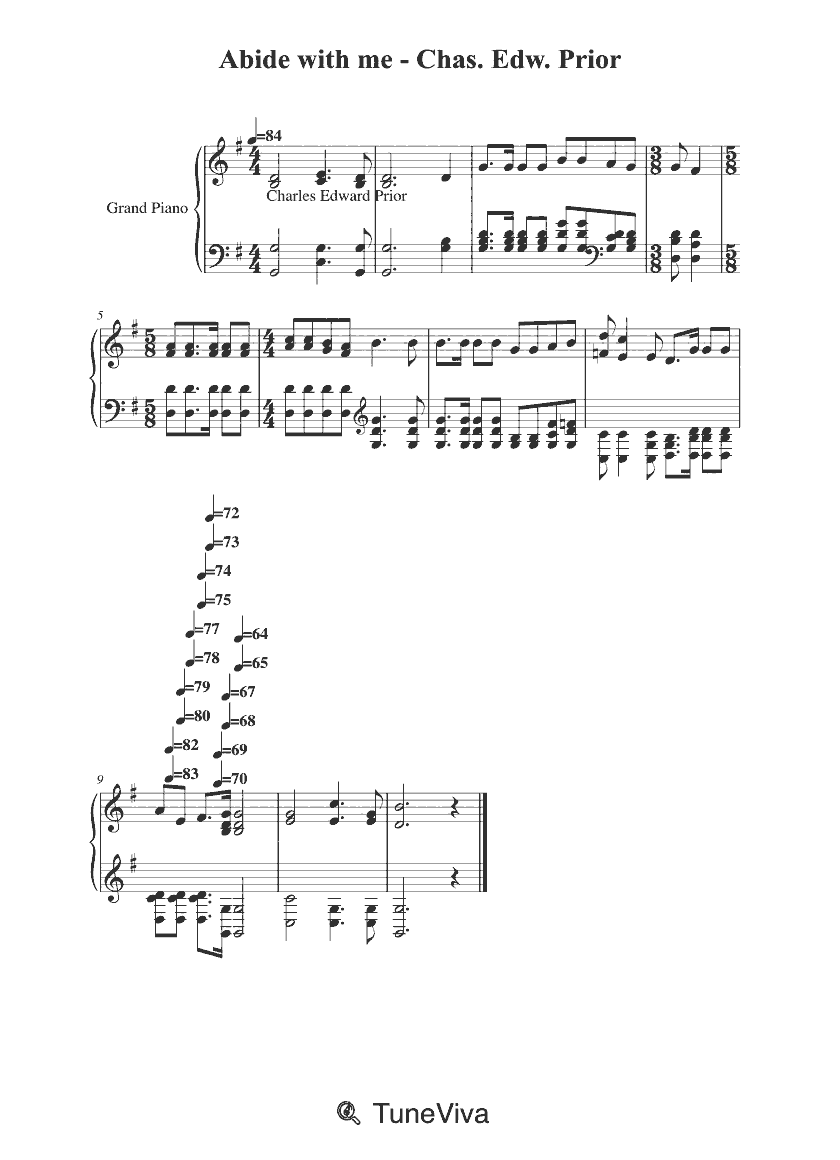
EVENTIDE is the tune; "Abide with me" is Henry Francis Lyte's text, written in 1847. The catalogue also holds a separate entry marked "(lyte)", which is a different setting of the same words.
No. He was a tune composer, arranger and editor. The words here belong to Lyte, Cecil Frances Alexander, Francis Pott's translation of the Easter sequence and others.
The Easter tune VICTORY adapts a Palestrina Gloria Patri, and Monk added the Alleluia that gives the hymn its shape. The catalogue files the result under Monk.
Catalog editions and arrangements attributed to William Henry Monk.