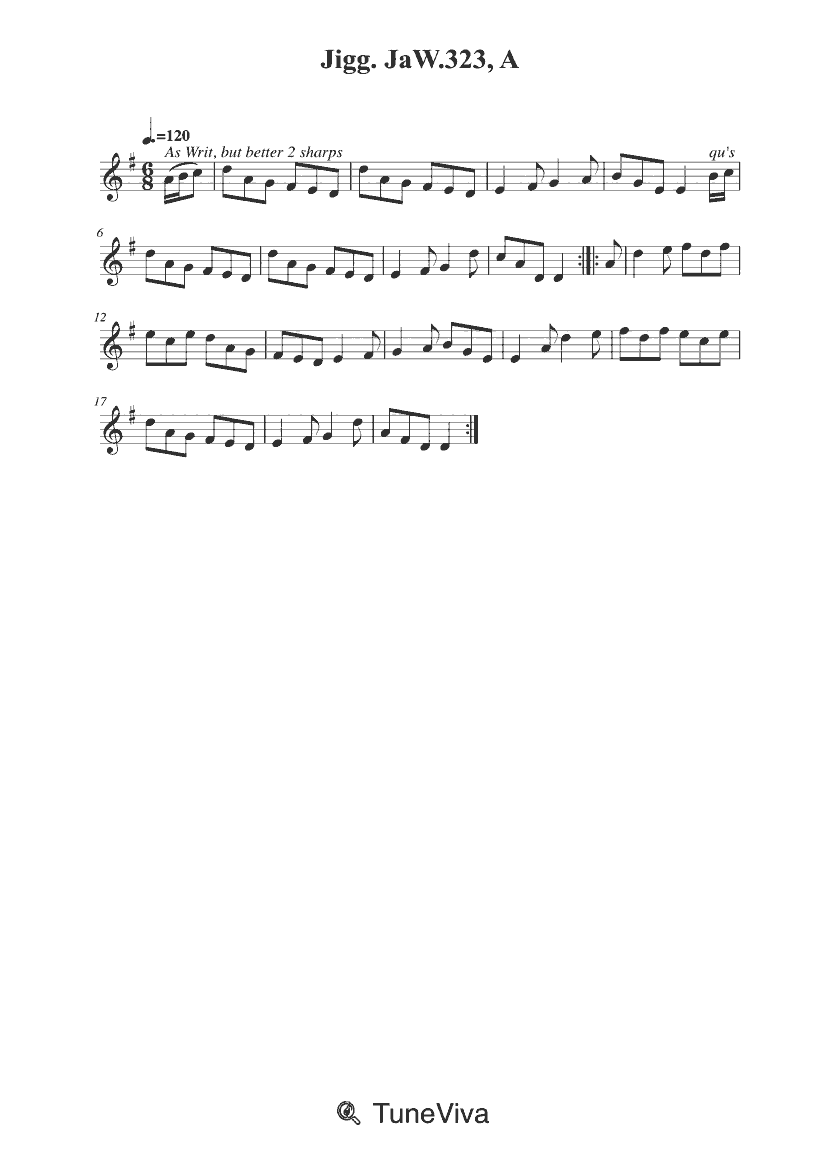
Jigg. JaW.323, A
Misc tunes
17 sec · Score #69336
Open scoreA Jigg appears here as a tune title rather than a single fixed work: three separate scores carry the name, and none of them credits a composer. All three open with a one-sharp key signature, but they differ in metre, note count and marked tempo, so the version you choose will change how the piece sits under your fingers. The notes below set out what each score actually shows so you can pick deliberately rather than by title alone.
Scores 1–20 of 24
Misc tunes
17 sec · Score #69336
Open score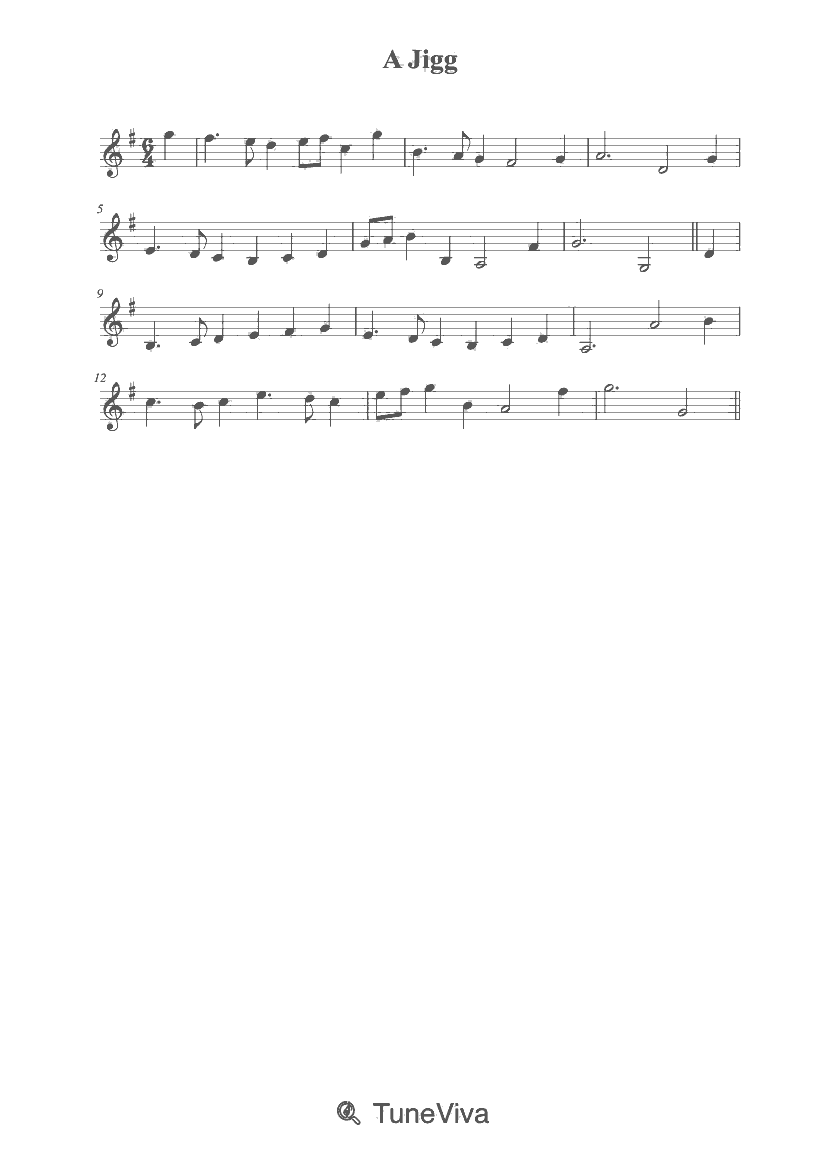
Misc tunes
36 sec · Score #127020
Open score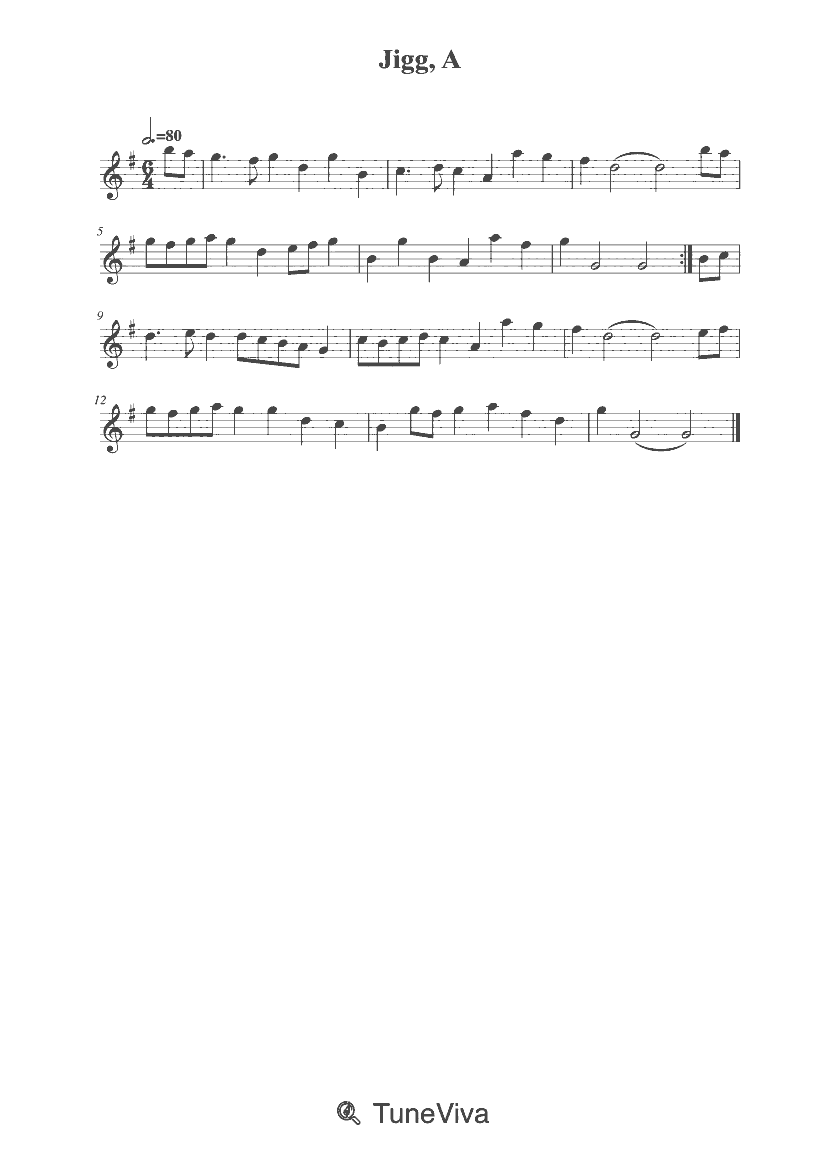
Misc tunes
27 sec
Open score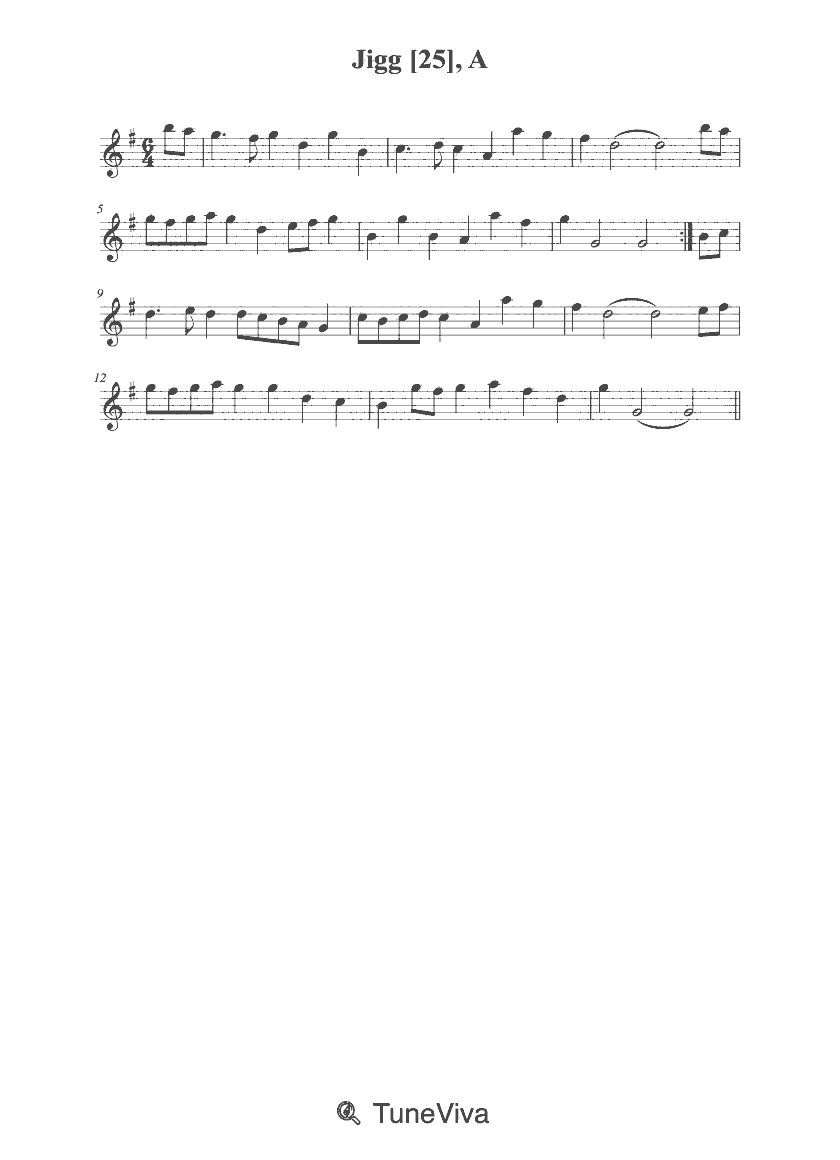
Misc tunes
54 sec
Open score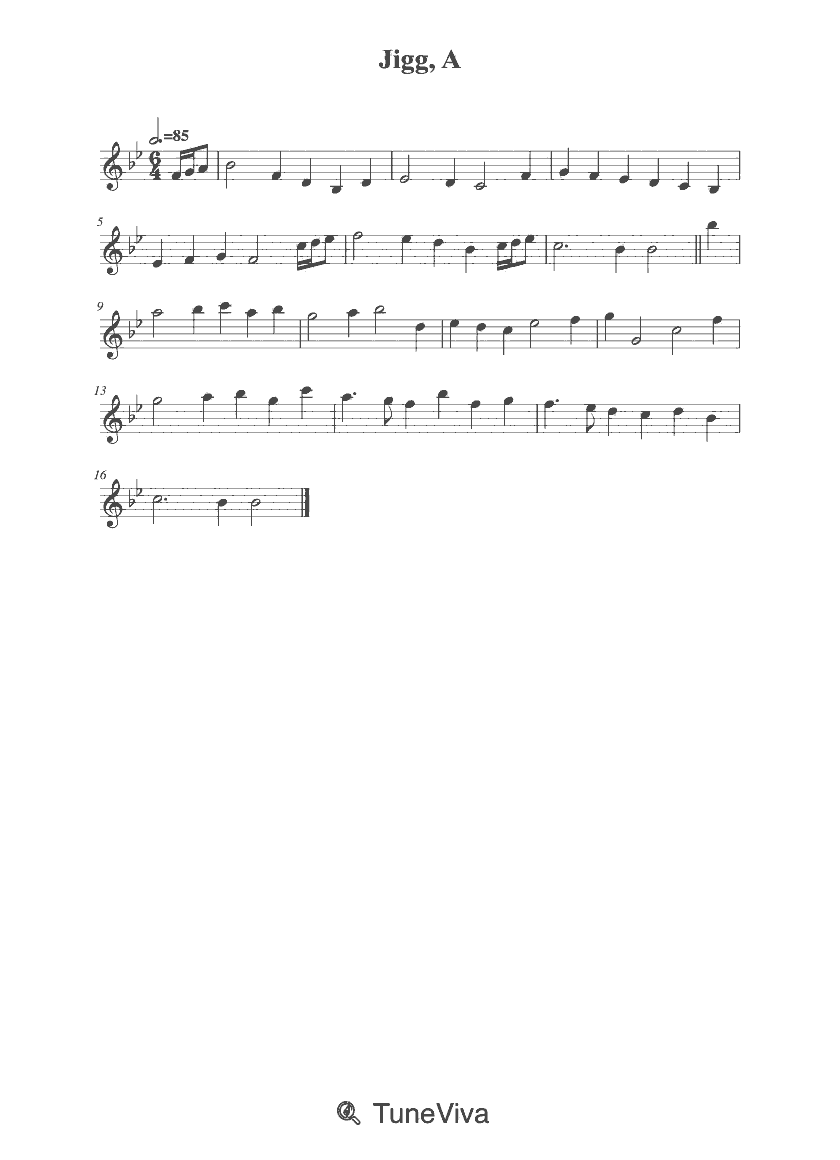
Misc tunes
20 sec
Open score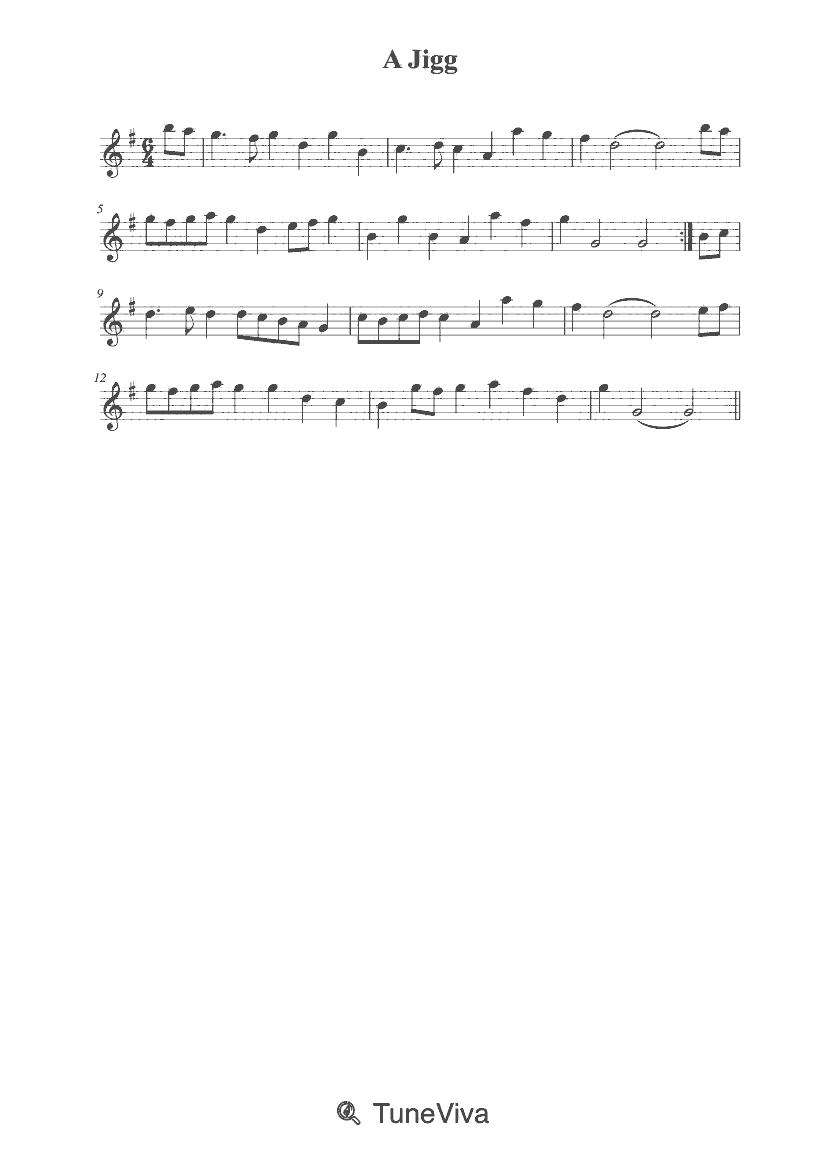
Misc tunes
54 sec
Open score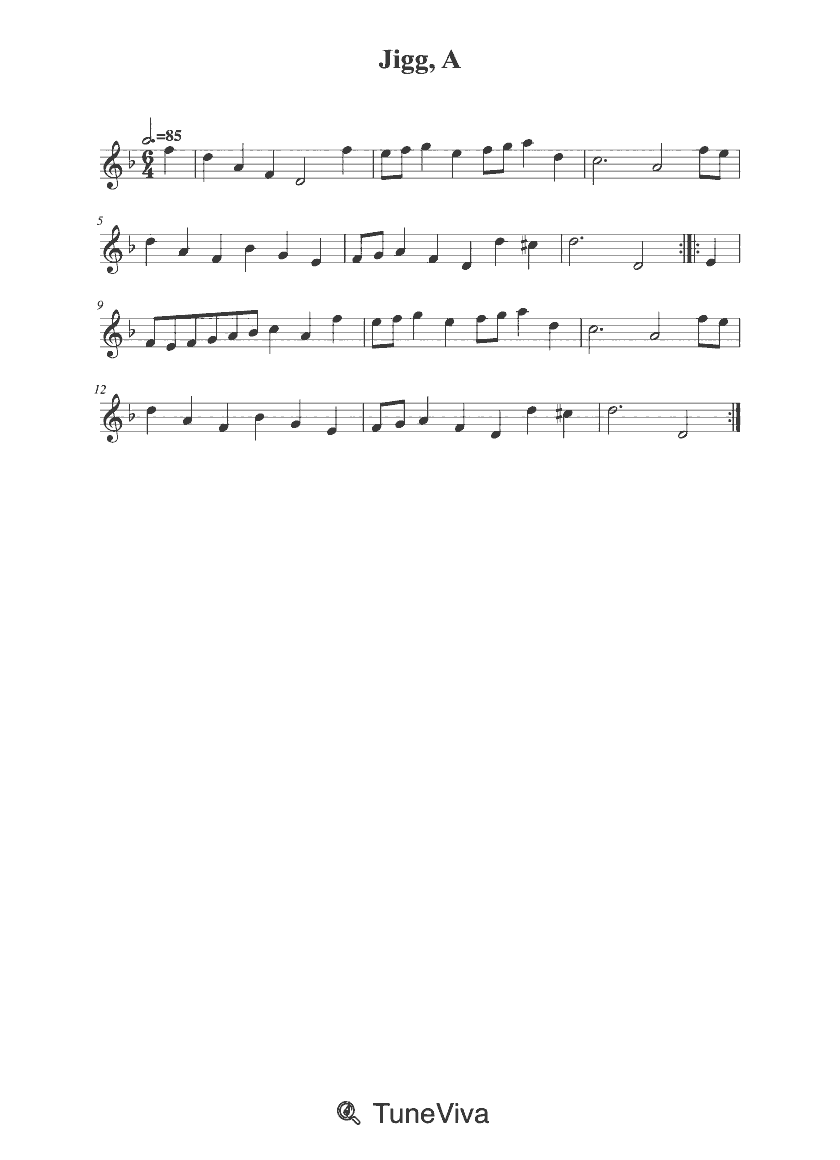
Misc tunes
34 sec · Score #111640
Open score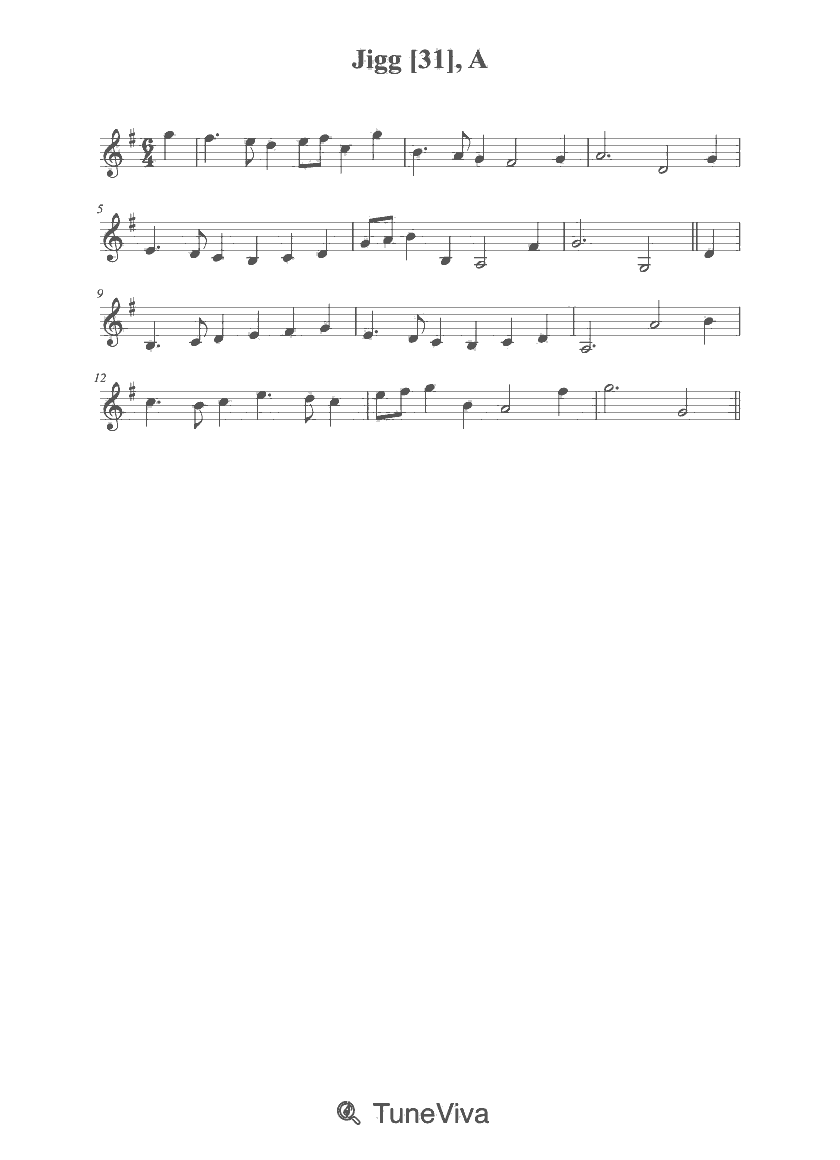
Misc tunes
36 sec
Open score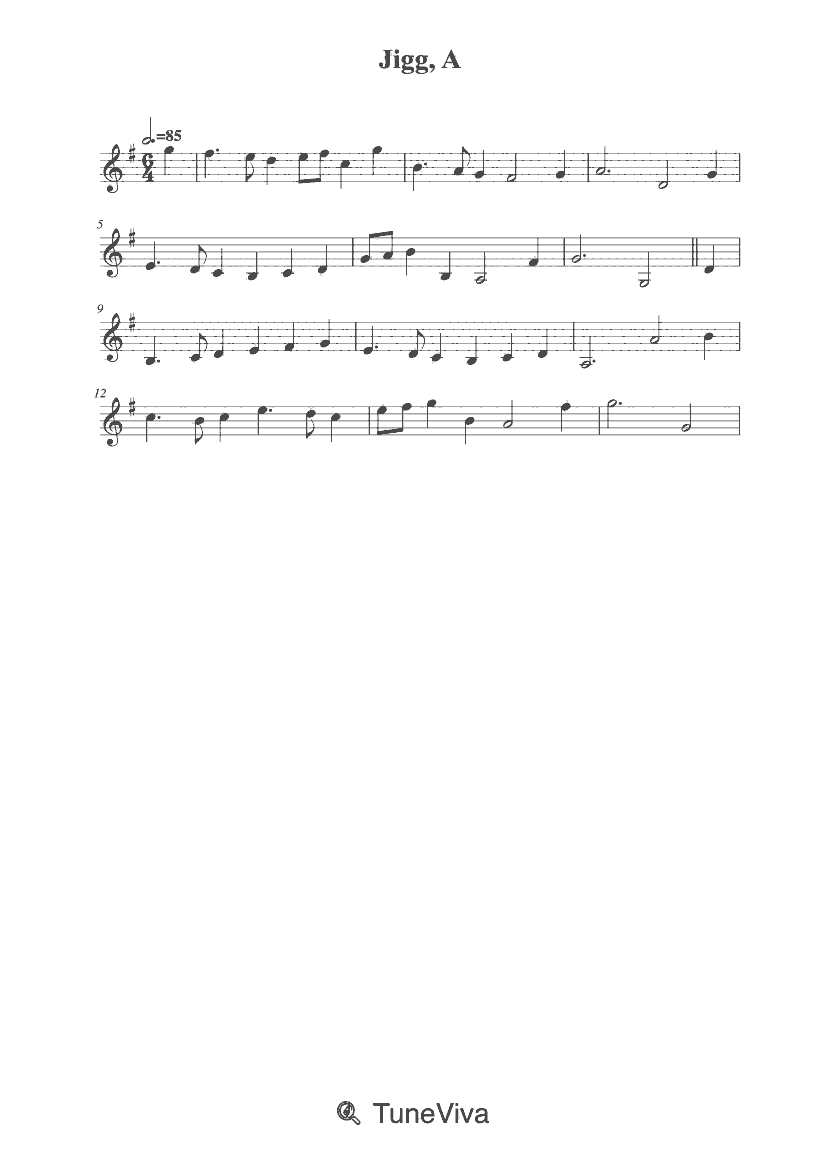
Misc tunes
17 sec
Open score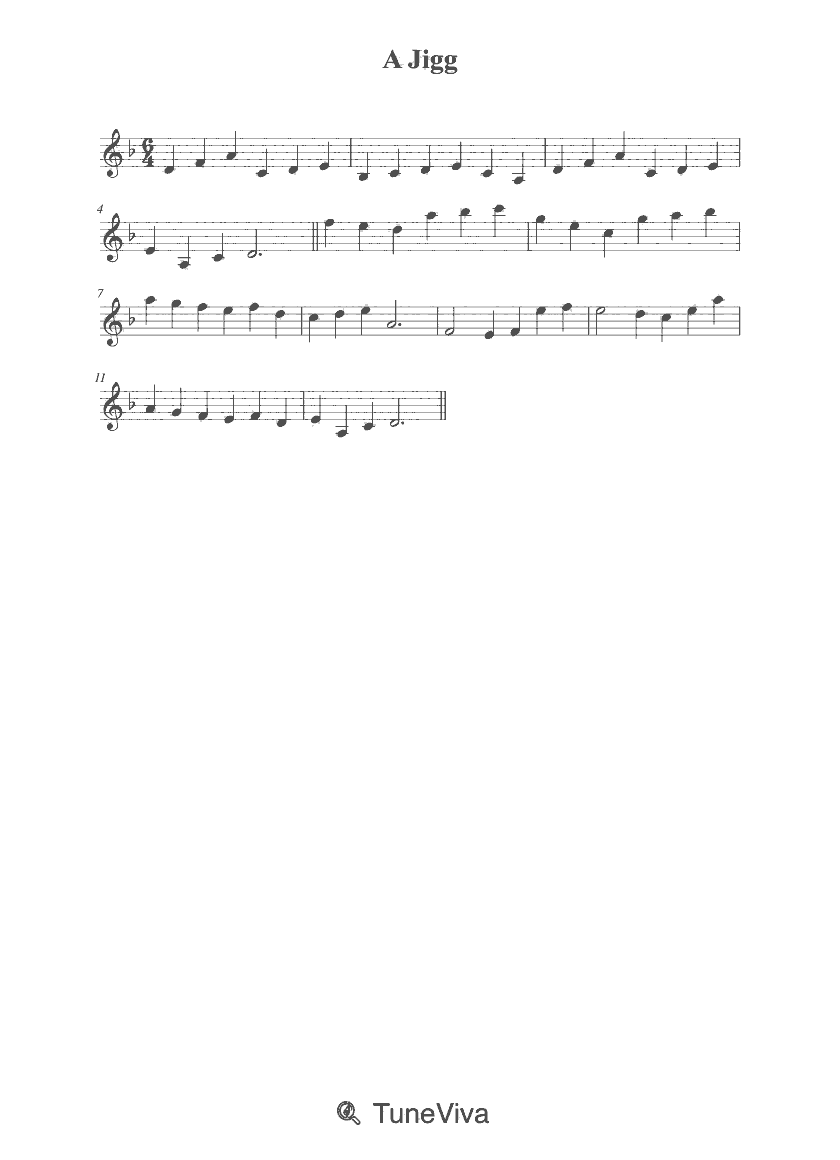
Misc tunes
36 sec · Score #190304
Open score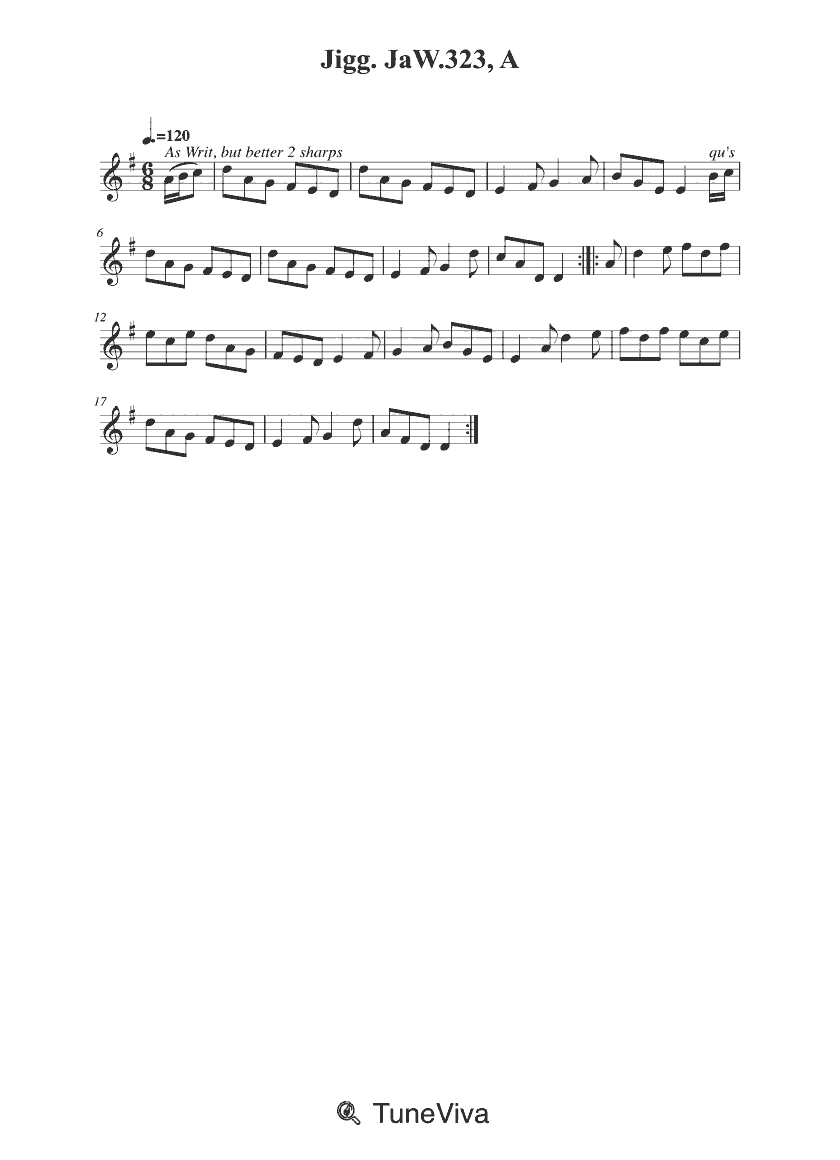
Misc tunes
17 sec · Score #246249
Open score
Misc tunes
43 sec · Score #16756
Open score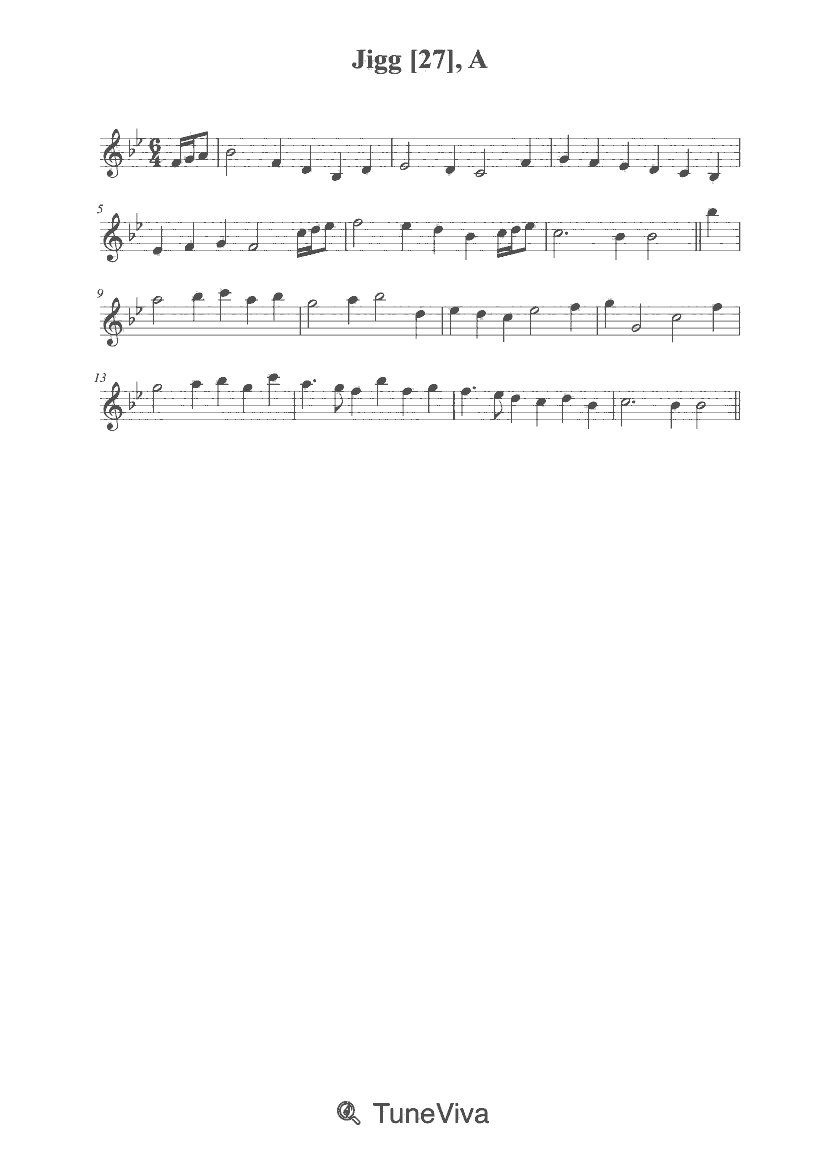
Misc tunes
43 sec · Score #32041
Open score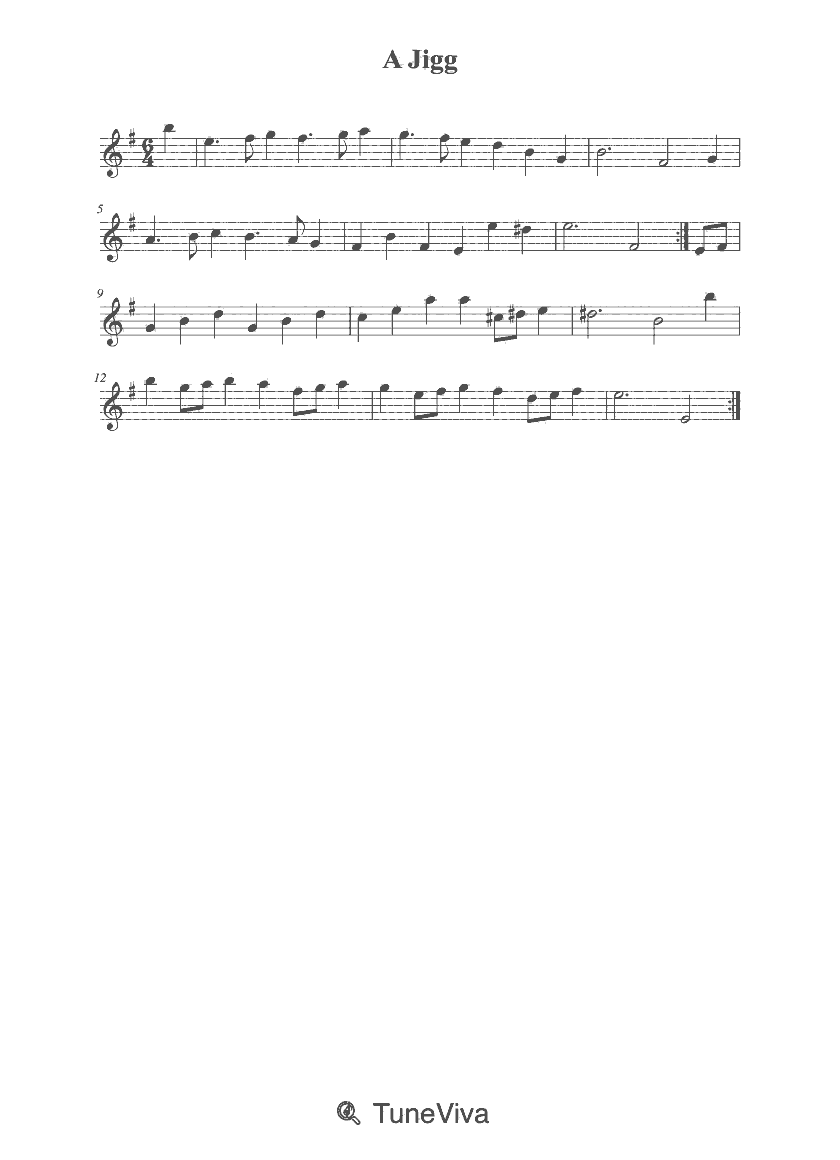
Misc tunes
1 min 30 sec
Open score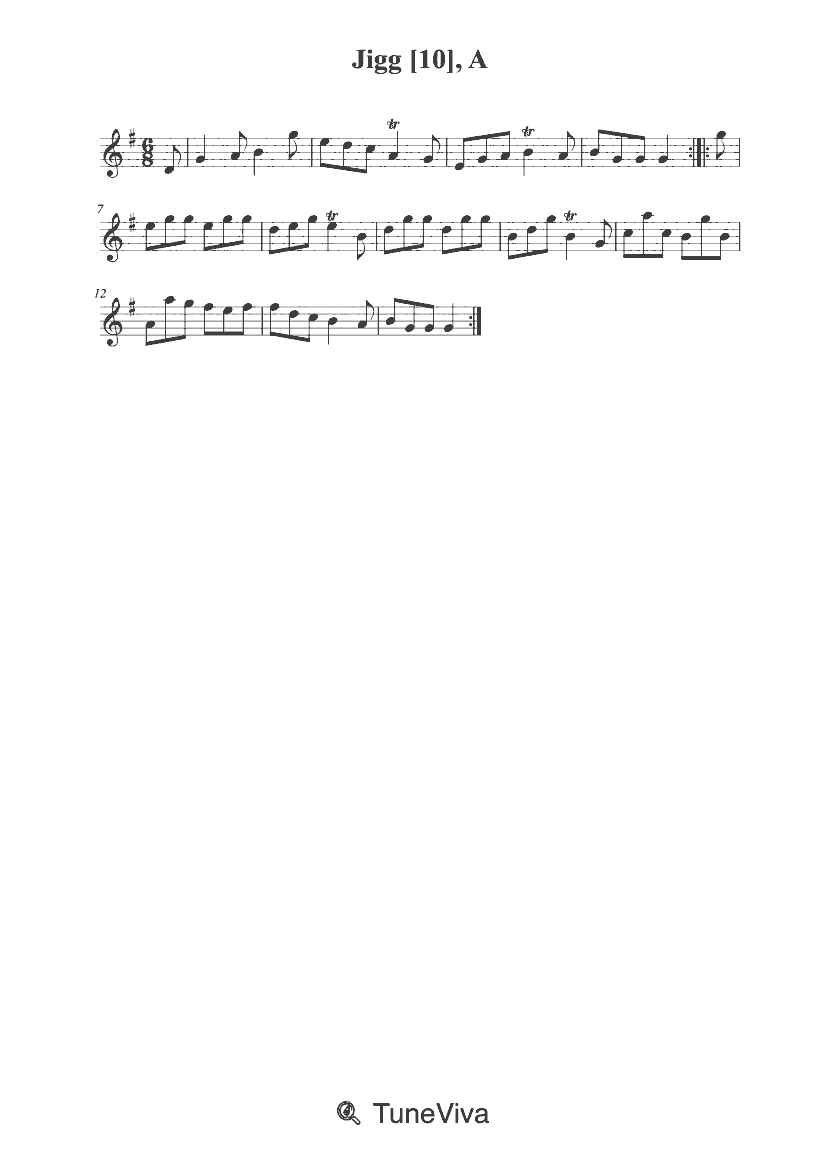
Misc tunes
18 sec
Open score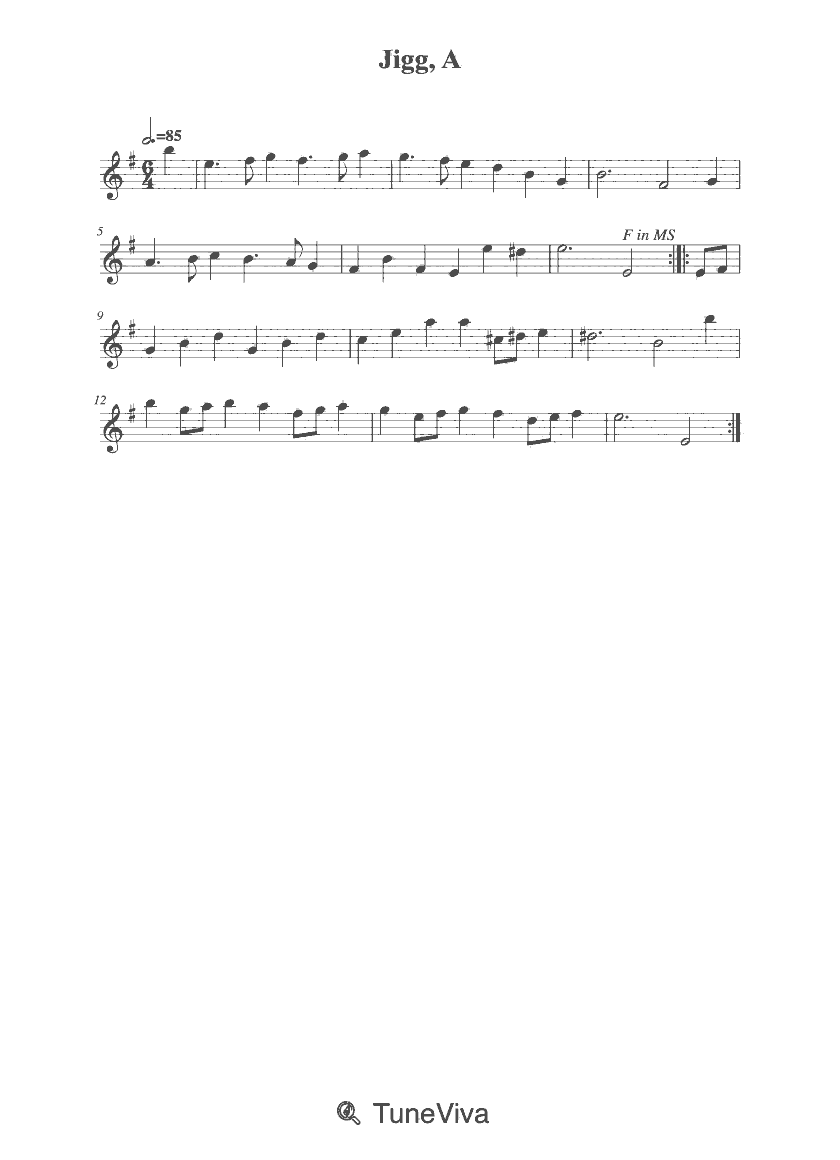
Misc tunes
34 sec · Score #132265
Open score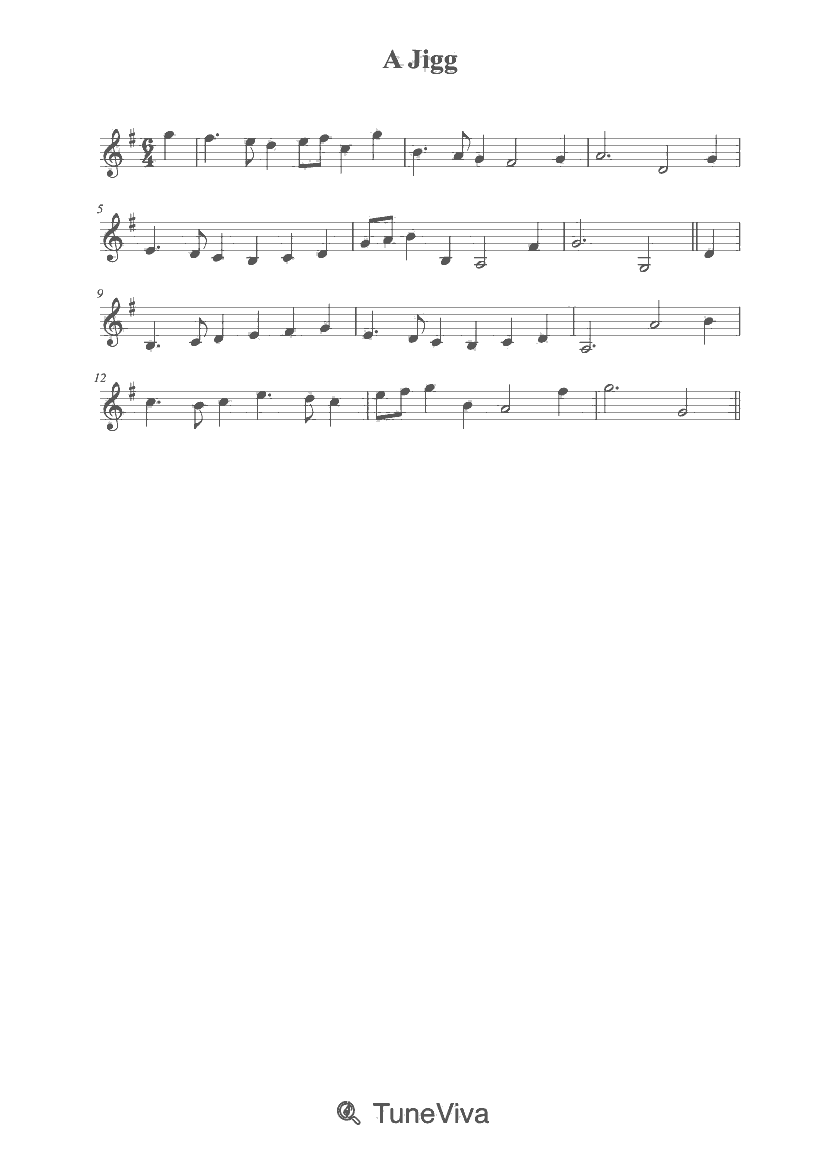
Misc tunes
36 sec · Score #178284
Open score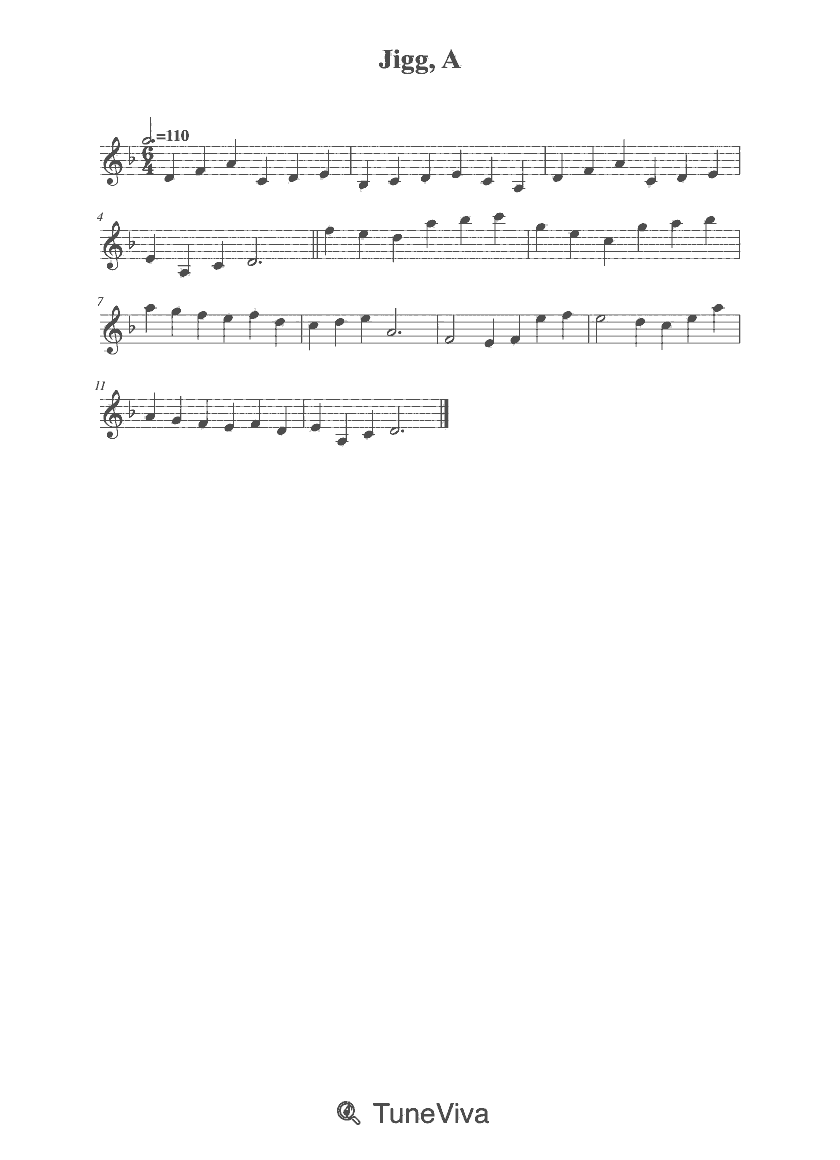
Misc tunes
13 sec
Open score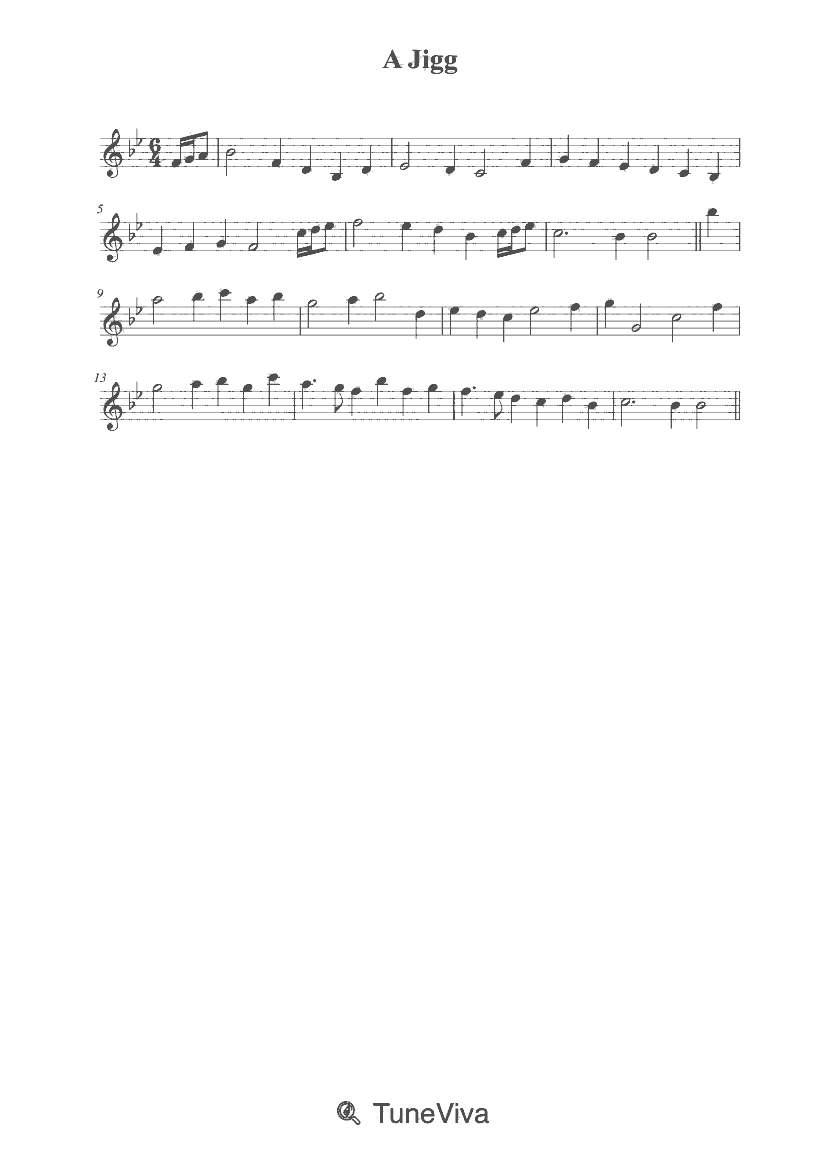
Misc tunes
43 sec
Open score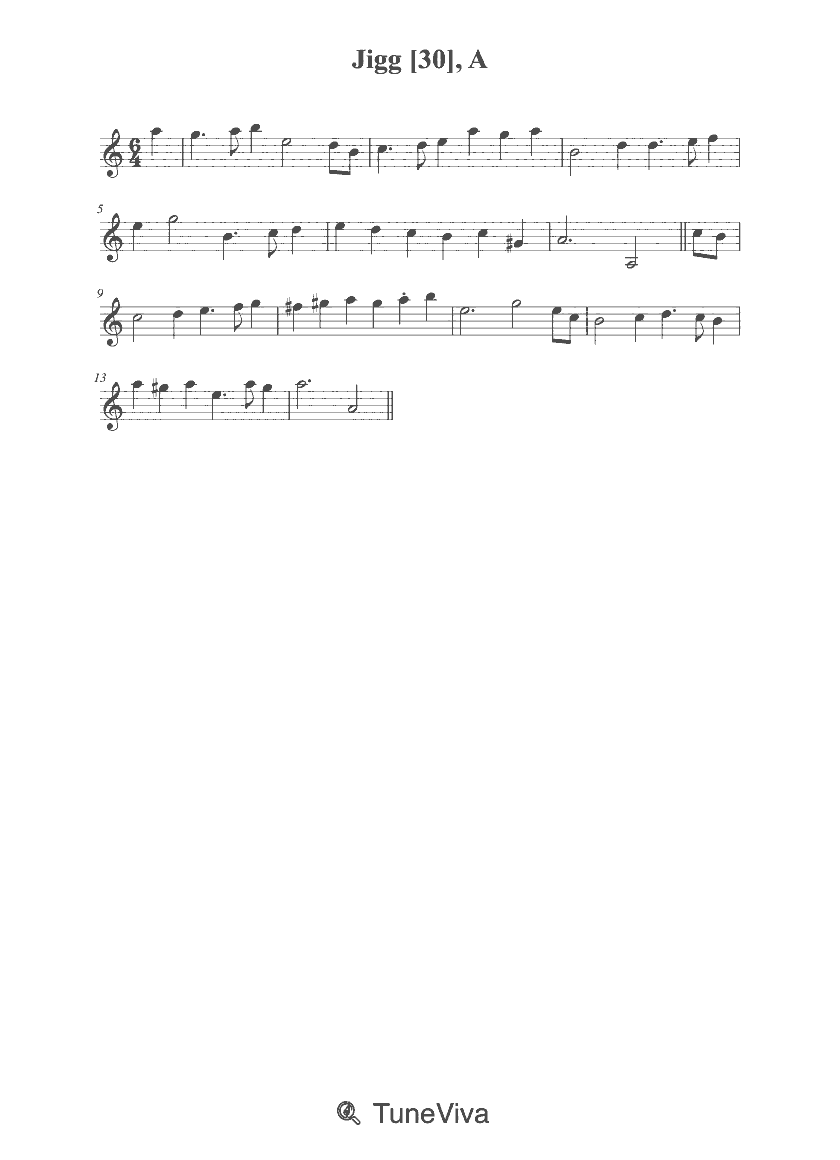
Misc tunes
36 sec
Open scorePage 1 of 2
The scores listed as A Jigg, Jigg, A and Jigg. JaW.323, A all begin with a one-sharp key signature, which points to G major and suggests a shared tune family. The resemblance stops there: two are notated in 6/4 and one in 6/8, and the note counts range from 60 to 182. Whether these are three settings of one melody or different tunes that happen to share a title cannot be settled from the listings, so compare the opening bars before deciding they are interchangeable.
Both signatures group six units to the bar, but at different pulse levels: 6/8 is normally counted in two broad beats built from dotted crotchets, while 6/4 is counted in six crotchets, or two dotted minims. A tune written in 6/4 therefore tends to move at a slower felt pulse than the same tune in 6/8. If you are playing with other musicians, check which metre their copy uses before counting in, because the two will not line up bar for bar.
The 6/8 score opens at 180 BPM and the 6/4 score titled Jigg. JaW.323, A opens at 240 BPM; the third score shows no opening tempo. These figures describe the first bar of each score only, and they differ between settings, so treat them as a place to begin rather than a fixed target. The duration and note-count figures shown with each score vary too widely to be a reliable guide to how long a performance lasts.
No composer, arranger or instrument is named for any of the three scores, and no genre is assigned to them. The spelling variants — A Jigg, Jigg, A and Jigg. JaW.323, A — are the only clue to how the pieces relate, and the element 'JaW.323' is not expanded anywhere in the listings. If you need a particular composer's setting or a named collection, this title on its own will not identify it.
Catalogue duration 17 sec. Opening key signature: 1 sharp (G major). Opening time signature: 6/8. Opening tempo: 180 BPM.
Catalogue duration 36 sec. Opening key signature: 1 sharp (G major). Opening time signature: 6/4.
Catalogue duration 27 sec. Opening key signature: 1 sharp (G major). Opening time signature: 6/4. Opening tempo: 240 BPM.
A Jigg carries no composer credit in any of the three scores available; each is listed under the name 'Misc tunes' with the composer field empty. The tune is best treated as unattributed rather than assigned to a named writer.
The three A Jigg scores share a one-sharp key signature but differ in metre, with two in 6/4 and one in 6/8, and in length, from 60 to 182 notes. That pattern is consistent with different settings of one tune, but it could equally be different tunes sharing a title, so compare the first bars before treating them as versions of the same melody.
All three scores of A Jigg open with a one-sharp key signature, which indicates G major or its relative E minor. Nothing in the listings records a later key change, so G major is the reasonable working assumption when reading any of these scores.
Two of the A Jigg scores are notated in 6/4 and one is in 6/8. The difference affects the feel, since 6/8 is generally counted in two broad beats and 6/4 in six, so check the metre printed on your copy before playing with others.
Opening tempos of 180 BPM for the 6/8 setting and 240 BPM for the 6/4 setting are marked on two of the three A Jigg scores, while the third gives none. Those markings describe only the opening of each score and differ between versions, so use them as a starting point and adjust to your instrument and group.