
Robert Burns - A Man's a Man For a' That
Robert Burns
32 sec · Score #217144
Open score“A Man's a Man for A' That” appears in the available scores with Robert Burns’s name in two titles and “Burns Set” in a third. The settings differ in key and meter: two open in D major with a 4/4 signature, while one has no sharps or flats and a 2/2 signature. The titles alone do not establish whether Burns supplied the words, the melody, or both, so compare the credit and the notation before choosing a score.
Scores 1–20 of 29
Robert Burns
32 sec · Score #217144
Open score
Burns Set
3 min 10 sec · Score #204175
Open score
Robert Burns
32 sec · Score #205562
Open score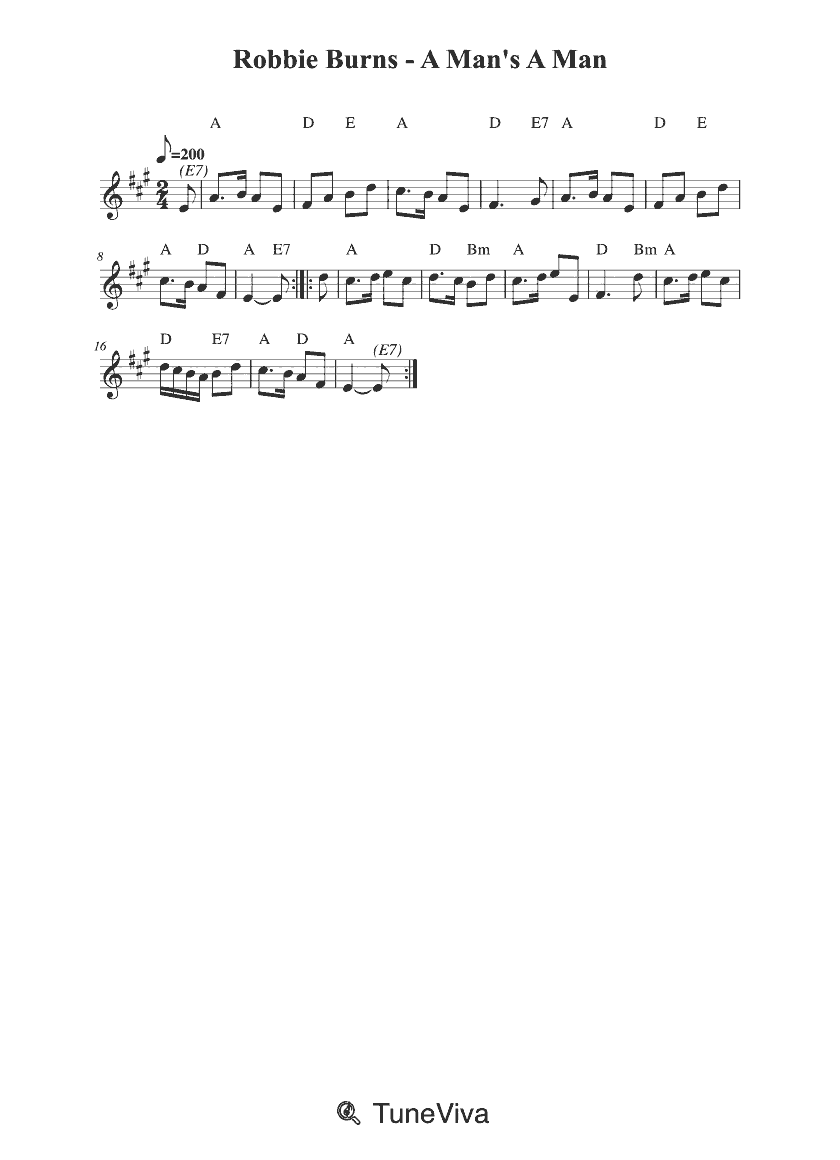
Robbie Burns
38 sec
Open score
Misc tunes
32 sec · Score #247881
Open score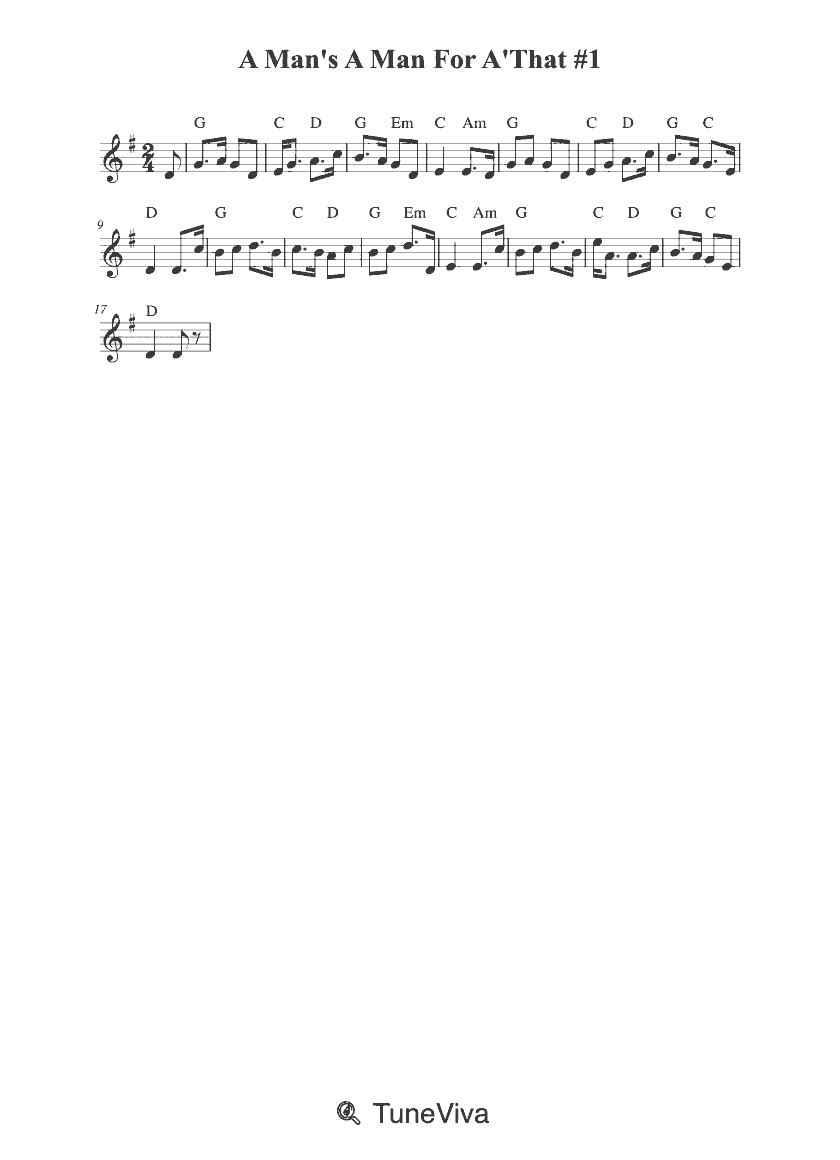
Joe Buchanan's Scottish Tome - Page 063.4
16 sec
Open score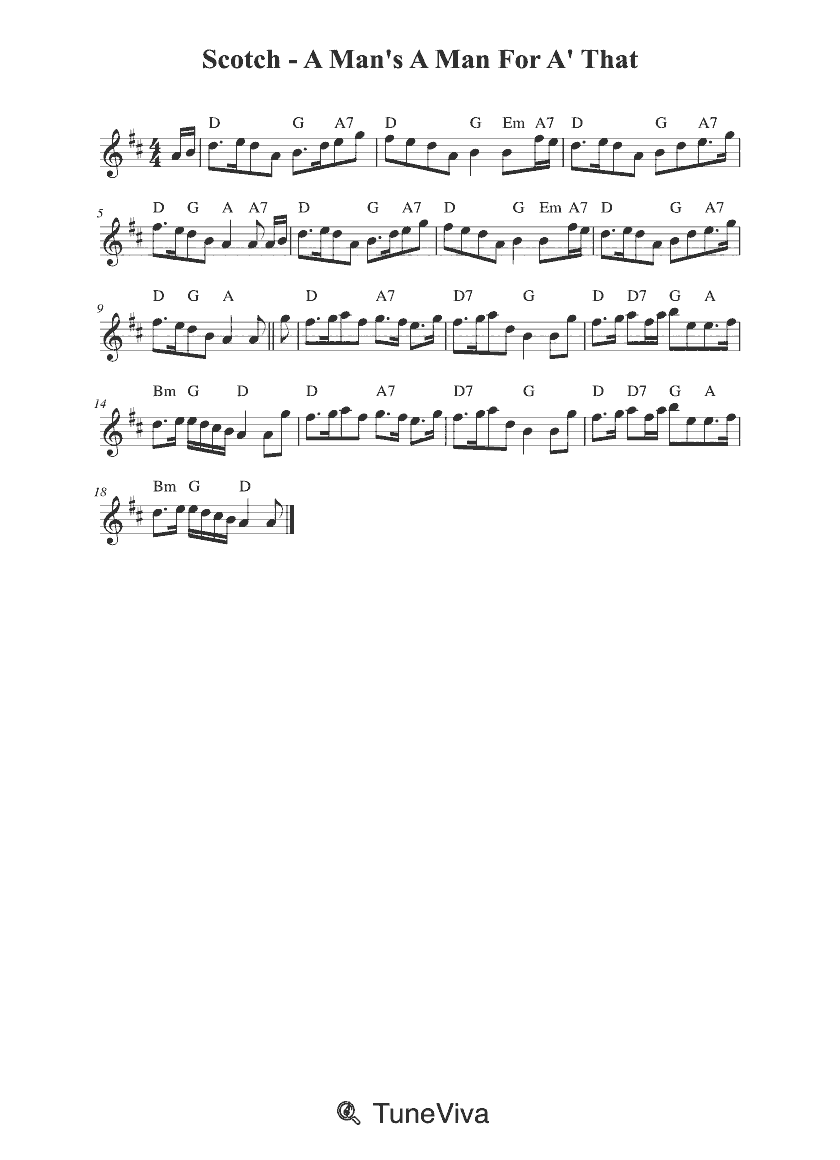
Scotch
32 sec
Open score
Burns Set
3 min 10 sec · Score #105497
Open score
Misc tunes
32 sec · Score #144080
Open score
Misc tunes
32 sec
Open score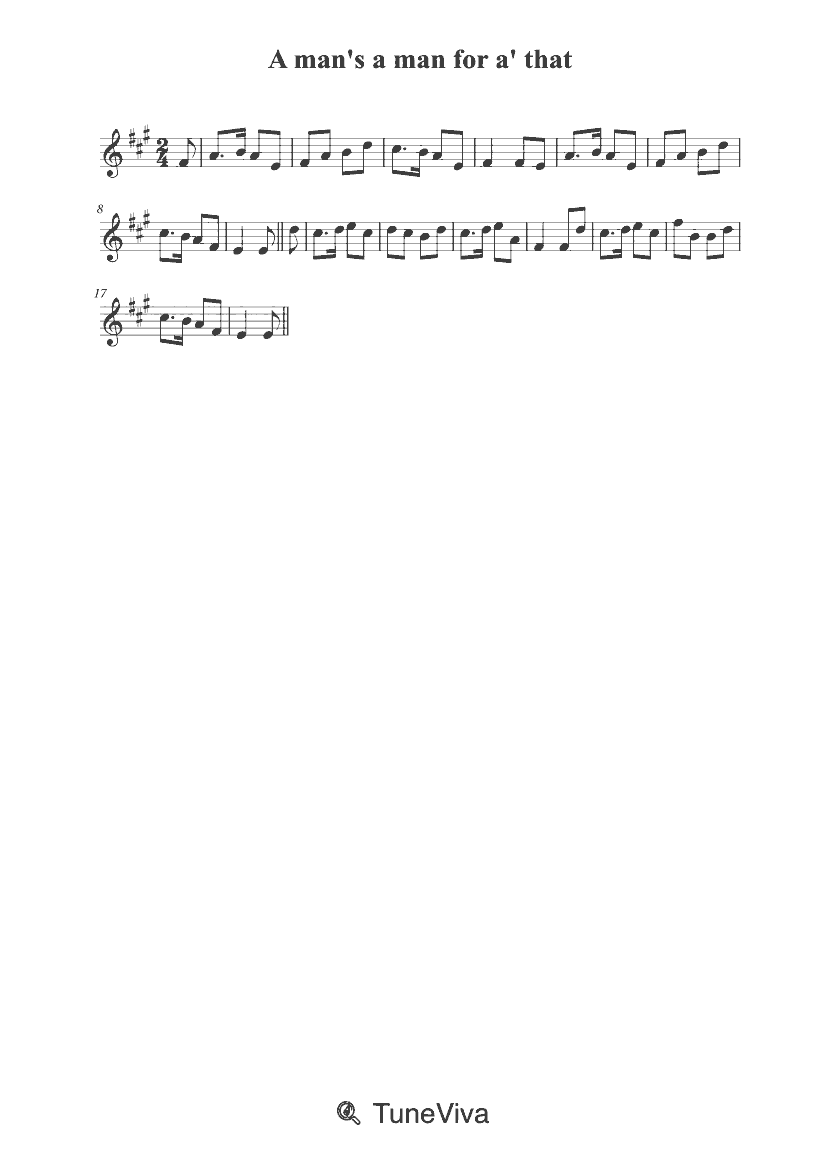
Misc tunes
16 sec · Score #25728
Open score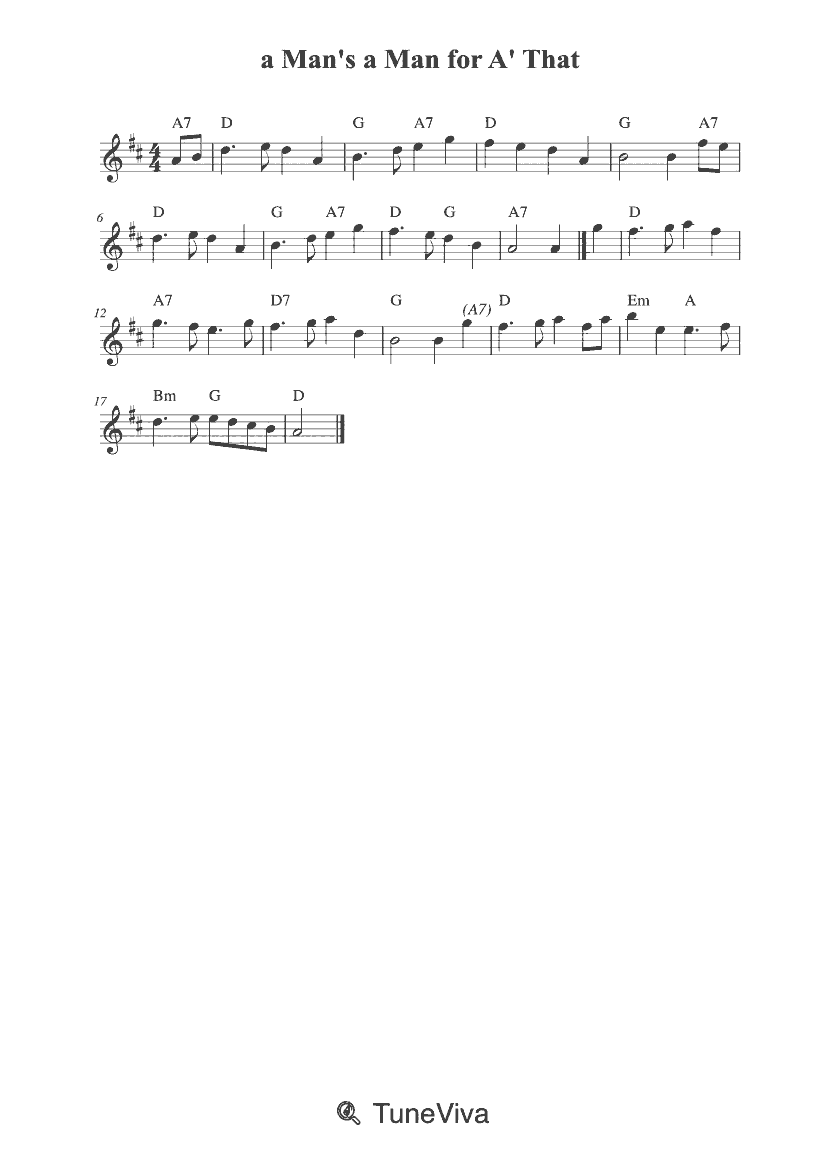
Misc tunes
32 sec · Score #153850
Open score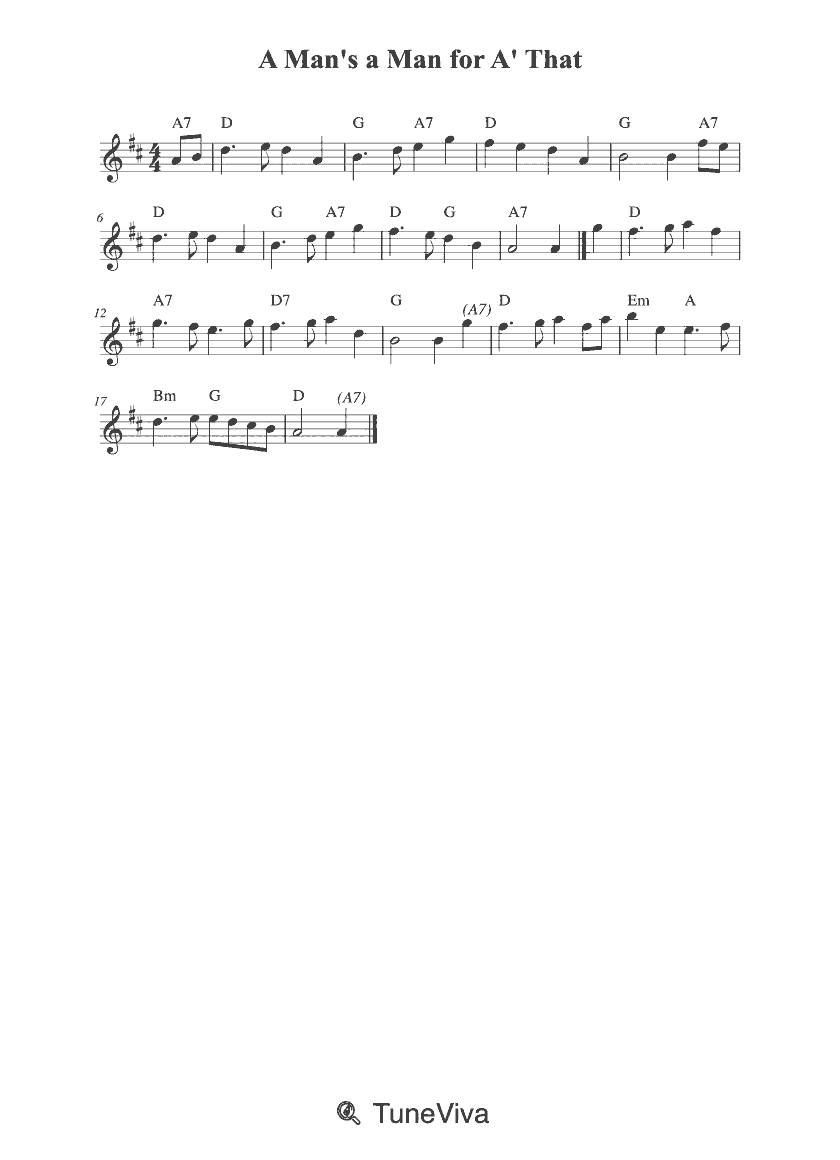
Misc tunes
32 sec · Score #31409
Open score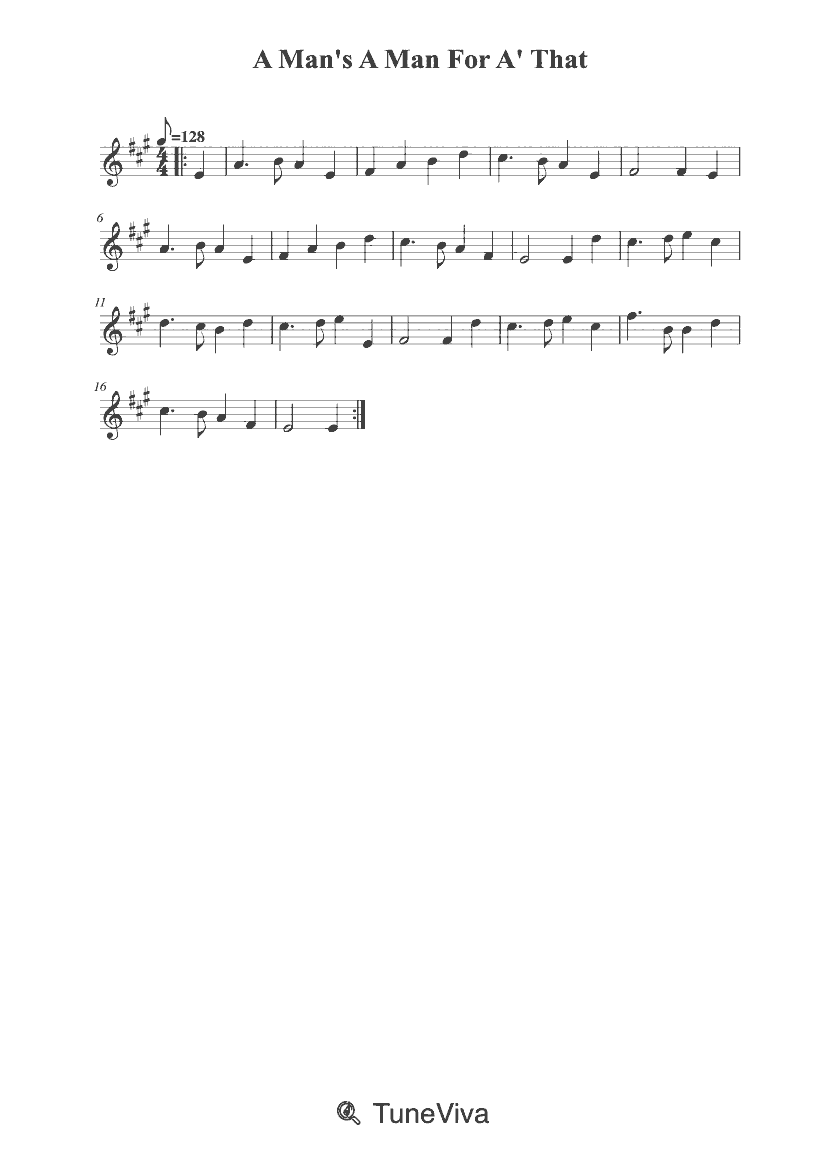
Misc tunes
2 min 0 sec
Open score
anon.
44 sec
Open score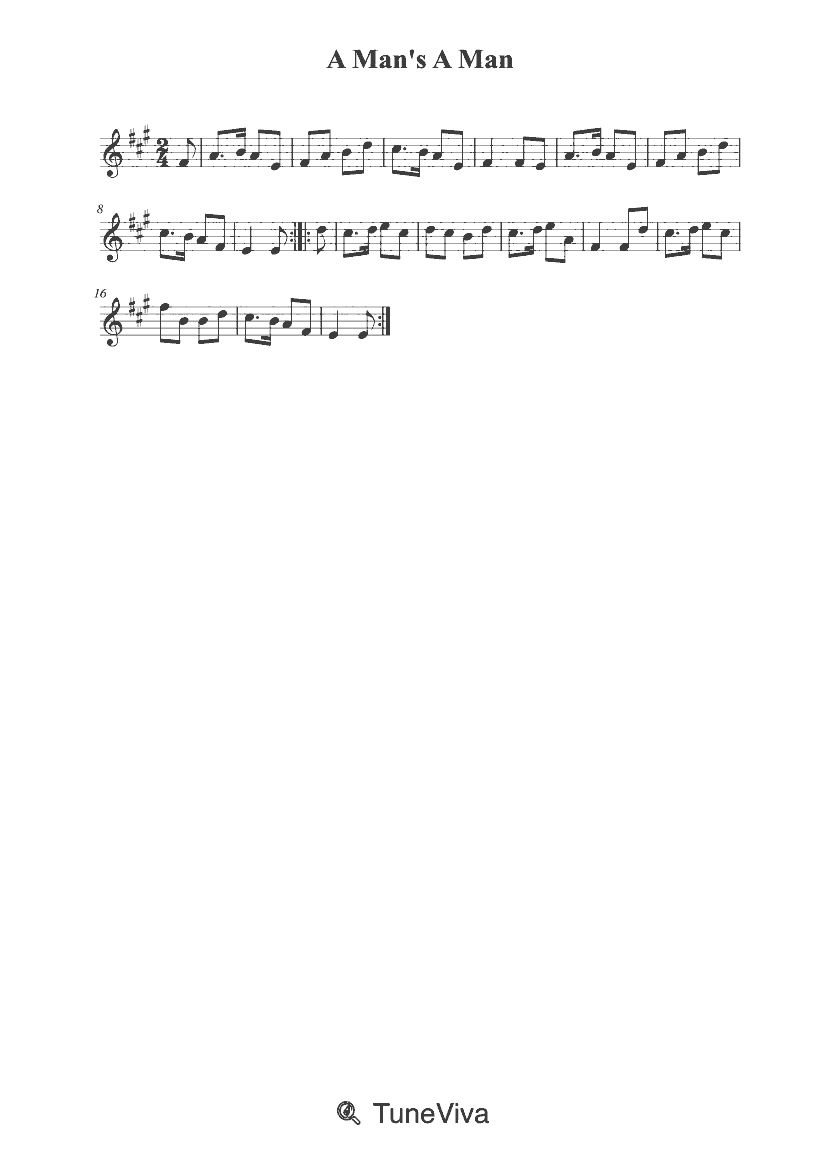
Misc tunes
32 sec · Score #54773
Open score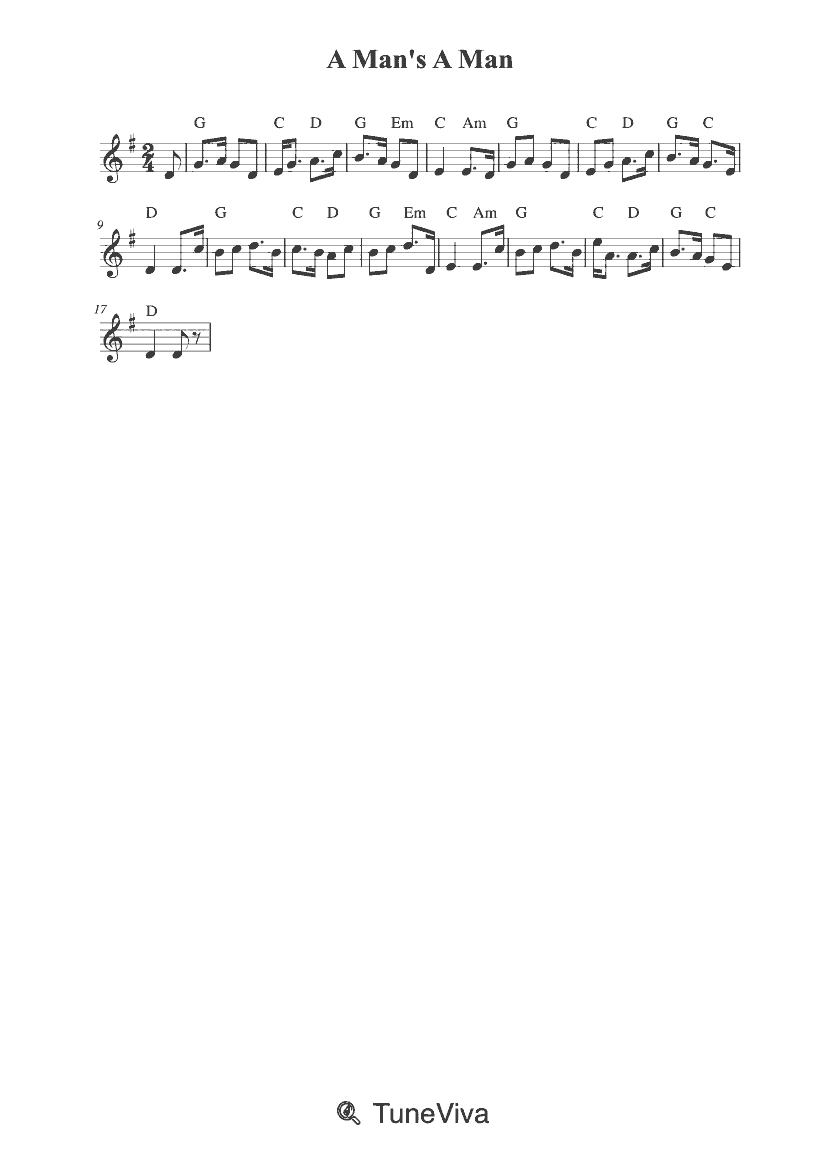
Misc tunes
16 sec
Open score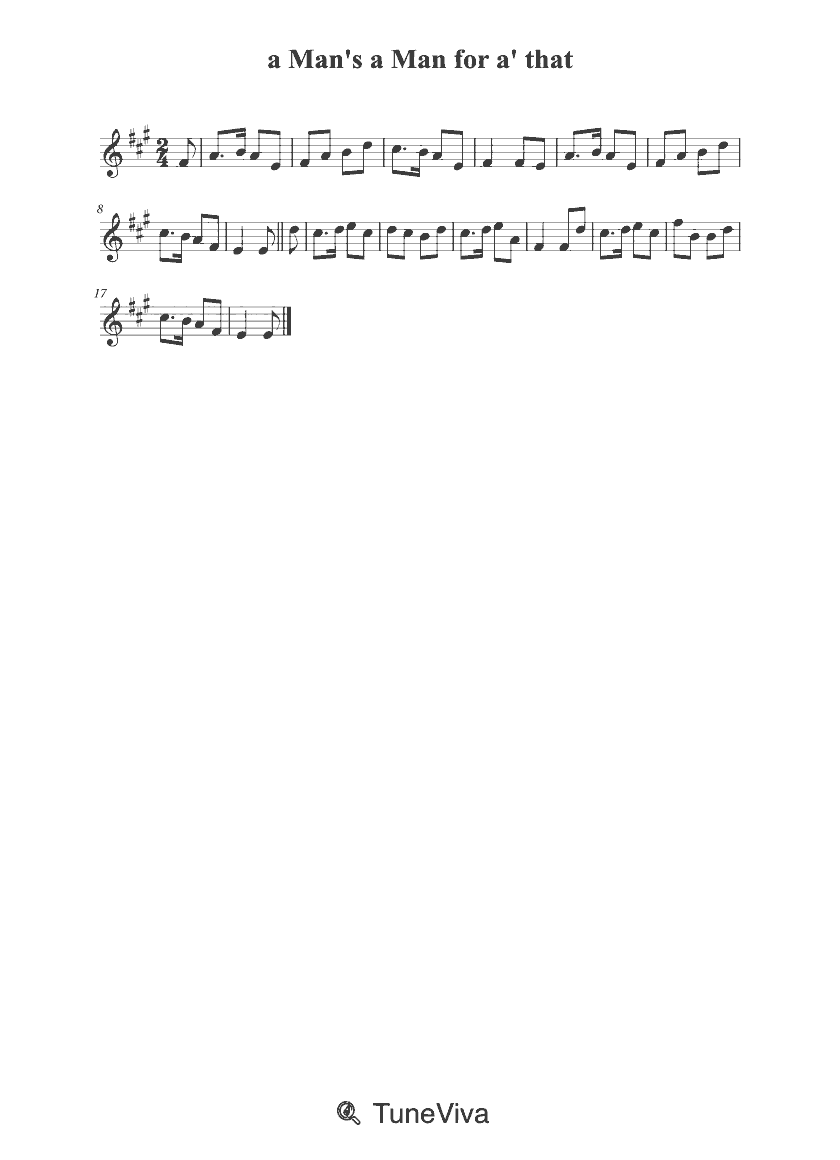
Misc tunes
16 sec · Score #113377
Open score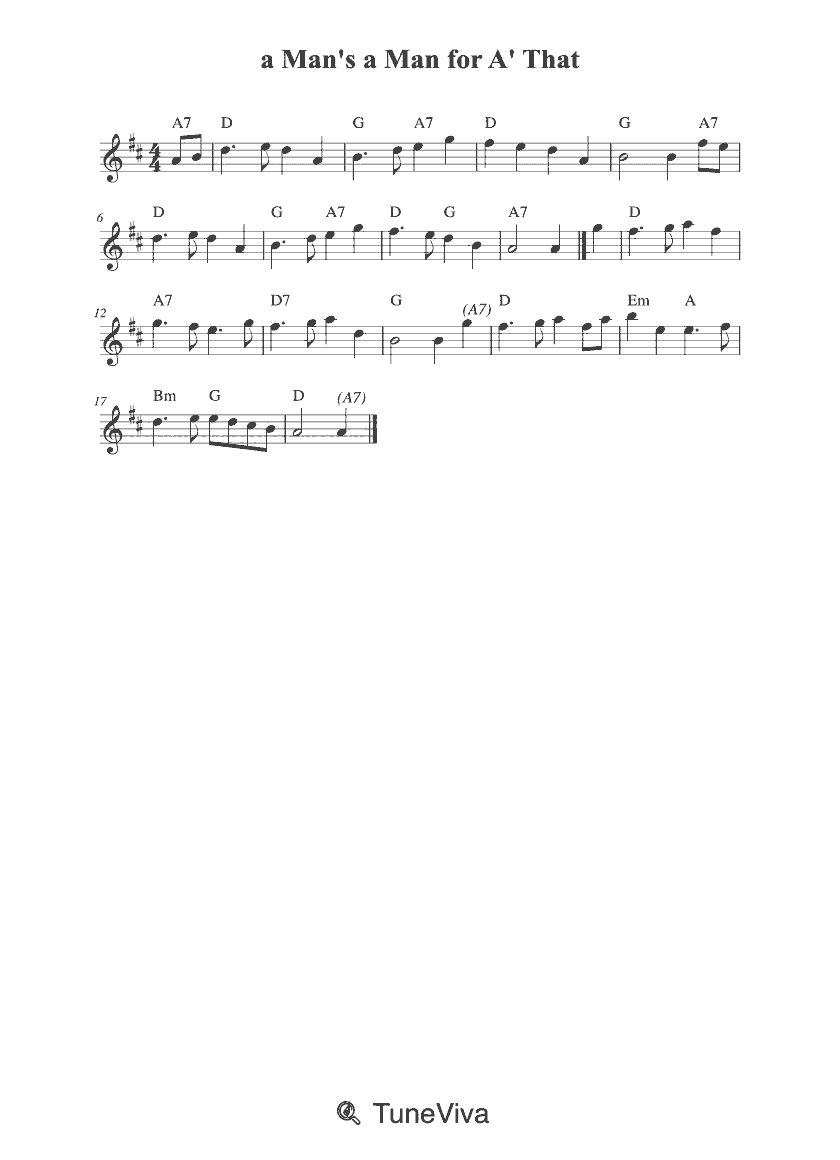
Misc tunes
32 sec · Score #145210
Open score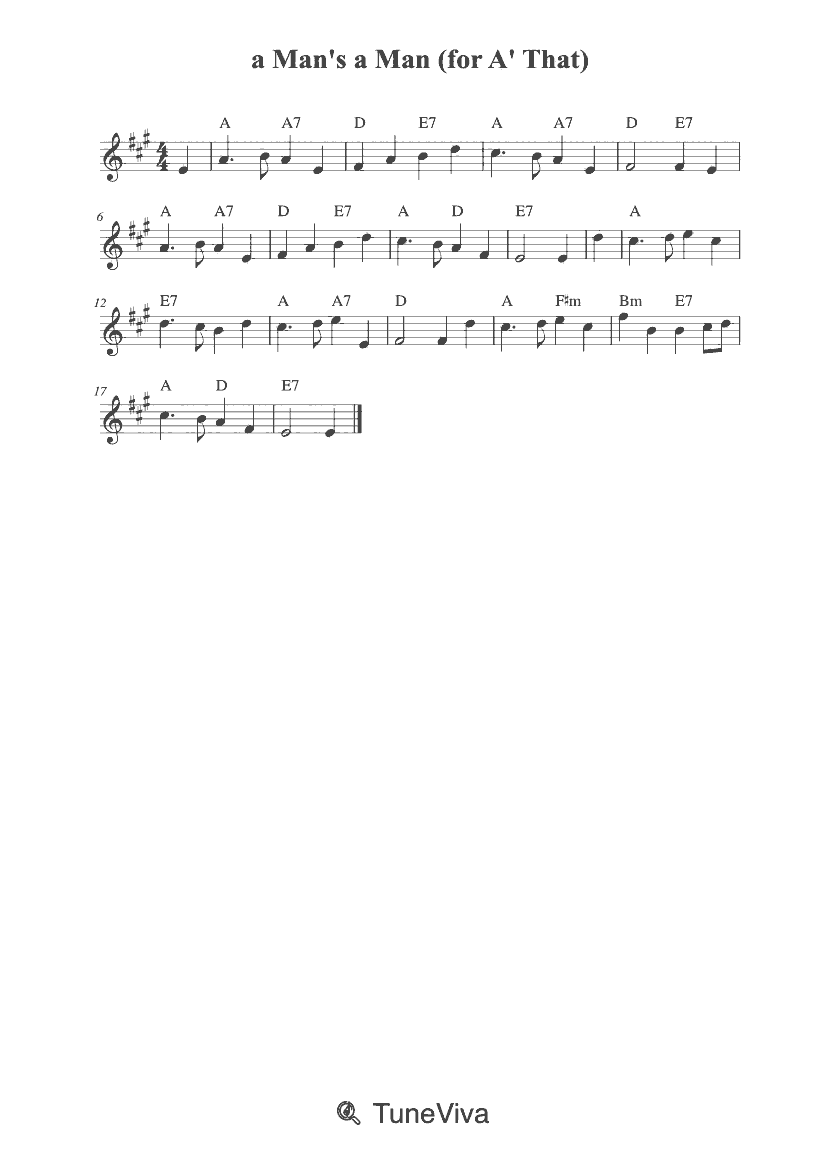
Misc tunes
32 sec · Score #177607
Open scorePage 1 of 2
The available scores divide into two D major settings in 4/4 and one setting with no sharps or flats in 2/2. Key affects range and colour for singers and instrumentalists, while meter affects how the pulse is felt. A no-sharps-or-flats signature may point to C major or A minor, so check the opening and closing harmonies rather than relying on the signature alone. Inspect the notation for range, accompaniment, and phrasing before deciding which setting suits you.
Robert Burns’s name appears in two score titles, and one score is headed “Burns Set.” The available information does not explain whether Burns is credited as poet, composer of the melody, or arranger. Title spellings also vary, including “A Man's a Man For a' That” and “Burns Set - A MAN'S A MAN FOR A' THAT,” so compare these forms when looking for a particular score.
One score headed “Burns Set” lists an opening tempo of 40 BPM in 2/2; the two D major scores do not list a tempo. A single tempo indication is a starting point rather than a complete guide to character, so read the notation and consider the pace that suits the performer and context.
The available information does not verify the work’s original instrumentation, difficulty, publication history, or whether each score is a complete performing edition. It also does not settle the exact relationship between Burns and the tune. Use the listed key and meter as practical starting points, then inspect the score for the details you need.
Catalogue duration 32 sec. Opening key signature: 2 sharps (D major). Opening time signature: 4/4.
Catalogue duration 3 min 10 sec. Opening key signature: No sharps or flats. Opening time signature: 2/2. Opening tempo: 40 BPM.
Catalogue duration 32 sec. Opening key signature: 2 sharps (D major). Opening time signature: 4/4.
Two available scores for “A Man's a Man for A' That” carry Robert Burns’s name in the title, and a third is headed “Burns Set.” These titles do not show whether Burns is credited as poet, composer of the melody, or arranger; the score’s own credit and any accompanying notes need checking.
Two available scores for “A Man's a Man for A' That” open with two sharps, listed as D major, and one opens with no sharps or flats. A no-sharps-or-flats signature may indicate C major or A minor, so inspect the opening and closing harmonies rather than assuming the key from the signature alone.
Available settings of “A Man's a Man for A' That” use 4/4 in the two D major scores and 2/2 in the no-sharps-or-flats score. 4/4 is counted in four beats per bar, while 2/2 is felt in two broader beats per bar, which can change accent and pacing even when similar notes are used.
The score headed “Burns Set” lists an opening tempo of 40 BPM in 2/2. The two D major scores for “A Man's a Man for A' That” do not list a tempo. Treat a single tempo indication as a starting point and check the score’s notation and character before fixing a speed.
Titles vary between “A Man's a Man for A' That” and “A Man's a Man For a' That,” including capitalization of “For”; one score is headed “Burns Set - A MAN'S A MAN FOR A' THAT.” Comparing these forms can help locate a particular score.
The available scores for “A Man's a Man for A' That” do not give difficulty levels, grades, or teaching notes. Key, time signature, tempo, range, and the notation itself are more reliable things to inspect; a D major setting and a no-sharps-or-flats setting may suit different players, but difficulty cannot be confirmed from titles alone.
Available scores for “A Man's a Man for A' That” are marked classical, but that marking does not by itself establish the song’s historical genre or origin, nor its original performing forces. The marking should be treated as a broad descriptor rather than a complete account of the music.