Rigadoon. JaW.094, A
Misc tunes
24 sec · Score #122937
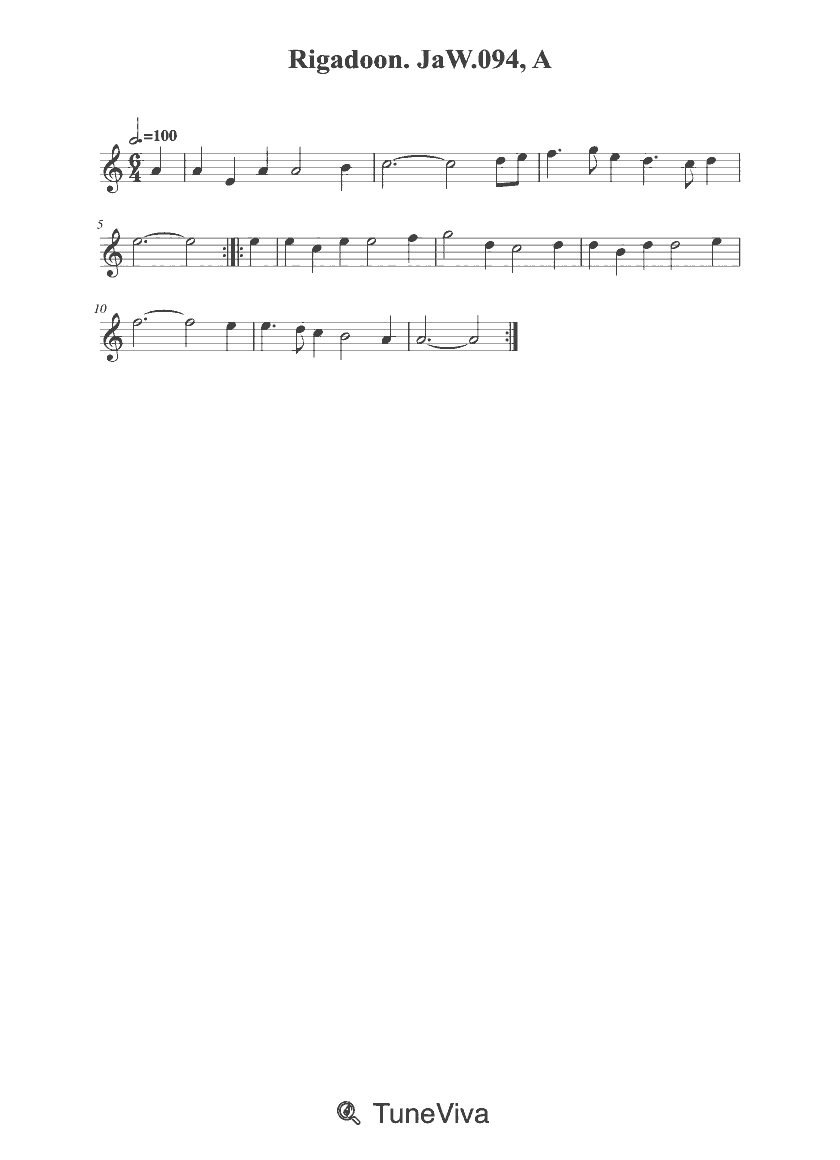
Open score“A Rigadoon” appears here as a short dance-tune score, listed in several catalogue versions that share the same title family and the numbering “JaW.088” or “JaW.094”. Every version currently listed opens with no sharps or flats and is notated in 6/4, and each is a single-track piece under a minute long. The listings do not name an instrument, an original source manuscript or a composer with any certainty, so treat the titles as leads and check each score itself before choosing one.
Scores 1–20 of 21
Misc tunes
24 sec · Score #122937
Open score
A Good Tune
24 sec
Open score
A Good Tune
37 sec
Open score
A Good One
27 sec · Score #183699
Open score
Misc tunes
28 sec
Open score
Misc tunes
51 sec
Open score
Misc tunes
53 sec
Open score
A Good Tune
24 sec
Open score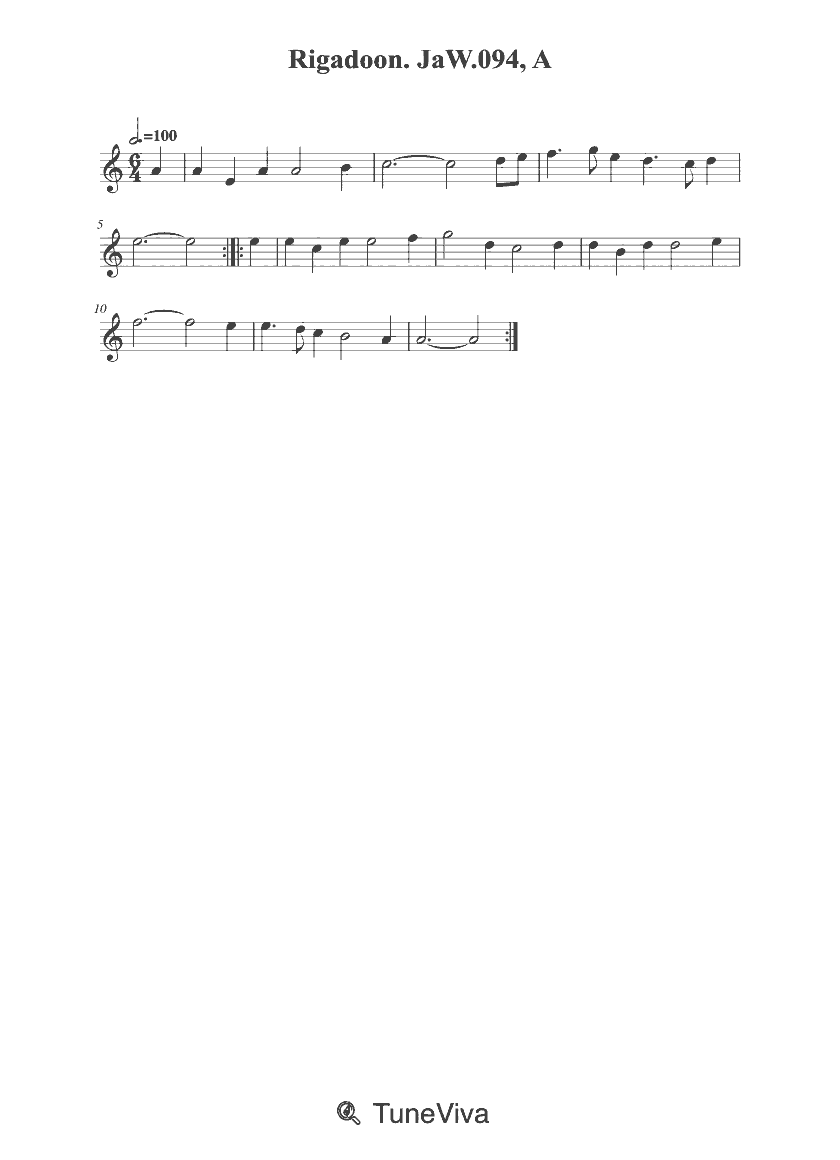
Misc tunes
24 sec · Score #9821
Open score
A Good One
27 sec · Score #80680
Open score
Misc tunes
28 sec
Open score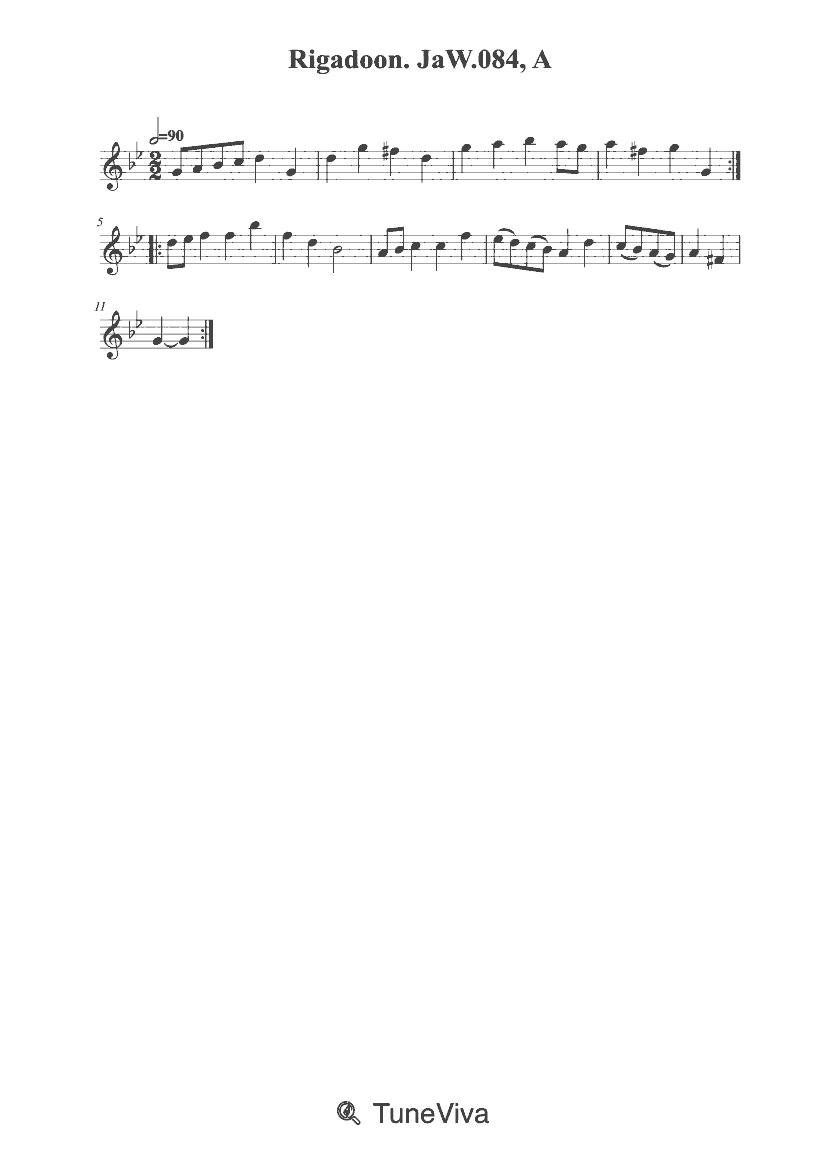
Misc tunes
51 sec
Open score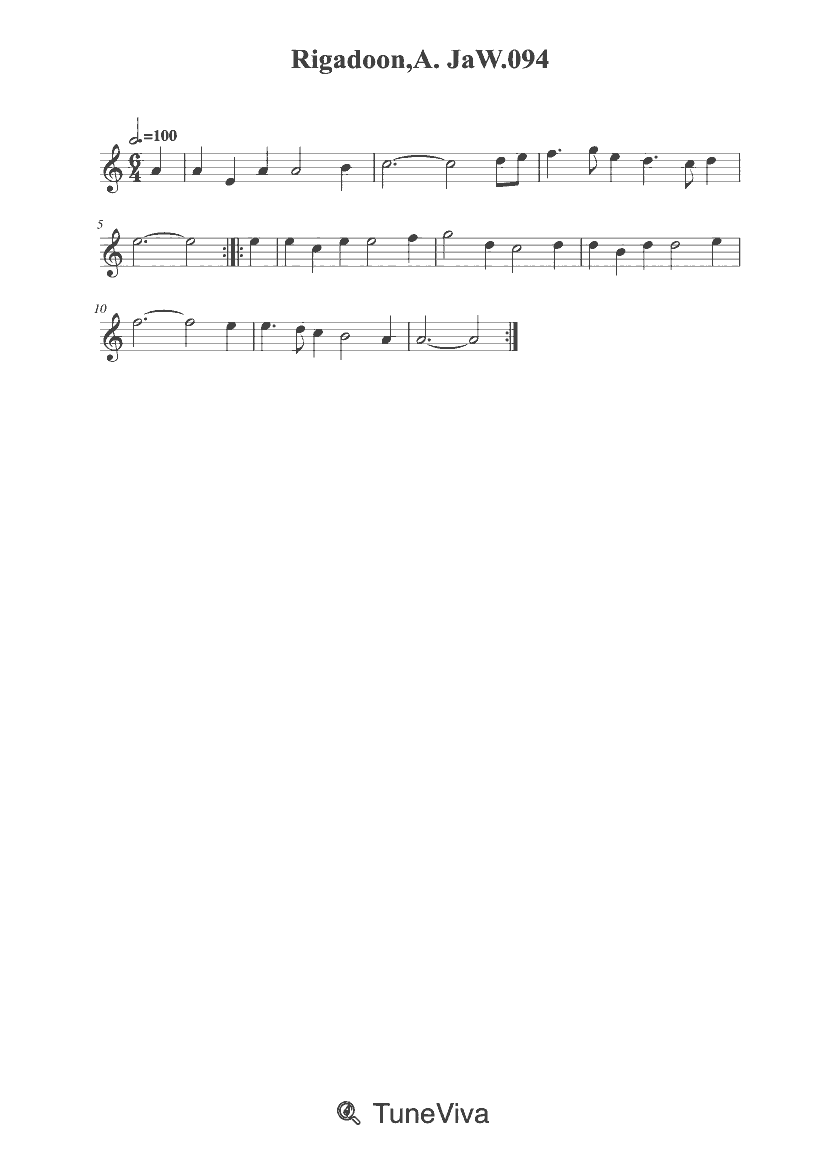
Misc tunes
24 sec
Open score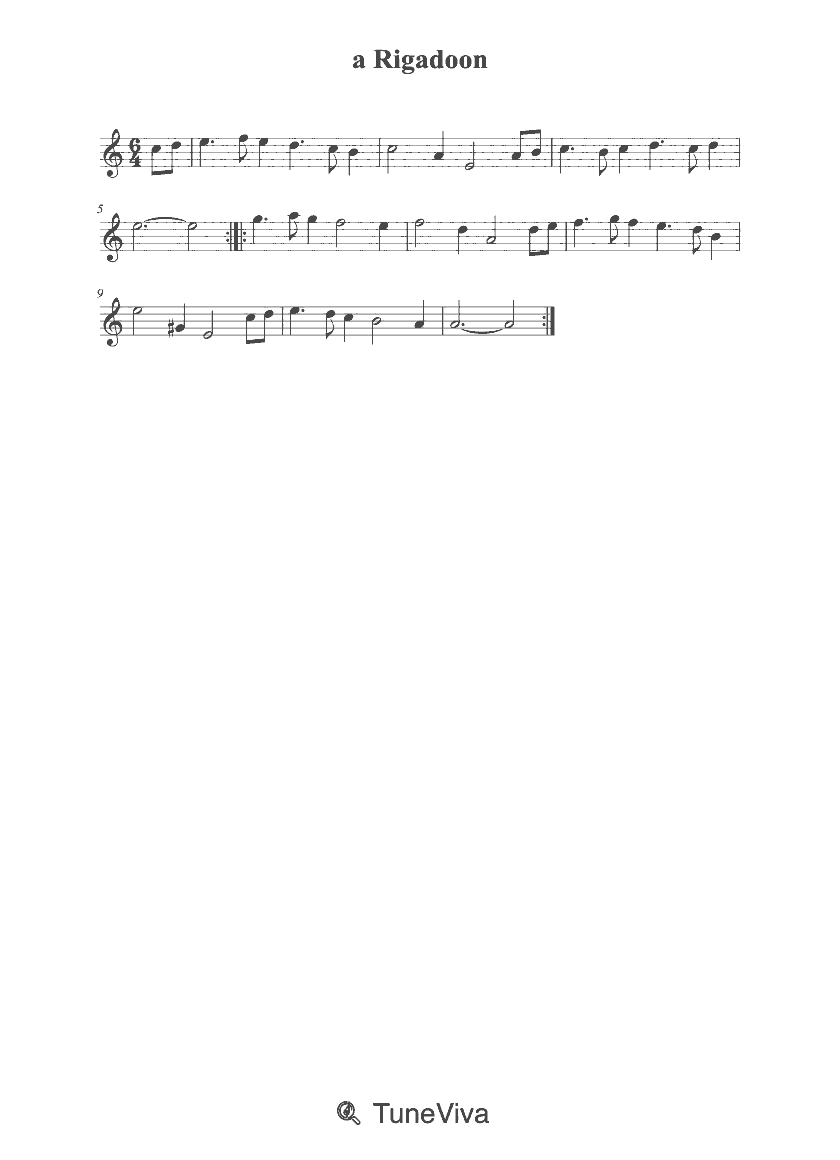
Misc tunes
59 sec · Score #9221
Open score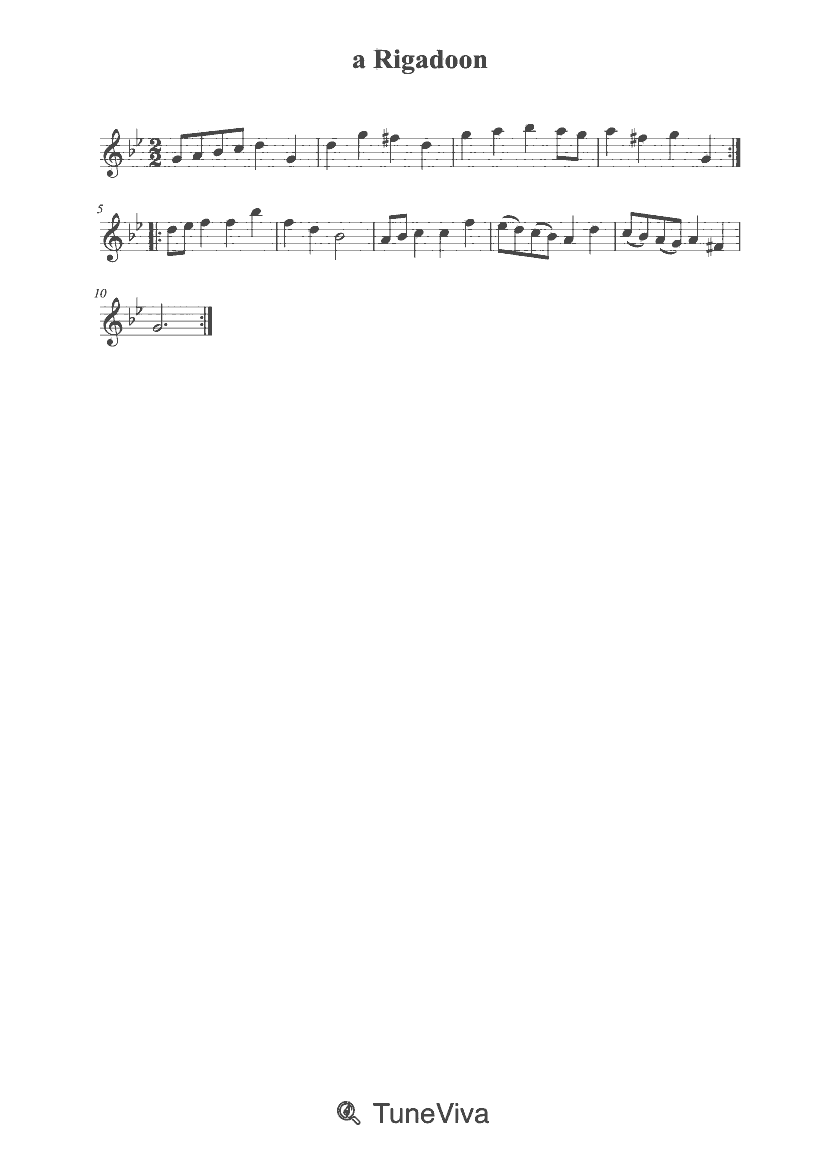
Misc tunes
1 min 18 sec · Score #25353
Open score
Misc tunes
1 min 20 sec
Open score
Misc tunes
1 min 1 sec · Score #160897
Open score
Misc tunes
59 sec · Score #199427
Open score
Misc tunes
1 min 1 sec · Score #202964
Open score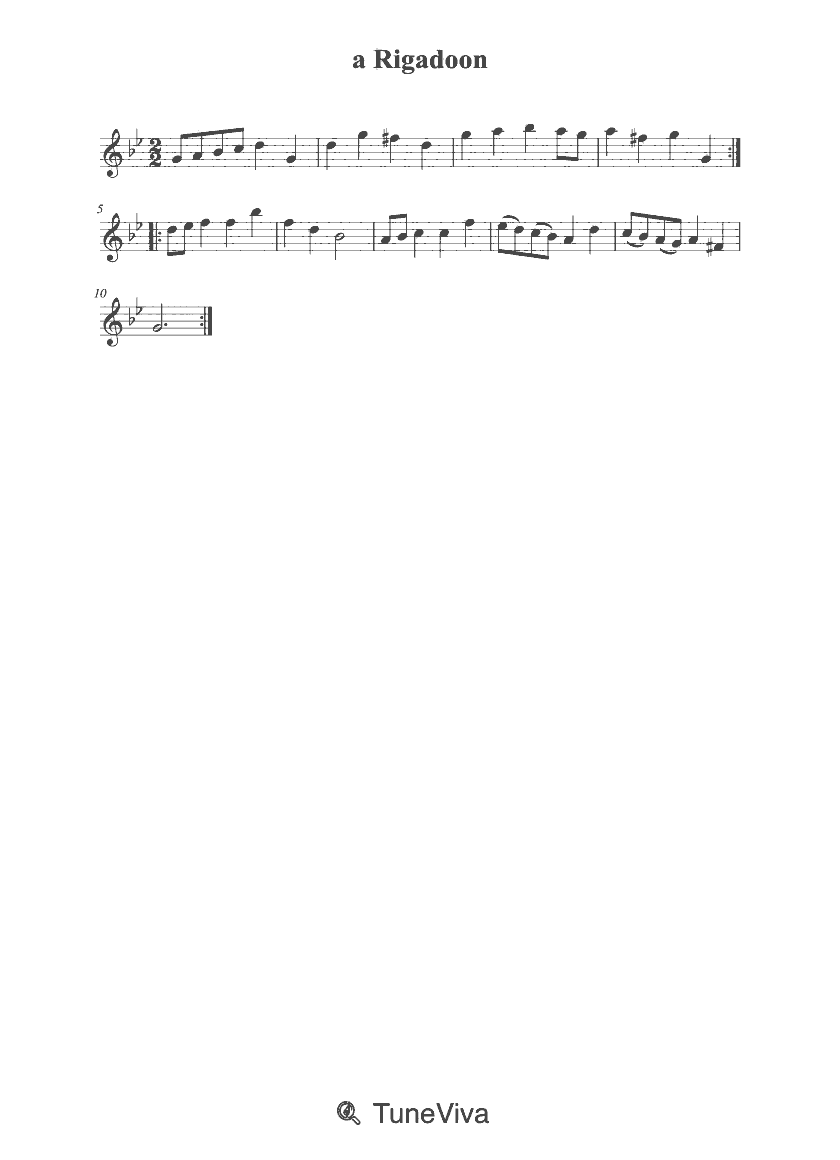
Misc tunes
1 min 18 sec · Score #204036
Open scorePage 1 of 2
The versions on this page are titled “Rigadoon,A. JaW.088” and “Rigadoon. JaW.094, A”, with one attributed to “A Good Tune” and another carrying no composer name. The “JaW” prefix and numbers look like an index reference rather than a work title, but nothing in the available material explains them, so they should not be read as a definitive catalogue number or as proof of a particular composer. Use them to tell the versions apart, not to date or attribute the music.
Two listings share the title “Rigadoon,A. JaW.088” and the same note count, while their opening tempi are given quite differently — one at 300 BPM and one at 100 BPM — and their durations differ too. This may reflect two separate notations of the same tune or simply different renderings of one score. Since all the versions are in 6/4 with an open key signature, the practical differences to check are tempo, length and layout rather than key.
No instrumentation is stated for any of these scores, and the titles give no clue whether the music was written for keyboard, violin, or another instrument. Open the score you are considering and confirm the clef, range and texture suit your instrument. A rigadoon is a dance, so a steady, danceable pulse matters more than speed; the very fast tempo shown on one listing is best treated as a rendering detail until you see the notation.
Catalogue duration 24 sec. Opening key signature: No sharps or flats. Opening time signature: 6/4. Opening tempo: 300 BPM.
Catalogue duration 24 sec. Opening key signature: No sharps or flats. Opening time signature: 6/4. Opening tempo: 300 BPM.
Catalogue duration 37 sec. Opening key signature: No sharps or flats. Opening time signature: 6/4. Opening tempo: 100 BPM.
Each version of A Rigadoon listed here is notated in 6/4, a compound duple metre that gives the music two broad beats per bar, each divisible into three. The same listings show an opening key signature of no sharps or flats.
Two separate listings carry the title Rigadoon,A. JaW.088 and both report 96 notes, but they differ in reported tempo — about 300 BPM for one and about 100 BPM for the other — and in overall length. Whether these are two notations of the same tune or two renderings of one score cannot be settled from the titles alone, so compare the notation before deciding.
The scores listed here show no sharps or flats in the opening key signature, which points to C major or A minor without ruling out a modal tune. Because dance tunes of this kind were often written without a key signature, players should judge the tonal centre from the melody and final cadence rather than from the signature alone.
None of the versions listed here names an instrument, so the scoring cannot be confirmed from the titles. Check the clef, range and number of voices in the score itself to see whether it suits a keyboard instrument, a melody instrument such as the violin, or an ensemble.