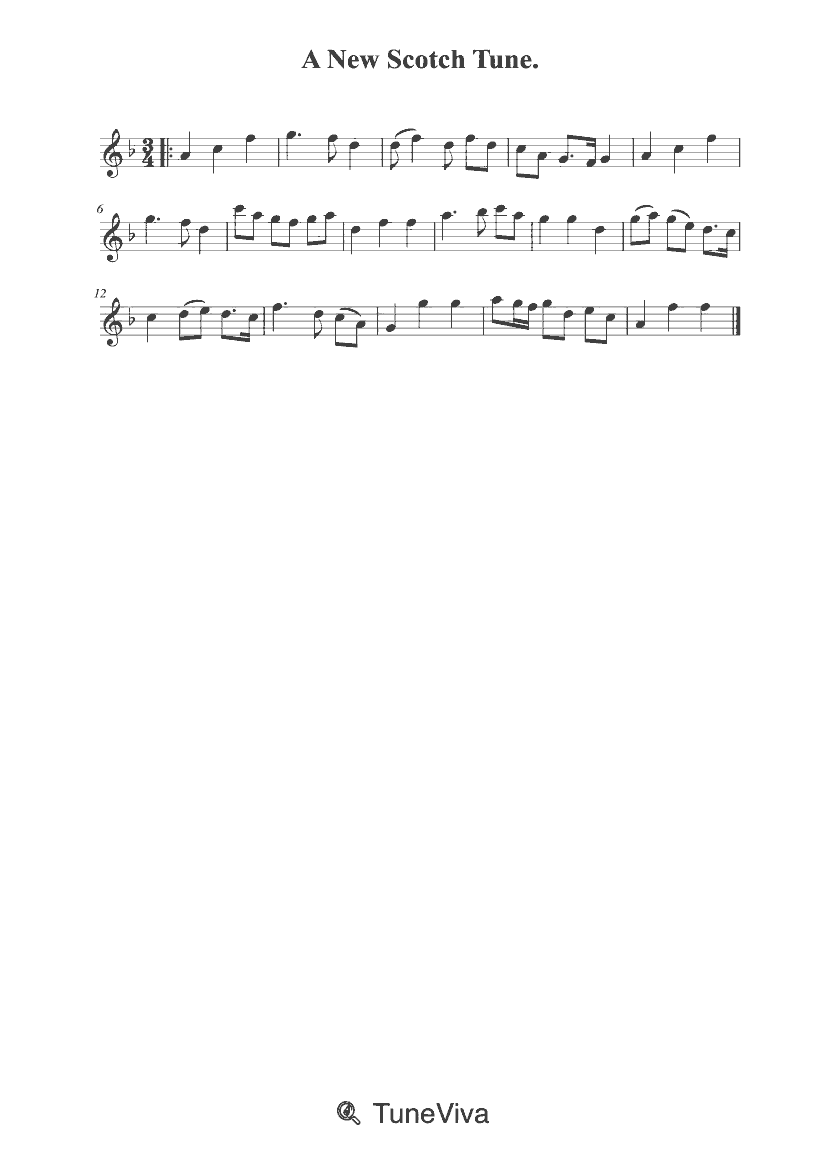
A New Scotch Tune.
Misc tunes
48 sec · Score #109234
Open scoreA Scotch Tune sheet music here is grouped under a title that does not match the score headings exactly: the available scores are headed “A New Scotch Tune,” with small differences in capitalization and punctuation. No composer is credited on those scores, so the specific tune and setting are not confirmed. Each available score opens with one flat, identified as F major; two begin in 2/2 and one in 3/4, and the approximate durations range from 48 seconds to 2 minutes 8 seconds. Compare the opening meter and length if you need a particular version.
Scores 1–20 of 47
Misc tunes
48 sec · Score #109234
Open score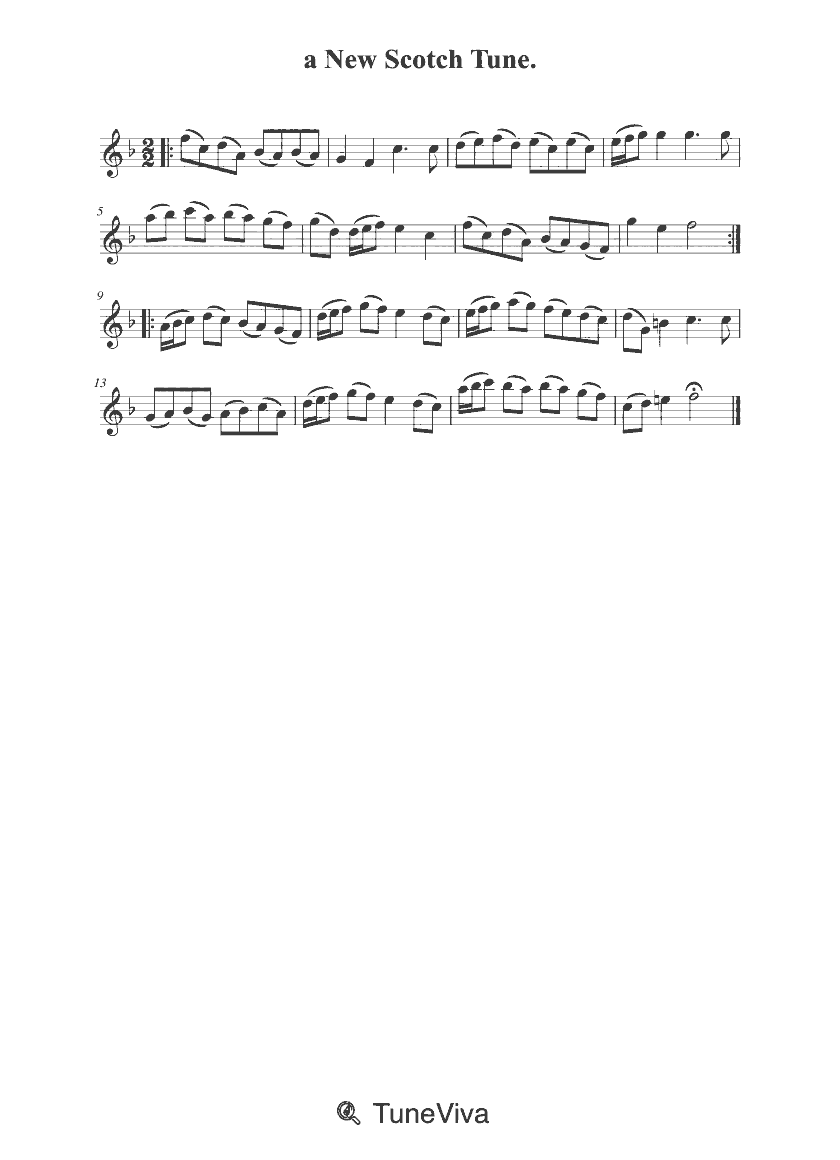
Misc tunes
2 min 8 sec · Score #5050
Open score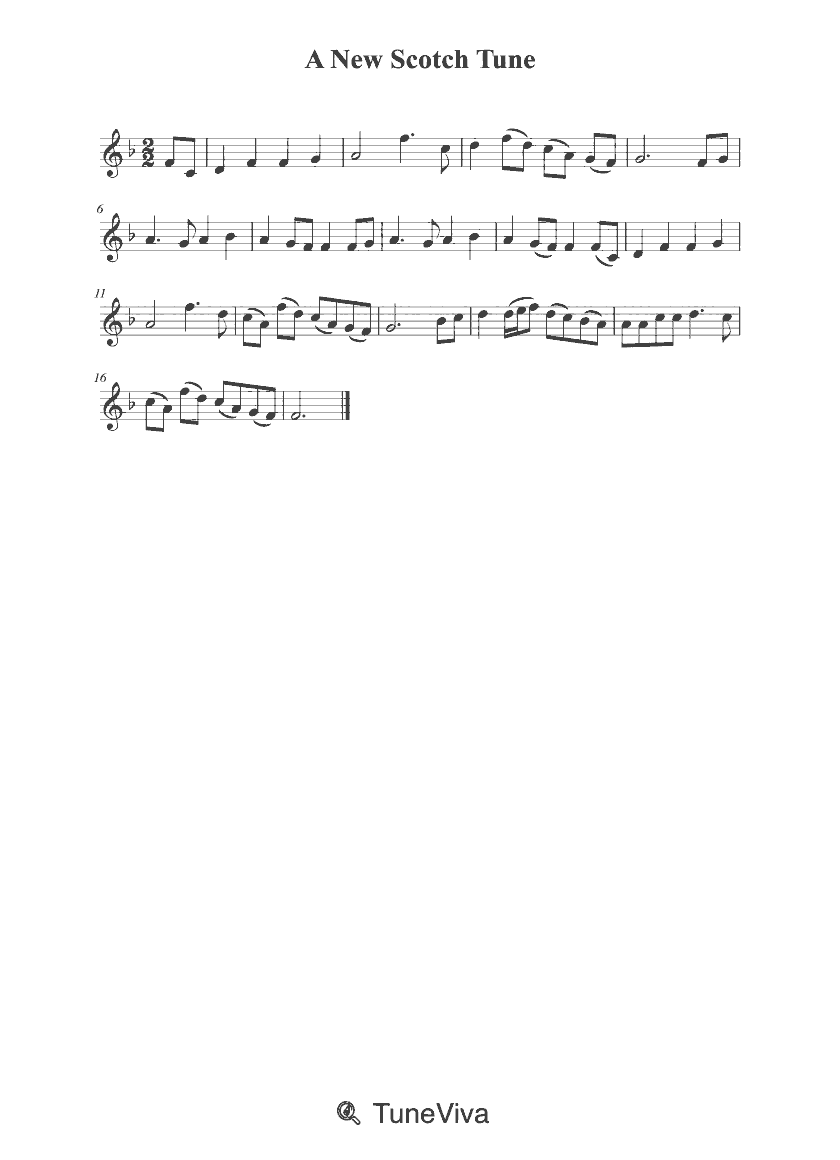
Misc tunes
1 min 4 sec
Open score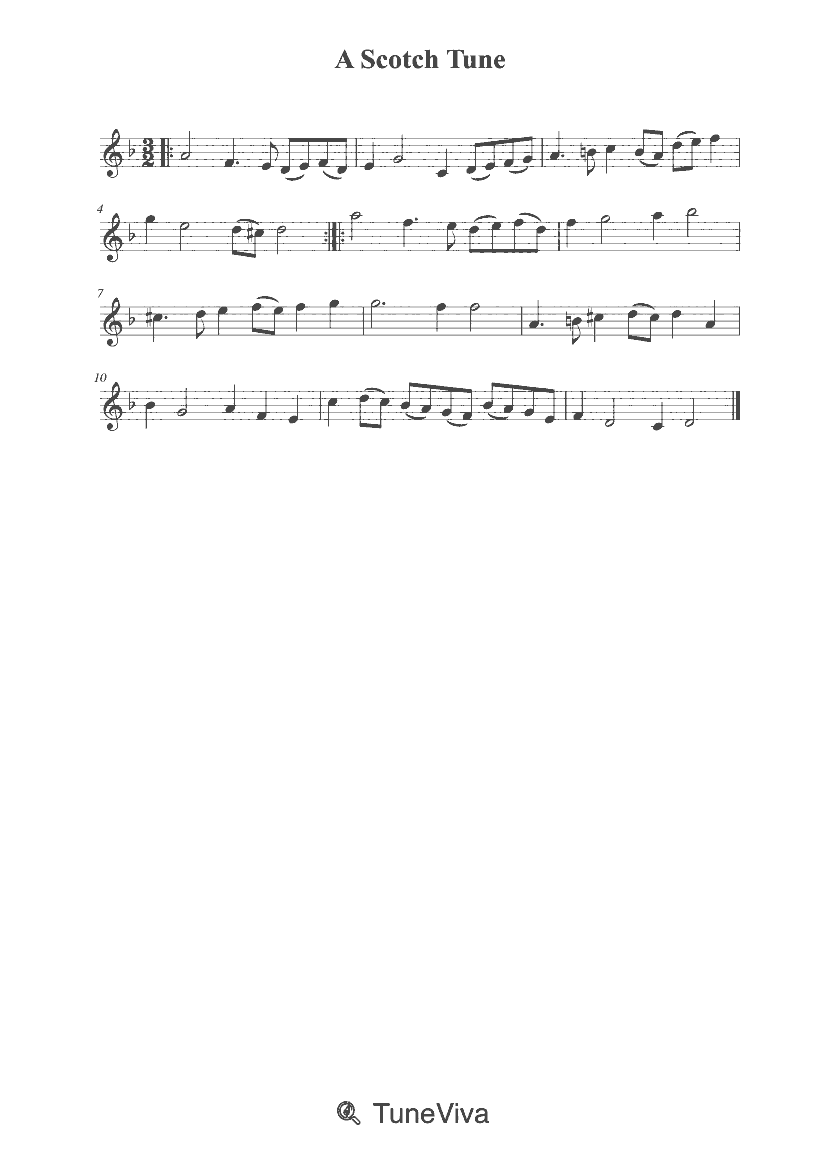
Misc tunes
2 min 24 sec
Open score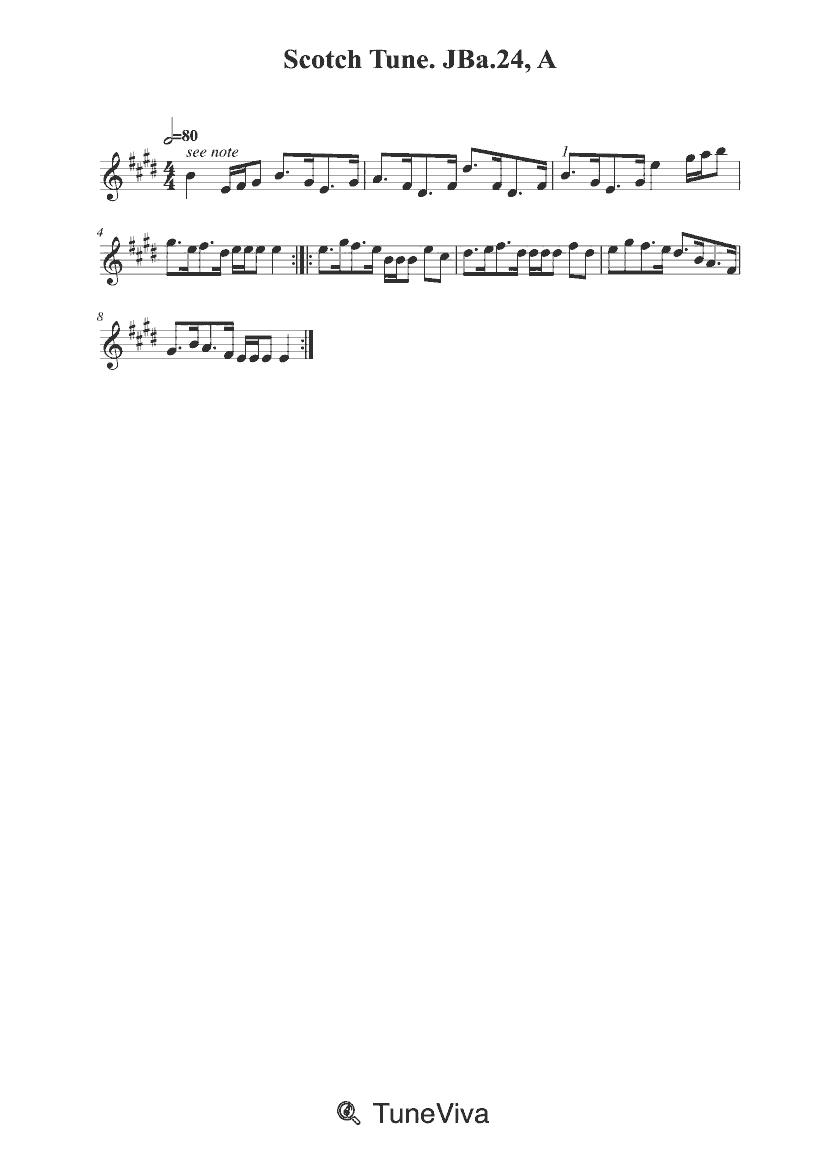
Misc tunes
24 sec
Open score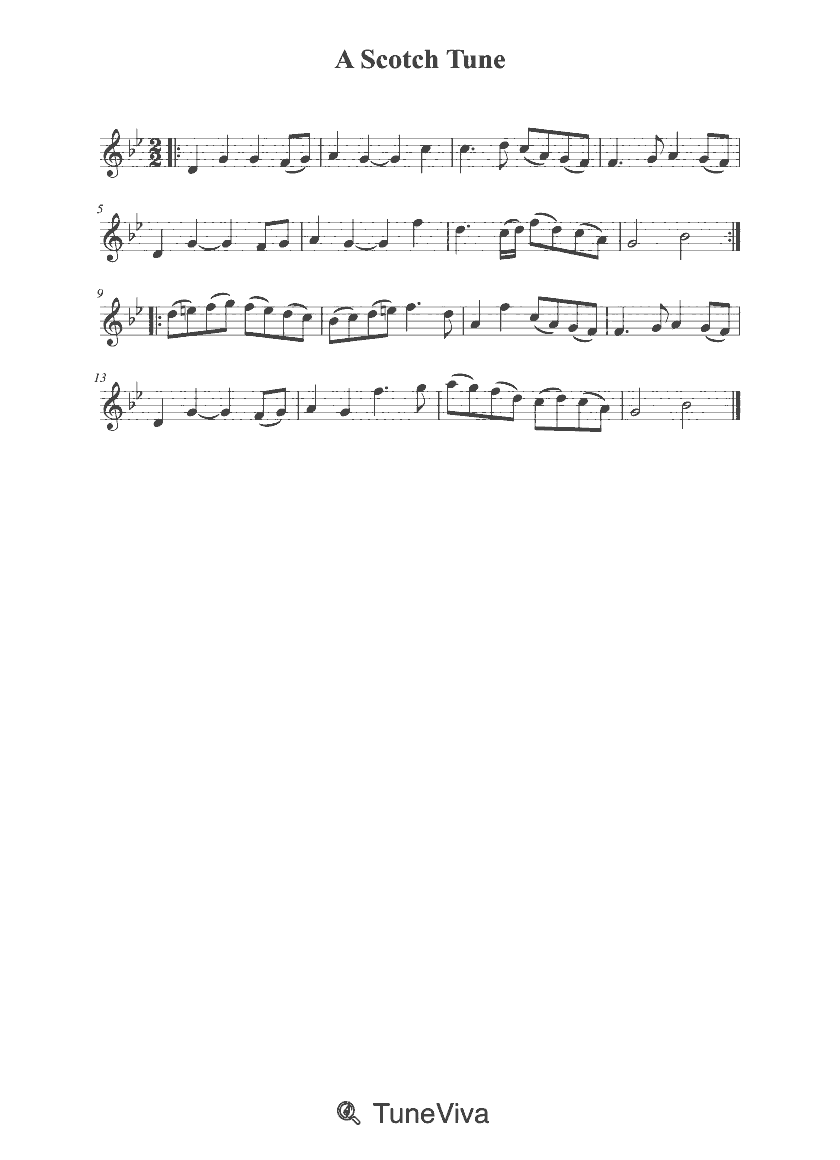
Misc tunes
2 min 8 sec
Open score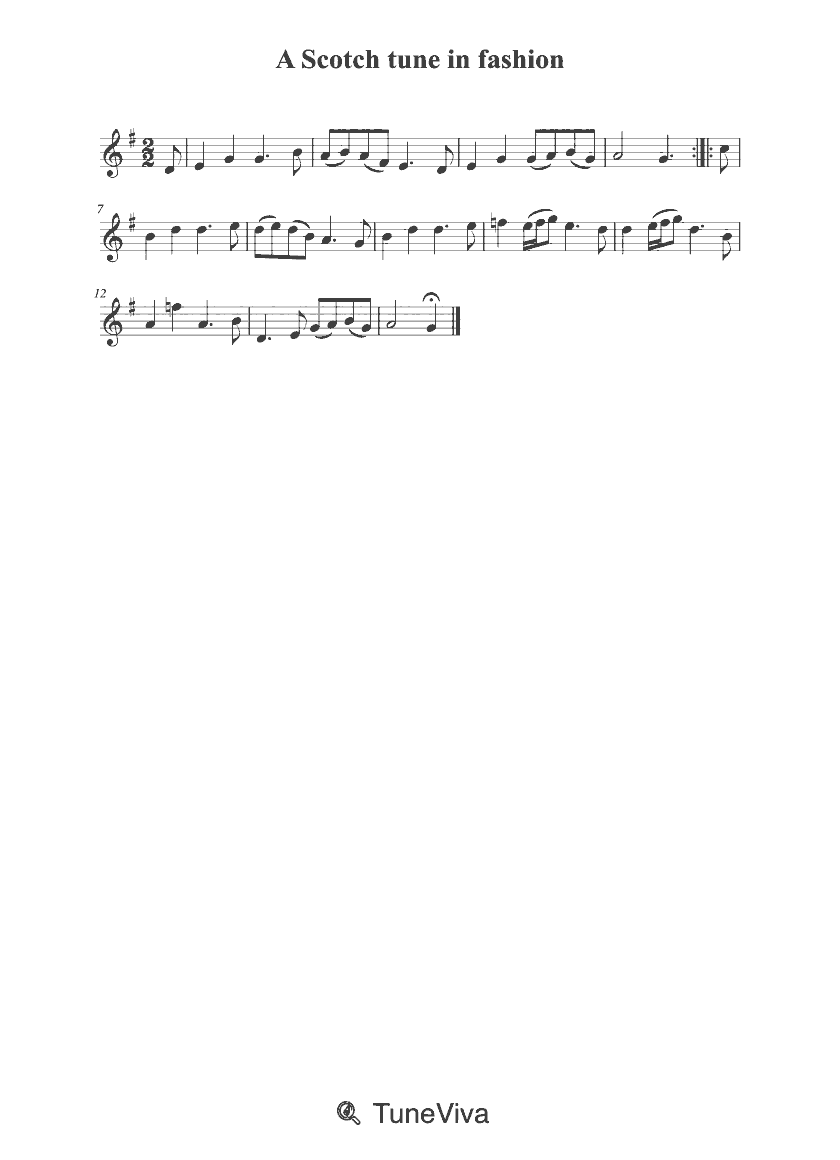
Misc tunes
Peggy I must love ye
1 min 35 sec
Open score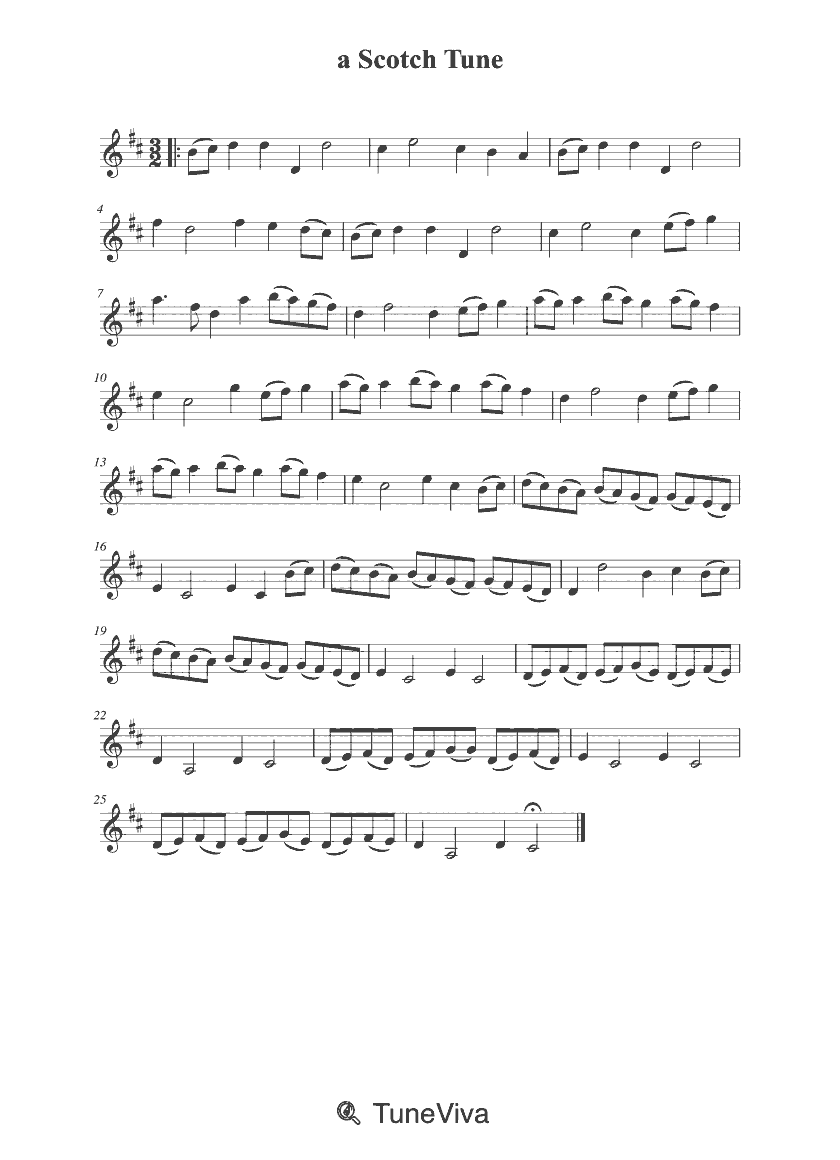
Misc tunes
5 min 12 sec
Open score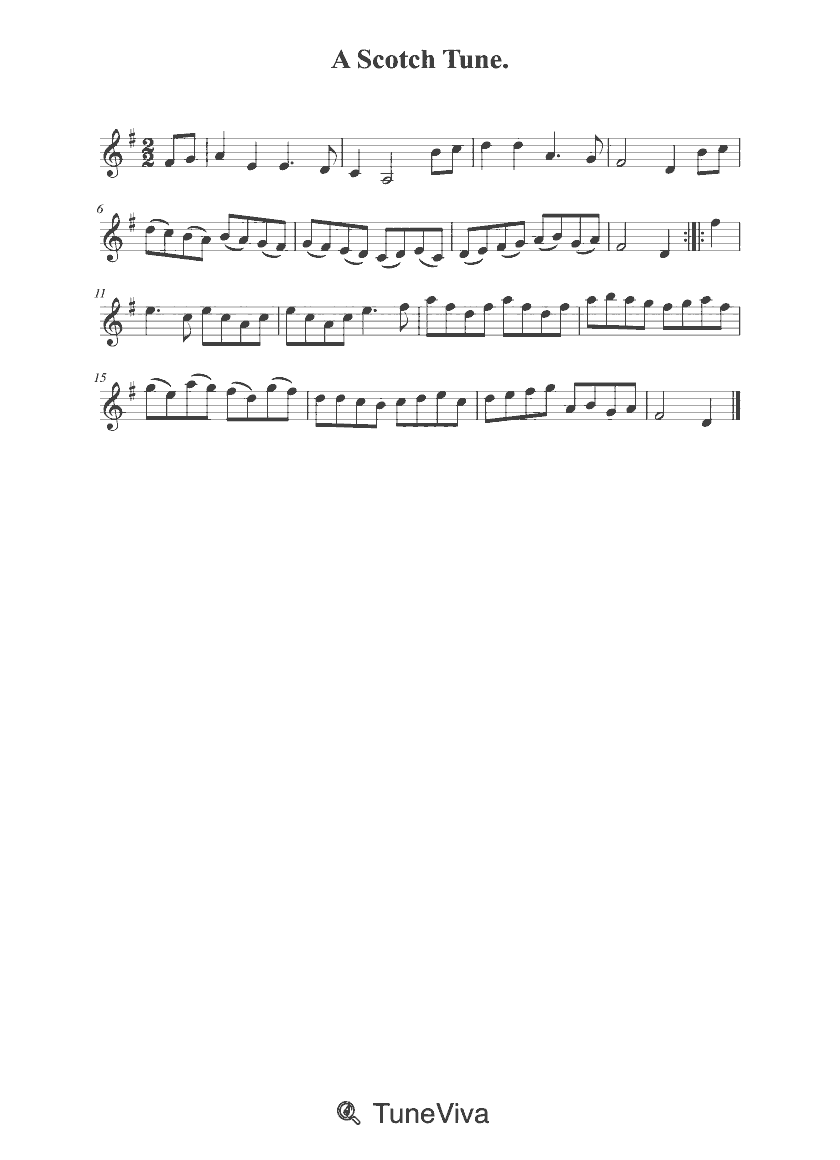
Misc tunes
2 min 8 sec · Score #215448
Open score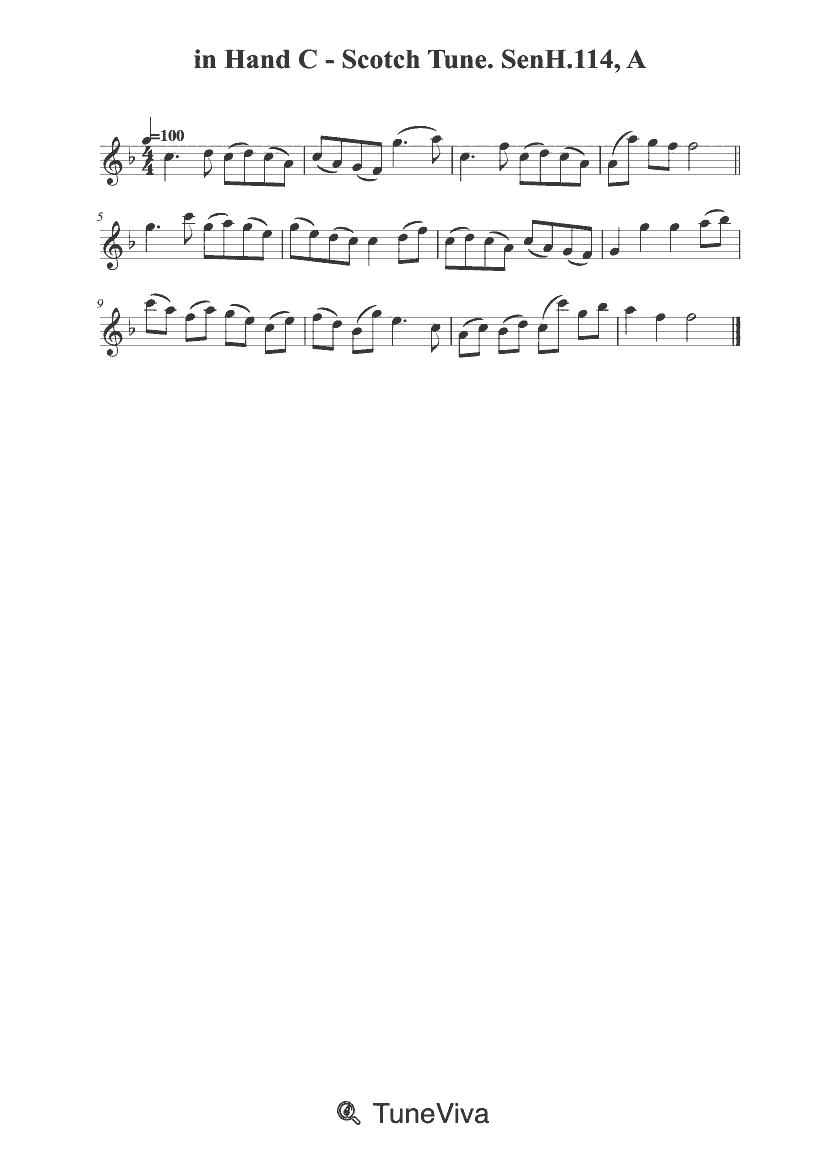
in Hand C
29 sec
Open score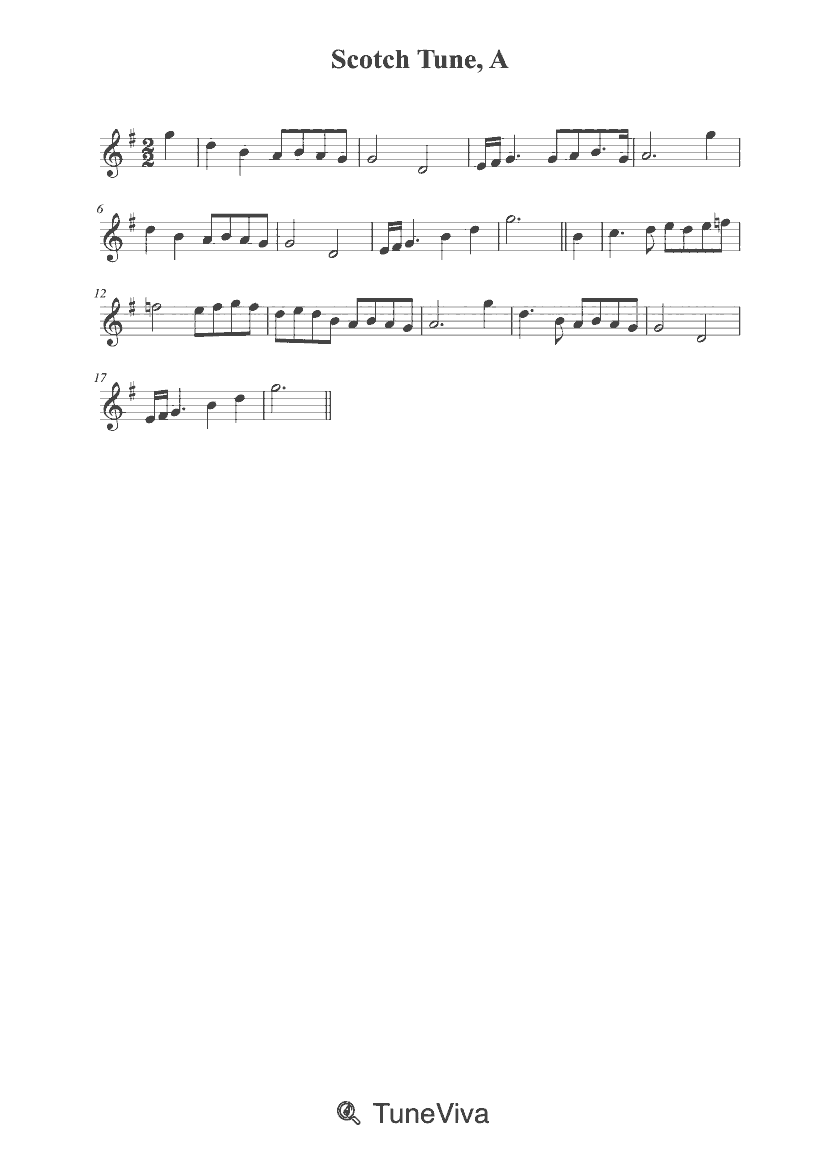
Misc tunes
1 min 4 sec
Open score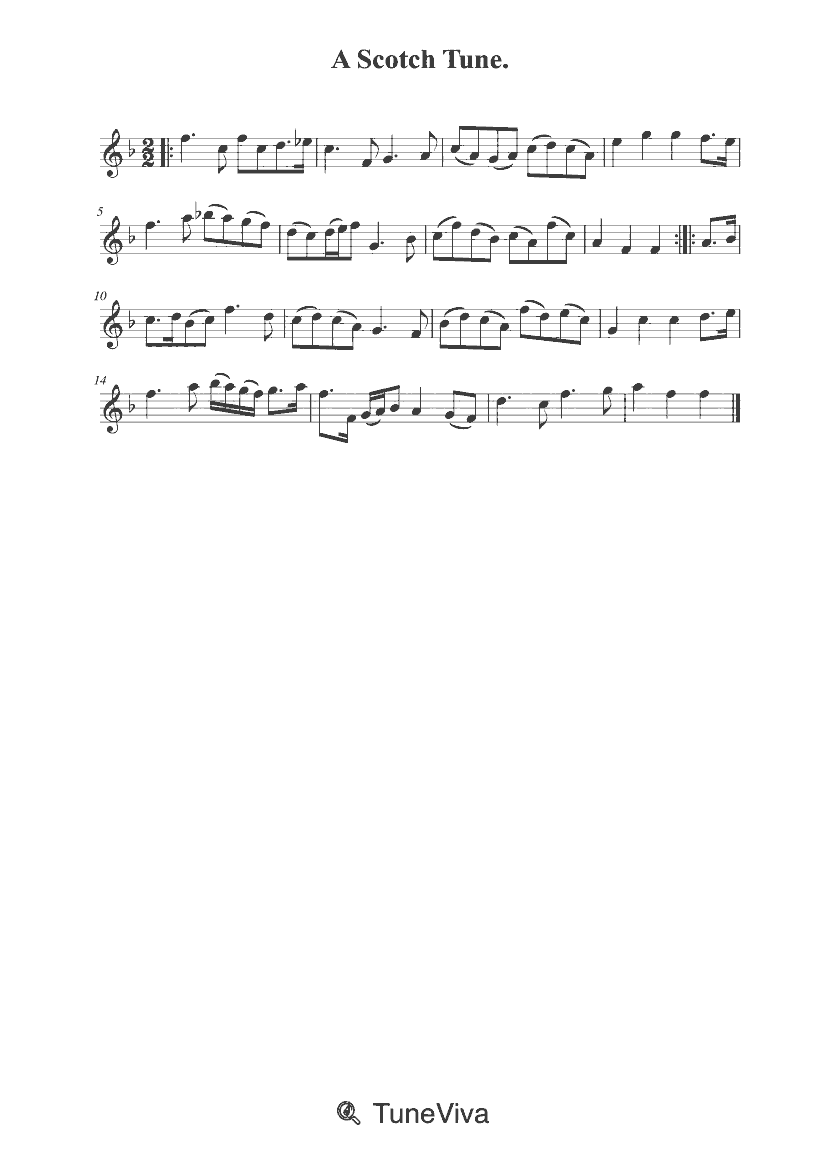
Misc tunes
2 min 6 sec · Score #6597
Open score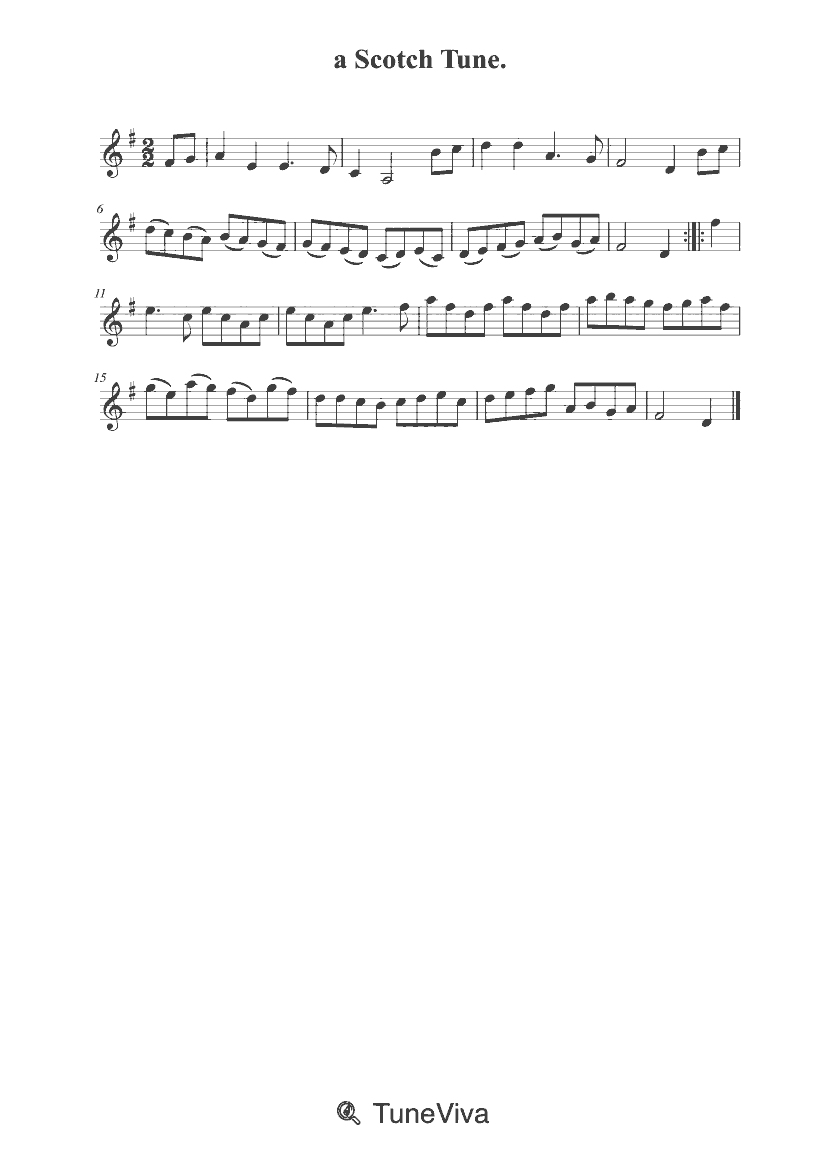
Misc tunes
2 min 8 sec · Score #7730
Open score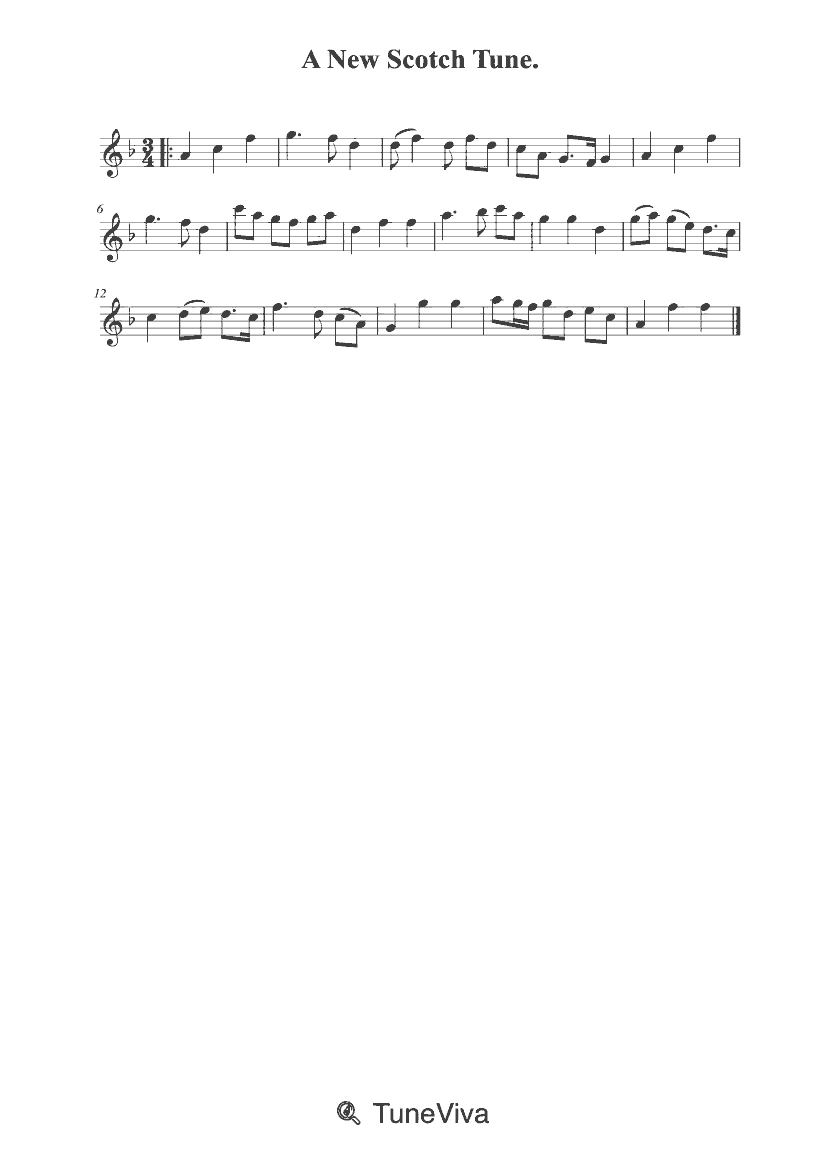
Misc tunes
48 sec · Score #11779
Open score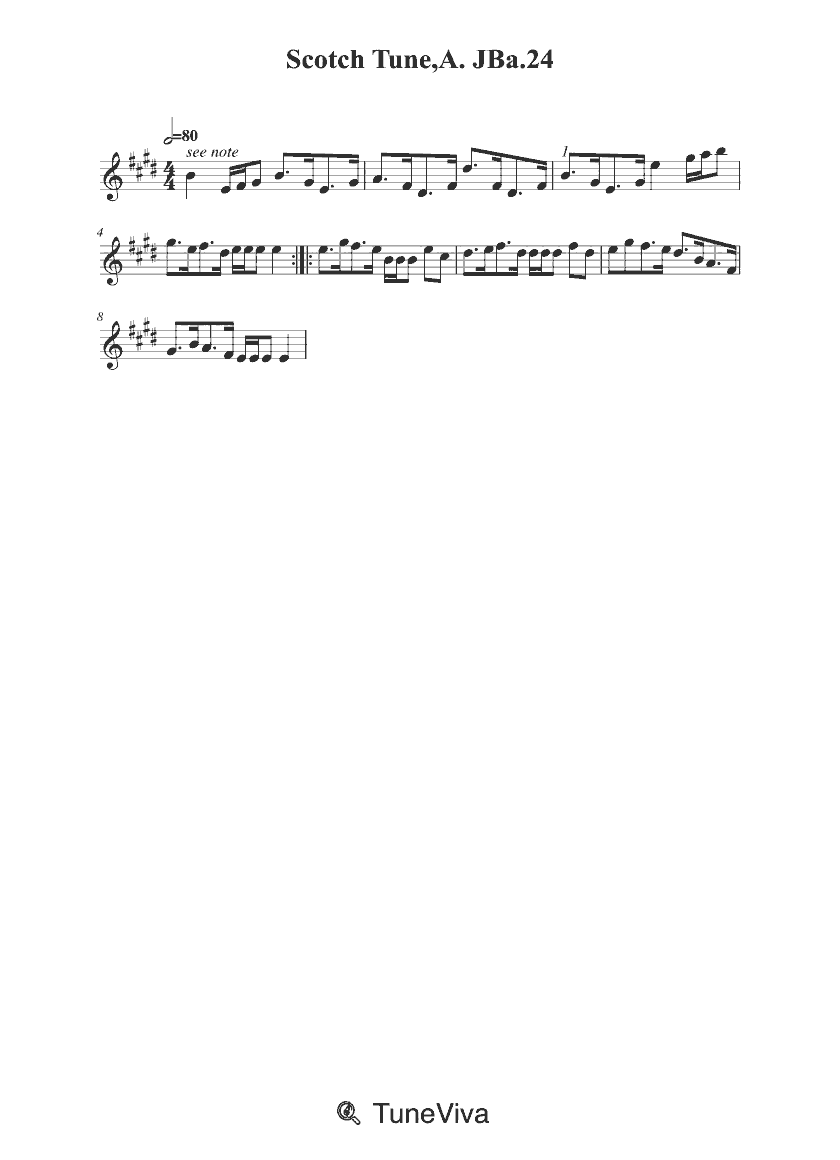
Misc tunes
24 sec · Score #34240
Open score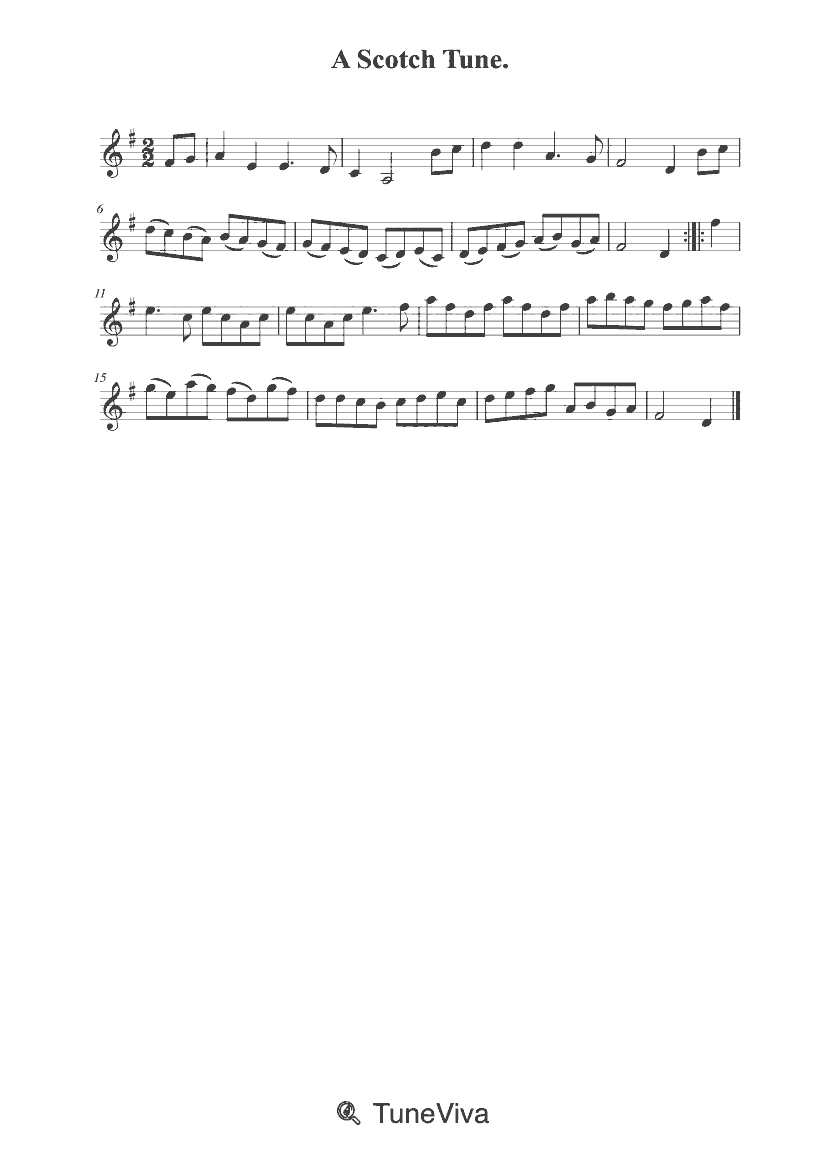
Misc tunes
2 min 8 sec · Score #86137
Open score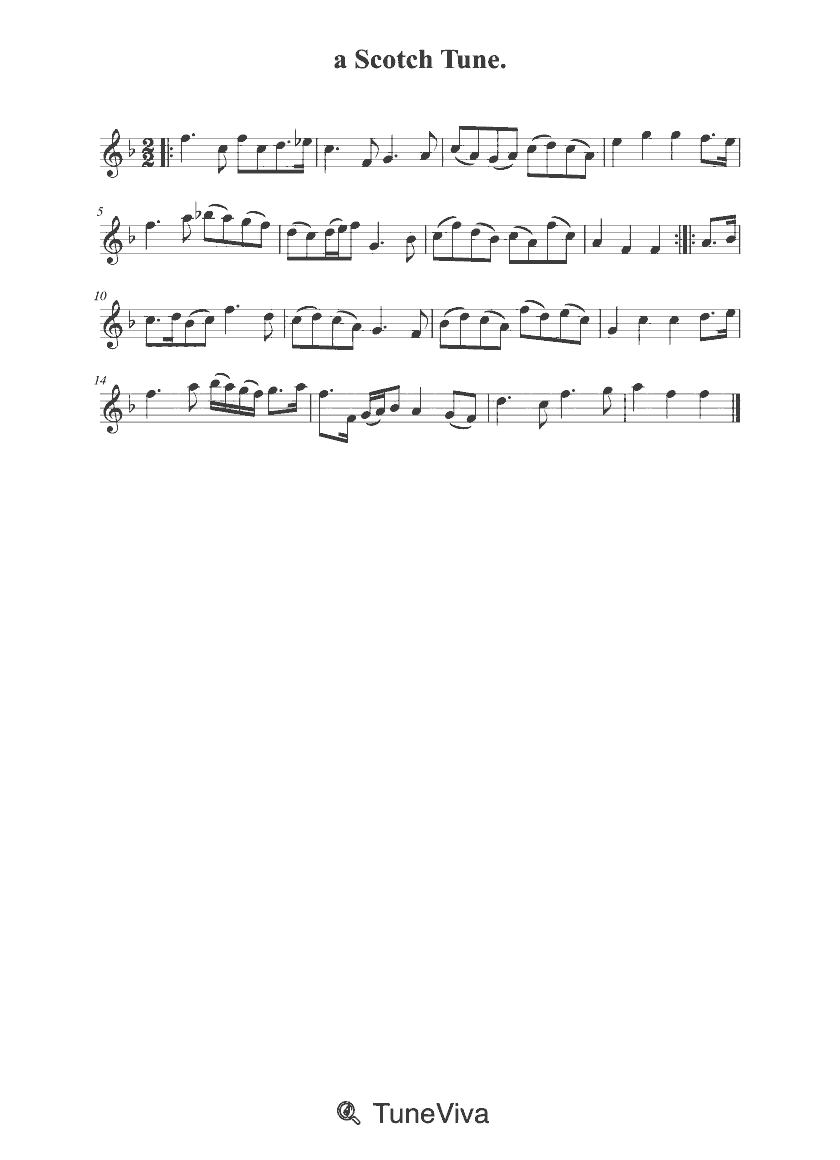
Misc tunes
2 min 6 sec · Score #118220
Open score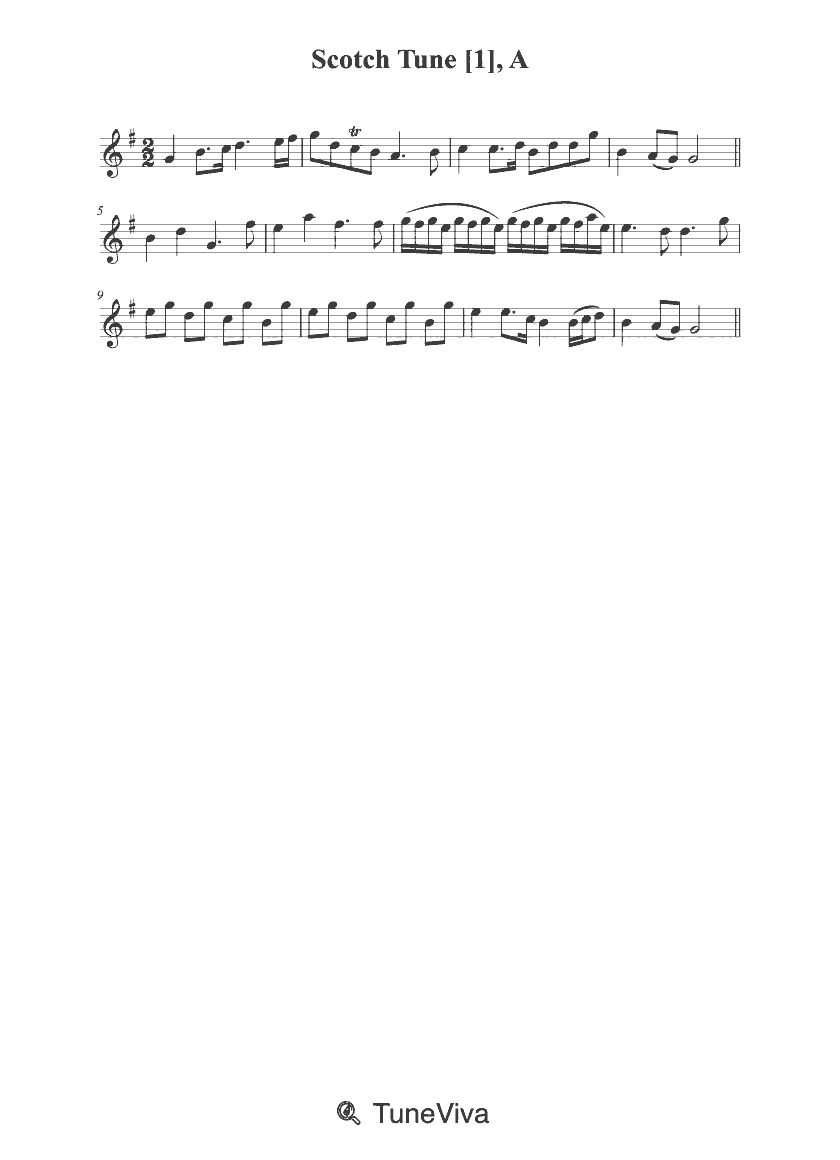
Misc tunes
48 sec
Open score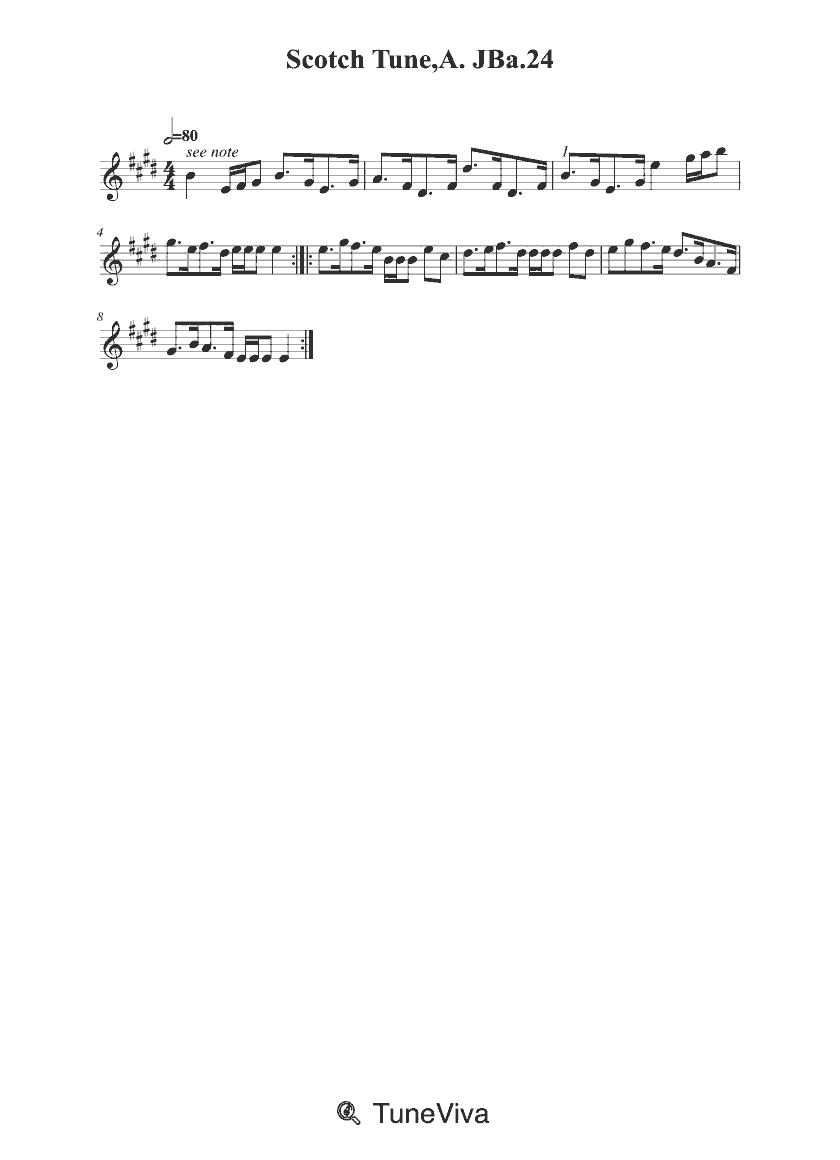
Misc tunes
24 sec · Score #219462
Open score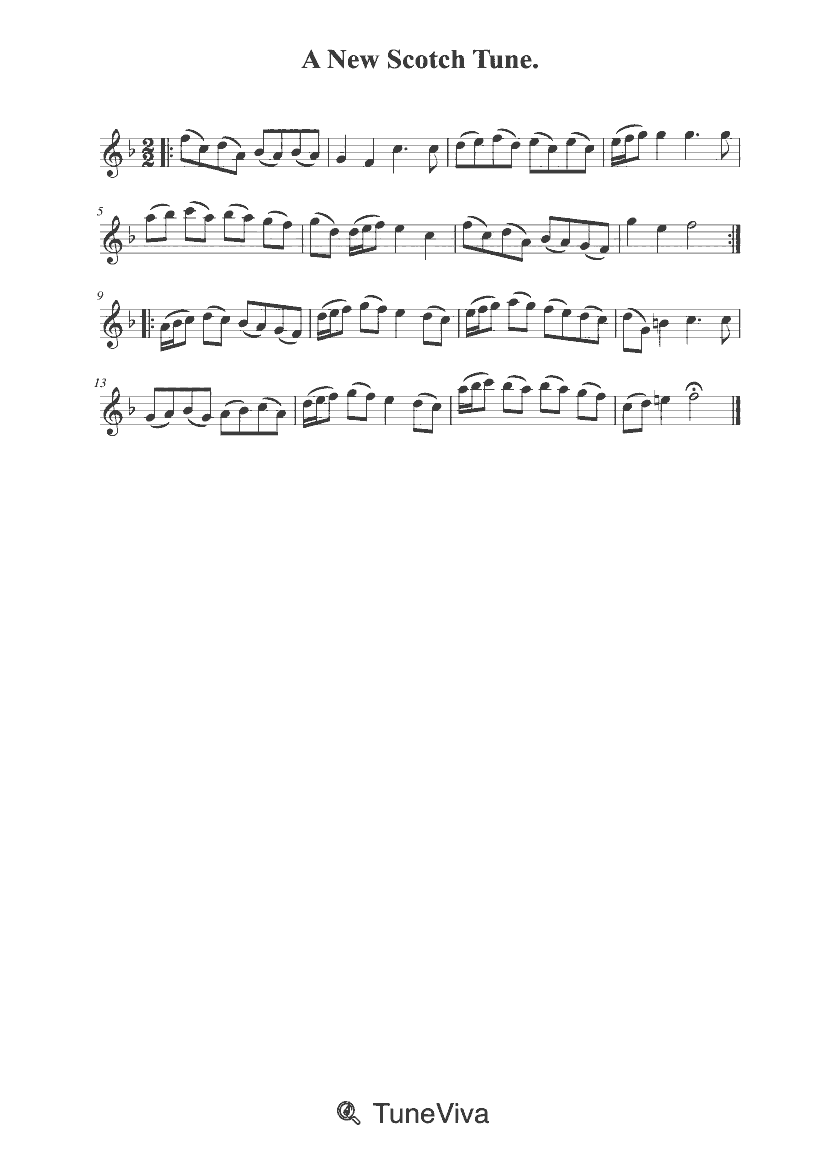
Misc tunes
2 min 8 sec · Score #222585
Open scorePage 1 of 3
The scores presented as A Scotch Tune are each headed “A New Scotch Tune” or “a New Scotch Tune.” Those small differences in capitalization and punctuation do not by themselves prove that the music is identical or different. No composer is credited, and the title alone does not identify a historical source or a named composer's setting.
Each available score opens with a key signature of one flat, identified as F major. Two scores open in 2/2 and one opens in 3/4. These details describe the opening signatures only; they do not establish the full harmonic or rhythmic course of the music.
Two scores use a duple 2/2 opening and one uses a triple 3/4 opening, so check the meter if that distinction matters for your use. The approximate durations also differ: about 48 seconds, 64 seconds, and 2 minutes 8 seconds. Actual performance time can vary with tempo, and the available score details do not give difficulty or grade.
No composer is credited on the available scores. Because the score headings vary only slightly, it is not possible to tell from the titles alone whether these are different arrangements of one tune or separate settings. If you need a composer-specific version, verify the attribution before choosing.
Catalogue duration 48 sec. Opening key signature: 1 flat (F major). Opening time signature: 3/4.
Catalogue duration 2 min 8 sec. Opening key signature: 1 flat (F major). Opening time signature: 2/2.
Catalogue duration 1 min 4 sec. Opening key signature: 1 flat (F major). Opening time signature: 2/2.
A Scotch Tune is a grouping title for scores headed “A New Scotch Tune” with minor differences in capitalization or punctuation. No composer is credited on the available scores, so the tune's specific identity and historical source are not confirmed.
The available scores are headed “A New Scotch Tune,” while “A Scotch Tune” appears as the grouping title. Whether the shorter title refers to the same tune, a family of settings, or simply a label for these scores cannot be established from the score titles alone.
Each available score opens with a key signature of one flat, identified as F major. This describes the opening key signature only; it does not prove that the music remains in F major throughout.
Two scores open in 2/2 and one opens in 3/4. The difference between duple and triple opening meter is the first practical distinction to check when comparing the versions.
The approximate durations are 48 seconds, 64 seconds, and 2 minutes 8 seconds. Actual performance time can differ with tempo and interpretation, so treat these figures as rough comparisons rather than fixed durations.
Difficulty or grade information is not given for the available scores, so no reliable easy-to-advanced ranking can be supported. Compare the notation, opening meter, and length instead.