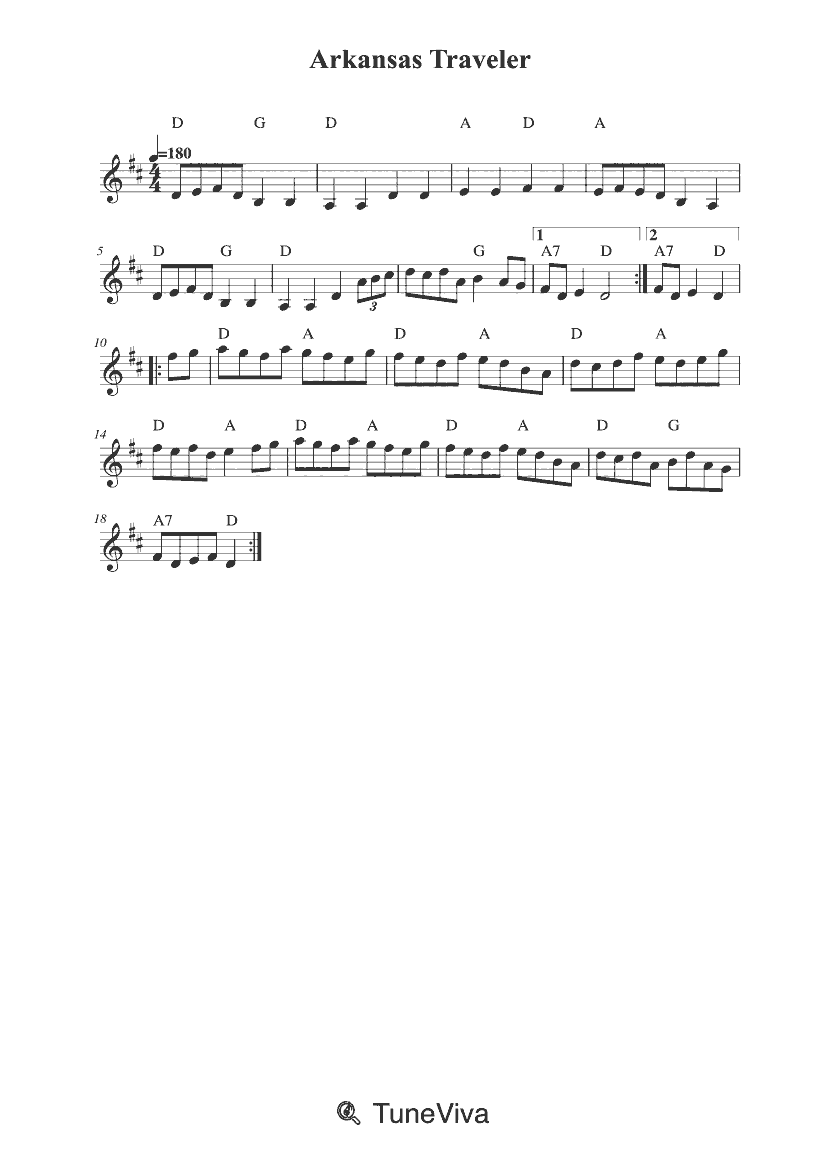
Arkansas Traveler
Misc Traditional
42 sec
Open scoreArkansas Traveler sheet music appears here under both 'Traveler' and 'Traveller' spellings, with versions presented as traditional folk music. The scores differ in key, time signature and tempo, so the practical choice is which notation suits the key and rhythmic feel you want.
Scores 1–20 of 36
Misc Traditional
42 sec
Open score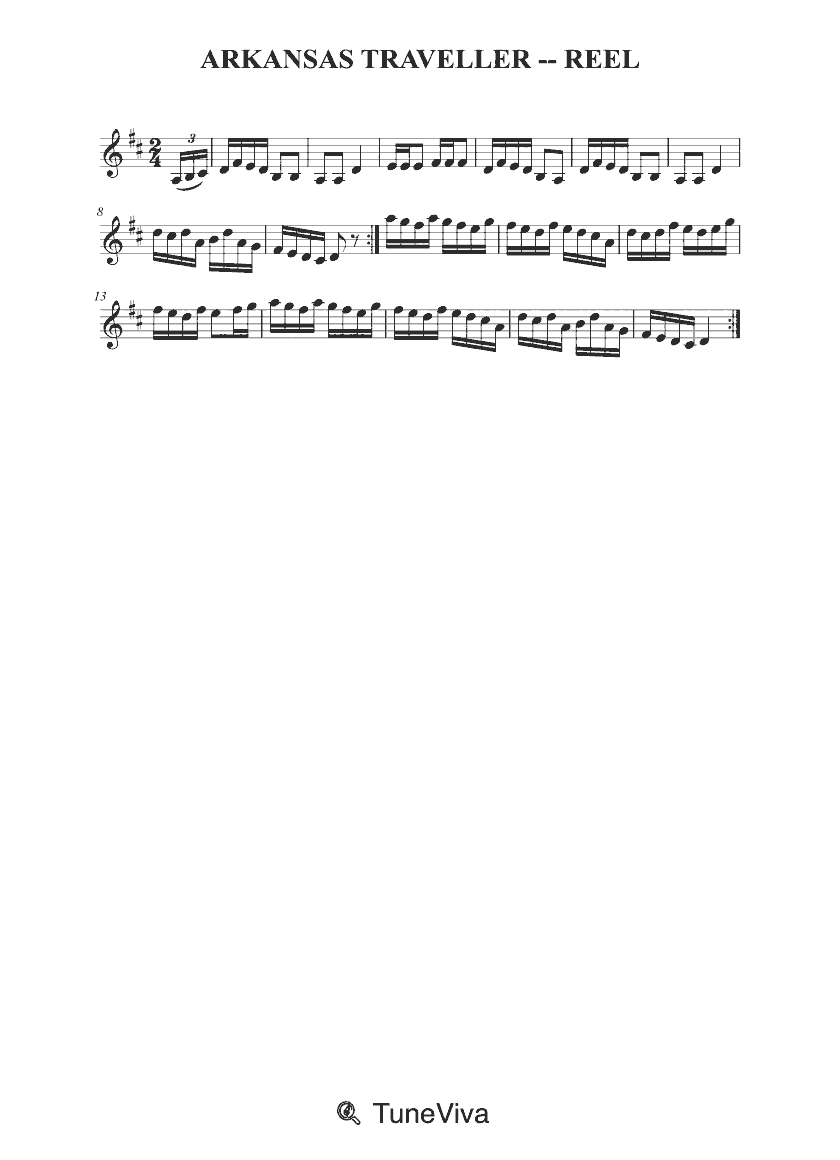
Misc Traditional
41 sec · Score #87415
Open score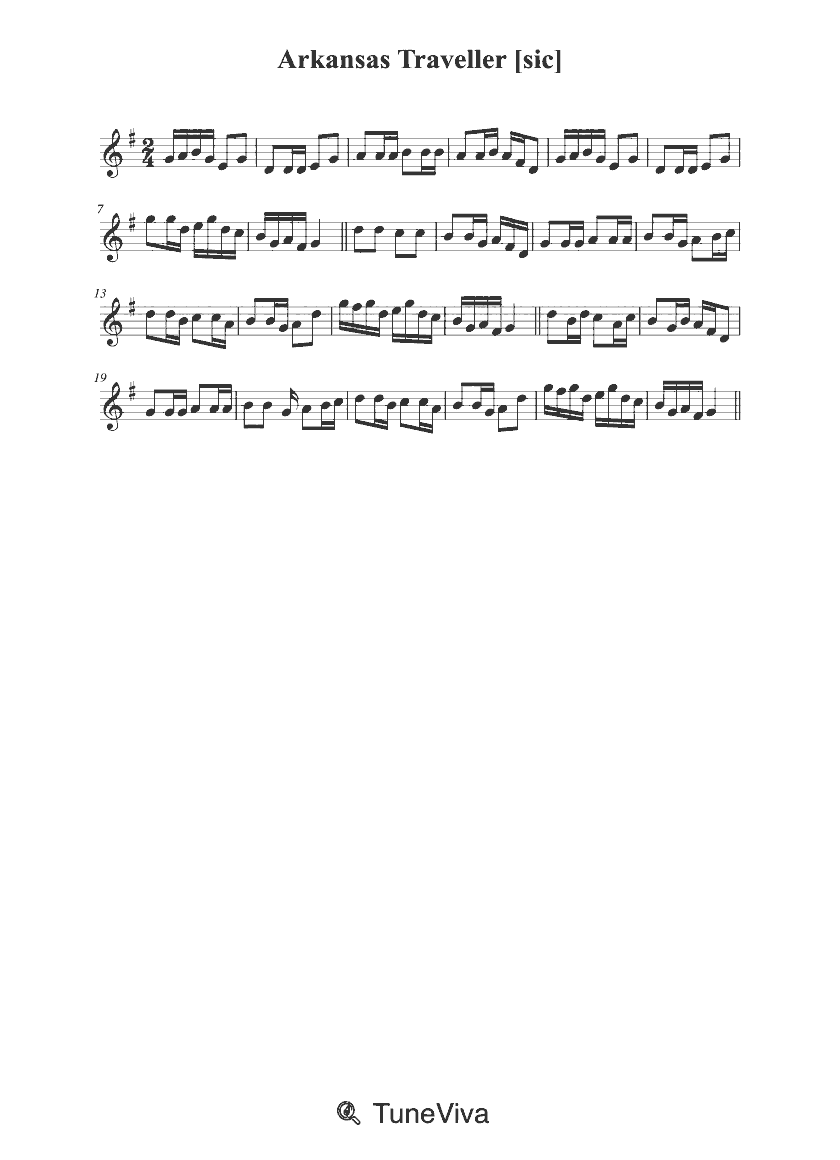
Misc Traditional
24 sec
Open score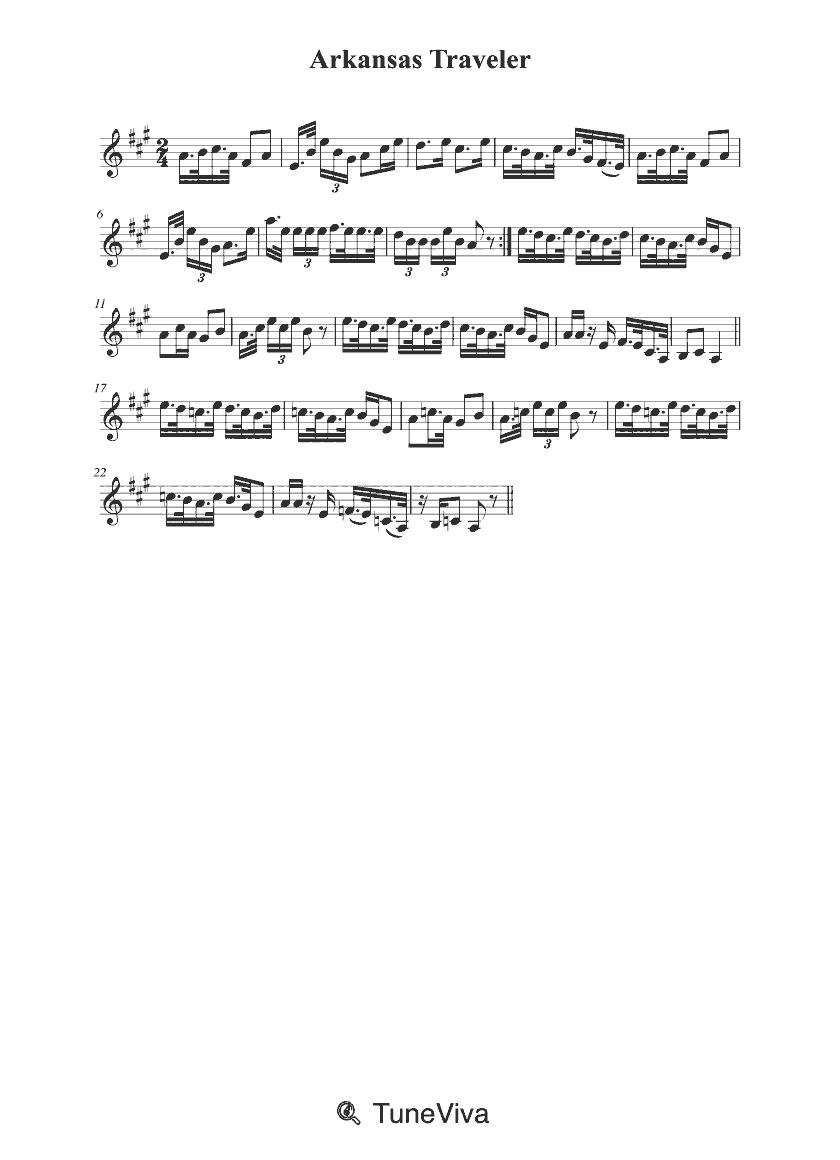
Misc Traditional
32 sec
Open score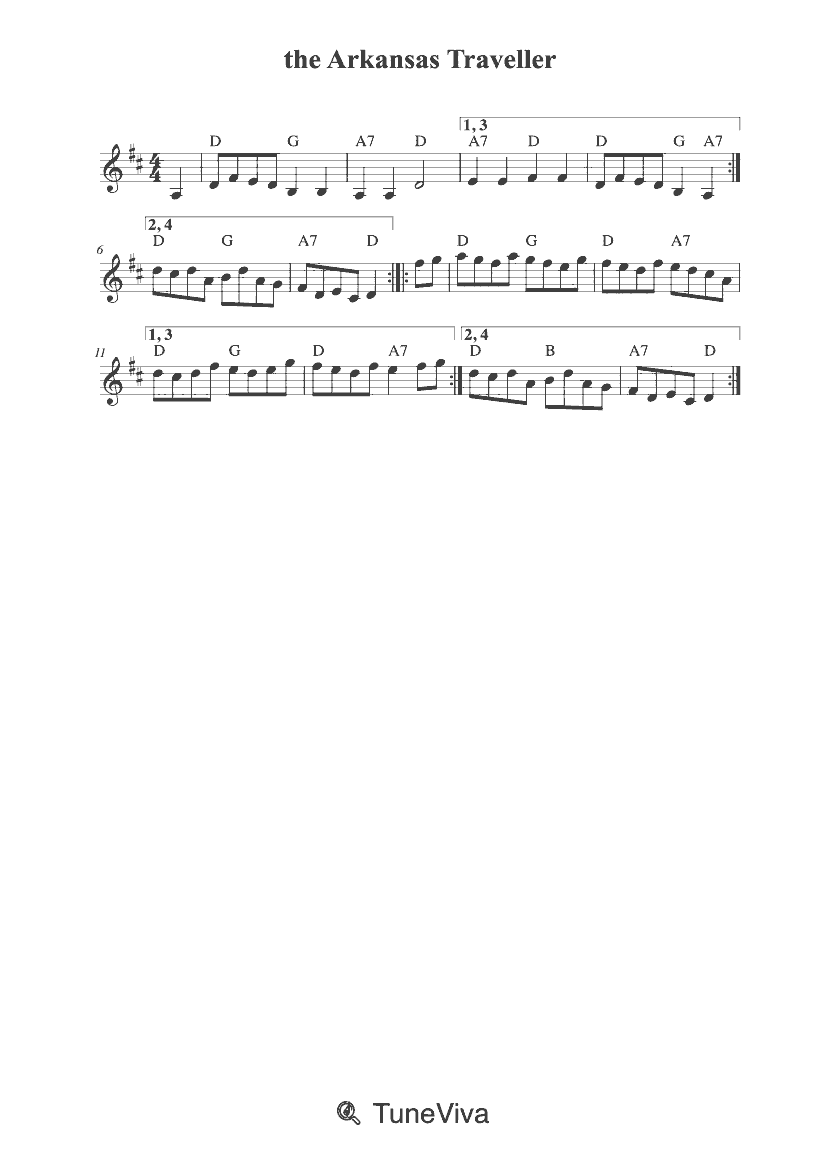
Misc Traditional
43 sec
Open score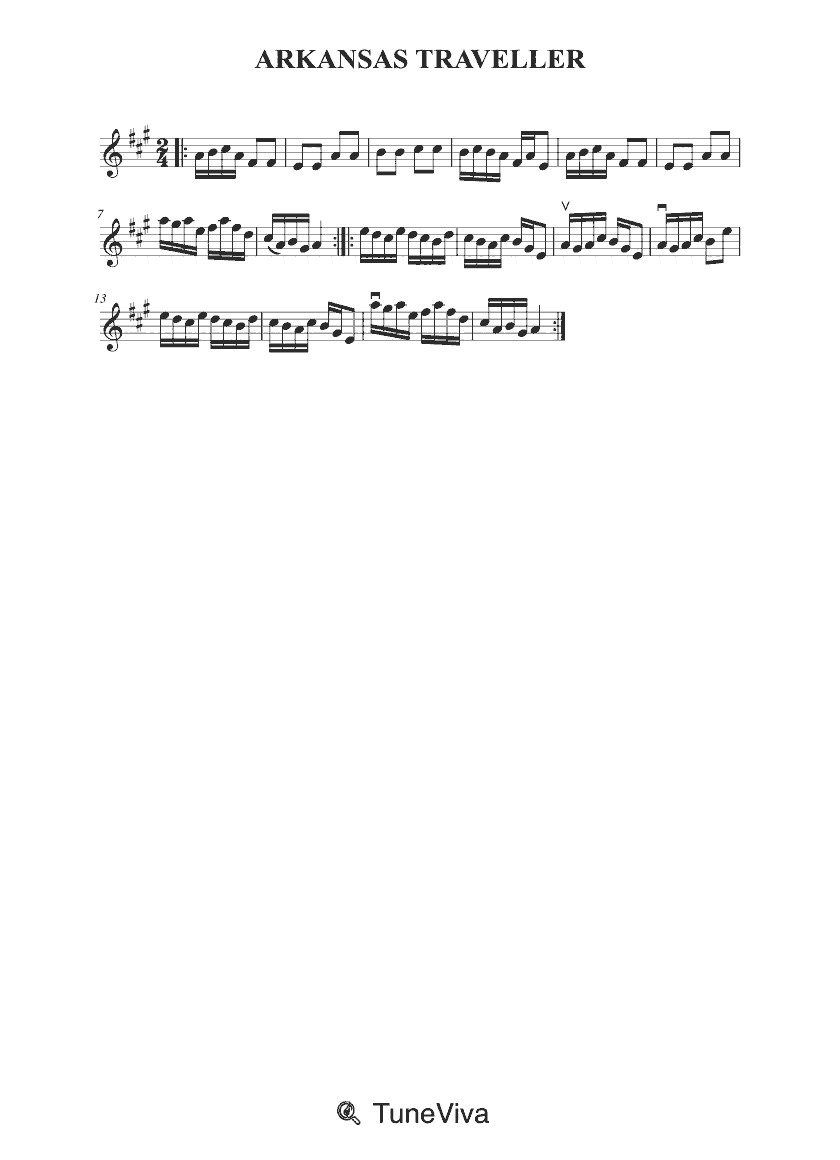
Misc Traditional
32 sec
Open score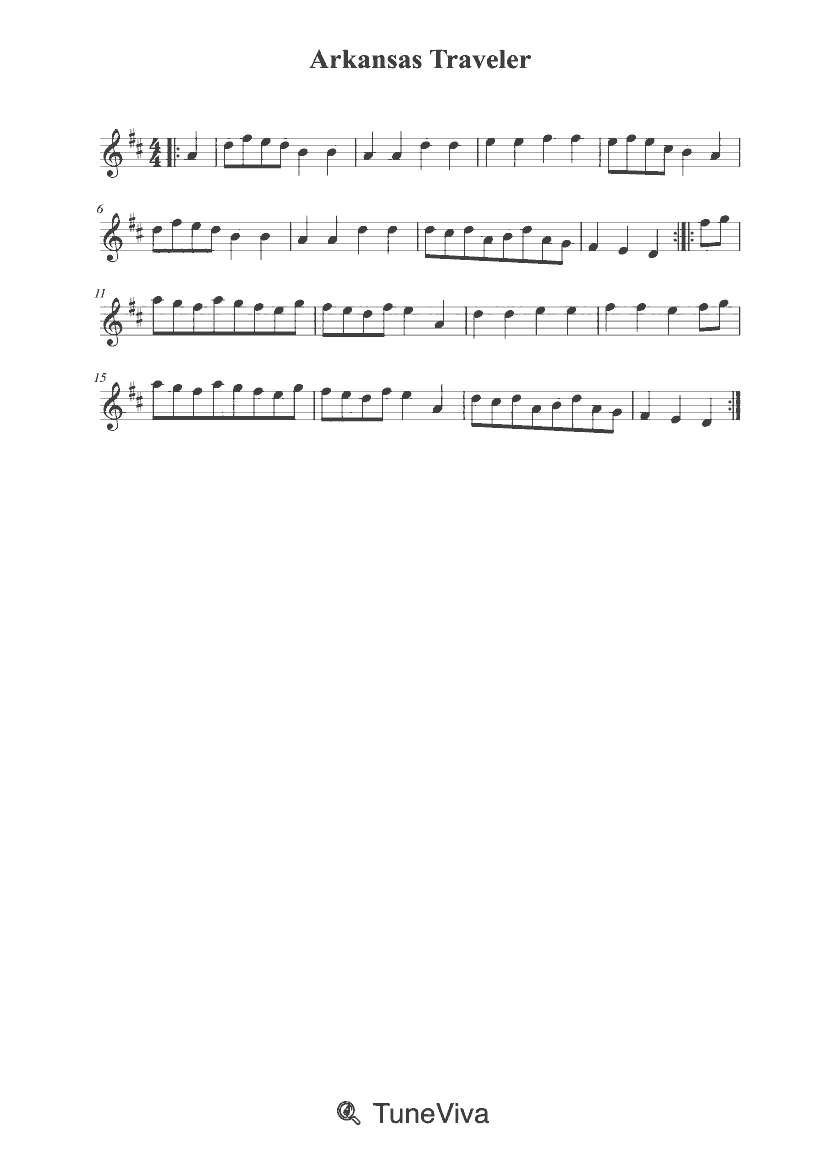
Misc Traditional
1 min 4 sec
Open score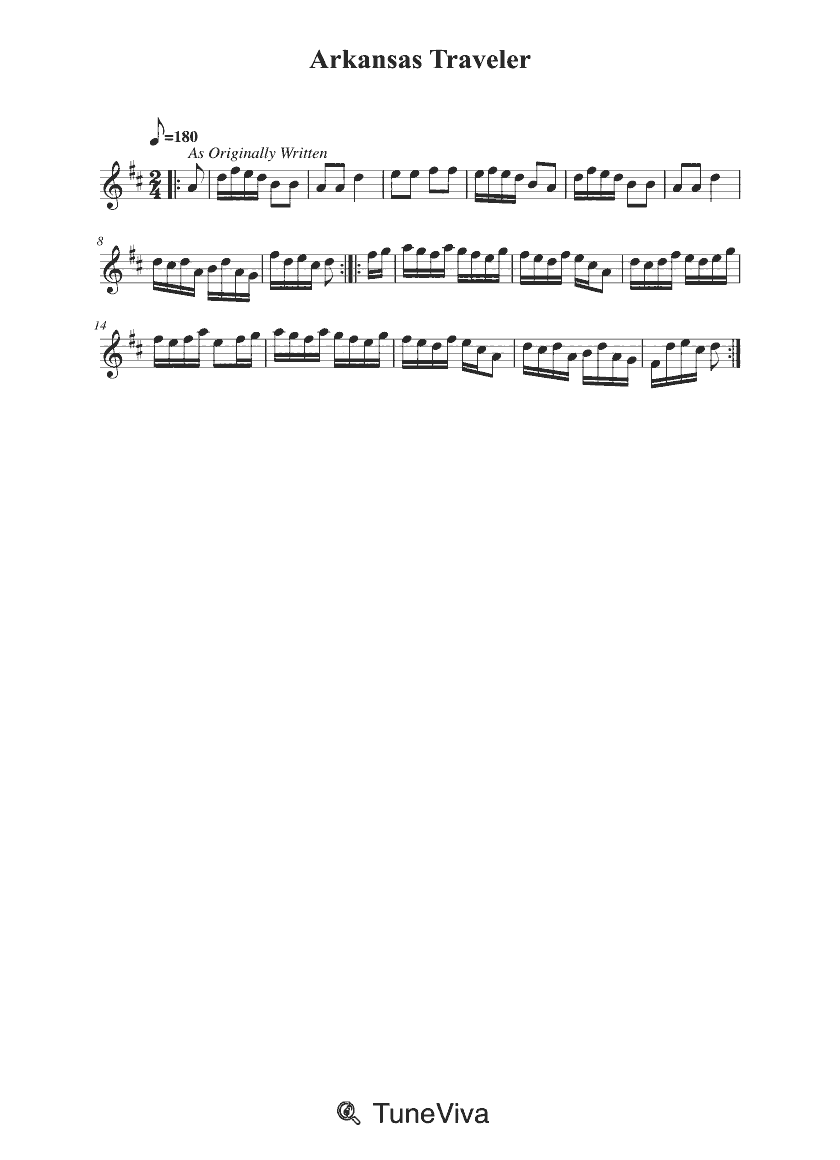
Misc Traditional
43 sec
Open score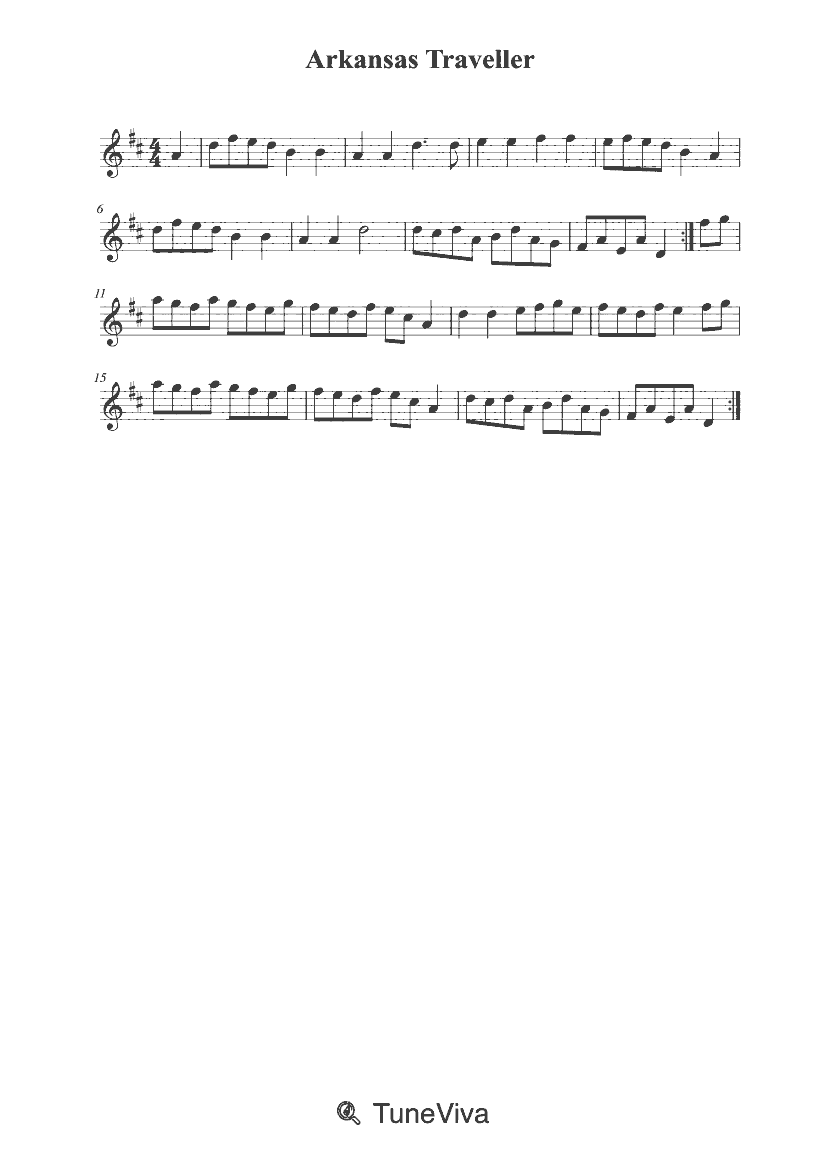
Misc Traditional
1 min 20 sec
Open score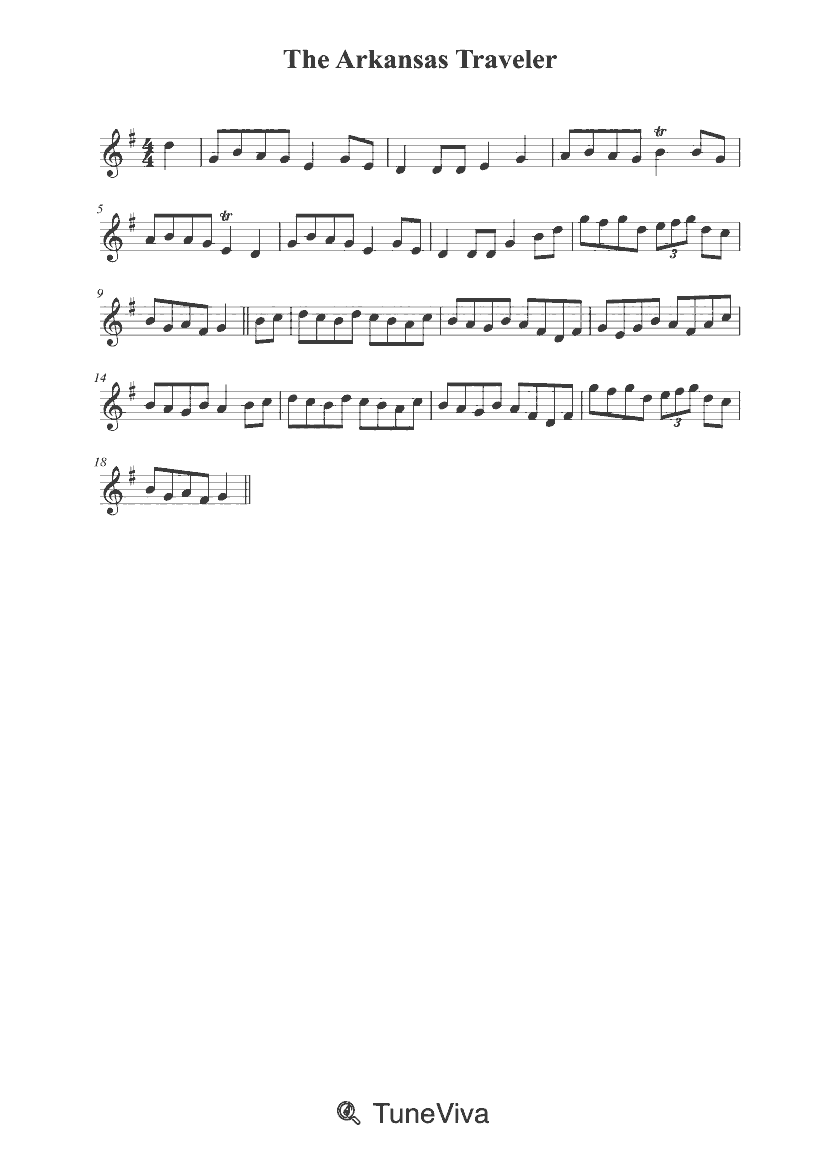
Misc Traditional
32 sec
Open score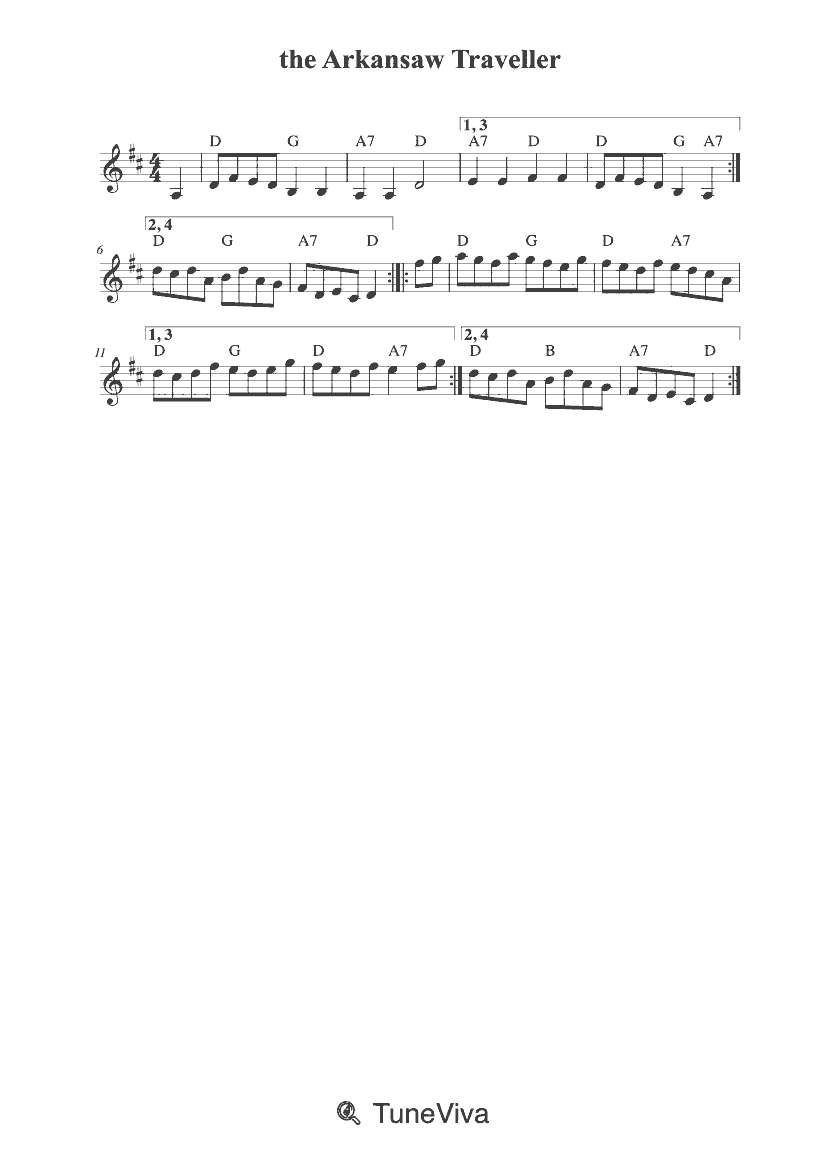
Misc Traditional
the Arkansas Traveller
43 sec · Score #149422
Open score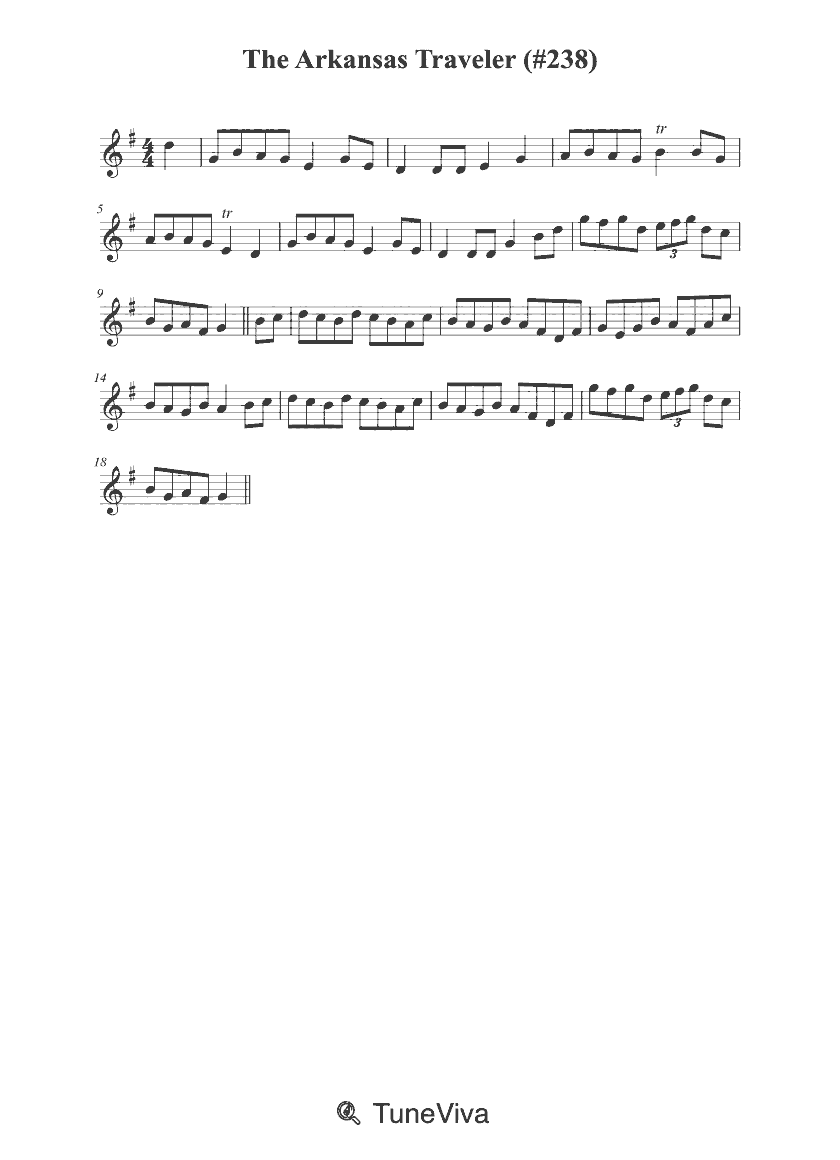
Misc Traditional
32 sec
Open score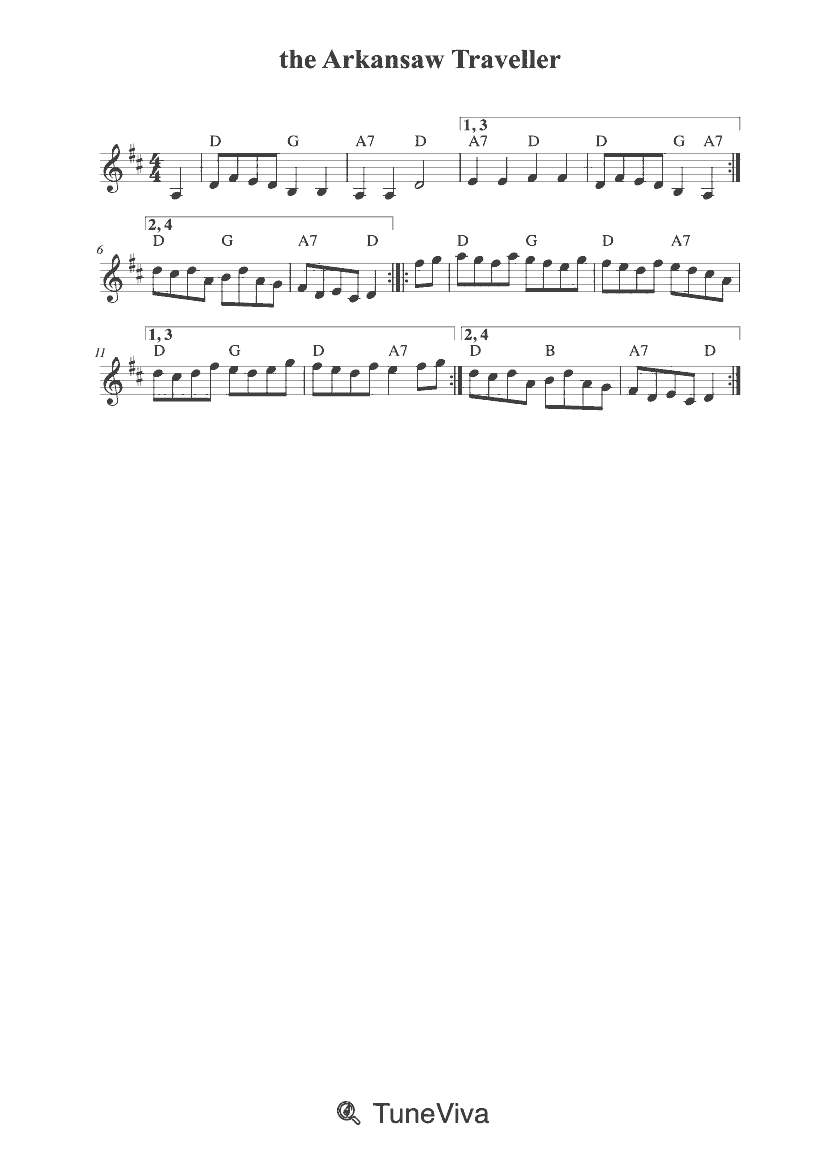
Misc Traditional
the Arkansas Traveller
43 sec · Score #121354
Open score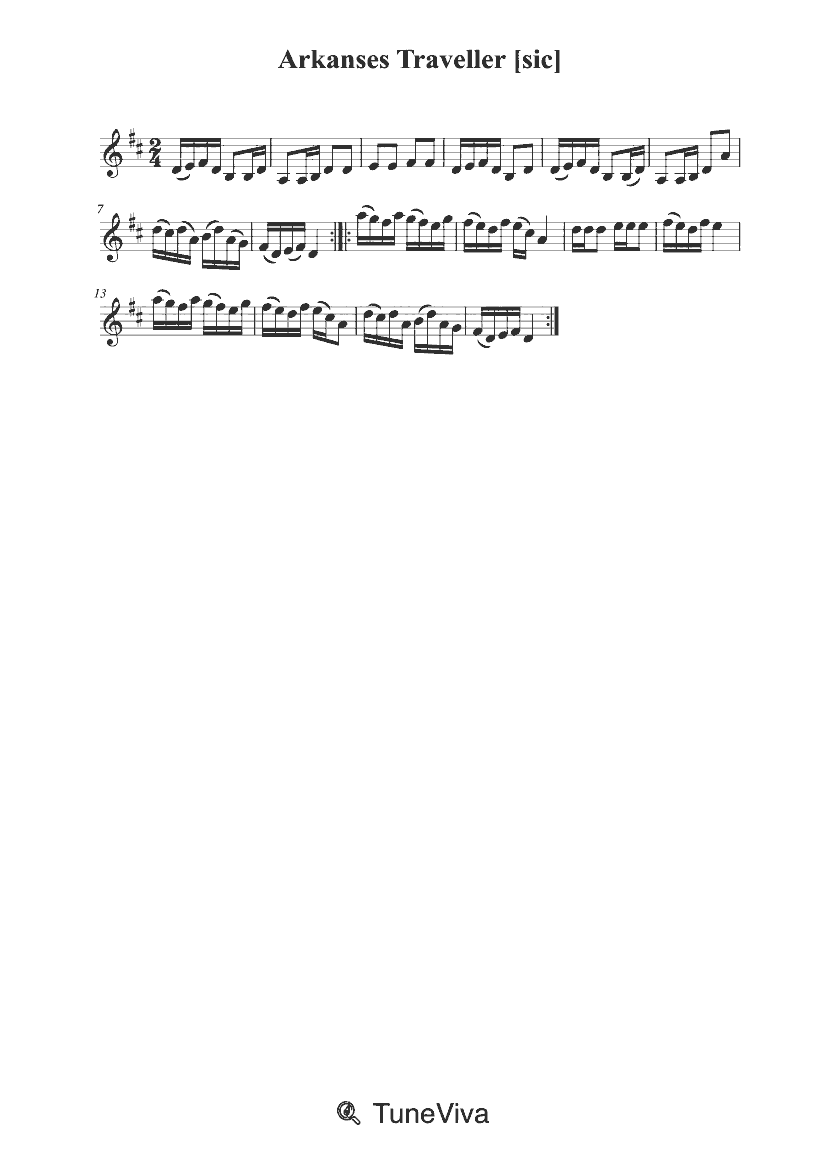
Misc Traditional
32 sec
Open score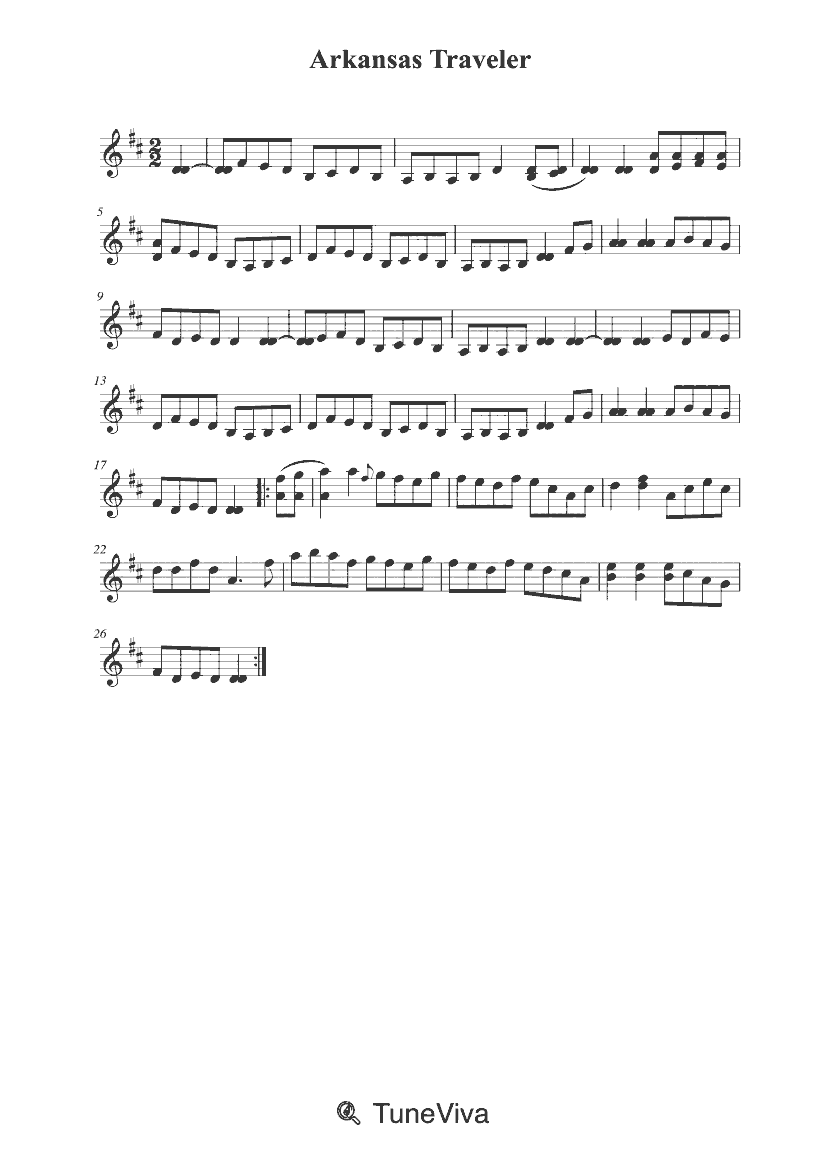
Misc Traditional
2 min 8 sec
Open score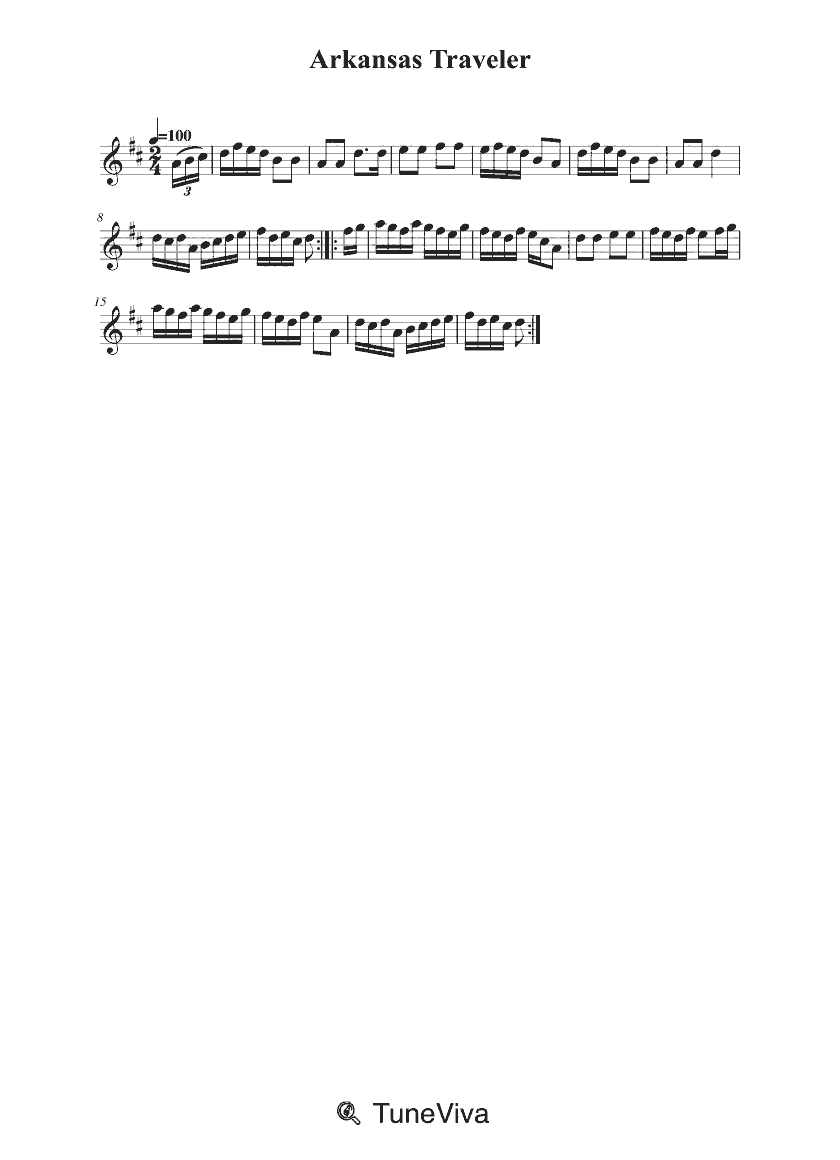
Misc Traditional
38 sec
Open score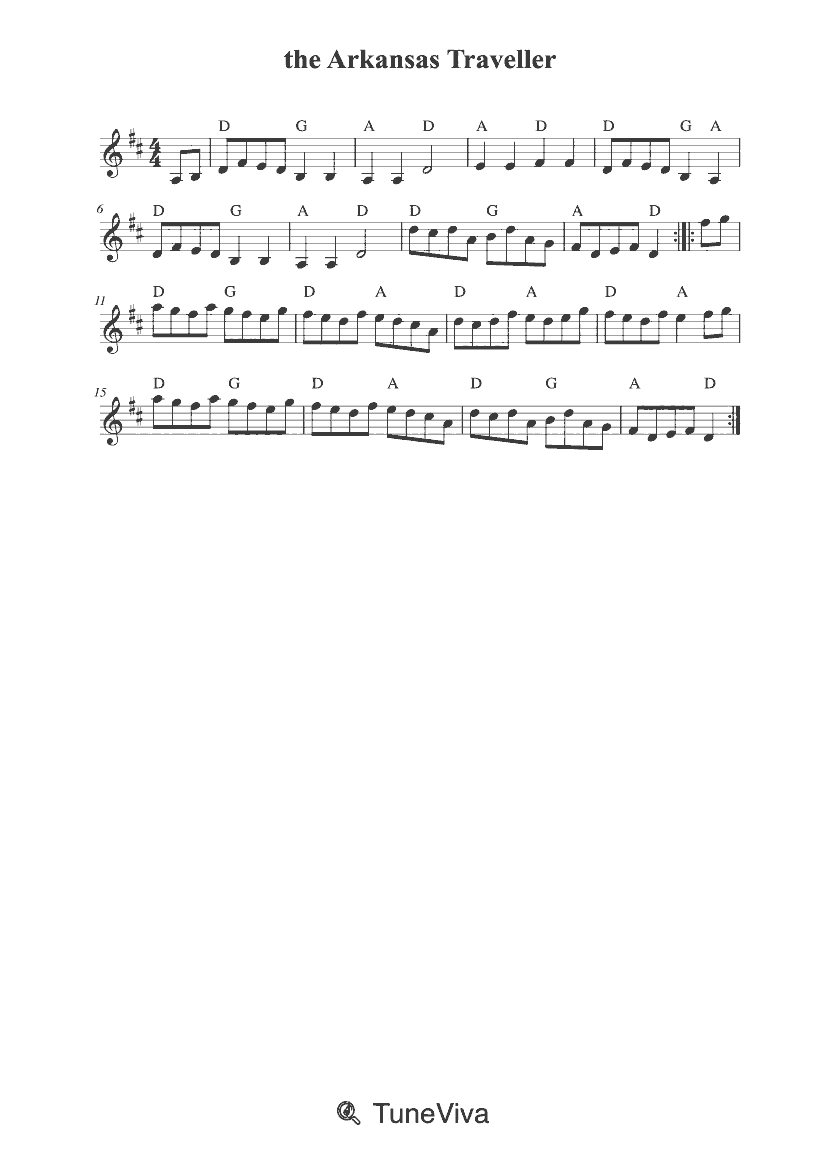
Misc Traditional
1 min 4 sec
Open score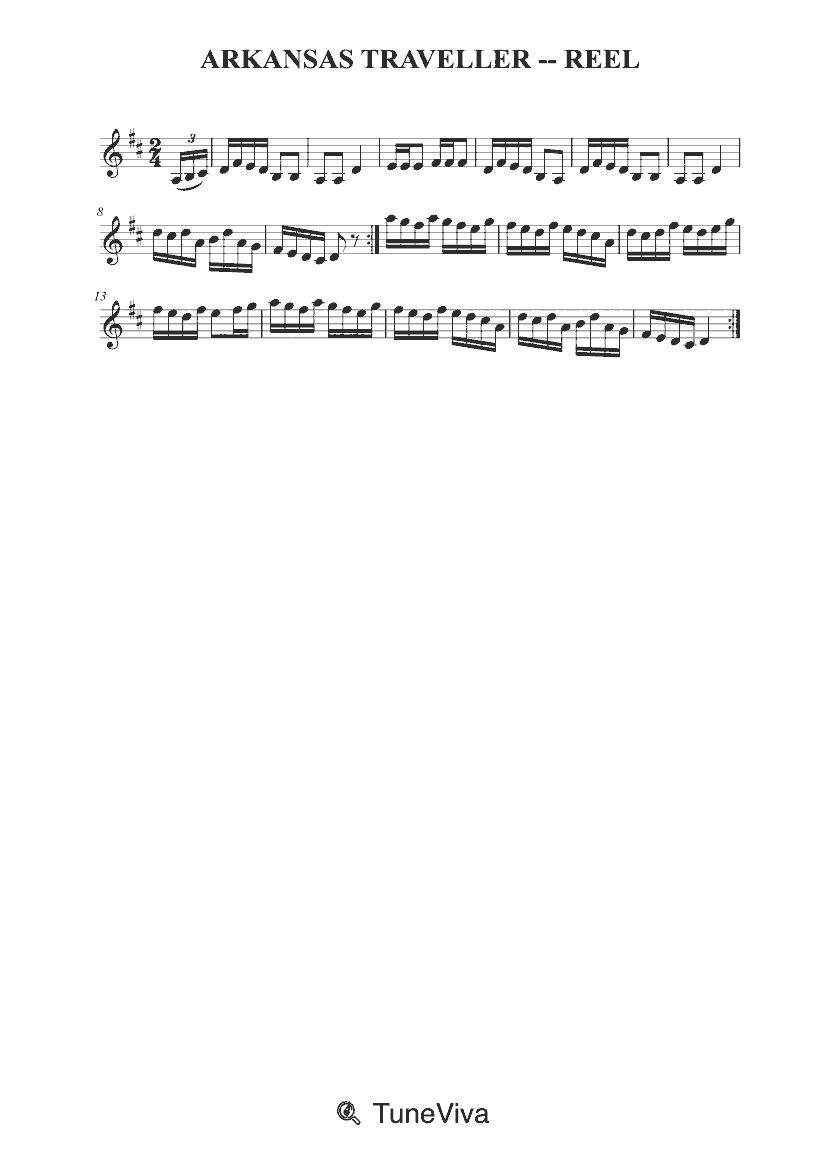
Misc Traditional
41 sec · Score #134150
Open score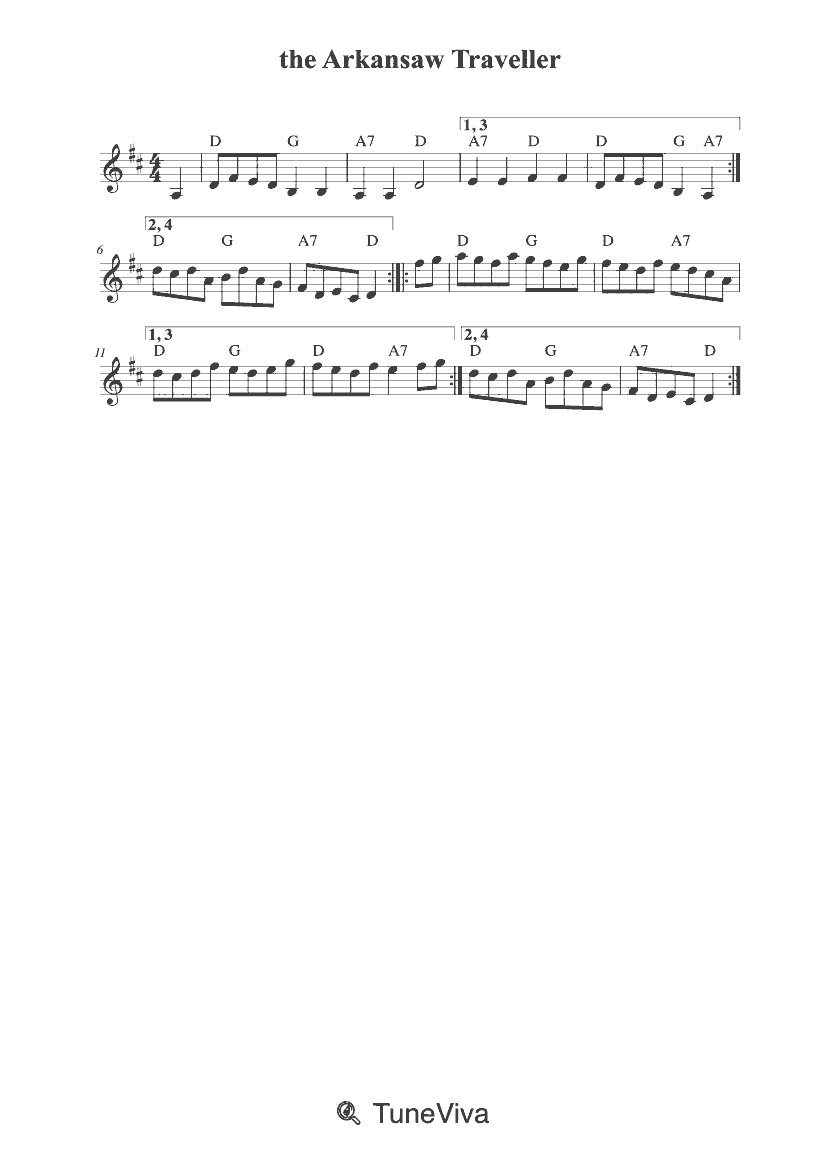
Misc Traditional
the Arkansas Traveller
43 sec · Score #230841
Open score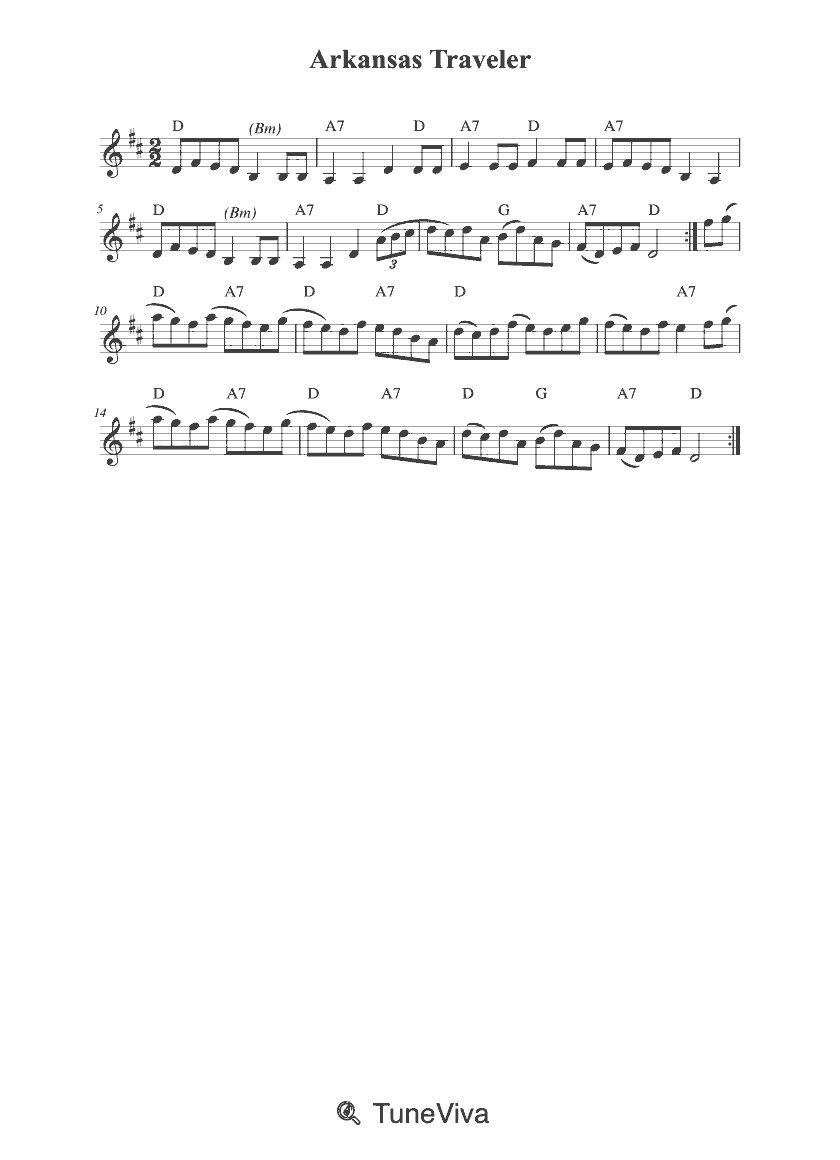
Misc Traditional
2 min 42 sec
Open scorePage 1 of 2
The Arkansas Traveler scores include a version in D major with a 4/4 opening and a listed tempo of 180 BPM, a D major version in 2/4, and a G major version in 2/4. Use the key to match your instrument or preferred register, and the time signature to judge whether the notation groups the tune in two or four beats per bar. Read the score itself to confirm the complete arrangement.
Opening key signatures are shown as two sharps (D major), two sharps (D major) and one sharp (G major). Time signatures are 4/4, 2/4 and 2/4. These details describe the opening of each score, not necessarily every section, so compare the opening signature first if you need a particular key.
Both 'Traveler' and 'Traveller' appear in the titles. One title is 'Arkansas Traveller -- Reel', which names a reel, and another is 'Arkansas Traveller [sic]'. Search both spellings if you are looking for a specific setting, and read the title details rather than assuming all versions are identical.
No composer is credited in the supplied score details; the artist is given as Misc Traditional. The details do not verify origin, date, lyrics, instrumentation, difficulty grade or whether each score is a complete arrangement. Use the score itself and an authoritative reference for those questions.
Catalogue duration 42 sec. Opening key signature: 2 sharps (D major). Opening time signature: 4/4. Opening tempo: 180 BPM.
Catalogue duration 41 sec. Opening key signature: 2 sharps (D major). Opening time signature: 2/4.
Catalogue duration 24 sec. Opening key signature: 1 sharp (G major). Opening time signature: 2/4.
The Arkansas Traveler scores listed here open in D major and G major. Two versions show two sharps (D major), and one shows one sharp (G major). Check the opening key signature of the score you choose, because these details describe the opening and may not cover later key changes.
Arkansas Traveler carries no composer name in the supplied score details; the artist credit is Misc Traditional. The versions are therefore presented as traditional rather than as a named composer's work. For attribution or origin claims, consult an authoritative reference.
One Arkansas Traveler score opens in 4/4 with a listed tempo of 180 BPM, while two open in 2/4. A 4/4 signature groups four quarter-note beats per bar; 2/4 groups two. Compare the scores to see how the grouping affects the look and feel of the tune.
The Arkansas Traveler titles include both 'Traveler' and 'Traveller'. One version is titled 'Arkansas Traveller -- Reel' and another 'Arkansas Traveller [sic]'. If you are searching for a particular setting, try both spellings and check the title details, because the spelling alone does not prove that two versions are the same arrangement.
One Arkansas Traveler score is titled 'Arkansas Traveller -- Reel'. The word 'Reel' appears in that title and names a type of dance tune, but the other listed titles do not use it. The reel-titled version opens in D major with a 2/4 time signature.
The Arkansas Traveler score listed in 4/4 has an opening tempo of 180 BPM. The other two listed versions do not show a tempo in the details provided. Tempo markings describe the opening pace only and should be checked against the score you use.
A difficulty grade is not supplied for the Arkansas Traveler versions, so the scores cannot be ranked as easy or hard from the details given. Compare the key signatures, time signatures and tempos, then read through the notation to judge which version suits your playing level.