Banish Misfortune
Misc Traditional
58 sec
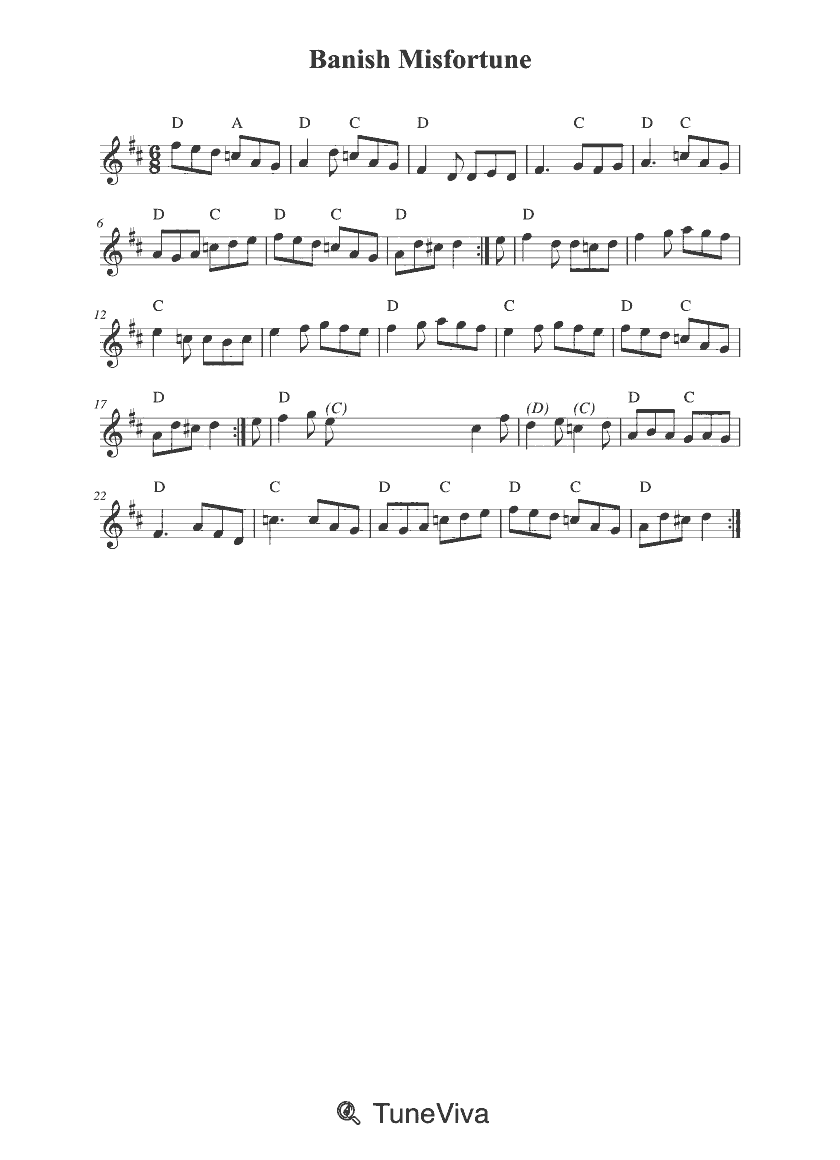
Open scoreBanish Misfortune is a traditional tune listed in the folk repertoire, and the sheet music available here presents it in several different settings. All three scores open with two sharps, indicating D major, but they do not agree on metre: two are notated in 6/8 while one opens in 5/8. Checking the time signature and the length of each setting before you start will tell you quickly which version matches the way you already know the tune, or which one suits your instrument and session.
Scores 1–20 of 41
Misc Traditional
58 sec
Open score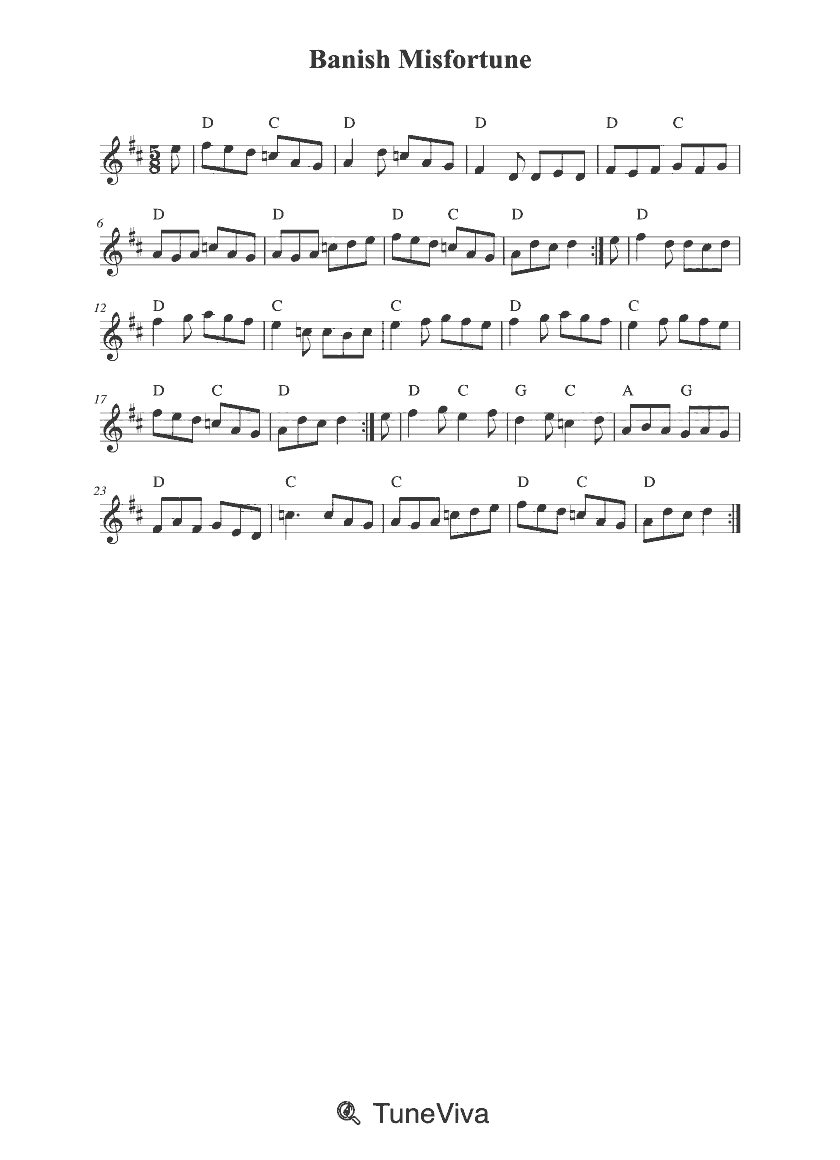
Misc Traditional
54 sec · Score #136492
Open score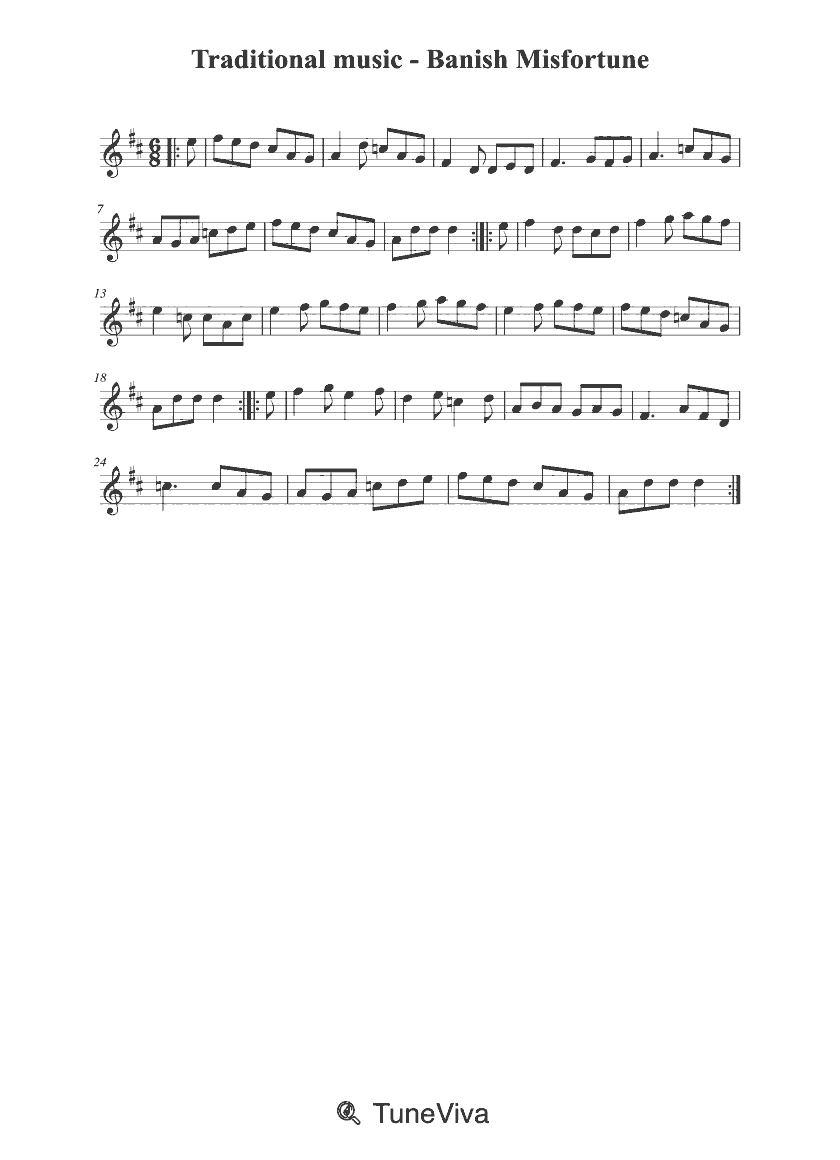
Trad
Spanish Misfortune
36 sec · Score #39798
Open score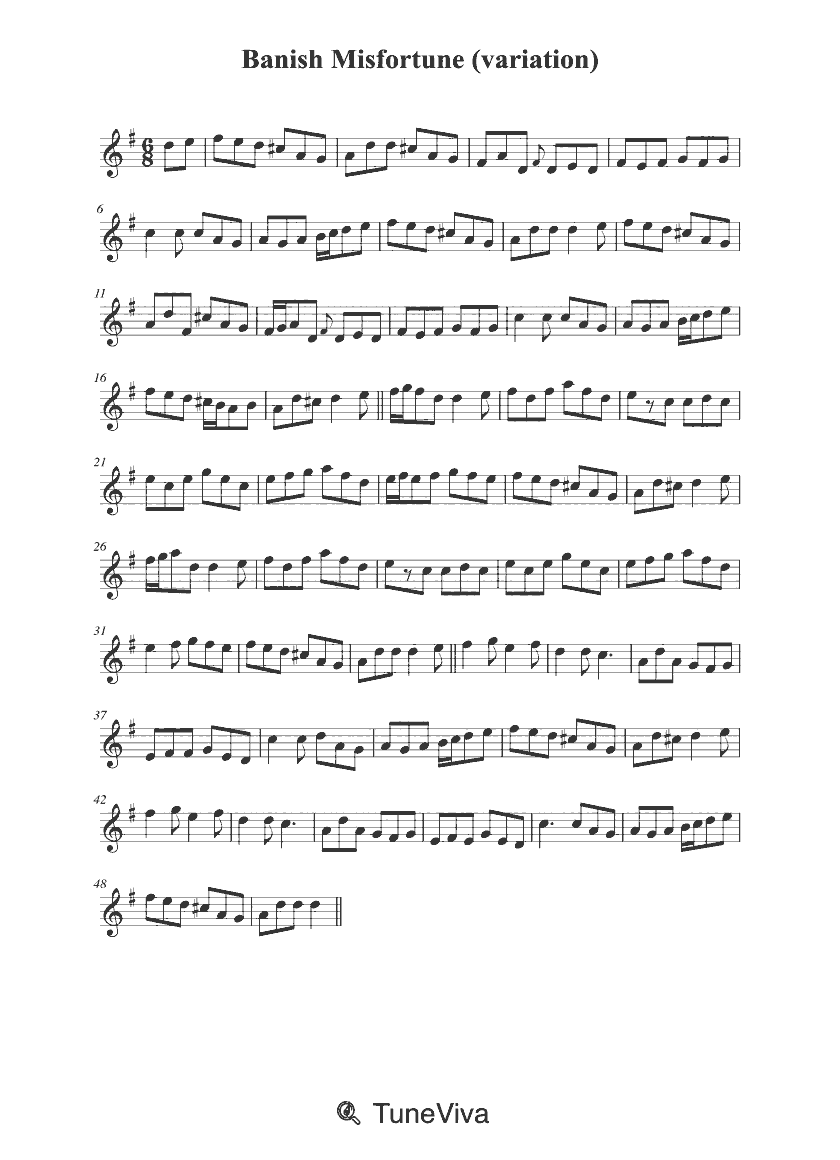
Misc Traditional
36 sec
Open score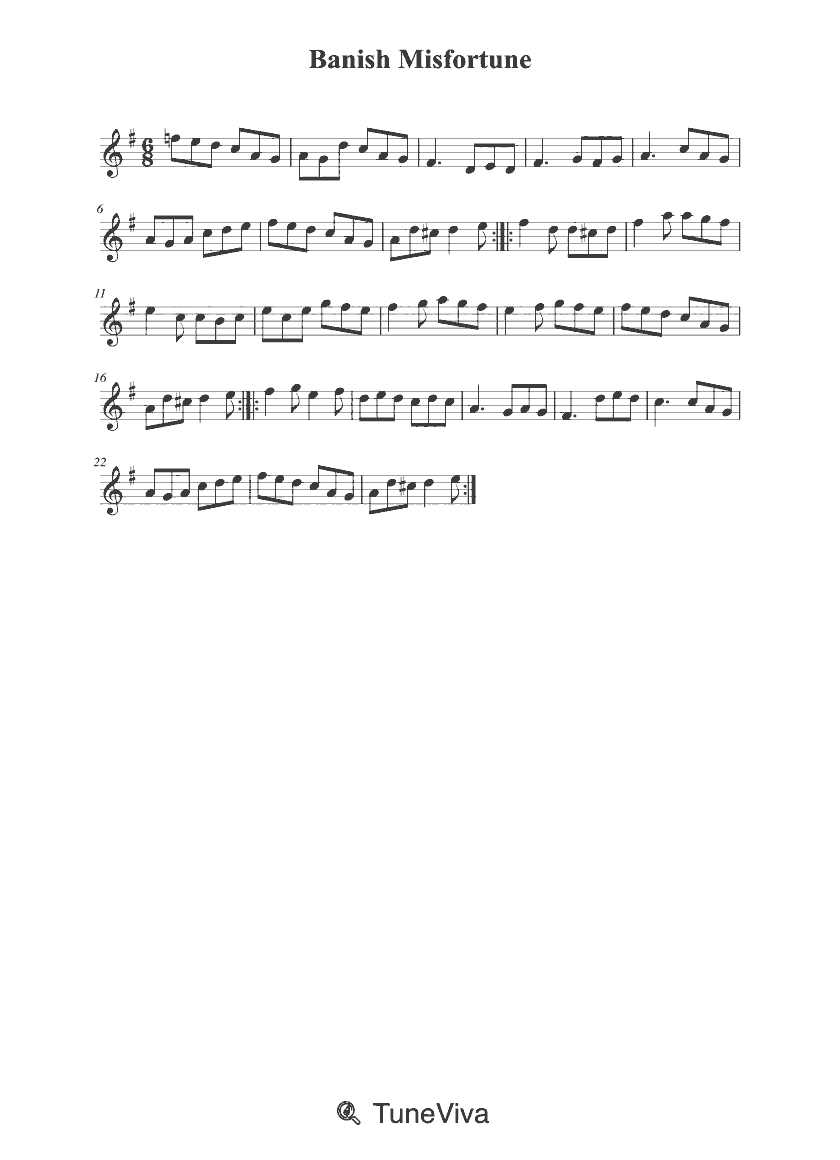
Misc Traditional
36 sec · Score #8758
Open score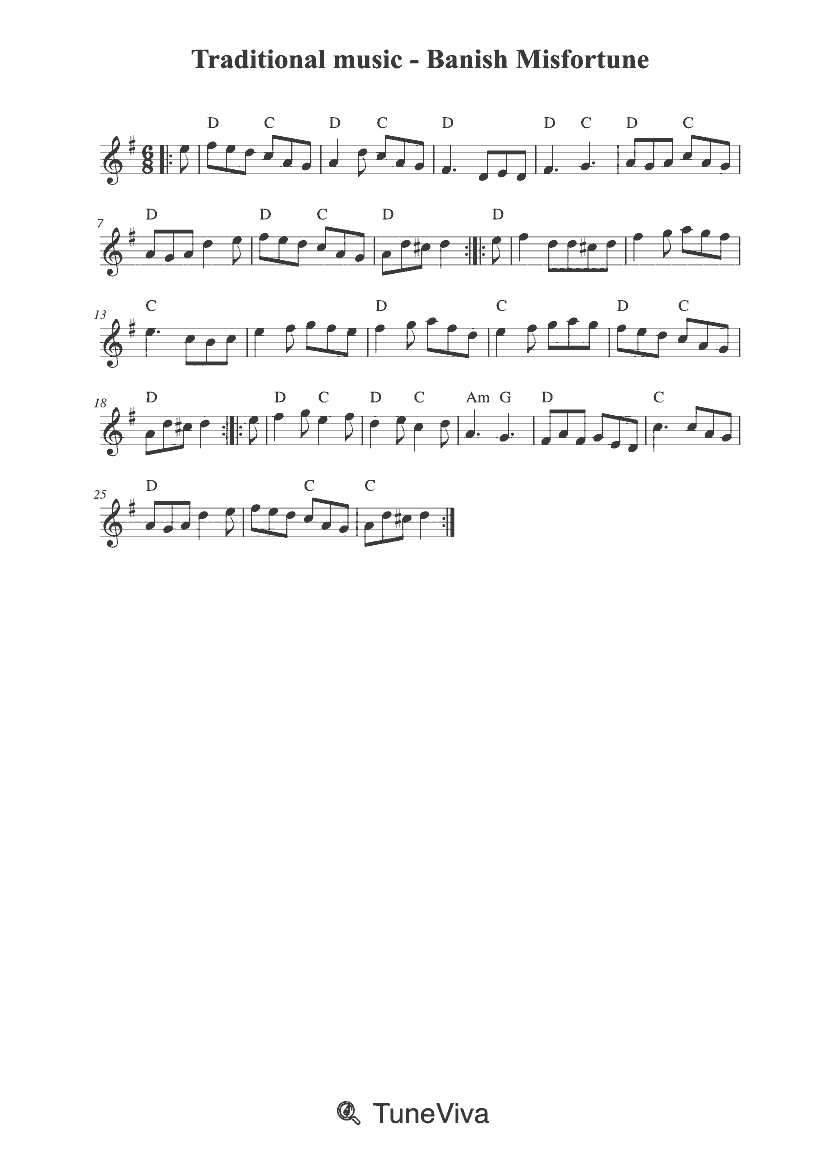
traditional
36 sec
Open score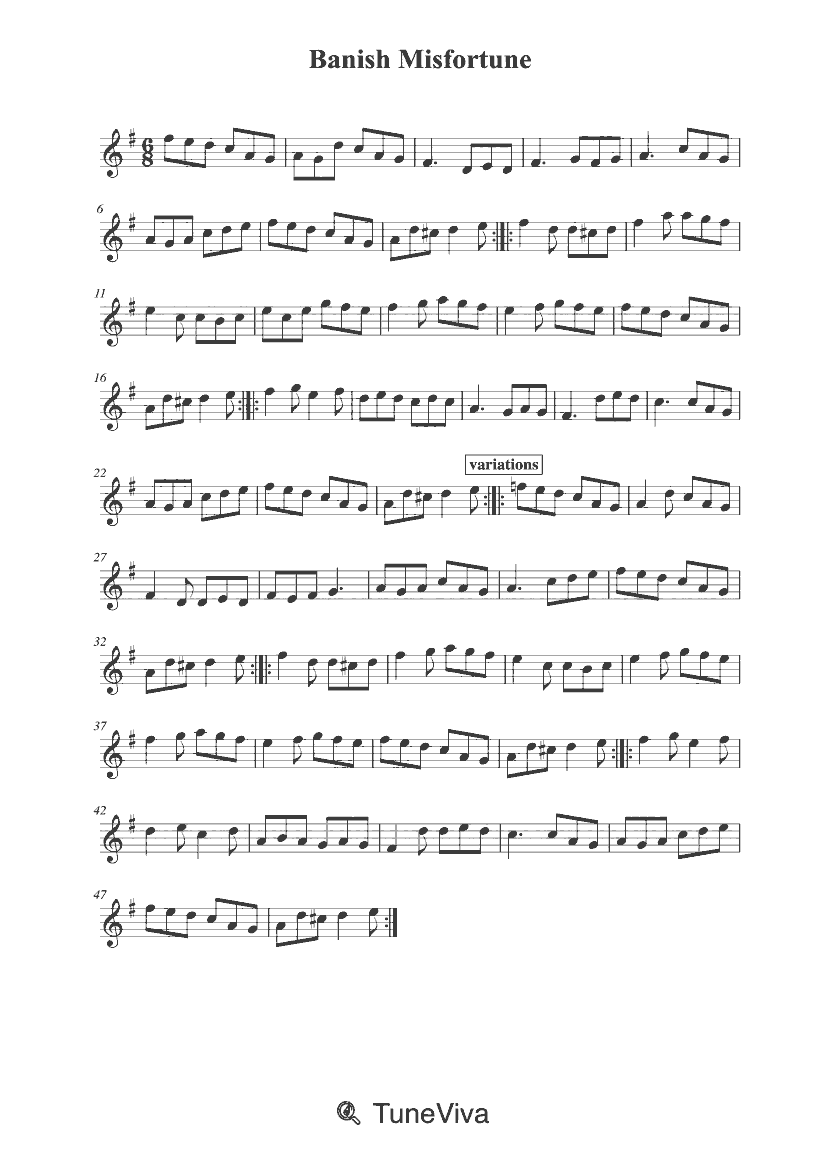
Misc Traditional
1 min 12 sec
Open score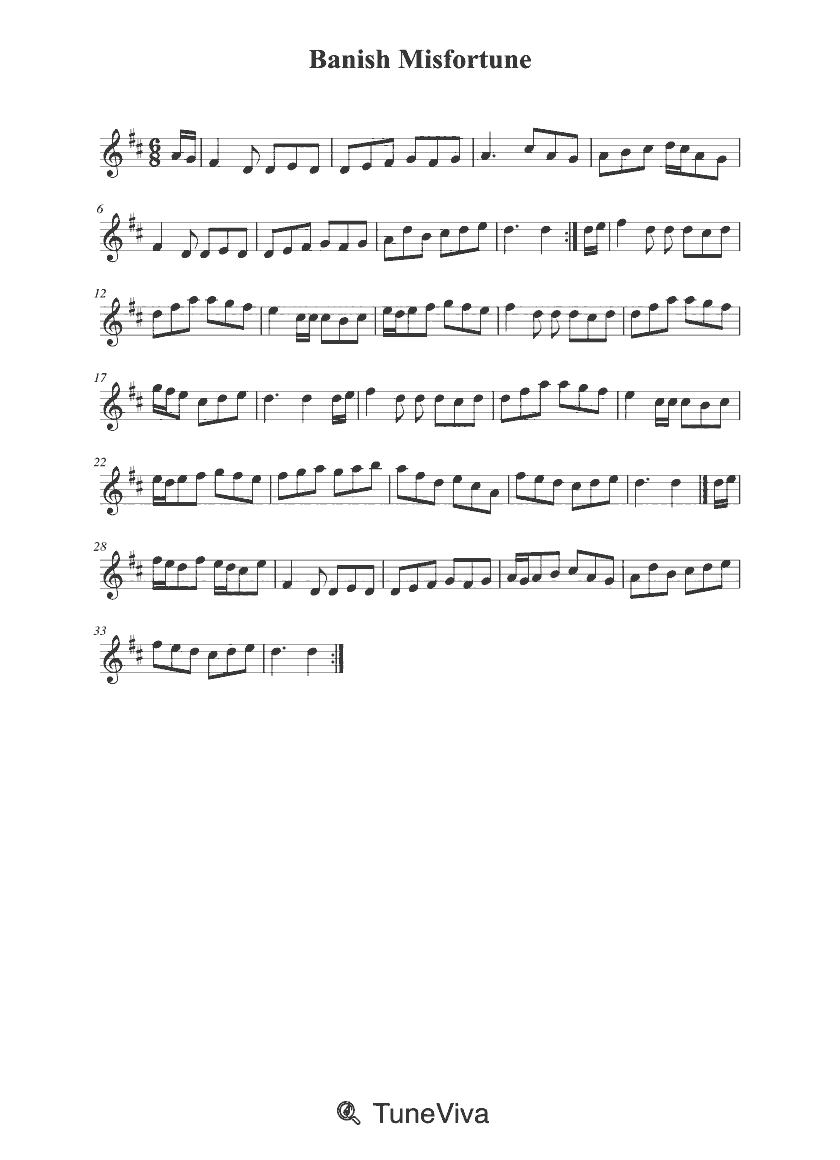
Joe Buchanan's Scottish Tome - Page 255.2
53 sec
Open score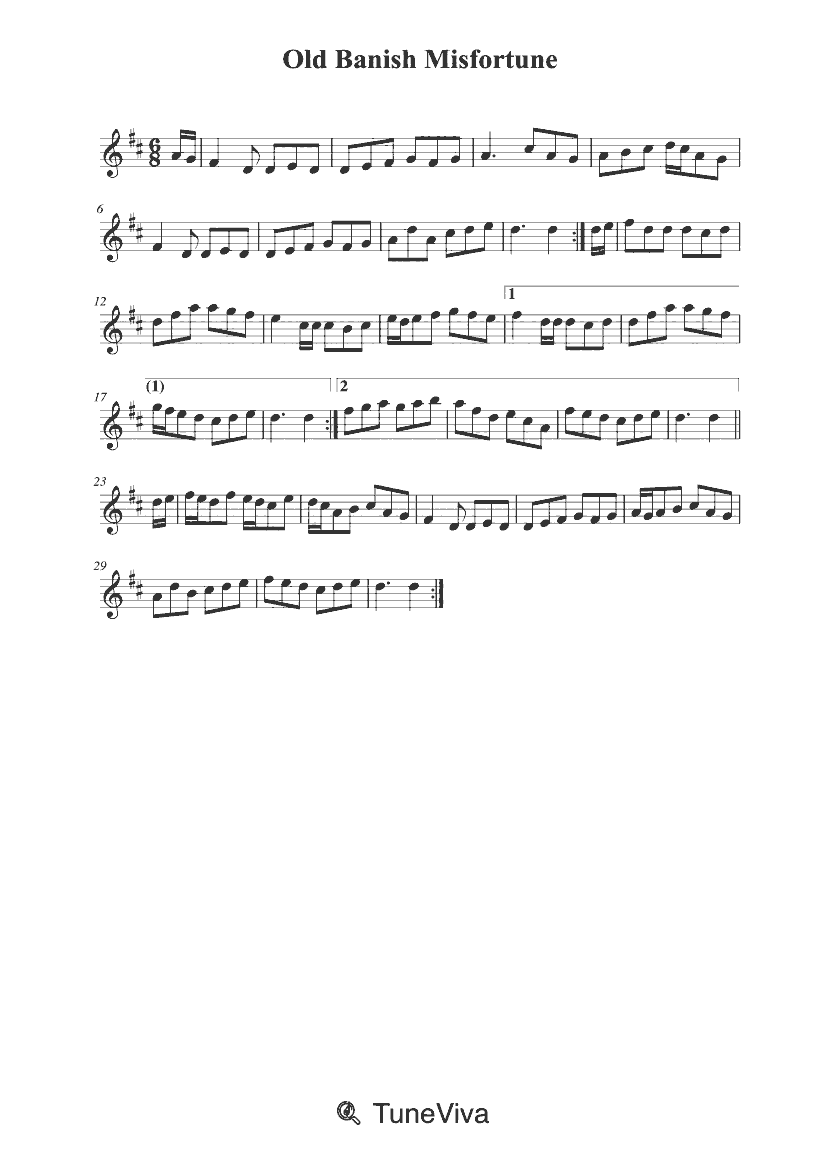
Misc Traditional
51 sec
Open score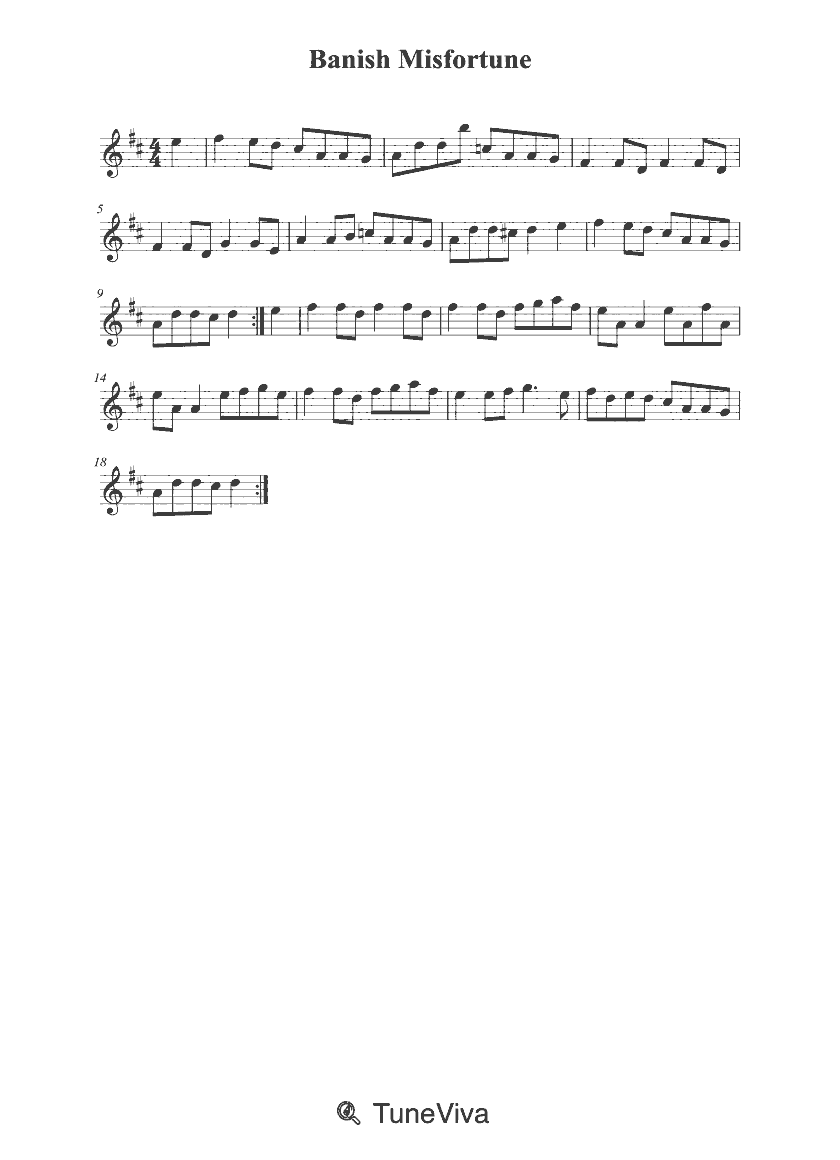
Misc Traditional
1 min 20 sec
Open score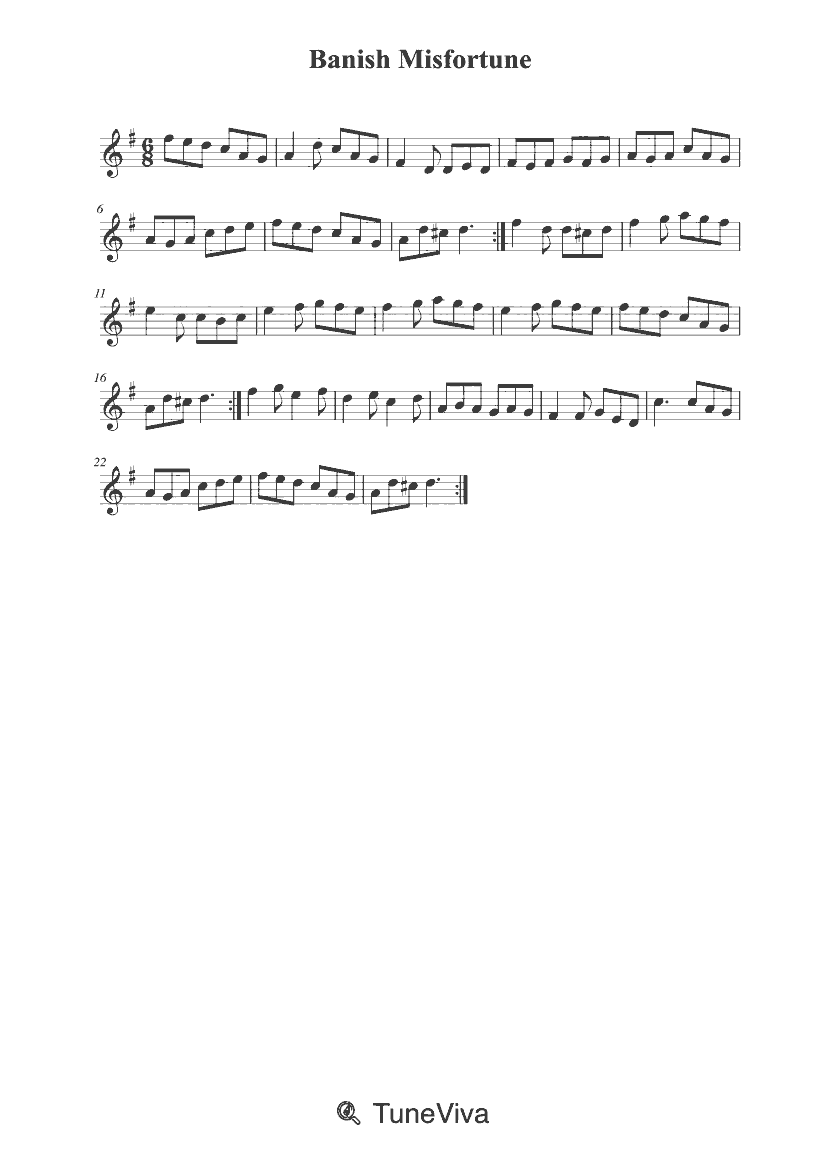
Misc Traditional
54 sec · Score #108245
Open score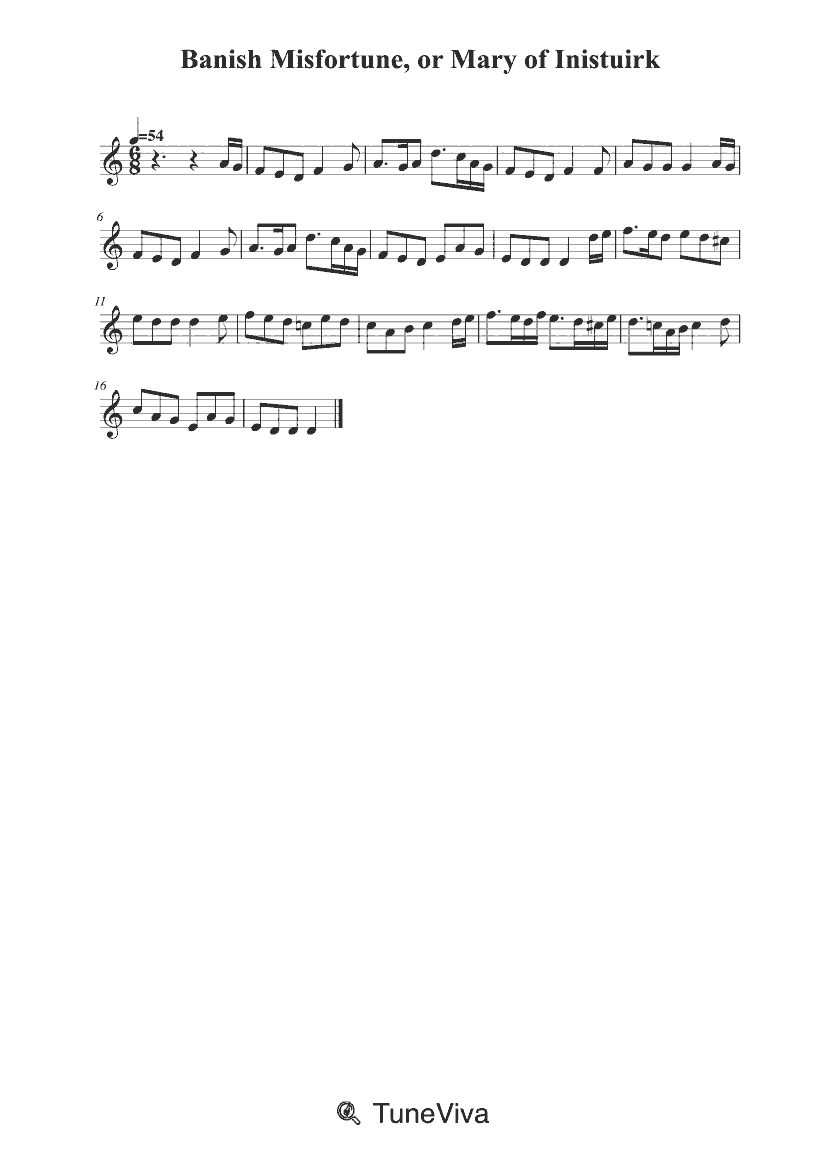
Misc Traditional
28 sec
Open score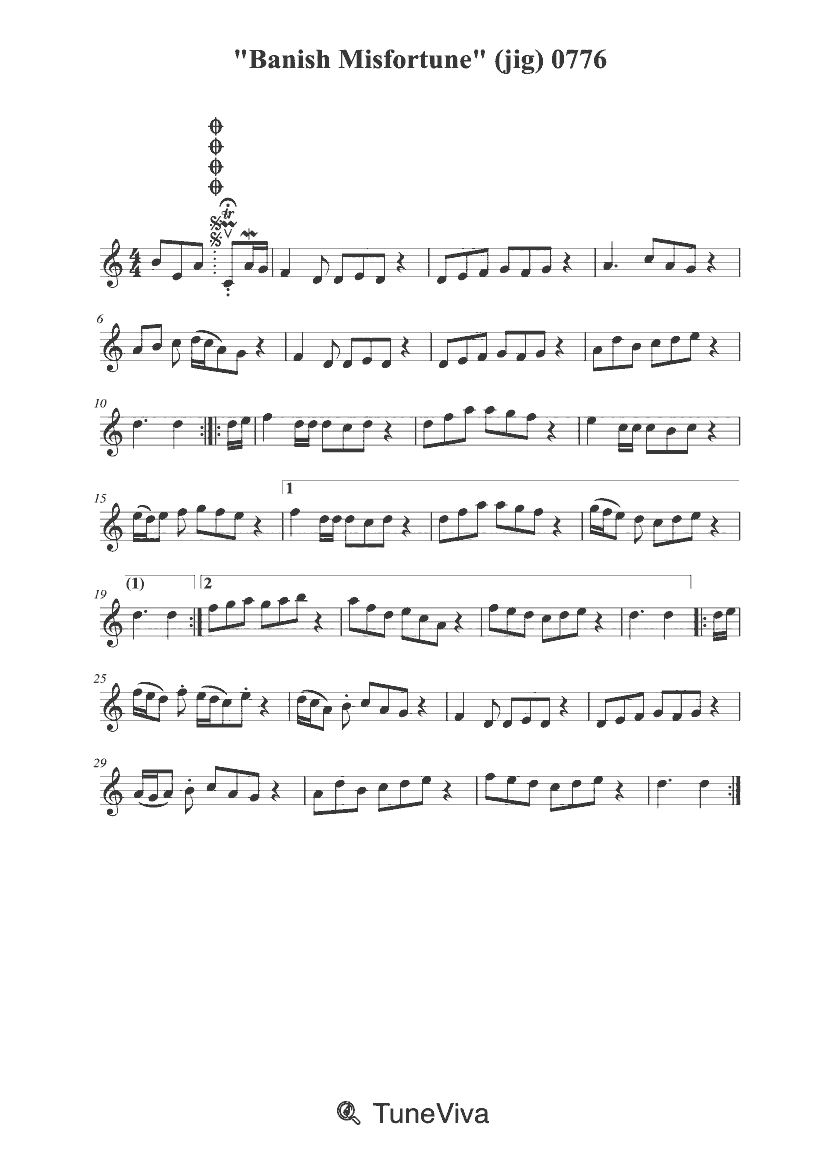
after Mr. Cronin
38 sec
Open score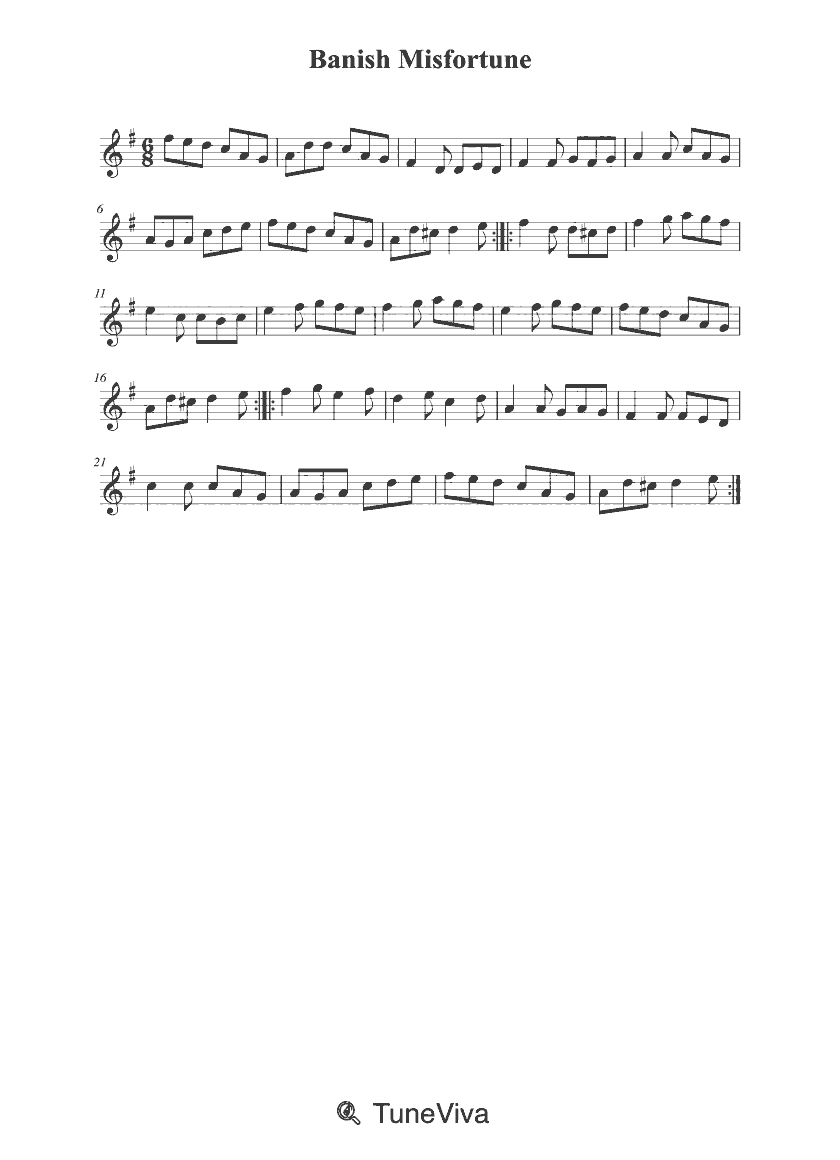
Misc Traditional
36 sec · Score #56374
Open score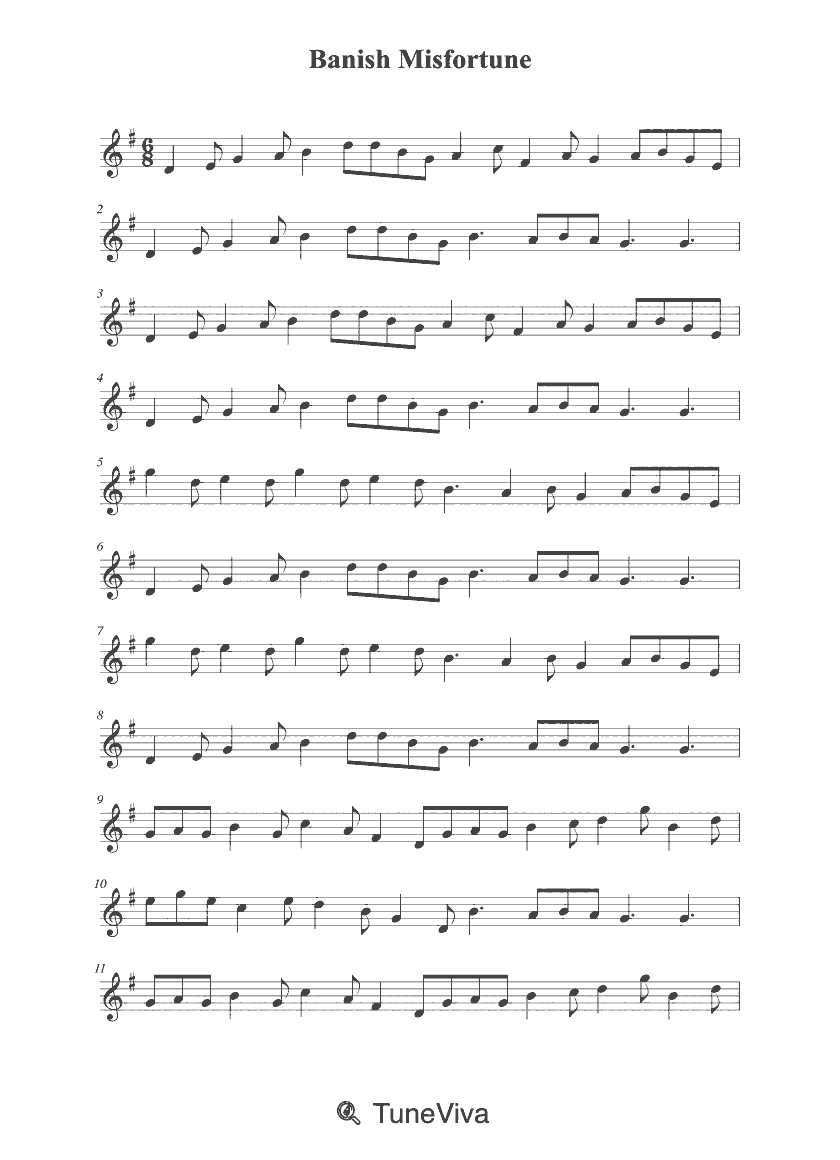
Misc Traditional
36 sec · Score #70864
Open score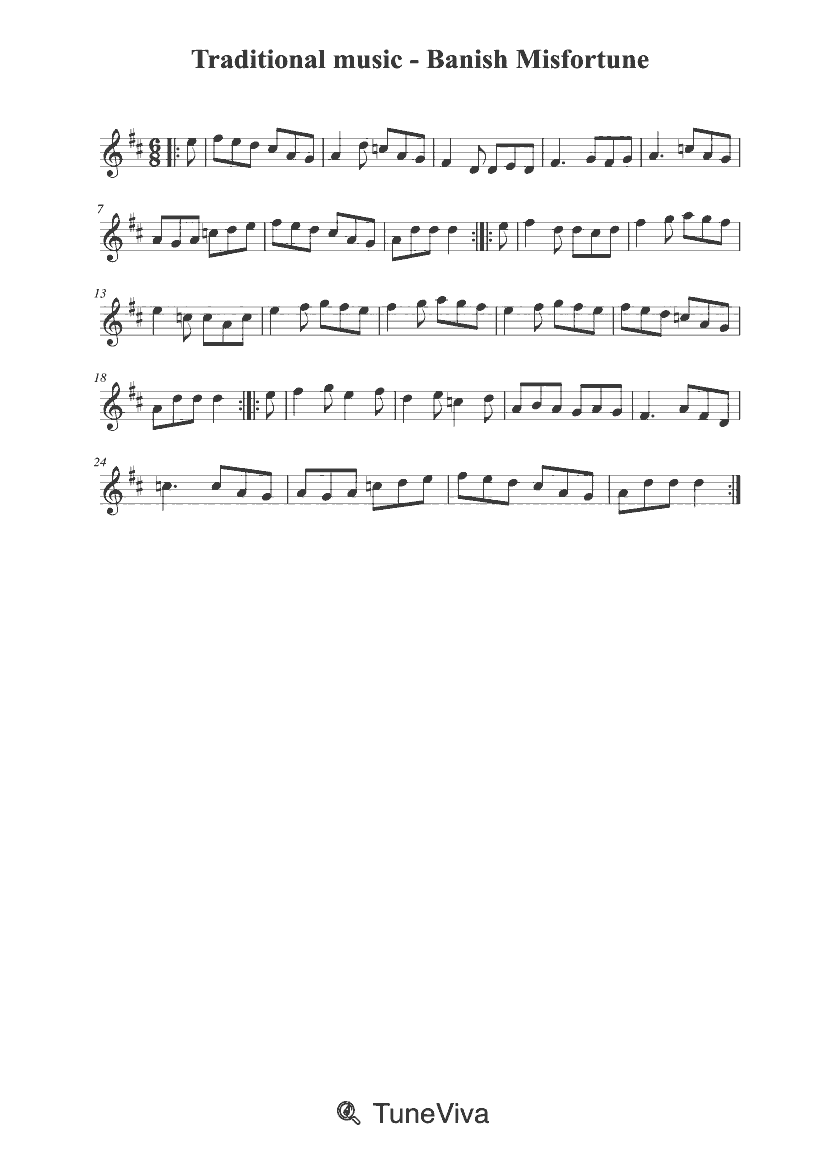
Trad
Spanish Misfortune
36 sec · Score #88367
Open score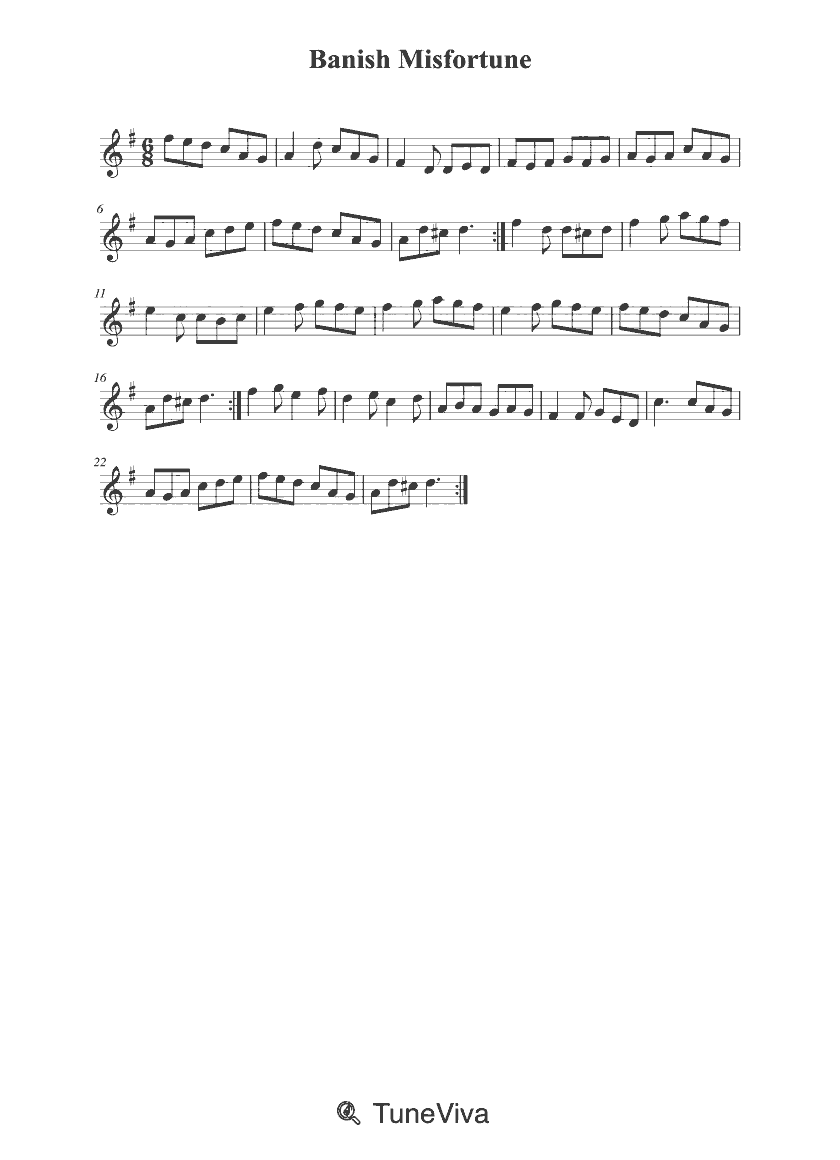
Misc Traditional
54 sec · Score #250245
Open score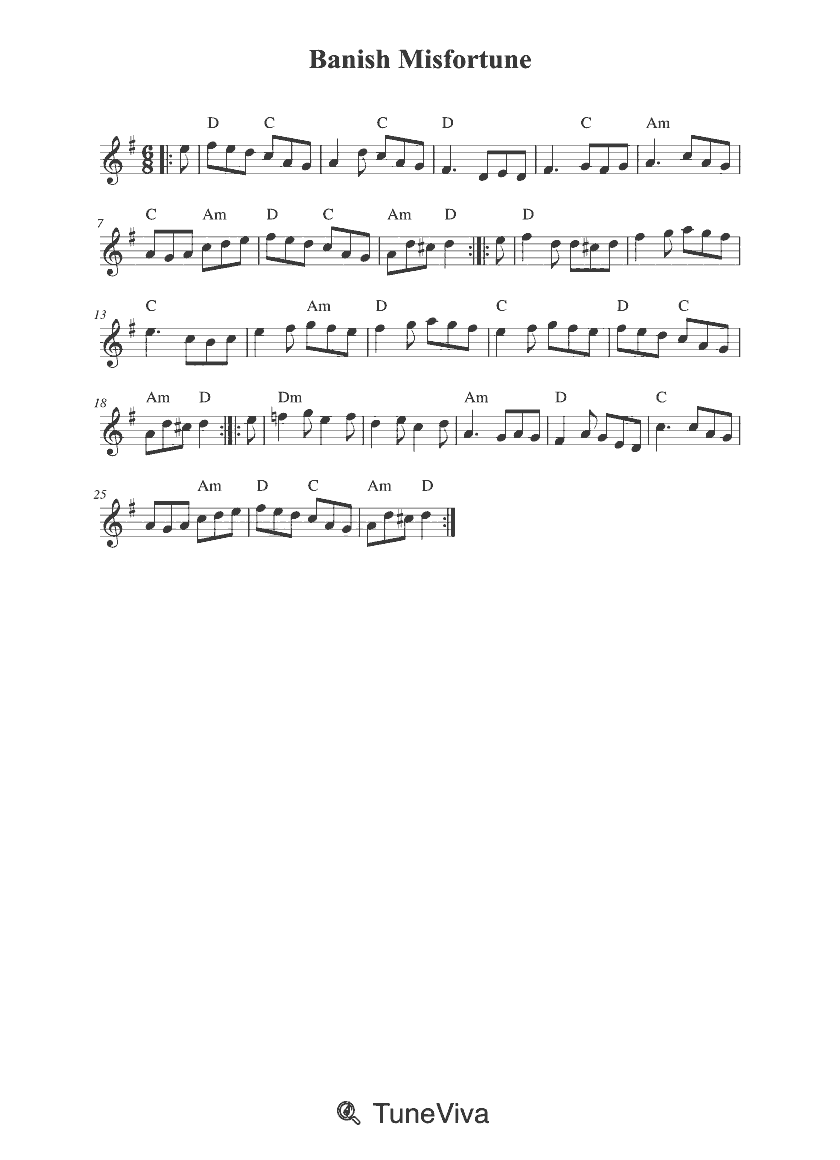
Misc Traditional
36 sec · Score #65883
Open score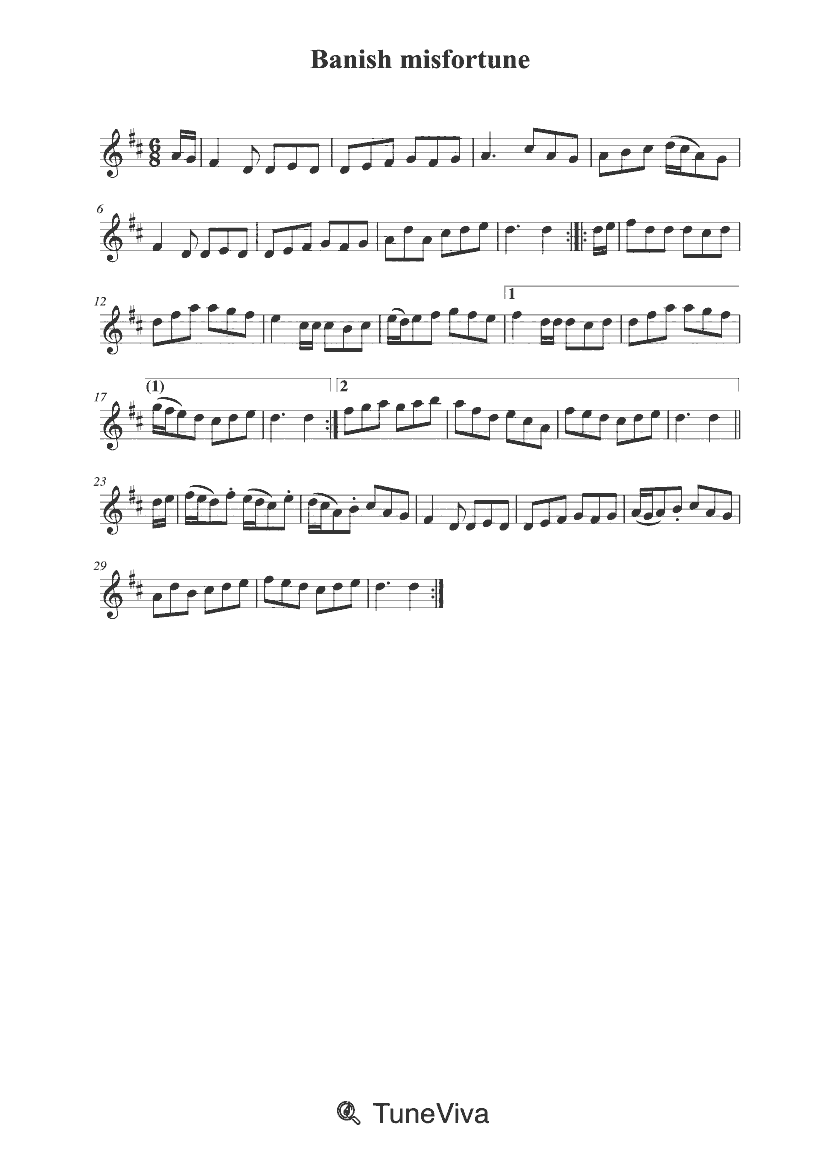
anon.
39 sec
Open score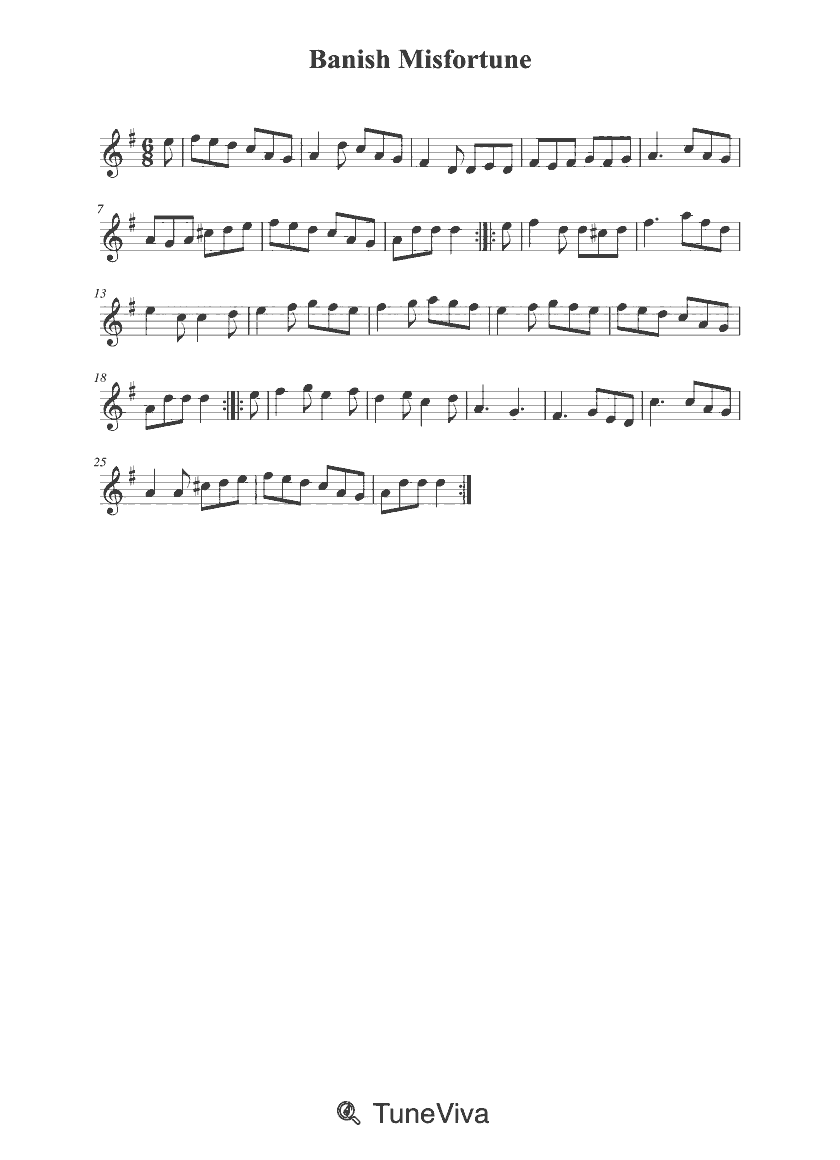
Misc Traditional
36 sec · Score #5082
Open scorePage 1 of 3
Each of the three settings is a single-part score credited to 'Trad' or 'Misc Traditional', so no named composer is attached to any of them. All three begin in D major, written with two sharps. Beyond that they diverge: two scores open in 6/8 and one in 5/8, and the settings differ in overall length. Read the opening bars of each before deciding, since the first few notes will usually reveal whether a setting matches the version you have heard.
6/8 is a compound duple metre: two main beats to the bar, each divided into three eighth notes. That grouping shapes bowing, picking patterns and ornament placement, and it is the metre in which two of these settings are written. The 5/8 opening is unusual for a traditional dance tune and will feel and phrase quite differently, so treat it as a distinct setting rather than a variant of the 6/8 scores until you have compared the bars side by side.
Work from the metre and the scope of each score rather than from the number of notes, which says little about musical quality. If you are joining a session where the tune is played in 6/8, one of the two 6/8 settings is the practical choice. If you want a shorter, more compact reading of the melody, compare the listed playing times and the amount of material in each score, then pick the one that covers the strains you need.
Because the tune belongs to an oral tradition rather than to a single published text, notation is a starting point rather than a definitive version. Use the score to fix the outline of the melody and the key, then listen to how the tune is actually played to pick up ornamentation, rhythmic lift and any bars that differ between settings. The differences between the three scores here are a reminder that traditional tunes circulate in more than one form.
Catalogue duration 58 sec. Opening key signature: 2 sharps (D major). Opening time signature: 6/8.
Catalogue duration 54 sec. Opening key signature: 2 sharps (D major). Opening time signature: 5/8.
Catalogue duration 36 sec. Opening key signature: 2 sharps (D major). Opening time signature: 6/8.
'Banish Misfortune' is a traditional tune in the folk repertoire. The sheet music settings listed here credit it to 'Trad' or 'Misc Traditional' rather than to a named composer, and each is presented as a single-part score opening in D major.
Every setting available here opens with a key signature of two sharps, which indicates D major. Two sharps mean F and C are sharpened, so watch for those notes when reading at speed.
Two of the three scores are notated in 6/8, a compound duple metre counted in two beats per bar with each beat divided into three eighth notes. The remaining score opens in 5/8, an irregular metre that will phrase differently from the 6/8 settings.
The 5/8 opening appears in one of the three available settings, and the listing gives no reason for it. It may reflect a deliberate arrangement choice or a difference in how the melody was transcribed; comparing a few bars against a 6/8 setting will show whether the melody itself is altered or only the barring.
None of the scores names an individual composer: the credits read 'Trad' or 'Misc Traditional'. A traditional attribution identifies the tune as part of an inherited repertoire, but it does not by itself establish who wrote it or when it first appeared.
The three settings share the same opening key of D major but differ in metre and in length, with the listed playing times ranging from roughly 36 seconds to just under a minute. Comparing the time signature and how much of the melody each score covers is a more reliable way to choose than comparing note totals.