
Bonaparte's Retreat
Misc tunes
1 min 59 sec · Score #171944
Open scoreBonaparte's Retreat sheet music appears here in several listed versions, but the selected scores do not name a composer and are credited only to “Misc tunes.” The versions share an opening key of D major, while their time signatures differ: two open in 2/4 and one in 4/4. Compare the first page of each score before choosing, especially if you are playing with another musician or setting a practice tempo.
Scores 1–20 of 23
Misc tunes
1 min 59 sec · Score #171944
Open score
Misc tunes
4 min 7 sec
Open score
Misc tunes
5 min 36 sec
Open score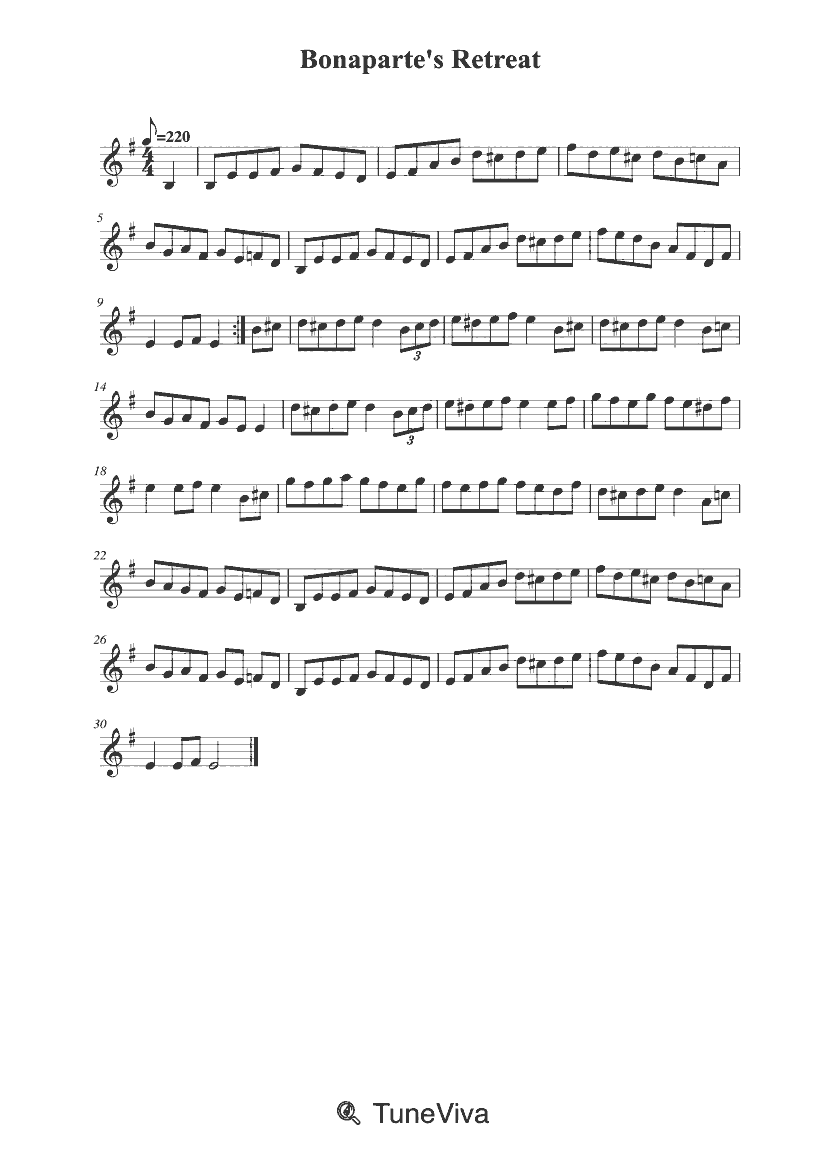
file ID: onmi.misc/014bona_ret
1 min 19 sec
Open score
Misc tunes
1 min 56 sec · Score #179067
Open score
Misc tunes
1 min 59 sec · Score #239951
Open score
Misc tunes
1 min 4 sec
Open score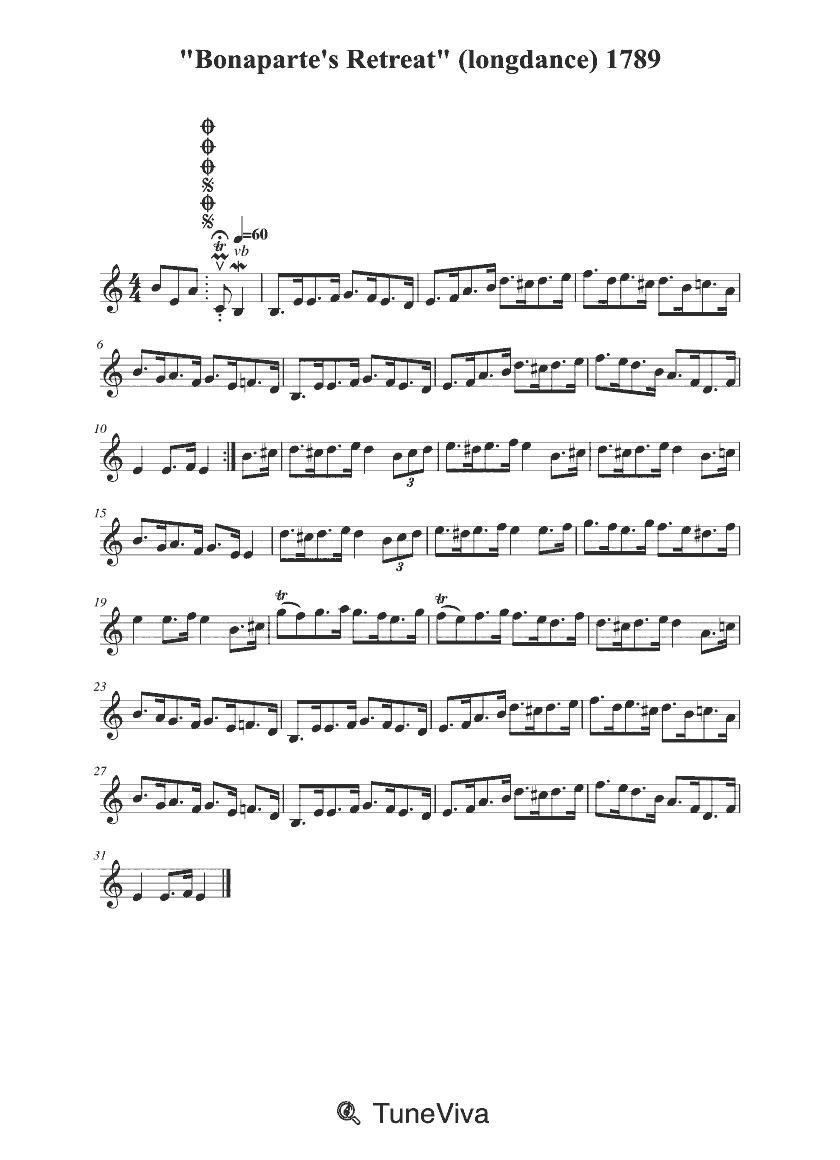
after Mr. Hartnettmournfully
2 min 27 sec
Open score
Misc tunes
3 min 44 sec
Open score
Misc tunes
34 sec
Open score
Misc tunes
1 min 59 sec · Score #155789
Open score
Misc tunes
1 min 56 sec · Score #151971
Open score
anon.
1 min 53 sec
Open score
Misc tunes
1 min 51 sec
Open score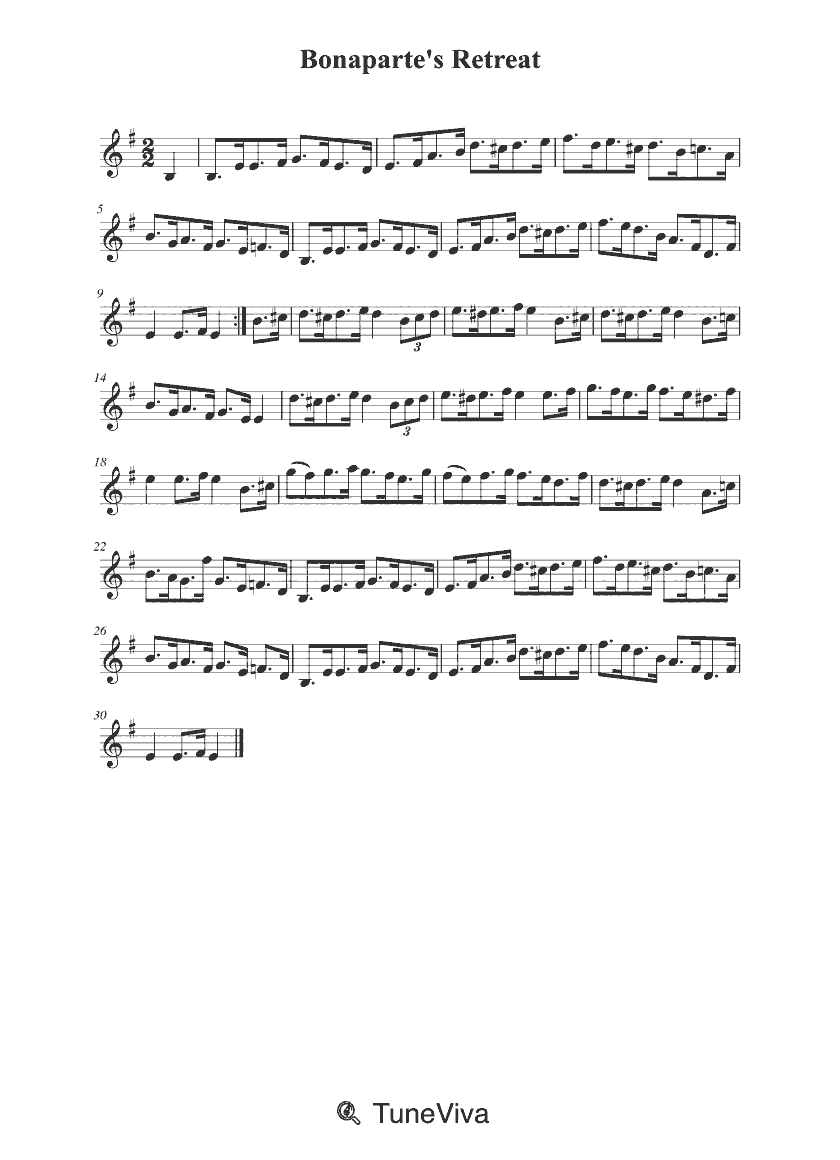
collected by Hartnett
Claoideaad Buonapart
2 min 24 sec
Open score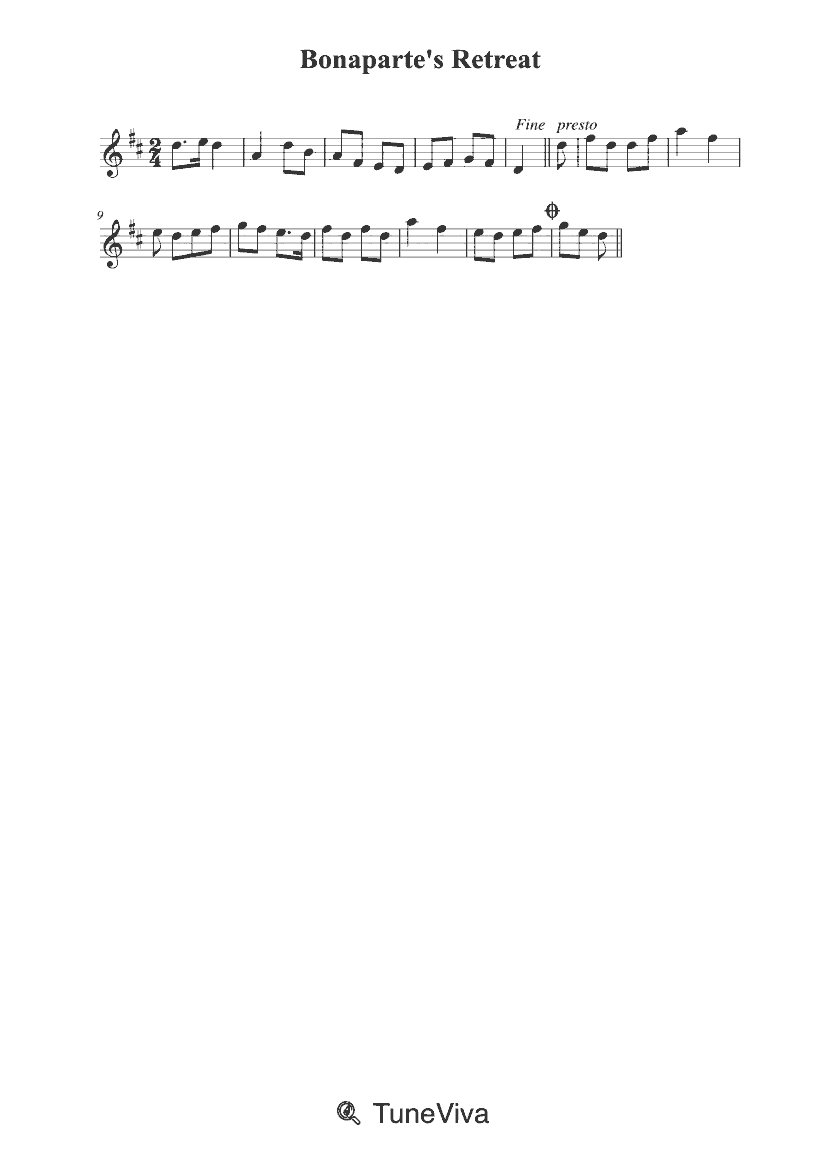
Misc tunes
12 sec
Open score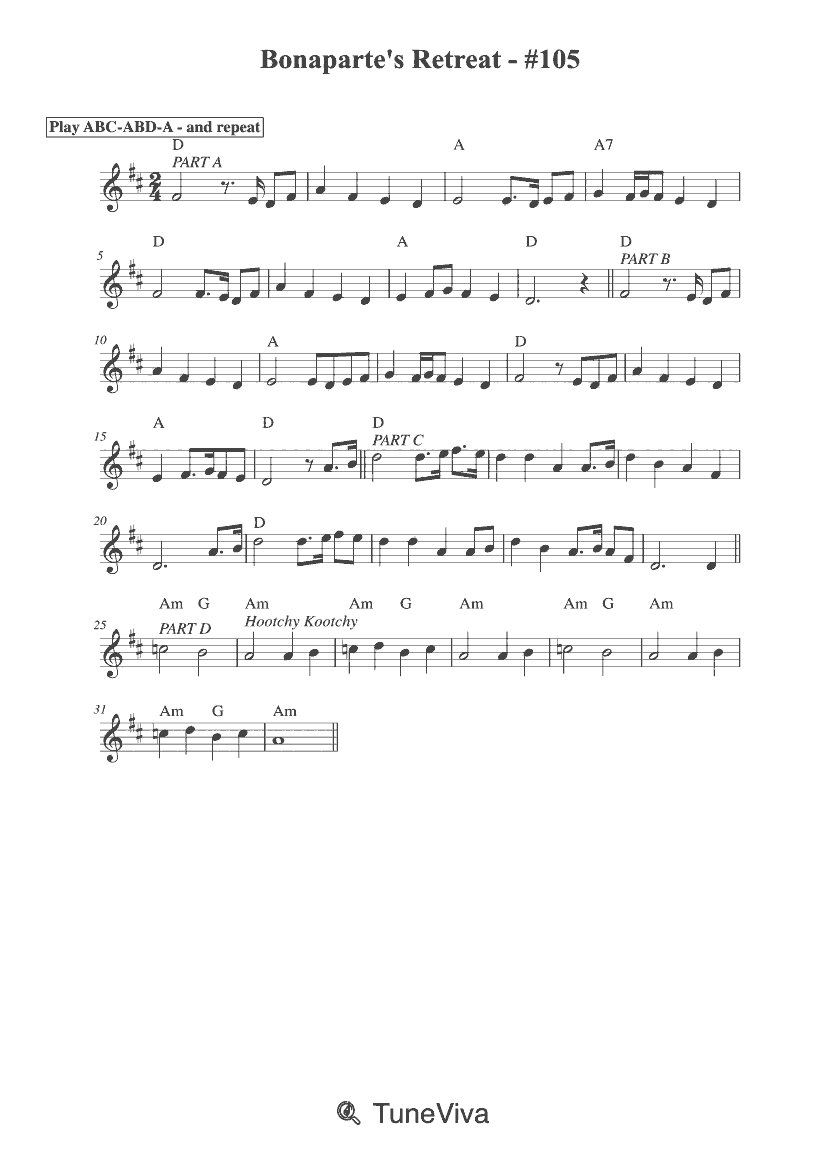
Misc tunes
1 min 3 sec
Open score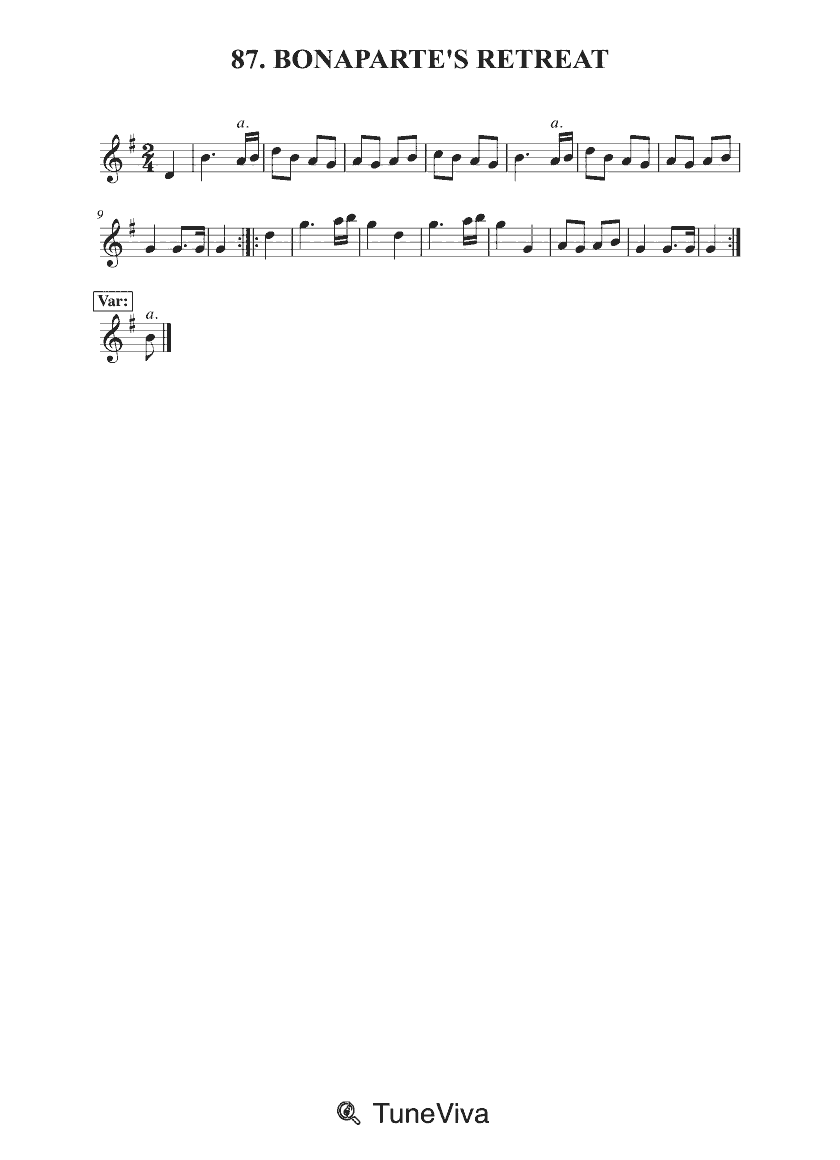
Misc tunes
32 sec
Open score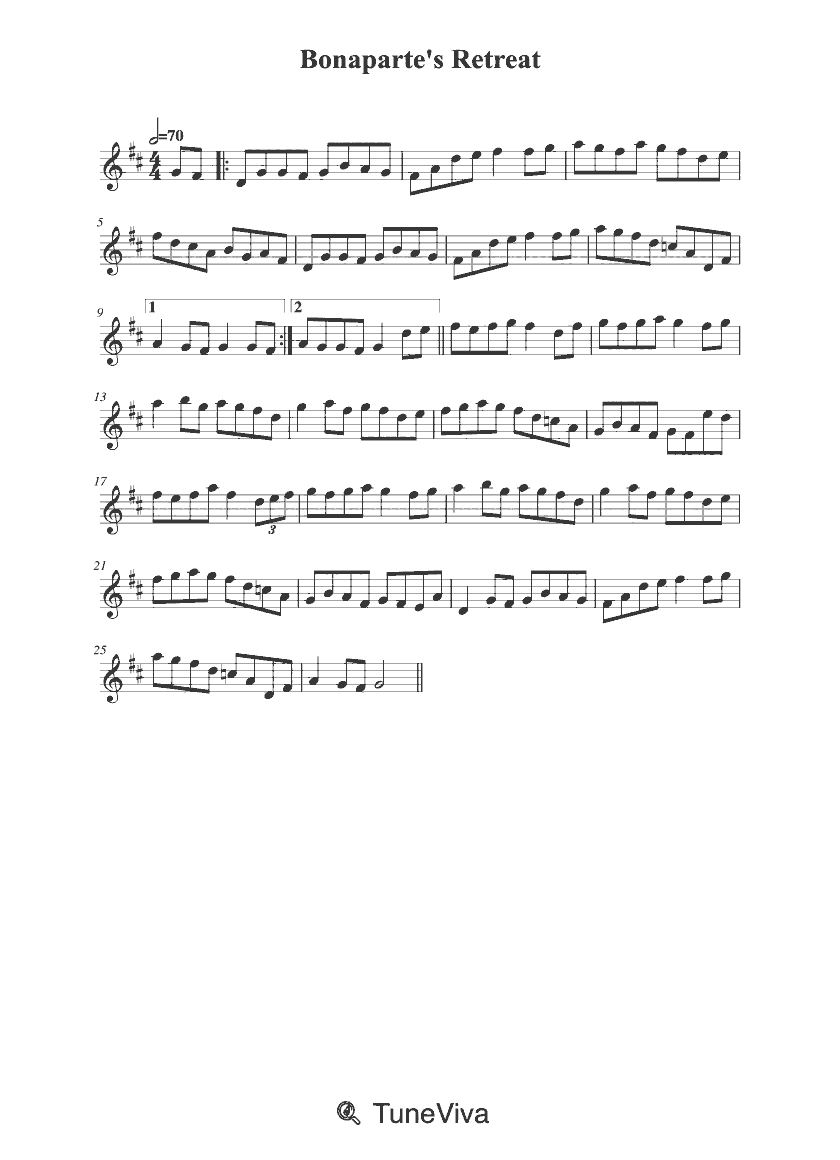
Misc tunes
55 sec
Open score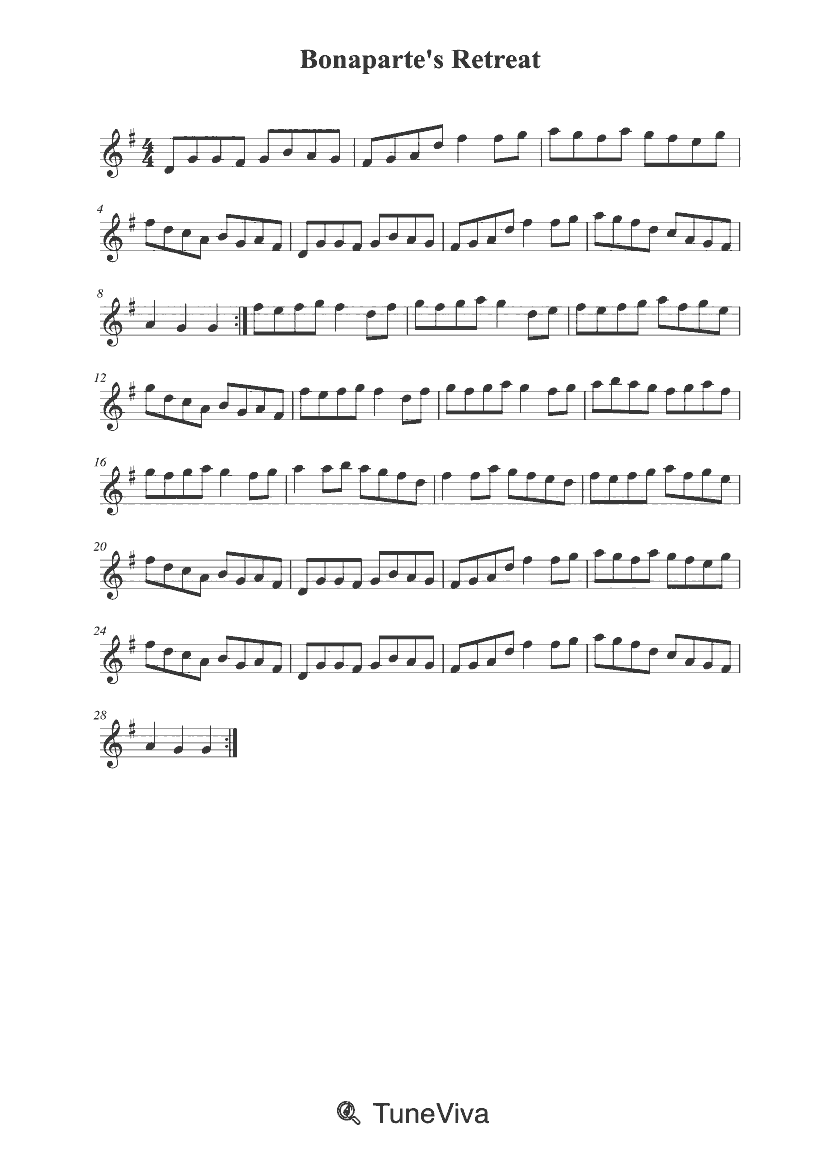
Misc tunes
2 min 5 sec
Open scorePage 1 of 2
The selected Bonaparte's Retreat scores are not notationally identical at the opening. Two are listed in 2/4 and one in 4/4, so check how the beats are grouped and whether the score matches the feel you want. If you are playing with others, agree on the meter and a starting tempo before rehearsing.
All three selected scores open with two sharps, given as D major. That describes the opening key signature only; check the score for later accidentals, key changes, or octave shifts that affect how the tune lies on your instrument.
The scores do not identify a composer, and the artist credit reads “Misc tunes.” Treat any external attribution for Bonaparte's Retreat as something to verify against a reliable source rather than assuming the title proves a particular composer or setting.
The selected entries do not specify instrumentation or arrangement type, so look at the clef, range, and texture in the score itself before choosing one. One version lists an opening tempo of 42.5 BPM; the others do not list a tempo in the supplied details, so use any tempo marking as a starting point rather than a fixed performance speed.
Catalogue duration 1 min 59 sec. Opening key signature: 2 sharps (D major). Opening time signature: 2/4.
Catalogue duration 4 min 7 sec. Opening key signature: 2 sharps (D major). Opening time signature: 4/4.
Catalogue duration 5 min 36 sec. Opening key signature: 2 sharps (D major). Opening time signature: 2/4. Opening tempo: 42.5 BPM.
The selected Bonaparte's Retreat scores all open with a key signature of two sharps, given as D major. Check each score for later key changes or accidentals, since the opening key does not necessarily describe the whole piece.
The selected versions differ: two open in 2/4 and one opens in 4/4. That difference matters when comparing versions, counting beats, or playing with another musician, so confirm the meter on the score you choose.
The selected scores do not name a composer; they are credited to “Misc tunes,” so no composer attribution is verified here. The title alone should not be treated as proof of a particular composer or origin.
One selected score gives an opening tempo of 42.5 BPM, while the other two do not list a tempo in the supplied details. Treat any tempo figure as a starting point and adjust it to the setting and players.
The selected entries do not name an instrument or arrangement type. Compare the clef, range, and texture on each score to judge whether it suits your instrument, rather than assuming the title identifies a fiddle, flute, piano, or other setting.