
Bonnie Dundee
Walter Scott
Voice; Piano · 54 sec
Open scoreBonnie Dundee sheet music appears in several available versions that do not agree on attribution: one score is listed as traditional, another is credited to Walter Scott, and a third has no composer credit. The selected scores all open in 6/8, but they differ in key, instrumentation and listed tempo, so compare the score details before choosing.
Scores 1–20 of 50
Walter Scott
Voice; Piano · 54 sec
Open score
Misc tunes
24 sec · Score #201842
Open score
Trad.
1 min 13 sec
Open score
Misc tunes
12 sec
Open score
Misc tunes
24 sec · Score #115411
Open score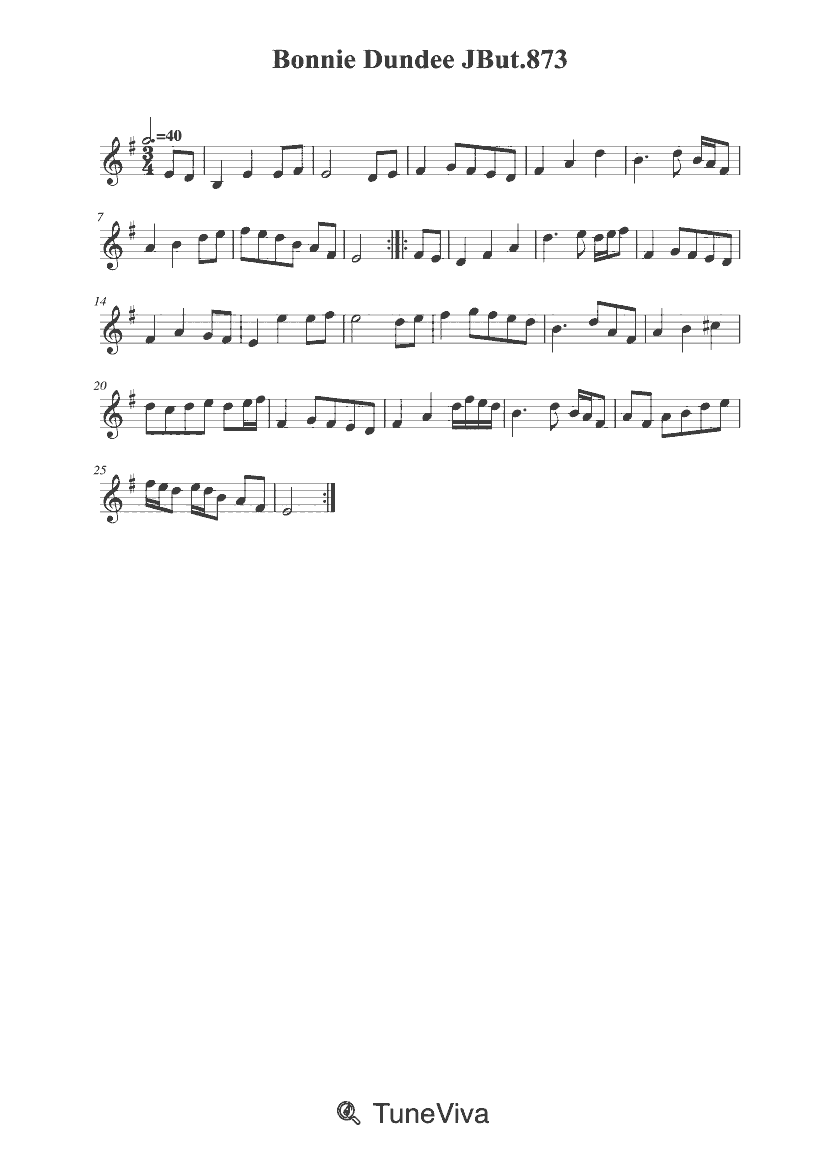
'Retreat'
1 min 12 sec
Open score
Misc tunes
1 min 3 sec
Open score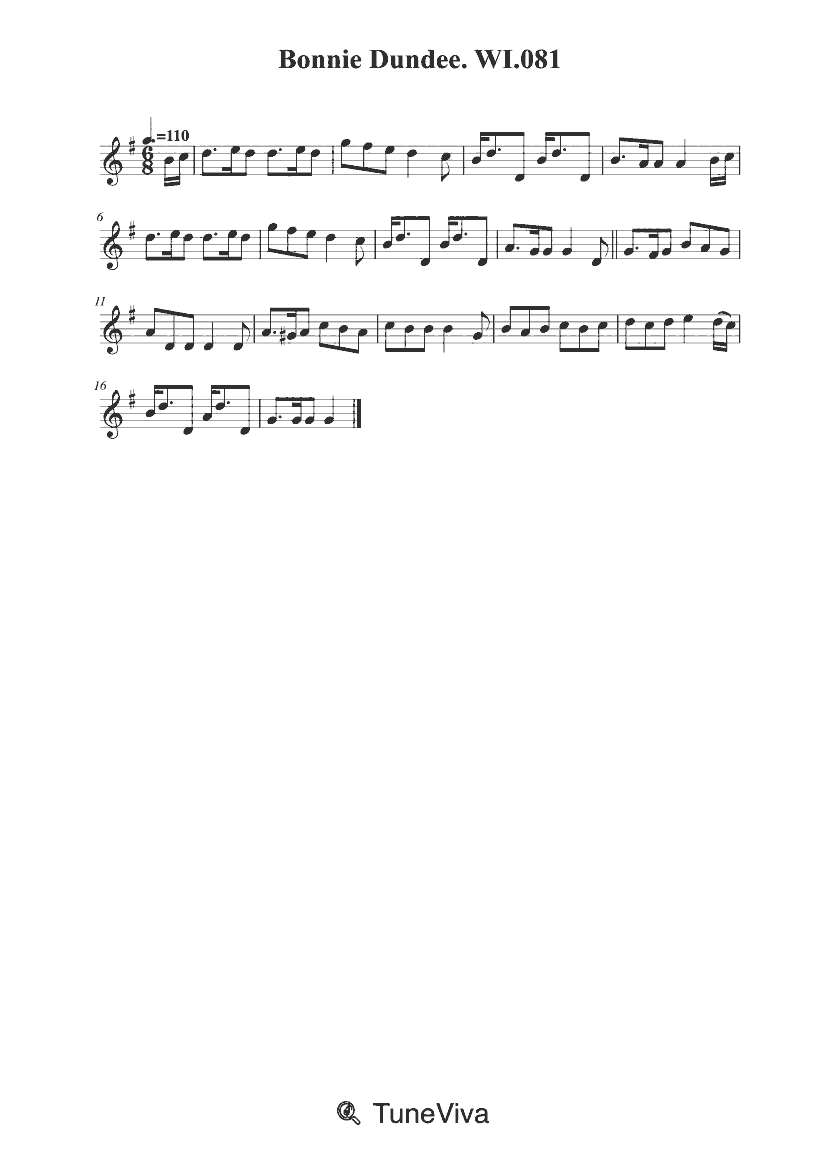
Misc tunes
9 sec
Open score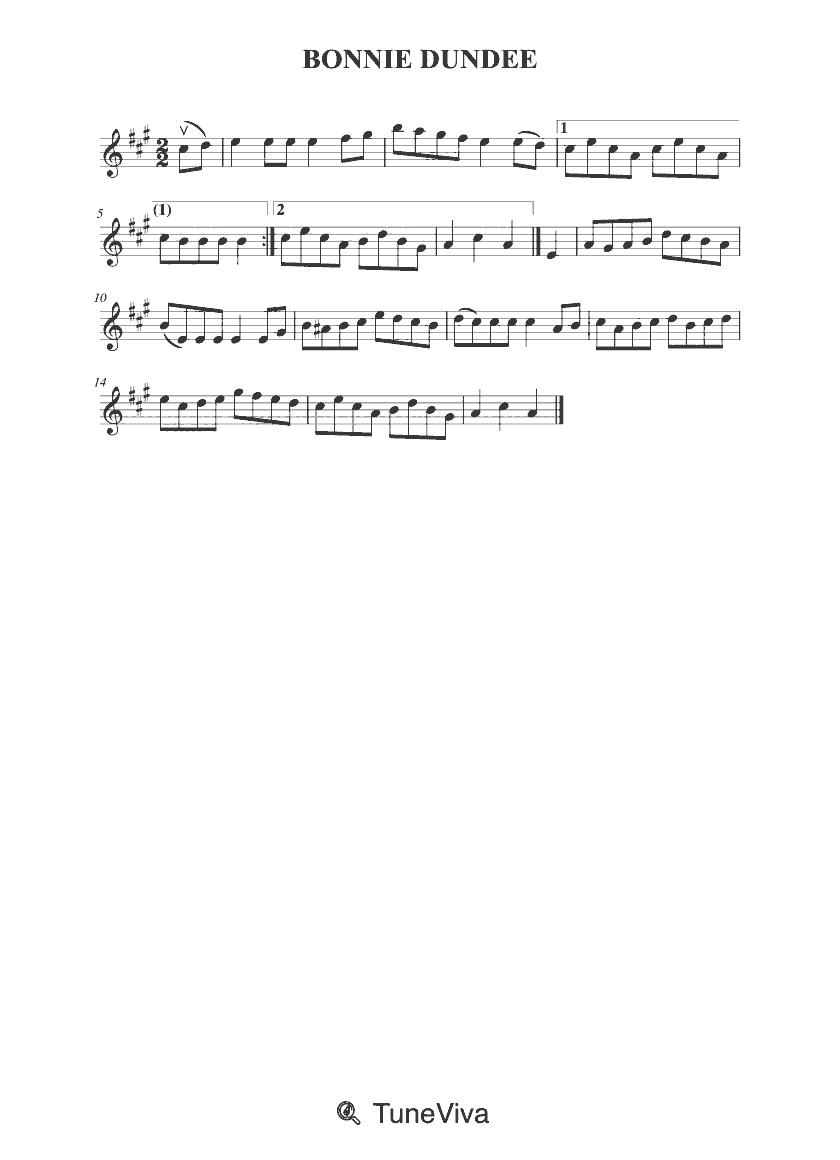
Misc tunes
1 min 4 sec
Open score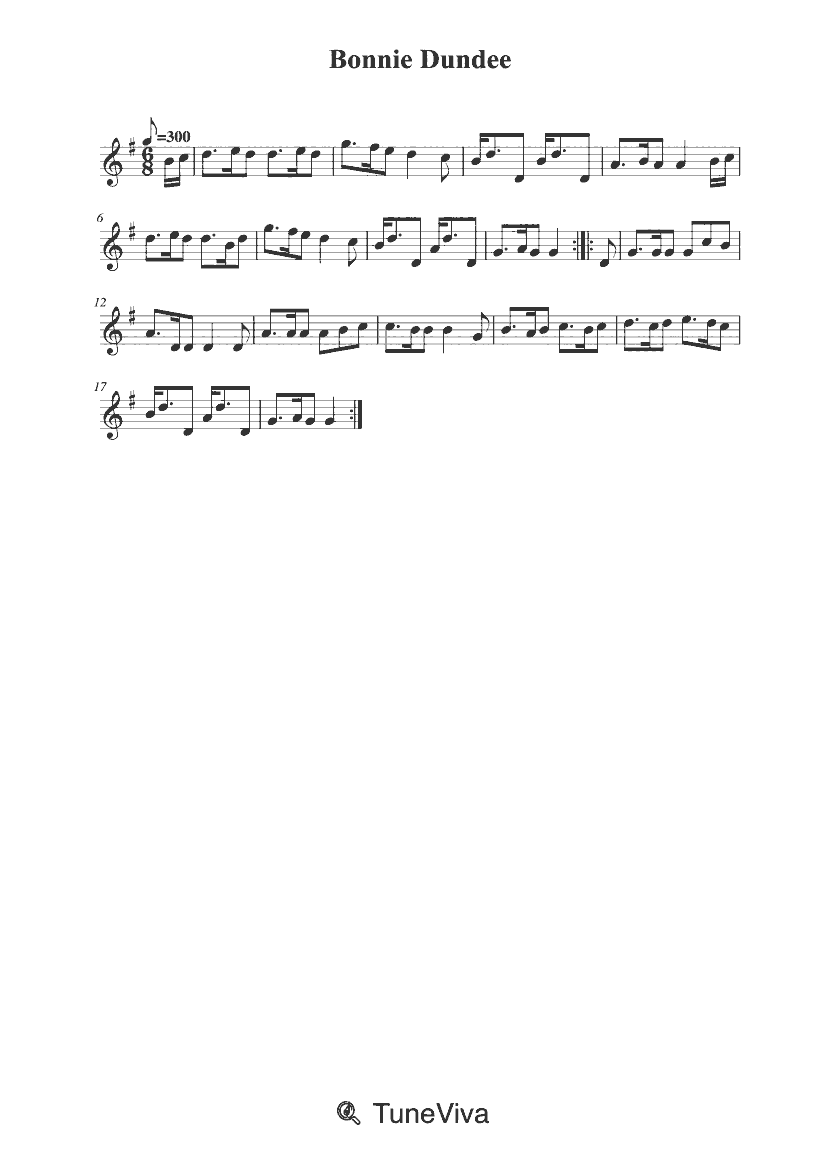
Misc tunes
19 sec
Open score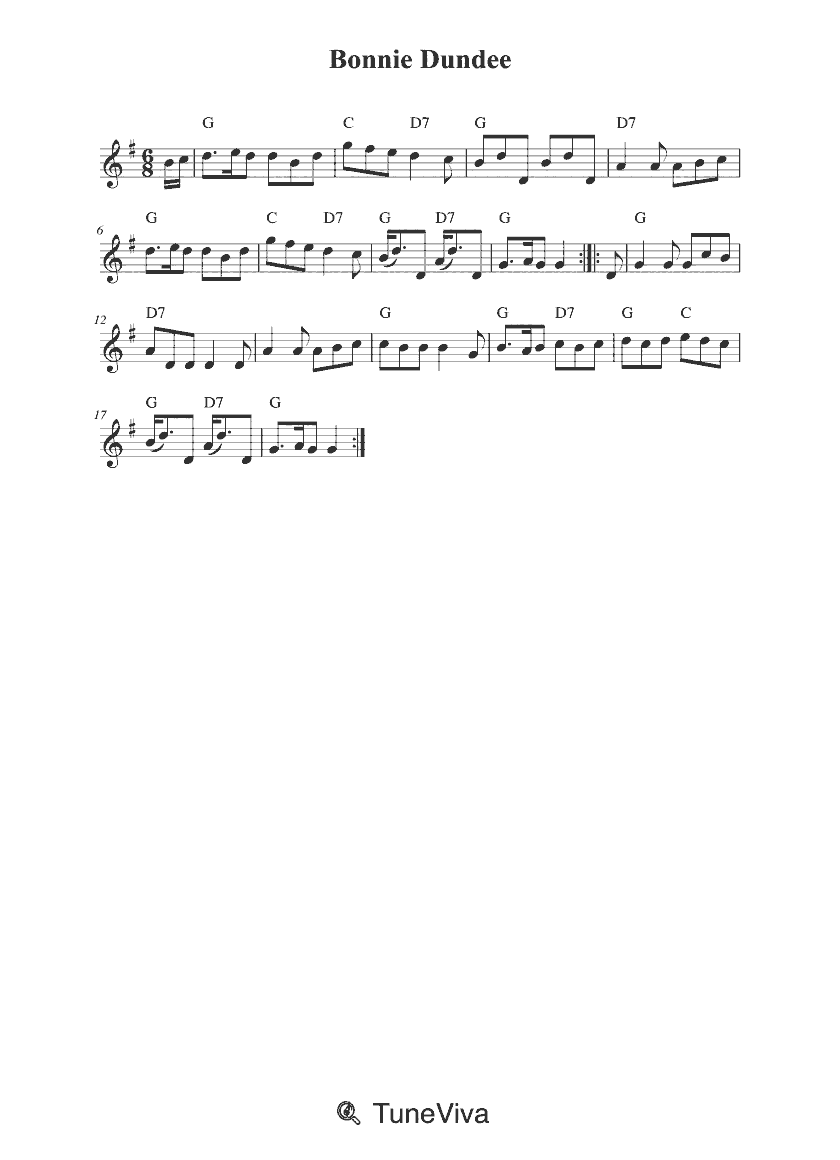
Misc tunes
24 sec · Score #43810
Open score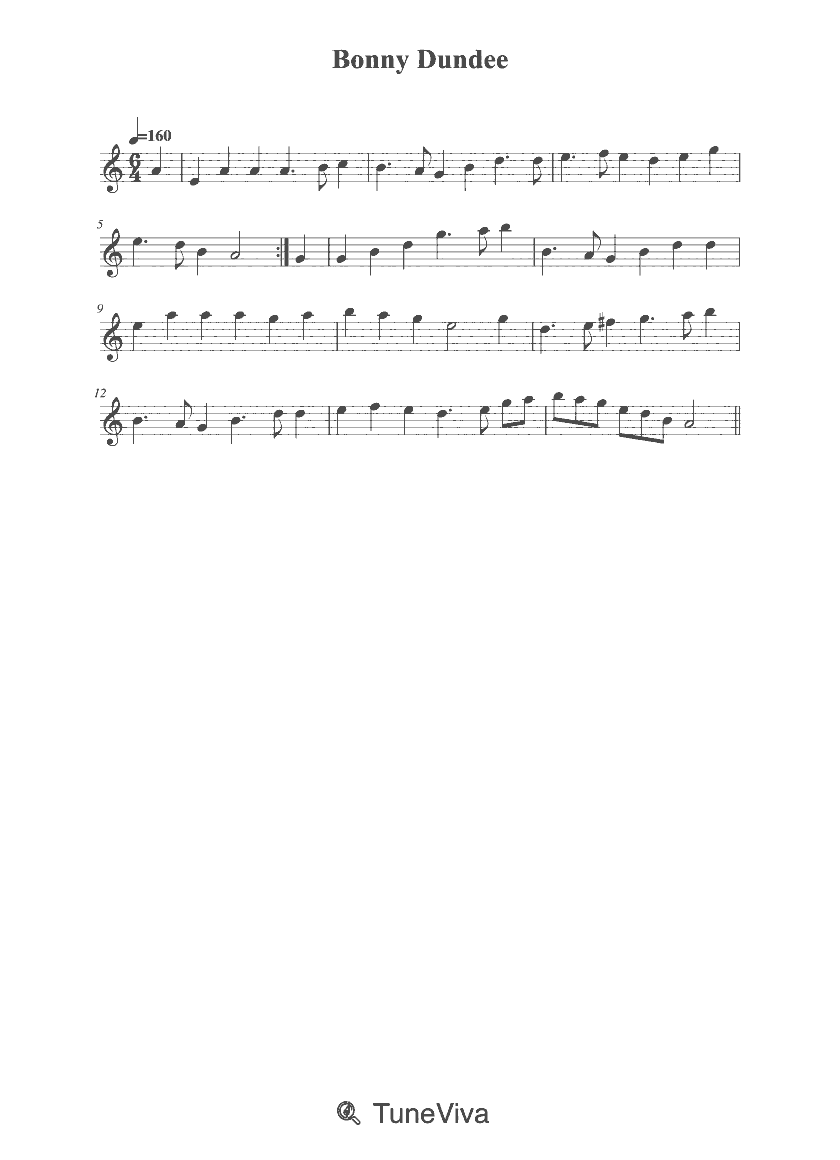
Misc tunes
36 sec
Open score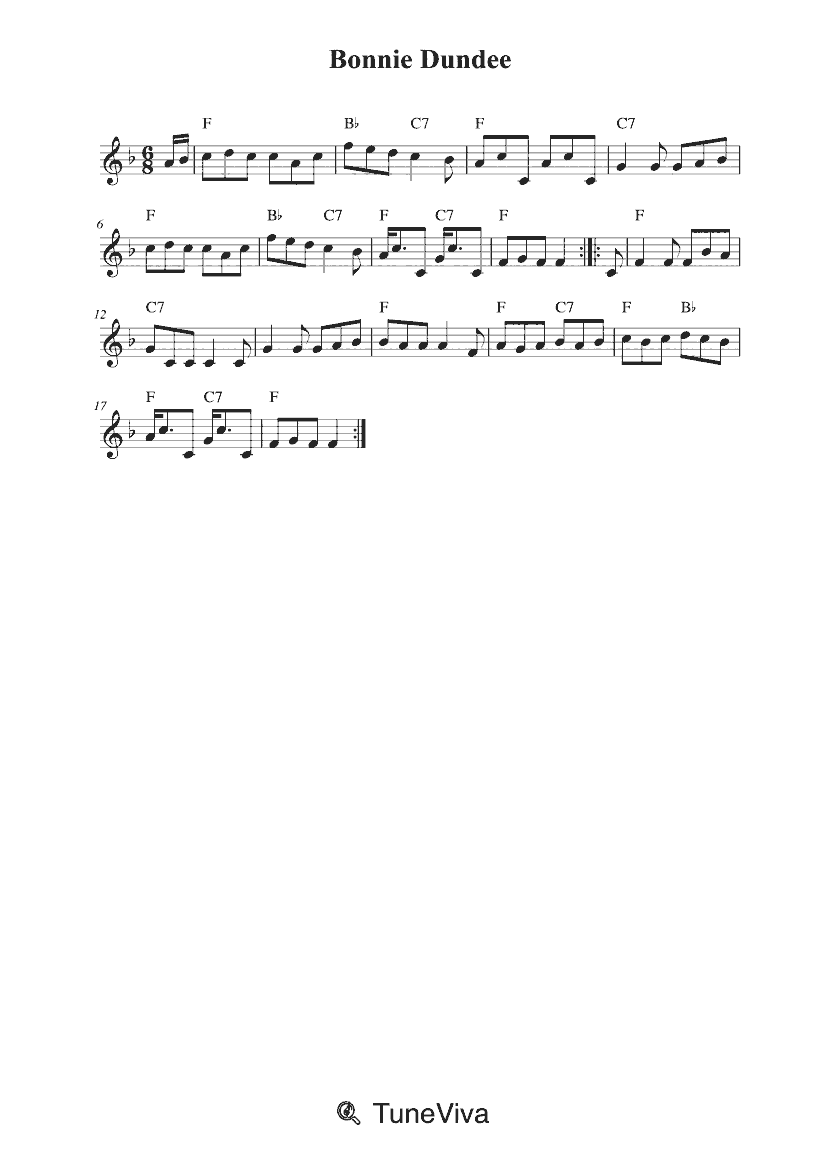
Misc tunes
24 sec · Score #195074
Open score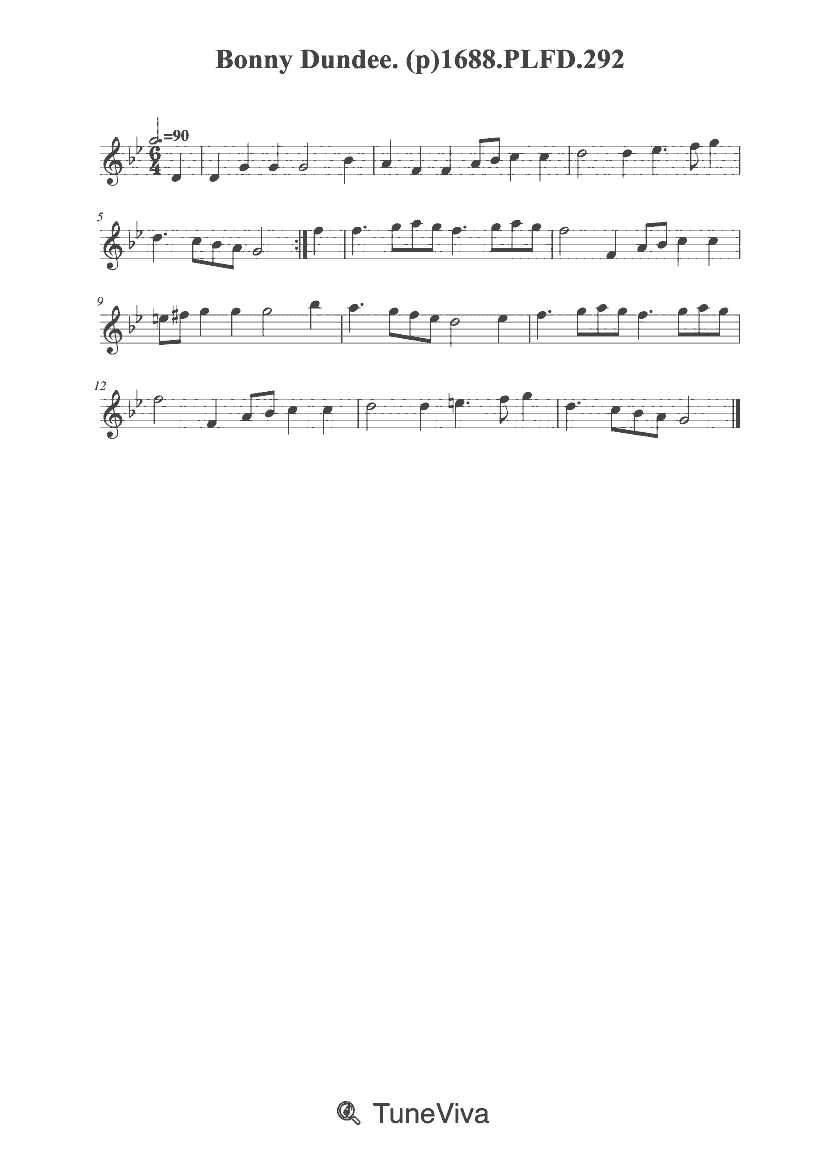
Misc tunes
21 sec
Open score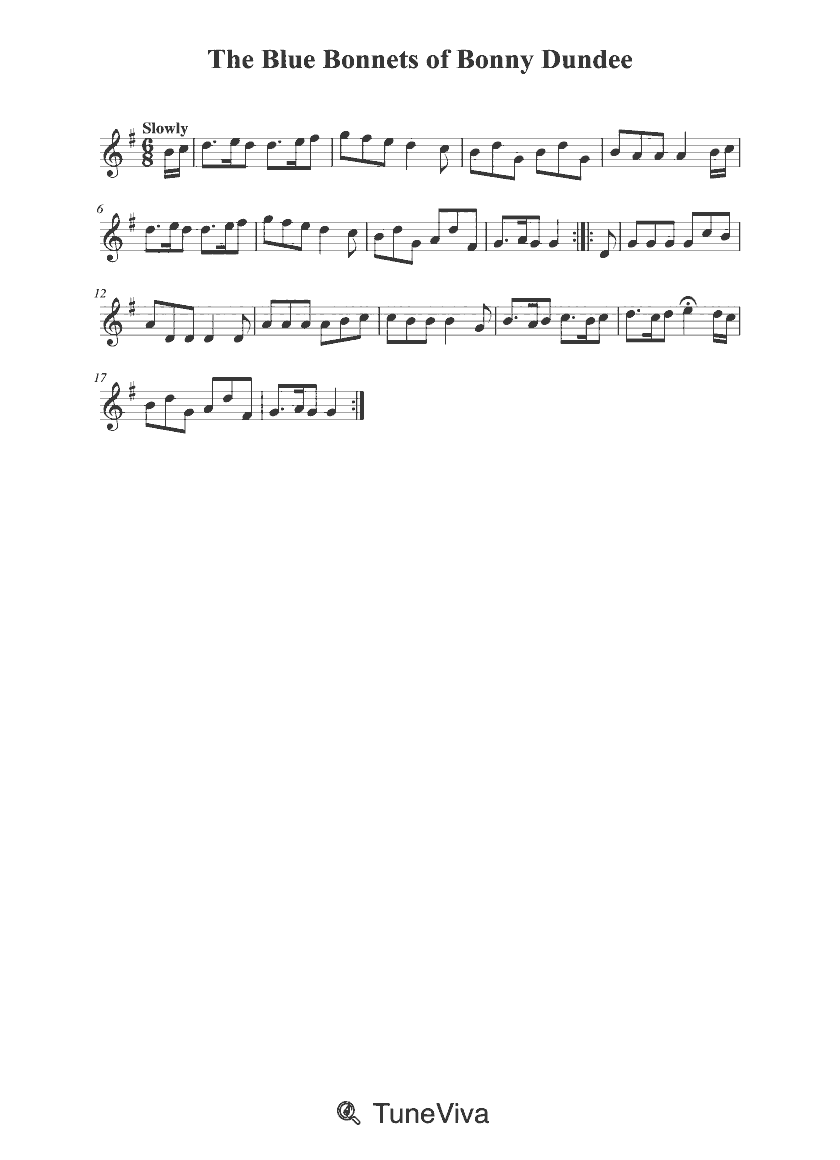
Misc tunes
24 sec
Open score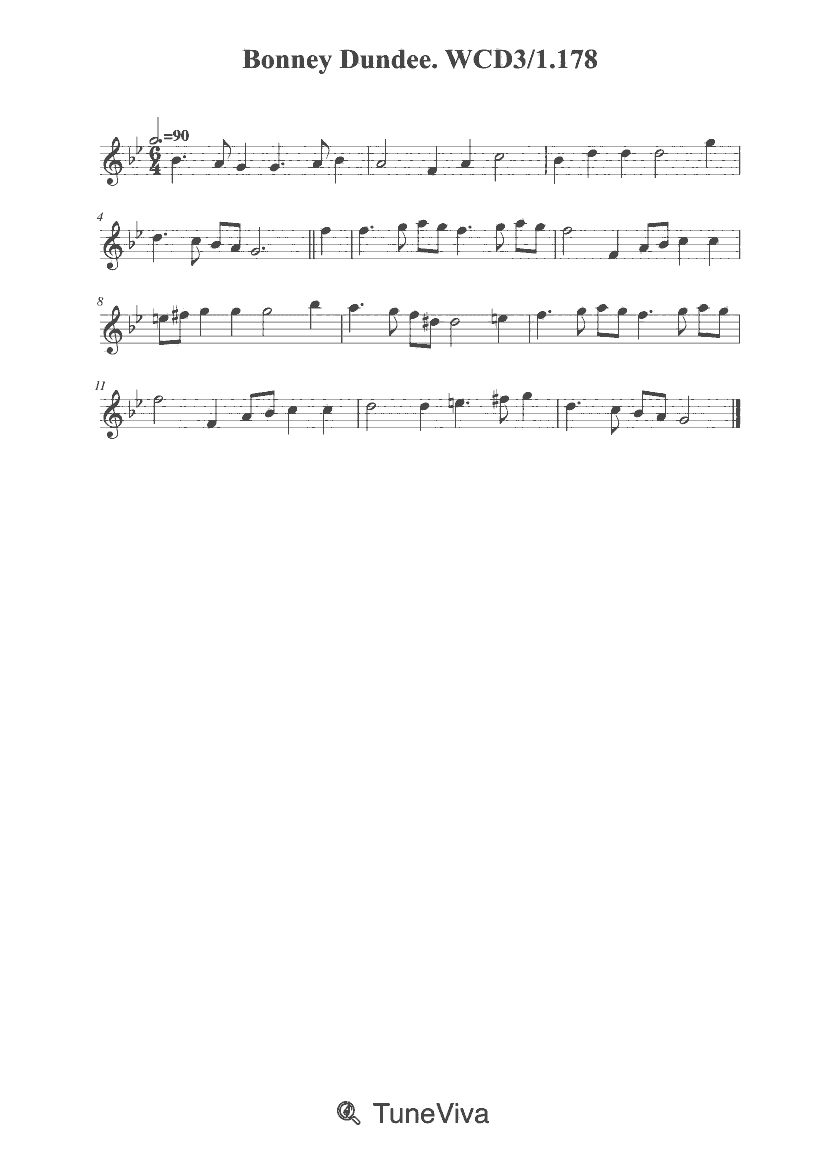
Misc tunes
16 sec
Open score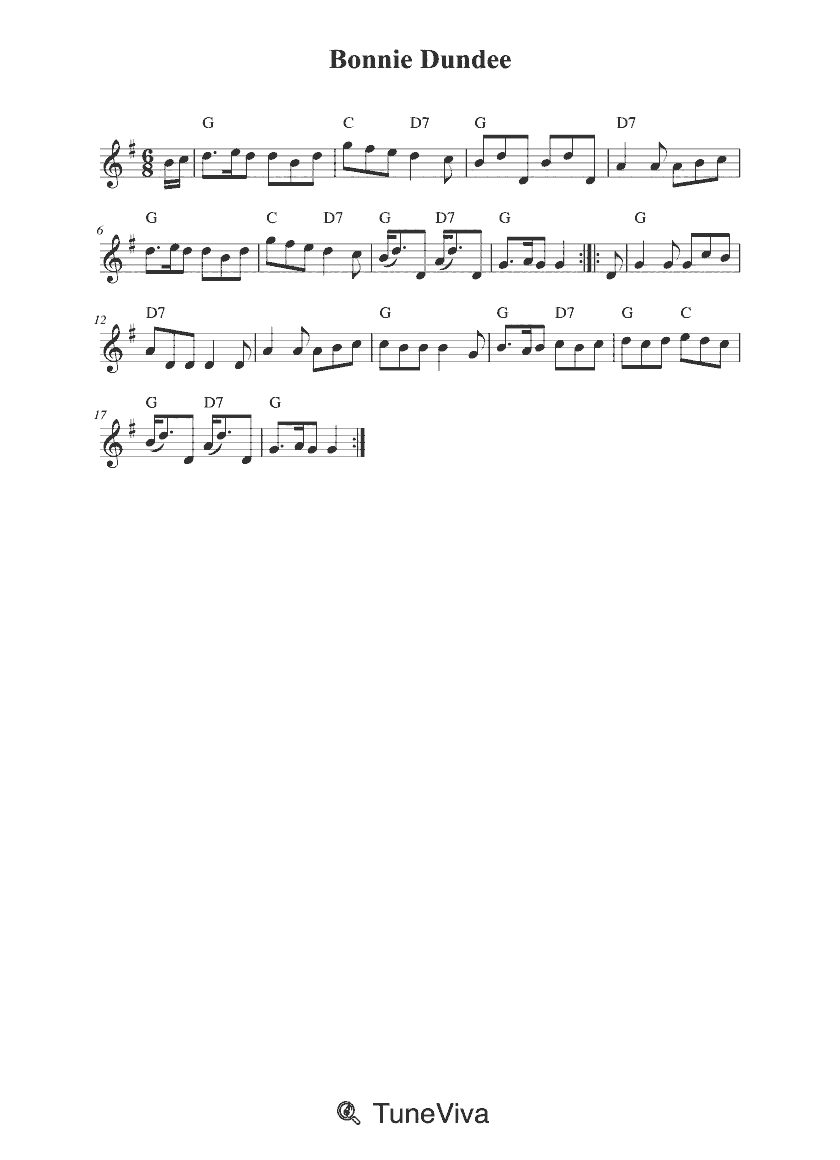
Misc tunes
24 sec · Score #14523
Open score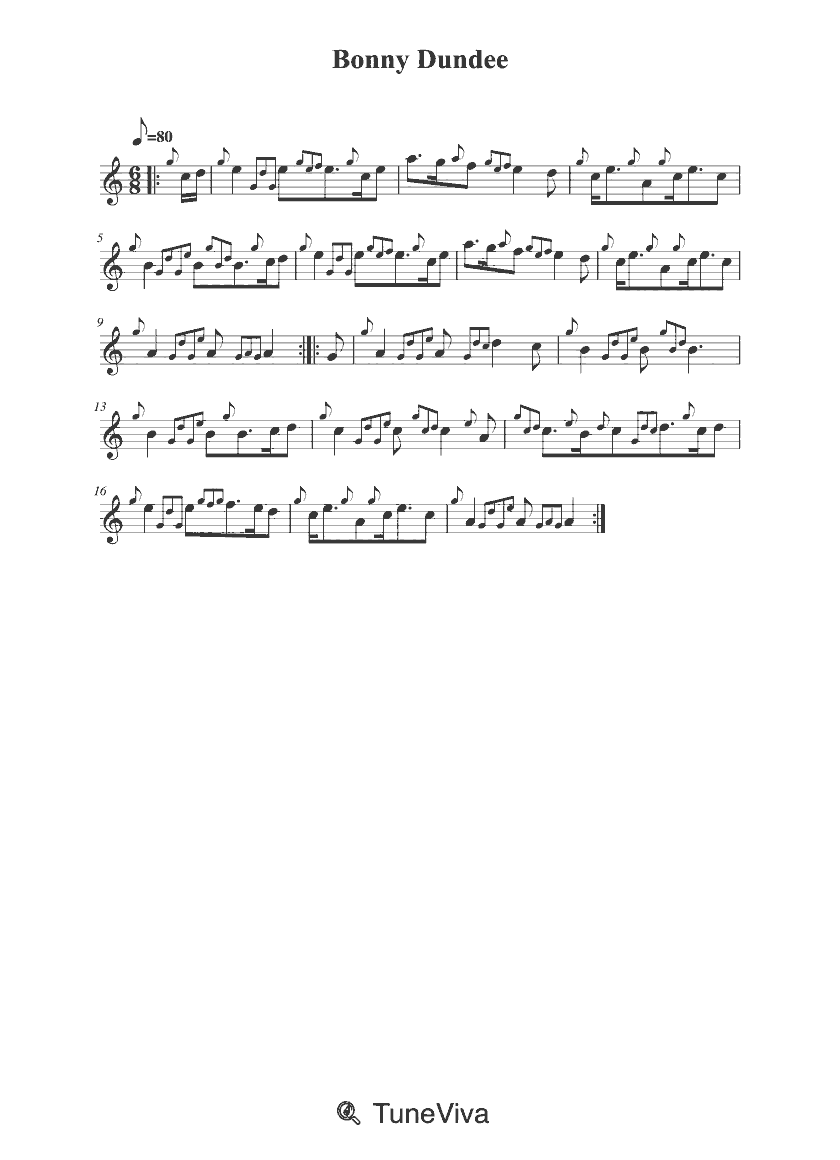
Misc tunes
1 min 12 sec
Open score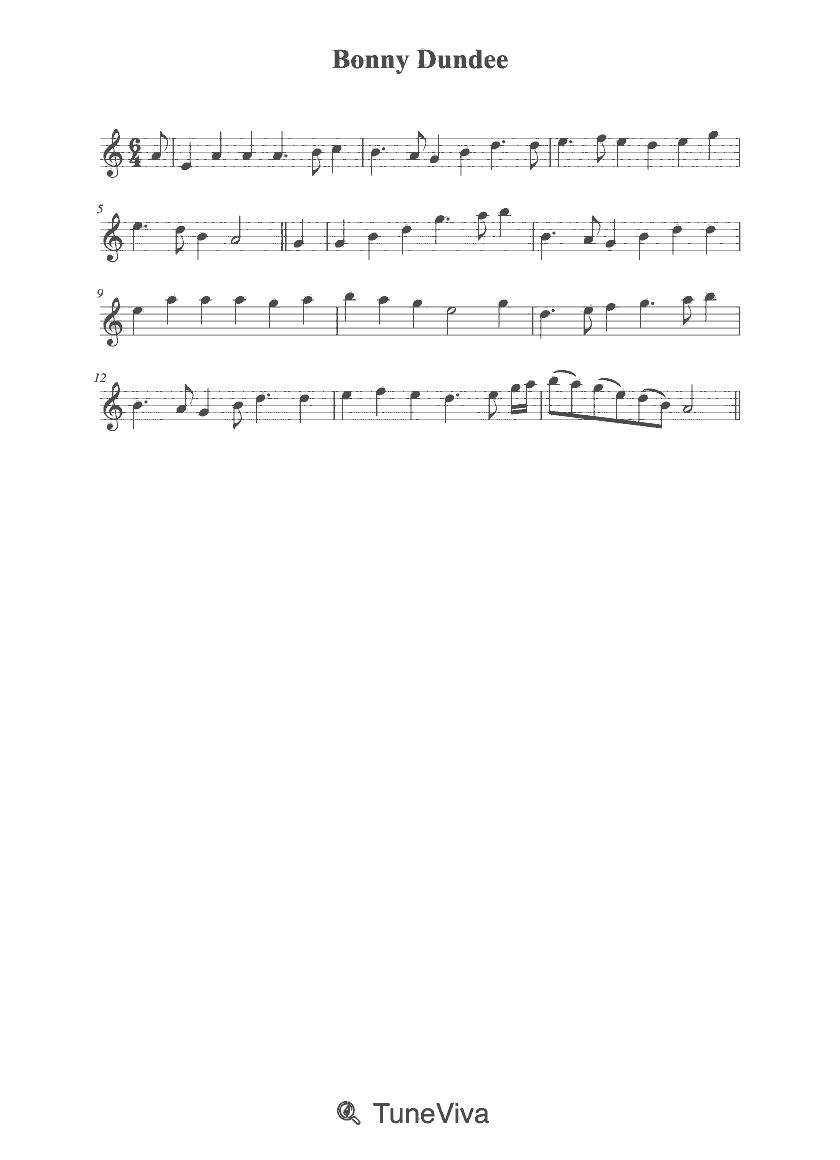
Misc tunes
35 sec
Open score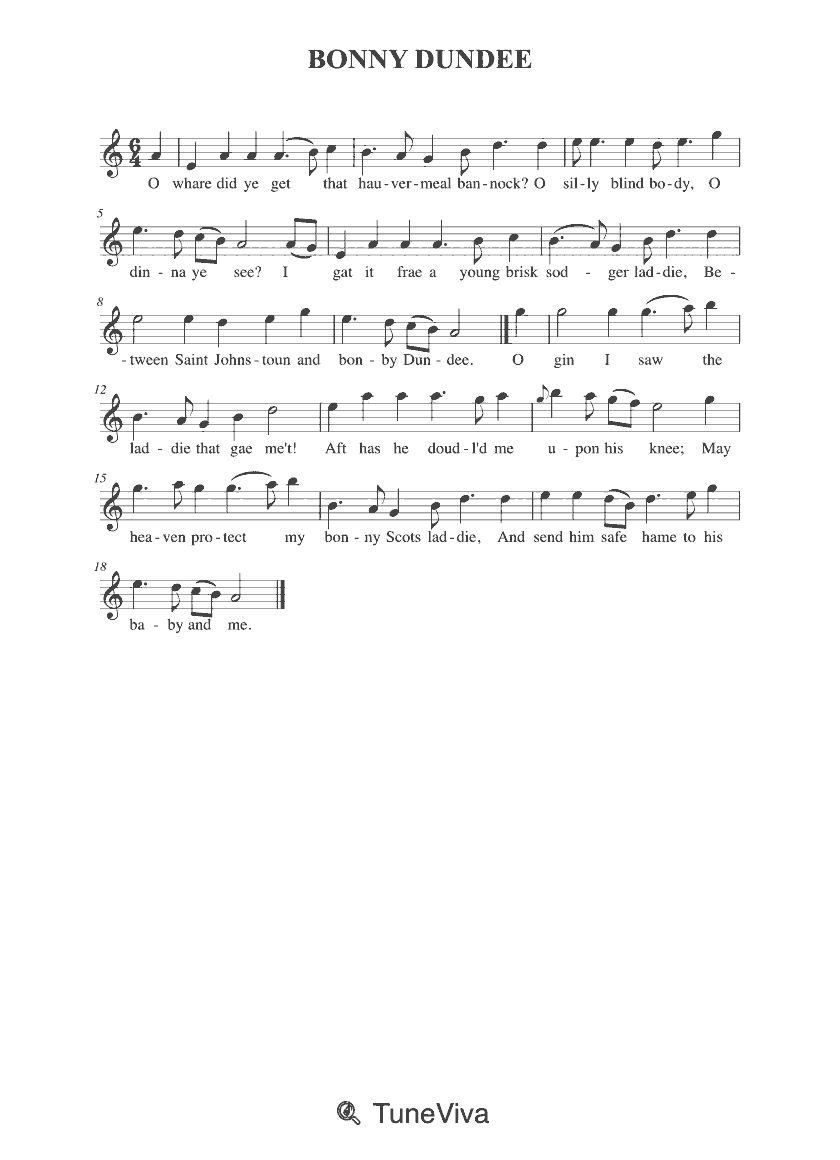
Misc tunes
48 sec
Open scorePage 1 of 3
The available Bonnie Dundee scores carry different composer credits. One names Walter Scott, another labels the music Traditional, and a third leaves the composer field blank. Treat these credits as pointers to particular versions rather than as a settled statement about the work's origin, and check the title page or notes of the score you intend to use if attribution matters to you.
One selected Bonnie Dundee score lists Voice and Piano parts, which points to a vocal setting with keyboard accompaniment. The other two selected scores list a single track without part information, so their exact instrumentation is not clear from the listing. If you need a vocal version, start with the Voice and Piano listing; if you need a melody line, inspect the single-track versions directly.
All three selected scores open in 6/8, making that the most consistent feature across the available versions. Their opening key signatures are not identical: one has no sharps or flats, while two have one flat, one of which is identified as F major. Listed opening tempos also differ, at 40 BPM and 80 BPM in the two scores that show a tempo. Use these details to match a version to your voice or instrument, and check the score itself rather than assuming every version behaves the same way.
Compare the composer credit, part list, opening key and tempo before selecting a Bonnie Dundee score. A version with Voice and Piano parts suits a singer working with accompaniment; a single-track listing may suit someone who only needs the melody, but its exact content should be confirmed from the score. If a version's key does not suit you, look for another listing rather than assuming the score can be transposed.
Score parts: Voice, Piano. Catalogue duration 54 sec. Opening key signature: 1 flat. Opening time signature: 6/8. Opening tempo: 80 BPM.
Catalogue duration 24 sec. Opening key signature: 1 flat (F major). Opening time signature: 6/8.
Catalogue duration 1 min 13 sec. Opening key signature: No sharps or flats. Opening time signature: 6/8. Opening tempo: 40 BPM.
Bonnie Dundee is the title used for several different score listings: one is attributed to Traditional, another is credited to Walter Scott and includes Voice and Piano parts, and a third has no composer credit. The available listings do not establish a single definitive version, so the title may point to different arrangements or settings.
All three selected Bonnie Dundee scores open in 6/8 time. That common metre is the most consistent detail across the versions, even though their key signatures and tempo markings differ.
The selected Bonnie Dundee scores show different opening keys: one has no sharps or flats, while two have one flat, one of which is identified as F major. Because the listings disagree, check the opening key signature of the exact score you plan to use rather than assuming a single key.
Both possibilities appear among the selected Bonnie Dundee scores. One listing includes Voice and Piano parts, which points to a song setting; the other two list a single track with no parts specified, so their exact instrumentation is not clear from the listing. Inspect the score itself to confirm whether it is vocal or instrumental.
Authorship of Bonnie Dundee is not settled by the available listings. One selected score credits Walter Scott, another attributes the music to Traditional, and a third gives no composer name. These credits may refer to different arrangements or sources, so treat them as version-specific rather than as a definitive attribution.
Listed opening tempos for Bonnie Dundee are not consistent: one selected score opens at 40 BPM and another at 80 BPM, while the third has no tempo shown. These are opening markings rather than necessarily the pace of the whole piece, and they may reflect different arrangements.