
Niel Gow - Bung Your Eye
Niel Gow
the Braw Young ManThere Came a Young Man
13 sec
Open scoreThree sheet-music versions are listed for Bung Your Eye. Two carry a Niel Gow attribution, while one is listed under miscellaneous tunes with no named composer. All three record an opening time signature of 6/8 and an opening key signature with no sharps or flats, though the versions differ in length. The supplied records do not establish the tune's origin, instrumentation, or difficulty, so compare the notation before choosing a score.
Scores 1–20 of 21
Niel Gow
the Braw Young ManThere Came a Young Man
13 sec
Open score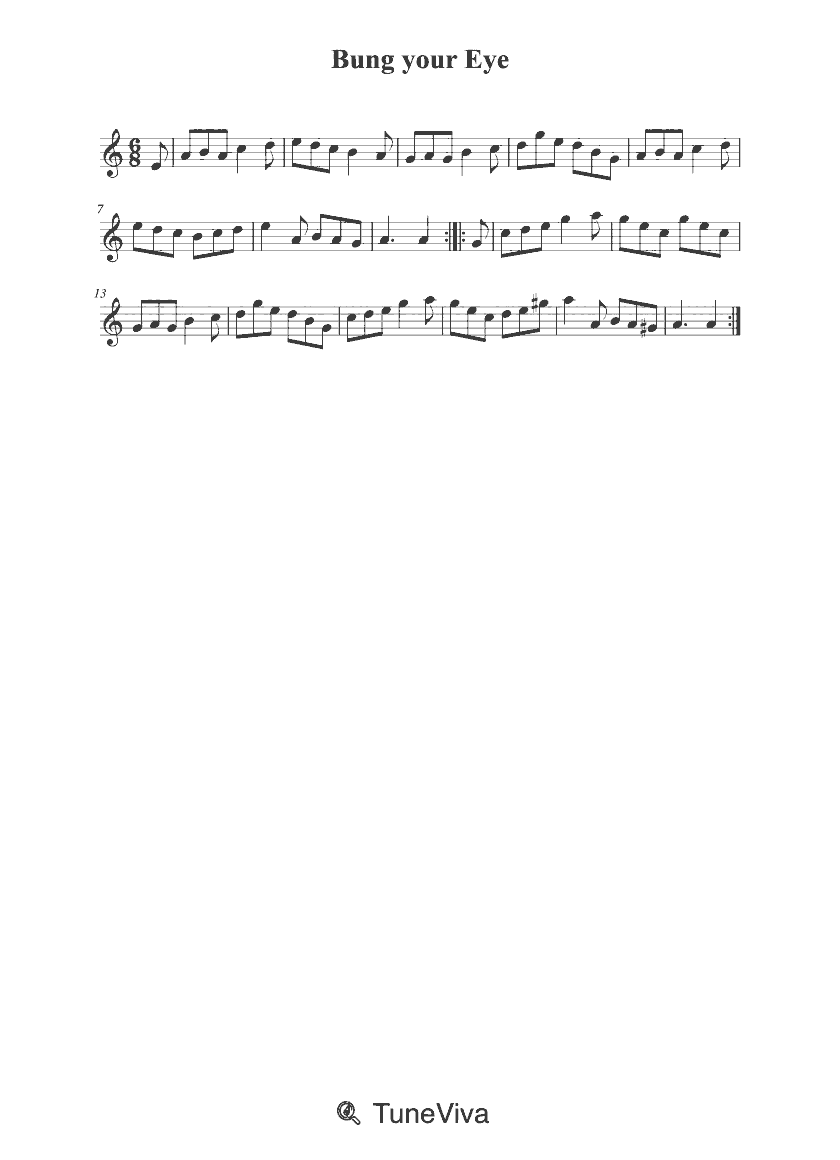
Misc tunes
24 sec · Score #12279
Open score
Niel Gow
12 sec · Score #126112
Open score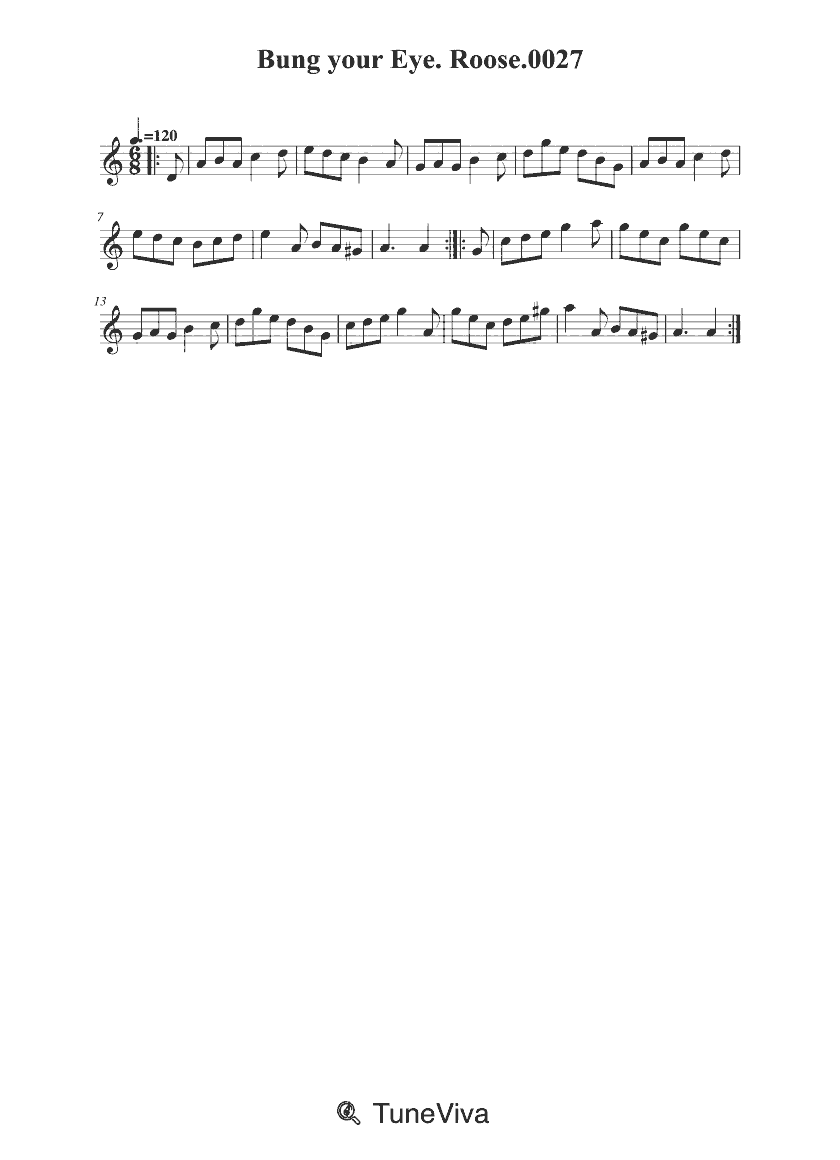
Misc tunes
16 sec
Open score
Niel Gow
the Braw Young ManThere Came a Young Man
24 sec · Score #86291
Open score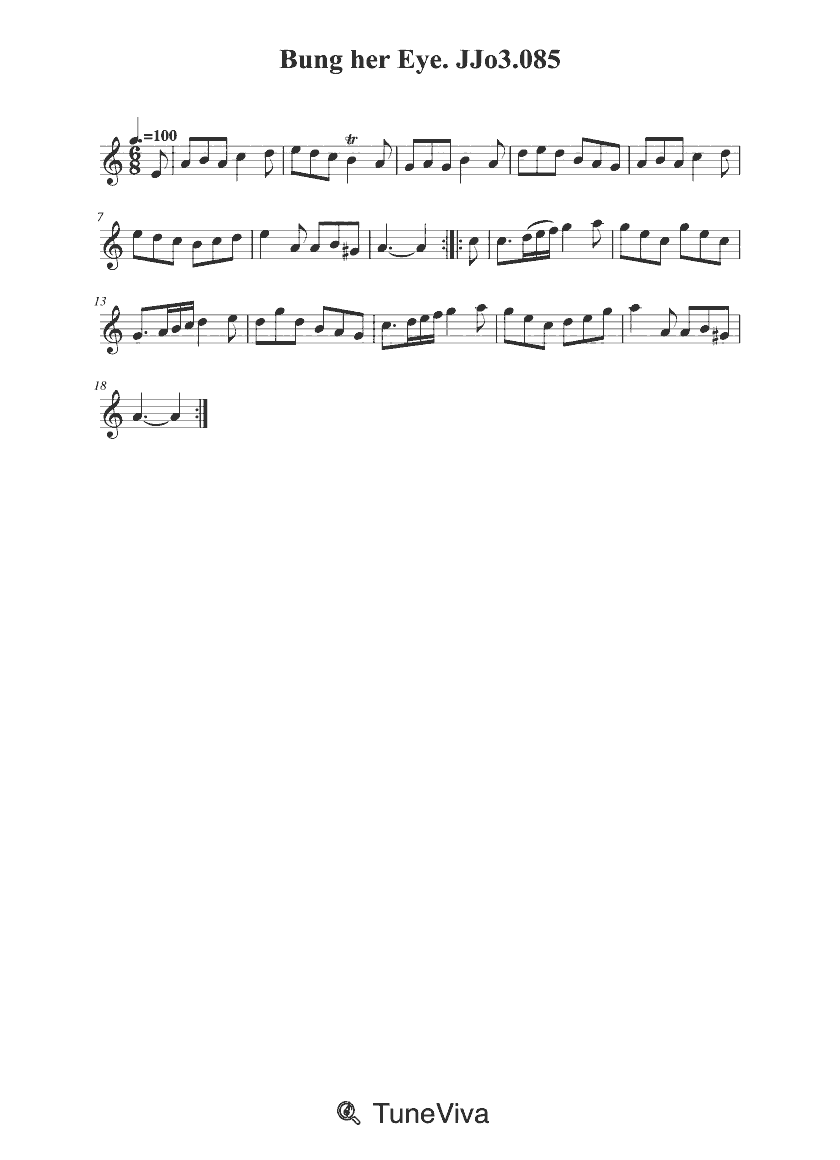
Misc tunes
19 sec · Score #113999
Open score
Niel Gow
12 sec · Score #182774
Open score
Niel Gow
the Braw Young ManThere Came a Young Man
24 sec · Score #190509
Open score
Niel Gow
the Braw Young ManThere Came a Young Man
24 sec · Score #12511
Open score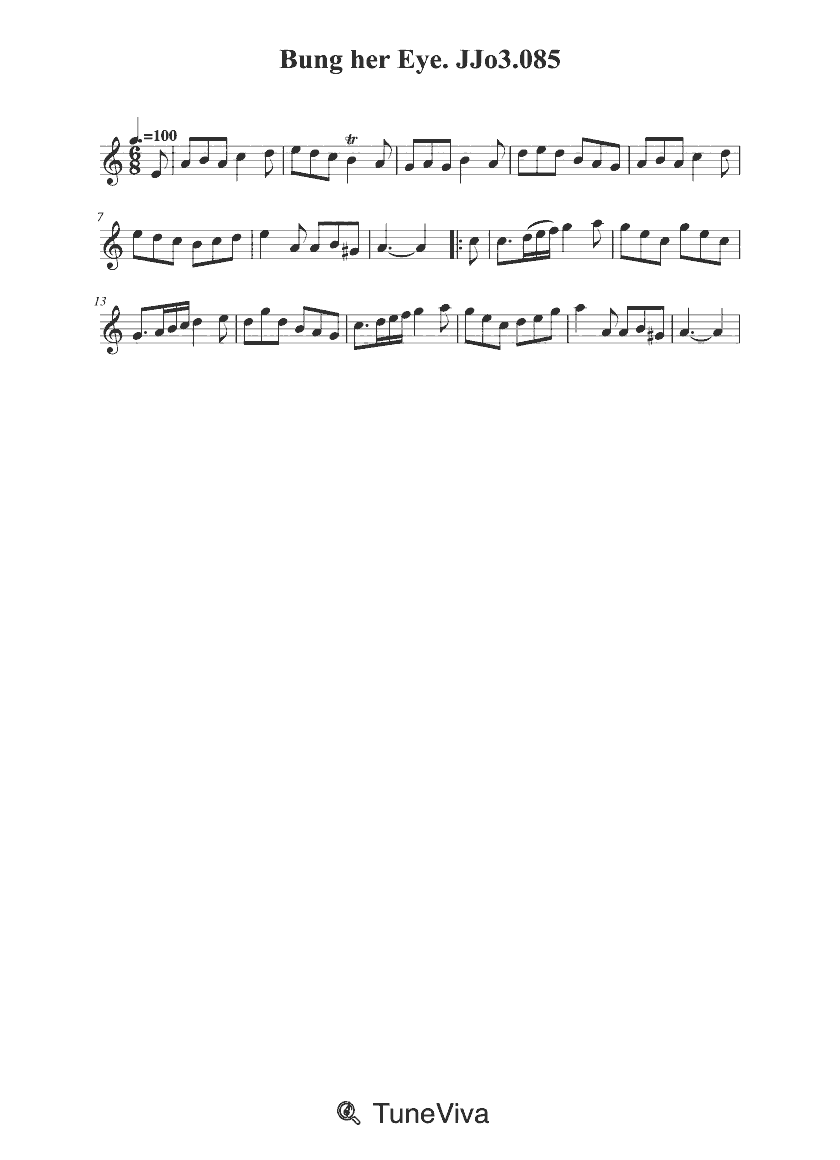
Misc tunes
14 sec
Open score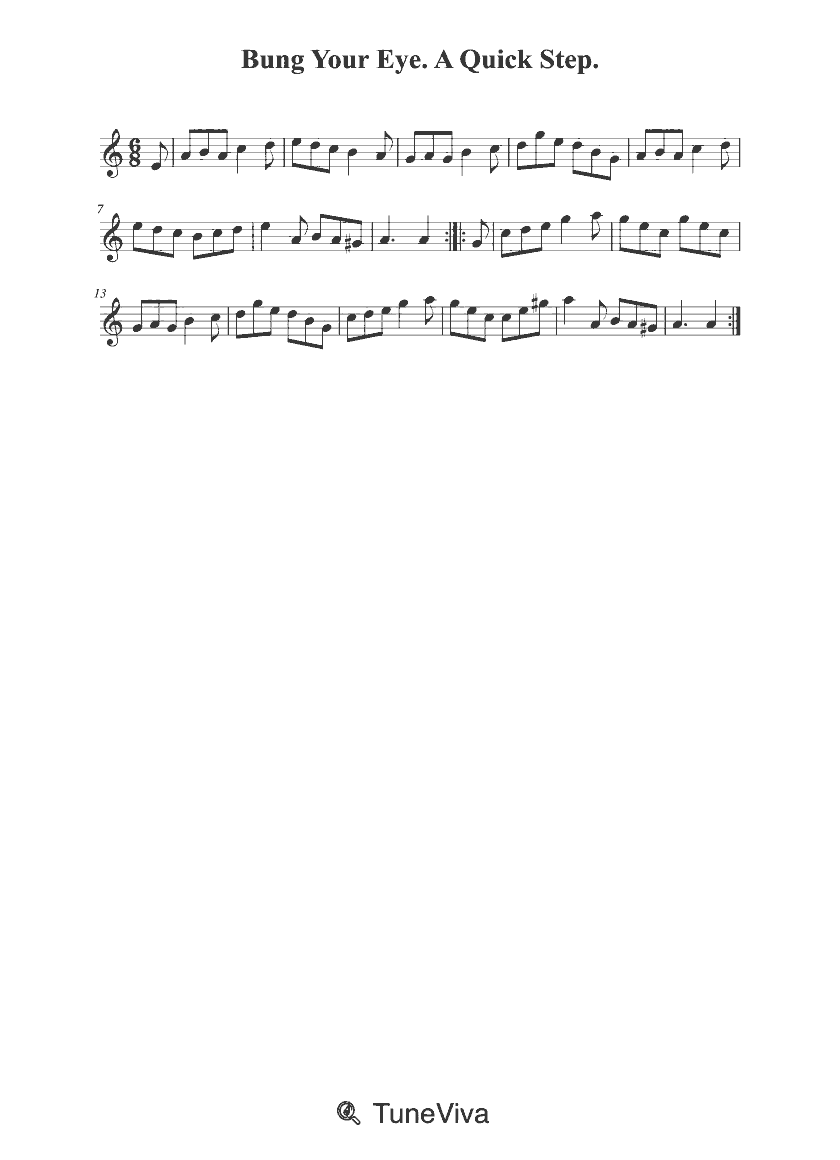
Misc tunes
24 sec
Open score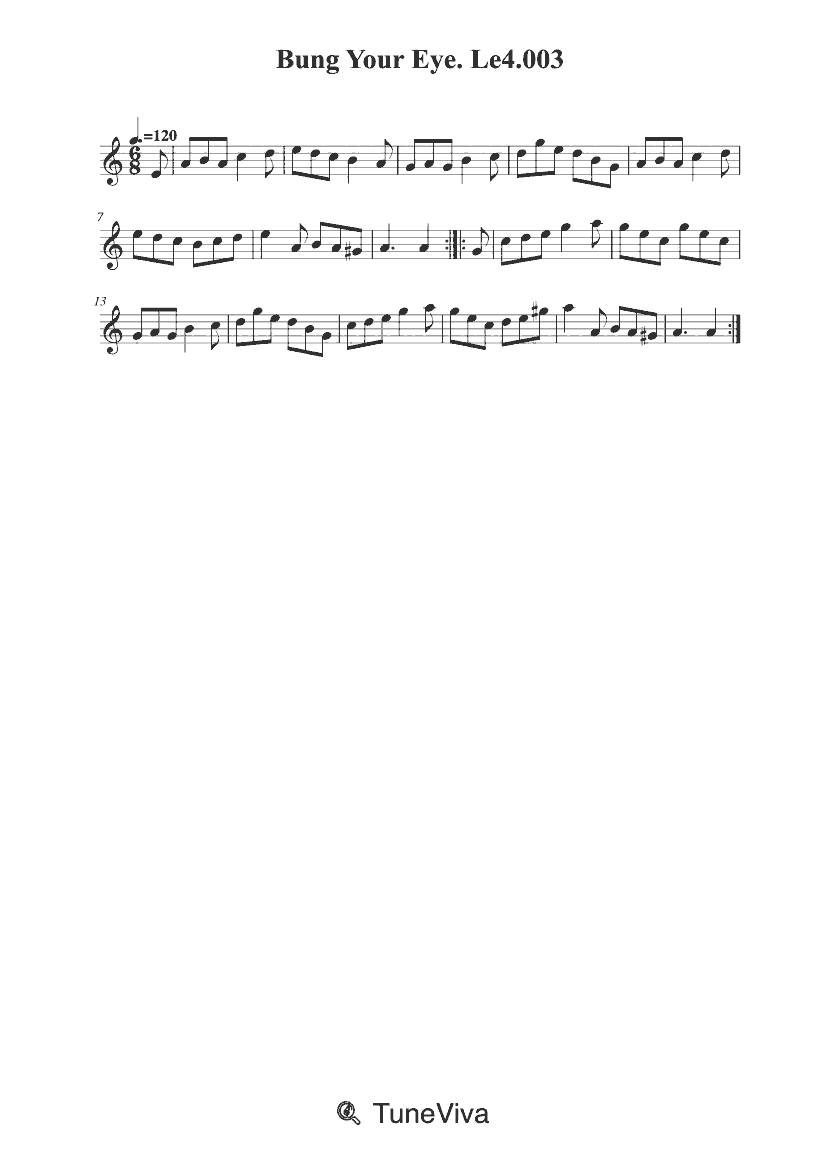
Misc tunes
16 sec
Open score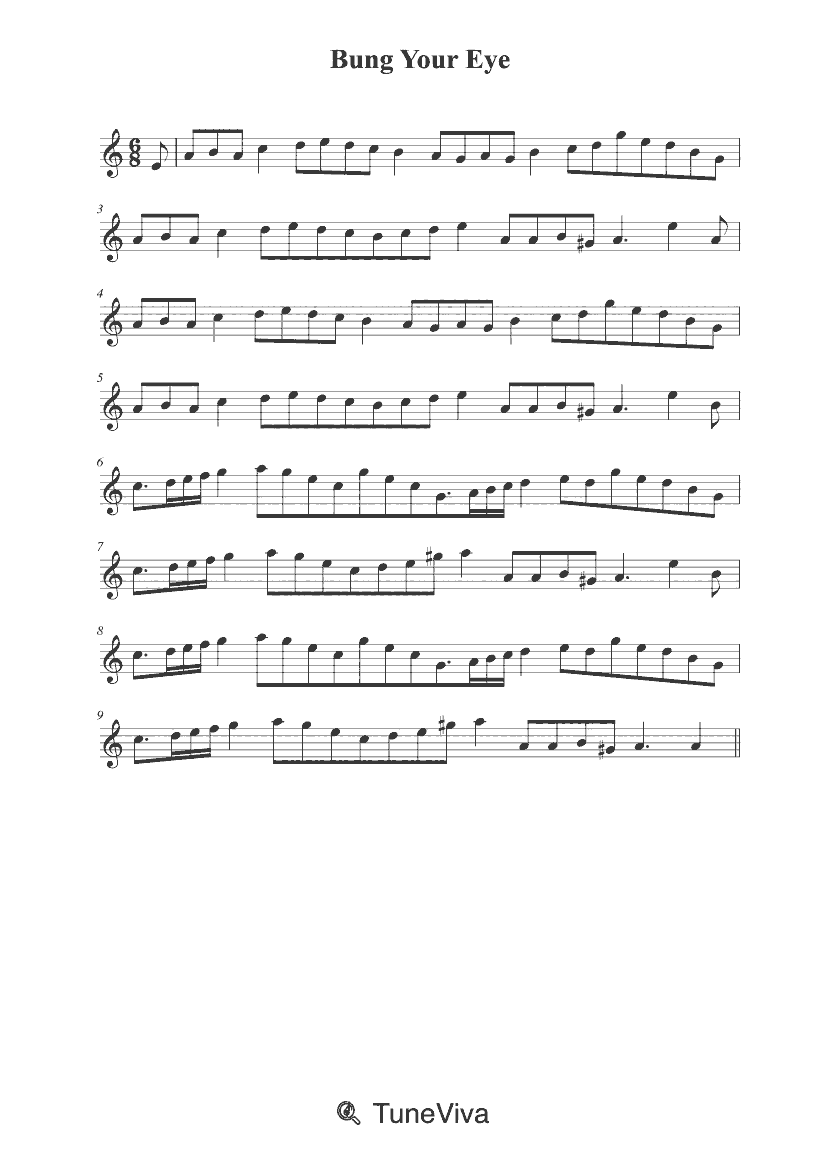
Misc tunes
24 sec · Score #50952
Open score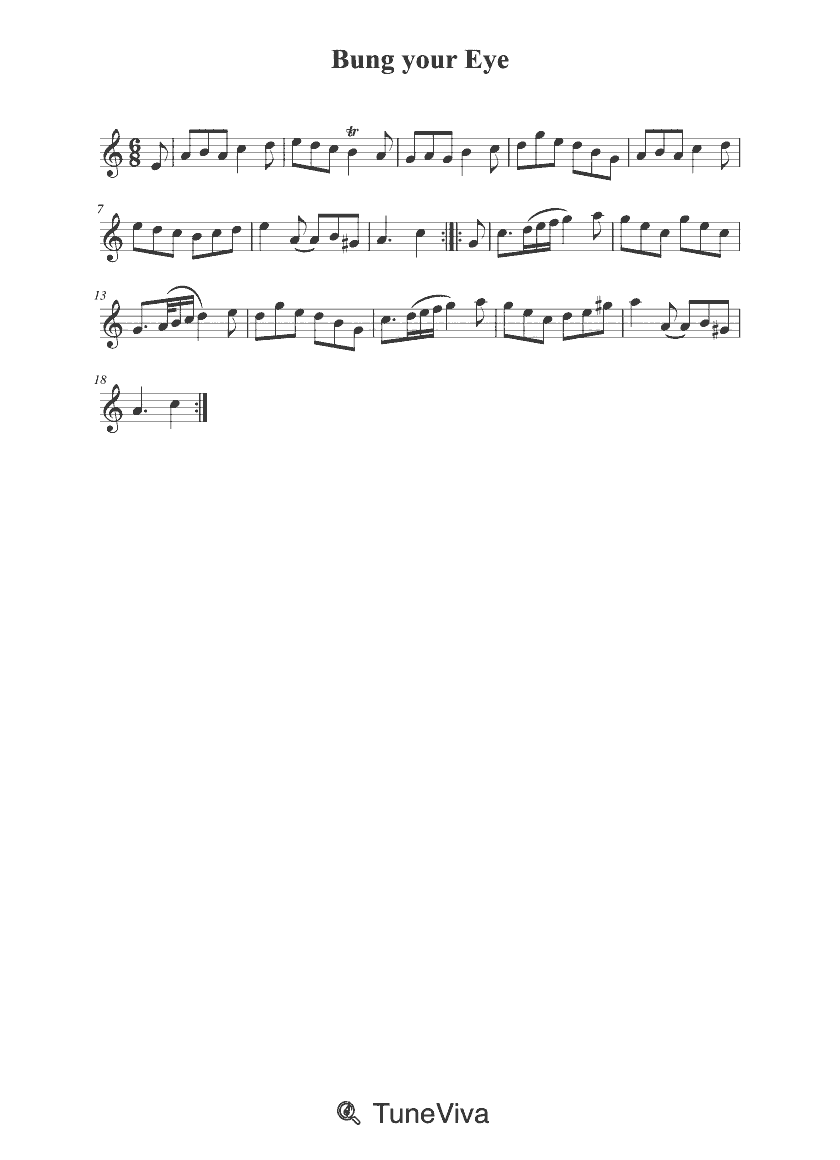
Misc tunes
24 sec · Score #73391
Open score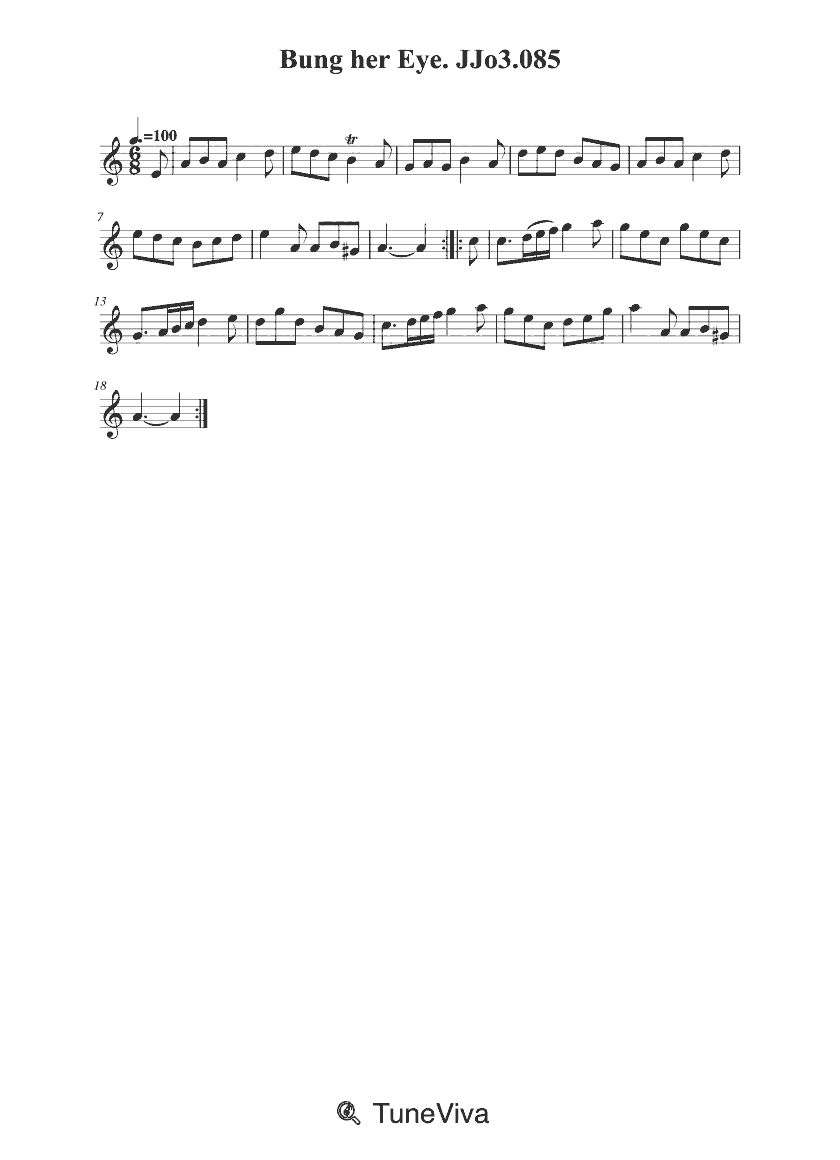
Misc tunes
19 sec · Score #79464
Open score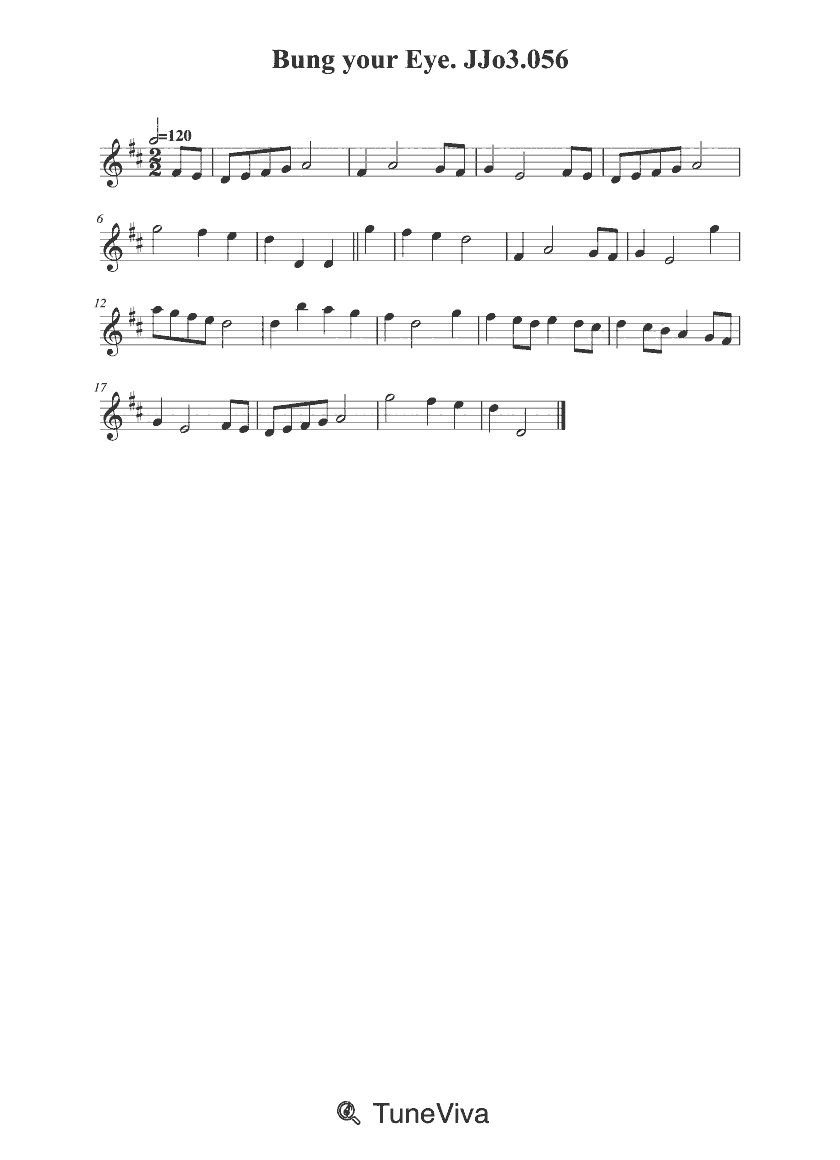
Misc tunes
36 sec
Open score
Niel Gow
the Braw Young ManThere Came a Young Man
24 sec · Score #222361
Open score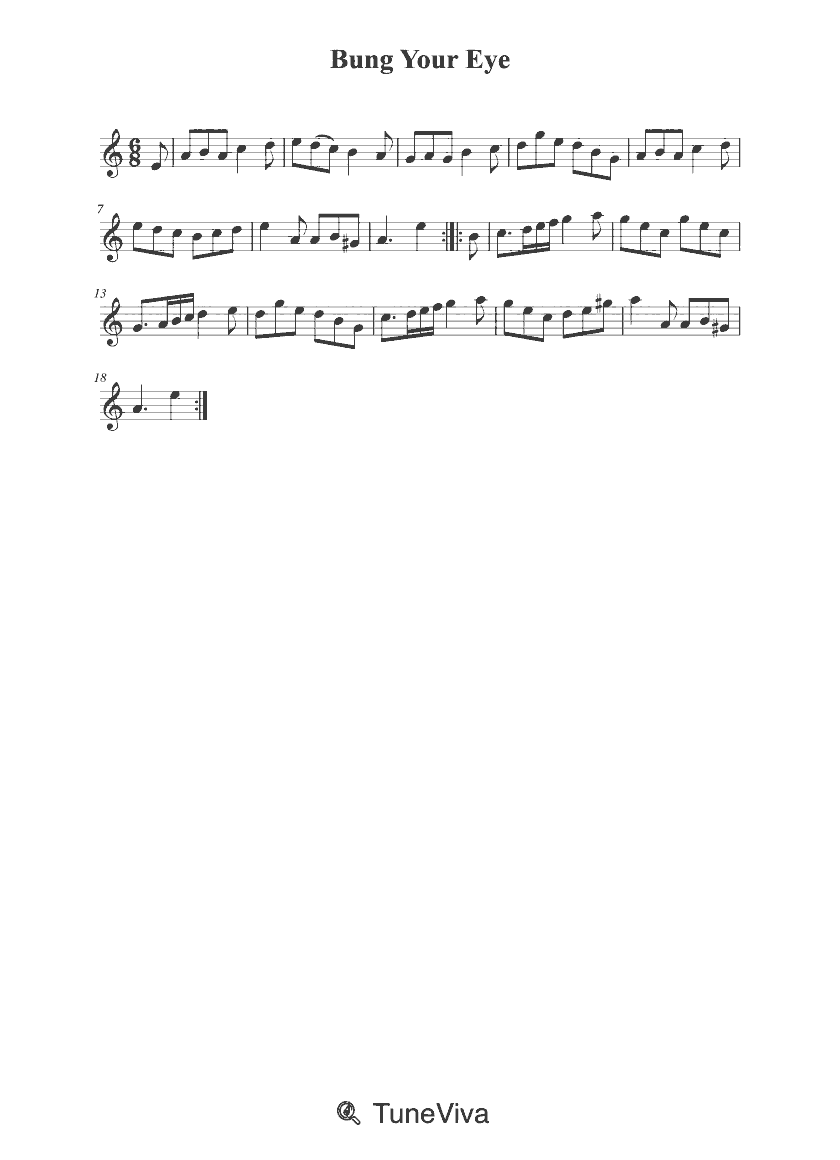
Misc tunes
24 sec · Score #236220
Open score
' A Quick Step'
There Came a Young Manaka. JBut.462Brisk Young Ladsaka. JBut.462
19 sec
Open score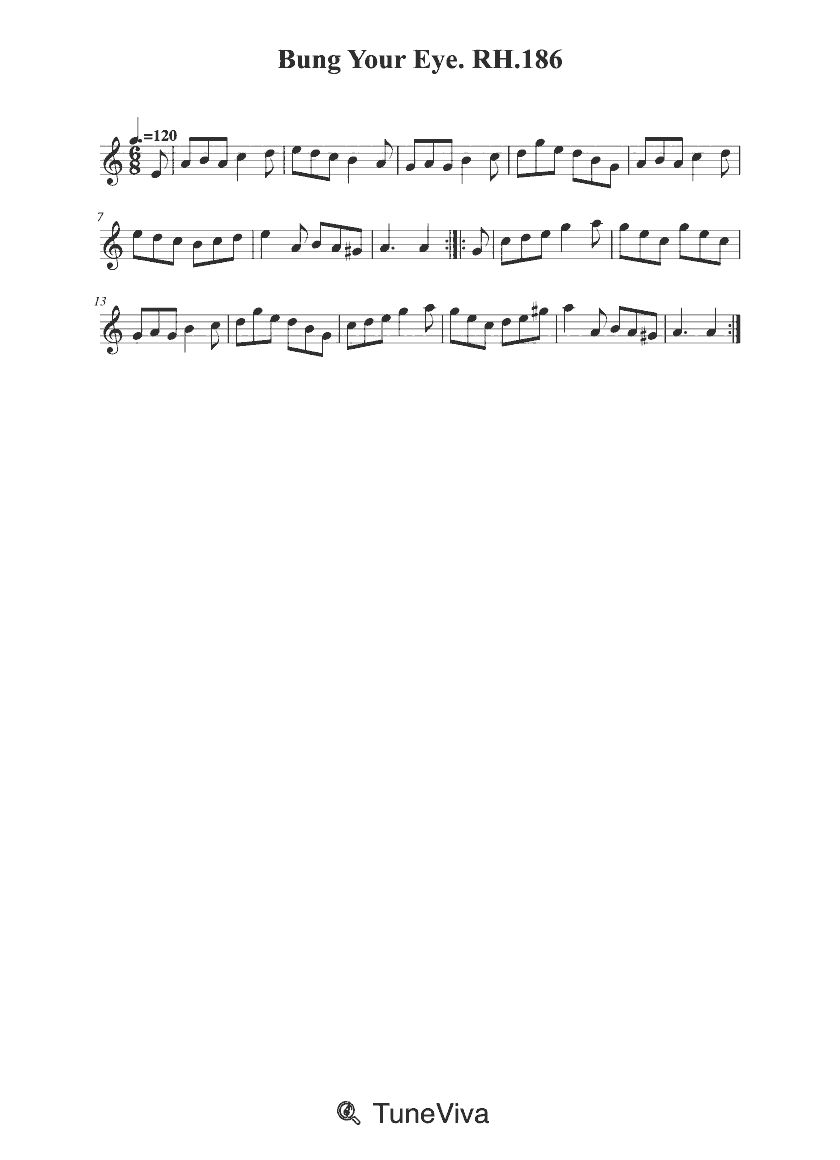
Misc tunes
16 sec
Open scorePage 1 of 2
All three Bung Your Eye scores list the same opening details: a 6/8 time signature and a key signature with no sharps or flats. Those details describe only how each score begins. They do not confirm that the versions follow the same key plan, phrasing, ornaments, or repeats later in the music.
The listed scores differ in size. The two Niel Gow titles have 76 and 78 notes and durations of about 13 and 12 seconds, while the unattributed listing has 162 notes and a duration of about 24 seconds. This suggests different settings or transcriptions rather than duplicate records, but note counts and durations can be inaccurate, so inspect the notation rather than relying on those figures alone.
The Niel Gow name appears in two score titles, but no supporting source is supplied here for that attribution. Treat the credit as something to check against the score and other references rather than as confirmed authorship. The unattributed listing may be a separate setting or simply a different editorial presentation.
Compare the actual scores for attribution, notation, length, repeats, ornaments, phrase lengths, and any instrument-specific markings. The records do not state instrumentation or difficulty, and the shared opening signature is only a starting detail rather than a complete description of the music.
Catalogue duration 13 sec. Opening key signature: No sharps or flats. Opening time signature: 6/8.
Catalogue duration 24 sec. Opening key signature: No sharps or flats. Opening time signature: 6/8.
Catalogue duration 12 sec. Opening key signature: No sharps or flats. Opening time signature: 6/8.
Bung Your Eye is a tune title represented here by three sheet-music listings. Two listings are titled “Niel Gow - Bung Your Eye,” and one is credited to miscellaneous tunes with no named composer. The supplied records do not establish the tune's origin or full history.
All three listed scores record an opening time signature of 6/8 and an opening key signature with no sharps or flats. Those details apply to the beginning of each score only; they do not show whether later key changes, repeats, or ornaments are the same.
The listed note counts are 76 and 78 for the two Niel Gow titles and 162 for the unattributed listing, with durations of roughly 13, 12, and 24 seconds. The difference suggests separate settings or transcriptions, but the counts and durations may be inaccurate and should be checked against the notation.
The Niel Gow name appears as a credit on two of the three listed scores, but the supplied material gives no source evidence for that attribution. The credit should be checked against the score's title page, editorial notes, and other references before it is treated as confirmed authorship.
A player should compare the actual scores for attribution, notation, length, repeats, ornaments, phrase lengths, and any instrument-specific markings. The records do not state instrumentation or difficulty, and the shared 6/8 opening with no sharps or flats is only a starting detail.
The opening key signature with no sharps or flats identifies only the signature at the start of each listed score. It does not establish the full key plan, the mode, or whether later sections introduce different signatures.