
Cheshire Rounds
Misc tunes
48 sec · Score #183993
Open scoreCheshire Rounds is represented by several short scores that all open in D major but are not identical settings. Two available scores use 3/2 and one uses 3/4, and their reported durations differ. One score is titled “Henry Playford – Cheshire Rounds” and carries a credit to Henry Playford with the year 1701; the others are anonymous. These details help compare versions, but they do not by themselves confirm a composer or a single authoritative text.
Scores 1–20 of 20
Misc tunes
48 sec · Score #183993
Open score
Misc tunes
24 sec
Open score
Henry Playford
58 sec
Open score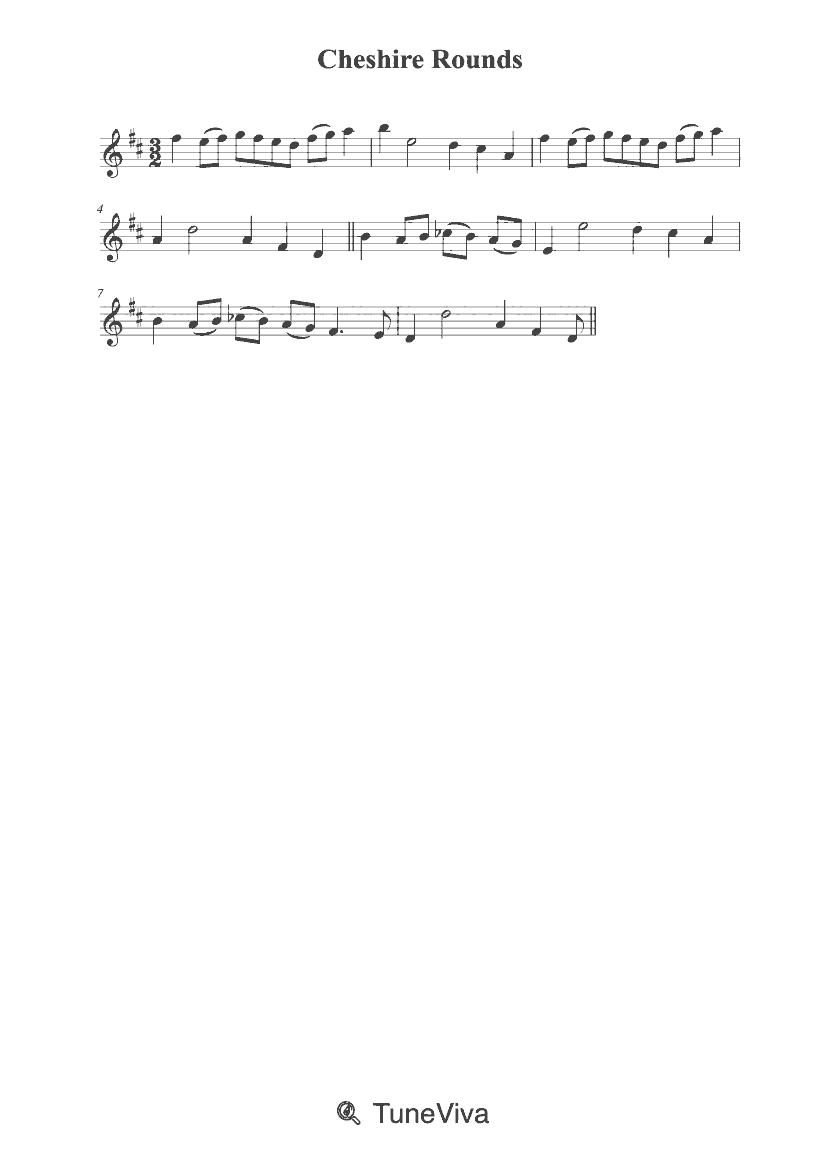
Misc tunes
45 sec
Open score
Trad.
36 sec · Score #224935
Open score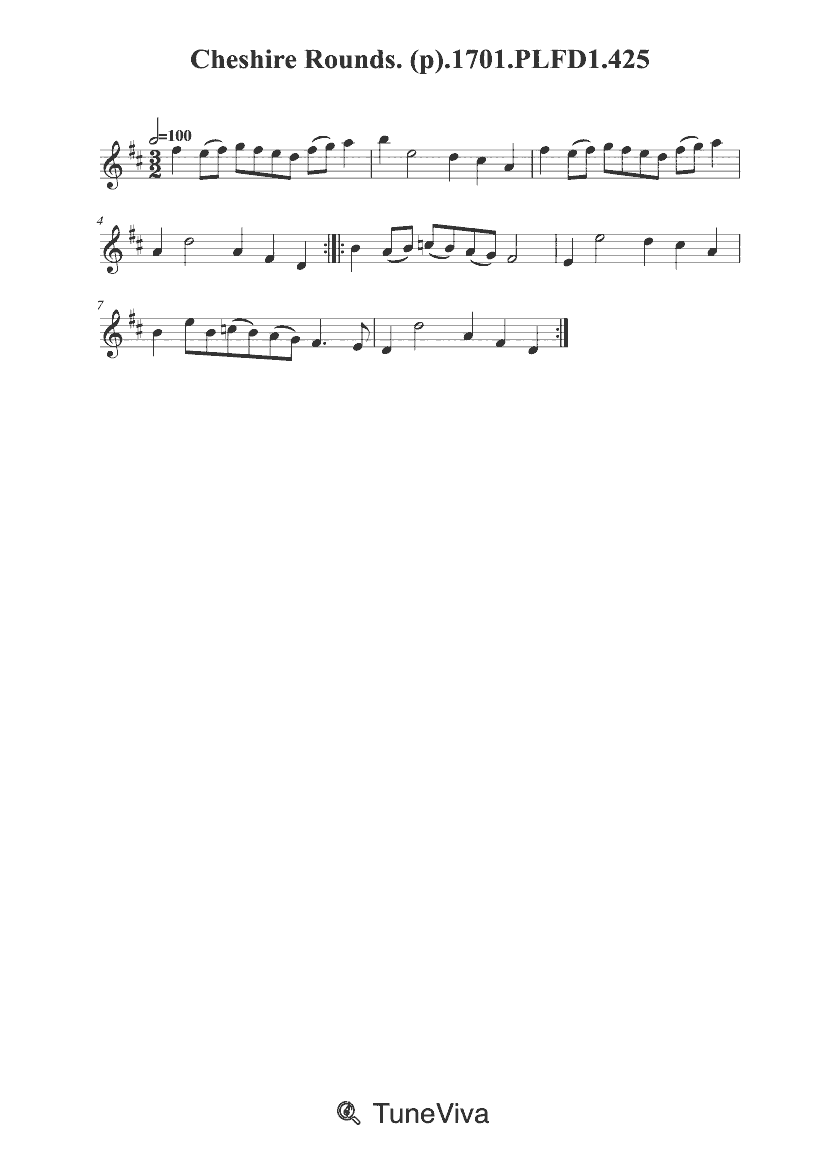
Misc tunes
58 sec
Open score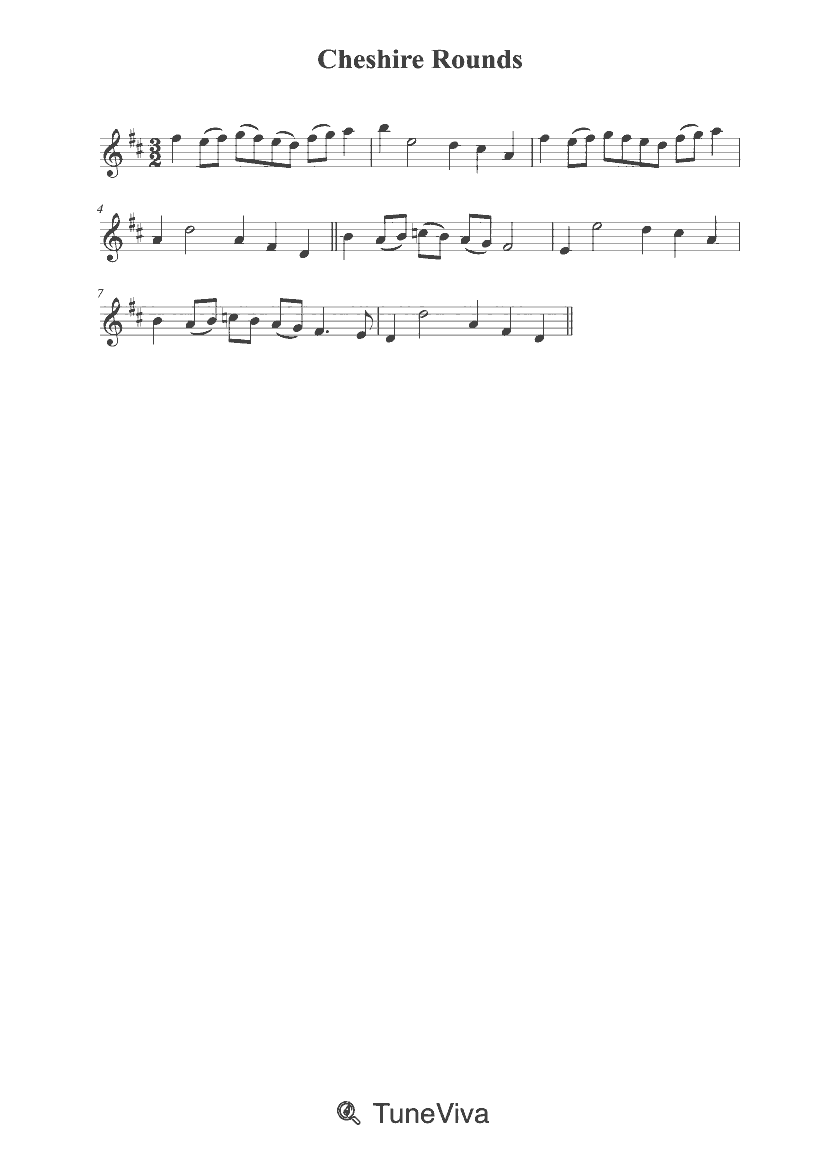
Misc tunes
48 sec · Score #13571
Open score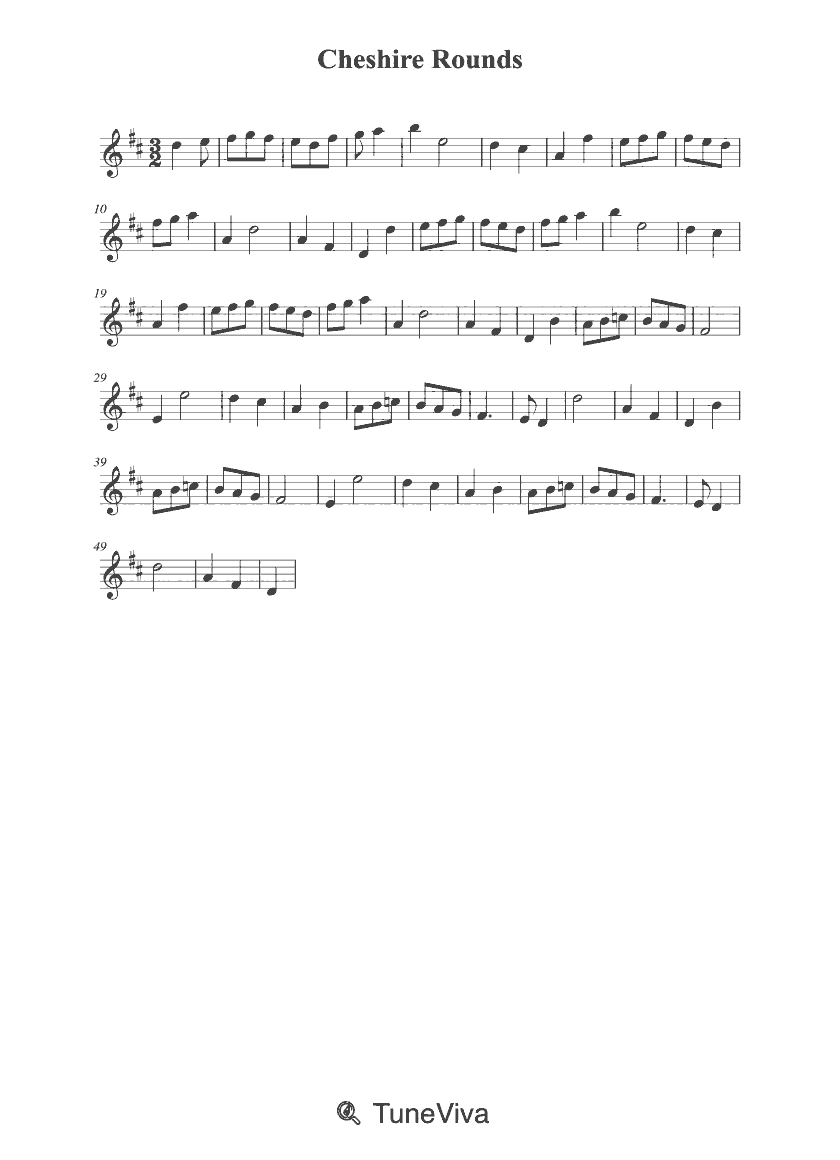
Misc tunes
1 min 39 sec
Open score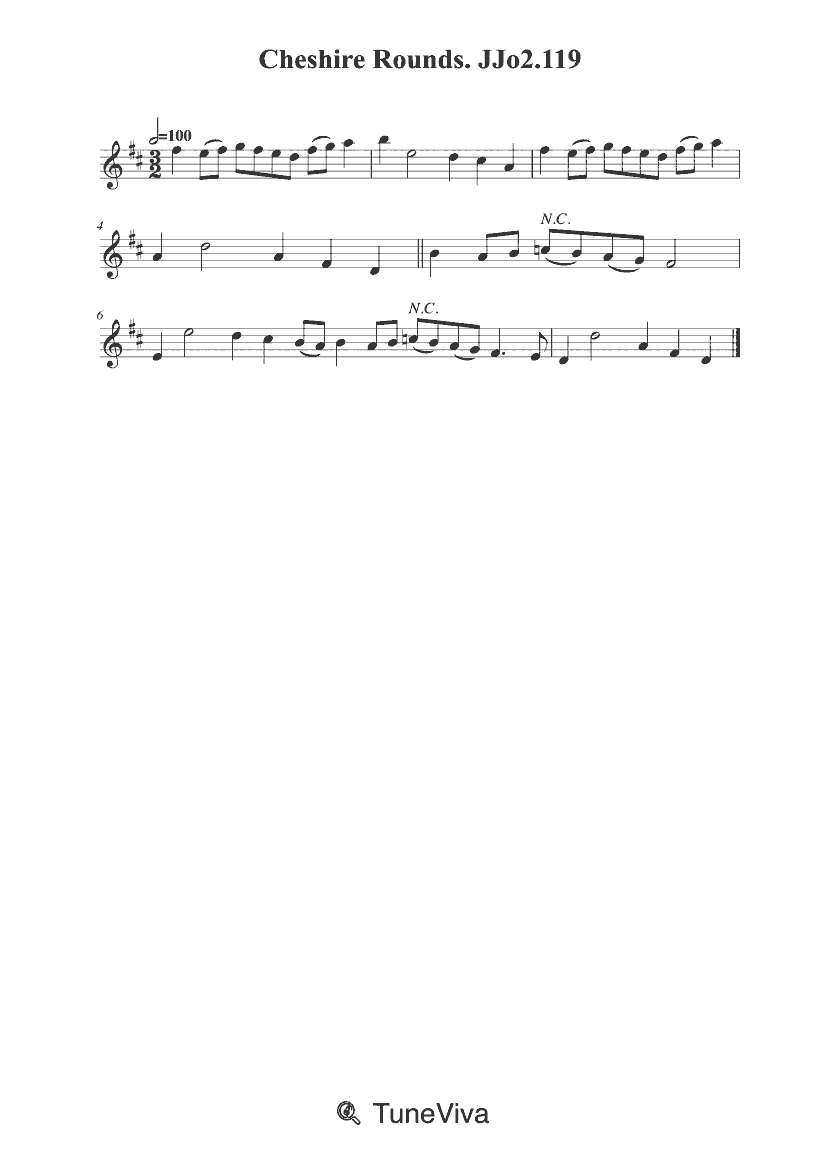
Misc tunes
29 sec
Open score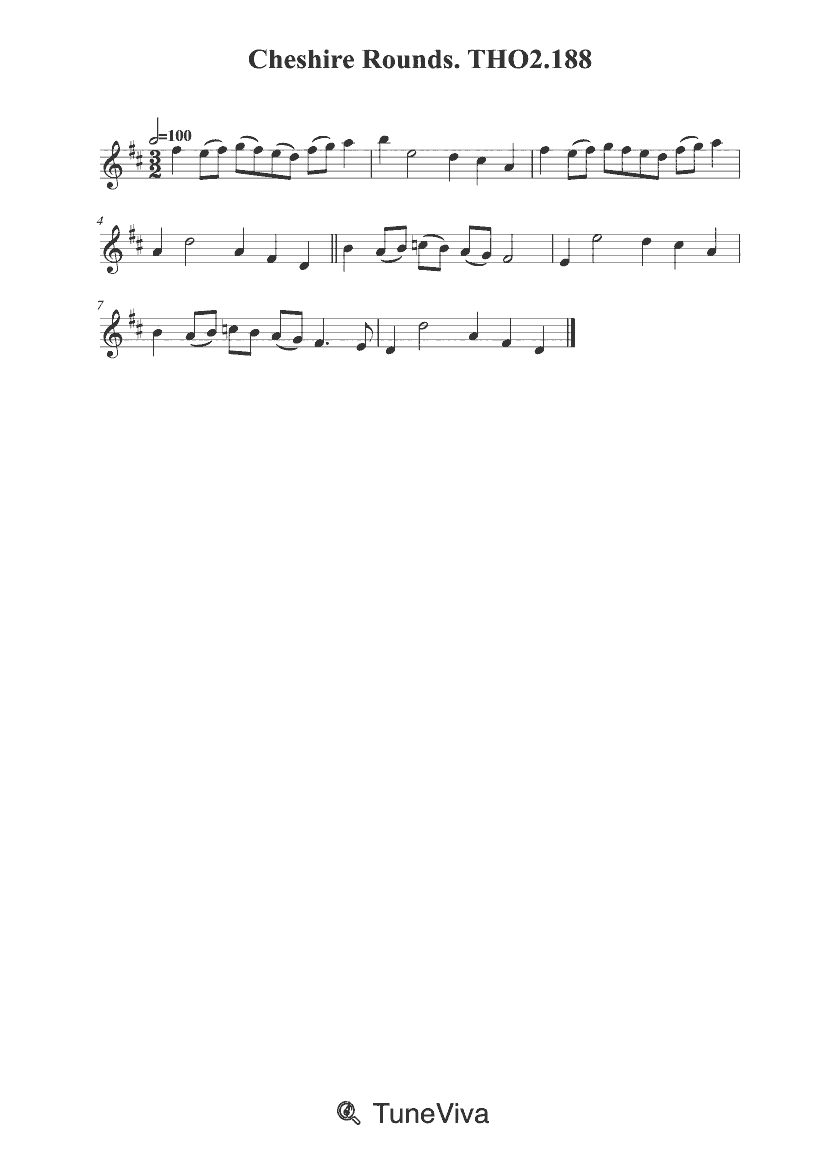
Misc tunes
29 sec
Open score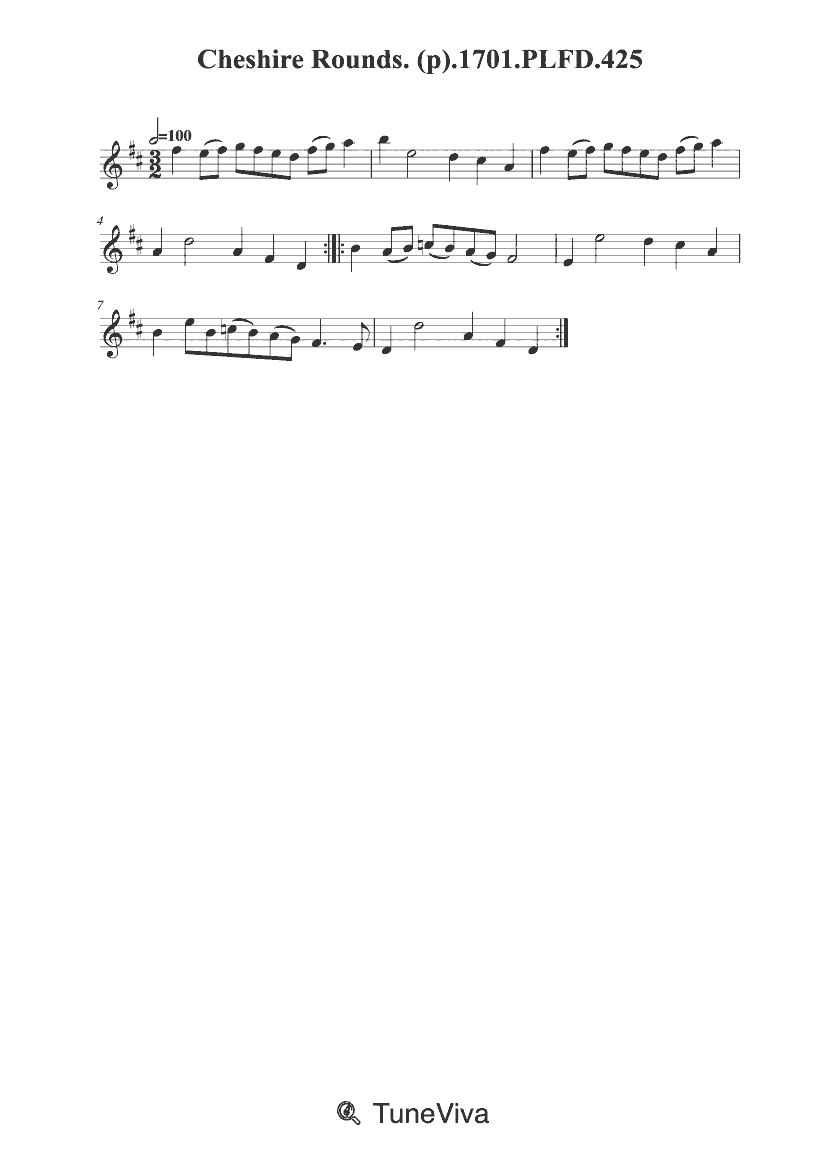
Misc tunes
58 sec · Score #241942
Open score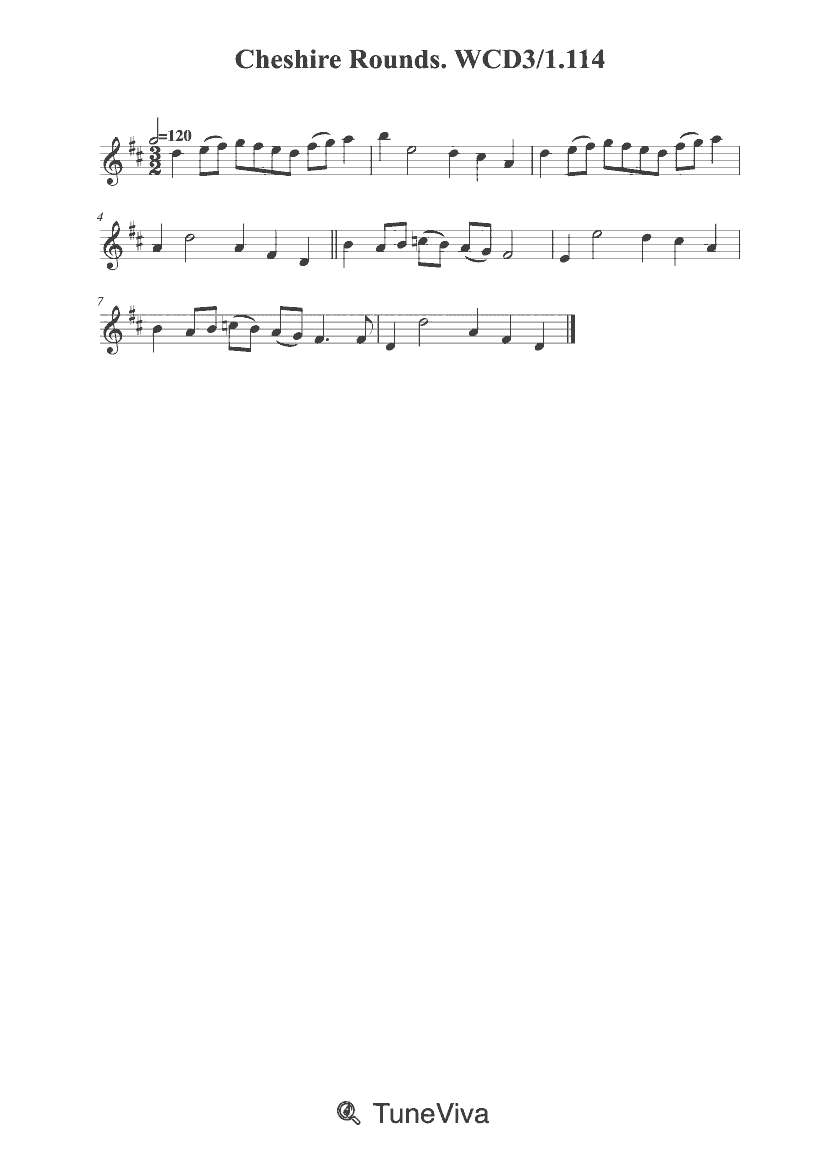
Misc tunes
24 sec
Open score
Trad.
36 sec · Score #49867
Open score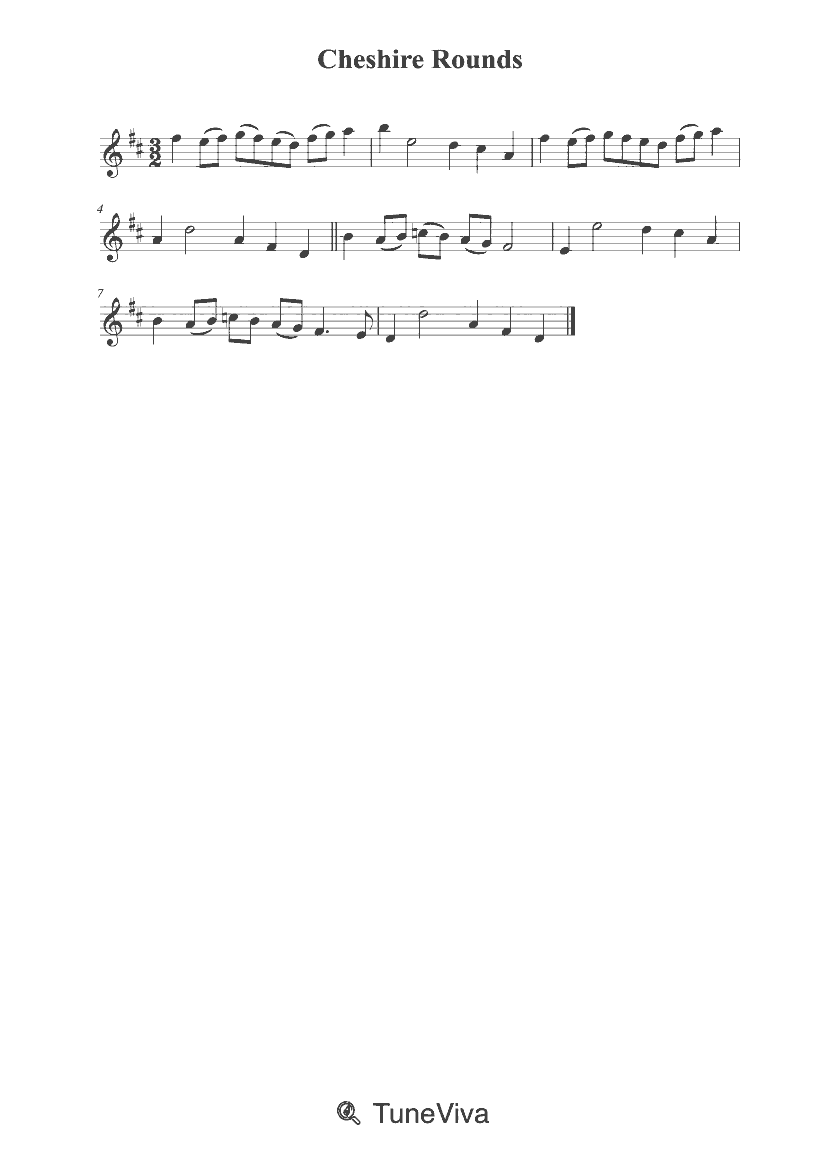
Misc tunes
48 sec · Score #81692
Open score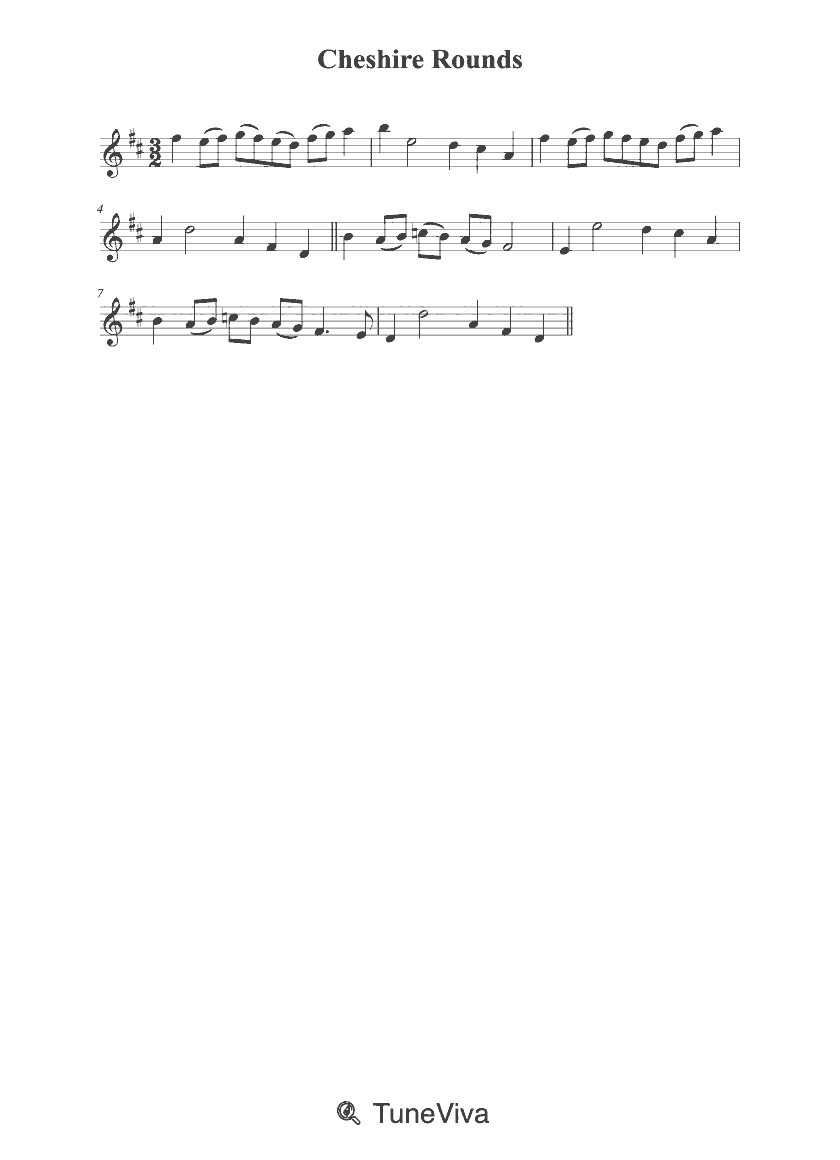
Misc tunes
48 sec · Score #118983
Open score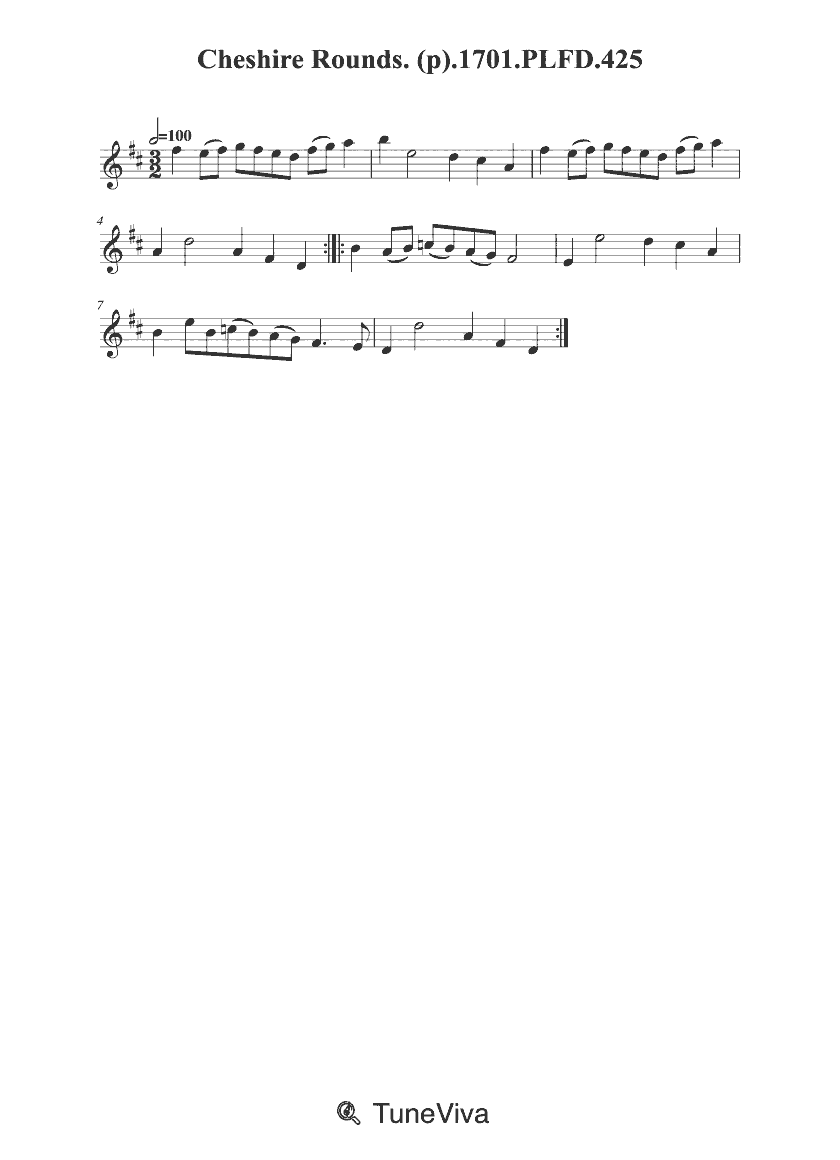
Misc tunes
58 sec · Score #191016
Open score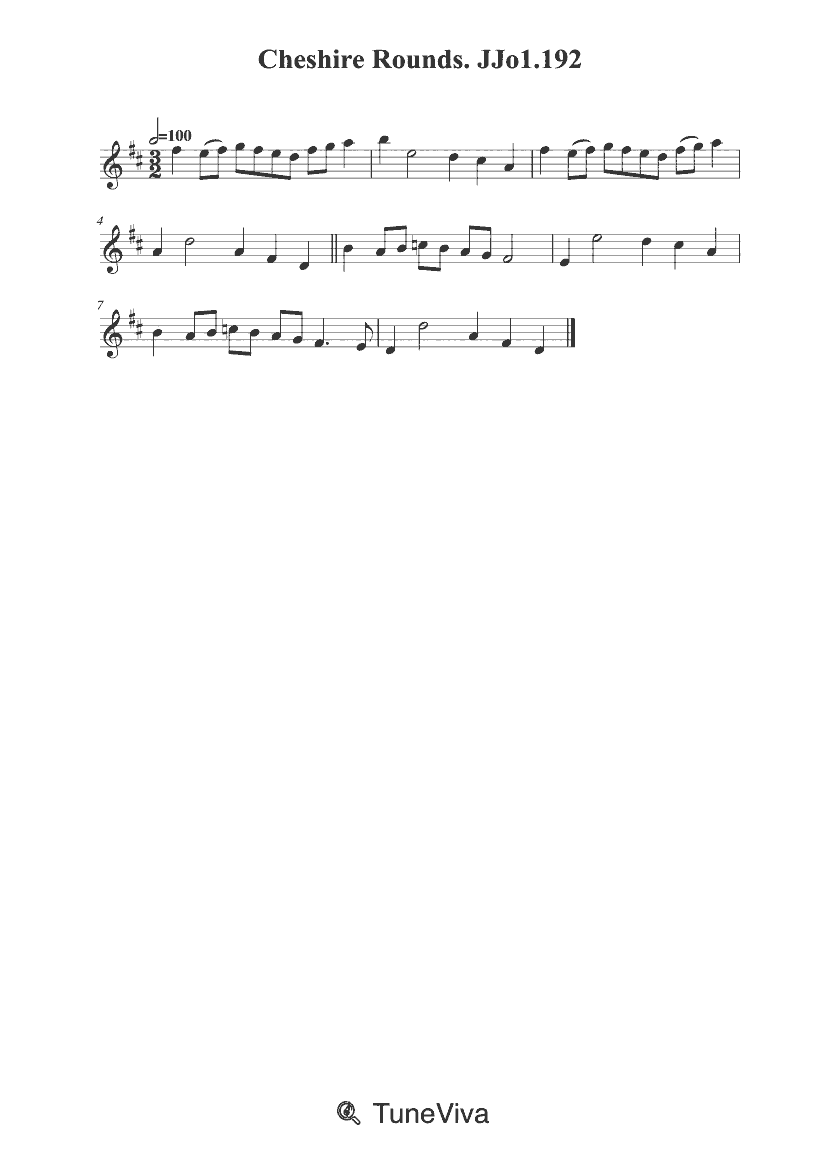
Misc tunes
29 sec
Open score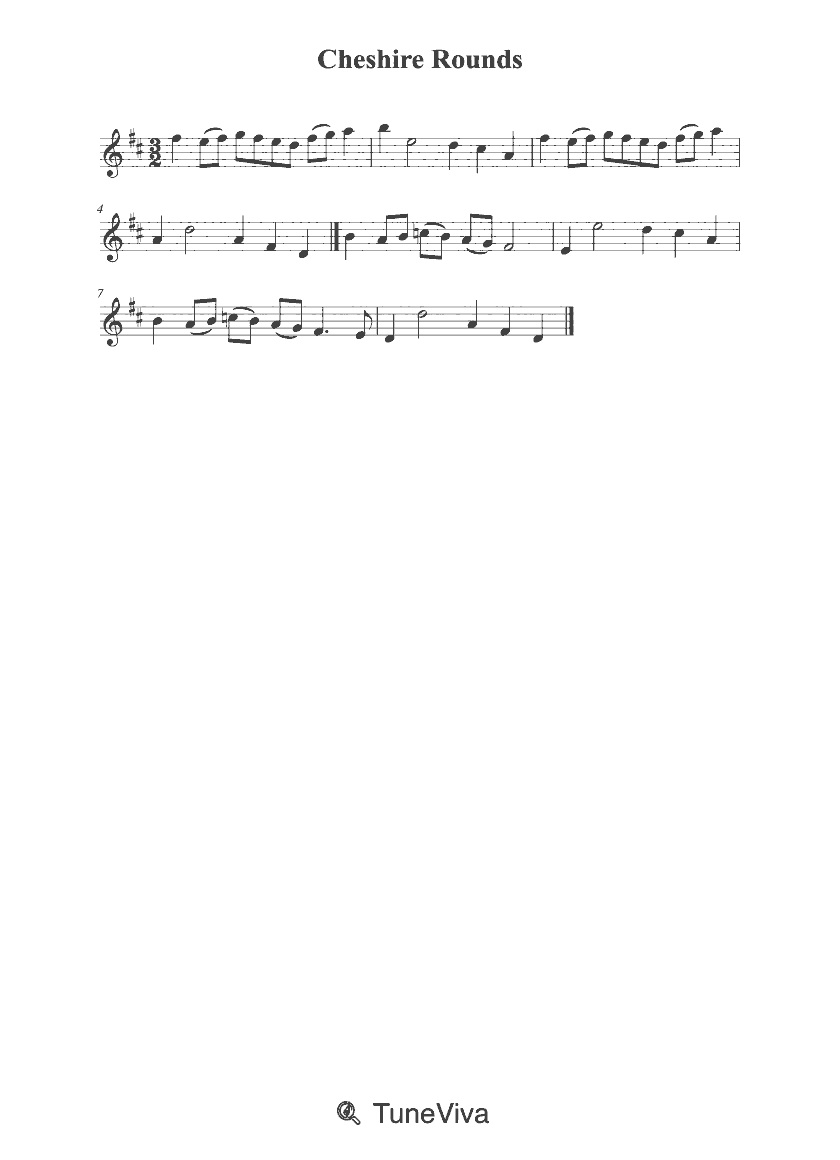
Misc tunes
48 sec · Score #77259
Open score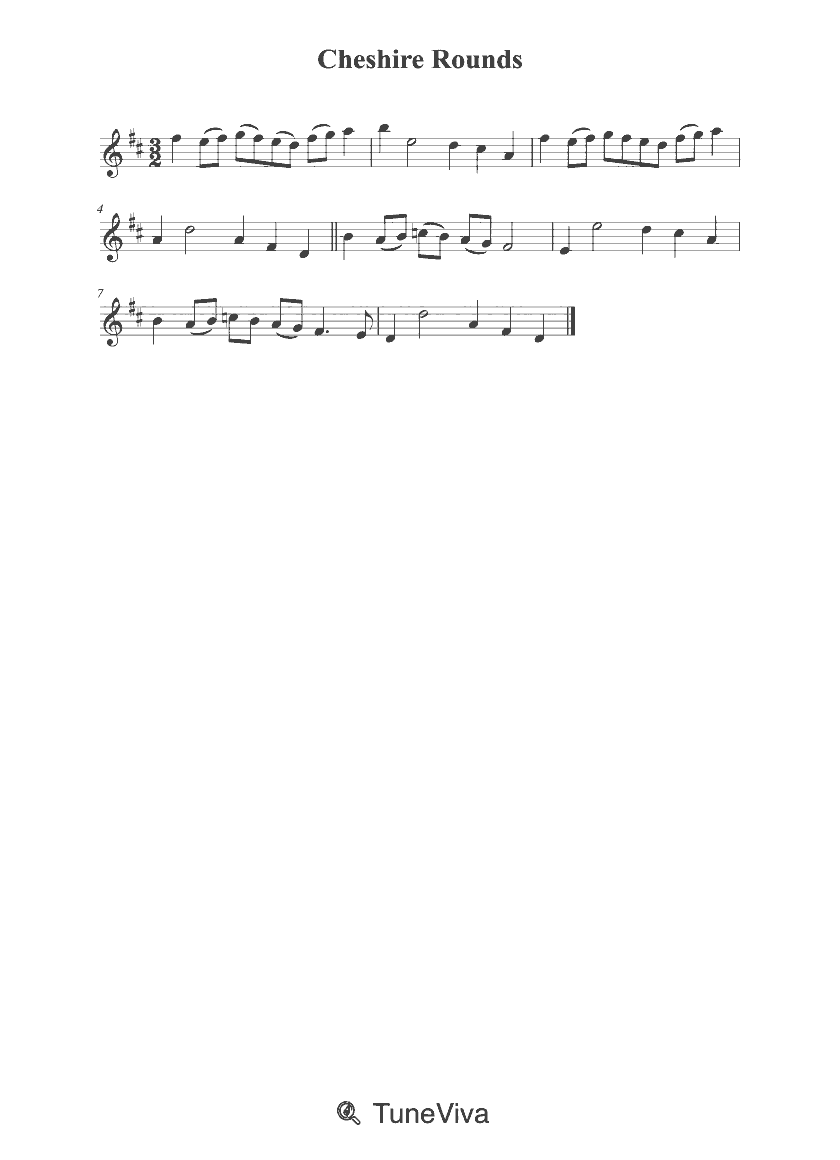
Misc tunes
48 sec · Score #98370
Open score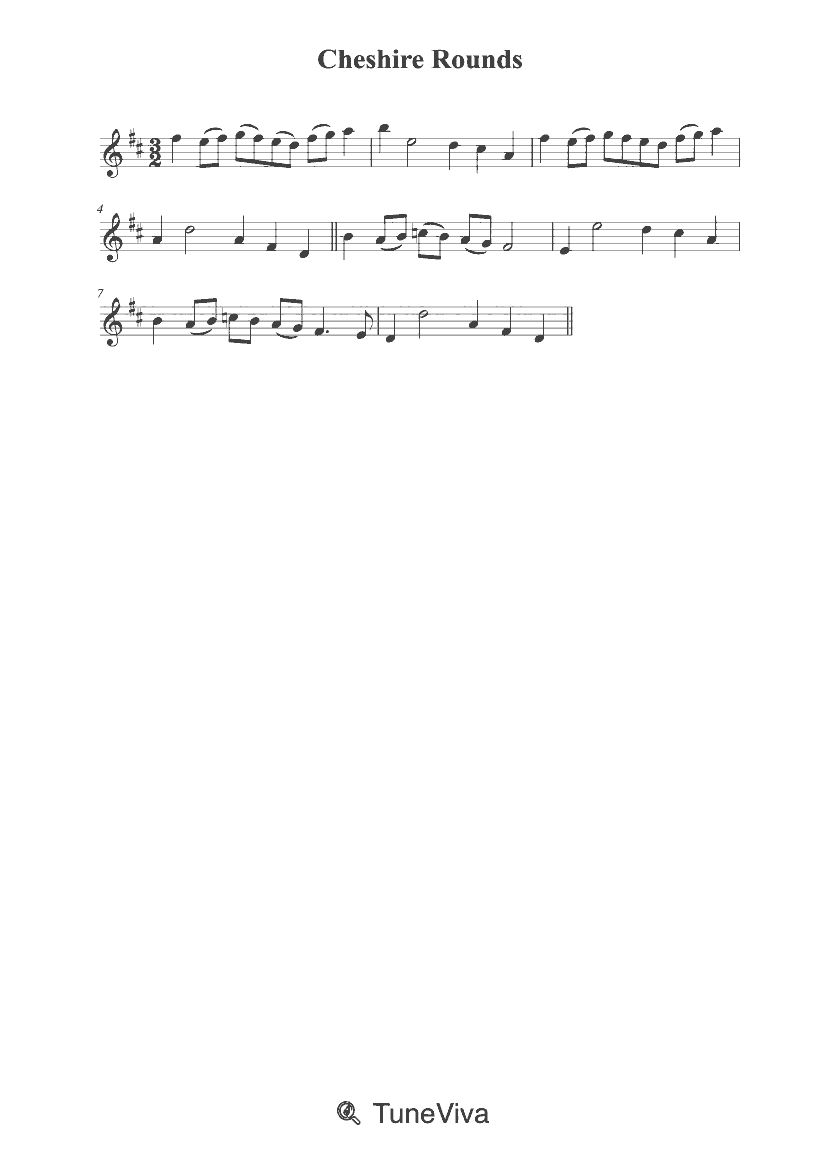
Misc tunes
48 sec · Score #169389
Open scoreThe available Cheshire Rounds scores share an opening key signature of two sharps, indicating D major, but they are not identical settings. Two open in 3/2 and one in 3/4, and reported durations range from about 24 seconds to about 58 seconds. Those details help a reader compare the notation in front of them; they do not show that one setting is more authentic than another.
One score is titled “Henry Playford – Cheshire Rounds” and carries a credit to Henry Playford with the year 1701. The other scores are anonymous. Treat the name and date as a lead to verify against the score and further reference, not as a settled attribution.
A 3/2 setting and a 3/4 setting present the music with different barring and grouping, which can change phrasing and how the notation reads on the page. Choose the metre that matches the notation you can read or the version you need to perform, and check the actual score rather than relying on a title alone.
The available Cheshire Rounds scores do not name instruments, and no verified edition information is supplied. They should not be assumed to be easy, advanced, or intended for a specific instrument. Inspect the notation, clefs, range and any performance directions on the score before using it.
Catalogue duration 48 sec. Opening key signature: 2 sharps (D major). Opening time signature: 3/2.
Catalogue duration 24 sec. Opening key signature: 2 sharps (D major). Opening time signature: 3/4.
Catalogue duration 58 sec. Opening key signature: 2 sharps (D major). Opening time signature: 3/2. Opening tempo: 200 BPM.
One score is titled “Henry Playford – Cheshire Rounds” and carries a credit to Henry Playford with the year 1701, while the other available scores are anonymous. That credit does not establish whether Playford composed, arranged, published, or was otherwise associated with the tune.
The available Cheshire Rounds scores all open with a key signature of two sharps, indicating D major at the opening. This describes the opening key of those scores, not every possible historical version of the tune.
Two available Cheshire Rounds scores open in 3/2 and one opens in 3/4. The difference affects barring and how the phrases look on the page, so a player should check the metre of the specific score rather than assume the settings are interchangeable.
The available Cheshire Rounds scores do not specify instrumentation, and no supplied source verifies an original or intended instrument. A player should inspect the notation and confirm suitability before treating any version as written for a particular instrument.
Reported durations for the available Cheshire Rounds scores range from about 24 seconds to about 58 seconds. Those figures describe individual scores and should not be treated as a standard performance length.
The available Cheshire Rounds scores are not identical in their reported details. They differ in time signature, duration and note count, and one carries a Henry Playford attribution that the others lack. Comparing the notation is more reliable than assuming one authoritative version.
When choosing a Cheshire Rounds score, check the opening key, time signature, instrumentation and any attribution shown on the score.