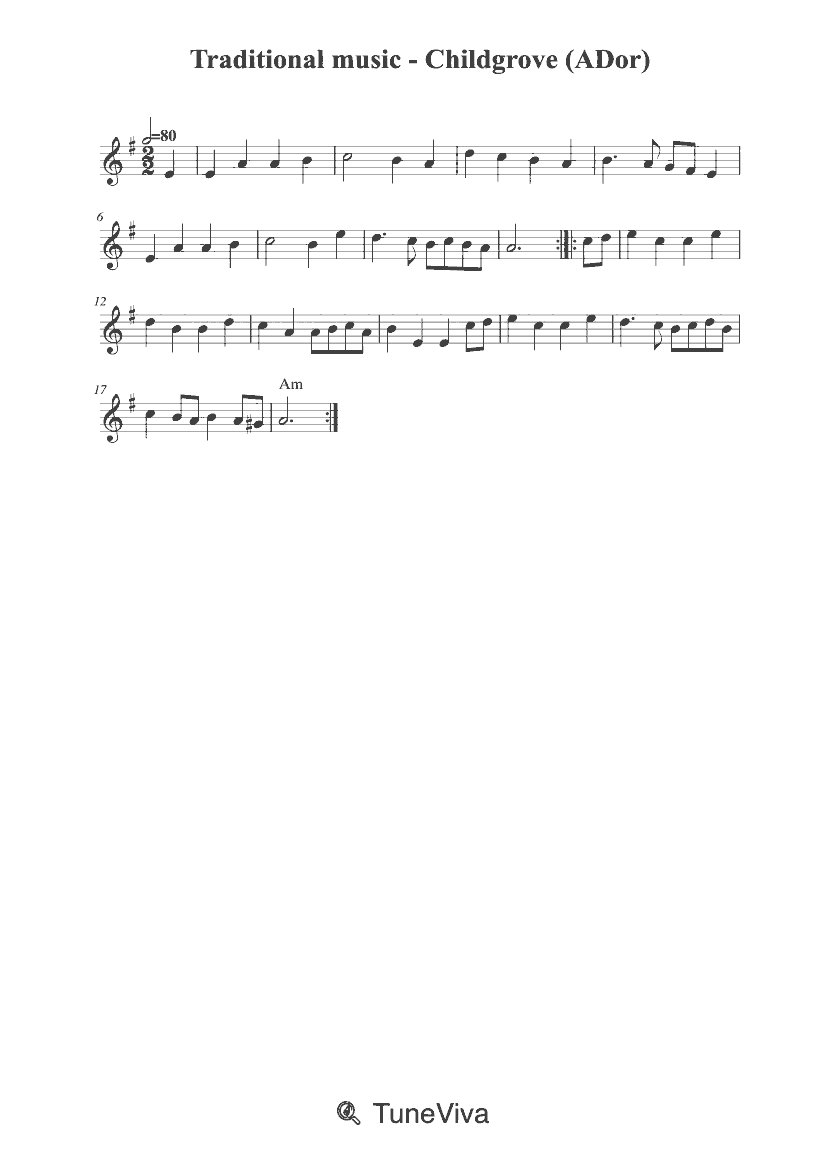
Traditional music - Childgrove (ADor)
Trad. Playford 1701
1 min 36 sec
Open scoreChildgrove sheet music appears here as several traditional versions of a tune linked in the score credits to Playford and the year 1701. The versions differ in key, metre and listed tempo, so the practical choice is which opening key and time signature suit your instrument, group or reading preference.
Scores 1–20 of 38
Trad. Playford 1701
1 min 36 sec
Open score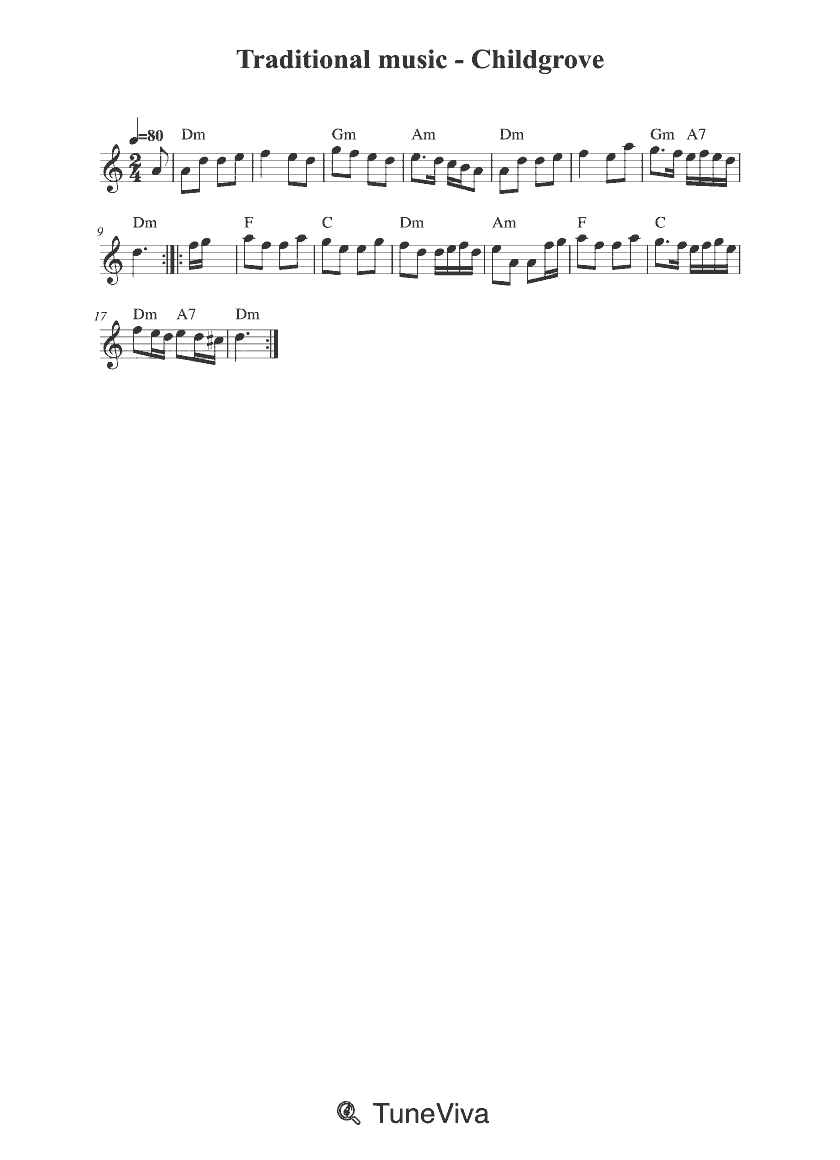
Trad. Playford 1701
48 sec
Open score
Henry Playford
1 min 8 sec · Score #138487
Open score
Misc tunes
1 min 12 sec
Open score
Henry Playford
1 min 8 sec · Score #44842
Open score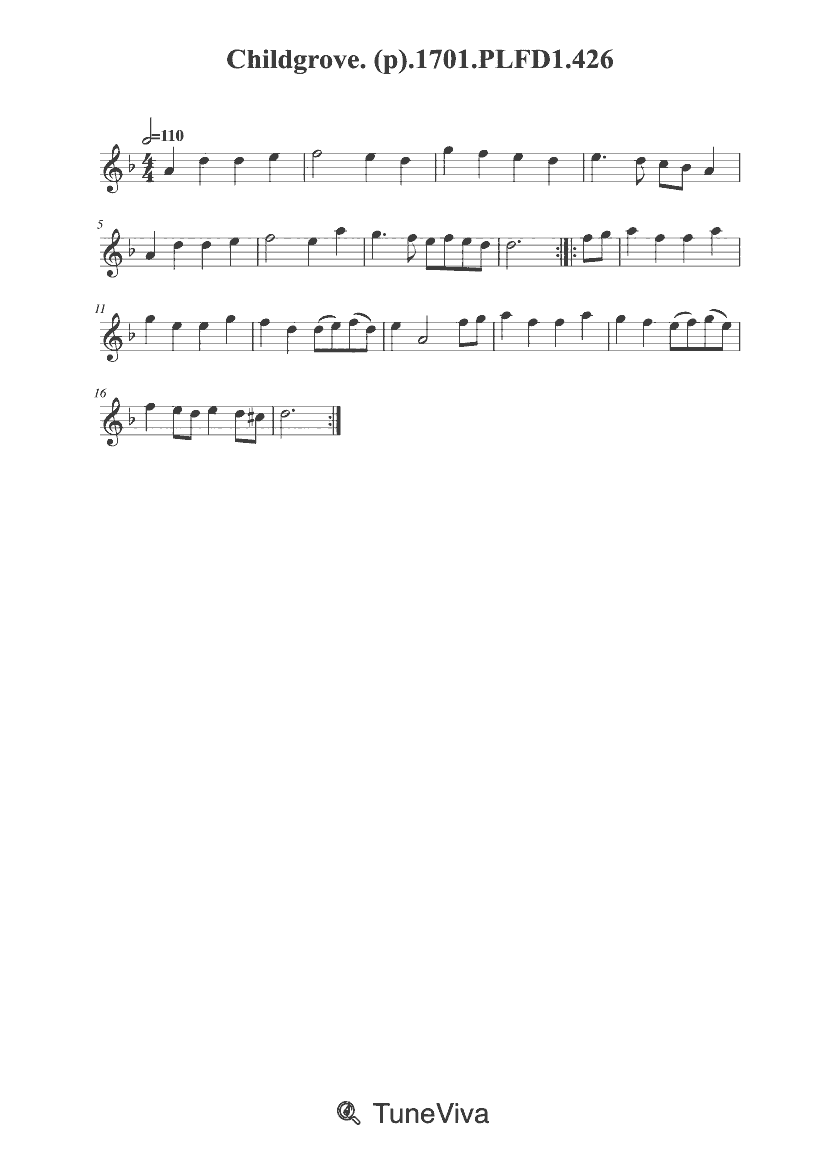
Misc tunes
34 sec · Score #62716
Open score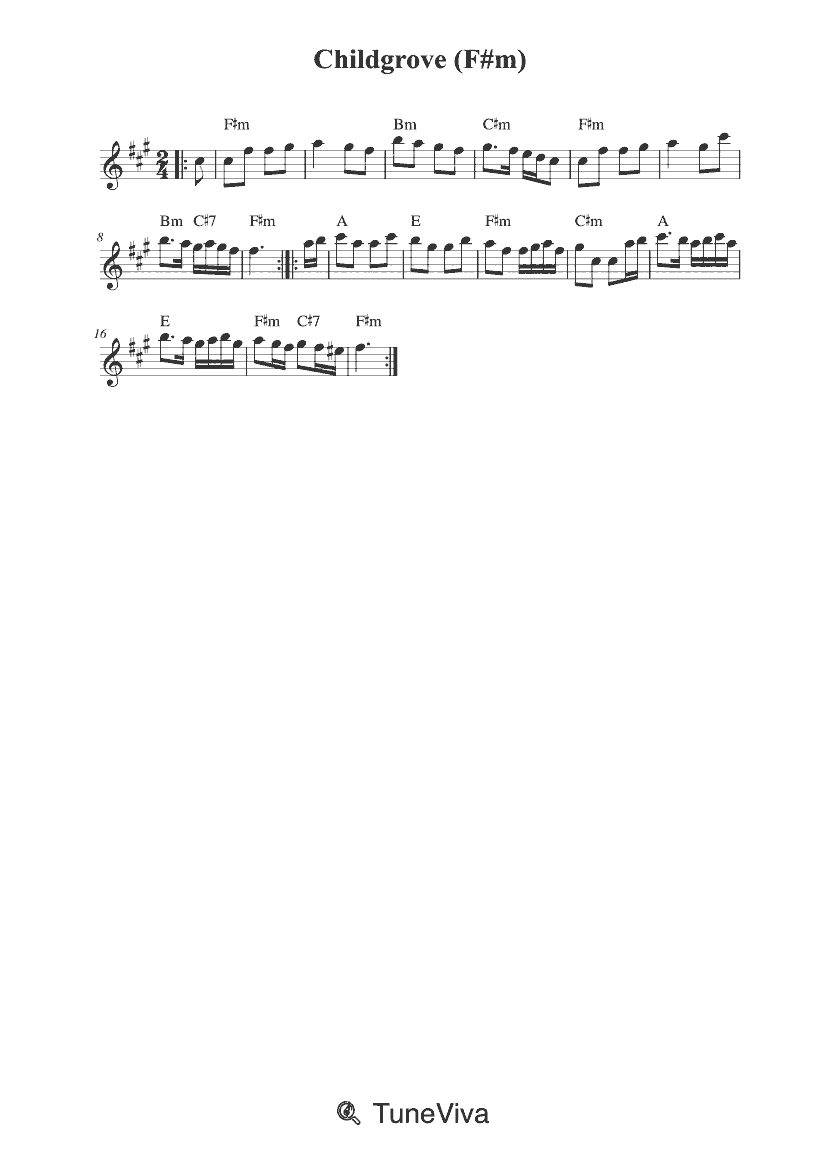
Misc tunes
32 sec
Open score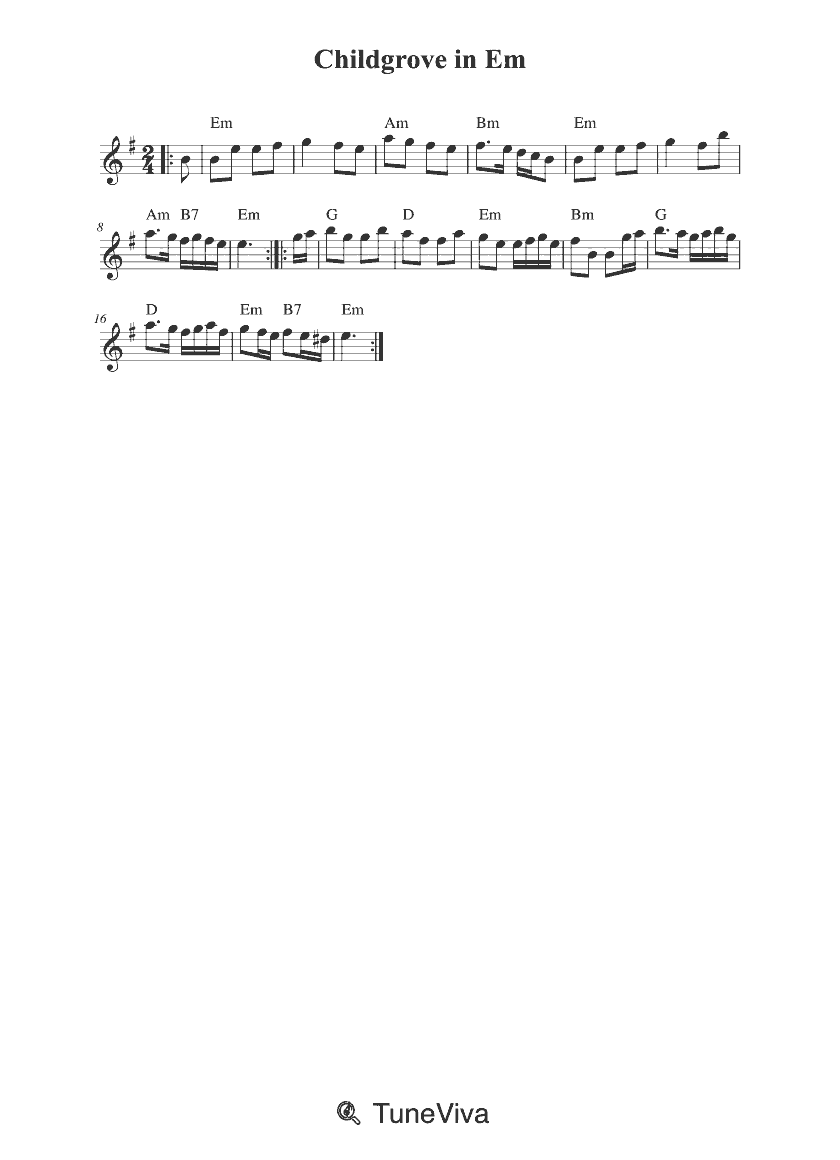
Misc tunes
32 sec
Open score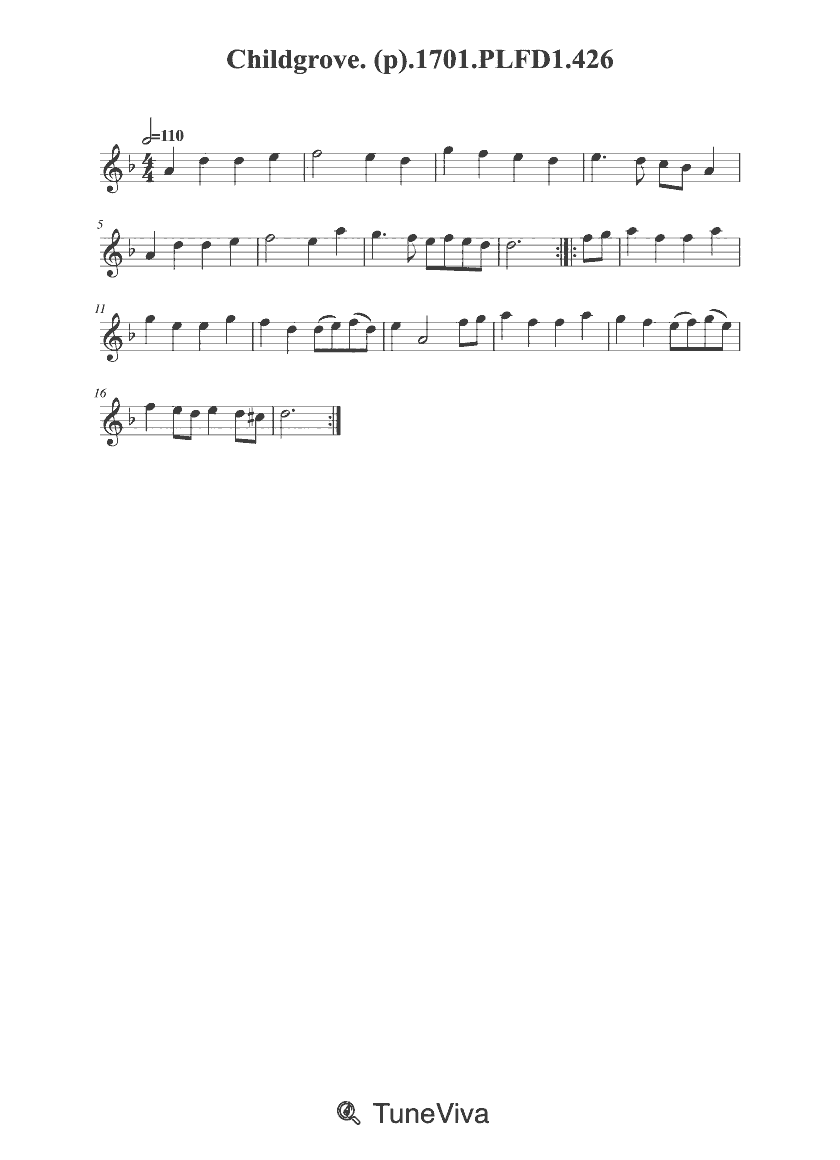
Misc tunes
34 sec · Score #54363
Open score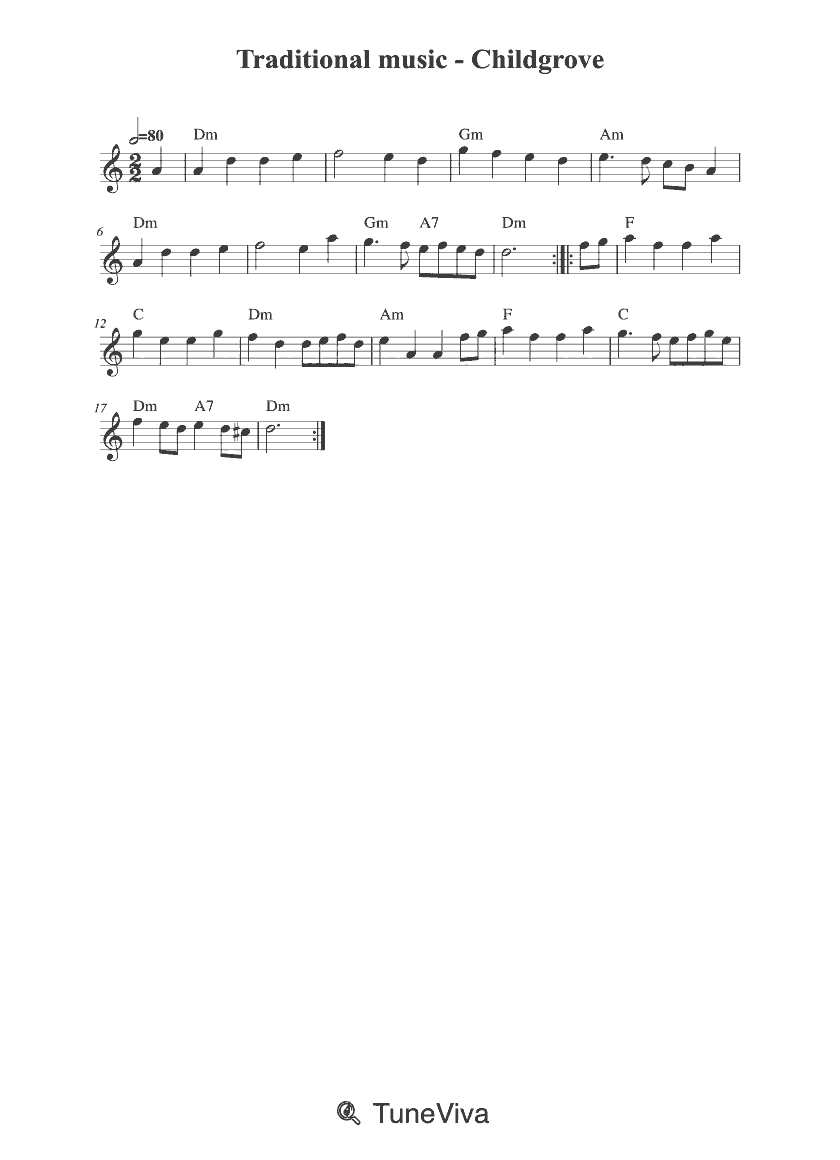
Trad. Playford 1701
1 min 36 sec
Open score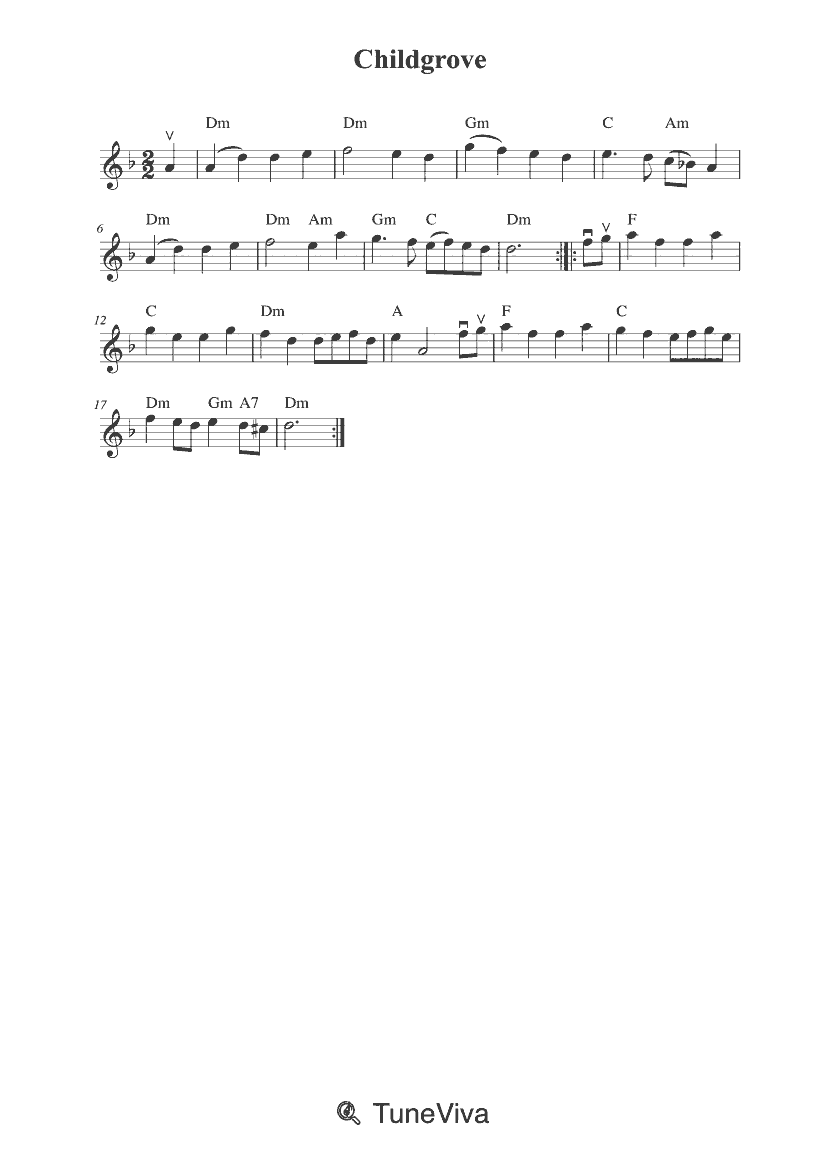
Misc tunes
2 min 8 sec
Open score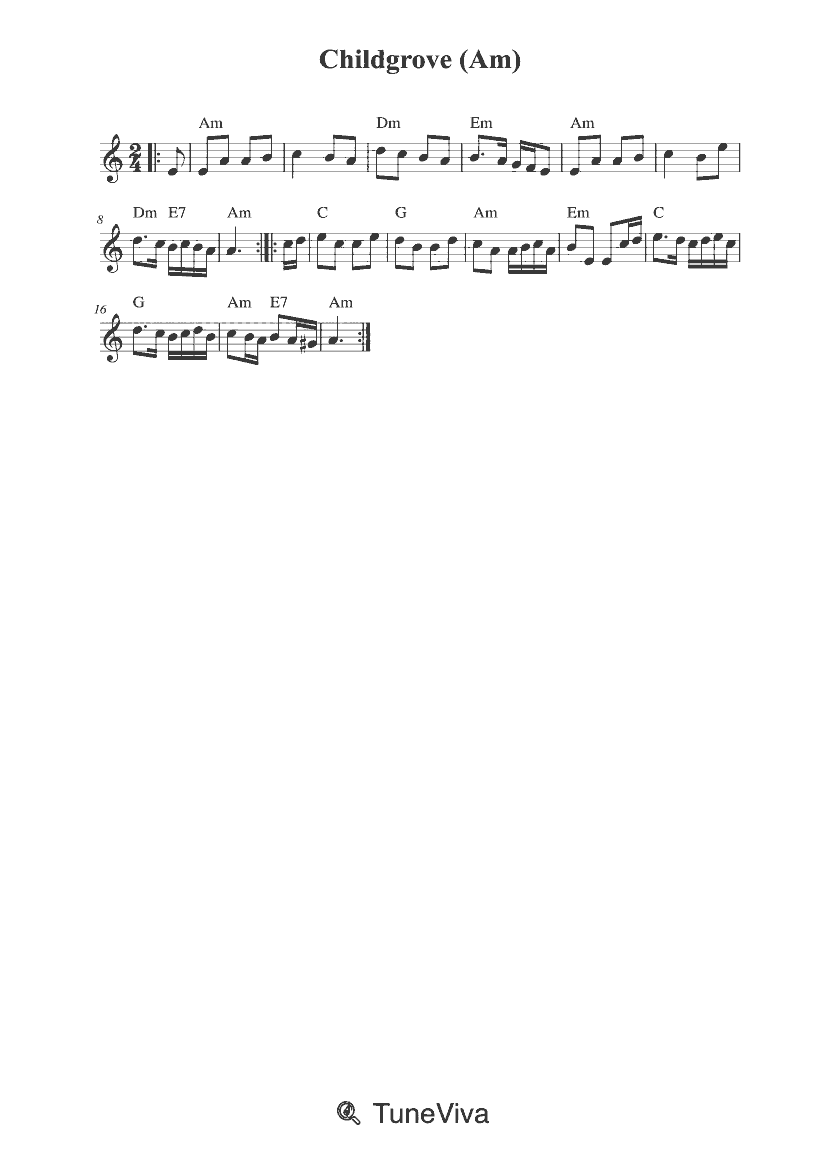
Misc tunes
32 sec
Open score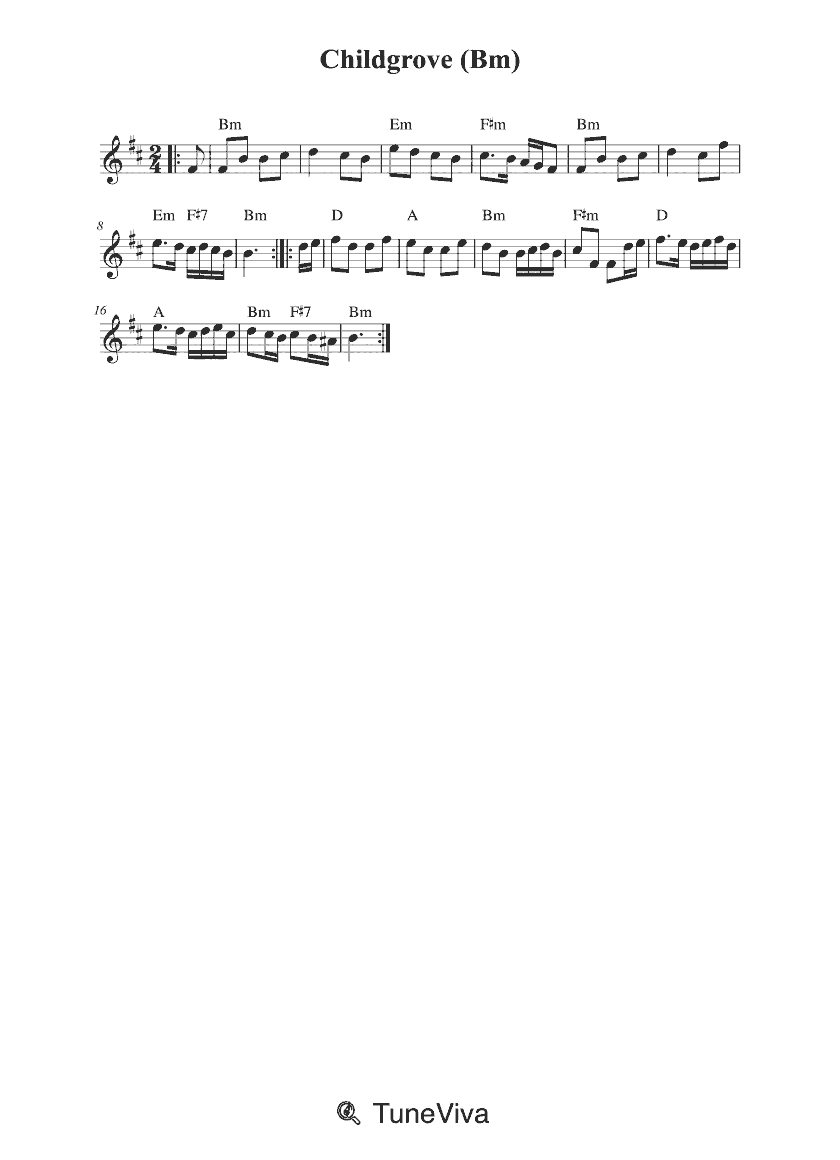
Misc tunes
32 sec
Open score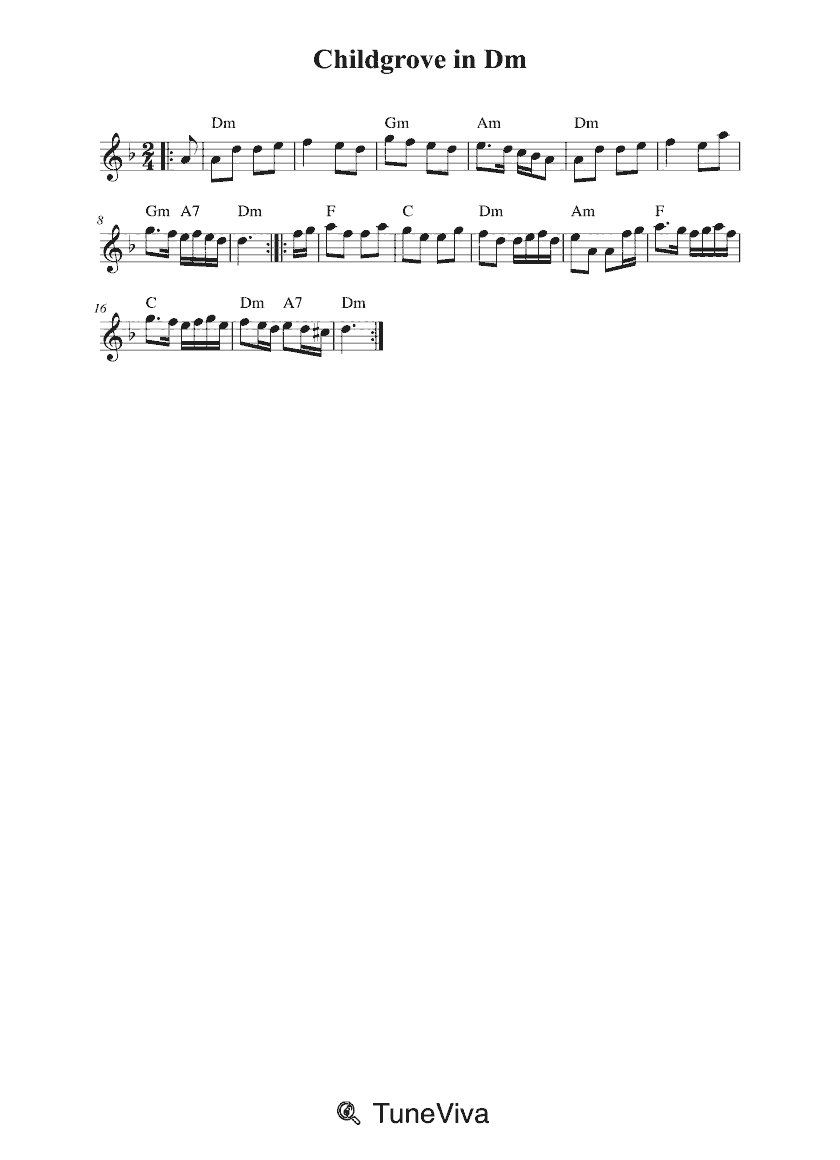
Misc tunes
32 sec · Score #75742
Open score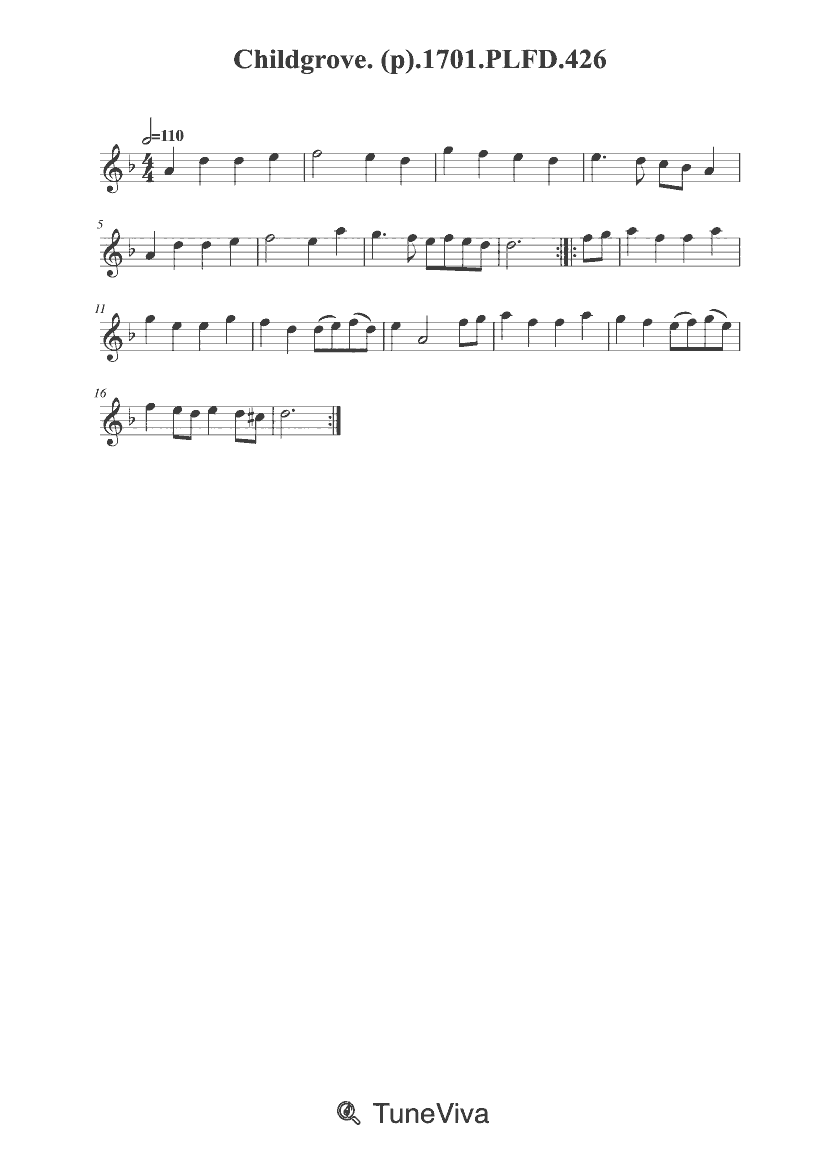
Misc tunes
34 sec
Open score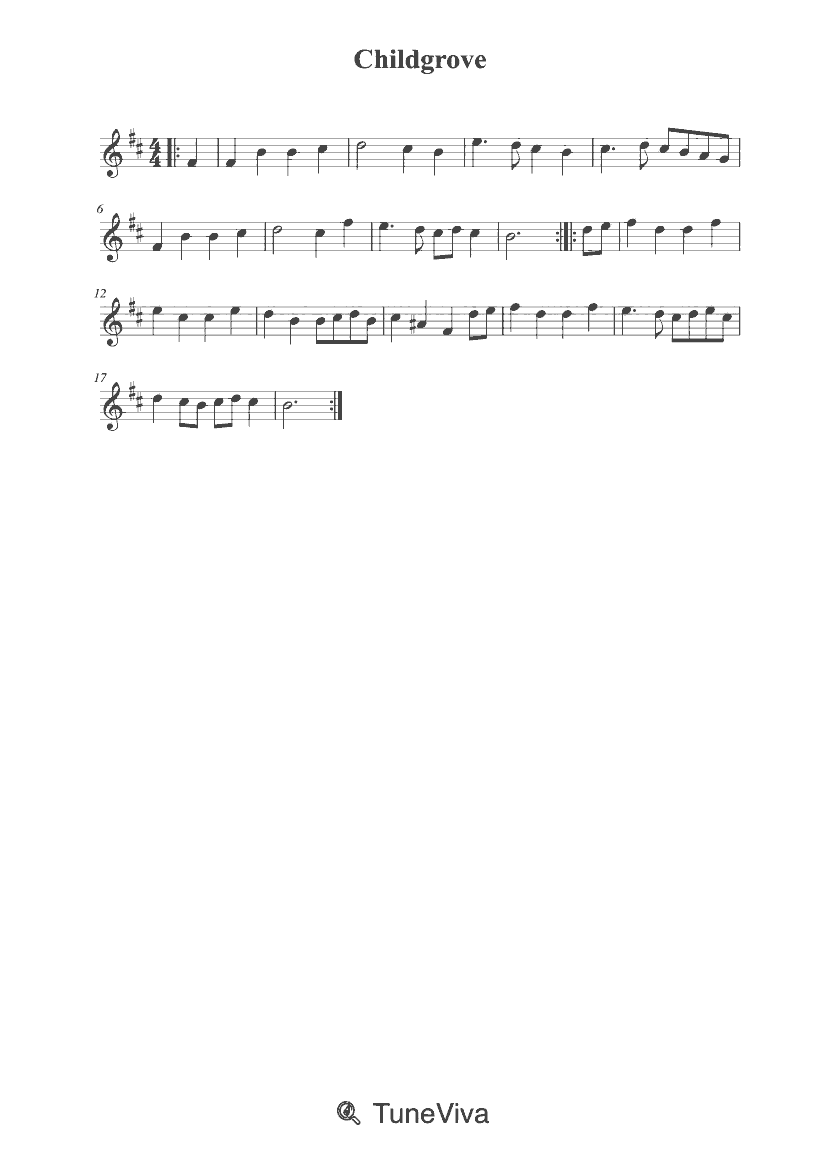
Misc tunes
1 min 4 sec
Open score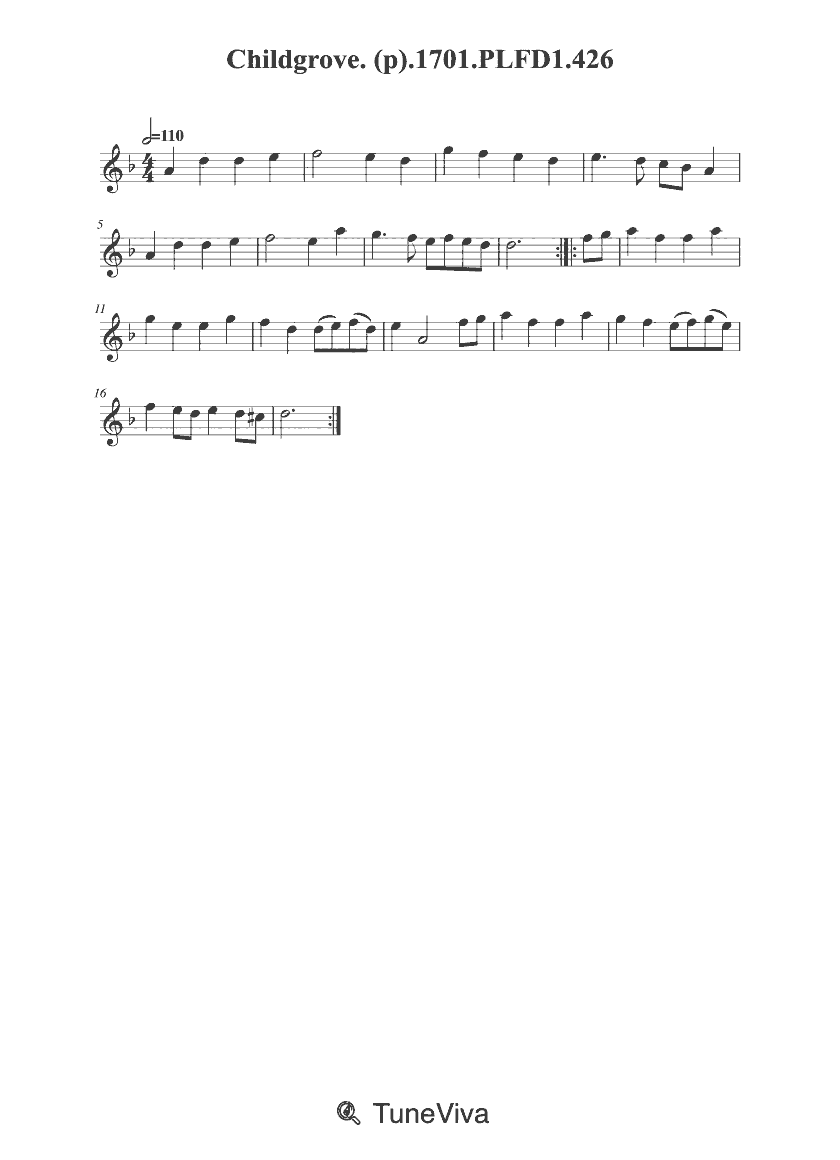
Misc tunes
34 sec · Score #232720
Open score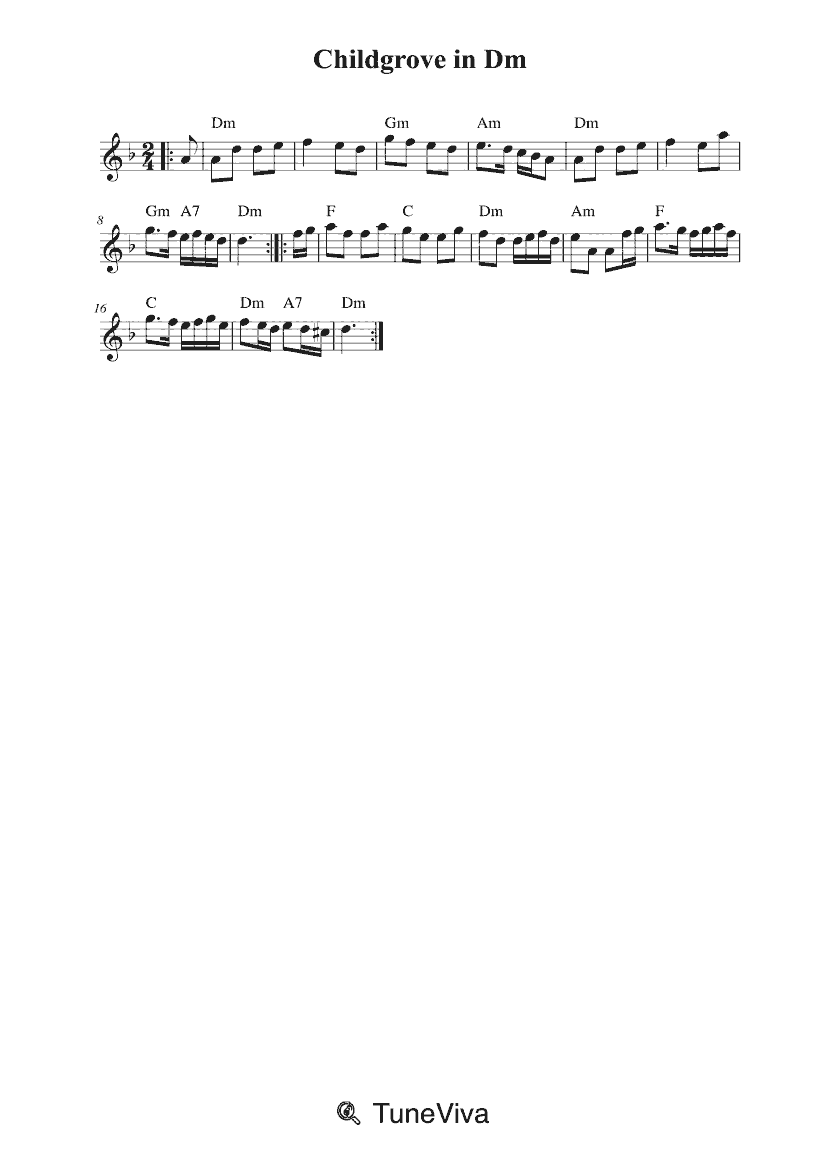
Misc tunes
32 sec · Score #7003
Open score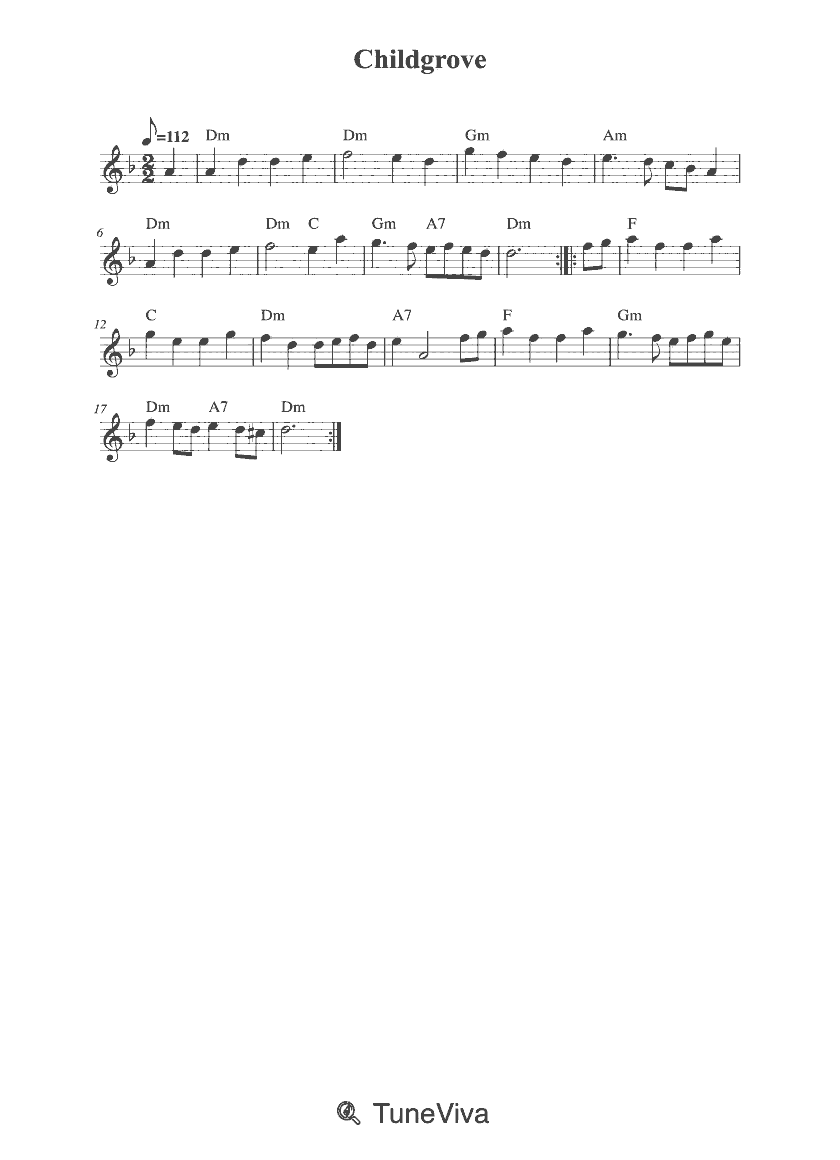
Misc tunes
4 min 34 sec
Open score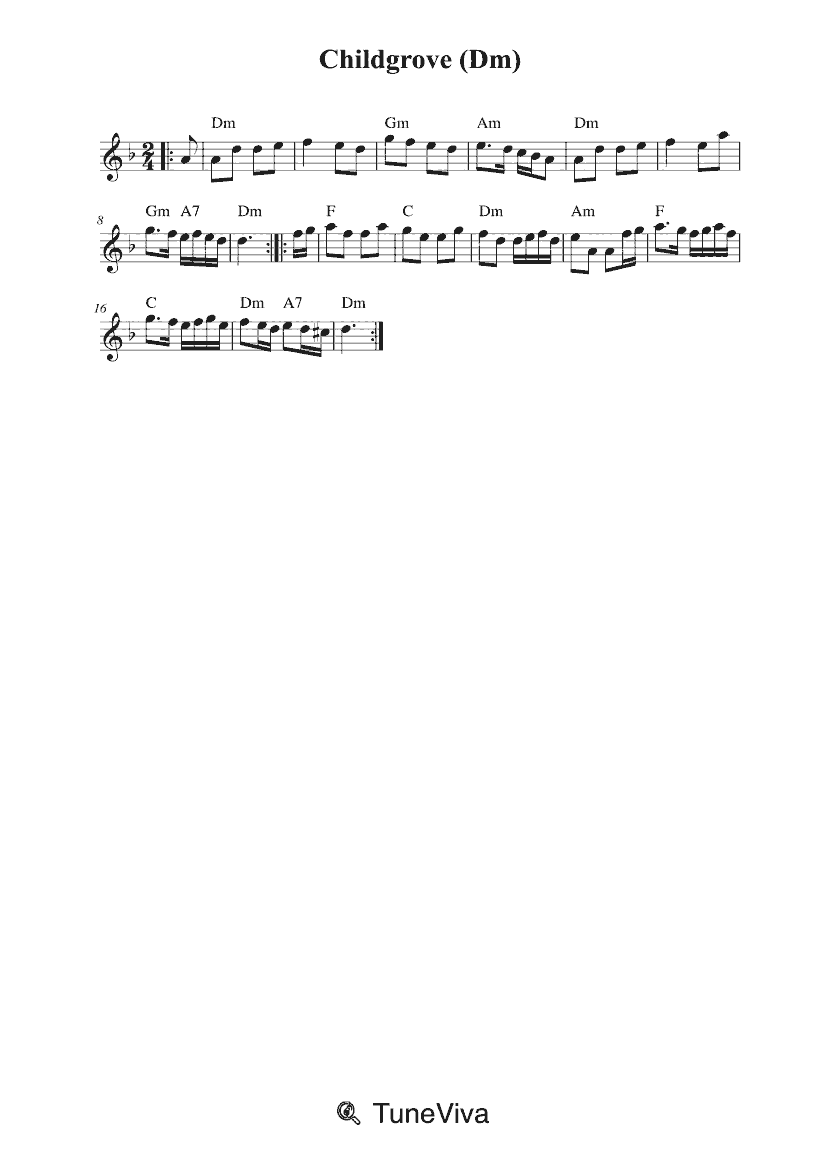
Misc tunes
32 sec
Open scorePage 1 of 2
The selected scores carry titles including “Traditional music - Childgrove”, “Traditional music - Childgrove (ADor)” and “Henry Playford - Childgrove”. Their credits read either “Trad. Playford 1701” or “Henry Playford 1701”. Those credits are useful leads for identifying the tune, but they do not by themselves prove who composed Childgrove or exactly how the Playford name relates to it.
The three versions open in different keys and time signatures: one has no sharps or flats and is in 2/4; one has one flat, described as D minor, and is in 2/2; one has one sharp, with a title marked ADor, and is in 2/2. If you are playing with others, match their opening key. If you are reading alone, choose the key signature and metre you find most comfortable.
The listed opening tempos are 80 BPM for the 2/4 version and 224 and 160 BPM for the two 2/2 versions. These figures describe settings attached to individual scores and should not be read as a definitive performance speed for Childgrove. Use them as a guide, then adjust to your instrument, arrangement and playing context.
Childgrove is presented as traditional music in these scores, and the Playford name appears in the credits. The difference between “Trad. Playford 1701” and “Henry Playford 1701” is worth noticing, but the available material does not confirm whether Henry Playford was the composer, compiler, publisher or simply the name attached to a later labelling of the tune.
Catalogue duration 1 min 36 sec. Opening key signature: 1 sharp. Opening time signature: 2/2. Opening tempo: 160 BPM.
Catalogue duration 48 sec. Opening key signature: No sharps or flats. Opening time signature: 2/4. Opening tempo: 80 BPM.
Catalogue duration 1 min 8 sec. Opening key signature: 1 flat (D minor). Opening time signature: 2/2. Opening tempo: 224 BPM.
Childgrove is a traditional tune presented here in several score versions.
The selected Childgrove scores open in three different key signatures: no sharps or flats, one flat described as D minor, and one sharp with a title marked ADor. Checking the opening key is the quickest way to choose a version that fits your instrument or group.
Childgrove appears in both 2/4 and 2/2 in the scores shown here. The 2/4 version is listed at 80 BPM, while the two 2/2 versions are listed at 224 and 160 BPM; these figures describe the opening settings of individual scores, not a definitive tempo for the tune.
One score is credited to “Henry Playford 1701”, while two are credited to “Trad. Playford 1701”. That difference does not establish Henry Playford as the composer, and the supplied material does not confirm his exact role.
Choose by key and metre first. If you are playing with others, match their opening key; if you are reading alone, pick the key signature and time signature you are most comfortable with. The D minor version uses one flat and 2/2, the ADor-labelled version uses one sharp and 2/2, and the other version has no sharps or flats and is in 2/4.
The scores show opening tempos of 80, 160 and 224 BPM. These are likely to reflect individual notation or playback settings rather than a single authoritative speed for Childgrove. Treat them as starting points and adjust to your instrument, arrangement and playing context.