
Drummond Castle
Misc tunes
30 sec · Score #141580
Open scoreDrummond Castle appears here as a traditional tune in several short settings, one of them explicitly titled as a jig. The Drummond Castle sheet music shown uses a 6/8 time signature and an opening key signature with no sharps or flats; no verified account of the tune's origin or a named composer is supplied.
Scores 1–20 of 26
Misc tunes
30 sec · Score #141580
Open score
Trad
29 sec · Score #66421
Open score
Misc tunes
17 sec
Open score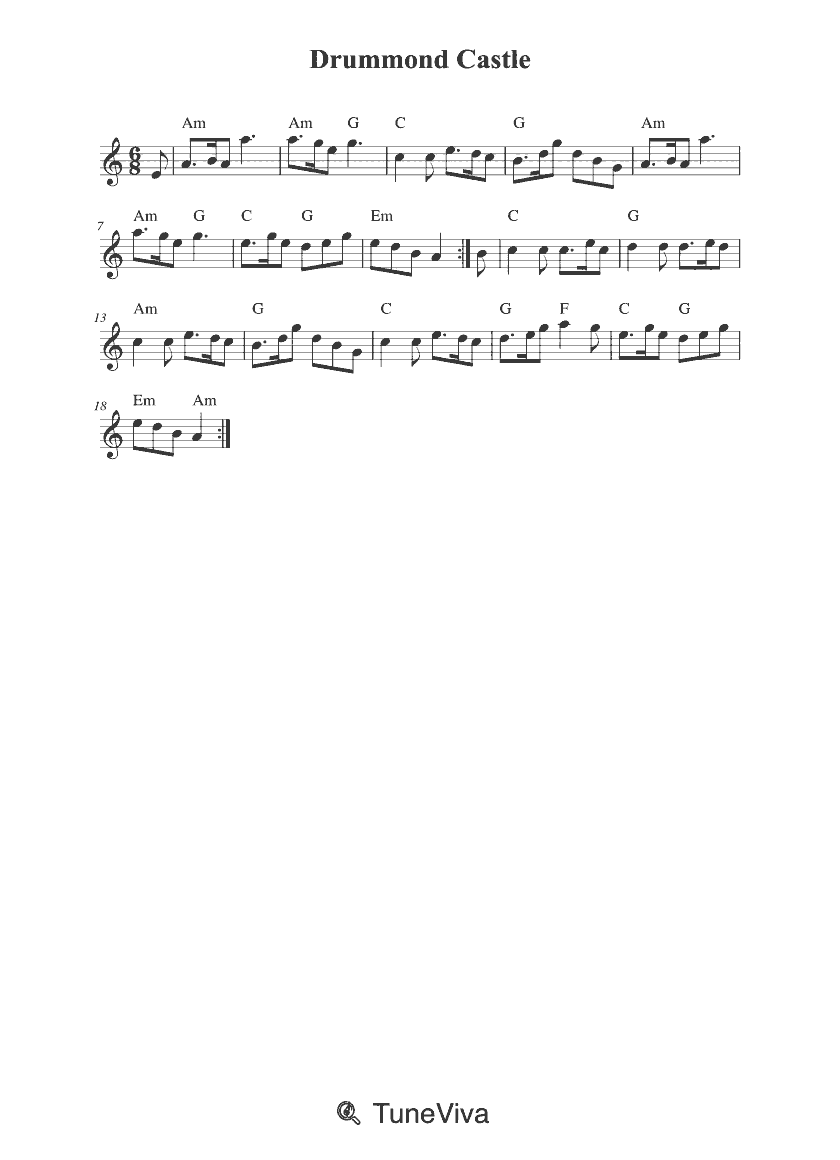
Misc tunes
30 sec · Score #182203
Open score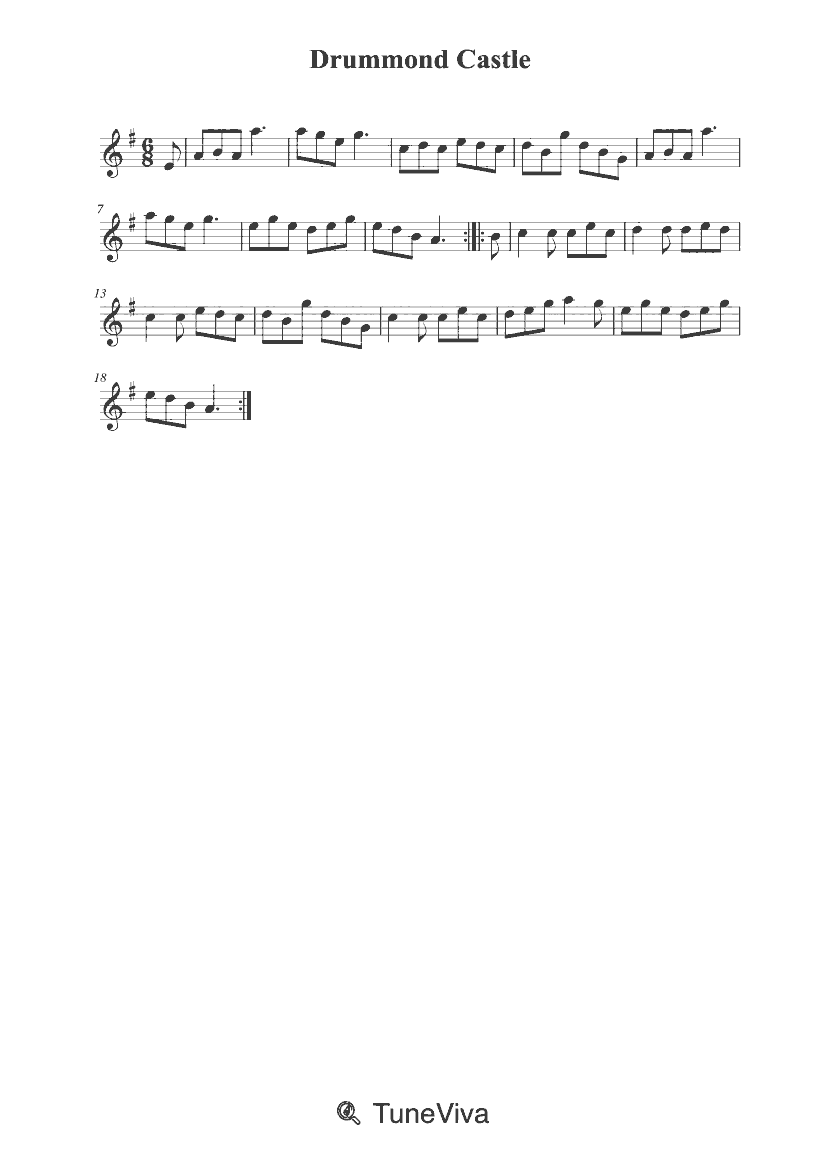
Misc tunes
24 sec · Score #218080
Open score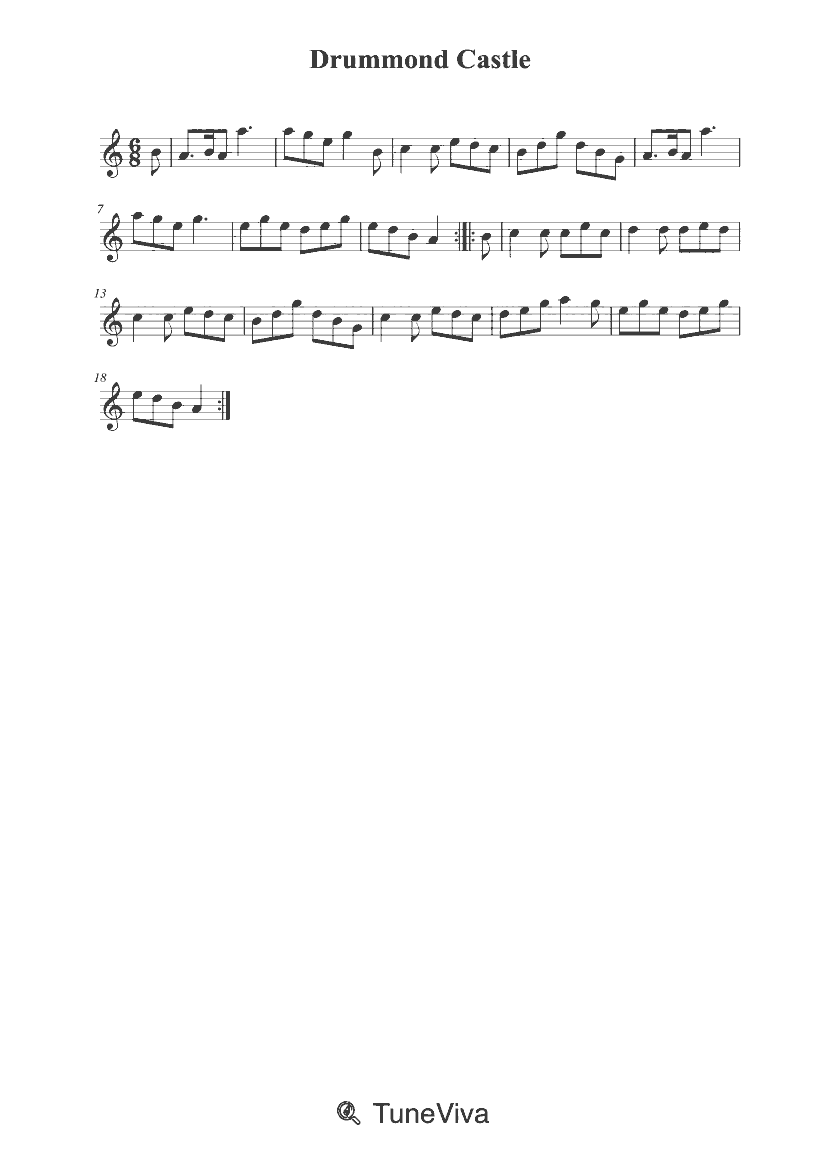
Misc tunes
Castle Drummond
24 sec · Score #59995
Open score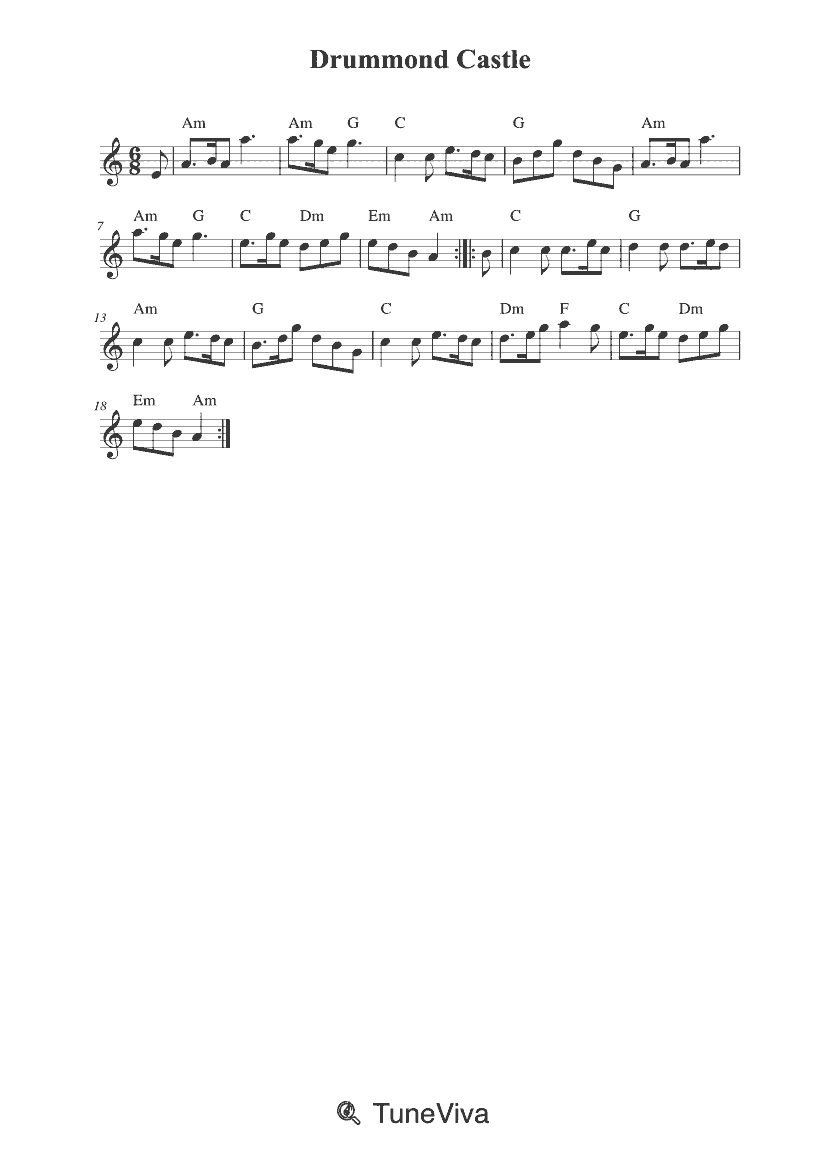
Misc tunes
24 sec · Score #113174
Open score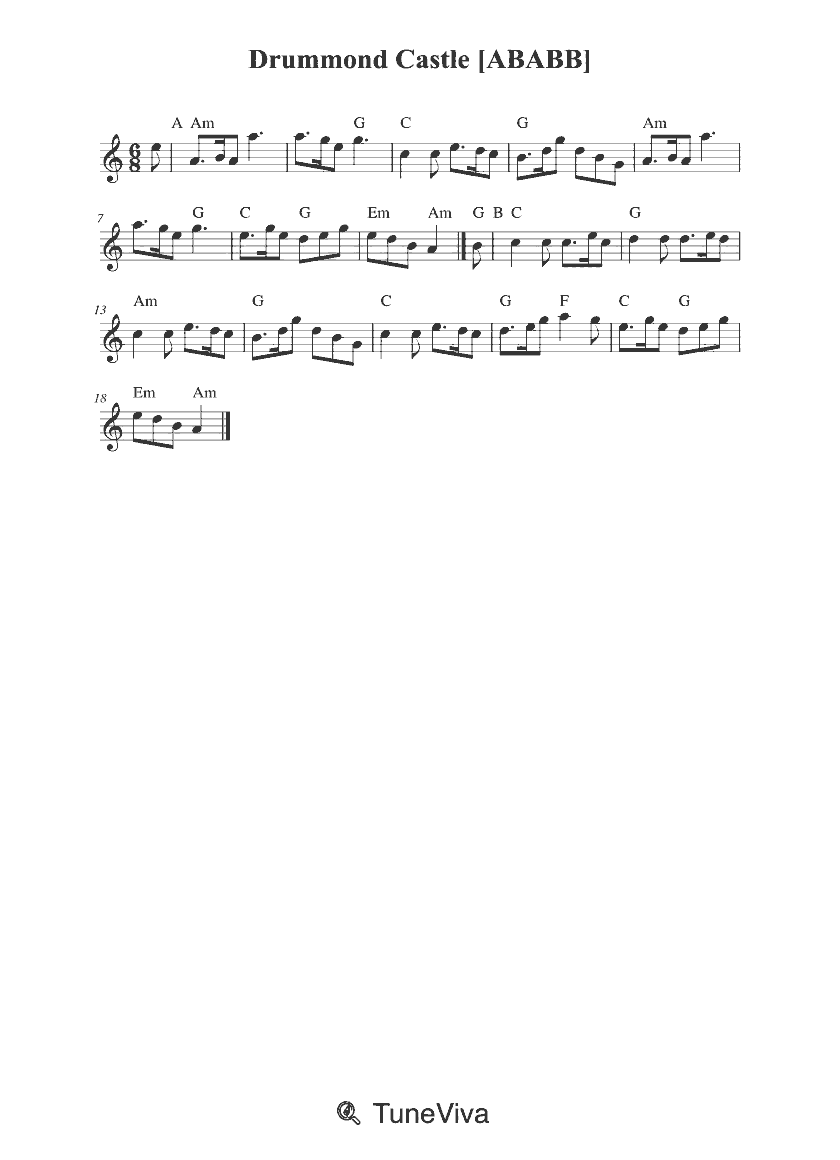
Misc tunes
12 sec
Open score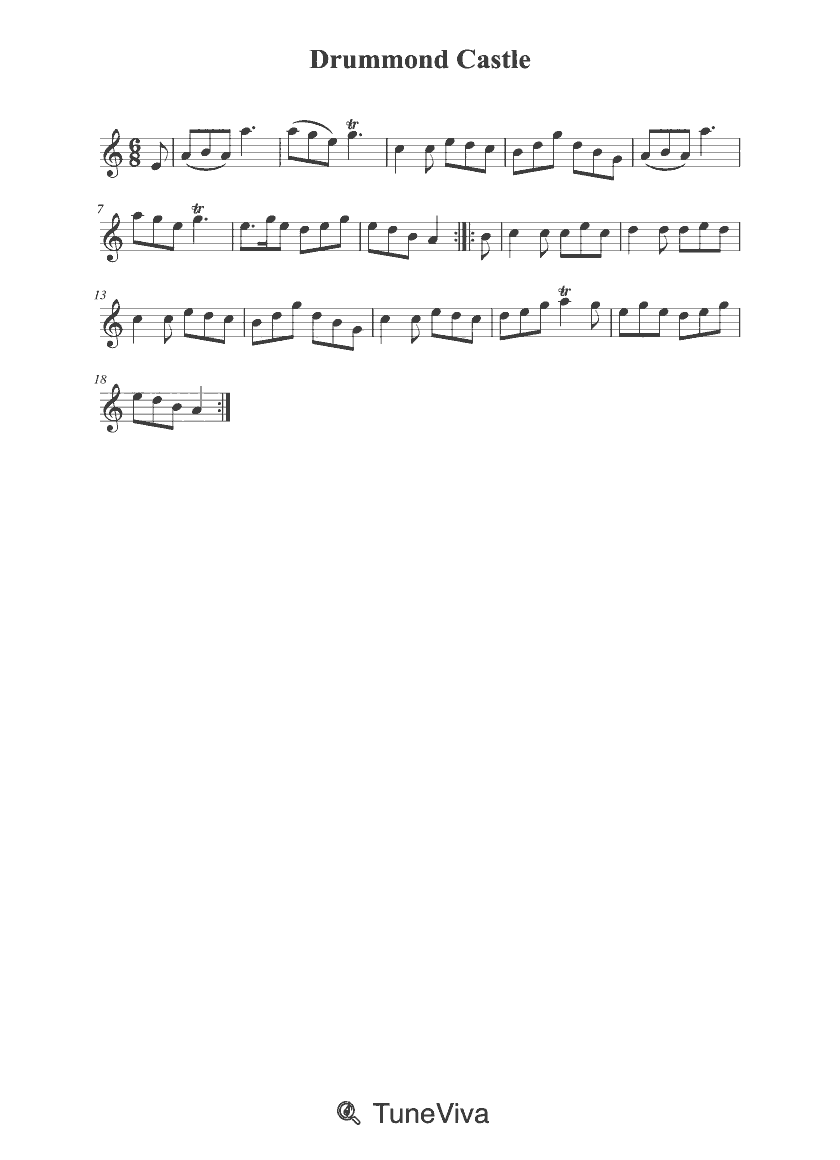
Misc tunes
24 sec · Score #160273
Open score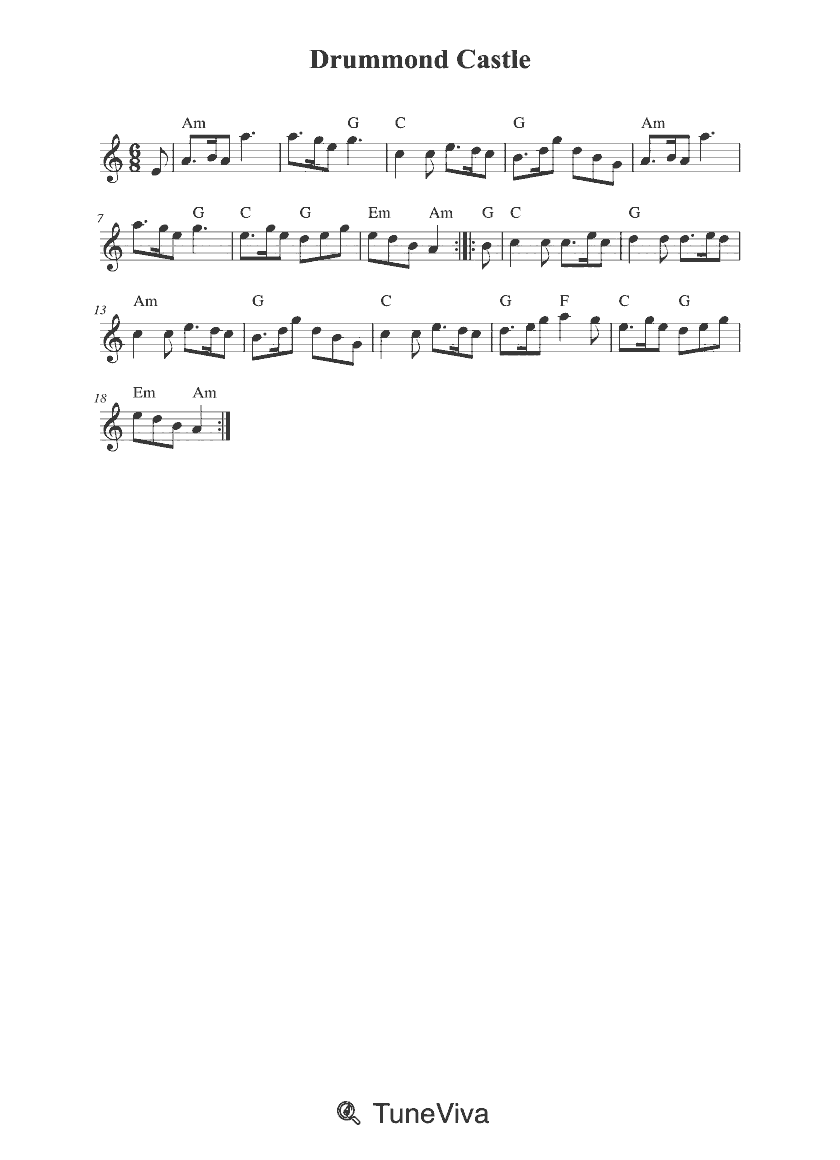
Misc tunes
24 sec · Score #163930
Open score
Trad
29 sec · Score #190667
Open score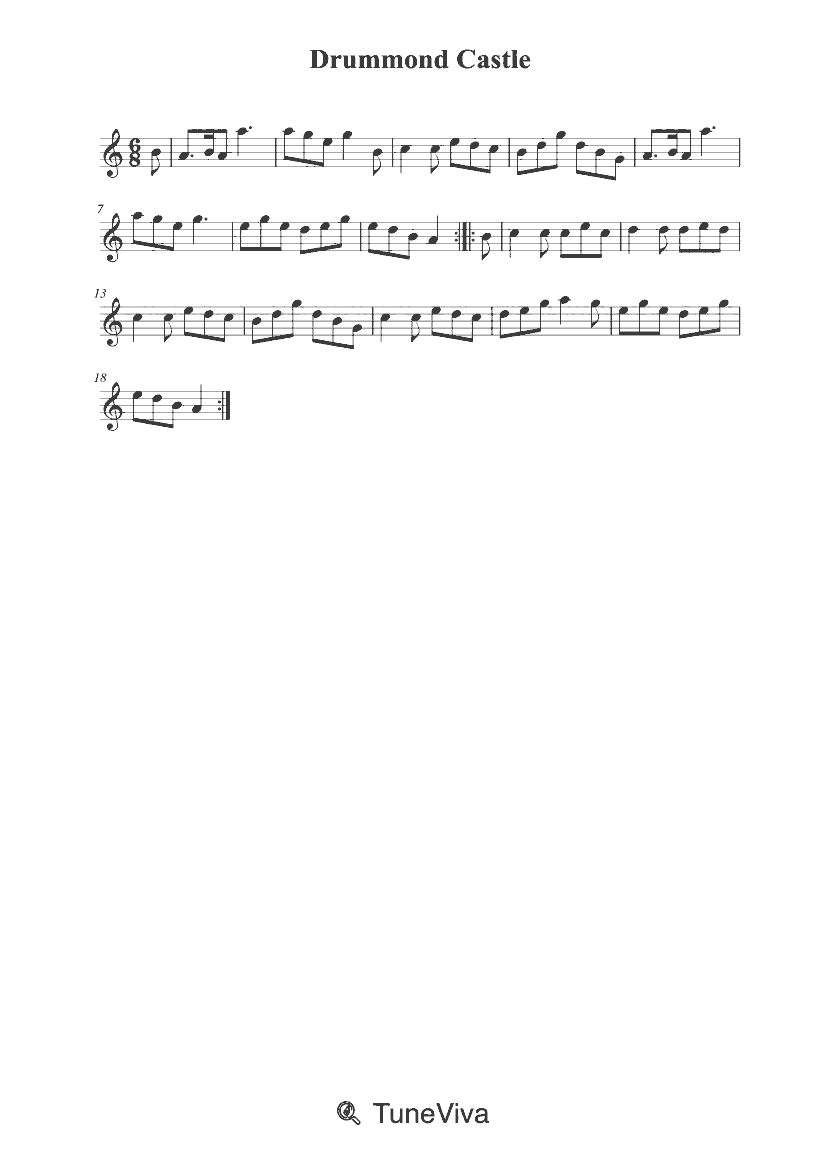
Misc tunes
Castle Drummond
24 sec · Score #7064
Open score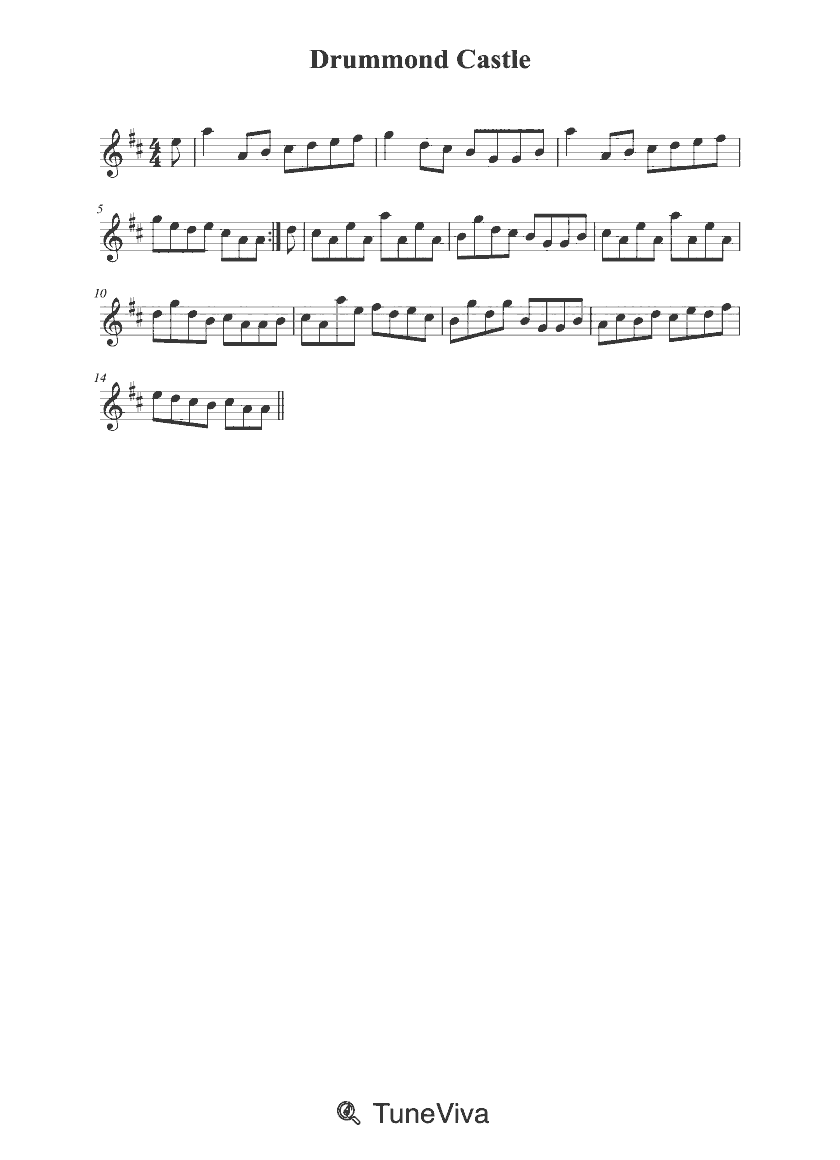
Misc tunes
32 sec
Open score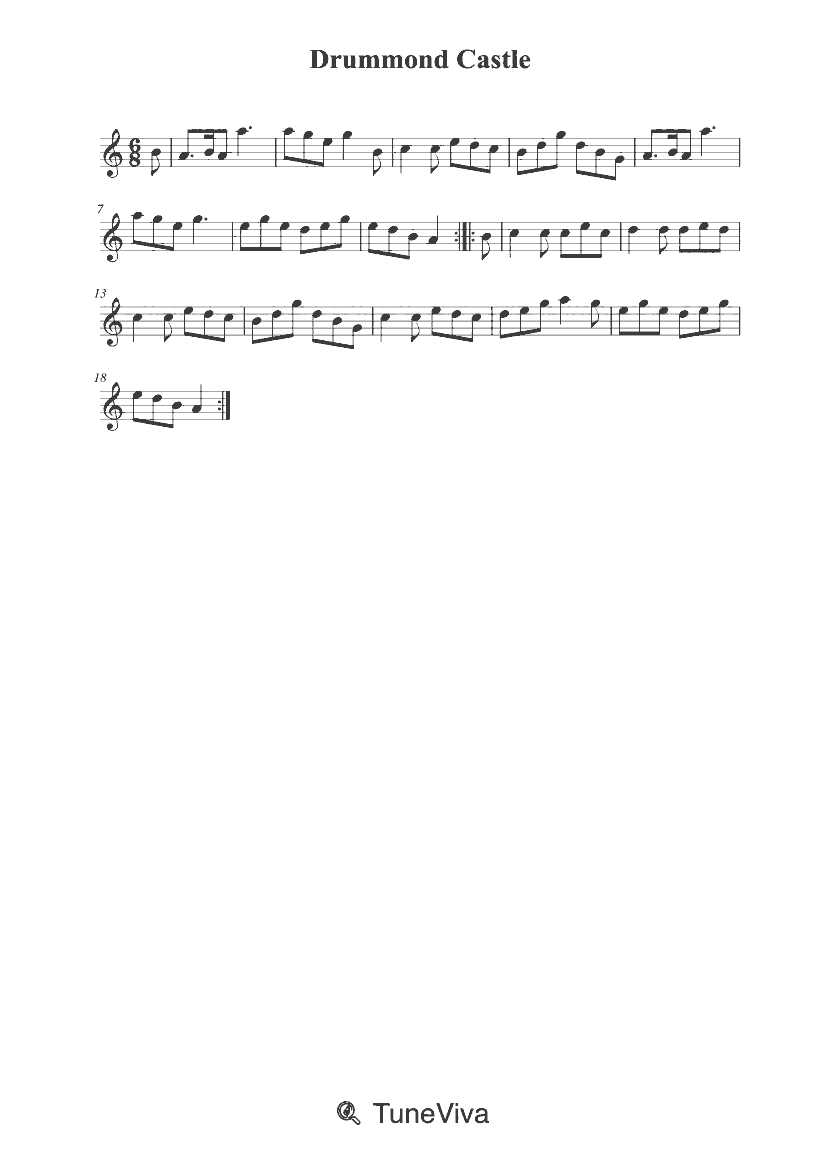
Misc tunes
Castle Drummond
24 sec · Score #29654
Open score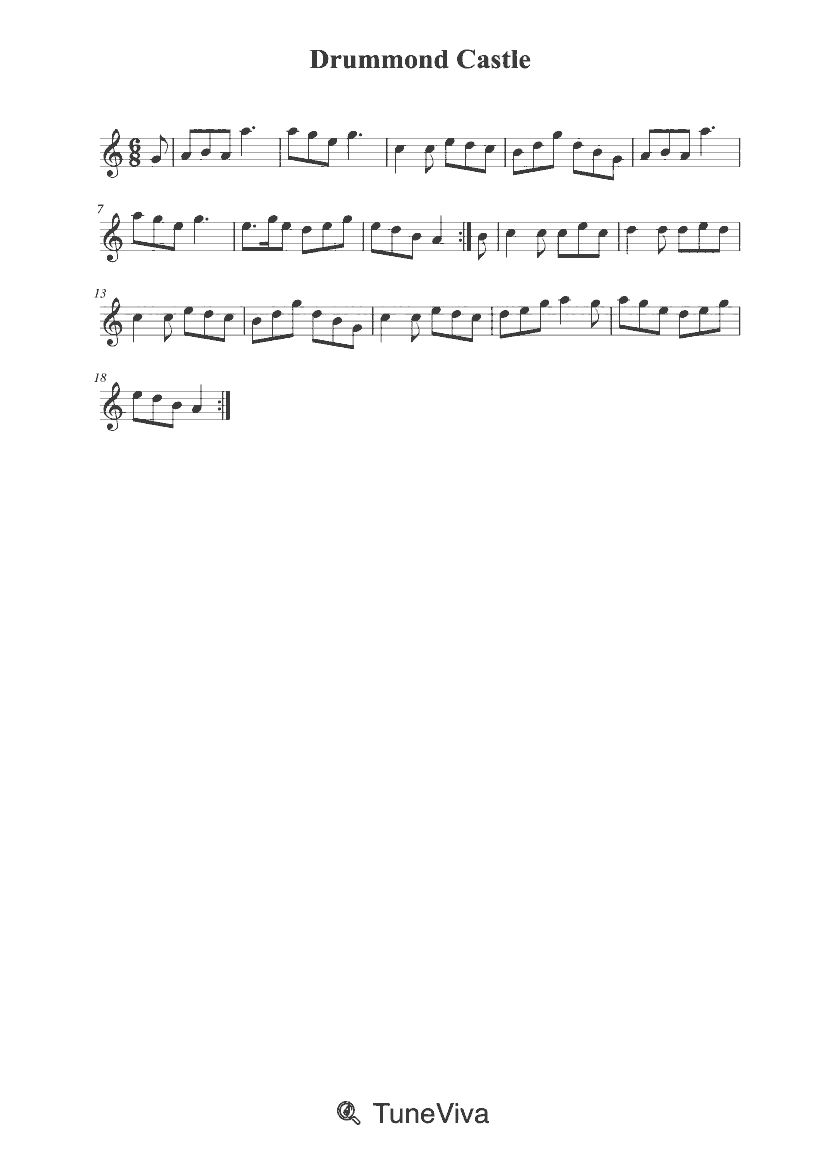
Misc tunes
30 sec · Score #95499
Open score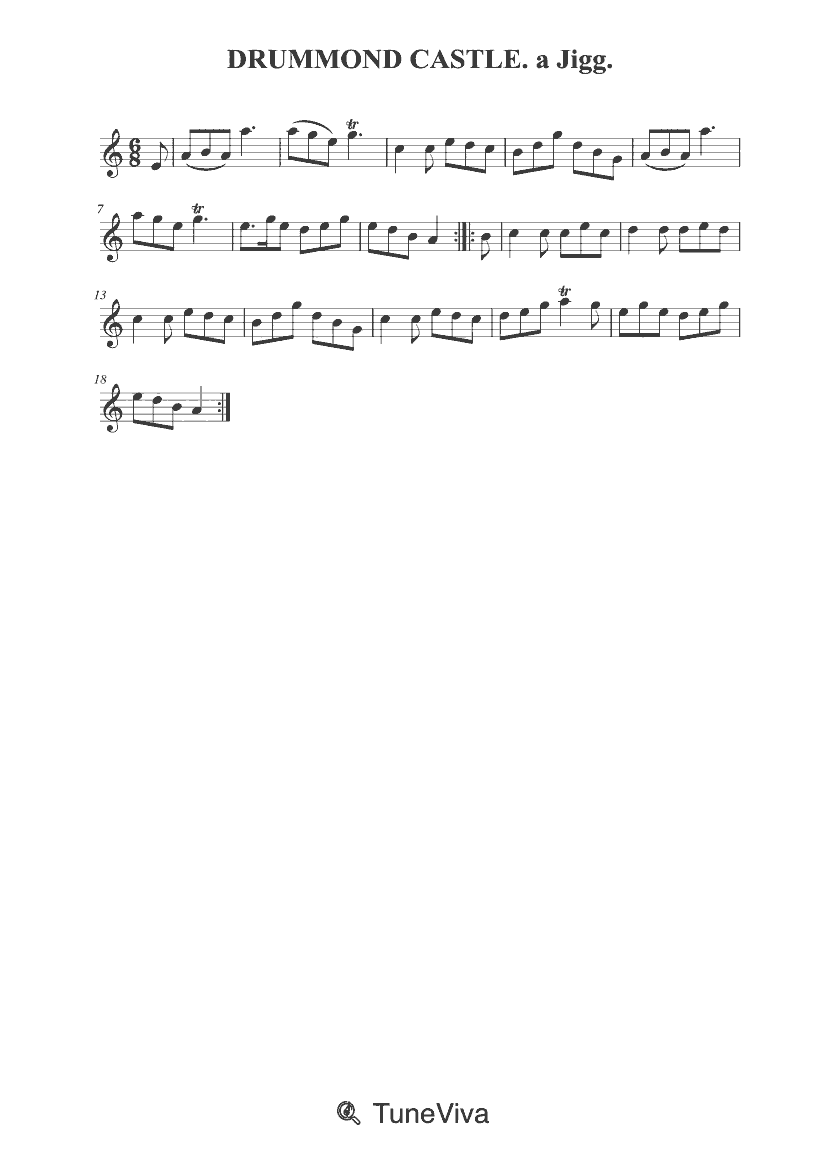
Misc tunes
24 sec
Open score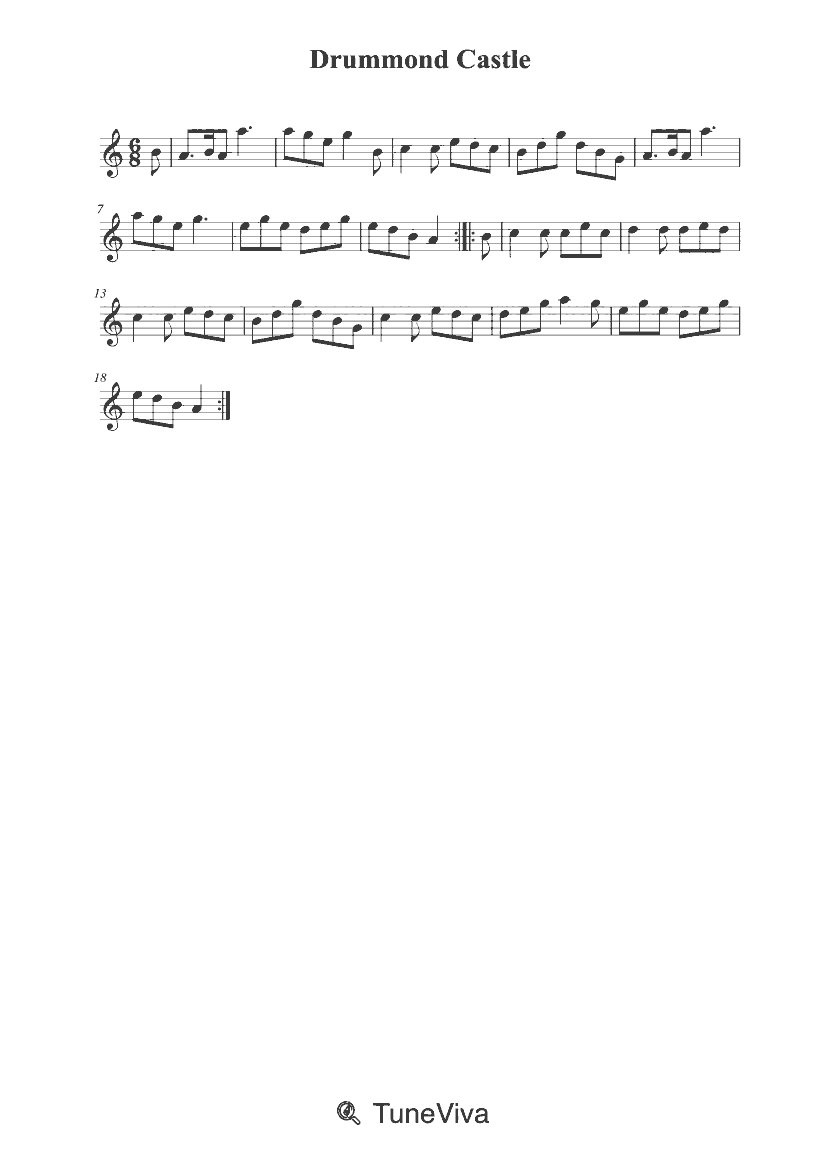
Misc tunes
Castle Drummond
24 sec · Score #119941
Open score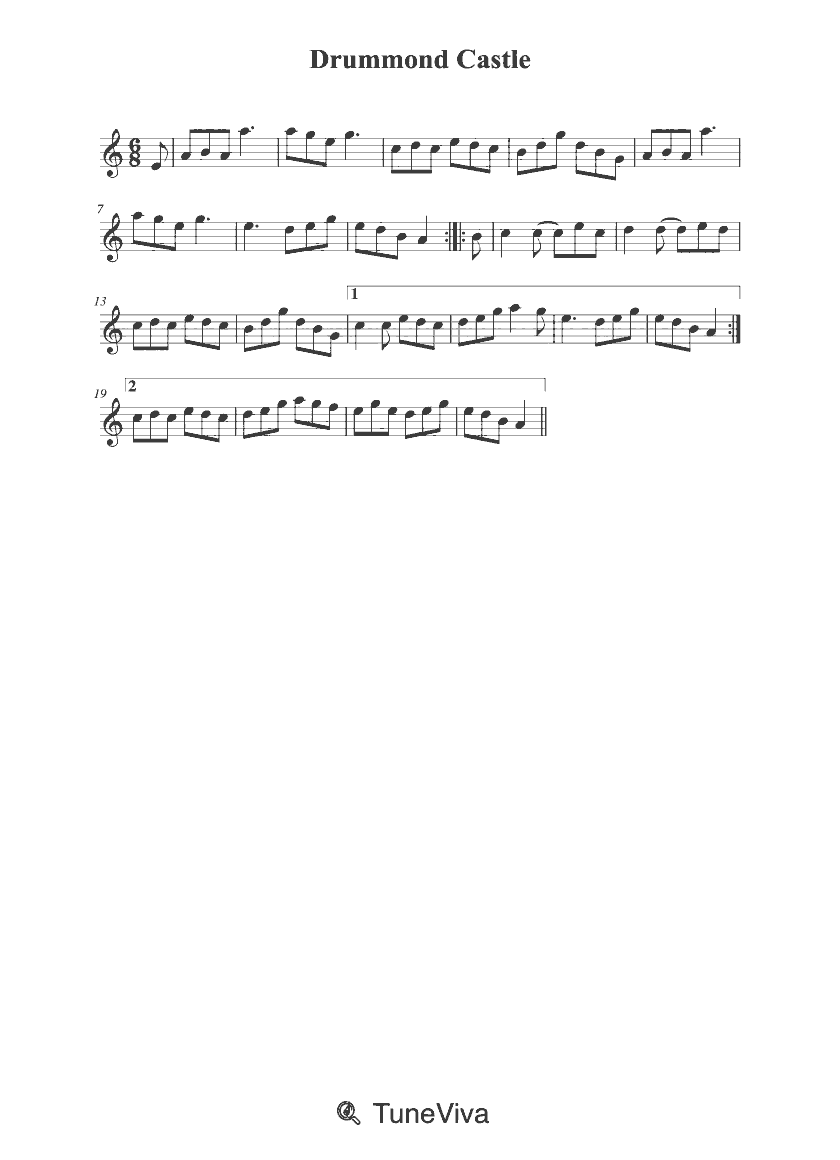
Misc tunes
24 sec · Score #136132
Open score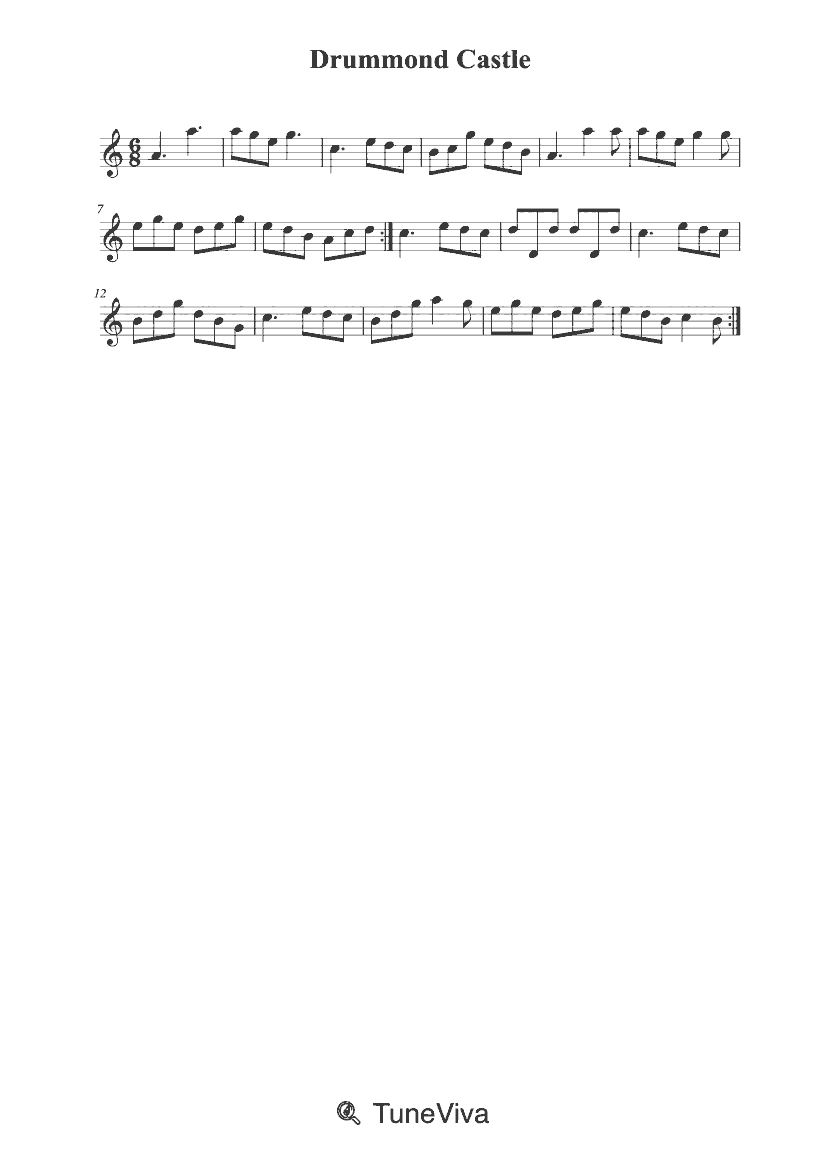
Misc tunes
30 sec · Score #249525
Open score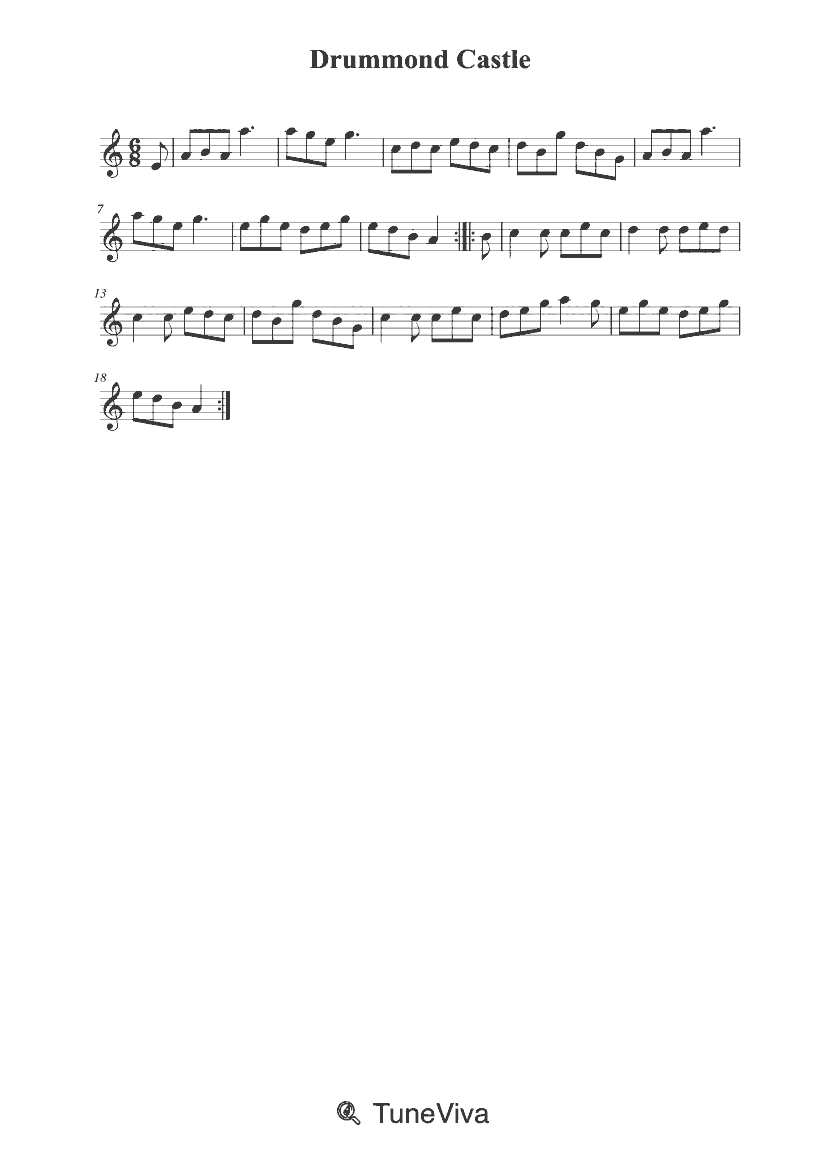
Misc tunes
24 sec · Score #14482
Open scorePage 1 of 2
Three scores are listed under Drummond Castle. All three have an opening time signature of 6/8 and an opening key signature with no sharps or flats. One is titled 'Drummond Castle Jigg. Roose.0371', another is titled 'Traditional music - Drummond Castle', and the third is simply 'Drummond Castle'. Their note counts are 160, 197 and 201, and their durations are roughly 17, 29 and 30 seconds. These details describe individual scores rather than a definitive version of the tune.
A 6/8 time signature is compound duple: two main beats per bar, each divided into three eighth notes. The jig title on one score and the 6/8 metre on all three point to a dance-tune character. When practising, count the bar in two and feel each beat as a group of three, rather than counting six equal beats.
An opening key signature with no sharps or flats is used for both C major and A minor. The scores listed here do not state which mode applies, so check the final note or closing chord in the notation before deciding whether the tune is major or minor. The opening signature alone is not enough to settle the question.
The three scores differ in length, and one carries an opening tempo marking of 165 BPM. A shorter score may be a shorter setting rather than an easier one, so compare the notation itself if you need a particular version. The supplied listings do not identify a definitive or authoritative setting of Drummond Castle.
Catalogue duration 30 sec. Opening key signature: No sharps or flats. Opening time signature: 6/8.
Catalogue duration 29 sec. Opening key signature: No sharps or flats. Opening time signature: 6/8.
Catalogue duration 17 sec. Opening key signature: No sharps or flats. Opening time signature: 6/8. Opening tempo: 165 BPM.
Drummond Castle is listed as a traditional tune, and the versions shown are in 6/8. One score is titled 'Drummond Castle Jigg. Roose.0371', which identifies that setting as a jig; the 6/8 metre gives the tune a compound-duple pulse associated with jig rhythms.
Every Drummond Castle score listed here carries an opening time signature of 6/8. In 6/8 there are two main beats per bar, each divided into three eighth notes, which is the metre commonly used for jigs.
The listed Drummond Castle scores have an opening key signature with no sharps or flats. That signature serves both C major and A minor; because the scores do not state the mode, check the final note or chord in the notation to confirm which applies.
The three Drummond Castle scores differ in length: their note counts are 160, 197 and 201, with durations of about 17, 29 and 30 seconds. One version has an opening tempo marking of 165 BPM. These details describe individual settings rather than a definitive text.
One Drummond Castle listing gives the composer as 'Trad' and another gives no composer name, so no named composer is identified in the supplied listings. These scores present the tune as traditional rather than attributing it to a specific writer.