
Duke of York's March,The. RH.055
Misc tunes
3 min 52 sec
Open scoreDuke of York's March sheet music appears here in several versions, including a score with primo and secundo parts and other scores that open in F major or D major. No composer is named for the piece in these scores, so this guide concentrates on the differences between the versions and on practical choices for players.
Scores 1–20 of 33
Misc tunes
3 min 52 sec
Open score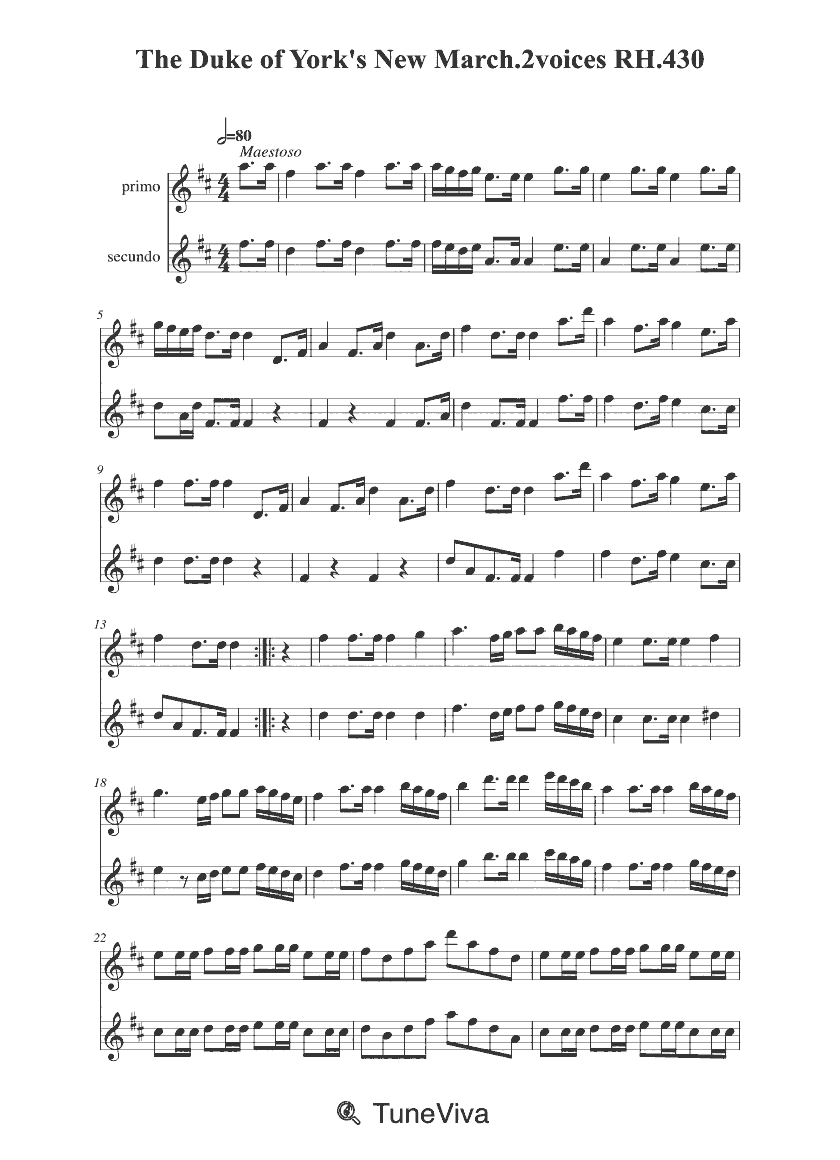
MozartFigaro
Here's Goodbye Lads...aka. RH.430
primo; secundo · 1 min 18 sec
Open score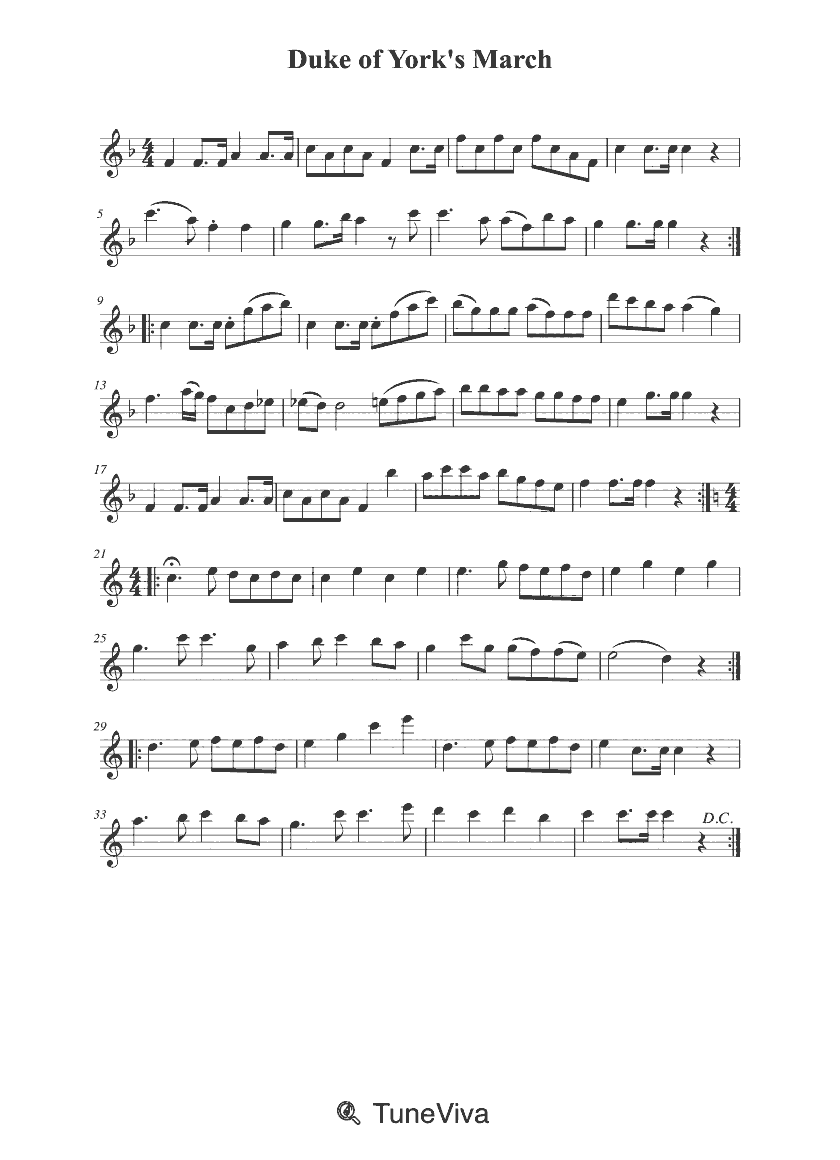
Misc tunes
2 min 24 sec · Score #32375
Open score
Misc tunes
24 sec · Score #188462
Open score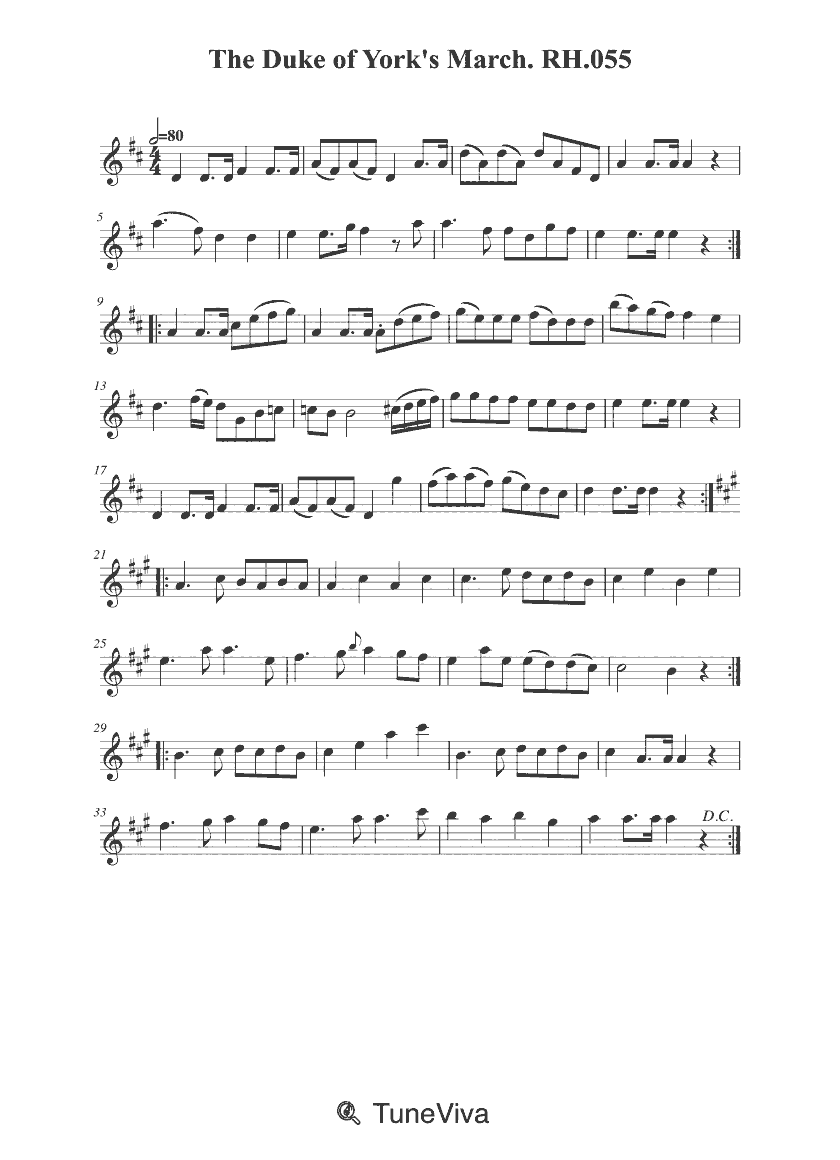
Misc tunes
1 min 48 sec
Open score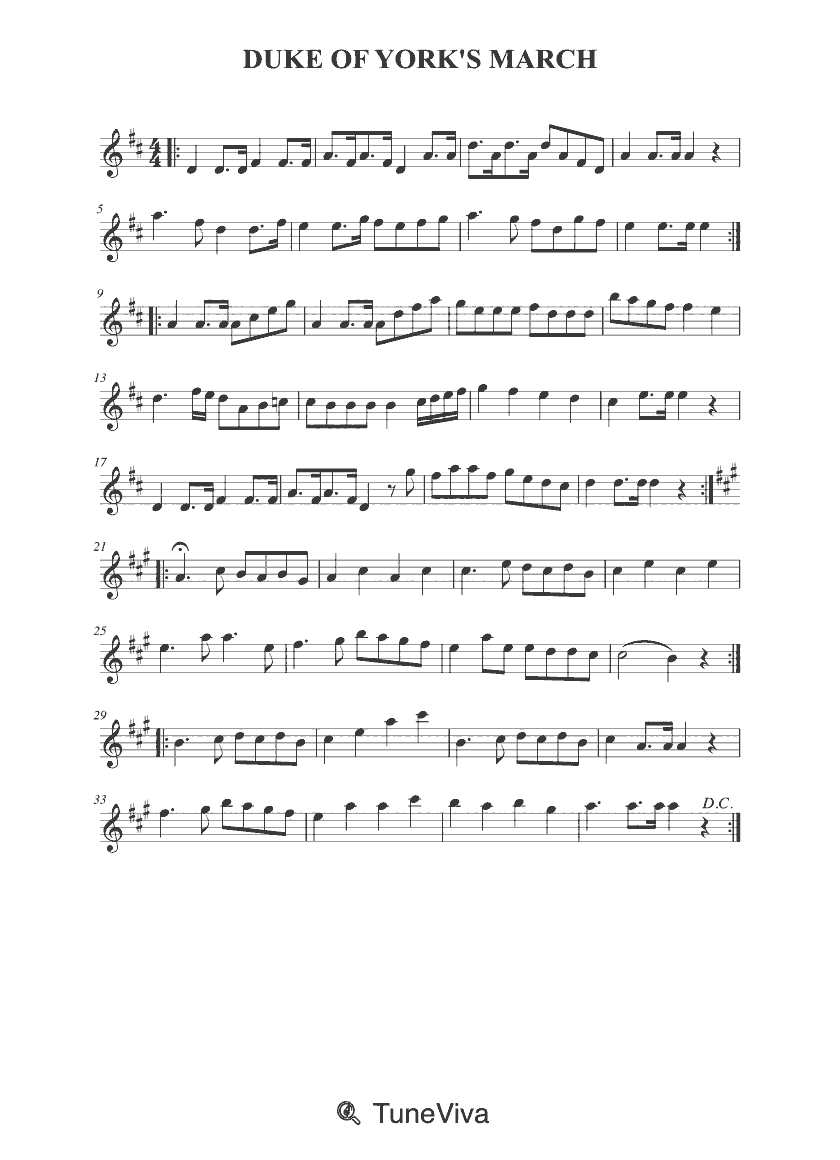
Misc tunes
2 min 23 sec
Open score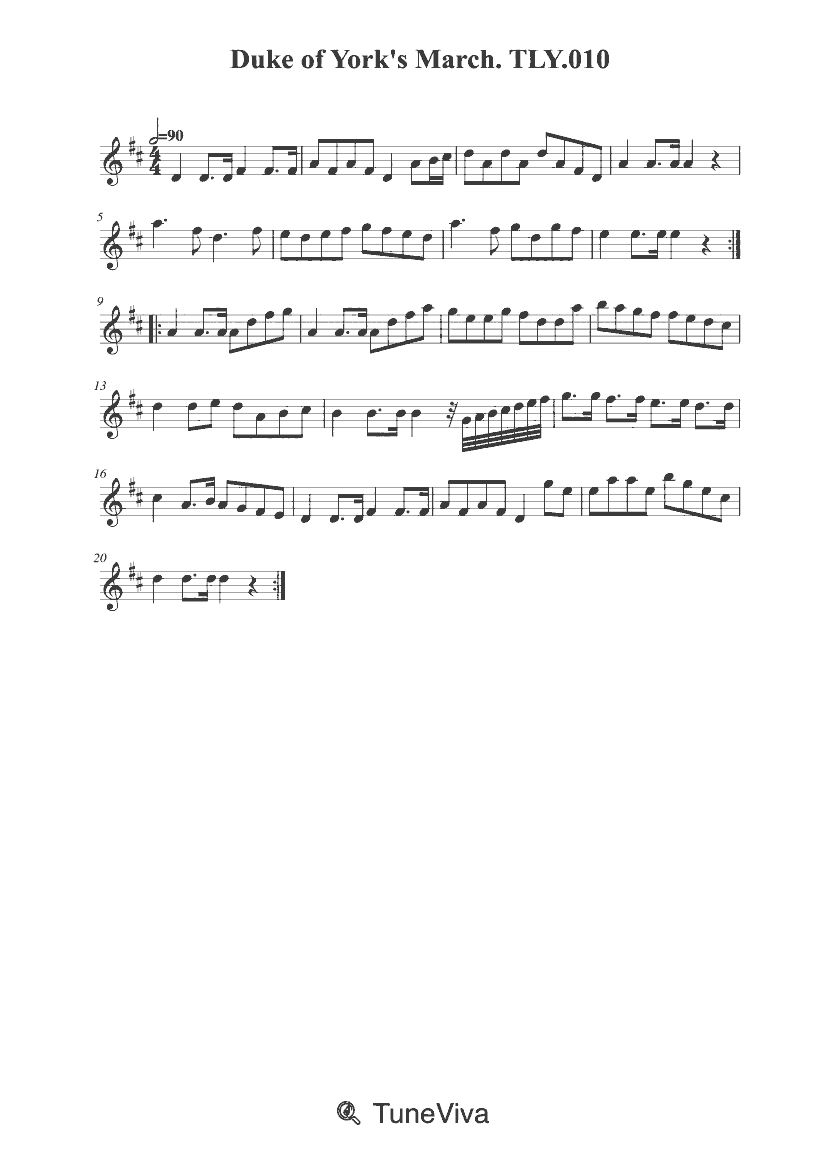
Misc tunes
53 sec
Open score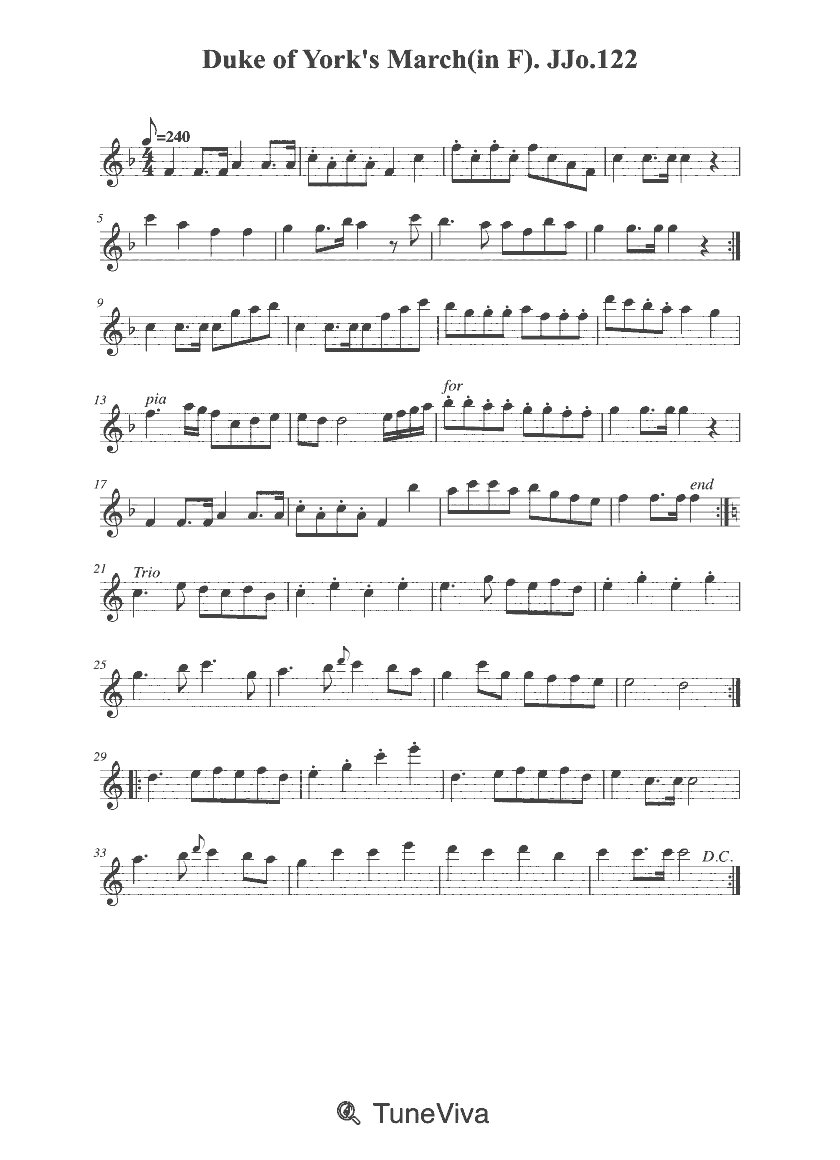
Misc tunes
3 min 18 sec · Score #148178
Open score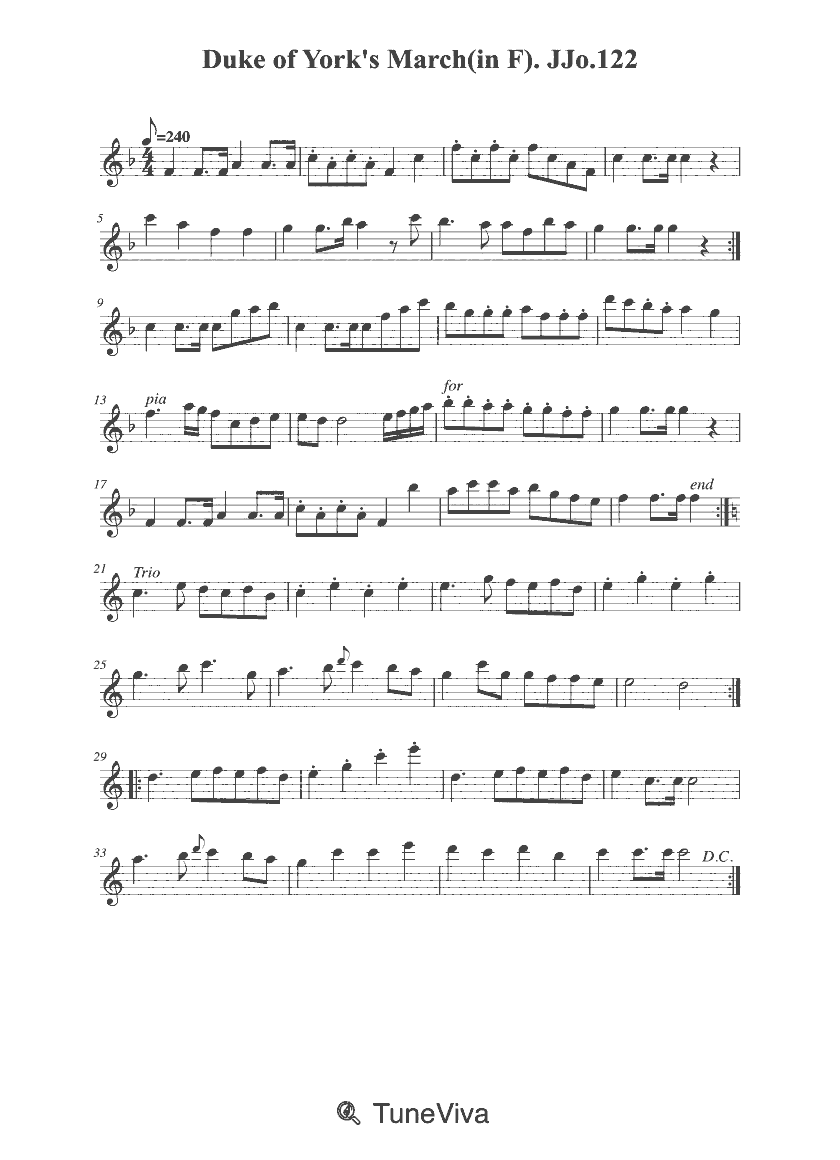
Misc tunes
3 min 18 sec · Score #160642
Open score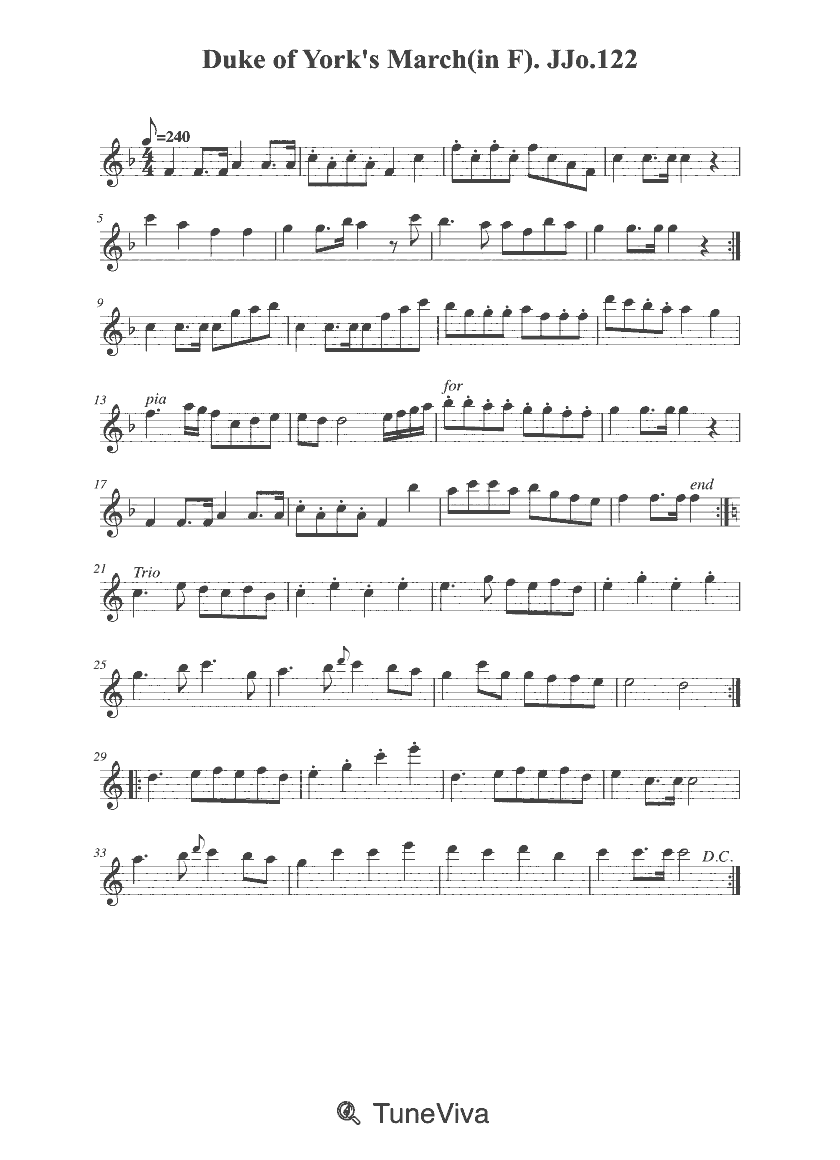
Misc tunes
3 min 18 sec · Score #198712
Open score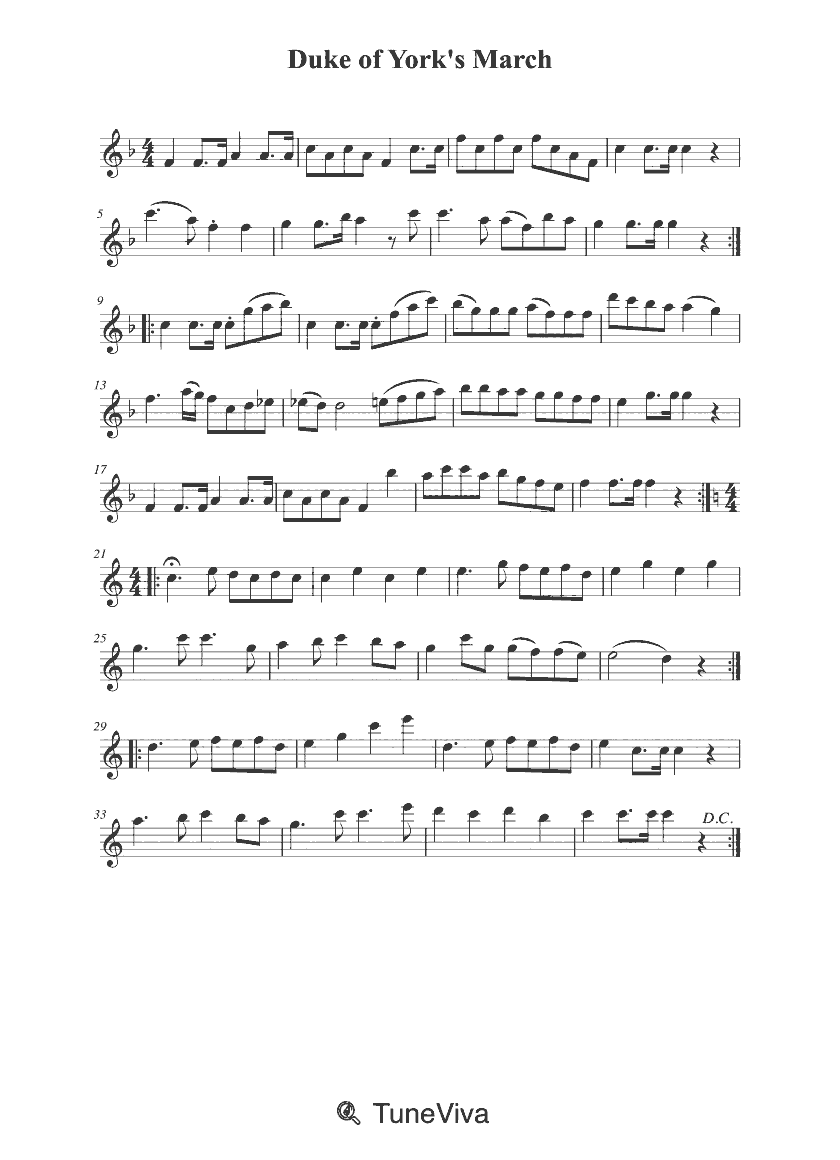
Misc tunes
2 min 24 sec · Score #50278
Open score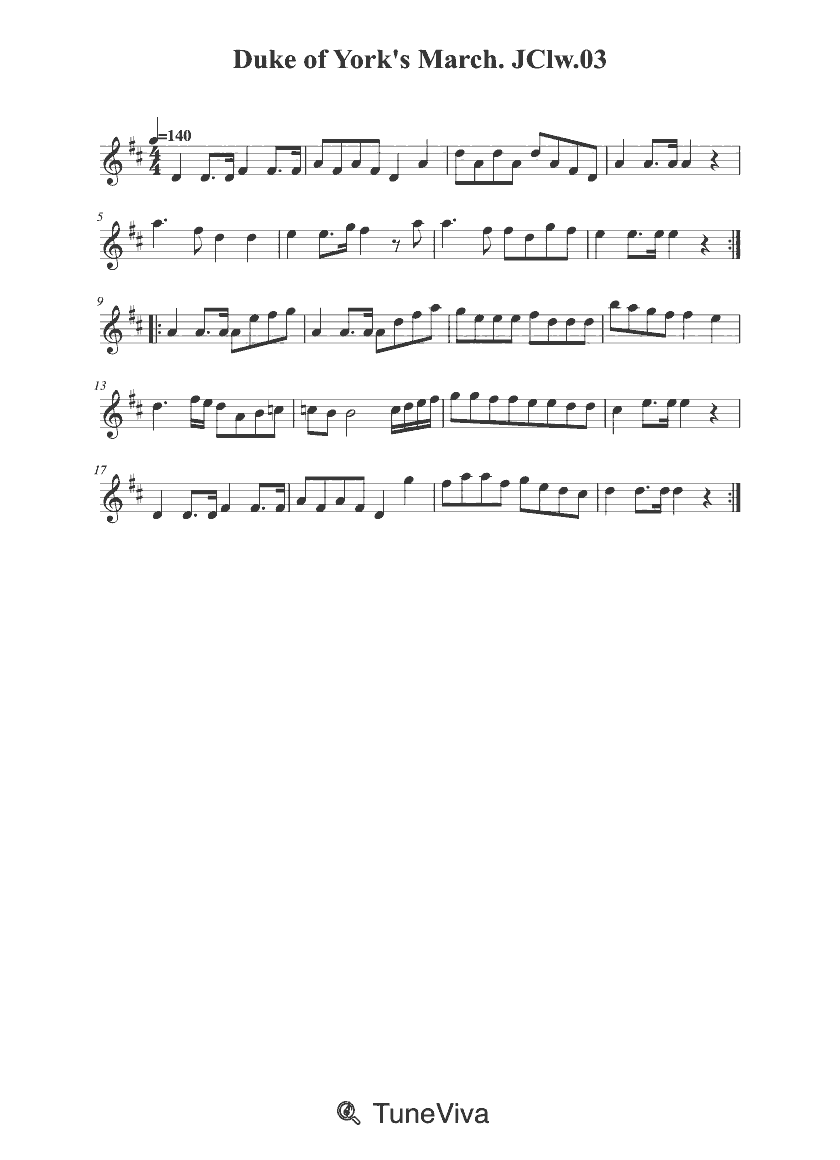
Misc tunes
1 min 8 sec
Open score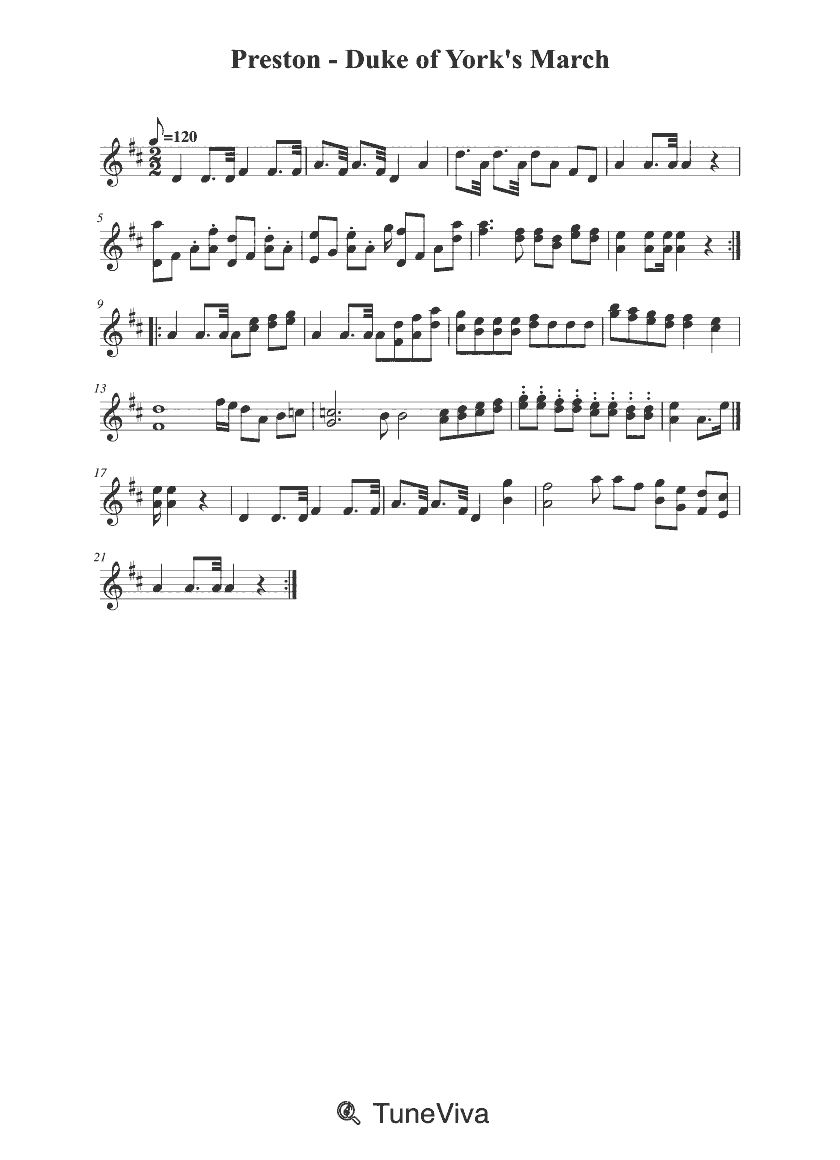
Preston (1780)
5 min 42 sec
Open score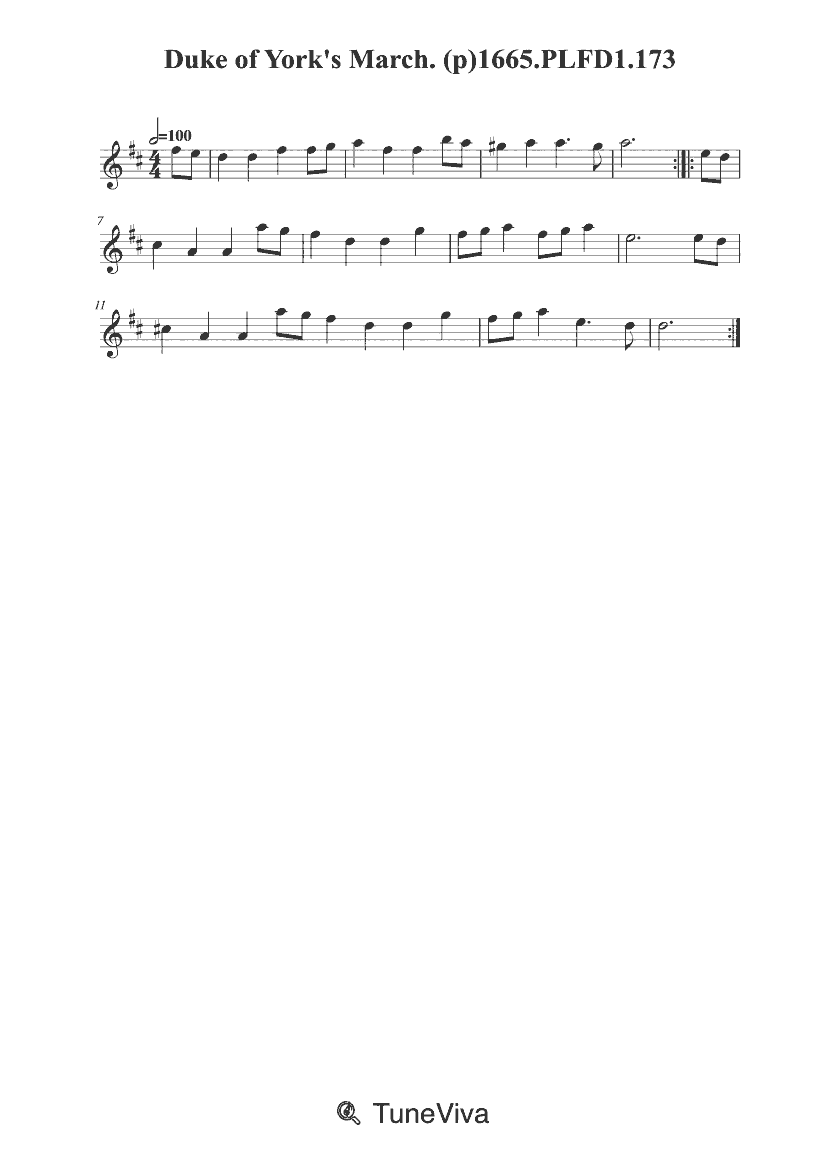
Misc tunes
29 sec
Open score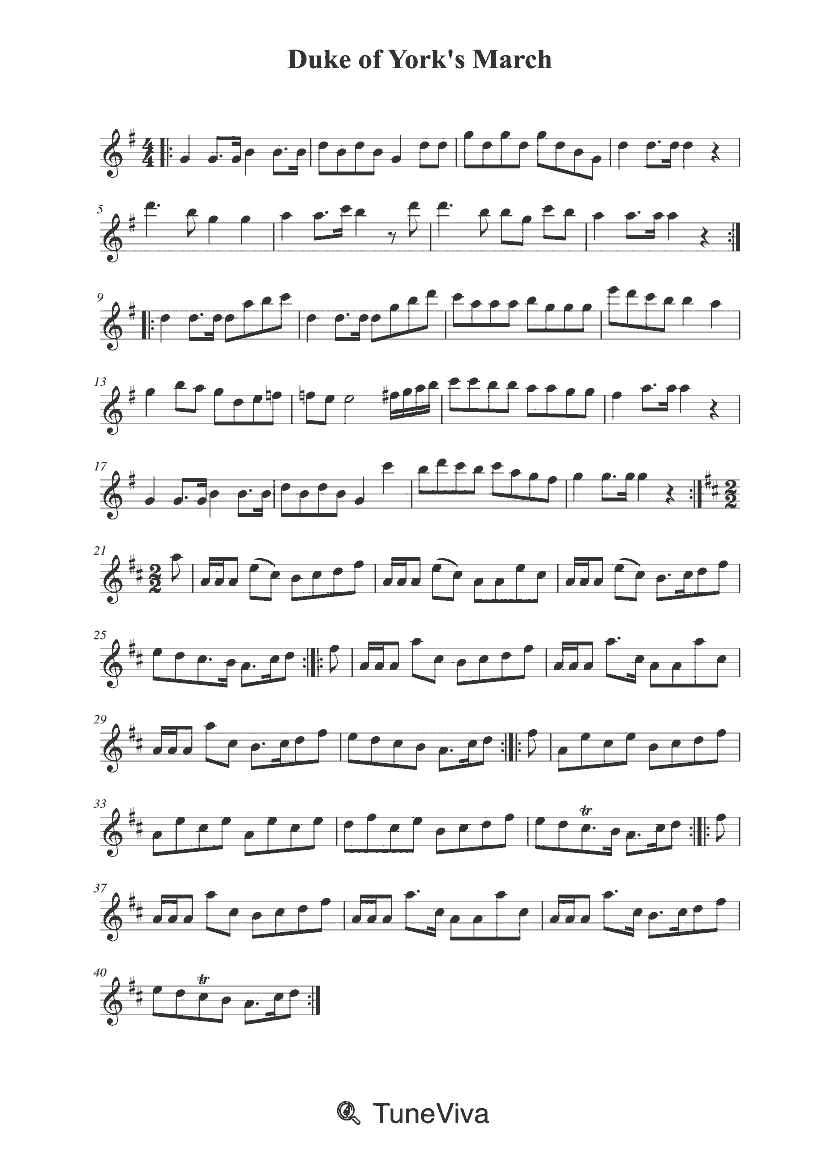
Misc tunes
4 min 16 sec
Open score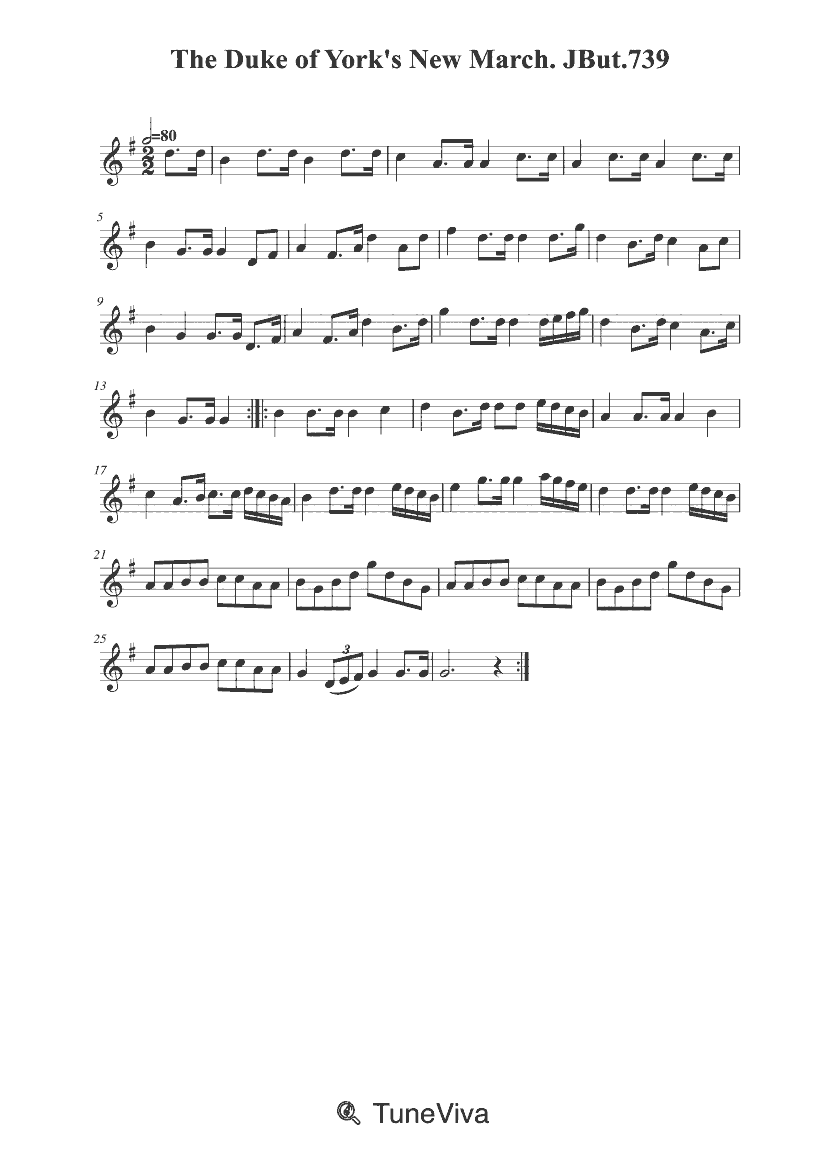
Misc tunes
2 min 35 sec
Open score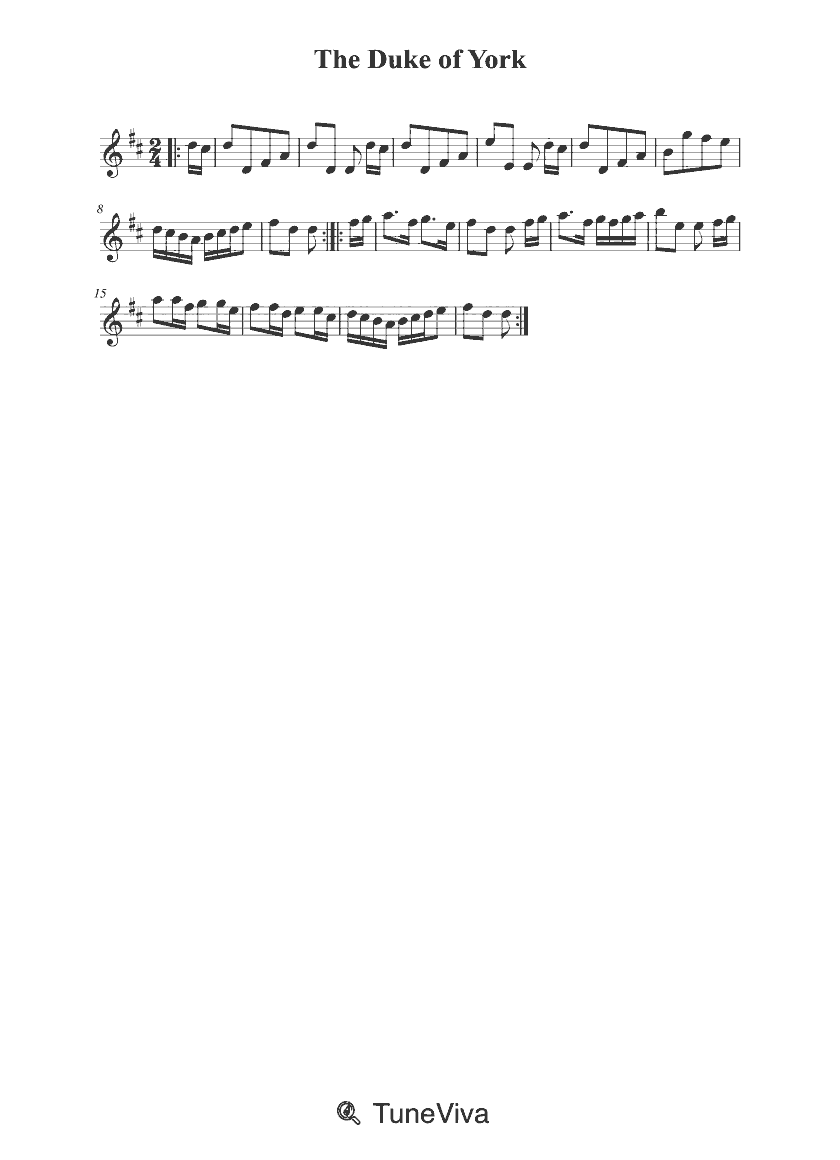
Misc tunes
32 sec
Open score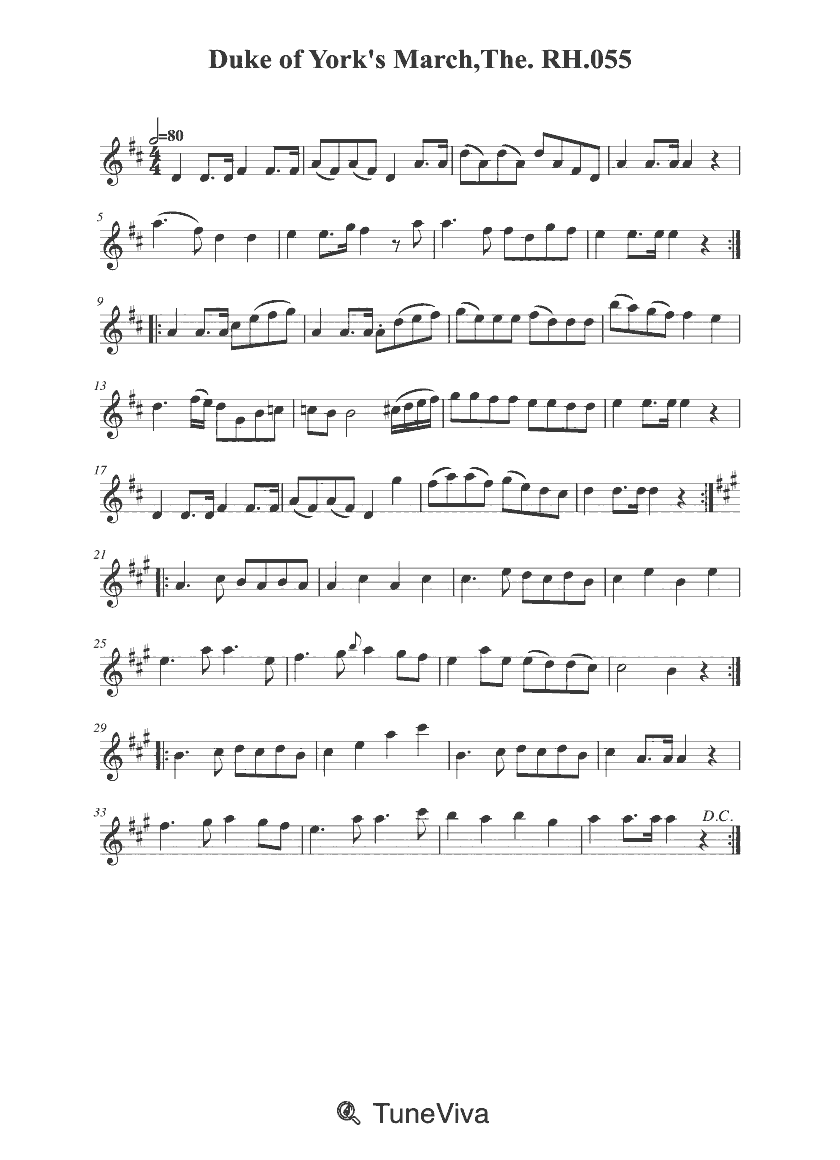
Misc tunes
1 min 48 sec
Open score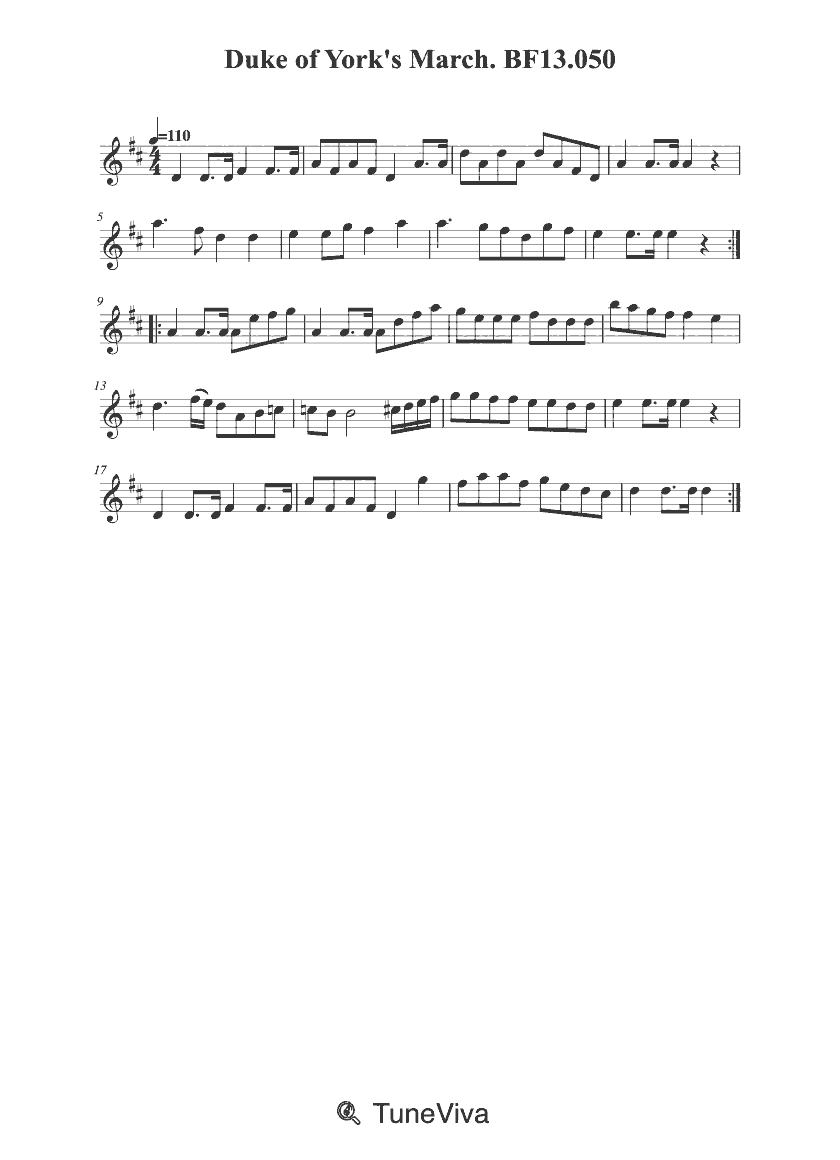
Misc tunes
1 min 26 sec
Open score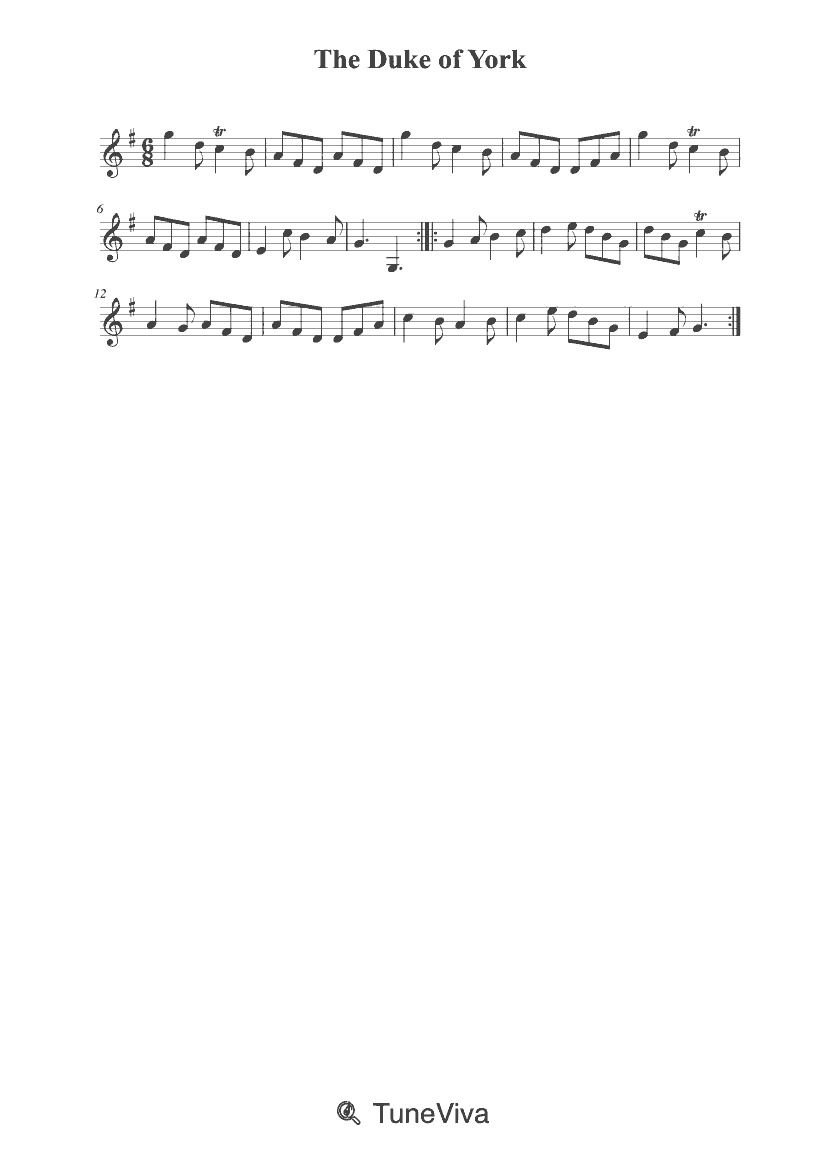
Misc tunes
24 sec · Score #136136
Open scorePage 1 of 2
The available scores for Duke of York's March do not all begin in the same key. One score opens in F major with a 4/4 time signature, while a score with primo and secundo parts and another score open in D major, also in 4/4. These details describe the opening of each score, not necessarily the key or character of the whole piece, so check the full score before deciding which version suits your instrument or ensemble.
One score listed as The Duke of York's New March.2voices gives separate parts labelled primo and secundo. The other scores shown under Duke of York's March do not list separate primo and secundo parts. The listings do not name the instruments intended for the two parts, so examine the clefs, ranges and layout in the score itself before choosing it for a duet or for two performers.
Both Duke of York's March and The Duke of York's New March appear as titles in the available scores. The evidence does not establish whether these are the same tune, a revised version or separate pieces. The title with primo and secundo parts opens in D major and gives an opening tempo of 160 BPM; the other D major score also gives 160 BPM, while the F major score does not list a tempo. Treat these as details of individual scores rather than as a complete history of the piece.
The title identifies the piece as a march, so a steady pulse and clear phrasing are useful starting points. Where a tempo is listed, the two D major scores show 160 BPM, but that figure belongs to those scores and is not a fixed performance tempo for every setting. Choose a speed that keeps the march character clear and suits the players or instruments involved.
Catalogue duration 3 min 52 sec. Opening key signature: 2 sharps (D major). Opening time signature: 4/4. Opening tempo: 160 BPM.
Score parts: primo, secundo. Catalogue duration 1 min 18 sec. Opening key signature: 2 sharps (D major). Opening time signature: 4/4. Opening tempo: 160 BPM.
Catalogue duration 2 min 24 sec. Opening key signature: 1 flat (F major). Opening time signature: 4/4.
The score listings available for Duke of York's March do not name a composer; they are attributed only to 'Misc tunes'. Any attribution should be checked against a reliable historical or bibliographic source.
Available versions of Duke of York's March do not all open in the same key. One score begins in F major with a 4/4 time signature, while a score with primo and secundo parts and another score begin in D major, also in 4/4. These are opening key signatures for individual scores, not proof that every version uses the same key throughout.
One score listed as The Duke of York's New March.2voices is laid out with two parts labelled primo and secundo. The other scores shown under Duke of York's March do not list separate primo and secundo parts. The listings do not specify which instruments the two parts are intended for, so check the score itself before choosing it for a particular duet pairing.
Both titles appear in the available scores, but the evidence does not show whether they are the same tune, a revised version or separate pieces. 'The Duke of York's New March' is given as a setting with primo and secundo parts in D major, while 'Duke of York's March' appears in both F major and D major versions. The titles should be treated as related leads rather than confirmed identities.
Two of the listed D major scores give an opening tempo of 160 BPM; the F major score does not include a tempo in its details. Those figures describe individual scores rather than a definitive performance tempo, and a march can work at a range of speeds depending on context. Use the listed tempo as a starting point and adjust for the players or setting.