
Fanny Power
Misc tunes
31 sec
Open scoreFanny Power appears here as three sheet-music versions. Two open in G major and one in D major, and all three use a 6/8 time signature. The listings give no composer name and use “Misc tunes” as the artist attribution, so they are best treated as separate notated versions rather than confirmed editions of one identified work.
Scores 1–20 of 27
Misc tunes
31 sec
Open score
Misc tunes
48 sec
Open score
Misc tunes
24 sec · Score #219998
Open score
Misc tunes
2 min 0 sec
Open score
Turlough O'Carolan
24 sec
Open score
Misc tunes
2 min 1 sec
Open score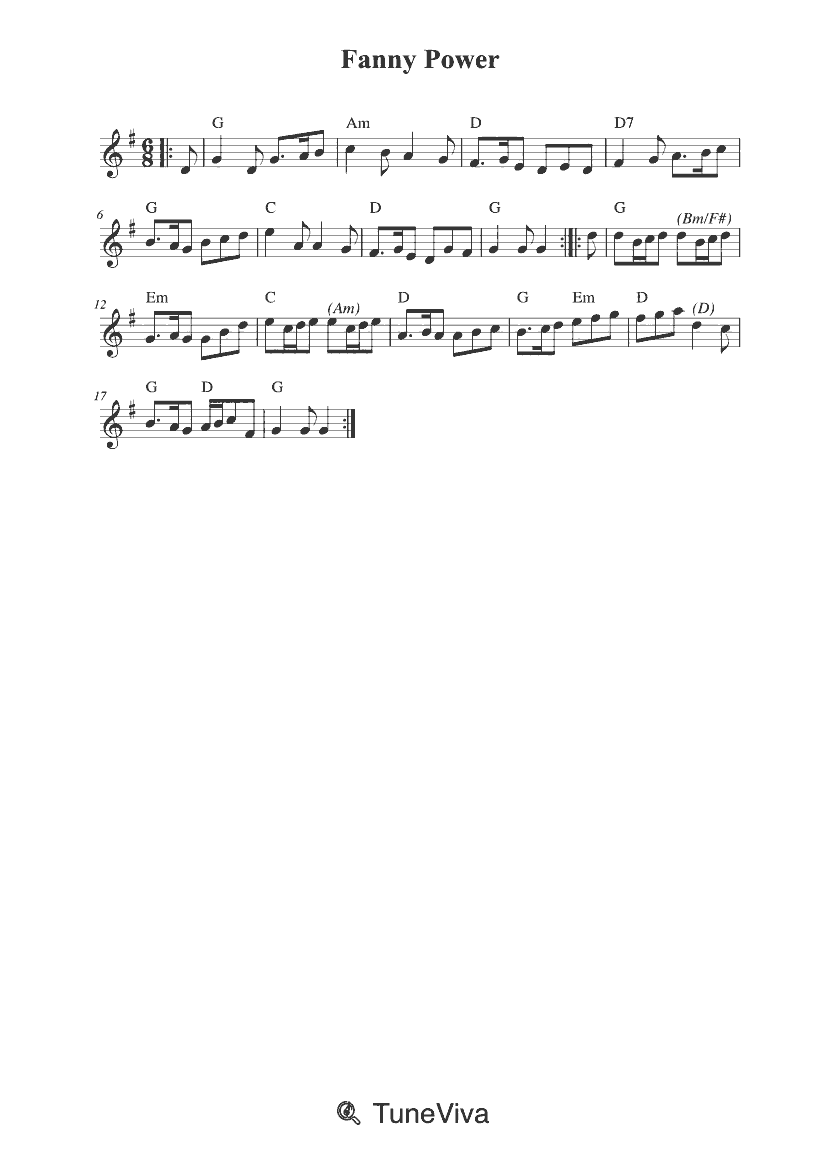
Misc tunes
24 sec · Score #19929
Open score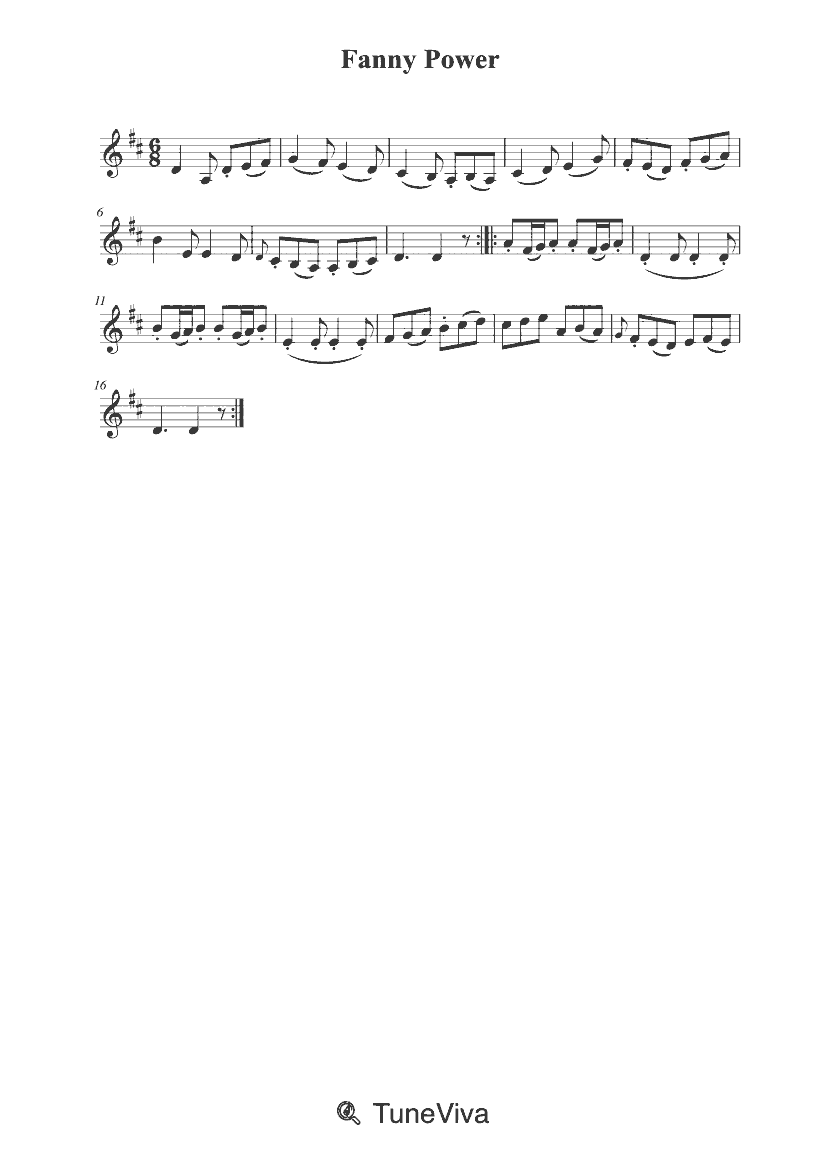
Misc tunes
24 sec · Score #86781
Open score
Turlough O'Carolan
Planxty Fanny Powers
24 sec · Score #124396
Open score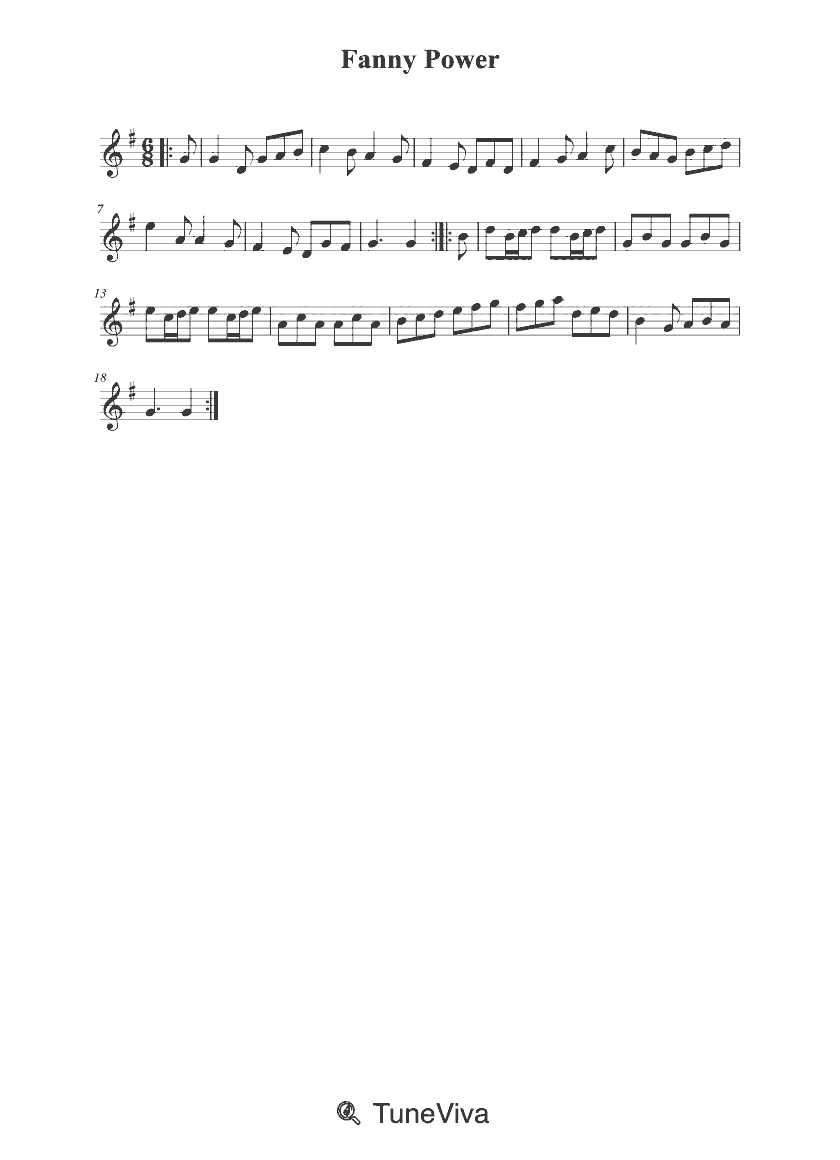
Misc tunes
24 sec · Score #10986
Open score
Turlough O'Carolan
Planxty Fanny Powers
24 sec · Score #36053
Open score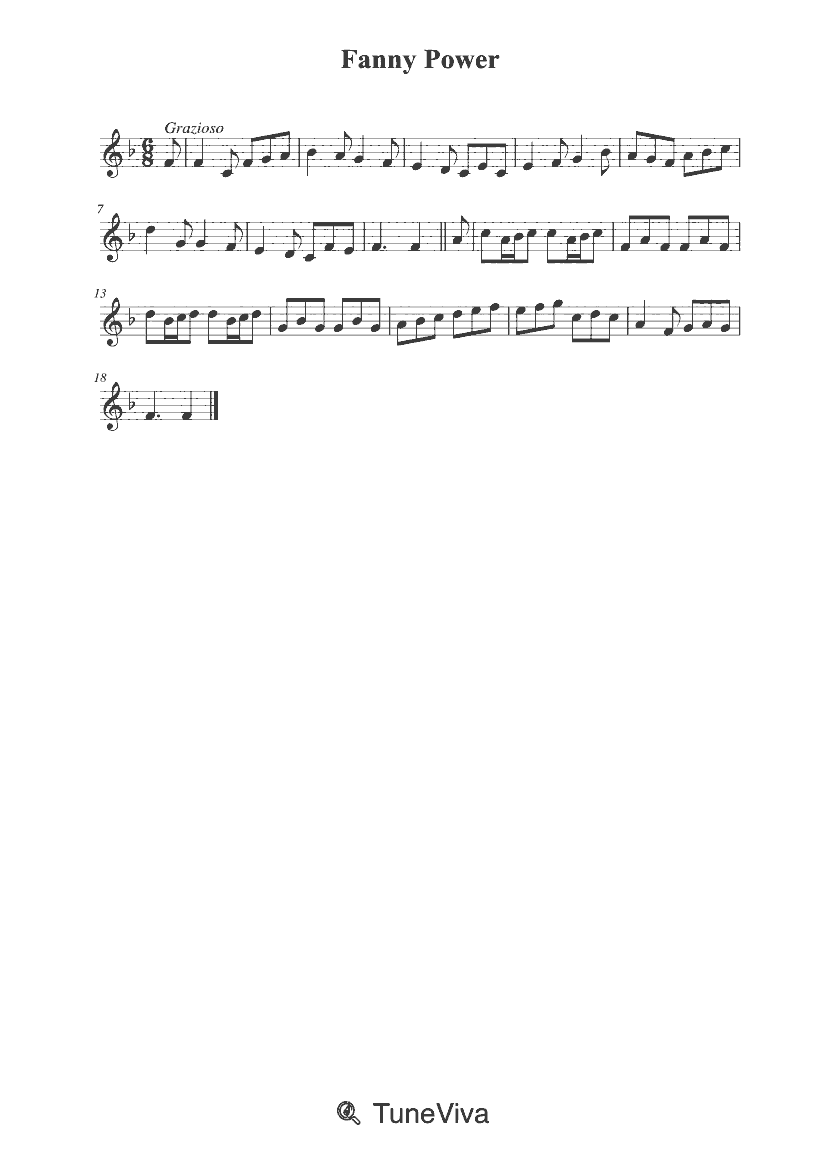
Misc tunes
12 sec
Open score
Turlough O'Carolan
24 sec · Score #84284
Open score
Turlough O'Carolan
Planxty Fanny Powers
24 sec · Score #113530
Open score
Turlough O'Carolan
24 sec · Score #218981
Open score
Turlough O'Carolan
48 sec
Open score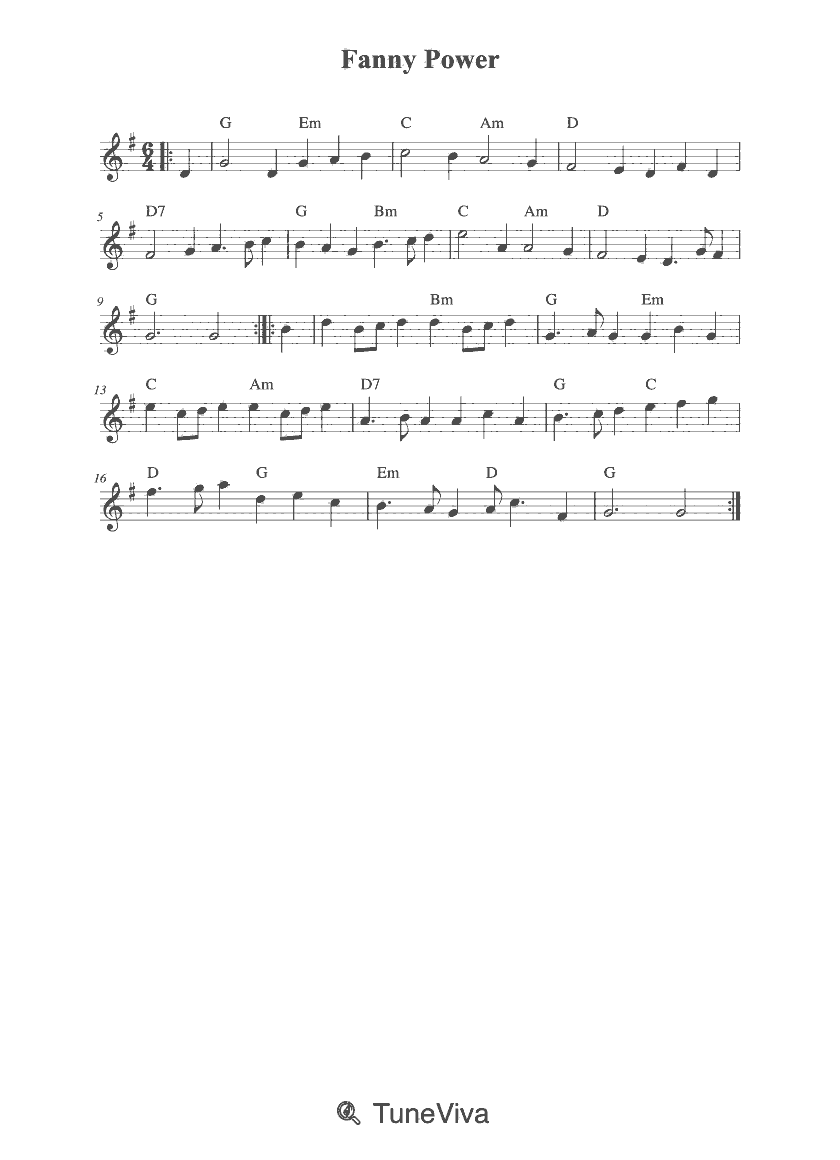
Misc tunes
1 min 36 sec
Open score
Turlough O'Carolan
Planxty Fanny Powers
24 sec · Score #21659
Open score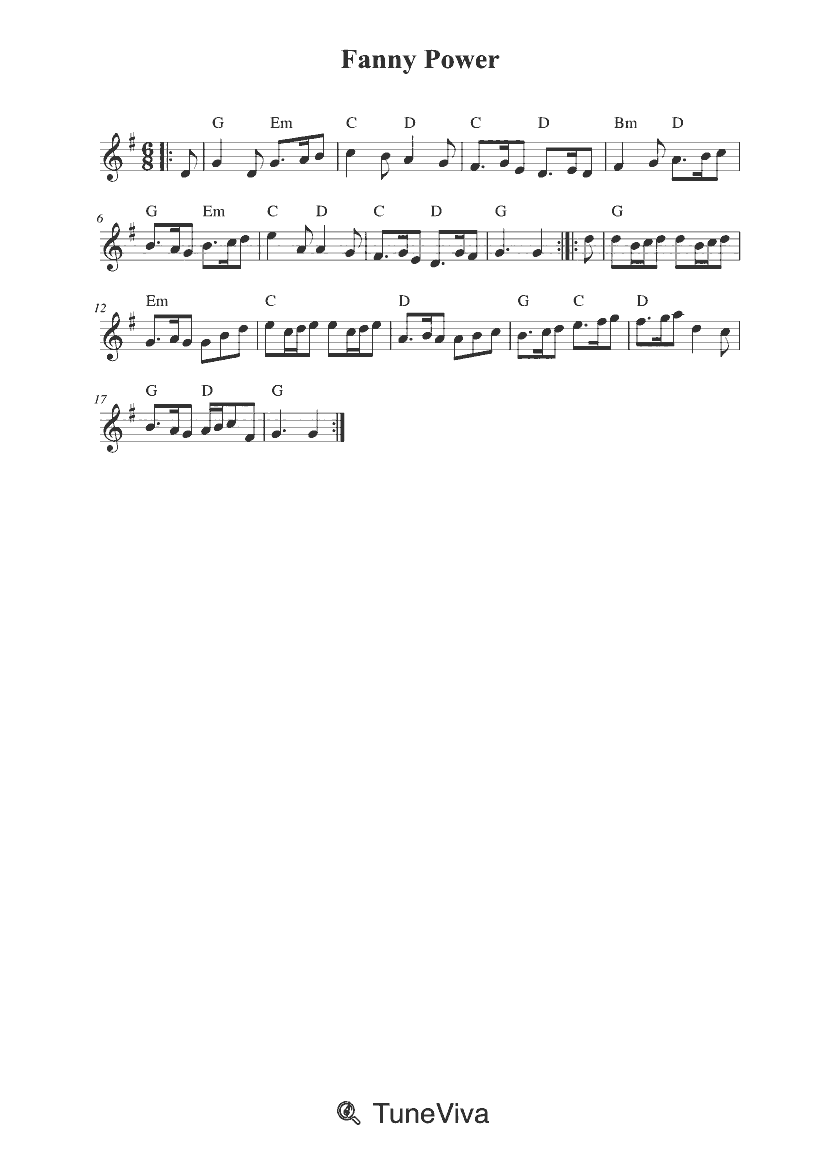
Misc tunes
24 sec · Score #66175
Open score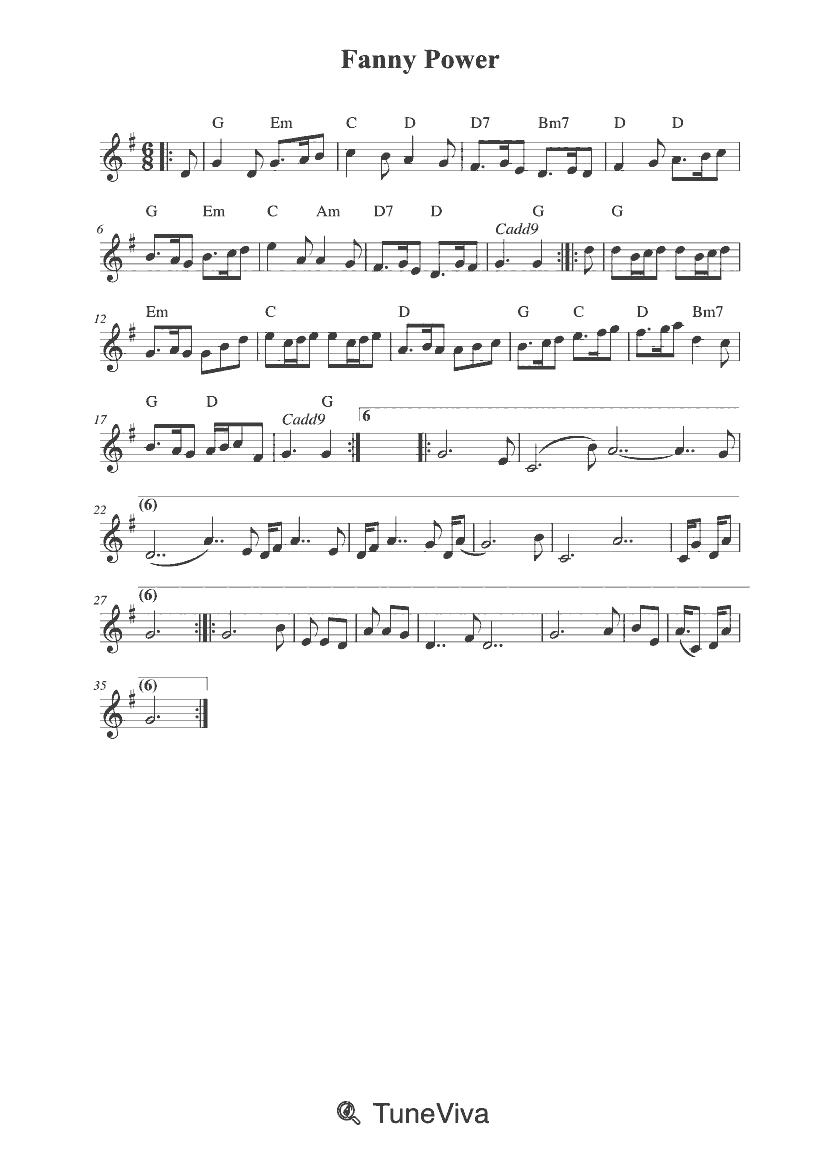
Misc tunes
55 sec
Open scorePage 1 of 2
The clearest difference among the Fanny Power listings is key: two versions open with a one-sharp signature in G major, while one opens with two sharps in D major. Pick the key that sits most comfortably on your instrument or for your voice, and check the actual notation for range and ornamentation before deciding. The listings do not provide enough information to rank the versions by difficulty.
Every listed version of Fanny Power is in 6/8. In compound metre, six quaver beats are grouped into two broader pulses per bar, which gives the music a lilting rather than a straightforward four-beat feel. That shared metre is useful for continuity between versions, but it does not show whether the versions use the same melody, bass line or ornamentation.
All three listings carry the same title, but they are not identical records: the keys differ, and the listed running times vary. Those details can help you notice that you are looking at different scores, but they do not by themselves prove that the arrangements are substantially different. Compare the first bars, the key and the instrumentation or voicing shown on the score before choosing.
The records do not identify a composer, instrumentation or source for Fanny Power, and they do not describe the notation in enough detail to confirm whether the versions are independent arrangements. Treat the title as a starting point for comparison rather than as proof of a single authorised text.
Catalogue duration 31 sec. Opening key signature: 1 sharp (G major). Opening time signature: 6/8.
Catalogue duration 48 sec. Opening key signature: 1 sharp (G major). Opening time signature: 6/8.
Catalogue duration 24 sec. Opening key signature: 2 sharps (D major). Opening time signature: 6/8.
The listed versions of Fanny Power do not share one key: two open with a one-sharp signature in G major, and one opens with two sharps in D major.
Every listed version of Fanny Power is in 6/8, a compound metre that is usually felt in two broad pulses per bar.
The supplied listings leave the composer field blank and give “Misc tunes” as the artist attribution. No composer is confirmed by these records, so this page does not make a composer attribution.
Choose by the key that suits your instrument or voice most comfortably: G major uses one sharp, while D major uses two. The available details do not compare range, ornamentation or difficulty, so check the notation itself.
The three Fanny Power listings are separate versions and are not identical records: they differ in key and in listed running time. The available details do not show whether the notes, ornamentation or instrumentation are the same, so compare the scores directly before choosing.
A 6/8 signature groups six quaver beats into two main pulses per bar. In the Fanny Power listings, the shared 6/8 metre points to a compound-metre feel rather than a simple four-beat pulse.