
Father Dollard's
Misc tunes
1 min 17 sec · Score #40807
Open scoreFather Dollard's appears here as a tune title with scores listed as Father Dollard's and Father Dollard's Hornpipe. The available versions all open in D major, with one notated in 4/4 and two in 2/2. No composer is identified in the score records, so this page is best used to compare the available notation rather than to confirm authorship or origin.
Scores 1–20 of 29
Misc tunes
1 min 17 sec · Score #40807
Open score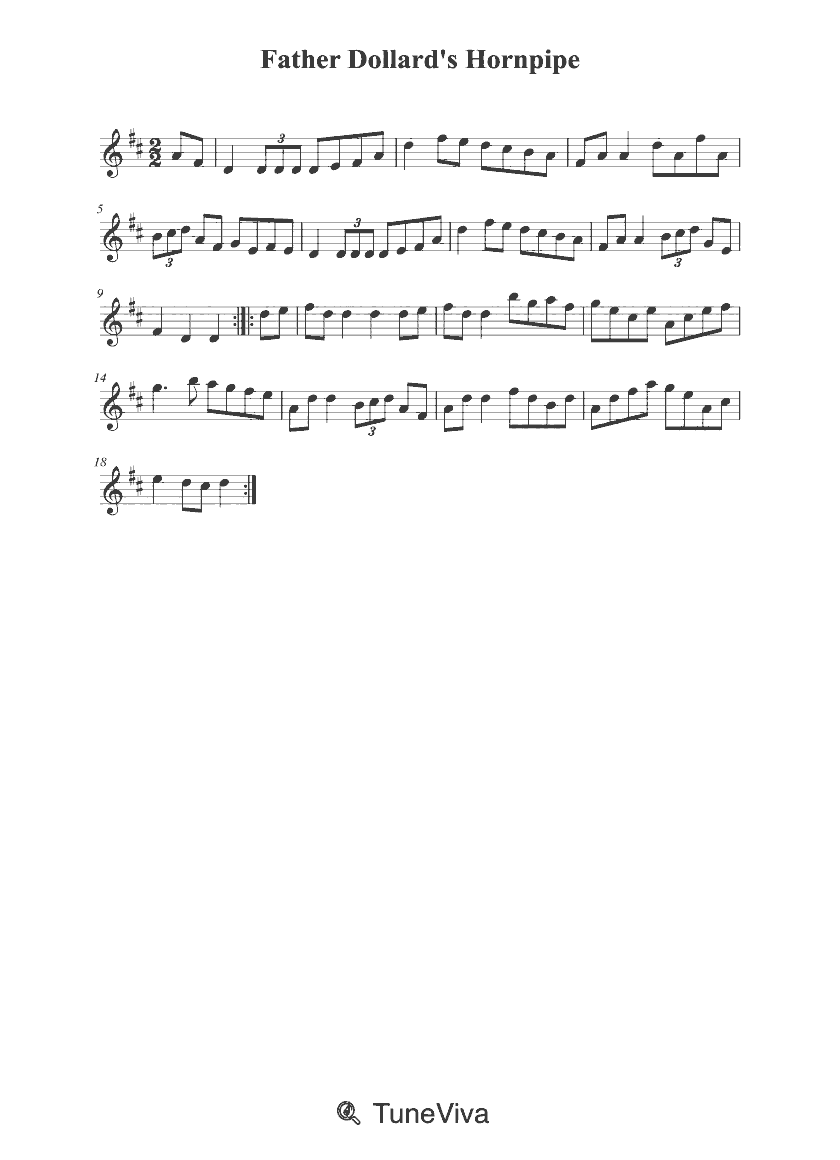
Misc tunes
2 min 8 sec · Score #133977
Open score
anon.
2 min 8 sec
Open score
anon.
12 sec
Open score
anon.
1 min 37 sec
Open score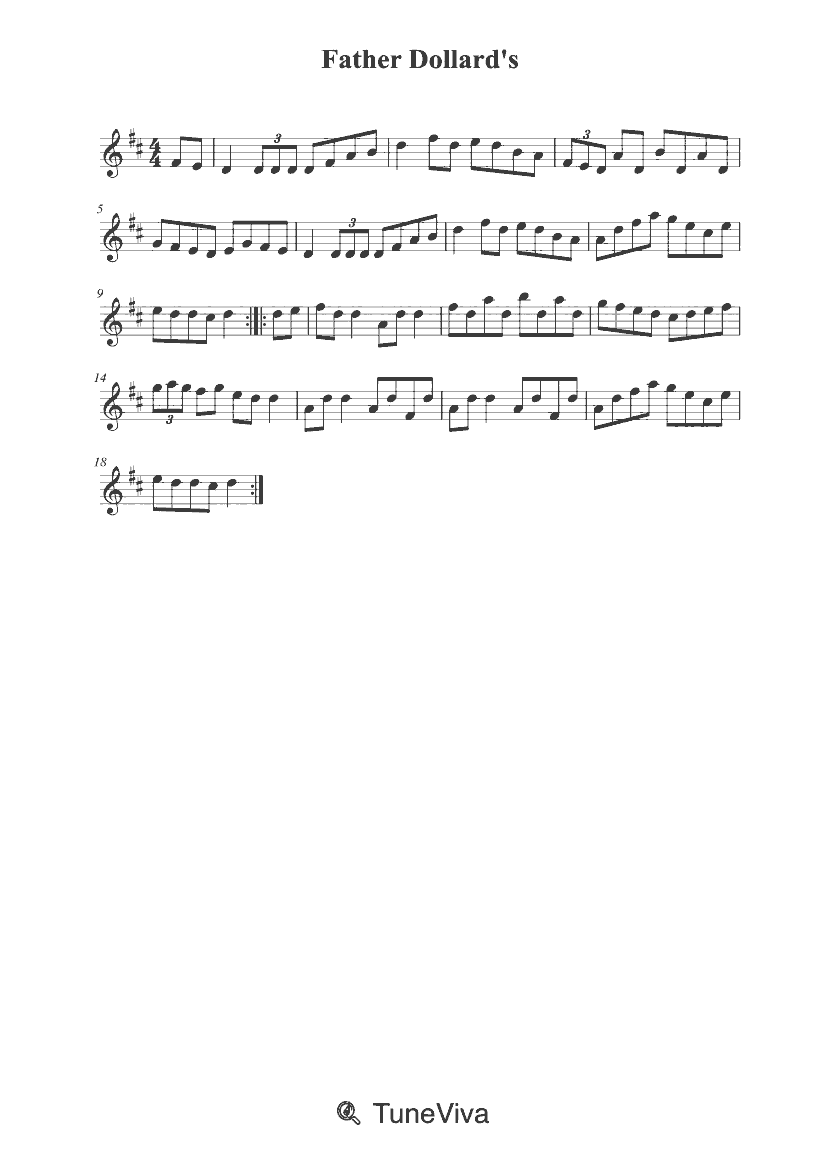
Misc tunes
1 min 4 sec
Open score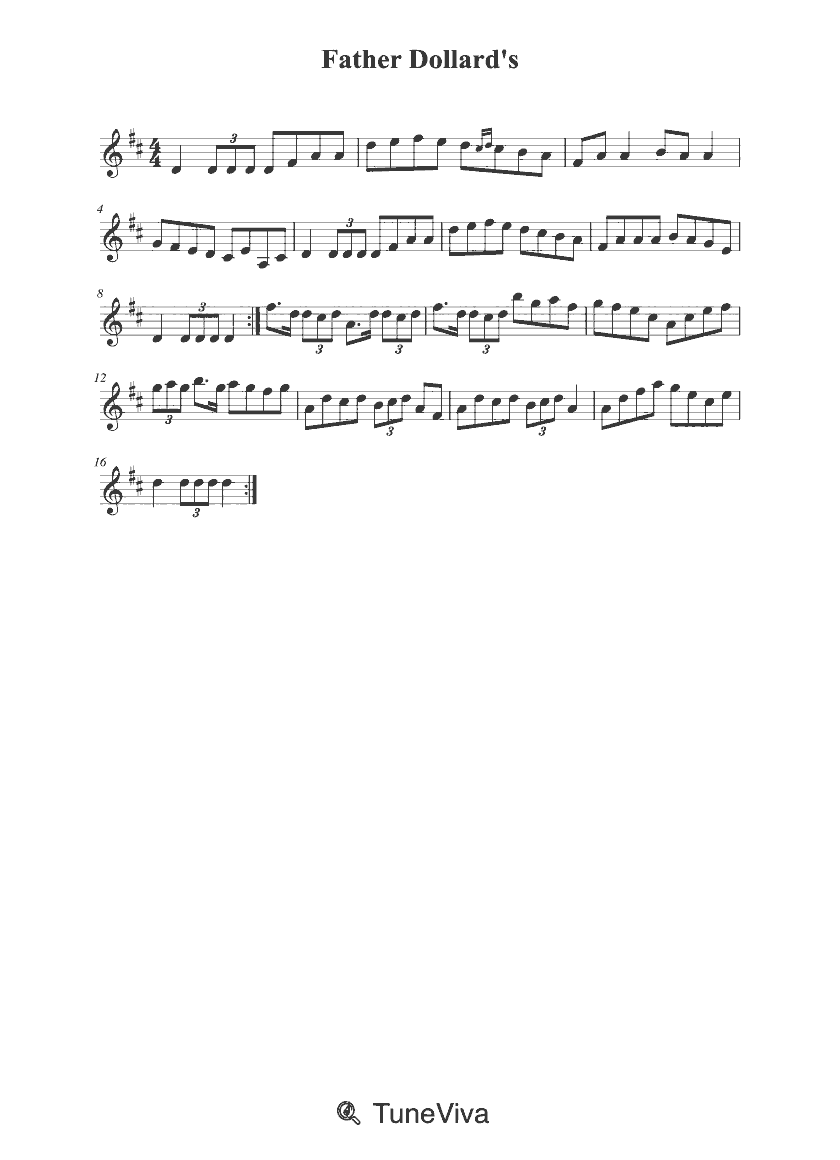
Misc tunes
1 min 17 sec · Score #72152
Open score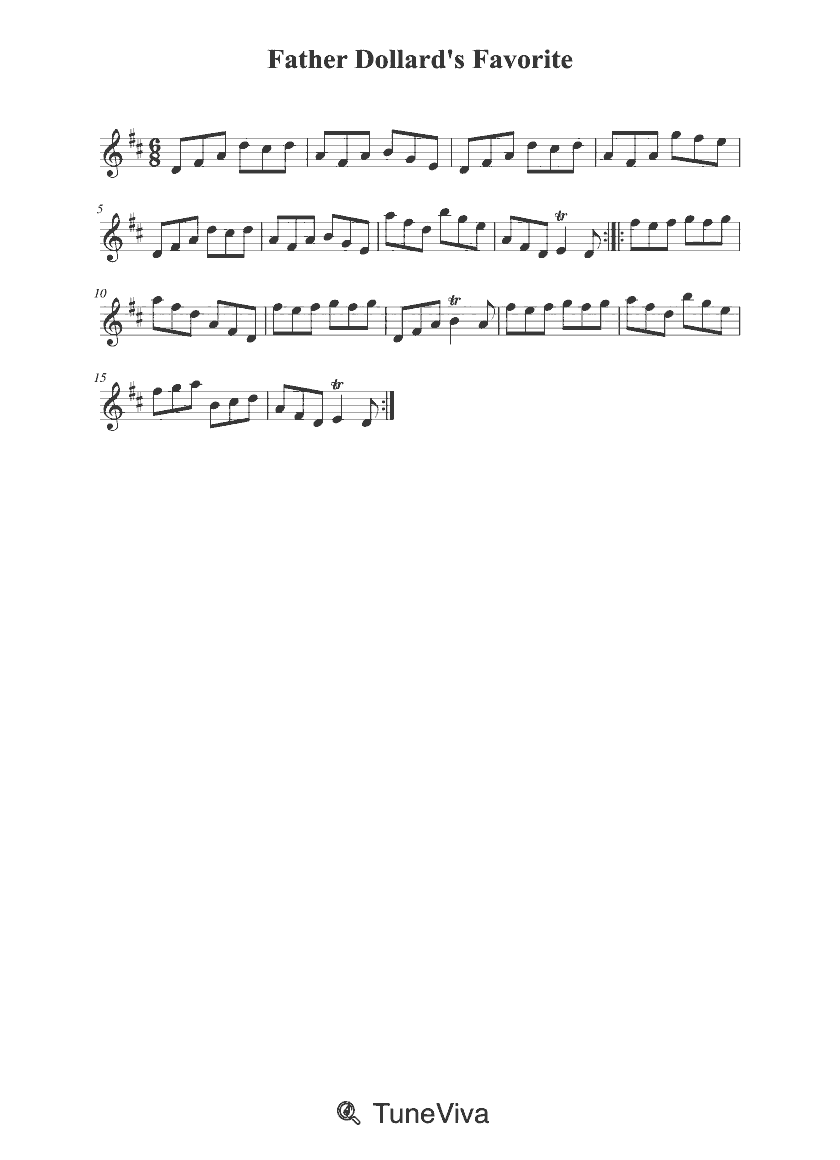
Misc tunes
24 sec · Score #103244
Open score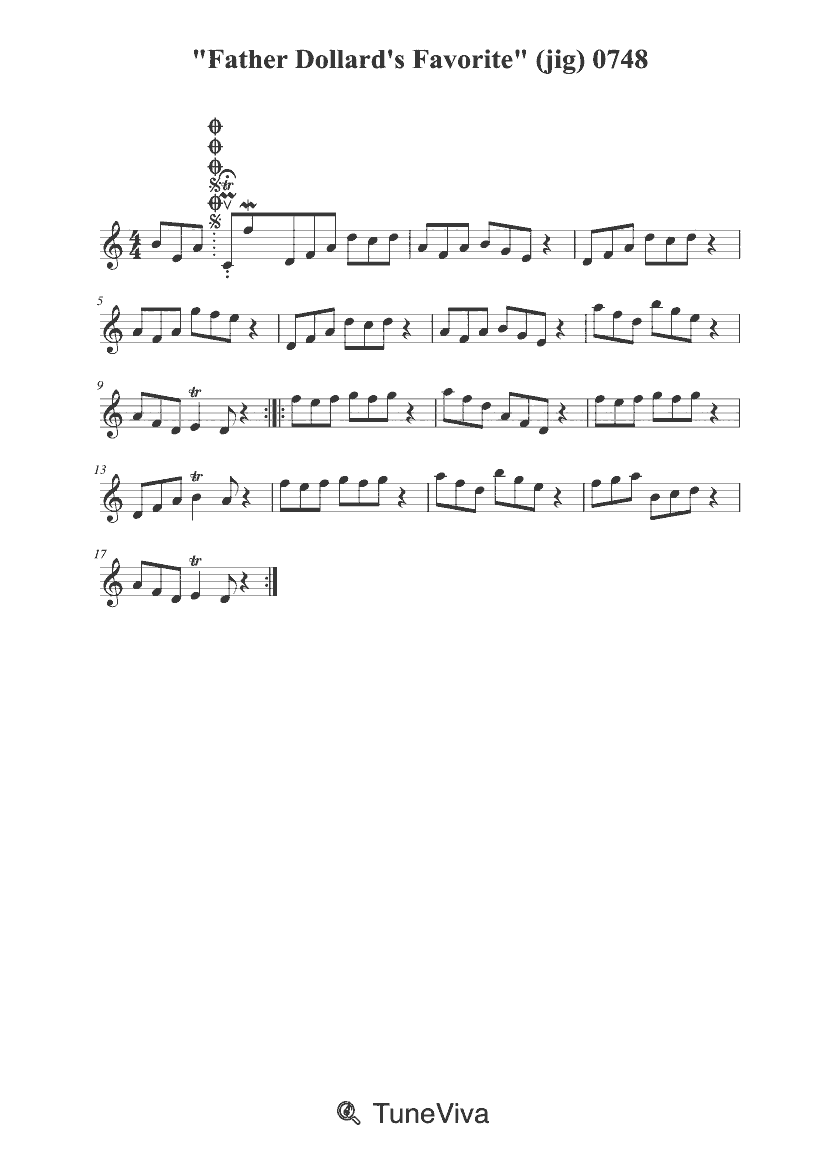
by Fr. Dollard (himself!)
27 sec
Open score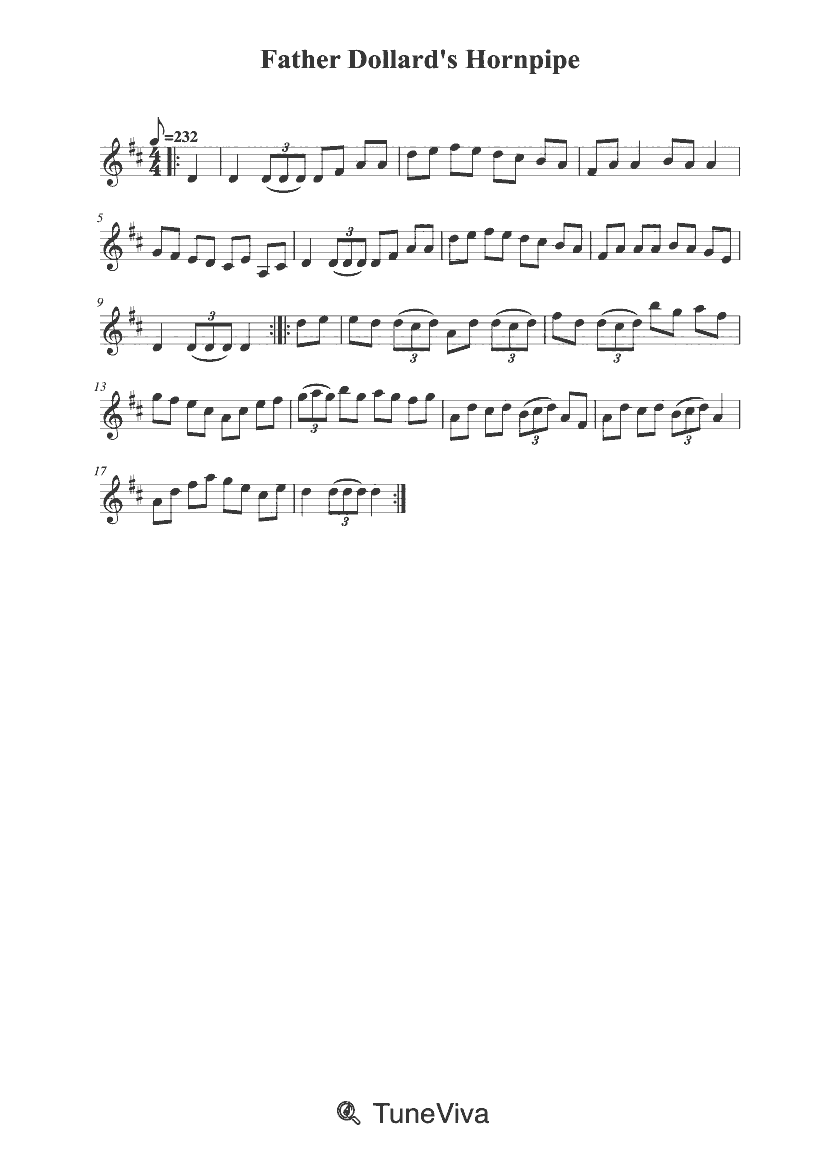
Misc tunes
1 min 6 sec · Score #132105
Open score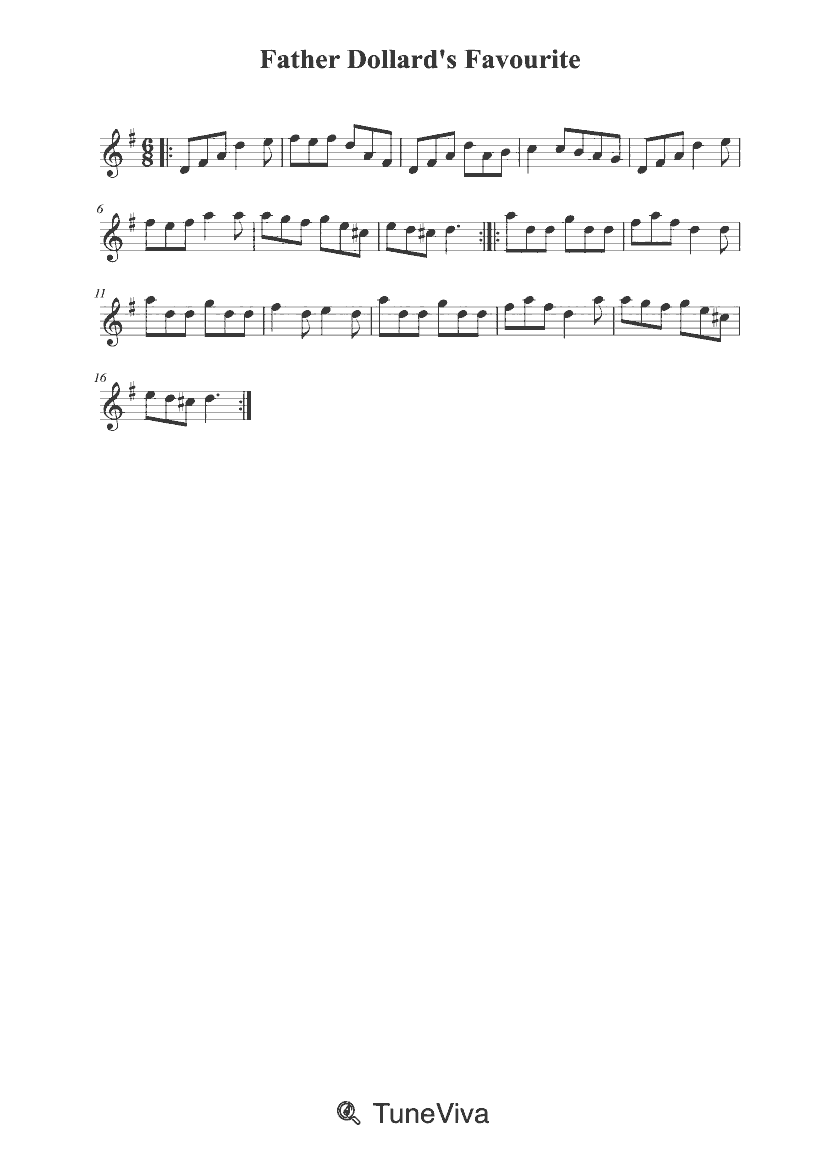
Misc tunes
24 sec · Score #1041
Open score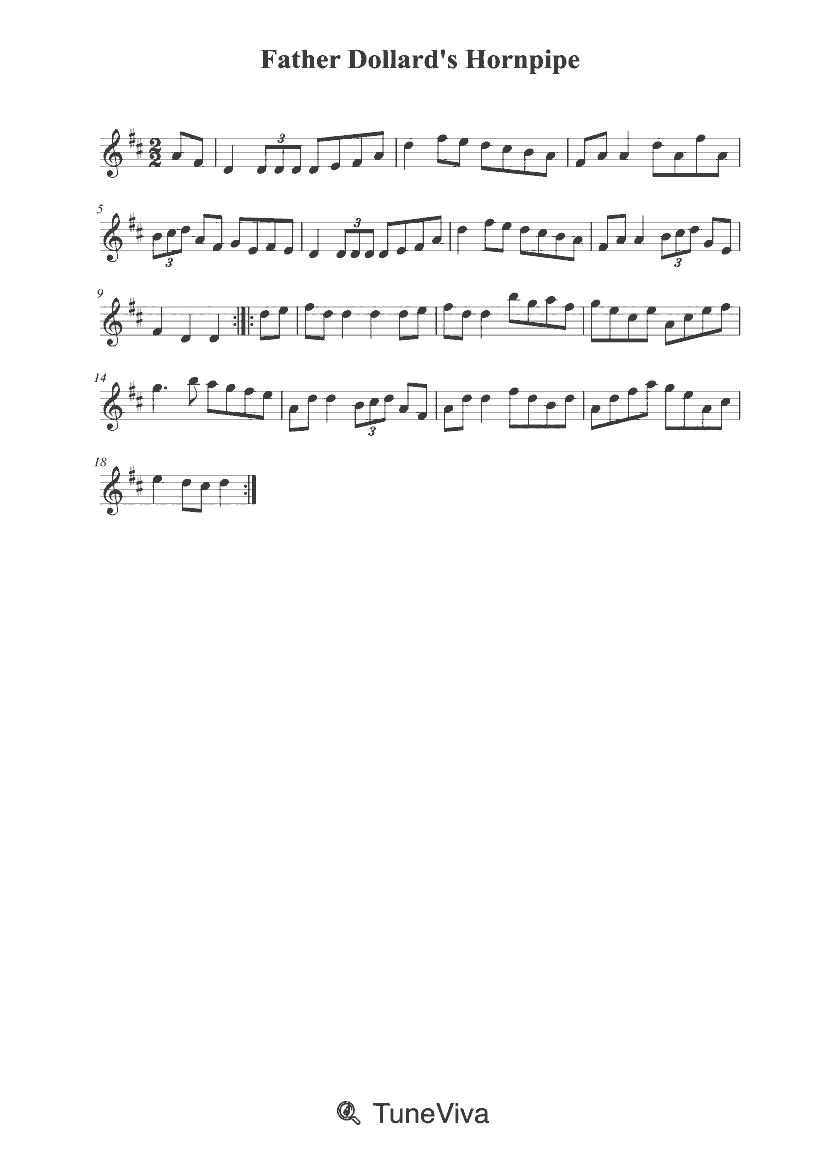
Misc tunes
2 min 8 sec · Score #26405
Open score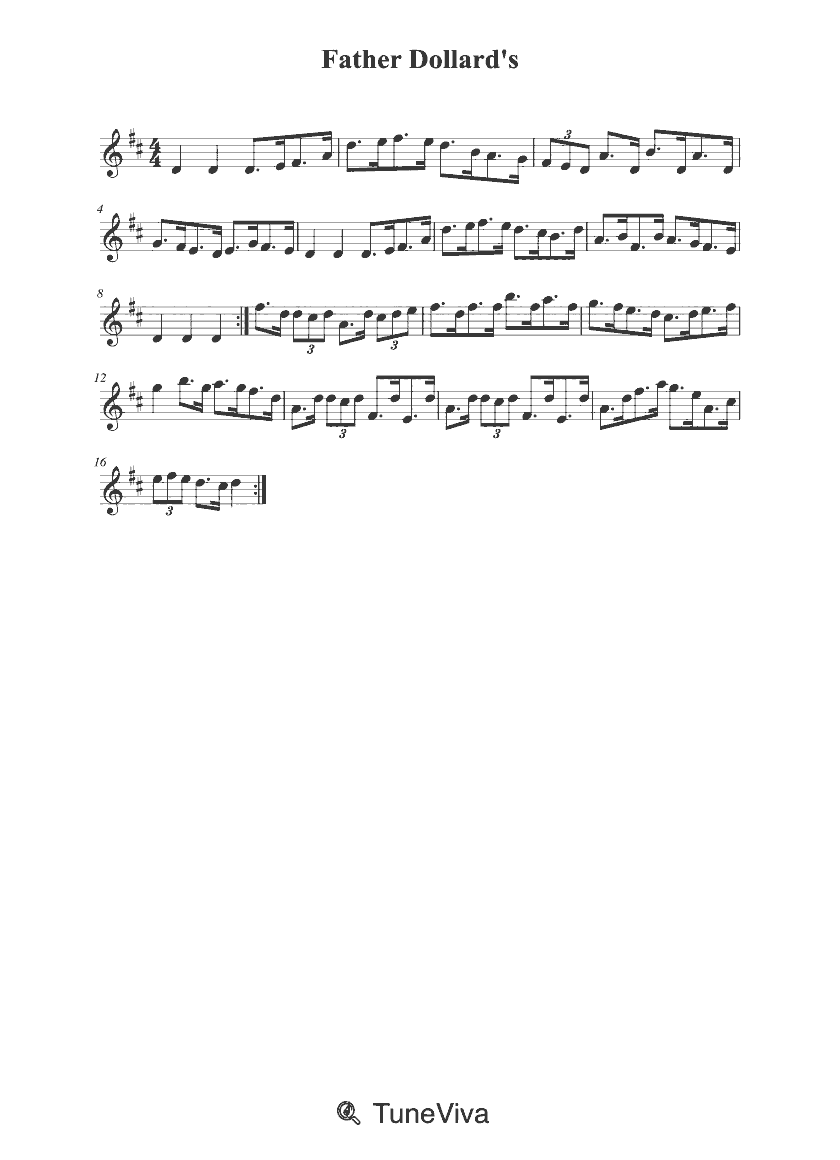
Misc tunes
1 min 17 sec · Score #28092
Open score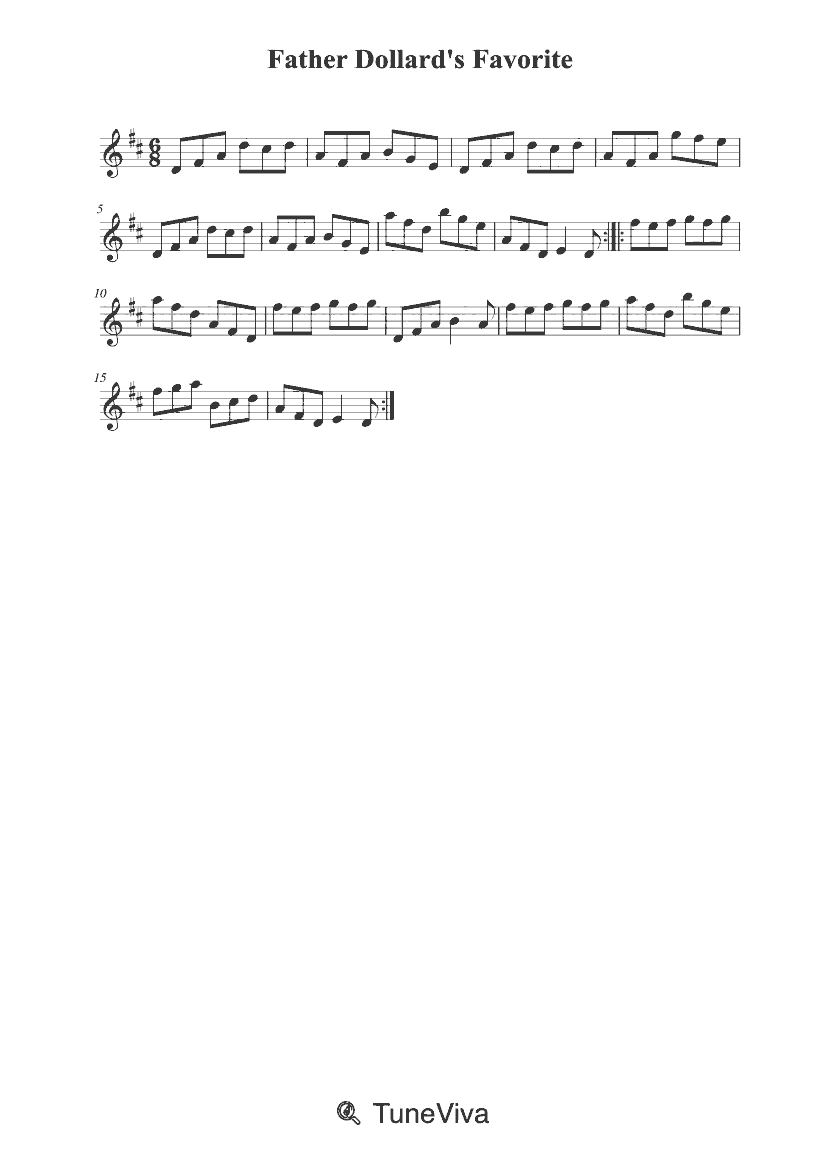
Misc tunes
24 sec · Score #31655
Open score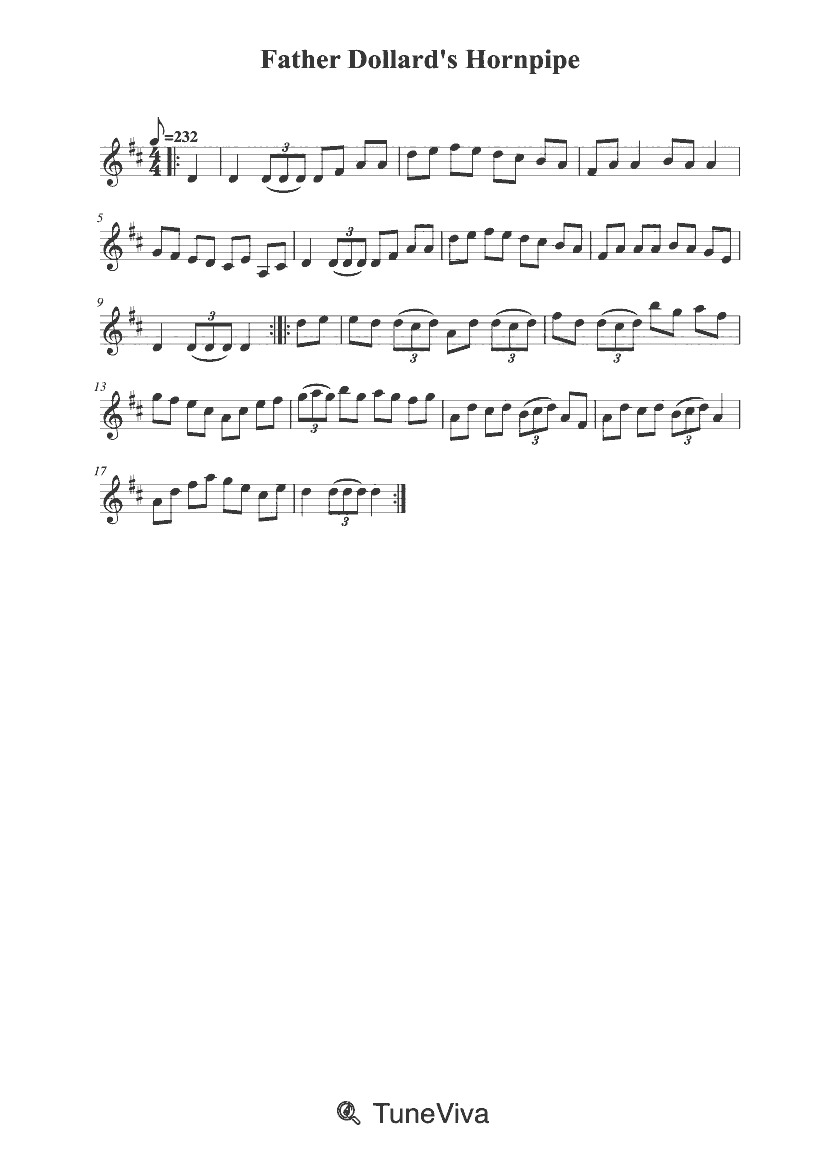
Misc tunes
1 min 6 sec · Score #45799
Open score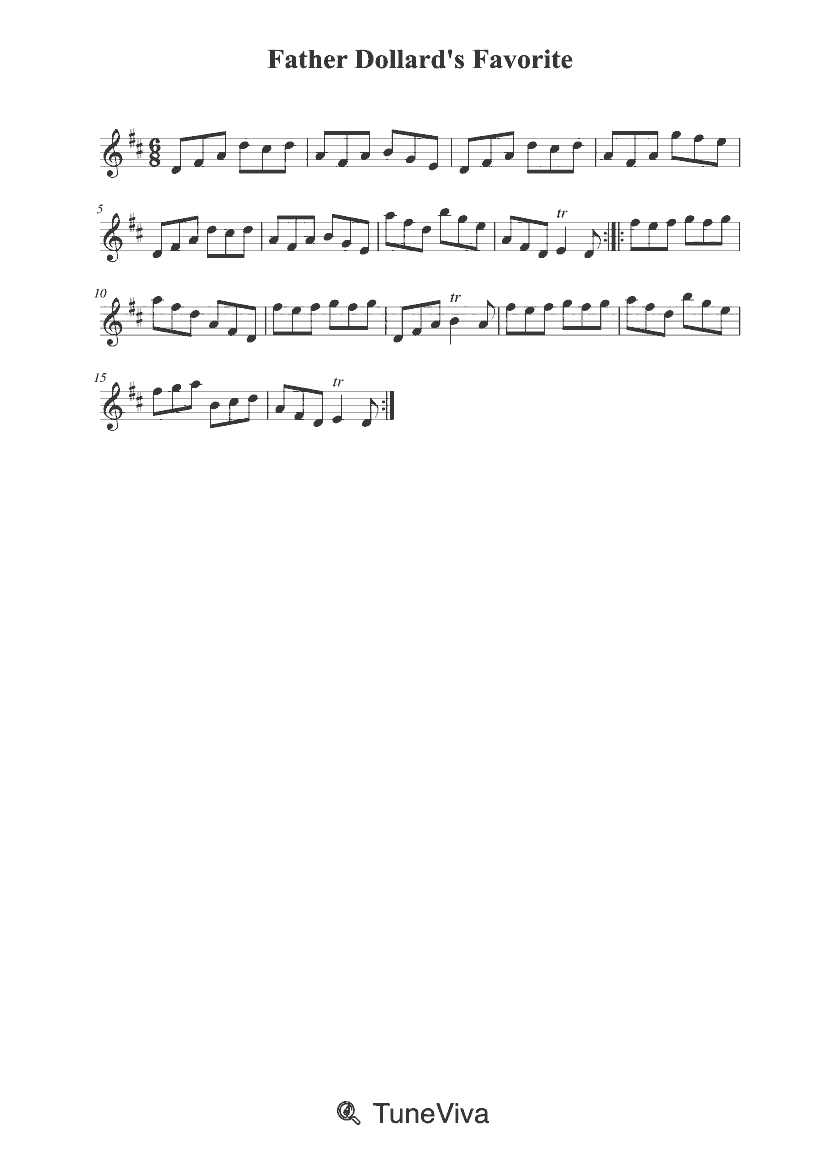
Misc tunes
24 sec · Score #98075
Open score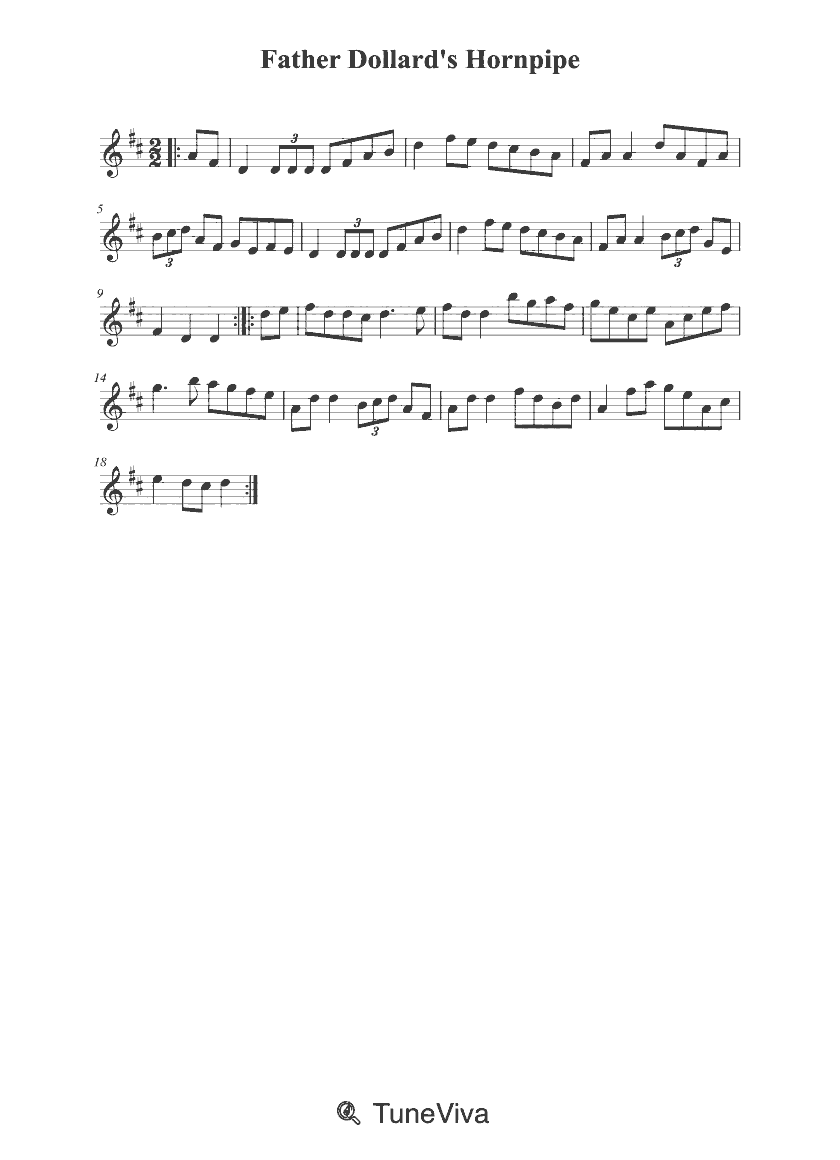
Misc tunes
2 min 8 sec · Score #100469
Open score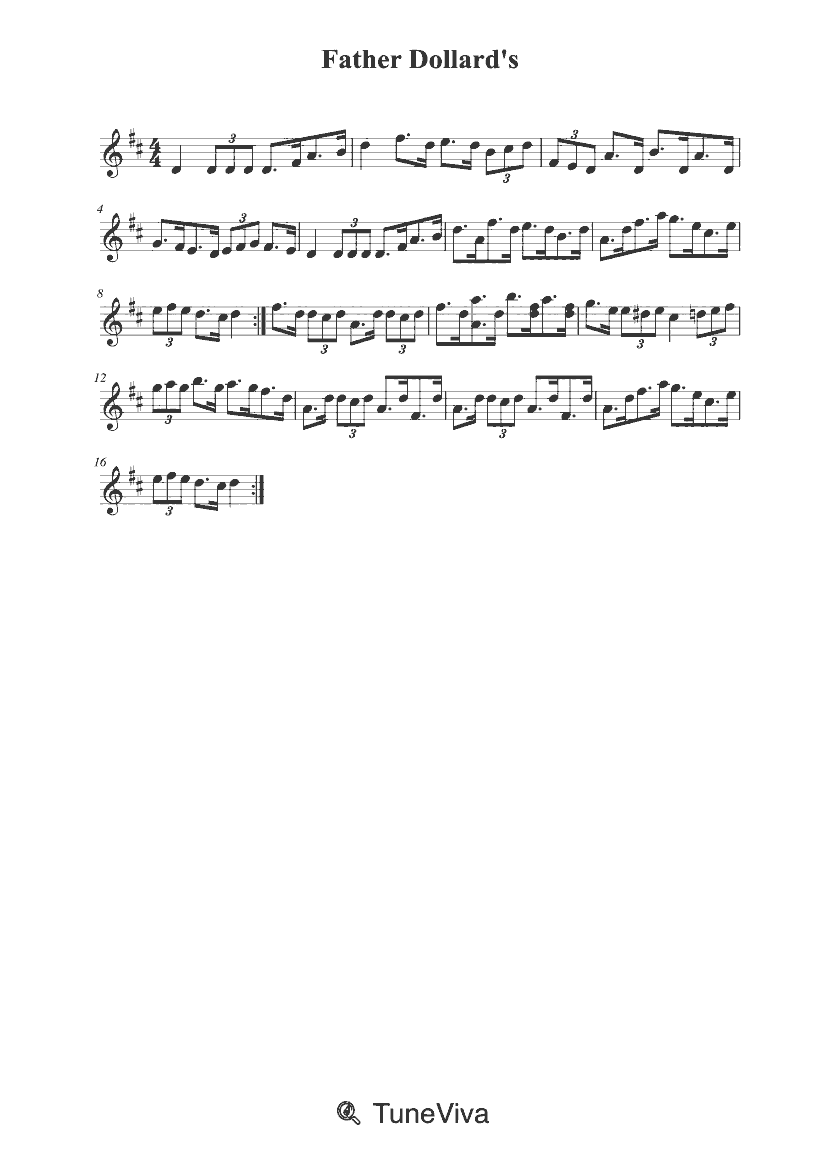
Misc tunes
1 min 17 sec · Score #114912
Open score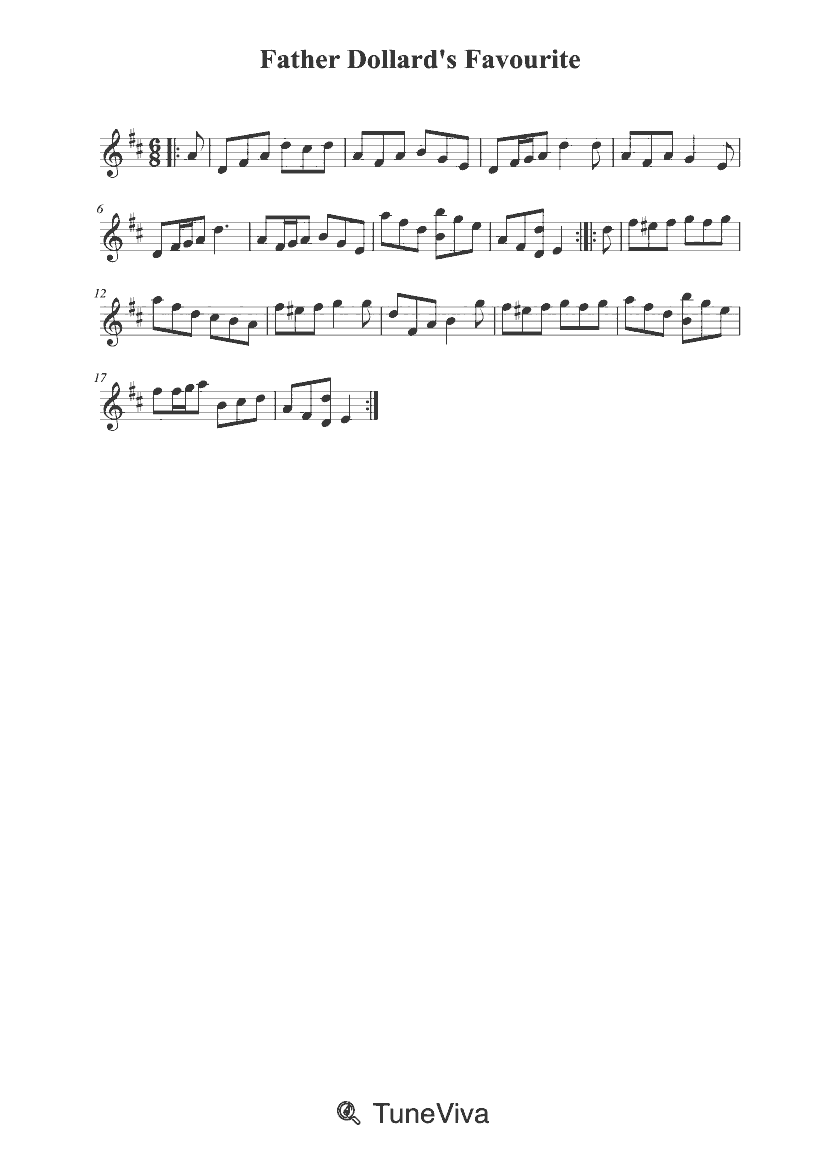
Misc tunes
24 sec · Score #122184
Open score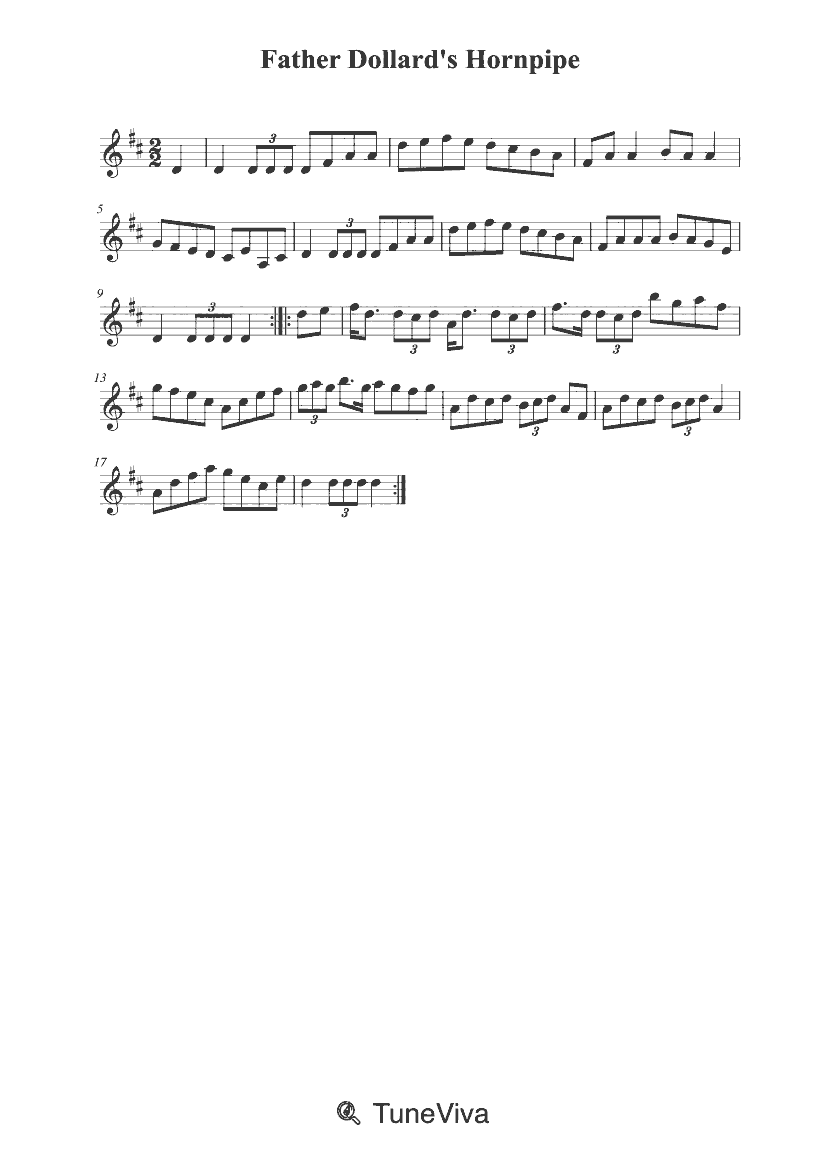
Misc tunes
2 min 8 sec · Score #124999
Open scorePage 1 of 2
The scores listed under Father Dollard's share an opening key signature of two sharps, given as D major. One score titled Father Dollard's is notated in 4/4, while two scores titled Father Dollard's Hornpipe are notated in 2/2. These details describe the opening notation of each score, not the whole piece, a performance tempo, or a definitive setting.
If you need a hornpipe-labelled setting, start with the scores titled Father Dollard's Hornpipe, both of which open in 2/2. If you want the setting that carries only the tune name, the score titled Father Dollard's is in 4/4. All three open in D major, so the title and time signature are the clearest ways to distinguish the available versions.
The available records do not name a composer, give a historical origin, or specify instrumentation. One score credits the music to anon., but that is not evidence of a confirmed author. The three titles cannot be assumed to be identical settings or to represent a single authoritative version.
Catalogue duration 1 min 17 sec. Opening key signature: 2 sharps (D major). Opening time signature: 4/4.
Catalogue duration 2 min 8 sec. Opening key signature: 2 sharps (D major). Opening time signature: 2/2.
Catalogue duration 2 min 8 sec. Opening key signature: 2 sharps (D major). Opening time signature: 2/2.
Father Dollard's is a tune title represented by scores titled Father Dollard's and Father Dollard's Hornpipe. The available versions open in D major, with one notated in 4/4 and two in 2/2. The records do not give a composer or a verified historical origin.
Two available scores are explicitly titled Father Dollard's Hornpipe, so the tune is presented as a hornpipe in those versions. A third score is titled simply Father Dollard's and is not labelled as a hornpipe. The title evidence alone does not establish that every version is a hornpipe.
All three available Father Dollard's scores open with a key signature of two sharps, given as D major. That describes the opening notation; it does not show whether any version changes key later.
Father Dollard's appears in two meters across the available scores: the version titled Father Dollard's is in 4/4, while the two titled Father Dollard's Hornpipe are in 2/2. The time signature describes how the music is notated, not a verified tempo.
No composer is identified for Father Dollard's in the available score records; one score credits the music to anon. The title alone does not establish an author, so a named composer should not be assumed without further evidence.
Choose the score whose title and notation match what you need: Father Dollard's is notated in 4/4, while the Father Dollard's Hornpipe versions are notated in 2/2. All three open in D major. The available information does not identify which is the earliest or most authoritative setting.