
John Playford - Gathering Peascods
John Playford
1 min 23 sec
Open scoreGathering Peascods sheet music appears here in several notated versions. The scores differ at the outset: two open in G major with a 2/2 time signature, while one opens in A major in 4/4. One score carries a John Playford 1651 attribution; that attribution is not independently confirmed, so check the score itself before relying on it.
Scores 1–20 of 24
John Playford
1 min 23 sec
Open score
Misc tunes
1 min 20 sec · Score #203823
Open score
Misc tunes
Erwtjes plukken
2 min 39 sec
Open score
Trad.
2 min 14 sec
Open score
Misc tunes
2 min 40 sec · Score #92848
Open score
Misc tunes
1 min 20 sec · Score #221529
Open score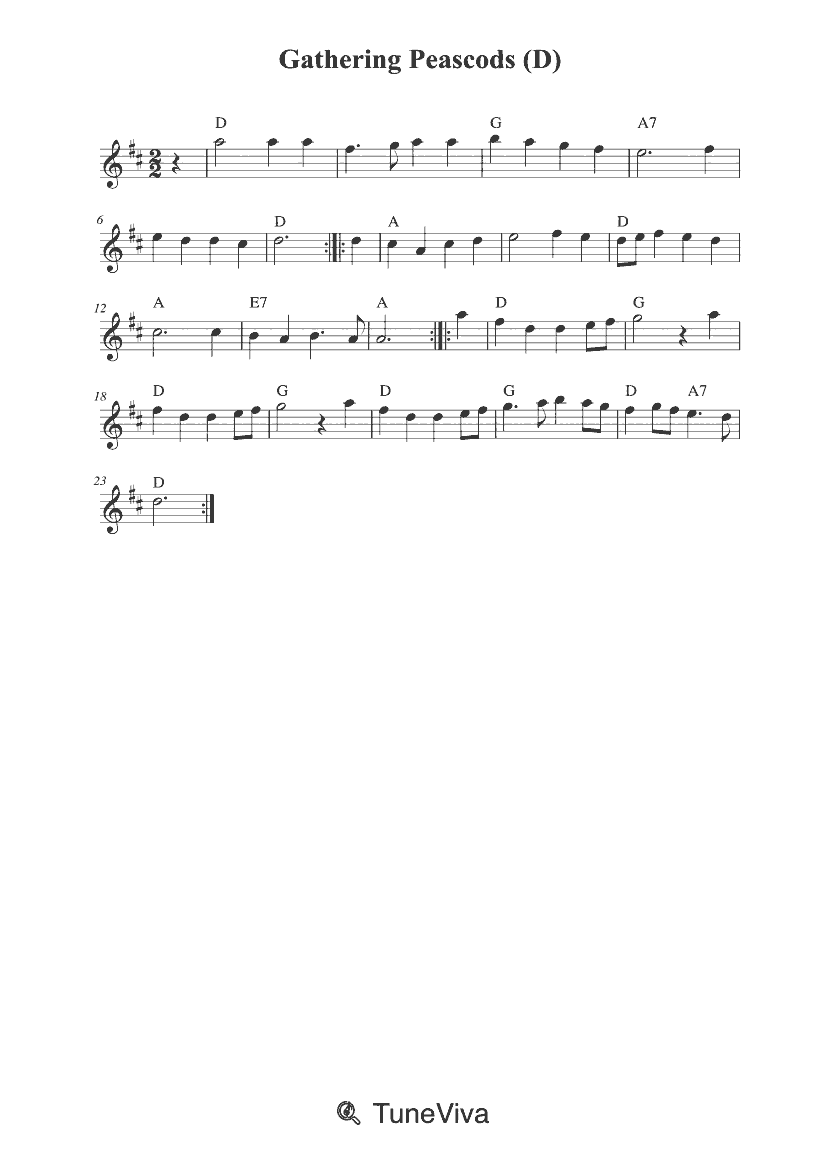
Misc tunes
2 min 40 sec
Open score
Trad.
1 min 25 sec
Open score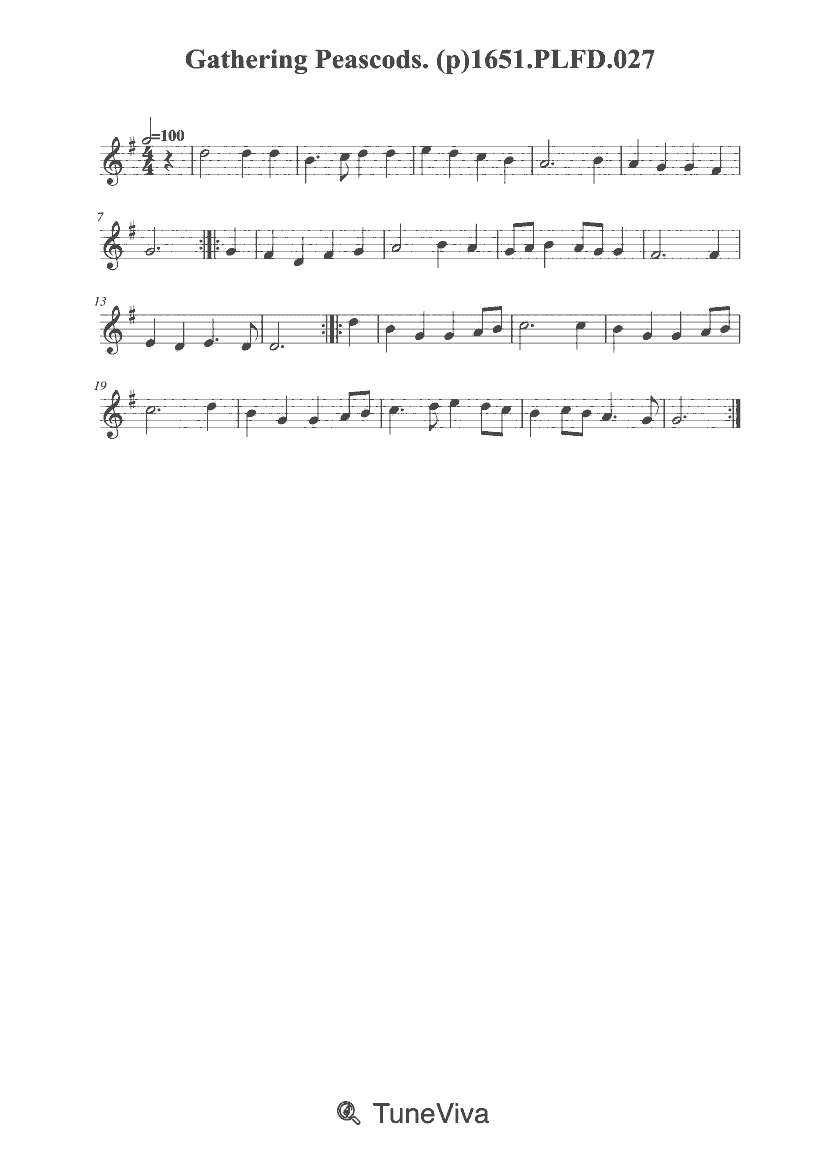
Misc tunes
48 sec
Open score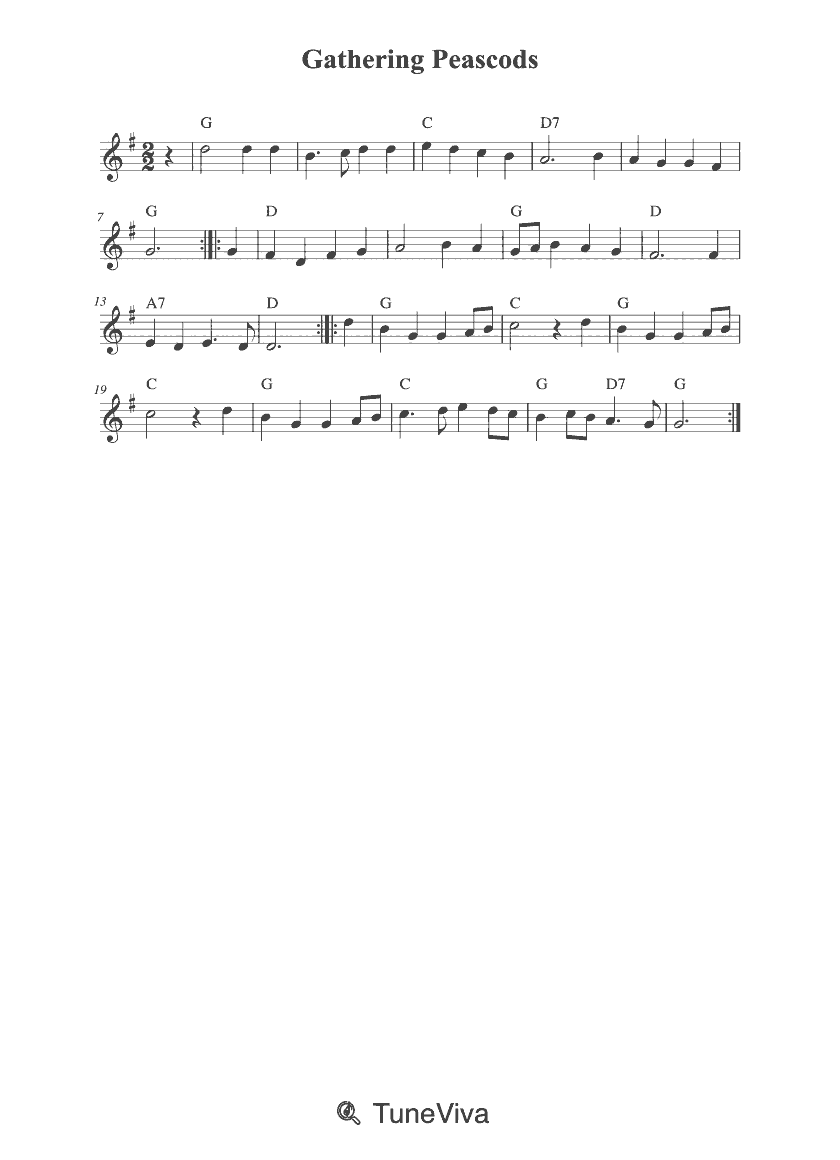
Misc tunes
2 min 40 sec · Score #46776
Open score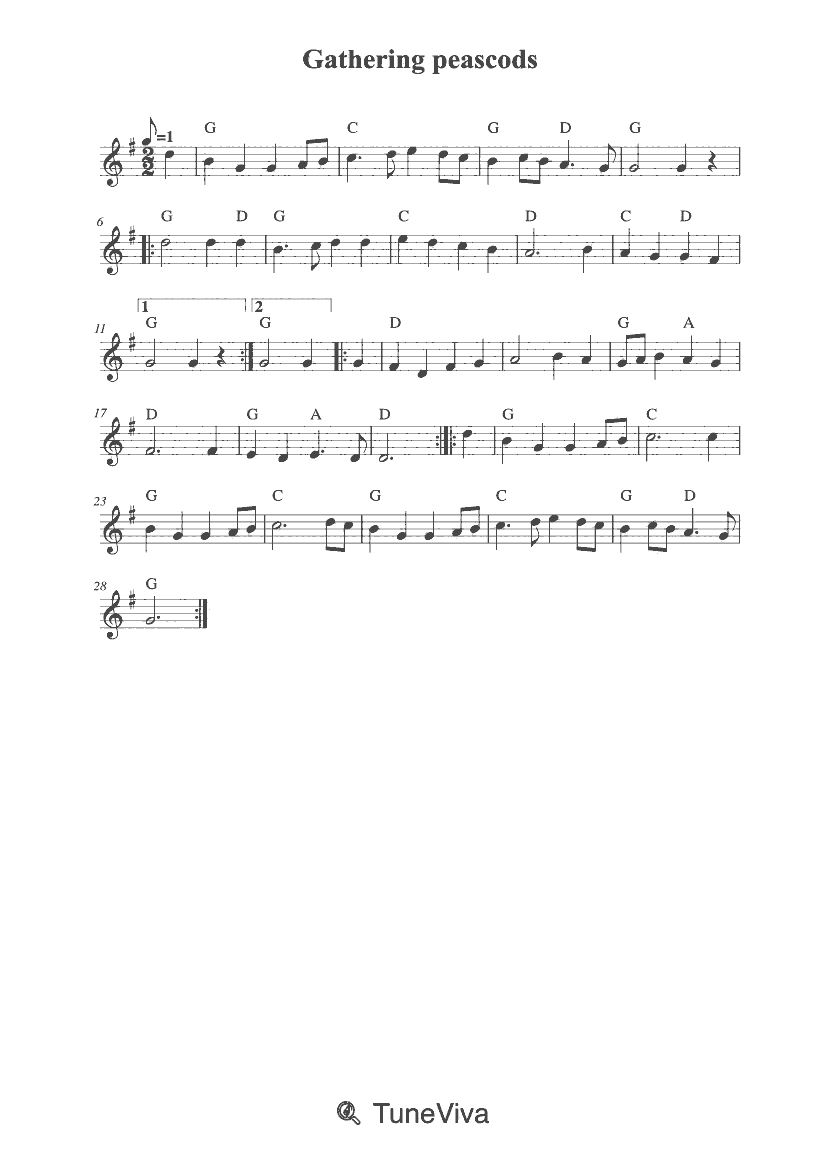
Misc tunes
1 hr 10 min 24 sec
Open score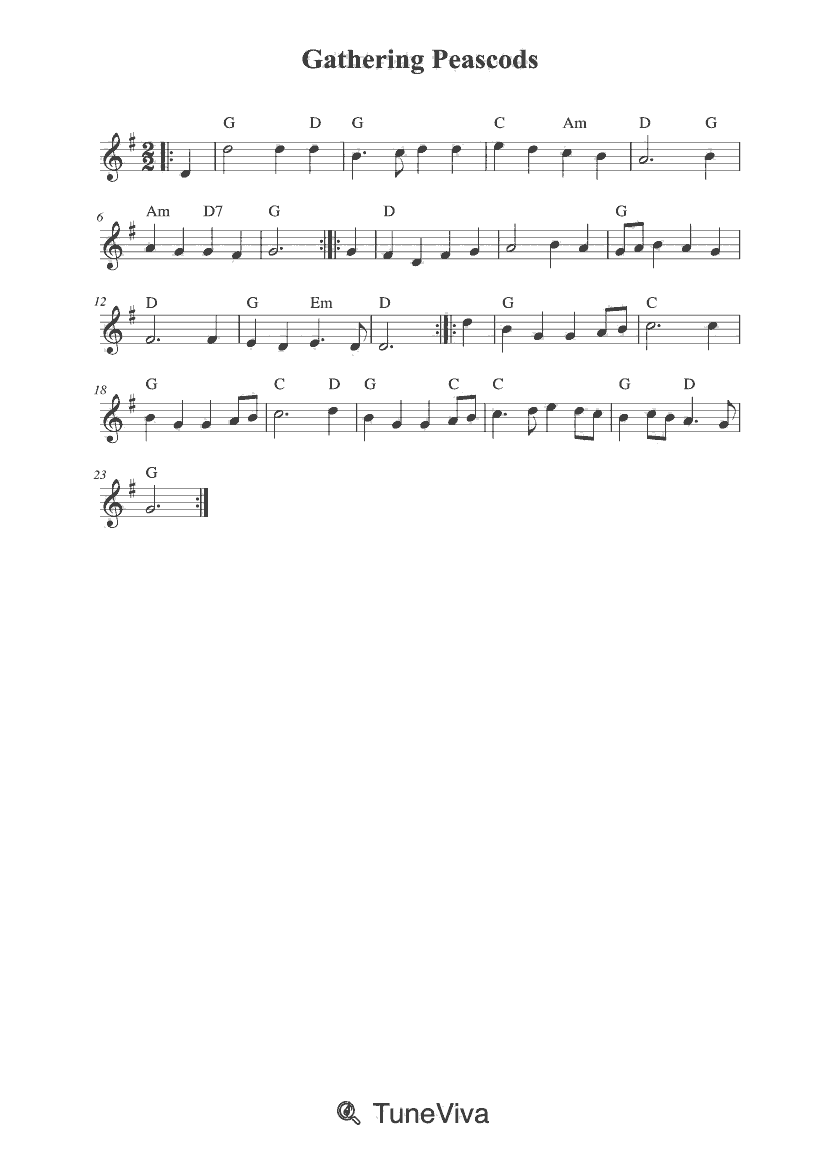
Misc tunes
2 min 40 sec · Score #126407
Open score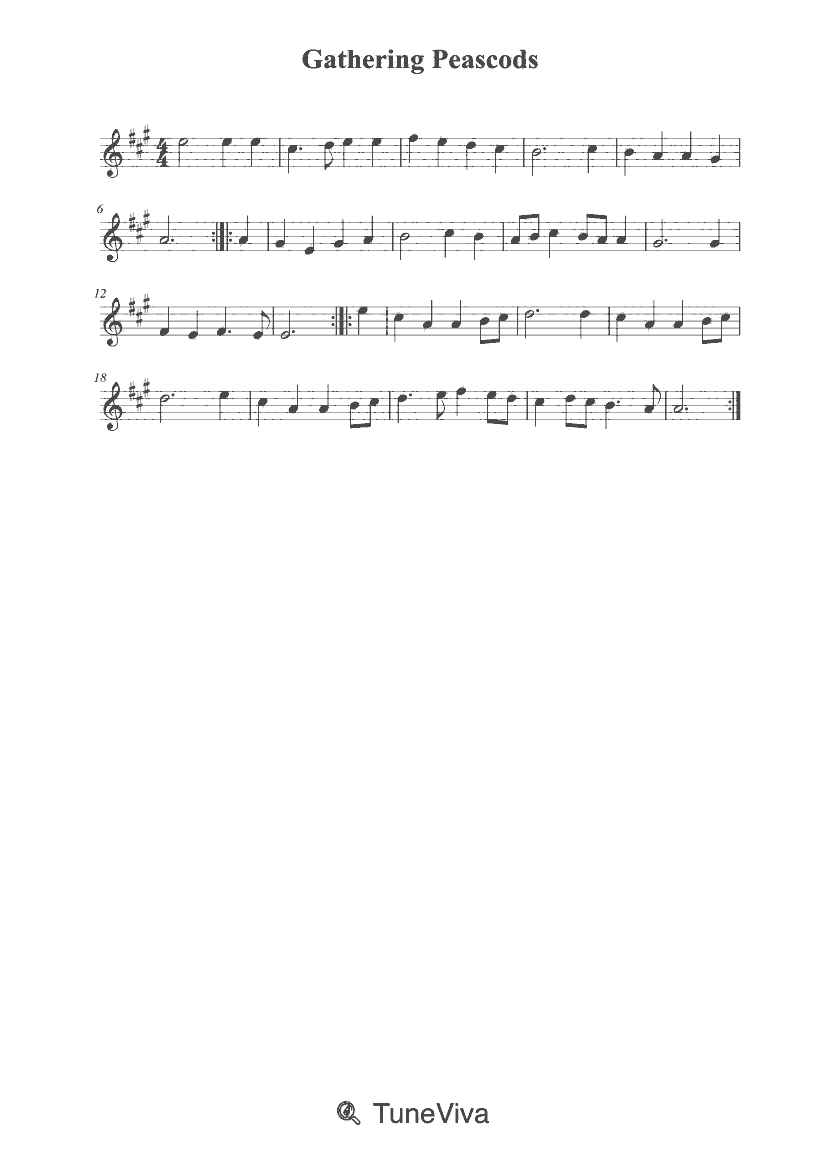
Misc tunes
1 min 19 sec
Open score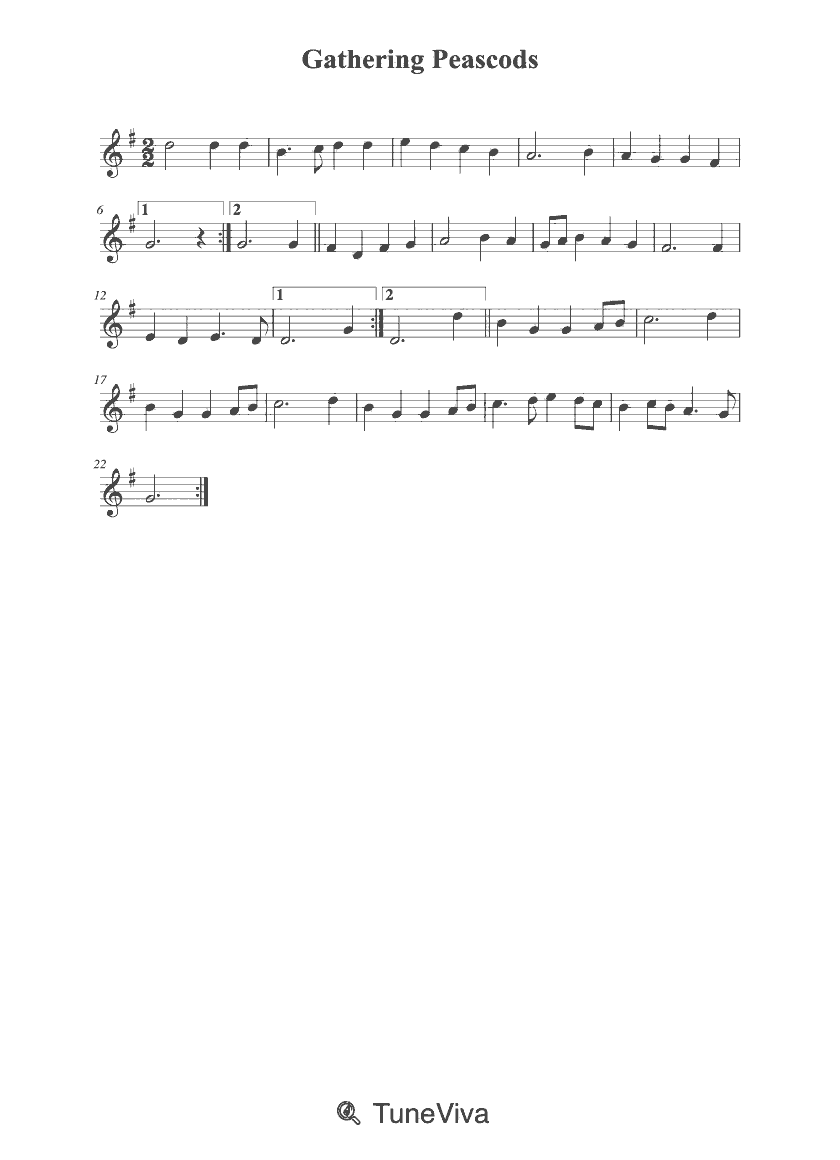
Misc tunes
3 min 26 sec
Open score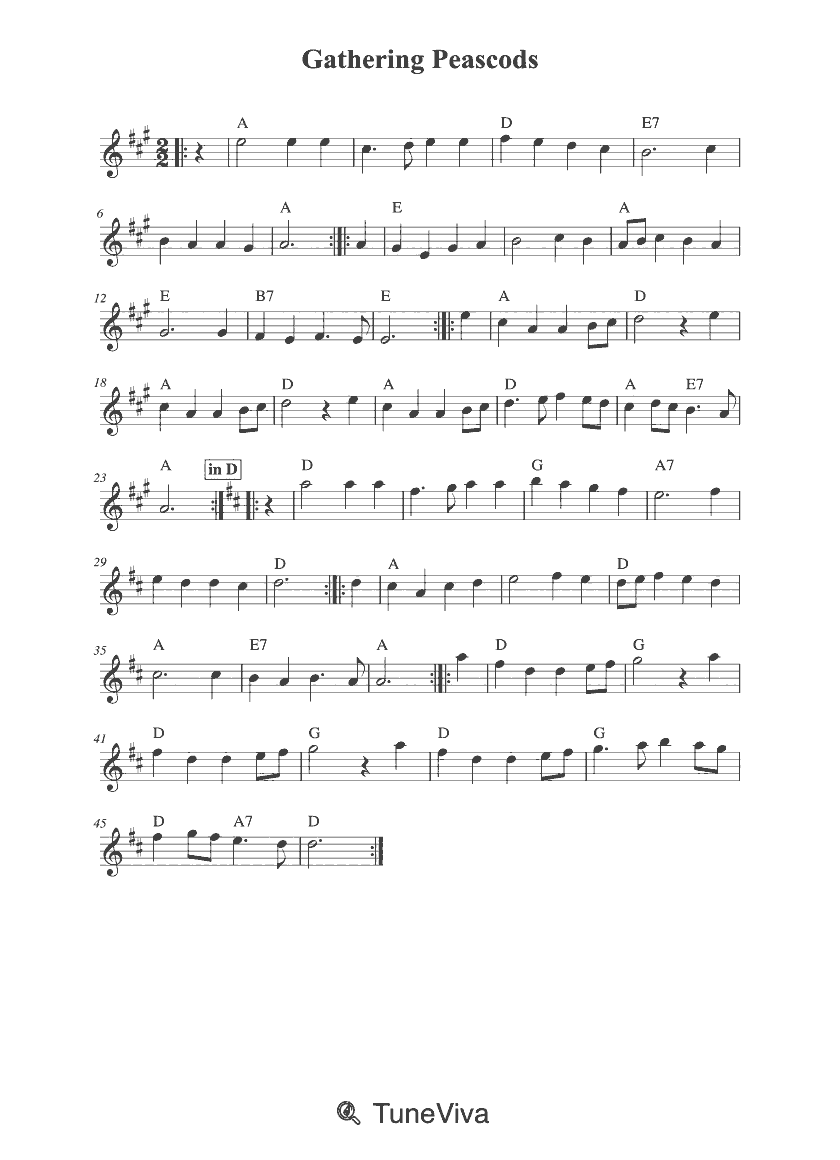
Misc tunes
5 min 20 sec
Open score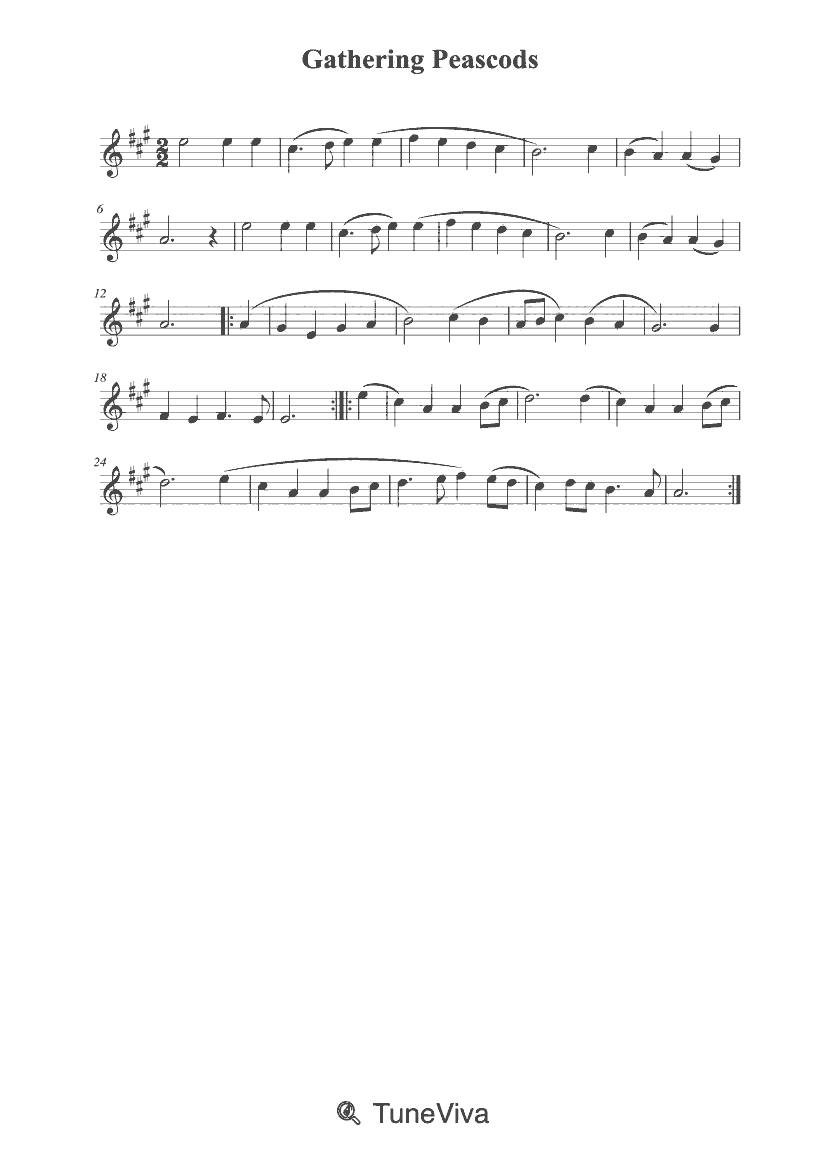
Misc tunes
2 min 39 sec
Open score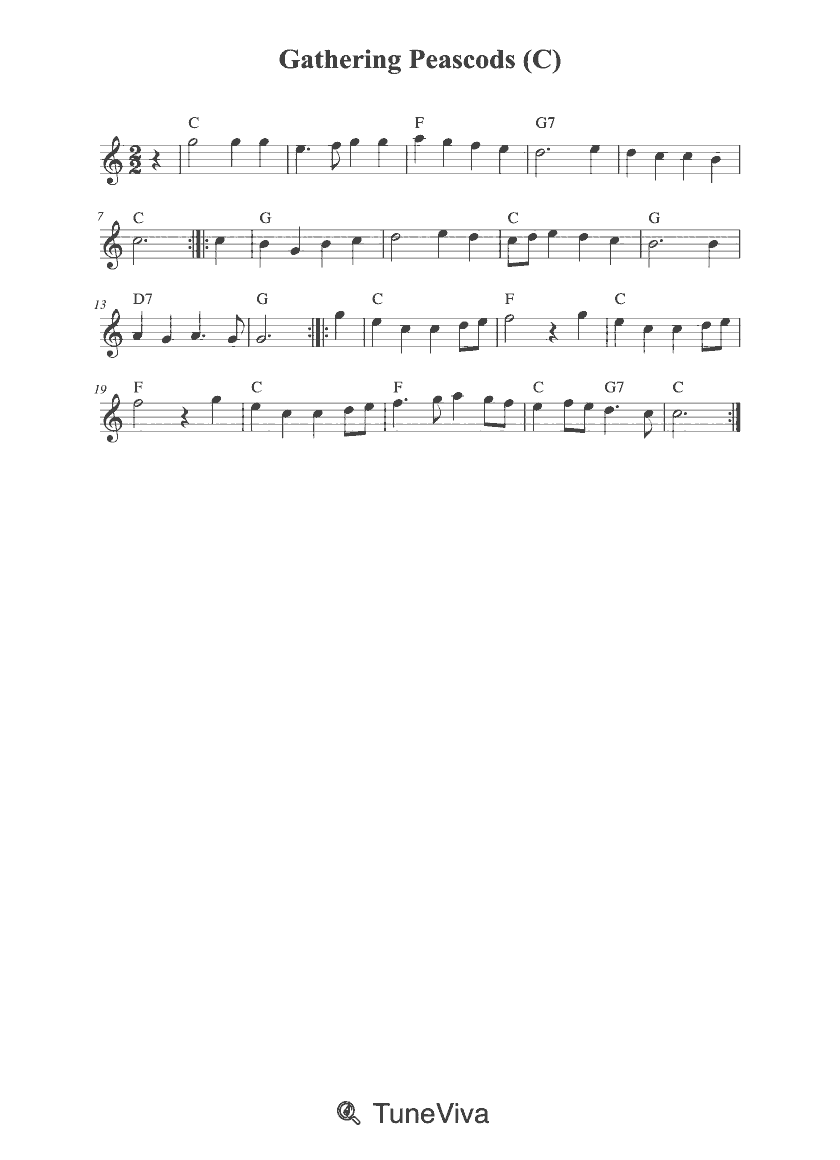
Misc tunes
2 min 40 sec
Open score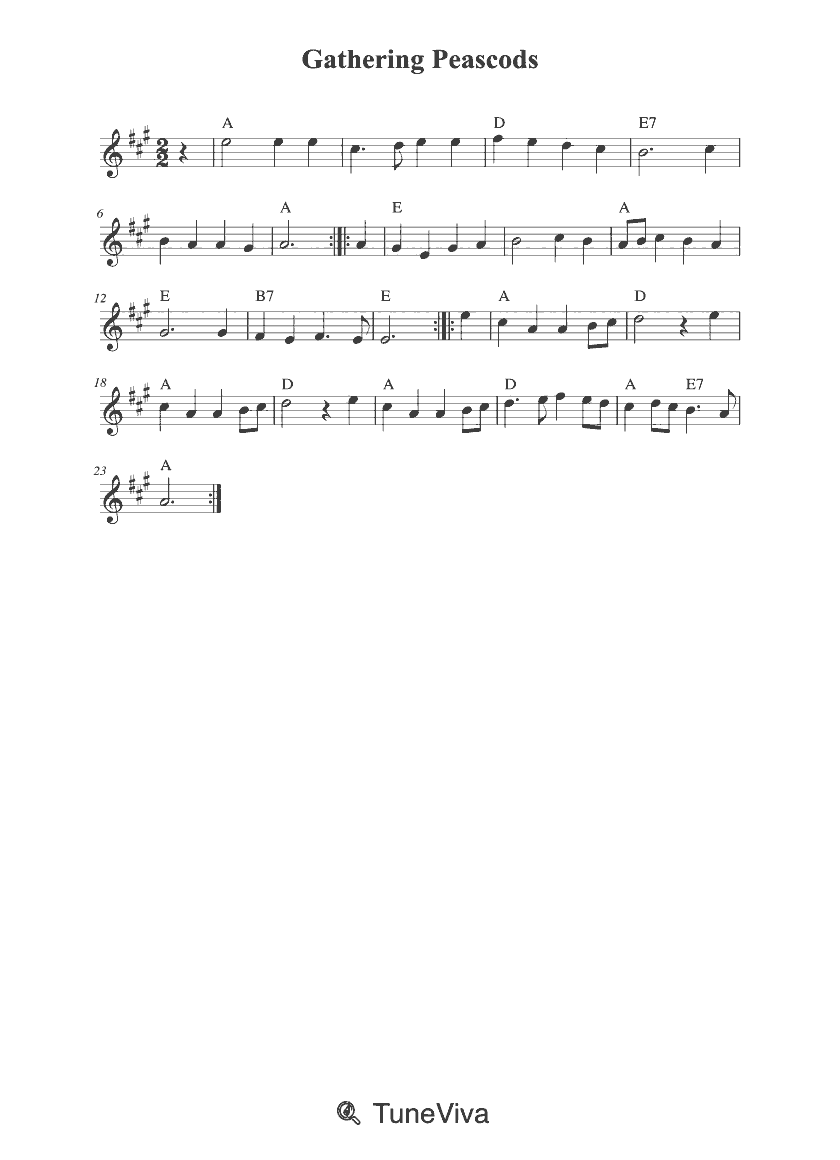
Misc tunes
2 min 40 sec · Score #191295
Open score
Trad.
1 min 23 sec
Open score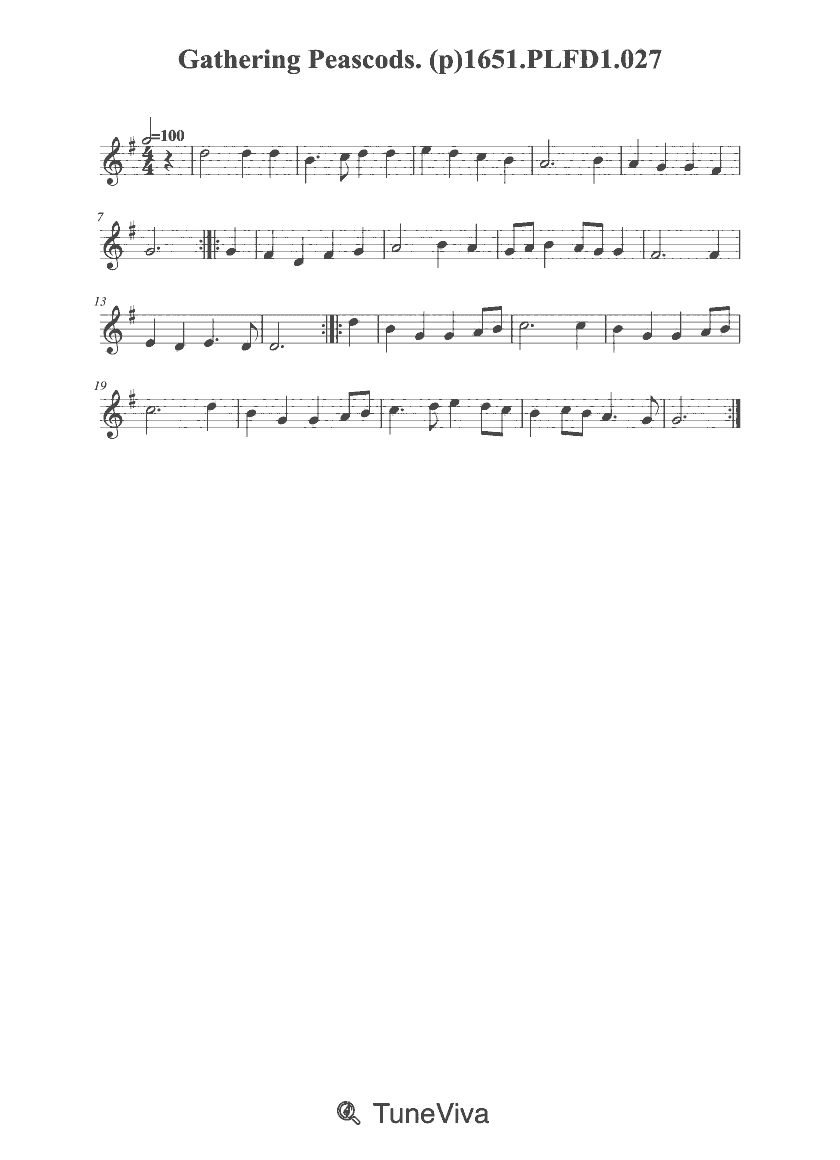
Misc tunes
48 sec
Open scorePage 1 of 2
The scores titled Gathering Peascods are not all in the same notation. Two open in G major with a 2/2 signature; one opens in A major with a 4/4 signature. One score also gives an opening tempo of 232 BPM. These details describe individual scores, not a definitive original version.
One score is titled with John Playford and gives the date 1651. That is the only composer attribution in the selected material, but it has not been independently verified. Treat it as a lead to check, not as settled history.
Use the opening key and time signature to narrow the choices. If you need G major and 2/2, two scores match; if you need A major and 4/4, the third does. Before playing, inspect the score for instrumentation and layout, since those details are not established by the title alone.
The available details cover opening key, time signature and, on one score, tempo. They do not show the full course of the music. Read through the score to see whether the key or meter changes, and do not assume the opening marking applies unchanged throughout.
Catalogue duration 1 min 23 sec. Opening key signature: 1 sharp (G major). Opening time signature: 2/2. Opening tempo: 232 BPM.
Catalogue duration 1 min 20 sec. Opening key signature: 3 sharps (A major). Opening time signature: 4/4.
Catalogue duration 2 min 39 sec. Opening key signature: 1 sharp (G major). Opening time signature: 2/2.
Two of the scores shown open in G major, and one opens in A major. These are opening key signatures only; the full scores may change key later.
Two versions open in 2/2 and one opens in 4/4. The difference affects how the opening bars are grouped on the page, so check which meter suits the notation you want to read.
One score is titled “John Playford - Gathering Peascods” and gives “John Playford 1651” as the composer. That attribution is unconfirmed by an independent source here, so it should not be treated as proof that Playford composed the tune or that this score dates from 1651.
The scores shown are not identical on their face: opening keys and time signatures differ, and one score includes an opening tempo of 232 BPM. That does not prove they are different arrangements rather than transpositions or reformattings, so compare the full notation before deciding.
Only one of the scores shown gives an opening tempo: 232 BPM. That figure belongs to that score and should not be treated as a required or historical tempo for every version of Gathering Peascods.
Choose by the notation you need: two scores open in G major and 2/2, while one opens in A major and 4/4. Check the score’s instrumentation and layout before playing, because those details are not established by the title or key alone.