
Give me your hand
Misc tunes
Tabhair dom do lamh
40 sec
Open scoreThree scores are listed under Give Me Your Hand, and all three open with a one-sharp key signature in G major. The versions differ in metre: one is notated in 3/4 and two in 6/8. One listing carries a composer credit for 'Ruainn Rory Dall O Cathain (?-1653)', while the others leave the composer blank; the attribution and the relationship between the settings are worth checking against the notation itself.
Scores 1–20 of 21
Misc tunes
Tabhair dom do lamh
40 sec
Open score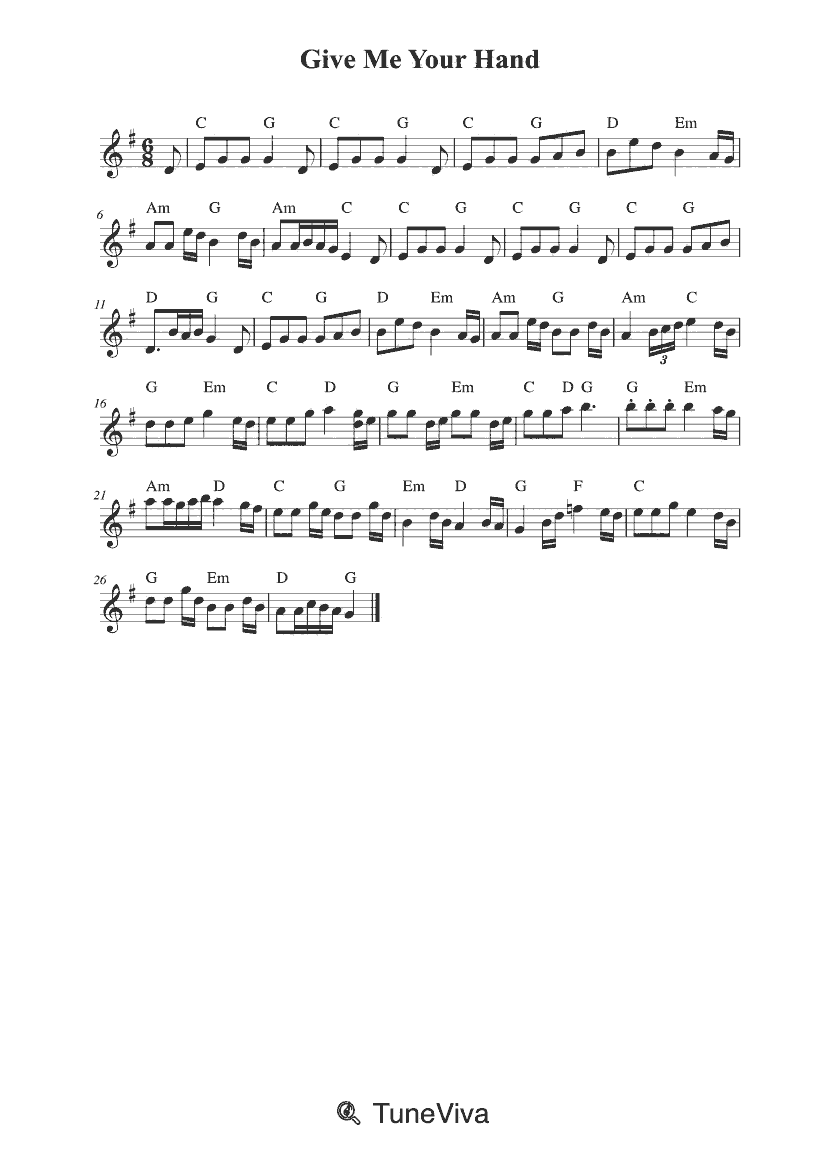
Ruainn Rory Dall O Cathain (?-1653)
Tabhair Dom Do Lamh
19 sec
Open score
Misc tunes
Tabhair Do'm Do LámhWhite Orange And Green
1 min 25 sec · Score #21444
Open score
Misc tunes
Tabhair dham do lámh
24 sec
Open score
Misc tunes
1 min 18 sec
Open score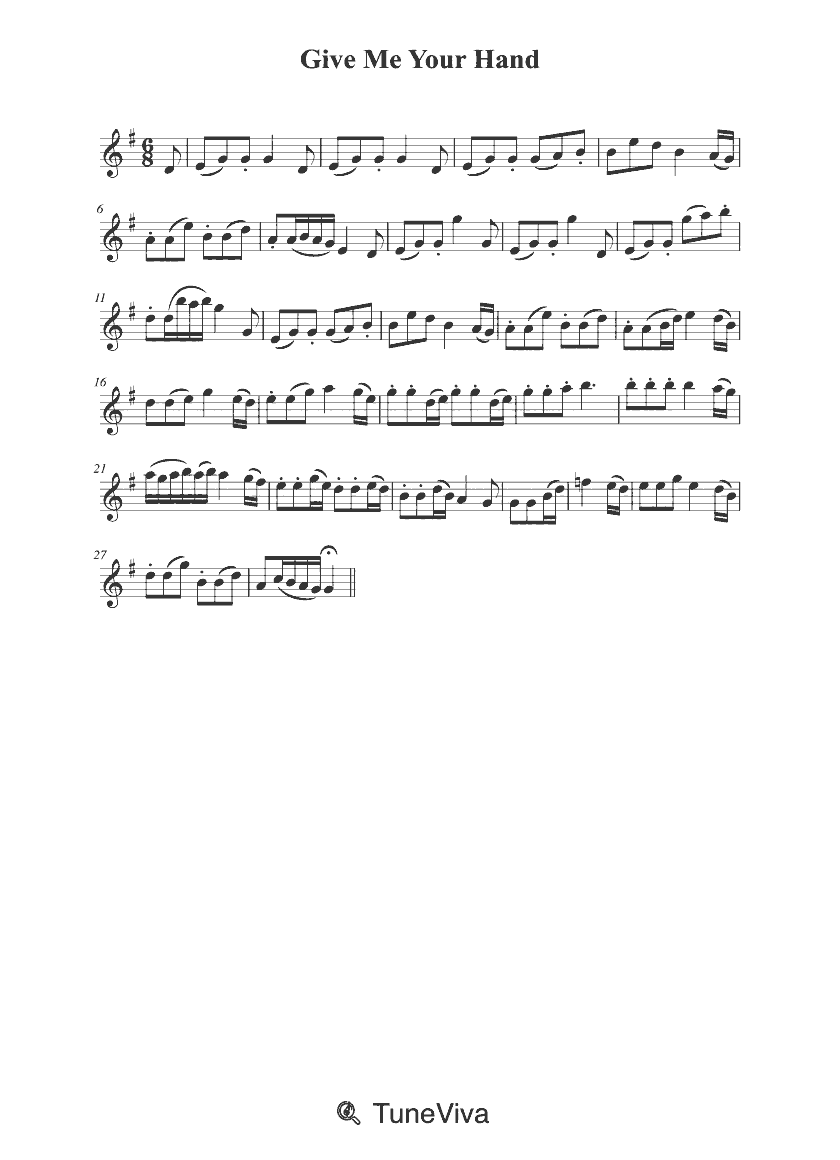
Misc tunes
19 sec · Score #54402
Open score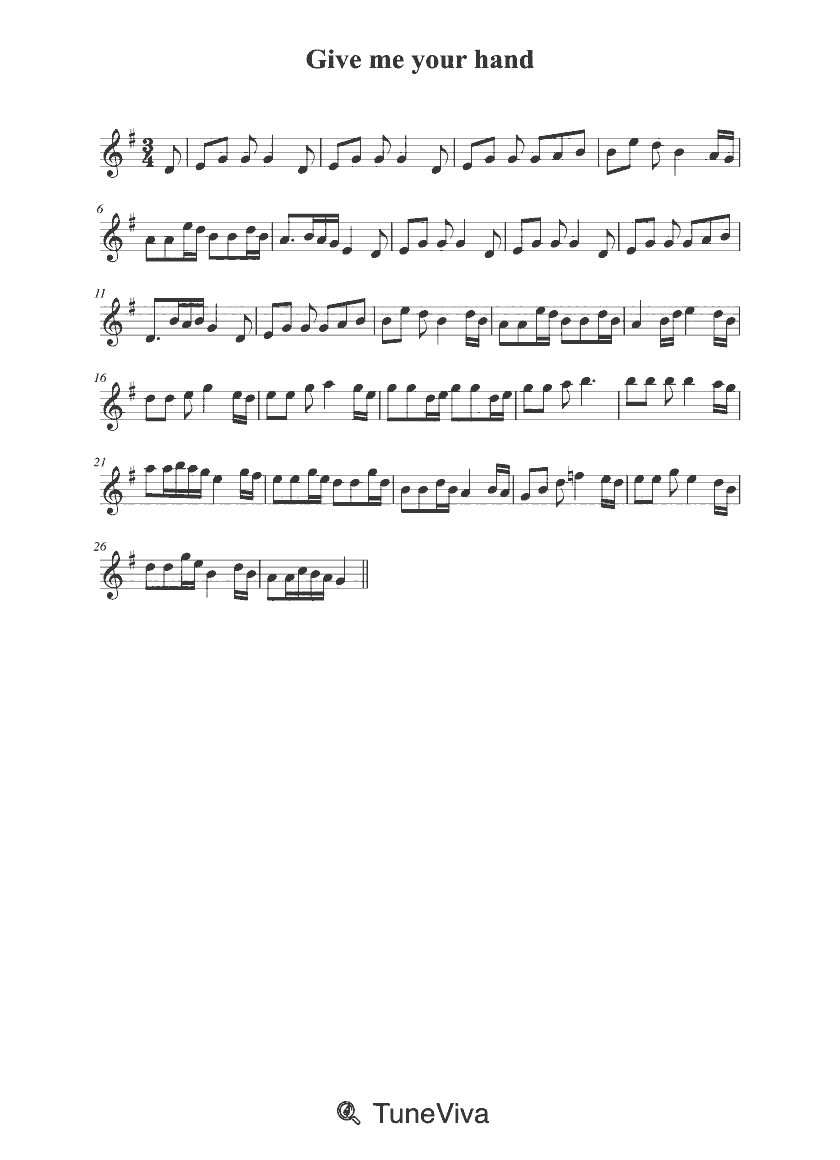
Ruari Dall O'Cathain
39 sec · Score #179369
Open score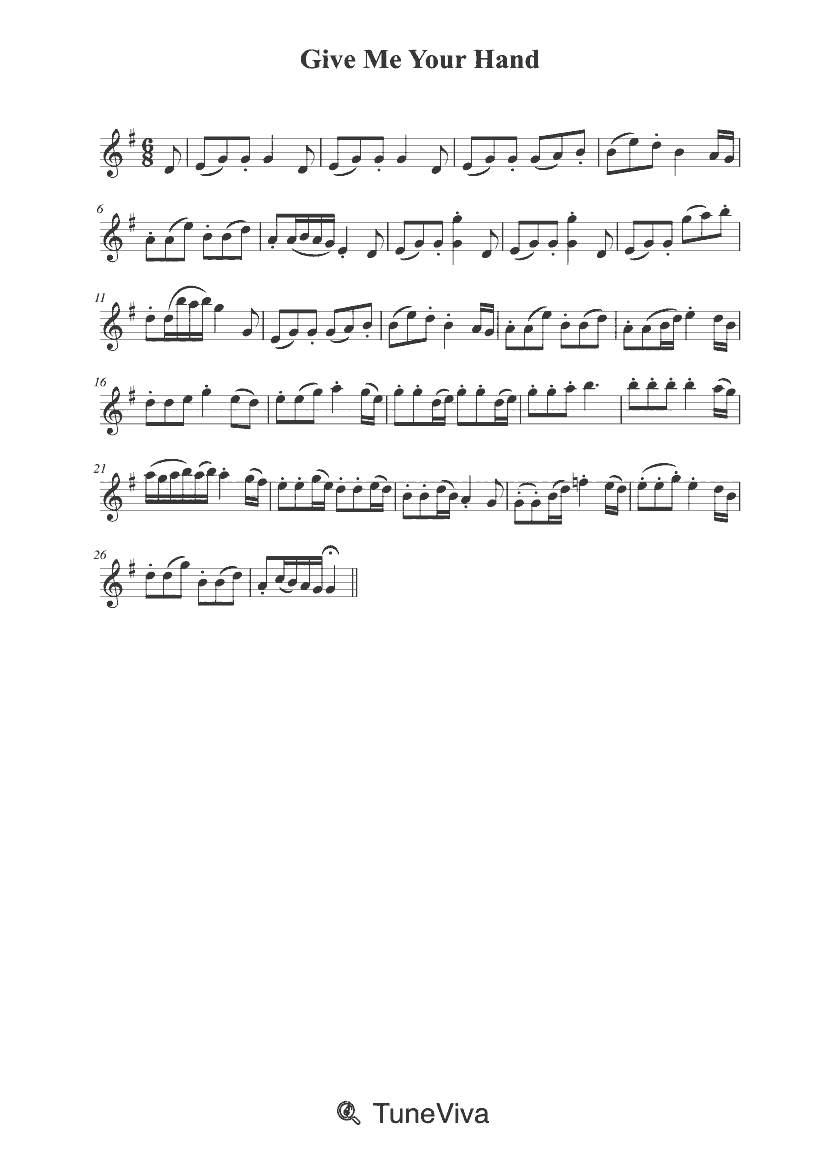
Rory Dall OCaghan about 1603
20 sec
Open score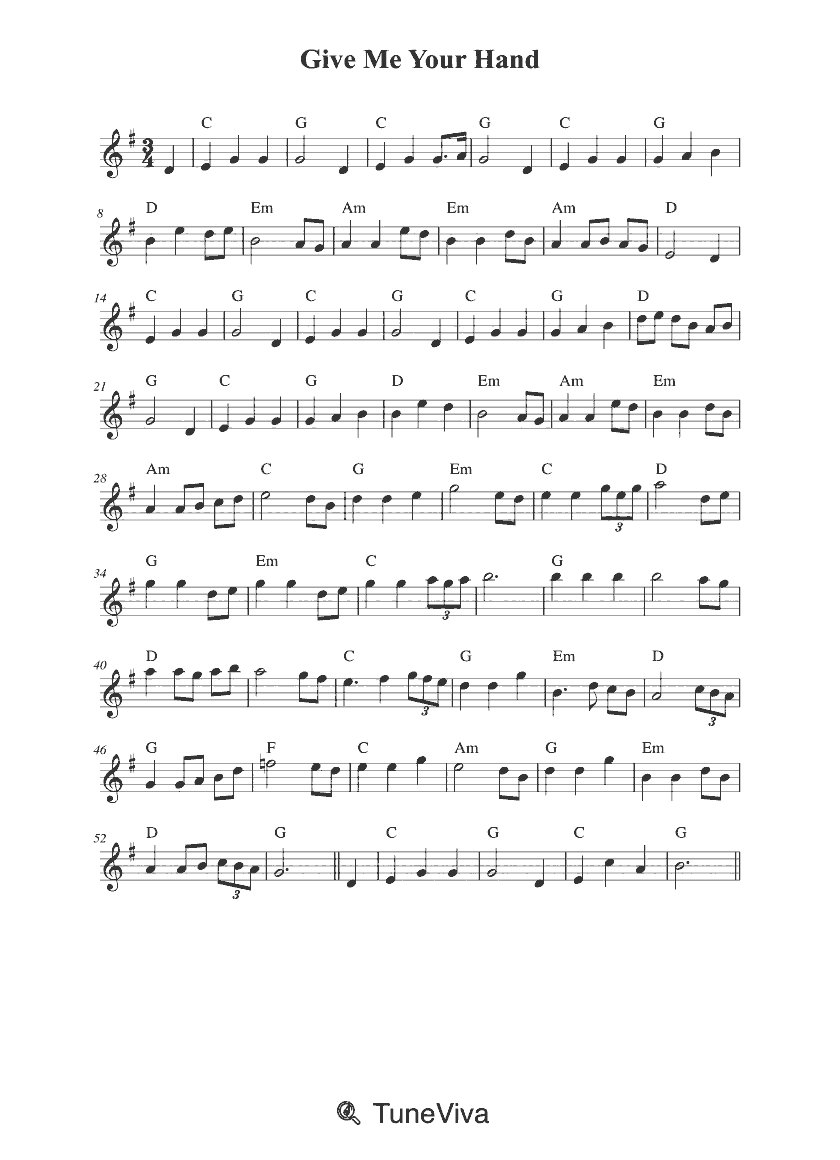
Misc tunes
Tabhair Do'm Do LámhWhite Orange And Green
1 min 25 sec · Score #185575
Open score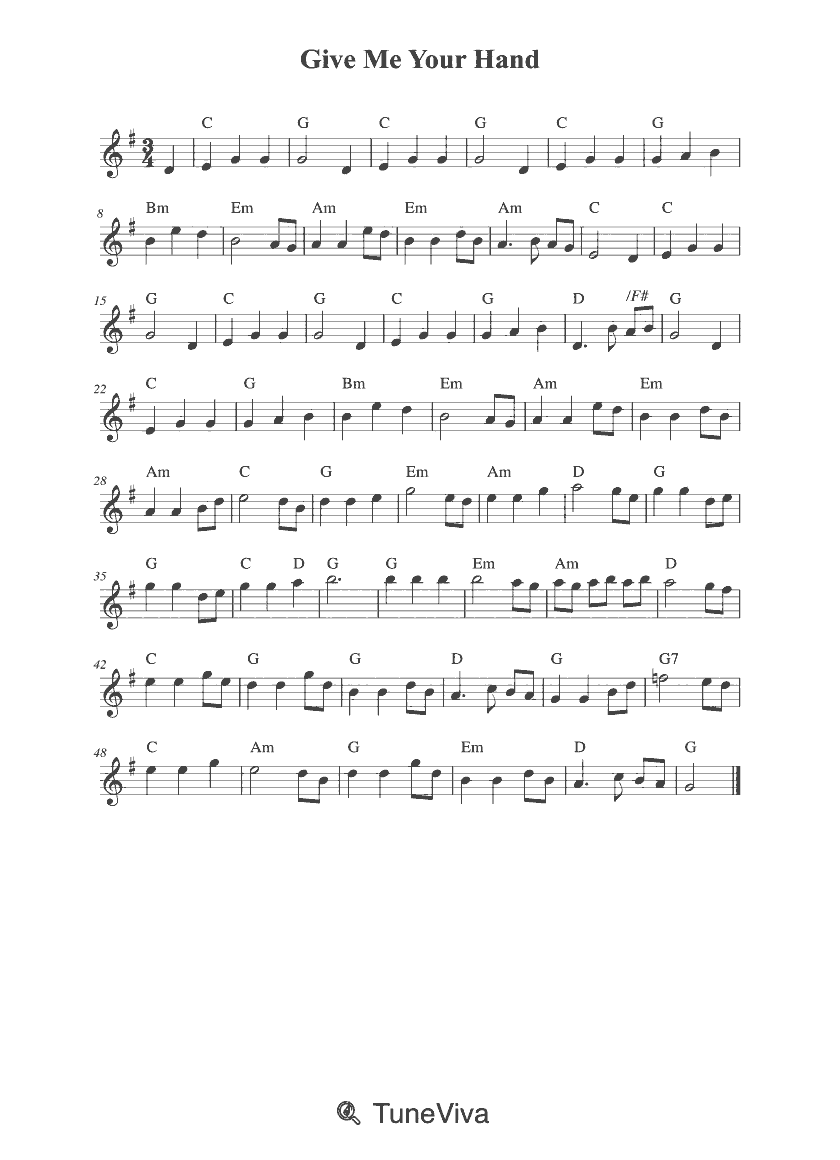
Misc tunes
1 min 18 sec · Score #26269
Open score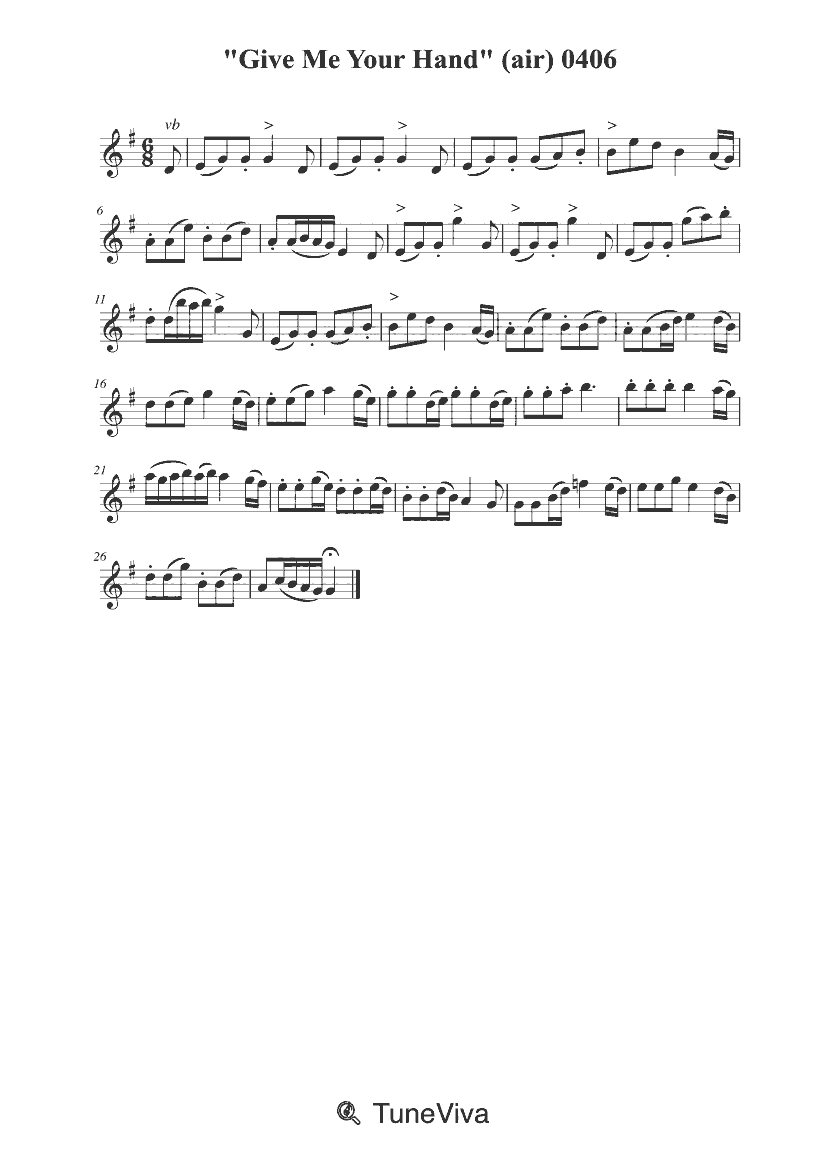
after Chief F. O'Neillboldly
19 sec
Open score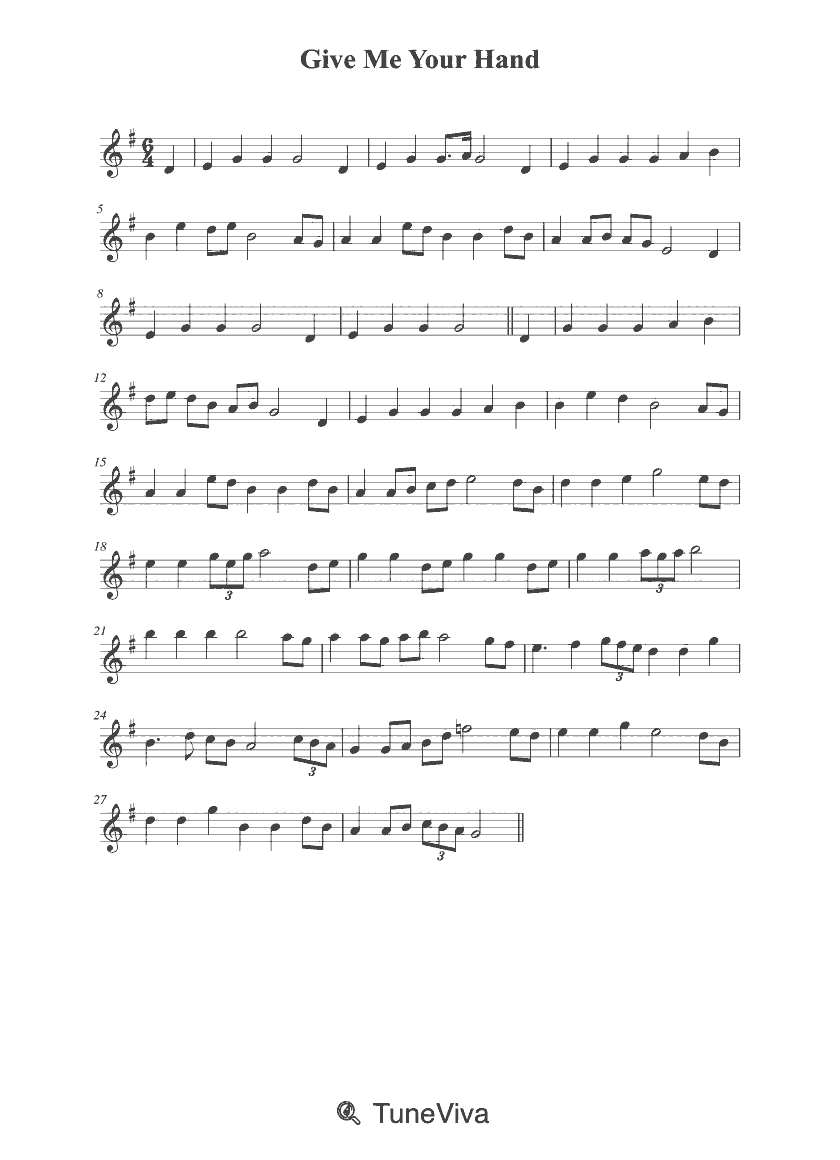
Misc tunes
1 min 17 sec · Score #109668
Open score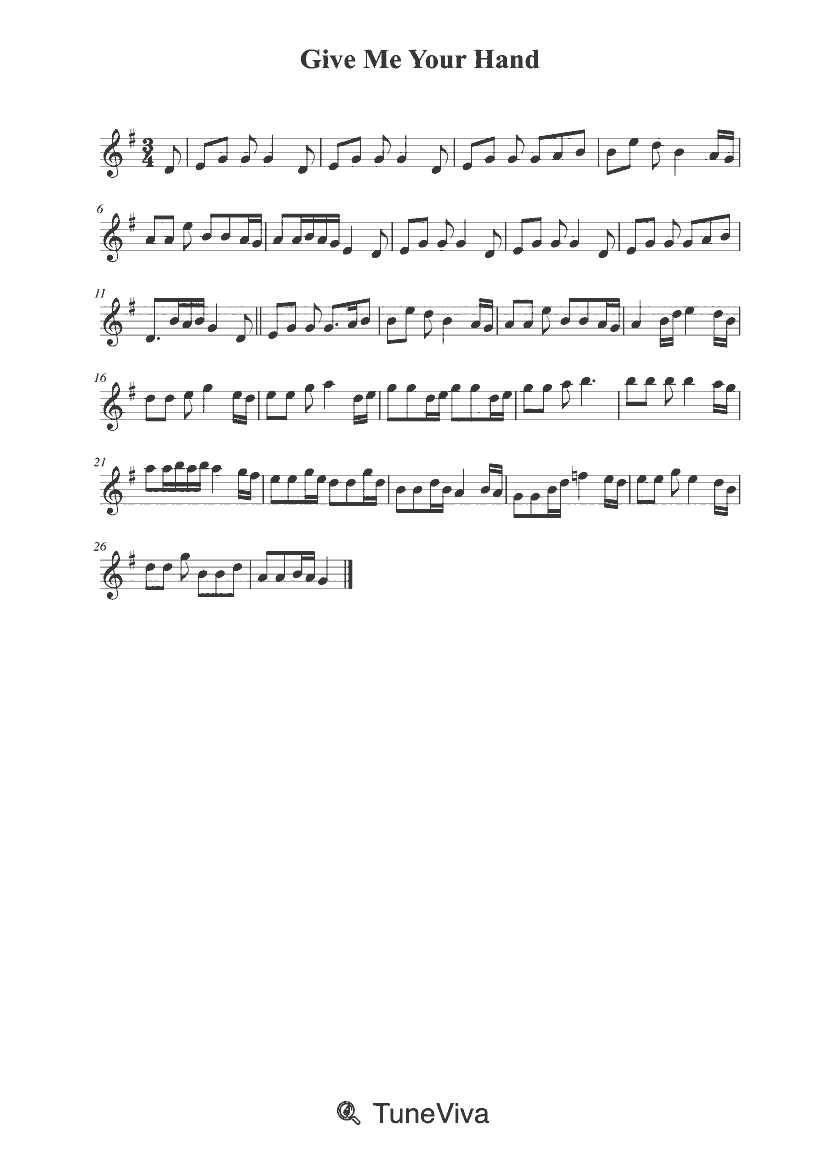
Ruari Dall O'Cathain
39 sec · Score #143545
Open score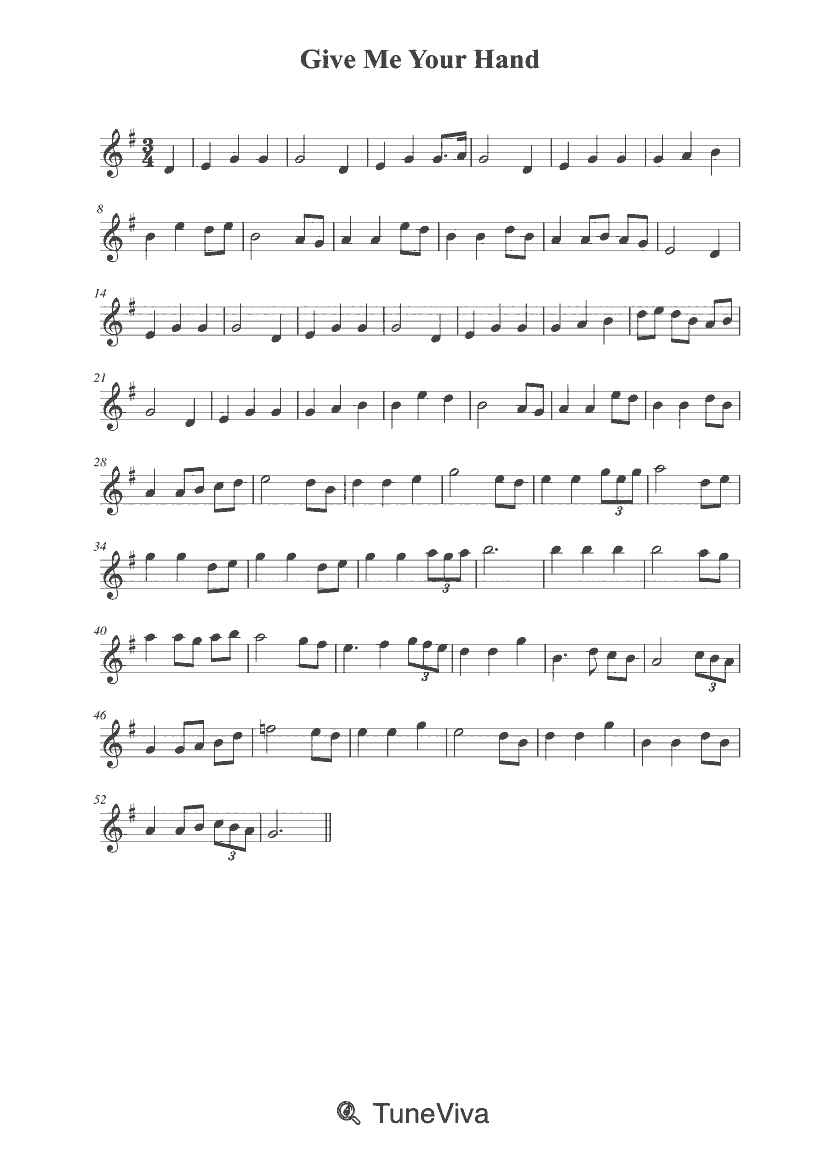
Misc tunes
1 min 19 sec
Open score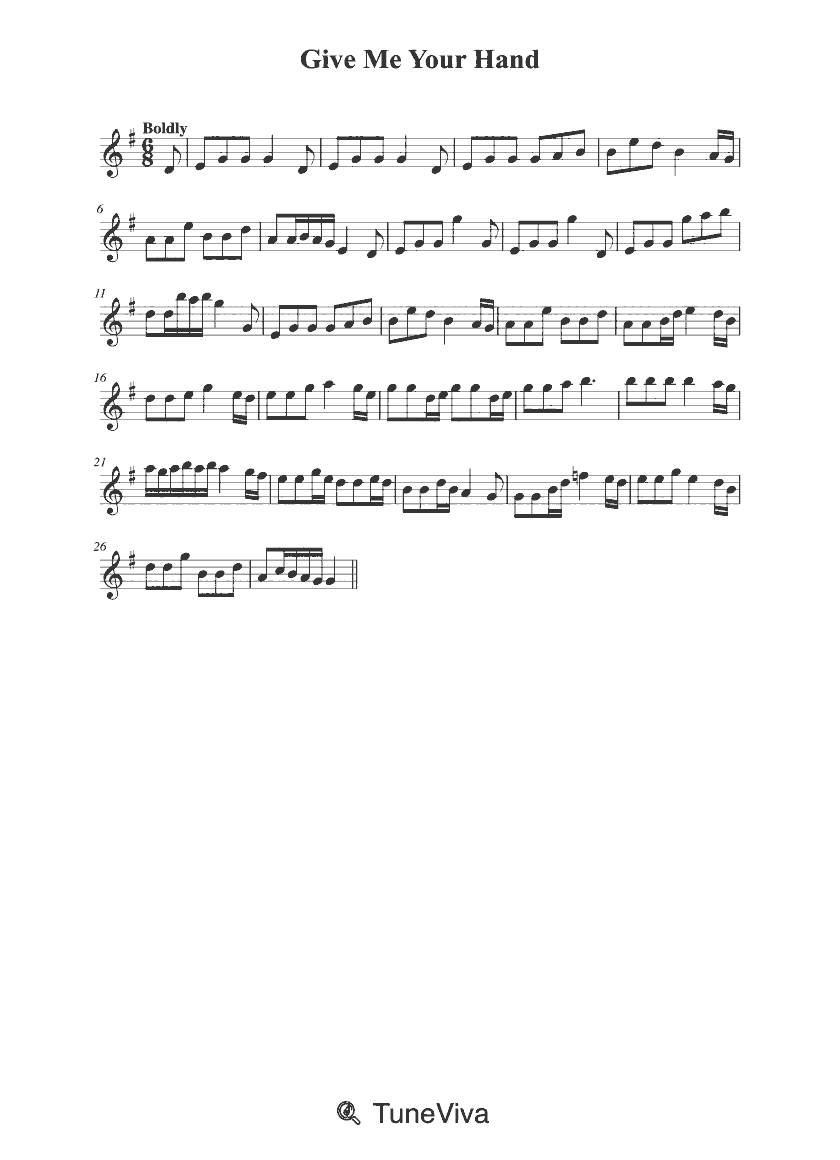
Misc tunes
19 sec · Score #49793
Open score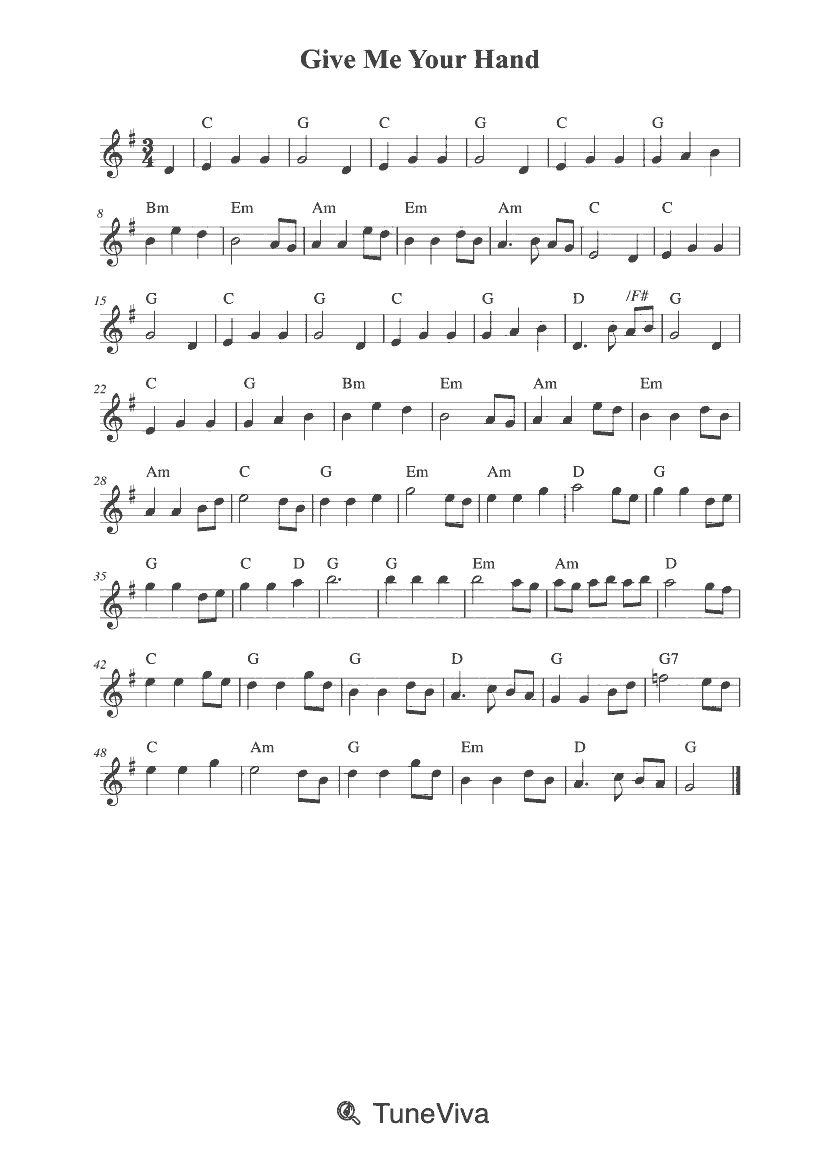
Misc tunes
1 min 18 sec · Score #33787
Open score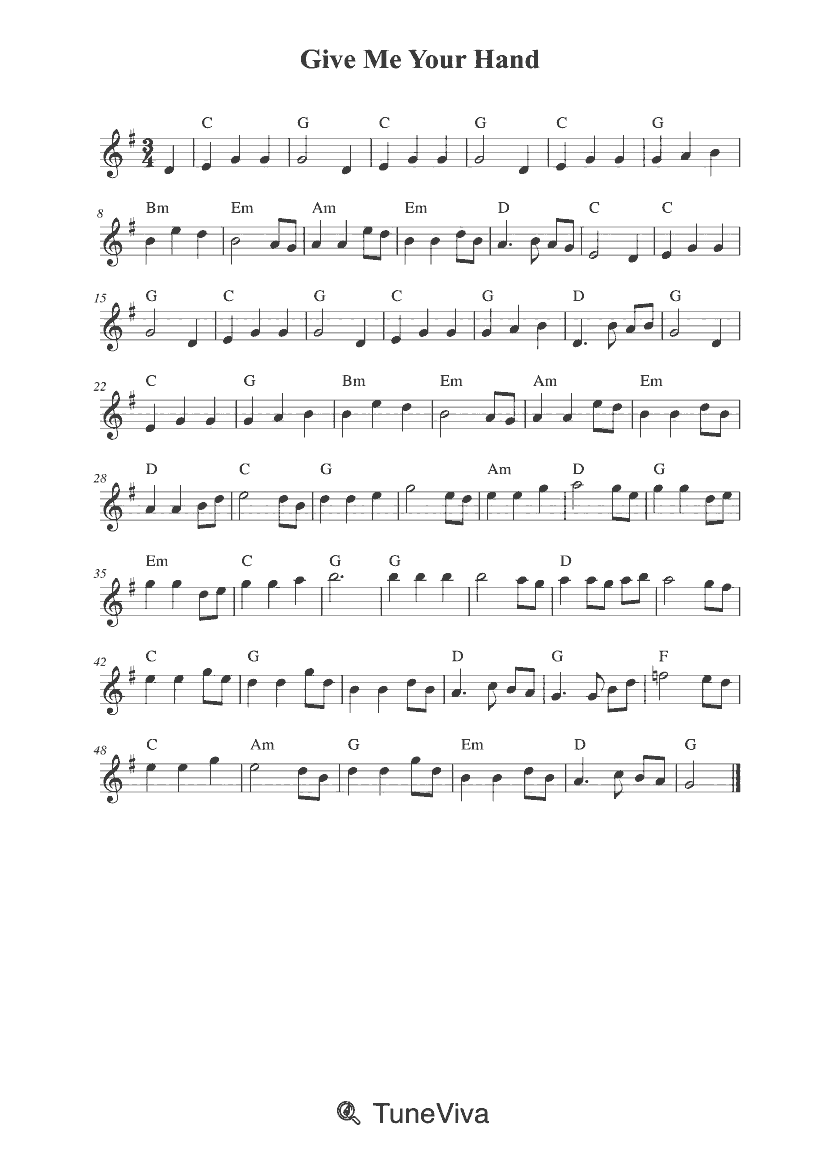
Misc tunes
1 min 18 sec · Score #87403
Open score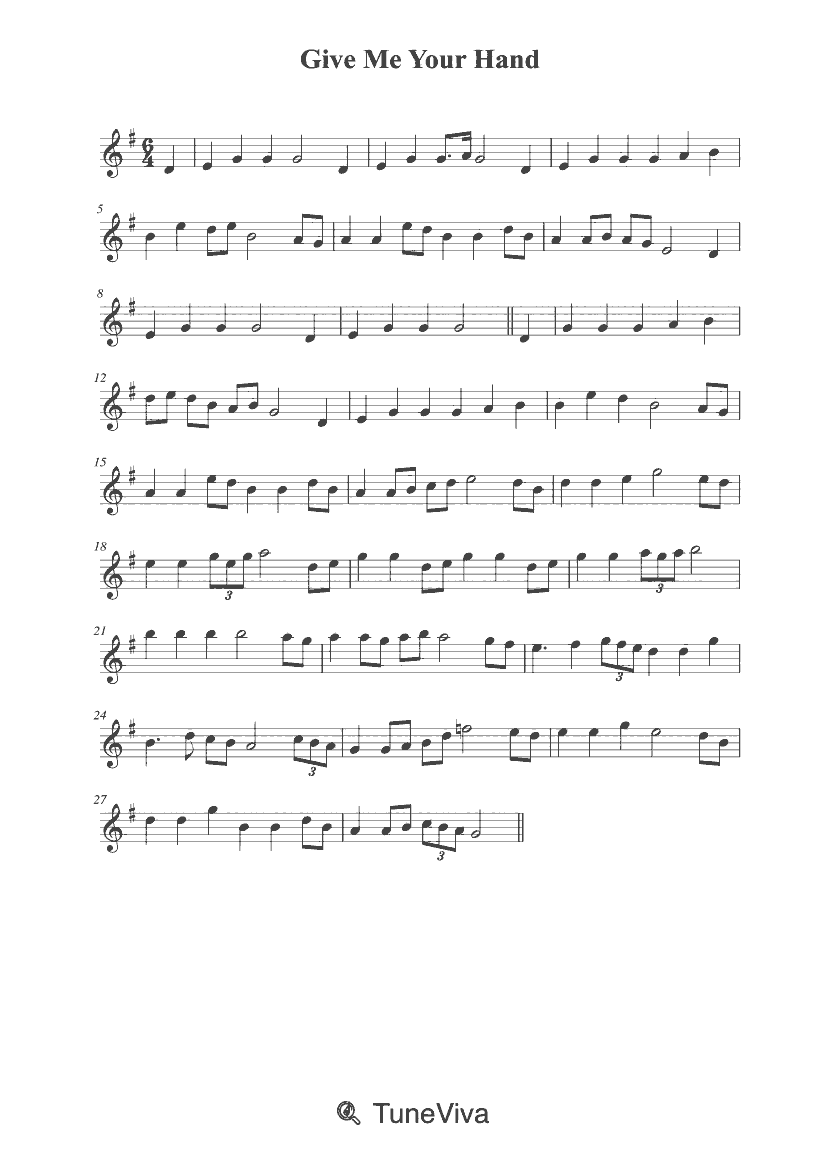
Misc tunes
1 min 17 sec · Score #178818
Open score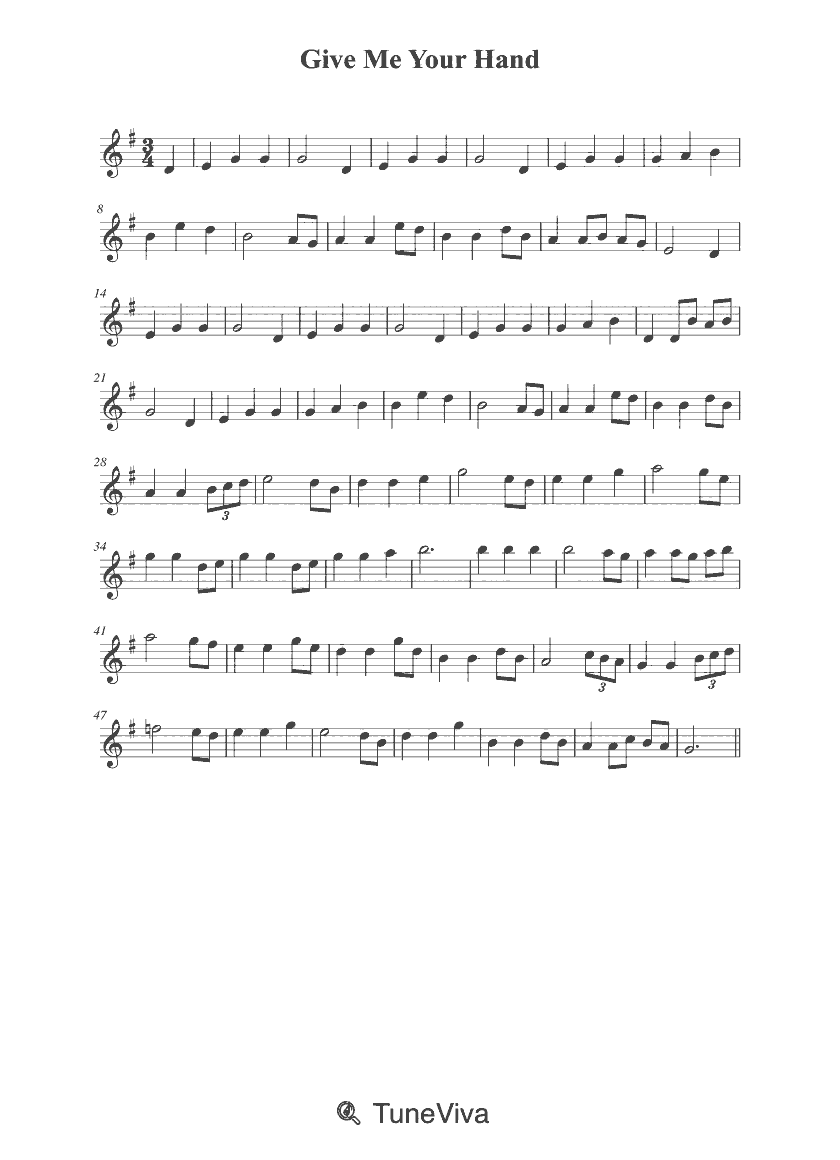
Misc tunes
1 min 18 sec · Score #249978
Open score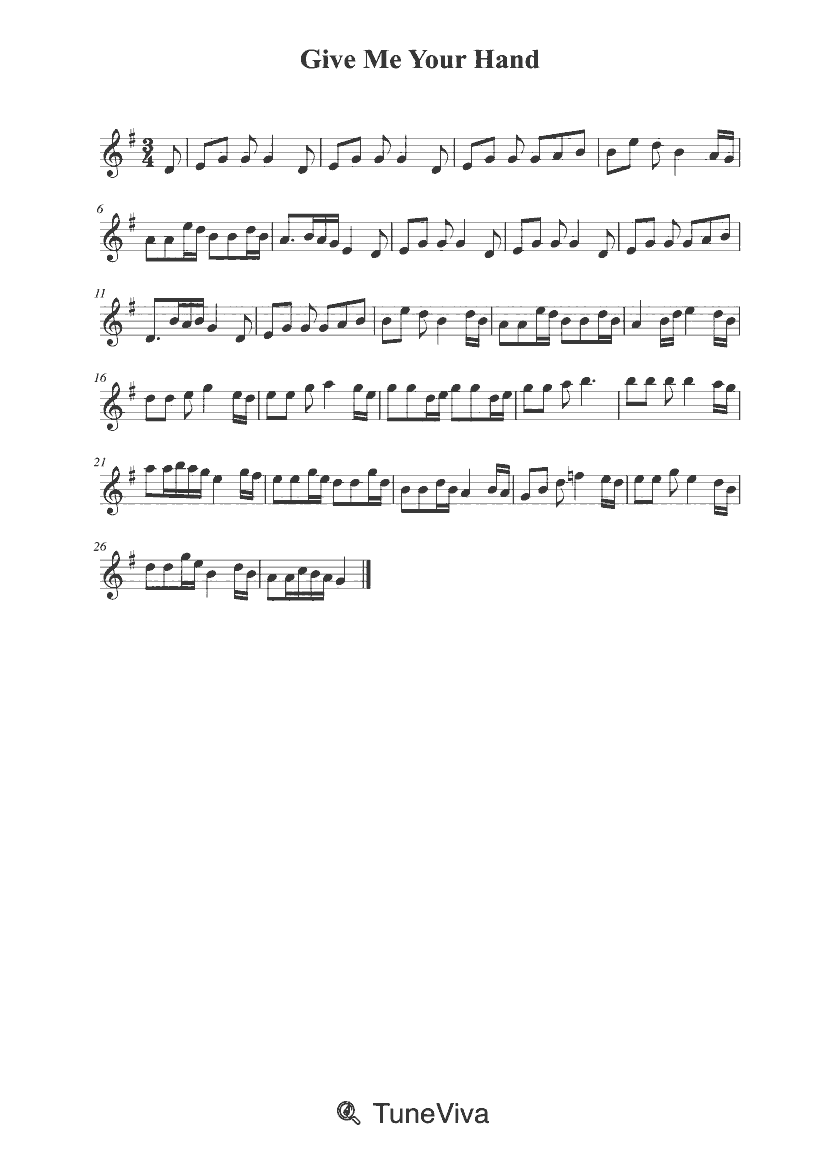
Ruari Dall O'Cathain
39 sec · Score #12831
Open scorePage 1 of 2
Start with the metre. Two of the scores are in 6/8, which groups the bar into two compound beats, while one is in 3/4, with three clear beats to the bar. The listed note counts also differ (165, 188 and 320), which suggests settings of different length or density rather than duplicate copies of a single text. Look at the opening bars, the range and any repeated sections before deciding which score suits your instrument and level.
In 6/8 the six quavers of a bar normally fall into two groups of three, giving a lilt with two main pulses. In 3/4 the same six quavers would be grouped as three pairs, with three pulses per bar. That difference changes where accents fall and how the melody breathes, so a 6/8 setting and a 3/4 setting of the same tune will not feel the same to play, even where the pitches correspond.
Only one of the three listings names a composer, 'Ruainn Rory Dall O Cathain (?-1653)'; the other two leave the field blank. No independent source supporting that attribution was available for this page, so the credit should be treated as a lead to verify rather than a settled fact. The listing also gives no reliable evidence of the tune's origin, instrumentation or performance history.
Catalogue duration 40 sec. Opening key signature: 1 sharp (G major). Opening time signature: 6/8.
Catalogue duration 19 sec. Opening key signature: 1 sharp (G major). Opening time signature: 6/8.
Catalogue duration 1 min 25 sec. Opening key signature: 1 sharp (G major). Opening time signature: 3/4.
All three scores listed as Give Me Your Hand open with a one-sharp key signature, indicating G major at the start. An opening signature describes the first bars only, so check the rest of the score for any change of key or written accidentals.
Give Me Your Hand appears here in two metres: two scores are notated in 6/8 and one in 3/4. 6/8 is a compound duple metre that groups six quavers into two beats, while 3/4 is a simple triple metre with three crotchet beats to the bar. The choice affects phrasing and accent, so the versions will not feel identical to play.
One score in this listing credits 'Ruainn Rory Dall O Cathain (?-1653)', and the other two leave the composer field blank. That attribution was not checked against an independent source for this page, so verify it before relying on it in programme notes or teaching material.
The three scores share the title Give Me Your Hand and all open in G major, but they are not identical on paper: two use 6/8 and one uses 3/4, and the listed note counts differ. Those differences suggest distinct settings, though only a bar-by-bar comparison of the notation can confirm it.
The scores carry note counts of 165, 188 and 320. Since the two 6/8 settings differ so widely in count, they are unlikely to be identical arrangements; the gap may reflect repeated sections, added ornamentation or a longer setting. Compare the notation rather than relying on the count alone.