
Go to the Devil and Shake Yourself
Misc tunes
24 sec · Score #196073
Open scoreGo to the Devil and Shake Yourself appears here in three settings with no named composer. Two scores open in G major with a 6/8 time signature, while the third has no sharps or flats and opens in 4/4. The listings provide practical notation to compare, but they do not identify an author or explain how the versions relate.
Scores 1–20 of 29
Misc tunes
24 sec · Score #196073
Open score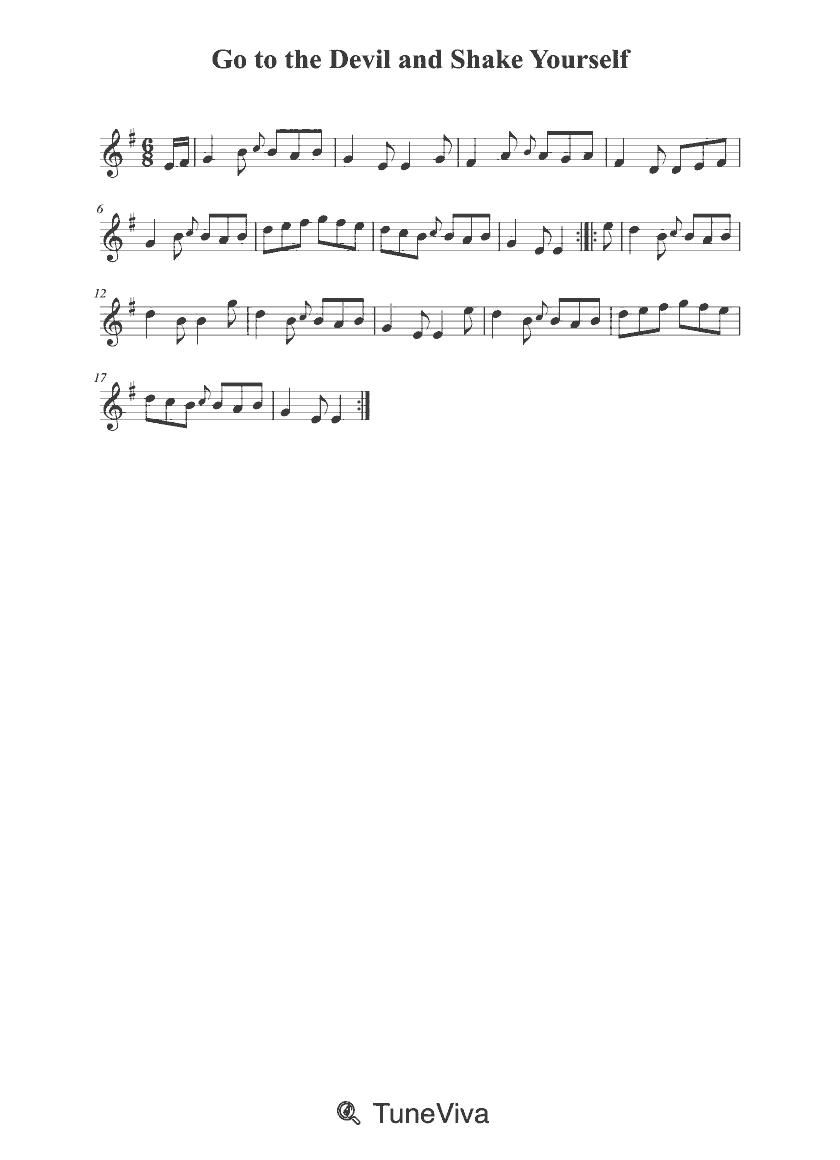
Misc tunes
24 sec · Score #49789
Open score
anon.
19 sec
Open score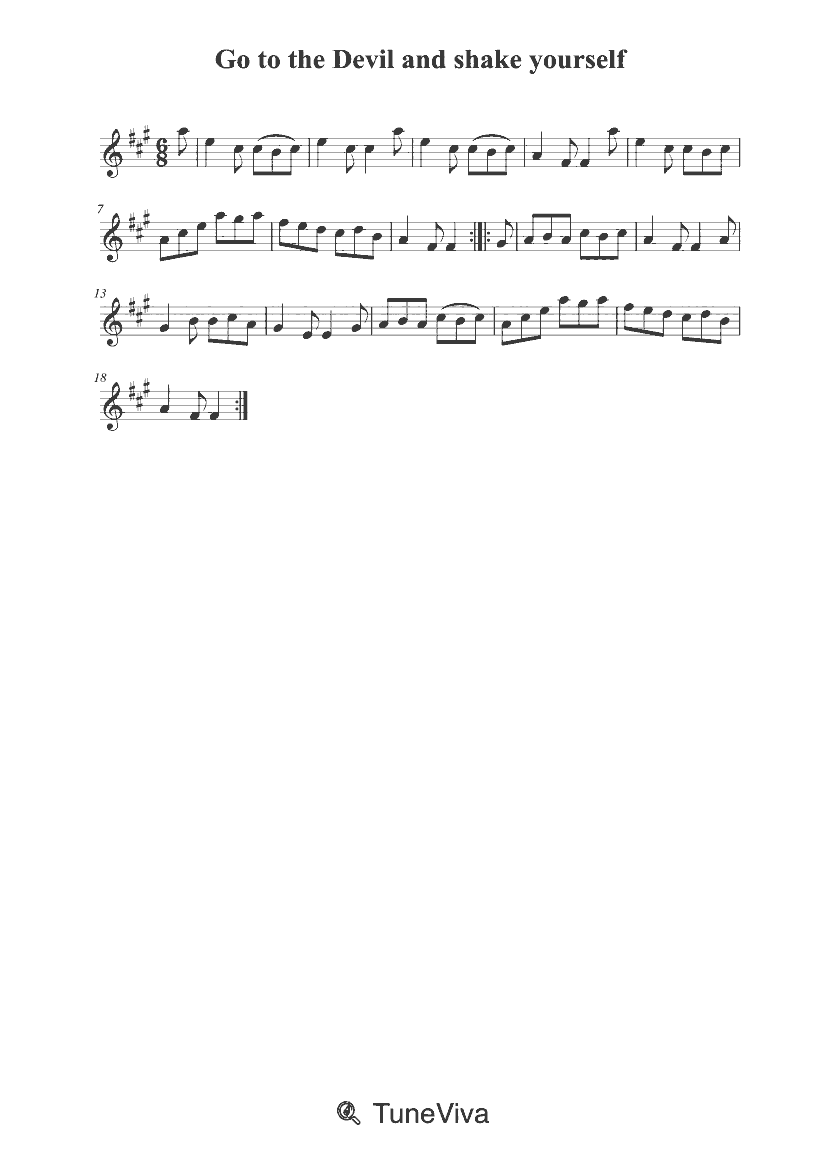
Misc tunes
24 sec · Score #77297
Open score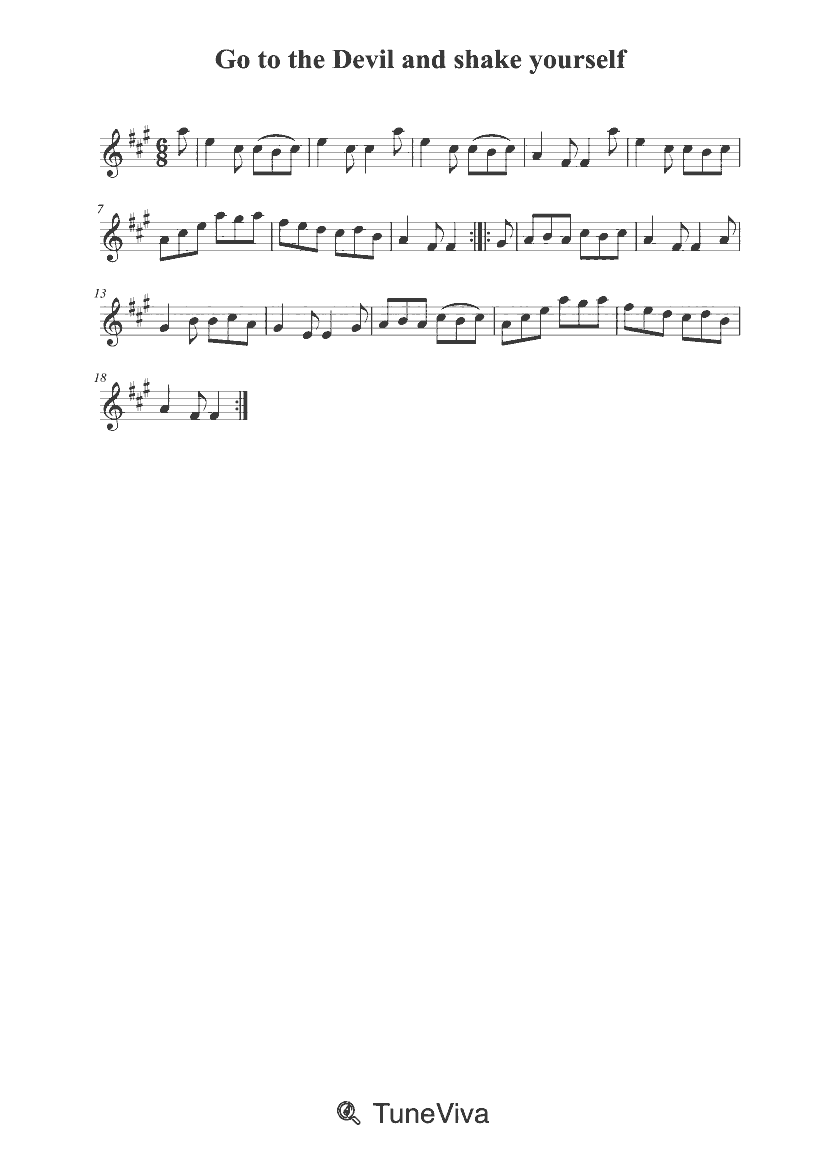
Misc tunes
24 sec · Score #122584
Open score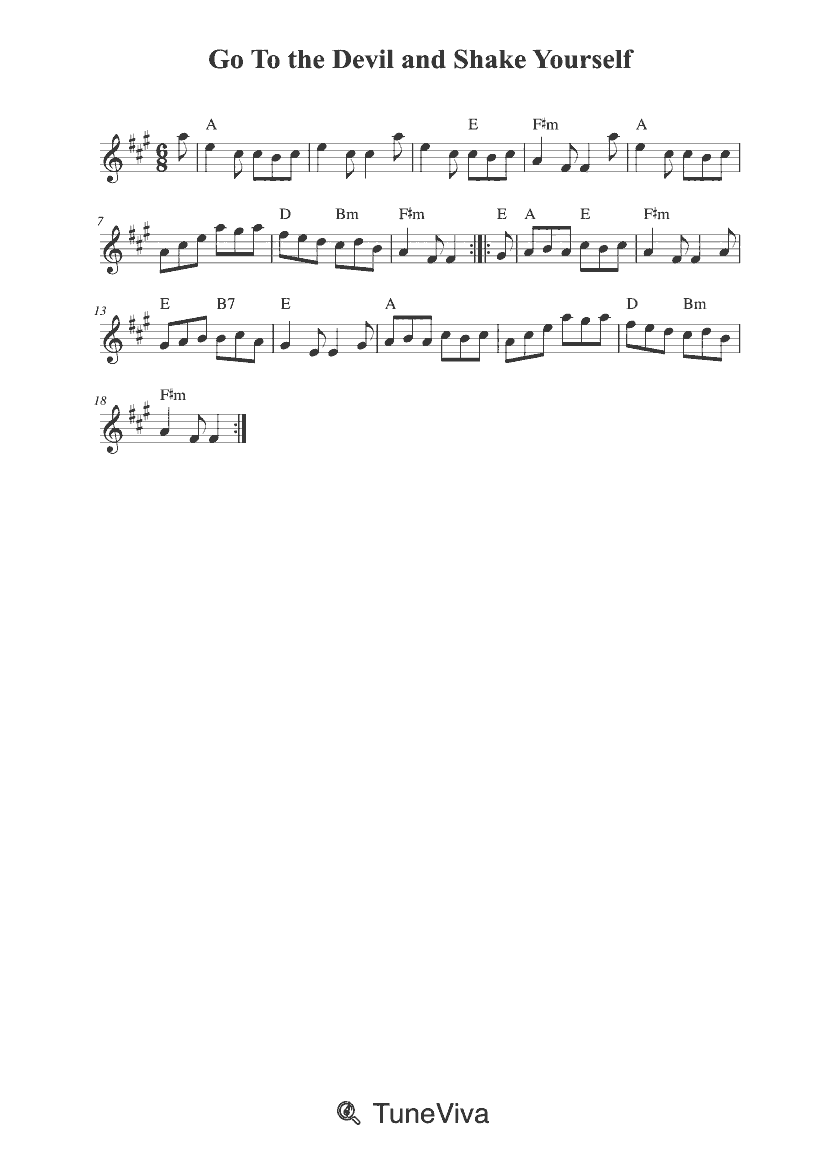
Misc tunes
24 sec · Score #200310
Open score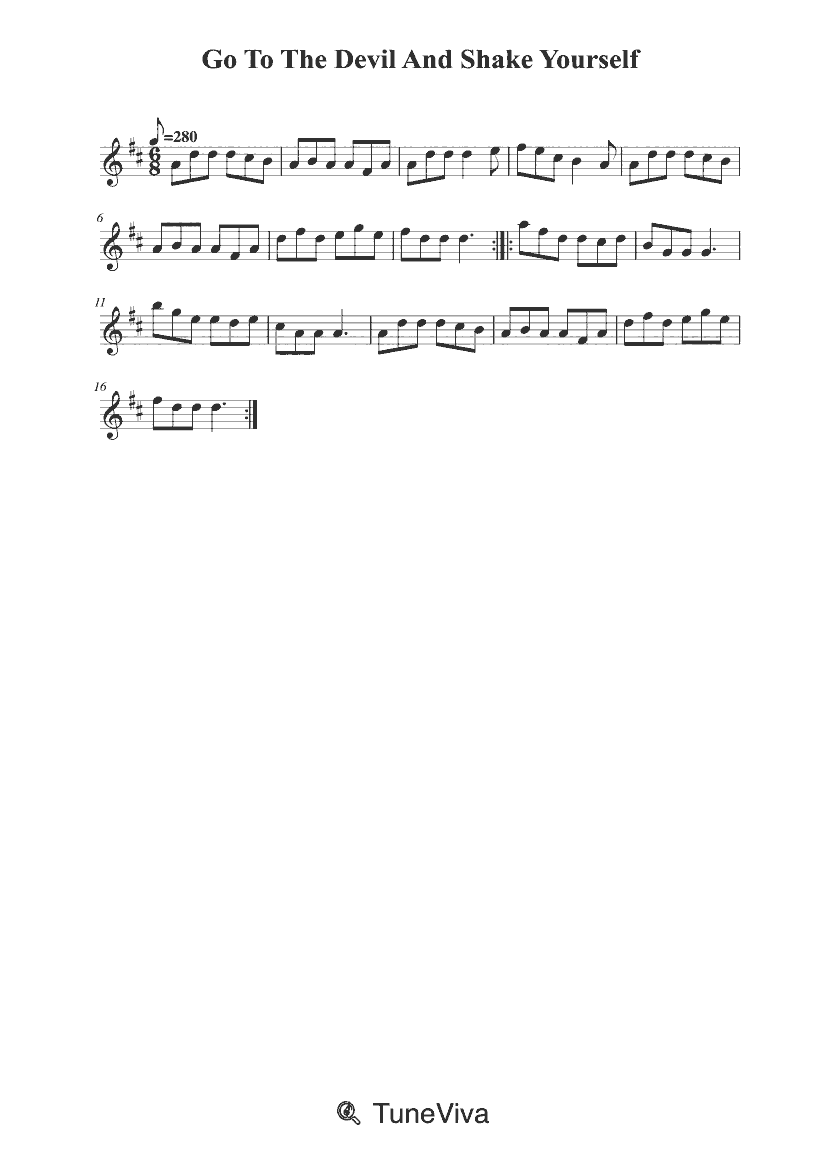
Donated by W.E. Miller Co.K.15th O.V.V.I.
21 sec · Score #222131
Open score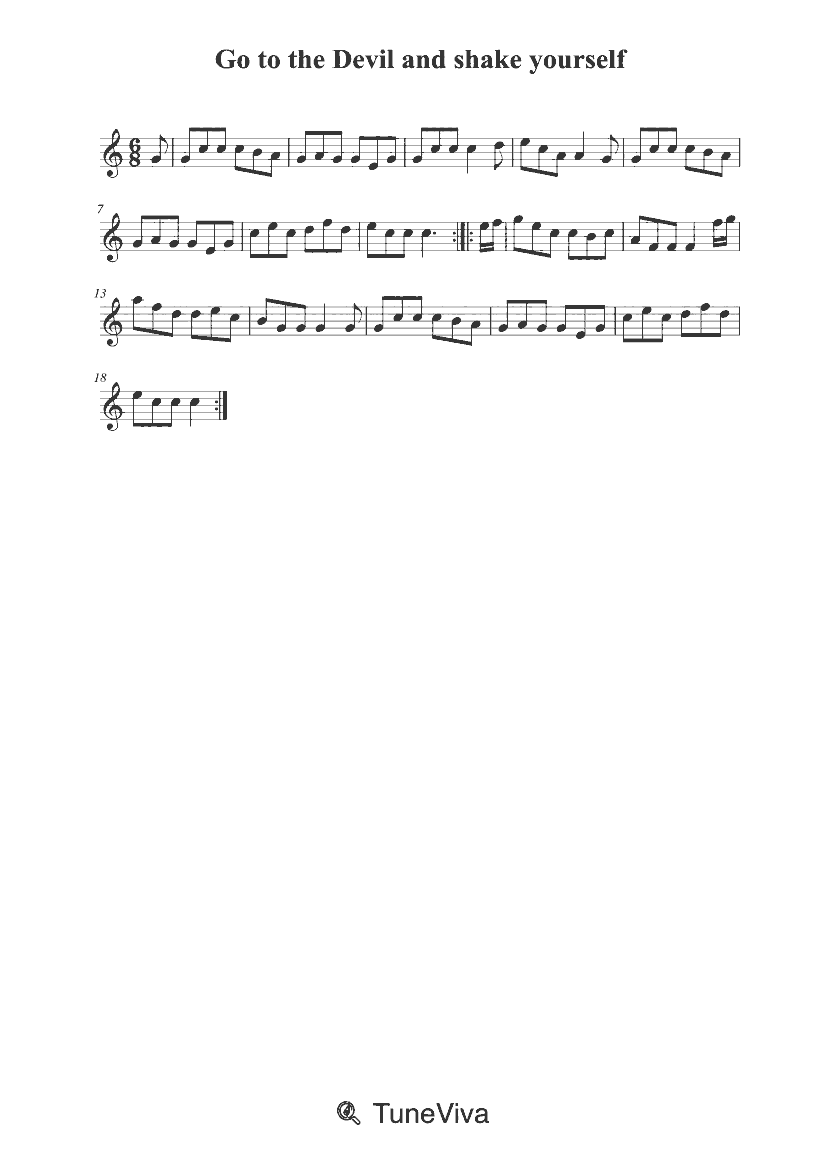
Misc tunes
24 sec · Score #75277
Open score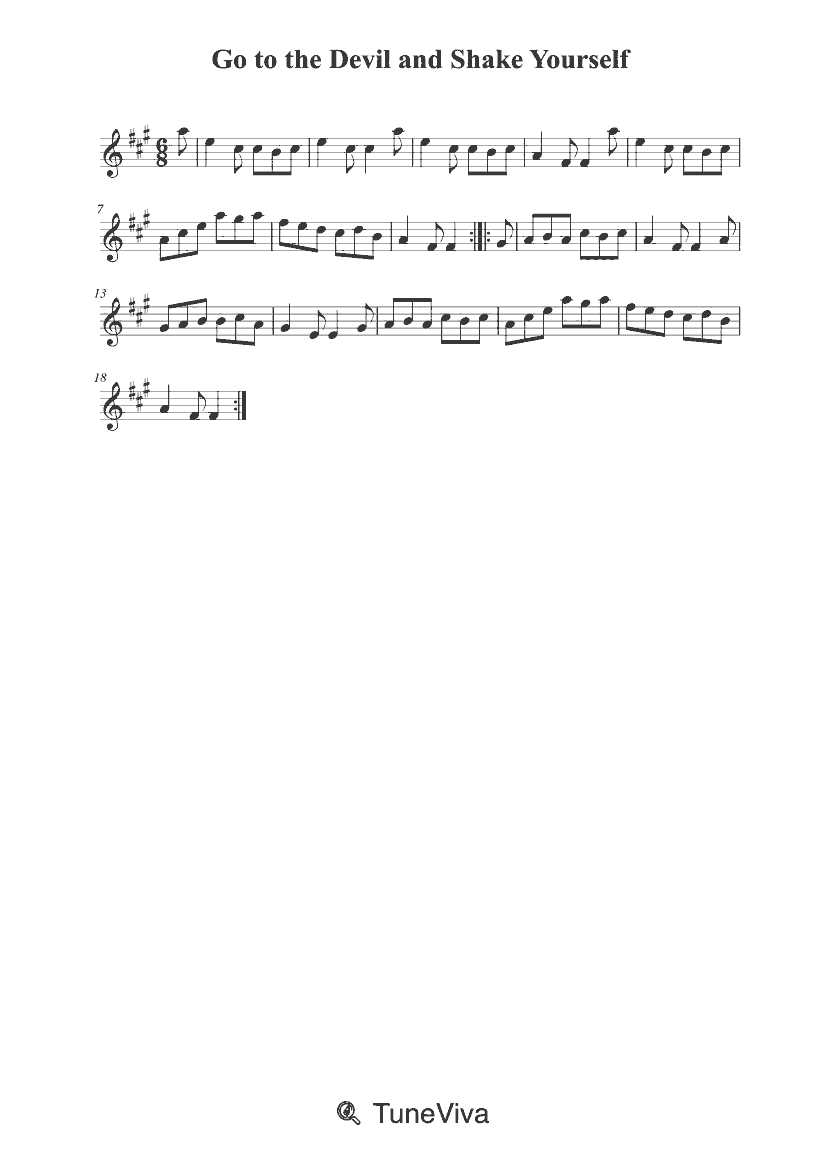
Misc tunes
24 sec · Score #110049
Open score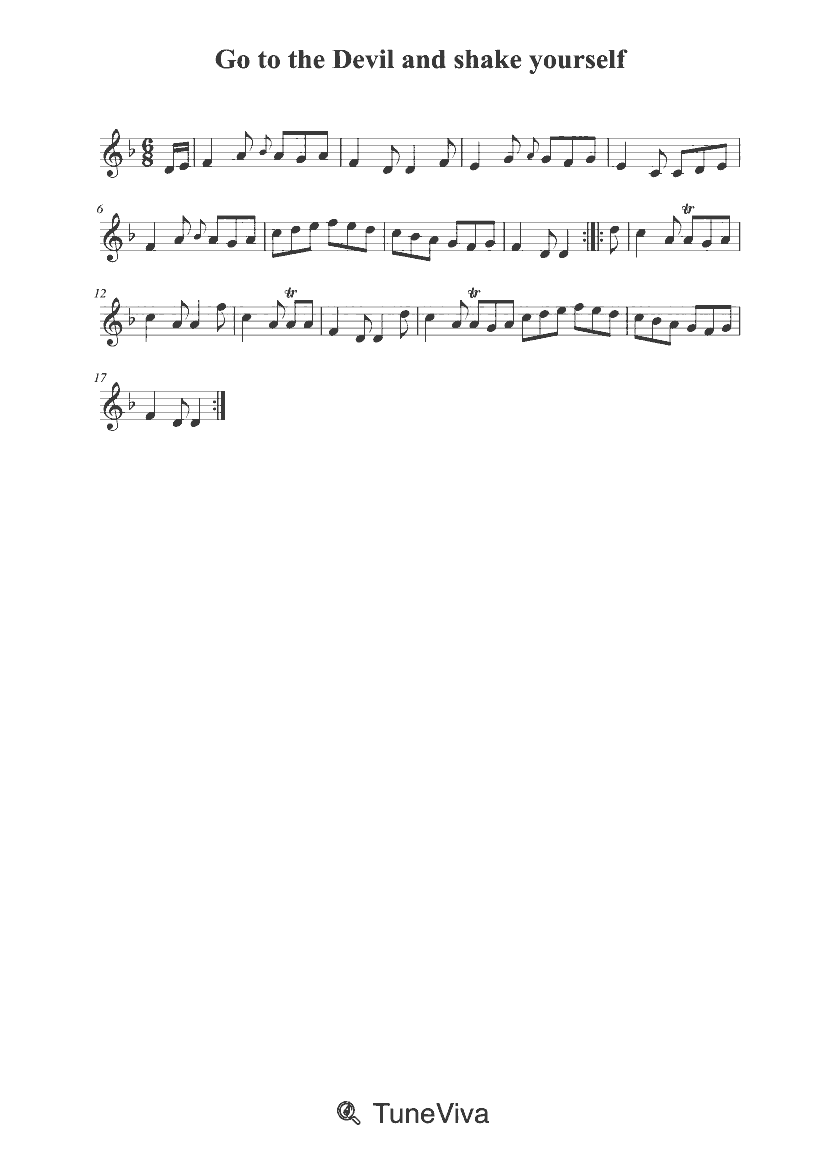
Misc tunes
24 sec · Score #172418
Open score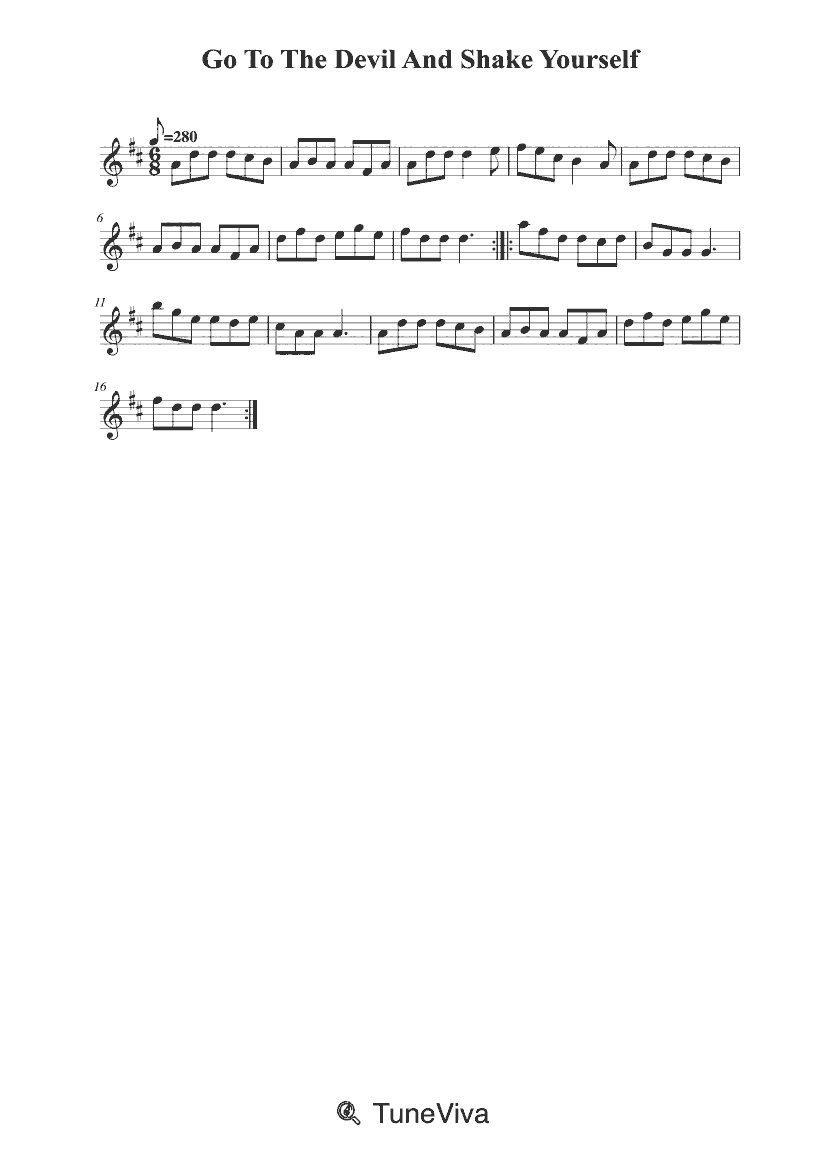
Donated by W.E. Miller Co.K.15th O.V.V.I.
21 sec · Score #226097
Open score
anon.
24 sec
Open score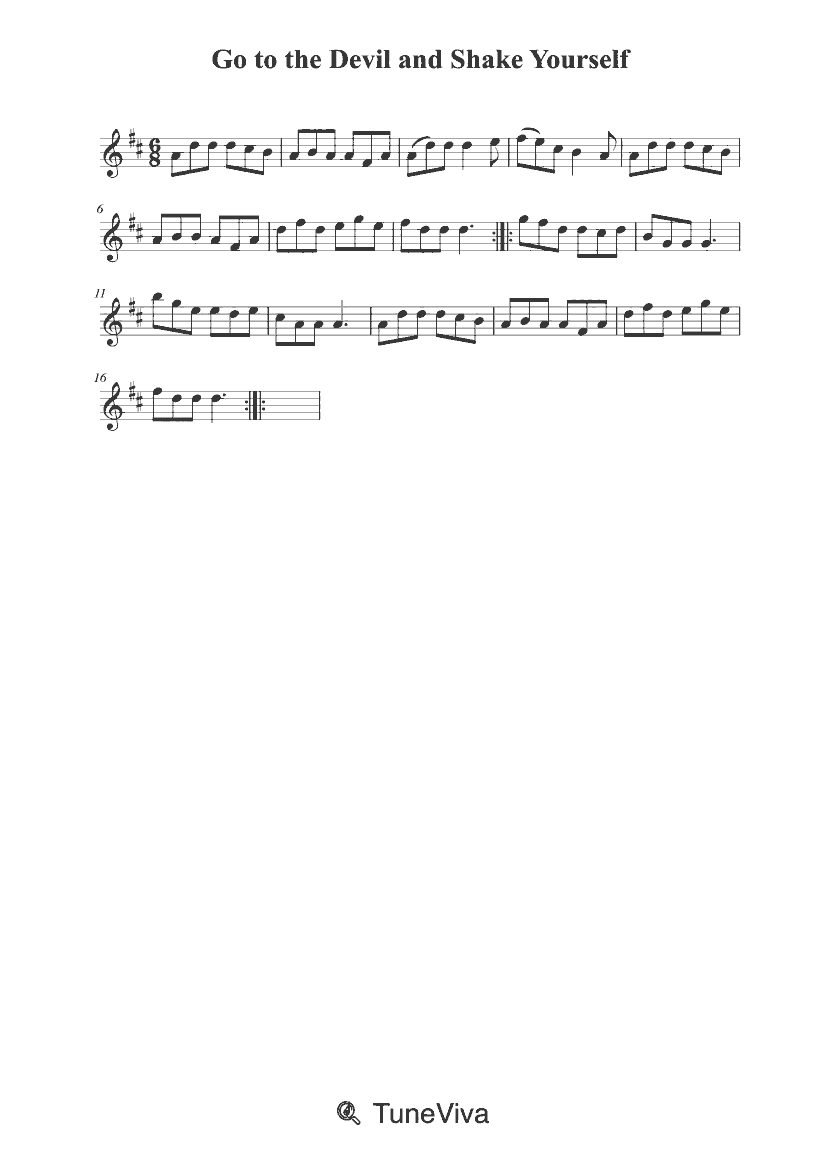
Misc tunes
25 sec
Open score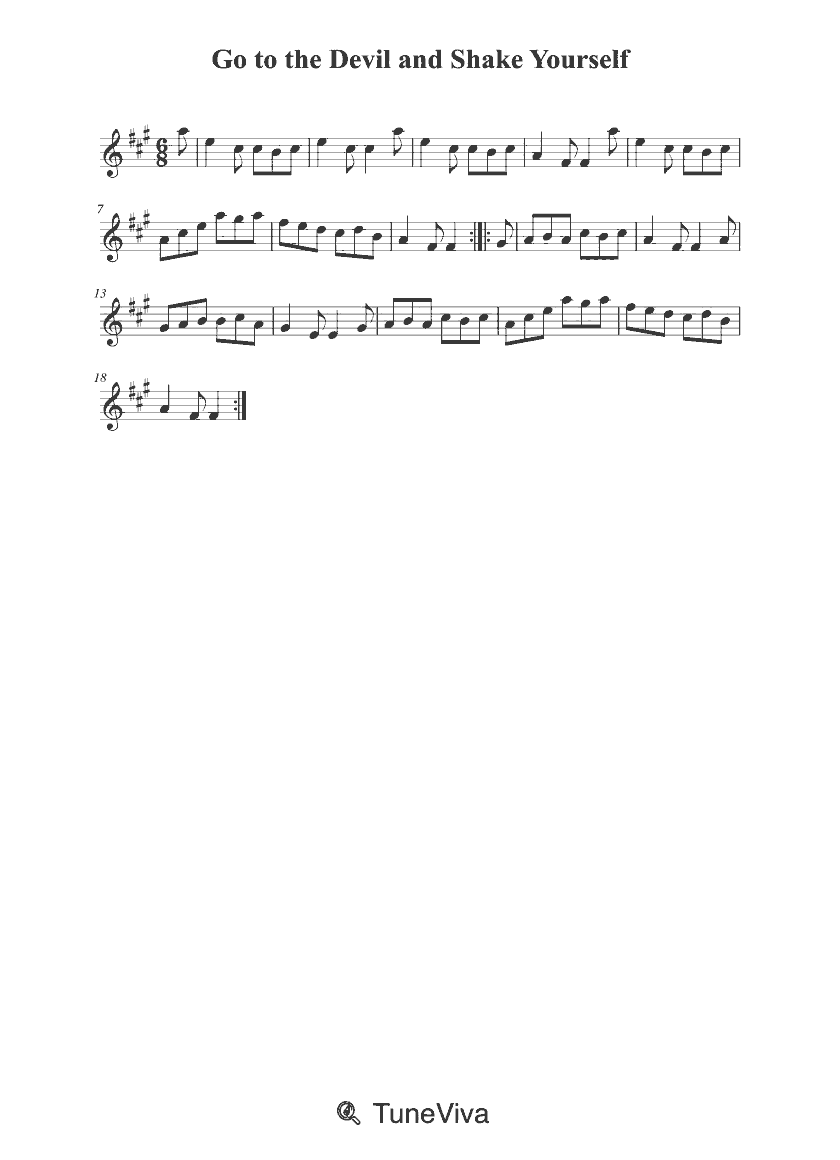
Misc tunes
24 sec · Score #134452
Open score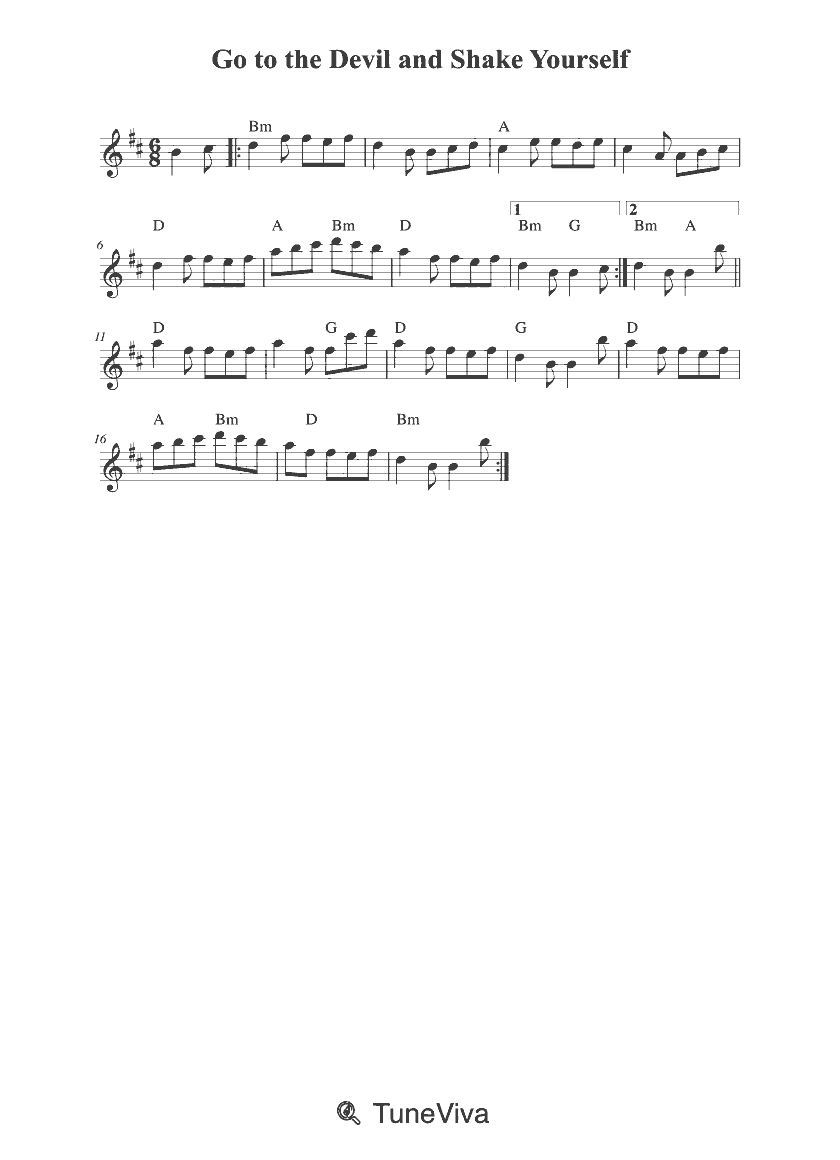
Misc tunes
29 sec
Open score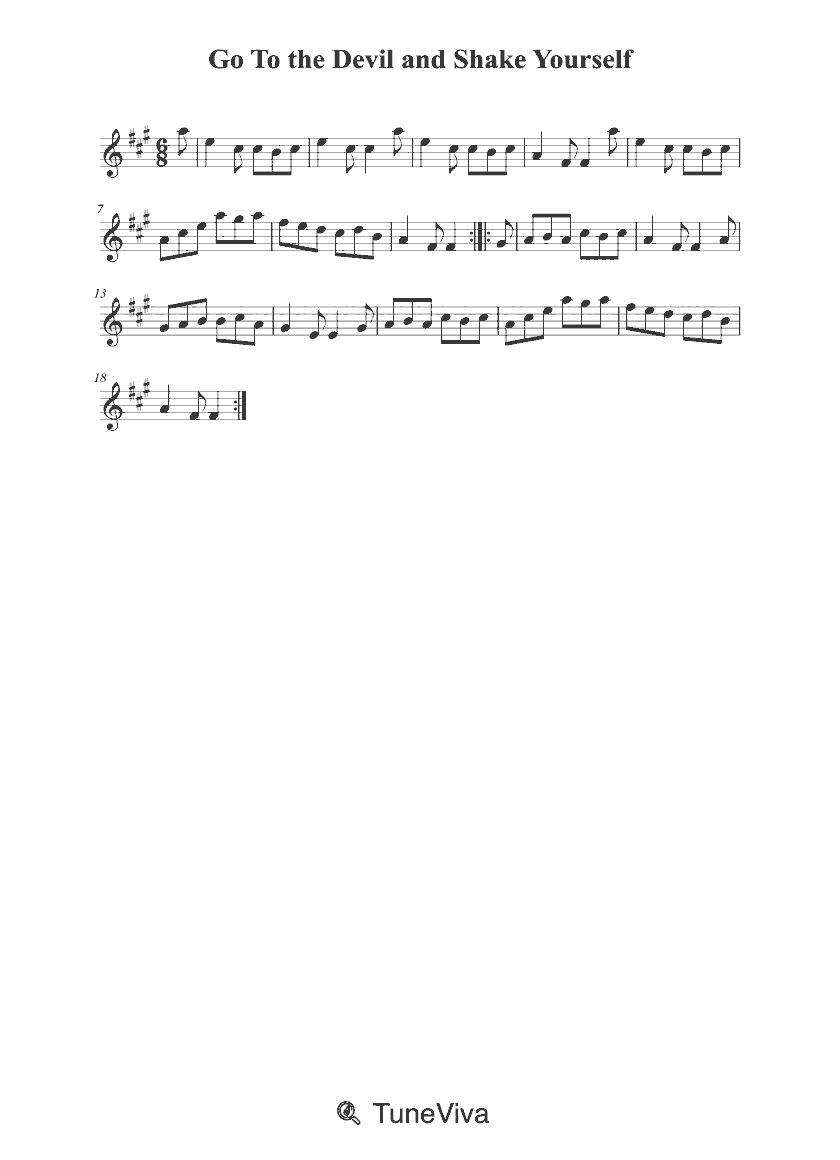
Misc tunes
24 sec · Score #182146
Open score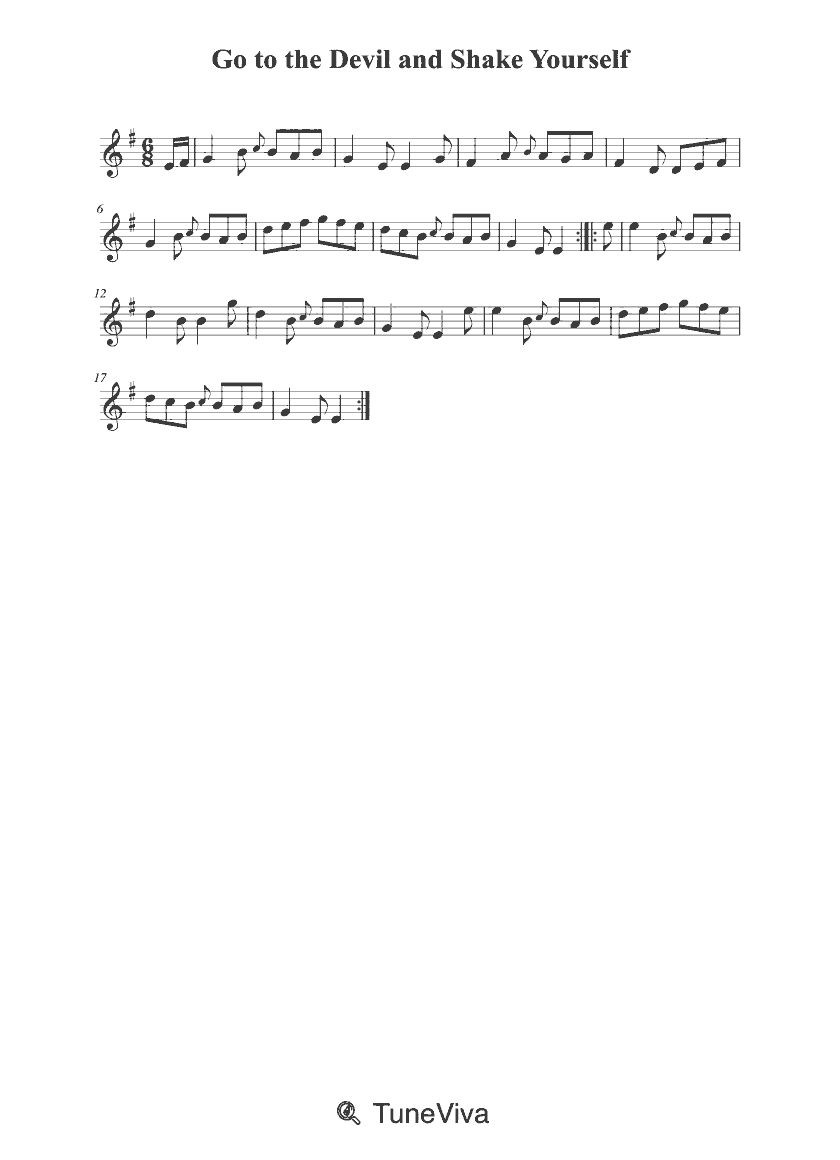
Misc tunes
Get Up Old Woman and Shake Yourself
24 sec
Open score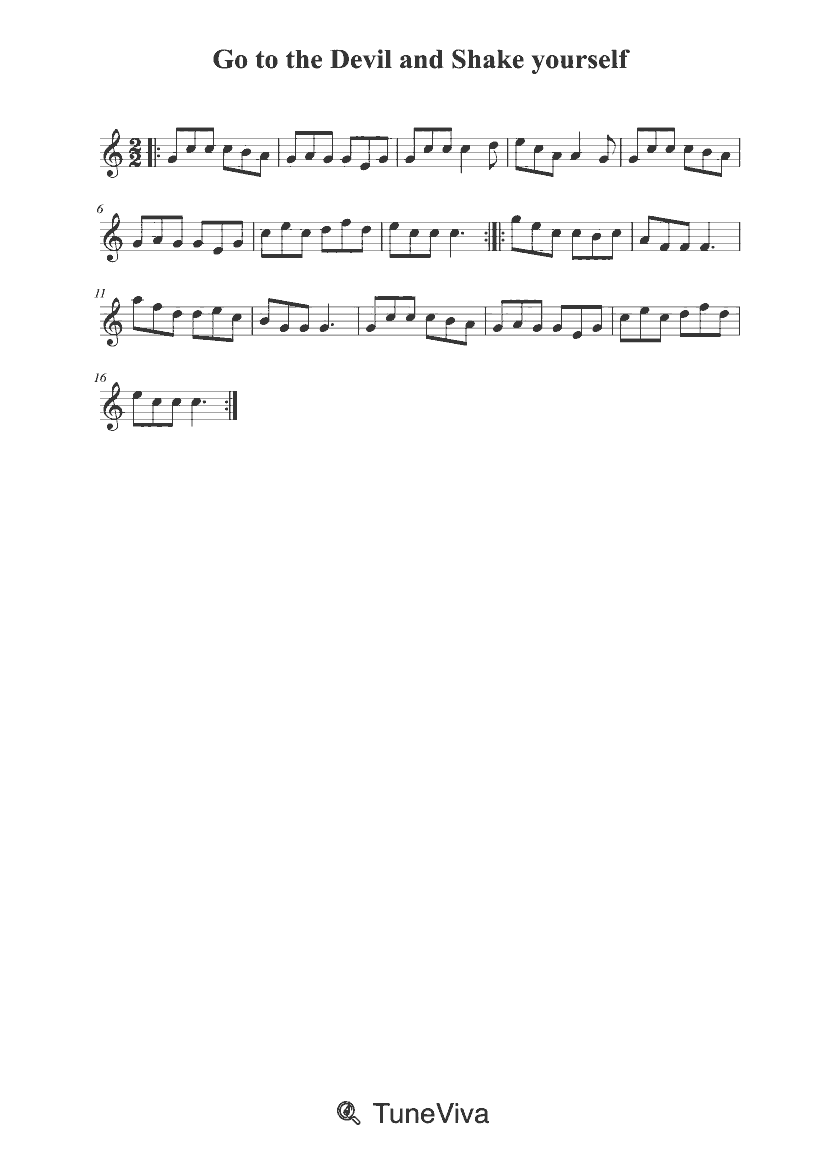
Misc tunes
1 min 36 sec
Open score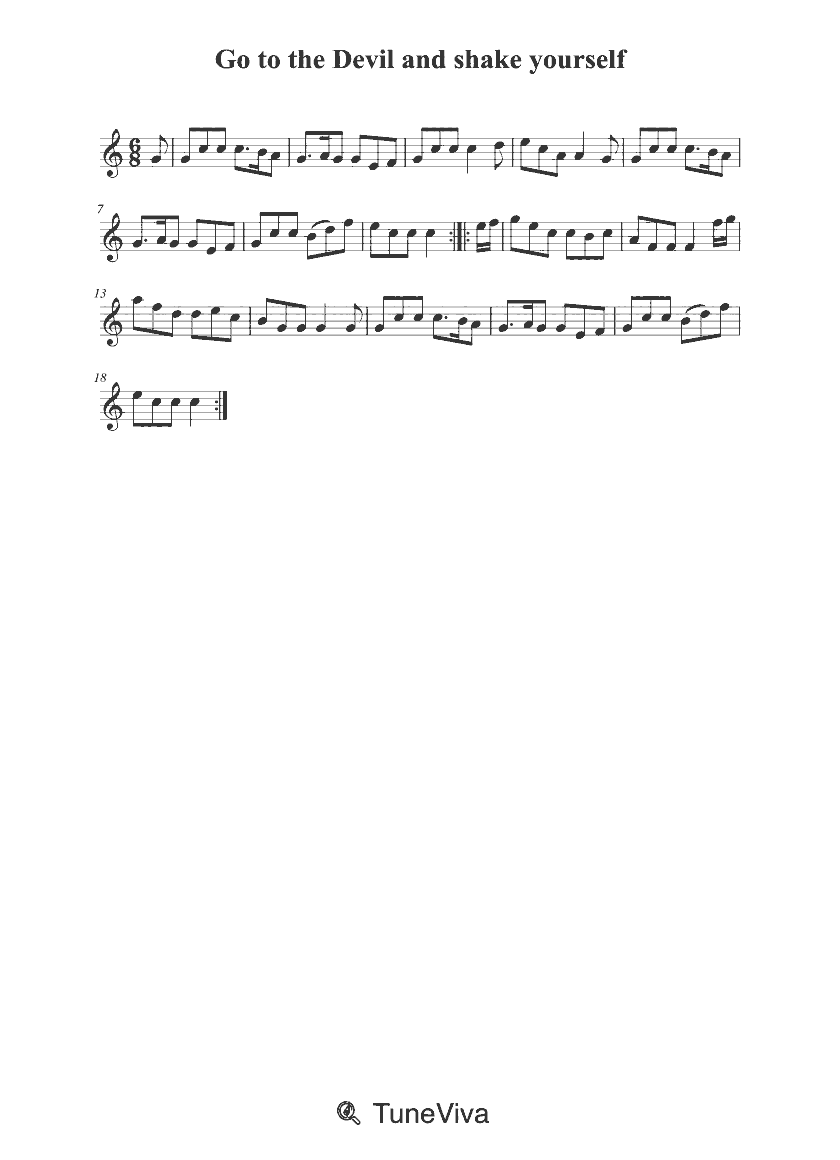
Misc tunes
24 sec · Score #239807
Open score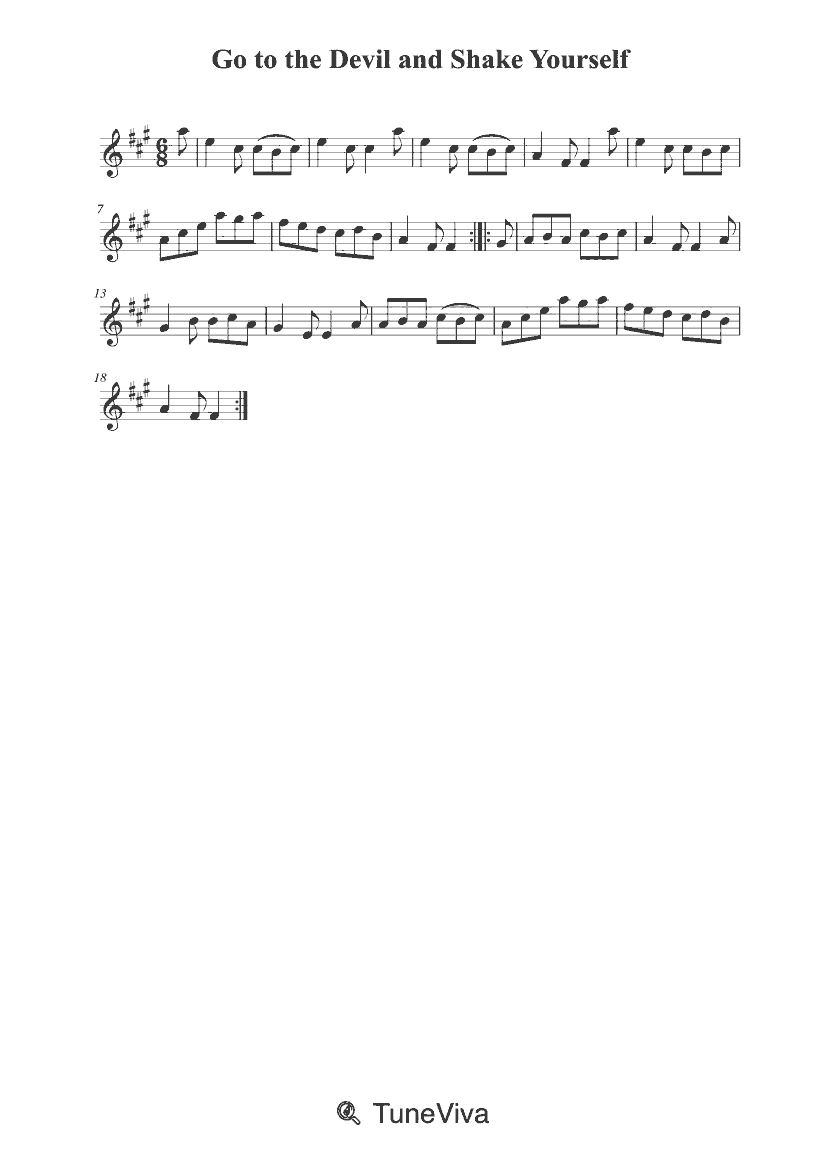
Misc tunes
24 sec · Score #250481
Open scorePage 1 of 2
The three scores share the title Go to the Devil and Shake Yourself but not identical opening details. Two begin in G major with a 6/8 signature; the remaining score has no sharps or flats and opens in 4/4. Use these details to select a starting notation, not as a complete description of the tune: opening key and metre can change later in a piece.
If you want the compound-metre version, choose one of the two 6/8 scores; if you need a simple-metre alternative, the 4/4 score is the one listed. The choice affects how the beat is grouped and felt, so it is worth trying the opening bars of each before deciding which suits your purpose.
No composer is named across the available listings for Go to the Devil and Shake Yourself; one score is marked anonymous and two leave the composer field empty. The listings also give no date, origin or instrumentation. Treat the title as the secure common element and avoid assuming that the settings are historically related without further evidence.
Catalogue duration 24 sec. Opening key signature: 1 sharp (G major). Opening time signature: 6/8.
Catalogue duration 24 sec. Opening key signature: 1 sharp (G major). Opening time signature: 6/8.
Catalogue duration 19 sec. Opening key signature: No sharps or flats. Opening time signature: 4/4.
The available score listings do not name a composer for Go to the Devil and Shake Yourself. One version is credited to 'anon.' and the other two have no composer field, so these records do not identify an author or support a definitive attribution.
Two of the three listed scores for Go to the Devil and Shake Yourself begin with a one-sharp signature, given as G major. The third has no sharps or flats. These details describe only the opening signature of each score and do not necessarily show the key of the whole piece.
The listed settings of Go to the Devil and Shake Yourself differ: two scores open in 6/8 and one opens in 4/4. The 6/8 versions group pulses in threes, while the 4/4 version uses a simple four-beat grouping. That makes the 4/4 score the alternative if you need a different metrical feel.
The available records for Go to the Devil and Shake Yourself do not explain how the three settings relate. They share the title but differ in opening metre and, for one score, in key signature; no supplied note identifies them as the same arrangement, variants, or separate versions. Compare the scores themselves before treating them as interchangeable.
The available listings for Go to the Devil and Shake Yourself do not identify it as a dance tune or any other specific form. No genre, instrument, or performing context is supplied, so the title alone cannot establish whether the piece was used for dancing, singing, or another purpose.