
Hanter Dro De Storvan
Misc tunes
22 sec · Score #33078
Open scoreHanter Dro sheet music on this page covers several traditional Breton settings rather than a single fixed version. The available scores open in different keys and metres — 6/8 in E minor, 3/4 with no sharps or flats, and 3/4 in C minor — so compare the notation before choosing.
Scores 1–20 of 35
Misc tunes
22 sec · Score #33078
Open score
Misc tunes
24 sec
Open score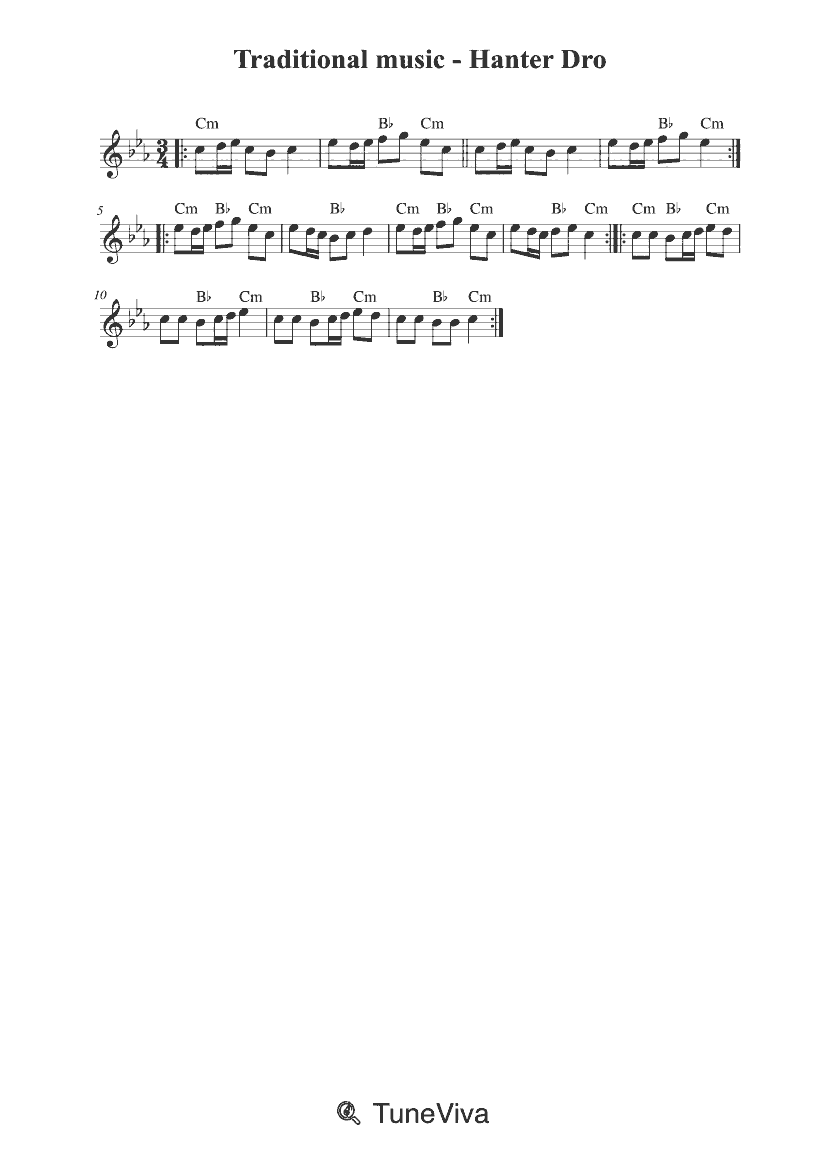
Traditional Breton
36 sec
Open score
Misc tunes
21 sec
Open score
trad
53 sec
Open score
trad
37 sec
Open score
Misc tunes
14 sec
Open score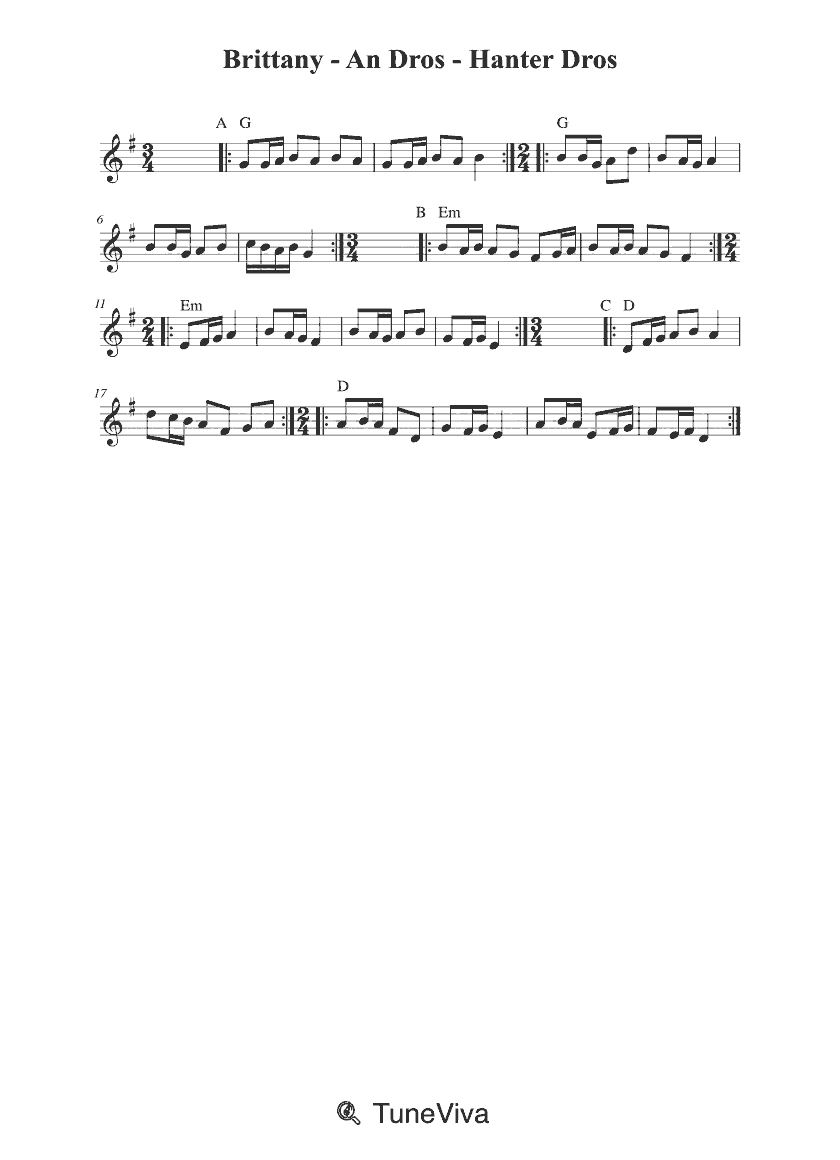
Brittany
Trikot
46 sec · Score #109400
Open score
Misc tunes
21 sec
Open score
trad
58 sec
Open score
Misc tunes
45 sec
Open score
Misc tunes
1 min 12 sec
Open score
Traditionnel
1 min 14 sec
Open score
Traditionnel
7 min 12 sec · Score #55968
Open score
Misc tunes
21 sec
Open score
Traditionnel
7 min 12 sec · Score #102950
Open score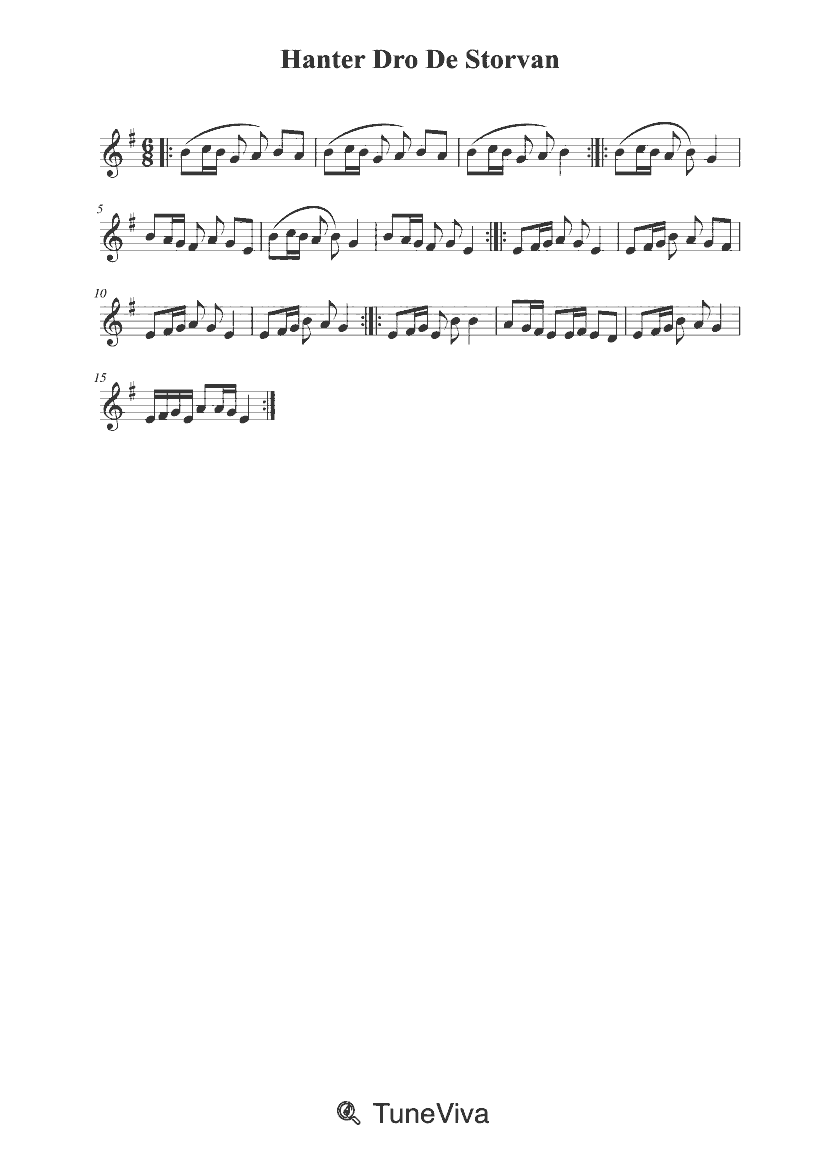
Misc tunes
22 sec · Score #152838
Open score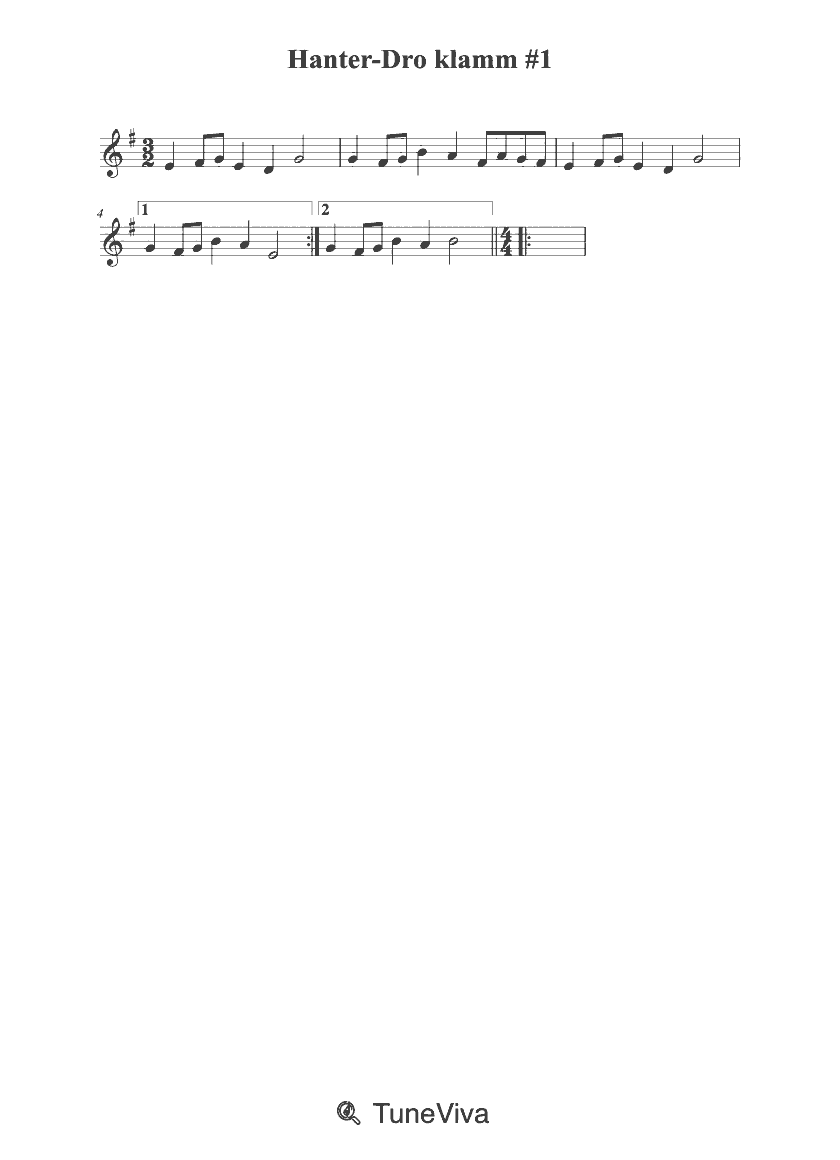
Misc tunes
51 sec
Open score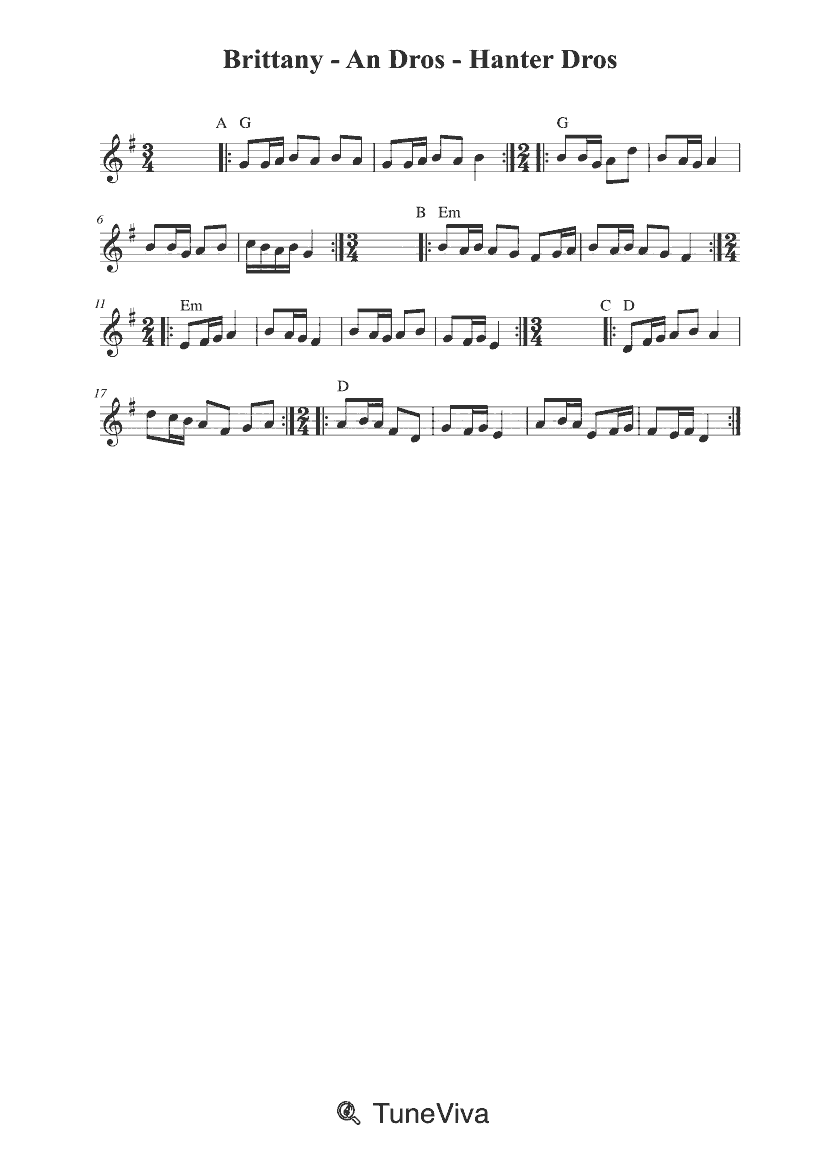
Brittany
Trikot
46 sec · Score #120859
Open score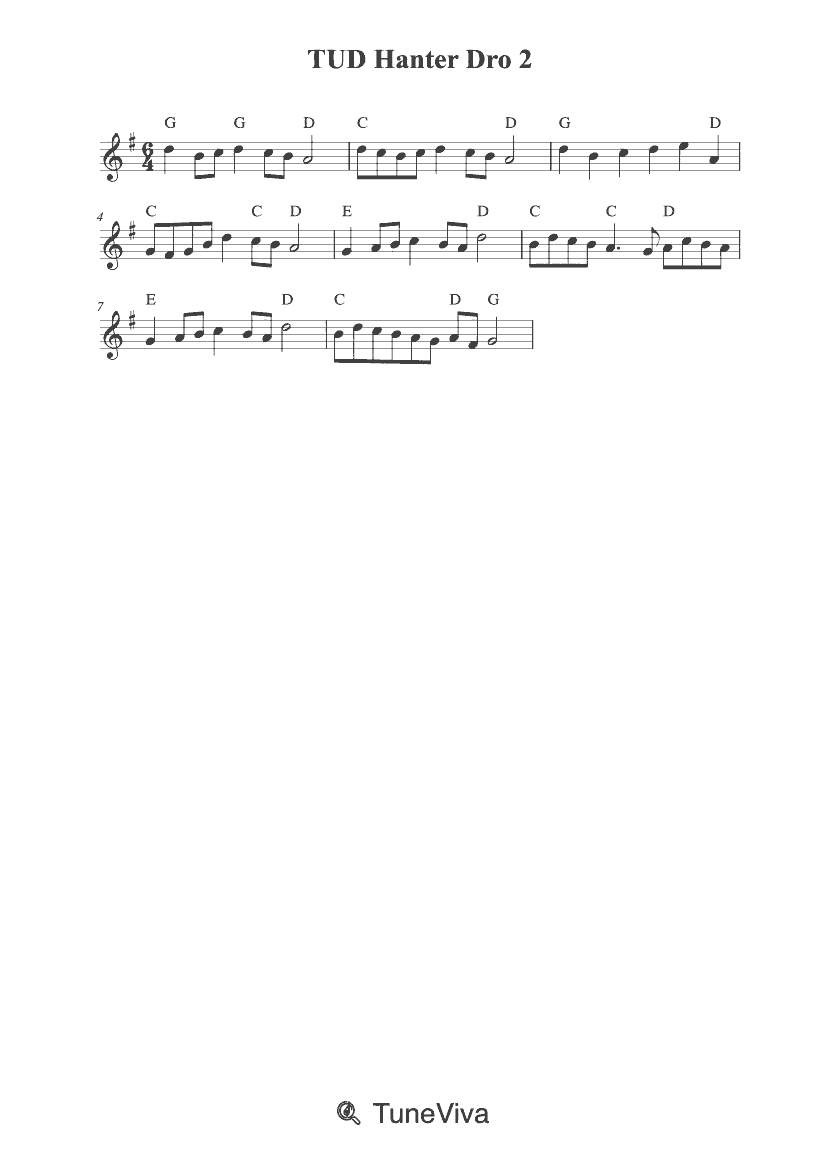
Misc tunes
24 sec
Open scorePage 1 of 2
The three listed Hanter Dro scores are short single-track items. One opens in 6/8 with one sharp (E minor), another opens in 3/4 with no sharps or flats, and the third opens in 3/4 with three flats (C minor). Their titles also vary: one adds “De Storvan”, another is labelled “Traditional music - Hanter Dro”, and the remaining score uses the plain title. These details describe individual scores, not one definitive version of the piece.
A 6/8 opening groups six eighth notes into two broad beats, while a 3/4 opening groups three quarter-note beats. If you are learning from a specific source recording or dance setting, match its metre first and then check the key. The listed Hanter Dro scores offer both metres, so the choice depends on the version you need rather than on one universally correct notation.
Two of the listed Hanter Dro scores have no composer name, and the third is credited to “Traditional Breton”. Treat the scores as traditional material or settings unless a fuller source confirms otherwise.
No authoritative reference is cited here for Hanter Dro’s regional history, dance steps, original instrumentation, or a definitive edition. Opening key and time signatures describe the start of each score and may not account for later changes. Note counts and listed durations belong to individual scores and should not be read as difficulty grades or standard performance lengths.
Catalogue duration 22 sec. Opening key signature: 1 sharp (E minor). Opening time signature: 6/8.
Catalogue duration 24 sec. Opening key signature: No sharps or flats. Opening time signature: 3/4.
Catalogue duration 36 sec. Opening key signature: 3 flats (C minor). Opening time signature: 3/4.
Hanter Dro is presented in the available scores as a traditional Breton piece rather than a work by a named composer. One score is credited to Traditional Breton, while the other two list no composer. The settings differ in metre and key, so the title covers more than one notated version.
The available Hanter Dro settings open in both 6/8 and 3/4. That means the scores notate the tune with different beat groupings: 6/8 groups six eighth notes into two broad beats, while 3/4 groups three quarter-note beats. Pick the notation that matches the lilt or source version you are learning.
Opening key signatures for the three listed Hanter Dro scores are one sharp (E minor), no sharps or flats, and three flats (C minor). These describe only the opening key, so check for later key changes in a full score.
Composer credits for the Hanter Dro scores are absent on two items and listed as Traditional Breton on the third.
Compare the opening metre and key first: the listed Hanter Dro scores include 6/8 in E minor, 3/4 with no sharps or flats, and 3/4 in C minor. One score also carries the additional title “De Storvan”, which may mark a distinct named setting. Note counts and listed durations differ, but they should not be treated as definitive performance tempos or difficulty grades.