
Highland Mary
Misc tunes
16 sec
Open scoreHighland Mary appears in this catalogue as three separate short scores rather than as one fixed arrangement. All three are notated in 4/4, but they differ in key and scope: two are in G major, while the longest setting is in B minor with a marked tempo of 120 BPM. One is presented as a Morris dance, and another is titled as Highland Mary set to the tune Kathrine Ogie. No composer is credited on any of the three listings, so if you are looking for a particular songwriter's setting, check the title and key carefully before choosing. Each score is a single-track notation of a few dozen to a couple of hundred notes.
Scores 1–20 of 22
Misc tunes
16 sec
Open score
Misc tunes
32 sec
Open score
Misc tunes
1 min 4 sec · Score #162909
Open score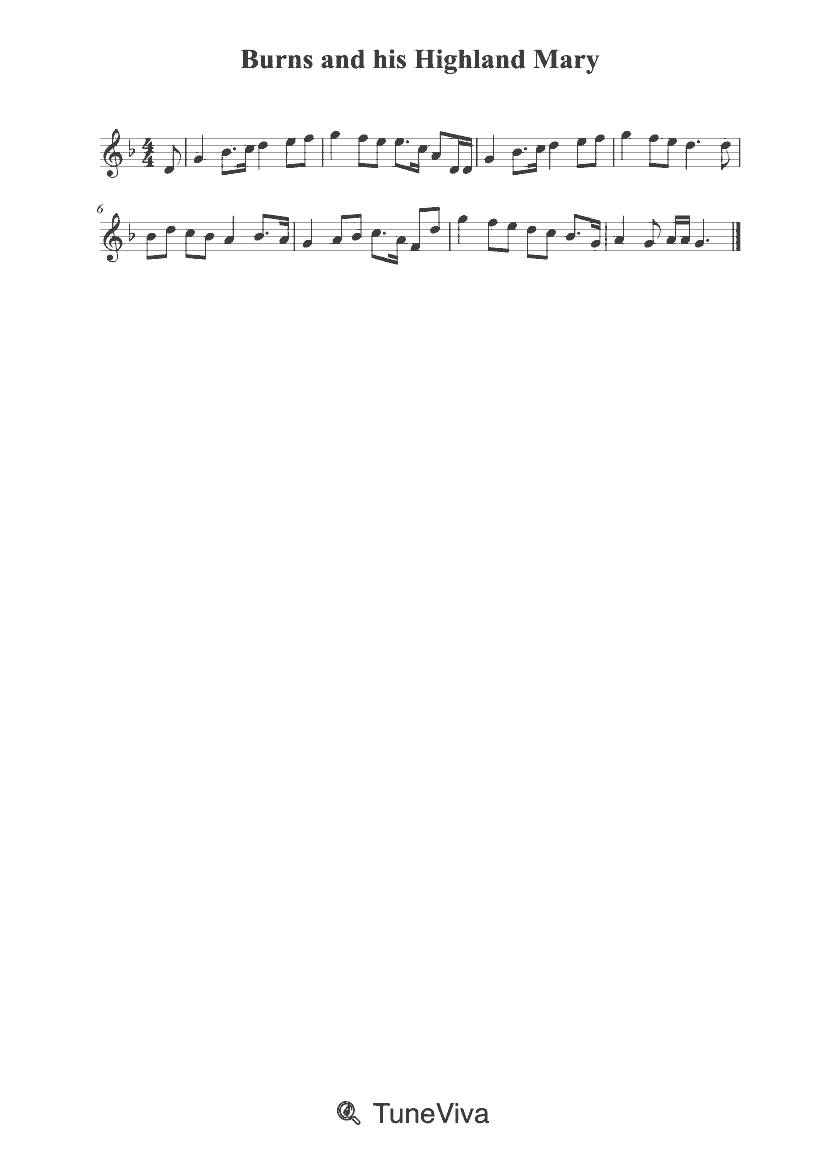
Misc tunes
16 sec
Open score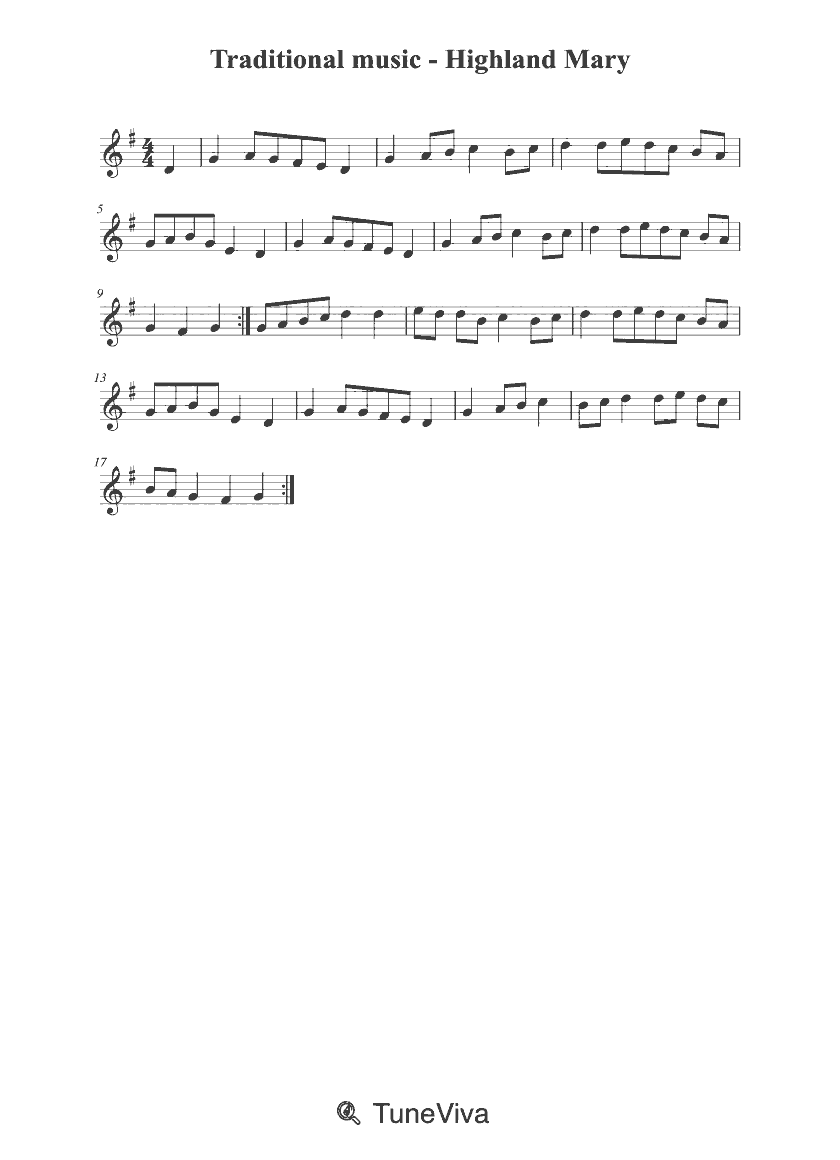
Trad Morris
1 min 19 sec
Open score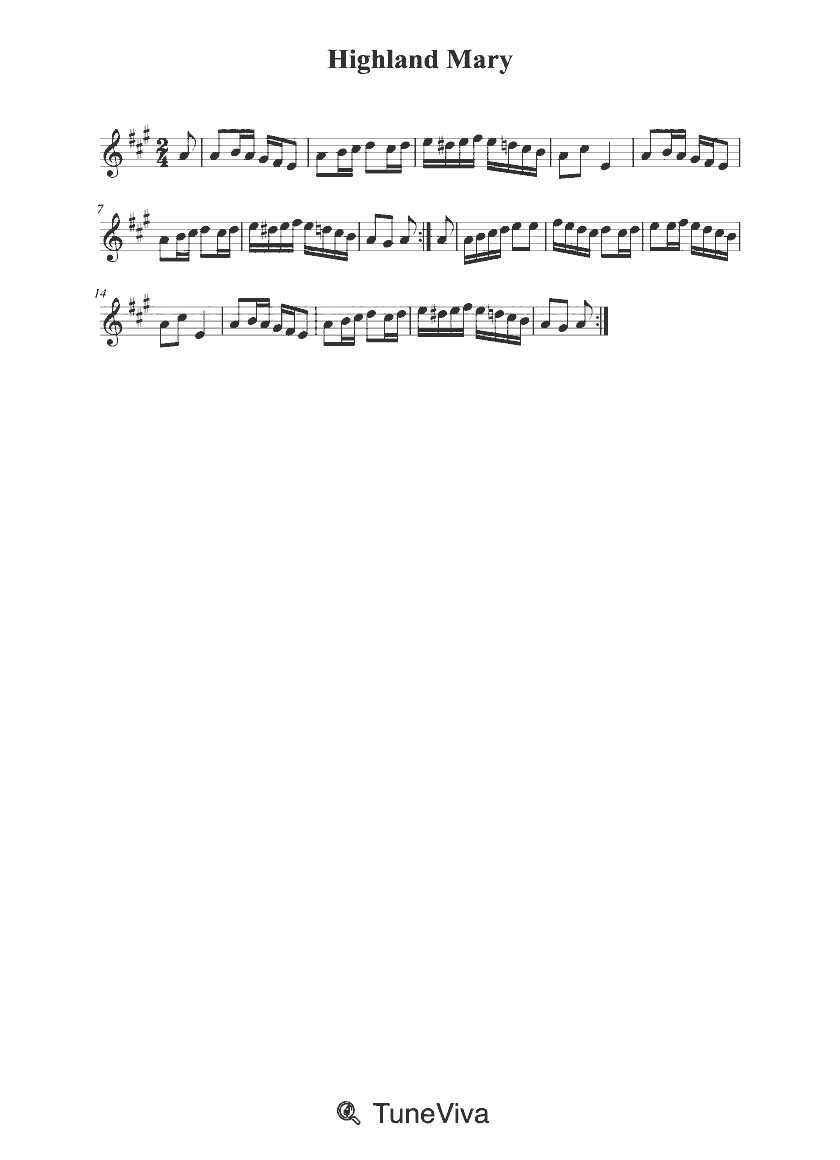
Misc tunes
40 sec · Score #213626
Open score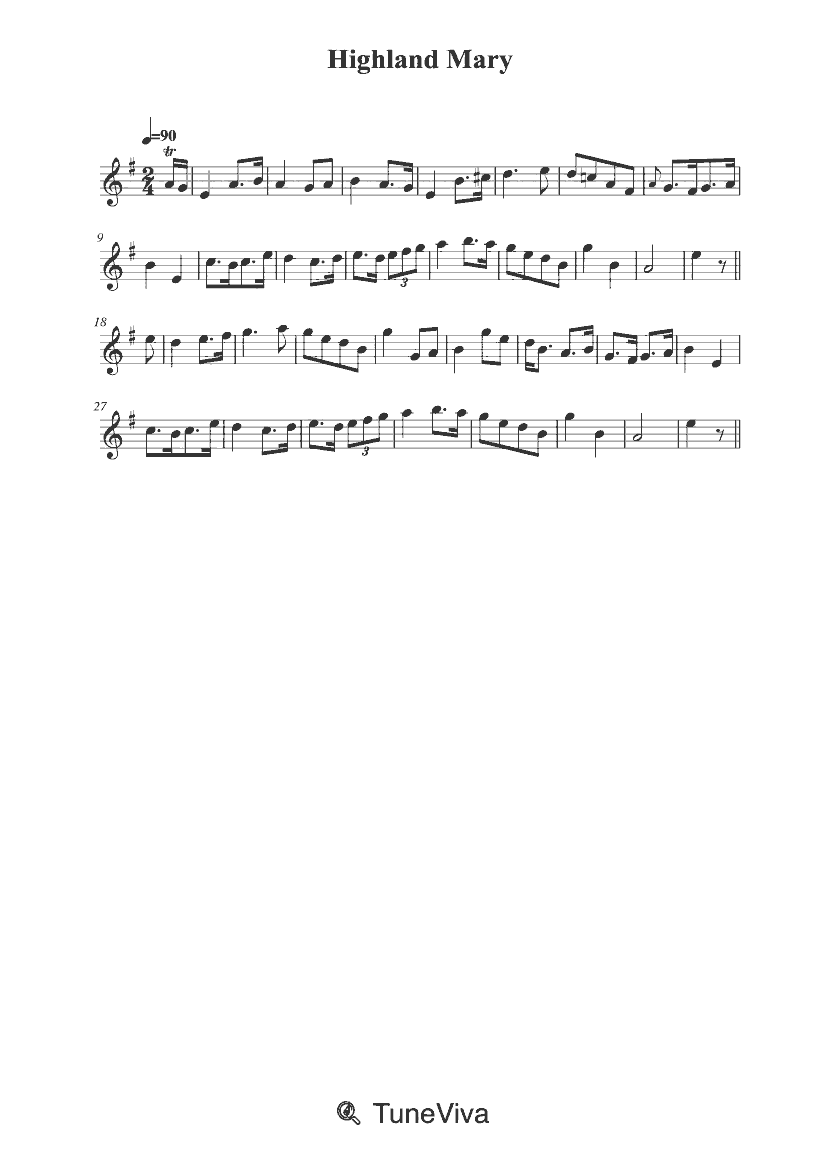
Misc tunes
42 sec
Open score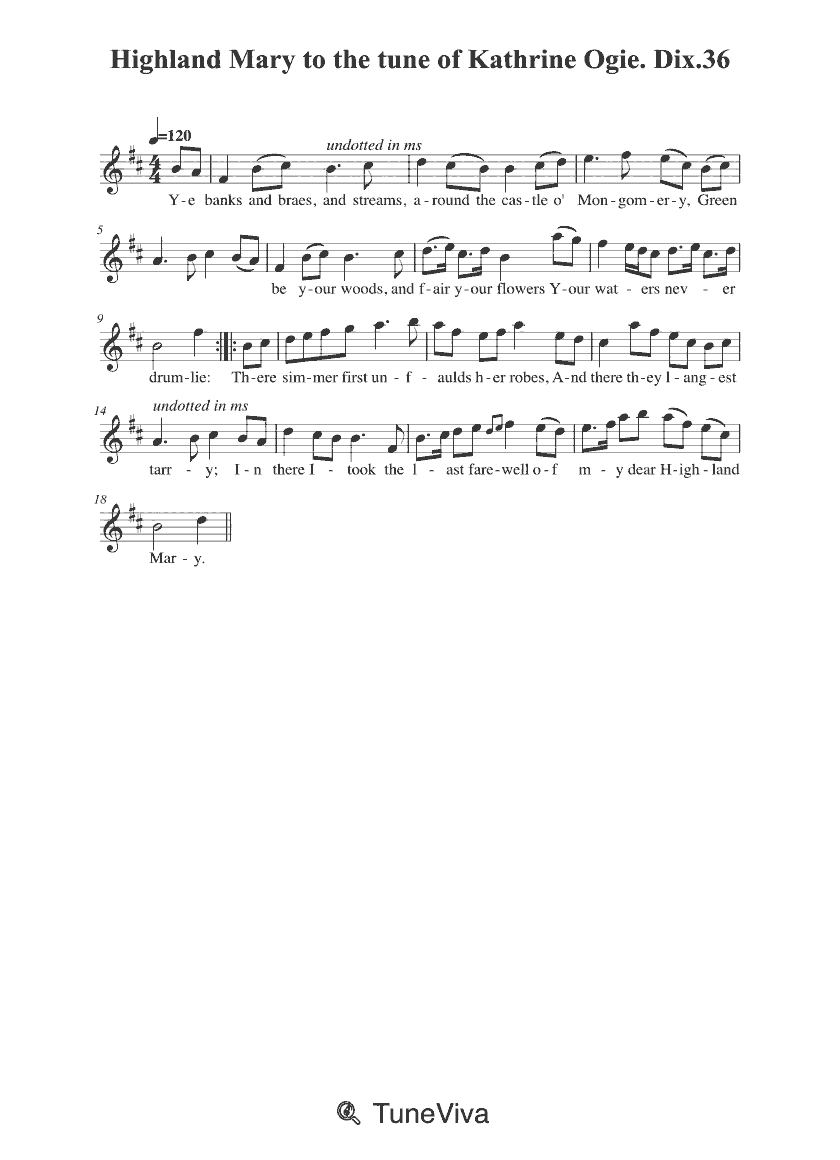
Misc tunes
1 min 4 sec · Score #68716
Open score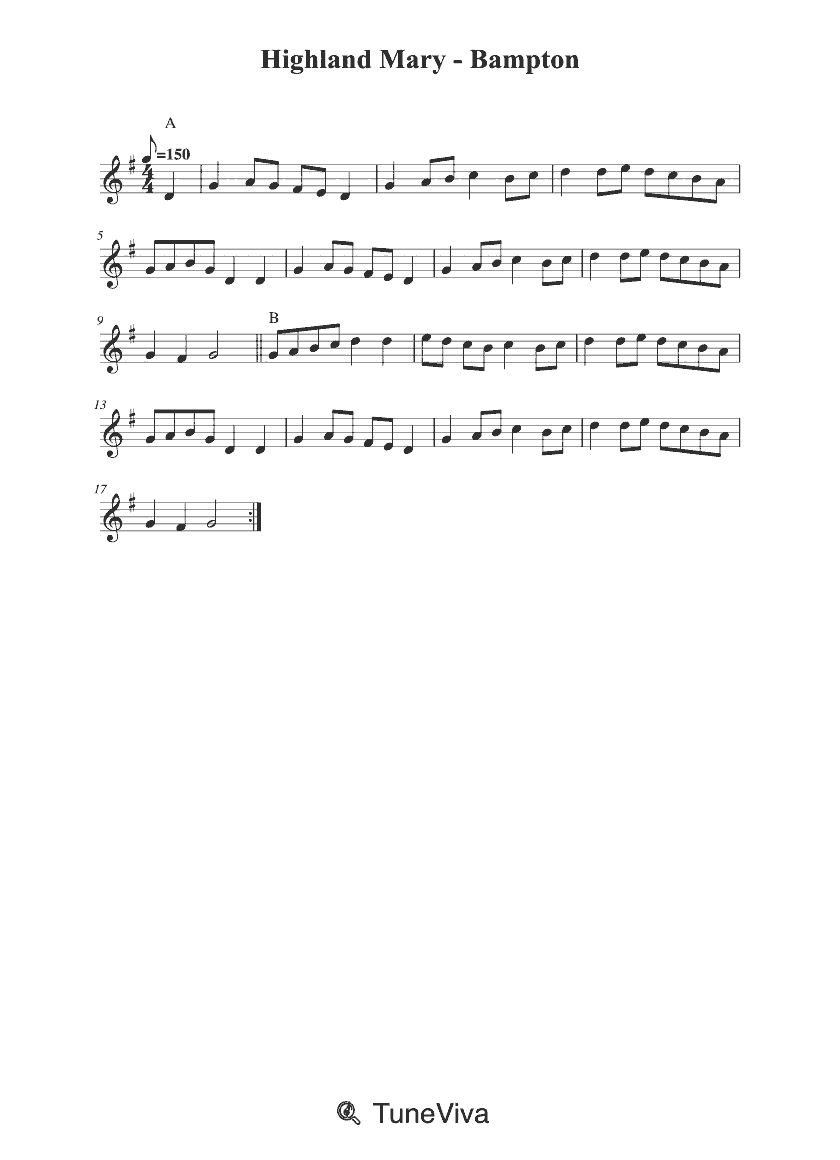
Misc tunes
1 min 44 sec
Open score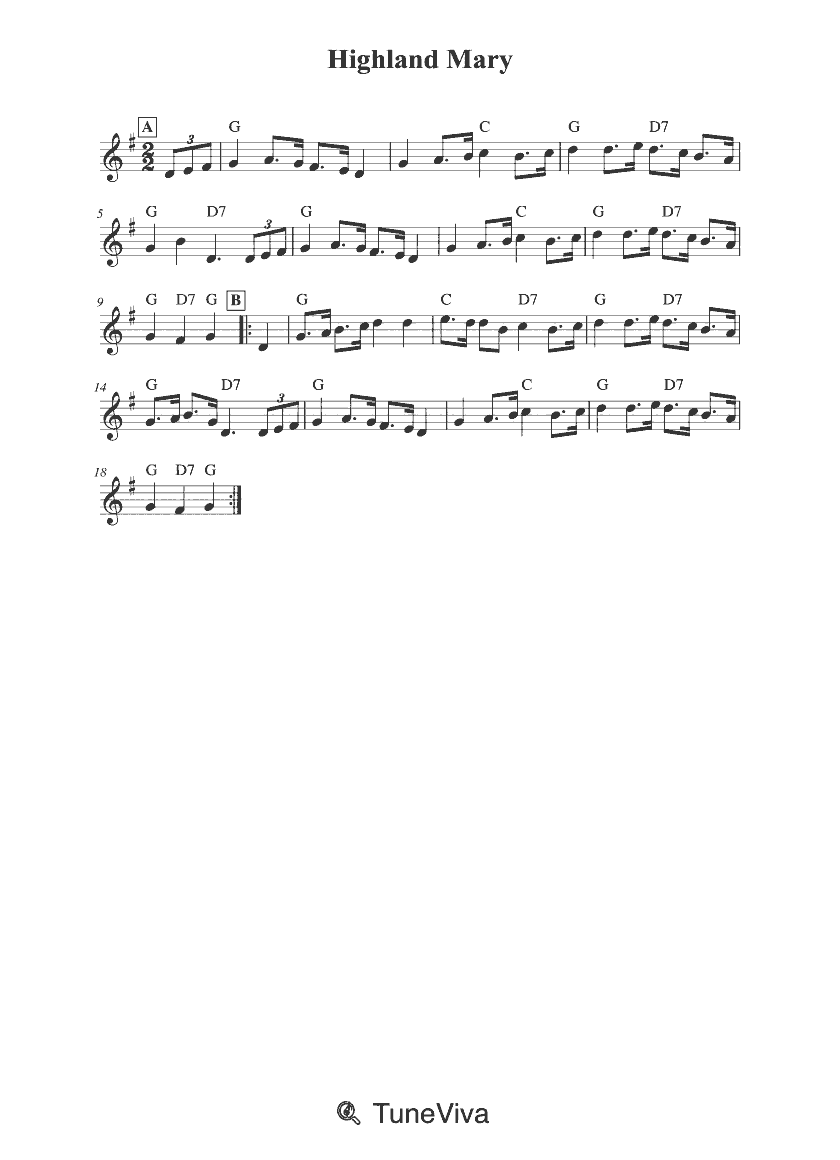
Misc tunes
1 min 37 sec · Score #180463
Open score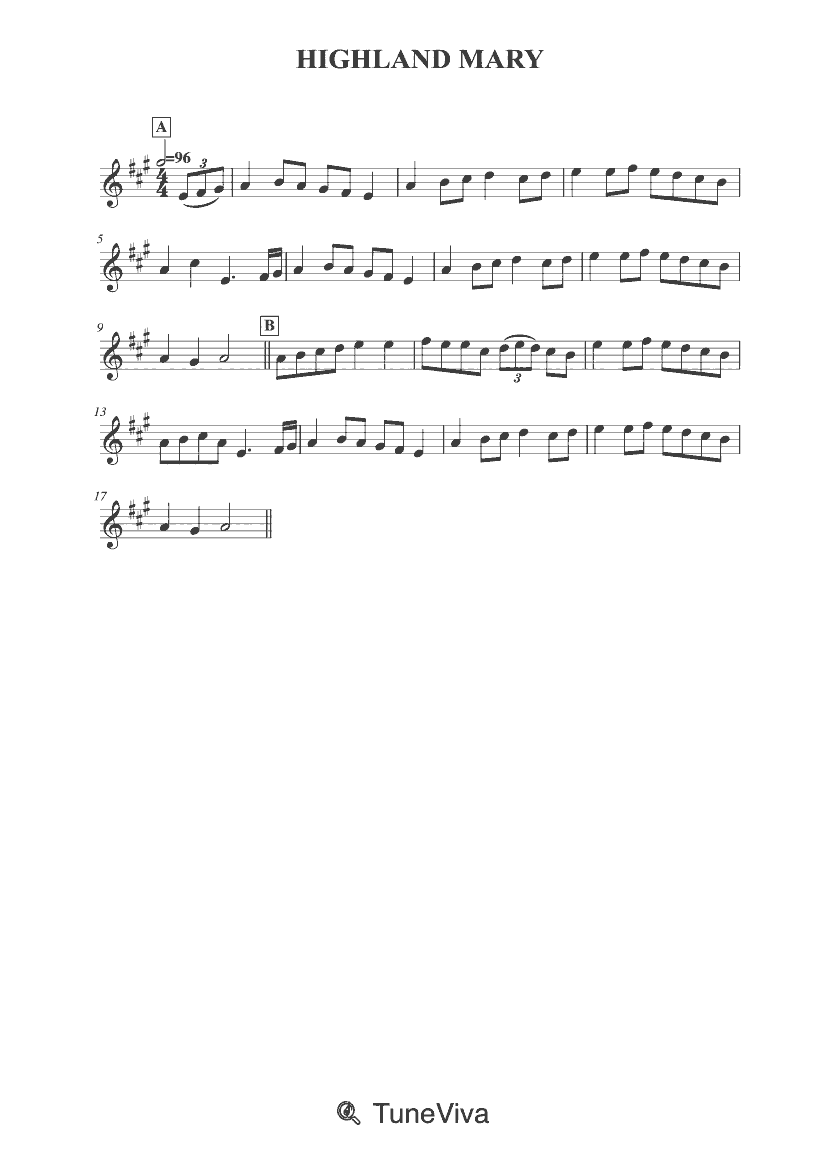
Misc tunes
20 sec · Score #34068
Open score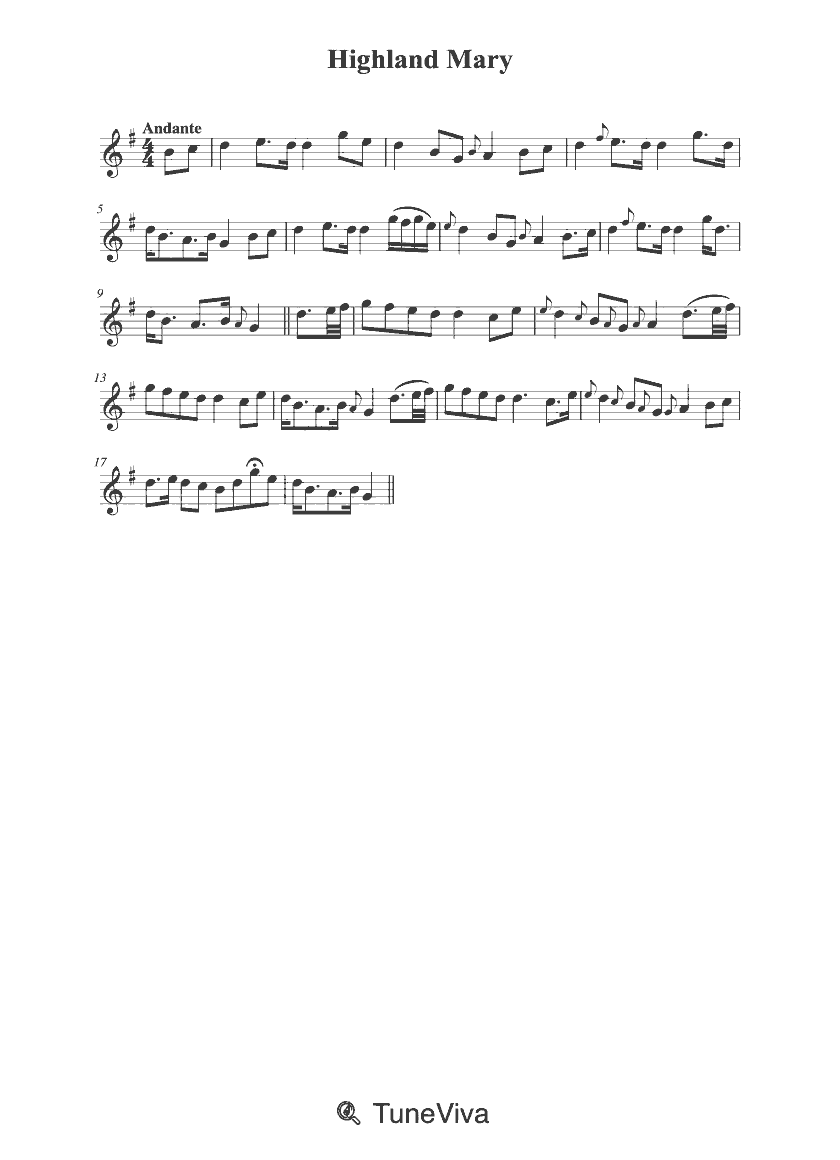
Compd by Miss Lucy Johnson"
44 sec
Open score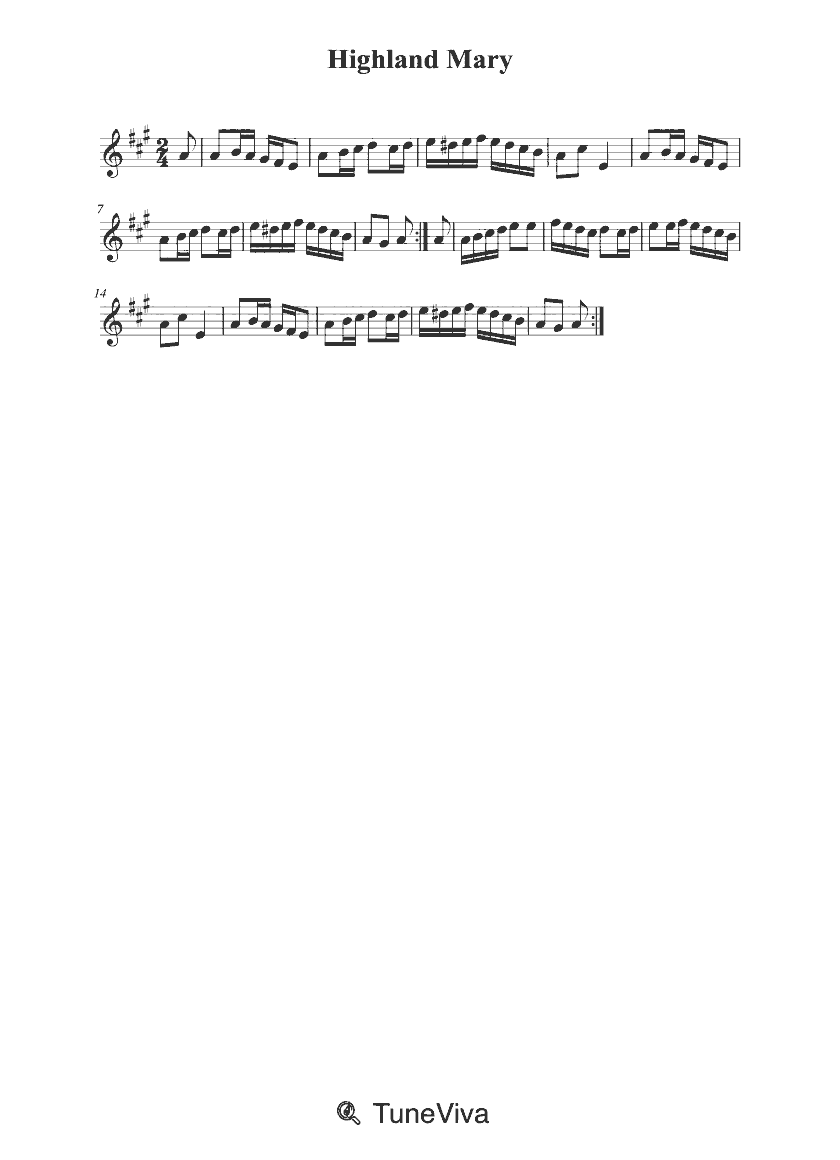
Misc tunes
40 sec · Score #149848
Open score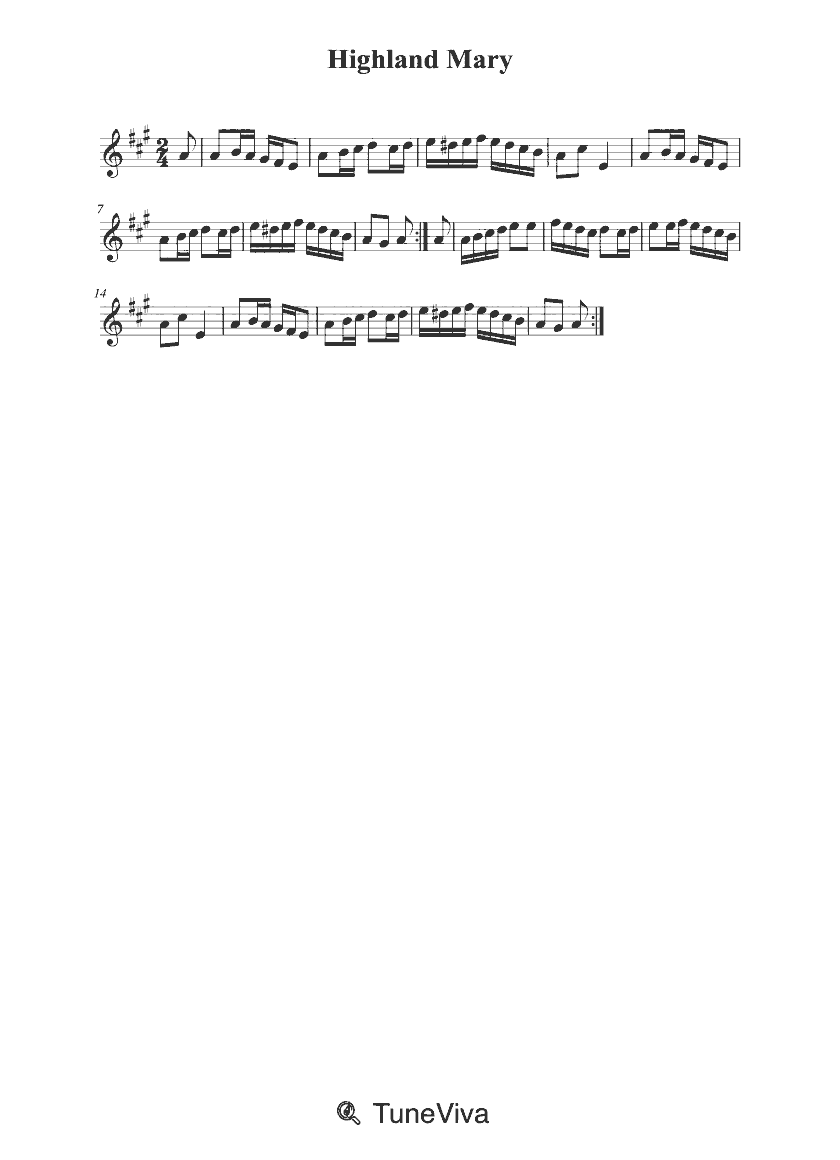
Misc tunes
40 sec · Score #177537
Open score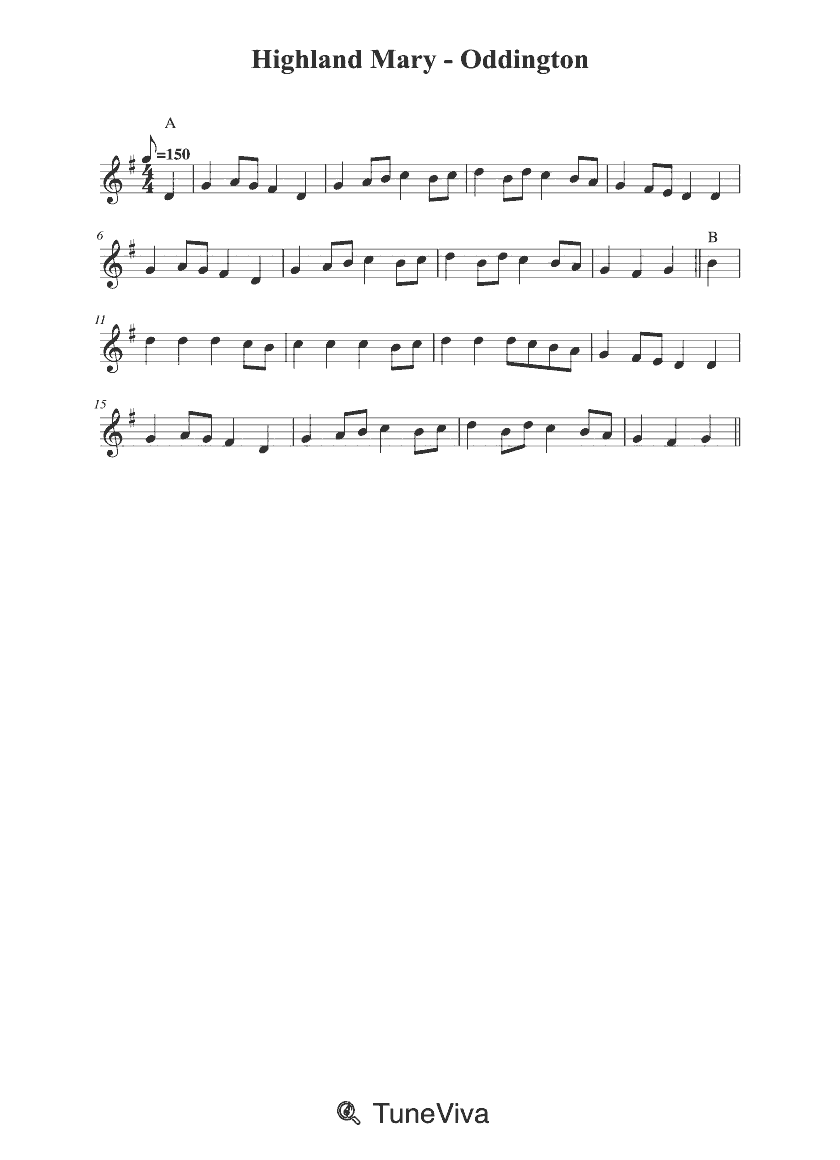
Misc tunes
51 sec
Open score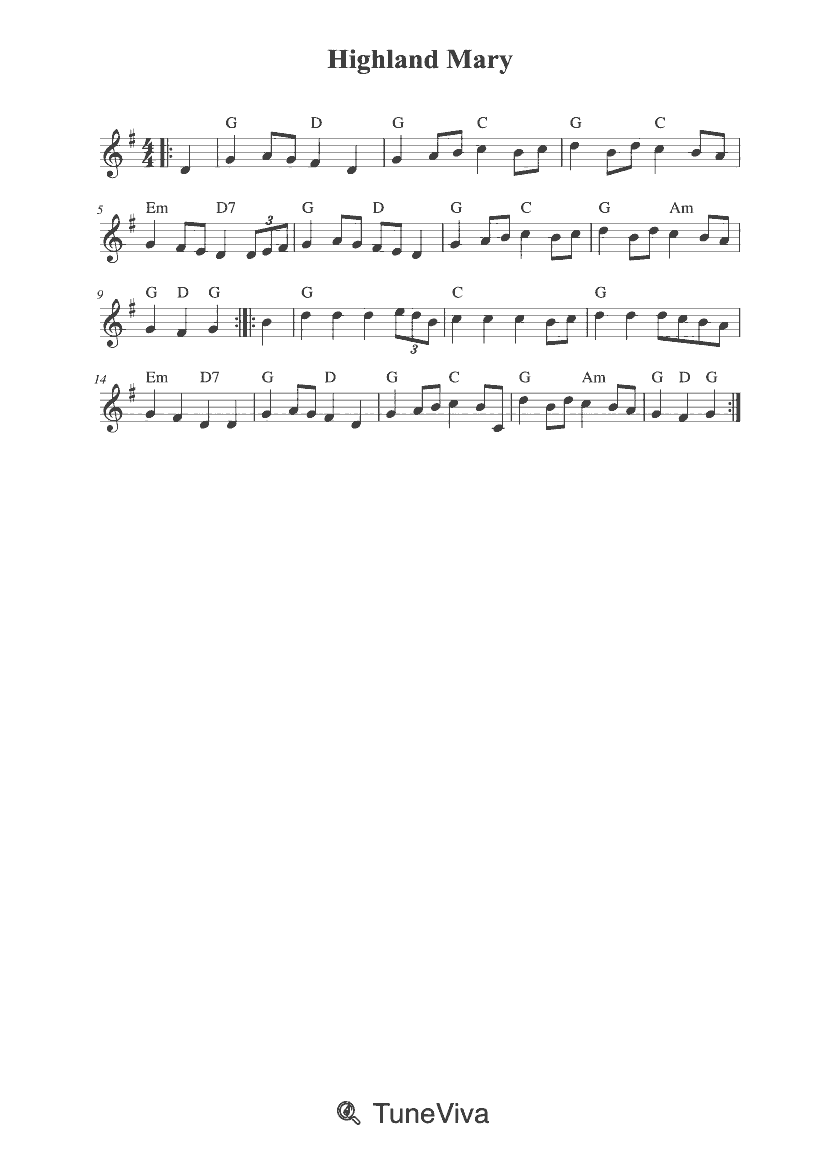
Misc tunes
Mild and Hairy
1 min 4 sec
Open score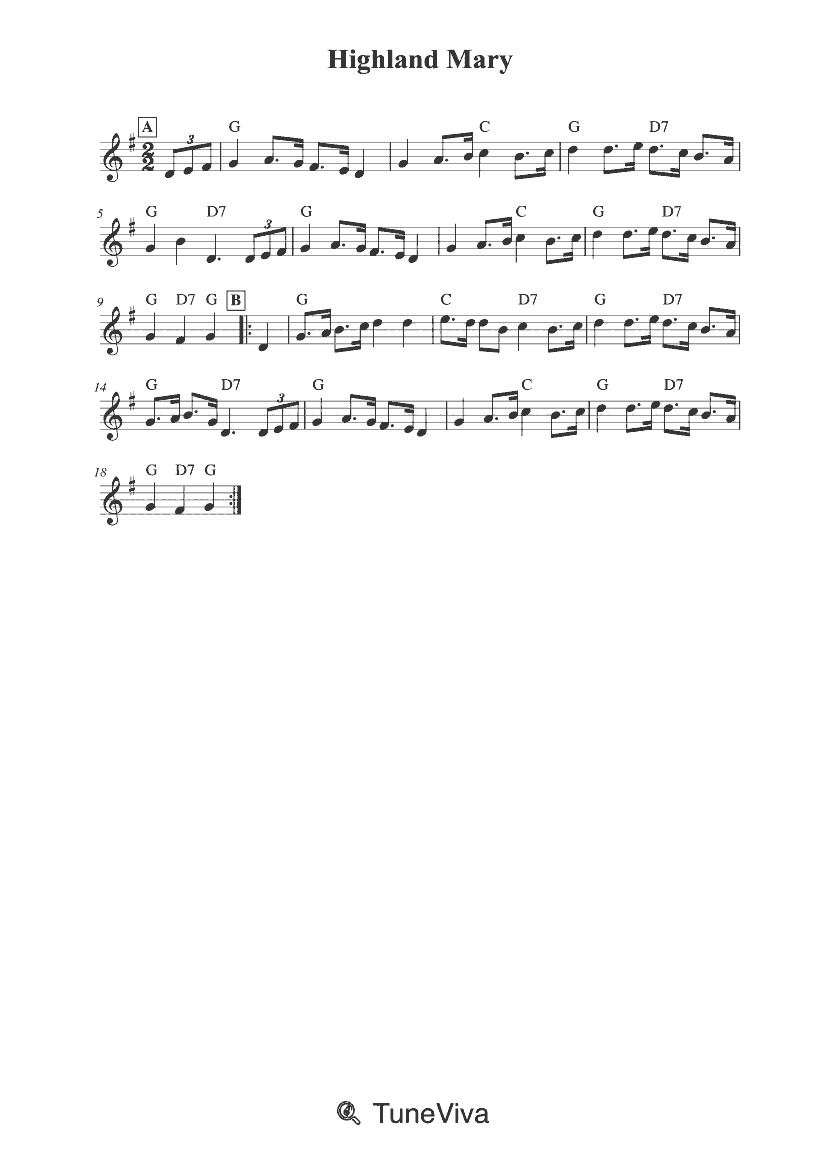
Misc tunes
1 min 37 sec · Score #24903
Open score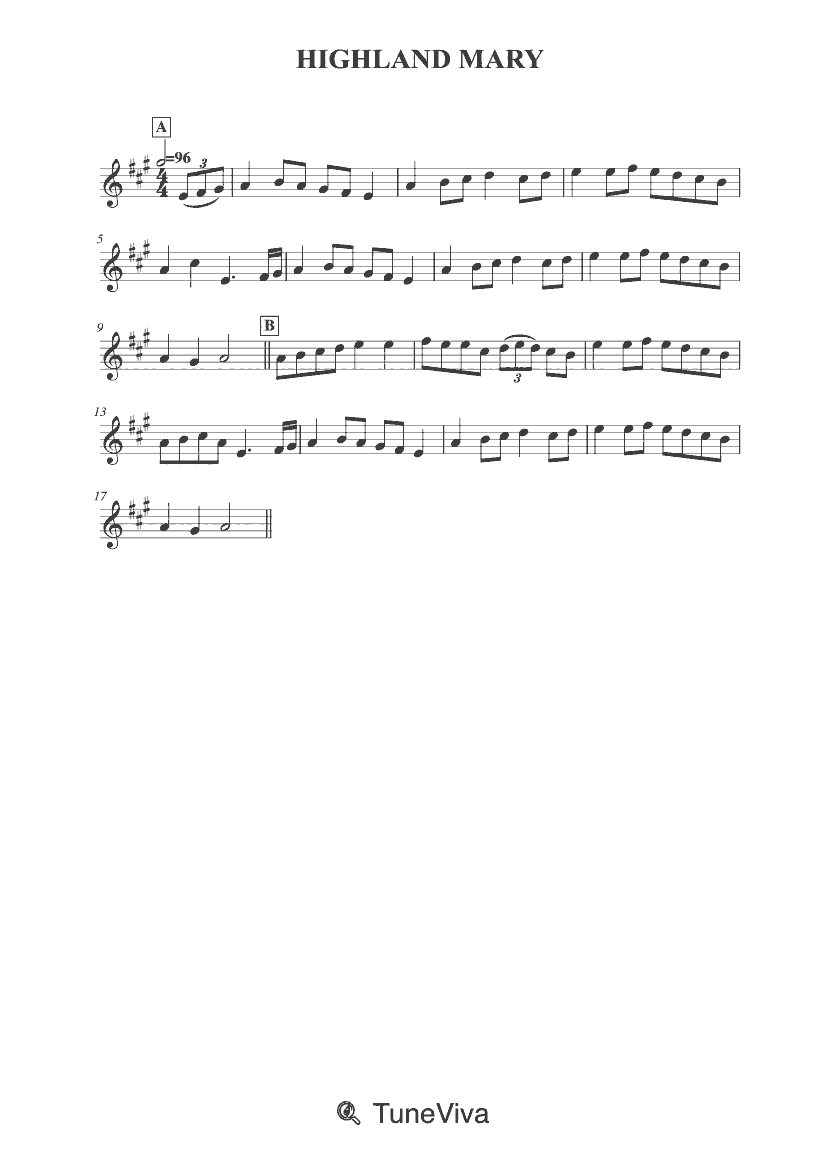
Misc tunes
20 sec · Score #26081
Open score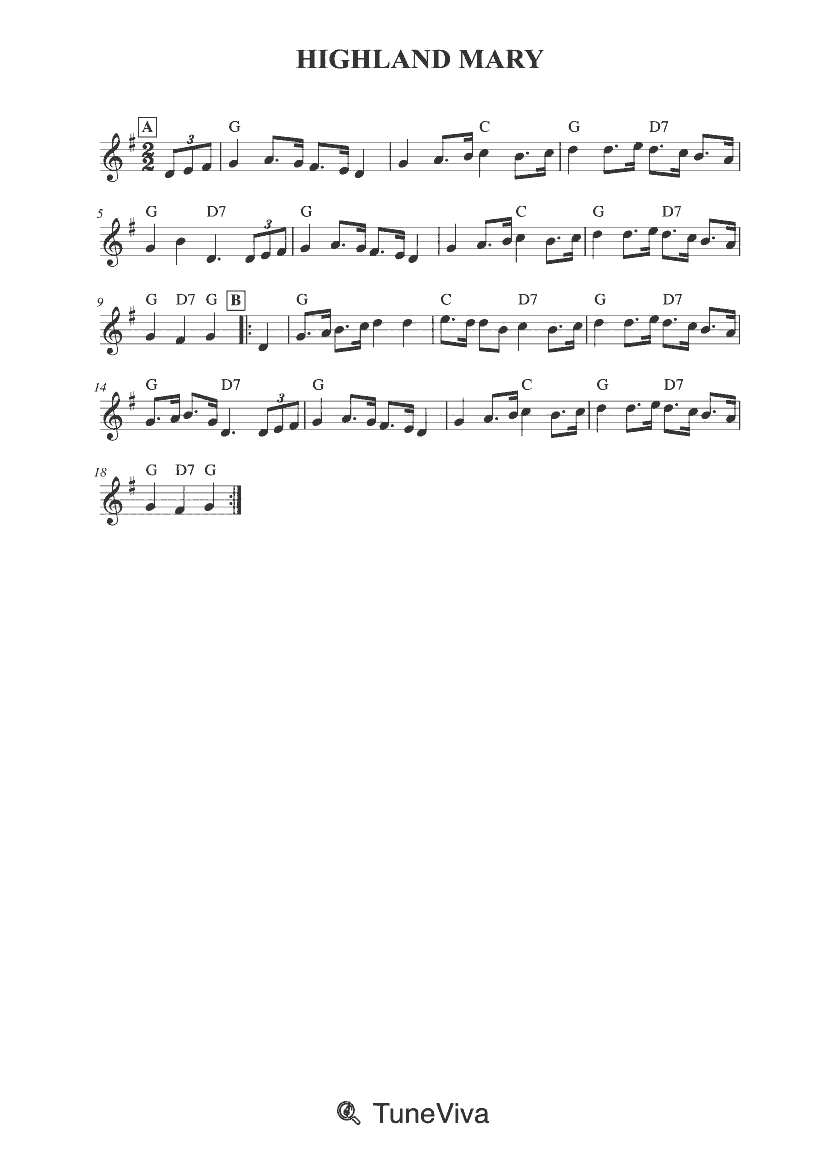
Misc tunes
1 min 37 sec · Score #35393
Open score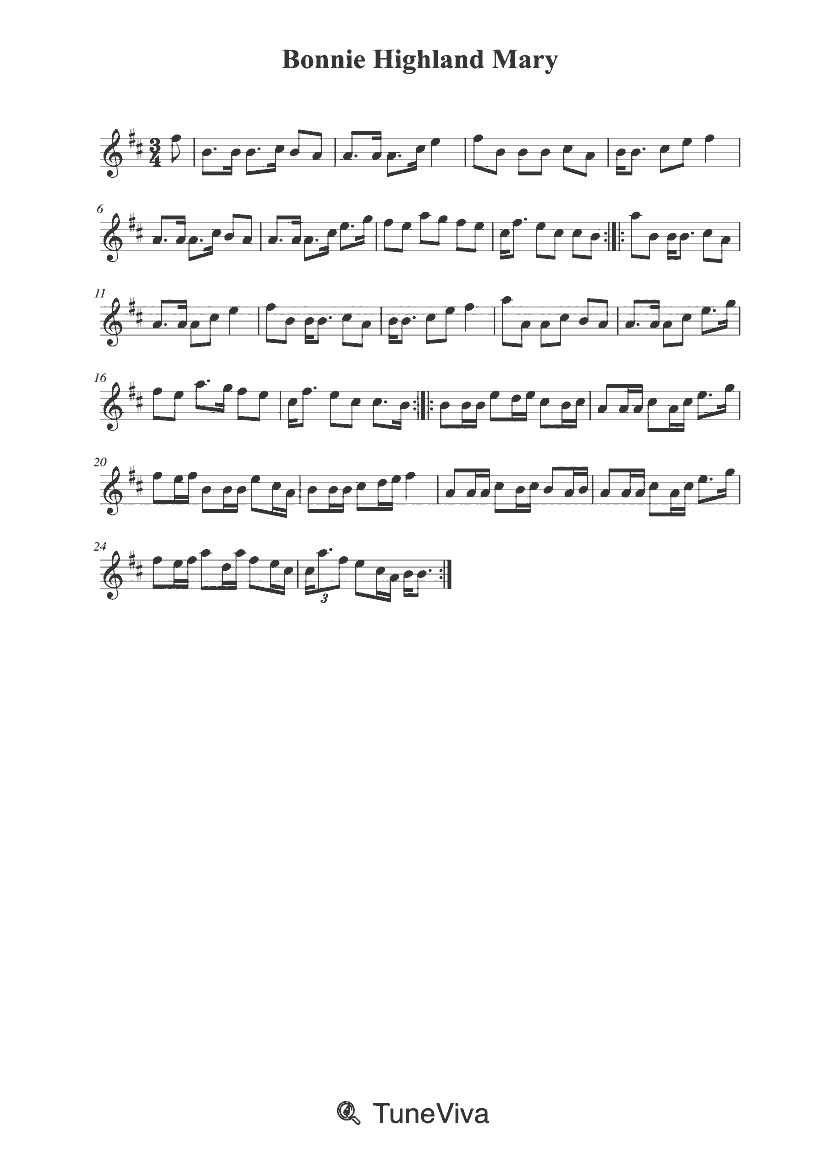
Misc tunes
1 min 12 sec
Open scorePage 1 of 2
The name Highland Mary is attached to three quite different items here. One is a bare tune of 49 notes lasting about 16 seconds; one is labelled a Morris dance, with 90 notes over roughly 32 seconds; and one is titled 'Highland Mary to the tune of Kathrine Ogie. Dix.36', running to 194 notes and about a minute. Treat these as distinct arrangements and readings rather than as long and short versions of the same text setting. Read the full title of each before deciding, because the melody and the key may not be the same piece.
All three listings give an opening time signature of 4/4, which is a useful common thread if you are playing them together or comparing versions. The two shorter items are in G major (one sharp). The setting that names Kathrine Ogie opens in B minor (two sharps) and carries an opening tempo of 120 BPM; the other two listings give no tempo. An opening key signature describes where the score begins and does not rule out later modulations, so scan the whole piece if key stability matters for your instrument.
For a brief tune to learn or to use as a dance melody, the two shorter G major settings are the more compact choices, and the Morris dance title makes its likely use fairly clear. If you want a fuller, slower-moving reading with a stated pulse, the B minor setting titled to Kathrine Ogie is the longest of the three and the only one with a tempo marking. Instrumentation is not stated on any of the listings, so check the score itself before assuming it suits a particular instrument or voice.
Catalogue duration 16 sec. Opening key signature: 1 sharp (G major). Opening time signature: 4/4.
Catalogue duration 32 sec. Opening key signature: 1 sharp (G major). Opening time signature: 4/4.
Catalogue duration 1 min 4 sec. Opening key signature: 2 sharps (B minor). Opening time signature: 4/4. Opening tempo: 120 BPM.
Three scores are listed under Highland Mary. One is simply titled Highland Mary (G major, 4/4, 49 notes); one is titled Highland Mary - Morris Dance (G major, 4/4, 90 notes); and one is titled Highland Mary to the tune of Kathrine Ogie. Dix.36 (B minor, 4/4, 194 notes, opening tempo 120 BPM).
Every listed Highland Mary score opens in 4/4 time. Two of the three, including the Morris dance setting, open with a one-sharp signature indicating G major; the setting titled to the tune of Kathrine Ogie opens with two sharps, indicating B minor. These describe the opening of each score only, so later key changes are possible.
The title of that score pairs the name Highland Mary with a separate melody called Kathrine Ogie, which indicates the piece is built on that tune rather than on an independent Highland Mary melody. The title is the only indication given in this listing; it does not explain the origin of either the text or the tune, and the appended reference 'Dix.36' is not explained by the listing.
One score is explicitly titled Highland Mary - Morris Dance. It opens in G major in 4/4, contains 90 notes and runs about 32 seconds, which is roughly twice the length of the plain Highland Mary setting listed alongside it. The title points to a dance context, but instrumentation and any dance instructions are not stated in the listing.
None of the three listed Highland Mary scores carries a composer credit; each is attributed only to miscellaneous tunes. That means the listings here cannot confirm who wrote the words or the melody, or whether any of the settings is the work of a named songwriter. If authorship matters for your programme or programme notes, verify it against an authoritative edition.