
Jack on the Green
Misc tunes
21 sec · Score #19259
Open scoreJack on the Green appears here as a tune without a named composer: the listed scores are grouped under “Misc tunes” and carry no author credit. The versions available differ in ways that matter before you play, opening in different time signatures and keys, so the first step is to check the opening bars of the score you intend to use rather than assuming all settings are interchangeable. This page gathers the Jack on the Green sheet music currently listed and explains how the versions differ.
Scores 1–20 of 23
Misc tunes
21 sec · Score #19259
Open score
Misc tunes
31 sec
Open score
Misc tunes
1 min 12 sec · Score #69502
Open score
Misc tunes
1 min 11 sec · Score #26757
Open score
Misc tunes
1 min 11 sec · Score #79142
Open score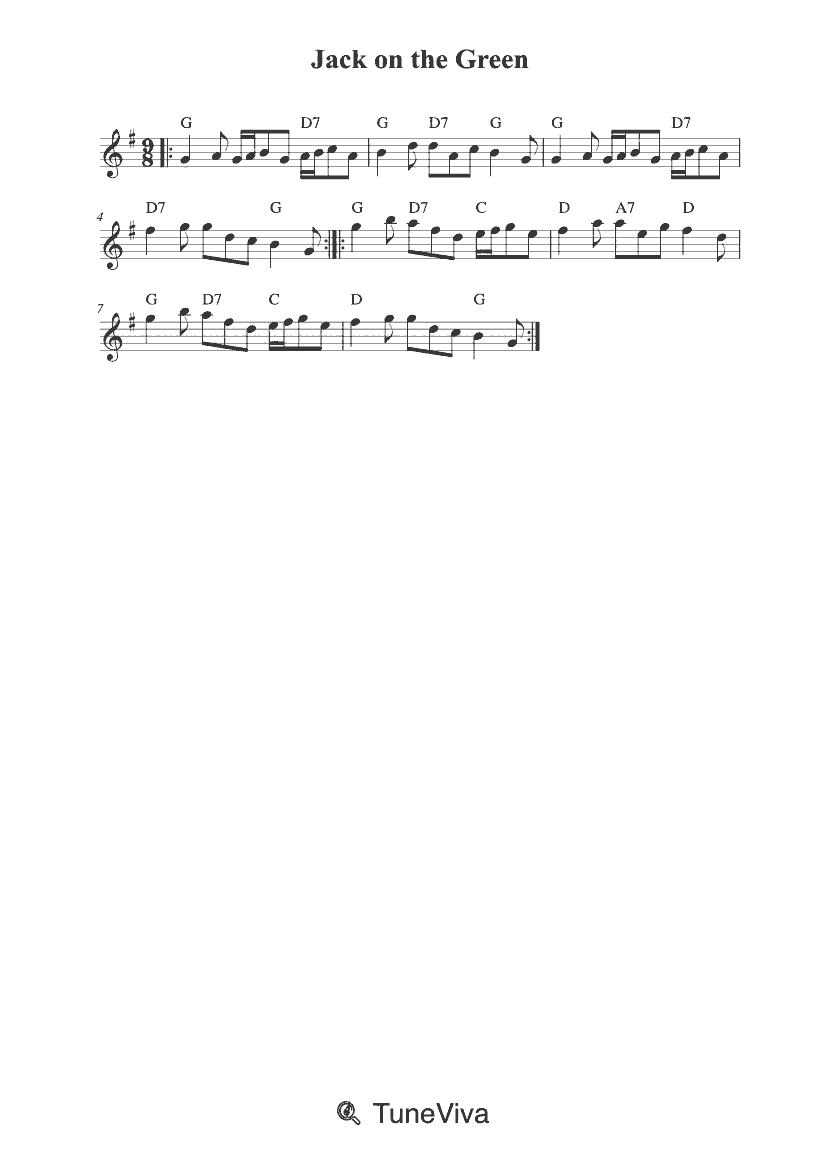
Misc tunes
18 sec · Score #152649
Open score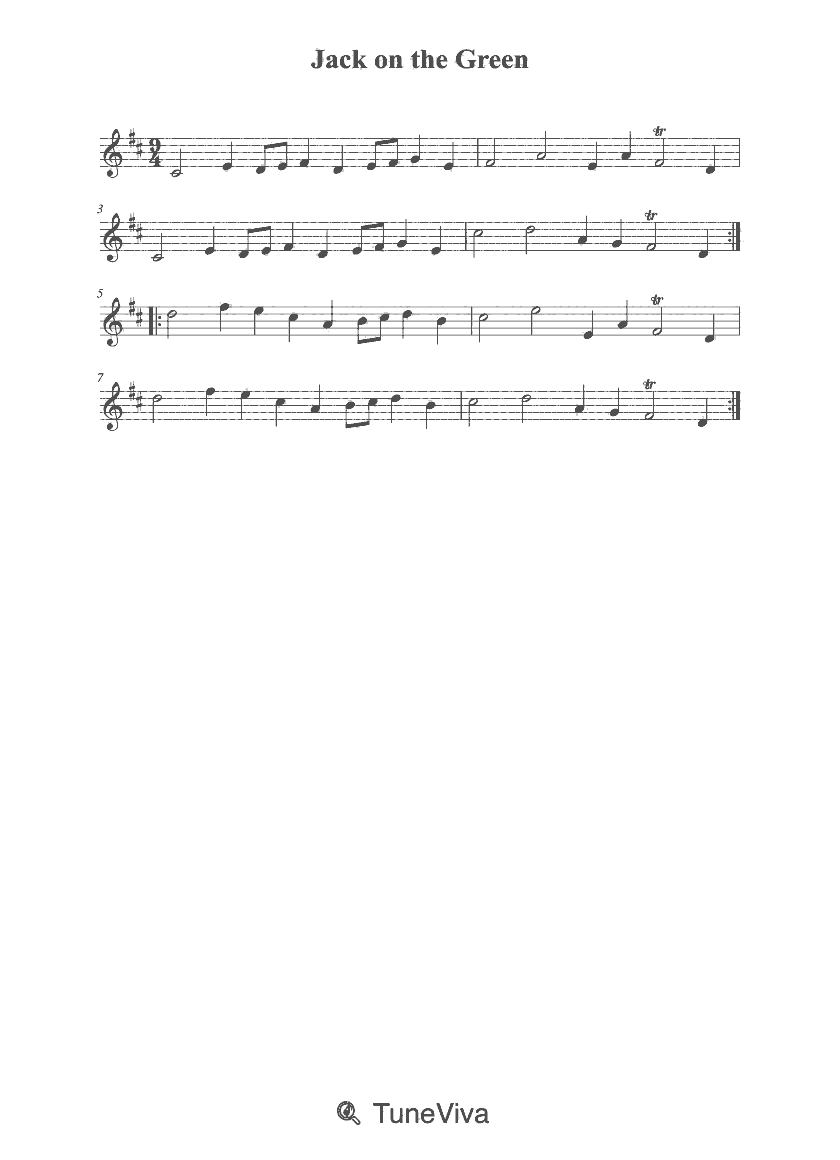
Misc tunes
1 min 12 sec · Score #172149
Open score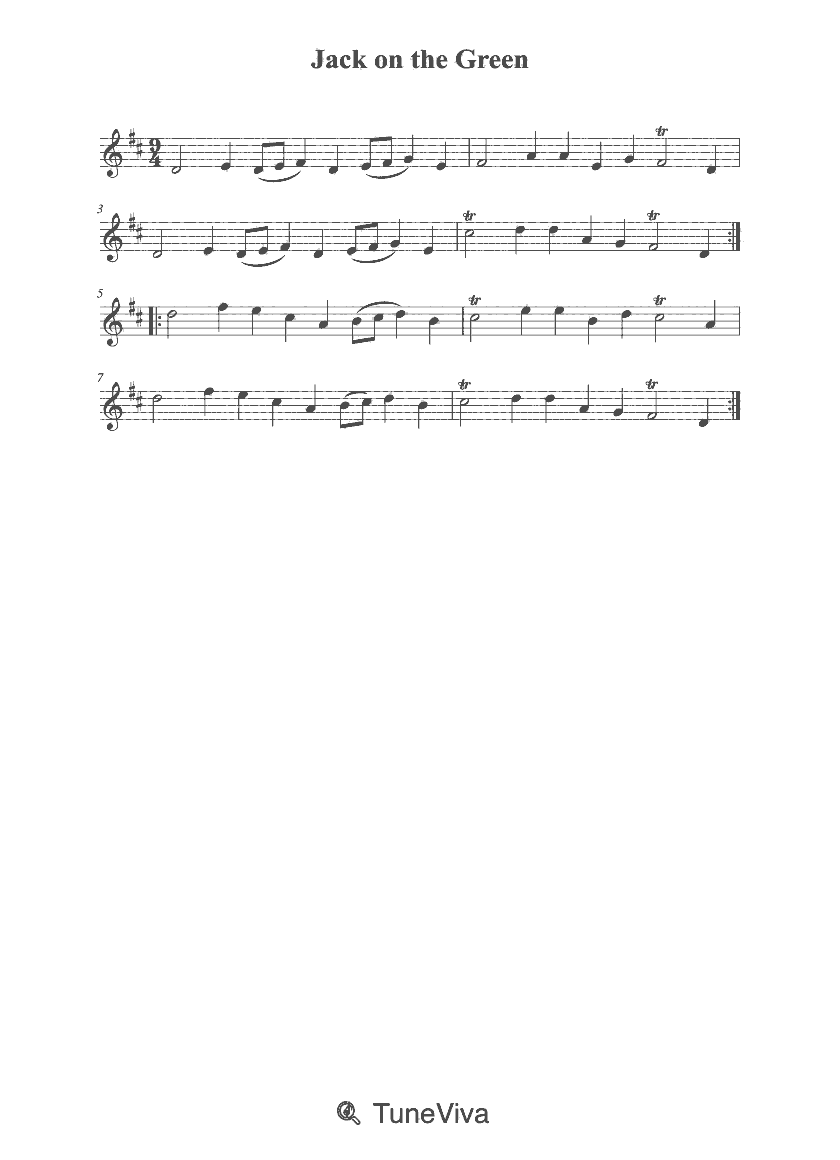
Misc tunes
1 min 12 sec · Score #39063
Open score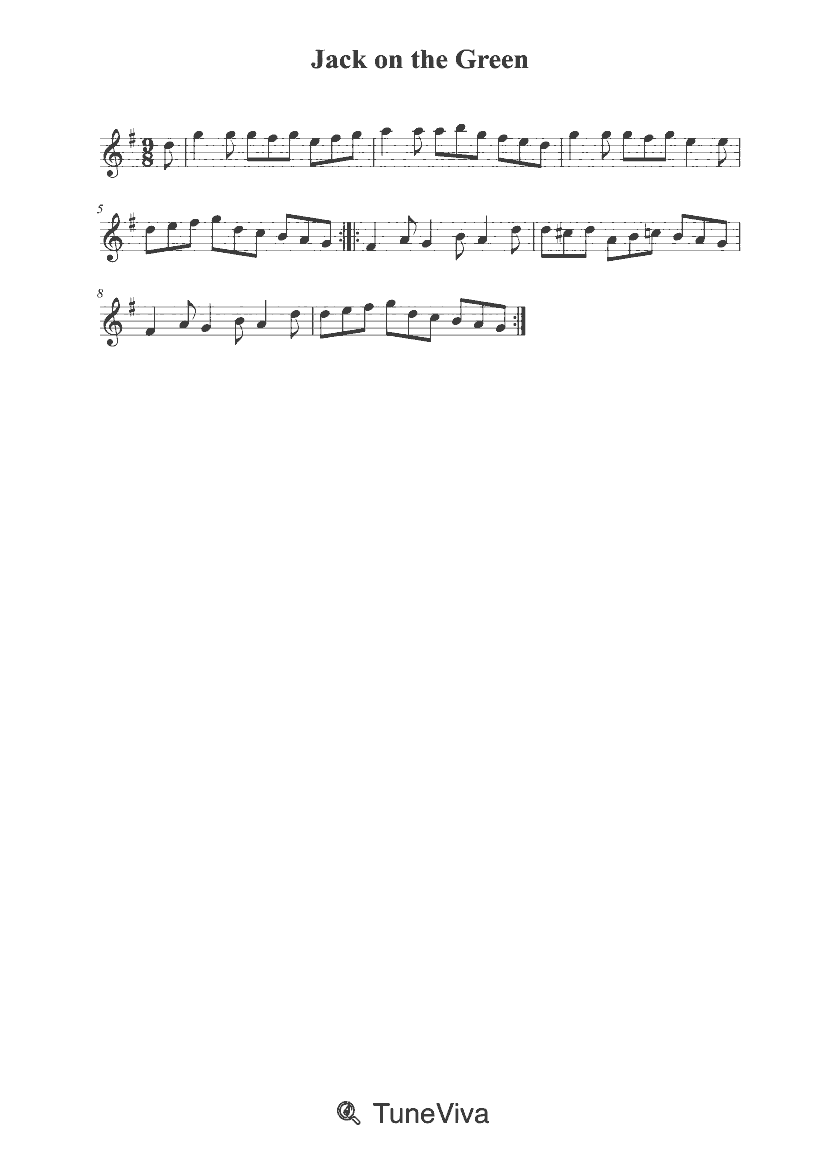
Misc tunes
18 sec · Score #15996
Open score
Unattributed
19 sec
Open score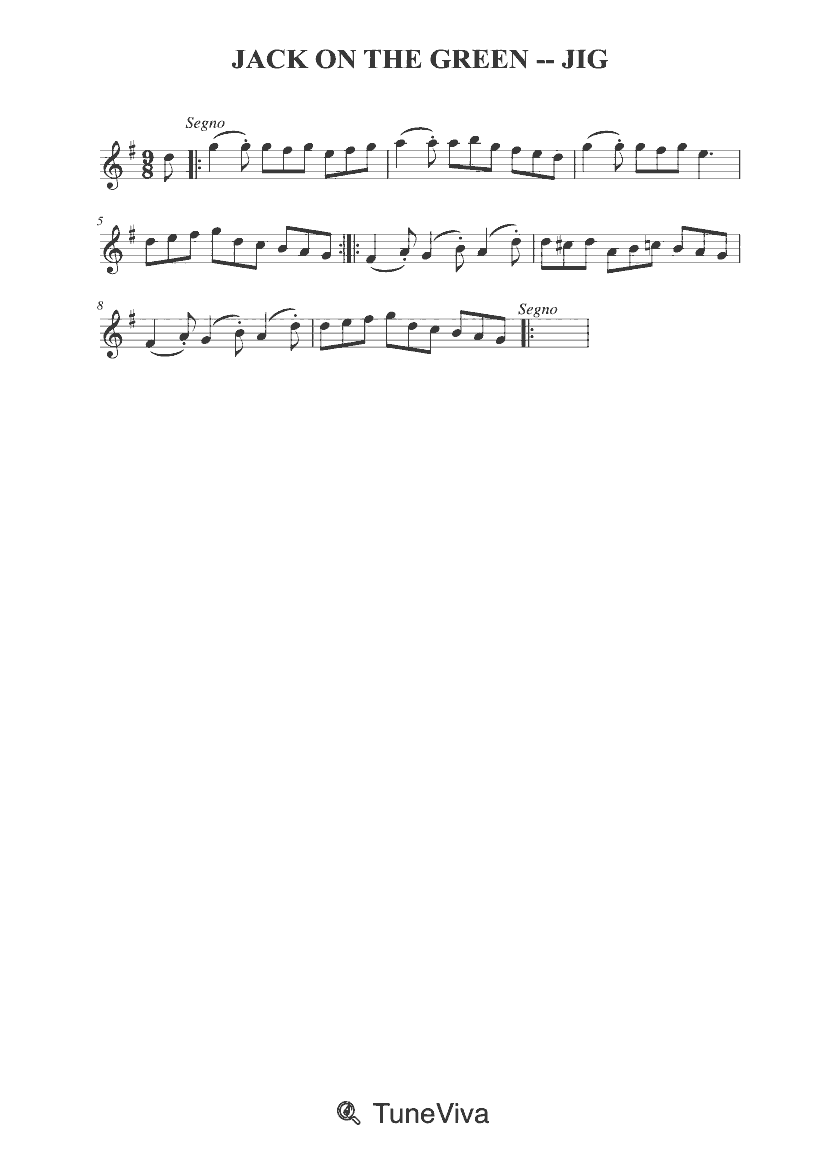
Misc tunes
16 sec
Open score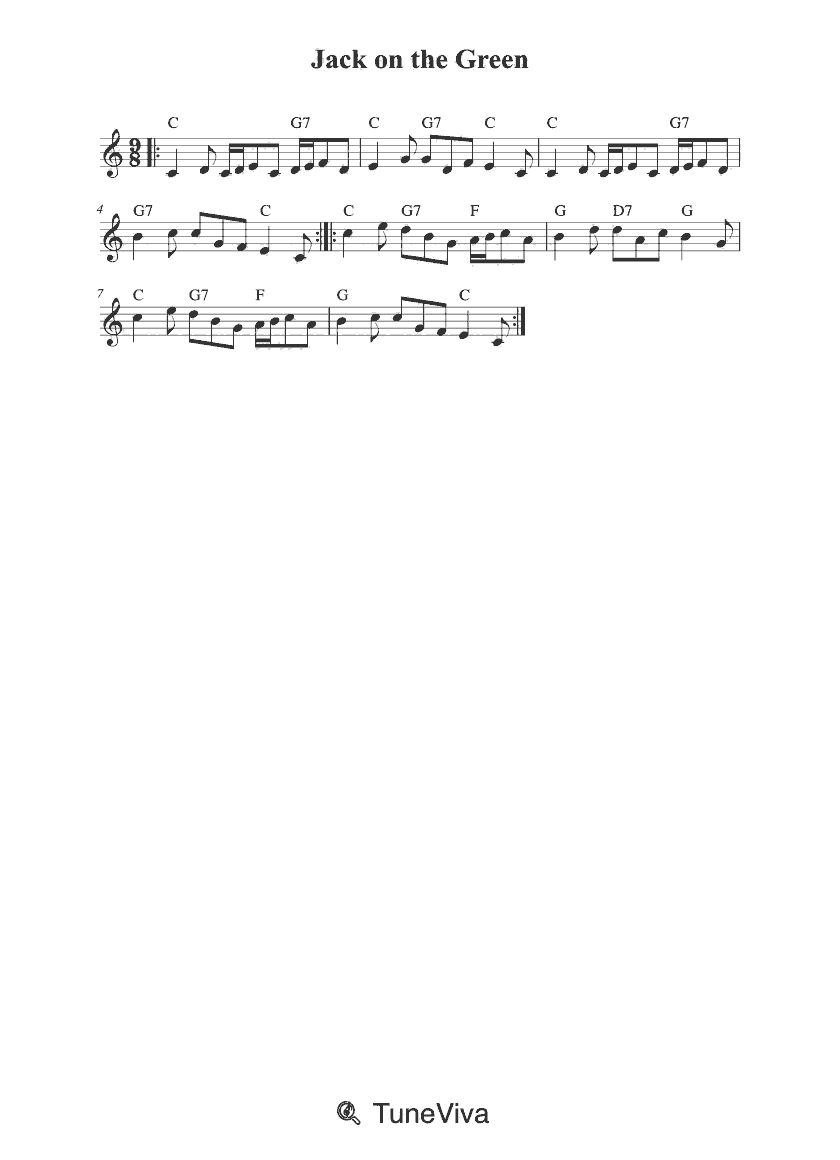
Misc tunes
18 sec · Score #152530
Open score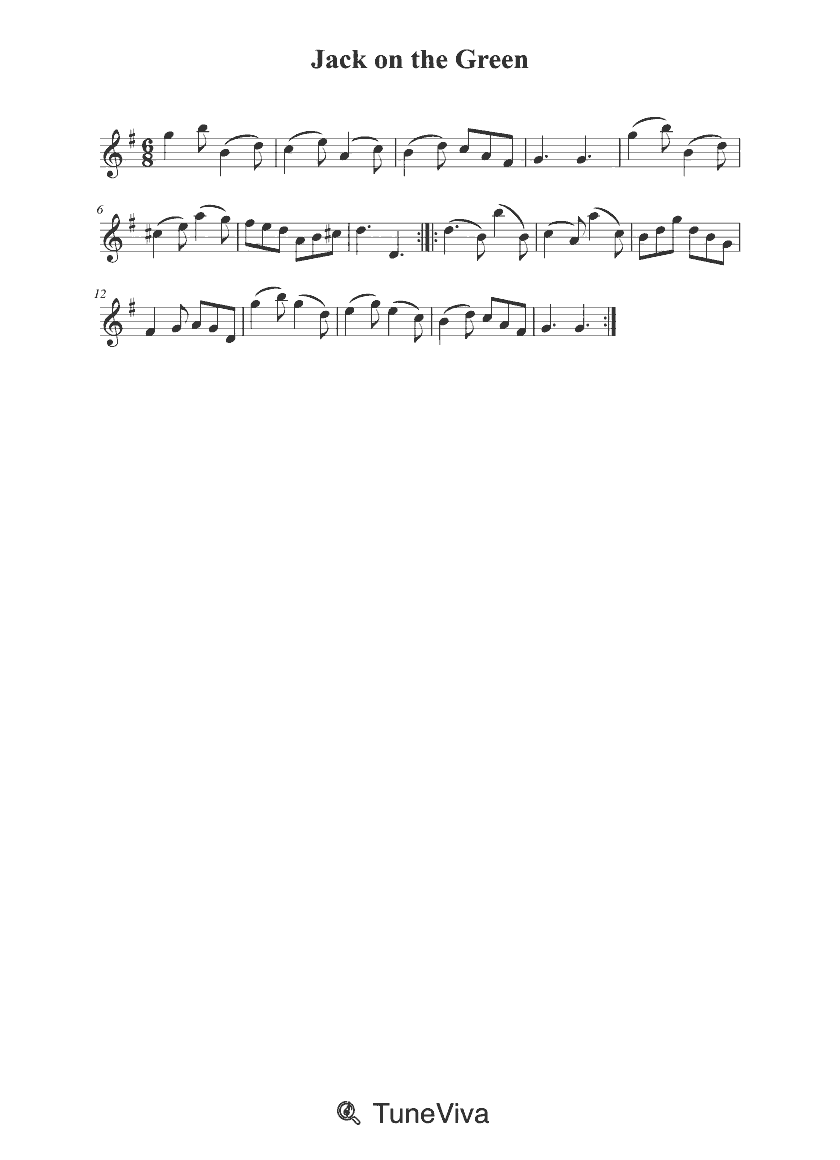
Misc tunes
24 sec
Open score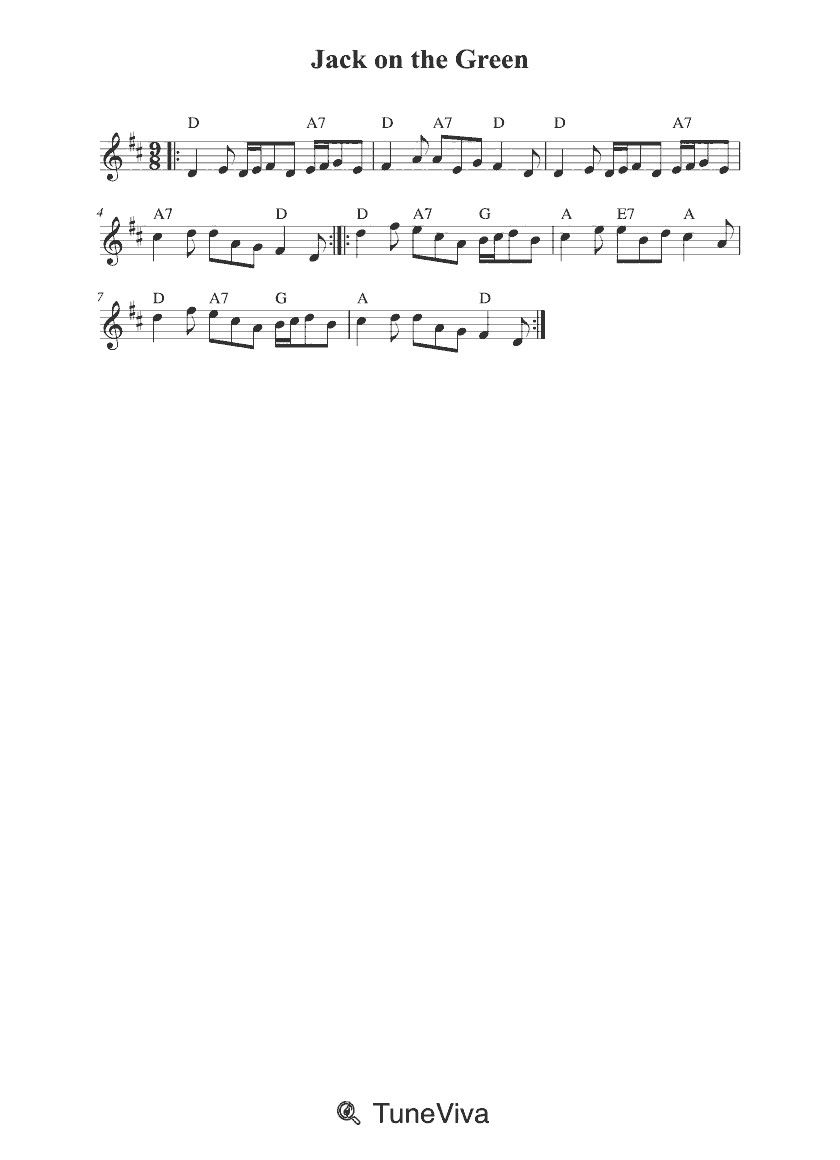
Misc tunes
18 sec · Score #228943
Open score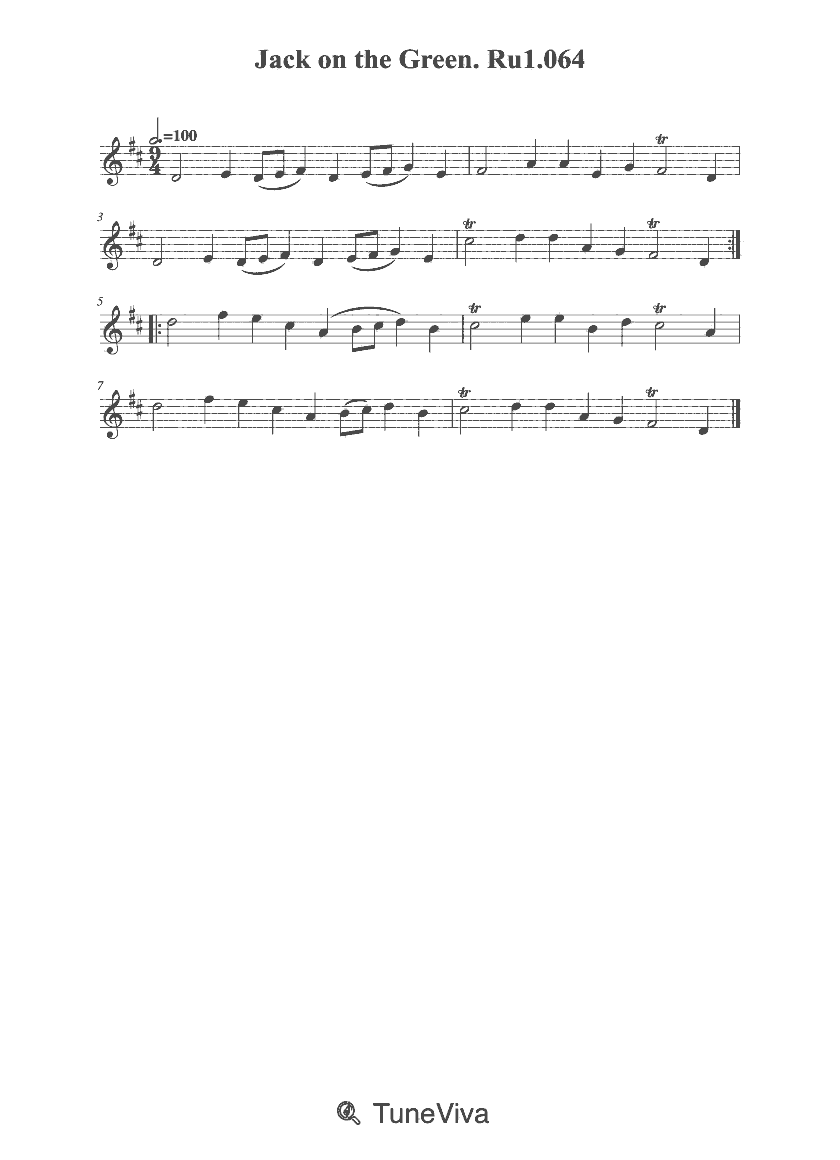
Misc tunes
29 sec · Score #196750
Open score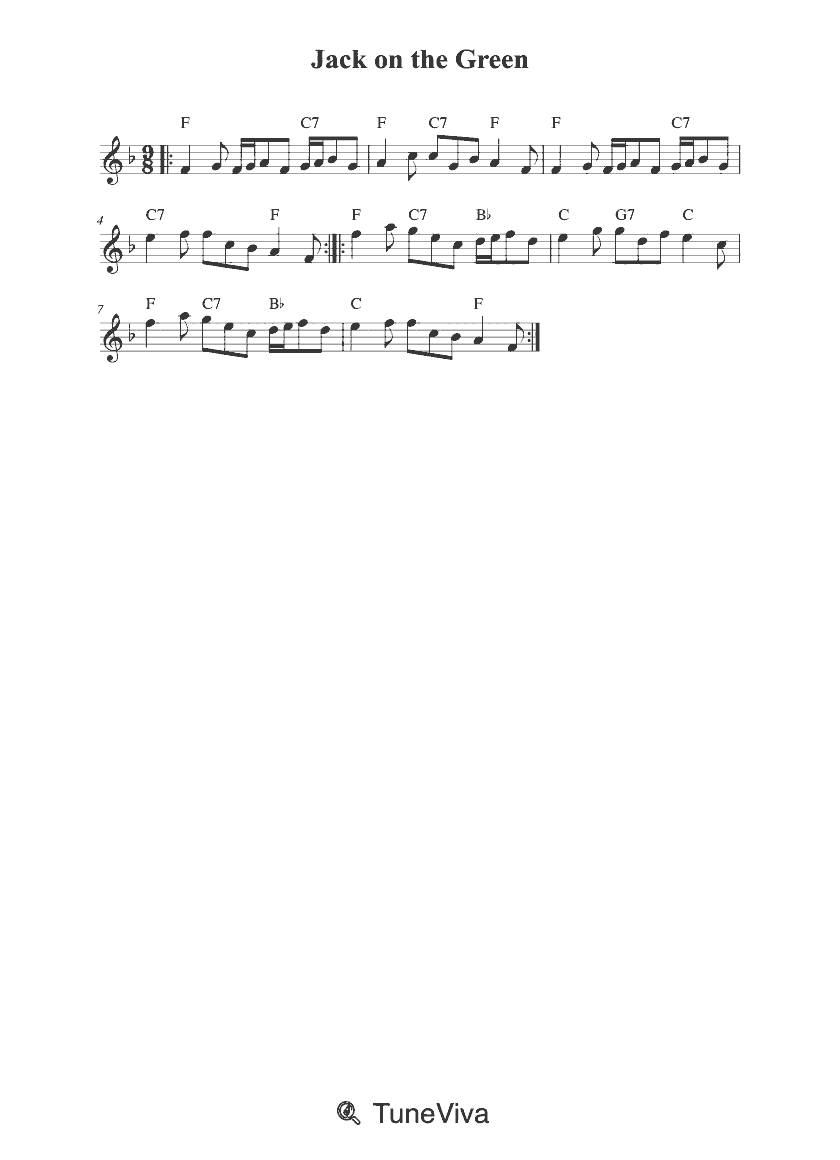
Misc tunes
18 sec · Score #110999
Open score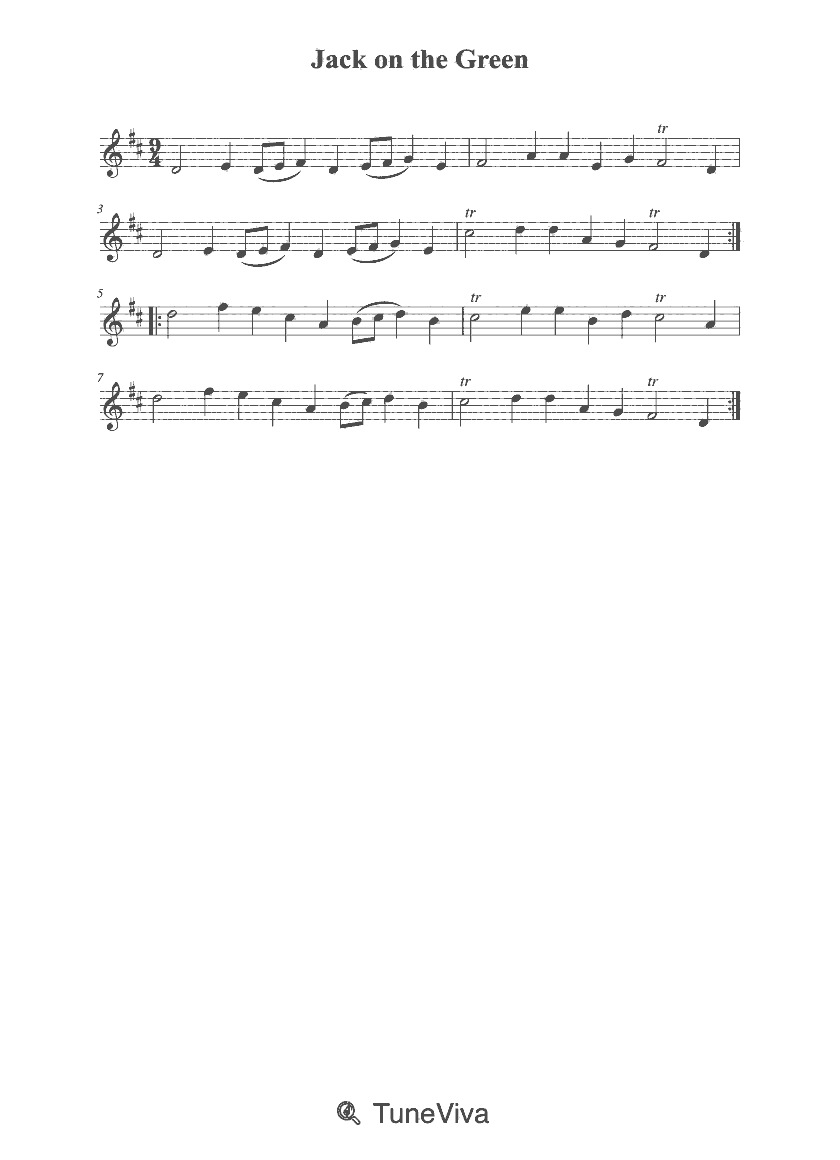
Misc tunes
1 min 12 sec · Score #119813
Open score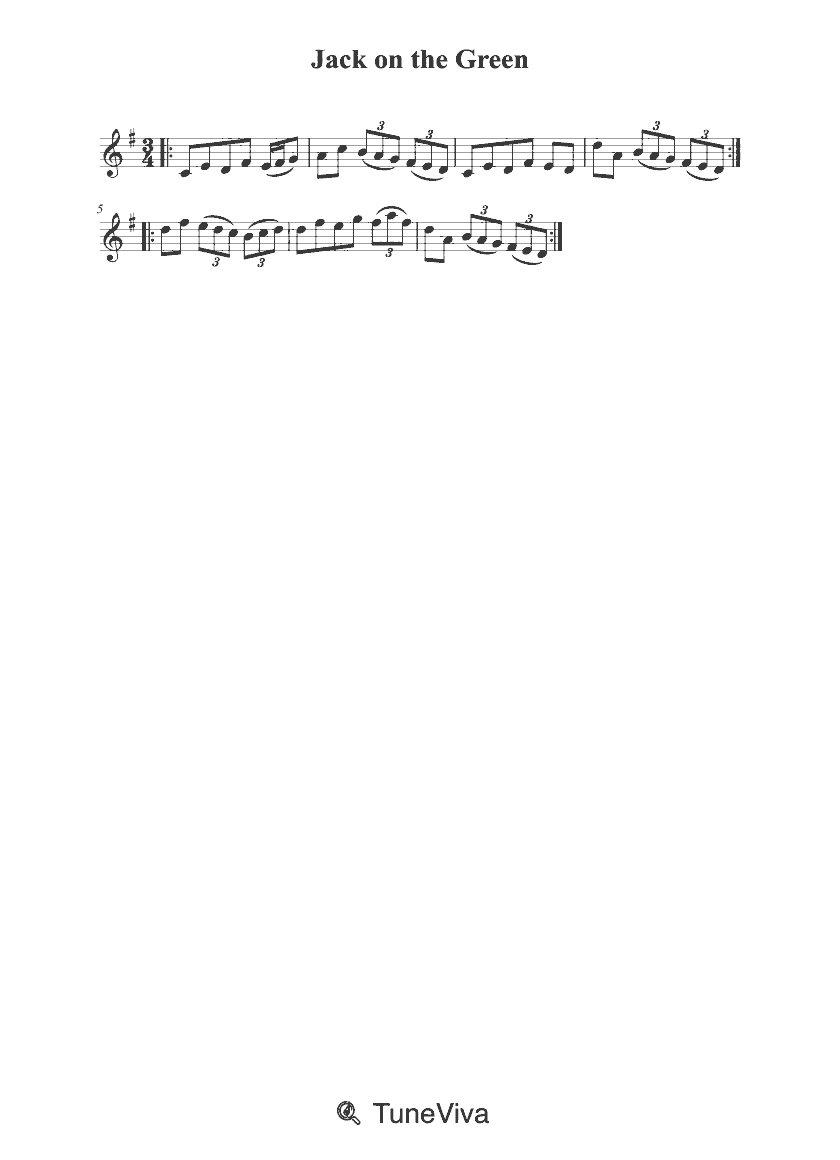
Misc tunes
21 sec · Score #123471
Open score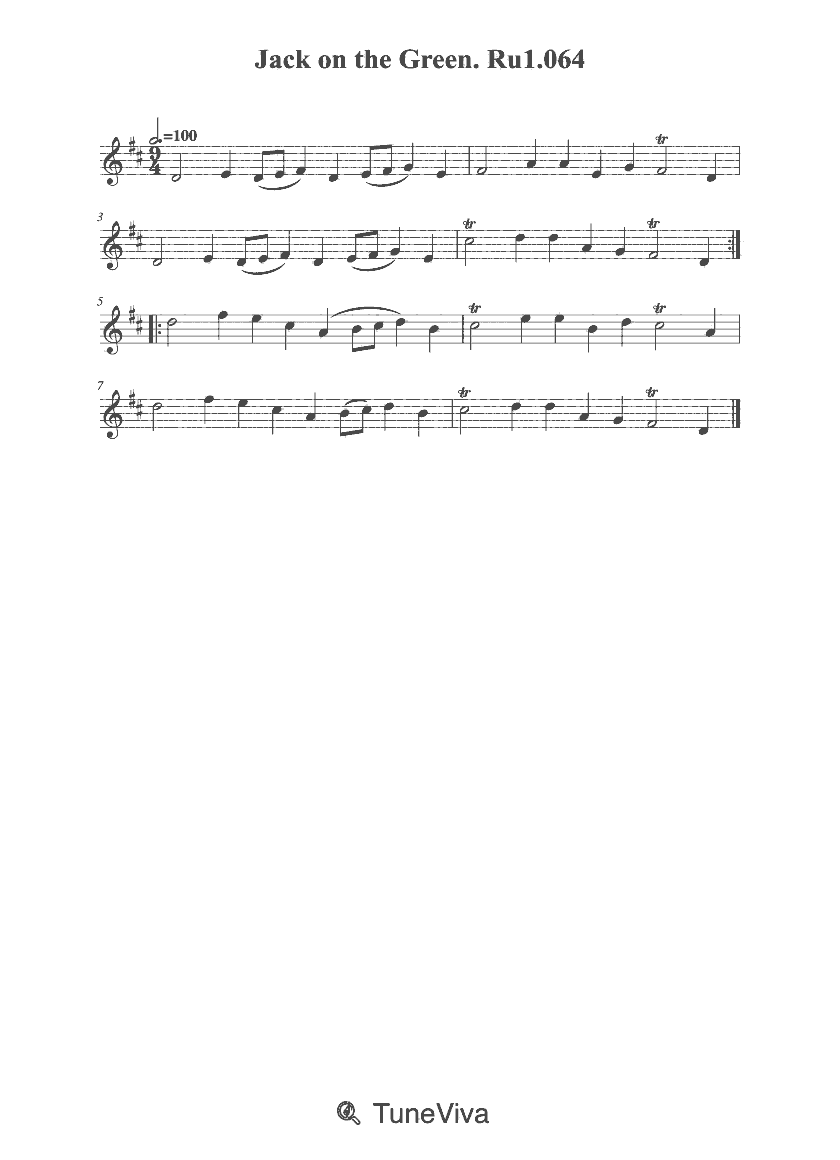
Misc tunes
29 sec · Score #163531
Open score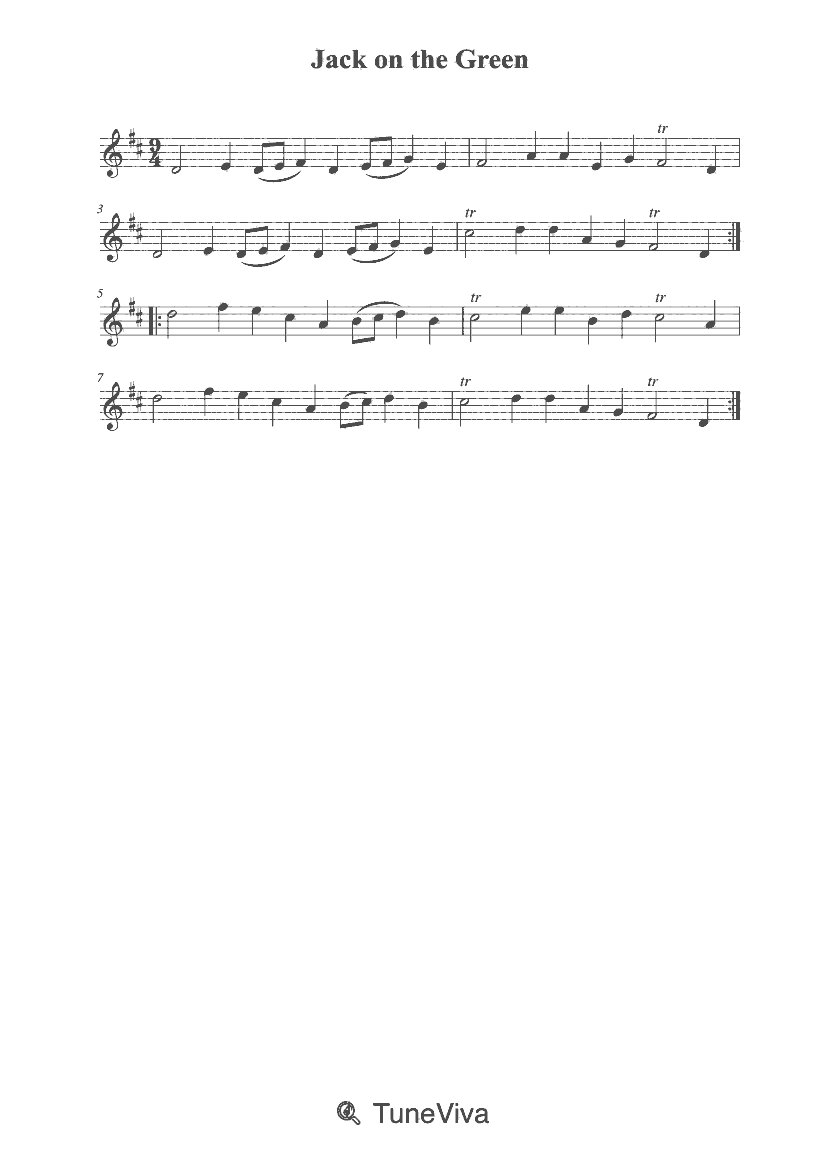
Misc tunes
1 min 12 sec · Score #75638
Open scorePage 1 of 2
The scores listed here do not present a single agreed text. One opens in 9/8 with two sharps, recorded as D major; a second opens in 3/4 with a single sharp; a third opens in 9/4 with two sharps. These are descriptions of individual scores, not proof of the tune's original metre or key. Compare the first few bars of each before deciding, particularly if you are playing with others or matching a recording.
A 9/8 opening suggests compound triple time, where the beat divides into groups of three and the bar has a lilting, circular lilt. A 3/4 opening suggests simple triple time, with each beat dividing into two. The difference is not cosmetic: it changes accent, bowing or breath, and the pace at which the tune sits comfortably. If your source for the tune is a dance calling for one feel, choose the score whose metre matches it. The 9/4 opening is a broader triple metre again, and players should read it as its own setting rather than force it into either pattern.
Decide first on metre, then on key. Players joining a session or a dance set should take the time signature and key from that context and pick the closest listed score. A singer or melody instrument working alone has more freedom, but should still check that the range of the opening phrase suits them. Because the scores here differ in both metre and key, transposing one version to match another may change its character; it is usually simpler to start from the version already in the required key.
No composer, date, region of origin, dance type or instrumentation is documented for these scores. The titles and attributions are catalogue leads rather than a verified history of the tune, and the number of listed scores should not be read as evidence of distinct traditional settings. Where a specific edition, collection or recording is your reference, check its notes against the score in front of you.
Catalogue duration 21 sec. Opening key signature: 1 sharp. Opening time signature: 3/4.
Catalogue duration 31 sec. Opening key signature: 2 sharps (D major). Opening time signature: 9/8.
Catalogue duration 1 min 12 sec. Opening key signature: 2 sharps (D major). Opening time signature: 9/4.
No composer is credited for Jack on the Green in the versions listed here; they appear under the grouping “Misc tunes” with the composer field blank. The tune is therefore best treated as traditional or of unknown authorship unless a specific published edition names a source.
The listed Jack on the Green scores are separate settings rather than copies of one text: one opens in 9/8, one in 3/4 and one in 9/4. Different transcribers may hear the same tune in compound or simple triple time, and the choice affects accent and phrasing. Check the opening bars of each score before choosing.
The listed versions of Jack on the Green do not agree on key. Two scores open with two sharps, recorded as D major, while a third opens with a single sharp. Because the key is one of the clearest differences between the versions, confirm it on the first system of the score you plan to use.
The available listings describe Jack on the Green only as a tune and give no genre, text or dance type. Whether the tune belongs with a song, a dance or purely instrumental repertoire cannot be confirmed from these scores, so treat any specific attribution as something to verify against a separate source.
A 9/8 setting of Jack on the Green groups each bar into three main beats, each dividing into three, which tends to give a rolling, compound-triple lilt. A 3/4 setting has three beats that divide into two, producing a more upright simple-triple feel. The metre you choose should follow the version of the tune you already know or the context you are playing for.
The listed Jack on the Green scores do not state an instrumentation, and each is recorded as a single track. Players should read the score itself to see whether it is a single melody line or includes accompaniment before deciding whether it suits their instrument.