
Julia Delaney's
Misc tunes
1 min 4 sec
Open scoreJulia Delaney appears here as three sheet-music versions: two titled “Julia Delaney’s” and one titled “Julia Delaney (reel) 1401.” All three begin in 4/4, but their opening key signatures differ—two have no sharps or flats, and one has two sharps. One score carries the credit “after Chief F. O’Neill.” These details are a starting point for comparison; check the scores at notation level before treating them as one uniform setting or confirming the tune’s history.
Scores 1–20 of 26
Misc tunes
1 min 4 sec
Open score
Misc tunes
40 sec · Score #126447
Open score
after Chief F. O'Neill
1 min 6 sec
Open score
Misc tunes
54 sec · Score #84629
Open score
Misc tunes
54 sec · Score #249504
Open score
Misc tunes
Glenloe
4 min 16 sec
Open score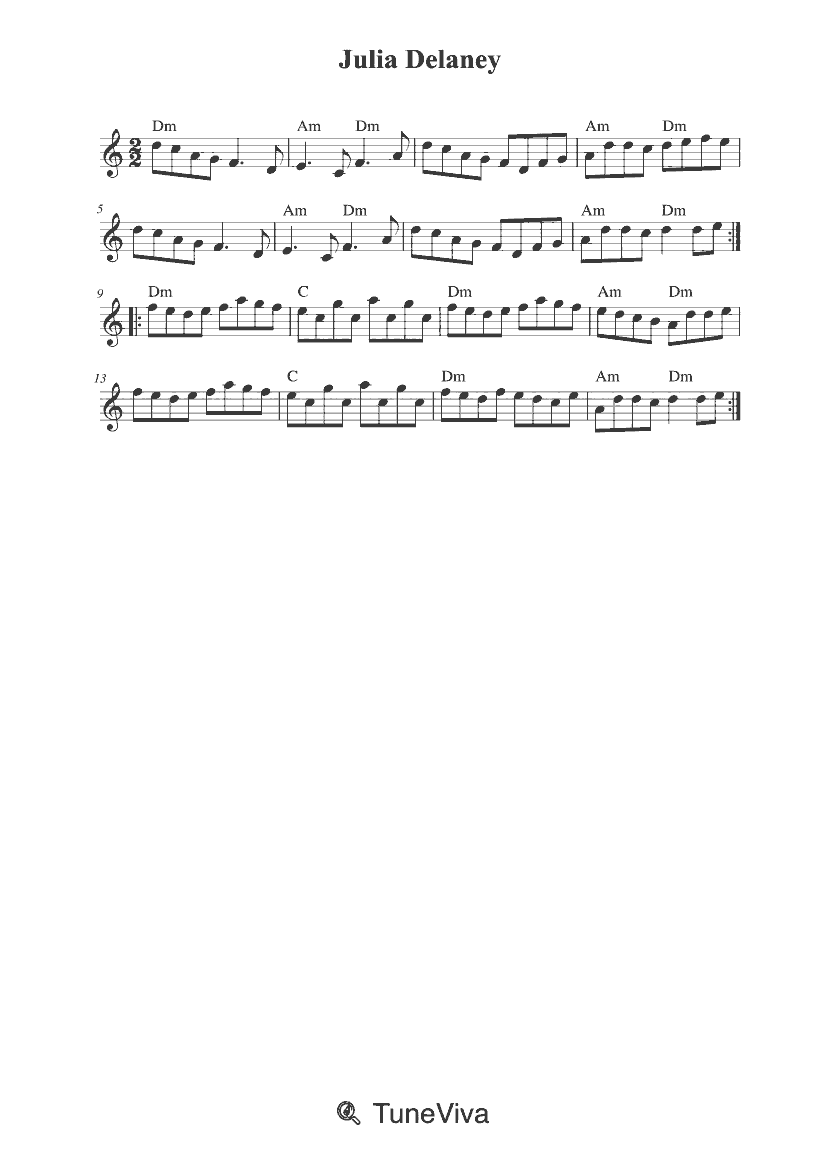
Misc tunes
2 min 8 sec · Score #6266
Open score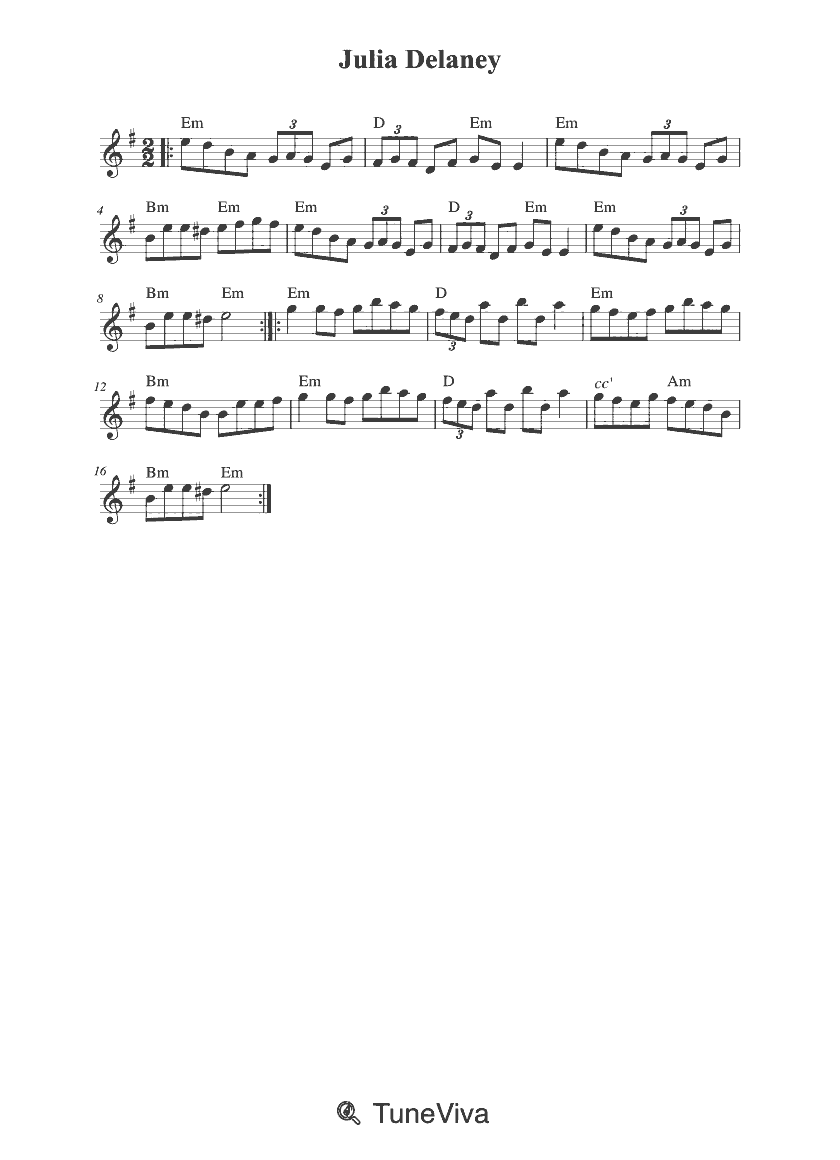
Misc tunes
2 min 8 sec · Score #50196
Open score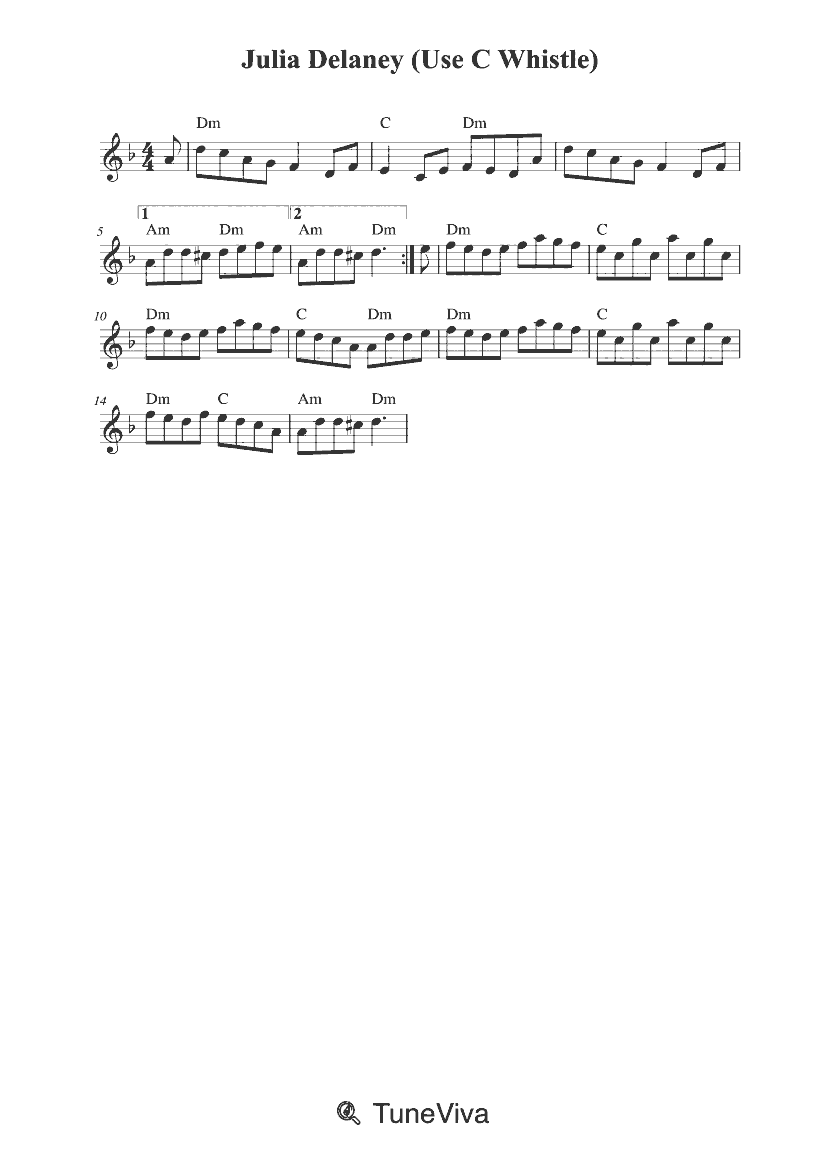
Misc tunes
32 sec
Open score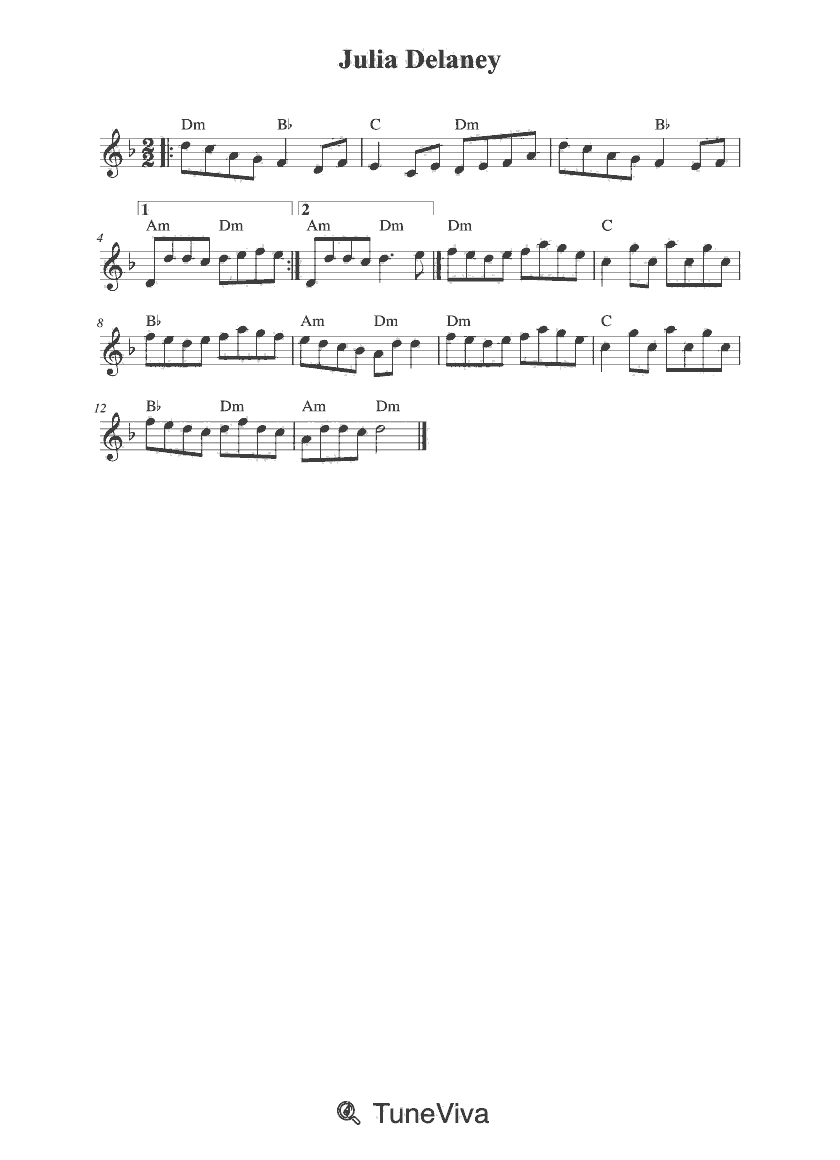
Misc tunes
1 min 4 sec · Score #59673
Open score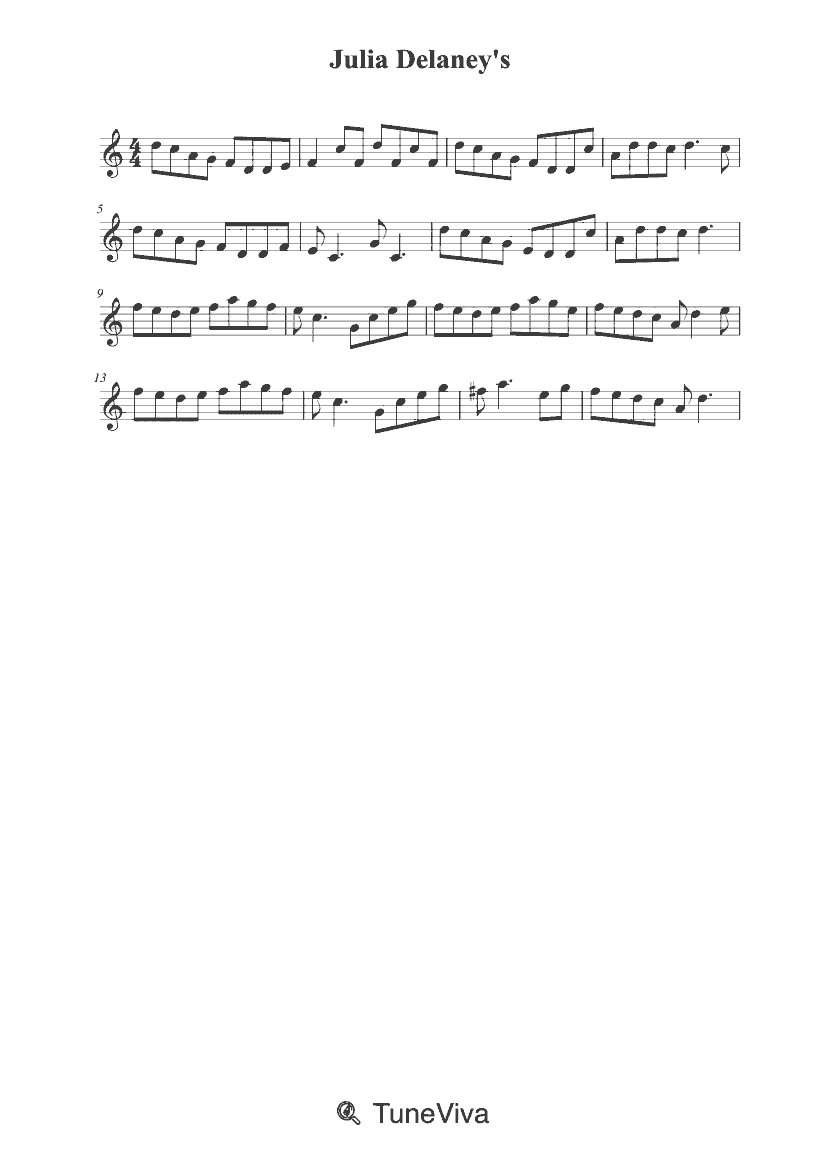
Misc tunes
31 sec
Open score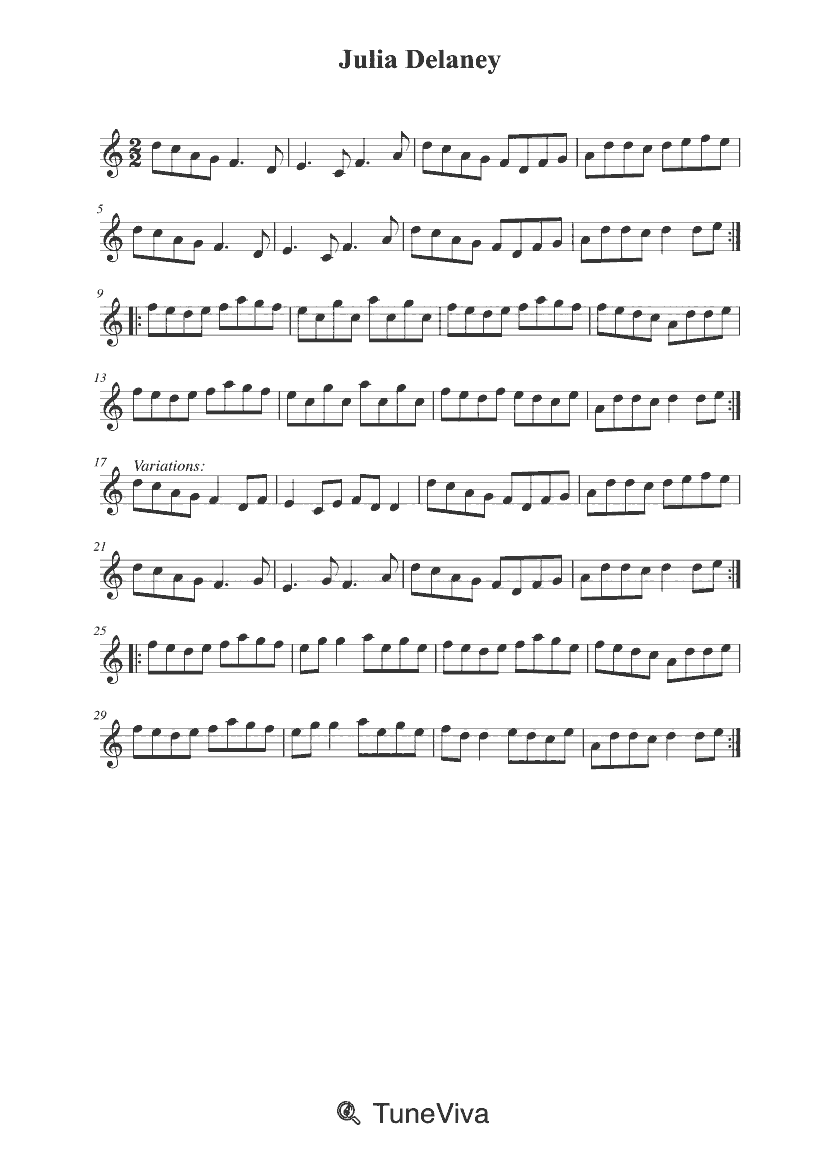
Misc tunes
4 min 48 sec · Score #223484
Open score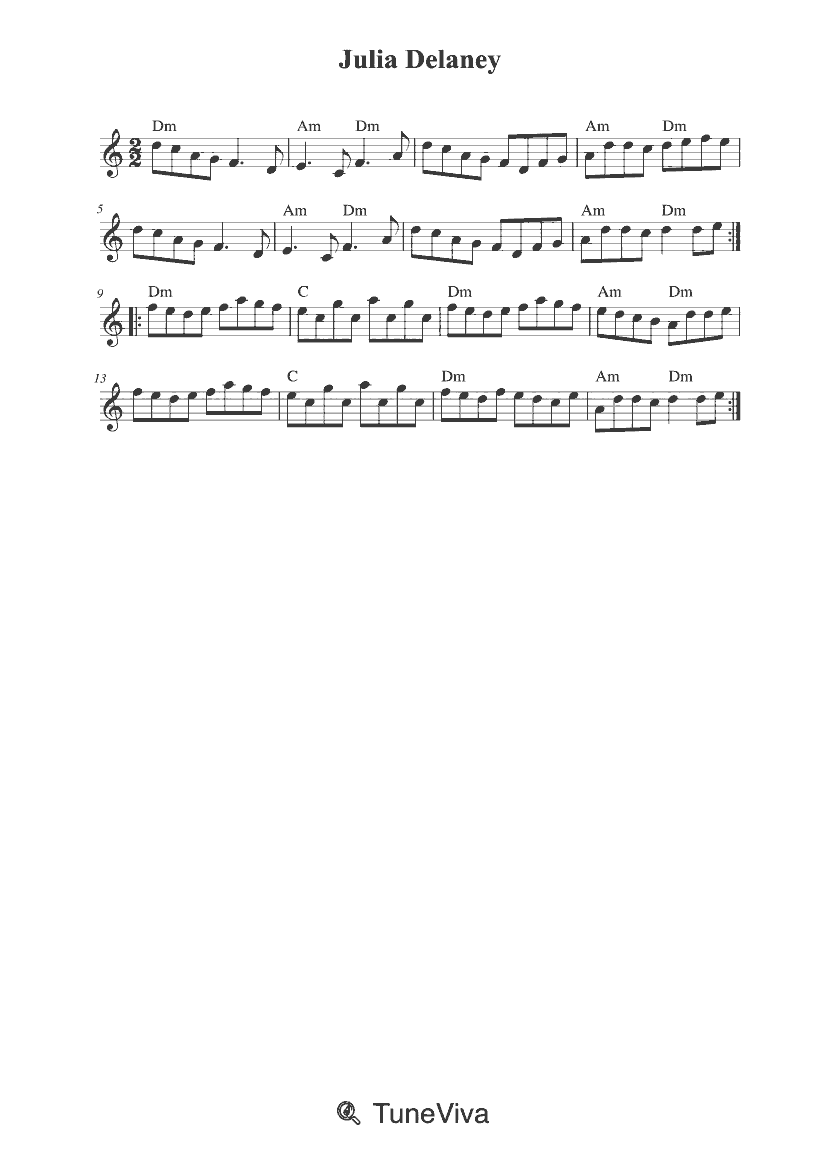
Misc tunes
2 min 8 sec · Score #24639
Open score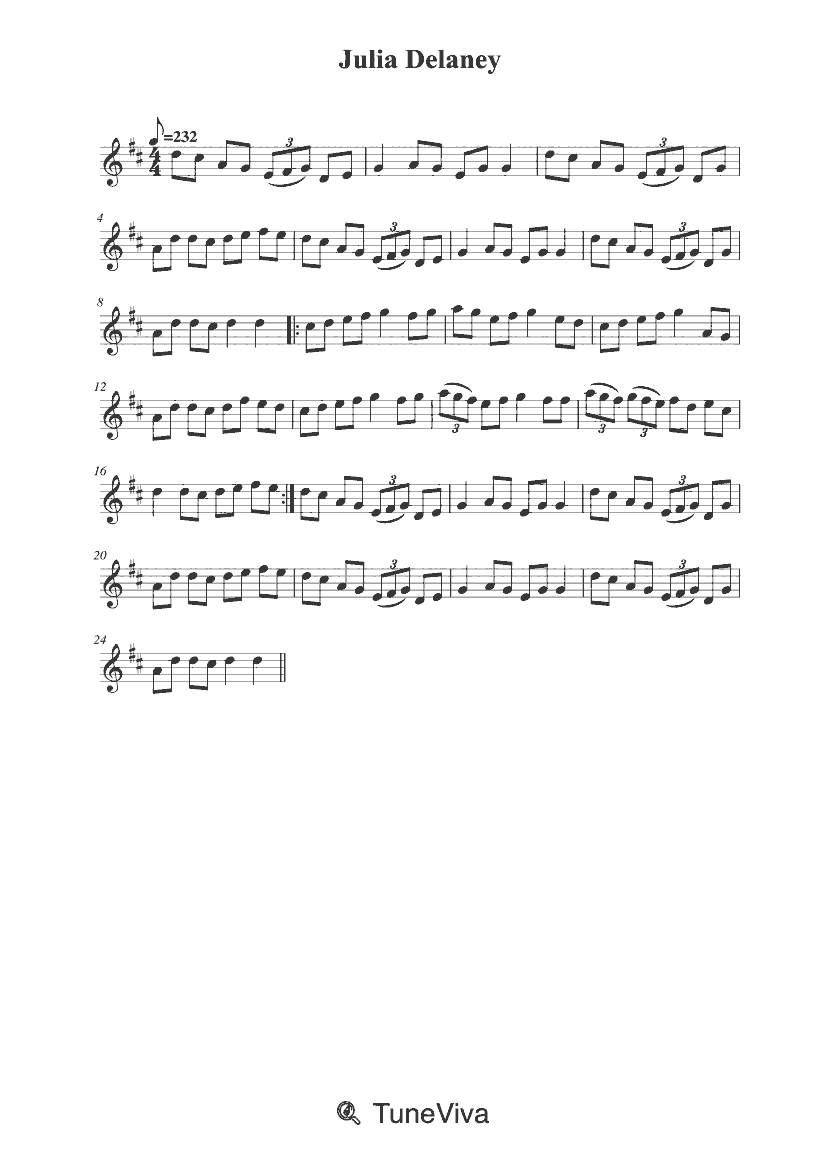
Misc tunes
1 min 6 sec
Open score
anon
1 min 28 sec · Score #23875
Open score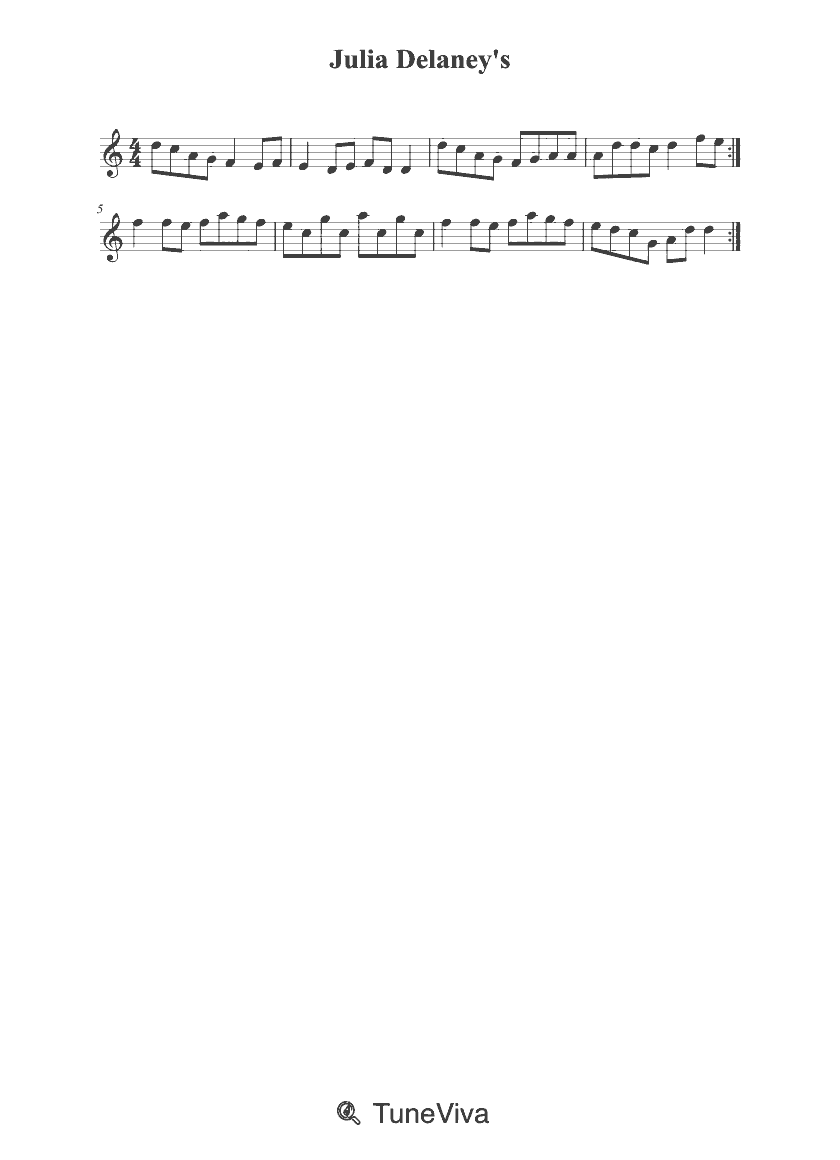
Misc tunes
40 sec · Score #162036
Open score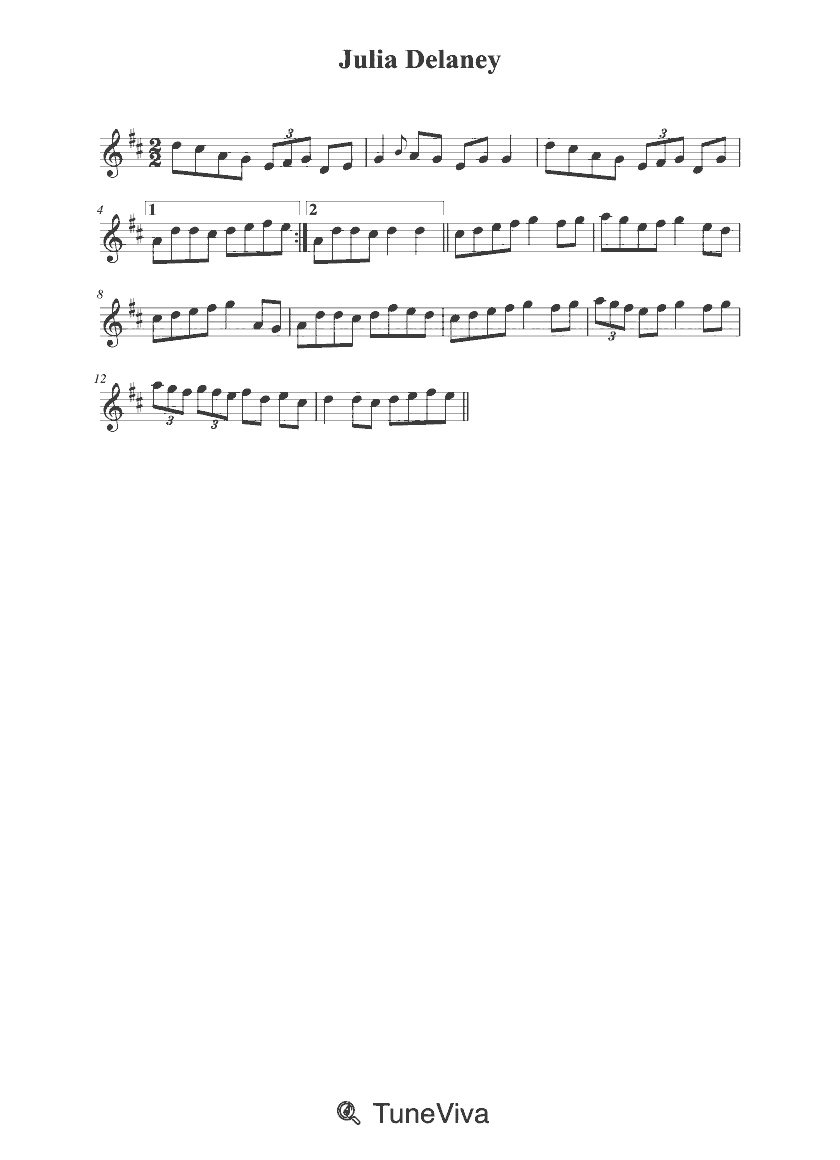
Misc tunes
1 min 4 sec · Score #166012
Open score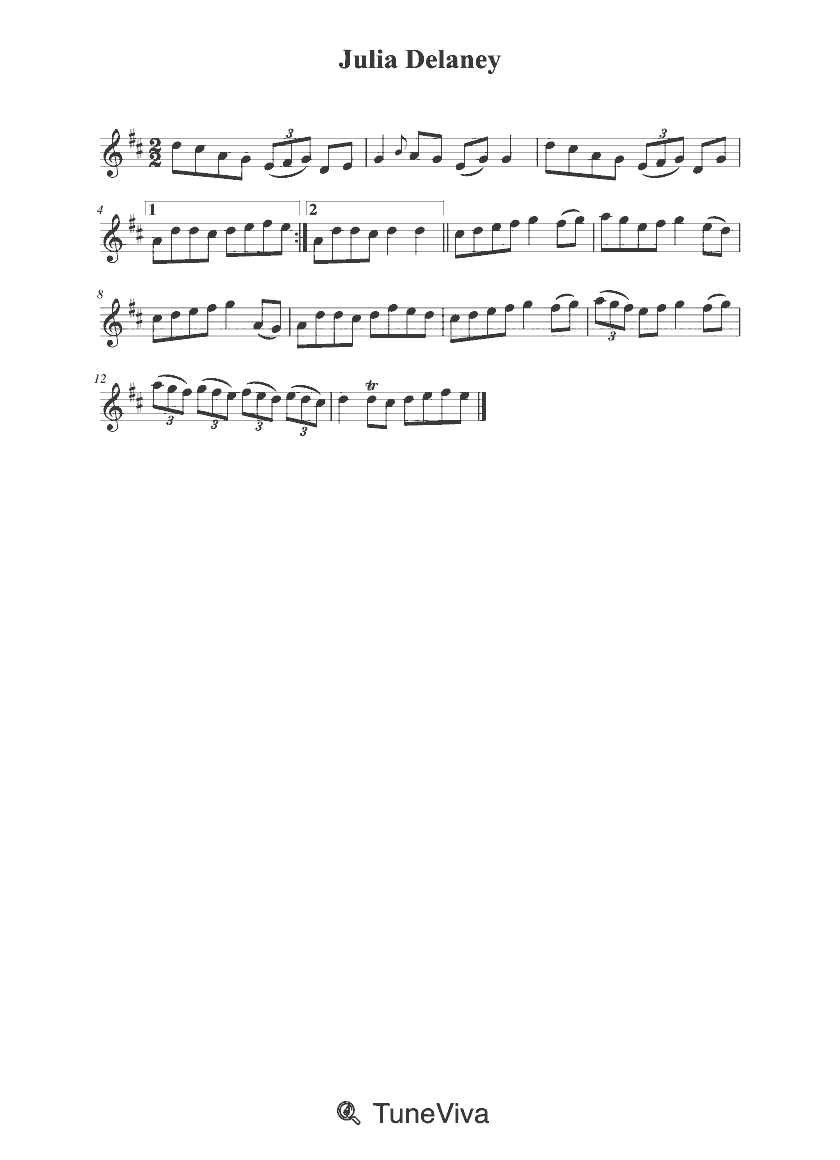
Misc tunes
1 min 4 sec · Score #166753
Open score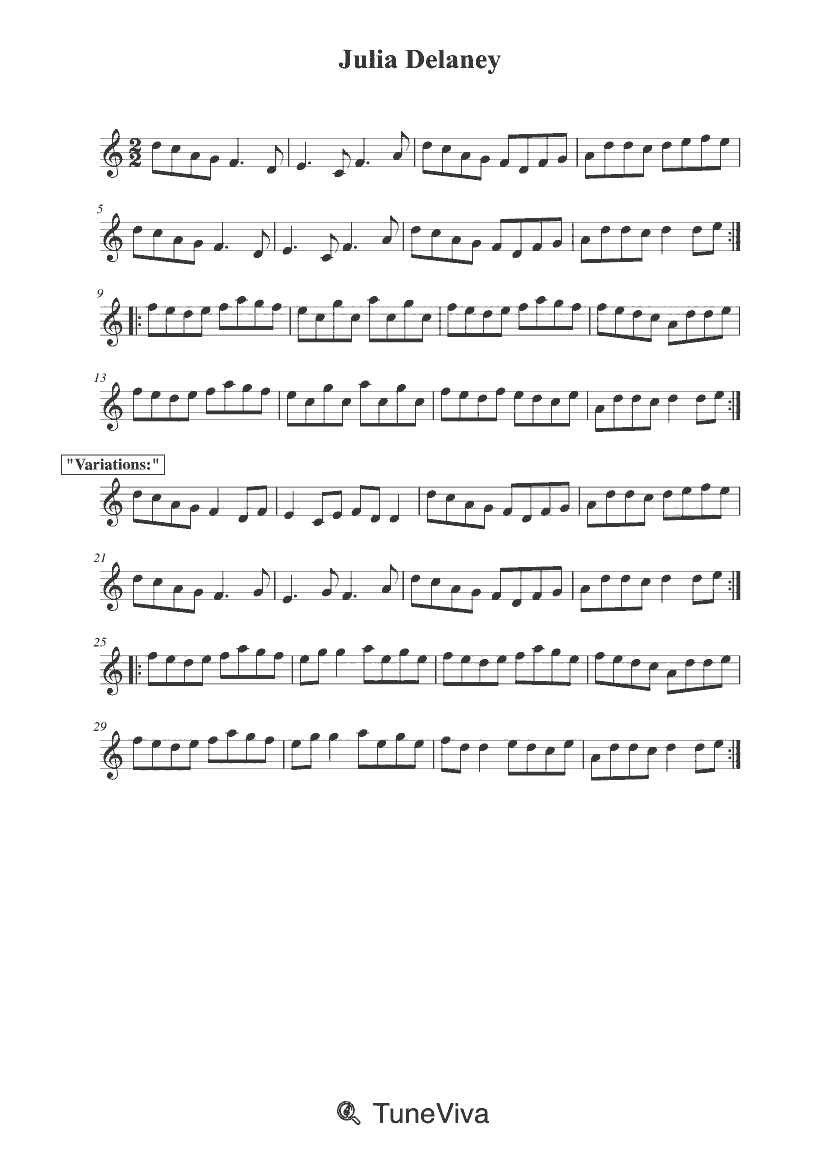
Misc tunes
4 min 48 sec · Score #219615
Open score
anon
1 min 28 sec · Score #47890
Open scorePage 1 of 2
The three scores share the name Julia Delaney and an opening 4/4 meter, but they are not identical in every listed detail. Two use the possessive title “Julia Delaney’s,” while one adds “(reel) 1401.” The opening keys also differ. Compare title, key, and notation before deciding whether the versions are alternate settings of the same tune.
Two scores open with no sharps or flats; one opens with two sharps. If you need to match a session or ensemble, check which key they use and compare it with the score’s opening signature. An opening signature describes only the beginning and does not confirm that the key stays the same throughout.
Only one score names a credit, “after Chief F. O’Neill.” The wording is useful as a lead for that particular version, but it does not by itself establish the composer or explain the exact relationship implied by “after.” Treat the credit as unverified attribution rather than proof of authorship.
The available information does not verify the tune’s origin, composer, original instrumentation, or difficulty. It also does not confirm that all three scores are settings of the same piece. Use the notation and any authoritative edition you can consult to settle those questions.
Catalogue duration 1 min 4 sec. Opening key signature: No sharps or flats. Opening time signature: 4/4.
Catalogue duration 40 sec. Opening key signature: 2 sharps. Opening time signature: 4/4.
Catalogue duration 1 min 6 sec. Opening key signature: No sharps or flats. Opening time signature: 4/4.
The name Julia Delaney identifies three sheet-music versions in this collection: two titled “Julia Delaney’s” and one titled “Julia Delaney (reel) 1401.” One score identifies the piece as a reel; the others do not name a dance type.
One score is explicitly titled as a reel, “Julia Delaney (reel) 1401,” so reel is supported for that version.
All three scores show 4/4 as the opening time signature. That describes the opening meter of the listed versions, not necessarily every bar or every setting.
Two scores open with no sharps or flats, while one opens with two sharps. The versions therefore begin in different keys, so players who need to match a session or ensemble should check the opening key signature before choosing a score.
One score credits “after Chief F. O’Neill”; the other two list no composer. The credit is a lead for that version, but the available information does not confirm the tune’s composer or define exactly what “after” means.
The titles alone do not establish whether they are different tunes. The scores appear under both “Julia Delaney” and “Julia Delaney’s,” and they also differ in opening key, so compare the notation rather than assuming the apostrophe marks a separate piece.