
the Kitchen Girl
Misc tunes
52 sec
Open scoreKitchen Girl sheet music is available here in versions presented as a traditional tune. The scores agree on 4/4 time and a two-sharp opening key signature, and one score names D major. They do not state an instrument, arranger or edition, so compare the notation and range before choosing a score.
Scores 1–20 of 22
Misc tunes
52 sec
Open score
Trad.
1 min 4 sec · Score #252648
Open score
Misc tunes
1 min 4 sec · Score #241313
Open score
Misc tunes
2 min 47 sec · Score #104803
Open score
Misc tunes
1 min 20 sec
Open score
Misc tunes
1 min 4 sec · Score #169191
Open score
Trad.
1 min 4 sec · Score #248447
Open score
Misc tunes
2 min 24 sec
Open score
Misc tunes
1 min 4 sec
Open score
Misc tunes
56 sec
Open score
Trad.
54 sec
Open score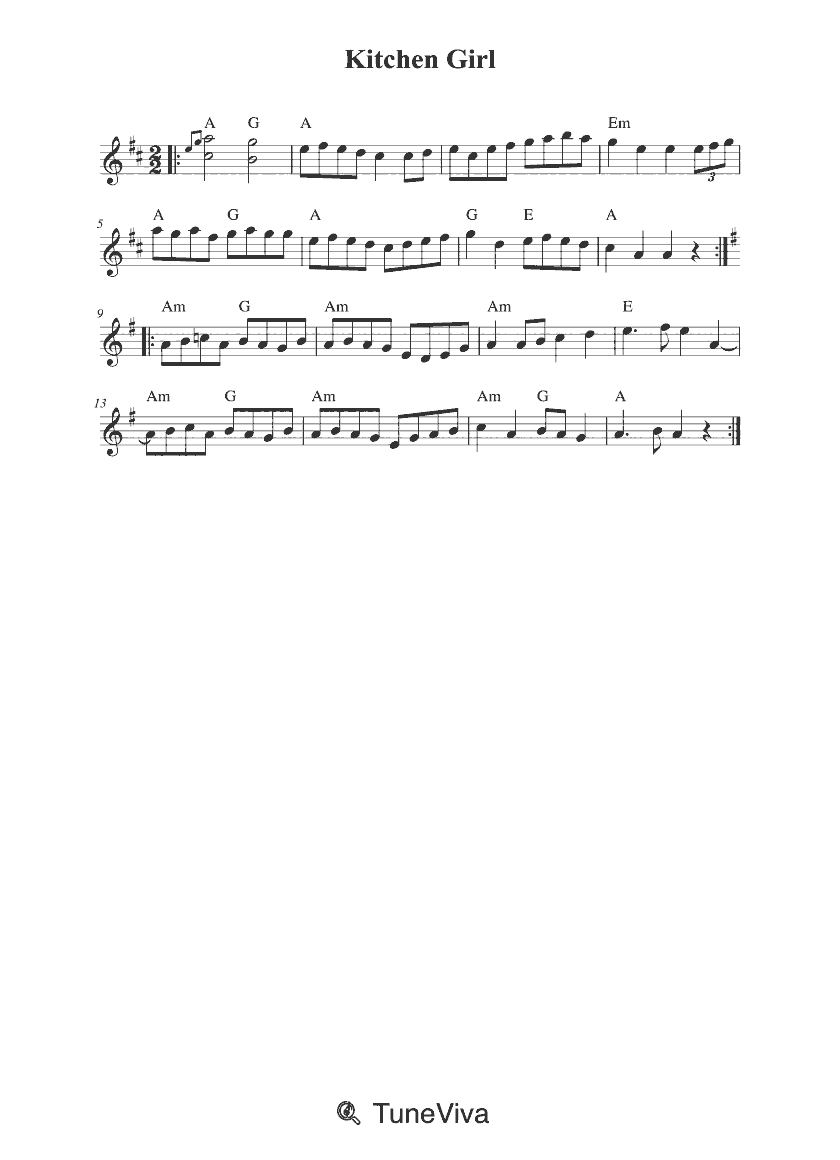
Misc tunes
2 min 7 sec · Score #26256
Open score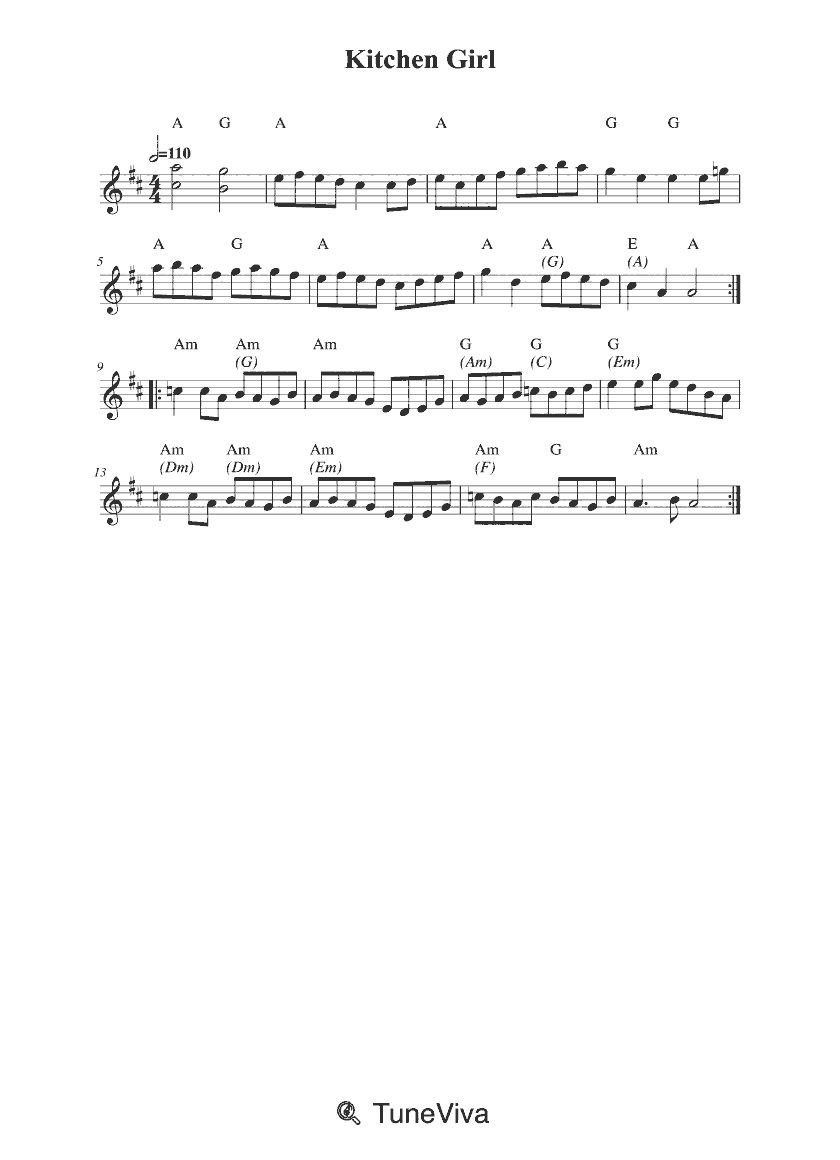
Misc tunes
35 sec · Score #39684
Open score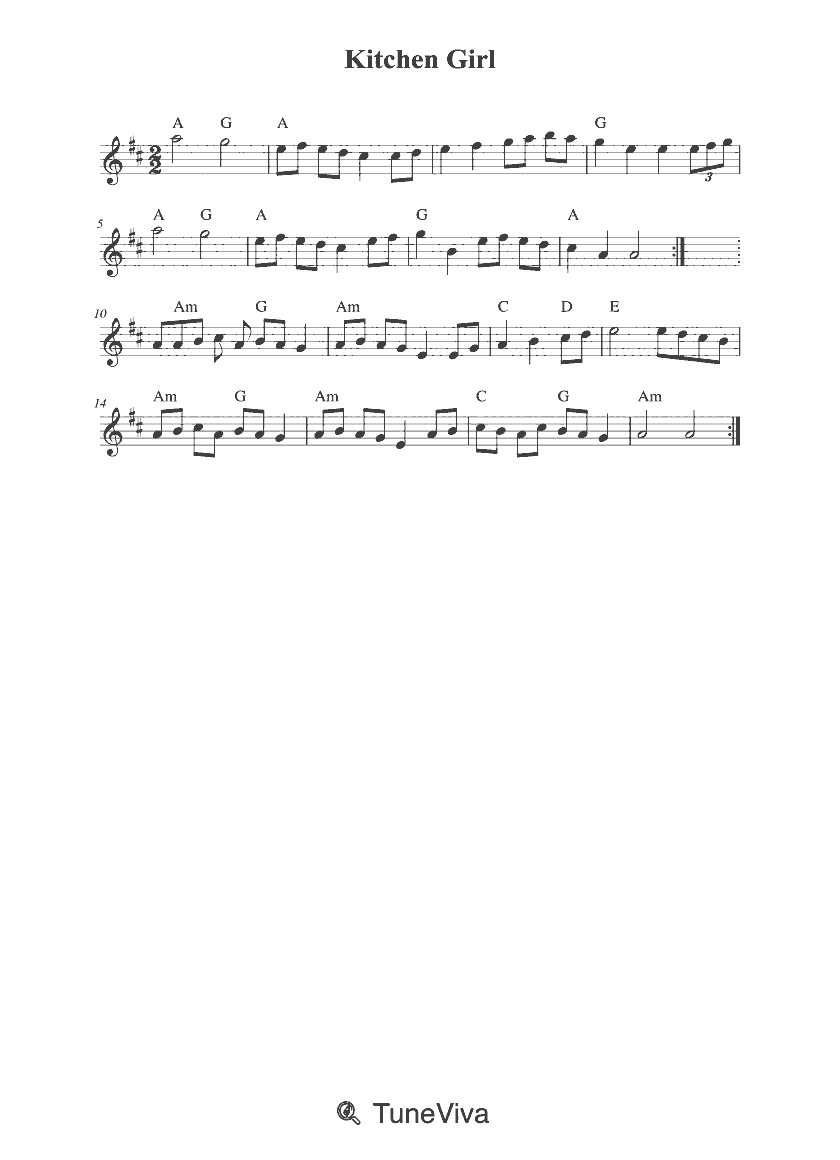
Misc tunes
2 min 47 sec · Score #236570
Open score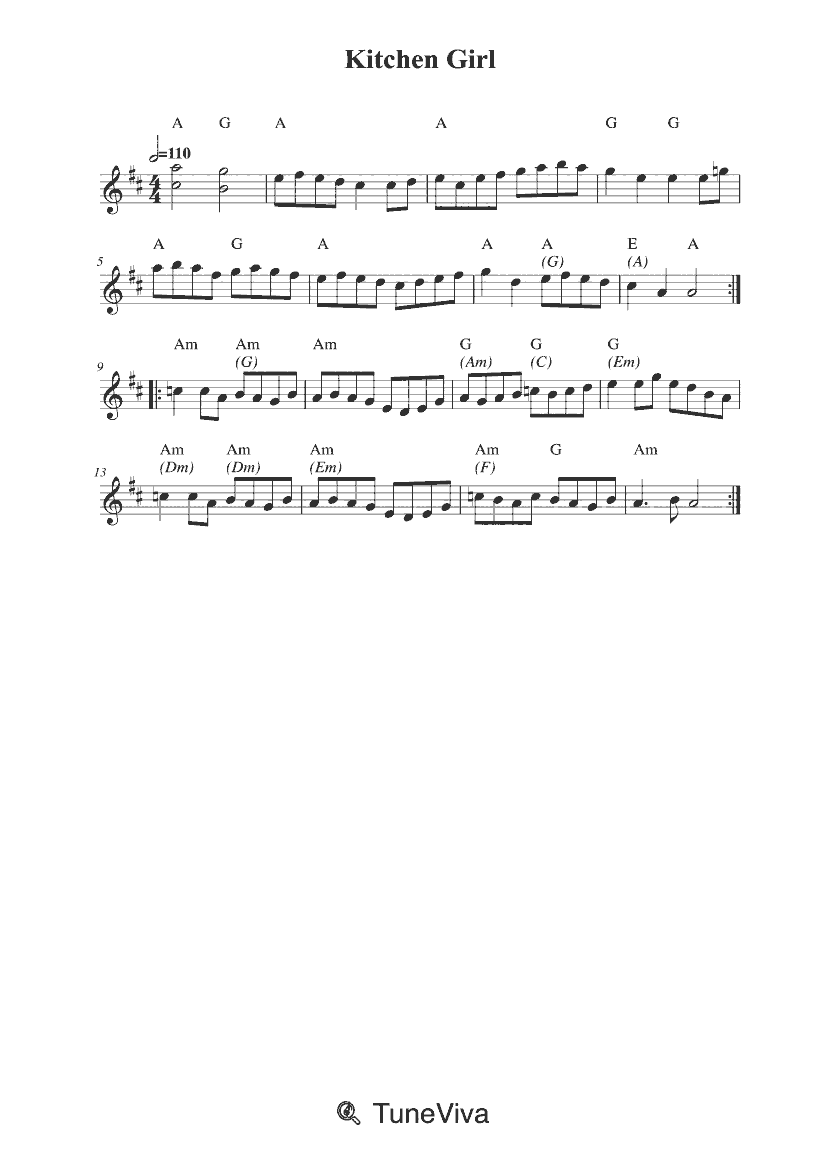
Misc tunes
35 sec · Score #254066
Open score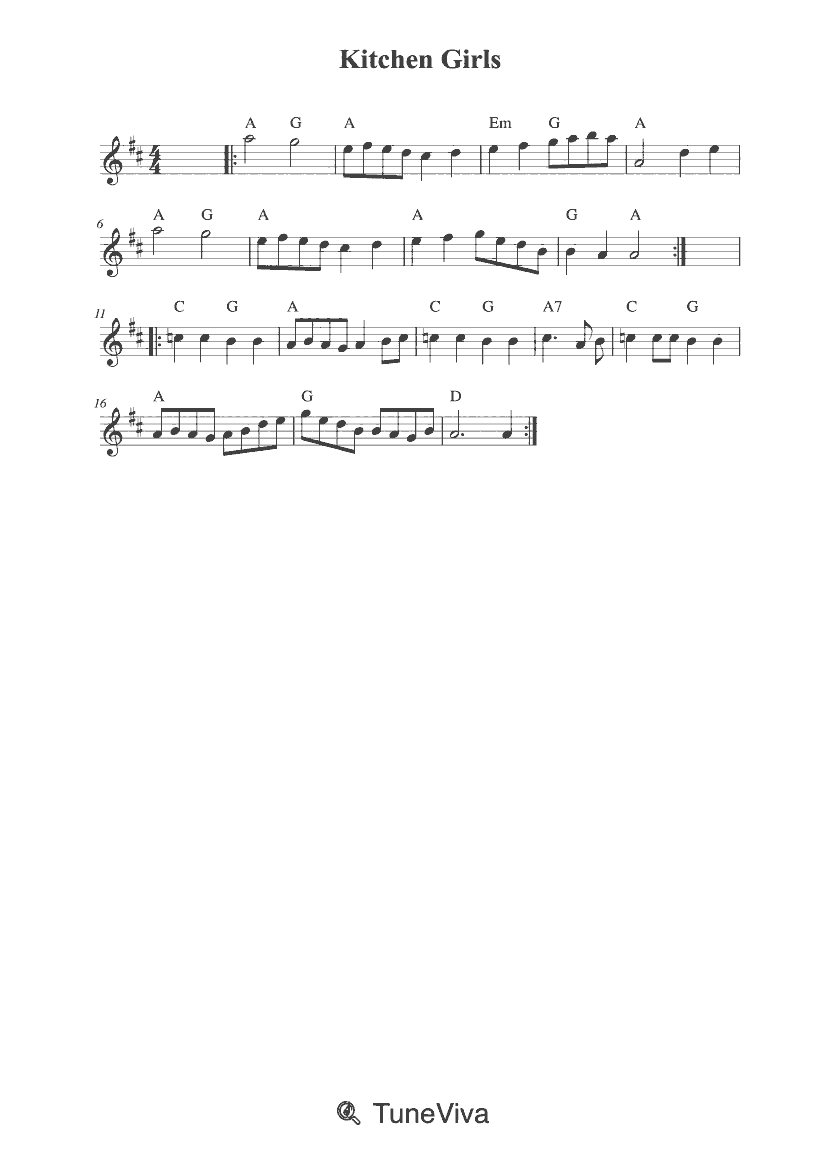
Misc tunes
1 min 6 sec
Open score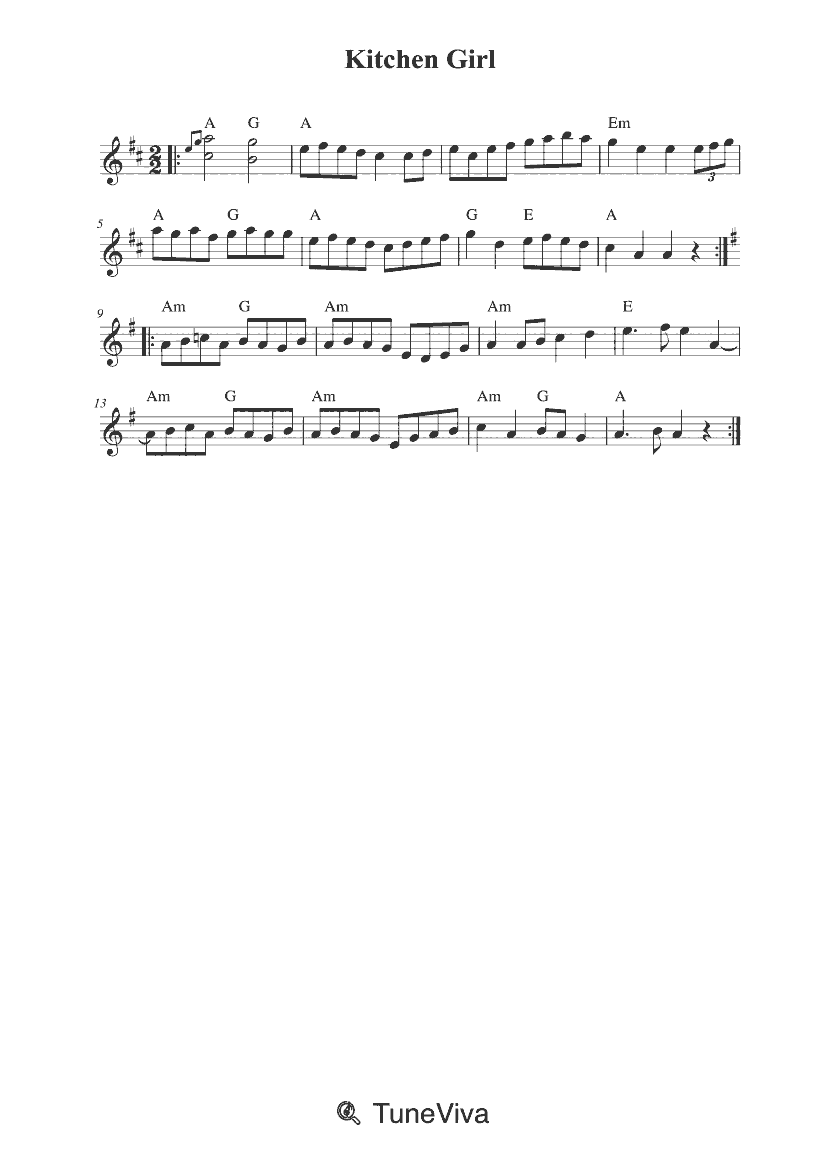
Misc tunes
2 min 7 sec · Score #52758
Open score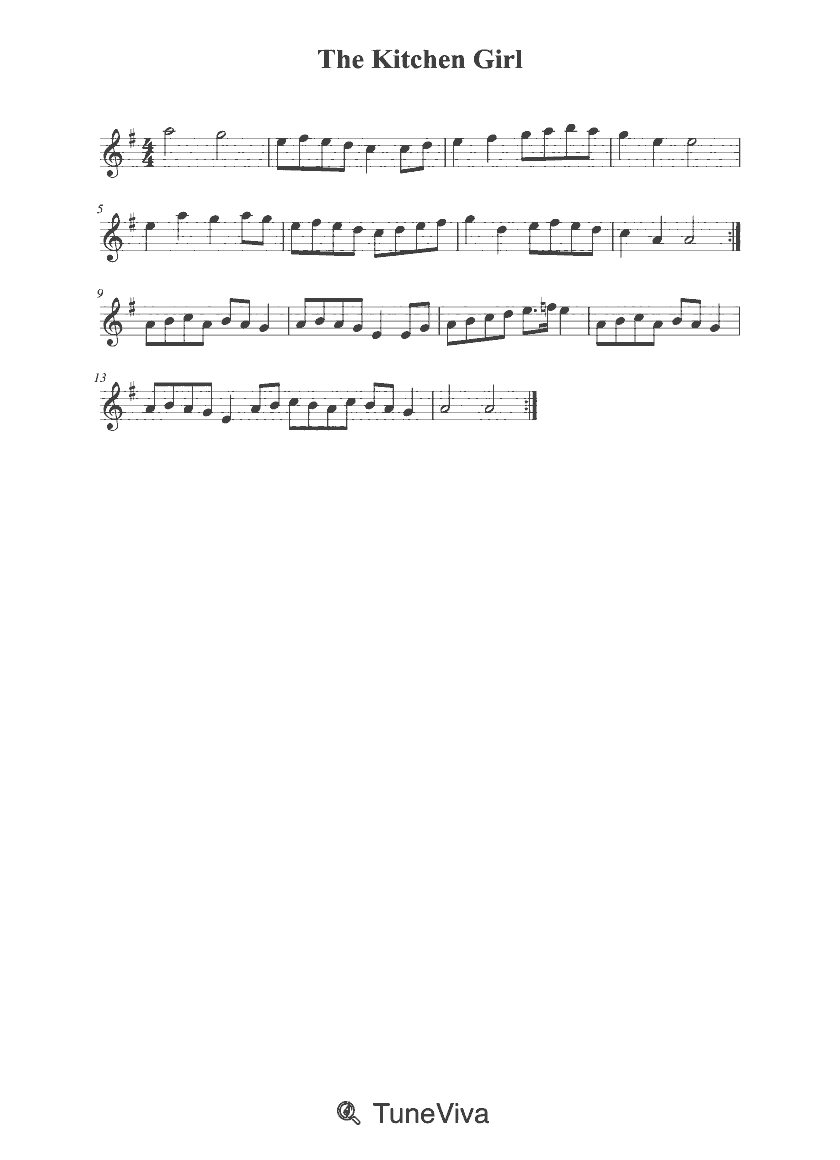
Misc tunes
1 min 16 sec
Open score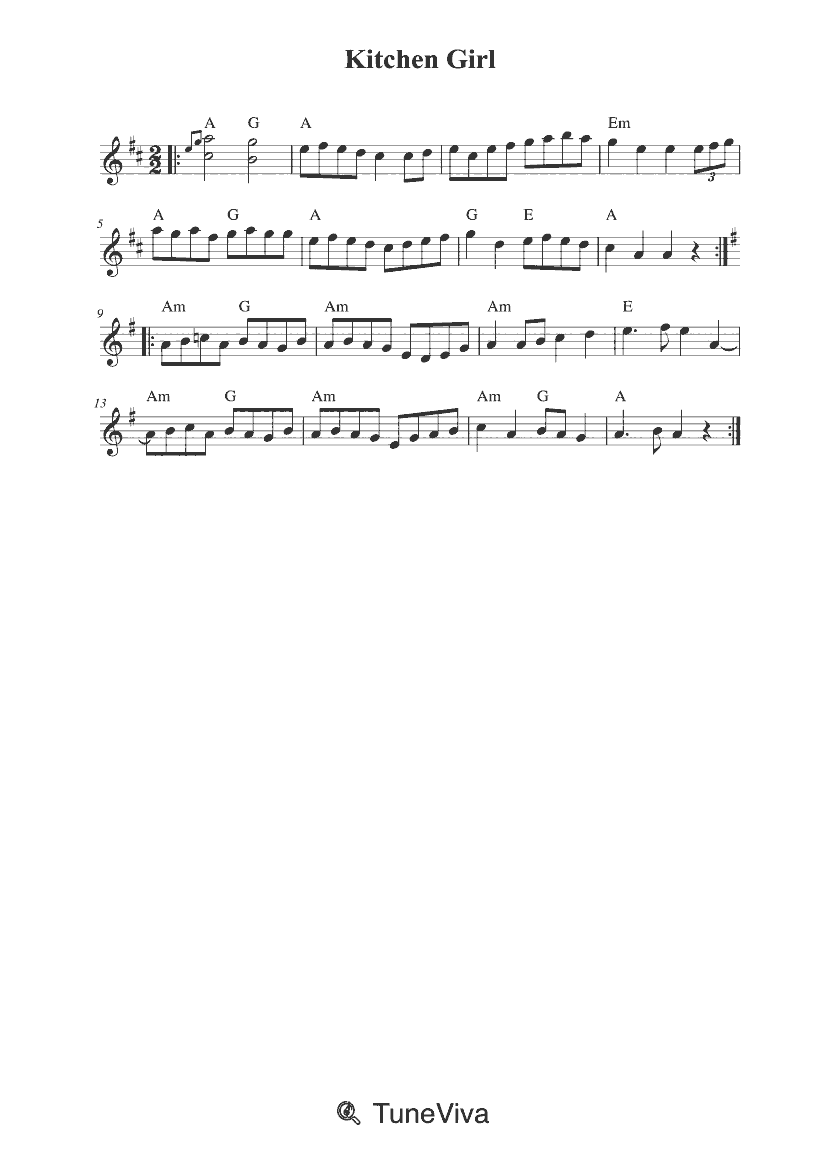
Misc tunes
2 min 7 sec · Score #216348
Open score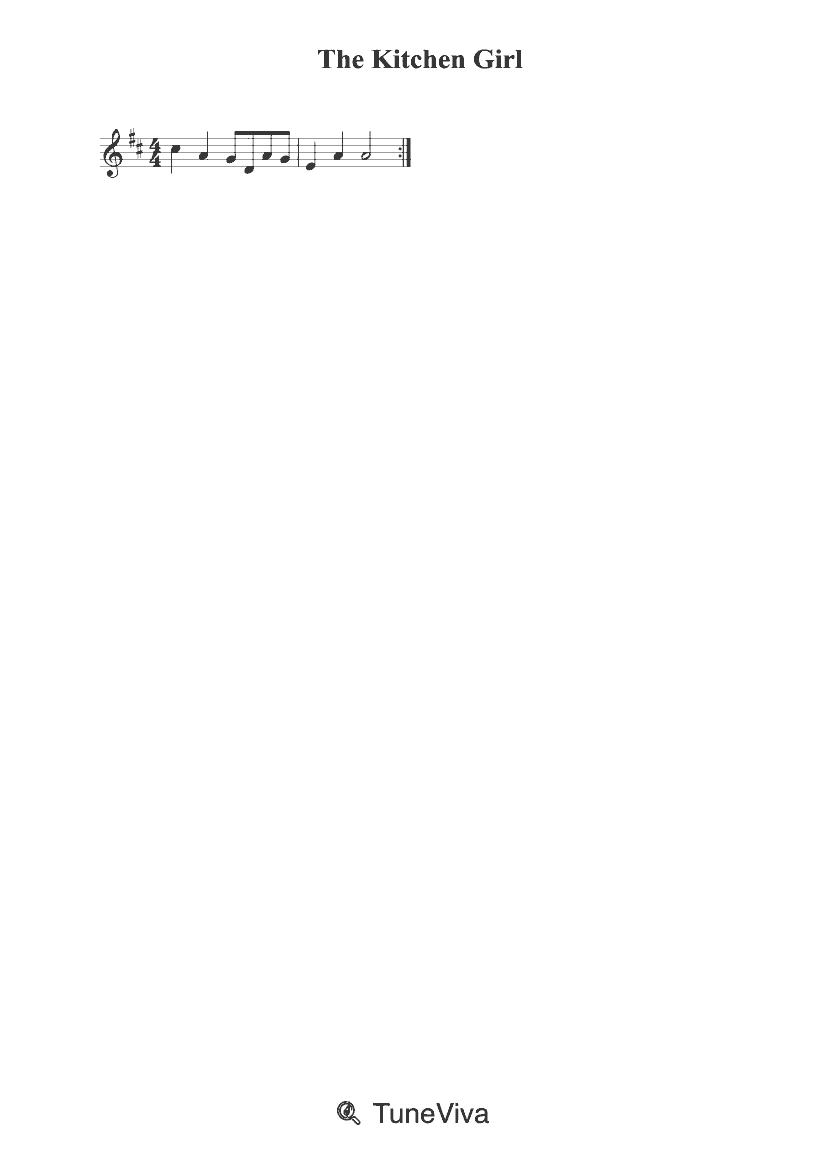
Misc tunes
8 sec
Open scorePage 1 of 2
Kitchen Girl is consistently notated with a two-sharp opening key signature and 4/4 time in the available scores. One score explicitly names D major. Treat the signature as a starting point: check accidentals, cadences and the final note if you need to decide whether a particular setting is major or modal.
The Kitchen Girl scores are not identical in length or notated content. Since none of the available descriptions names an arranger, editor, instrument or edition, choose by inspecting the notation itself: clef, range, number of parts, and whether the setting is melody-only. A shorter score is not automatically easier, and a longer one is not automatically more complete.
One score credits Kitchen Girl to 'Trad.', while the others name no composer and group it with miscellaneous tunes. That is enough to describe the piece as traditionally attributed in these scores, but not enough to assign a country, region, date or first publication. Use an authoritative tune archive or published collection for historical claims.
The available scores do not state an instrument, clef or difficulty level for Kitchen Girl. Before choosing a version, confirm that the clef and range suit your instrument and that the setting includes the parts you need. Do not assume a particular instrument or ensemble arrangement from the title alone.
Catalogue duration 52 sec. Opening key signature: 2 sharps. Opening time signature: 4/4.
Catalogue duration 1 min 4 sec. Opening key signature: 2 sharps (D major). Opening time signature: 4/4.
Catalogue duration 1 min 4 sec. Opening key signature: 2 sharps. Opening time signature: 4/4.
The available Kitchen Girl scores show a two-sharp opening key signature, and one score names D major explicitly. Two sharps is consistent with D major but can also serve other tonal or modal contexts, so check the actual notes and accidentals before treating a setting as firmly D major.
The available Kitchen Girl scores list 4/4 as the opening time signature. In notation, that indicates four quarter-note beats per bar. No tempo marking is given in the available score details, so the actual performance speed is not established.
One available Kitchen Girl score credits the music to 'Trad.', while the others name no composer and describe it as miscellaneous tunes. The available material does not confirm an origin, date, region or first publication, so traditional attribution should not be treated as a documented authorship claim.
The available Kitchen Girl scores share 4/4 time and a two-sharp opening key signature but differ in length and notated note totals. Those differences alone do not prove they are separate arrangements, because the scores do not identify an editor, arranger or edition. Compare the opening bars and any melodic variants before deciding.
The available Kitchen Girl scores do not name an instrument or clef. They identify traditional or miscellaneous-tune attributions and give a 4/4, two-sharp opening notation, but a musician should inspect the score to confirm clef, range, and whether it is a melody-only or multi-part setting.