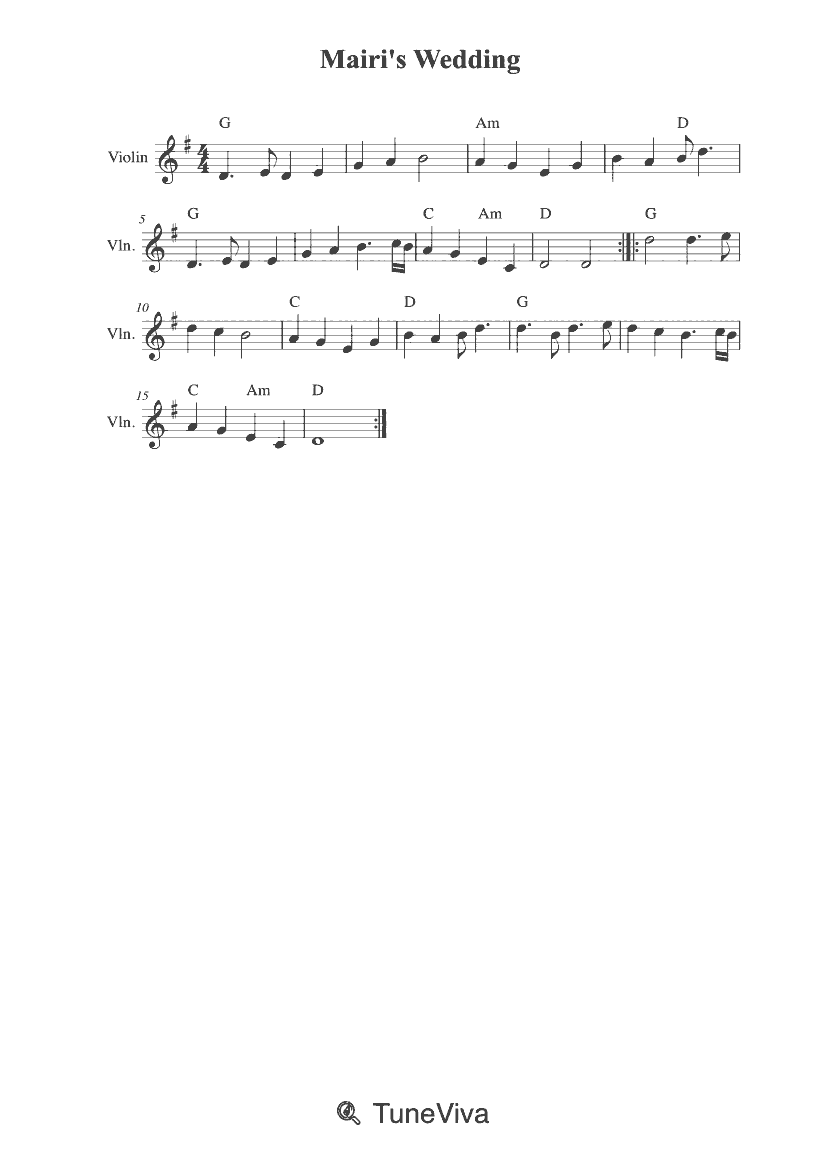
Mairi's Wedding
Misc tunes
Violin · 1 min 4 sec
Open scoreMairi's Wedding sheet music is listed here in three scores, including one titled 'Mairi's Wedding (aka Lewis Bridal Song)'. The versions differ in key and time signature, and one score names Violin as its part. These listings help compare key, metre and instrumentation; the listings do not verify the tune's history or every score detail, so check each score for range and phrasing.
Scores 1–20 of 31
Misc tunes
Violin · 1 min 4 sec
Open score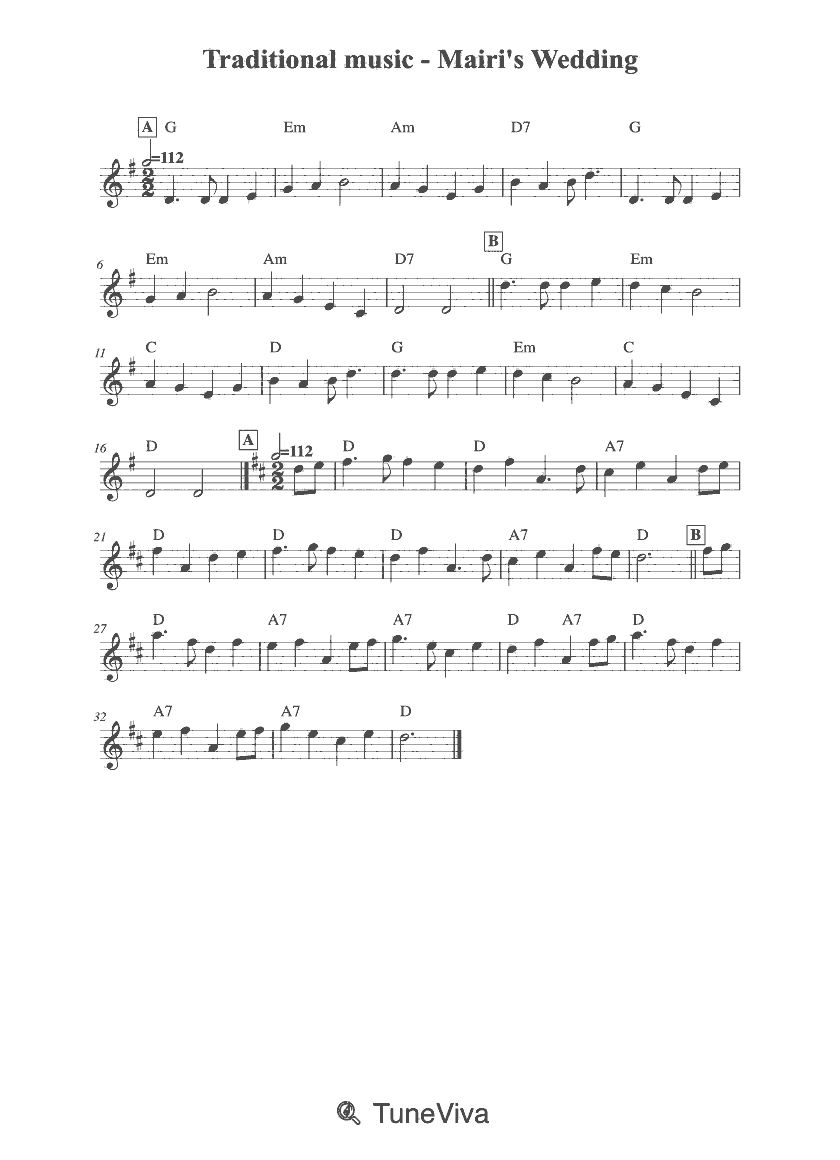
Trad. Scotland (1908)
1 min 9 sec
Open score
Misc tunes
1 min 7 sec
Open score
Scottish
1 min 4 sec
Open score
Misc tunes
Marie's Wedding
16 sec
Open score
Misc tunes
Lewis Bridal Song
2 min 52 sec · Score #64541
Open score
Misc tunes
16 sec · Score #218717
Open score
Trad Sc.
35 sec · Score #55761
Open score
Misc tunes
48 sec · Score #174072
Open score
Trad Sc.
35 sec · Score #57429
Open score
Trad.
Mairie's Wedding
40 sec
Open score
Misc tunes
16 sec · Score #96832
Open score
Misc tunes
Lewis Bridal Song
2 min 52 sec · Score #68829
Open score
Misc tunes
32 sec · Score #22943
Open score
Misc tunes
16 sec · Score #43117
Open score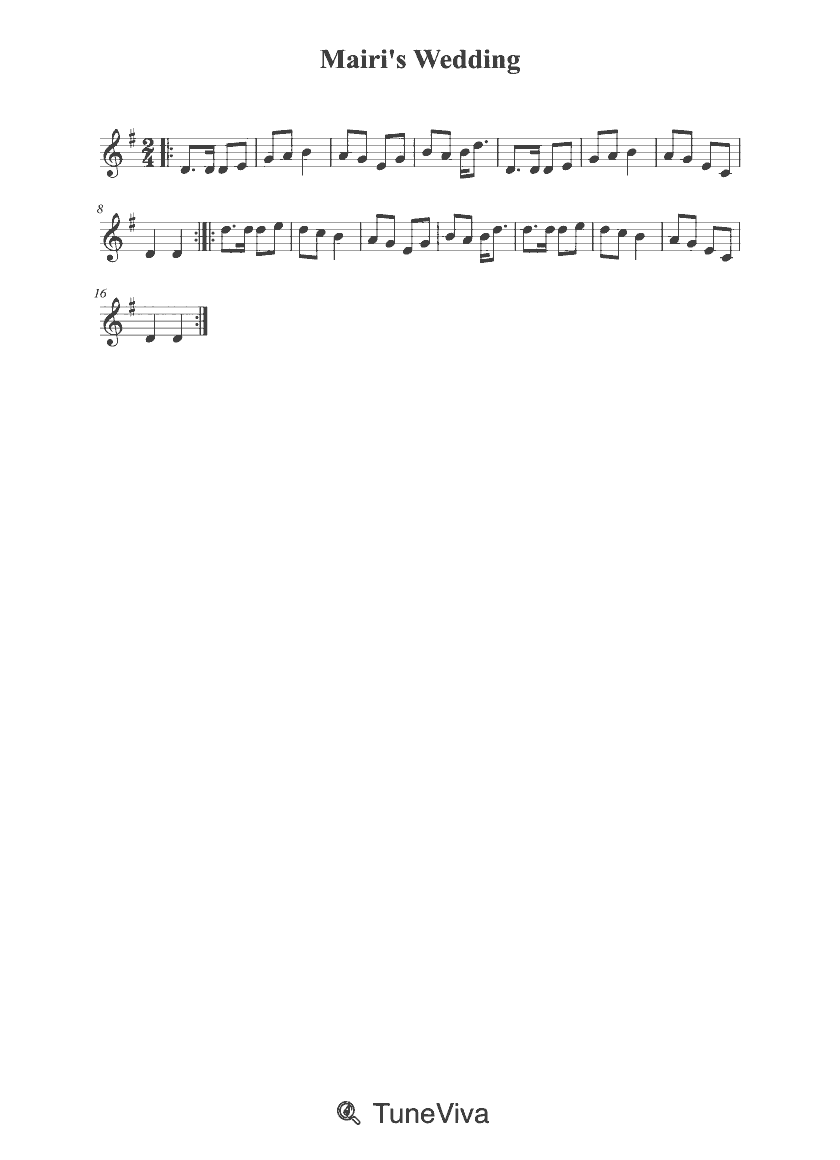
Misc tunes
32 sec · Score #106651
Open score
Trad Sc.
35 sec · Score #212581
Open score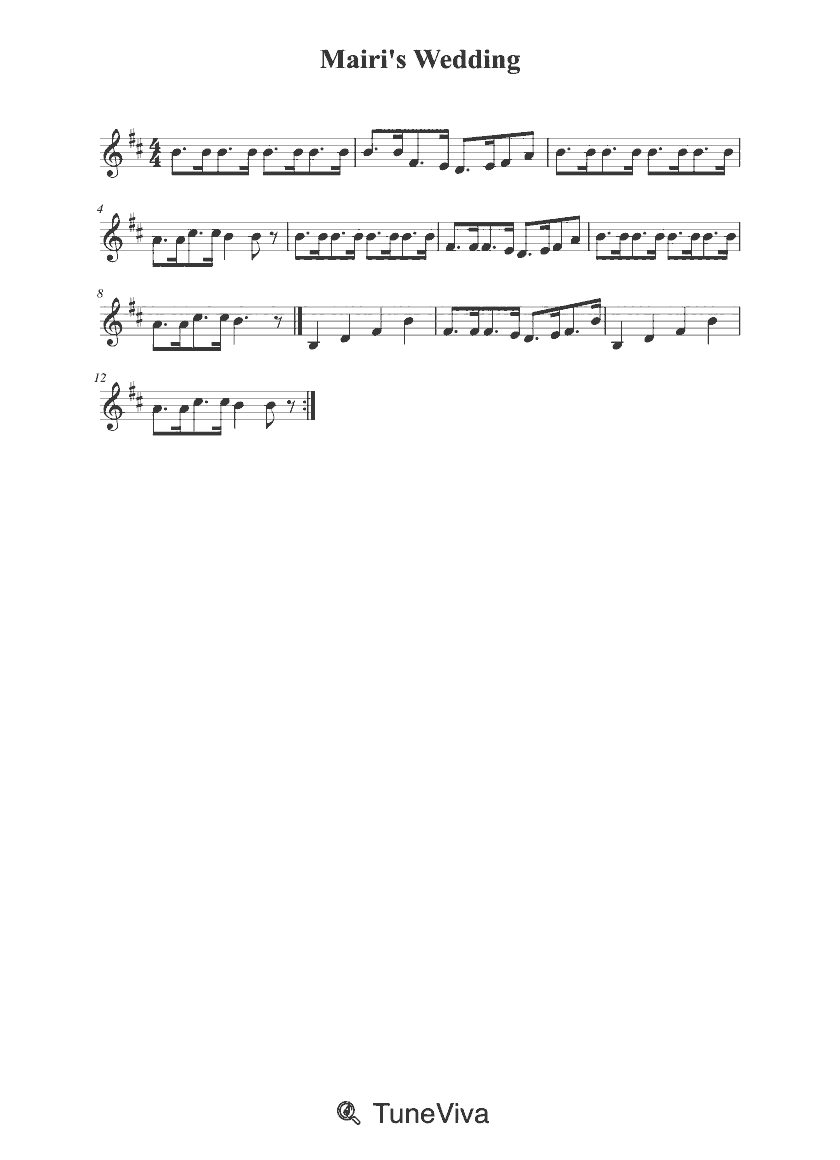
Misc tunes
48 sec · Score #135699
Open score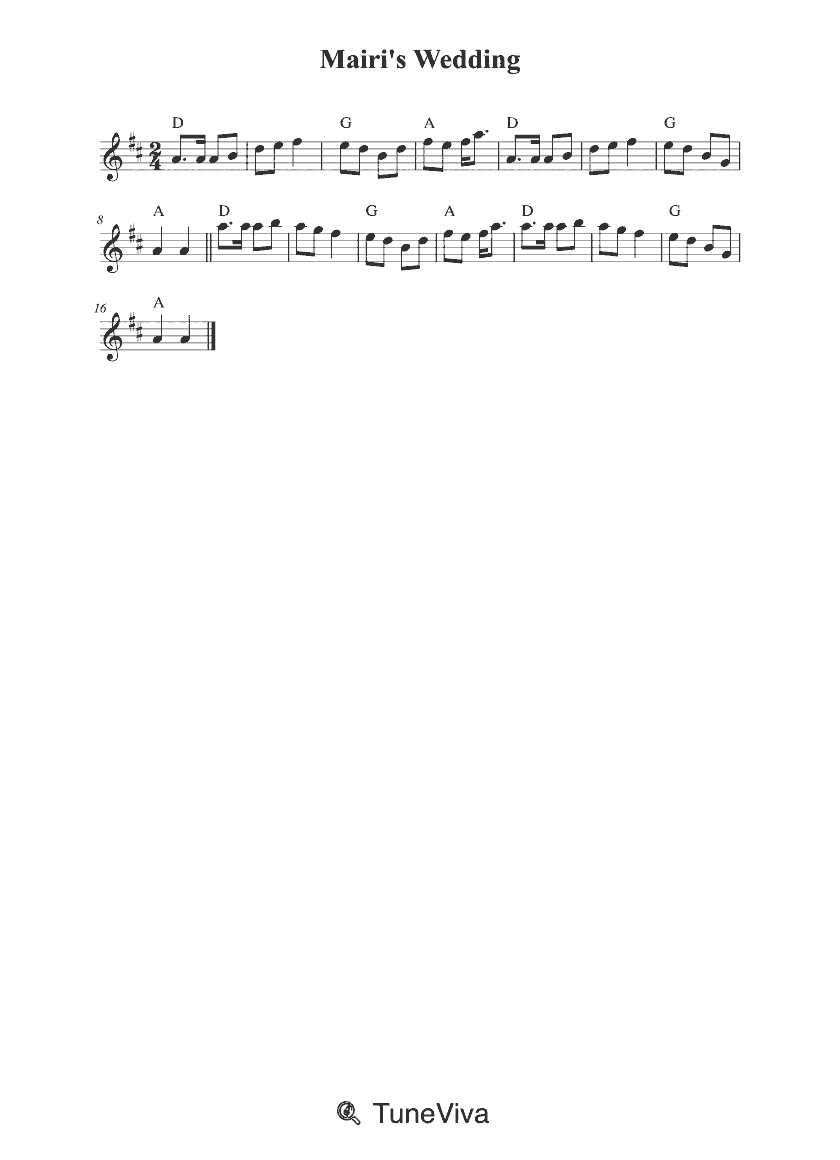
Misc tunes
16 sec · Score #176322
Open score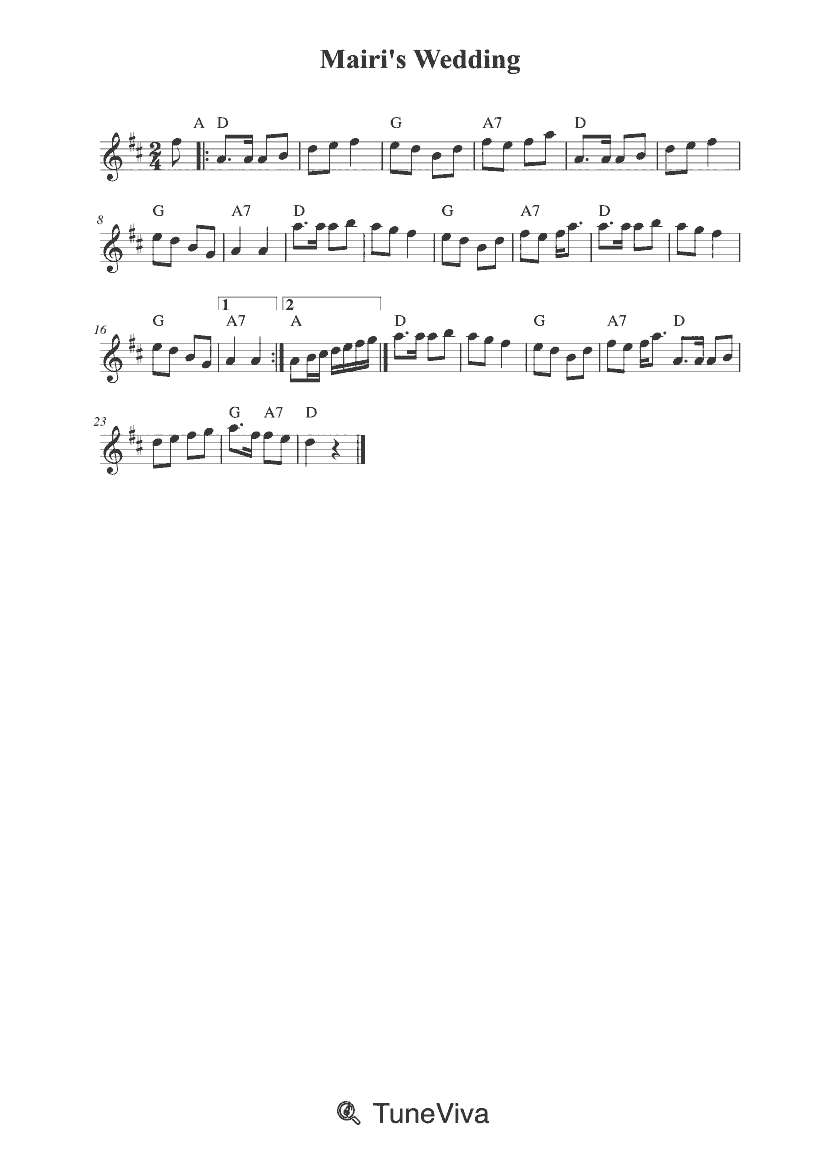
Misc tunes
40 sec
Open scorePage 1 of 2
Two listed scores use a one-sharp key signature, and one of those names G major; the third score opens in D major with two sharps. The one-sharp and two-sharp versions place the melody in different keys, which affects range and fingering. Compare the opening key with your comfortable singing or playing range rather than assuming the title alone determines the best version.
Two scores open in 4/4, while one opens in 2/2. In 4/4 the music is counted in four beats to the bar; in 2/2 the same bar is felt in two broader beats. That choice changes the pulse and how an accompanist might feel the music, so pick the metre that matches the performance you have in mind.
Only one of the three scores names a part, Violin. The other two do not name an instrument in the listed details, so they should not be assumed to be violin versions without checking the score itself. If you need a single-line melody for violin, the score labelled Violin is the clearest starting point.
The listings give useful starting details: key signature, time signature, one tempo and one instrumentation. They do not establish difficulty, completeness, historical origin or whether the three scores are distinct arrangements. One score's composer field reads 'Trad. Scotland (1908)', but that attribution has not been verified against a supporting source here.
Score parts: Violin. Catalogue duration 1 min 4 sec. Opening key signature: 1 sharp. Opening time signature: 4/4.
Catalogue duration 1 min 9 sec. Opening key signature: 1 sharp (G major). Opening time signature: 2/2. Opening tempo: 224 BPM.
Catalogue duration 1 min 7 sec. Opening key signature: 2 sharps (D major). Opening time signature: 4/4.
One listed score titles the tune 'Mairi's Wedding (aka Lewis Bridal Song)', so Lewis Bridal Song appears as an alternative title in these listings. The listings do not verify the origin or history of either name.
The three listed Mairi's Wedding scores open in one-sharp and two-sharp keys: two use a one-sharp signature, one of which names G major, and one opens in D major with two sharps. Those choices change range and fingering.
Both metres appear among the listed Mairi's Wedding scores: two open in 4/4 and one opens in 2/2. A 4/4 setting counts four beats to the bar, while 2/2 feels the bar in two broader beats.
One of the three listed Mairi's Wedding scores names Violin as its score part. The other two do not list an instrument, so they should not be assumed to be violin versions without checking the score.
One listed Mairi's Wedding score gives an opening tempo of 224 BPM in 2/2. That figure applies to that score's opening setting; no tempo is listed for the other two scores.
Three listed Mairi's Wedding scores differ in key and metre, and one names Violin, but the listings do not establish whether they are distinct arrangements or versions of the same setting. Comparing the scores directly is the reliable way to judge.