
Manchester Hornpipe
Misc tunes
1 min 55 sec
Open scoreManchester Hornpipe appears in several notated settings rather than a single authorised edition. The available scores differ in opening key, metre and tempo, so the most useful first step is to compare those details and choose the version that matches how you intend to play the tune.
Scores 1–20 of 32
Misc tunes
1 min 55 sec
Open score
Misc tunes
Rickett's Hornpipe
1 min 51 sec · Score #200807
Open score
Misc tunes
Cook Hpaka. Roose.0916
1 min 41 sec
Open score
Misc tunes
43 sec
Open score
Misc tunes
3 min 12 sec
Open score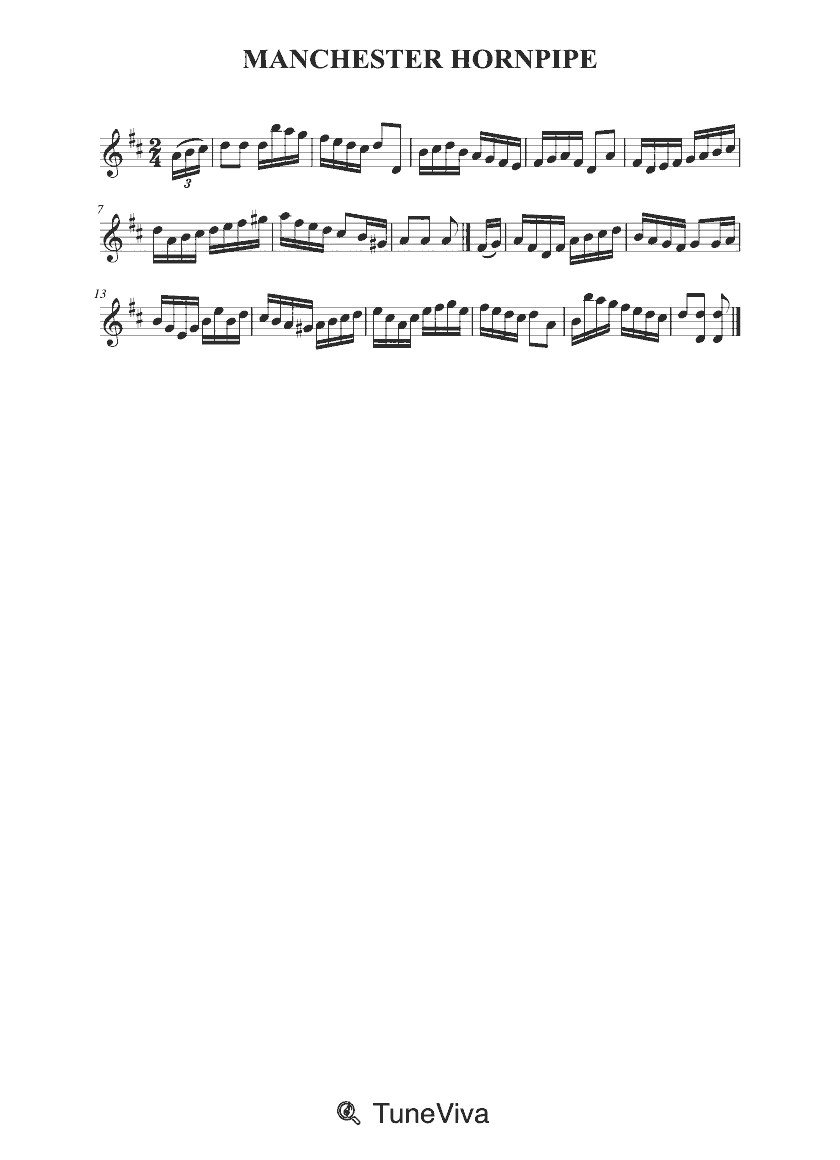
Misc tunes
16 sec · Score #74175
Open score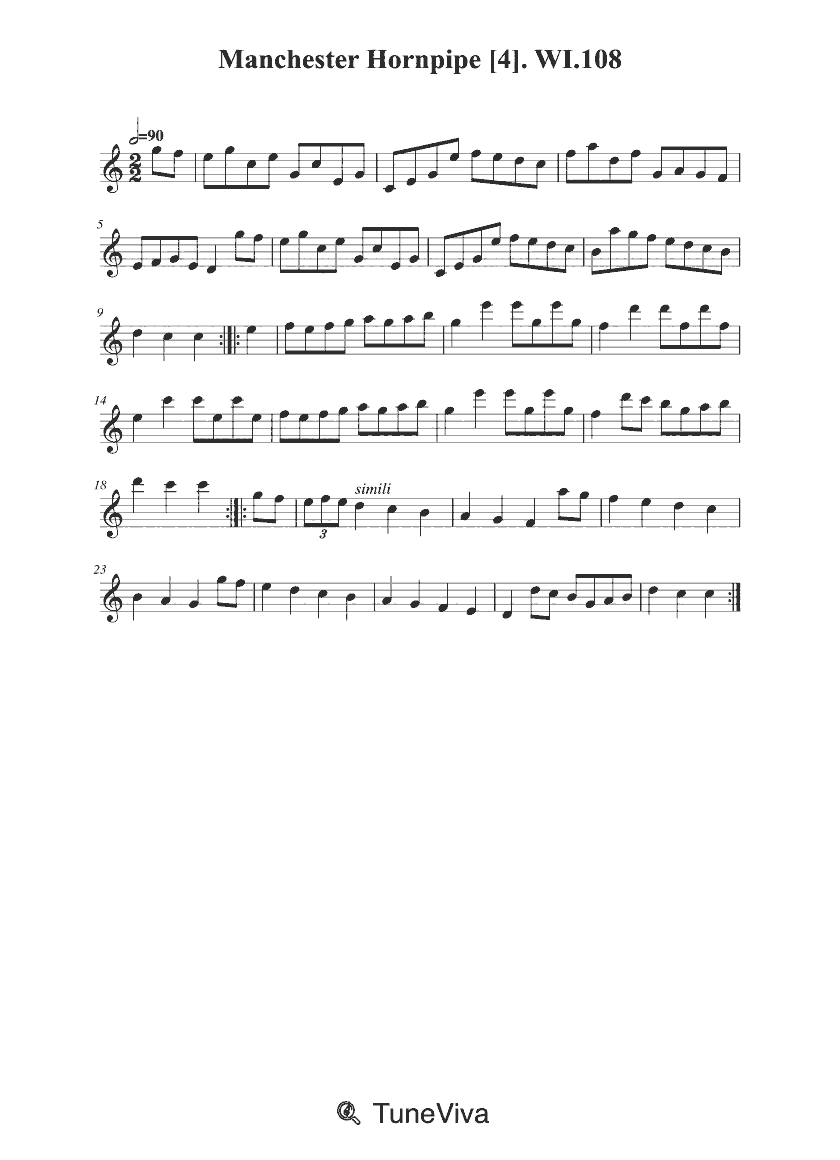
Misc tunes
2 min 8 sec
Open score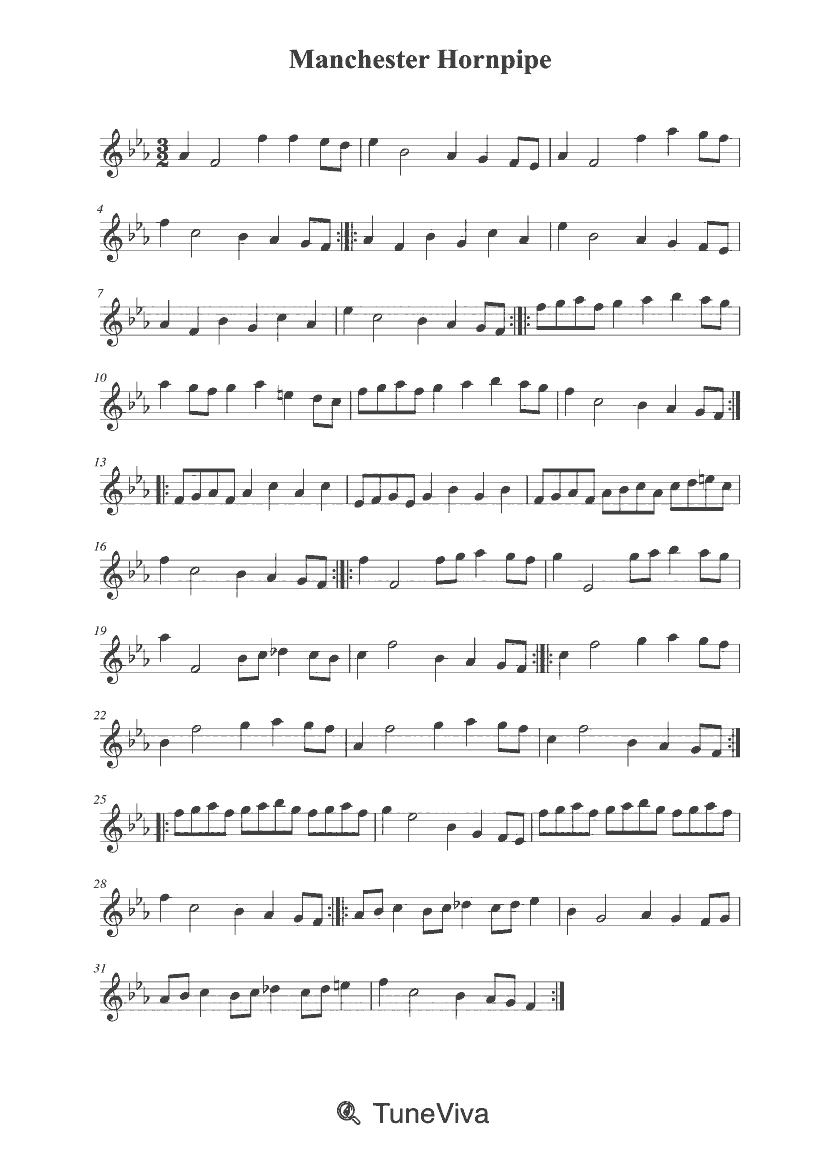
Misc tunes
6 min 24 sec
Open score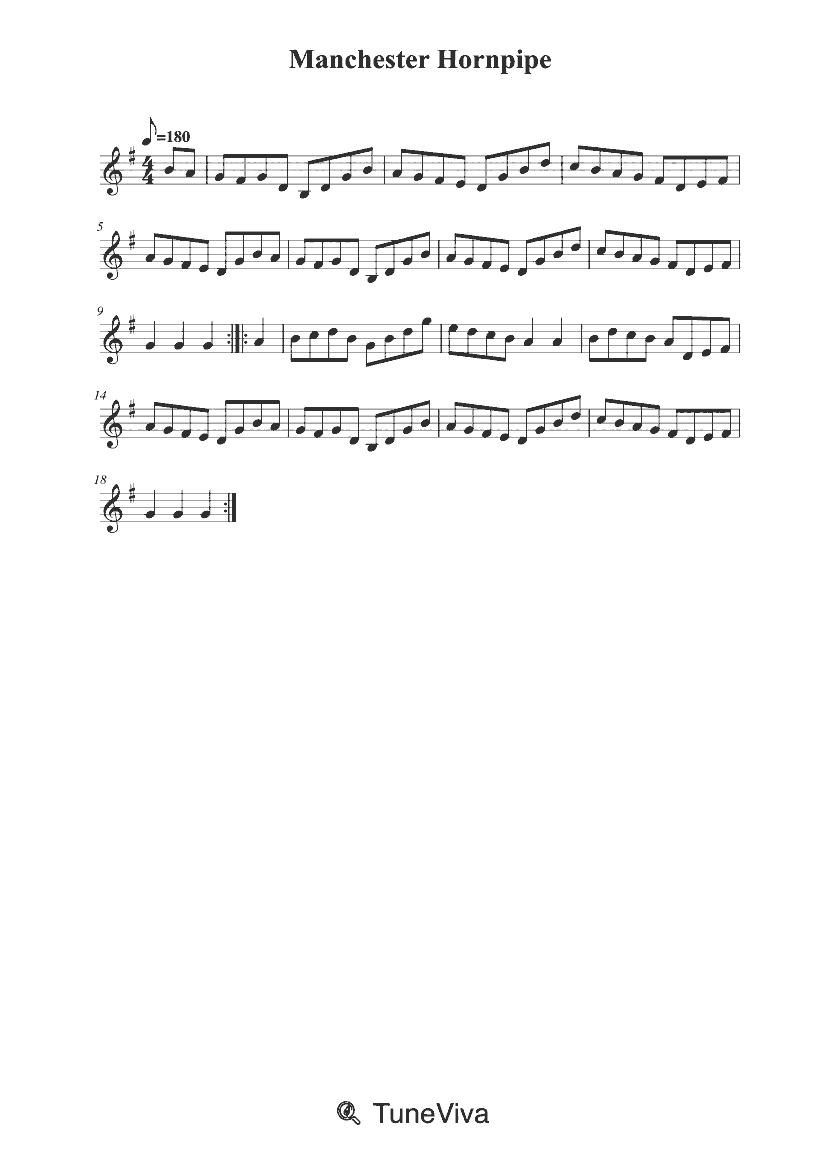
aka.Morning Fair 2 Ricket's
1 min 25 sec
Open score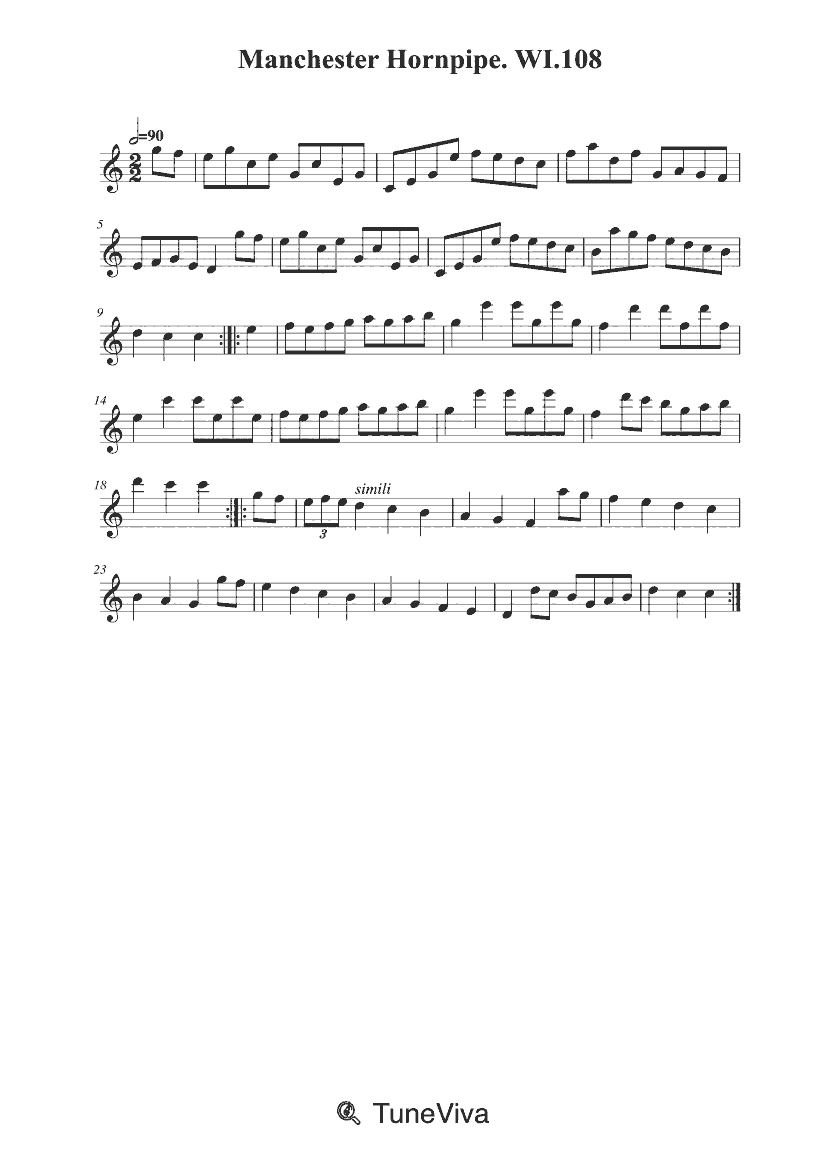
Misc tunes
2 min 8 sec
Open score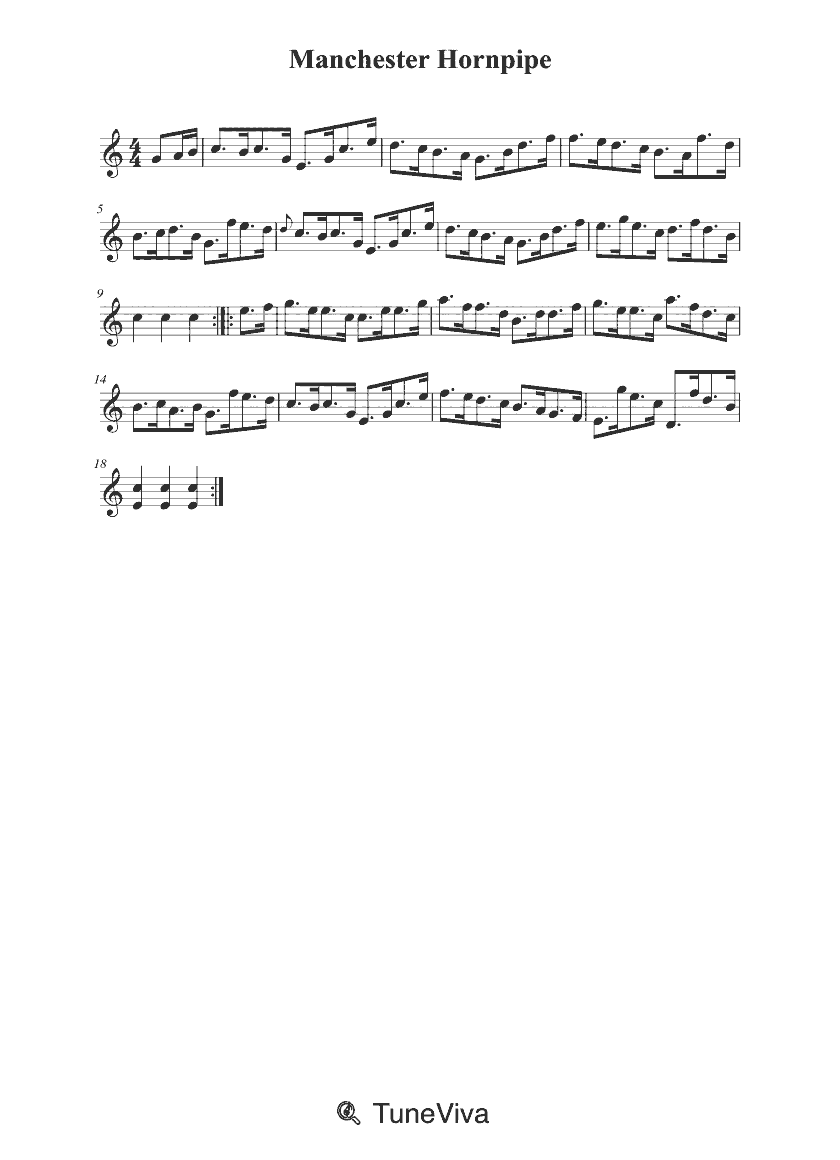
Misc tunes
Ricketts Hornpipe
1 min 4 sec
Open score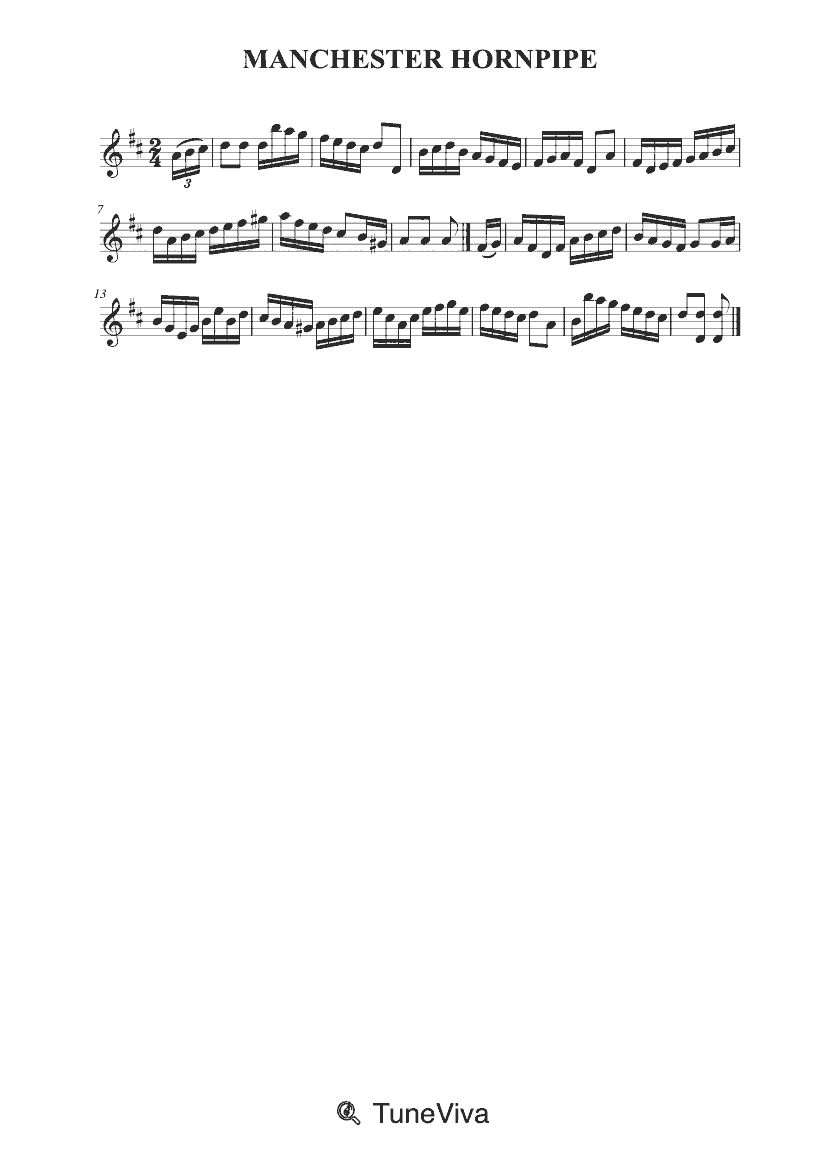
Misc tunes
16 sec · Score #143331
Open score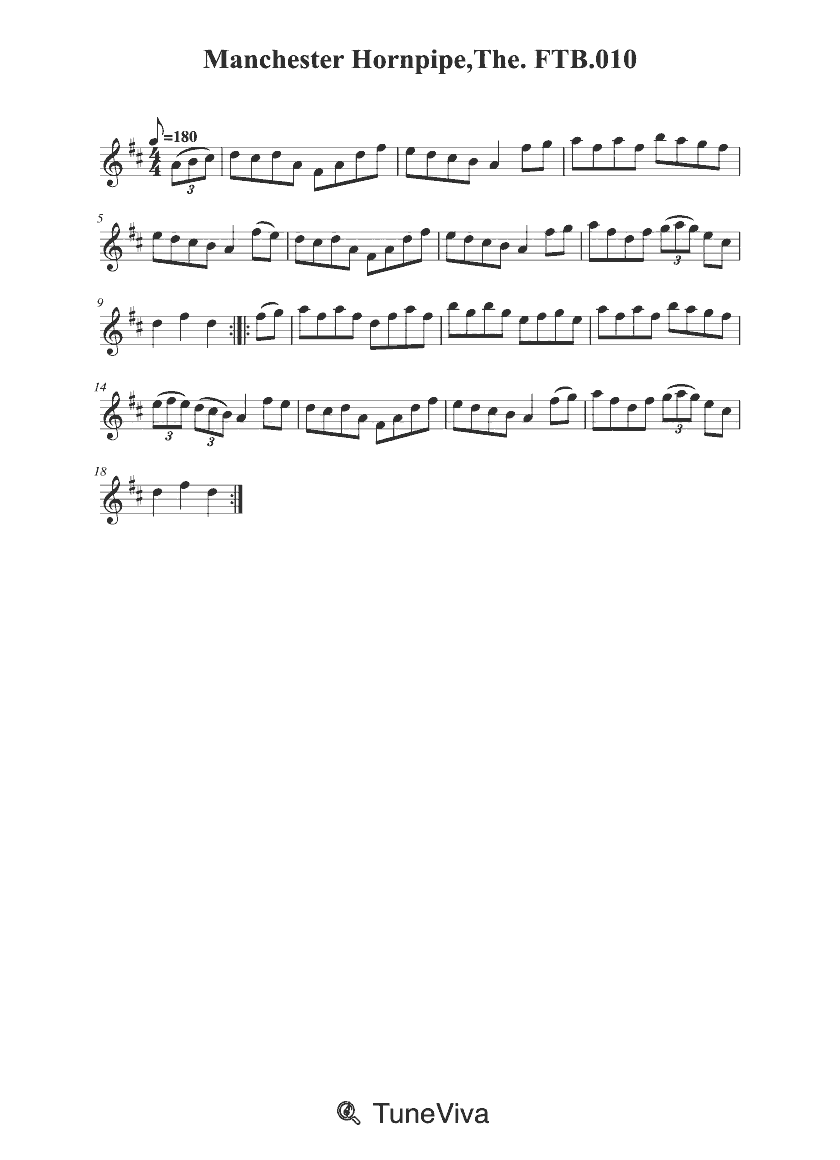
Misc tunes
Rickett's Hornpipe. FTB.010
1 min 25 sec
Open score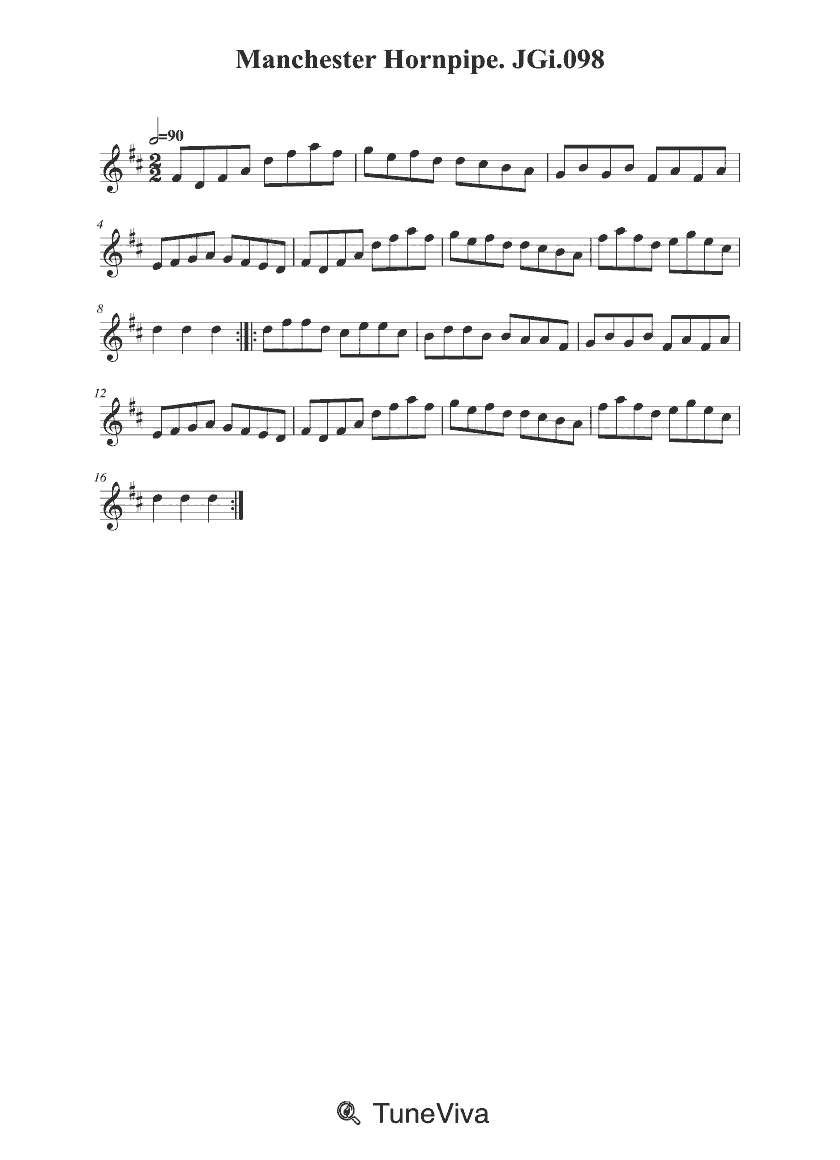
Misc tunes
1 min 23 sec
Open score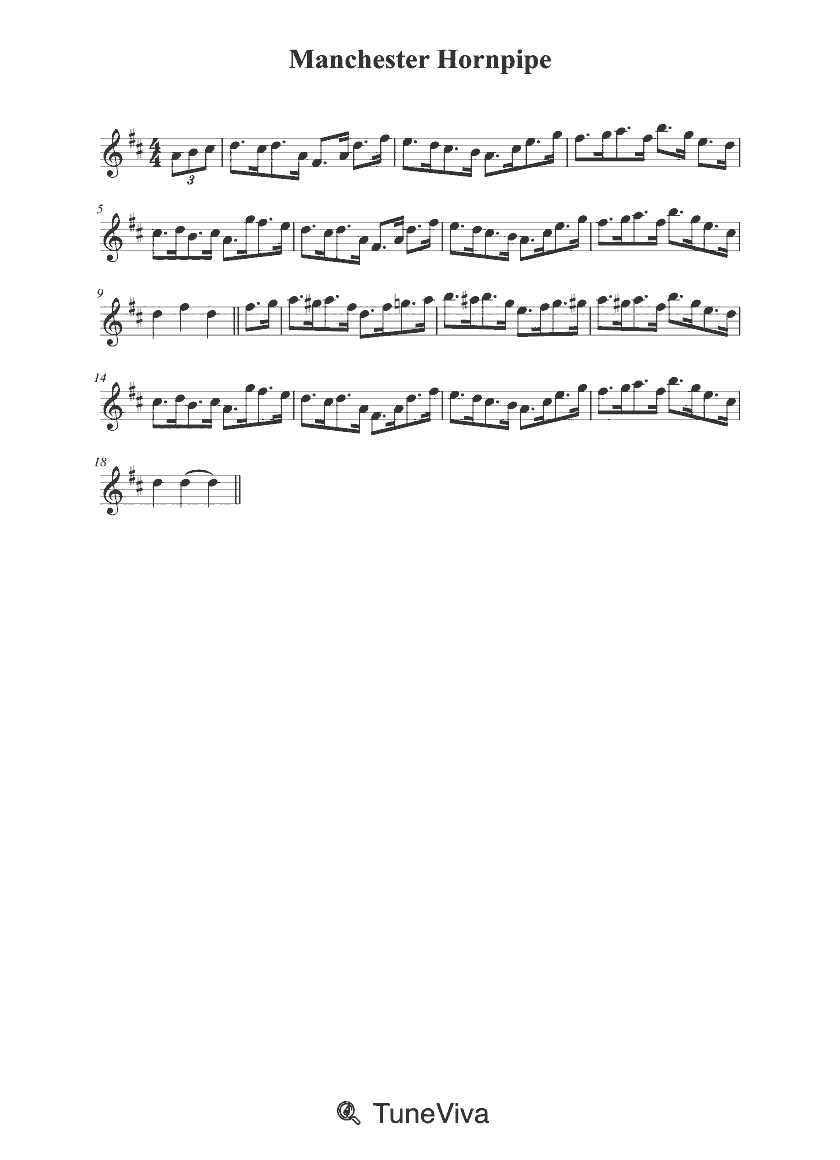
Misc tunes
32 sec
Open score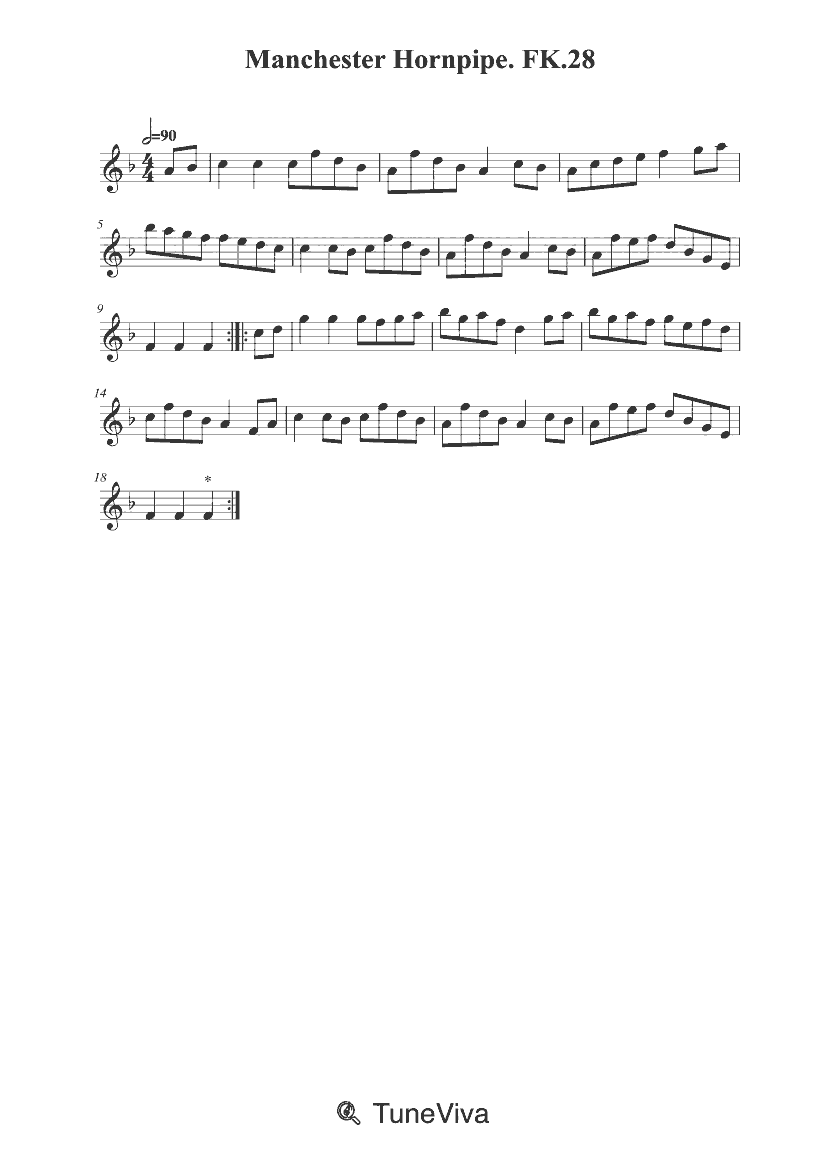
MS 40 p.41
43 sec · Score #24397
Open score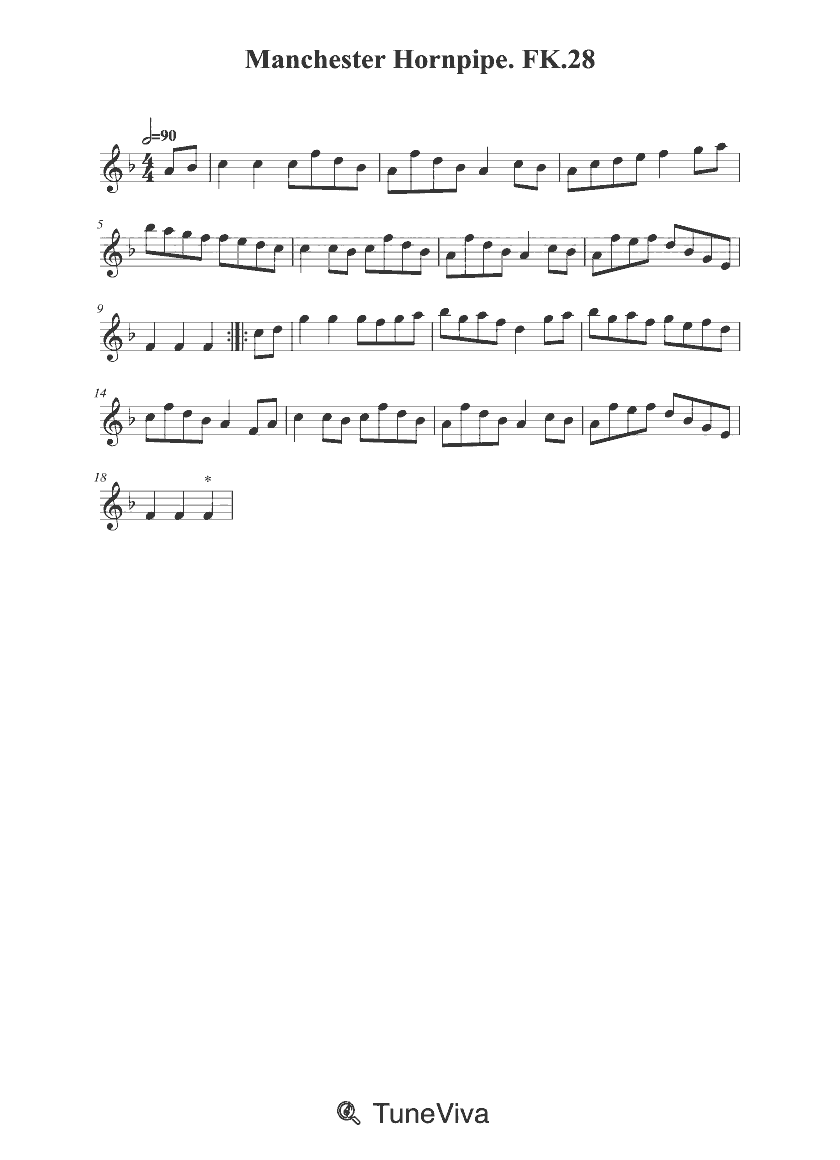
MS 40 p.41
43 sec · Score #51943
Open score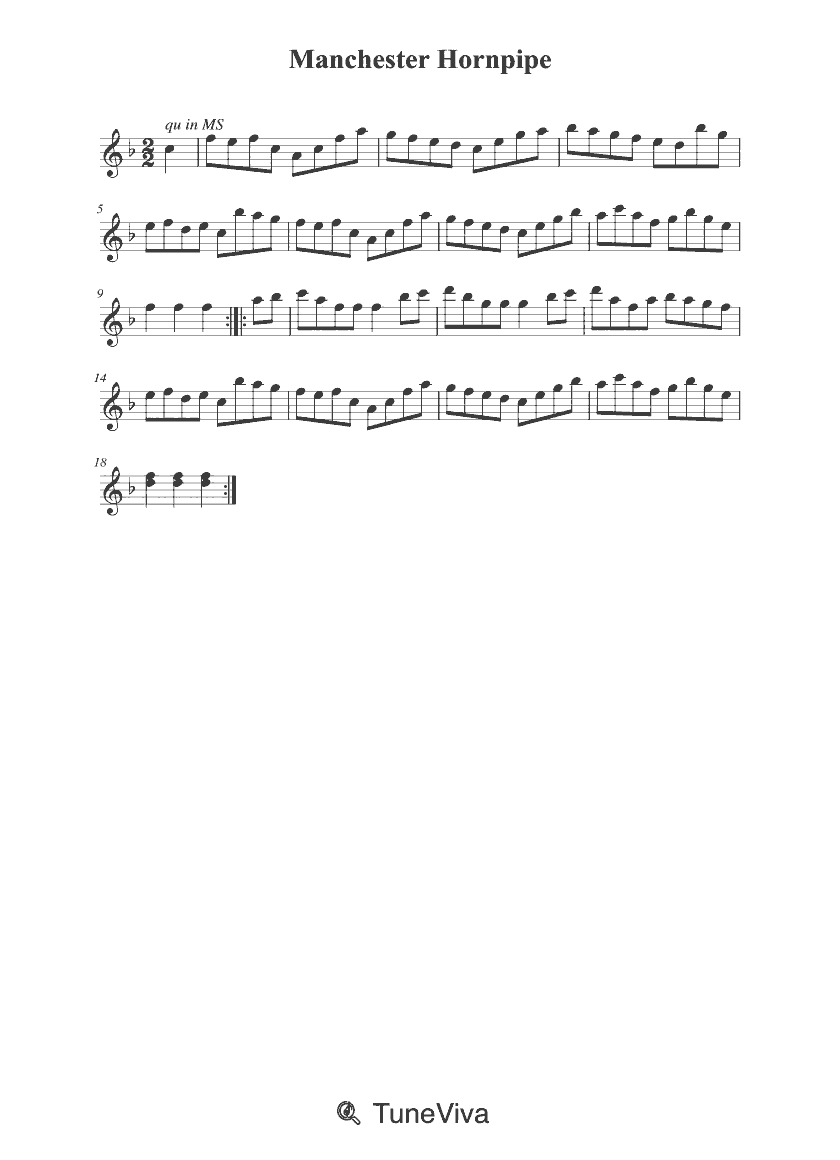
Misc tunes
Untitled in MS.
2 min 8 sec
Open score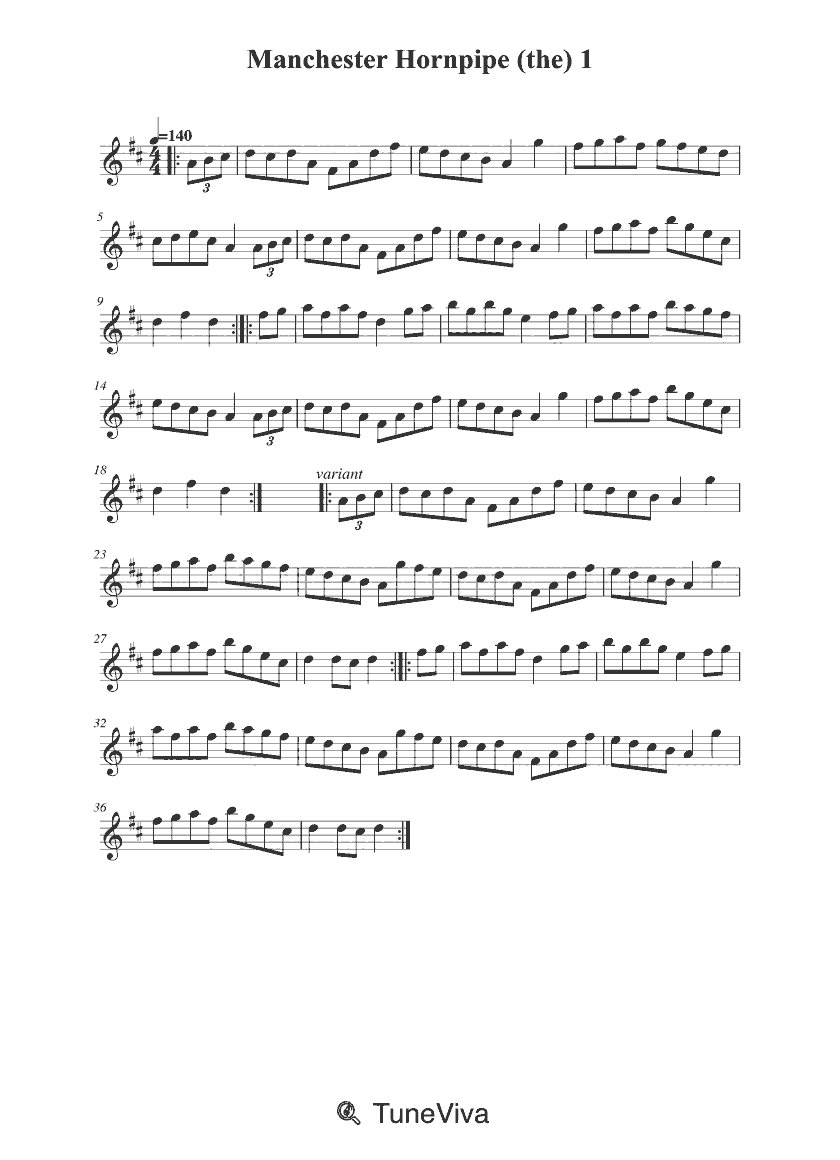
Misc tunes
Rickett's Hornpipe
1 min 51 sec · Score #75551
Open score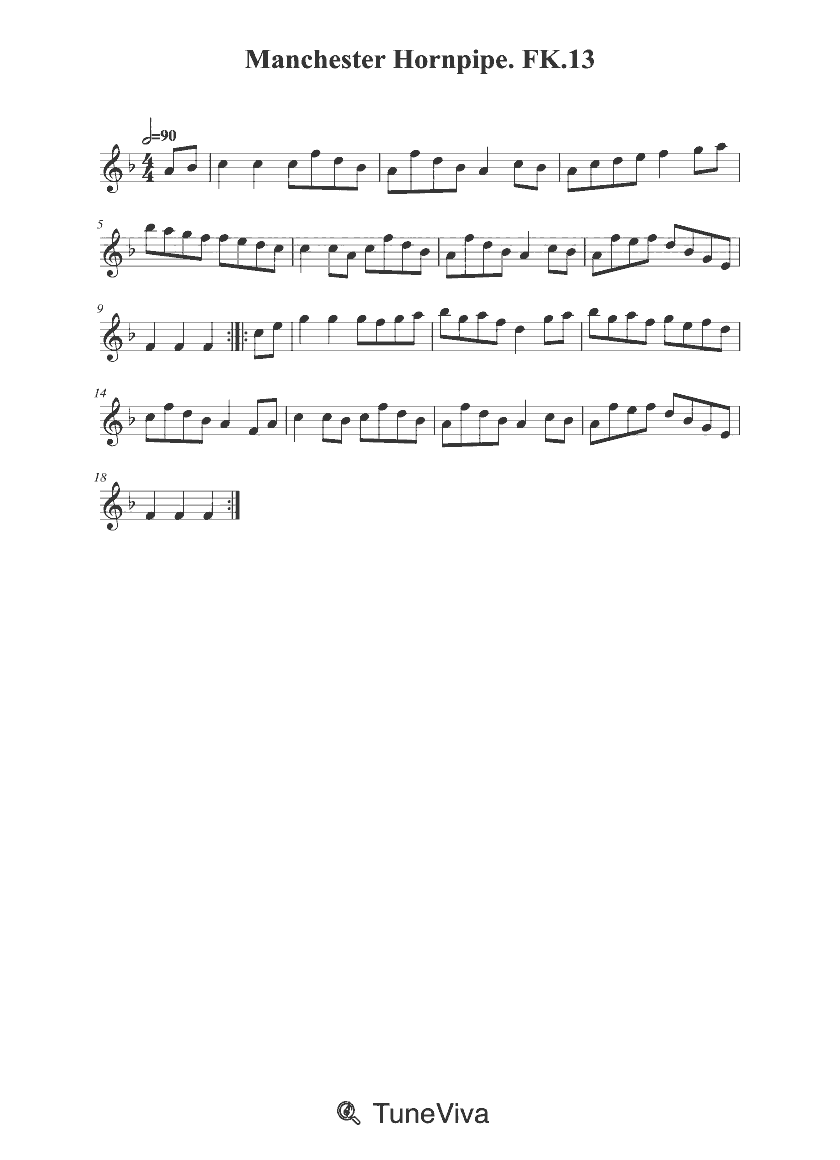
MS no.40 p.41
43 sec
Open scorePage 1 of 2
The scores listed under Manchester Hornpipe do not share one notational shape. One opens with three flats in 3/2 at 200 BPM, another in G major in 2/2 at 152 BPM, and a third in D major in 4/4 at 140 BPM. These are opening details rather than a full analysis, and listings can contain errors, but they show why it is worth opening more than one score before settling on a version.
A fiddle, flute, accordion or whistle player may prefer a different notated key from a reader at the piano, and the metre affects how the tune feels under the bow or fingers. Use the opening key signature as a practical guide: three flats, one sharp and two sharps are available here. Check the first few bars for range and accidentals rather than assuming that one key is automatically easier.
No composer is credited on these entries, and the instrumentation is not stated. A single-track score may be a melody line, but the listings alone do not confirm that. Look at the score itself for clef, register, chord symbols or accompaniment before deciding whether it is playable on your instrument.
The title appears as “Manchester Hornpipe” and, in one listing, as “Manchester Hornpipe. Roose.0916”. The available information does not explain the alphanumeric suffix. Since no composer is named, treat the piece as unattributed in this presentation and avoid inferring a date, region or composer from the title alone.
Catalogue duration 1 min 55 sec. Opening key signature: 3 flats. Opening time signature: 3/2. Opening tempo: 200 BPM.
Catalogue duration 1 min 51 sec. Opening key signature: 2 sharps (D major). Opening time signature: 4/4. Opening tempo: 140 BPM.
Catalogue duration 1 min 41 sec. Opening key signature: 1 sharp (G major). Opening time signature: 2/2. Opening tempo: 152 BPM.
The scores listed under Manchester Hornpipe credit no composer, and the composer field is unavailable. The piece should therefore be treated as unattributed here; the title alone does not establish an author.
The available Manchester Hornpipe scores open in 3/2, 2/2 and 4/4 respectively. That means the page contains separate notated settings rather than one uniform edition, and the metre you choose will affect the tune’s phrasing and pulse.
Manchester Hornpipe is not given in a single key across these scores. The listed versions open with three flats, with one sharp (G major) and with two sharps (D major), so players should choose the key that suits their instrument, range and playing context.
The listed Manchester Hornpipe scores do not state an instrumentation, and each is a single-track entry. Examine the individual score for its clef, range and any chord symbols before deciding whether it suits fiddle, flute, accordion or another instrument.
The Manchester Hornpipe entries differ in opening key, metre and tempo, so they should be treated as distinct settings rather than duplicate copies of one arrangement. Compare the first bars and the overall shape before choosing one for practice or performance.
One listed score carries the title “Manchester Hornpipe. Roose.0916”. The available information does not explain the suffix, and there is no evidence that it names a different work; treat it as a title variant attached to a Manchester Hornpipe score.