
March in the Battle of Prague. RH.289
Misc tunes
1 min 20 sec
Open scoreThis page brings together March in the Battle of Prague sheet music in three related scores. The available versions open in G major or F major and are all set in 4/4 at the start; one score includes the credit “Clarinetto Primo,” while composer attribution is not established in the available information. Compare the title, opening key, tempo and notation before choosing a score, and check the music itself for completeness and instrumentation.
Scores 1–20 of 31
Misc tunes
1 min 20 sec
Open score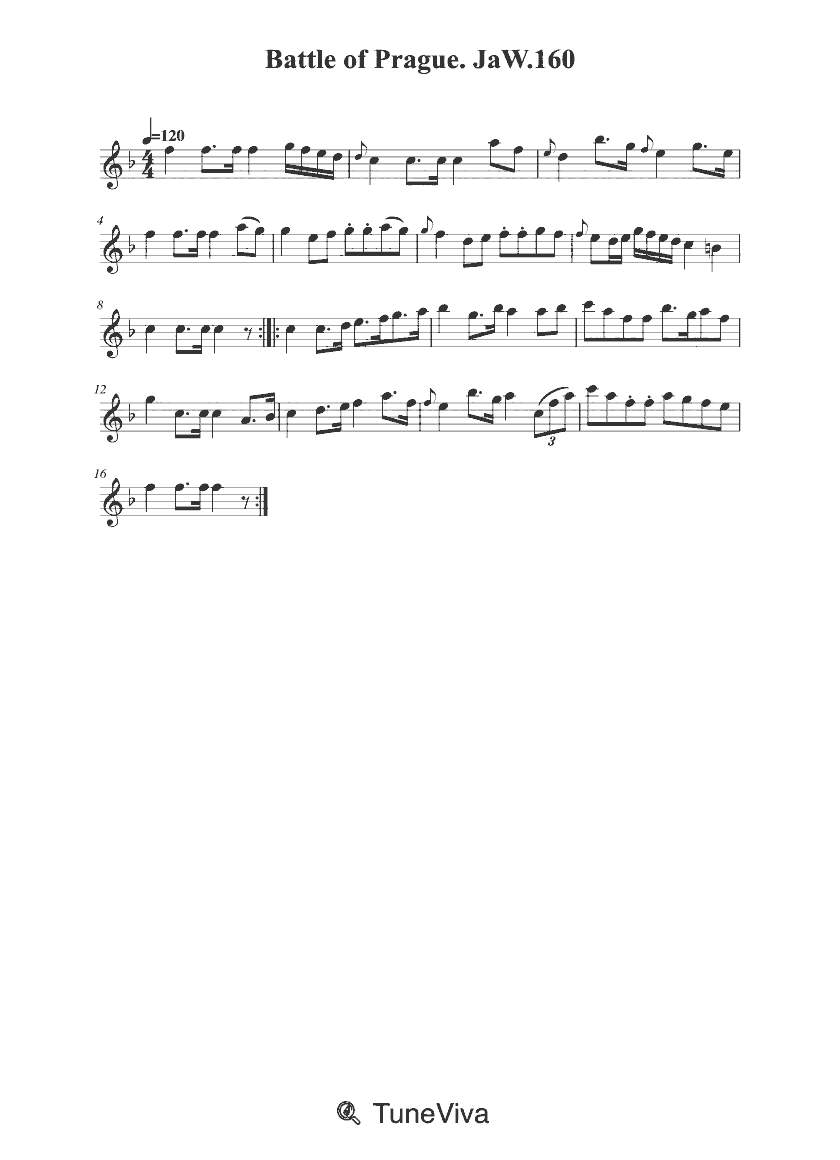
Clarinetto Primo
1 min 3 sec
Open score
Misc tunes
1 min 4 sec · Score #51467
Open score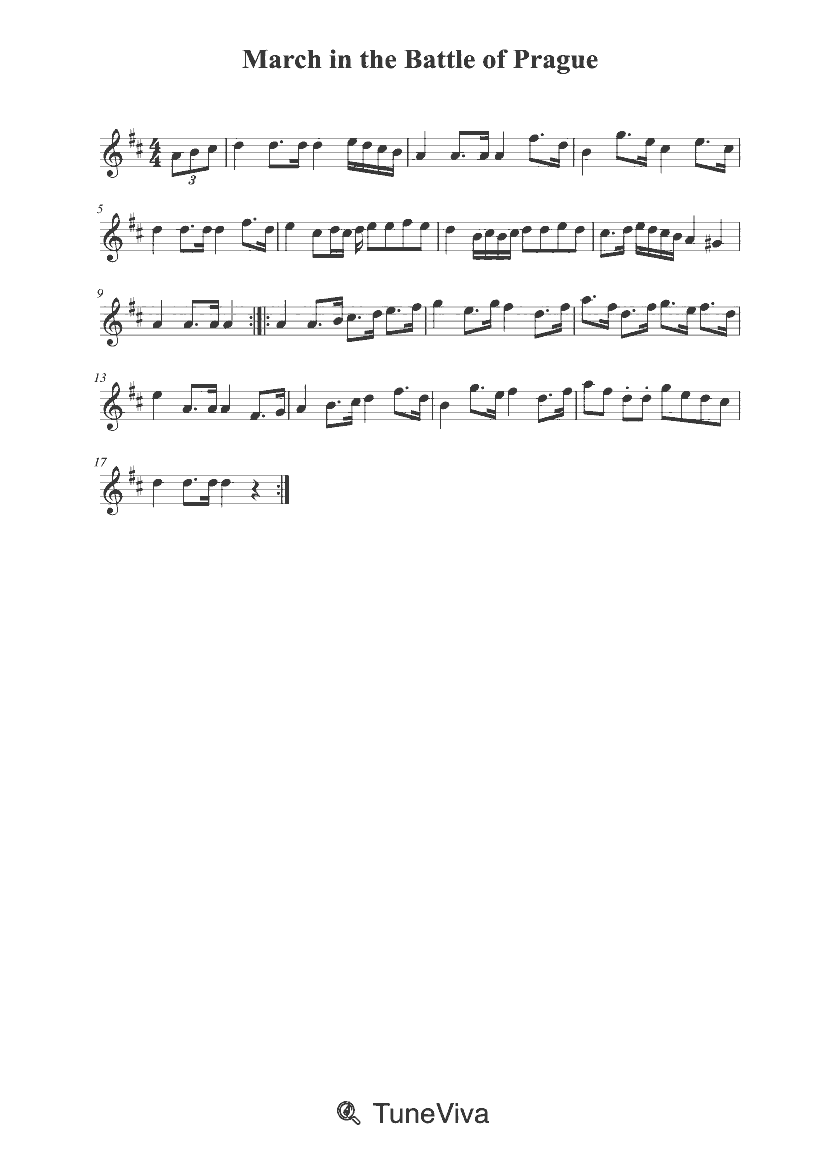
Misc tunes
1 min 4 sec · Score #20714
Open score
Misc tunes
1 min 5 sec
Open score
Misc tunes
1 min 3 sec
Open score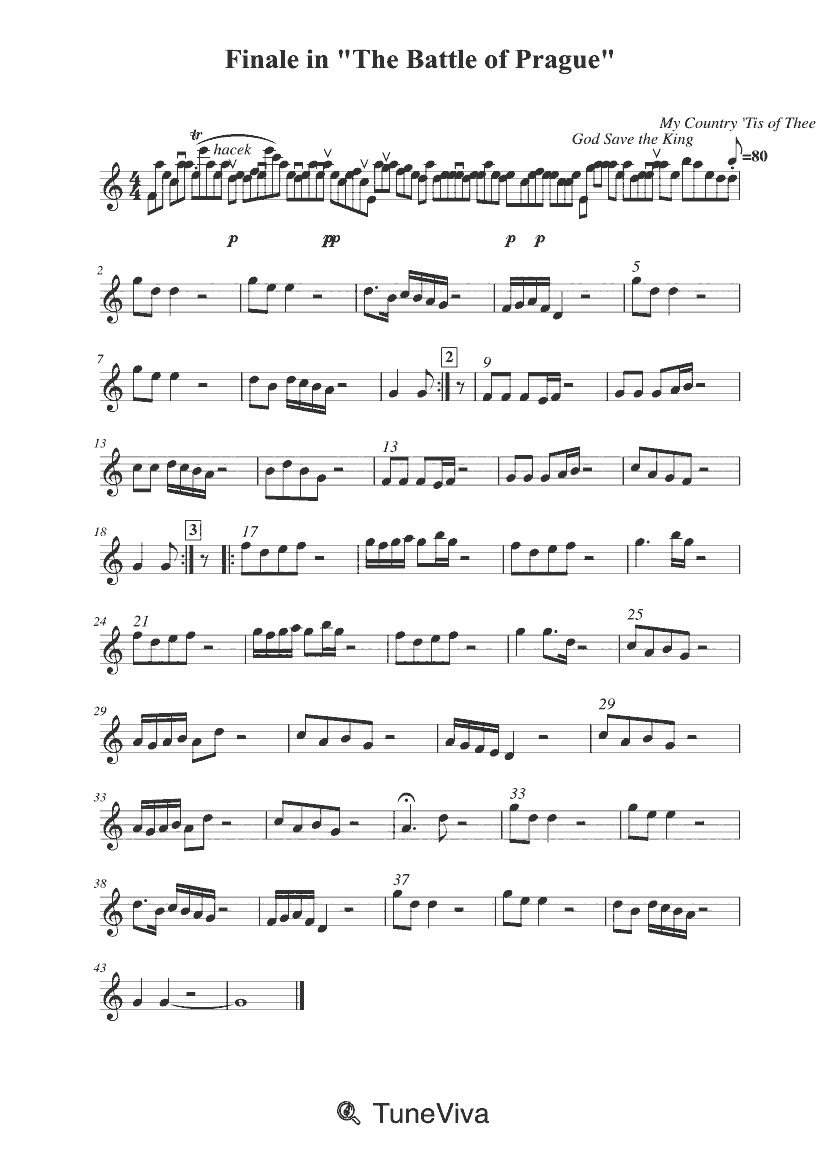
file ID: ofpc.4/032fbp
6 min 50 sec
Open score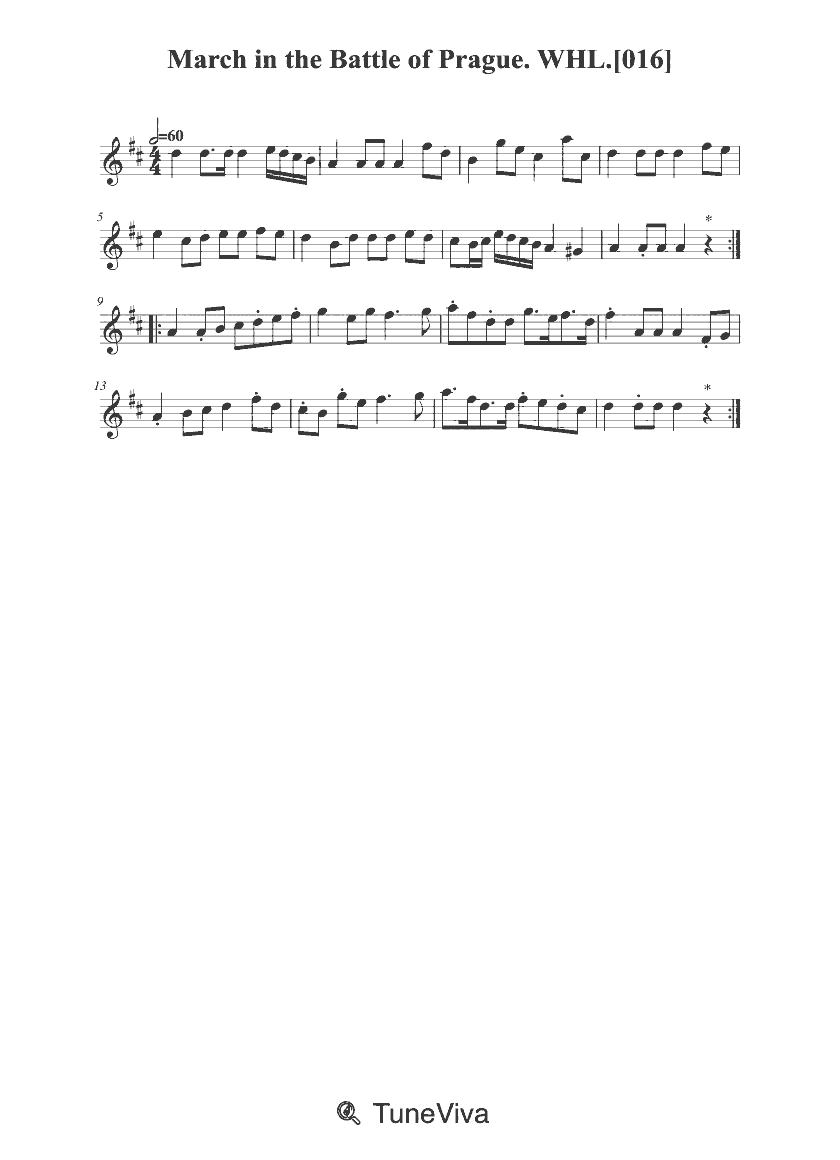
Misc tunes
1 min 3 sec
Open score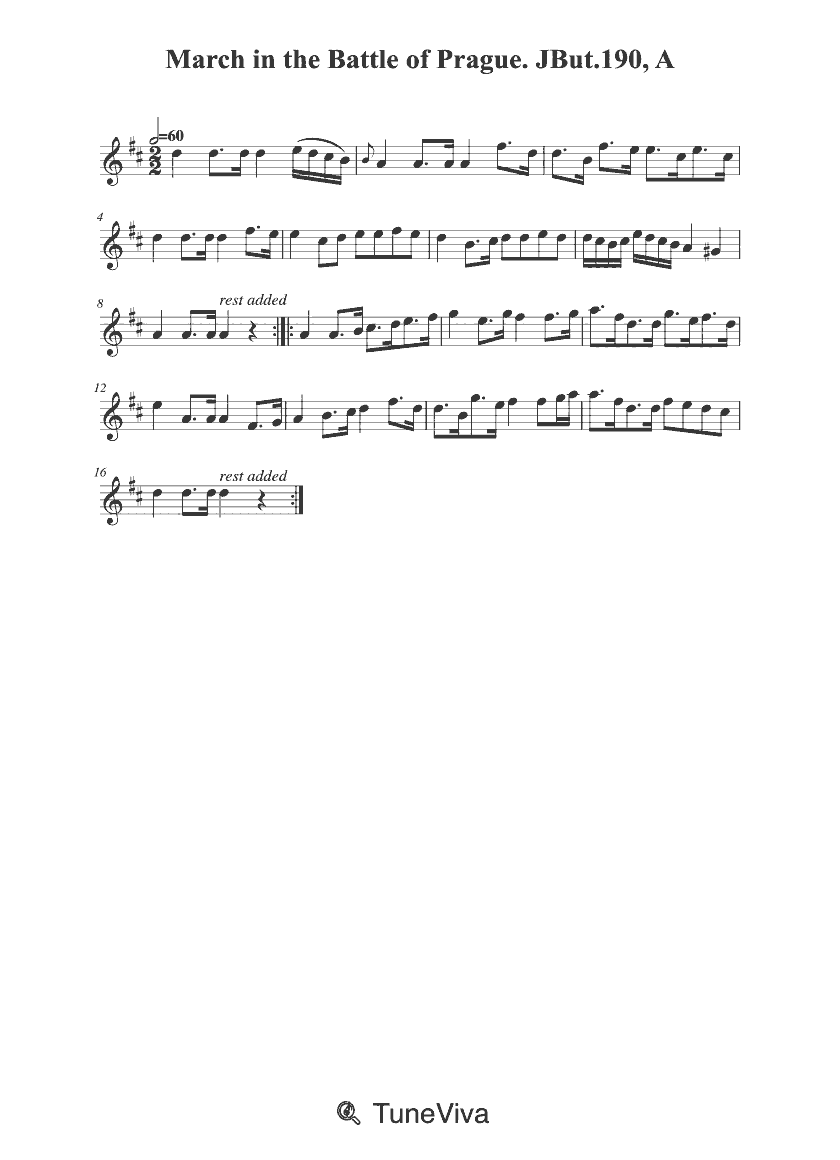
Misc tunes
2 min 7 sec
Open score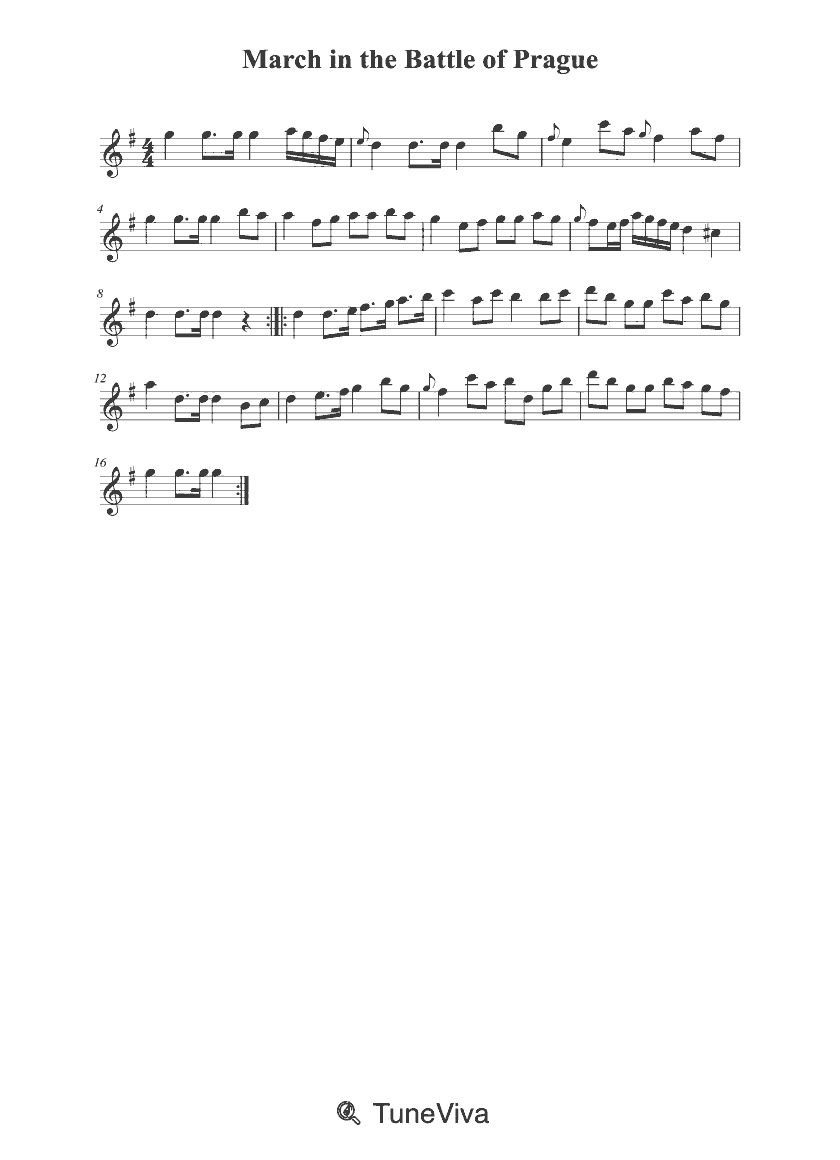
Misc tunes
1 min 3 sec
Open score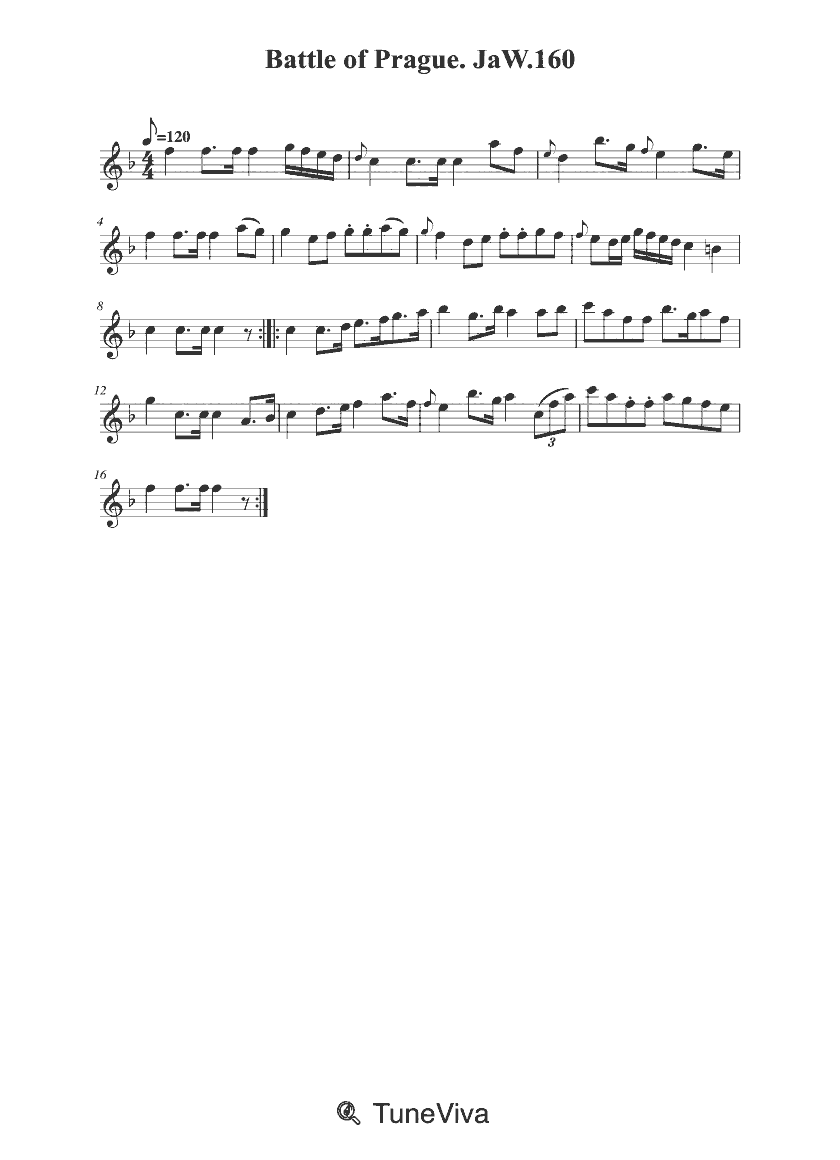
Clarinetto Primo
2 min 5 sec
Open score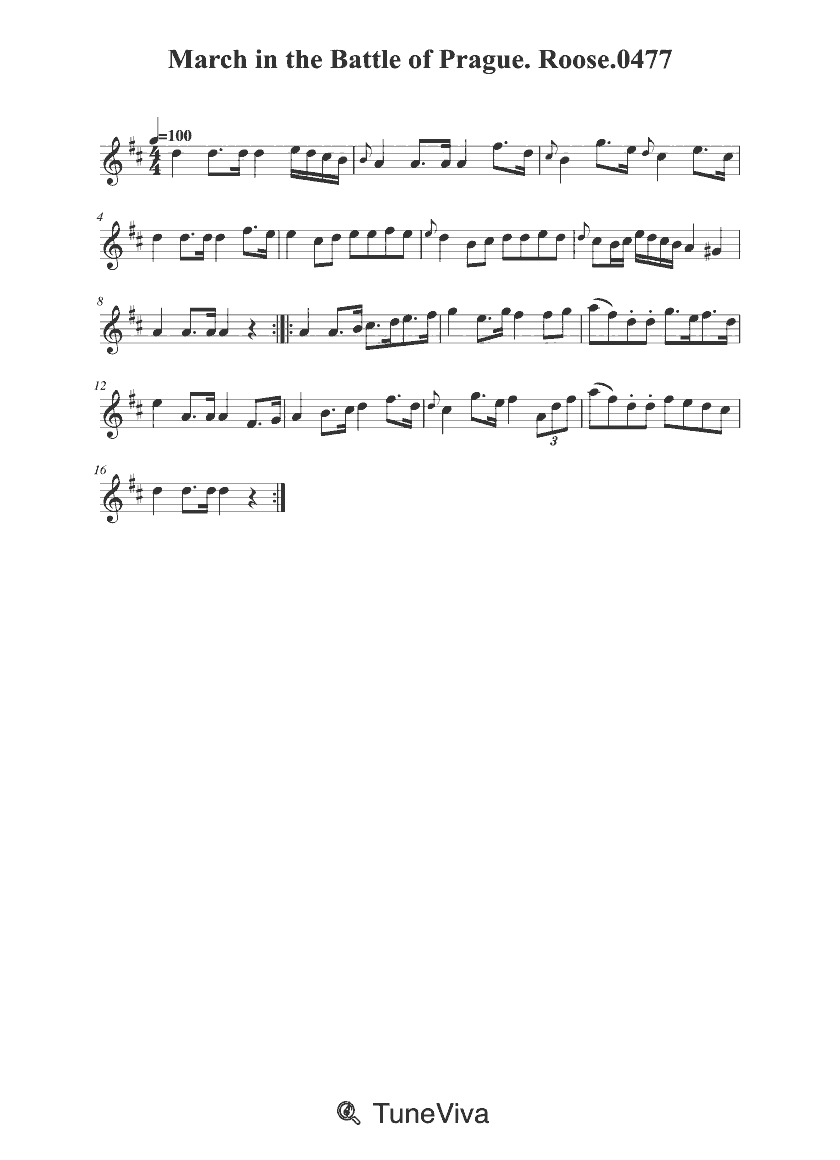
Misc tunes
1 min 16 sec
Open score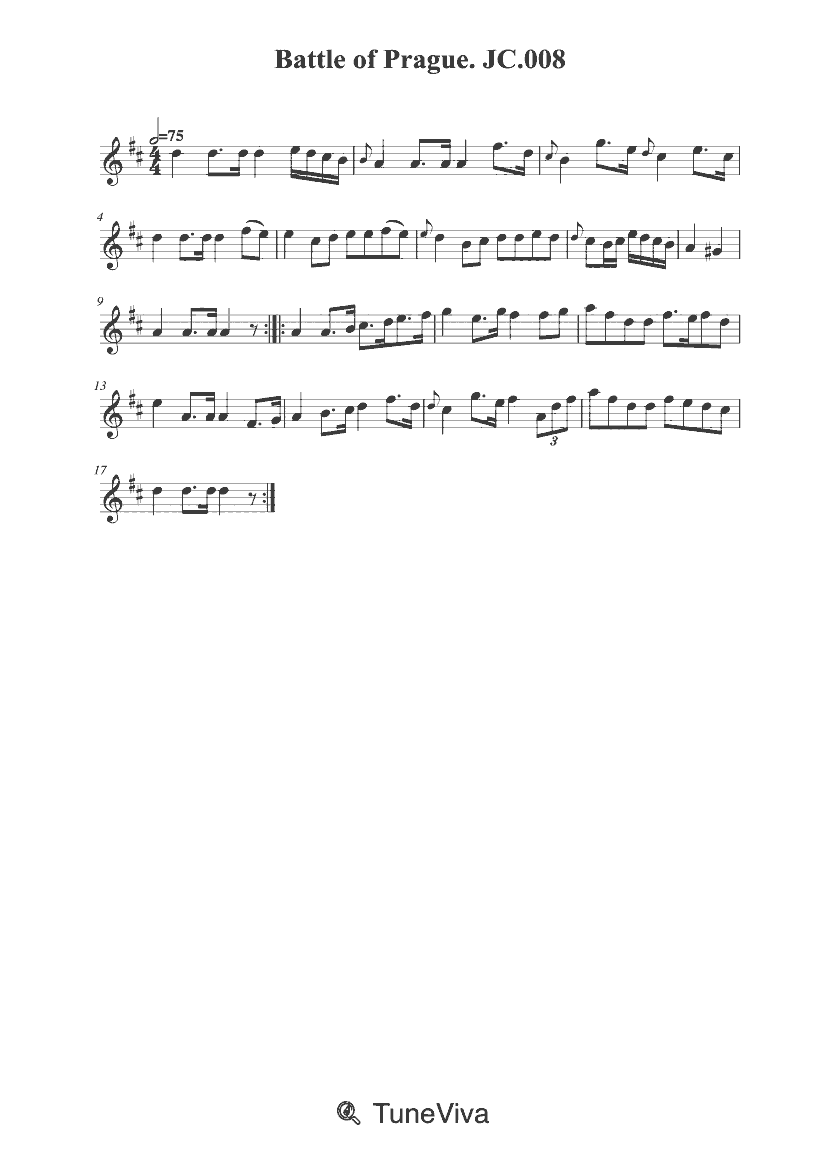
Misc tunes
50 sec · Score #36788
Open score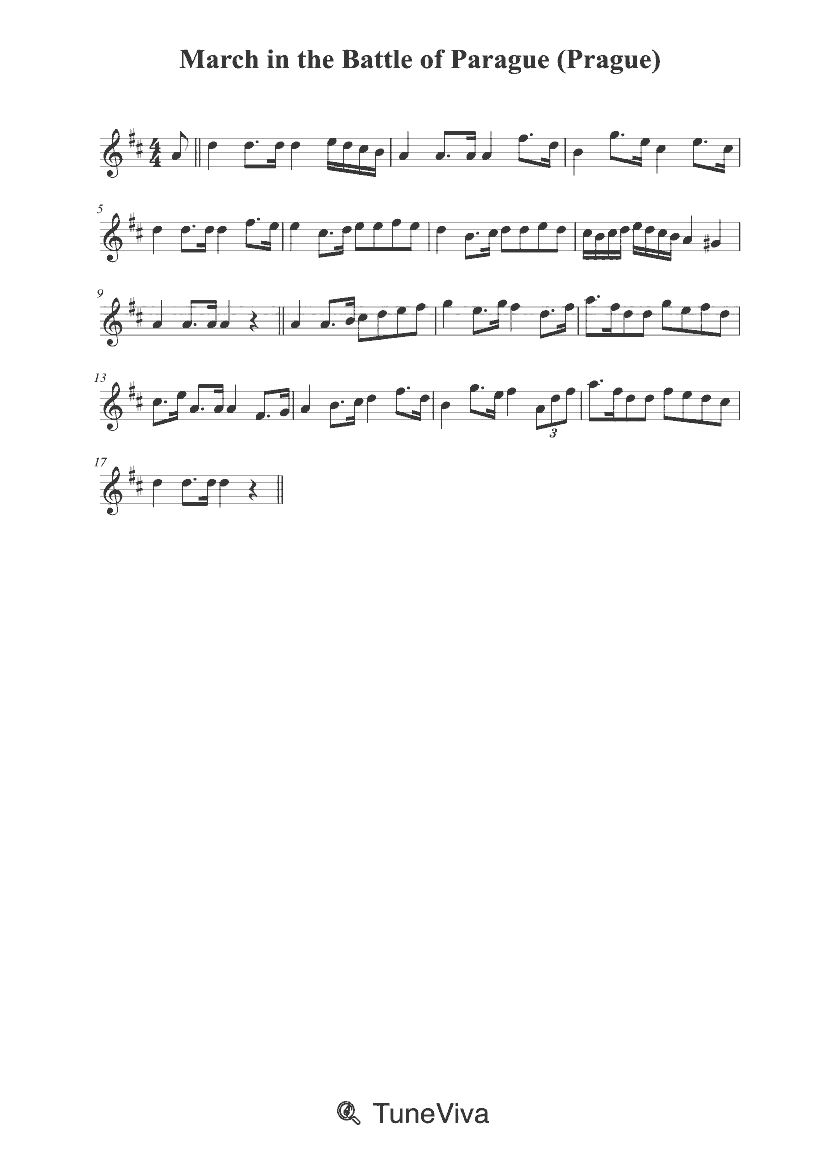
No 184 Page 90 William Clarke of Feltwell
32 sec
Open score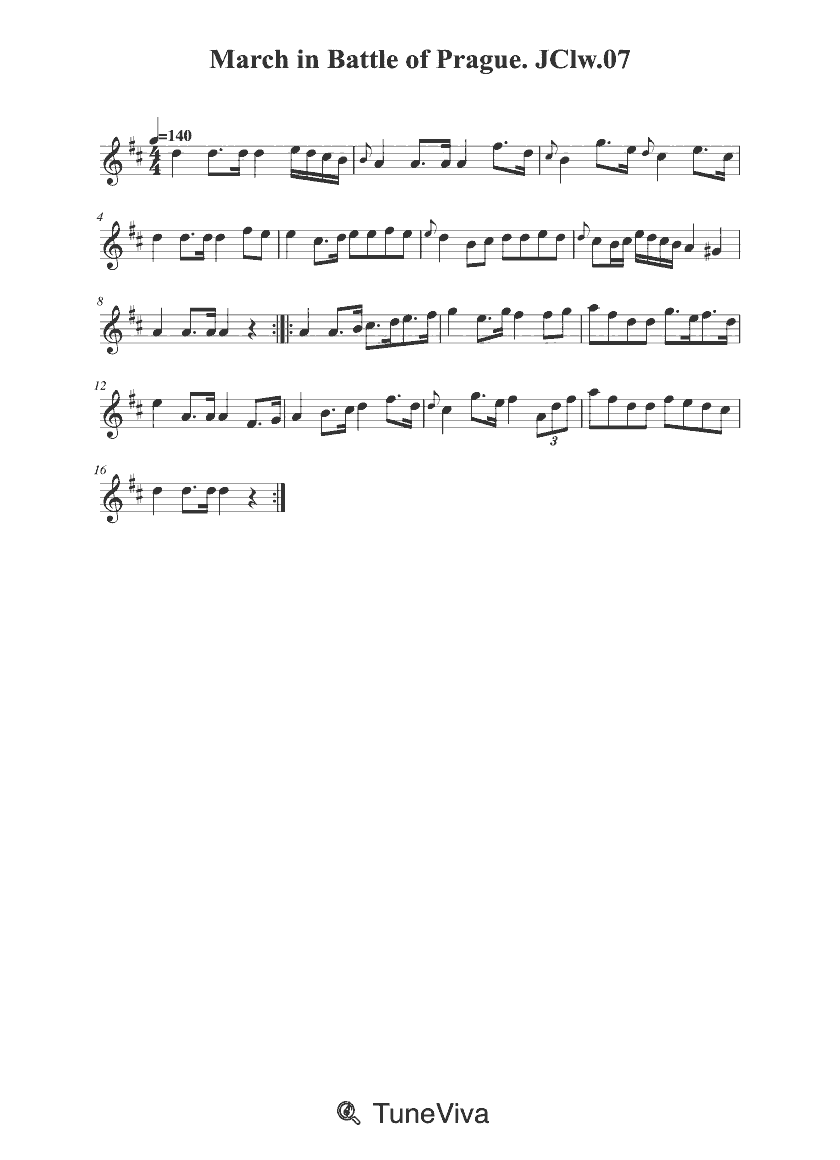
Misc tunes
54 sec
Open score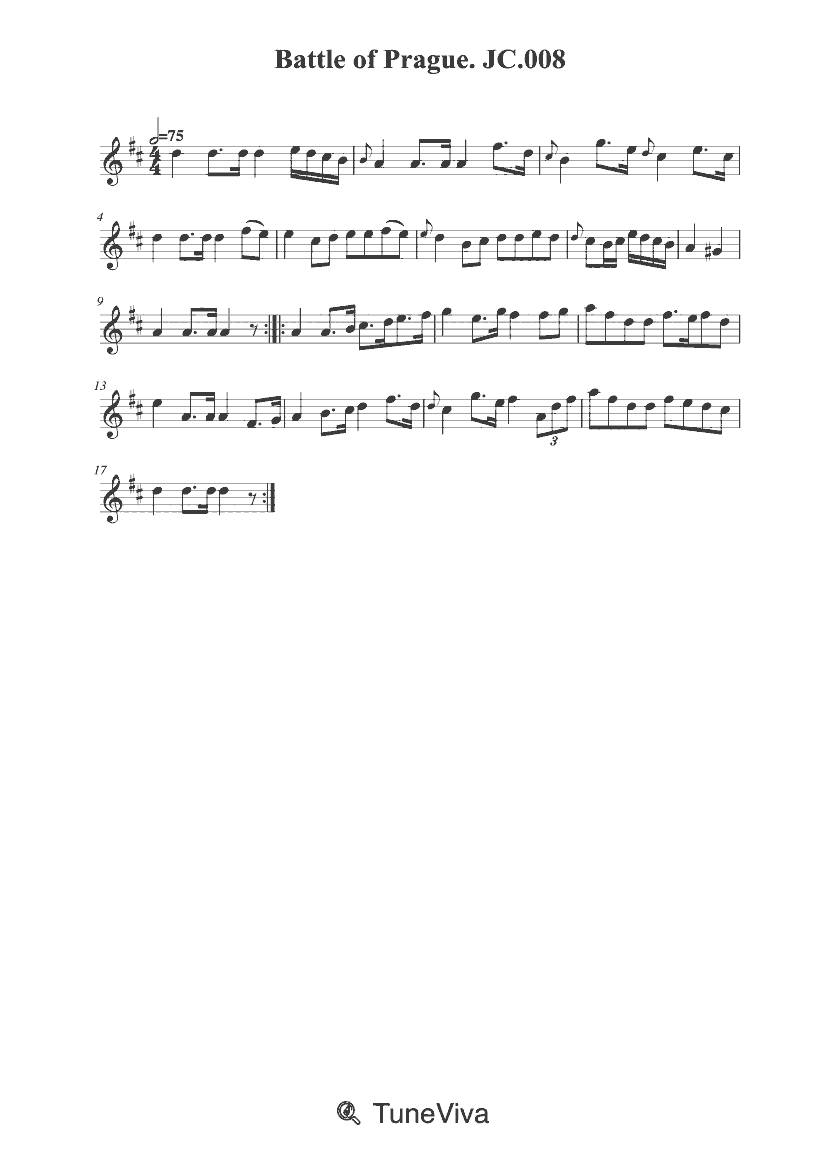
Misc tunes
50 sec · Score #120624
Open score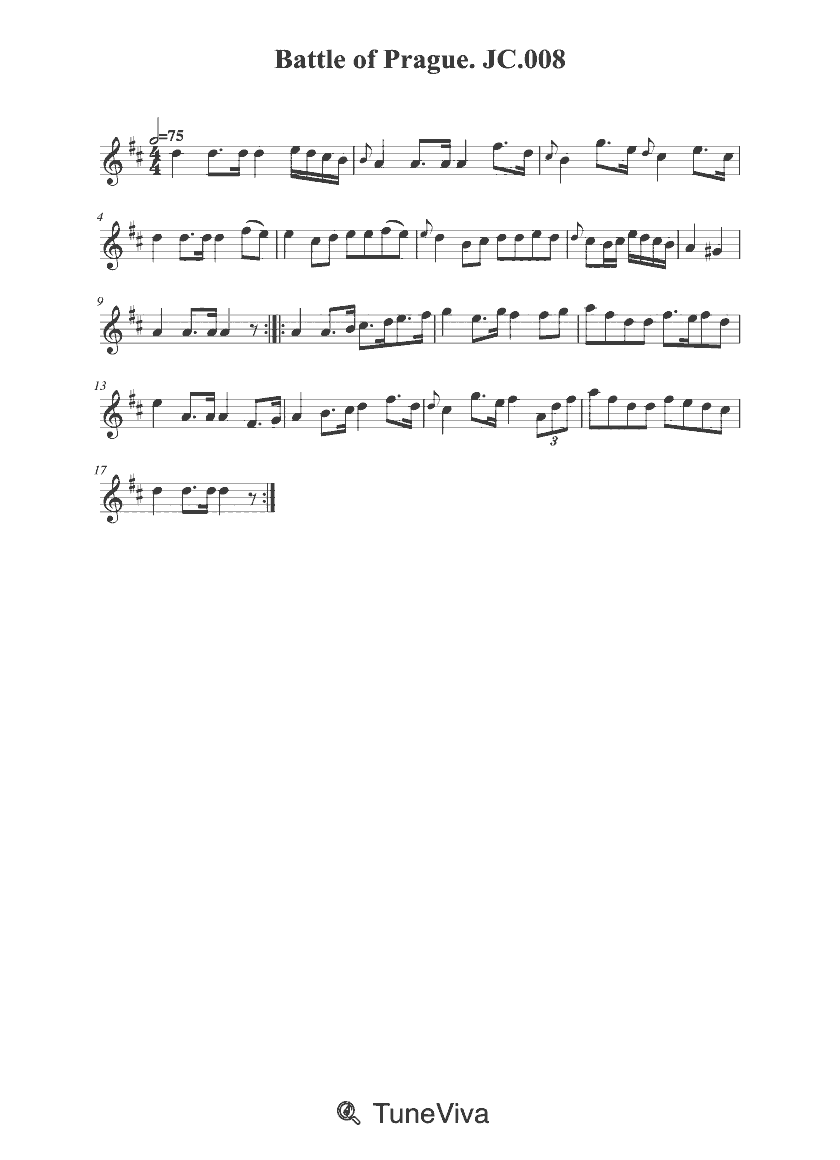
Misc tunes
50 sec · Score #161428
Open score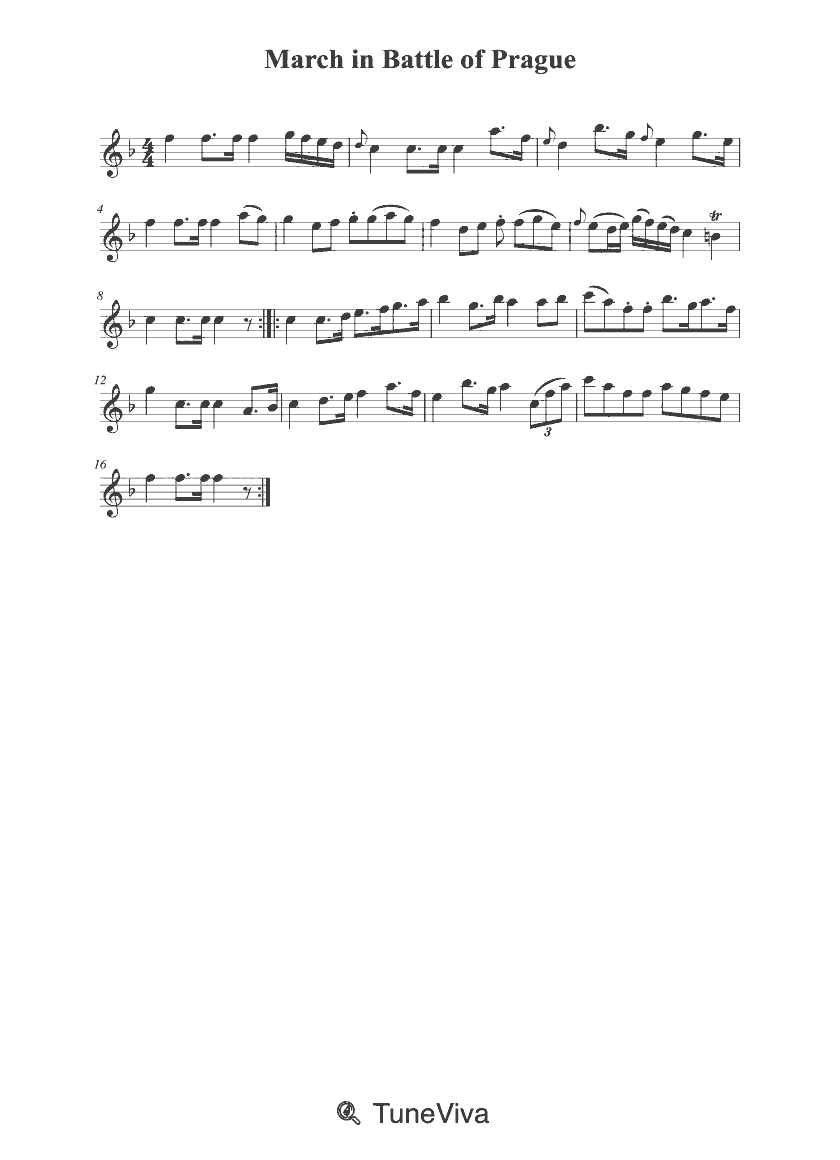
Misc tunes
1 min 3 sec
Open score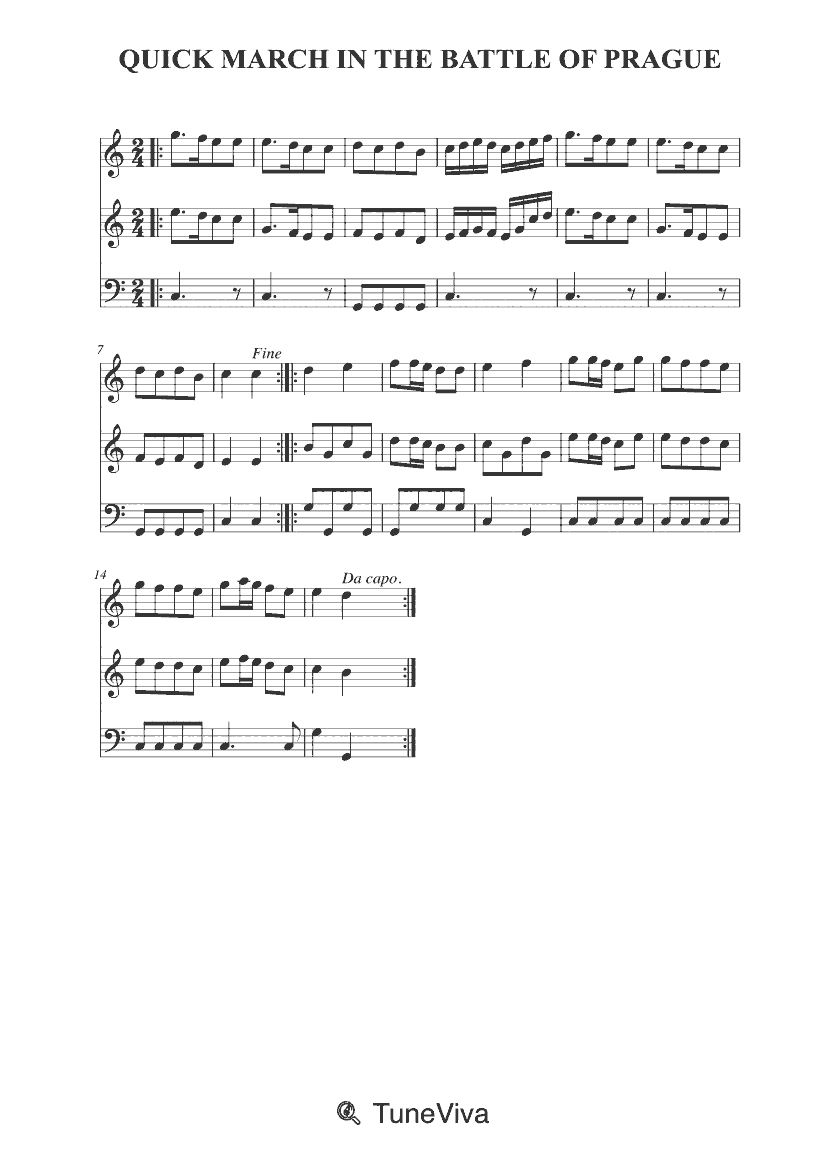
Misc tunes
32 sec
Open score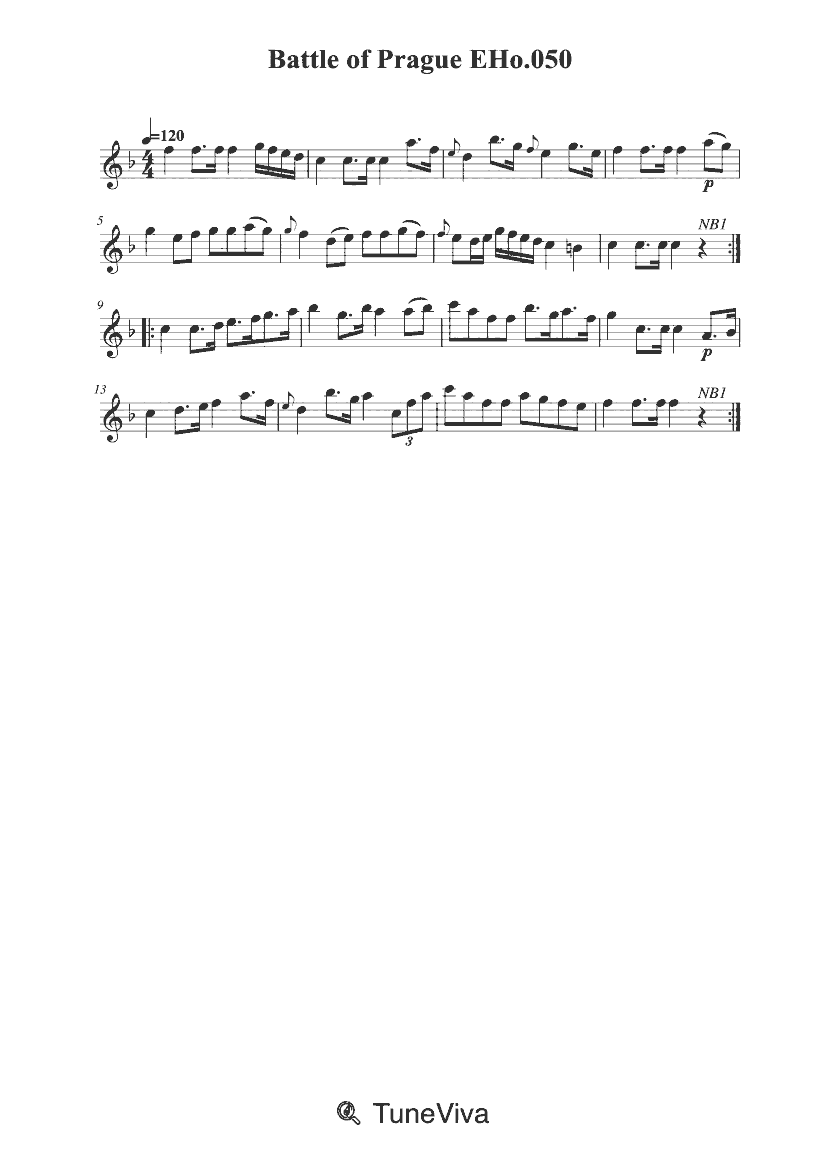
Misc tunes
1 min 3 sec
Open scorePage 1 of 2
The three scores carry related titles: “March in the Battle of Prague,” “Battle of Prague. JaW.160” and “March in the Battle of Prague. RH.289.” The self-titled score and RH.289 open with a one-sharp signature (G major), while JaW.160 opens with a one-flat signature (F major). All three begin in 4/4. These opening details are useful for comparison, but they do not show whether the scores are identical versions, arrangements or separate settings.
No composer is named for the self-titled score or for RH.289. The score titled “Battle of Prague. JaW.160” includes “Clarinetto Primo” as a credit, but that wording does not establish a composer. Treat composer attribution as unverified unless it can be checked against a reliable edition or reference source.
The titles and opening details do not confirm the instrumentation, whether each score is complete, or whether any score is an arrangement. The “Clarinetto Primo” credit suggests a first clarinet part may be involved, but the available information does not show whether other parts exist or whether the score presents a single line or a fuller texture. Inspect the clef, range and part layout before using a score for performance.
Opening key, time signature and tempo describe only the beginning of a score. A march may change key, add repeats or alter tempo later. Tempo is given for two scores: JaW.160 at 120 BPM and RH.289 at 95 BPM; the self-titled score has no opening tempo in its details. Use these figures as starting points rather than as a complete performance plan.
Catalogue duration 1 min 20 sec. Opening key signature: 1 sharp (G major). Opening time signature: 4/4. Opening tempo: 95 BPM.
Catalogue duration 1 min 3 sec. Opening key signature: 1 flat (F major). Opening time signature: 4/4. Opening tempo: 120 BPM.
Catalogue duration 1 min 4 sec. Opening key signature: 1 sharp (G major). Opening time signature: 4/4.
Composer attribution is not established in the available scores. No composer is named for the self-titled score or for “March in the Battle of Prague. RH.289,” and the “Clarinetto Primo” credit on “Battle of Prague. JaW.160” does not identify a composer. Attribution should be checked against a reliable edition or reference source.
The March in the Battle of Prague scores available here open in two different keys: the self-titled score and RH.289 begin with a one-sharp signature (G major), while JaW.160 begins with a one-flat signature (F major). These are opening keys only, and a score may change key later.
All three March in the Battle of Prague scores are set in 4/4 at the opening. Tempo is given for two: JaW.160 at 120 BPM and RH.289 at 95 BPM; the self-titled score has no opening tempo in its details. These are starting tempos, not a complete performance plan.
The available scores carry related but different titles: “March in the Battle of Prague,” “Battle of Prague. JaW.160” and “March in the Battle of Prague. RH.289.” Their opening keys and listed tempos differ, so they should be compared as separate scores rather than assumed to be identical versions.
The score titled “Battle of Prague. JaW.160” includes “Clarinetto Primo” in its credit. That wording suggests a first clarinet part may be involved, but the available information does not confirm the instrumentation, whether other parts exist, or whether the score is complete.