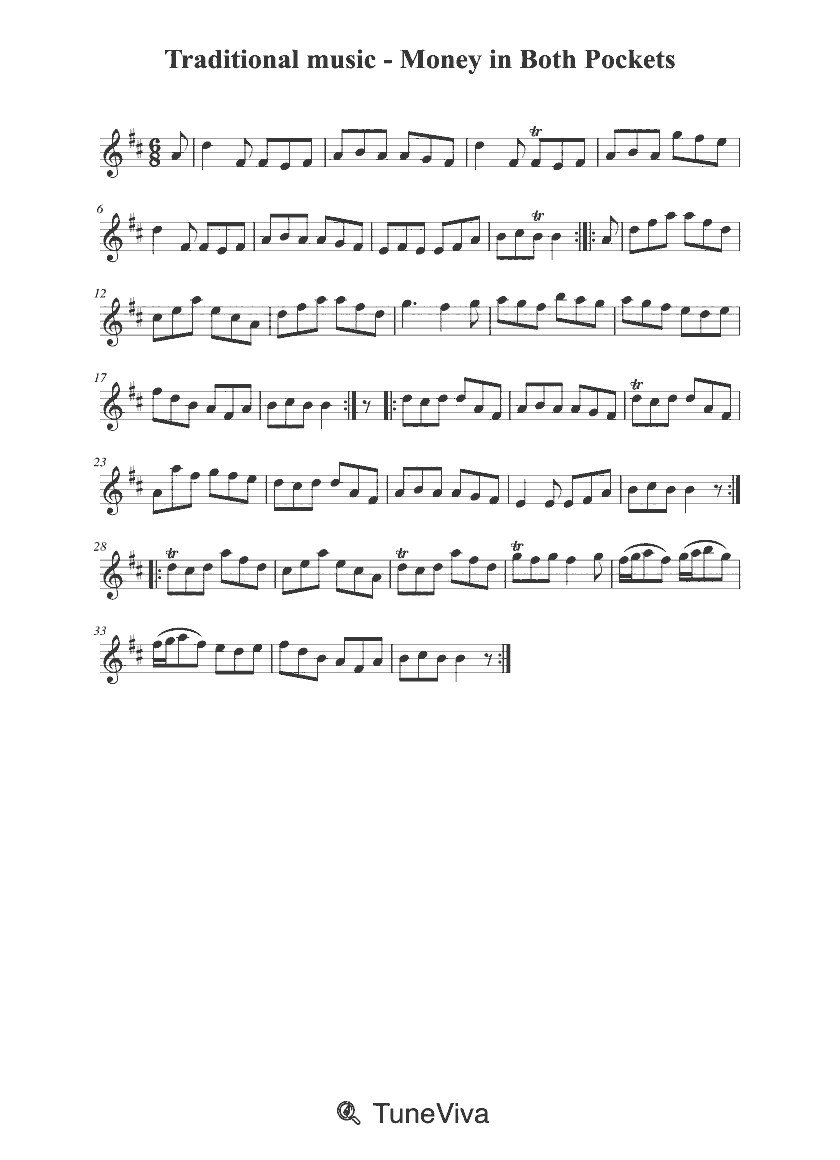
Traditional music - Money in Both Pockets
Trad. Irish?
48 sec · Score #69377
Open scoreMoney in Both Pockets is a traditional folk tune. The scores listed here all open in D major with a 6/8 time signature, but they differ in length, tempo and note count, so it is worth comparing the versions before choosing one.
Scores 1–20 of 50
Trad. Irish?
48 sec · Score #69377
Open score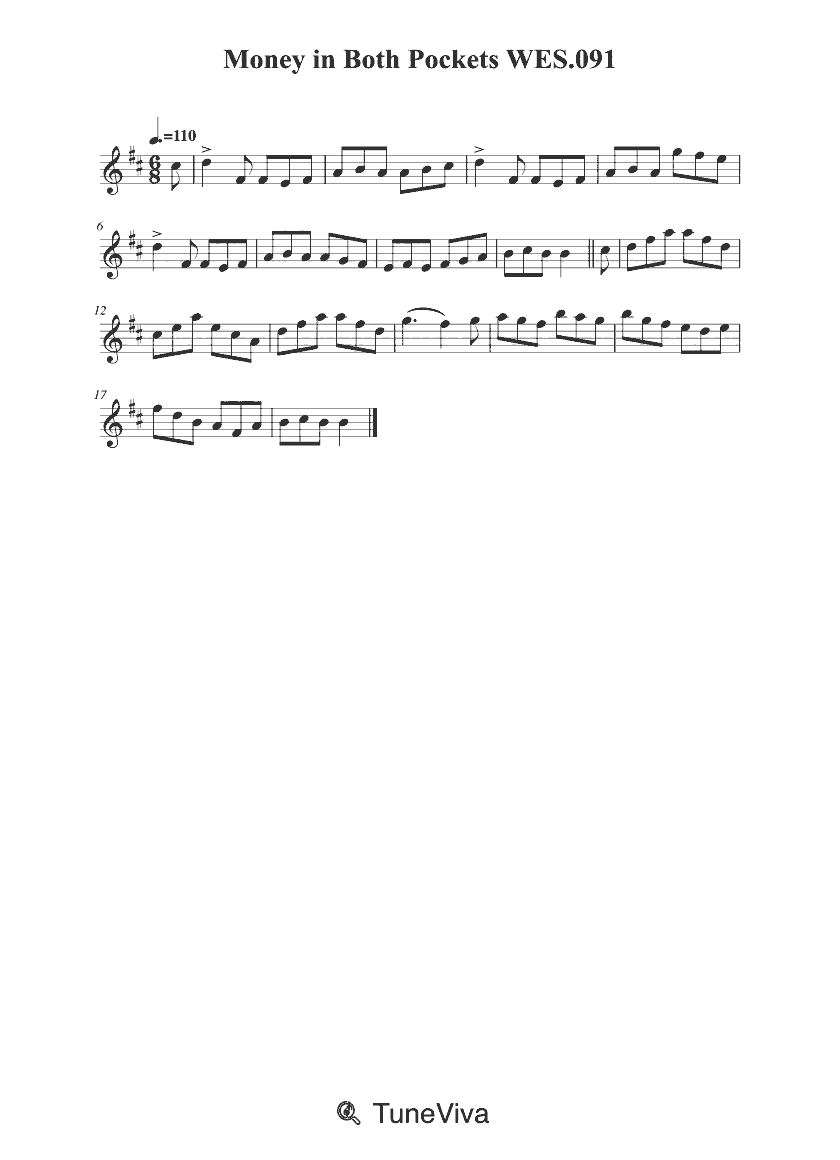
Misc Traditional
9 sec · Score #121863
Open score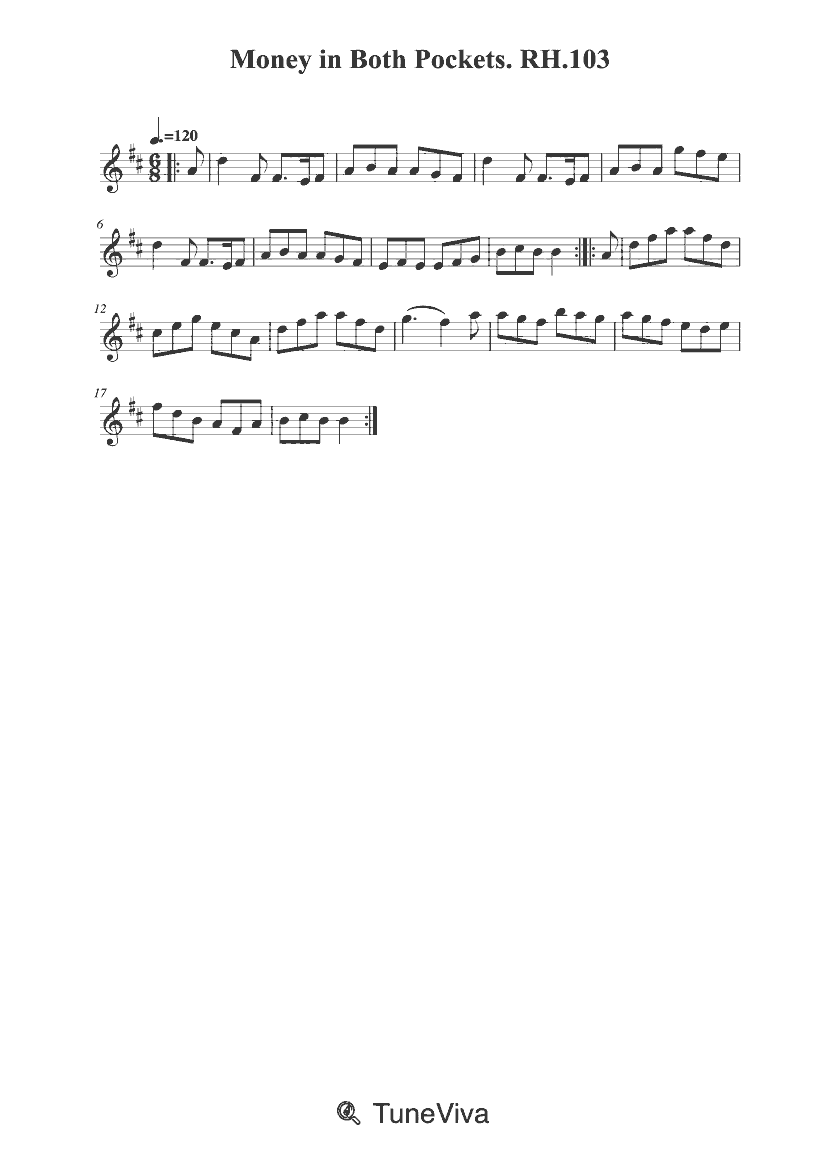
Misc Traditional
16 sec
Open score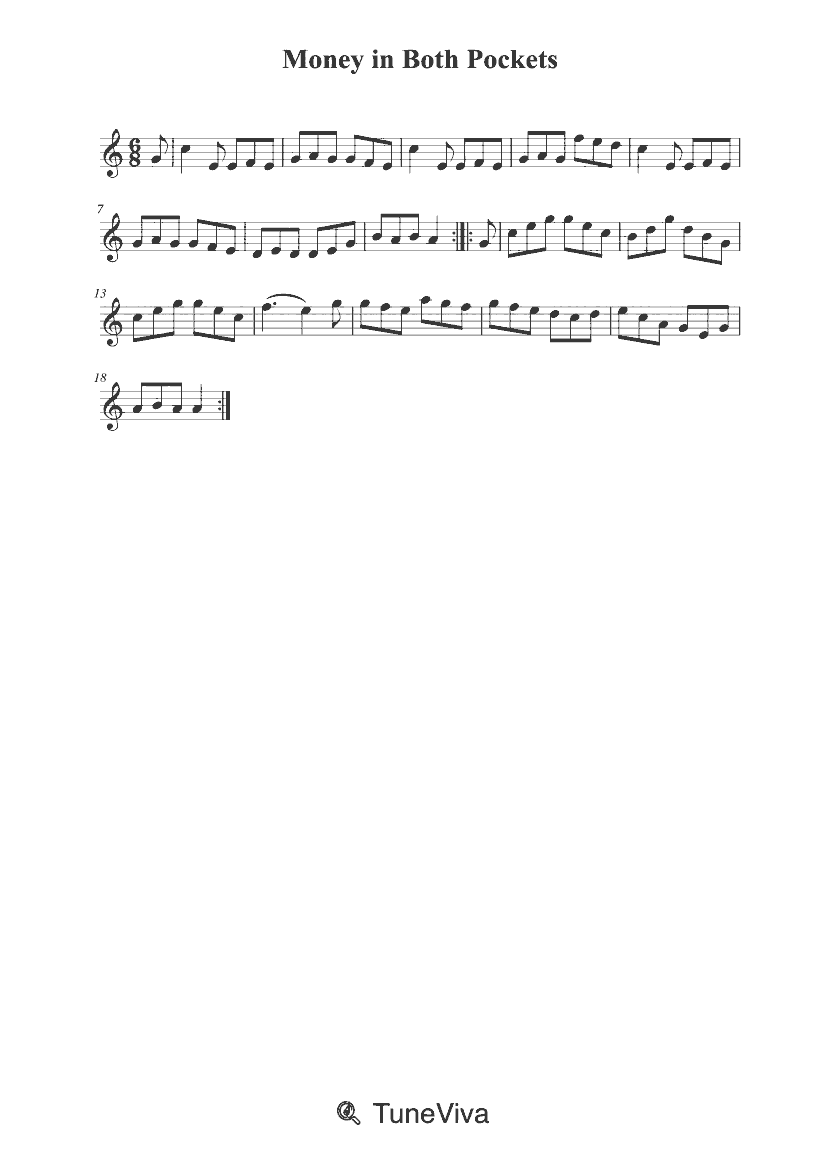
Misc Traditional
24 sec · Score #117009
Open score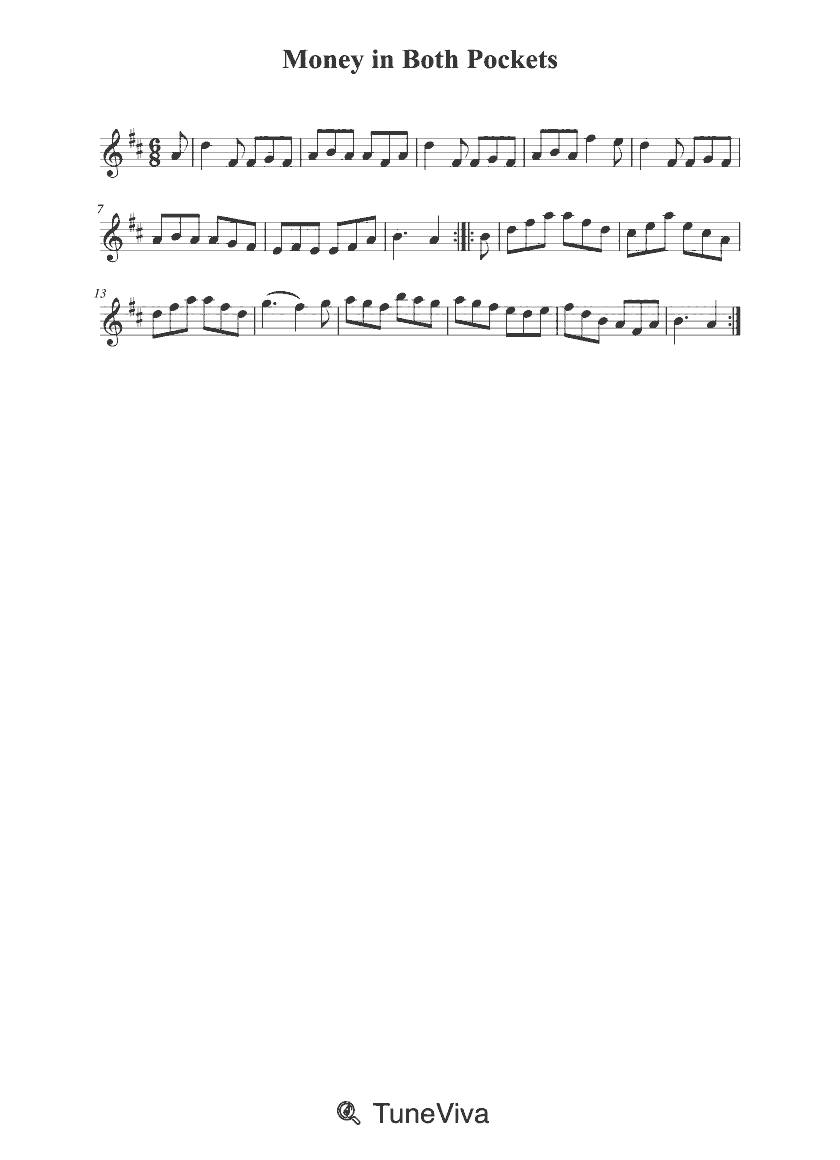
Misc Traditional
24 sec · Score #138135
Open score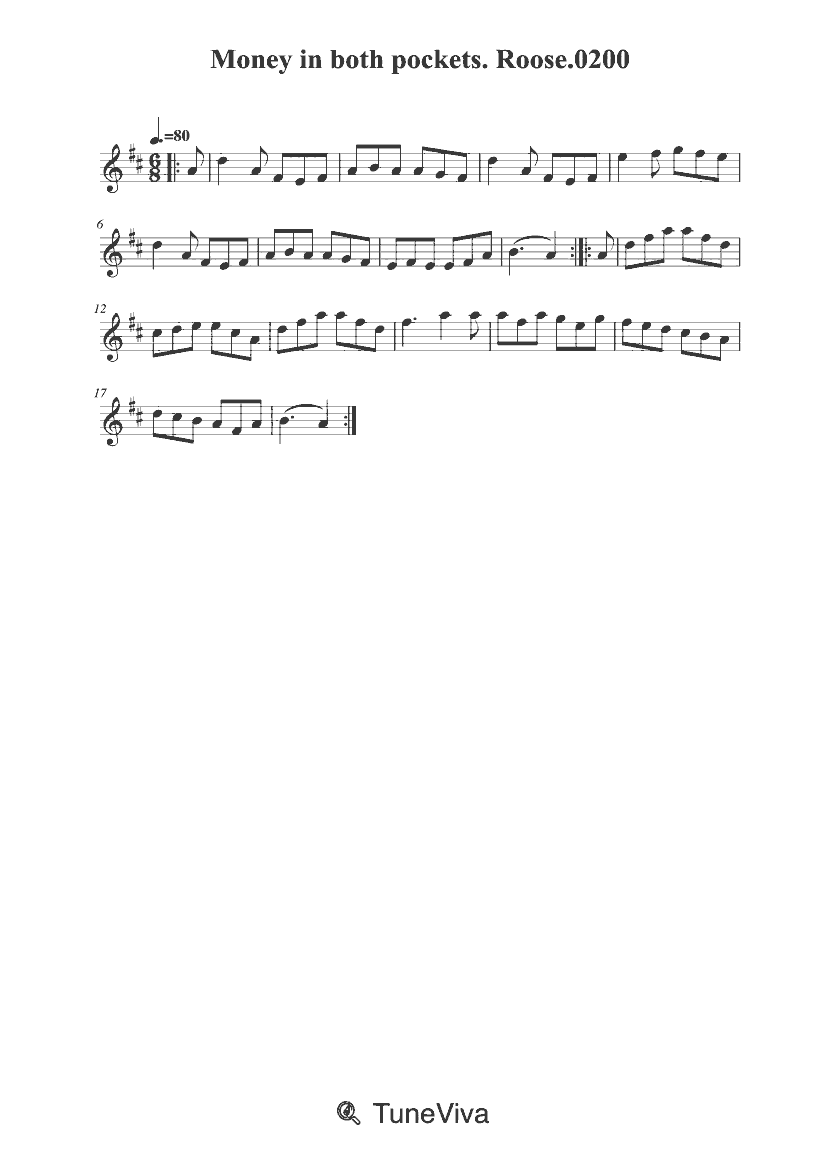
Misc Traditional
24 sec
Open score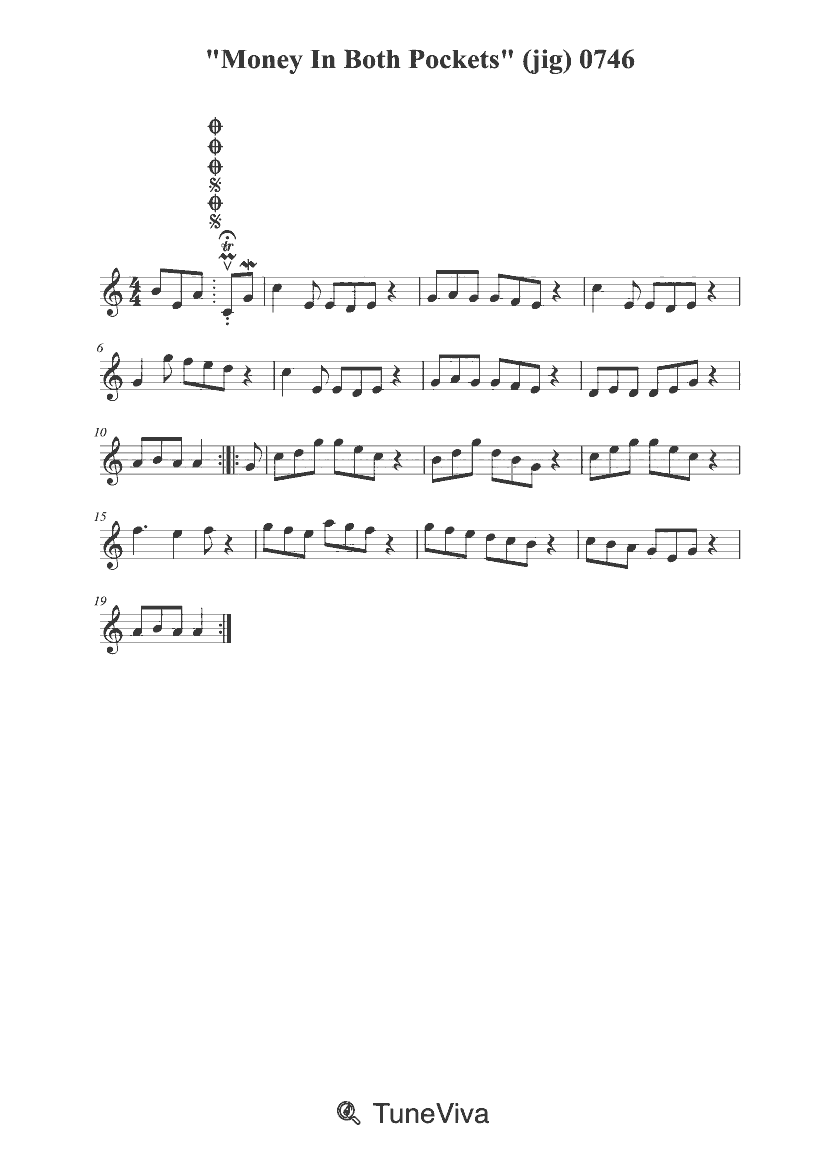
Unattributed
26 sec
Open score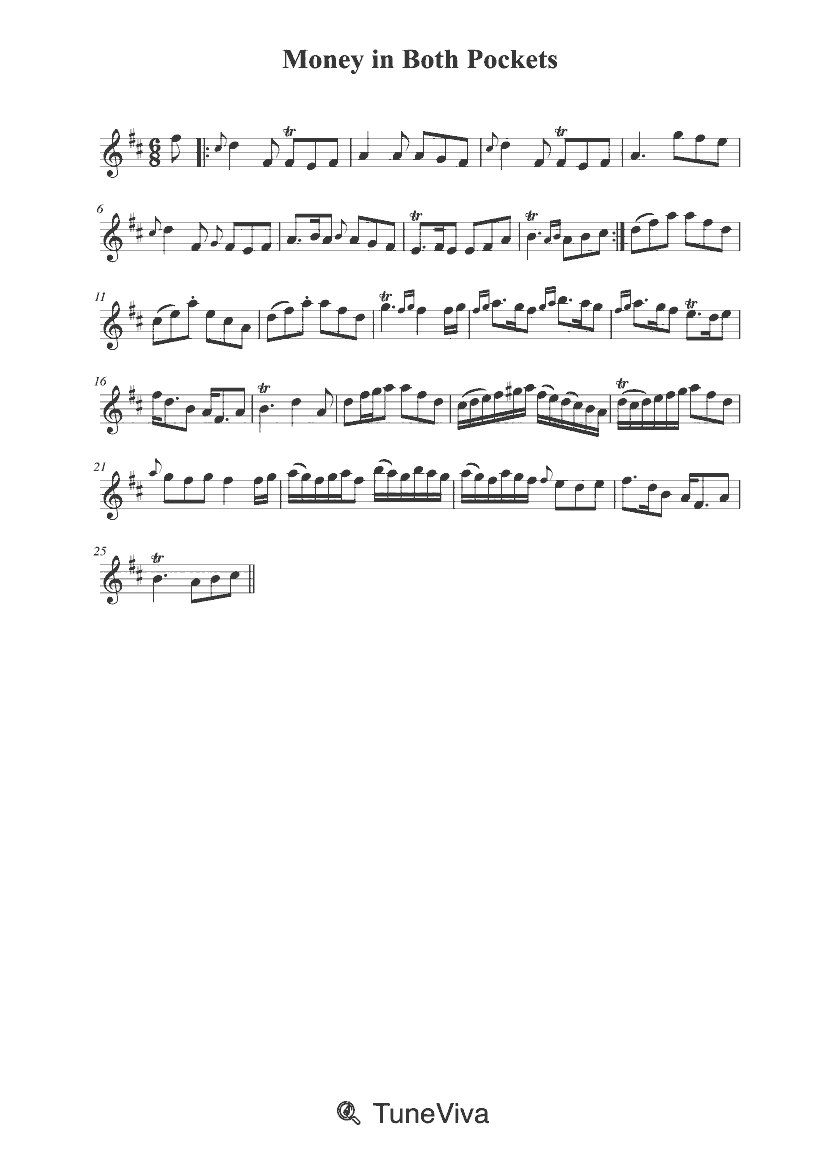
Misc Traditional
24 sec · Score #64852
Open score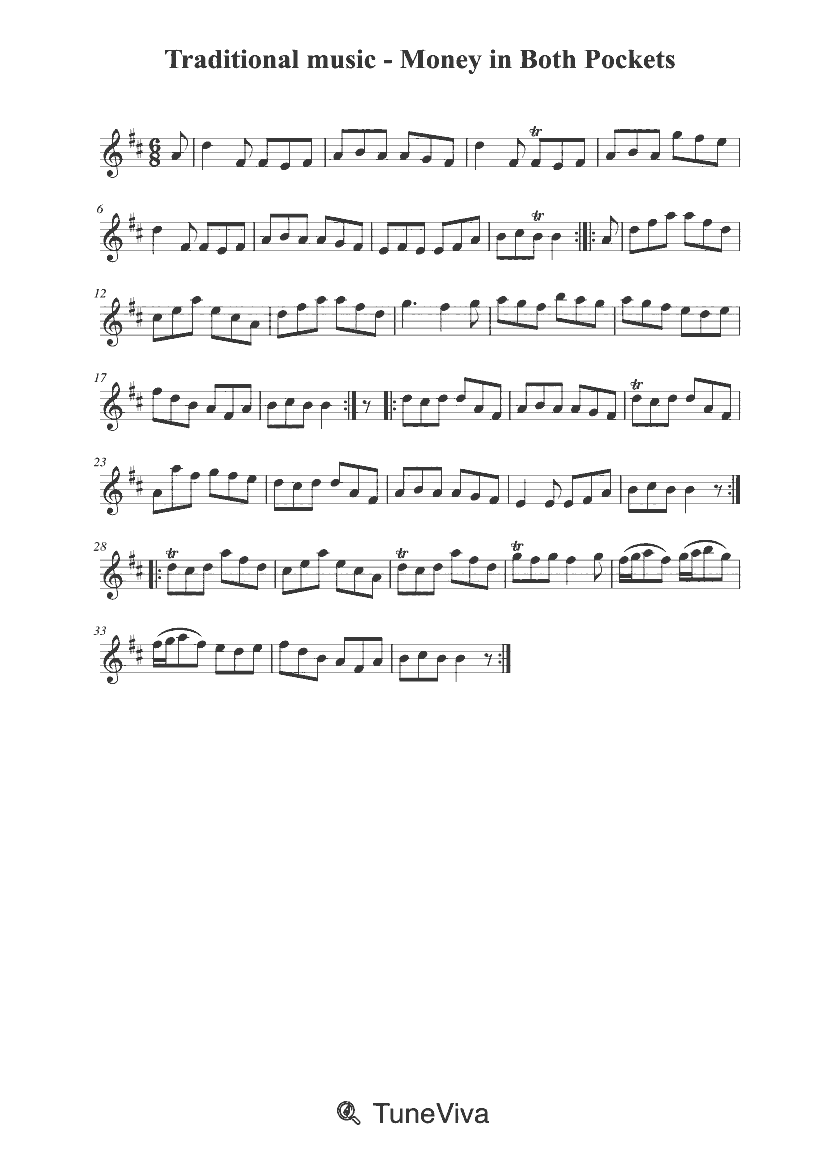
Trad. Irish?
48 sec · Score #138130
Open score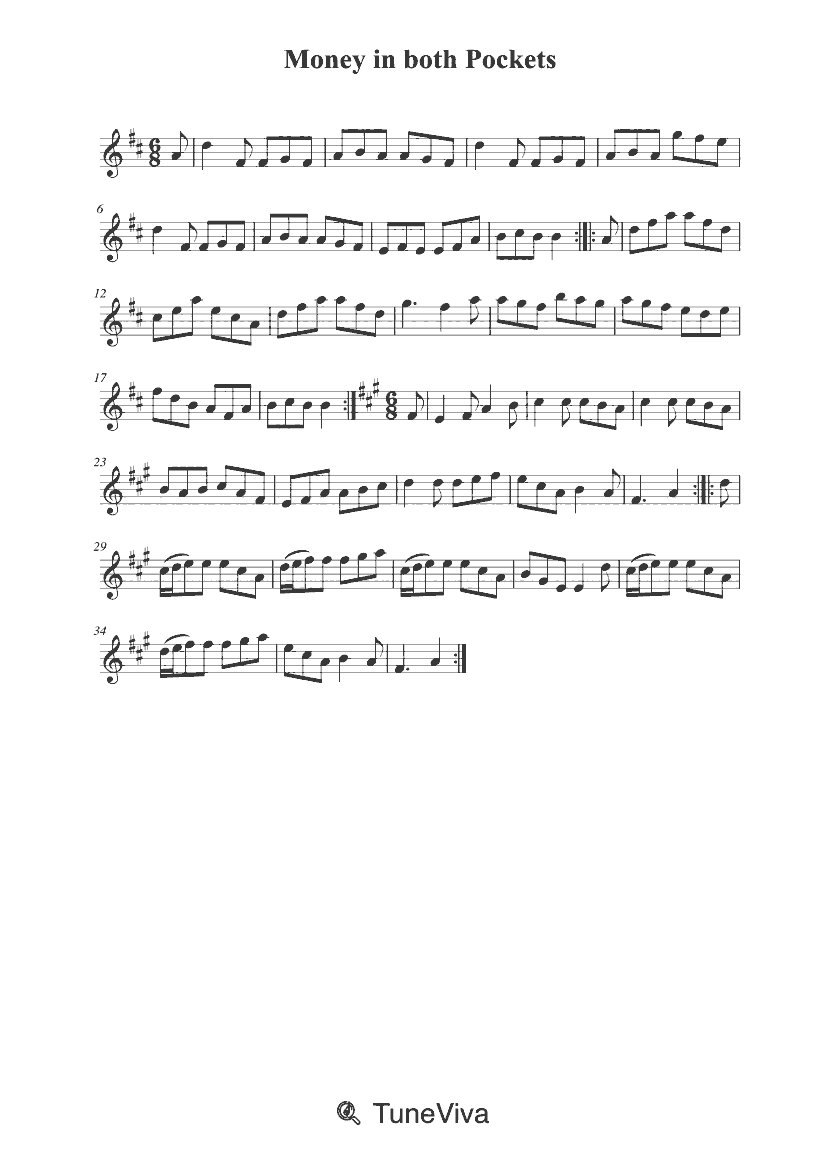
Misc Traditional
54 sec
Open score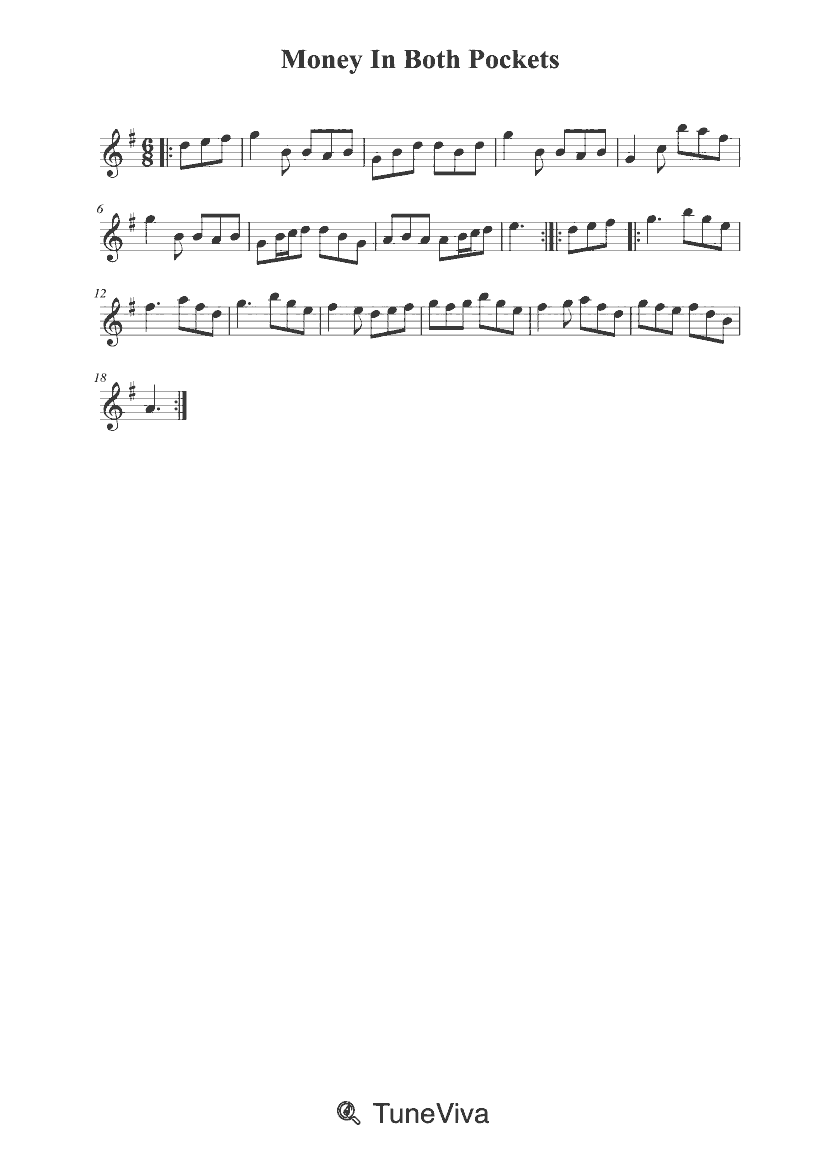
Misc Traditional
24 sec · Score #236701
Open score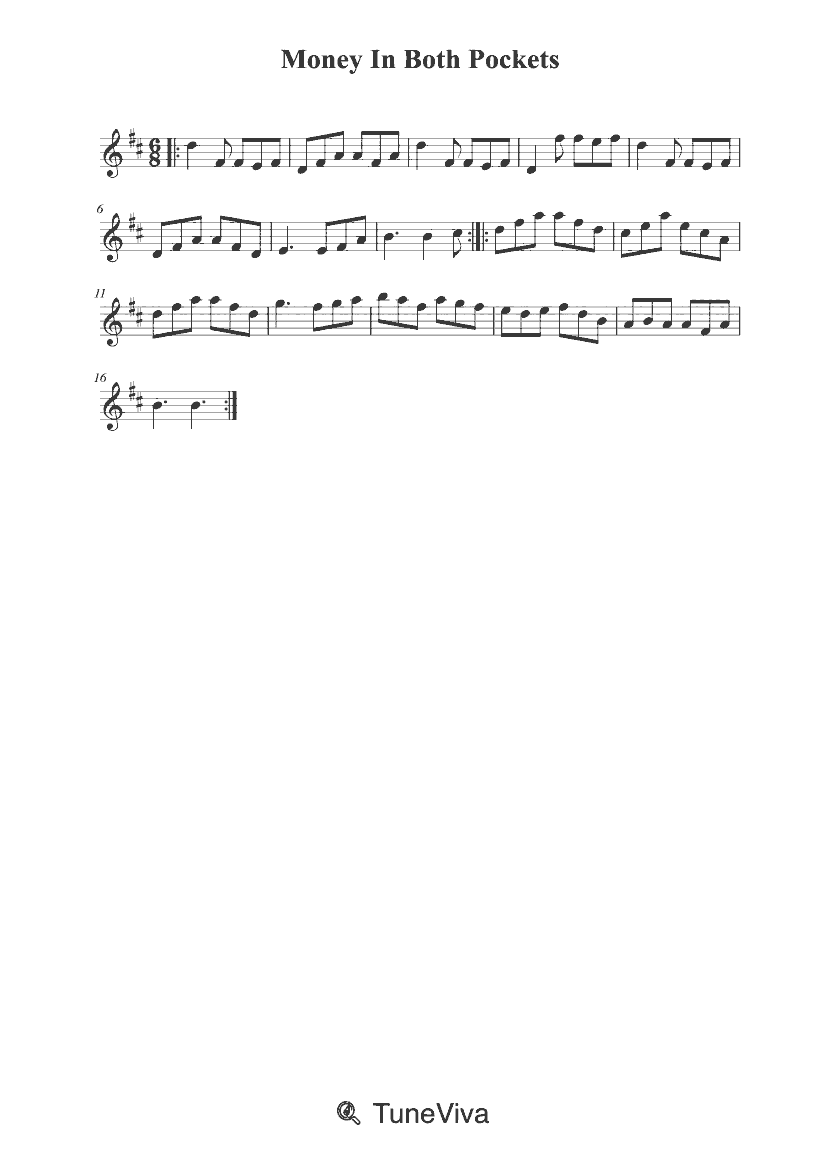
Misc Traditional
24 sec · Score #237890
Open score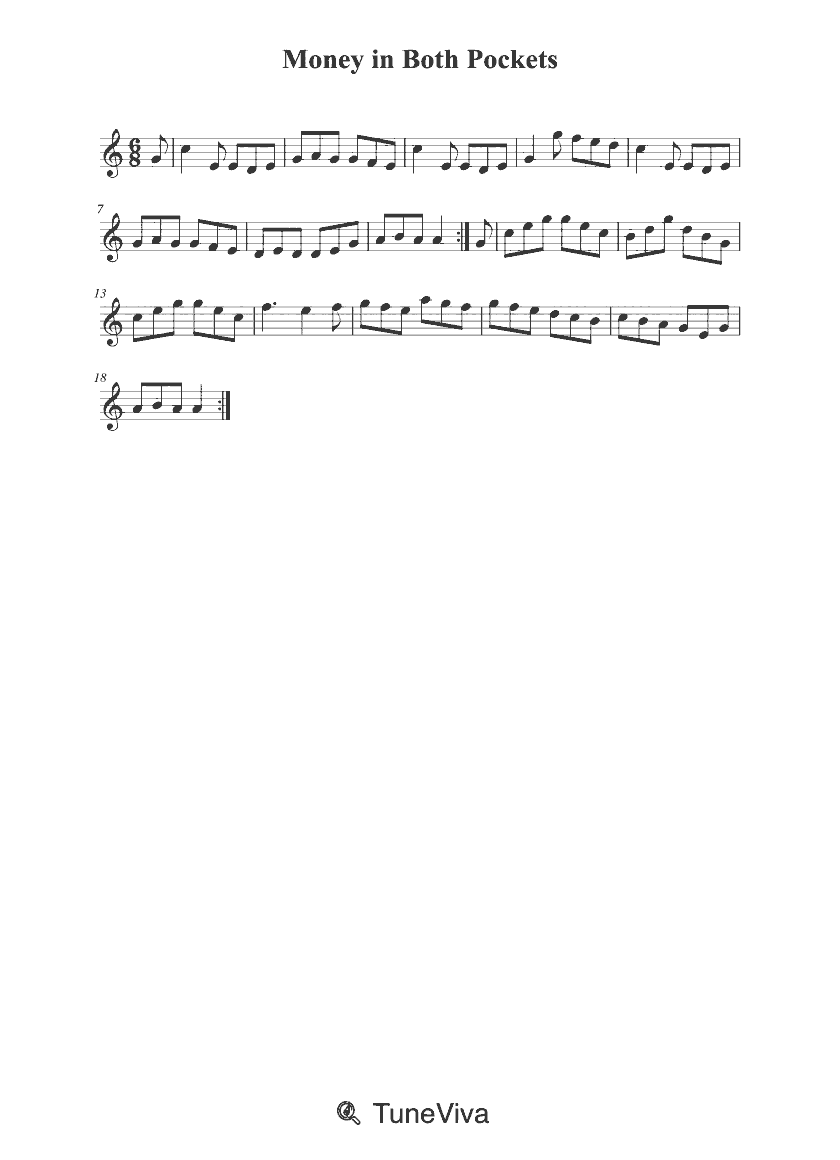
Misc Traditional
30 sec
Open score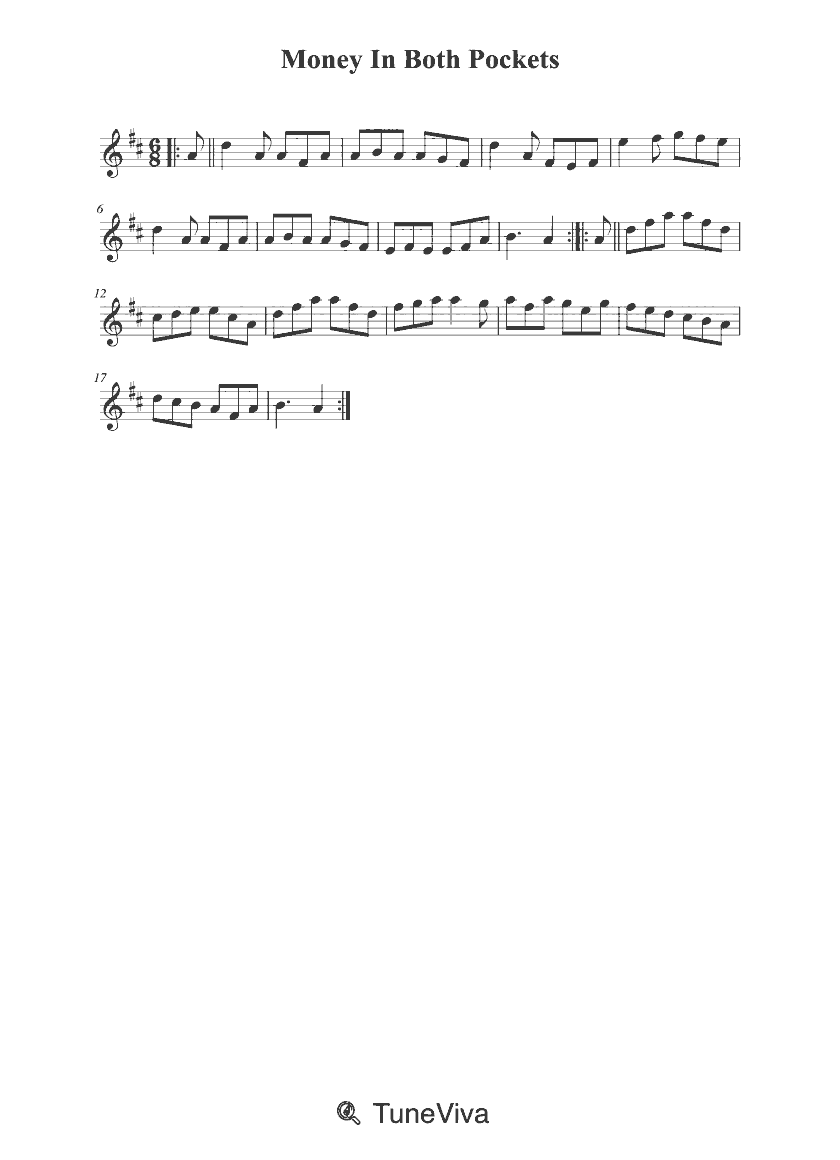
Misc Traditional
24 sec · Score #36839
Open score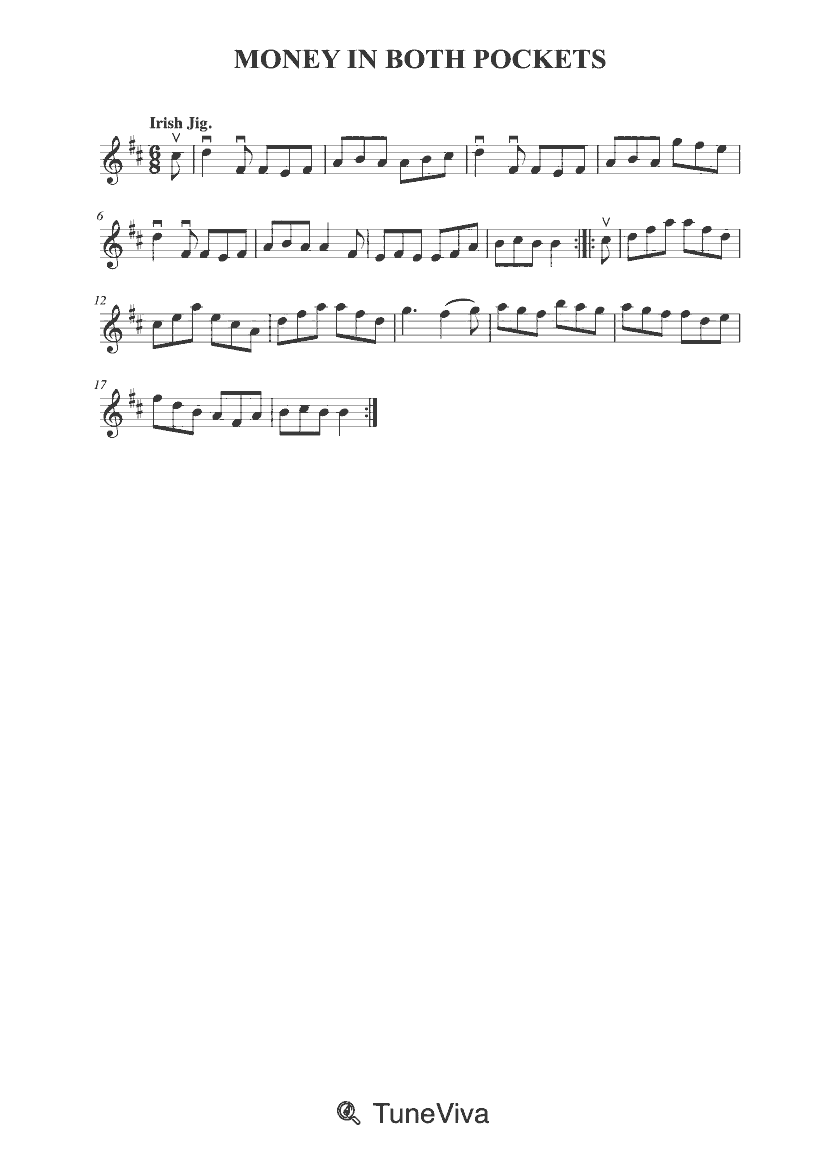
Misc Traditional
24 sec · Score #46801
Open score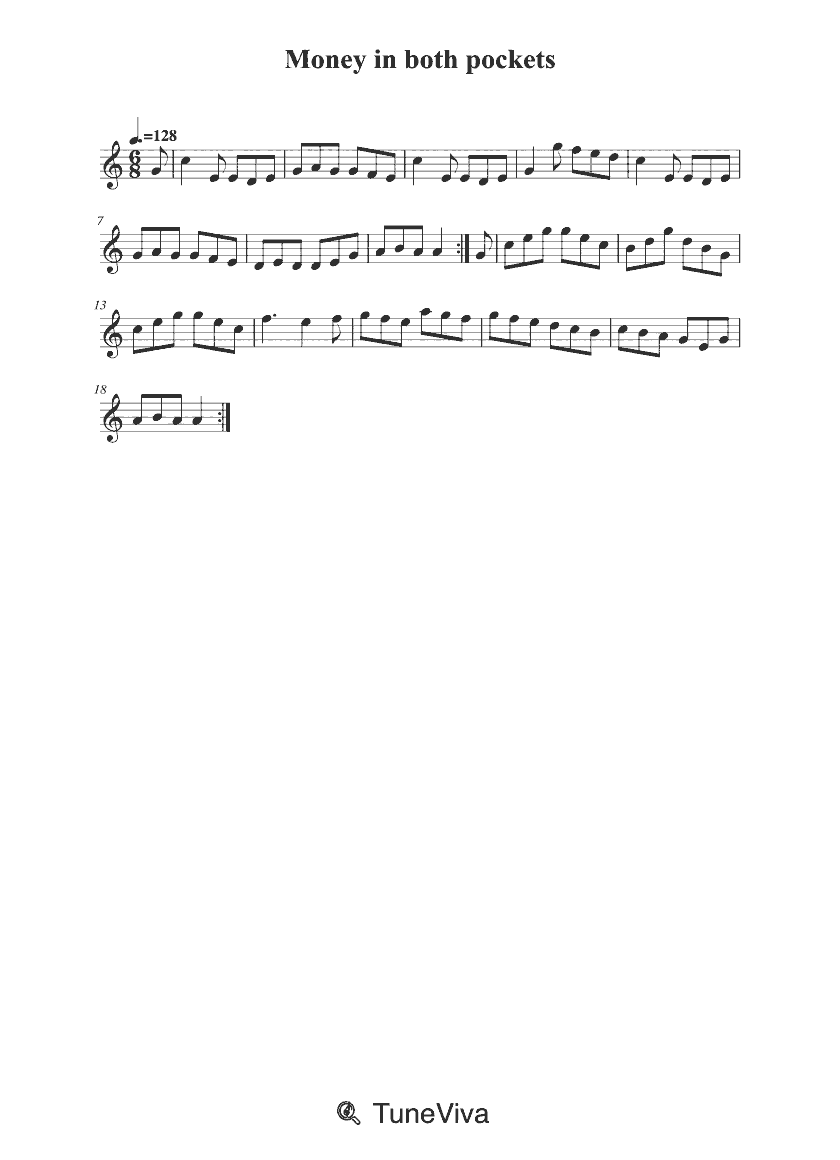
anon.
19 sec
Open score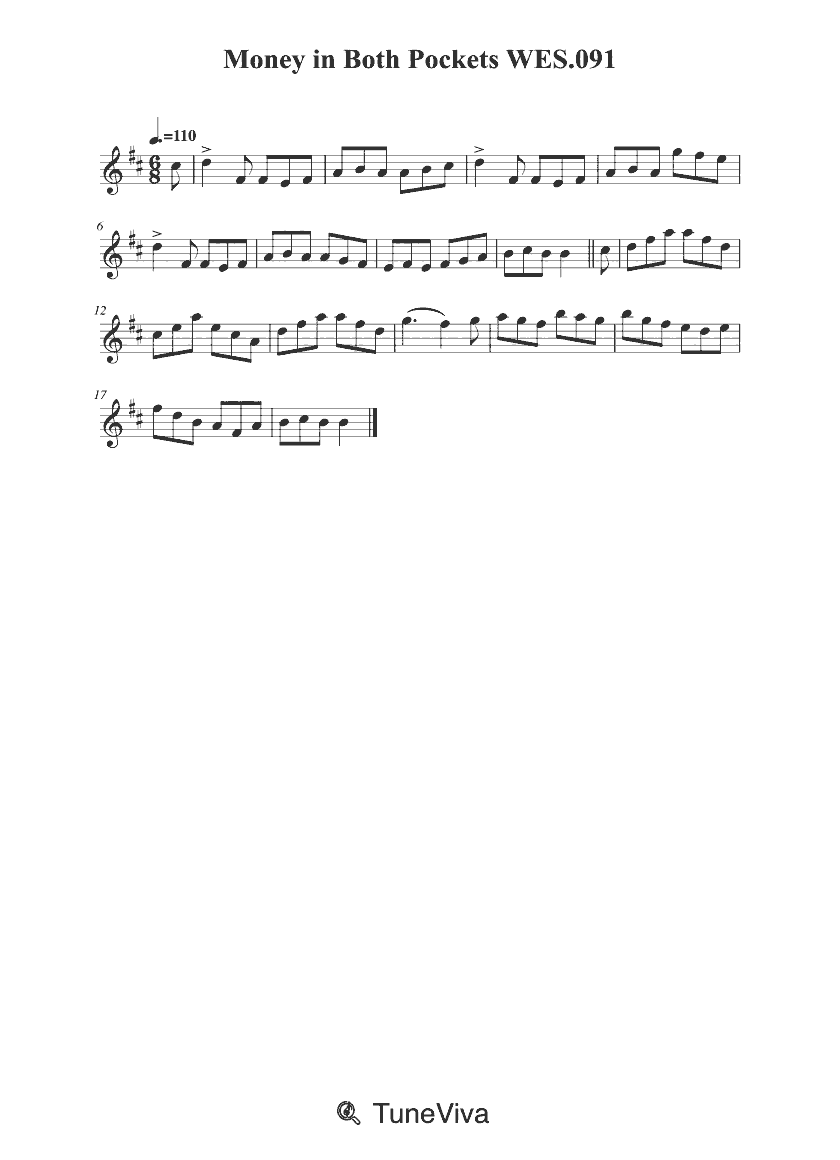
Misc Traditional
9 sec · Score #61208
Open score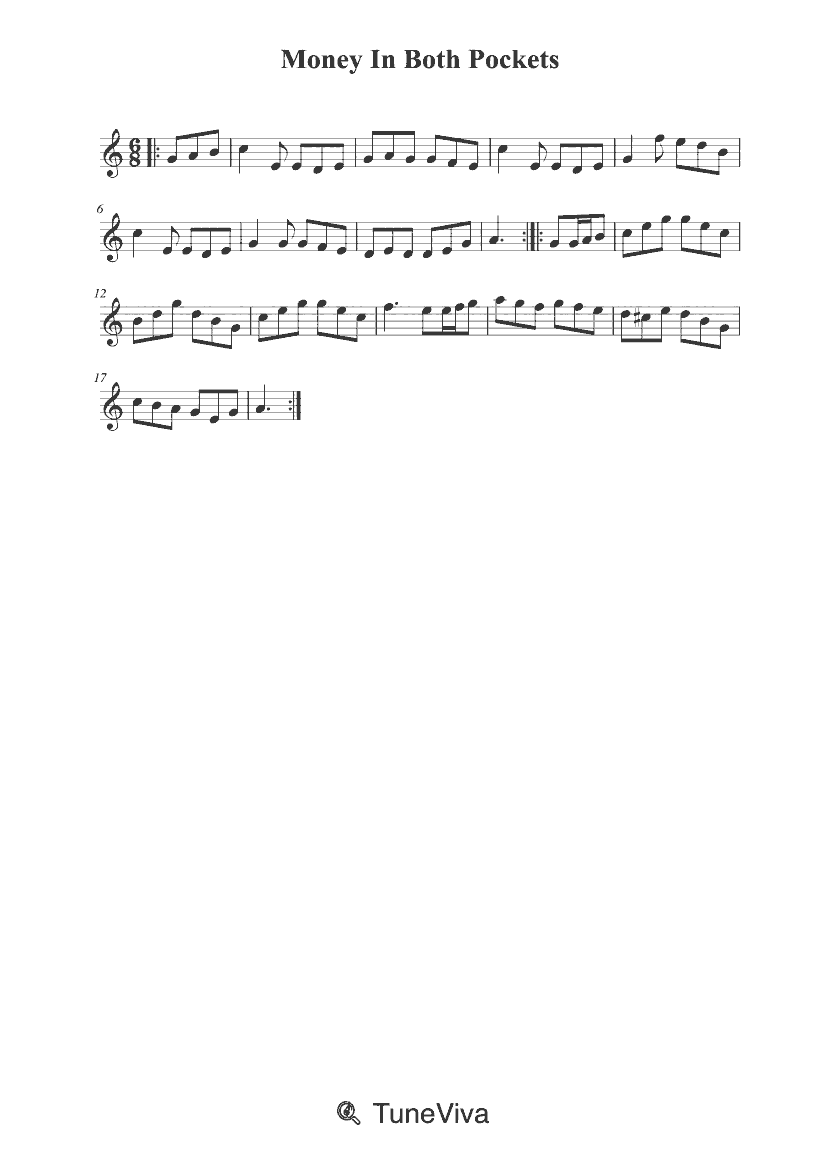
Misc Traditional
24 sec · Score #62731
Open score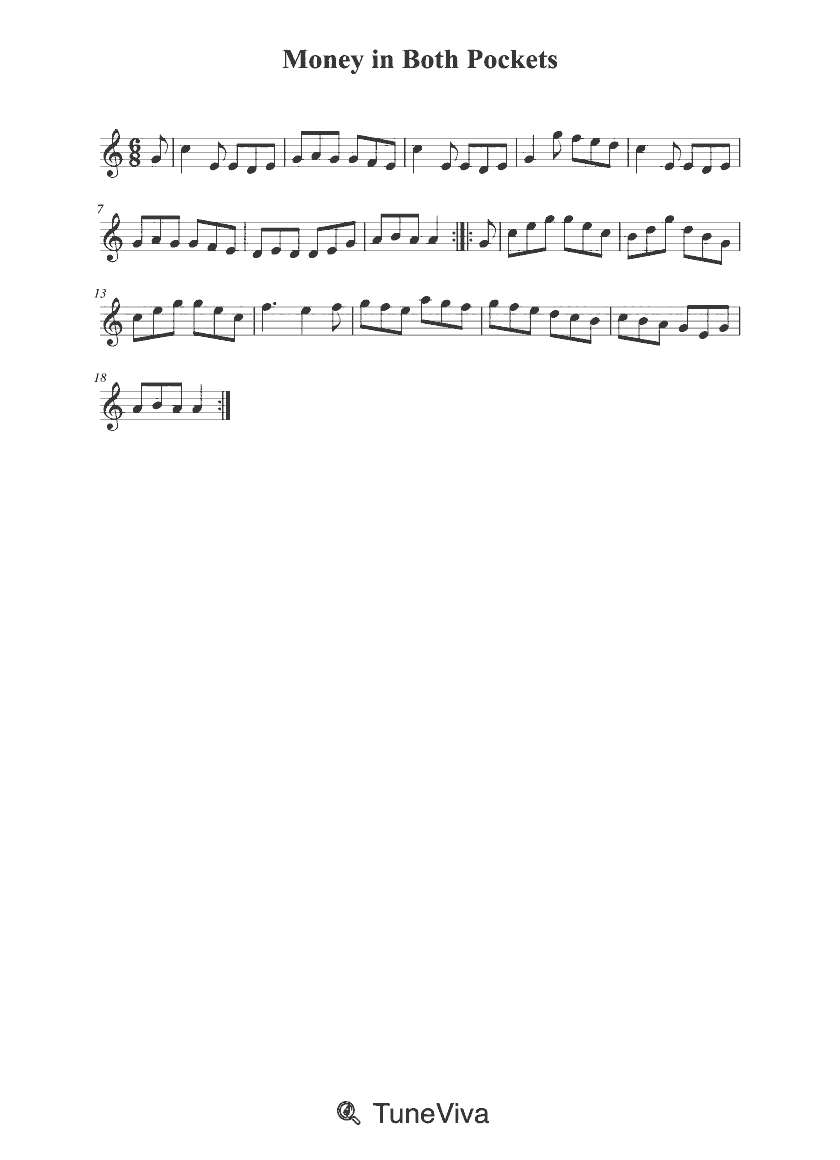
Misc Traditional
24 sec · Score #104418
Open score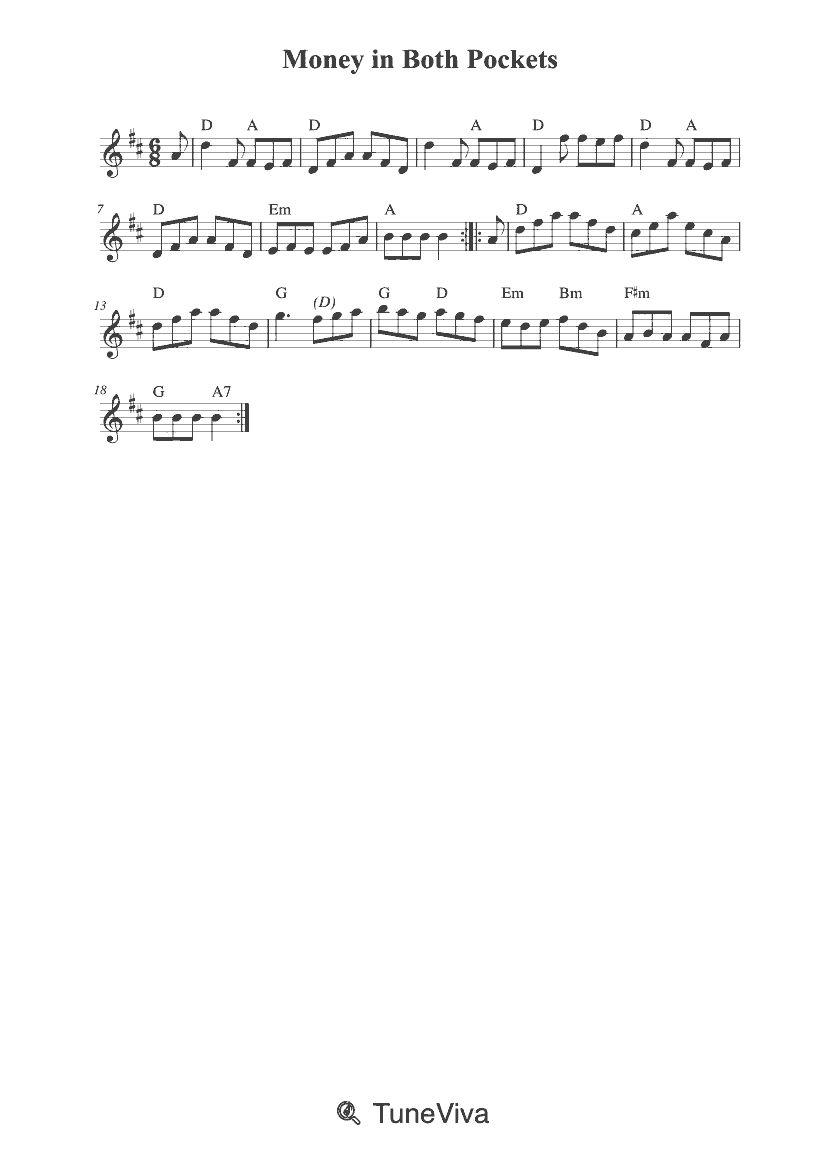
Misc Traditional
24 sec · Score #105647
Open scorePage 1 of 3
All three scores of Money in Both Pockets begin in D major and use 6/8 time. One version is listed at 165 BPM, another at 180 BPM, and the third has no tempo stated. Note counts range from 88 to 362. These details describe individual scores rather than a definitive performing edition, so treat them as a guide when comparing versions.
The shortest score contains 88 notes and is listed at roughly nine seconds; the longest contains 362 notes and is listed at roughly 48 seconds. A middle version has 176 notes and a duration of about 16 seconds. Such differences suggest varying levels of detail or different settings, but the records do not identify arrangers or state whether these are distinct arrangements.
No composer is named for Money in Both Pockets. One score carries the credit 'Trad. Irish?' while the others give 'NA' in the composer field. The question mark indicates uncertainty about the tune's origin, so it is safest to treat the piece as traditional without asserting a confirmed national or regional source.
A 6/8 time signature is compound duple metre: two main beats per bar, each made up of three eighth notes. In practice, players often feel the bar in two dotted-quarter-note pulses rather than six separate quavers. That rhythmic framework is common in traditional dance tunes, though the supplied records do not specify a dance type for Money in Both Pockets.
Catalogue duration 48 sec. Opening key signature: 2 sharps (D major). Opening time signature: 6/8.
Catalogue duration 9 sec. Opening key signature: 2 sharps (D major). Opening time signature: 6/8. Opening tempo: 165 BPM.
Catalogue duration 16 sec. Opening key signature: 2 sharps (D major). Opening time signature: 6/8. Opening tempo: 180 BPM.
All three listed scores of Money in Both Pockets open in D major with a 6/8 time signature. The 6/8 metre is compound duple, normally felt as two dotted-quarter-note beats per bar.
The versions differ noticeably. One score contains 88 notes and is listed at about 8.7 seconds; another has 176 notes and about 16 seconds; the longest has 362 notes and about 48 seconds. Tempo is given as 165 BPM for one score and 180 BPM for another, with none stated for the third.
No composer is named in the supplied records. One score credits 'Trad. Irish?' while the other two give 'NA' in the composer field. The question mark in that credit signals uncertainty, so the tune should be treated as traditional with an unconfirmed origin.
The scores use 6/8, a compound metre often associated with jig-type tunes. The supplied records do not state a dance type or confirm that Money in Both Pockets is a jig, so that label remains unverified here.
Note counts in the listed scores range from 88 to 362, and durations from about 8.7 to 48 seconds. Those figures describe the individual scores rather than a definitive performing length, and they may not match a typical session or concert performance.
Whether the three scores are the same arrangement is not stated. Their different note counts of 88, 176 and 362, and their different durations, suggest varying settings or levels of detail, but the records do not identify arrangers or editions.